Tag: asia

  • BT seals deal to manage Exact network

    BT seals deal to manage Exact network

    BT has won a new contract to design, build and manage a fully secure global network for Exact, a provider of cloud business software.

    The 4-year contract covers the creation of an integrated IT infrastructure supporting internal applications and services used by Exact’s 1,600 employees in 14 countries across Europe, North America, Latin America and Asia.

    Next to an optimized global network, BT will provide connectivity into the global data centers hosting Exact’s business applications and data. The contract also leverages BT Cloud Connect for a high performance network connection to Microsoft Azure.

    BT will provide extensive, cloud-based protection against cyber threats, blocking known and zero-day threats before they reach the network. Lastly, BT will take over and manage Exact’s in-office – fixed and wireless – networks and help drive employee productivity by providing voice, video, conferencing and remote access services.

  • Salesforce moves into eCommerce with $2.8b M&A

    Salesforce moves into eCommerce with $2.8b M&A

    Salesforce.com is moving beyond CRM and into e-commerce with the acquisition of cloud service provider Demandware.

    It will use the purchase to kick-start a new field of business, the Salesforce Commerce Cloud, it said Wednesday.

    The company already has its Sales Cloud, Service Cloud, Marketing Cloud, Analytics Cloud.

    By rebranding Demandware Commerce Cloud as its own, Salesforce will be able to combine e-commerce, order management, point-of-sale, store operations and predictive intelligence into its own platform.

    Commerce Cloud will allow Salesforce customers to connect with their own clients in new ways, the company said, while Demandware customers will gain access to sales, marketing and analytics functions from Salesforce.

    “There are so many ways it accelerates our mission to transform retail,” Demandware CEO Tom Ebling said in a conference call to discuss the deal.

    Being part of Salesforce will add to Demandware’s credibility when approaching large accounts, he said.

    It will also help the company expand to new countries. “We’ve just got started in places like Japan and Italy but there are many other untapped geographies for us,” he said.

    A third area where it will benefit is omnichannel marketing, helping retailers engage customers everywhere. “The combination of CRM capabilities, knowledge of the customer, with the commerce engine will be a way to accelerate that capability,” he said.

    Salesforce’s Chief Product Officer Alex Dayon said the deal will increase its customers’ insight into their business.

    “Our customers’ information systems are going to be powered by data. You need a complete view of your customers. Having commerce as part of the CRM platform is important,” he said during the same conference call.

    He hammered home the need for more data in response to a question about Salesforce’s ad targeting capabilities.

    “For us it’s all about the data, whether you use your own data, your own targeting, or whether you connect to companies like Google or Facebook,” he said.

    The companies expect to close the deal, worth around $2.8 billion net of cash acquired, before August.

  • Globe launches first 700-MHz base station

    Globe launches first 700-MHz base station

    Philippine operators Globe and PLDT have wasted no time in taking advantage of their newly-acquired 700-MHz spectrum holdings.

    Globe Telecom has announced it has activated the nation’s first cell site that utilizes the 700-MHz band, less than a week after Globe and PLDT each acquired half of San Miguel Corporation’s (SMC) telecom assets.

    Globe executive Joel Agustin said the company plans an initial rollout of around 200 sites using the 700-MHz band.

    “The intention is that the first batch of the 200 sites we plan to roll out will be in areas where connectivity matters most to our customers as well as in locations with high convergence of users like here in the National Capital Region,” he said.

    Agustin said the 700-MHz band will be essential for the company’s efforts to improve indoor data coverage and to deploy LTE-based broadband in rural areas.

    PLDT separately announced that its wireless broadband unit Smart Communications will start using the 700-MHz spectrum it acquired through the SMC transaction this year as part of the accelerated deployment of its LTE service.

    The operator revealed it has been holding discussions with device manufacturers to introduce more affordable LTE smartphones and tablets compatible with the 700-MHz band into the country.

    Around 45% of subscribers to PLDT’s two wireless brands – Smart and Sun Cellular – are now using smartphones, up from 30% in 2015. But at present the majority of these are 3G/HSPA only handsets.

  • New Zealand opens technology center in Vietnam

    New Zealand opens technology center in Vietnam

    New Zealand has opened a new technology center at Quang Tring Software City in Ho Chi Minh City.

    The Kiwi Technology Center is envisioned to be a hub for New Zealand tech companies investing and doing business in Vietnam and the ASEAN region.

    The first companies to set up shop in the center include software services business Augen Software Group which won the Vietnam IT Excellence award last year, healthcare technology companies Orion Health and HealthTech and apparel manufacturing optimization firm ShapeShifter.

    “This is a fantastic opportunity for New Zealand technology companies and I look forward to more of them utilizing the Kiwi Connection hub and meeting with businesses from around the region who want to work with New Zealand companies and use technology services from within ASEAN,” said New Zealand’s Economic Development Minister Steven Joyce in a statement.

    Joyce also announced last week a project to build a New Zealand-Vietnam friendship bridge in Ho Chi Minh City to celebrate the ties between the two countries.

    Vietnam is New Zealand’s fastest growing trade market in Southeast Asia, with merchandise exports reportedly doubling since 2007.

  • IP traffic set to nearly triple over next five years

    IP traffic set to nearly triple over next five years

    Global IP traffic is on track to nearly triple over the next five years as more than a billion new internet users come online, according to Cisco’s latest Visual Networking Index.

    IP traffic is forecast to grow at a CAGR of 22% over the period of 2015 to 2020 to reach 194.4 exabytes per month, Cisco said

    APAC will account for more than a third of global IP traffic in 2020, the study predicts. Total traffic in the region is expected to grow at a 22% CAGR to 67.8 exabytes per month.

    By 2020, the company predicts that there will be around 4.1 billion internet users worldwide, up from 3 billion in 2015. Smartphone traffic accounted for 47% of total global IP traffic in 2015, and is expected to grow to account for a wide majority (71%) by 2020.

    Due in part to the rapid growth of the IoT, global IP networks are expected to support up to 10 billion new devices and connections over the five-year forecast period, bringing the total up to 26.3 billion, or 3.4 devices and connections per capita.

    Internet video will continue to dominate traffic, accounting for 79% of global internet traffic by 2020, up from 63% in 2015. Global networks will relay the equivalent of one million video minutes per second, Cisco predicts. HD and ultra HD video will make up 82% of internet video traffic.

  • Nokia identifies top five reasons for mobile churn

    Nokia identifies top five reasons for mobile churn

    Mobile subscribers worldwide are placing more importance on customer service and value as network quality improves, research from Nokia indicates.

    The top five factors motivating the decision to select or leave operators are cost and billing, network quality, customer care and service and device portfolios, a global survey shows.

    Customer care has grown to be about on par with network quality as a deciding factor for whether to stay with a mobile operator, the results suggest.

    Respondents indicated that customer care has 60% more impact on their loyalty than it did just two years ago.

    This is partly also due to the fact that networks are improving in mature markets. Customers in these regions reported a 13 percentage point improvement in their satisfaction with internet connection quality compared to 2014. But in emerging markets there was a slight decline.

    More than two thirds of respondents indicated they would leave an operator over network quality issues, with the speed and consistency of internet connections mattering more than either voice quality or network coverage.

    Respondents using 4G were 38% more likely to be satisfied with their data speed and 24% more likely to be satisfied with data consistency.

    But the report also suggests that 4G adoption remains far from universal. In the past year, only 38% of the respondents signed up for 4G, and almost a third do not know if their operators offer the technology.

    Price remains the most important factor when it comes to customer acquisition and retention, the survey shows.

    But mobile customers – particularly in mature markets – will often choose easy-to-understand terms and conditions over price. Nokia said this suggests that customers want more transparency when it comes to contract terms, rate structures and data fees.

    “We can see the marketing battles to acquire mobile subscribers are fierce. What we don’t see as well is the work operators do every day to retain customers. Our study shows how important that work is – and also how challenging it is as customers, attached to their phones, demand higher levels of service,” Nokia applications and analytics president Bhaskar Gorti said.

  • Giorgio Armani Asia suffers in China

    Giorgio Armani Asia suffers in China

    Italian fashion house Giorgio Armani Asia is the latest luxury retailer to cite greater China as the cause of a downturn in sales.

    Burberry and Hugo Boss have also been hit by China’s economic slowdown, leading to Hugo Boss cutting its prices in Asia.

    Armani says revenues grew 4.5 per cent last year, a 16 per cent drop from the year before. Revenues totalled €2.65 billion (US$ 2.95 billion). Prada had sales of €3.55 billion.

    The Milan-based group, whose products include accessories, cosmetics and furniture, and the more affordable Armani Exchange range, says earnings before interest, tax, depreciation and amortisation edged up 1 per cent to €513 million last year, from €507 million in 2014.

    Despite the slowdown, the firm says its cash reserves of €640 million allowed it to step up investments in its brands to “further strengthen its competitive market position”.

    “These results are the outcome of an attentive diversification policy for the group’s lines, paired with the co-ordination of distribution channels and enhancement of the role that our trade partners play,” says president Giorgio Armani, who founded the company in 1975. The 81-year-old designer is still actively involved in the business.

  • Central Pattana plans to enter Malaysia

    Central Pattana plans to enter Malaysia

    Shopping mall developer Central Pattana, which runs 29 malls in Thailand, plans to open its first foreign outlet in Malaysia in 2018.

    It will work through a joint venture with a Malaysian company in which it holds a 60 per cent stake. The new mall, under the Central brand, will be in Shah Alam, west of Kuala Lumpur.

    To be built on about 44,000 sqm of land, the mall will have a net leasable area of 89,700 sqm, and cost about 8.3 billion baht (US$232 million) to build.

    Senior executive VP Naparat Sriwanvit says Central Pattana plans to open 15 malls by 2020, three of them outside Thailand. Indonesia and Vietnam have been listed as potential targets because of their large populations and rising incomes.

    As with Malaysia, the company plans to enter other markets through joint ventures with local partners.

    Naparat says the Thai market is still promising, with room for expansion in the suburban areas of Bangkok and the provinces. The company plans to open a 1.9 billion baht mall in the southern city of Nakhon Si Thammarat at the end of next month, as well as two other locations outside Bangkok next year.

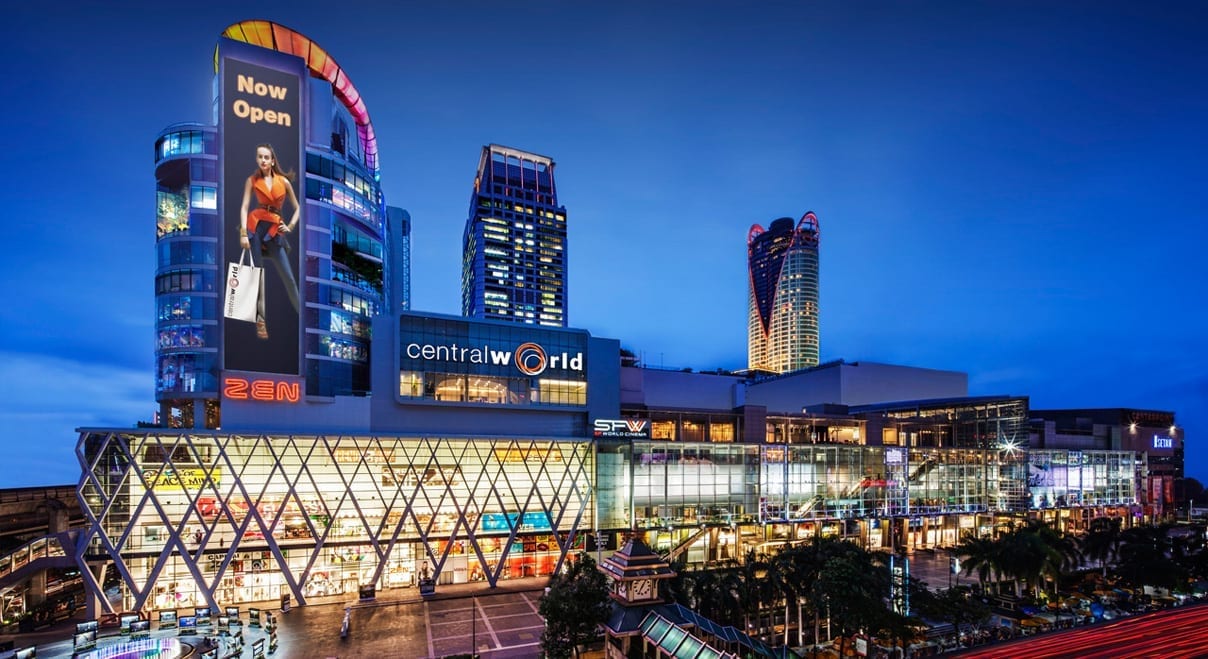
    Central Pattana, with CentralWorld mall in central Bangkok as its flagship, saw its net profit rise 7 per cent last year.

  • Christian Lahoude Studio designed the 60-square-meter Jimmy Choo store in Hong Kong

    Christian Lahoude Studio designed the 60-square-meter Jimmy Choo store in Hong Kong

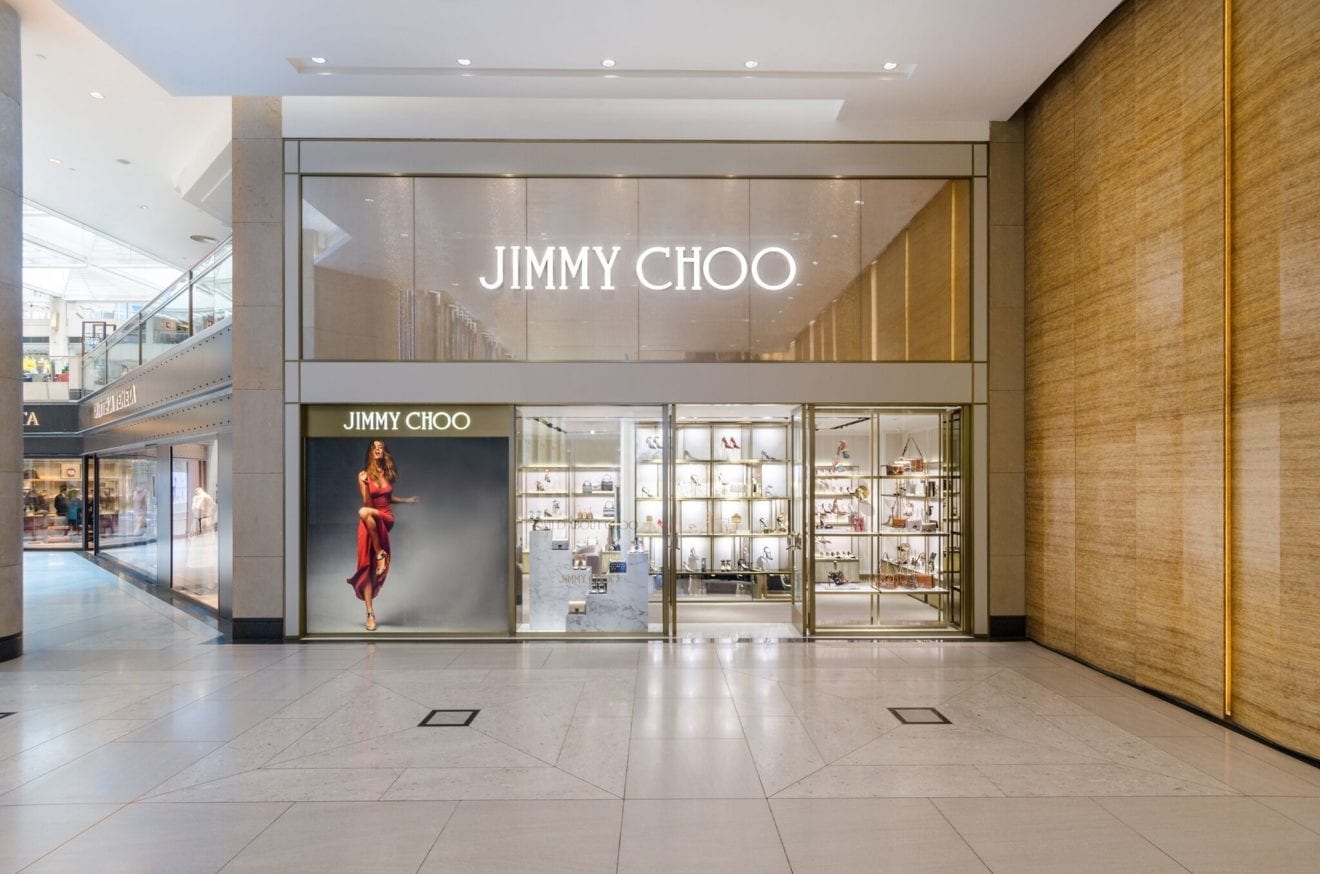
    Christian Lahoude Studio designed the 60-square-meter Jimmy Choo store in Hong Kong’s luxury LANDMARK shopping mall, updating the existing space with the refreshed brand identity. The double-height, glass façade, with a large light box display, attracts the mall traffic into the shop. The framed glass façade was designed without molding, providing the setting for the custom window displays and a clear view into the retail environment.

    Upon entering the store, visitors are greeted by the central display feature conceived by the Studio to best make use of the small footprint and to create circulation through the shopping space. Standard design elements that convey sophistication and luxury, deployed globally in the Jimmy Choo concept, include gold mesh, white Carrera marble, plush grey carpet and velvet fabric for the seating.

  • Massive O2O plan by Alibaba and Suning

    Massive O2O plan by Alibaba and Suning

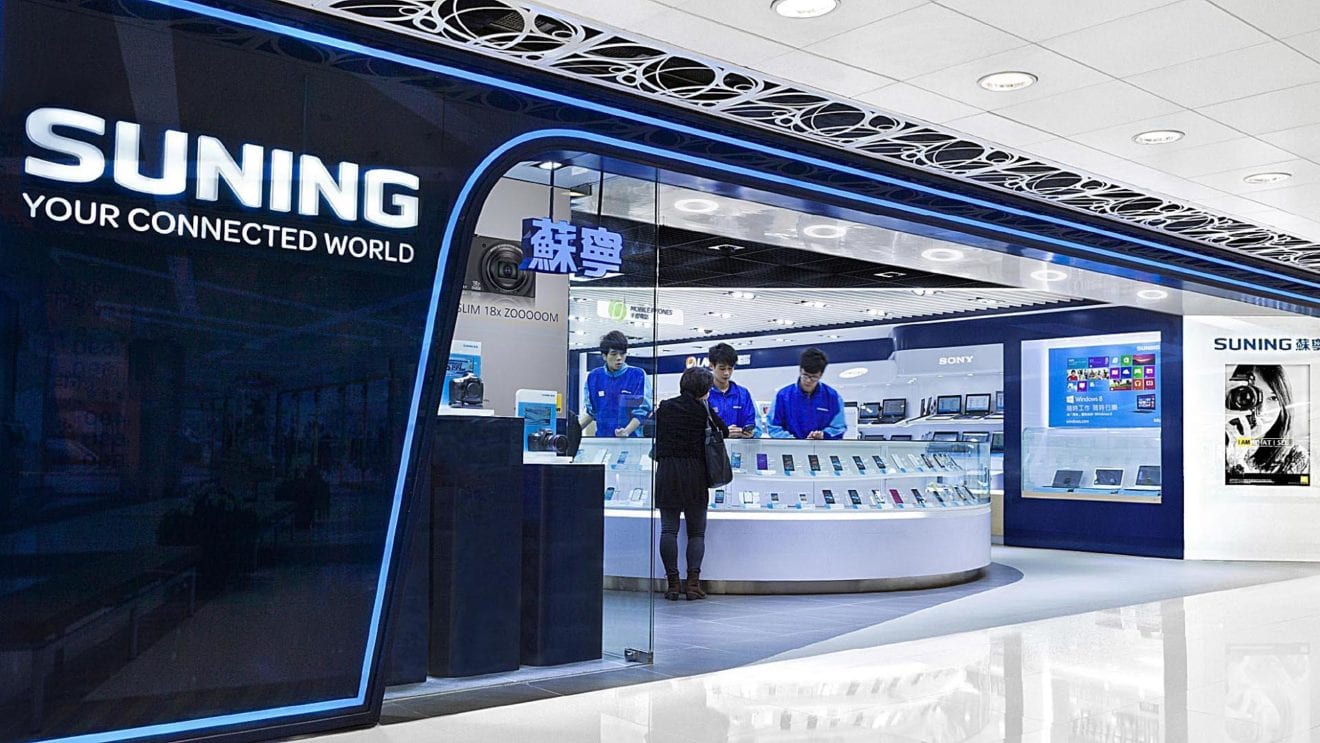
    Alibaba and Suning, one of China’s largest electronics retailers, plan to fuel Chinese and international consumer electronics brands sales over the next three years by investing in an online-to-offline (O2O) retail initiative.

    The pair will work together to build out an O2O, or “omni-channel,” network combining the former’s online retailing assets with the latter’s physical stores and distribution facilities to make purchasing of consumer electronics and home appliances easier for consumers, officials for the companies said at a press conference in Beijing.

    The two companies expect to quadruple sales of major electronics brands – including Haier, Samsung, Xiaomi and Lenovo – over the next three years, using big data from both businesses, said Alibaba Group CEO Daniel Zhang.

    “This can be achieved by integrating the online and offline sales channels under a digitalisation process,” Zhang said.

    Alibaba and Suning began working together on omni-channel retailing last year after Alibaba agreed to invest RMB 28.3 billion (US$4.63 billion) for a near 20 per cent stake in the bricks-and-mortar retailer. Suning’s network of 1600 stores and 5500 after-sales service centers are linked with Alibaba’s online platforms, and Suning’s distribution network, which includes 4.55 million sqm of warehouse space, is used to deliver products purchased online by consumers via Alibaba’s Taobao Marketplace and Tmall.com shopping sites.

    Working with Alibaba’s logistics affiliate Cainiao, Suning and Alibaba currently offer 12-hour delivery of appliances and consumer electronics in Beijing, Shanghai, Guangzhou, Hangzhou, Shenzhen and Nanjing.

    Alibaba and Suning said they will also support electronics brands by allowing them to leverage consumer data on Alibaba’s 423 million annual active buyers and Suning’s 250 million members. Big data technology can enable more targeted sales and marketing campaigns and even provide insights that allow electronics manufacturers to make products that better meet consumer needs, the companies said. Using consumer data, German electronics company Siemens launched a refrigerator customised for Tmall users in March and Chinese appliance maker Midea in May began selling a rice cooker that was designed partly based on Tmall data.

    “We build a bridge between brands and consumers by leveraging data,” Zhang said.

    International and domestic brands joining the Alibaba-Suning support program, called the Super Brand Alliance, include Midea, Haier, Samsung, Hisense, Huawei, Xiaomi, Lenovo, Siemens, Sony, Skyworth and Canon.

  • Krispy Kreme Cambodia opens first outlet

    Krispy Kreme Cambodia opens first outlet

    Krispy Kreme Cambodia has opened its first shop, in Phnom Penh.

    This makes Cambodia the 27th country to have a Krispy Kreme Doughnuts outlet.

    It will offer the brand’s classic treats and coffee, says senior VP and international president Dan Beem. “The strong fan support for the brand is exciting, and we believe that support will continue to grow as we open more shops in the country over the next several years.”

    Krispy Kreme Cambodia

    Krispy Kreme Doughnuts has signed a franchise agreement with Express Food Group to open 10 shops throughout Cambodia over five years.

    Krispykreme cambodia

    More than 1000 people visited the Phnom Penh shop on its grand opening day. The first guest in line received a voucher for a free dozen of Original Glazed doughnuts each week for a year.

    Krispy Kreme Doughnuts has its headquarters in Winston-Salem, North Carolina, where it was founded in 1937. The company has more than 1000 retail shops internationally.

  • Citilink Adds Nine Flights for Ramadan

    Citilink Adds Nine Flights for Ramadan

    Citilink is set to add more flights in Holy Month Ramadan. “There will be at least 9 extra flights,” said Commerce Director of PT Citilink Indonesia, Hans Nugroho, on Thursday.

    Hans said that the flights will operate 7 days before and after Eid. The extra flights will cover routes to Padang, Yogyakarta, Medan, and Denpasar. “We will see if other routes are necessary,” he said.

    Finance Director of Citilink Indonesia, Mega Satria, said that the airline adds flights only on the existing routes. “It the routes are potential, we will add more routes,” she said.

    Morever, Hans added that a surge of passengers is a certain thing on Eid holiday, Therefore, extra flights is a bid to anticipate it. He underlined that tcket reservation has started to increase in number.

  • CatchPlay Launches Streaming Service in Indonesia Amid Land Grab

    CatchPlay Launches Streaming Service in Indonesia Amid Land Grab

    Taiwanese film distribution and production company CatchPlay group has launched a streaming video-on-demand service in Indonesia with the country’s state-owned telecommunications giant Telkom Indonesia after offering such a service in Taiwan in March.

    The cost of the service is $1.42 for local or Hollywood library titles, $2.15 for new releases, or a paid subscription of $4.81 per month.

    With a population of 260 million people, Indonesia is a logical market to expand outside of Taiwan, said Daphne Yang, CEO of CatchPlay, which will provide the latest Hollywood movies, as well as local films to subscribers. “It’s the biggest market in Southeast Asia. Also, not just in population, it’s a very vibrant market in terms of social networks,” Yang tells. “It’s the number four Twitter country in the whole world [and] number four in terms of user base on Facebook as well. We think that level of involvement in social networking would definitely help entertainment content consumption. We see a lot of potential in this country.”

    Indonesia has seen such online video players coming into the market as Neftlix, Hooq and iFlix in the past six months. “The market’s at a very early stage of development and it’s a land grab – it’s all about driving up consumption and then converting that to payment and using the telecommunications integration and carrier billing model as the way forward for that,” said Vivek Couto, executive director of research and consulting firm Media Partners Asia.

    However, there are only 5.5 million fixed broadband users in the country, and the infrastructure is insufficient to provide for the growth of the OTT market, he said. But the number of mobile broadband users will be close to 90 million by the end of 2016, according to Couto. “While Indonesia lags Singapore and Hong Kong and is also trailing Thailand and Malaysia, there is growing investment in next-generation fixed and mobile infrastructure, but progress is slow, especially outside Jakarta,” said Couto.

    “There has been an increasing trend of OTT adoption in Indonesia,” says Harsh Upadhyay, analyst at Singapore’s Analysys Mason. “This growth suggests that interest from end users has been high.” But he also highlights that fixed and wireless high-speed coverage “is not entirely available even in big cities of Indonesia.”

    CatchPlay thinks the key to entering the Indonesian market is to find the right partner, in their case the telecommunications giant Telkom, which is the top IPTV service provider in Indonesia. Over the past nine months, it has reached 1.6 million subscribers for its IPTV service, explains Yang. As was evident in the blocking of Netflix at the beginning of the year in Indonesia due to content deemed inappropriate by Telkom, the telecommunications giant holds the power in the bargain. Yang said its new service would be provided only to adults who have a password to the Telkom’s Indihome IPTV service.

    The Indonesian government has also brought out suggested regulations in the past few months regarding OTT services. Foreign companies should set up permanent business establishments, pay taxes and evaluate joint ventures with local OTT players, they suggest. In the recent draft regulation, the government is also trying to restrict access to certain content and services.

    Said Upadhyay: “The regulation also specifically mentions the objective of protecting Indonesian telecom operators, and hence raises important questions around net neutrality and competition. The regulation threatens the openness of the Indonesian OTT market and is likely to discourage international OTT providers from offering services to Indonesians.”

  • Thousands of visitors sample Indonesian coffee in Amsterdam

    Thousands of visitors sample Indonesian coffee in Amsterdam

    Visitors at the “Taste of Amsterdam” annual culinary promotion event in Amsterdam, the Netherlands, sampled Indonesian coffee, noted a press release from the Indonesian Embassy in The Hague, the Netherlands, received by ANTARA News here, Tuesday.

    At the annual event, some 5,314 people were able to sample coffee in a booth themed “Indonesia Coffee House.”

    Indonesian Ambassador to the Netherlands I Gusti Agung Wesaka Puja stated that the Taste of Amsterdam was an event for Indonesia to conduct culinary diplomacy.

    “This year is the third time the Embassy in The Hague has participated in the event. In 2016, we are promoting Indonesian coffee,” he noted.

    Coffee has become a part of the history of relations between Indonesia and the Netherlands as it was the Dutch traders who had brought coffee seeds to Indonesia in the 17th century.

    According to the ambassador, coffee is one of Indonesias leading export commodities. Indonesia is the fourth-largest coffee producer in the world. In 2015, Indonesia had produced 550 thousand tons of coffee beans.

    Until the end of the event, 7,001 people had visited the Indonesia Coffee House and enjoyed coffee and Indonesian culinary delicacies.

    Among those visiting the booth, 5,314 people sampled Aceh Gayo and Malabar Natural coffees, which were served free of charge.

    Harry Puts, a visitor, praised the taste of Indonesian coffee. He suggested that Indonesian coffee should be made without blending it with coffee from other regions.

    Some cafe businesses and food importers have contacted the Indonesian Embassy in The Hague and have expressed their keeness to start selling Indonesian coffee in the Netherlands.

    As many as 125 renowned restaurants and cafes from all over the Netherlands took part in the Taste of Amsterdam event in 2016. Every year, the event receives over 30 thousand visitors, with each spending at least 50 Euros to enjoy food and beverages at the event.

  • Lotte aims to take slice of Indonesia’s credit card industry

    Lotte aims to take slice of Indonesia’s credit card industry

    South Korean conglomerate Lotte Group announced its plans to delve into the credit card market in Indonesia following a meeting with President Joko “Jokowi” Widodo during his state visit to the East Asian nation last month.

    In a one-on-one meeting with President Jokowi on May 16 in Seoul, Lotte Group chairman Shin Dong-bin conveyed the company’s plans to advance its business and investment in Indonesia, including an idea to venture into the credit card market.

    “The Lotte’s management have told us that they want to invest in cinema, theme parks and the credit card business in Indonesia,” Creative Economy Agency head Triawan Munaf said recently.

    The company’s chain of hotels, amusement parks and duty-free shops generated more than 5.1 trillion won ( US$4.38 billion ) in revenue last year, Bloomberg reported.

    Foreign Affairs Minister Retno LP Marsudi said the group was eager to invest further in Indonesia as it had seen potential.

    With Lotte Mart having first opened its doors in Indonesia in 1993, the company, which employs 9,000 people in Indonesia, has become a major retail player in the country. It also operates Lotte Department Store with two duty-free stores, the Angel-in-us Coffee coffeehouse chain and Lotteria fast food chain.

    In 2013, the group opened Lotte Shopping Avenue near the busy Mega Kuningan central business district in Jakarta. It is a large-scale shopping complex that hosts its affiliates, including Lotte Department Store, a duty-free store and Lotteria.

    Despite having yet to hear Lotte’s plan, Indonesian Credit Card Association ( AKKI ) general manager Steve Marta said the South Korean group had actually engaged in a discussion with the association two years ago regarding its idea to enter the domestic credit card industry.

    “However, we haven’t heard any news from Lotte since then. As far as I know, the company started a partnership with Bank Negara Indonesia’s [BNI] credit card business,” he said on Friday, referring to the state-owned lender.

    Separately, BNI consumer banking director Anggoro Eko Cahyo said the bank had a partnership with Lotte Mart Indonesia through a co-branding credit card product called “BNI Lotte Mart Card”, which was launched in 2011.

    Bank Indonesia, which also supervises and regulates the country’s payment system, is yet to receive a report from Lotte Group on its plan to enter the domestic credit card market, Deputy Governor Ronald Waas said.

    “They are welcome, but we haven’t yet heard anything from them,” he said.

    As a potential new player in the credit card business in Indonesia, home to over 250 million people, Lotte still has an opportunity to penetrate the local market. There are currently only 16.9 million credit cards circulating in the country, Steve said.

    However, he said new players were expected to start venturing in non-traditional types of credit card market as existing issuers were largely concentrated in Jakarta and other big cities with similar customer profiles.

    “It would be better for new players to seek alternative customer profiling, such as micro and small and medium enterprise [MSME] segments. This will also help increase non-cash transactions in the country,” he said.

    The country saw 23.6 million credit card transactions worth Rp 22.1 trillion booked by 23 issuers in April, Bank Indonesia data shows.

    If its credit card operation in Indonesia is confirmed, Lotte will become the country’s second non-bank credit card issuer after AEON Credit Services, a consumer financing firm subsidiary of Japan’s conglomerate AEON Group.

    Despite the country’s credit card market being dominated by banks, Steve said non-bank credit card issuers still had good prospects as they owned captive markets amid a new global trend in which various multinational companies, such as airlines, had started to issue their own payment cards.