Tag: asia

  • Lawson Japan eyes US for expansion

    Lawson Japan eyes US for expansion

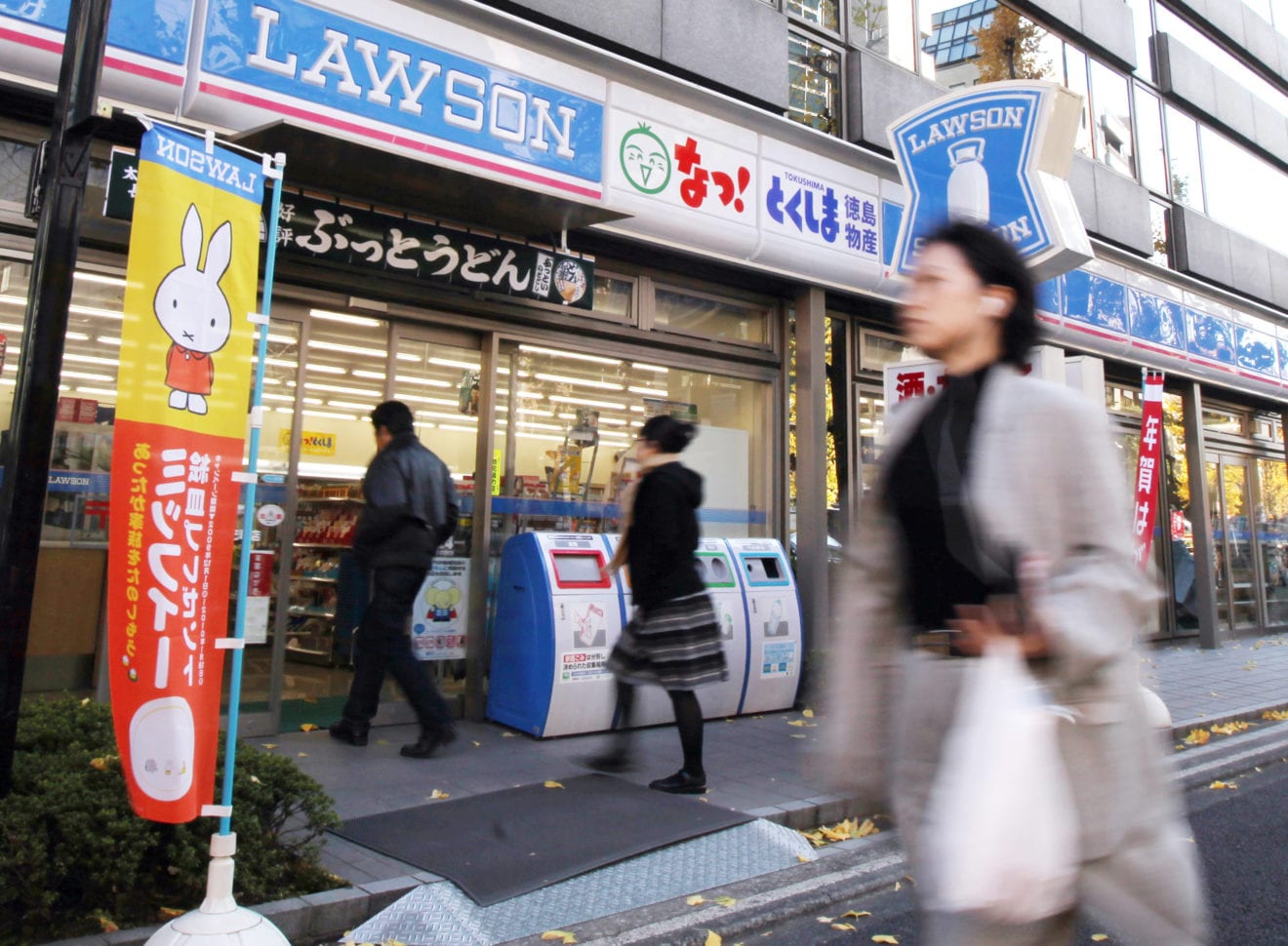
    Convenience store owner Lawson Japan is seeking to buy chains in the US with the aim of boosting its number of overseas outlets by about a quarter within a year.

    “In the US, where the market is mature, mergers and acquisitions are a simple and straightforward way for us to expand, which would also allow us to buy time to boost the number of shops,” says Sadanobu Takemasu, who became Lawson president and COO this week.

    He says the group will also focus on expanding in Southeast Asia.

    Lawson has about 12,500 stores in Japan and 793 outside the country, and is targeting a 26 per cent increase to 1000 overseas outlets by February.

    Lawson joins other chains such as Seven & I Holdings’ 7-Eleven and FamilyMart in seeking overseas expansion while competing to displace conventional grocery shops and restaurants domestically amid Japan’s economic malaise and falling population.

    Lawson has a 5.3 per cent market share of Japan’s grocery retail sales, second only to 7-Eleven’s 12.2 per cent share, according to data from Euromonitor International. The situation is the same in the fast-food market, with 7-Eleven holding a  33.8 per cent share followed by Lawson with 12.4 per cent.

    Prime Minister Shinzo Abe says he is postponing an increase in sales tax until October 2019 as the government seeks to avoid depressing private consumption.

    But Takemasu says any changes in sales tax timing would have had only a temporary impact on Lawson’s business.

    “In Japan, I want to focus resources on the existing businesses to strengthen them, so I’m not considering adding new businesses through mergers and acquisitions for now.”

    Trading conglomerate Mitsubishi Corporation, where Takemasu was an aide to the president before joining Lawson, is Lawson’s top shareholder with a 33 per cent stake.

    Lawson bought the Seijo Ishii supermarket group in 2014, and the United Cinema chain the same year.

    While Lawson has outlets in China, Indonesia and the Philippines, Seven & I has about 40,000 shops outside Japan while FamilyMart has about 6000.


  • Singapore home to unique online sake service

    Singapore home to unique online sake service

    Rare and seasonal editions stored in a snow cave for a year are being offered by a new online sake service in Singapore.

    Introduced by Sisi Limited, the Sakemaru service delivers premium sakes to customers every month. Subscriptions are priced from S$50 (US$37) a month, and to mark the launch a trial promotion is being offered at a 50 per cent discount for the first month.

    Benefits include special logistics and cold storage, product from specially selected breweries, and sake sommeliers.

    Leading the sommelier team is Japan International Trading CEO Tadashi Okushima, who first became a sake sommelier in 2007. He is a certified teacher of sake traditions, and in 2014 was appointed Japan’s first honourable sake sommelier.

    Sisi CEO Taichi Abe, who is also a sommelier, says sake has seasons. Breweries produce rare limited editions of sake every season. Unpasteurised and unfiltered, the limited-edition sakes have a taste that is totally different from the general line-up.

    Winter is the brewing season, and fresh sake nouveau is similar to a sparkling wine. Through spring and summer the sake matures, its taste becoming soft and smooth.

    By autumn, after nine months of maturing, sake becomes mild and rich.

    Sakemaru stores its rare sake in a specially designed room made entirely from snow. The snow cellar is an ancient Japanese way to keep food fresh. The advantage of storing the sake under snow is that there is no vibration from electricity, it is dark with high humidity.

    Japan has about 1500 sake breweries, each producing dozens of labels.

    Founded a year ago, Sisi is a platform for introducing Japanese culture worldwide. Its services include trading, promotion, branding and business localisation.

  • KFit Holdings moves into Indonesia with Groupon

    KFit Holdings moves into Indonesia with Groupon

    Malaysian health and fitness company KFit Holdings is about to enter the Indonesian market after signing a deal to acquire eCommerce company Groupon Indonesia.

    For an undisclosed amount, the acquisition will see KFit enter Indonesia with Groupon as a wholly owned subsidiary. The transaction is expected to be completed in the third quarter of this year.

    Groupon Indonesia has more than 1 million subscribers and 15,000-plus local merchants.

    “The combination of Groupon Indonesia’s established presence and KFit’s experience in building a mobile-first platform will propel us in a high-growth local commerce market, further accelerated by increasing mobile penetration,” says KFit CEO/founder Joel Neoh.

    “While KFit will continue to focus on health and fitness services, this presents a strategic direction for us to enhance and broaden our offerings. In the long run, this acquisition will provide us with a strong platform for growth in Southeast Asia.”

    KFit is an online subscription platform that provides users access to fitness studios, classes and gyms in various cities across Asia. Since its launch last year, it has extended its offering to include beauty and wellness, and launched its pay-per-use KFitGo. In the past six months, KFit users have reserved more than 400,000 activities. Today, one reservation is made every minute on the KFit platform.

    KFit founder Joel Neoh also founded Groupon Malaysia, in 2011, going on to head Groupon Asia-Pacific.

  • Two more Jollibee Singapore stores open

    Two more Jollibee Singapore stores open

    Jollibee Foods Corp has opened two more outlets in Singapore, driven by Filipinos’ demand for the popular Philippine fast food chain.

    The new stores of Jollibee Singapore are located at Square 2 Novena and Changi City Point, complementing the first one in Lucky Plaza.

    Aside from the usual fare, the new stores’ menu includes Spicy Chickenjoy, Crispy Chicken Burger and Chicken Tenders, to provide more options for Singaporeans.

    “We are delighted to further extend our presence in Singapore to further bring the joy of eating to more families. This is also in response to the growing demand of Singaporean residents who love our Chickenjoy and our Jolly Spaghetti,” said Dennis Flores, Jollibee Foods Corp VP for International Markets.

    “Our unique style of preparing our bestselling Chickenjoy was very well-received; crunchy and juicy fried chicken enjoyed with tasty gravy is a hit with local palates.”

    Jollibee has hit a milestone when it opened its 1000th global store at The Dubai Mall. The company now sets its sights on high-expansion growth in the US, Middle East, Europe, Australia and Southeast Asia.

  • Asian mPOS use booming

    Asian mPOS use booming

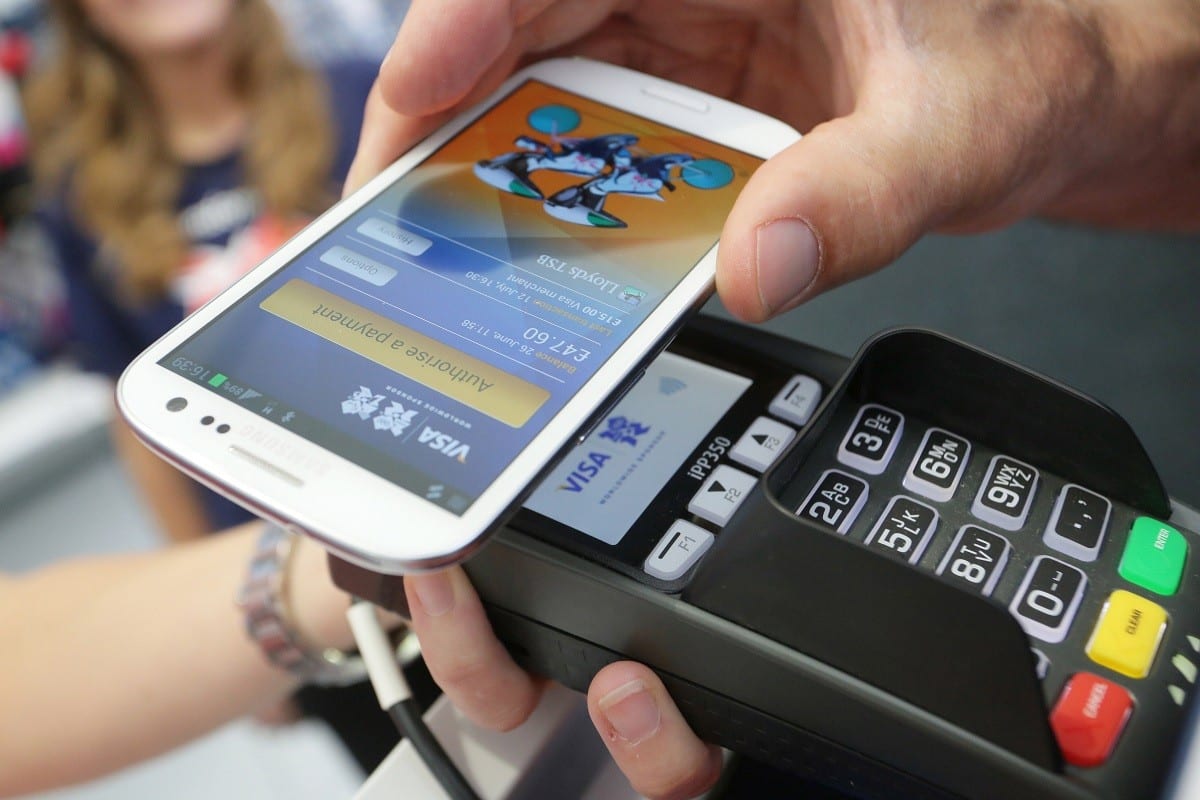
    The fast-growing population of smartphones and tablets are driving an Asian mPOS boom.

    Mobile point-of sale (POS) terminals will take on a significant role in businesses, handling 40 per cent of all retail transaction value by 2021, up from an expected 12 per cent in 2016, finds Juniper Research.

    The company says mPOS is enabling smaller merchants in emerging markets, particularly across India, Southeast Asia and Latin America, to accept card payments and grow their businesses.

    With larger retailers adopting mPOS in retail sales, Juniper forecasts the use of mPOS systems to account for more than one in three POS terminals by 2021

    “We are seeing several vendors tailor their software to the needs of specific industries, integrating mPOS capabilities as part of broader cloud-based business software,” said James Moar, research author.

    “These additional services can then make use of the sales data directly to manage inventory, monitor staff performance and other functions, which can all add more value to a business and justify a higher margin.”

  • DTI to showcase Filipino retail brands in Jakarta

    DTI to showcase Filipino retail brands in Jakarta

    The Department of Trade and Industry (DTI) is set to showcase Filipino retail brands at the “Lifestyle Philippines” event on June 10, 2016 at Shangri-La Hotel, Jakarta, Indonesia.

    In a statement, Philippine Embassy Trade Representative Alma Argayoso said Lifestyle Philippines is a branding initiative led by the Philippine Trade and Investment Center (PTIC) in Jakarta, which aims to promote Philippine-made products in the Indonesian market.

    “This initiative hopes to increase trade with Indonesia, which in 2015 stood at US$3.6 billion. The Philippines exported about US$628.27 million worth of goods and services to Indonesia, while the Indonesia had US$2.93 billion trade with its counterpart,” Argayoso said.

    The event includes a fashion show that will feature Karimadon and Rusty Lopez, two iconic brands in the Philippines that have begun to create a following in Indonesia’s fashion-forward clientele market. Other brands that will be featured are Plains and Prints and Cruzzini Barong Tagalog.

    Barong Batik, a known fashion innovation for many diplomats and dignitaries will also be exhibited at the said event. It is a fusion of Philippine barong and Indonesian batik designs into one.

    Apart from apparel, the event will also feature potential Filipino food products for exports under the Flavor Philippines such as Goldilocks polvoron, Mama Sita’s sauces and mixes, Leslie’s snack products, Destileria Limtuaco’s spirits and liquors, and other artisanal food products such as dried fruits and nuts, jams and marmalade, bottled sardines, and chocolate dipped dried mangoes.

    Moreover, hand-woven crafts will be featured under the special section, Woven Chic.  Indigenous textiles from the Philippines, traditional dresses, linens, and modern and traditional pieces of jewelry will be displayed for the Indonesian fashion-oriented consumers.

    “The regional integration in ASEAN presents opportunities for Philippine companies to expand to Indonesia and other ASEAN markets, and we certainly would like to actively take part in supporting Philippine companies in their regional expansion. We look forward to make Filipino products more available in the Indonesian market, particularly since there are many Indonesians, having visited or studied in the Philippines, who look for our products,” Argayoso added.

    The event will also highlight other Philippine products and services such as travel and tourism, educational services and pharmaceuticals.

  • BMW revamps “i” electric car division to focus on self-driving tech

    BMW revamps “i” electric car division to focus on self-driving tech

    BMW has transformed its “i” division into a development center for self-driving cars, a board member told Reuters, a major strategic shift for the unit previously focused on making a family of lightweight electric vehicles.

    While Tesla’s (TSLA.O) Model 3 will hit showrooms in 2017, and as rivals Porsche and Audi are working on all-electric cars for release by 2019, the German carmaker appears to have put such cars on the back burner. Its next fully-electric car is not due until 2021.

    The company has changed tack after its only fully battery-powered car, the i3, failed to gain traction with the public, with only 25,000 sales last year. By contrast, Tesla has already received more than 370,000 orders for its Model 3.

    Now, rather than seeking to match the likes of Tesla and Porsche with a new zero-emissions sports limousine for release within the next two years, its main focus will be on developing an electric car with the next generation of technology: autonomous driving.

    In an interview at the company’s headquarters in Munich, BMW board member Klaus Froehlich, who is in charge of development, said he had relaunched the i division in April as a unit devoted to producing cars that drive themselves.

    “It is now in ramp-up stage. We call it Project i Next.”

    The revamp also follows at least four high-profile staff defections from the division this year. Dirk Abendroth, manager of BMW’s “i” powertrain group, Henrik Wenders, vice president product management BMW “i”, and Carsten Breitfeld, vice president engineering, head of the i8 vehicle program, were poached by a Chinese electric vehicle startup.

    As part of its autonomous driving push, BMW is hiring experts in machine learning and artificial intelligence. It is also integrating the functions of existing computer driven assistance systems like cruise control, emergency braking, lane-keeping support and automatic parking.

    RIDE-HAILING

    With a fully autonomous vehicle, BMW could launch a ride-hailing business without having to pay drivers, Froehlich said, giving carmakers a competitive edge over new ride-hailing companies like Uber [UBER.UL] and Lyft which are eroding car sales by making part-time use as convenient as ownership.

    Earlier this month Toyota Motor Corp (7203.T) said it would invest in Uber, and Volkswagen (VOWG_p.DE) announced a $300 million investment in Gett, a smaller ride-sharing company.

    BMW too may partner with a ride-hailing firm, particularly in markets like China, but the Bavarian carmaker’s strategy on potential partnerships with companies in this space is still being worked on, Froehlich said.

    Sales of highly autonomous vehicles – ones where permanent active input from the driver is not required – are not expected to gain traction until 2020, but could then rise to around 9 million a year by 2025, according to analysts at Exane BNP Paribas.

    China, the world’s largest car market, is likely to be the market where autonomous cars will first emerge on a large scale, Froehlich said.

    “China is extremely fast implementing technology. Last year more electric cars were sold in China than in all the other global markets combined,” he added.

    BMW is also considering expanding in the area of reserving parking spaces and electric car charging stations over mobile phones, a market which is still fragmented within countries. The carmaker has already invested in ParkNow and Parkmobile, two digital parking and payment services.

    “We want to actively participate in a consolidation process,” Froehlich said.

  • Michelin plans 20% increase in tyre sales by 2020

    Michelin plans 20% increase in tyre sales by 2020

    Michelin said ahead of an investor day on Monday that it aims to increase tyre sales by 20 percent by 2020, pledging to outpace the growth of the market.

    The group also said it aimed to double services and solutions revenue to 2 billion euros ($2.27 billion) over the same time period.

  • TomTom wins deal to provide Volvo Cars with maps, data

    TomTom wins deal to provide Volvo Cars with maps, data

    TomTom, the Dutch navigation company, said on Wednesday it had won a contract to provide Volvo Cars with real-time maps and traffic data for its vehicles.

    Terms were not disclosed, but the contract is a major win for TomTom, which competes with Google Maps and HERE, the former Nokia unit now owned by Audi, BMW and Daimler.

    TomTom, once known mostly for dashboard-mounted GPS systems, has won a string of contracts for its mapping technology, which it believes will play an important role as car driving becomes increasingly automated.

    Other TomTom customers include Volkswagen, Uber and Apple.

    TomTom’s shares are down more than 30 percent so far this year, declining sharply during the January market sell-off and again in February after issuing a forecast for 5 percent sales growth in 2016 that fell short of market expectations.

  • Dtac plans major prepaid brand revamp

    Dtac plans major prepaid brand revamp

    Thailand’s Dtac has announced a major prepaid brand revamp and introduced new promotional tariff plans as  part of efforts to attract at least 1 million digital consumers to its prepaid subscriber base.

    As part of the revamp, Dtac will replace its Happy prepaid brand as it moves to bring all its prepaid brands under the Dtac umbrella.

    The operator has allocated 200 million baht ($5.7 million) this year towards marketing the Dtac prepaid brand.

    Dtac has also introduced plans offering unlimited internet access and free calls within Dtac networks for 29 baht ($0.83) per day.

    Prepaid customers will also be offered free YouTube streaming from midnight to 8am and 24 hour music streaming.

    Around 80% of Dtac’s 25.5 million subscribers are prepaid customers, with the wide majority using the operator’s 3G network, statistics provided by the company show. Around 68% of Dtac’s prepaid customers own a smartphone.

  • L’Occitane to expand to China’s lower-tier cities

    L’Occitane to expand to China’s lower-tier cities

    French skincare brand L’Occitane has revealed its plans to expand into China’s lower-tier cities through e-commerce, in particular Tmall, an online platform for branded goods operated by Alibaba Group Holding.

    The company revealed that it has a marketing partnership with the online platform to meet China’s emerging middle class, who are creating growing demand for imported premium products.

    According to Andre Hoffmann, L’Occitane’s vice chairman and managing director of Asia-Pacific, opening new physical stores in China’s second and third-tier cities would help create brand awareness.

    The group reported that mainland China was its largest source of growth last year, with sales in the country growing 16.8 percent, contributing nearly 30 percent to the company’s overall growth. The company saw an 8.9 percent rise in sales to USD1.45 billon over the 12 months ending in March.

    Meanwhile, L’Occitane held off on plans to expand in Hong Kong and Macau due to the declining numbers of Chinese tourists visiting the two regions. The company revealed that it will be shutting down a store in Hong Kong in September, following a recent closure of one of its shops in Macau.

    “Now [that] mainland tourist numbers are shrinking, maybe we don’t need so many stores to do the same level of business,” said Hoffman in a Nikkei report.

    L’Occitane is planning to continue adding to its 187 stores in 65 cities across mainland China. Some 50 stores, which are set to open globally later this year, will be in mainland China, Japan and South Korea.

    While Hoffman noted that all stores in Hong Kong have been “profitable,” he admitted that the retail market has been “very challenging in the past 18 months.”

    The vice-chairman revealed that its current strategy is to focus more on local costumers, adding, “The mainland tourists are just like the cherry on top of the ice-cream sundae.”

  • Starbucks, Tata extend partnership beyond India

    Starbucks has more than 2,000 cafes in China alone and is opening about 500 new stores a year in the country. John Culver, president of Starbucks’/

  • Pop-up restaurants add diversity to Bangkok’s retail market

    Pop-up restaurants add diversity to Bangkok’s retail market

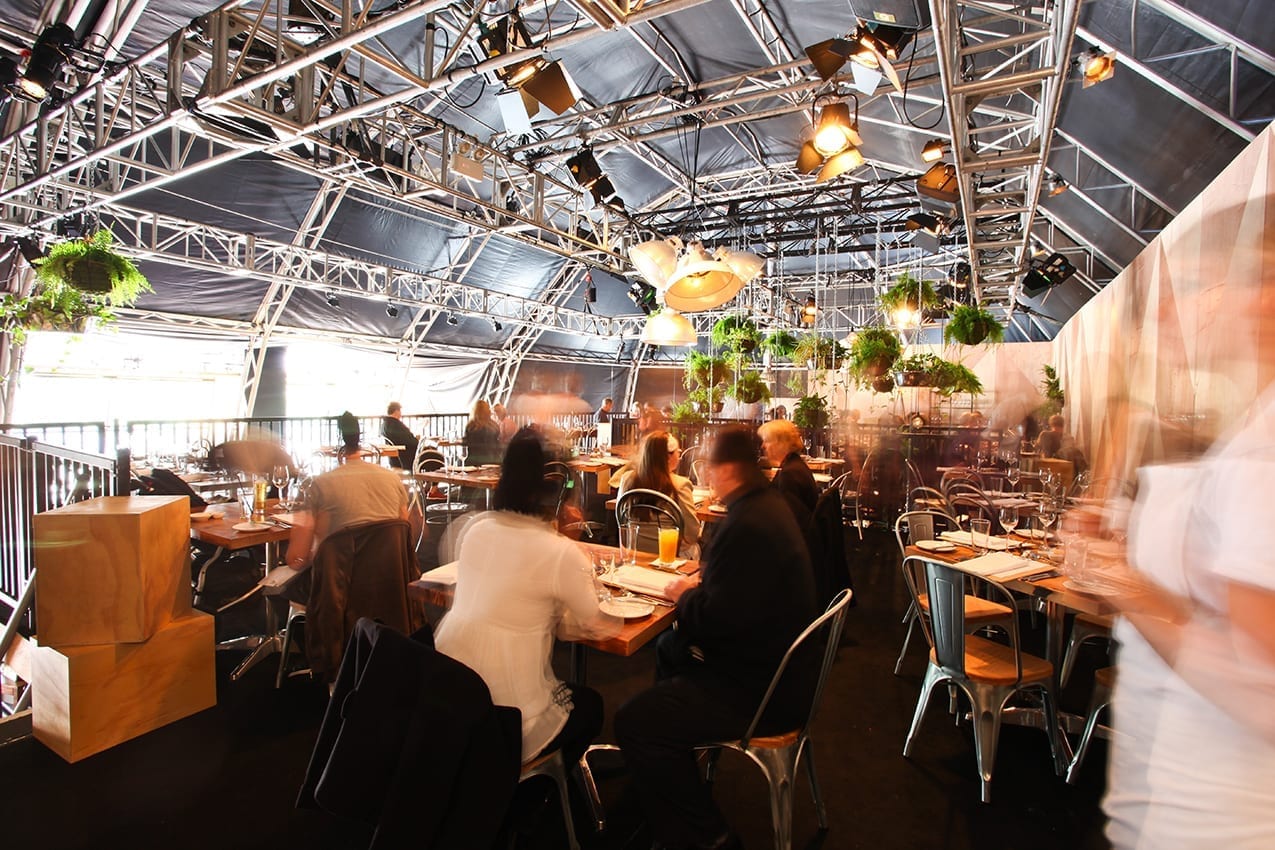
    POP-UP restaurants are a growing trend in Bangkok shopping malls and in suburban main streets.

    These are temporary restaurants that can operate from any location where there are customers and that is safe for cooking and serving food.

    While beer gardens operating during the cool season are probably the pop-up format that Thais are most familiar with, pop-up kitchens and food trucks are gaining popularity in Bangkok.

    The Mall Group recently introduced pop-up kitchens around its supermarkets. Patrons can buy fresh produce and ask for it to be cooked at these kitchens.

    Although seating is limited, the food fad has caught on and it is not surprising to find queues forming at these new eateries.

    Another trend that is transforming the street-food culture in Bangkok is the mobile food truck. Summer Street, which serves grilled seafood, and Daniel Thaiger’s burger truck are names that have gained a following.

    Potential patrons keep track of opening hours and the location of these trucks on social-media platforms – an indication that the digital age has fundamentally changed the way people dine and socialise.

    Pop-up restaurants can range from the simple to the ultra-high-end, but one thing they all have in common is the element of exclusivity.

    Because of their temporary nature, pop-ups intrinsically create a “moment in time” that cannot be replicated; this also ties in neatly with the experience trend and craving for new and exciting concepts.

    These food and beverage developments have given some of Thailand’s malls and retail streets a revival, adding diversity and vitality to the shopping experience and keeping people in the malls longer.

    The mobility of these pop-ups and food trucks means that empty spaces can be easily converted into food halls or markets, helping to breathe new life into sometimes derelict but architecturally exciting space, such as former factories, warehouses, office buildings and marketplaces that are in good locations.

    In Bangkok, mall operators have used car-park spaces to host food and culture festivals. Boosted by rising income levels and an insatiable demand for fresh culinary experiences, these food halls have become very popular.

    These pop-up restaurants because of their mobility and flexibility will continue to help mall operators pull in retail crowds even as they undergo renovations.

  • South Korea’s Lotte Chemical makes $3.1bn counter bid for Axiall

    South Korea’s Lotte Chemical makes $3.1bn counter bid for Axiall

    The two companies last year formed a joint venture to build an ethylene cracker plant together in the US, which is due to start production in 2018.

    Lotte declined to reveal the exact terms of its offer, but analysts said the bid would top Westlake’s $3.1bn approach. The counter offer could prompt Westlake to raise its bid after Axiall, a maker of polyethylene products, rejected the approach in April, the analysts added.

    “Lotte Chemical will be seen as a white knight for Axiall,” Park Young-hoon, an analyst at LIG Investment & Securities, told Reuters.

    If successful, Lotte Chemical would use the acquisition of Atlanta-based Axiall to diversify its product portfolio and secure a foothold in the US.

    Axiall said it has been in talks with several potential buyers after its rejection of the first approach prompted Westlake to launch a proxy fight to oust Axiall’s board.

    However, investors were unimpressed by Tuesday’s counter-offer, driving Lotte Chemical shares down 3.5 per cent to Won260,500 — their lowest in more than four months — while the Kospi benchmark index closed up 1.3 per cent.

    “The deal could be positive for Lotte in terms of securing a stepping stone in the US, but its shares were weighed down by concerns that the acquisition price could be much higher than expected,” said Lee Ji-Yeon, analyst at IBK Securities.

    The deal would be Lotte Chemical’s largest overseas acquisition. The company, formerly named Honam Petrochemical, took over Malaysia’s Titan Chemicals for Won1.5tn in 2010.

    South Korean chemicals makers are trying build scale to compete better with lower-cost Chinese rivals, with Lotte Chemical buying Samsung Group’s chemicals business for $2.5bn last year.

    South Korean petrochemical companies posted record profits last year as lower oil prices drove down material costs. Lotte Chemical reported a Won990.7bn net profit in 2015 on sales of Won11.7tn. The company said it could afford the cross-border deal, with its annual cash flow reaching $2bn.

    Almost devoid of hydrocarbon deposits, South Korea relies on oil imports but is also a big exporter of petroleum and petrochemical products. More than half of its processed output goes to markets including China, Japan and the US.

    Separately, South Korea’s Hanwha Chemical said on Tuesday its Hanwha Advanced Materials unit had submitted a letter of intent to buy US automotive materials supplier Continental Structural Plastics. The group declined to give the details of the offer but the Maeil Business Newspaper said the deal could fetch $600m.

    Axiall’s New York-traded shares, which have lost one-third of their value over the past year, were down 2.5 per cent on Monday at $23.30, before news of Lotte’s approach was made public.


  • Carrefour China beefs up distribution

    Carrefour China beefs up distribution

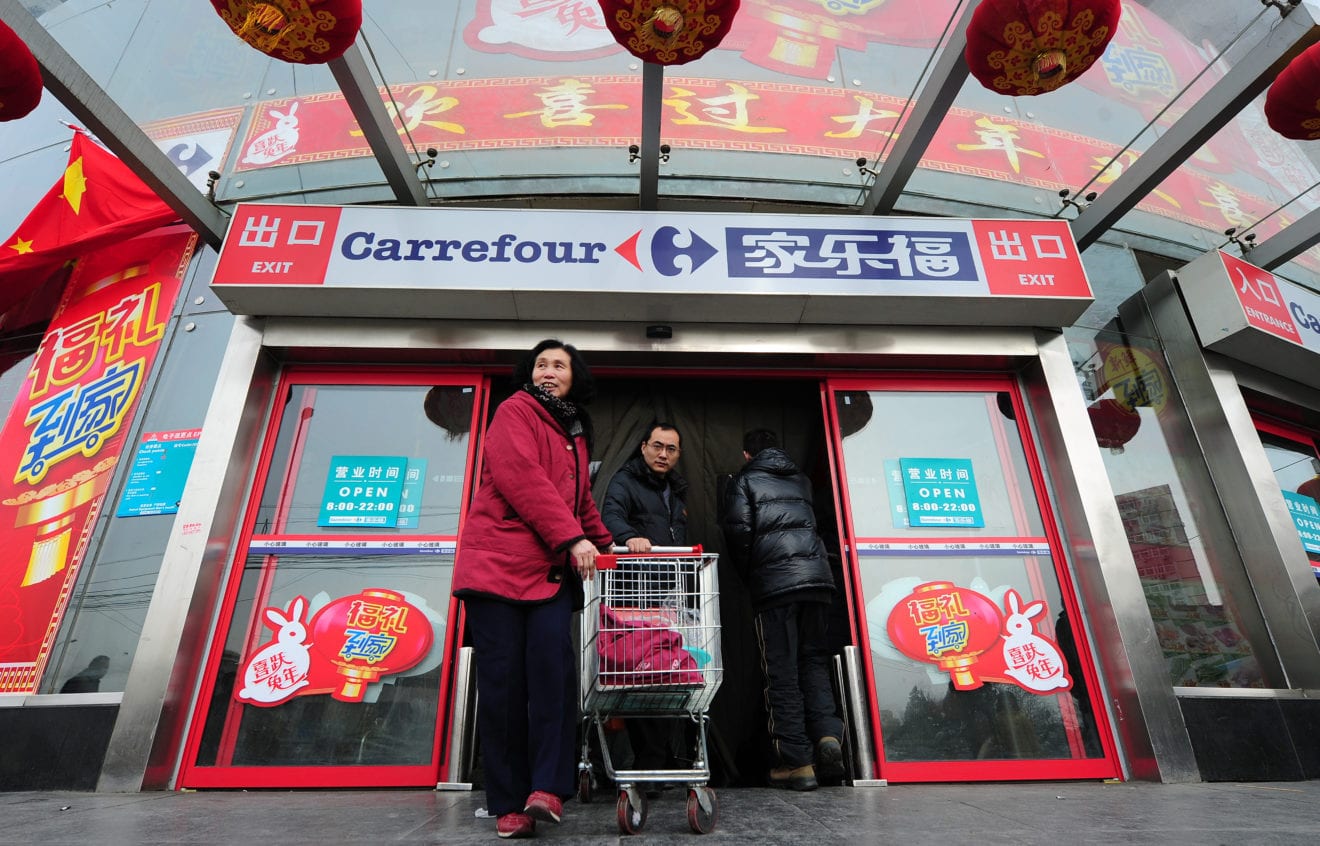
    Carrefour China has opened a new distribution center is in Hongmei Town, Dongguan, Guangdong province.

    It says the centre will play an important role in the supply chain of Carrefour China in South China area, by forming a logistics network covering the Pearl River Delta as well as Fujian and Hainan province, which can increase the logistics efficiency and support stores.

    Carrefour is focused on long-term development in China. Since a new development strategy was implemented in March 2015, Carrefour has  gradually introduced new formats and initiatives, such as an O2O business, convenience stores and opening hypermarkets in new cities. It says strengthening the supply chain network is the key to implementing the new strategy.

    The Carrefour China Logistics Center will provide full support to the 30 stores in Guangdong, Hainan and Fujian province.

    During the last two years, Carrefour China has established four distribution centers in eastern, western, northern and central China.