Tag: asia

  • US theme park debut for Sanrio’s Hello Kitty

    US theme park debut for Sanrio’s Hello Kitty

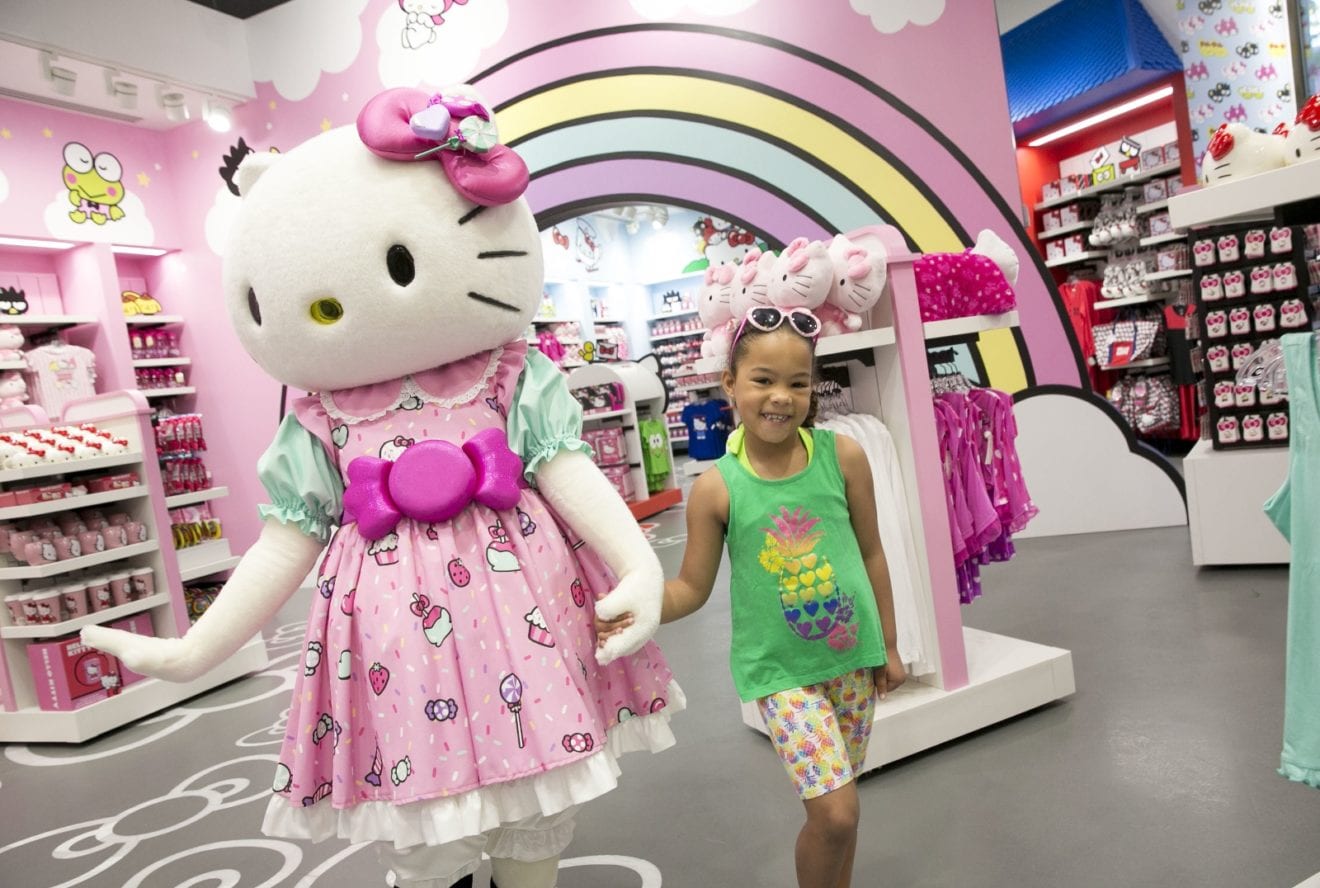
    Global lifestyle brand Sanrio has opened a Hello Kitty Shop at Universal Orlando Resort in the US.

    Opened in conjunction with Universal Parks & Resorts, the store marks Sanrio’s official retail debut and Hello Kitty‘s first appearance at a theme park in North America. On Hollywood Boulevard in the theme park, the outlet offers specialty merchandise including stationery, home goods, apparel, accessories, collectibles and confectionery. Most product is exclusive to the park.

    Other Sanrio characters including Badtz-Maru, Chococat, Keroppi, My Melody and Pompompurin are also be featured.

    “Our partnership with Universal delivers a new touch point for the brand through special products, unique merchandising and a fully branded store experience that incorporates many of our beloved characters,” says Sanrio senior VP of brand management and marketing Jill Koch.

    As well as shopping for exclusive merchandise, customers have photo opportunities at the show, can create souvenir versions of Hello Kitty’s signature bow, send letters and receive gifts.

    Hello Kitty StoreMerchinterior Talent CharacterAven

    With four specially themed areas within the Hello Kitty Shop, fans can find treats at the Hello Kitty Sweet Yummy Shop, loungewear and home goods in the Hello Kitty Lounge, multi-character accessories, stationery and gifts in the Hello Kitty and Friends Town, and collectibles featuring Sanrio characters reimagined with classic Universal properties in the Hello Kitty at the Movies area. New products and designs will be released regularly.

    Guests can also meet Hello Kitty herself, with the 40-year-old Japanese icon making regular appearances.

    Sanrio launched in 1960 and now has more than 50,000 branded items in more than 130 countries, and upward of 15,000 US retail locations including 80 Sanrio boutiques.

    Academy Award-winning director Steven Spielberg is creative consultant for Universal Parks & Resorts, a unit of Comcast NBCUniversal, which wholly owns Universal Studios Hollywood, including Universal CityWalk Hollywood. It also owns Universal Orlando Resort and its two theme parks (Universal Studios Florida and Universal’s Islands of Adventure), four resort hotels and Universal CityWalk Orlando. It also has licence agreements with Universal Studios Japan in Osaka, and Universal Studios Singapore at Resorts World Sentosa, Singapore.

    Comcast NBCUniversal also plans a theme park in Beijing and an indoor theme park in Moscow.

  • Here’s How CapitaLand Mall Trust Wants to Bring Shoppers to Its Malls

    Here’s How CapitaLand Mall Trust Wants to Bring Shoppers to Its Malls

    CapitaLand Mall Trust, an owner of retail malls in Singapore, is the largest listed real estate investment trust (REIT) in Singapore.

    But, mere size alone does not guarantee that shoppers will keep coming back to its portfolio of malls. To ensure a steady stream of shoppers, the REIT has to keep itself plugged into the latest consumer trends.

    One big retail trend is online shopping.

    In my view, shopping online has three major benefits. One, there may be a wider variety of products. Second, the cost of similar products may also be cheaper online. Finally, there is the convenience of having items delivered to one’s doorstep. All three benefits could lead to lower shopper traffic to retail malls in general and thus potentially pressure CapitaLand Mall Trust.

    Threat or opportunity

    For malls, online shopping could be seen as a threat. But for Wilson Tan, the chief executive of CapitaLand Mall Trust’s manager, it is also an opportunity. He shared his thoughts on ecommerce in a recent interview conducted by bourse operator Singapore Exchange Limited  (SGX: S68):

    “We need to be digitally more savvy. We could consider the Internet as a threat, but the issue really is how we harness and ride this horse.”

    With the above in mind, Tan shared two key initiatives that CapitaLand Mall Trust is working on. The first one is a loyalty program that comes from CapitaLand Mall Trust’s sponsor and manager, the real estate outfit CapitaLand Limited (SGX: C31). The report of the interview explains:

    “CapitaLand’s CAPITASTAR loyalty programme – which boasts over 2.6 million members across the five Asian countries where CapitaLand malls operate, and includes more than 800,000 members in Singapore – is one approach to better understand shopper behaviour.”

    The CAPITASTAR loyalty program allows members to accumulate points and thereafter, claim discount vouchers to use in CapitaLand’s family of malls (this includes CapitaLand Mall Trust’s malls). This could encourage shoppers to shop at the REIT’s malls. Tan also said that the loyalty program gives the REIT deeper insight into shopper preferences.

    The number of CAPITASTAR loyalty card holders in Singapore – over 800,000 – can be considered impressive, given that Singapore has a population of only around 5.5 million people.

    There’re more plans on the way. CapitaLand Mall Trust is also testing an online delivery platform at Raffles City Shopping Centre, as the interview report mentioned:

    “Its online order and delivery platform Food to Go, which involves participating food and beverage outlets at Raffles City Shopping Centre, is another initiative. The current beta programme runs until 30 June, and plans for enhancements are underway.”

    Tan feels that this digital effort could help the REIT’s tenants increase their sales. Helping tenants achieve higher revenue could be beneficial for the REIT as it could lead to better rental rates down the line.

    Foolish takeaway

    In my view, online shopping is here to stay and might take up a bigger share of the retail market over time. It is up to Singapore malls to decide whether the trend is a threat, or as Tan sees it, an opportunity.

  • Ivanka Trump’s Made-In-China Scarves Recalled Over “Burn Risk”

    Ivanka Trump’s Made-In-China Scarves Recalled Over “Burn Risk”

    The latest headline involves eldest Trump daughter Ivanka, whose scarves have been recalled by Global Brands Group Accessories, a Trump licensee, for violating the federal flammability standard.

    According to the Consumer Product Safety Commission, roughly 20,000 scarves sold between October 2014 and January 2016 at retailers including Lord & Taylor, Amazon, TJ Maxx and Century 21 pose a “burn risk” to consumers. The scarves, which are 100 percent rayon, can now be returned for a full refund. Original retail price for the two styles involved — the Beach Wave and Brushstroke Oblong — falls between $12 and $68.

    Of the many scandalous headlines baring the name “Trump,” a generous handful have been related to both Donald and Ivanka’s fashion lines. Specifically, the pair have been criticized because a majority of their products are manufactured outside of the U.S. Of the 838 products under Ivanka’s line, none are made exclusively in America, according to Harvard professor Robert Lawrence. Most are imported, with 354 being produced in China.

    Donald has openly admitted that his neckties are made in China. However, the Republican candidate used this fact to make the point that “it’s very hard to have apparel made in this country,” implying that his reforms — including a tariff as high as 35-45 percent on apparel coming from China and Mexico — would encourage more production on U.S. soil.

    Speaking of Mexico, you may also recall Donald’s drama with Macy’s over his controversial comments regarding Mexican immigrants, another of the magnate/politician’s retail offenses. In July, Macy’s officially severed ties with Donald and phased out his merchandise from shelves. Ivanka’s line, however, continues to be sold at the department store.

  • Anbang to buy Allianz’s South Korean operations

    Anbang to buy Allianz’s South Korean operations

    China’s Anbang Insurance Group Co. reached a deal to buy the South Korean operations of Germany’s Allianz SE, just days after it walked away from a $14 billion bid for Starwood Hotels & Resorts Worldwide Inc.

    Anbang has exploded onto the international scene in recent years by spending billions to acquire insurers and hotels throughout the world. In February 2015, it laid out nearly $2 billion to buy New York’s Waldorf Astoria, the highest price ever paid for a single U.S. hotel. It is also a big player at home, with stakes in listed Chinese developers and banks, while also investing in a traditional Chinese medicine maker and a wind-turbine manufacturer.

    Anbang made a bid in March for Starwood Hotels after the U.S. luxury hotel owner had struck a deal to sell itself to Marriott International Inc. That sparked a bidding war for Starwood that culminated in a $14 billion offer from Anbang, which dropped the bid last week citing “various market considerations.”

    The deal with Germany’s Allianz marks the Chinese insurance group’s second acquisition in South Korea. Beijing-based Anbang bought a controlling stake in South Korean life insurer Tong Yang Life Insurance Co. for $1 billion a year ago from South Korea-focused private-equity firm Vogo Investment Group and other investors.

    Allianz agreed to sell Allianz Life Insurance Korea and Allianz Global Investors Korea to Anbang for an undisclosed amount, the two companies said in a statement Wednesday. The Allianz purchase is subject to local regulatory approvals and the parties expect to complete the deal in the second half of the year.

  • Zalora Thailand and Vietnam to be offloaded

    Zalora Thailand and Vietnam to be offloaded

    Rocket Internet is selling its Zalora Thailand and Vietnam eCommerce fashion sites.

    This follows the Alibaba Group investing in Rocket Internet’s Lazada, valued at US$1.5 billion. Zalora, which raised more than $250 million, was once on an equal footing with Lazada, according toTechCrunch.

    Southeast Asia did not have service from Amazon or eBay when Rocket started Lazada and Zalora in 2012, but the two outlets have posted heavy losses and experienced slow market growth.

    Zalora, part of the Global Fashion Group (GFG), covers 11 countries across Asia Pacific, including Australia, Indonesia and Taiwan. While its revenue rose 78 per cent to US$234 million last year, its net loss blew out 36 per cent to $105 million.

    Meanwhile, Rocket has announced a new strategy that takes it back to its roots, launching early-stage startups. It sold India-based Fab Furnish this month and Foodpanda Vietnam last year, and is said to be seeking buyers for Foodpanda India and eCommerce site Jabong.

  • Axiata Group buys Nepal’s Ncell for $1.36b

    Axiata Group buys Nepal’s Ncell for $1.36b

    Malaysia-based Axiata Group has entered the Nepal telecoms market with the acquisition of the nation’s largest mobile operator Ncell.

    Axiata has paid $1.36 billion for an effective 80% stake in Ncell from previous owners TeliaSonera UTA Holdings and Reynolds Holdings’ SEA Telecom Investments.

    Local partner Sunivera Capital Ventures will retain a 20% direct stake in Ncell, as required under Nepalese law.

    Axiata group CEO Dato’ Sri Jamaludin Ibrahim commented that Ncell represents a perfect expansion opportunity for the group.

    “One key ambition we have is to effectively offer high-speed data connectivity, and exciting products and services to meet the demands of a young and maturing Nepali market,” he said.

    “There are tremendous opportunities for us to grow with the nation for the longer term. As a Group respected for its commitment to corporate responsibility and governance, we will play an integral role with the Nepali government and civil society, and contribute towards the socioeconomic development of the country and her people.”

    Axiata is already exploring synergies including opportunities to serve Nepal’s overseas foreign workers segment, which number around 1 million in Malaysia alone.

    The operator plans to launch special products for Ncell customers offering discounted prices for Ncell customers roaming within the Ncell footprint.

    Axiata Group said its combined footprint in South and Southeast Asia now covers a total population of over 2 billion.

  • Huawei launches 4K ultra HD video offering

    Huawei launches 4K ultra HD video offering

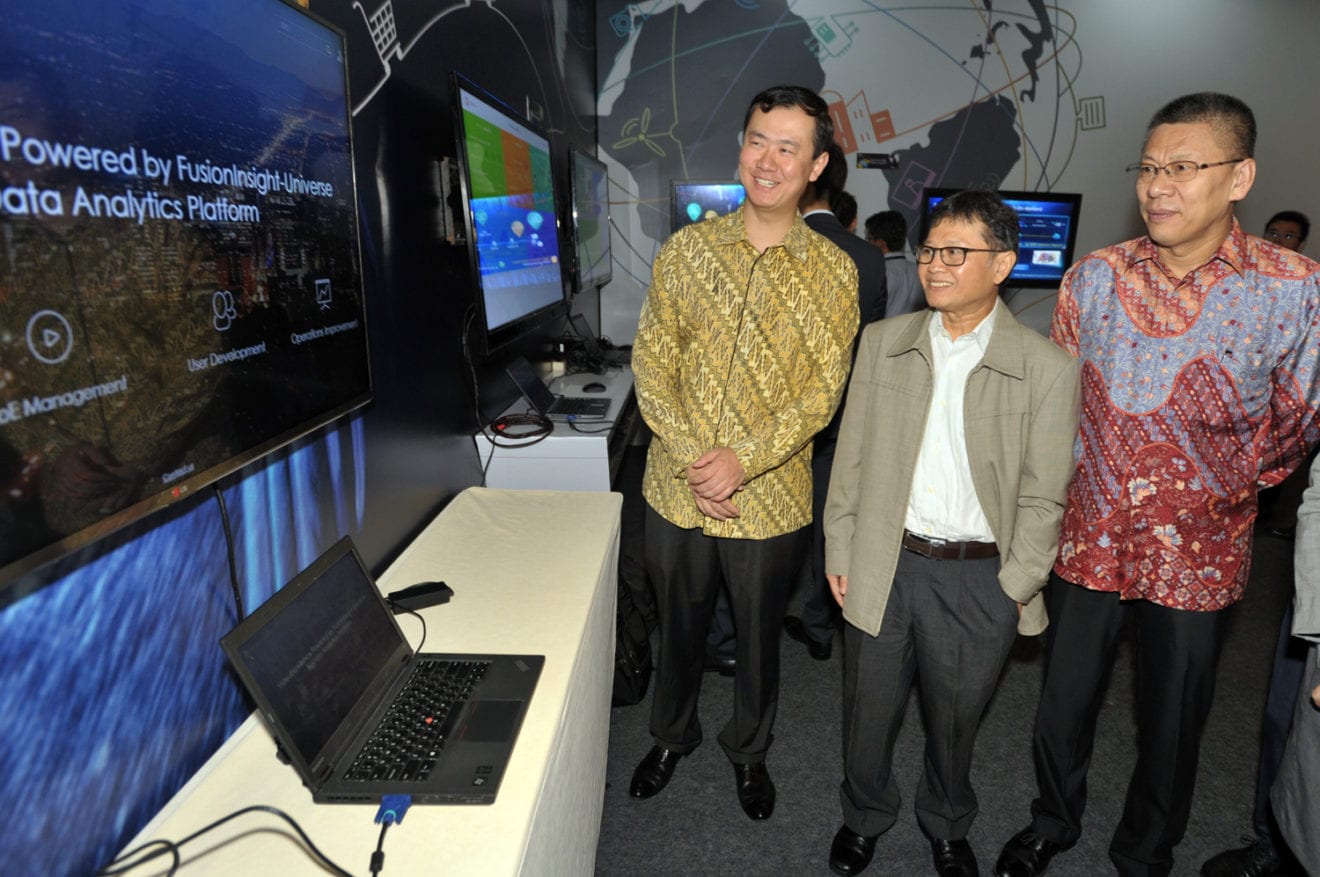
    Huawei has launched a new 4K ultra HD streaming video offering during its Big Video Summit in Indonesia.

    The vendor recently successfully trialed the technology in collaboration with Telkom Indonesia.

    Huawei’s 4K technology combines fiber broadband and 4K ultra HD video services to help operators develop innovative new broadband and video services.

    At the summit, held in Jakarta last week, more than 250 industry executives from governments, mobile operators, service and content providers and consulting companies met to discuss the future of Big Video in APAC.

    During a keynote presentation, Telkom VP ISG Pramasaleh Hario Utomo laid out the operator’s video-centric network strategy.

    Grey Juice Lab VP of business development for APAC Chairil Anwar also pointed out that the 4K industry chain is maturing, and predicted that 2016 will be the inflection point for 4K ultra high definition video.

    The event was inaugurated by Huawei Indonesia CEO Sheng Kai, Huawei South Pacidic CMO Lim Chee Siong, Indonesian Ministry of Communication and Information Technology acting director general of ICT resources Basuki Yusuf Iskanda and PRC economic and commercial counselor for Indonesia Wang Liping.

  • Massive data breach exposes all Philippines voters

    Massive data breach exposes all Philippines voters

    The Philippines’ 55 million voters are now susceptible to fraud and other risks after a massive data breach leaked the entire database of the Commission on Elections (Comelec), security firm Trend Micro has warned.

    The defacement of the Comelec website by a hacker group called Anonymous Philippines happened at near midnight on March 27. In a message to the government, the group said they want the poll body to implement tighter security measures on the precinct count optical scan (PCOS) machines to be used in the May 9 polls.

    “But what happens when the electoral process is mired with questions and controversies? Can the government still guarantee that the sovereignty of the people is upheld?” the hackers posted in the defaced Comelec website.

    A report said a second hacker group called LulzSec Pilipinas posted within day an online link to the Comelec’s whole database. The following day, the group also reportedly updated the post to add three mirror links to an index of files that could be downloaded.

    Trend Micro said the leak may turn out as the biggest government-related data breach in history, surpassing the Office of Personnel Management (OPM) hack in 2015 that leaked personally identifiable information (PII), including fingerprints and social security numbers (SSN) of 20 million US citizens.

    While the Comelec has given assurances to the public the day after the hacks that the no sensitive information was compromised and the country’s second automated polls will be secure, the securty firm believes otherwise.

    “Based on our investigation, the data dumps include 1.3 million records of overseas Filipino voters, which included passport numbers and expiry dates. What is alarming is that this crucial data is just in plain text and accessible to everyone,” the security firm said in a blog post.

    “Interestingly, we also found a whopping 15.8 million record of fingerprints and a list of people running for office since the 2010 elections,’” it added.

    “Among the data leaked were files on all candidates running on the election with the filename VOTESOBTAINED. Based on the filename, it reflects the number of votes obtained by the candidate. Currently, all VOTESOBTAINED file are set to have NULL as figure.”

    Regardless whether the hacking could affect the elections, the security firm said there is still the issue of all voter information that was leaked.

  • Cathay Capital Invests In Chinese Furnishing Retailer ABS

    Cathay Capital Invests In Chinese Furnishing Retailer ABS

    Sino-Europe private equity firm Cathay Capital has made an undisclosed investment in Chinese home furnishing product retailer ABS through its Sino French SME Fund, says a company announcement.

    “ABS stands out among the numerous other domestic home furnishing companies in China because it has established an innovative data-based development model and an omni-channel retail system,” says Cai Mingpo, president of Cathay Capital.

    The private equity firm says it plans to leverage its home furnishing industry resources in China and France to assist ABS’ cross-border development.

    Founded in 2009, ABS has developed from a tele and catalogue selling model to an omni-channel and direct sale model with the integration of an online retailing mall, offline brand stores and mobile apps.

  • Tata Comms to provide MPLS WAN for Air France-KLM

    Tata Comms to provide MPLS WAN for Air France-KLM

    Europe’s second largest airline Air France-KLM has handed Tata Communications a multi-million dollar deal to provide next-generation network connectivity to 170 sites.

    Tata Communications will provide Air France-KLM with an MPLS WAN in the Middle East, Africa and Asia Pacific, supported by the operator’s global subsea cable network.

    The multi-year contract will see Tata Communications roll out a fast, intelligent network which will power Air France-KLM’s mission-critical systems, including passenger check-in, flight operations and departure control applications, as well as corporate programs in the Middle East, Africa and Asia Pacific.

    Air France-KLM, which carried 87.4 million passengers in 2014, is the first major European airline group to move away from the legacy networks widely used in the airline industry.

    Tata Communications’ global network – which today connects more than 300 locations for leading airlines worldwide – will enable Air France-KLM to offer a range of digital services in regions that have been identified by the International Air Transport Association (IATA) as the future growth drivers of the industry.

    Currently eight of the ten fastest growing airline markets are located in Africa. By 2034, IATA expects 1.3 billion passengers to touch China – up from 850 million at present – and India is set to see an additional 260 million passengers. Europe will act as key transfer hub to these emerging markets, with 1.4 billion passenger journeys in 2034 – nearly 600 million more than today.

    “Investing in emerging markets and cutting-edge digital technologies is at the heart of our growth strategy. We’re introducing a range of innovative services, such as travel apps for smartwatches, to provide a seamless, personalized travel experience for our tech-savvy passengers,” Air France-KLM CIO Jean-Christophe Lalanne said.

    “Tata Communications’ global next-generation network will act as the foundation for these services in the Middle East, Africa and Asia Pacific, empowering us take customer service to the next level and capitalize on the huge growth opportunities that these markets offer.”

  • Alibaba Cloud AI aims to predict singing contest winner

    Alibaba Cloud AI aims to predict singing contest winner

    Alibaba Cloud’s “Ai,” an artificial intelligence program was put on the spot to predict the winner at the grand finale of “I’m a Singer,” the popular Chinese reality television produced by Hunan TV.

    The competition is major annual event and attracts significant public participation in China. Ai predicted the winner by using neurological networks, social computing and emotional perception.

    Min Wanli, chief scientist for AI at Alibaba Cloud said the result was jointly created by TV audience, public judges, as well as the seven contestants.

    “It is very random and almost impossible to predict using human intelligence, and we aim to achieve real-time prediction by Ai,” said Min.

    “In a previous round, Ai predicted two of the top three winners on April 1,” said Min. “We believe that it will achieve a better performance after learning and evolving over the past week.”

    The program has the potential to understand human emotions, gather insights in real-time, and evolve through strong computing and machine-learning capacity.

    With this capability, Ai identified and assessed factors that may affect the result, including popularity of the songs, the singers’ voice pitch and energy, audience response and online discussions, to name a few.

    The program created and used a dynamic computer model to predict the result by computing both fact-based logical data and subjective emotion-based data.

    Ai’s prediction and the judges’ voting were processed independently and did not affect each other.

    In the future, Ai will be applied to areas such as personal assistance, weather analysis, smart cities and social trend predictions.

  • New Look and Celio to exit Singapore market

    New Look and Celio to exit Singapore market

    Two fashion brands will bow out of the challenging retail scene here before the year is out.

    Eight stores in various malls showcasing the British brand New Look and French menswear chain Celio will close in the second half of the year, said distributor Jay Gee Melwani Group.

    “The sales are not there and the costs are too high. We are consolidating and re-strategising which ones can work, which ones can’t,” Jay Gee Melwani Group managing director R Dhinakaran said.

    The other brands Jay Gee distributes include Aldo, Levi’s, Dockers, Aeropostale, Converse and health supplement chain Holland & Barrett. Affected staff will have the option of being redeployed to other stores in the group.

    Last week, conglomerate Al-Futtaim Group announced that it will shut 10 loss-making outlets here under its distribution and retailing arm RSH later this year.

    Competition from e-commerce, weak consumer sentiment and rising business costs have dogged retailers in recent years, with no sign of a let-up.

    Colliers International’s senior associate director of research and advisory, Ms Anthea To, said: “With both the domestic and international economies experiencing some headwind, consumers are likely to stay cautious and prudent in their discretionary spending.”

    Property consultancy JLL said vacancy rates in malls in Orchard, Marina and the suburban areas are still rising. Said Ms Lee Siew Ling, director of retail at JLL: “Retailers are now focusing on key locations with proven footfall and are more risk-averse and tend to refrain from investing in new locations.”

    The Marina retail submarket – which includes malls such as Marina Square and Suntec City – has the highest vacancy at 6.1 per cent, according to JLL data, followed by Orchard with 3.1 per cent and the suburban submarket with under 2 per cent.

    Ms Lee said the net take-up of retail space islandwide last year came in at minus 86,379 sq ft.

    This means more space was given up compared with retail premises being occupied by replacement retailers and new entrants.

    Shaw Centre, at the junction of Scotts Road and Orchard Road, appears to have trouble filling its units. About 25 units were still behind hoardings at the five-storey mall, including two on the ground floor facing Scotts Road, when The Straits Times visited last week.

    About nine units were vacant on level four, where Seasons Nail Bar is located. The shop’s general manager, Mr Roy Fong, said: “Sometimes I have one walk-in customer a week.

    “There is no shopper traffic. I have to spend $2,000 to $3,000 every month to do marketing. The management gave us a rental rebate, but that won’t help to improve sales.”

    Mr Jeremy Low said his Fox Studio hair salon is “still surviving” as it relies mostly on regular customers.

    “They should fill up the mall quickly, perhaps with an education centre or health spa or yoga studio, to get people to visit,” he added.

    “Maybe they can have a different theme on each floor.”

    Shaw Centre declined to comment on the occupancy rate.

    Marina Square Shopping Mall, which also has many unoccupied units, said it is working with tenants on advertising and promotions and holding events to drive shopper traffic. Its operator, Marina Centre Holdings, said the overall leasing outlook in Singapore will remain “difficult over the next 12 months as existing chain stores are expected to continue consolidating”. It expects to see more “pop-up” stores and new retail concepts.

    Pop-up shop Excluniqueeee leased 1,000 sq ft at the mall at a “very low rate” recently to showcase its apparel and street art.

    Store director Jason Wang said: “In good times, when the malls are doing well, there is no way for us to get retail space.”

    Knight Frank Singapore retail head Wendy Low said pop-up stores are becoming more common as they “help landlords in filling up vacancy and also act as a test bed” for new retail concepts. Analysts said landlords could also offer more flexible tenancy periods and rental structures, review the tenant mix and step up marketing efforts.

  • The Queen of Siam: Chadatip Chutrakul Aims To Energize A District In Bangkok

    The Queen of Siam: Chadatip Chutrakul Aims To Energize A District In Bangkok

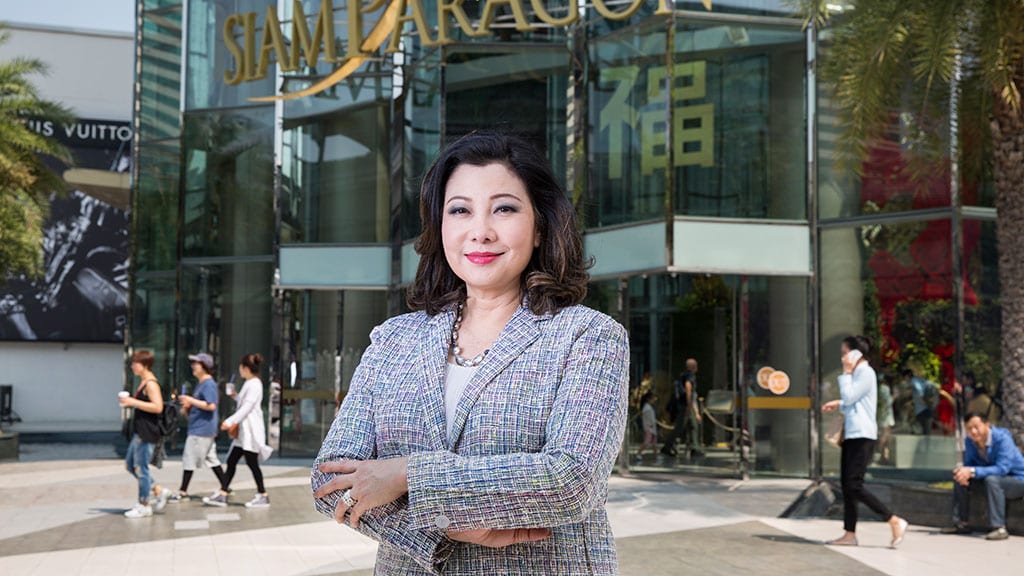
    A lot of people thought we dreamed the impossible dream,” chuckles Chadatip Chutrakul, recalling initial reaction to her newest–and biggest–project, Icon Siam. The 55-year-old CEO of Siam Piwat is best known as first lady of Siam Paragon, her signature mall. Much more than a Bangkok institution, it’s a global sensation, one of the world’s most posted sites on Instagram, alongside Disneyland and the Eiffel Tower.

    Siam Piwat has evolved over nearly six decades from a hotel and shopping center built by Chadatip’s father into a complex of flashy malls in a central Bangkok district so dominated by this family-run firm it’s also called Siam. As rivals in Thailand’s hypercompetitive retail industry have expanded to the suburbs, around the country, even overseas, Siam Piwat has stayed put, remodeling regularly, staking its fame and bottom line on Paragon and its adjacent shopping plazas, Siam Discovery and Siam Center.

    So Icon is a quantum leap, from the comfort zone of Siam across the Chao Phraya River, to the no-man’s-land of Thonburi. Centuries ago Thonburi predated Bangkok as Thailand’s capital, but development long ago flowed across the river to the Bangkok side, then uptown to Sathorn and Sukhumvit. A run-down area of concrete shop houses, it hardly seems a likely launching pad for an upscale shopping mecca.

    Yet this Bangkok native has grand plans to revive the River of Kings, as Chao Phraya translates into English. At $1.57 billion, Chadatip says Icon is the largest privately funded project in Thai history. Besides 5.5 million square feet of retail space, the site will include two high-rise residential towers, a museum, a half-kilometer-long river walk, extensive art, theater and conference facilities, plus docks for river cruisers and private yachts.

    Bangkok plans several new bridges and subway lines across the river, and Icon will link to them by a new monorail, dubbed the Gold line. Siam Piwat will bankroll the $62 million cost, the first time a company has paid for a subway line and donated it to Bangkok.

    Siam Piwat lacks experience in residential development, so has teamed with high-end property specialist Magnolia Quality Development, securing the blue-chip backing of Charoen Pokphand Group. CP is Thailand’s biggest company, run by Dhanin Chearavanont, who tops the FORBES ASIA Thai rich list. His daughter Tipaporn Chearavanont runs Magnolia. CP and Magnolia each have a 25% stake in Icon, leaving Siam Piwat with 50%.

    While it was still only a dirt lot in 2014, Icon sold all 379 units in one residential tower at prices equal to those of top-tier downtown properties, according to local real estate firms. “The launch of the condos did very well and helped put the project on the map,” notes Simon Landy, Thailand chairman of Colliers International.

    Chadatip says of the scheme: “This is not only about Icon, it’s about the future of the river. It’s about how we elevate the importance of the river in every aspect, meaning the historical places, culture, the art, the festivals–all the values on the river have to be integrated.”

    Since Siam Piwat announced its plan for the 20-acre site in 2014, there have been signs of a Thonburi revival. Nearby, at the Jam Factory, hip architect Duangrit Bunnag has converted old warehouses into chic restaurants, shops and an art gallery. “The river is happening,” he says.

    Still, it’s a high-stakes gamble, even for a risky investor–something Siam Piwat has never been–in an especially precarious time for Thailand. The past decade has been marked by political strife and a series of coups. Pitched street battles in 2010 claimed an estimated 100 lives; Central World, a shopping center near Siam, was razed. When massive street protests crippled Bangkok in 2014, the military mounted another coup, promising a quick return to democracy. Two years on, the junta remains entrenched. The economy trails regional growth, and some say it’s teetering on recession.

    “We’ve gone through lots of cycles,” Chadatip concedes, but she notes that revenue has recovered since the protests and coup of 2014. Even after a devastating bombing in the capital last August, Siam Piwat’s sales for 2015 were up 10% from 2014 and grew 18% from 2013. And Chadatip says there are waiting lists of years for space in malls, a figure confirmed by retailers and local analysts.

    “This is exactly the kind of project Thailand needs now,” says Chadatip, noting that Siam Piwat isn’t a stranger to making tough investments in critical times. She recalls that soon after Siam Discovery was launched, the country plunged into the 1997 Asian Financial Crisis. That was under the watch of her father, Chalermchai Charuvastr, a former military general who served in the 1950s on the staff of Field Marshal Sarit Thanarat, who led a coup and became prime minister in 1957.

    Chalermchai was governor of the Tourism Authority of Thailand and pioneered aviation agreements that helped usher in the era of international travel in Southeast Asia. Tourism remains a major bright light for Thailand, with 29 million visitors last year, providing 10% of gross domestic product, according to official statistics.

    In 1959, when tourists numbered under 100,000 a year and airlines were pushing for proper lodging for crews and passengers, Chalermchai brokered a lease for 29 acres of royal parkland around the Sra Pathum Palace, then founded Bangkok Inter-Continental Hotels, which built Siam Intercontinental Hotel.

    According to Chadatip, the government put up 20% of Bangkok Inter-Continental Hotels, InterContinental Hotels Group added 30%, and the rest came from local banks and about 500 private shareholders. The company was renamed Siam Piwat in 2003 but remains unlisted and doesn’t release earnings numbers. However, one local businessman calls Siam Piwat “a mint. They are printing money there.” How much flows to the family, Chadatip won’t say. “My family has some shares,” she says, “but a very, very small amount.”

    Chadatip says her father had a vision “to build a city of the future, not just one project. What he saw was that he would build the hotel and the first shopping mall and office building, the first high-rise in Thailand–30 stories–in 1965,” all on the same site where Paragon and other Siam Piwat malls now stand. Where once “this was nothing. It was orchards,” Chadatip says, now there are fountains, a towering LED screen and 250,000 visitors a day.

    Chalermchai ran the company until his death in 2009. Although Chadatip is the youngest of three children, he groomed her to take over, and she has spent virtually her entire career as first lady of Siam. Two older brothers, Charnchai and Charlie Charuvastr, have held posts with the company but largely made their marks outside. Charnchai served as CEO of telecom company Samart and prior to that was general manager of IBM Thailand. He was also chairman of Siam Paragon until he died in 2011. Charlie is a corporate relations advisor for Siam Piwat, having previously worked for PTT Exploration & Production, one of Thailand’s biggest energy companies.

    Born in 1961, Chadatip attended prestigious Chulalongkorn University in Bangkok, graduating in 1982 with a B.A. in banking and finance. She spent the next few years with a pair of British insurance firms, Sedgwick Offshore Resources and Willis Faber & Dumas, before coming back to Thailand, managing energy insurance services for domestic firm Dhipaya Insurance.

    She has been with Siam Piwat since 1986, starting in accounting, then sales and promotion. An admitted workaholic, she is often the last to leave the office, arriving home long after dark to more e-mails and work calls. Her husband, Apichart Chutrakul, understands the pace; he is founder and CEO of luxury property developer Sansiri. They have one grown daughter.

    Colleagues describe Chadatip as a human dynamo with boundless energy. “She’s really a superwoman. She works 24/7,” says one of her closest co-workers, who, like others at Siam Piwat, requested anonymity. “We get e-mails from her at all hours,” she says, adding, “She’s intensely involved in everything. Siam is her life, and it’s her passion.”

    Thailand’s other major shopping firms are also run by women. “I think it’s the nature of the business,” Chadatip says, noting that women have a keen eye for detail (Siam Piwat jointly owns Siam Paragon 51%-49% with Thailand’s Mall Group, also run by a woman, Supaluck Umpujh (see profile, p. 58).

    Chadatip doesn’t believe gender plays a big role in Thailand. “In this country we have the freedom to go as high as we want,” she says. “We’ve had a lady prime minister, we’ve had many lady ministers.” In Thai culture women have equality, she says. “There is no ceiling.”
  • iPhone SE hits stores in Taiwan, received mixed reaction

    iPhone SE hits stores in Taiwan, received mixed reaction

    Sales of Apple Inc.’s latest smartphone offering, the iPhone SE, began in Taiwan Thursday, last April 7, with retailers and telecom companies reporting mixed consumer reactions.

    Data Express, a chain selling Apple products and accessories, said all iPhone SE devices available across its 51 outlets were sold out on the first day, and the 64G model was the best seller.

    The 64G model, priced at NT$19,500 (US$601.32), was also the most popular at electronics chain Tsann Kuen, since the model had sold out at all 300 stores during the first hour after sales began.

    Tsann Kuen also pointed out that over 80 percent of iPhone SE smartphones sold by the chain were either the gold or rose gold versions.

    Neither chain gave their exact sales figures.

    Telecom companies, which began accepting pre-orders March 29, did not see the same enthusiastic consumer response as the retail chains.

    Taiwan Mobile Co. said initial sales of the iPhone SE were weaker than the iPhone 6S that hit the Taiwanese market last October.

    Taiwan Star Telecom Corp., a smaller player in the mobile service market, also saw weaker sales of the iPhone SE than the iPhone 6S, citing local consumers’ preference for phones with a larger screen.

    The iPhone SE features a 4-inch screen, while the iPhone 6S comes in two sizes — the standard model with a 4.7-inch screen and the Plus model with a 5.5-inch screen.

    Taiwan Star said over half of the pre-orders for the iPhone SE it received were made by people aged between 25 and 34, and this showed the new phone’s lower pricing appealed to younger consumers.

    Far Eastone Telecommunications Co. said there were consumers asking about the iPhone SE at its outlets, but buying momentum is not expected to pick up until people learn more about the new model through word of mouth.

  • POMO HOUSE continues to the second year send the watch to prevent missing children

    POMO HOUSE continues to the second year send the watch to prevent missing children

    POMO HOUSE founder and the Distributor Pomo Kids Watch the ultimate intelligent watch  that can help you keep track of the behavior of the children. To launch the new model  for children. The latest version comes with new functions to improve performance and accuracy of the technology in the following ,call a close friend, turn off the phone time to study, easy to install just enter your micro SIM card and connect to your smart phone through the Parental Controls application “POMO moji” include other functions that meet the safety of the child and create a good relationship between the children with friends and family.

    Ms. Supreeya Kanikananta, Chief Executive Officer of POMOHOUSE Co.,Ltd. revealed that “after our company has officially launched on May 2015. The product is  success  for target because we are  pioneer of the market  in Thailand as well as to support the needs of parents. The current case of children have lost  which we feel proud to come  to help the family and the Thai society at this point.

    After product launch to market. We have more storage to  development of our products to meet the needs of the target groups to be more so we have developed the second which is the name “Moji” for the new model has additional development up from the first models in several items. Such as the talk with close friend with program  “the best friend forever”, location with the 3 Best Technology is the triple mode tracking (Wi-fi and GPS) to adjust to the clock mode to the classroom, Performance Guides,  the capacity of the battery, 600MAH standby mode to up to two days, and including the journey history that can view history data.

    store_yellow

    From the our details, Pomo Moji. This is another great innovation of Thai people who develop to the maximum of the technology at the present and solve the problem to the parents in the things that are concerned.

    For this year POMO HOUSE ready to step up to be a leader in the market the watch prevent missing children.  We have the confidence in the title of the team that developed the Software Warranty after the sale and that the center after-sales service that the customer can also take the appliance to a service. For the marketing Pomo Kids Watch model “Moji”. We put the marketing budget  for marketing activity is about 5 millions baht in the investment that will be the production of the activities to promote sales and marketing, public relations on both online and offline. We are confident that it will be able to grow up to more than 3 times from the previous year.

    And now we expand the market to the AEC and Europe. Whether  is the Russian, Finland, Netherlands, Indonesia ,Malaysia and Singapore. Especially at Singapore we have registered a new company that was in the name “Pomo International” with the Singapore partner in order to help the market to  the AEC quickly. And in the future we will open the market in Japan, Australia and North America, overall, expects that it will make the market value to the company is not less than 200 million baht.