Tag: asia

  • Indosat Ooredoo, Lintasarta and IBM to Collaborate on the Cloud to Drive Indonesian Digital

    Indosat Ooredoo, Lintasarta and IBM to Collaborate on the Cloud to Drive Indonesian Digital

    Indosat Ooredoo, one of Indonesia’s largest telecommunications and services provider, and IBM today announced they will develop and deliver solutions on the https://www.ibm.com/cloud-computing to help businesses streamline processes and improve productivity. This significant five year partnership, valued at about of $200 million, will help better serve customers in the world’s fourth most populous country.

    Indosat Ooredoo and IBM will build an integrated command center to serve local clients of both companies by monitoring and managing their operations and information technology, and building IT skills and capabilities in Indonesia. IBM will also help Indosat Ooredoo transform its own IT operations, improving overall client experience and supporting the rapid development of new telecommunications services in the country.

    Cloud-based Services for Indonesian Businesses

    IBM & Indosat Ooredoo’s subsidiary, Lintasarta, will jointly develop and deliver cloud-based solutions, powered by IBM Cloud, to help Indonesian businesses drive innovation and agility, streamline their processes and improve productivity. Indonesian clients of Indosat Ooredoo and IBM will be able to access jointly developed cloud-based solutions built on IBM’s Cloud platform — IBM Bluemix — accelerating collaboration and automation of software delivery and infrastructure changes. Clients also will have access to IBM MaaS360, a cloud-based enterprise mobility management platform.

    “This collaboration shows how IBM’s expertise, technology and services can help Indosat Ooredoo and Lintasarta lead market change in Indonesia while also transforming their existing operations,” said Martin Jetter, senior vice president, IBM Global Technology Services. “Indonesia has one of the world’s most rapidly growing economies, and the use of smart mobile devices is becoming pervasive, opening up enormous opportunities for local businesses – so we are excited to be working with Indosat Ooredoo and Lintasarta to help clients tap into the power and flexibility of cloud-based solutions and digitally transform their businesses.”

    Digital & Operational Transformation

    Indosat Ooredoo and IBM also announced a related five-year technology services agreement to deliver digital and operational transformation to all aspects of Indosat Ooredoo’s operations to support the rapid development of new services that are easier to access, less complex and more affordable to use.

    IBM will upgrade Indosat Ooredoo’s IT infrastructure and deliver a range of application management services, including a test environment that will improve time to market for the development of new customer-facing services and applications.

    “Our customers in both telecommunications and IT services are going to benefit from this relationship through improved access to world class offerings and services,” said Alexander Rusli, President and CEO of Indosat Ooredoo. “We will be able to bring a greater range of higher value services to market more rapidly, with the confidence of knowing that we are collaborating with one of the world’s largest and most innovative technology companies. This landmark alliance will reshape the local market and help Indonesian customers and organizations tap into the most advanced technology available anywhere in the world.”

    “Working together, Lintasarta and IBM will accelerate the adoption of cloud-based solutions in Indonesia, helping local organizations increase their efficiency and ability to rapidly expand,” said Arya Damar, President Director of Lintasarta, an Indosat Ooredoo subsidiary that will help build the joint data center. “By combining the global innovation, delivery capability, and expertise of IBM with the local infrastructure, market knowledge and relationships of Lintasarta, we are providing the most advanced path to digital transformation for our clients.”

  • Telkom Books Rp102tn in Revenues

    Telkom Books Rp102tn in Revenues

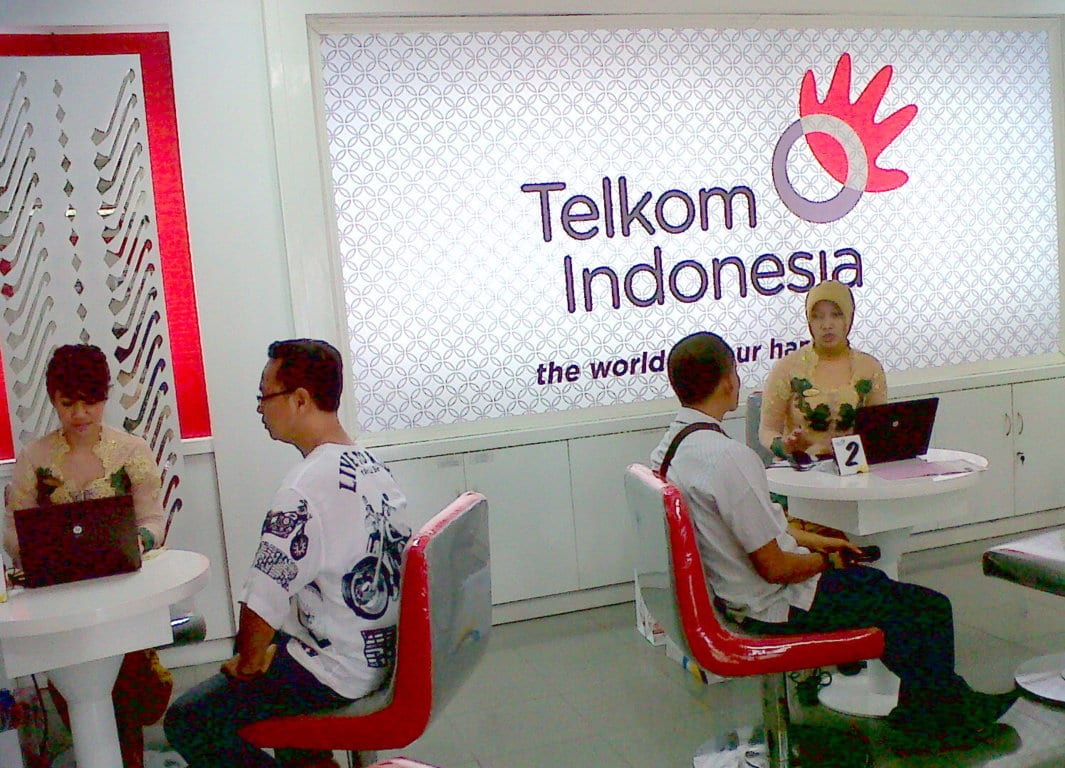
    State telecom company PT Telekomunikasi Indonesia Tbk. (IDX: TLKM)—also known as Telkom—booked Rp102.47 trillion in revenues last year. The figure represents a 14.24-percent annual growth from 2014’s Rp89.70 trillion.

    “Telkom’s revenue growth to Rp102.47 trillion was mainly supported by a surge of income in the data, internet and IT services business lines,” Telkom President director Alex J Sinaga said in a press release in Jakarta, Monday, March 7

    Telkom’s 2015 revenue increase led to a net profit growth of 7.0 percent to Rp15.49 trillion.

    According to Alex, data, internet and IT segments contributed Rp32.69 trillion to the company’s revenue. This is a 37.5 percent increase from the year before.

    Telkom also noted an increase in the number of fixed broadband customers last year to 3.98 million subscribers, a 17.2 percent annual increase. This increase is attributable to the company’s newest service, IndiHome, which in 2015 pooled in more than a million new customers.

    In the cellular business, Telkom remains as the country’s market leader with 152.64 million subscribers

    The company’s earnings before interest, taxes, depreciation and amortization (EBITDA) in 2015 amounted to Rp51.42 trillion, a 12.6-percent year-on-year growth.

    Meanwhile, the company recorded an operating cost increase of 15.8 percent to Rp70.05 trillion. The rise in expense is mostly due to the company’s aggressive activities in building and modernizing its infrastructure, especially broadband facilities.

  • Indonesia to woo more visitors from India

    Indonesia to woo more visitors from India

    Indonesia is to participate in a major Indian major cultural festival in New Delhi in an attempt to seduce the growing middle-class in the South Asian nation into visiting the archipelago.

    The three-day festival, organized by international spiritualist NGO The Art of Living, will last from March 11 to 13. As one of the biggest stages in the world, it will attract around 3.5 million participants from around the globe. It is expected that more than 36,000 artists will come to demonstrate their musical skills; thousands of them will play 50 different musical instruments at the same time to create an alluring rhythm and harmony.

    “We hope the World Culture Festival can encourage better understanding between people of different religions, nationalities and backgrounds by exposing their diverse cultures, dancing, music, arts and also yoga,” Sri Ravi Shankar, the founder of Art of Living, said in a press release.

    To take part in the major event, 27 professional Indonesian dancers from iKreasindo, a cultural angklung workshop, will work with 80 artists from the Art of Living to present a joint angklung and dance performance entitled “Cendrawasih Menebar Pesona,” accompanied by the traditional Betawi folk song “Jali-Jali”.

    The government hopes that through this performance, Indonesia will be able to expose its culture to the world and attract more foreign tourists, especially Indians, to Indonesia.

    Home to the world’s second-largest population, India ranks 7th on the list of major markets for Indonesian tourism.

    In 2015, the number of Indian tourists coming to the archipelago rose to 271,252, a 15 percent increase from the previous year. This year, the Tourism Ministry expects at least 350,000 Indian tourists to visit popular destinations such as Bali, Jakarta and Batam.

    The lack of direct flights, however, hampers the flows of tourists from India to Indonesia.

    “We are now depending on Malindo Air and Singapore Airlines, because there still aren’t any direct flights from India to Indonesia. With Garuda opening direct flights in August, we expect more Indians tourists to come to Indonesia,” said Vinsensius Jemadu, the director of Asia-Pasific Tourism Promotions.

    This August, Garuda Indonesia is to launch direct flights from Jakarta to Mumbai; the flights will run three times a week. Besides Garuda, the Tourism Ministry also plans to work together with AirAsia to begin direct flights from India to Indonesia.

    Another government effort to increase the number of foreign tourists from India is to promote Indonesia’s tourist destinations by organizing a visit of media, tour operators, hoteliers and wedding organizers to major cities in India including Mumbai, New Delhi, Bangalore, Calcutta and Hyderabad.

    Besides India, the government is also striving to lure visitors from other countries, especially Singapore, Malaysia, China, Australia and Japan, in order to reach its target of hosting 12 million foreign tourists in 2016 and 20 million in 2019.

    The ministry recorded 9.73 million foreign tourist arrivals last year, short of the 10 million target, with the sector disrupted by haze and volcanic eruptions for a good part of the year.

  • Jokowi Opens Bonded Logistics Centers to Improve Indonesia’s Competitiveness’

    Jokowi Opens Bonded Logistics Centers to Improve Indonesia’s Competitiveness’

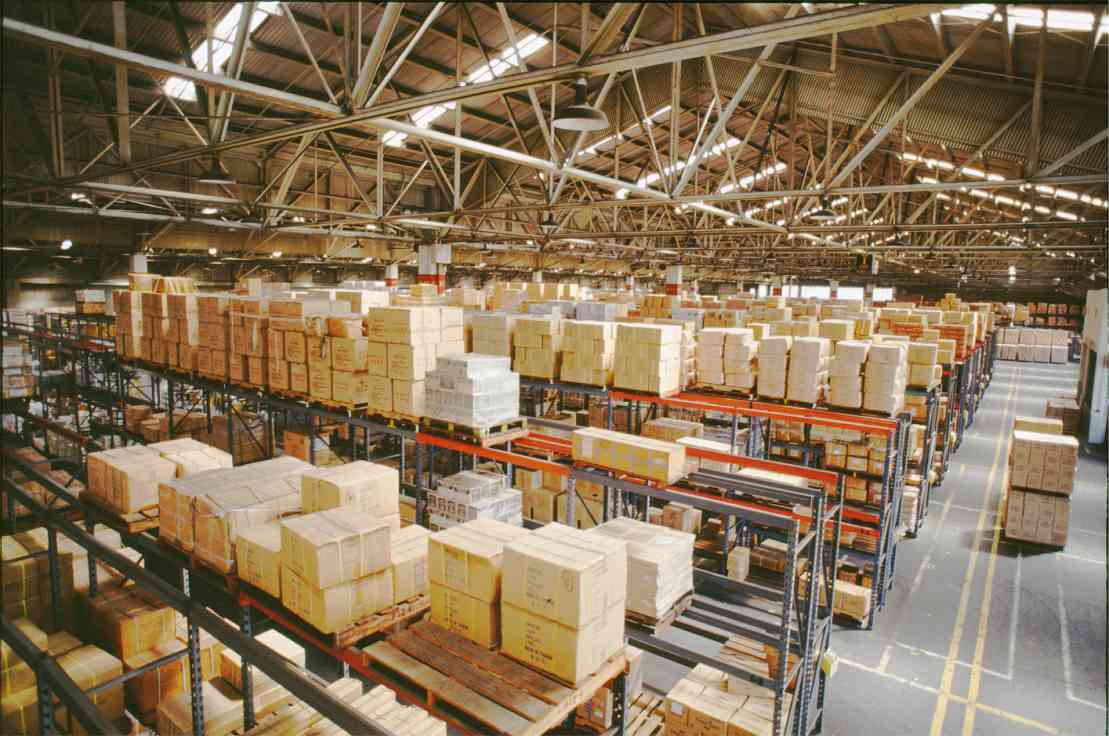
    Indonesian President Joko Widodo inaugurated 11 bonded logistics centers on Thursday (10/03) as part of Indonesia’s second economic stimulus package that was unveiled on 30 September 2015. These bonded logistics centers aim to curtail the country’s notoriously high logistics costs which makes businesses in Indonesia less competitive and the general business climate in Southeast Asia’s largest economy less attractive. The official opening ceremony for the 11 centers (mostly located on the island of Java) was held in Jakarta.

    At a bonded logistics center imported goods – which can be subject to certain tax incentives – are stored that are later distributed to the industries. Currently, however, the bulk of goods imported by Indonesian companies are stored in Singapore or Malaysia. This causes logistics costs to rise steeply as storage costs in Singapore and Malaysia are high.

    Indonesian Finance Minister Bambang Brodjonegoro said the flow of goods at these centers will be closely monitored by Indonesia’s Tax Department in order to combat illegal activities. Brodjonegoro added these centers will be given tax incentives such as a moratorium (delay) for tax and import duty payments (these are paid when goods are moved outside the center, not – as is the case now – when goods enter the center).

    Contrary to the bonded warehouse system (which is only used by the owner), the bonded logistics center can be used by other companies.

    Entrepreneurs and other industry players have reacted positively to this news. Ernovian Ismy, Secretary General of the Indonesia Textile Association (API), said these centers can curtail logistics costs for textile companies by 34 percent. Adhi Lukman, General Chairman of the Indonesian Food and Beverage Association (GAPMMI), said logistics costs in the food and beverage sector can be cut as the supply of raw materials can be sped up.

    Next year Indonesian authorities want to see the existence of 50 bonded logistics centers in the country.

  • Tram in Berlin Promotes Wonderful Indonesia

    Tram in Berlin Promotes Wonderful Indonesia

    Transportation in Berlin known as tram help promotes “Wonderful Indonesia” with images of various tourist attractions in Indonesia including Borobudur, Bali and Komodo Island.

    “I am proud to witness tram in Berlin decorated with various tourist attractions of Indonesia,” said Lina Berlina, Indonesian designer living in Berlin, Tuesday, March 8.

    The promotion is due to Indonesia’s participation in the world’s largest promotional exhibition ITB Berlin which will be held from March 9-13.

    Deputy Director for International MarComm of Tourism Ministry Agustini Rahayu said that Wonderful Indonesia promotion in Berlin trams will be from March 7 to April 25.

    The routes that are passed by the trams with Wonderful Indonesia promotion go through Zone AB/ABC or Berlin’s community activity center and have become Berlin’s city attraction. Tram No. M6 and M4 pass Alexanderplatz, which is the heart of Berlin, and Hackeser Markt.

    There are images of tourist attractions in Bangka Belitung, images traditional dancers from Nias Island and Barong from Banyuwangi, as well as images of traditional custom of Balinese, etc.

    Agustini Rahayu said the tram with “Wonderful Indonesia” promotion have a registration number of 1033, 1068, 1092, 1070, 1503, 1575, 1520, 4007, 4008, 4010, 8014, 8015, 8016, 8017, 8018 and also in two subways; number 1011-1 and 1011-4.

    The promotion of Wonderful Indonesia was decided to be applied on trams and subways since the 352 trams in Berlin have 181.1 million passengers per year.

    This means there are about 513,031 passengers per tram and the campaign from March – April is expected to cover 1,282,578 passengers.


  • NH Financial Group to Expand into Indonesia

    NH Financial Group to Expand into Indonesia

    NH Financial Group signed a memorandum of understanding (MOU) with Indonesia’s largest bank Bank Mandiri at Mandiri’s main office in Jakarta, Indonesia, on March 1 to cooperate in developing rural areas in the Southeast Asian country.

    Mandiri is the largest lender in Indonesia by assets, capital, loan and deposit balance, and the state-run bank with a 60 percent stake. It also has 2,300 branches and 15,000 automated teller machines nationwide.

    Under the agreement, the two groups will share their financial knowhow and business networks in agriculture, cooperating in a wide range of financial services from banking and insurance to leasing and micro financing in order to develop rural areas in Indonesia.

    In order to do so, NH will offer the group’s knowhow and skills in agricultural finances, such as loans, credit guarantees and insurance for farmers, to Bank Mandiri, boosting financial services in Indonesian agriculture.

    Moreover, Bank Mandiri is aware of the fact that the expansion of NH Financial Group into Indonesia will help developing Indonesian agriculture and has decided to actively cooperate in various sectors.

  • Philippines SMEs urged to pursue eCommerce

    Philippines SMEs urged to pursue eCommerce

    Philippines SMEs and micro-businesses are being urged to pursue eCommerce in a government initiative.

    Micro, small and medium enterprises (MSME) should benefit from global trade opportunities through eCommerce, says the Philippine government.

    The Department of Trade and Industry (DTI) targets to reach out to 100,000 MSMEs, 11 per cent of total MSMEs doing local eCommerce – by 2020.

    “We are focusing our promotion activities on eCommerce not only within the East Asia sub region but [also in the Philippines], to help MSMEs to engage in borderless trade, ” said Prudencio Reyes, Trade and Industry Undersecretary for Special Concerns.

    This will help MSMEs engage in borderless trade, given East Asia’s huge market for eCommerce, said Reyes during the recent Brunei Darussalam-Indonesia-Malaysia-Philippines East ASEAN Growth Area press conference in Davao, in the south of the Philippines.

    With aid from faster internet connection and increased number of internet users, an eCommerce roadshow for entrepreneurs will focus on e-business models, e-payments, eCommerce website development, eCommerce platforms and eCommerce marketing.

    ASEAN already has 143 million internet users; 44.2 million of them from the Philippines.

    The Philippine eCommerce Roadmap 2016-2020 is a product of private, academic and government discussions, launched in February.

    On March 9-11, 2016, the DTI will join the Asian Development Bank’s Workshop on Cross-Border eCommerce: Towards Seamless Connectivity event in Bangkok.

  • Trump’s luxury hotels in Indonesia could face backlash over his anti-Muslim remarks

    Trump’s luxury hotels in Indonesia could face backlash over his anti-Muslim remarks

    Few villagers living near a half-built golf course in Indonesia’s West Java province know the name Donald Trump, and fewer still are aware that one of his firms will be managing a six-star hotel and luxury resort in their backyard.

    But in the capital, Jakarta, a growing number of Indonesians want the U.S. presidential candidate and his businesses banned from the world’s most populous Muslim-majority nation after Trump pledged to temporarily bar Muslims from entering the United States if elected.

    The anger simmering across the Pacific is a likely preview of the strained relations a Trump presidency could expect from the Muslim world.

    Indonesia, whose more than 200 million Muslims largely practice a moderate form of Islam, has close relations with the United States. Many Indonesians think highly of President Barack Obama, who spent part of his childhood in Jakarta.

    “If (Trump) continues his racist position, it will bring danger to American assets,” said Hasanuddin, a parliamentarian who is also a member of the assembly’s commission overseeing foreign policy. “Donald Trump’s arrogance could be harmful for U.S. citizens around the world.”

    Fadli Zon, the deputy speaker of the house, said he would seek restrictions on U.S. trade and investment if Trump became president.

    The United States is Indonesia’s second-largest export market, worth about $16 billion last year, and is a popular study destination with children of the elite.

    An online petition, set up anonymously, is urging Indonesian President Joko Widodo to ban the billionaire and his businesses from the country and has received more than 45,000 signatures.

    “Donald Trump doesn’t want Muslims of the world to enter the United States . . . so we should do the same to him,” signatory Ayu Dyah wrote on the petition website. “Condemn, refuse and boycott every Donald Trump business and his affiliations. . . . We should prove that we have power.”

    Widodo has not responded to the petition.

    Trump’s comments on Muslims have already provoked strong reactions elsewhere, with British politicians in January debating barring the real estate tycoon from entering the country, where he also has business interests.

    The hostility toward Trump could threaten his company’s expansion efforts into Southeast Asia’s largest economy, Indonesian lawmakers and government officials said.

    “It’s just his statement hurts many people in this Muslim-majority country,” said Edy Putra Irawady, Indonesia’s deputy chief economic minister. “Surely it will be a black shadow for his business.”

    Trump Hotels Collection last year announced a partnership with Indonesia’s PT Media Nusanta Citra (MNC) to manage new luxury hotels on Bali and in West Java, the Trump unit’s first foray into Asia.

    In Bali, one of Asia’s most popular holiday destinations, Trump Hotels will operate a six-star hotel atop a cliff overlooking the Indian Ocean and Tanah Lot, a popular sea temple on a small rock formation.

    MNC, which will be building both resorts, declined to comment on Trump’s politics.

    “Business is business. The implication for wider Indonesia, we have to see later,” said Syafriel Nasution, corporate secretary of MNC Group, adding that he had not seen any damage to the company’s brand due to its relationship with Trump.

    MNC Group is controlled by billionaire Hary Tanoesoedibjo, Indonesia’s 28th-richest person, who also owns four national television stations and last year launched a new political party.

    A senior member of Muhammadiyah, Indonesia’s second-largest Muslim organization, said protests are possible if Trump becomes president, though none were yet planned.

    “Indonesian Muslims are very strongly united,” said Abdul Mu’thi, the group’s secretary general. “If he is elected, there will be a strong reaction from Indonesian communities to any business that is run by Donald Trump.”

    In West Java, near where Trump’s golf resort will be built, one villager said he had never heard of Trump and wouldn’t be protesting against him. “If we protest, he will likely close his business,” said Agus, who owns a small mobile phone shop. “And for the time being, earning money is hard.”

  • CIMB Research retains Add for Berjaya Food

    CIMB Research retains Add for Berjaya Food

    CIMB Equities Research is maintaining its Add for Berjaya Food with potential re-rating catalysts are stronger sales on the back of a recovery in consumer spending and new contribution from its fast moving consumer goods (FMCG) business in FY17.

    However, the research house had on Thursday reduced its target price from RM3.27 to RM2.35. This was based on an unchanged 23.7 times target price-to-earnings which is a 30% premium over its peer average.

    It said on Thursday that BFood’s 3QFY16 revenue rose 10.3% on-year to RM147.3mil but core net profit fell 14.4% on-year to RM7.4mil.

    This brought BFood’s 9MFY16 core earnings to RM19.7mil (+0.3% on-year), with revenue surging 67.1% on-year to RM415.1mil.

    “Nevertheless, this was below our and consensus expectations, making up only 48% and 57% of full-year estimates, mainly on the back of the weaker-than-expected performance from its Indonesian and Singaporean operations,” it said.

    CIMB Research said there was positive same store sales growth (SSSG) of 4.4% on-year for Starbucks in 9MFY16.

    BFood’s 9MFY16 revenue growth was mainly fuelled by: 1) the full consolidation impact from the remaining 50% of Berjaya Starbucks since September 2014, 2) stronger SSSG at Starbucks, and 3) new Starbucks stores (+13 stores on-year).

    While Malaysia’s revenue jumped 81.5% on-year mainly due to the consolidation of the Starbucks franchise, revenues from Indonesia and Singapore weakened by 6.3% and 2.3% on-year, respectively.

    Starbucks recorded SSSG of 4.4% on-year, while KRR Malaysia and Indonesia saw SSSG drop 16.5% and 9.5% on-year in 9MFY16, respectively.

    Meanwhile, Singapore’s Jollibean business also saw weak SSSG of -5.5% on-year.

    Indonesian operations remained in the red while its Singapore operations recorded a loss of RM500,0000 versus a profit of RM600,000 in 9MFY15.

    BFood also incurred higher financing costs of RM9.5mil (due to the acquisition of Starbucks) and higher effective tax rates, which led to flattish core earnings growth.

    “We cut our FY16-18 earnings forecasts by 34%-46% to reflect slower performance from KRR in Indonesia and Malaysia and to take into account the higher effective tax rates,” CIMB Research added.

  • Vietnam’s Coffee sales slow, Indonesian premiums rise

    Vietnam’s Coffee sales slow, Indonesian premiums rise

    Vietnam’s coffee premiums held steady, with farmers slowing sales on concerns over dry weather affecting output, while domestic buying and thin stocks in Indonesia helped to raise outright prices, traders said on Thursday.

    The dry season in Vietnam, the world’s top robusta producer, is peaking, with water shortages forecast to cut 2016/2017 output. Rival producer Indonesia has low stocks, which has helped to push up export price quotations to a 15-month high.

    “Most activities are focused on domestic markets, where exporters in short position have to raise their buying prices to secure beans,” said a trader in Ho Chi Minh City.

    Domestic prices in Daklak, Vietnam’s biggest growing province, advanced to 31.1 million-31.4 million dong ($1,400) per tonne, tracking gains in the ICE robusta futures.

    At 31.4 million dong, the price is on par with that on Feb. 6, according to data.

    Premiums of Vietnamese robusta grade 2, 5 percent black and broken were stable at $50-$70 a tonne to the May ICE contract in the past week. Beans grade 1, similar to Indonesia’s Sumatran coffee, were steady at premiums of $95-$110 a tonne.

    ICE May robusta coffee settled up 0.9 percent at $1,420 per tonne on Wednesday.

    As dry weather intensifies in Vietnam’s Central Highlands coffee belt, underground water might sustain trees only until the end of this month, traders said.

    The current El Nino weather event is likely to delay the usual arrival of the rainy season by 10-15 days.

    The government has announced financial aid worth $23.5 million to help 34 provinces fight drought and salination, it said in a statement on Wednesday.

    About 40 of Vietnam’s 63 provinces have now been affected by the dry weather.

    In Indonesia, premiums rose to $300-$320 a tonne for beans grade 4, 80 defects COFID-G4-USD to the ICE May contract, from a premiums of $300 last Thursday, due to thin stocks, traders said.

    At $320 a tonne, the premium is the highest since at least December 2014, according to data available on Reuters.

    “Prices were good and went up because there was support from Java factories, while there were little stocks,” a Lampung-based trader said, adding that purchases by small traders also supported prices.

    Indonesia’s main harvest will pick up from late this month.

    Indonesia’s coffee bean production is targeted to increase by up to 27 percent to 700,000 tonnes in 2016, a manager at the country’s coffee association said on Thursday, up from 550,000 tonnes in 2015.

  • Indonesia’s Emtek, Murdoch invest in Malaysia’s

    Indonesia’s Emtek, Murdoch invest in Malaysia’s

    iFlix CEO Mark Britt shows his company’s streaming TV series and video service on a gadget. The Malaysia-based company has just received a capital injection from Indonesia’s Emtek and Rupert Murdoch’s Sky plc., the owner of national TV stations SCTV and Indosiar, has spread its wings by investing in Malaysia’s streaming movies and TV series provider iFlix.

    Along with European investor Sky plc, owned by mogul Rupert Murdoch, Emtek through PT Surya Citra Media has become a new investor in iFlix. Sky said it has injected $45 million into the company.

    “The investment will support our continuing commitment to providing our members with the best in entertainment,” said iFlix CEO and co-founder Mark Britt in Kuala Lumpur on Thursday.

    Providing a service similar to Netflix’s, iFlix is available in Malaysia, Thailand and the Philippines. Indonesia is likely to be the company’s next market for expansion.

    In April 2015, iFlix got a $30 million injection from Malaysia’s Catcha Group and Philippine Long Distance Telephone Company (PLDT). PLDT is owned by Indonesian tycoon Anthony Salim and his family through Hong Kong-based First Pacific Finance.

    Sariaatmadja family, who owns Emtek, is known to have tight business relations with the Salim family. It can be seen from the share ownership-swap deal between Sariaatmaja’s London Sumatera Plantations (Lonsum) and Salim’s Indosiar Visual Mandiri (Indosiar TV).

    Salim bought Lonsum from Sariaatmadja in 2007 through plantation company PT Salim Ivomas Pratama In 2011, Sariaatmadja bought Indosiar through PT Surya Citra Media.

    It strengthened both families in their core business. Salim is prominent in the consumer goods business, mainly with Indofood, while Sariaatmadja is strong in the media business.

  • Indonesia Offers Investment in Film Industry to China

    Indonesia Offers Investment in Film Industry to China

    Indonesia has offered an investment opportunity in the film industry to China with regard to developing national film industry.

    “We are offering 100 percent foreign ownership to support creative industry in Indonesia,” the head of Investment Coordinating Body (BKPM), Franky Sibarani, said at an Indonesia Business Forum on Thursday.

    He said Indonesia has the fourth biggest population in the world or 250 million population but the number of cinemas in the country totals only 1,100.

    The Indonesian government has revised the list of sectors not allowed for foreign investment and has opened investment opportunity of up to 100 percent foreign ownership in the film industry.

    The decision covers film making, distribution and exhibition or cinemas.

    When asked about interesting parties Franky said so far only South Korea that has expressed its interest while the US still has yet to study the policy.

    Regarding 100 percent foreign ownership he said that although foreign investment opportunity has been opened 100 percent “there is a provision requiring foreign parties to prioritize up to 60 percent national films. It would be better if our films could be exported.”

    Franky said Indonesian film industry must develop more professionally including in their making and distribution so that they can compete with foreign films.

    “We need investors to advance national film industry until it can export,” he said.

    Chinese film industry is growing quite well with the box office last year increasing 36 percent to US$4.77 billion supported by ticket sales for both domestic and Hollywood films.

    According to figures released on January 1 by the State Administration for Press, Publication, Radio, Film and Television Affairs (SAPPRFT) local film production raked US$2.6 billion in 2014.

    Although it has contributed successes in terms of production Chinese film production drops.

    In 2014 China produced 618 films down from 638 in 2013. From overseas sales their contribution has also declined collecting only US$304 billion last year.

    Critics have blamed tight censorship on films considered sensitive politically for reducing the worlds interest in local films.

  • Honey Birdette eyes Hong Kong

    Honey Birdette eyes Hong Kong

    Upmarket Australian lingerie retailer Honey Birdette is preparing to open its first retail store in Hong Kong.

    Honey Birdette was founded in 2006 by Eloise Monaghan offering premium lingerie and sex toys and entered a strategic partnership with multi-brand Australian retailer BB Retail Capital in 2011. It now has 45 stores in Australia.

    In what will be the brand’s first international foray, two stores will open in central London within the next six months, the first in Covent Garden.

    Following that, Honey Birdette will open in Hong Kong, Tokyo, Paris and Rome, the company has revealed, before entering the US.

    Separately, BBRC has announced an international expansion of its more mass market chain Bras N Things, with the first two stores opening in South Africa.  That brand has 170 stores in Australia and New Zealand and BBRC is planning on expanding into other international markets as well, but has not specifically referred to any Asian ambitions.

    “Bras N Things has an established and enviable reputation in Australia and the time is now right to expand beyond our shores, taking our expert fit service to new markets and empowering women globally,” said Bras N Things CEO, George Wahby.

    BBRC is best known in Asia as the owner of the Lovisa chain of accessories stores.

    Honey Birdette, meanwhile, is clearly targeting a high income demographic. In the UK retail prices are expected to start at £60 (US$85) for a bra and £30 ($43) for a pair of briefs.

  • New Rule for Foreign Internet Data and Content Providers

    New Rule for Foreign Internet Data and Content Providers

    The rapid development of the digital world has encouraged internet data and content providers to expand their business to developing countries like Indonesia. The problem is that Indonesia is not prepared for this development. Although there are almost 100 million internet users in Indonesia, this business is not adequately regulated.

    Today, internet data and content providers can run their businesses in Indonesia without having to establish a legal business entity in the country. Telecom operators, meanwhile, have to invest significant amounts developing the network infrastructure used by these ‘over the top’ (OTT) companies.

    Minister of communications and informatics, Rudiantara, said that regulations are to be put in force to govern the presence of foreign OTTs in Indonesia. “They will have to be permanent legal entities in Indonesia,” said Rudiantara, Jakarta, Friday (11/3).

    The government believes that consumer protection, equality before the law in tax matters, and properly handling of customer complaints are three reasons that these companies need to have a presence in Indonesia.

    Under current rules, collecting taxes from foreign OTT companies, which are not registered in Indonesia, is difficult. Meanwhile, the telecom firms that provide internet services that are vital to the running of the OTT business in Indonesia, pay substantial amounts of tax to the government.

    Data from the Ministry of Communications and Informatics revealed that the value of digital advertising, a major source of revenue for OTT firms in Indonesia, was more than US$ 800 million a year ago. “Two major global firms account for seventy percent of digital ads,” he added.

    While Rudiantara admitted that setting up a permanent business entity in Indonesia is not easy, the government will make it easier by offering three options: setting up a business entity individually, entering into a joint venture with other companies, or partnering with a mobile operator in the country.

    The new rules, which are expected to be passed early next month, aim to benefit the Indonesian people as users of OTT services. “Indonesia is not just a market; the people of Indonesia should benefit from this, too,” said Rudiantara.

  • Electricity sales grows 10.41 pct

    Electricity sales grows 10.41 pct

    State-own electricity company (PLN) recorded a power sale of 16.52 tera watt hours (TWh) in February 2016, up 10.41 percent compared with that in the same month in 2015.

    PLN Commercial Division Head Benny Marbun said in Jakarta on Sunday that the February sale maintained the relatively high upward trend in January 2016.

    “Hopefully, the increase in the electricity sale indicates the recovery of the Indonesian economy,” Marbun said.

    He said that the January-February 2016 sale amounted to 34.09 TWh, up 8.91 percent compared with the same period in 2015 (year-on-year).

    In January 2016, the power sale reached a growth of 7.54 percent from that in January 2015. “The January 2016 figure is higher than the monthly figures during 2015. There is no monthly increase which exceeded five percent in 2015,” he added.

    Electricity sale in 2015 stood at 202 TWh or up only 2.2 percent compared with that in the previous year in 2014 which was 194 TWh.