Tag: asia

  • Banking is Still About Branches and ATMs

    Banking is Still About Branches and ATMs

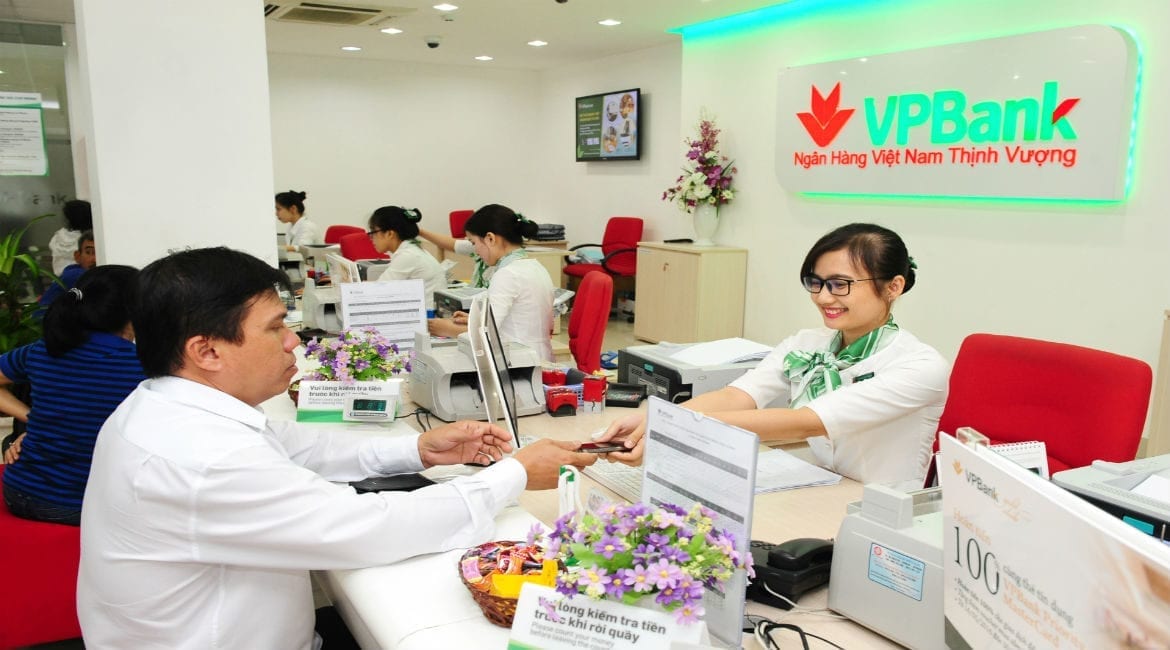
    A McKinsey Report reveals that retail banking makes up almost half of all financial sector profit worldwide.

    All that talk about structured products, discretionary investment mandates, M&A – even crypto – may have confused everyone about what banking is. Even now, according to McKinsey & Company, the humble local bank branch – and the ubiquitous convenience store ATM – reign supreme.

    At least that is what an October report on the future of retail banking by the consultancy’s financial services practice states unequivocally. In it, they claim retail banking makes up 48 percent or almost half of the global banking pool of profit, which they estimate at $680 billion.

    They believe the segment, by itself, is larger than entire industries, among them pharmaceuticals, telecommunications, and food manufacturing. In other words, those branches and ATMs count for more than an army of Nestles, Vodafones, Novartises, and Roches.

    Retail also appears to have avoided much of the convulsions, restructuring, and redundancies seen in many other parts of banking, with the 10-year average annual return on equity being a veritable beacon of relative stability at 8.9 percent. Indeed, it has even trended noticeably higher this year as the industry continues to recover from the pandemic. But, beyond that, there are some divergent trends as the picture gets more granular.

    The McKinsey report looked at revenue by product per individual client and came up with some surprising idiosyncrasies. In the US and Western Europe, retail banks tend to lose money with basic products such as credit cards and unsecured loans while they barely break even with them in China and Emerging Asia. In Latin America or the Middle East and North Africa, the latter being treated as one region, it manages to eke out significant profits.

    When it comes to more complex lending products such as mortgages and car loans, all regions are profitable except for the Middle East and Africa, which barely breaks even. All regions make money when it comes to providing top-tier retail services for wealth accumulation, insurance, and pensions even though, somewhat surprisingly, the least profitable part of the world for such products is in China.

    The emerging markets of Asia and China are also unique in that they are the first in the world where so-called digital-first models have reached maturity.

    It has allowed them to shrink an already thin branch network by a third over five years and is a key reason why they have been able to keep basic products on the threshold of profitability.

    However, profit pools for complex lending and wealth and protection services are low by global standards, and challenges to incumbent banks remain as innovative Big Tech and fintech organizations continue growing in terms of consumer adoption and product diversification.

    But such a wide-ranging report would not be replete without repeated suggestions of some impending, imminent threat about to strike the industry down, instilling fear into the hearts and minds of industry employees and executives, likely prompting the latter to find succor by summoning reams of available, well-prepared consultants.

    That fear appears to be big tech. According to McKinsey, digitalization has not only lowered the general barriers to entry but the IT budgets of the largest retail banks pale in comparison to that of big tech.

    They, and the fintech sector, already capture about 45 percent of the gross revenues in payments while digital investment apps manage a quarter of assets in the mass-affluent segment and are growing at twice the rate of traditional providers.

    But banks do have some trump cards left. According to McKinsey, when it comes to customer engagement, just over half, or 52 percent, of clients engage with their bank every week. On Amazon, however, only 22 percent of them buy that often.

    But they still haven’t learned how to use the information on clients that they already have.

    They should act fast while the window of opportunity is still open. The stakes could not be higher, the report stated.

  • Airtel Launches ‘Always On’ IoT Connectivity Solution

    Airtel Launches ‘Always On’ IoT Connectivity Solution

    Bharti Airtel has announced the launch of the “Always On” IoT connectivity solution in India. Airtel’s “Always On” solution comprises the dual-profile M2M eSim which allows an IOT device to always stay connected to a mobile network from different Mobile Network Operators (MNOs) in the eSIM.

    The Airtel “Always On” solution complies with the Automotive Research Association of India (ARAI)’s AIS-140 standard, implemented by the Ministry of Road Transport and Highways (MoRTH). It specifies mandatory requirements related to connectivity and GPS tracking capabilities for devices in all passenger-carrying buses, private fleets and other public transport vehicles for tracking, safety and security purposes.

    As per law, all registered buses and taxis are mandated to install this device. The government of India recently made it mandatory for vehicles carrying hazardous goods to also have a tracker installed that complies with AIS-140 standards. In addition to these, there are emergency vehicles such as ambulances; vehicles from the mining and construction industries working in remote locations; and other mission-critical and intelligent communication use cases that need higher availability and reliability of the network.

    With its future-ready, GSMA-compliant platform; flexible API-based eSim lifecycle management on the feature-rich Airtel IoT Hub; and full compliance with Department of Telecom (DoT) M2M guidelines, Airtel is looking to acquire market leadership in this segment in the next few years.

    Speaking about the launch of the “Always On” AIS-140 connectivity solution, Ajay Chitkara, director and CEO of Airtel Business, said, “We are delighted to bring ‘Always On’ connectivity solution to our customers. We believe this is the next big opportunity in the IoT segment. Our strengths in the network, a modern and GSMA compliant platform offering real-time access to data and flexibility to integrate the solution with custom APIs will make Airtel Business stand out in the market.”

    The AIS140 solution has already been tested and adopted by some of the leading companies in the industry, like Lumax ITuran, Loconav and e-Trans. Lumax ITuran Telematics is a renowned name in advanced telematics technology and offers telematics products and services to the Indian automotive industry. LocoNav is the world’s fastest-growing fleet-tech company, with over 5 million vehicles on the road in over 50 countries. While e-Tra

  • Asos to overhaul business model after profit slump

    Asos to overhaul business model after profit slump

    ASOS, a single-time British poster youngster for the shift to on the web style retailing, will overhaul its business enterprise model following the financial crunch and a string of operational troubles hammered its income.

    New CEO José Antonio Ramos Calamonte mentioned that when ASOS’s core business enterprise in the UK remained robust, returns from its international operations, especially from the United States, were unsatisfactory and necessary to be addressed.

    He vowed to re-vamp ASOS’s “inefficient” provide chain, uncover a way to re-engage its 20-a thing buyers, improved leverage its information, reduce charges and refresh its culture.

    “The strategy more than the subsequent 12 months is going to be focusing on simplifying the business enterprise and producing it a lot more resilient and a lot more versatile,” Ramos Calamonte told Reuters.

    “We want to be capable to provide a lot more relevant stock and quicker to customers.”

    Shares in ASOS have been up eight.eight% at 1138 GMT, as investors welcomed the shift and a new deal with lenders, paring 2022 losses to 78%.

    ASOS and rival Boohoo (BOOH.L) grew swiftly as young buyers about the globe snapped up their rapidly fashions, and demand surged once more through the coronavirus pandemic when higher street rivals have been closed.

    But provide chain troubles, elevated competitors and the sharp downturn in the economy have badly impacted its business enterprise model. The perennial issue of managing consumer returns has also weighed on the business enterprise.

    Ramos Calamonte mentioned he was committed to totally free returns. Boohoo, which does charge for returns, warned on the outlook final month.

    ASOS created adjusted pretax profit of 22 million pounds ($24.9 million) in the year to Aug. 31, in line with guidance that was lowered final month and down from the pandemic boosted 193.six million pounds created in 2020-21.

    It forecast a very first half loss as it cuts costs to clear old stock, requiring a non-money create-off of up to 130 million pounds. Some 40 million pounds of other restructuring charges will also be booked.

    In the second half, ASOS will commence to operate with decrease stock levels as lead instances on orders and deliveries are lowered. It would also advantage from lowered freight prices and price cuts.

    ASOS did not give profit guidance for the complete year. Prior to the update, analysts on typical have been forecasting an adjusted pretax profit of 61 million pounds.

    It mentioned when trading was volatile, September had showed a slight improvement relative to August.

    Ramos Calamonte mentioned that with money and facilities of a lot more than 650 million pounds, ASOS had ample area to manoeuvre and did not have to have one more equity raise.

    Capital expenditure for 2022-23 was guided at 175-200 million pounds, down from 200-250 million pounds, with the phasing of automation projects below critique.

    The CEO mentioned he was not concerned by the threat of a takeover bid and did not obsess more than the share cost.

  • New M2 iPad Pro expected to launch today

    New M2 iPad Pro expected to launch today

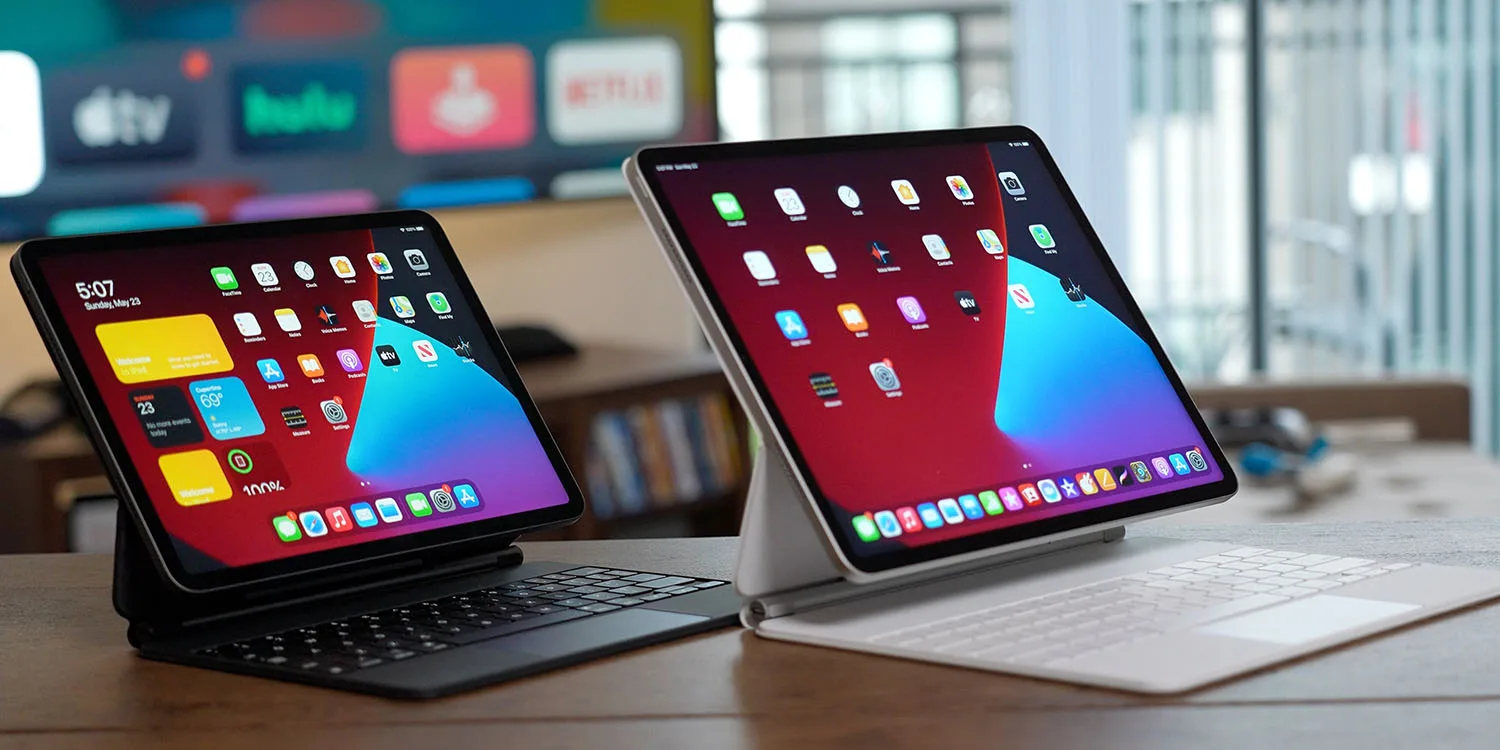
    Apple’s flagship tablet has been due for an update for quite some time. Last year, the iPad Pro received arguably the biggest upgrade in its entire history. The 2021 lineup saw the implementation of the M1 chipset (a full-fledged, desktop-class SoC) and the bigger 12.9” model in particular received a gorgeous mini-LED panel.

    Some one and a half years have passed since then, however, and, given Apple’s consistency with regards to refresh cycles, an update was expected before the end of 2022. It seems that the announcement is just around the corner.

    Mark Gurman, the final authority on all Apple-related leaks, confirmed last Saturday, in the latest edition of his Power On newsletter, that the 2022 iPad Pro is only “days away” and asserted that an announcement would take place before the end of this week.

    Now, it seems that Gurman is certain that the new iPad Pro will be revealed today (Tuesday, October 18th). The information was first brought forward in a tweet by Gurman himself.

    It should be noted that the announcement will be taking place via an official press release, as Apple is unlikely to hold another dedicated launch event before the end of 2022. This implies that the 2022 iPad Pro will be an incremental update over its predecessor.

    For reference, the biggest new addition is going to be the M2 chipset. The M2 processor will increase the performance of the new iPads by about 20%, which is unlikely to make much of a difference in day-to-day use, especially in the context of iPadOS.

    There are also rumors that the new models could support new charging capabilities, and possibly reverse wireless charging. Major design tweaks are not expected, barring the possible enlargement of the Apple logo on the back (in order to facilitate MagSafe compatibility).

  • Starbucks India launches first Reserve store

    Starbucks India launches first Reserve store

    Starbucks India has opened its first flagship Reserve store in Mumbai, Maharashtra. The 5200sqm Starbucks Reserve Fort Mumbai sells beverages, food and Reserve merchandise, such as black and gold mugs and tumblers with the Starbucks Reserve trademark. The flagship is decorated with a contemporary colour scheme and a Starbucks Siren made by two local artists from Mumbai, Sonal Vasave and Makarand Narkar. Customers can scan the nearest QR code with their Instagram camera to view the painting.

    The flagship is decorated with a contemporary colour scheme and a Starbucks Siren made by two local artists from Mumbai, Sonal Vasave and Makarand Narkar. Customers can scan the nearest QR code with their Instagram camera to view the painting in augmented reality (AR).

    In addition, there is a Black Eagle espresso machine in the store and Starbucks says customers can experience the “most exquisite and rarest coffees” in the world, such as Bolivia Sol de la Mañana, Rwanda Sholi and Sumatra Kerinci.

    In 2012, Starbucks made its debut in India as part of a collaboration with Tata Consumer Products. Tata Starbucks, a joint venture between two companies, now runs more than 300 locations nationwide and expanded into 14 new cities this year.

    “For 10 years, Starbucks has been elevating coffee craftsmanship and bringing unique experiences to our customers in India,” said Tata Starbucks CEO Sushant Dash.

    “We value the strong connections we have with our customers and will continue to innovate and develop to enhance India’s coffee culture. Starbucks Reserve is a selection of the rarest, most extraordinary coffees Starbucks has to offer, and transports customers and coffee aficionados to an immersive and personalised coffee journey.”

    Tata Starbucks opened its first stores run entirely by women in 2020, with the goal of expanding opportunities for female partners. That program has grown to 15 locations throughout the country

  • Vietnamese currency falls to record low against dollar

    Vietnamese currency falls to record low against dollar

    The dong depreciated to a new low against the U.S. dollar Wednesday morning, with state-owned Vietcombank selling the greenback at VND24,620 at 11.30 a.m.

    The Vietnamese currency fell 0.12% from Tuesday and 7.24% since the beginning of the year. Eximbank sold the dollar at VND24,620, 0.24% higher than Tuesday, and Techcombank at VND24,680, 0.33% higher.

    The U.S. Dollar Index, which measures the currency’s strength against six major currencies, is at the highest level since 2002 of around 112.

    Analysts expect the dong to come under more pressure from a surging dollar in the remaining months of this year since the State Bank of Vietnam does not have much reserves left to defend the dong after selling around 20% on it so far this year.

    As up to 70% of all trade contracts in Vietnam are paid in dollars, its continuing strength is bad news for businesses.

  • New Mastercard Service to Enable Bank Crypto Trading

    New Mastercard Service to Enable Bank Crypto Trading

    Mastercard will debut crypto trading services next year that will enable financial firms, such as banks, to extend access to their clients.

    Mastercard will launch its crypto trading services – Crypto Source – in the US, Israel and Brazil in early 2023, according to an interview with the firm’s president of cyber and intelligence Ajay Bhalla, which will allow users to buy and sell digital assets through their bank accounts.

    The service will be offered through a partnership with digital asset firm Paxos Trust Co, which will provide crypto trading and custody series on behalf of banks so any related assets will not be held on their balance sheets.

    While some banks have decided to capitalize on the crypto opportunity, most have remained on the sideline, citing concerns about price volatility, money laundering risks and other issues. But Mastercard has thousands of bank partners and its ability to enable lenders to provide crypto access without using the balance sheet could open the floodgates for mainstream adoption.

    Crypto purchases] from your own bank where you have your bank account is a very big need from the market and something consumers want, Bhalla said while declining to disclose which banks will be first to participate.

  • South Korean chain GoPizza bags $25 million in series C funding

    South Korean chain GoPizza bags $25 million in series C funding

    South Korea-based pizza chain GoPizza has bagged US$25 million in a series C funding round to fuel its expansion plan in India.

    The round was co-led by GS Ventures, CJ Investment, Mirae Asset Securities, NCore Ventures, Woori Bank, Capstone Partners, Big Basin Capital, DS Asset Management, and Pureun Investment.

    “The funding raised will allow us to massively scale our operations across the country and further cement our position in the Indian market…,” said Mahesh Reddy, CEO at GoPizza India. “Our plan is to launch 100 stores by next year.”

    The brand currently has 15 stores in the country and plans to increase its store number to 25 by the end of the year. Reddy added the fund will also be used to implement technologies in all outlets in India.

    “India is a key market for us and a majority of the investment will be directed to the Indian market,” said Jae Won Lim, founder and CEO of GoPizza.

    Known for its one-person, oval-shaped, fire-baked pizza with quick serving speed and affordable price, GoPizza operates 160 outlets across South Korea, Singapore, Indonesia, India, and Hong Kong.

    The pizza chain also aims to expand into new markets, including Thailand, Vietnam, Malaysia and the US.

  • Mercedes Enables Apple Music Spatial Audio On Its Cars

    Mercedes Enables Apple Music Spatial Audio On Its Cars

    Mercedes has always made a big deal about its Burmester Audio system on its luxury vehicles which promise 3D and 4D sound, but now it has upped the ante by collaborating with Apple. Apple’s music streaming service, Apple Music, launched spatial audio support last year and now it is deeply integrated into the latest Mercedes Benz EQE SUV which launched on Sunday.

    Spatial audio will be enabled at the heart of the MBUX infotainment system which will first come to the Mercedes Maybach S-Class, S-Class, EQS, and EQS SUV via a software update and it will be launched as well on the EQE and the newly launched EQE SUV. This feature is available for cars that have the Bumester 3D or 4D sound system which costs an additional $4,550 to $6,730.

    Mercedes and Apple believe that it will offer a more realistic audio experience and give the vibe of a concert hall.

    “Sound quality is incredibly important to Apple Music which is why we are so excited to be working with Mercedes to make Spatial Audio on Apple Music available natively in the car for the first time. Spatial Audio is revolutionising the way artists create and fans listen to music and it’s an experience that is impossible to explain in words; you have to hear it for yourself to appreciate it. Together with Mercedes, we now have even more opportunities to bring wholly immersive music to our subscribers all over the world,“ said Apple’s VP for Apple Music and Beats Oliver Schusser.

    While Apple has an arrangement with Audi and Porsche for the integration of Apple Music in their cars, this is the first time the Cupertino-based company has extended spatial audio capabilities beyond iPhone, iPad, Mac, AirPods and HomePods. Recently, Apple revealed that Apple Music had over 100 million songs and a substantial chunk of the portfolio includes songs tuned for spatial audio and lossless high-resolution audio formats.

    Most premium car owners tend to iPhone users as it is the best-selling smartphone in the world and via its vertical integration Apple is now capturing a lot of customers that would’ve traditionally gravitated towards Spotify by virtue of deals like the one it has now cracked with Mercedes.

  • Apple admits to SIM bug on iPhone 14 line

    Apple admits to SIM bug on iPhone 14 line

    Apple is admitting in an internal memo that there is a problem with the iPhone 14 series that results in a pop-up message that says, “SIM Not Supported” which is often followed by the freezing of the device. While Apple said that it is investigating the issue, it did rule out the possibility that it is a hardware problem. The company is asking its customers to make sure that they keep their software up to date.
    You can always check to see if there is a system update for your iPhone by going to Settings > General > Software Update. Meanwhile, Apple is also recommending that those who see the “SIM Not Supported” pop-up message wait a few minutes to see if the message disappears. Now here is the important thing to remember. If you do get the message about the SIM card and it doesn’t go away, do not try to restore the device.
    If you’re in this situation and the message persists, you need to head over to the nearest Apple Store or authorized service provider and arrange to have the issue fixed. Apple has already had to deal with several bugs since the release of the iPhone 14 series including one issue that made the iPhone 14 Pro models shake and grind when users recorded video on them over third-party apps like Instagram, TikTok, and Snapchat.
    Late last month Apple released iOS 16.0.2 to exterminate that bug and several others. A week ago, iOS 16.0.3 was disseminated by Apple and among the issues it fixed was one that allowed a bad actor to send an email using two double quotation marks in the “from” field instead of the first part of a valid email address. The recipient, upon opening this email in the Apple Mail app, would see the app crash and the user would also get locked out of his Apple Mail account.
    Apple is currently working on iOS 16.1 and has a beta program underway with the stable version of the build expected to be released at the end of this month. Will it contain a patch to fix the issue of the SIM pop-up screen? After all, Apple has admitted that this is a real thing and not everyone is going to feel like heading to the Apple Store or an authorized repair center to get the issue fixed.
    Additionally, with Apple reminding users to stay up to date with the software on their phones it sure sounds like the company might be working to exterminate this bug via a software update. Stay tuned.
    We should remind everyone that Apple put the kibosh on physical SIM cards with the iPhone 14 series. Instead, the 2022 iPhone models feature eSIM (embedded SIM) which is a chip that gets soldered to the phone’s motherboard. With an eSIM, switching networks is easier requiring just a phone call or a visit to a website. Up to five virtual eSIM cards can be stored on a single eSIM at a time. If your usual network is down for some reason, you can quickly switch to another one.
    You can also have the same advantage that dual-SIM phones offer; the ability to have two numbers on a single handset. One number can be for work and another for play. You’ll be able to receive phone calls and texts on both numbers all of the time while you’ll choose which number to use to make calls, send texts, or use data.

    Using an eSIM also gives the phone manufacturer more internal room to work with because the SIM card tray is no longer needed.

  • ZTE Seals 5G Innovation Cooperation Agreement

    ZTE Seals 5G Innovation Cooperation Agreement

    ZTE has signed a 5G innovation cooperation agreement with True Group, a leading digital lifestyle enabler in Thailand.

    Under the agreement, both parties will focus on the 5G joint innovation center to develop 5G networks, digital services, smart islands, intelligent manufacturing, research innovation, talent training and other fields, with a great commitment to comprehensively carrying out 5G-oriented innovative technology and business cooperation.

    According to the agreement, both parties will set up a joint innovation lab in Bangkok’s True Digital Park to test and verify 5G technologies and applications. The innovative products, solutions and applications developed by these joint efforts will be directly deployed in the “Super South+” test field in Phuket, bringing the latest digital service experiences to local users.

    “True is ready to support the sustainable intelligence development of Thailand. True Group, with the strong collaboration with leading domestic and world-class international partners, is the only operator that has the complete range and coverage of 7 frequency bands, as well as the smart 5G technology with extensive network coverage of 77 provinces in Thailand,” said Manat Manavutiveth, president of True Group. “Under such circumstances, we are delighted to form the cooperation with ZTE to jointly drive network and infrastructure development and bring changes to the telecommunication sector in various dimensions.”

    “One of the highlights is the joint innovation lab at True Digital Park, reflecting True Group’s intention to focus on innovation development to create value for society and the country as well as our potentials and expertise in True Lab Innovation Centers located in the famous universities across the country. What’s more, the cooperation in the ‘Super South+’ Project in Phuket will help improve mobile network to serve the tourism industry in the southern area, which is one of the major destinations for tourists in Thailand. We are confident that this cooperation will create a complete True5G eco-system, develop innovation technology for maximum benefits as well as strengthening True5G genius network in order to sustainably enhance the life quality and provide ultimate experiences for Thai people and forge Thailand ahead to digital transformation,” added Manavutiveth.

    “ZTE continues to practice its own positioning as a driver of digital economy and insists on continuous technological innovation. Through joint innovation, ZTE will give full play to ZTE ‘s advantages in 5G technology, R&D innovation and 5G industry application,” said Mei Zhonghua, senior vice president of ZTE Corporation. “We are deploying minimalist, green, low-carbon and intelligent 5G networks for True in southern Thailand. To meet the needs of numerous islands and offshore operations in south Thailand, we provide customized ultra-long-distance coverage products, which will enable 5G coverage to reach 100KM over the sea and high-speed 5G digital services for tourists and marine operations.”

    Moving forward, the joint innovation lab will also expand to local ecological partners to form end-to-end 5G innovative applications, further empowering industry verticals. From local pilot to mature promotion, the lab – by forming a 5G ecosystem with cross-industry integration – will further change the production method, create greater economic value for Thailand and support Thailand’s digital transformation to achieve the “Digital Thailand” vision.

  • Nokia and AIS Fibre Trial Fastest Broadband in Asia

    Nokia and AIS Fibre Trial Fastest Broadband in Asia

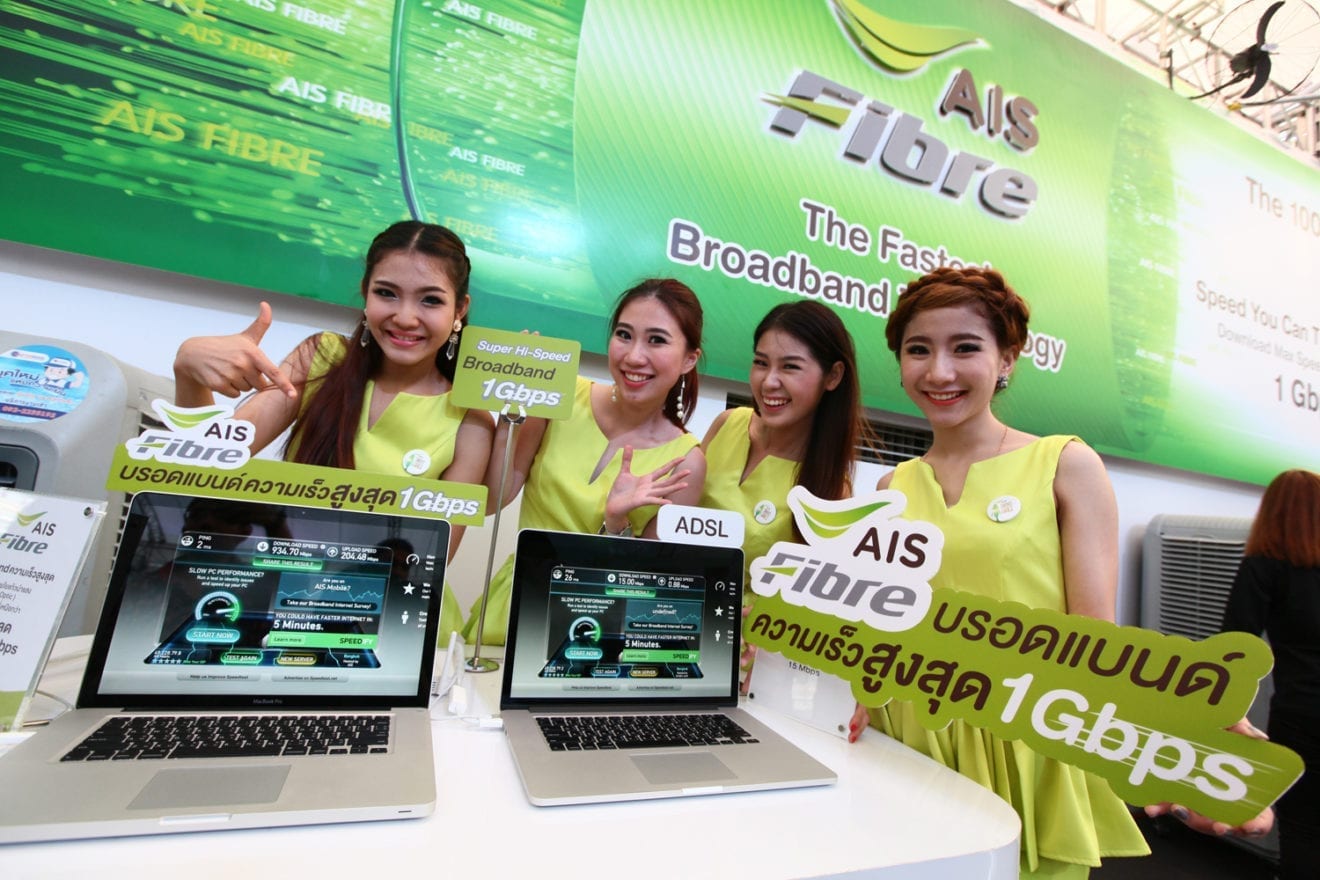
    Nokia and AIS Fibre announced the first trial of their 25G PON solution in Asia. AIS Fibre in Thailand trialed the technology using its existing optical line terminals (OLT), which have already been rolled out nationwide. The OLT was connected simultaneously to three end-user devices with a combined speed of 37.5 Gb/s using a 25G PON optical network terminal (ONT) at 25 Gb/s, an XGS-PON ONT at 10 Gb/s and a GPON ONT at 2.5 Gb/s. All services can be served with the same single fiber at the same time.

    AIS Fibre was the first operator to offer 100% optical fiber broadband services in Thailand. With this successful trial concluded, the company is set to realize its ambition to build the most future-proofed fiber optic home Internet network in the country.

    As new applications like virtual reality gaming and hologram calls enter the mainstream, AIS Fibre will be able to offer the services with super high speeds and low latency. Since AIS Fibre will be able to run GPON, XGS-PON and 25G PON services on the same fiber line, it can offer customers a full choice of speeds up to 25 Gb/s on the existing platform and without the need for intrusive excavation and laying of new fiber.

    25G PON also gives AIS Fibre the opportunity to offer enterprises a 10G + and lower latency replacement to Point to Point (P2P) connections which can be costly and are less scalable. The operator will also be able to use the technology for 5G backhaul, which will become increasingly important as it builds more cell sites required for higher frequency 5G.

    Thanit Chaiyaboonthanit, acting managing director of Fixed Broadband at AIS, said, “AIS Fibre prioritizes innovation that will provide the best services to our customers and gives us network technology which meets users’ future needs in terms of both speed and flexibility. This partnership with Nokia to trial 25G PON technology has yielded favourable results, inspiring us to believe that we can deploy it in the future.”

    Ajay Sharma, head of Thailand and Cambodia at Nokia, noted, “With enhanced speeds provided by 25G PON, fiber networks are evolving into being able to connect everything, everywhere. They play an important role in delivering any service to any endpoint, including residences, businesses and cell sites. We are proud to have been part of this important milestone.”

  • Gasoline tax cut not on National Assembly agenda this time

    Gasoline tax cut not on National Assembly agenda this time

    The proposal for cuts to special consumption tax and value-added tax on gasoline will not be reviewed in the upcoming National Assembly session.

    Addressing the press Monday afternoon, Nguyen Minh Son, vice chairman of the Economic Committee, said the government was yet to present a report to the National Assembly on decreasing the special consumption tax and value-added tax on gasoline.

    As a result, the National Assembly will not discuss the issue at the fourth session of the 15th National Assembly, which is set to begin on October 20.

    “When the government submits the proposal, the National Assembly’s agencies would consider verifying and submitting it to the National Assembly at the next earliest meeting,” Son said.

    The Ministry of Finance has prepared a proposal wherein the special consumption tax on gasoline will be halved and the value-added tax on gasoline and oil will be cut by 20-50%. The proposal has been submitted for review and inputs to the Ministry of Justice.

    A representative of the Ministry of Finance said Monday that they had developed a plan that contained different tax reduction measures in the event of gasoline prices rising in the future. It would be submitted to the National Assembly if the government demands it.

    The government determines the timing of measures to reduce VAT and excise duty, which is based on closely monitoring gasoline price changes and balancing the budget collection plan, the rep said.

    Referring to the recent swings in gasoline prices, Son said that it was an issue under the control of the government, including the ministries of Finance and Industry and Trade.

    Since major fluctuations in global gasoline prices would not immediately be reflected in domestic prices, he suggested that that the government initiates adjustments to the retail price management system in a more acceptable manner while protecting the interests of people, enterprises, retailers and importers and exporters.

    Since October 3, the petroleum market, particularly in the southern region, has been experiencing supply shortages.

    People in the south have had great difficulty getting gasoline in recent weeks with many gas stations running out of fuel or selling restricted quantities as a running battle over commissions with oil companies disrupted supply.

    In Ho Chi Minh City, for example, 137 outlets did not have gasoline to sell on October 11.

    Supply has also been scarce in other southern localities including the provinces of Binh Duong, Dong Nai, Binh Phuoc, Kien Giang and An Giang.

    However, supplies resumed October 12 with authorities guaranteeing there would be enough gasoline for the next 10 days.

  • Mondelez Int’l appoints new president for Southeast Asia unit

    Mondelez Int’l appoints new president for Southeast Asia unit

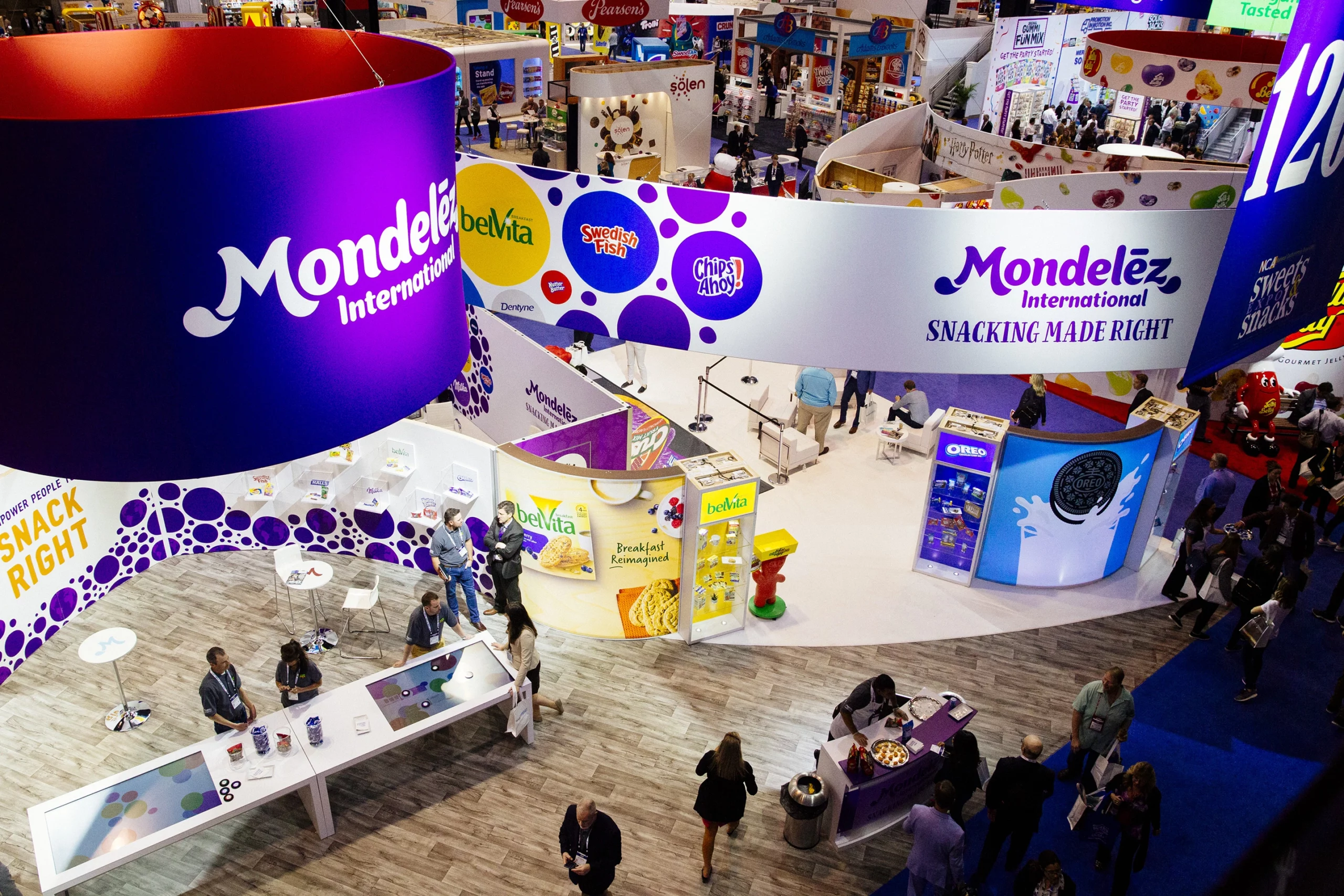
    Mondelez International, the maker of iconic brands including Cadbury Dairy Milk, Oreo, Ritz and Toblerone, has appointed Hemant Rupani as president for its Southeast Asia (SEA) Business Unit.

    Hemant, previously Managing Director of Mondelez Kinh Do Vietnam, replaces Glenn Caton who has moved to another position in the company’s global operations.

    In his new role, Hemant will be responsible for the SEA cluster of markets including the exports business in the broader Asia Pacific, Middle East and Africa (AMEA) region, leading growth and end-to-end business.

    He said: “The SEA business has been on an accelerated growth path driven by increasing consumption, digital penetration, talented population, and cultural diversity in the region.”

    “We have built a reign as category leaders across segments with our portfolio of iconic global brands and local jewels. Combining our solid team, local-first strategy, and robust investments, we are in a strong position to lead the future of snacking and drive sustainable growth forward.”

    He added: “Over the years, we have learned to adapt in making the business more agile, resilient, and competitive. Digitalization will play an increasing role to help us speed up innovation, strengthen proximity to consumers, and spearhead progress towards creating snacks the right way.”

    Hemant is an accomplished leader with over 20 years of experience working in India, the U.S. and Vietnam, covering various industries including food and beverage (F&B), telecommunications, and consulting.

    Throughout his career journey, Hemant has enabled multiple business turnarounds, driven operational excellence, and built high-impact teams. Prior to joining Mondelez International in 2016, he worked with several leading organizations including PepsiCo, Vodafone, Britannia, and Infosys Technologies.

    Mondelez International commands a long-standing heritage in SEA. The region also houses ten manufacturing facilities and two technical centers that support its world-class supply chain capabilities and product innovation.

    Early this year, Mondelez International invested $23 million to expand its OREO production line in Cikarang, Indonesia, which also uses the latest technologies in reducing energy, water and carbon emissions. The company has also integrated solar panel rooftops on two of its manufacturing plants in Malaysia, including the Cadbury chocolate production factory which has a 48-year-old heritage locally.

  • Electricity shortage likely as gas supply disruption looms

    Electricity shortage likely as gas supply disruption looms

    There could be electricity shortages in the offing since a leading gas firm has to reduce supply to thermal power plants to relocate a rig.

    PetroVietnam Gas Joint Stock Corporation (PVGas) announced that its contractor, Hibiscus of Malaysia, would stop gas supply to the Ca Mau power plant for three days from Oct. 17.

    They are weekdays, when power demand is high, and so to preclude a shortage in the southern region, Vietnam Electricity’s National Load Dispatch Center has urged PVGas not to move the rig on weekdays, but on Sunday when electricity demand is low.

    Otherwise it should reduce supply to other major gas consumers like urea production plants and prioritize supply to power plants, it said.

    The output of gas-fired power plants was nearly 19.7 billion kWh in the first eight months of this year, or around 11% of total production.