Tag: asia

  • Swiss Banks Face a Tense Future in China

    Swiss Banks Face a Tense Future in China

    President Xi Jinping’s report to the 20th Communist Party congress hints at more tax and regulatory measures aimed at reducing wealth disparities.

    In the last two decades, the Swiss wealth management sector has been forced to directly confront and contend with the vagaries of the world’s two largest economies in the world – China and the US.

    In the case of the US, it has been anything but a delicate balancing act. Most of the wealth management industry has been manhandled into coughing up material fines for abetting tax evasion attempts by American citizens.

    China has been different. The wealth management sector has seen the country as the greatest new market of our time. For decades, bankers have returned wide-eyed from trips to Beijing and Shanghai, effusively spouting about this wide-open, boundless future full of promise. Many have been able to benefit copiously, from the unheard-of growth rates that country has experienced since the turn of the millennium.

    The two major Swiss banks have built onshore presences. And the smaller private banks and wealth managers that haven’t can still catch any passing outflows from the wealthy Chinese with their booking centers in the proximate cities of Hong Kong and Singapore.

    Although the political and economic differences between the US and China are indescribably wide, there is one striking similarity. They both tax citizens on their worldwide income. In China, almost all nationals are defined as being domiciled in China unless they live in Hong Kong, Macau, or Taiwan.

    That similarity could be a very significant inflection point for private banks and wealth management. And that looks likely to continue unhindered, at least according to President Xi Jinping’s report to the 2022 party congress on Sunday. In a translated transcript published by Nikkei Asia that was provided to journalists covering the event, he indicated:

    We will enhance the roles of taxation, social security, and transfer payments in regulating income distribution. We will improve the personal income tax system and keep income distribution and the means of accumulating wealth well-regulated. We will protect lawful income, adjust excessive income, and prohibit illicit income.

    That message has already been made very clear to China’s celebrities and influencers who were fined late last year for tax evasion.

    It is going to be very tough going for anyone trying to bank what many would consider the core target client base for a wealth manager or a private bank.

    That view seems to be borne out more generally, with Hong Kong’s daily English newspaper, the South China Morning Post , writing on Thursday that the wealthy Chinese could face a rocky road ahead.

    All of this, taken together, puts wealth managers in a double bind. Not only are they going to have to parse carefully and regularly review and re-review their client base for possible tax discrepancies, but they are going to have to go to pains to make sure that they are not making anyone excessively wealthy, at least not in the eyes of the Chinese government.

    What that means in practice is anyone’s guess. But for an industry traditionally known for privacy and discretion, it is a very big ask.

  • WhatsApp’s new feature Call Links begins rollout

    WhatsApp’s new feature Call Links begins rollout

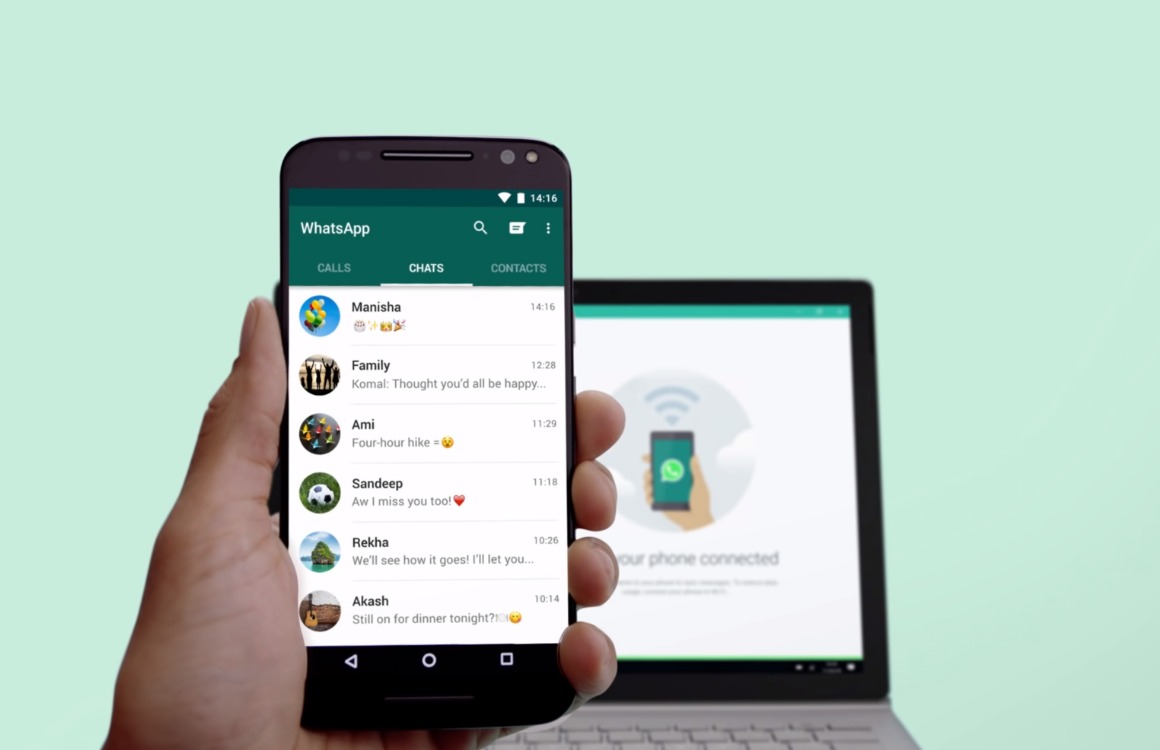
    WhatsApp announced a new feature last month called Call Links. Those excited to utilize secure group calls that only take a few seconds to set up may rejoice: the feature has officially started rolling out on a larger scale.

    As the name suggests, the feature allows WhatsApp users to create group calls, with or without video, accessible only by a simple link. These calls can host up to 32 people at a time, while the link itself is valid for 90 days.

    Naturally, all invitees must have a WhatsApp account and as of now, the feature is only supported on mobile phones. If you should open a Call Link on the WhatsApp desktop web app, it will inform you of the limitation and provide you with several options to get on the group call via your phone, like another link and a QR code.

    While it may seem redundant, as if you can open the link on the web app, then you must already have access to it on your phone, having an easy way to generate QR codes for calls that can last 3 months sounds like a nice hidden feature.

    Those interested in trying out Call Links can check if it’s available to them via these simple steps:

    1. Open WhatsApp on your smartphone
    2. Navigate to the rightmost tab labeled “Calls”
    3. On the top you should see the “Create call link” option

    And that’s all it takes to get a group call started on WhatsApp! While this is a significant improvement for individuals yearning for fast options that are known to be secure, the process is a tad more complicated than that of competitors.

    Zoom and Google Meet come to mind almost immediately. Both services provide video calls for up to 100 participants without any extra fees. You can also get access to extra options at a premium. Zoom’s calls can go up to 300 participants, while Google offers features such as streaming directly to YouTube.

    Both services will let you join in on a call without an account, which makes them a bit more accessible. Google even has an additional merit here: most people already have accounts set up, as you can’t really make the most of an Android device without one.

    You can even use your Google account to log into Zoom. While WhatsApp still requires your phone number, meaning that the only barrier that Call Links actually lifts is having another person’s number in your contact list.

    While WhatsApp’s service is completely free, it doesn’t have any extra features beyond voice calls. But their mission is different too: to let people communicate freely, without barriers. And Call Links completely matches that criteria.

    … And that would’ve been a poetic finale, if WhatsApp hadn’t been reported on testing calls for groups of over 1000 people. Given their ambitious experiments, this might just be the start for Call Links. Its future renditions may give competitors a run for their money.

  • Indonesian chain Kopi Kenangan makes international debut

    Indonesian chain Kopi Kenangan makes international debut

    Indonesian coffee chain Kopi Kenangan has launched its first store in Malaysia under the name Kenangan Coffee.

    The store, which sells the brand’s exclusive coffee drinks, is situated in the Kuala Lumpur shopping centre Suria KLCC. This is a part of the company’s strategy for international growth, and co-founder and CEO Edward Tirtanata said Malaysia would have 100 new stores by the end of the first quarter of next year.

    There are four locations under the construction including Sunway Pyramid, Pavilion KL, MyTown Cheras and NU Sentral KL. All will be launched at the end of this year.

    According to Statista, Malaysia’s Coffee segment is expected to generate US$1.296 billion in revenue this year and the market is anticipated to increase by 7.28 per cent annually (CAGR 2022-2025).

    Warm beverages such as tea and coffee have long been a part of the majority of Malaysians’ daily lives. The growth of global retail coffee companies like Starbucks and The Coffee Bean, The Tea Leaf, as well as regional coffee shop brands like OldTown White Coffee, can also be attributed to the rise in popularity of coffee among young people.

    Tirtanata told local sources that Malaysia is the brand’s first international market due to its steady expansion in coffee culture, particularly the grab-and-go trends, and the similarities between Malaysians and Indonesians in terms of taste preferences and openness to trying new things

    Kopi Kenangan is also eyeing to make a debut in three or four Asian markets in the future. Last year, the brand raised $96.1 million in a Series C funding round, helping its chain be valued at more than $1 billion.

    Founded in 2017 by Edward Tirtanata, James Prananto and Cynthia Chaerunnisa, the F&B chain Kopi Kenangan operates 850 stores in 64 cities across Indonesia. It has increased the variety of its products by launching Kenangan Manis, Chigo, and Cerita Roti.

  • Automakers To Double Spending On EVs, Batteries To $1.2 Trillion By 2030

    Automakers To Double Spending On EVs, Batteries To $1.2 Trillion By 2030

    The world’s top automakers are planning to spend nearly $1.2 trillion through 2030 to develop and produce millions of electric vehicles, along with the batteries and raw materials to support that production, according to a Reuters analysis of public data and projections released by those companies.

    The EV investment figure, which has not previously been published, dwarfs previous investment estimates by Reuters and is more than twice the most recent calculation published just a year ago.

    To put the figure in context, Alphabet, the parent company of Google and Waymo, has a market cap of $1.3 trillion.

    Automakers have forecast plans to build 54 million battery electric vehicles in 2030, representing more than 50% of total vehicle production, according to the analysis.

    To support that unprecedented level of EVs, carmakers and their battery partners are planning to install 5.8 terawatt-hours of battery production capacity by 2030, according to data from Benchmark Mineral Intelligence and the manufacturers.

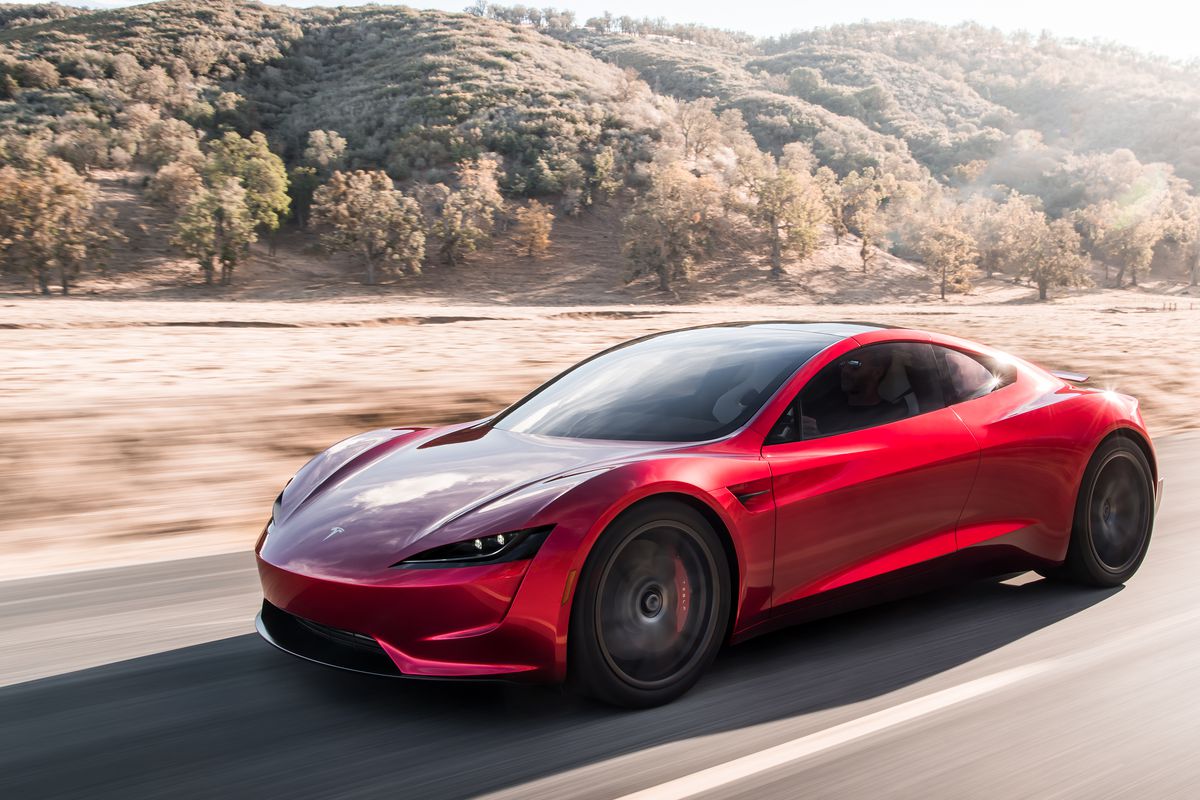
    Leading the charge is Tesla, where Chief Executive Elon Musk has outlined an audacious plan to build 20 million EVs in 2030, requiring an estimated 3 terawatt-hours of batteries. Musk in late October said Tesla already is working on a smaller vehicle platform targeted to cost half as much as the Model 3 and Model Y.

    While Tesla has not fully disclosed its spending plans, such exponential growth – a 13-fold increase over the estimated 1.5 million vehicles it hopes to sell this year – will come at a cost of hundreds of billions of dollars, according to a Reuters analysis of Tesla’s financial disclosures and forecasts for global EV demand, and battery and battery mineral production.

    Germany’s Volkswagen, while lagging behind Tesla, has ambitious plans through the end of the decade, targeting well over $100 billion to build out its global EV portfolio, add new battery “gigafactories” in Europe and North America and lock up supplies of key raw materials.

    Japan’s Toyota Motor Corp is investing $70 billion to electrify vehicles and produce more batteries, and expects to sell at least 3.5 million battery electric models (BEVs) in 2030. It plans at least 30 different BEVs and expects to transition the entire Lexus range to battery electric over that span.

    Ford Motor Co keeps boosting its spending level on new EVs – now at $50 billion – and at least 240 gigawatt-hours of battery capacity with its partners as it aims to produce around 3 million BEVs in 2030 – half its total volume.

    Mercedes-Benz has earmarked at least $47 billion for EV development and production, nearly two-thirds of that to boost its global battery capacity with partners to more than 200 gigawatt-hours.

    BMW, Stellantis and General Motors each plan to spend at least $35 billion on EVs and batteries, with Stellantis laying out the most aggressive battery program: A planned 400 gigawatt-hours of capacity with partners by 2030, including four plants in North America.

  • Honda Motorcycle and Scooter India To Launch Flex-Fuel Engined Motorcycle

    Honda Motorcycle and Scooter India To Launch Flex-Fuel Engined Motorcycle

    Honda Motorcycle and Scooter India (HMSI) confirmed that will launch motorcycles with flex-fuel engines in the next two years. Atsushi Ogata, President, MD & CEO, HMSI, said that the company’s internal target is to launch at least one commuter motorcycle with flex-fuel engine by the end of 2024, although he did not mention which model will it be. Honda already has motorcycles with flex-fuel engines, which it sells in Brazil.

    TVS Motor Company was the first two-wheeler company to launch a flex-fuel motorcycle, which was the Apache RTR 200 Fi E100 in July 2019, which could run on petrol as well as Ethanol. It had an E100 200 cc single-cylinder engine which has a power output of 20.7 bhp at 8,500 rpm and peak torque of 18.1 Nm at 7,000 rpm. TVS claimed a top speed of 129 kmph. The ethanol powered Apache gets electronic fuel injection with twin-spray-twin-port system that ensures better power delivery while burning cleaner and emitting up to 50 per cent less Benzene and Butadiene gases.

    HMSI’s announcement comes at the same time as Toyota showcasing the Corolla Altis Flex-Fuel model, earlier this month, which will be launched soon. The new Corolla Altis is powered by a 1.8-litre flex fuel engine paired with the company’s self-charging strong hybrid system. The debut marks the return of name plate to India after Toyota pulled the plug on the previous generation model in 2020. The flex fuel

  • Tesla Investors To Focus On Demand Issues In Earnings Report

    Tesla Investors To Focus On Demand Issues In Earnings Report

    Tesla’s quarterly report on Wednesday will likely show whether the Elon Musk-led electric-vehicle maker is facing any weakness in demand that is starting to weigh on the wider auto industry.

    Decades-high inflation, rising energy bills in Europe and signs of a weakening China market have raised doubts among some analysts about whether Tesla can buck an economic slowdown and continue to raise prices without hurting its sales.

    Although Musk has said Tesla “does not have a demand problem”, the company’s latest report on deliveries showed that it made 22,000 more EVs than it delivered to customers in the third quarter. It blamed the rise in inventory on transportation-related problems.

    Demand for Tesla vehicles in China, the world’s biggest market for autos, is emerging as a major worry among Wall Street analysts, given that the EV maker faces tough competition from domestic rivals BYD, Nio Inc and XPeng Inc.

    “A top concern right now is demand in China as wait times seem to be shrinking,” RBC Capital Markets said. “Question is if this is a blip or signs of a bigger change among consumers.”

    Globally, there are fears that auto sales may lose steam in the coming quarters as rising interest rates and a weaker economic backdrop discourage consumers from making big-ticket purchases.

    Analysts say pricing is a key factor that could help Tesla make up for a possible demand drop and boost revenue.

    The average U.S. selling price of Tesla’s Model 3 has risen about 24% since January last year, potentially helping the EV maker rake in record revenue in the third quarter.

    Wells Fargo said Tesla is likely the biggest beneficiary of the Biden administration’s new consumer tax credits to incentivize North American battery and EV production.

    Musk also raised hopes of a share buyback earlier this month when he said “Noted” on Twitter in response to a major individual investor’s call for a stock buyback.

    Such a move could benefit Musk, whose 15% stake in Tesla makes him its biggest stakeholder, and help him raise cash to fund his $44 billion deal to take Twitter Inc private.

    Some experts say Musk may need to sell up to an extra $3 billion in stock after the earnings announcement to help fund the deal.

    “If there is a big sale of Tesla stock by Musk after earnings, that will be a strong sign that the Twitter deal is on the cusp of closing,” said Adam Badawi, a law professor at UC Berkeley.

  • Microsoft tells regulators that it wants to create an Xbox mobile app store

    Microsoft tells regulators that it wants to create an Xbox mobile app store

    When it comes to the smartphone business, Microsoft could have been a contender. Windows Mobile was the operating system on many popular pre-iPhone handsets like the Motorola Q. It also ran some post-iPhone touchscreen models like the HTC Touch Diamond, the HTC Touch Pro, and the HTC HD2, to name a few.
    Many consumers favored Microsoft’s Windows Phone over iOS and Android due to its buttery smooth scrolling. But the Lumia handsets running the software, whether made by Nokia or Microsoft, never caught on, and as a result, developers never felt compelled to develop apps for the platform. Eventually, Microsoft put the kibosh on its plans to challenge iOS and Android, and when Microsoft launched the Surface Duo dual-screened handset in 2020, it was powered by Android.
    Microsoft does have ownership of a vast amount of intellectual property related to Android, and it made much more money each year with the success of Google’s mobile operating system than it did having ownership of Microsoft’s Windows Mobile and Windows Phone.
    The UK’s Competition and Markets Authority (CMA) is doing its due diligence in investigating Microsoft’s $68.7 billion acquisition of game maker Activision Blizzard. In responding to questions posed by the regulatory agency, Microsoft mentioned that the acquisition would allow it to take on the Google Play Store and the Apple App Store.

    Microsoft’s response included these comments: “Building on Activision Blizzard’s existing communities of gamers, Xbox will seek to scale the Xbox Store to mobile, attracting gamers to a new Xbox Mobile Platform. Shifting consumers away from the Google Play Store and App Store on mobile devices will, however, require a major shift in consumer behavior. Microsoft hopes that by offering well-known and popular content, gamers will be more inclined to try something new.”

    The report names two popular video games, Activision’s Call of Duty: Mobile and King’s Candy Crush Saga that Microsoft could use to help it build a mobile app storefront that could compete with the Play Store and App Store. Microsoft, noting the popularity of mobile games and the revenue it drives of in-app purchases, sees Apple and Google making a fortune and wants a piece of the action.
    Discussing the proposed purchase of Activision Blizzard, Microsoft explains to the CMA that “The transaction gives Microsoft a meaningful presence in mobile gaming. Mobile gaming revenues from the King division and titles such as Call of Duty: Mobile, as well as ancillary revenue, represented more than half of Activision Blizzard’s … revenues in the first half of 2022.”

    Microsoft adds that it “currently has no meaningful presence in mobile gaming and the Transaction will bring much-needed expertise in mobile game development, marketing, and advertising. Activision Blizzard will be able to contribute its learnings from developing and publishing mobile games to Xbox gaming studios.”

    The software giant has put up a website for its Activision Blizzard acquisition and has posted a giant graph showing the history of the gaming industry. The graph shows a valuation for the entire gaming business of $165 billion in 2020 with consoles valued at $33 billion (20% of the market), PCs worth $40 billion (24%), and mobile gaming valued at $85 billion (51% of the market).
    The CMA happens to be focused on how Microsoft’s proposed acquisition would impact the console market. The smallest tier of the industry, the purchase would represent a larger chunk of this market which could make the regulatory agency concerned enough to block the deal. Microsoft would prefer that the CMA look at how a possible purchase of Activision Blizzard would be a small drop in the mobile gaming market.
    Even if Microsoft gets the green light to close on the purchase of Activision Blizzard, becoming a challenger to the App Store and Play Store is going to be tough. On Android, games found on an Xbox mobile app store could be sideloaded on a mobile device. But that still won’t work on iOS where Apple’s walled garden prevents users from sideloading apps in the name of security.
  • Netflix to charge extra fees for extra users in 2023

    Netflix to charge extra fees for extra users in 2023

    The latest development in Netflix’s plans to dissuade account sharing has surfaced via a quarterly earnings letter. It reveals extra charges for each separate user on the account of the owner, that isn’t from the same household, starting 2023.

    While the final rates have not been officially announced, what we can infer from the document is that the charge will be up to a quarter of the initial basic rate. That would result in about a $3-4 charge per user outside of the household.

    Netflix began its crackdown on unauthorized account sharing earlier this year. What started with tests of account verification in the style of 2FA (2-factor authentication) and device count limitations ended with the creative workarounds as provided by the Internet.

    The tests had caught the attention of many users online, some of whom even shared their plans on how to circumvent the possible limitations via tricks as simple as “I’ll just text them the verification code”, while others provided their own take on solutions that Netflix should adopt.

    We can’t say if the Internet’s reaction had an impact on the decision, it was clear that a change of plans was needed. After all, Netflix’s estimated loss from account sharing is around the $6 billion mark, as per Citi analyst Jason Bazinet. From Netflix’s point of view, that is a sum that should flow in naturally from actual user subscriptions.

    While that does seem fair, let’s check in with Netflix’s competition:

    • HBO Max doesn’t have any limitations
    • Disney Plus limits the amount of devices connected to the account
    • Amazon Prime Video requires users of shared accounts to be within the same country or region

    How these will measure up against Netflix’s decision will become clear once we truly find out how the term “household” is defined and when the penalty is live.

    Netflix is still the major player on the market with over 220 million active users. Now, imagine if account sharing would cease? Those numbers would jump significantly, with a doubtless positive business effect, given Netflix’s recent financial troubles.

    It’s worth pointing out that the company is also making it easier to detach your profile from a shared account. Earlier this month, Netflix announced a profile migration tool, which allows users to keep their settings when creating their own subscription.

    Also, set to release in November, is a cheaper, ad-supported plan for $6.99. All of these announcements point to Netflix trying to gently nudge users into creating separate accounts, instead of sharing.

    Regardless of financial reports or planned actions, at the end of the day, Netflix are the trendmakers of the video streaming scene. Their actions are sure to stir up the market and it would be interesting to see how competitors react to Netflix’s decision.

  • Apple reportedly cuts iPhone 14 Plus production

    Apple reportedly cuts iPhone 14 Plus production

    Last year Apple announced that it was doing away with the iPhone mini. The model with the 5.4-inch display twice (with the iPhone 12 mini and iPhone 13 mini) failed to gain any traction with the phone-buying public. So the crew in Cupertino had an epiphany; if going small doesn’t work, we will go LARGE. Apple decided to replace the iPhone 13 mini this year with a 6.7-inch non-Pro model that Apple named the iPhone 14 Plus.
    The 6.7-inch panel gives the iPhone 14 Plus the same screen size as the iPhone 14 Pro Max although the quality of the display is better on the pricier model. The iPhone 14 Plus also features the boring and static notch instead of the shape-shifting and entertaining Dynamic Island. It also doesn’t have the spectacular camera setup found in the iPhone 14 Pro Max, nor does it offer the 120Hz refresh rate of the ProMotion display.
    You might think that the outstanding battery life of the iPhone 14 Plus (it has a 4325mAh battery which is slightly larger than the 4323mAh battery powering the iPhone 14 Pro Max) and the lower price ($899 and up compared to the starting price of $1,099 for the iPhone 14 Pro Max) would have helped to generate some big time sales of the phone. But Apple had some manufacturing issues with the device which forced a delay in the handset’s release to October 7th. The rest of the line was in stores on September 16th.
    Apple has decided to cut production of the iPhone 14 Plus. The report alleges that Apple has already told one supplier in China to halt production of the components they make for the iPhone 14 Plus. In late September, another report indicated that demand for the entire iPhone 14 series was less than what Apple expected.
    That report also said that the iPhone 14 Pro and iPhone Pro Max have been outselling the non-Pro phones and that Apple has decided to shift some production to the more expensive models. In late September, those familiar with Apple’s plans said that the company had changed its production target for the second half of the year to 90 million units which would be flat with the number of iPhone 13 models that were produced during the second half of 2021.

    Some of the problems that Apple is seeing has to do with softening demand for smartphones in general. Research firm Canalys says that the smartphone market declined 9% during the third quarter on a year-over-year basis. The firm also says to expect weak smartphone demand over the next six to nine months.

    Some critics will point out that almost every year Apple is rumored to cut iPhone production for one reason or another. Within a few weeks afterward, another story comes out denying that Apple sliced production. The timing of this story is interesting considering that Apple is expected to report its fiscal fourth-quarter earnings on October 27th. This is a very volatile time for the stock as professional traders are taking positions on Apple’s shares based on what they believe the fiscal fourth quarter results will be.
    The possibility of Apple cutting production along with a weak general market has pushed the company’s shares down slightly this afternoon. Some traders will fade stories like this and buy the stock or call options paying a cheaper price because of the decline in the stock generated by this news.
    Some Apple investors (more like gamblers to be honest with you) consider reports like today’s to be created as a way to manipulate the price of Apple’s shares. However, considering that we have been seeing a slowdown in smartphone demand in general due to economic conditions worldwide.
  • Netflix announces that it’s working on a cloud gaming service and 55 new games

    Netflix announces that it’s working on a cloud gaming service and 55 new games

    After losing its dominance over the video streaming space, it appears that Netflix is ready to embark on a new venture and try to succeed where Google failed. Simply put, Netflix will try to enter the cloud gaming space as well.

    As Netflix VP of Gaming Mike Verdu revealed at TechCrunch Disrupt, the streaming giant is “seriously exploring a cloud gaming offering.”

    This comes after Netflix already launched a Games tab in its stock Netflix app, which holds some 25 mobile games. But apparently — this was only a first step.

    Verdu also stated that Netflix’s answer to Luna and GeForce Now won’t be a subscription service that will play as a console replacement. He said that it will be a “value add” and will work in a “completely different business model” than the recently-failed Stadia.

    According to Verdu, Stadia’s struggles to gain traction with customers wasn’t the technology it utilized, it was precisely the business model Google used. But Netflix hopes that, over time, its way of implementing its cloud gaming service will become the “very natural way to play games wherever you are.”

    Verdu didn’t say when we could expect Netflix to launch its cloud gaming service, but he shared that the streaming company is currently working on 55 new games, and it’s opening a gaming studio in Southern California. The games are based on original properties like “Stranger Things,” as well as licensed ones like “Spongebob Squarepants.”

    As for the new gaming studio, Verdu said that the former executive producer of “Overwatch,” Chacko Sonny, will get behind the wheel and lead it. According to Verdu, Sonny joining Netflix shows that the streaming giant is in the gaming industry for “the long haul” and “for the right reasons.”

  • Waze helps drivers find the cheapest fuel with Gas Station feature

    Waze helps drivers find the cheapest fuel with Gas Station feature

    Despite fuel prices going up since the beginning of the year, traffic continues to increase in many US cities. Luckily, Waze is here to help you not just avoid as much traffic as possible, but also find the cheapest fuel with the Gas Station feature introduced earlier this year.

    Considering OPEC recently announced a new cap for global oil supply coming into effect soon, Gas Station will probably help many drivers be better prepared for fluctuating gas prices across the US. If you haven’t used Gas Station, you can do that directly from Waze, by simply searching the most affordable gas stations and find the best prices for fuel in your area.

    Just to put that into perspective, here is some relevant traffic data in 10 major cities across the US, which compares traffic from August – October 2022 to the same period one year ago:

    • Nashville traffic increased by 20.8%
    • Charlotte traffic increased by 17.6%
    • Boston traffic increased by 14%
    • Washington DC traffic increased by 10.8%
    • Austin traffic increased by 10.7%
    • New York City traffic increased by 9.7%
    • Dallas traffic increased by 9.3%
    • Houston traffic increased by 9.2%
    • Atlanta traffic increased by 7.8%
    • San Diego traffic increased by 7%

    To take advantage of Gas Station, first choose your preferred gas type (i.e., regular, midgrade, premium and diesel) within settings and the app will find the type of gas that meets your needs. Another important feature offered by Gas Station is the ability to find the best-priced fuel in a certain area.

    The Waze Gas Station feature will also notify users of nearby gas stations, prompting drivers to update the price of gas at specific location so other users of the app can search for the cheapest prices in their area.

    Also, in case you didn’t know, Waze offers real-time gas pricing information, a feature powered by community members sharing gas prices along their drive. It makes it much easier to plan your drive ahead of time, not to mention that your trip will be more affordable.

  • Goldman Sachs Names Leaders for Newly Merged Units

    Goldman Sachs Names Leaders for Newly Merged Units

    Goldman Sachs has named the leadership for its newly consolidated global business which has been divided into three core units.

    Goldman Sachs appoints Marc Nachmann as head of asset and wealth management, Ashok Varadhan, Dan Dees and Jim Esposito as global co-heads of global banking and markets, and Stephanie Cohen as head of platform solutions.

    Earlier this week, reports indicated that Goldman would unveil a newly consolidated structure that would combine asset and wealth management into one division as well as investment banking and trading into another one. The third division oversees transaction banking alongside Goldman’s portfolio of fintech platforms.

    In its latest third-quarter results, the bank registered a 44 percent drop in profits and underlined plans to pull back on some of its consumer banking ambitions, with investments such as Marcus and fintech lender GreenSky which have been structured under the expanded wealth unit and the platform solutions unit, respectively.

    We are making it clear that we’re pulling back on some of that now,” said Goldman Sachs chief executive David Solomon during an analyst briefing. I think one of the big learnings over the last few years is that we’re better to play to our strengths.

  • Banking is Still About Branches and ATMs

    Banking is Still About Branches and ATMs

    A McKinsey Report reveals that retail banking makes up almost half of all financial sector profit worldwide.

    All that talk about structured products, discretionary investment mandates, M&A – even crypto – may have confused everyone about what banking is. Even now, according to McKinsey & Company, the humble local bank branch – and the ubiquitous convenience store ATM – reign supreme.

    At least that is what an October report on the future of retail banking by the consultancy’s financial services practice states unequivocally. In it, they claim retail banking makes up 48 percent or almost half of the global banking pool of profit, which they estimate at $680 billion.

    They believe the segment, by itself, is larger than entire industries, among them pharmaceuticals, telecommunications, and food manufacturing. In other words, those branches and ATMs count for more than an army of Nestles, Vodafones, Novartises, and Roches.

    Retail also appears to have avoided much of the convulsions, restructuring, and redundancies seen in many other parts of banking, with the 10-year average annual return on equity being a veritable beacon of relative stability at 8.9 percent. Indeed, it has even trended noticeably higher this year as the industry continues to recover from the pandemic. But, beyond that, there are some divergent trends as the picture gets more granular.

    The McKinsey report looked at revenue by product per individual client and came up with some surprising idiosyncrasies. In the US and Western Europe, retail banks tend to lose money with basic products such as credit cards and unsecured loans while they barely break even with them in China and Emerging Asia. In Latin America or the Middle East and North Africa, the latter being treated as one region, it manages to eke out significant profits.

    When it comes to more complex lending products such as mortgages and car loans, all regions are profitable except for the Middle East and Africa, which barely breaks even. All regions make money when it comes to providing top-tier retail services for wealth accumulation, insurance, and pensions even though, somewhat surprisingly, the least profitable part of the world for such products is in China.

    The emerging markets of Asia and China are also unique in that they are the first in the world where so-called digital-first models have reached maturity.

    It has allowed them to shrink an already thin branch network by a third over five years and is a key reason why they have been able to keep basic products on the threshold of profitability.

    However, profit pools for complex lending and wealth and protection services are low by global standards, and challenges to incumbent banks remain as innovative Big Tech and fintech organizations continue growing in terms of consumer adoption and product diversification.

    But such a wide-ranging report would not be replete without repeated suggestions of some impending, imminent threat about to strike the industry down, instilling fear into the hearts and minds of industry employees and executives, likely prompting the latter to find succor by summoning reams of available, well-prepared consultants.

    That fear appears to be big tech. According to McKinsey, digitalization has not only lowered the general barriers to entry but the IT budgets of the largest retail banks pale in comparison to that of big tech.

    They, and the fintech sector, already capture about 45 percent of the gross revenues in payments while digital investment apps manage a quarter of assets in the mass-affluent segment and are growing at twice the rate of traditional providers.

    But banks do have some trump cards left. According to McKinsey, when it comes to customer engagement, just over half, or 52 percent, of clients engage with their bank every week. On Amazon, however, only 22 percent of them buy that often.

    But they still haven’t learned how to use the information on clients that they already have.

    They should act fast while the window of opportunity is still open. The stakes could not be higher, the report stated.

  • Airtel Launches ‘Always On’ IoT Connectivity Solution

    Airtel Launches ‘Always On’ IoT Connectivity Solution

    Bharti Airtel has announced the launch of the “Always On” IoT connectivity solution in India. Airtel’s “Always On” solution comprises the dual-profile M2M eSim which allows an IOT device to always stay connected to a mobile network from different Mobile Network Operators (MNOs) in the eSIM.

    The Airtel “Always On” solution complies with the Automotive Research Association of India (ARAI)’s AIS-140 standard, implemented by the Ministry of Road Transport and Highways (MoRTH). It specifies mandatory requirements related to connectivity and GPS tracking capabilities for devices in all passenger-carrying buses, private fleets and other public transport vehicles for tracking, safety and security purposes.

    As per law, all registered buses and taxis are mandated to install this device. The government of India recently made it mandatory for vehicles carrying hazardous goods to also have a tracker installed that complies with AIS-140 standards. In addition to these, there are emergency vehicles such as ambulances; vehicles from the mining and construction industries working in remote locations; and other mission-critical and intelligent communication use cases that need higher availability and reliability of the network.

    With its future-ready, GSMA-compliant platform; flexible API-based eSim lifecycle management on the feature-rich Airtel IoT Hub; and full compliance with Department of Telecom (DoT) M2M guidelines, Airtel is looking to acquire market leadership in this segment in the next few years.

    Speaking about the launch of the “Always On” AIS-140 connectivity solution, Ajay Chitkara, director and CEO of Airtel Business, said, “We are delighted to bring ‘Always On’ connectivity solution to our customers. We believe this is the next big opportunity in the IoT segment. Our strengths in the network, a modern and GSMA compliant platform offering real-time access to data and flexibility to integrate the solution with custom APIs will make Airtel Business stand out in the market.”

    The AIS140 solution has already been tested and adopted by some of the leading companies in the industry, like Lumax ITuran, Loconav and e-Trans. Lumax ITuran Telematics is a renowned name in advanced telematics technology and offers telematics products and services to the Indian automotive industry. LocoNav is the world’s fastest-growing fleet-tech company, with over 5 million vehicles on the road in over 50 countries. While e-Tra

  • Asos to overhaul business model after profit slump

    Asos to overhaul business model after profit slump

    ASOS, a single-time British poster youngster for the shift to on the web style retailing, will overhaul its business enterprise model following the financial crunch and a string of operational troubles hammered its income.

    New CEO José Antonio Ramos Calamonte mentioned that when ASOS’s core business enterprise in the UK remained robust, returns from its international operations, especially from the United States, were unsatisfactory and necessary to be addressed.

    He vowed to re-vamp ASOS’s “inefficient” provide chain, uncover a way to re-engage its 20-a thing buyers, improved leverage its information, reduce charges and refresh its culture.

    “The strategy more than the subsequent 12 months is going to be focusing on simplifying the business enterprise and producing it a lot more resilient and a lot more versatile,” Ramos Calamonte told Reuters.

    “We want to be capable to provide a lot more relevant stock and quicker to customers.”

    Shares in ASOS have been up eight.eight% at 1138 GMT, as investors welcomed the shift and a new deal with lenders, paring 2022 losses to 78%.

    ASOS and rival Boohoo (BOOH.L) grew swiftly as young buyers about the globe snapped up their rapidly fashions, and demand surged once more through the coronavirus pandemic when higher street rivals have been closed.

    But provide chain troubles, elevated competitors and the sharp downturn in the economy have badly impacted its business enterprise model. The perennial issue of managing consumer returns has also weighed on the business enterprise.

    Ramos Calamonte mentioned he was committed to totally free returns. Boohoo, which does charge for returns, warned on the outlook final month.

    ASOS created adjusted pretax profit of 22 million pounds ($24.9 million) in the year to Aug. 31, in line with guidance that was lowered final month and down from the pandemic boosted 193.six million pounds created in 2020-21.

    It forecast a very first half loss as it cuts costs to clear old stock, requiring a non-money create-off of up to 130 million pounds. Some 40 million pounds of other restructuring charges will also be booked.

    In the second half, ASOS will commence to operate with decrease stock levels as lead instances on orders and deliveries are lowered. It would also advantage from lowered freight prices and price cuts.

    ASOS did not give profit guidance for the complete year. Prior to the update, analysts on typical have been forecasting an adjusted pretax profit of 61 million pounds.

    It mentioned when trading was volatile, September had showed a slight improvement relative to August.

    Ramos Calamonte mentioned that with money and facilities of a lot more than 650 million pounds, ASOS had ample area to manoeuvre and did not have to have one more equity raise.

    Capital expenditure for 2022-23 was guided at 175-200 million pounds, down from 200-250 million pounds, with the phasing of automation projects below critique.

    The CEO mentioned he was not concerned by the threat of a takeover bid and did not obsess more than the share cost.