Tag: asia

  • Toys”R”Us® Opens Its 100th Store In China

    Toys”R”Us® Opens Its 100th Store In China

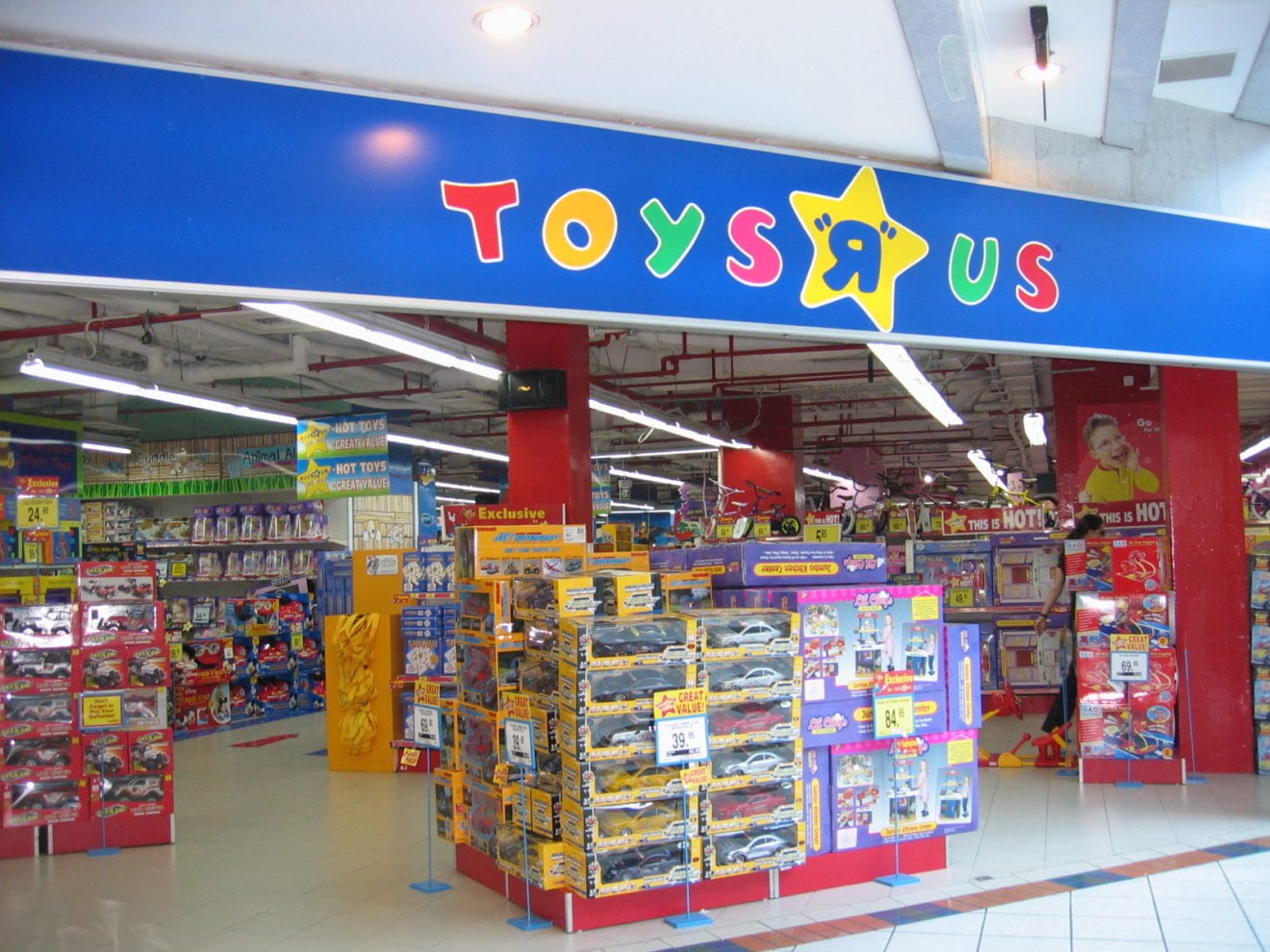
    Ten years after first entering the market, Toys”R”Us, Inc., the world’s leading dedicated toy and baby products retailer, today announced that the company has opened its 100th store in China. The milestone achievement was marked by a grand opening celebration event that took place Saturday, January 16, at the APM Shopping Mall in Wang Fu Jing, one of the leading retail districts in Beijing, where Toys”R”Us® opened one of its 27 new stores across the country within the past year.

    “It’s our mission to be the best toy and baby products retail company in the world, and international expansion, particularly throughout China and Southeast Asia, continues to be an important part of our long-term growth strategy,” said Dave Brandon, Chairman and CEO, Toys”R”Us, Inc. “The opening of the 100th store in China represents a significant achievement for our business as it allows us to meet the increasing demand for high-quality children’s products and family entertainment experiences in this market.”

    Toys”R”Us opened its first store in China in 2006 and currently operates in 44 cities throughout the country, including six where the company established a presence for the first time last year. China has been one of the most important markets for the company’s global expansion plans, and growth in this region is expected to continue with the planned opening of more than 30 new Toys”R”Us stores in 2016.

    “The grand opening of our 100th store is a major milestone for Toys”R”Us on our exciting journey in China,” said Andre Javes, Managing Director, Toys”R”Us, Greater China and Southeast Asia. “What differentiates Toys”R”Us as a specialty toy retailer is the memorable shopping experience we provide for our customers. This includes a combination of the widest assortment of toys and baby products, including exclusive items not available anywhere else in the market, fun store layouts, interactive in-store experiences, product displays and demonstrations, activities and more.”

    Attending the iconic 100th store opening ceremony in the heart of the Capital were: Dave Brandon, Chairman and CEO, Toys”R”Us, Inc.; Dr. Victor Fung, Group Chairman, Fung Group; Monika Merz, President, Toys”R”Us, Asia Pacific; Pieter Schats, Executive Director of Fung Retailing Ltd; and Andre Javes, Managing Director, Toys”R”Us, Greater China and Southeast Asia, along with many important business partners and executives from the toy industry.

    As part of the grand opening, families were also invited to meet and greet popular mascots such as Geoffrey the Giraffe, Ultraman, Barbie, Ninjago Kai, Balala Emma and more.

    Toys”R”Us at Beijing APM Shopping Mall Features Innovative Retail Environment
    The new store showcases the very latest in “retailtainment,” digital technology and customer interaction, making shopping at Toys”R”Us a unique and fun experience for kids and adults alike.

    Upon entering the store, customers are immediately immersed into the world of Star Wars™: The Force Awakens – the first-ever Star Wars movie released on the big screen in Chinese theaters – with life-size characters and dramatic scenes from the movie. Shoppers will also find interactive displays from LEGO® and TOMICA, a Balala magical mirror and more.

    Customers can further interact with the huge, 70-inch digital screen at the store entrance, enabling them to browse through promotional items, make purchases, take “selfies” with special photo frames, play games and easily become members of the company’s “Star Card” loyalty program.

    The Toys”R”Us store at Beijing APM also brings amazing exclusive products and assortments, which are not available anywhere else in the market. These private brands offer great value, quality and innovation from the Toys”R”Us brand consumers know and trust, and include FastLane®, Dream Dazzlers®, Universe of Imagination, Pavilion®, Just Like Home®, Edu Science®, You & Me, STATs® and Avigo®.

    In addition, consumers will find various new features throughout the APM mall, sponsored by Toys”R”Us.

    Toys”R”Us in China
    Toys”R”Us has been the leading dedicated retailer of toys and baby products around the world for more than 65 years. Toys”R”Us opened its first licensed store in Shanghai, China in 2006, and since then, has continued to expand aggressively in the country. In 2011, Toys”R”Us, Inc. formed a joint venture with its long-term license partner in China and Southeast Asia, Fung Retailing Ltd, for its businesses in the region, with stores in Brunei, China, Hong Kong, Malaysia, Singapore, Taiwan and Thailand, and became 70 percent majority owned and controlled by Toys”R”Us, Inc. and 30 percent owned by Fung Retailing Ltd.

    As of January 2016, the company has 100 stores in 44 cities across China, including: Beijing, Shanghai, Shenzhen, Chengdu, Chongqing, Hangzhou, Ningbo, Jiaxing, Jinhua, Shangyu, Nanjing, Suzhou, Nantong, Wuxi, Changzhou, Yancheng, Kunshan, Harbin, Shenyang, Changchun, Dalian, Tianjin, Baoding, Tangshan, Shijiazhuang, Zhengzhou, Jinan, Yantai, Zibo, Qingdao, Hefei, Wuhan, Changsha, Luzhou, Ganzhou, Xi’an, Kunming, Nanning, Guangzhou, Xiamen, Fuzhou, Zhuhai, Jinjiang and Zhongshan.

    Enhanced e-Commerce Business and Omnichannel Capabilities in the Chinese Mainland
    Toys”R”Us launched a T-mall Store in April 2012 and its own dedicated e-commerce website at Toysrus.com.cn at the end of the same year. Toys”R”Us, China also operates a mobile-optimized website, enabling tech-savvy consumers across the country to easily shop while on-the-go. Additionally, the company uses its “Ship from Store” capabilities to effectively transform the country’s existing Toys”R”Us stores into mini distribution centers by leveraging their inventory to fulfill online purchases.

    Now, millions of Mainland customers can access a wide assortment of toys, along with product authenticity and a toy safety guarantee from Toys”R”Us.

    Full Range of Toys
    Toys”R”Us provides a broad assortment of products from trusted domestic and international brands for children and their parents in China. Stores feature enticing product displays, demonstrations, “see-me touch-me” packaging, and a large number of products that are only available at Toys”R”Us. All products are made to the highest quality standards and have passed all required safety tests.

    As a global retailer, Toys”R”Us ensures country-by-country shopping patterns are taken into account at the local market level. Parents in China place great importance on the educational value of toys that help children learn and develop skills while they play. Within its Learning category, Toys”R”Us provides among the most comprehensive and widest selection of educational toys, including many uniquely designed by the company’s in-house team. These toys encourage skill development such as learning languages, mathematics, geography, color-differentiation and coordination.

    Digital and New Media Platforms
    Digital and new media is a booming business across China, with rapid growth of brands and stores across e-commerce websites and online instant messaging platforms.

    Mr. Javes also commented, “Toys”R”Us has 1 million followers in WeChat and continues to grow. WeChat followers have been expanding rapidly within the recent two years and we are seeing more than 80 percent of members join in our “Star Card” Membership Program via this social platform, where they can easily play our WeChat game, get the latest promotional information and explore bonus features, which enhance the fun of digital interaction. Along with the fast development of digital platforms such as mobile internet in China, we will continue to engage and excite our consumer on all their digital devices.”
  • CIMB: No more job cuts in Malaysia, Indonesia this year

    CIMB: No more job cuts in Malaysia, Indonesia this year

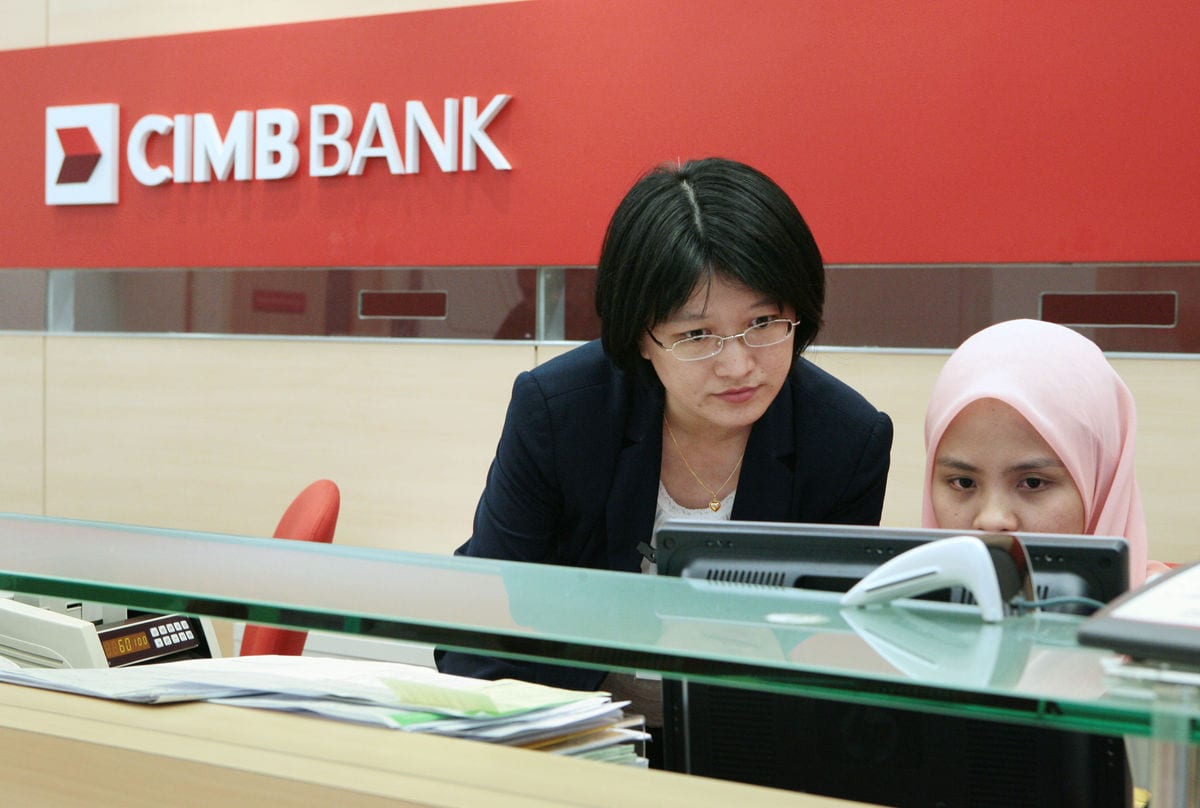
    CIMB Group will not undertake any more job cuts in Malaysia and Indonesia in 2016 after last year’s mutual separation scheme exercise.

    CIMB Group chief executive Tengku Zafrul Aziz said the bank was now focused on improving productivity and meeting its business agenda.

    “We have done the mutual separation scheme and we are not planning to do it any more here or in Indonesia,” he told reporters after presenting prizes to winners of the CIMB Asean Stock Challenge 2015 in Kuala Lumpur today.

    On Friday, CIMB cut 32 jobs in its Hong Kong investment banking and equities business due to worsening capital market conditions.

    Zafrul said for the first six months of 2016, the bank expected the outlook to be challenging based on the current economic environment.

    “But having said that, I think the bank has started to appreciate because if we look at the capital and equity ratio of all banks in Malaysia, we more than meet the requirement by the central bank.

    “We are also looking at a compatible growth economic growth of between 4.5 and 4.8 percent for the banking industry this year,” he added.

  • Foreign Investors Eyeing Indonesia’s Movie Theater Industry

    Foreign Investors Eyeing Indonesia’s Movie Theater Industry

    Foreign investors have had their eyes on Indonesia’s movie theater business for quite some time now. According to the information collected, there are investors from South Korea, Germany, Britain, and India that have made approaches; expressing their desire to invest in the industry.

    One of said foreign investor is Lotte Group. In 2012, the group made aggressive approaches to the government, with plans to open up to 100 cinemas in Indonesia.

    In mid last year, Deutsche Bank and Rothschild Group expressed their interest to provide US$ 100 million for the expansion of Cinemaxx, a cinema network owned by the Lippo Group. Using that fund, Cinemaxx aimed to open 2,000 theaters over the next ten years.

    Endah W. Sulistianti, the deputy for Regional Inter-Agency Relations and Creative Economy Agency, confirmed that foreign investors are attracted to Indonesia’s movie theater business. However, the law prohibits the industry from being entered by foreign investors.

    “Right now the government is discussing over the possibility of allowing foreign investment in the cinema business,” she said last week.

    Hilmar Farid, Director General of Culture, said that the government actually has no problem with foreign involvement in the industry—provided that it poses no harm to national interests. He said it is important to make sure that if foreign investment is allowed, Indonesian cinemas will not only play foreign films.

    “There needs to be clear regulations and the sharing scheme must be clear as well,” Hilmar said during his interview.

  • Tourism has recovered 100 pct after Jakarta bombing

    Tourism has recovered 100 pct after Jakarta bombing

    Tourism Minister Arief Yahya said the Indonesian tourism had returned to normal and recovered 100 percent after the terror acts and bomb explosions in Thamrin Boulevard in Central Jakarta last Thursday.

    He said that Jakarta, particularly area around Thamrin Boulevard, has returned to normal after it was rocked by the January 14, 2016 suicide bombing and shootouts between police and terrorists.

    The normal condition is like what many people in the social media have described that Jakarta has returned to normal life as usual days.

    “Many people even thronged the bomb explosion site of the police station to take their profile pictures,” the minister said.

    During the car-free day on Sundays in the Thamrin Boulevard residents usually use the HI Traffic Circle, National Monument Square and Senayan as points of gathering.

    But this time (Sunday Jan.17), they changed their points of gathering. The police station at the intersection where the suicide bombing occurred on Thursday became their favorite point of assembling.

    According to the minister the Jakarta residents are clearly not afraid. They have no doubts to have their picture with the bombing site as the background. They could later change their profile pictures on the social media, he said.

    “So, the security condition has really returned to normal. Residents can act personally to report the facts and real condition in the Internet through their twitter accounts, facebook, instagram, path, pinterest and others,” the tourism minister said.

    On Thursday (Jan 14), two terrorists launched suicide attacks on a police station in Thamrin Boulevard near the Sarinah Department Store, which was followed by a shootout between three other terrorists and the police at the Starbucks Coffee shop adjacent to the Sarinah Department store.

    Within hours, the police were able to thwart the attackers, shooting to death three of them while two others died in the suicidal bombing. The incident also left three civilians dead (one died at a hospital three days later) and 32 injured, including police personnel.

    Jakarta Metropolitan Police Command Chief Inspector General Tito Karnavian has confirmed that the terrorists who orchestrated the attack in Jakarta on Thursday were linked to the ISIS terror group.

    “Our team is now on the lookout for members of this terror network who are linked to the ISIS group in Raqqa,” he stated during a press conference held at the presidential office following a meeting led by the president on the issue on Thursday evening.

    He said the ISIS group had changed its strategy. They earlier operated only in Syria and Iraq, but after their leader, Abubakar Baghdadi, ordered them to spread their activities outside Iraq and Syria, they had begun setting up ISIS terror modules across the world, he explained.

    “The terror cells can be found in France, Europe, North Africa, Turkey as well as Southeast Asia, including Indonesia, Malaysia, the Philippines, Thailand, and other countries,” he pointed out.

    In Southeast Asia, there is a figure keen to set up a “Khatibah Nusantara,” and he wants to be the leader of the ISIS group in the region.

    “Of late, a rivalry for leadership has developed. In the Philippines, they have set up a terror module in South Philippines, and now, multiple people are competing for leadership. In this connection, one of the ISIS figures launched these attacks. Meanwhile, we have identified the group, and we are still tracking them down,” Tito affirmed

  • Countries must improve ICT sectors

    Countries must improve ICT sectors

    Countries must continue to invest and pursue reforms in information and communication technology (ICT) to serve the nearly 60 percent of the world’s population who remain excluded from the digital economy, a new World Bank report said.

    In its “World Development Report 2016: Digital Dividends” report, the Washington-based lender noted that the internet, mobile phones and other digital technologies were spreading rapidly.

    “Digital technologies are transforming the worlds of business, work, and government,” said Jim Yong Kim, president of the World Bank Group.

    The anticipated digital dividends of higher growth, more jobs, and better public services, however, have fallen short of expectations, the World Bank said.

    To deliver fully on the development promise, it said countries must pursue “analog complements” to digital investments.

    This means regulations must be strengthened to ensure competition among business, adapting workers’ skills to the demands of the new economy, and fostering accountable institutions.

    Digital development strategies need to be much broader than ICT strategies, it added.
    To reap the greatest benefits, countries must create the right environment for technology, with regulations that facilitate competition and market entry, skills that enable workers to leverage the digital economy and institutions that are accountable to people.

    It noted that in the Philippines, business process outsourcing has few entry barriers and that firms use digital technology intensively, which is not the case for the retail sector.

    “The Philippine retail sector has substantial restrictions to domestic and foreign entry and is dominated by a few incumbent firms, while few firms use ICTs,” the World Bank said.

    Foreign retailers that aim to establish a commercial presence need to pass prequalification procedures, meet minimum capital requirements, deal with limitations to foreign equity participation, and have the majority of their boards comprised by Filipinos, it stressed.
    “Only about 20 percent of retail firms (with at least five employees) sell online in the Philippines,” it added.

    In contrast, the Philippine outsourcing sector is characterized by high entry rates and few regulatory barriers to competition.

    “It is intensive in ICT-related services such as software development, animation, contact centers and transcription. These ICT-specific services experienced high productivity growth in recent years and provided about 1.2 million jobs in 2015,” it said.

    Investing in basic infrastructure, reducing the cost of doing business, lower trade barriers, facilitating the entry of start-ups, strengthening competition authorities and facilitating competition across digital platforms were some of the measures suggested in the World Development Report.

    Digital technologies can transform economies, societies and public institutions, but changes are neither assured nor automatic, the report stressed.

    “Countries that are investing in both digital technology and its analog complements will reap significant dividends, while others are likely to fall behind. Technology without a strong foundation risks creating divergent economic fortunes, higher inequality and an intrusive state,” the World Bank said.

  • Burberry Christmas sales miss expectations in Macau, Hong Kong

    Burberry Christmas sales miss expectations in Macau, Hong Kong

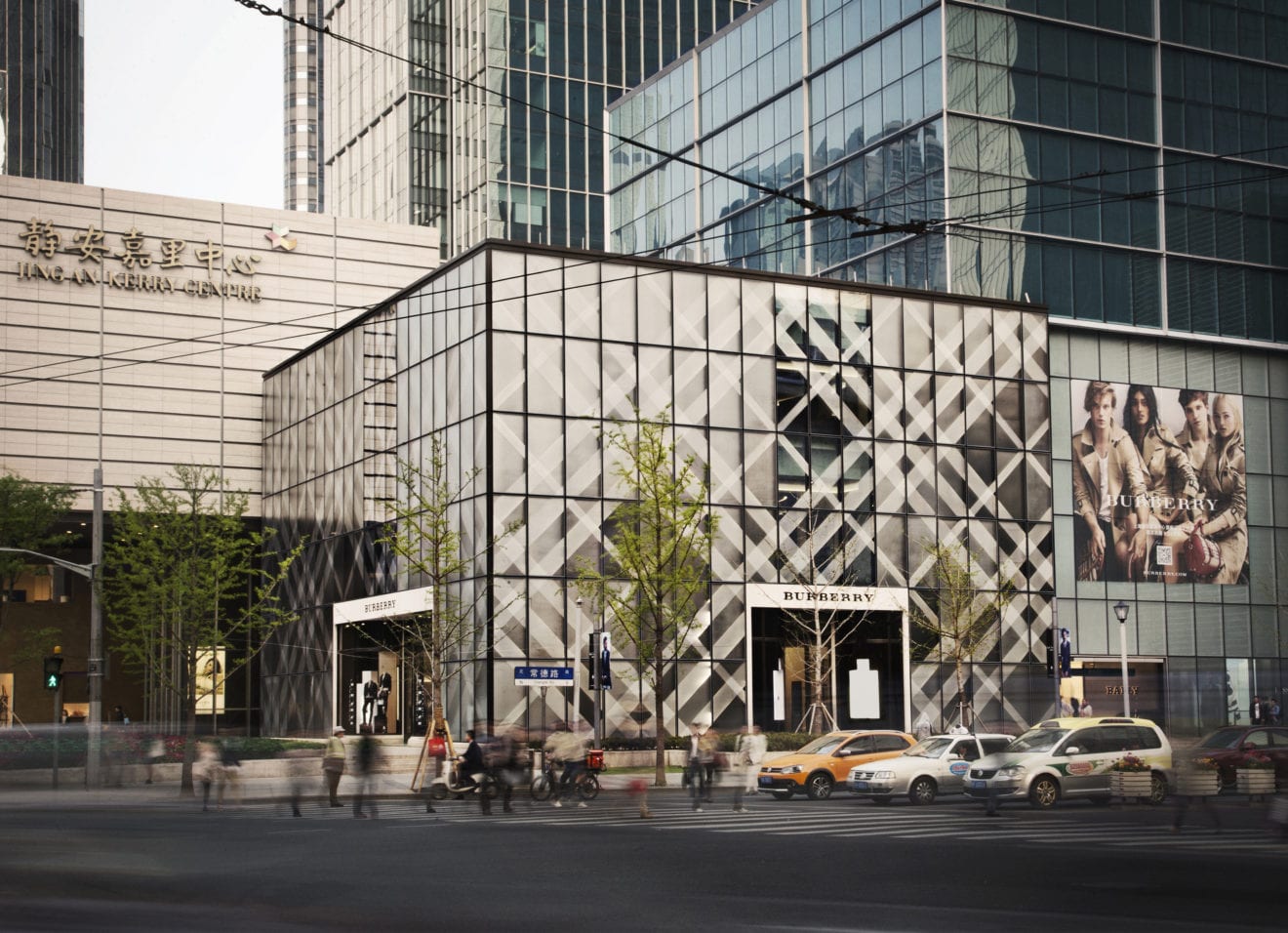
    British trenchcoat maker Burberry Group Plc reported Christmas revenue that trailed its own forecast, hurt by a slump in demand in Macau and Hong Kong.

    Retail revenue fell to 603 million pounds (USD869 million) in the three months through December, London-based Burberry said yesterday in a statement. Analysts predicted 606 million pounds, based on the median of estimates compiled by Bloomberg. Sales were unchanged on a comparable basis, missing internal expectations, compared with a 4 percent decline in the second quarter, Burberry said.

    Hong Kong sales fell more than 20 percent. The U.K.’s largest luxury-goods maker is scaling back stores, cutting bonuses and consolidating products under one label after forecasting earnings will probably fall for a second straight year. Richemont reported Christmas season sales declined for the first time since 2008 .
    Tourist bookings to Europe have declined following the terror attacks in Paris and an unseasonably warm winter has added to challenges facing luxury companies. Burberry is also more exposed than peers to spending by Chinese clients, which is cooling as that country’s stock market slumps.

    The company anticipated in October a return to growth in last part of 2015, driven in part by new products such as lightweight cashmere trenchcoats and ponchos, and new styles of scarves. Bloomberg

  • National Gallery Singapore teams up with & Co to create a dynamic lifestyle space

    National Gallery Singapore teams up with & Co to create a dynamic lifestyle space

    The National Gallery Singapore and & Co just reinvented the museum store. Located on the ground floor of the newly opened museum, the lifestyle concept space, named Gallery & Co, fuses together several different elements. Comprised of a retail shop, a casual dining area that serves organic bites and a gallery, Gallery & Co seeks to engage museum visitors through its vast offerings. The gallery tapped creative collective & Co to curate and design the space. The retail area features platforms covered in grids, stripes and polka dots, while the cafe consists of clean lines and a green tile floor.

    ‘Each space has its unique aesthetic catering to a different product category and customer type, ensuring relevance and engendering engagement. They are all unified by the custom-designed grey tiles and blue-grey columns,’ says Yah-Leng Yu, co-founder of & Co and the Foreign Policy Design Group.

    The retail shop carries both international and local fashion and design brands, such as French fashion label Kitsuné and Singaporean jewellery brand Argentum. The shop also holds special collaborations between brands and the museum, like the timepiece made collaboratively with Japanese solar watch company Q&Q. The gallery will also exhibit emerging artists.

    ‘Our objective for doing the store was really to make it a living and evolving space, and the idea of the retail store was to really inspire people to be creative. That’s what the museum is for, to bring the public here, and to inspire them through art – and that’s what we aim to do in our store,’ said & Co co-founder Alwyn Chong. ‘That’s why we don’t sell the regular museum souvenirs – really we are about collaborating, about bringing people together, and about creating something special.’

  • Apple Should Open More Outlets in China

    Apple Should Open More Outlets in China

    Apple has seen robust sales in China despite the country’s worsening economic situation. Last quarter, revenues from Greater China grew 99% year-over-year, confirming the management’s opinion that China sales have been strong. Chinese economic slowdown concerns have emerged yet again and it remains to be seen whether Apple will continue its strong performance in the region.

    In its latest note to investors, BofA/Merrill Lynch contends that Apple should open more retail stores in China if it wants to increase market share in the country. The idea is based on Merrill Lynch’s survey of 1,000 respondents across China, which was done to find a correlation between retail store presence and iPhone share/iPad ownership in the region.

    Through a regression analysis, the firm found high correlations between retail store presence and iPhone share and iPad ownership. Of the survey respondents, 24% own iPhones while 39% said that they intend to buy one, which shows that Apple could gain further share.

    Merrill Lynch notes that Apple currently has 26 outlets opened in 11 regions across mainland China. The company intends to increase that number to 40 by the middle of this year. Apple has also announced that it will open two more retail stores in January in Guangzhou (Guangdong region) and Nanjing (Jiangsu region). The firm’s analysis suggests that the four new store launches in January can generate an additional 2.99 million units.

    “We believe these store openings could lead to incremental iPhone units sold in the regions and help Apple continue to increase share in broader China,” analysts at Merrill Lynch said.

    In a prior research note, Merrill Lynch had upgraded Apple shares from Neutral to Buy. The firm said that its upward revision in the rating was based on the launch of iPhone 7, potential roll-out of iPhone 6c (5e), and increase in capital return program in April.

    Apple is expected to release its first quarter fiscal year 2016 (1QFY16) results after the markets close on January 26. The tech giant is expected to report revenues of $76.7 billion and adjusted earnings per share (EPS) of $3.24. Merrill Lynch expects Apple to post strong China sales.

    Chinese stocks dropped significantly last August, pointing to slowing growth in one of the world’s biggest economies. Questions were put forth regarding iPhone’s growth in the region at that time. In response to this, CEO Tim Cook told investors that China business has remained robust.

    In the last earnings call, Mr. Cook told the Street that he doesn’t believe Apple’s results in China are heavily dependent on small changes in growth in its economy. He further stated that in light of the number of customers coming into Apple stores and sales trends, it is hard to say that there is an economic slowdown in the country.

    According to the data from Strategy Analytics, China currently comprises 20% of Apple’s total iPhone unit sales. Hence, if Chinese sales are strong, it is very likely that Apple could overcome the tough comps set by the highly successful iPhone 6 and 6 Plus lineup.

  • Yoo hits the road to promote export plan

    Yoo hits the road to promote export plan

    With a hard hat on, Finance Minister Yoo Il-ho showed up at the Pyeongtaek port in Gyeonggi early Friday morning, just as Kia cars were being readied for the ships that would take them to overseas markets.

    He met with local government leaders and businessmen whose companies specialize in exports, including Panda Korea, a China-based online retail company; Korea FT, an auto parts manufacturer; Dongwoo Fine Chem, a semiconductor developer; and Sinokor Merchant Marine at the Pyeongtaek Port Marine Center.

    Yoo listened to the hardships they face, such as delays in receiving government certificates of product origin and the lack of a bilateral trade agreement with South American countries, over warm bowls of porridge.

    The meeting lasted two hours, an hour longer than initially planned.

    “Our new team will focus on looking for new export products and markets that will boost Korea’s overseas trade,” Yoo said. “Koreans have a certain DNA that allows us to turn adversity into opportunity.

    “We need to undertake structural reforms in order to avoid following Japan’s long stagnation.”

    Yoo’s visit to the port city came a day after he was officially sworn into office as the nation’s finance minister and deputy prime minister for the economy. At the event held Thursday at the Blue House, Yoo promised to focus on bolstering the country’s exports to achieve the targeted 3.1 percent economic growth.

    Yoo’s plan was a marked change from predecessor Choi Kyung-hwan, who unveiled numerous policies the moment he took office in July 2014, including a supplementary budget, lowering the key interest rate and increasing tax cuts, aimed at pushing economic growth through expansion of the domestic market.

    But during Choi’s tenure, Korea’s exports declined for 12 straight months. As the Korean economy is believed to have grown at around 2.7 percent in 2015, it became evident that were are limits to how much economic growth could be generated solely from the domestic market.

    Yoo told the businessmen that he plans to encourage the expansion of online commerce, which will contribute to increasing exports.

    “The government will utilize the Korea-China free-trade agreement and take advantage of Chinese consumer market, which amounts to $6 trillion,” the minister said.

    Later that afternoon, exports were again one of the key issues discussed during Yoo’s first meeting with Bank of Korea Gov. Lee Ju-yeol at the Korea Federation of Banks’ club in Myeong-dong, central Seoul.

    “When I was [in Pyeongtaek], it felt as if we really didn’t have to worry about exports,” Yoo told Lee. “But I get worried when I read the numbers.”

    The finance minister added that he was concerned by the fact that exports in 2015 fell 7.2 percent year-on-year.

    Lee told Yoo that during his recent visit to Basel in Switzerland to attend the Bank for International Settlements meeting, he learned that other countries consider Korea’s economy to be doing better relative to other nations.

    “When I said that Korea’s economic recovery was weak, other participants asked what Korea was concerned about,” Lee said. “They meant [that perspective on an economy] is relative.”

    Lee quickly added, however, that this didn’t mean that he or the finance minister was looking at the Korean economic situation with optimism.

    “We both agreed that the economy is in a difficult state,” Yoo added. “We’re faced with a situation where the G2 risks and uncertainties in emerging markets are overlapping with North Korea’s nuclear test,” the finance minister said.

    “We shared the view that we are at an important point in time where we need to overcome structural problems, including the changes in the global economic structure, changing population structure and weakening foundation of the domestic economy.”

    Later that afternoon, Yoo left for China, which would be his first official visit overseas as the nation’s chief economic policy maker.

    Yoo flew to Beijing, where he will be attending the official launch of the China-led Asian Infrastructure Investment Bank.

  • Amazon China Registers As Ocean Freight Forwarder

    Amazon China Registers As Ocean Freight Forwarder

    Online retail giant Amazon has registered its China arm as an ocean freight forwarder, the US Federal Maritime Commission has announced.

    The move will give the retailer more control over shipping goods from its factories in China to customers.

    By expanding its logistics operations in this way, the retailer can cut costs with the possibility of being in a position to offer third-party logistics services at a later stage.

    In response to the news, Sian Hopwood, senior vice president for B2B operations at supply chain software supplier Kewill, commented, “Delivering products direct from manufacturers to consumers is not a new concept, but this is the first time we have seen this ‘drop shipping’ model on a global scale.”

    Retailers wanting to regain market share will have to step up their efforts to ensure they are able to respond more flexibly and responsively to demand – “importing stock as it is ordered rather than having to predict stockpiling requirements and risk warehousing unwanted items”, added Hopwood.

    “By removing the middleman, retailers can reduce costs and provide customers with an always-on, always-available shopping experience which traditional models can’t sustain.”

    With the retail environment still being in a state of flux with the rise of digital and mobile shopping, a key part of making this system work is visibility.

    “If companies are to retain customer trust, they will need to have supply chain management solutions in place to ensure shoppers know exactly what’s happening to their shipment.”

  • How Chinese Companies Borrow Without Banks

    How Chinese Companies Borrow Without Banks

    China’s new credit surged the most since June as companies increased borrowing in the corporate bond market. Aggregate financing rose to 1.82 trillion yuan ($276 billion) in December, according to a report from the People’s Bank of China. That compares with the median forecast of 1.15 trillion yuan in a Bloomberg survey.

    The data shows companies are turning to alternative sources for credit given banks’ reluctance to lend. It also adds to signs the economy is stabilizing, not slumping as its falling currency and plunging stock market seem to suggest. The First Word Asia team spoke with Mikio Kumada, Executive Director/Global Strategist, LGT Capital Partners.

  • Singapore developer plans healthcare hubs in 20 to 40 Chinese cities

    Singapore developer plans healthcare hubs in 20 to 40 Chinese cities

    Less than a year after making its first foray into China’s healthcare sector, Singapore developer Perennial Real Estate Holdings has now set ambitious goals for itself: to set up integrated healthcare hubs in 20 to 40 Chinese cities.

    The concept will be similar to that of the Perennial International Health and Medical Hub in south-western Chengdu city, which is touted as the largest integrated healthcare development in western China with 280,000 sq m of gross floor area.

    Located next to the Chengdu East high-speed rail station, the hub will include eldercare homes, hotels, serviced apartments, commercial offices and retail.

    Perennial chief executive officer Pua Seck Guan said at a briefing yesterday that the company is already in talks over similar projects in several cities.

    He hinted that they are provincial capitals and located in the western regions.

    “The projects should be located around transportation hubs to reach a sizeable population. Also, a capital city can provide sufficient human resources for hospitals,” said Mr Pua, at a media briefing yesterday after Perennial secured key tenants for its Chengdu project.

    Perennial, whose businesses were largely retail, residential, office and hotel till its entry into healthcare last July, entered a joint venture on Thursday with two Chinese firms – Shanghai Summit and Shanghai RST Chinese Medicine – to operate the eldercare segment of its Chengdu hub.

    Yesterday, Singapore healthcare operator Parkway Pantai held a lease-signing ceremony to set up the ParkwayHealth Chengdu Hospital that will occupy 48,000 sq m and provide up to 350 beds.

    It will be the first foreign tertiary hospital in western China and also a first for Parkway Pantai, which is a subsidiary of IHH Healthcare, the world’s second-largest healthcare operator by market capitalisation.

    Parkway Pantai Group CEO Tan See Leng said in his speech that the company is investing 900 million yuan (S$197 million) into the hospital, which is targeted to open next year. He added that the company decided to expand into Chengdu as it is one of the fastest-growing cities in western China and that the location at the Chengdu East rail station is ideal, providing transport to some 148 million people within a two-hour train ride.

    Mr Pua said Perennial and Parkway are working together because they are familiar with each other’s strengths, which is crucial for their first healthcare project and first hospital in China, respectively.

    Now with the key tenants settled, the next step is to ensure that the hub, which is set to complete construction this year, would be able to provide top-notch medical treatment and quality service, said Mr Pua.

    He also outlined potential challenges, such as the need to keep costs low as Perennial has to operate the hub over time, instead of just building and selling properties.

    “Another challenge is to win stakeholders in those cities over to our concept.”

  • Shoppers spent more last Xmas than in 2014

    Shoppers spent more last Xmas than in 2014

    Economic growth in Singapore may have slowed to about 2 per cent last year, but that did not dampen the spirit of shoppers last Christmas.

    Overall Christmas spending has grown from a year ago, say credit card companies.

    There was a 16 per cent increase in overall spending last December from the same month in 2014, said Mr Vincent Tan, head of cards at OCBC Bank. Visa also saw a 10 per cent growth in the volume of overall transactions.

    At the same time, the rise in spending on online platforms outpaced that at brick-and-mortar shops. In-store transactions grew by 8 per cent, said MasterCard, while e-commerce transactions grew last month by 25 per cent from the previous year. It did not give absolute figures.

    Online spending over the festive period also grew by 36 per cent last year at OCBC, compared with a 13 per cent gain at physical shops.

    At Visa, there was a 20 per cent year-on-year growth in online transactions in November and December last year. The number of Visa cardholders shopping online has also grown by the same proportion.

    Spending patterns over the festive period mirror wider trends.

    According to a study commissioned by PayPal in partnership with market research firm Ipsos, online shopping growth in Singapore is expected to hit 16 per cent next year, the third fastest in the Asia Pacific after India and China.

    Consumers are attracted to the convenience of shopping online, as well as the competitive prices offered by online retailers, according to a survey of 500 people by Visa.

    These trends have brought good news for local online retailers, which have seen a huge growth in profits from festive sales last year.

    Local e-commerce platform Shopback, which has 200,000 customers and sells a wide range of goods, enjoyed a tenfold growth in profits last month, as compared with December 2014. It declined to give absolute figures.

    Sales performance in early to middle of last month was also better than the days right before Christmas, said a spokesman. This could be due to the buffer period required for shipping, he added.

    Online fashion retailer Zalora, which has its headquarters here, also saw a growth of 73 per cent for a four-day online shopping extravaganza held last month, compared with the same event a year earlier, said a spokesman.

    Teacher Lye Pin Quan, 28, spent about $1,000 online on gifts for friends and family, as well as on Christmas decorations. He shopped on local e-commerce sites like Qoo10 and Lazada, as well as overseas ones like Taobao, purchasing mainly electronic products.

    “The long queues at retail stores are quite off-putting during the festive period, and I also find that there are better sales and discounts on items online. Sometimes, you can save as much as 50 per cent or more,” he said.

  • Singapore rents dip, says DTZ Research

    Singapore rents dip, says DTZ Research

    First-storey rents throughout SIngapore have fallen by 1.2 per cent to about $30.50 a square foot, according to the DTZ Research South-east Asia fourth-quarter report on the retail sector.

    This is the third consecutive decline since the second quarter of last year, says the report, released today. For the whole of 2015, average first-storey rents fell at a faster pace (5.9 per cent) compared to the 0.3 per cent decline the previous year. The fall was mainly attributed to weakened consumer sentiments amid uncertain global economic conditions.

    Orchard Road rents were the most resilient. Average first-storey rents in Orchard and Scotts Roads saw a more gentle decline than other areas, falling by 1 per cent quarter-on-quarter and 5 per cent year on year to $38.05 a sq ft in the fourth quarter. The Orchard/Scotts Road rates were buoyant because of the likelihood of no new completions for the next four years. Only pockets of new retail spaces will be added through asset enhancement initiatives and other mixed-use projects.

    Average first-storey rents in suburban areas were relatively resilient, says the report, dipping by 1.2 per cent q-o-q and 5.7 per cent y-o-y to $30.70 a sq ft in the same period. In contrast, average first-storey rents in the other city areas had a greater decline – 1.4 per cent and 6.9 per cent to about $21.80 a sq ft, mainly because of the dependence on the weekday office crowd for sales volume.

    Although islandwide rental values have softened over the past year, occupancy rates stayed healthy for the first three quarters of last year as landlords become more flexible. In fact, according to the latest Urban Redevelopment Authority statistics, overall retail occupancy inched up 0.3 per cent to 92.1 per cent in the third quarter. Occupancy rates in Orchard/Scotts Road were unchanged at 92 per cent q-o-q in Q3, while rates edged up in the other city and suburban areas by 0.6 per cent q-o-q and 0.1 per cent y-o-y to 90.6 and 93.1 per cent respectively.

    Looking forward, says the DTZ report, expected completions this year coupled with consumer sentiment are expected to exert further downward pressure on rental values, especially in the other city areas. About 743,000 sq ft of net lettable area (NLA) of retail space (or 60 per cent of the 1.2 million sq ft of NLA in this year’s pipeline) will be added to the existing stock of retail space in other city areas. This is more than double the annual net demand (302,000 sq ft) for retail space in other city areas between 2009 and 2014. Retail developments heading for completion in the other city areas include OUE Downtown Gallery, The Heart at Marina One and Tanjong Pagar Centre, each a mixed-use development comprising more than 100,000 sq ft of retail NLA.

    “While the pending completions will pressure retail rents in other city areas to fall, the decline is likely to be temporary,” says DTZ director of research Dr Lee Nai Jia. “We anticipate retail rents will recover when the residential components in the mixed-use developments receive their temporary occupation permits. The increase in resident population in the other city areas will support the retail trade.”

    Despite many retail completions lined up for the new year, 2015 also saw the exit of such brands as Goods of Desire, Lowrys Farm and M)phosis because of the challenging operating environment within the retail sector. Additionally, big players like Isetan, FJ Benjamin and Metro also reported disappointing sales figures in the same period. In a bid to revitalise the retail scene, landlords have collaborated with online retailers such as Zalora and Love Bonito via pop-up stores to reignite consumer interest. During the year, brick-and-mortar retailers extended their market outreach by adopting omnichannel marketing amid competition from e-commerce.

    “With the softer market, landlords have certainly become more open to exploring new retail concepts,” says DTZ director of retail Anna Lee. “As landlords become more flexible, brick-and-mortar retailers have more leeway to experiment with new retail offerings to improve the overall shopping experience.”

    Anna Lee cites the launch of Café&Meal Muji in September at Paragon, next to its Muji store. After opening the F&B outlet, Muji recorded a y-o-y increase of about 40 per cent in its store sales. At the same time, lifestyle concept store Latulle also introduced a full-service cafe.

  • Giant Malaysia plans six new hypermarkets

    Giant Malaysia plans six new hypermarkets

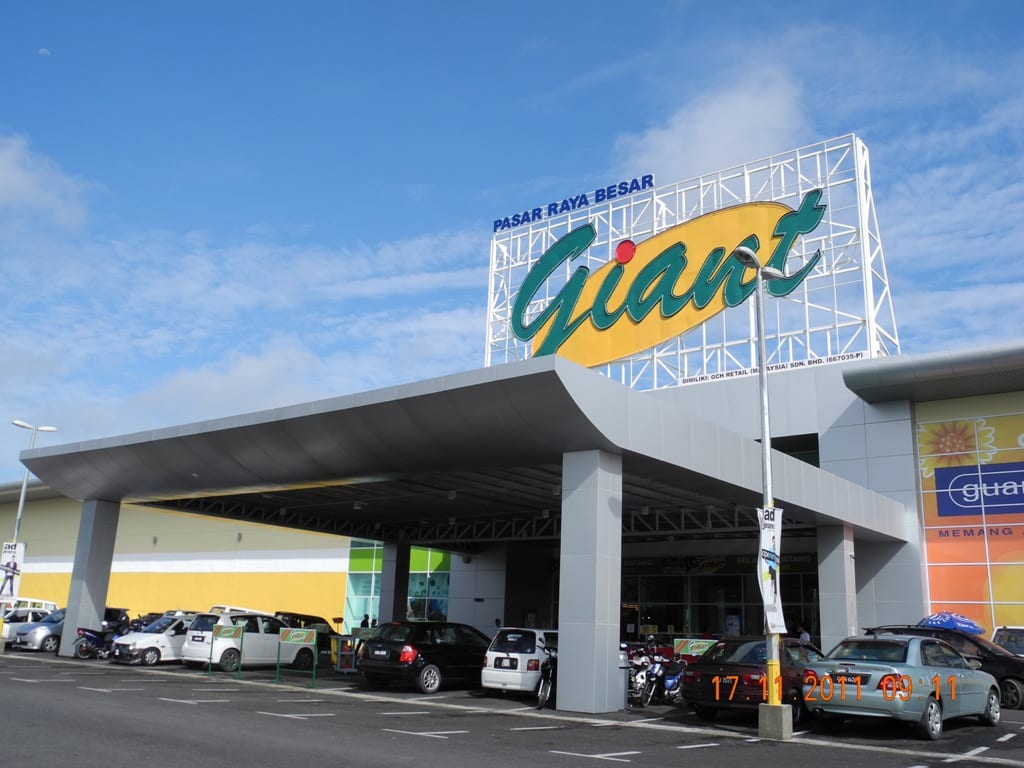
    Malaysian retailer GCH Retail plans to add six stores to its Giant hypermarket network this year and relaunch 28 outlets.

    The new Giant Malaysia stores will open in Setapak (Kuala Lumpur), ICangar (Kedah), Kota Baru (Kelantan) and Jeneh (Terenggam), with the other two sites yet to be revealed.

    Operations director Ernest Potgleter said this week that Giant decided to relaunch its stores after customer complaints they had started to look outdated.

    “We have to revive the business. The stores have not been refurbished for five years, and It is time for a new look.”

    Giant Malaysia serves 23 million customers a week, and Potgleter said the group has to be cheaper than other retailers while providing good service, good products and a good instore environment.

    He was speaking at the relaunch of Giant Hypermarket Shah Alam, in the Selangor state capital, which has been refurbished at a cost of RM2.5 million ($568,000).

    General merchandising director Lee Slew Mei said the store’s layout had been changed to make shopping a one-stop experience for its customers.

    “Child-related products are put together, and we have a seasonal promotional area. A back-to-school promotion is running for six weeks with related products, including stationery, school bags and uniforms, all in one place.”

    At the same time, Giant had brought in new ranges, some of them exclusive, said Lee Slew Mei.

    “We have the O’Fresh range which comes directly from farms in Cameron Highlands. The vegetables do not go through distribution centres so are of better quality and the price is also lower.”