Tag: asia

  • Heinz launches Black Garlic Mayo version for Halloween

    Heinz launches Black Garlic Mayo version for Halloween

    It’s well and truly the scary season, and Heinz’s newest sauce is set to get you in the Halloween mood, one dip at a time. Launching the [Scarily] Good Black Garlic Mayo, Heinz have found a way for you to incorporate all things spooky into all your meals throughout October and maybe even into November, because it’s that good.

    Arriving in three limited-edition collectible designs, the Black Garlic Mayo is rich, tangy and slightly sweet and umami-packed, making it a fang-tastic accompaniment to your dinners. The best part about this jet-black condiment though, is that it’s vegan! It’s safe to say that it’s definitely a treat.

    A Kraft spokesperson said: “We are un-boo-lievably excited for Heinz fans to get their hands on our newest, fang-tastic [Scarily] Good Black Garlic Mayo. This new product is the perfect way to embrace the spooky season, suitable for all audiences, even vampires! Don’t miss out on this limited batch.”

  • Nissan Exits Russian Market

    Nissan Exits Russian Market

    Japanese auto giant Nissan has announced its exit from the Russian market. The automaker’s Executive Committee approved the sale of its Russian operations to the state-owned NAMI, the Central Research and Development Automobile and Engine Institute. Nissan had stopped operations in Russia in March this year, following the invasion of Ukraine. It then ceased operations at the company’s St. Petersburg plan later the same month citing parts shortages. Nissan said it will book a loss of 100 billion Yen (around $686.2 million) with the sale of its local unit in Russia. The sale will be formalised in a couple of weeks following approvals from local authorities.

    The sale transfer will include all of Nissan’s Russian operations under the Nissan Manufacturing Russia LLC (NMGR) legal entity to NAMI for future passenger vehicle projects. This includes the manufacturing and R&D facilities in St. Petersburg, and Sales & Marketing centre in Moscow, which will operate under a new name. The company further said that all of Nissan employees will receive employment protection of 12 months. The terms of sale allow Nissan with the option to buy back the entity and operations within the next six years.

    Speaking about the exit from Russia, Makoto Uchida, President and CEO – Nissan, said, “On behalf of Nissan, I thank our Russian colleagues for their contribution to the business over many years. While we cannot continue operating in the market, we have found the best possible solution to support our people.”

    The automaker said it will maintain its full-year guidance. More details on the exit will be reported after further assessment during the second quarter results in November 2022.

  • Switzerland’s First Private Digital Bank is Open for Business

    Switzerland’s First Private Digital Bank is Open for Business

    Swiss digital bank Alpian received its banking license from Finma in April. The launch of its private banking app marks the start of business operations.

    Alpian bills itself as the first Finma-licensed digital private bank in Switzerland. The app, through which the bank exclusively offers its services, is now available for download in the Apple and Google Play Stores, according to a statement on Tuesday.

    The bank’s digital service geared toward mobile devices, combines everyday services and private banking, bringing a new combination of banking and investment services to the market. The hybrid concept combines a secure, state-of-the-art banking platform with the support and advice of experienced wealth advisors, it said.

    The offering is designed to give affluent clients access to services otherwise reserved for the clientele of traditional private banks. It offers professional and highly personalized services at a management fee of 0.75 percent which Alpian calls «competitive».

    A unique selling point compared to other neo-banks is a video call function that can be used to contact advisors from within the app. Personal contact with advisors is an indispensable part of the offering, according to Alpian.

    The digital bank, originally launched by the Geneva-based Reyl Group, received its banking license from Finma in the spring after a two-year lead time. According to the information previously provided, it intends to offer its services exclusively to Swiss customers. The target group is between 100,000 and one million Swiss francs of assets.

  • Revolut is Nipping at the Heels of Traditional Swiss Banks

    Revolut is Nipping at the Heels of Traditional Swiss Banks

    The Swiss retail banking business is becoming increasingly digitalized. A study sheds light on the newcomers challenging established players.

    Efforts to digitize banking services continue to grow in Switzerland, with the gap between retail banks and digital banks narrowing. The biggest differences remain in the functions offered and the customer experience, where neobanks stand out through innovation and their primarily digital customer relationships, according to a digitalization study by Swiss consultancy Colombus Consulting.

    The Swiss digitization rankings continue to be led by UBS, Postfinance, Raiffeisen, and Credit Suisse. In eighth place comes Yuh, the first newcomer. The neo-bank emerged from a partnership between Postfinance and Swissquote, overtaking the latter after just 18 months.

    Moreover, retail banks are catching up with digital banks and their hybrid services, the report adds. The digital reach of Swiss retail banks increased by 12 percent to 26 million monthly visits, while social media reach increased by 7 percent to 2.3 million subscribers.

    According to Jean Meneveau, director of Colombus Consulting Switzerland, traditional retail banks need to score points in the highly competitive market, especially with innovations. Credit Suisse, for example, offeres more digital services with its CSX brand, while CIC was the last bank to enter this niche, launching CIC ON, offering a whole range of digital and personal finance solutions.

    In just a few years, mobile apps have evolved from a simple showcase for customer services around e-banking to an offering where banks are concentrating all of their innovation efforts.

    In this area, Revolut remains unbeatable, according to the study authors with special functions such as time-limited bank cards and instant payments competing directly with Twint. Nevertheless, large banks in particular continue to prefer this payment solution, but 80 percent of all respondents now use it.

    When it comes to social networks, 58 percent of the banks surveyed use Linkedin, while only 20 percent have an active Tik Tok account. Apparently, the aim is to appeal to professionals in a serious setting rather than to younger people in an unconventional setting, the report says.

    Another difference is in the content disseminated. Where traditional banks emphasize their ESG products and CSR commitment, neo-banks are more likely to talk about new technologies and cryptocurrencies.

    Opening an account is becoming increasingly digitized, with two-thirds of participants offering such services. However, the more conservative institutions in particular, are focusing on a hybrid customer relationship, using both digital channels for simple tasks and personal consultations for more complex customer needs.

    Overall, customers are not at the point yet where they want to use digital channels for transactions to do with buying real estate or retirement planning.

  • Vietnam economy seen growing 8% in 2022, beating official target

    Vietnam economy seen growing 8% in 2022, beating official target

    Vietnam’s economy is expected to grow 8% this year, beating an official target for an expansion of 6.0%-6.5%, the government said on Tuesday.

    The country’s exports are forecast to rise 9.5% to $368 billion in the year, the government said in a statement, adding that its foreign direct investment inflows are seen rising 6.4%-11.5% to $21 billion-$22 billion.

    Vietnam, a regional manufacturing hub, has seen its economy rebounding from the pandemic, with gross domestic product in the third quarter growing 13.67% from a year earlier.

    The government said it will pursue “a flexible and prudent” monetary policy during the rest of the year to ensure macroeconomic stability.

    Vietnam will aim for a growth of 6.5% and will consider an inflation target of 4.5% next year, the government said.

  • Thai beauty e-commerce platform Konvy bags $10 million in series A

    Thai beauty e-commerce platform Konvy bags $10 million in series A

    Founded 10 years ago, Konvy is now Thailand’s top beauty e-commerce platform. It plans to accelerate its omnichannel and international distribution with a new Series A of $10 million from Insignia Ventures Partners.

    Konvy was launched in 2012 by Chinese entrepreneur QingGui Huang, who previously managed fashion e-commerce platforms in China. It now works with more than 1,000 brands, representing SKUs of more than 20,000. Its brand portfolio includes L’Oréal, Shiseido, Sulwhasoo, Eucerin and La Roche-Posay.

    “Konvy had the advantage of starting in Thailand when there were no really significant e-commerce players there at the time,” Huang told TechCrunch. “We’ve since leveraged our first mover advantage in Thailand to become a leading e-commerce player in the market.”

    Konvy founders Leon Huang, Pornsuda Vangvidhayakul and QingHui Huang

    Konvy’s goal is to help local and international beauty brands take advantage of two major trends. The first is that health and beauty purchases are a priority spending category for Thai consumers and the second is that Thailand sees high rates of e-commerce purchases and social media usage, meaning that young people in Thailand spend an average of about two hours and 55 minutes on social media each day.

    Huang said he confirmed his assumptions about Thai spending on beauty products through conversations with brands, which drove his desire to start Konvy.

    “This opportunity of health and beauty being a priority spending category for Thai consumers is a function of both demand and supply circumstances favoring this consumer behavior over the past decades,” he said. “On the supply side, Thailand has been a manufacturing hub for a lot of international brands for more than 40 years. This has spawned as well a thriving local industry. On the demand side, we see that Thai consumers are plugged into this mindset of ‘upgrades’ when it comes to health and beauty, that is to say, it’s not just about accessing such products but actually looking for the best products and high willingness to spend on the latest trends.”

    Konvy taps into the high rate of social media usage by developing a feedback loop, where engagements on its partner brands’ not only helps Konvy’s existing portfolio, but also helps more brands in the future. For example, as more Gen Z consumers bought products they saw on TikTok during the pandemic, Konvy made itself more present on that channel.

    In a statement, Insignia Ventures Partners founding managing partner Yinglan Tan said, “While there may be stronger competitors from horizontal marketplaces in the future, we believe Konvy is best positioned to be the market leader in the online beauty segment given its long-standing brand equity, brand-centric and community-led approach.”

  • Johnnie Walker launches new Ghost and Rare in Hong Kong

    Johnnie Walker launches new Ghost and Rare in Hong Kong

    Christmas is just around the corner. Get ahead on your shopping for all the nice people who have been good to you this year. If you’re looking for something classy, boozy, and rare, to give to a special someone, a quality bottle of liquid gold is always a good choice. And the good news is, starting today, you’ll be able to purchase the fifth edition of Johnnie Walker Blue Label Ghost and Rare in Hong Kong. Give the gift of rare whiskies from one of the world’s most famous grain whisky distilleries with more than 100 years of distilling history.

    This new release marks the first Ghost and Rare expression from Johnnie Walker master blender Emma Walker following the releases of Johnnie Walker Blue Label Ghost and Rare Pittyvaich in 2021, Johnnie Walker Blue Label Ghost and Rare Glenury Royal in 2019, Johnnie Walker Blue Label Ghost and Rare Port Ellen 2018, and Johnnie Walker Blue Label Ghost and Rare Brora 2017.

    Port Dundas closed its doors in 2010 and its precious and dwindling stocks of whisky can only be found in special bottlings like this latest release from Johnnie Walker. This new bottling explores the creamy, wood notes of Port Dundas blended with the vanilla and soft smoke from other ‘ghost’ whiskies of Cambus and original stocks of Brora.

    Johnnie Walker Blue Label Ghost and Rare Port Dundas (43.8% abv, 750ml) is available for $2,860,

  • Singapore’s mega indoor playground Kiztopia opens in Hong Kong

    Singapore’s mega indoor playground Kiztopia opens in Hong Kong

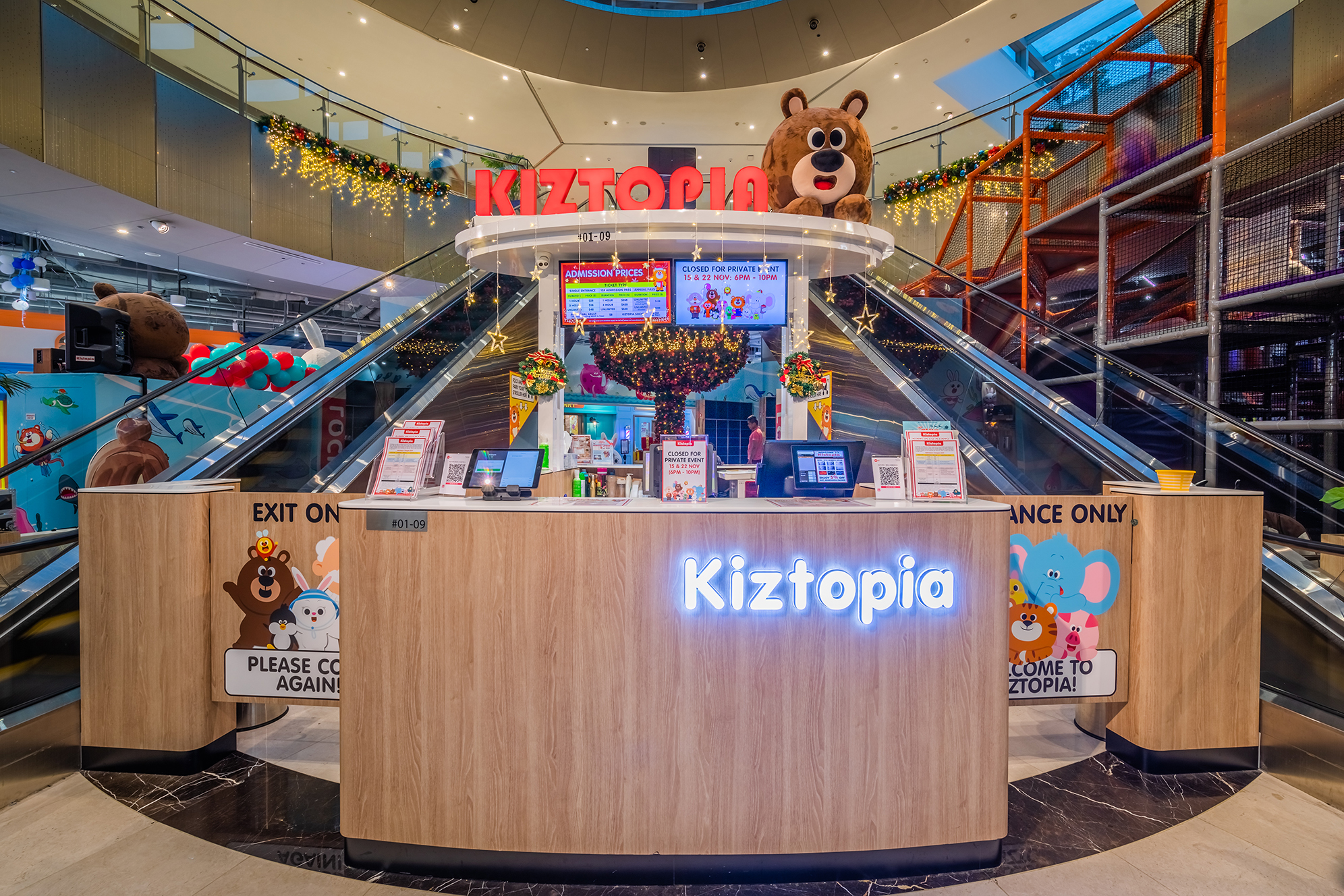
    First opened in 2019 at Marina Square, Singapore, Kiztopia is a massive indoor playground that’s designed for the little ones to both play and learn at the same time. Now opening its first ever overseas flagship outlet at New Town Plaza’s new Play Park, the playground occupies a 12,000sq ft space with 15 themed play areas featuring slides, trampolines, a climbing wall, bouncy castle, swings – the whole shebang.

    There are three major play zones at the playground recommended for kids aged four to 12. These include the Mojo Zone, which features eight exhilarating slides (the highest one of four metres tall!), the Ninja Warrior Zone for the kids to unleash their inner ninja and take on challenging obstacles, and a trampoline zones for children to put their agility and sense of space to the test.

    There will also be various Occupational Experience Zones where Kiztopia’s very own original cartoon characters will be there to inspire the little ones with learn-through-play experiences. Each play zone is designed to help stimulate and develop important assets such as social and communication skills, as well as their body coordination, creativity, and more.

    Other areas at Kiztopia include Raby’s Corner, a fun and safe play area specially designed for toddlers, the Hero Square, where kids can catch different shows or participate in educational activities, Bell’s Cafe, for families to rest their feet and recharge with drinks and snacks, and the Star Lite room available for private parties. Before you leave, check out the gift shop offering everything from toys and accessories to learning equipment and gift combos.

    Tickets are now available on both Kiztopia’s Hong Kong website and Klook. Prices range from $108 to $228 on Mondays to Thursdays, and $148 to $298 on Fridays to Sundays and on public holidays. Ticket packages and annual passes are also available.

  • Changi Airport implements higher airport fees on travellers starting Nov 1

    Changi Airport implements higher airport fees on travellers starting Nov 1

    While international travel has officially picked up this year, it’s important to note that passengers departing from Singapore’s Changi Airport will now have to pay extra airport fees and levies starting November 1, 2022 to Mar 31, 2023.

    Changi Airport departure fees will be increased from $52.30 to $59.20 to make way for the aviation industry’s recovery phase. This comprises $40.40 passenger service and security fee, an $8 aviation levy and a $10.80 airport development levy. The passenger service and security fee will subsequently go up again in phases, to $43.40 on Apr 1, 2023 and $43.40 on Apr 1, 2024.

    The announcement was made on September 15 by the Civil Aviation Authority of Singapore (CAAS) and Changi Airport Group (CAG), who informed that the increase in fees was announced in 2018, but suspended due to the pandemic. The aviation levy amounts will be utilised for maintenance of the airport and making Singapore the prime hub of international aviation in the post-pandemic era, per CAAS.

    Those who have booked tickets from Singapore before November 1 are not required to pay the additional charges. There will also be no change to the departure fee for in-transit passengers. They will continue to pay $9 in airport charges.

  • Hong Kong will be ending hotel quarantine on Sep 26

    Hong Kong will be ending hotel quarantine on Sep 26

    It’s a breath of fresh air – almost literally, just in time for our end-of-year travels. While Japan has just announced that visa-free entry will soon open for individual travellers, Hong Kong will end its once-mandatory hotel quarantine from September 26 (next Monday) onwards.

    Now, instead of having to spend three days in a self-paid hotel, you will need to go through a polymerase chain reaction (PCR) test upon arrival. You can then happily head off home or go to a hotel of your choice, but just remember to self-monitor for three days after. This also means that you won’t be able to pop by your local bar or favourite restaurants for the same time period. Hong Kong terms this as the “0+3” scheme.

    There’s now also no longer a need to show proof for a pre-flight PCR test before flying to Hong Kong – instead, it’s been replaced with the more affordable Antigen Rapid Test (ART).

  • Ororo commences operation of $25m glass recycling plant in SA

    Ororo commences operation of $25m glass recycling plant in SA

    The new Orora glass beneficiation plant in South Australia has begun operations, with the $25m facility set to recycle 150,000 tonnes of post-consumer glass each year, which will go into the company’s glass manufacturing plant next door.

    Orora CEO Brian Lowe and South Australia Deputy Premier Susan Close officially opened the highly automated plant this morning. The SA and Commonwealth governments provided some $8m of the funding for the new plant.

    With just 12 staff and the latest optical technology, the highly automated plant will remove impurities from used broken glass through crushing, cleaning and sorting, to deliver crushed contaminant-free glass, ready for manufacture into new products.

    The company says the new plant will enable the 900 million glass bottles manufactured at the company’s Gawler plant to have an average of 60 per cent recycled content by 2025. All the recycled glass will be used by Orora for its beverage products, which includes bottles for wine, beer, carbonated soft drinks, kombucha, water and olive oil.

    The new plant took just a year to build, overcoming supply chain issues, and bringing in the latest European technology for its automated sorting process.

    Orora CEO Brian Lowe described the beneficiation plant as a major milestone in the company’s sustainability journey. “Our new world-class beneficiation plant is a significant achievement as it will increase the amount of recycled glass used in our manufactured products, allowing us to process up to 150,000 tonnes each year – that’s equivalent to approximately 330 million wine bottles or 750 million beer bottles. Not only does this progress Orora’s sustainability agenda, it enhances our ability to support our customers’ sustainability goals, in turn contributing to the circular economy and the sustainability of the Australian glass industry.”

    Lowe said, “Together with our new oxygen fuelled furnace at Gawler, we are offering our customers a low emission, highly recycled product.”

    Close said, “Consumers are increasingly demanding recycled packaging, and this project makes a significant contribution to the circular economy and the sustainability of the glass industry in this state.

    “We value the investment of the Commonwealth and SA government – it aligns to the government’s focus on increasing Australia’s capacity to generate high value recycled commodities, investing in recycling and waste infrastructure, as well as creating new opportunities to recover and reuse resources.”

    Lowe said that the company saw plenty of opportunity for growth in the domestic glass business, saying, “Australia is still a net importer of glass bottles, which could be manufactured here, and would save on emissions in transport.”

    Lowe also said the beginnings of rapprochement in Australia’s trading relationship with China was good to see, but said Orora was not counting on a resumption of the wine trade, for which the company was a major glass bottle supplier. Since the wine tariffs came into play, which ended most of Australia’s wine exports to China, Orora has pivoted into new business areas, and has replaced all the lost business. Lowe said, “Any easing of restrictions would be good news, and we would be ready to supply winemakers, but we will have to wait and see.”

    A transition away from plastic bottles has not yet begun, with Lowe saying if it does happen it will more likely be to aluminium cans rather than glass bottles. The company is investing some $200m in can production over the next three to four years.

  • WhatsApp might soon increase the group chat cap to 1024 people

    WhatsApp might soon increase the group chat cap to 1024 people

    If you are a WhatsApp user with many friends, and we mean a lot, lot — 1000+ — you will be happy to learn that, soon, you will probably be able to add up to 1024 of your friends in one group chat.

    As WABetaInfo first reported, WhatsApp is rolling out a new feature to select WhatsApp beta testers that increase the current 512-person group chat cap to 1024.
    Previously, you could only add up to 256 people in one group chat, but WhatsApp saw that wasn’t enough anymore, and in June 2022, it increased the limit to 512 people. After all, if you are a big business with many employees that use WhatsApp as its main communication app, a 256-person cap is just not enough.

    Before the limit increase, many large companies that use WhatsApp had to make and manage multiple group chats because they couldn’t add all of their employees to one single conversation. And now, just a few months after the raise, WhatsApp wants to double the limit again, enabling even bigger companies to use the app as their main communication method.

    Furthermore, to give admins better control over these large groups, WhatsApp is also working on a new set of tools. For example, it wants to introduce a list of pending participants — which is a section that lists all the people wanting to join a group and lets admins approve them at any time — and an approval system that enables admins to choose who can add new participants to the group.Sadly, there is no information on when WhatsApp will release these features to regular users. If you want to have a group chat with 1000+ people right now, you could create a group in Telegram. The cap there is 200,000 people, which should be plenty enough.

  • Apple has started preparing a UK store for the iPhone 15 launch

    Apple has started preparing a UK store for the iPhone 15 launch

    The iPhone 14 lineup is finally here, but, unfortunately, this year’s iPhones are just a slight upgrade from the previous generation — especially the regular iPhone 14 and the iPhone 14 Plus. So, if you have decided to skip this one and wait for the iPhone 15 to come out, you might want to know when you could expect Apple to release the next iPhones.

    Sadly, we can’t tell you an exact date, but a new report suggests that the release date of the new iPhones might be sometime between September 15th, 2023, and October 7th, 2023.

    Employees from the UK Apple store in Milton Keynes have received a memo coming from “above the store” telling them that they won’t be able to take a leave between September 15th, 2023, and October 7th, 2023, and December 2nd, 2023, and the start of January 2024. The reason is that Apple wants to be better prepared for next year’s “high velocity moments.”

    In most cases, Apple forbids taking time off before the launch of new devices as well as during the holiday season, and it usually tells its employees about its decision via an internal communication app shortly before it goes into effect.

    Although we can’t confirm how widespread Apple’s new instruction is, the fact that it comes from above the store suggests it might affect other Apple shops as well. Also, it doesn’t look like Apple has chosen these dates randomly. Most likely, the tech giant is preparing early for its next iPhone launch event. Furthermore, iPhones traditionally release in September, so it’s very probably Apple might also launch its next iPhone in this period as well.

    Of course, we can only speculate at this point. The iPhone 15 is still a whole year away, and a lot can change in a year.

  • More Vietnamese opt for QR payments

    More Vietnamese opt for QR payments

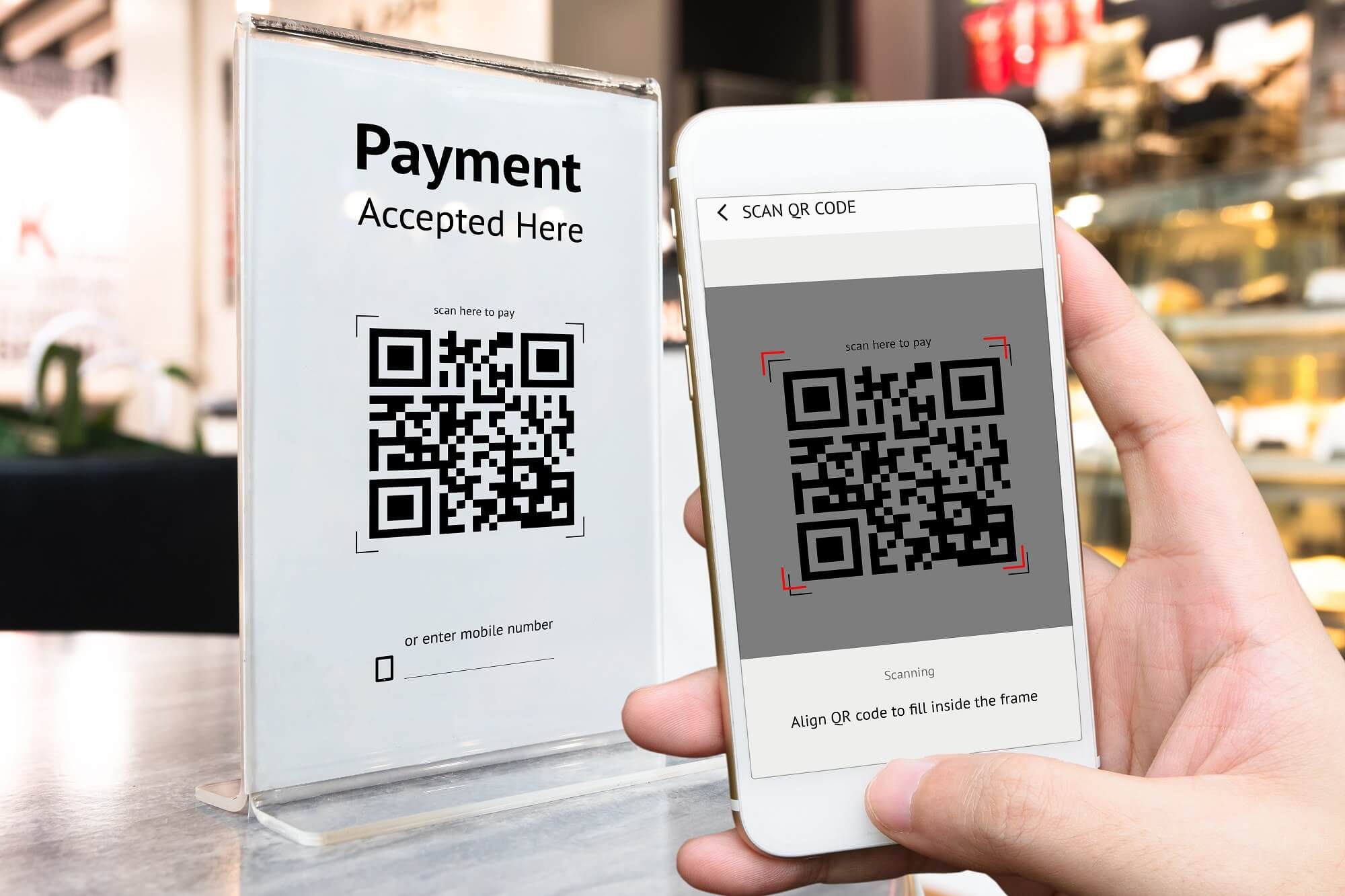
    It has been months since Hai Van last checked her purse, since she makes almost all payments by scanning QR codes with her phone.

    The media company in Hanoi’s Cau Giay District says: “Whether it is having breakfast and lunch at the office, making supermarket trips in the evening or hanging out with friends at a cafe, QR payments are readily available, and the deductions are made directly from my e-wallet.

    “Occasionally I have to transfer money or pay cash when making online purchases. But other than that, most transactions are done through scanning codes.”

    This began unexpectedly over a year ago amid Covid-19.

    “Once, I was buying from a street vendor without any loose change, and the lady offered a QR code to pay,” she says.

    Without a purse with cash and cards, her handbag’s weight has reduced in half.

    “I am more worried about running out of phone battery than forgetting my purse.”

    The Tam, owner of a grocery store in Vinh Phuc Province, has also grown accustomed to receiving payments through online bank transfer instead of cash.

    For over a year his store has had a QR code displayed in the most prominent place with the sign “QR Payment Accepted.”

    He says: “Customers in the village often do not carry cash. Rather than buy at another shop on credit, they gradually got into the habit of coming to mine for QR payment.

    “Gone are the days when I had to count money and give back change… all there is to do now is check the numbers.”

    Now almost half of all transactions at his store are done by scanning codes.

    After gaining popularity through e-wallet apps such as VNPay, MoMo and Viettel Money, QR codes are now directly integrated into bank apps.

    Last year, Napas set up VietQR, simplifying this process and allowing customers of any bank in the system to transfer money to another bank just by scanning.

    The State Bank of Vietnam’s payments department said digital banking services, especially electronic payments, are growing rapidly.

    In the first half of this year, the number and value of transactions via mobile phones increased by 98.3% and 84.3%.

    “I have witnessed people in rural areas easily make payments using QR codes,” Tran Quy, director of the Vietnam Digital Economy Development Institute, says.

    According to statistics from the Ministry of Information and Communications, the country has 81.4 million mobile Internet subscribers, an imperative for using QR codes.

    But many experts say full potential has yet to be achieved.

    In The Tam’s case, seniors and children, a major demographic among his grocery store customers, are often unable to use QR codes due to the need for a smartphone linked to a bank account.

    Not everyone in the countryside even among other age groups has these two readily available, he says.

    His store has encountered payment errors on numerous occasions due to an unstable Internet connection, he says.

    “Just one wrong transaction and I might have to retrace the whole thing, which takes a long time.”

    Hoang Quynh, an office worker in Ho Chi Minh City who used to have three or four e-wallets with QR scanning facility but has cut down to one, says: “Sometimes stores would have an array of codes but I still cannot pay unless it includes the provider of my application. I wish there was a co

  • Malaysia’s 5G Journey Back on Track for Wider Coverage

    Malaysia’s 5G Journey Back on Track for Wider Coverage

    Four Malaysia mobile operators, namely Celcom, Digi, YTL and TM, have finally sealed agreements to take up 65% of the government-owned 5G agency, Digital Nasional Berhad (DNB), to roll out the country’s 5G services.

    Ahead of their impending merger, both Celcom and Digi will take a 12.5% stake each, while YTL and TM will each have a 20% stake. The remaining two telcos, Maxis and U Mobile, have also agreed to purchase wholesale capacity from DNB, after talks of the two operators retracting their decision to take stakes in the government agency as they reportedly did not see benefits in being minority shareholders.

    5G is an important pillar in the digital economy. In an effort to realize 5G, a state-controlled 5G single wholesale network by Digital Nasional Berhad (DNB), owned by the Ministry of Finance Malaysia, was established in March 2021 to undertake the deployment of 5G infrastructure and extend 5G as a wholesale network.

    However, the road toward 5G has not been smooth sailing, as all stakeholders find it difficult to see eye to eye on how 5G is to be deployed in the country.

    Earlier this year, mobile operators debated with the Malaysian Communication and Multimedia Commission (MCMC) over terms for the country’s wholesale 5G network, with the four largest operators – Maxis, Celcom Axiata, U Mobile and Digi – pushing for two wholesale networks.

    Jointly, the operators countered the government’s proposal to seek at least a 51% stake in DNB, citing concerns over unaffordable 5G pricing for consumers and enterprise as an initial stumbling block. However, the government did not waver on its August 31,   deadline. It believes that a shared network will be more cost-effective and enable infrastructure development to speed up. On the contrary, some industry players are of the opinion that this deprives operators of the competitive advantage of differentiating their services.

    However, after initial hesitations, all six mobile operators in the country agreed to the 5G agreement, but with Maxis and U Mobile deciding to retract their decisions at the eleventh hour.

    While all six mobile operators have now firmed up their decision to move forward, the MCMC foresees challenges ahead for state-level rollouts owing to bureaucratic red tape by local authorities.

    By the second quarter, Malaysia’s 5G rollout had reached 27%. While this indicates progress made in terms of 5G service coverage, MCMC’s Chief Operation Officer, Datuk Mohd Ali Hanafiah Mohd Yunus, noted that there is still room for improvement when it comes to addressing the requirements of local councils and states for resolving bureaucracy issues.

    Deputy Minister of Communications and Multimedia Datuk Zahidi Zainul Abidin has even called for the 5G contract to be given back to MCMC as telcos have not been aligned with the government. Zahidi also encouraged the public to inform MCMC if an area has poor internet access so that telcos can be instructed to place transmitters at respective sites.

    “We at MCMC can only ask them or implore them to place these transmitters to increase the strength of the transmitters while DNB don’t have the authority to force them or reprimand them for not doing so,” Zahidi said. “That’s why I kept saying in this house to give this 5G rollout project back to the MCMC so we can then instruct these telcos to follow our instructions as we have an Act to compel them to do so.”

    Gaining Momentum in 5G

    According to IDC, there will be 6.2 million IoT connections in Malaysia by 2025, nearly doubling from just 3.9 million connections in 2020. In the report, IDC stated that “IoT alone will generate significant IP traffic, which further highlights the need for expanded backhaul bandwidth to support both 5G cell sites but also fixed aggregation at factories, stadiums, and various government and smart city locations.”

    As 5G penetration takes root in Asia, Malaysia is reportedly aiming to extend approximately 80% of 5G network coverage in populated cities, including Kuala Lumpur, Cyberjaya and Putrajaya by the end of this year, with plans to extend 5G to other cities by the end of 2024. As defined by MCMC, “populated areas” refer to areas with at least 20 people per square kilometer.

    In a recent report by Opensignal, Kuala Lumpur has the second highest 5G download speed of 376.6 Mbps among 11 cities in Asia Pacific, behind only Seoul, with a 5G download speed of 453.1 Mbps. The report cited that the reason behind Kuala Lumpur’s high ranking is that YTL Communications’ Yes 5G is the first and only operator offering commercial 5G services in Kluang, Malaysia, and hence, DNB has a lighter 5G network load compared to other Asia-Pacific cities.

    According to the Malaysian Investment Development Authority, Malaysia is expected to have 2.1 million 5G subscribers by 2025, or an estimated penetration of 6.6 5G subscribers per 100 people. By then, 5G is projected to contribute about RM5.3 billion to Malaysia’s gross domestic product.

    Mohd Ali Hanafiah has said that the country is on track for Phase 1, which spans 2020 to , with Phase 2 to be scheduled for the end of 2022 through 2025. Under this project, Malaysia aims to lay out plans for private and public sectors to provide wider coverage and a better broadband quality experience for its people, as 5G adoption grows.

    Investments for Phase 1 of the project are estimated at RM28 billion. 60% will be funded by the private sector, while the government will contribute to the remaining 40% via the Universal Service Provision (USP) fund to ensure that rural areas will be well covered to bridge the digital divide.