Tag: asia

  • Apple has started preparing a UK store for the iPhone 15 launch

    Apple has started preparing a UK store for the iPhone 15 launch

    The iPhone 14 lineup is finally here, but, unfortunately, this year’s iPhones are just a slight upgrade from the previous generation — especially the regular iPhone 14 and the iPhone 14 Plus. So, if you have decided to skip this one and wait for the iPhone 15 to come out, you might want to know when you could expect Apple to release the next iPhones.

    Sadly, we can’t tell you an exact date, but a new report suggests that the release date of the new iPhones might be sometime between September 15th, 2023, and October 7th, 2023.

    Employees from the UK Apple store in Milton Keynes have received a memo coming from “above the store” telling them that they won’t be able to take a leave between September 15th, 2023, and October 7th, 2023, and December 2nd, 2023, and the start of January 2024. The reason is that Apple wants to be better prepared for next year’s “high velocity moments.”

    In most cases, Apple forbids taking time off before the launch of new devices as well as during the holiday season, and it usually tells its employees about its decision via an internal communication app shortly before it goes into effect.

    Although we can’t confirm how widespread Apple’s new instruction is, the fact that it comes from above the store suggests it might affect other Apple shops as well. Also, it doesn’t look like Apple has chosen these dates randomly. Most likely, the tech giant is preparing early for its next iPhone launch event. Furthermore, iPhones traditionally release in September, so it’s very probably Apple might also launch its next iPhone in this period as well.

    Of course, we can only speculate at this point. The iPhone 15 is still a whole year away, and a lot can change in a year.

  • More Vietnamese opt for QR payments

    More Vietnamese opt for QR payments

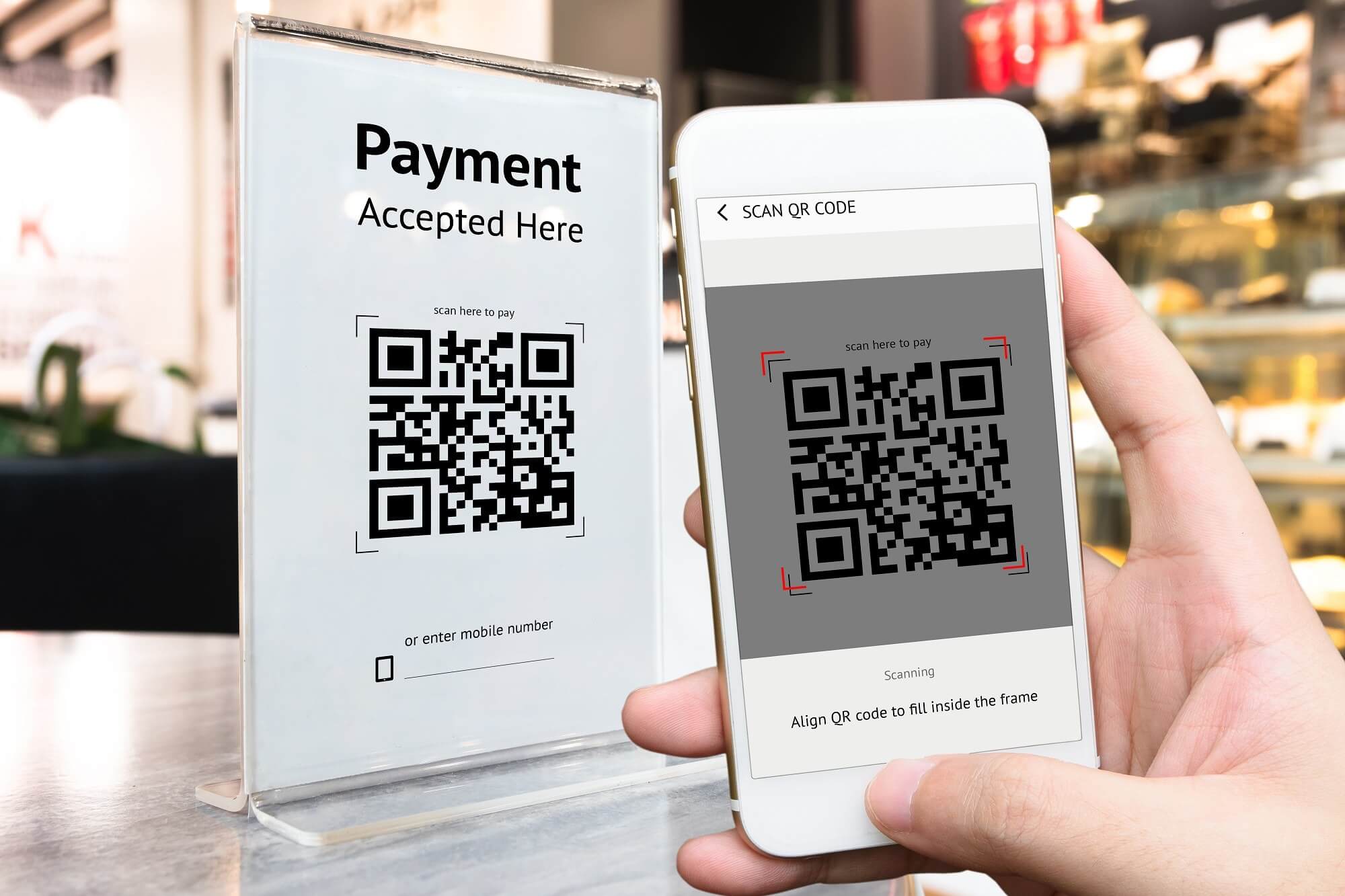
    It has been months since Hai Van last checked her purse, since she makes almost all payments by scanning QR codes with her phone.

    The media company in Hanoi’s Cau Giay District says: “Whether it is having breakfast and lunch at the office, making supermarket trips in the evening or hanging out with friends at a cafe, QR payments are readily available, and the deductions are made directly from my e-wallet.

    “Occasionally I have to transfer money or pay cash when making online purchases. But other than that, most transactions are done through scanning codes.”

    This began unexpectedly over a year ago amid Covid-19.

    “Once, I was buying from a street vendor without any loose change, and the lady offered a QR code to pay,” she says.

    Without a purse with cash and cards, her handbag’s weight has reduced in half.

    “I am more worried about running out of phone battery than forgetting my purse.”

    The Tam, owner of a grocery store in Vinh Phuc Province, has also grown accustomed to receiving payments through online bank transfer instead of cash.

    For over a year his store has had a QR code displayed in the most prominent place with the sign “QR Payment Accepted.”

    He says: “Customers in the village often do not carry cash. Rather than buy at another shop on credit, they gradually got into the habit of coming to mine for QR payment.

    “Gone are the days when I had to count money and give back change… all there is to do now is check the numbers.”

    Now almost half of all transactions at his store are done by scanning codes.

    After gaining popularity through e-wallet apps such as VNPay, MoMo and Viettel Money, QR codes are now directly integrated into bank apps.

    Last year, Napas set up VietQR, simplifying this process and allowing customers of any bank in the system to transfer money to another bank just by scanning.

    The State Bank of Vietnam’s payments department said digital banking services, especially electronic payments, are growing rapidly.

    In the first half of this year, the number and value of transactions via mobile phones increased by 98.3% and 84.3%.

    “I have witnessed people in rural areas easily make payments using QR codes,” Tran Quy, director of the Vietnam Digital Economy Development Institute, says.

    According to statistics from the Ministry of Information and Communications, the country has 81.4 million mobile Internet subscribers, an imperative for using QR codes.

    But many experts say full potential has yet to be achieved.

    In The Tam’s case, seniors and children, a major demographic among his grocery store customers, are often unable to use QR codes due to the need for a smartphone linked to a bank account.

    Not everyone in the countryside even among other age groups has these two readily available, he says.

    His store has encountered payment errors on numerous occasions due to an unstable Internet connection, he says.

    “Just one wrong transaction and I might have to retrace the whole thing, which takes a long time.”

    Hoang Quynh, an office worker in Ho Chi Minh City who used to have three or four e-wallets with QR scanning facility but has cut down to one, says: “Sometimes stores would have an array of codes but I still cannot pay unless it includes the provider of my application. I wish there was a co

  • Malaysia’s 5G Journey Back on Track for Wider Coverage

    Malaysia’s 5G Journey Back on Track for Wider Coverage

    Four Malaysia mobile operators, namely Celcom, Digi, YTL and TM, have finally sealed agreements to take up 65% of the government-owned 5G agency, Digital Nasional Berhad (DNB), to roll out the country’s 5G services.

    Ahead of their impending merger, both Celcom and Digi will take a 12.5% stake each, while YTL and TM will each have a 20% stake. The remaining two telcos, Maxis and U Mobile, have also agreed to purchase wholesale capacity from DNB, after talks of the two operators retracting their decision to take stakes in the government agency as they reportedly did not see benefits in being minority shareholders.

    5G is an important pillar in the digital economy. In an effort to realize 5G, a state-controlled 5G single wholesale network by Digital Nasional Berhad (DNB), owned by the Ministry of Finance Malaysia, was established in March 2021 to undertake the deployment of 5G infrastructure and extend 5G as a wholesale network.

    However, the road toward 5G has not been smooth sailing, as all stakeholders find it difficult to see eye to eye on how 5G is to be deployed in the country.

    Earlier this year, mobile operators debated with the Malaysian Communication and Multimedia Commission (MCMC) over terms for the country’s wholesale 5G network, with the four largest operators – Maxis, Celcom Axiata, U Mobile and Digi – pushing for two wholesale networks.

    Jointly, the operators countered the government’s proposal to seek at least a 51% stake in DNB, citing concerns over unaffordable 5G pricing for consumers and enterprise as an initial stumbling block. However, the government did not waver on its August 31,   deadline. It believes that a shared network will be more cost-effective and enable infrastructure development to speed up. On the contrary, some industry players are of the opinion that this deprives operators of the competitive advantage of differentiating their services.

    However, after initial hesitations, all six mobile operators in the country agreed to the 5G agreement, but with Maxis and U Mobile deciding to retract their decisions at the eleventh hour.

    While all six mobile operators have now firmed up their decision to move forward, the MCMC foresees challenges ahead for state-level rollouts owing to bureaucratic red tape by local authorities.

    By the second quarter, Malaysia’s 5G rollout had reached 27%. While this indicates progress made in terms of 5G service coverage, MCMC’s Chief Operation Officer, Datuk Mohd Ali Hanafiah Mohd Yunus, noted that there is still room for improvement when it comes to addressing the requirements of local councils and states for resolving bureaucracy issues.

    Deputy Minister of Communications and Multimedia Datuk Zahidi Zainul Abidin has even called for the 5G contract to be given back to MCMC as telcos have not been aligned with the government. Zahidi also encouraged the public to inform MCMC if an area has poor internet access so that telcos can be instructed to place transmitters at respective sites.

    “We at MCMC can only ask them or implore them to place these transmitters to increase the strength of the transmitters while DNB don’t have the authority to force them or reprimand them for not doing so,” Zahidi said. “That’s why I kept saying in this house to give this 5G rollout project back to the MCMC so we can then instruct these telcos to follow our instructions as we have an Act to compel them to do so.”

    Gaining Momentum in 5G

    According to IDC, there will be 6.2 million IoT connections in Malaysia by 2025, nearly doubling from just 3.9 million connections in 2020. In the report, IDC stated that “IoT alone will generate significant IP traffic, which further highlights the need for expanded backhaul bandwidth to support both 5G cell sites but also fixed aggregation at factories, stadiums, and various government and smart city locations.”

    As 5G penetration takes root in Asia, Malaysia is reportedly aiming to extend approximately 80% of 5G network coverage in populated cities, including Kuala Lumpur, Cyberjaya and Putrajaya by the end of this year, with plans to extend 5G to other cities by the end of 2024. As defined by MCMC, “populated areas” refer to areas with at least 20 people per square kilometer.

    In a recent report by Opensignal, Kuala Lumpur has the second highest 5G download speed of 376.6 Mbps among 11 cities in Asia Pacific, behind only Seoul, with a 5G download speed of 453.1 Mbps. The report cited that the reason behind Kuala Lumpur’s high ranking is that YTL Communications’ Yes 5G is the first and only operator offering commercial 5G services in Kluang, Malaysia, and hence, DNB has a lighter 5G network load compared to other Asia-Pacific cities.

    According to the Malaysian Investment Development Authority, Malaysia is expected to have 2.1 million 5G subscribers by 2025, or an estimated penetration of 6.6 5G subscribers per 100 people. By then, 5G is projected to contribute about RM5.3 billion to Malaysia’s gross domestic product.

    Mohd Ali Hanafiah has said that the country is on track for Phase 1, which spans 2020 to , with Phase 2 to be scheduled for the end of 2022 through 2025. Under this project, Malaysia aims to lay out plans for private and public sectors to provide wider coverage and a better broadband quality experience for its people, as 5G adoption grows.

    Investments for Phase 1 of the project are estimated at RM28 billion. 60% will be funded by the private sector, while the government will contribute to the remaining 40% via the Universal Service Provision (USP) fund to ensure that rural areas will be well covered to bridge the digital divide.

  • UBS Secures New Office Space in Hong Kong

    UBS Secures New Office Space in Hong Kong

    Switzerland’s largest bank will lease 250,000 square feet of new office space in Hong Kong outside the traditional central business district.

    Swiss banking giant UBS will lease 250,000 square feet of new office space in Hong Kong, according to a statement by Sun Hung Kai, the developer of the property. According to them, UBS, as the first anchor tenant, will lease the top nine floors of the tallest tower in the West Kowloon terminus project, which connects Hong Kong and mainland China via high-speed rail.

    The project is expected to be completed by 2025 and UBS is expected to occupy the new premises in early 2026. The Swiss bank plans to relocate staff from four current locations in Hong Kong, including its six-floor main office at IFC, the city’s second-tallest building.

    The new office is located across the harbor from Hong Kong island, where the main central business district is based, and rent is estimated to be around half of that paid by IFC tenants. In addition, it sits atop the high-speed rail station that should keep travel from Hong Kong to southern Guangzhou to under an hour, which is ideal for the bank’s Greater Bay Area growth strategy.

    We are excited to be moving to the workplace of the future with state-of-the-art infrastructure that brings together and empowers all of our UBS colleagues in Hong Kong under one roof, said UBS’s APAC co-head of wealth management and Hong Kong chief executive

  • Two regulators open investigations into Optus over data breach

    Two regulators open investigations into Optus over data breach

    Two Australian regulators said on Tuesday they have opened investigations into Optus, the country’s No. 2 telecoms provider, after a breach of its systems resulted in the theft of personal data from up to 10 million accounts.

    The probes only add to headaches for Optus, which disclosed the breach on Sept. 22 and has since come under heavy fire from the government and the public for not preventing the massive cyberattack.

    The Office of the Australian Information Commissioner (OAIC) said it was investigating whether the Singapore Telecommunications Ltd-owned company took reasonable steps to protect customer data and comply with privacy laws.

    The Australian Communications and Media Authority (ACMA) said it was investigating whether Optus met its industry obligations as a telecommunications provider in terms of the keeping and disposing of personal data.

    Amid the widening fallout, the federal government has flagged it will overhaul data security laws to force firms that have had a cyberattack to notify banks about customers who may be compromised. Several law firms are also considering filing class action lawsuits.

    The OAIC said in a statement if it finds that “interference with the privacy of one or more individuals has occurred”, it may force Optus to take steps to ensure the breach cannot be repeated.

    The agency added that it finds there was a breach of Australian privacy law, it can seek civil penalties of up to A$2.2 million ($1.4 million) per contravention.

    ACMA Chair Nerida O’Loughlin said in a statement that failure by telecommunications providers to safeguard customer information “has significant consequences for all involved”.

    Australian Competition and Consumer Commission Chair Gina Cass-Gottlieb told a parliamentary hearing the regulator was receiving 600 calls a day from people concerned about the Optus breach, although few had been scammed as a result.

    Optus said in a statement that it had received formal notices of investigation from both regulators and that it would fully engage with them.

  • Velocity Ventures invests in automated Pizza store

    Velocity Ventures invests in automated Pizza store

    Velocity Ventures, Southeast Asia’s leading venture capital firm focused on helping travel and hospitality solve industry challenges will be the anchor investor for Hyper Food Robotics (Hyper), an Israel-based firm that will debut its first fully autonomous  robotic  pizza kitchens in 2023.

    With Hyper’s autonomous robotic kitchens, it takes 8 mins to cook a pizza for the end-to end process and the kitchen can produce up to 120 pizzas per hour. An unmanned kitchen can operate three times more efficiently as compared to a human-staffed kitchen by reducing overheads for labour and rental costs, and also minimising food waste. The modular units are easy to transport ensuring ease of scalability. Using AI technology, the robotic kitchen is able to ensure consistency in food quality and safety standards.

    Hyper is the brainchild of Udi Shamai, Yariv Reches and Harel Shafran. CEO Udi is a well-known entrepreneur and owner of Pizza Hut Israel with over thirty years of managing fast food restaurants. Faced with rising labour costs and challenges to recruit kitchen crew, Shamai decided to explore how robotics and automation could alleviate the persistent problems of manpower shortage. He decided to bring together a team of experts in the fields of food, robotics, and mechanics to design a fully autonomous store that can increase efficiency and reduce reliance on a human workforce in the food services industry.

    The goal is to design a self-contained total solutions robotic box kitchen for fast food restaurants which will replace an entire restaurant kitchen and automate the entire process from food preparation to cooking and even packing the food for delivery without the need for any kitchen crew to be involved. With modular autonomous kitchens, clients can essentially operate off-premises food services using a “plug and play” boxed kitchen, ensuring ease of scalability while maintaining manufacturing costs are kept economical. Shamai is also committed to ensure that quality assurance and food quality is not compromised.

    Nicholas Cocks, Managing Partner of Velocity Ventures said: “We are excited to be investing in the Future Restaurant Kitchen as we know that restaurants all around the world are facing a manpower crisis. Our strategic roadmap at Velocity Venture is to identify and propel startups that will solve problems faced by businesses in the hospitality and travel industry. Hyper’s robotic kitchen will be tomorrow’s disruptive technology for the food services industry as labour shortage challenges escalate because more people now shun back-of-house operations jobs. Automation and robotics can help companies achieve lower labour costs and improve productivity by taking over repetitive tasks in the kitchen, allowing restaurants to redeploy their employees to other parts of the business that will improve the customer experience.”

    Udi Shamai , CEO and Co-founder of Hyper Food Robotics “Having Velocity Ventures come onboard as our anchor investor is a major milestone for the team at Hyper. We debuted our pilot store in October 2021 in Israel with Pizza Hut introducing a robotic kitchen that can prepare and cook pizzas and side dishes. We envision exciting times ahead as we grow and scale globally with the right partners. We aim to launch Hyper “robotic box kitchens” internationally by next year which will be a gamechanger for any food services operator wanting to deploy a cloud kitchen in which all automated technology and production zones are packed within a self-cleaning shipping-container-like unit.”

    Velocity Ventures is the most proactive investor in the travel and hospitality tech space in Southeast Asia and including Hyper, has seven portfolio companies. The firm also aims to make ten additional investments in the sector by Q4 2023.

  • TC Motor to sell Skoda cars from next year

    TC Motor to sell Skoda cars from next year

    TC Motor, a distributor and assembler of South Korean Hyundai vehicles in Vietnam, will start selling the popular Czech Skoda cars next year.

    Under a deal it signed with Skoda Auto in Hanoi on Oct. 7, TC will start by distributing imported Skoda cars first before assembling them.

    The two firms plan to build a plant in the northern province of Quang Ninh, with the first vehicles expected to roll out of it late next year at the earliest.

    Vietnam is the first Southeast Asian country where Skoda will build a factory. It plans to export vehicles assembled in Vietnam to other countries in the region.

    Skoda makes 11 models, with the Octavia being its bestseller, but the two companies have not revealed which model will be sold first in Vietnam.

    Last year, the Czech firm sold nearly 900,000 vehicles in some 100 markets around the world, with Germany and Russia being the biggest.

  • Vietnam stock market becomes world’s worst performer

    Vietnam stock market becomes world’s worst performer

    Vietnam’s stock market was the world’s worst performer this week with an 8.5% decline.

    It was followed by Russia, down 4.8%, and Venezuela, down 1.87%, according to market data provider StockQ.

    Over the last four weeks Vietnam has been the world’s second worst performer behind Russia, with the VN-Index falling by 16.67%.

    The VN30 basket, comprising the 30 largest capped stocks, declined by 18.51% in the period.

    Some of the worst performers were private lenders Techcombank and VPBank and electronics retail chain Mobile World.

    The State Bank of Vietnam raised its policy rates last month to control inflation.

    The dollar has been rising to new peaks against the dong as well as most other currencies amid rising interest rates in the U.S. and geopolitical tensions.

    “Margin call pressure forced investors to sell off recently and the panic among investors has not subsided yet,” Phung Trung Kien, founder of asset management firm Vietnam Holdings said.

    “Cash flow to the market is quite limited these days as most of the important rates such as interbank interest rates have been increasing a lot.”

    Nguyen Anh Duc, head of institutional sales at SSI Securities Corp, said retail investors are “extremely panicky and they are taking flight without regard for which stocks they are selling.”

    But some investment funds, such as Coeli Asset Management SA and Asia Frontier Capital are looking to buy more of Vietnam stocks given the country’s long-term economic prospects.

  • Aeon plans to triple Vietnam malls

    Aeon plans to triple Vietnam malls

    Japanese retailer Aeon plans to triple the number of malls in Vietnam by 2025 as part of its expansion strategy to meet the needs of a growing middle class population.

    A report said the number of Aeon malls will nearly triple to 16 throughout Vietnam.

    Aeon has some 200 stores in Vietnam at present, including six shopping malls.

    The stores are concentrated in Ho Chi Minh City and Hanoi, Vietnam’s biggest metropolises.

    A mall will be opened in the central town Hue in 2024.

    The company is also considering increasing its supermarkets in Hanoi to 100 by 2025, about 10 times the current number.

    Vietnam is “the most important market in our overseas strategy,” the report quoted a senior Aeon executive as saying.

    The country has a population of 100 million people with an average age of 33. Economic growth of more than 7% is expected this year in a repeat of last year’s performance.

    Aeon entered Vietnam in 2014 and has invested over $1.18 billion in the country to date.

  • Adidas puts partnership with Kanye West under review

    Adidas puts partnership with Kanye West under review

    Adidas says it is reviewing its Yeezy partnership with Kanye West days after he showed a “White Lives Matter” T-shirt design at Paris Fashion Week.

    The company did not mention the controversy but said “successful partnerships are rooted in mutual respect and shared values”. The rapper and fashion designer responded on Instagram, claiming the firm “stole” his designs. That post now appears to have been deleted.

    Adidas told the BBC it had made the decision to put the partnership under review after “repeated efforts to privately resolve the situation.” A spokesperson for the German sportswear company also said that the “Adidas Yeezy partnership is one of the most successful collaborations in our industry’s history.”

    In his Instagram post, Mr West also used a strong expletive, adding “I AM ADIDAS.”

    Earlier this week, he was criticised after he presented a collection at Paris Fashion Week that included T-shirts with the slogan “White Lives Matter”.

    The phrase Black Lives Matter, which represents opposition to racism and police brutality, was widely used after George Floyd, an unarmed black man, was killed by a police officer in Minneapolis in the summer of 2020.

    Vogue’s Gabriella Karefa-Johnson, who is global fashion editor-at-large at the fashion magazine, was among those who criticised West over the T-shirts, calling the move “hugely irresponsible.”

    In response, Mr West responded by lashing out at Ms Karefa-Johnson and posted photographs of her mocking her appearance to his 17.9 million followers.

    “She was personally targeted and bullied. It is unacceptable. Now, more than ever, voices like hers are needed and in a private meeting with Ye today she once again spoke her truth in a way she felt best, on her terms.”

    The almost decade-long partnership between Adidas and West has been strained for some time.

    At the centre of their collaboration is a hugely popular range of sneakers – known as Yeezy – which cost hundreds of dollars, with new releases often selling out within minutes.

    In June, he accused Adidas of making a shoe that looked similar to the distinctive Yeezy design, but was not part of their deal.

    Adidas said it will continue to co-manage the partnership while the review is under way.

    The announcement from Adidas comes less than a month after West’s lawyers sent a letter to fashion chain Gap to say he would no longer work with the firm.

    He accused Gap of failing to honour terms of the deal, including by failing to open standalone stores for his Yeezy fashion label.

  • US burger chain Five Guys to enter South Korea

    US burger chain Five Guys to enter South Korea

    FGE Worldwide Senior Vice President William Peecher (L) shakes palms with Hanwha Galleria Director Kim Dong-seon after signing an settlement at a lodge in Seoul on Wednesday. Picture courtesy of Hanwha Galleria

    SEOUL, Oct. 7 (UPI) — The U.S. quick meals chain 5 Guys Burgers and Fries plans to open its first retailer in Seoul early subsequent yr in a partnership with Hanwha Galleria, in line with Hanwha.

    The settlement was signed Wednesday with the Virginia-based burger franchise, with the dates and site of the primary retailer but to be decided.

    Hanwha Galleria, a luxurious retailer and an affiliate of Hanwha Group, plans to open greater than 15 5 Guys areas within the subsequent 5 years.

    The unique 5 Guys restaurant debuted in Virginia in 1986. The Murrell household, with 5 brothers, has headed the enterprise, which focuses on hamburgers, sizzling canines and French fries.

    In early 2000s, the corporate began franchising, together with international enlargement. At the moment greater than 1,700 5 Guys shops function throughout the globe with one other 1,500 beneath improvement.

    South Korea would be the fifth Asian nation to host the fast-growing model, following Hong Kong, Singapore, China and Malaysia.

    This would be the first deal headed by Hanwha Galleria Director Kim Dong-seon, the third son of Hanwha Chairman Kim Seung-youn.

    The junior Kim was prosecuted in 2017 for assaulting legal professionals at a cocktail party and stepped down from his Hanwha publish. He had been implicated in comparable circumstances twice earlier than.

    In 2019, nonetheless, he returned to administration and starting in February, he started spearheading the brand new enterprise technique group for Hanwha Galleria.

    With the 5 Guys entry, the competitors within the burger trade is anticipated to get much more heated with McDonald’s, Burger King and Shake Shack working in Korea.

    Particularly Shake Shack, launched in Korea in 2016 by meals large SPC Group, has efficiently focused the high-end, area of interest burger market. At the moment, there are 23 Shake Shacks across the nation.

    In the meantime, Korea’s main hen franchise firm BHC is on the point of open American fast-food chain Tremendous Duper Burgers in Korea, starting with a location in Seoul later this yr.

  • Malaysian bubble tea chain brewing up rapid expansion, to revisit IPO plans

    Malaysian bubble tea chain brewing up rapid expansion, to revisit IPO plans

    Malaysia’s Loob Holding, which owns Southeast Asia’s biggest bubble tea brand by stores, will consider plans for a share listing once it reaches its target of operating 1,000 Tealive stores in the country by 2024, its top executive said.

    “By then, we may consider an IPO if the timing and pricing are attractive,” Bryan Loo, Loob’s chief executive officer, told Reuters in an interview.

    Loob, which opened its 800th Tealive store in Malaysia last month, had previously planned for a Malaysian IPO but put it on hold due to the coronavirus pandemic in 2020, according to a media report.

    In June last year, Loob gained funding from Malaysian private equity fund Creador, which bought a 30% stake in it but the companies did not provide financial details.

    “With Creador on board, our options for funding have indeed widened very much,” Loo said, adding that Loob was “adequately funded” for its current planned expansion.

    “So the question of whether we will go for an IPO and if so, in which market, is best re-visited a year from now,” said Loo, who founded Loob in 2010 and launched Tealive in 2017.

    Tealive makes and sells beverages ranging from pearl milk tea to coffee and has expanded to countries including Vietnam, the Philippines, Australia and the United Kingdom.

    The expansion comes a time when Malaysia’s economy grew at its fastest annual pace in a year in the second quarter, with consumer spending picking up strongly following the easing of coronavirus restriction. Other milk tea brands such as CHAGEE and KOI have also expanded rapidly in the Southeast Asian country.

    Loob is also gearing up to double Tealive’s store count in the Philippines annually, with a target of 300 stores by 2024 from 25 currently, Loo said.

    Besides Tealive, Loob also owns sparkling water maker Sodaxpress, kombucha brand Wonderbrew and coffee brand Bask Bear Coffee. Loob is expanding at a rate of 100 Tealive and 100 Bask Bear Coffee outlets a year in Malaysia, according to Loo.

  • Banks expect Q4 interest rate hikes

    Banks expect Q4 interest rate hikes

    Most commercial banks expect deposit and lending interest rates to rise in the fourth quarter this year, a survey by the State Bank of Vietnam has found.

    The central bank’s survey, which polled 96% of all domestic and foreign lenders in Vietnam between August 25 and September 10, found that over 59% expect rates to go up by an average 0.37% points per annum in the last quarter this year.

    Over 66% of lenders anticipate that the average rate increase will be 0.56% points per annum.

    In the last four weeks, more than 30 lenders have increased their deposit interest rates by up to 1.9% points.

    Some are offering 7.45% per annum for 12-month deposits.

    The central bank survey also found that 88.3% of lenders expect positive pre-tax profit growth this year while 6.8% anticipate a decline.

    They estimate forecast capital mobilization growth for the year at 10.2%, lower than the credit growth of 14.9%.

    The State Bank of Vietnam (SBV) last week used open market operations to pump VND28.1 trillion ($1.18 billion) into the market and sold foreign currencies worth VND35 trillion.

    Tight liquidity has caused interest rates on loans to increase sharply. On Tuesday, the overnight interest rate surged to 8-9% per year. It was around 7.5% per year for other terms.

  • Ministry refuses to lift special consumption tax on gasoline

    Ministry refuses to lift special consumption tax on gasoline

    The Ministry of Finance refused a proposal to exempt special consumption tax on gasoline given the country’s tax rate is at a low level compared to many other countries.

    The Vietnam Chamber of Commerce and Industry has recently proposed that the special consumption tax on gasoline be reduced to provide positive impacts amid global uncertainties.

    The ministry said gasoline is a non-renewable fuel that needs to be used sparingly. Most countries impose the tax for example, in France (0.66 euro per liter), Germany (0.35 euro), South Korea (311 won per liter of absolute tax and 15% tax rate), Singapore (S$.41), China (1.52 yuan), Thailand (up to 6.5 baht), Cambodia (15%) and Laos (16%).

    It said Vietnam’s special consumption tax on gasoline is lower than that of other countries, especially neighboring ones like Laos, Cambodia and China.

    The current special consumption tax on gasoline is 10% with the same rate applied to value-added tax. The Ministry of Finance is proposing that the former tax is cut by half, and the latter by either 20% or 50%.

    RON95 gasoline prices climbed to a peak in June before plunging to the current level of VND21,440 ($0.90) per liter, the lowest in 13 months.

  • Vietnam websites overloaded with iPhone 14 orders

    Vietnam websites overloaded with iPhone 14 orders

    Platforms were overloaded with iPhone 14 pre-orders as the sales launch of the latest Apple smartphone model attracted tens of thousands of customers. Bao Tran in Ho Chi Minh City stayed up until 0:00 a.m. Friday to pre-order a purple iPhone 14 but the website she was on was frozen.

    She switched to another seller and its platform ceased to operate at the payment step. Tran then tried a third store but all the purple models were out and she had to select the gold option.

    Several platforms confirmed that they have recorded a surge in pre-orders. As of 10 a.m. Friday, FPT Shop recorded over 93,000 pre-orders and 15,500 of them had put down a deposit.

    This is a record high number of pre-orders for the electronic retailers. It tripled the number of pre-orders for iPhone 13. FPT Shop expects iPhone 14 sales to rise 200% from the previous model. Another distributor of Apple products, ShopDunk, recorded 1,500 pre-orders in the first 30 minutes, a six-time surge compared to iPhone 13.

    This means there was a pre-order for almost every second in the first half-hour of launching, said Pham Tuan Anh, a media representative for the company.

    “There will likely be a shortage for iPhone 14 Pro and Pro Max versions in the first week of delivery in Vietnam.”

    Many other stores reported that the all iPhone 14 Pro Max for the first delivery have been pre-ordered.

    iPhone 14 and 14 Plus, however, are still available. CellphoneS, for example, recorded these models in only 5% of its total pre-orders.

    iPhone 14 is sold from VND24.9 million ($1,040) to VND49.9 million in Vietnam.

    The first official iPhone 14s are set to be delivered to Vietnamese users on October 14, and the second delivery October 24.