Tag: asia

  • Samsonite Singapore plans more stores

    Samsonite Singapore plans more stores

    Samsonite Singapore plans at least two new stores in the city this year. Speaking in an interview with the Straits Times, Samsonite CEO Ramesh Tainwala acknowledged his business faces high operating costs and slower economic growth in Singapore, compared to other Asian markets. But he said the company’s strategy was dependent on more than economic growth.

    “Our market share in Singapore does not exceed 22 per cent… If I grow my business here… to 25 per cent of market share, without the market growing I can still deliver around 10 to 11 per cent growth in my business.”

    The travel goods retailer will end the year with more than 20 stores in Singapore with three new ones already trading and two more planned.

  • Asus ZenWatch 2 priced in Singapore, aims for mass market

    Asus ZenWatch 2 priced in Singapore, aims for mass market

    Taiwanese PC giant Asustek Computer Inc is taking the price of smartwatches, specifically those running on Google’s Android Wear platform, to a new low.

    Launching the Asus ZenWatch 2 smartwatch in Singapore on Oct 29, the company announced the wearable will begin shipping in Singapore from Nov 14 and retail for S$229 (US$165).

    As the name implies, this product is the follow-up to the original ZenWatch launched back in 2014.  That wearable wasn’t officially sold in Singapore, but was (belatedly) made available in Malaysia.

    Asus’ country manager for Singapore, Leo Tseng, told Digital News Asia (DNA) at the sidelines of the launch event, the decision not to introduce the original ZenWatch to Singapore was due to timing.

    “At that time [early 2015], the price was high and consumers weren’t educated about smartwatches, so if we brought that product in, there would be trouble for us.

    “Now, Apple has since launched their smartwatch, so consumers have a better idea and feelings towards this type of product,” he said, alluding to improved consumer awareness about  smartwatches thanks to the buzz generated by the Apple Watch.

    Tseng also noted that there was a clear directive from Asustek’s chief executive officer Jerry Shen to the product team to improve on the wearable and make it more affordable for consumers without sacrificing on quality.

    Compared to the recently launched Huawei Watch which starts at S$549, or even the Tizen-powered Samsung Gear S2 which retails for S$448, the Asus ZenWatch 2 looks like a sweet deal.

    And unlike its rivals, Asus is sticking to one price for its watch, even though it comes in two different sizes “to cater to both female and male users”, according to its press materials.  When asked for the reason behind offering just a single price point, Tseng said it was to reduce consumer confusion.

    The 1.63 inch ‘Sparrow’ model is similar in size to the previous ZenWatch, while the 1.45-inch ‘Wren’ version will suit smaller wrists.  Those measurements refer to the size of the display.

    To provide some design variety, Asus is also making available a number of interchangeable straps for the watches, priced at S$39 (US$28) each.  The bands will come in both rubber and plastic options, and will be available at the end of November.

    The original model was critically well-received, partly due to its sleek design and leather band.  In this regard, Asus hasn’t strayed too far from that design philosophy.

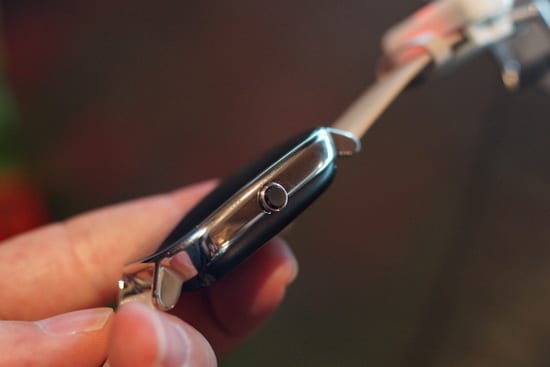
    Rather than going for a circular face, the company is continuing with a rectangular-shaped stainless steel watch case design with rounded edges, leather bands and metal buckles.

    A metal crown button is fitted on the right, similar to wristwatches and provides a way to access apps and turn the screen on or off.

    The watch display has a slightly curved surface which Asus claims improved usability and is protected against scratches with Corning’s Gorilla Glass 3.

    One marked change over its predecessor is the design of the watch clasp. The original model utilised a large metal clasp that joined both sides of the band together. The new ZenWatch opts for a more traditional buckle and is less conspicuous and looks more refined by comparison.

    One area which Asus didn’t iterate on however, is the internal hardware specifications. This smartwatch continues to rely on the same Qualcomm Snapdragon 400 processor, with 512MB of memory and 4GB  of storage.

    The display resolution on the ‘Sparrow’ model is also similar at 320 x 320 resolution, while the smaller ‘Wren’ model comes with a lower 280 x 280 resolution.  Asus is also utilising the same high-contrast AMOLED screen found in the original watch.

    In terms of battery life, the company claims the new watch is fitted with an enhanced battery (400mAh for Sparrow, 300mAh for Wren) which will provide up to two days of use on a single charge.

    It said it made some improvements to the charging mechanism, utilising a magnetic charger which takes slightly more than half an hour to charge the unit from zero to 50 percent capacity.

    Like most smartwatches today, the ZenWatch 2 comes with a number of different sensors to track your activities and how long you’ve stayed sedentary, but unfortunately it dropped the heart-rate sensor from this model.

    Tseng said few people used the heart-rate sensor found on the original ZenWatch, so it decided to focus on other areas, like being able to track a larger variety of activities, including push-ups and sit-ups, aside from the usual walking and running motions, as part of its updated ‘Wellness Manager’ software.

    Compatible with Android smartphones and iOS devices, this wearable also includes new apps like  ‘FaceDesigner’ (pic above)  which lets you create your own watch face from your smartphone, and ‘Business Helper’ which helps users keep track of their agendas, manage their emails and viewing call logs, without having to check their smartphone.

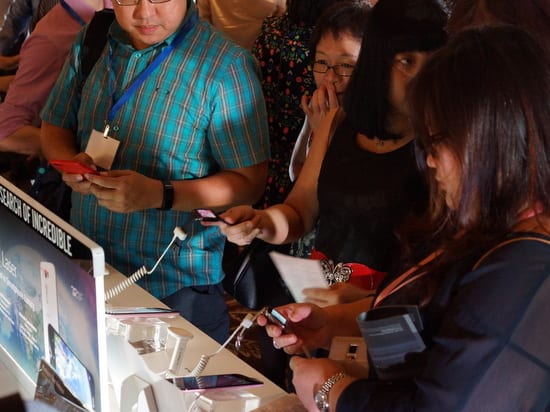
    Speaking with several of the trade partners and members of the media who were present at the launch, DNA found the reaction to be generally positive, especially when it came to the price of the watch.

    Some believed this would help to encourage users to try on the watch for size, and since the ZenWatch 2 is available in two sizes, it would hopefully meet the needs of the fashion conscious as well.


  • Emack & Bolio’s opens in Hong Kong

    Emack & Bolio’s opens in Hong Kong

    The Emack & Bolio’s Central ice cream parlour just opened in Hong Kong is described as “unlike any other” you’ll find in the city.

    Emack & Bolio’s, at 26 Cochrane St, serves up 31 flavours of ice cream, frozen yogurt and sorbets along with smoothies, confections and more.

    The brand has its origins in Boston, Massachusetts, where it was founded in 1975 by Robert Rook, a lawyer and self-declared hippie who worked closely with the homeless, Vietnam war protesters, civil and gay rights advocates, and numerous rock bands such as Aerosmith, U2, Boston, The Cars, and James Brown, according to Wikipedia.

    It’s sometimes likened to Ben & Jerry’s, another ‘hippie ice cream store’ concept, but was actually founded three years earlier.

    The first Hong Kong outlet follows the brand’s entry into Asia last year when it opened in Bangkok Thailand. There is also at least one store in the UAE.

    Emack & Bolio's Hong Kong

    Emack & Bolio’s invented the flavored cone in 1980 and has been improving on the concept ever since.

  • Japan interested in auto component factory in Indonesia

    Japan interested in auto component factory in Indonesia

    A company in Japans Okayama Prefecture is interested in the automotive component business in Indonesia, Okaya Prefecture Governor Ryuta Ibaragi said.

    During his visit to the Indonesian Capital Investment Coordinating Board (BKPM) here on Friday, Governor Ibaragi said the automotive component company, which has supplied components for Mitsubishi cars, was interested in developing an auto component factory in Indonesia.

    “There are 422 companies from Okoyama Prefecture that have made investments outside Japan. In Indonesia, we have a number of large companies which made investments,” he said, in a written statement made available in Jakarta on Saturday.

    Meanwhile, Okayama Prefecture’s governor said there is considerable interest among Japanese businessmen to conduct business in Indonesia. However, there are a number of concerns about the investment climate in Indonesia from investors from the Prefecture Okoyama, he said, including the problem of the country’s unpredictable wage system.

    Ibaragi said that during his visit in Indonesia he found Indonesians to be quite open to Japanese companies.

    “Regarding the MRT project, we thank the Indonesian government for its trust in a Japanese company. Of course, we will not ignore it and will maintain that trust,” he said.

    BKPM Chief Franky Sibarani said Japanese companies were given priorities regarding assistance from investment facilities.

    Japanese investment is the main component of the economic growth driver in Indonesia, he said.

    “We are ready to assist investment from Japan. The Marketing Office for the Japan area and the BKPM representative office in Tokyo could be used by investors and companies in Okoyama to plan business activities in Indonesia,” he said.

    He noted that his office was planning to conduct an investment promotion in Yokoyama early next year to win over interest by Japanese investors.

    “One of the major investors is Sumitomo. We will invite a number of companies which have made investments in Indonesia to share their successful experiences with their colleagues in Japan,” Sibarani said.

    In the first half of this year, Japan was ranked third in foreign investments, amounting to US$1.6 billion after Malaysia (US$2.6 billion) and Singapore (US$2.3 billion).

    Coming next were South Korea (US$0.8 billion) and the United States (US$0.6 billion).

  • Fine wines languishing in China warehouses as demand cools

    Fine wines languishing in China warehouses as demand cools

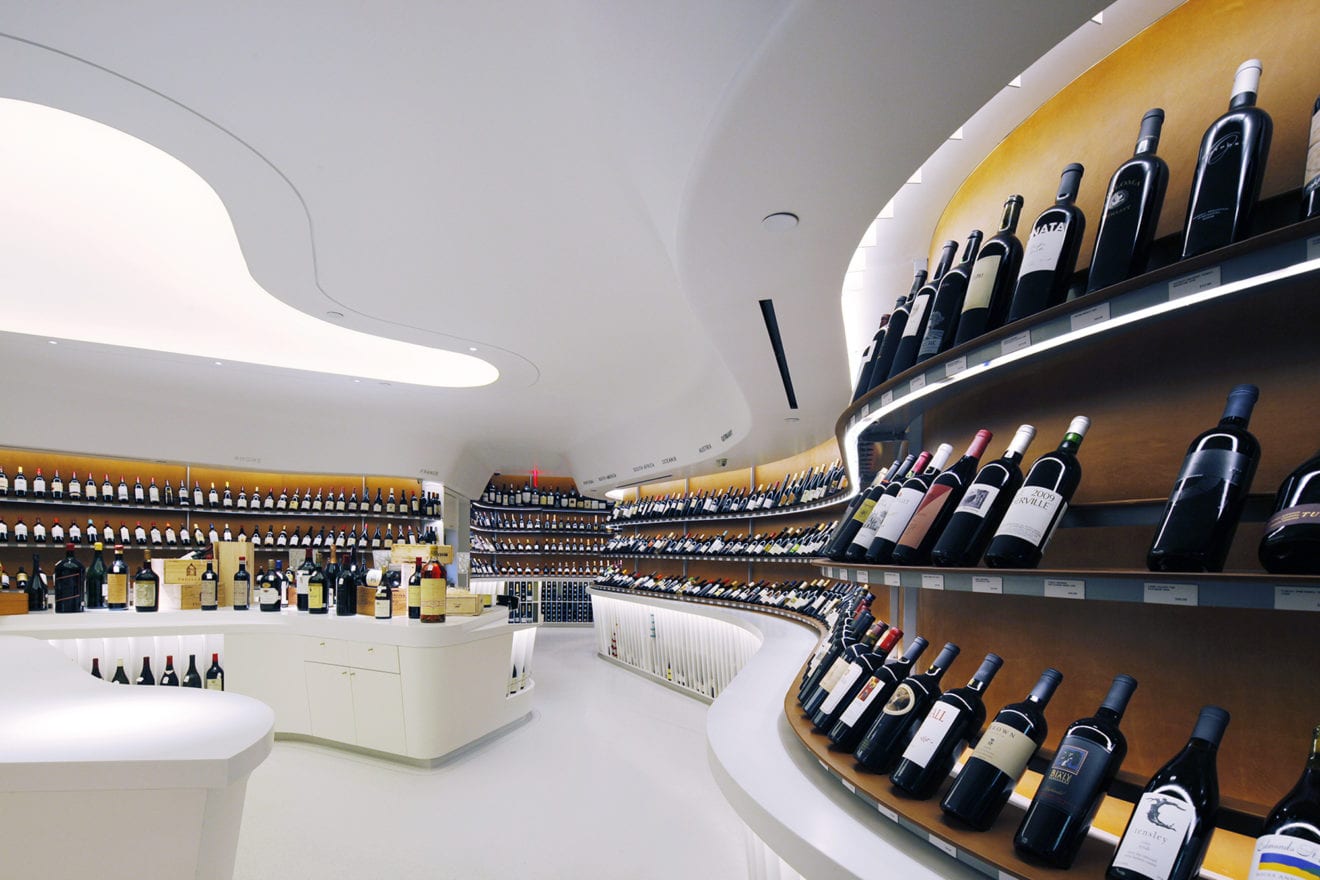
    Importers of fine wines are cutting the prices of their products by as much as three-quarters amid a drop in demand.

    The fire sales are prompted by a huge oversupply of wine that had built up after a swarm of importers jumped at seemingly stellar growth from 2010.

    China wine consumption, which had been rising in double digits, dropped last year and is set to inch up just over 1 percent annually until 2020, Reuters reported.

    The striking slowdown is a headache for a global wine industry pinning hopes on fast China growth, and a further sign that Chinese consumers are reining in spending even as Beijing hopes they will pick up the slack from falling exports.

    “When we started there was huge demand so we could control prices, big margins no problem,” said Xavier Grangier, sales director at logistics firm Europasia, which runs a  4,000 square meter Shanghai warehouse storing 250,000 bottles of mostly European wine.

    Now, his firm has had to lower some prices and been stuck with some wine it is unlikely to sell.

    “In Shanghai alone, 2,000 firms in the wine business just vanished over the last couple of years,” he added.

    China’s retail wine market is worth around 78 billion yuan (US$12.36 billion), with imports making up around a third, according to a 2015 report from wine data analytics firm IWSR.

    While official retail sales figures have been a rare bright spot amid a stream of economic data showing China’s economy faltering, private sector surveys have shown consumer sentiment plumbing record lows in recent months.

    A crackdown on corruption now in its third year has also discouraged conspicuous consumption, hitting not just wine but also sellers of other luxury goods from LVMH and Burberry to global auto makers.

    “In 2010 everyone was screaming from the rooftops that China was the El Dorado for wine and you could become a millionaire by jumping into the business,” said Pierrick Fayoux, Shanghai-based marketing manager at French wine importer VGF China Ltd.

    “Now wine is being sold below cost, some is going bad sitting for long periods in poorly maintained warehouses and decent Bordeaux wines are going for 15 yuan a bottle.”

    To be sure, China’s wine industry has long-term potential: the market is already the world’s fifth largest, but with only 38 million wine drinkers — mostly in big cities such as Shanghai, Beijing and Tianjin — among a population of 1.4 billion, annual consumption per capita is only 5.8 liters, a fraction of the 50 liters consumed in France.

    For now though, the inventory overhang and the downward pressure on prices is making it hard to turn a profit.

    Even China’s biggest wine importer, ASC Fine Wines, has trimmed prices and taken a hit to its margins, a person with direct knowledge of the firm’s operations told Reuters.

    ASC, owned by Japan’s Suntory Beverage & Food Ltd., said the wine market was in a new slower stage of growth and that consumers were increasingly “price-conscious”.

    “We are expanding our entry-level wine selections to meet the changes in consumer demand,” said ASC’s chief executive officer Bruno Baudry in emailed comments to Reuters.

    The squeeze on prices could be better news for more affordable New World wines, with countries such as Chile and South Africa already taking more market share with wines under 100 yuan.

    “There is still demand for imported wine, but not the same wines,” said Guillaume Deglise, chief executive of Vinexpo, which organizes wine fairs to help introduce producers to China buyers.

    “Before it was mostly the luxury end of the business — up-market wines from Bordeaux. Now it’s the entry-level market.”

  • Ford Philippines hits all-time high retail sales in September

    Ford Philippines hits all-time high retail sales in September

    In a statement, Ford said its retail sales in the country rose 53 percent to 3,065 units in September, driven by the continued demand for the all-new Everest, new Ranger, EcoSport and Fiesta.

    The all-new Everest led the lineup in September, achieving an all-time monthly record total for any Ford nameplate in the Philippines with retail sales of 1,341 units.

  • Mercedes-Benz Shakes Off ‘Dad’s Car’ Image in Indonesia

    Mercedes-Benz Shakes Off ‘Dad’s Car’ Image in Indonesia

    German automaker Mercedes-Benz is focusing on young Indonesians as part of its strategy to boost sales in the country, shaking off the “dad’s car” image along the way.

    “We’re opening up new segments that are characterized by younger buyers, people who may not have considered Mercedes-Benz previously,” Roelof Lamberts, Mercedes-Benz Indonesia’s sales and marketing director, said on Thursday.

    The company has rolled out six new models so far this year including the latest B-Class and CLA-class, catering to young entrepreneurs’ demand for more sporty and compact premium cars.

    “We are shifting generations,” said Ananta Wisesa, a Mercedes-Benz spokesman, “So, [Mercedes-Benz] will lose its dad’s car image.”

    Cars introduced this year, including the A-Class and GLA-Class, are sold for less than Rp 1 billion ($71,000), and “have seen very positive demand,” said Lamberts. The introduction of these models has helped the company buck the trend of a shrinking auto market in Indonesia amid slowing economic expansion.

    The German company sold 1,800 cars during the first seven months this year, a 20 percent increase from the 1,500 cars it sold in the same period last year.

    In contrast, total car sales in Indonesia shrunk 21 percent to 581,106 units during the period, according to the Indonesian Automotive Manufacturers Association, or Gaikindo.

    Mercedes-Benz now controls 49 percent of the premium car market, up from 38 percent in the same period last year.

    “Our strategy basically is in line with the overall Mercedes-Benz strategy, and that is to become number one in the premium segment,” Lamberts said. “In Indonesia, we’re number one. Our objective is to defend that position.”

  • Philippine banks lead in retail financial services

    Philippine banks lead in retail financial services

    Singapore-based publication The Asian Banker sees the Philippines leading the strong  growth in the retail financial services market in Asia Pacific on the back of increasing consumption and improved access.

    A study conducted by Asian Banker Research showed the income of commercial banks from retail financial services in Asia Pacific growing 77.5 percent to $824 billion by 2020 from the projected $464 billion this year.

    “Asia Pacific’s retail financial services market will be worth $824 billion by 2020. Increasing consumption and improved access to financial services in combination with mobile banking technologies, will be key catalysts in driving retail banking income between 2015 and 2020,” The Asian Banker said.

    Retail banking income was defined as business from retail deposits, mortgages, credit cards/unsecured lending, wealth management and, wherever possible, small and medium enterprises banking.

    “The ability to generate gross income in any given market is regarded as a key indicator of wallet share and a determinant of a bank’s bench strength in retail financial services,” said Mobasher Zein Kazmi, head of research at The Asian Banker.

    The study showed the Philippines is expected to book the highest compound annual growth rate and total income generated among emerging markets between 2015 and 2020 with 18 percent followed by Indonesia with a little over 15 percent, and Thailand with 15 percent.

    Malaysia is seen to post the slowest income growth with a growth rate of six percent for the five-year period.

    “Since 2014, the Philippines has outpaced China and Thailand and is becoming one of the key growth engines in the Asia Pacific,” The Asian Banker said.

    However, China would continue to generate higher earnings by 2020.

    “Currently, China’s retail financial services industry alone generates 48 percent to total regional income, followed by India with 12 percent and Australia with nine percent,” it added.

    The Asian Banker sees income from retail financial services of commercial banks in Asia posting a CAGR of 12 percent from 2015 to 2020.

    “There are, however, stark variances in growth rates between the mature markets of Korea, Hong Kong, Australia, Japan, Taiwan and Singapore and developing markets,” it said.

    On the other hand, income growth in mature markets is lower and expected to grow by an average of five percent this year and by the same amount in subsequent years until 2020.

    Developing markets have grown on average by 13 percent annually to 2015. However there have been dramatic changes since 2014.

    The fastest growing markets up to 2013 were Thailand and China after having grown by more than 20 percent annually.  Both markets, however, have been slowing down due to economic woes.

    The Asian Banker noted that retail banking income is shifting focus on high yield businesses but sees tightening of consumer banking regulations as a key threat.

    The greatest change in regulations is a shift away from a principle-based regulatory framework to a rule-based framework. As a result regulators have much more power to intervene.

    In particular, in emerging markets, financial authorities often want to control everything down to the product level, including loan pricing and fee income.

    Commercial banks have managed the impact of new regulations imposed on banks’ wealth management businesses in the aftermath of the global financial crisis, but a second wave of regulatory scrutiny, initiated in 2012, into interest rates and fee structures, compounded by recent macro-economic weaknesses, continues to pose ongoing threats to income expansion.

    “Regulators are increasingly worried about rising consumer debt so they have resorted to tightening unsecured lending, credit cards and home loans. In addition, consumer protection and optionality, which requires banks to seek a customer’s consent to opt in or out of services, are becoming key agenda items for financial regulators in this region,” Kazmi said.

    According to The Asian Banker, the most profitable banks in Asia include Bank of Mandiri in Indonesia, Union Bank of the Philippines, and Siam Commercial Bank in Thailand.

  • Online retailer Daraz raises $55 M

    Online retailer Daraz raises $55 M

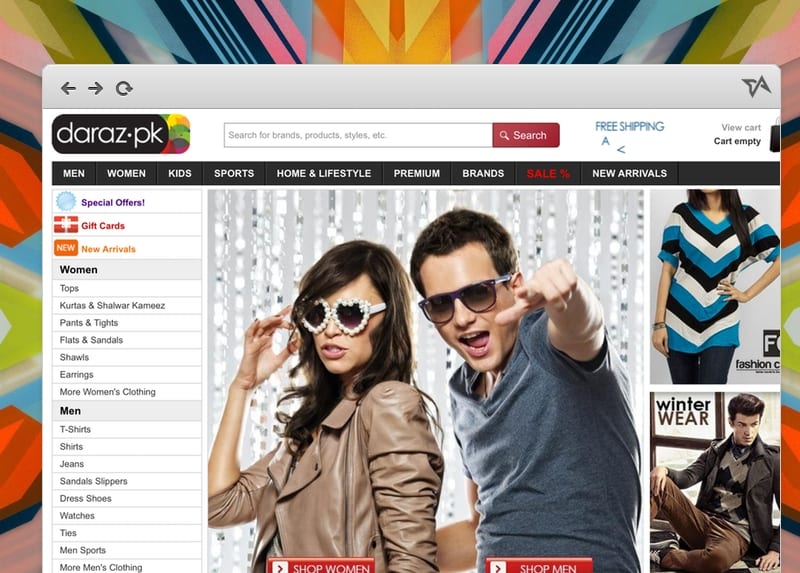
    Online retailer Daraz, which has presence in Pakistan Daraz.pk, Bangladesh Daraz.bd and Myanmar shop.com.mm, has secured EUR50 million ($55 million) in its first major financing round. 

    The investment comes from the CDC Group, the UK Government’s Development Finance Institution (DFI) focused on supporting and developing businesses in Africa and South Asia – as well as Daraz’s existing investor Asia-Pacific Internet Group (APACIG).

    Founded in Pakistan in 2012 as an online fashion business, it has since then has expanded its business model to a general marketplace for quality brands within electronics, home appliances, fashion and many other categories.

    The company said the funding will be used to continue to grow the business in existing markets and for expansion into other frontier markets in Asia.

    “Taking the e-commerce business model into these exciting markets is a fascinating journey. Although internet penetration is still relatively low, the market is developing fast and its potential is immense,” said Bjarke Mikkelsen, CEO of Daraz. “By making Daraz a success, we are not only building a great business but also creating jobs and infrastructure in the countries we operate in – that’s what makes it so exciting”.

    Daraz is part of APACIG, a joint venture between German internet platform Rocket Internet and Qatari telecommunications provider Ooredoo which began its operations in the region early in 2014.

    Today, it is one of the fastest growing internet platforms in the  region, currently 14 e-commerce companies in 15 countries.

    Hanno Stegmann, CEO of APACIG, said Daraz is one of the most promising companies in their portfolio.

    Last month, it  announced today an ambitious plan to launch one new startup company every three months, which it says is part of the strategy to build one of the largest Internet platforms in the APAC region.

    The first company to be launched as part of the  strategy will be online beauty marketplace Vaniday, starting in Australia. The marketplace offers curated selection of offers and can book treatments such as massages, hair appointments and manicures.

  • Philippines eyed as next largest market for e-commerce firm Lazada

    Philippines eyed as next largest market for e-commerce firm Lazada

    Lazada Group, an online commerce company founded by the world’s largest Internet incubator, is eyeing to keep a double-digit growth trend for its sales and customer-based in the Philippines, which is well-positioned to become the company’s largest market.

    Part of Rocket Internet, Lazada’s e-commerce websites are present in six countries including the Philippines, Indonesia, Malaysia, Thailand, Vietnam, and Singapore.

    Lazada Philippines Chief Executive Officer Inanc Balci said in an interview with Business Bulletin that the group is eyeing to make the Philippines its largest market out of the six countries it is present in.

    “I want to make it [the Philippines] the first,” Balci said.As of now, Balci said Lazada Group’s largest market is Indonesia, while the Philippines only stand at second.

    “The e-commerce is growing in the Philippines. We have the 80 percent market share in the general retail e-commerce in the Philippines. [Here] we intend to be the market leader. I would like to grow faster. Sales is growing,” he added.

    In September alone, Balci said the company had recorded 37.7 million visits, significant number of which had actually booked their orders. “This significantly increased over the years,” he further said.

    Next month, Lazada Philippines will launch its three-year-old annual online shopping event that highlights big discounts on 200 major brands, which includes Canon, Nikon, Nescafe, Epson, Microsoft, Asus, Acer, Lenova, Milo, Pampers, Chuckie, Nestle, Unilever, among others.

    As of now, 1 million brands are being sold through Lazada and this should increase before the end of the year.

    “From 100,000 in 2012, we now have 1 million brands. That’s going to increase by several times moving forward. We proactively approach the brands,” he further said.

    From November 11 until December 12, online shoppers can avail of as much as 95-percent discount from their favorite brands in Lazada through Online Revolution.

    With its increased share in mobile app users, it is expected that this year will definitely break last year’s record in terms of online traffic for Lazada in the Philippines.

  • WS Retail’s 10K crore sales offer peek into Flipkart’s performance

    WS Retail’s 10K crore sales offer peek into Flipkart’s performance

    WS Retail, the largest seller on India’s biggest online marketplace Flipkart, nearly tripled its turnover to Rs 10,163 crore in FY15 — more than the combined sales of top brickand-mortal retailers such as Shoppers Stop, Future Lifestyle, Tata’s Trent and Aditya Birla Group’s Pantaloons.

    Experts feel WS Retail’s numbers, which were submitted by the company to the ministry of corporate affairs earlier this week, offer a peek into Flipkart’s likely performance for the year to end-March 2015, given its dominant position on the e-tailer’s platform.

    Cutting dependence on WS retail

    Flipkart’s own annual revenue numbers are not known. “WS Retail numbers should be good barometer to the performance of Flipkart considering it gets a bulk of its sales from this seller,” said Ruchi Sally, director at retail consultancy Elargir.

    The six-year-old company, originally founded by Flipkart’s founders Sachin Bansal and Binny Bansal, sells nearly 80% of its merchandise to Flipkart. Three years ago, the Bansals sold their stake to former OnMobile Global chief operating officer Rajeev Kuchhal and a clutch of investors.

    WS Retail reported a net profit of Rs 67 lakh on sales of Rs 3,135 crore for fiscal year 2014, which was higher than Flipkart India’s revenue of Rs 2,846 crore for the same period, the numbers showed. Another company, Flipkart Internet, which earns commission and advertising revenues from sellers, posted total sales of Rs 179 crore last year. Both WS Retail and Flipkart didn’t respond to email queries sent by ET.

    Flipkart’s head of commerce Mukesh Bansal told ET last month that Flipkart was on course to sell goods worth $10 billion (Rs 65,000 crore) during fiscal 2016. The company has in the past said it had achieved $4 billion worth of gross merchandise value or GMV, which is industry jargon for sales, last year.

    For years, WS Retail was the mainstay seller on Flipkart, the one encountered most by customers shopping on its platform. However, in the last year and a half, Flipkart has sought to diminish its prominence as part of its shift away from an inventoryled model to a marketplace one, even though WS Retail remains its top seller even now. Indian laws also prevent foreign-owned internet retailers — Flipkart is registered in Singapore and a majority of its ownership is held by overseas entities — from only operating inventory-based models.

    While Flipkart has 60,000 sellers on the platform already, it is planning to double the count by March next year in an effort to convert itself into a pure marketplace much like the one its rival Snapdeal operates.

    “Flipkart has been reducing its dependence on WS Retail in its effort to simplify its business structure. It is expected that such a step and simultaneous addition of new vendors on its website directly shall automatically reduce the trading volume of WS Retail over time,” said Rakesh Nangia, founder and managing partner at tax and transaction advisory firm Nangia & Co.

    In fact, Flipkart informed several companies and brands, which sell on the site through WS Retail, to sell directly to consumers through its marketplace few months ago. However, WS Retail will continue to be the seller for Flipkart exclusives such as the Motorola and Xiaomi handsets.

    Snapdeal already has 2 lakh sellers listed on its marketplace while Amazon India has nearly a lakh sellers, although in its case, Clouttail, its joint venture with NR Narayana Murthy’s Catamaran Ventures, is its biggest vendor.

    A month ago, Flipkart bought back the logistics business of WS Retail, which has also seen exits of two shareholders — Meenu Gupta and Sujeet Kumar — who together held a 25.3% stake.

    According to WS Retail’s annual filings for fiscal year 2015, Rajeev Kuchhal owned 49.7% stake, while one of Flipkart’s early employees, Tapas Rudrapatna, controlled another 24.8%. In fact, Rudrapatna was given Rs 24 crore as a one-time bonus for ‘increasing sales beyond targets,’ said the filing.The latest shareholding pattern after these exits and logistics business sell-off hasn’t been filed yet.

  • Abolition of China’s one-child policy may boost dairy demand

    Abolition of China’s one-child policy may boost dairy demand

    Chinese like Shao, who were born in the 1980s and 1990s, when the one-child policy was most strictly enforced, say they were lonely growing up without siblings.

    The one-child policy was gradually eased in recent years as China experienced economic growth and as the country had to deal with its aging population. Historically and economically speaking, the argument was spot on. “They need to eliminate it entirely”, Mr Chen, who now lives is the U.S., said of the government.

    A skewed gender balance and a rapidly ageing workforce are among the worst symptoms of state-ordered birth control. However, things have been hitting a low point after China’s ageing population has grown to a cause for concern.

    The statement also emphasized that the nation will still uphold family planning policy, improve its population strategy and seek a balanced development of population.

    While once there may have been pent up demand for more children, experts say that as the country has grown wealthier, couples have increasingly delayed having even one child as they devote more time to other goals, such as building their careers.

    About 90 million couples will qualify to have a second child after the policy is enacted, Wang said, adding that around 60% of the qualified women were 35 years old or older.

    Couples in China will be allowed to have two children after decades of a strict one-child policy, announced the ruling Communist Party on Thursday.

    Though there were exceptions to the policy, most couples who violated it faced punishment, from fines and the loss of employment to forced abortions.

    Looking elsewhere in Asia, though, the Chinese government may find that it is much easier to “encourage” people to have fewer children than to have more.

    Critics said the relaxation of rules was too little, too late to redress substantial negative effects of the one-child policy on the economy and society.

    China’s dramatic drop in fertility in the ’70s and ’80s created a demographic time bomb that will leave the country with a smaller work force and more older citizens to care for in the coming decades.

    Reggie Littlejohn, Chairman of “Women’s Rights Without Borders” told VOA she believes the two-child policy does not stop population control.

    More mouths to feed: that means less for families to spend on consumer goods.

    In addition, China – favoring male children – has a shortage of girls and women.

    The policy will not officially change until the Chinese legislature approves it, but many Chinese couples are already excited to grow their families.

    “It might serve to address the current imbalance in the sense that if they do not boost the growth rate, then very soon, within 20 years or less, the working population will be supporting four aged parents”.

    The Credit Suisse report said that with the annual cost of raising a child estimated at 40,000 yuan (£4,100), the extra births would translate into an extra 120bn-240bn yuan in consumer spending a year, or 4-6% of China’s total retail sales.

  • DHL Express boosts Philippine presence with new Las Piñas service center

    DHL Express boosts Philippine presence with new Las Piñas service center

    DHL Express Philippines inaugurated yesterday its P80 million South Service Center in Las Piñas to complement the logistics company’s goal of widening its presence in the country.

    The facility is also expected  to cater to the growing logistics demand of businesses in Parañaque, Pasay, Cavite and nearby provinces in South Luzon.

    During the inauguration of the new facility, DHL Express country manager Nurhayati Abdullah said the company’s investment underscores their long term view on the local market.

    “DHL takes a long term view in the Phillippine market as it holds great potential for growth and trade with gross domestic product forecasted to grow at an average annual rate of 5.9 percent in 2015-2019,” Abdullah said.

    The new facility in Las Piñas marks the continued commitment of DHL Express to invest in the country following the successful opening of Clark Service Center in Northern Luzon in February. The company had invested P30 million in its facility in Clark.

    Abdullah said the proximity of the South Service Center would benefit  customers located in free trade zones in South Luzon, such as those in Gateway Business Park in Gen.  Trias, Cavite; Philippine Export Zone Authority in Rosario, Cavite; and First Cavite Industrial Estate in Dasmariñas, Cavite.

    Las Piñas is a gateway to Manila for many industries such as electronics, semiconductors and manufacturing.

    “The South Service Center will play a critical role by supporting growth of our customers across South Luzon. Our investment in Las Piñas reaffirms our commitment to upgrade our services to meet the changing demand of our customers,’’ Abdullah said.

    In particular, growth in demand for express services from the  semiconductors, technology and the life sciences industries as well as small and medium enterprises is expected to continue in the following years.

    “We do see growth in those areas…so we’re quite confident it will spur  the continued growth (in revenues and volume) in the following years,” Abdullah said.

    The Philippines is among the company’s top four countries in terms of revenues in  Southeast Asian and South Asian region.

    For next year, Abdullah said the company is looking to expand its retail footprint in Cebu and Quezon City by opening more service points where walk-in customers can drop off shipments.

    Occupying a land area of 3,000 square meters, the South Service Center will hold new vehicles and state-of-the-art material handling  equipment, IP cameras and 30 CCTV cameras capable of tracking shipments throughout the entire process within the service center.

    Currenty, DHL Express has eight service center facilities and more than 200 retail outlets in the country.

    DHL operates in more than 220 countries and territories worldwide.

  • Internet malwares threaten Philippines industries

    Internet malwares threaten Philippines industries

    All over the world, the threat of a digital infrastructure crashing is as valid as an earthquake decimating a 50-story building or a series of typhoons striking without any preamble, ruining everything on their path.

    For anybody who is connected to the Internet, the threat is real and the Philippines is not exempted from it, says Trend Micro Philippines director for marketing communications Myla Pilao.

    “Security is almost a buzz word. Five years ago, the issue on security doesn’t land in any of the news. The old mindset of security is that if there is no malware or infection, there is nothing to worry about. Today, I don’t think it’s true anymore. We are so much living a digital lifestyle in a digital world that being connected is native to us already,” she says.

    “Anything connected to Internet, we have to assume it is or it can be compromised. If it is connected to the Internet, then it is a target. The freedom of data coming in or out is presenting trouble when it comes to hard data,” she says.

    Trend Micro is a global leader in IT security, cloud security and small business content security. It develops innovative security solutions that make the world safe for businesses and consumers to exchange digital information.

    Pilao, who also heads Trend Micro’s TrendLabs technical marketing team, monitors the development of global materials and supporting communication plans that aim to broaden the public’s understanding on threats and security.

    “What threats do we see in the Philippines? We are seeing theft in the retail industry when do e-commerce. There are a lot of malwares online that are being introduced. Second is online banking. The Philippines ranks fourth in the Asia Pacific in terms of increased security threats via online banking,” says Pilao.

    “Because Philippine facility is readily available so access to online banking is simple. Third is the sending habits of Filipinos of going online, with the huge volume of merchandise that will enter the Philippines this holiday season. This is a very encouraging season for cyber criminals to strike against payments,” she says.

    The Philippines used to figure at the top ten list of countries that are highly susceptible to ransomware, a program used to extract and ransom data.

    But in 2014, the Philippines improved its ranking as it moved down the list to top 20.

    “Ransomeware infects corporate and company systems since 2004. There has been an increase of its activity not just in the Philippines but around world. It goes through our emails , compromises our systems and the malware open gates that compromise websites,” she says.

    “There were instances when crypto-ransomware breaks into the enterprise using legitimate source of transaction and then ask you to pay. It kidnaps data bank screen and data breach happens mostly to financial institutions,  government systems and telecommunications companies. Even now on healthcare and hospital and insurance processes,” says Pilao.

    In the Philippines, the insurance sector is the single institution that most malwares and malicious software target.

    “With just 1 percent infection by a ransomware, we are still under attack. The biggest misconception is that consumers are not connected to Internet but majority of attacks must have emanated from the operations of small and medium enterprises,” says Pilao.

    A related recent study by Trend Micro discovered that 25 percent of data breaches are caused by hacking or malware and the most affected industry is the healthcare sector, accounting for more than a fourth of all breaches at 26.9 percent this past decade

    Second was the education sector at 16.8 percent followed by government agencies at 15.9 percent, then the retail industry with 12.5 percent.

    The stake is higher for bigger multinational companies as cybercriminals increase the cost of their attack based on the capabilities of the organization. Security comes with harsher legal implications not just for the violators but for the users to reinforce a proactive approach.

    As the Internet of Things advances, smart devices or innovations that are used for public-facing technologies can be exploited, potentially causing virtual and physical destruction. Public transportation such as car and planes, and public utilities such as gas stations can become targets.

    The study, conducted in the US, revealed that smart systems in cars can be accessed remotely to interfere with its functionality including life-critical ones like the brake. It was reported that Jeep Cherokee, through the car’s public IP address, can be hacked and controlled by another person miles away. BBC reported that even data sent by digital audio radio signals can intervene with a car’s functionalities.

    In a Trend Micro’s research that involved SmartGate System which allows drivers to access their car’s data such as speed and fuel using their smartphone that was first introduced by Škoda Auto in its Fabia III cars, it was determined that any attacker can read more than 20 parameters and even lock out the owner of the car from the SmartGate system.

    All the attacker needs to do is to stay within the SmartGate’s in-car Wi-Fi range (which is wide by default), identify the car’s Wi-Fi network, and then break the password. The Wi-Fi range could be even wider if the attacker is using a superior antenna.

    Strategic partnerships prove to be vital in formulating immediate and long-term resolutions to combat cybercrimes. Trend Micro aided law enforcement agencies in taking down two notorious botnets that were heavily involved in full-scale cybercriminal operations—SIMDA.

    Trend Micro worked closely with Interpol and provided information such as the IP addresses of the affiliated servers and statistical information about the malware used, which led to the disruption of the botnet activities.

    Moving forward, organizations can stay protected on their own terms. Aside from being proactive, extra-cautious, and running information and education campaigns inside their organization, businesses can leverage on modern-day security solutions.

    Trend Micro Deep Discovery, a threat protection platform, can help organizations respond to today’s targeted attacks in real time, says Pilao.

    It provides advanced threat protection where it matters most. Deep Discovery is made up of four key solutions that will help detect, analyze, adapt, and respond to attacks.

    “Even mobile applications are vulnerable to attacks. There are reports of highly malicious applications that prey on mobile users. The magnitude of attacks globally is pretty much alarming. We are seeing that most of the attacks in the last six months are pretty much more real to us because they are affecting public utility, public infrastructures, public services that you and I are obviously consumers. The snippets of attack on critical infrastructures like power grid, are not massive but nonetheless alarming. We need to be protected and on guard always,” Pilao says.

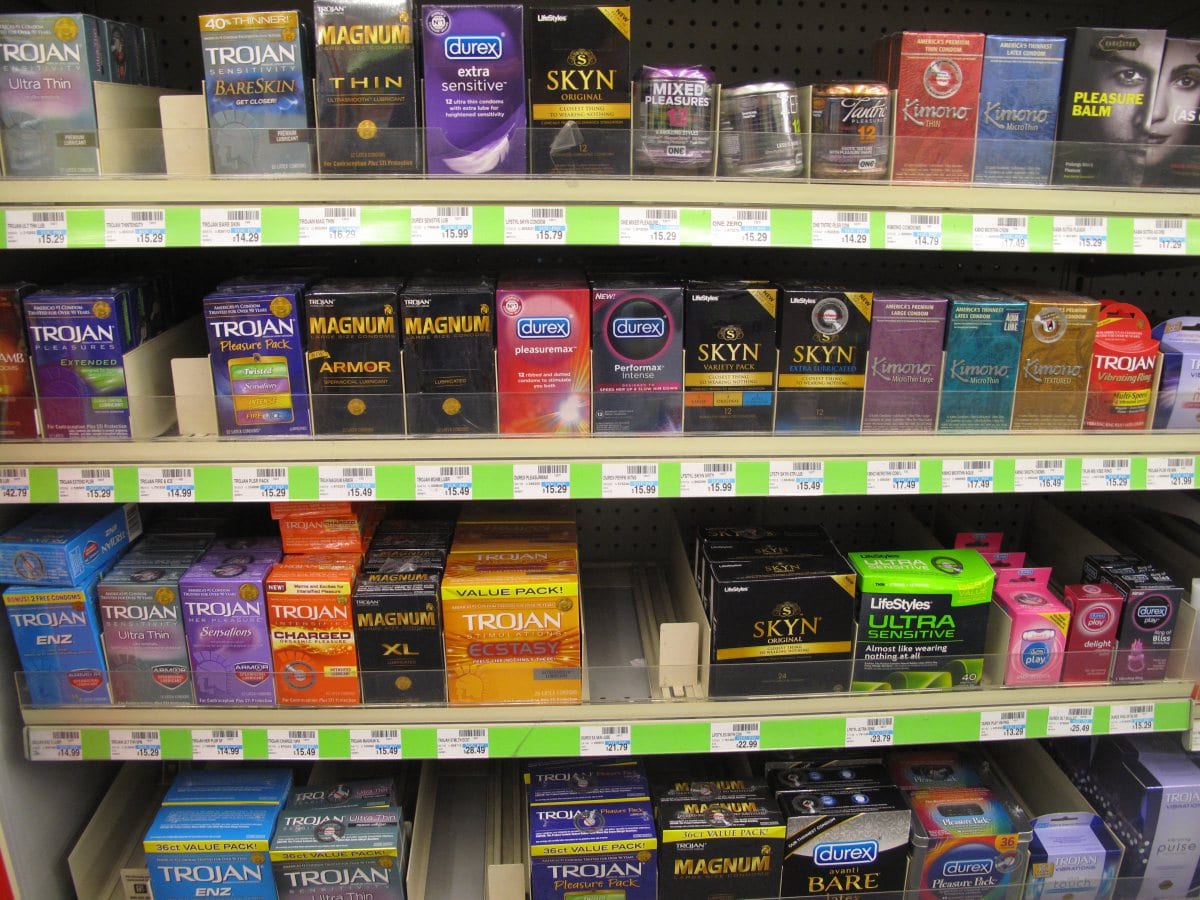
  • Condom sales slump as China announces end to one child policy

    Condom sales slump as China announces end to one child policy

    Shares of companies that make nappies, prams and infant formula got a boost on Friday from China’s decision to scrap its one-child policy. But for the maker of a popular brand of condoms, it was not the brightest of days.

    Investors are betting on a bump in sales for companies with baby or child-related businesses after China’s ruling Communist Party announced that all married couples would be allowed to have two children. The economic repercussions travelled as far afield as New Zealand, where the currency of the dairy-exporting country surged.

    Analysts at investment bank Credit Suisse estimated that the relaxed controls would result in an extra 3-6 million babies born annually in the five-year period starting in 2017. China, the world’s most populous country with nearly 1.4 billion people, has about 16.5 million births each year.

    The one-child policy began in 1979 to curb a surging population at a time when extreme poverty was widespread in China.

    The Credit Suisse report said that with the annual cost of raising a child estimated at 40,000 yuan ($6,330), the extra births would translate into an extra 120-240 billion yuan ($19-38 billion) in consumer spending a year, or 4-6 per cent of China’s total retail sales.

    A nurse takes care of newborn infants at a hospital in Huai'an, Jiangsu provinceA nurse takes care of newborn infants at a hospital in Huai’an, Jiangsu province  Photo: Patty Chen/Reuters

    One of the biggest winners in the financial markets was China Child Care Corp., which makes hair and skin care products for kids. Its shares ended 40 per cent higher on Hong Kong’s stock exchange.

    On the losing side, Japanese condom maker Okamoto Industries Inc., a favorite of Chinese visitors to Japan, slumped 10 per cent in Tokyo.

    Formula makers in Hong Kong and mainland China rose strongly, led by Beingmate Baby & Child Food Co., which jumped 10 per cent on China’s smaller Shenzhen stock exchange.

    Japanese and other foreign brands are popular with Chinese buyers because they’re seen as being authentic and better quality. Those characteristics are prized in China following food and other product safety scandals involving domestic brands.

    A Chinese man feeds his baby in central Beijing

    Some cautioned the increase in births may not be as big as predicted because of the expense of raising a second child and other factors.

    “The rush for baby-related stocks may not necessarily bear fruit,” said IG analyst Bernard Aw in a report.

    In New Zealand, the local dollar jumped as high as $0.6772, gaining nearly 1 percent from $0.6699 the day before. The country is a major dairy exporter and its milk powder and formula industry would likely benefit from a baby boomlet in China.

    Some baby stocks started rising Thursday ahead of the official announcement on Chinese state media.

    Goodbaby International, which makes strollers, car seats and cribs, rocketed 7.4 percent on Thursday and followed that up with a 2.3 per cent gain on Friday. Rumours had already been swirling in China that the policy would be adjusted at a meeting on China’s next five year plan that was held this week.