Tag: asia

  • Gelatissimo debuts new gelato pint range in Coles

    Gelatissimo debuts new gelato pint range in Coles

    The frozen food aisle at one major supermarket has just gotten a brand new addition with a popular dessert making its grocery shop debut.

    Ice cream chain Gelatissimo has launched tubs of ice cream that can be picked up at your local Coles supermarket, making some of the brand’s favorite flavors available outside of its own stores for the first time.

    The five flavours will be available from September 28, with a price discount for the first two weeks on shelves.

    The flavours include Caramel Cookie Butter, Cheesecake Swirl, Decadent Chocolate, Peanut Butter Brownie and Italian Hazelnut.

    “We developed this range with our loyal family of customers in mind,” Gelatissimo’s head of product innovation Filiz Kaya said.

    “We looked at our most popular flavours as well as ones that have stood the test of time, then also considered current trends both here and around the world to create this range.”

    The products will be available at Coles.

    Gelatissimo has 42 stores in Australia as well as 26 others around the world.

    It comes as the gelato business celebrates it’s 20th anniversary, with plans for several new stores in Australia by the end of the year.

  • Google reiterates cool new features coming to Google Maps

    Google reiterates cool new features coming to Google Maps

    Google is teasing new features that are coming to Google Maps including Immersive View. Using a combination of Artificial Intelligence, Street View, and aerial images, this feature is designed to take you into an area that you’re planning to visit (using your phone’s screen), add the current weather and traffic, and even allow you to virtually enter a store or a restaurant. With Immersive View, you can get used to the restaurant you have reservations for and even know what to expect in terms of the size of the crowd.
    As an example, Google shows how Immersive View can show you what it will be like to view a ball game at Oracle Park. You’ll see in advance where the parking lots and exits are, see what the weather will be on the day of your visit (so you can dress accordingly) and allow you to take a virtual walk around the restaurants near the ballpark so you’ll know where to go to eat before or after the game.
    Immersive View will be available on Google Maps (on iOS and Android) over the next few months in Los Angeles, New York, San Francisco and Tokyo. It will also be available in more cities in the future. Earlier this year we wrote this about Immersive View: “If you want to know what the atmosphere is like inside a restaurant, with Immersive View, you’ll be able to swoop down to street level and get a peek of the inside of the eatery.”
    With Neighborhood Vibe, Google Maps can tell you what makes a particular neighborhood special. Is it an area for foodies? Is it an area with an “artsy vibe?” You can find out by exploring photographs of a particular neighborhood to see what it looks like.
    And using Search with Live View, Google bring Augmented Reality (AR) to your phone. You might be familiar with Live View which allows you to see arrows and directions on your screen layered over a live feed from your phone’s camera. Live View is used to navigate walks in certain cities using Google Maps. Search with Live View will allows you to search and find certain things in your area such as ATM machines.
    Chris Phillips, the VP and GM of Geo at Google told reporters, “You can also see coffee shops, grocery stores and transit stations. You really get a sense of what an area is like at a glance. You can even see the business hours of a place that’s down the street. It’s an amazing way to bring it all together at once, it really simplifies the experience and gives you confidence when you’re trying to see what’s around you in that moment.”
    Over the coming months, Search with Live View will be available in London, New York, Paris, San Francisco and Tokyo for both iOS and Android users. Google, which revealed many of these new features during its I/O developers conference in May, mentioned them again during its Search On 22 event held on Wednesday. Google also released a video of the event for those who might have missed it.
    Google is also allowing developers to include Google Maps eco-friendly navigation with their apps. This will allow food delivery or ride share drivers using Google Maps to help them navigate, take routes that are more fuel efficient. Developers will be able to allow users to select the kind of engine being used to make this feature even more fuel-efficient. This will be available later this year in areas where Google already offers eco-friendly routing such as in the United States, Canada and parts of Western Europe.
    These features will be coming to Google Maps during the coming months. The company says that they are part of its efforts to build a “visual-first” Maps experience so that users can more naturally navigate the world.
  • Gold prices dip further after two-month low

    Gold prices dip further after two-month low

    Vietnam gold prices continued to fall Wednesday after hitting a two-month low as the precious metal faces pressure from the surging U.S. dollar.

    Saigon Jewelry Company (SJC) sold its gold at VND64.5 million ($2,716) per tael in the morning, down 1.68% from Tuesday. VND million per tael (VND1 million = $42.11)SJC gold price

    Other companies also let prices slide down by roughly the same rate. Global gold price has gone down 0.31% this week to $1,625 per ounce as the USD Index has gone up nearly 0.4% in a single day.

    Also global gold price improved slightly Tuesday, “it was just a little bit of a recovery after some of the extreme weakness seen over recent days,” said Ryan McKay, commodity strategist at TD Securities.

    He said that the rebound did not show really fundamental change taking place in the gold market.

  • Starbucks opens its 6,000th China store

    Starbucks opens its 6,000th China store

    Starbucks Tuesday celebrated its 6,000th store in the Chinese mainland, located in downtown Shanghai. Shanghai thus became the first city in the world to have 1,000 Starbucks stores, Starbucks China said.

    In 2018, Starbucks announced it would have 6,000 stores on the Chinese mainland by the end of its fiscal year in September 2022. The company achieved that as scheduled despite challenges, including the COVID-19 pandemic.

    Starbucks opened its first store on the Chinese mainland in January 1999 in Beijing.

    The number of Starbucks stores on the Chinese mainland has grown dramatically over the past decade and is expected to grow to 9,000 by 2025, creating 35,000 new jobs, according to the company’s strategic plan released recently. Starbucks China also revealed a plan to set up its first digital technology innovation center on the Chinese mainland over the coming three years.

    A Starbucks coffee creative park in Kunshan, east China’s Jiangsu Province, is expected to be completed and start operating in the summer of 2023.

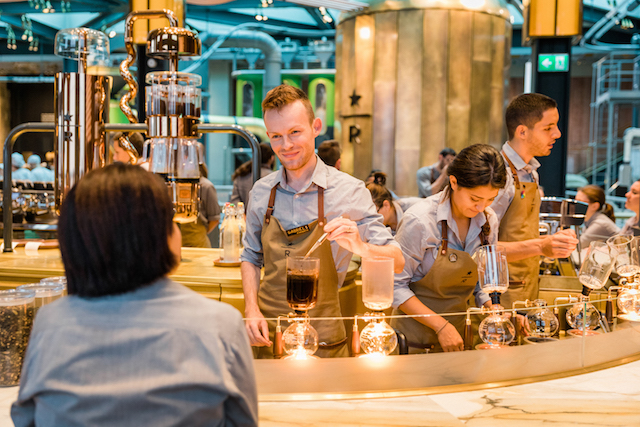
    Starbucks Tuesday celebrated its 6,000th store in the Chinese mainland, located in downtown Shanghai.

    Staff members work at a Starbucks store in downtown Shanghai, east China, Sept. 27, 2022. Starbucks Tuesday celebrated its 6,000th store in the Chinese mainland, located in downtown Shanghai.

    Shanghai thus became the first city in the world to have 1,000 Starbucks stores, Starbucks China said.

  • Chinese snap up used Rolexes, Birkins amid slowdown

    Chinese snap up used Rolexes, Birkins amid slowdown

    China’s coronavirus-driven economic slowdown is proving to be a boon for Mr Zhu Tainiqi, the Shanghai-based founder of second-hand luxury goods marketplace ZZER, who is now scouting for shop space to expand the business.The former venture capitalist is seeing a surge in people looking to sell their Hermes Birkin bags or Rolex watches to raise cash, as well as a jump in interest from belt-tightening shoppers.

    “More and more people are now aware they can sell luxury goods for some money and the buyer side is noticing that they can get a great deal,” said Mr Zhu, 33. “They think, ‘Why not give it a shot?’”

    He said the number of ZZER’s consigners, or people putting up their goods for sale, has soared 40 per cent so far in 2022 over the same period of 2021. The platform now has 12 million members and expects to sell 5 million luxury pieces this year.

    The trend indicates a significant change in China’s US$74 billion (S$107 billion) luxury goods sector, where the second-hand luxury sub-segment has been slow to take off versus other markets such as Japan and the United States due to a preference for newness and fears of unsuspectingly buying a fake.

    It could have ramifications for the China-focused strategies of the world’s big luxury goods makers, who are grappling with softening demand in the key market.

    “I think because of China’s interest…that can really move the needle for some brands to think about how they’re going to handle this (resale) market, and what role they are going to play in the whole process,” said Ms Iris Chan, a partner and head of client development at consultancy Digital Luxury Group.

    China’s second-hand luxury market is tipped to grow to US$30 billion in 2025 from US$8 billion in 2020, consultancy iResearch said late last year. New estimates from this year are yet to be released.

    Office worker Wang Jianing is exploring buying second-hand luxury products, given the economic climate.

    “My consumption will definitely be downgraded (this year), but I still like what I like, and I can’t control the desire to buy it,” she told Reuters, standing in front of a wall displaying Louis Vuitton and Gucci bags in ZZER’s cavernous downtown Shanghai warehouse.

    The company, which started as an online platform in 2016, began opening offline stores in Shanghai and Chengdu last year and is now looking for more shop space in Beijing, Guangzhou and Shenzhen.

    Besides ZZER, other top platforms are local names, such as Feiyu, Ponhu and Plum. Each of them drew tens of millions of dollars in venture capital funds in 2020 and 2021 with an eye to improving authentication practices, widening customer reach and, in some cases, moving from online-only to online-offline models.

    China’s luxury resale marketplace is expected by analysts to remain dominated by local players for now. International companies such as Vestiaire Collective and The RealReal are yet to enter the mainland China market and confirmed to Reuters they have no immediate plans to do so.

    Though handbags remain the top-selling category on luxury platforms such as ZZER, Mr Zhu said sales of watches and jewellery are also growing fast.

    While a nylon Prada Messenger or Fendi Baguette bag sells for 30-40 per cent less on resale platforms than in luxury boutiques, some products have seen the price gap widen further as more consigners rush to sell goods online.

    Veteran vintage seller Ou Huimin, who opened her Ding Dang store in Guangzhou a decade ago and also sells country-wide via livestreams, said speculators in the market have sent prices for top-tier luxury goods soaring.

    Ms Ou said Rolex Submariner watch prices rose almost 250 per cent between 2020 and 2021, but have pulled back as much as 60 per cent this year.

    “Now consumption has become more rational,” she added.

  • Apple moved iPhone 14 production out of China in mere weeks

    Apple moved iPhone 14 production out of China in mere weeks

    Apple is trying to diversify its supply chain away from China on rolling pandemic lockdowns there, as well as geopolitical headwinds between US and China, on one hand, or China and Taiwan, on the other, as that’s where the headquarters of its main assembler Foxconn is located.

    Foxconn, however, has also built operations in India, in factories near Chennai, and Apple’s iPhone 14 production diversification effort there went so well, that it was able to start shipping phones made in India mere weeks after the Chinese output instead of the two months expected initially.

    According to Jeff Pu, an analyst with Haitong International Securities, “India is now an attractive location for manufacturing as it offers better labor cost structure while Apple is looking to reduce geopolitical risks,” while Aruna Sundararajan, a former government secretary there, adds that “all major companies are now looking at India as part of their ‘China-plus one’ or ‘China-plus two’ strategy.”

    When asked for a comment on the successful transition of part of the iPhone 14 production schedule from China to India, Apple simply commented that it is “excited to be manufacturing iPhone 14 in India,” somewhat confirming that the conveyor belt launch has been smooth and earlier than anticipated.

    Apple started its production plans in India slow, with lowly entry-level iPhones like the SE, assembled by Winstron, then moved up the ladder to handsets like the iPhone 13 in the newfangled Foxconn factories.
    It typically doesn’t start manufacturing there on the same year the iPhone models are released, but 2022 is apparently different as it is in a hurry to diversify production away from China.
    Coordinating hundreds of component and critical material suppliers, delivering assembly equipment, and training a competent workforce must have been a Herculean task. Tim Cook’s supply chain management knowledge and Foxconn’s production prowess must have coalesced to shine with an iPhone 14 Indian production mere weeks after Foxconn started assembling the new series in China.
  • Gold prices dip further after two-month low

    Gold prices dip further after two-month low

    Vietnam gold prices continued to fall Wednesday after hitting a two-month low as the precious metal faces pressure from the surging U.S. dollar.

    Saigon Jewelry Company (SJC) sold its gold at VND64.5 million ($2,716) per tael in the morning, down 1.68% from Tuesday.

    Other companies also let prices slide down by roughly the same rate.

    Global gold price has gone down 0.31% this week to $1,625 per ounce as the USD Index has gone up nearly 0.4% in a single day.

    Also global gold price improved Tuesday slightly, “it was just a little bit of a recovery after some of the extreme weakness seen over recent days,” said Ryan McKay, commodity strategist at TD Securities.

    He said that the rebound did not show really fundamental change taking place in the gold market.

  • Rubber industry faces uncertain profit prospect

    Rubber industry faces uncertain profit prospect

    Rubber companies in Vietnam are facing a cloudy profit prospect for the remaining months as global demand falls and input costs surge.

    Vietnam Rubber Group expects profit to flatten at VND5.34 trillion ($225.13 million) this year and revenue to rise a mere 5%, as prices have been falling due to low consumption while input costs have been rising.

    Phuoc Hoa Rubber saw its second-quarter profit dropping by a third to VND54.80 billion and revenue plunging nearly 50% to VND231 billion, while Da Nang Rubber Company saw profit falling nearly 22% to VND83.88 billion.

    Both said that rising input costs and decreasing sales were the main reason for the profit drop.

    Global rubber prices have fallen by a third year-on-year to around $1,750 per ton due to geopolitical tensions, the shortage of containers, rising transportation and slow customs clearance globally.

    Vietnam export rubber prices had dropped by 7.6% year-on-year to $1,516 per ton in August, the fourth monthly fall in a row.

    China, the biggest importer of Vietnam rubber, paid 9.3% less year-on-year at $1,474 per ton. The decline in consumption in China is said to be the reason for the drop.

    But the Association of Natural Rubber Producing Countries is optimistic about the short-term prospect of the rubber market, as it estimates that the world is in short of 93,000 tons of natural rubber.

  • Moving CX From Engaging With Service Providers to Deep Interaction With Products

    Moving CX From Engaging With Service Providers to Deep Interaction With Products

    Telstra’s Angela Logothetis, keynote speaker at FutureNet Asia, which is set to take place on October 18-19, at The Westin, Singapore, explains how the next phases in automation are to constantly evolve customers’ experiences of using cloud, edge and network products.

    Ms. Logothetis is executive group owner of edge, cloud and industrial networks at Telstra, which encompasses dedicated and private networks. Her job is to accelerate the adoption of these technologies by enterprises in parallel to and stimulated by the convergence of “the best of global compute with Australia’s best connectivity.” Although she has only been in her post at Telstra since February of this year, her rounded CV has prepared her as well as any for her pioneering role in crucial new territory for Australia’s biggest telecoms service provider.

    “We are really looking at automation from the aspect of how we best deliver an amazing product experience to organizations across Australia. Our automation goes all the way from our network through our IT stack and to the way we build strategic partnerships, including with cloud hyperscalers. We want automation around all those capabilities and to make them modular and expose them through APIs,” Logothetis states.

    She stresses the importance of decoupling the architecture “to build a highly digital, highly automated, amazing product experience using those capabilities. This enables us to be intuitive and agile in what we can deliver to the market; quarter after quarter, we’re getting more and more product experience out to the market. The [decoupling approach] gives us a high degree of reuse: I can reuse the capabilities in edge products. I’ve used them in cloud products and private network products. We are starting to get that consistency of experience across products as well.”

    The modular, API-enabled operating model is also fundamental to collaborating efficiently and effectively with partners. Telstra works with cloud hyperscalers as its cloud compute and edge compute partners, plus some of the large data center vendors and dominant OEM-type vendors. In this ecosystem, Telstra takes on either part or all of its partners’ technology stacks in this modular way via the APIs, then figures out “how we bring that together into a product we can market to our customers,” Logothetis explains. “Luckily, I work with partners that are building technology natively in this way.”

    She clarifies that “natively” in this context means both cloud native and softwarisation – building offers as-a-Service using APIs. She notes, “We are doing that inside Telstra and relying on our partners to do it so we can create this experience for the customer.”

    Automation Beyond Self-Service

    “People tend to think about automation as being about how a customer buys something from and engages with an organization; the order-to-activation process has always been key for telcos…Once we start to build automation, we look at the onboarding experience to make it faster and simpler for customers, so it’s just a clicking this or swipe that type of exercise.”

    Logothetis further stresses, “We have very good digital portals, in the consumer and enterprise spaces, and will continue to develop them. But the more recent innovation we’re working on with our customers is understanding how they use our products and what they want, including using telemetry data.” For example, if a Telstra customer has a cloud tenancy, how can they scale it up or create a new tenancy? How can they add AI on top of it? How can they move the tenancy closer to them? In other words, “It’s less of an interaction with us through a digital channel and more of an interaction with the product itself,” she details.

    While in the first instance, automating this product interaction is geared to the enterprise market where Telstra expects “really deep engagement with products,” according to Logothetis, “I think as we look out into AR and VR augmented and virtual reality, immersive experiences, and the metaverse – depending on [what] it ends up being – it becomes a very similar sort of scenario, right? It’s about how consumers engage with the product or act inside the product versus engagement between them and our organization.”

    Cloud Matters

    In the meantime, she says, “We talk about key things like hybrid and multi-cloud, which enable our customers to put their workloads in the place that best meets their demands. Some are best placed in the public cloud with any one of a number of public cloud vendors. For sovereignty and security reasons, some might need private cloud. For legacy reasons, some might run virtualized technology on a public or a private cloud. Other customers want private cloud workloads. We offer that spectrum.”

    Telstra has multiple partners at all layers of the cloud stack, and this is where edge compute comes into play. Logothetis says, “We start to talk about distributed computing, because customers will have more and more applications and data workloads with unique sets of requirements. Some they’ll want to have much closer to them because it’s data intensive – they want to collect, store and process the data close to where it is – or because they need actionable insights from it to correct a safety issue, say, or change a manufacturing process.”

    Distribute, Compute

    However, these needs might only apply during the day, not overnight, when instead some applications could run at the network edge or in the cloud. Logothetis explains, “I think this notion of distributed compute, with very good connectivity between it, and some smart software sitting on top, for an enterprise or a government organization, places workloads in the right place at the right time.

    “That’s what we’re working on. We already offer all those components today but where we see this industry and demand heading is that all those components work seamlessly together.”

    This is not an easy undertaking. So what are the challenges in this level of automation? And are the limitations of AI an issue? Logothetis’ view is that it depends on what you’re trying to automate and why. She says, “From my role, the trickiest thing is to establish what we are trying to deliver to the customer – a better experience of something they have today or using automation to come up with a fundamentally different experience, maybe something that didn’t exist before.”

    Starting With Desired Outcomes

    It’s refreshing to find an organization that starts by thinking about what they want to achieve and then reverse engineers to where it is today to figure out how to get there. It’s more common for telcos to focus on a shiny new piece of technology, then figure out what they can do with it and how to justify the investment. This common wrong-headedness is often compounded by technology becoming “legacy” at the fastest rate ever.

    Logothetis agrees, and furthers, “That all comes back to the principles of decoupled architecture with the APIs around it; then building this product experience we’ve talked about on top of that – that architecture and that way of interacting will enable us to be really agile in getting things to market and changing things quarter on quarter, based on what we see the customers doing with it.”

    Internal Ops Enable External Experience

    Telstra is also working on AIOps because, as she says, “If you have a highly manual back office or operations, it is very difficult to automate the experience. Even if it looks great on the surface, underneath, it’s like those images of swans sitting serenely on the surface, but their feet are moving frantically under the water. So internal automation and customer experience absolutely are linked, but not tightly coupled because we take a modular approach that is API-driven; then build this experience layer on top. As things change in the underlying organization or in the capabilities of ecosystem partners, we can bring things in without having to build a brand new product from scratch.”

    Logothetis emphasizes how important this is and that the ecosystem is “developing very quickly, particularly around the edge cloud and in private networks. The customer-facing parts are very much an ecosystem play, because customers want a broad spectrum of capabilities, and there’s no single vendor that they want to be totally tied into. Customers want multiple different things, and a big part of our role is to work as a part of that ecosystem and make it easy for our customers to work in that ecosystem as well.”

    She concludes, “We need to build the ecosystem from the experience for the customer and the engagement with the product, as well as building automation behind scenes, which is probably what you hear most about in the industry – things like automating provisioning and billing. That’s happening, but what we’re doing is really interesting – the automation of experience and interaction with products.”

    A version of this article was first published in September 2022 on the FutureNet World website.

  • Working Remotely Not a Priority for Young People

    Working Remotely Not a Priority for Young People

    Working remotely takes a back seat as young people prioritize other aspects at work, a Credit Suisse Survey says.

    A good boss and a good salary are the top priorities among an international group of young people surveyed online by market and opinion research company gfs.bern and Credit Suisse published Tuesday.

    Working from home and flexible working hours, which gained importance in prior years, are no longer top priorities among young people, the survey found.

    Instead, an employer’s tolerance and generosity toward employees were mentioned as very important, while team diversity and environmental friendliness featured in the mid-range of priorities.

    Another shift can be seen in the confidence levels and concerns of this group.

    While those surveyed two years ago were focused on the pandemic and sociopolitical issues, this year’s results show that the younger generation’s confidence in the future has declined significantly, with many concerned about the war in Europe.

    The survey, which aims to provide insight into the lifestyles, problems, and attitudes of young people, was sent to 1,000 young people between 16 and 25 years of age in Switzerland, Brazil, the US and Singapore.

  • Fonterra to retain Australia business, shares long-term strategies

    Fonterra to retain Australia business, shares long-term strategies

    New Zealand dairy giant Fonterra has decided to retain full ownership of its Australian business after a 12-month review, with chief executive Miles Hurrell saying the Australian consumer brands are important in the company’s strategy of moving higher up the value chain.

    Fonterra’s Australian business includes consumer brands Western Star butter, Perfect Italiano, and Mainland cheese. It also operates the Bega cheese brand under a long-standing license arrangement even though Bega Cheese is a rival dairy and food company.

    Mr Hurrell said in an investor briefing on Thursday that Fonterra did not get to the point of putting a value on its Australian business in the review after deciding that retaining full ownership was the best way of driving future growth and value creation.

    “We can do that on our own,” he said. “We looked at a raft of options.”

    Fonterra, a co-operative which is owned by 10,000 farmer shareholders, began the review a year ago. Among the options was a potential public float of the business or a sale of a partial stake. Analysts suggested the IPO could have been worth between $1 billion and $1.2 billion.

    It still intends to make a capital return to its shareholders by 2024, but it may not be as high as the previously foreshadowed return of about $NZ1 billion ($585 million).

    Fonterra is selling its Chilean business Soprole after an ill-timed expansion and has redirected its focus to being a big exporter from NZ.

    Mr Hurrell said the Australian operations were an important part of the group’s overall consumer brands strategy as it sought to move higher up the value chain.

    “The business is going well, and it will play a key role in helping us reach our 2030 strategic targets,” he said.

    Fonterra on Thursday reported its full-year results for the 12 months ended July 31, with normalized net profit up 1 percent to $NZ591 million. Total revenues were up 11 percent to $NZ23.4 billion.

    Mr Hurrell said inflationary pressures curbed profits. Fonterra paid out a record milk price to its farmers of $NZ9.30 per kilogram of milk solids. He said $NZ13.7 billion was injected into the NZ economy from milk price payments.

    The company has made a farmgate milk price forecast for 2022-23 of $NZ8.50 to $NZ10, with a mid-point of $NZ9.25. Mr Hurrell said milk prices appeared to have stabilised for now. “We’ve seen a little bit of stability,” he said

    In 2001, Fonterra Australia and Bega Cheese signed a 25-year exclusive trademark licensing agreement. Fonterra was able to use Bega’s name on natural and processed cheddar cheese, string cheese and butter products sold in Australia. In return, it paid Bega Cheese royalties based on retail sales of these products.

    The licence’s initial term ends in May 2026, but Fonterra has the right to renew as long as it sticks by the contractual rights, which include elements such as managing the Bega Cheese brand responsibly.

    Rich Lister and iron ore billionaire Andrew Forrest’s private family investment unit Tattarang in late July lifted its stake in Vegemite owner Bega Cheese to 11.5 per cent after buying an additional $15 million of shares.

  • PepsiCo expert reveals how to leverage technology to future-proof personalization

    PepsiCo expert reveals how to leverage technology to future-proof personalization

    For years, brands have been perfecting personalization strategies that resonate with consumers and make them feel like individuals. For many B2C brands like PepsiCo, classic personalization has meant plugging simple forms of data like email, names, addresses or recent purchases into outbound channel communications to ensure touchpoints are viewed as timely, relevant and contextual.

    Tim Glomb, VP of Content and Data at Cheetah Digital and Chris Muscutt, Head of MarTech at PepsiCo, recently discussed their take on the use of zero- and first-party data and technology to power effective strategies.

    Personalization marketing tools rushed on the scene more than 15 years ago to help brands engage with consumers in digital channels like web, social and mobile. These tools help brands test out different colors, icons, images and offers on websites to optimize the consumer journey.

    However, they rarely offered any meaningful psychographic intelligence about visitors like their interests, hopes or needs. The cookie apocalypse and browser-based targeting solutions further contribute to the challenge of getting to know the customer, with Google announcing its plans to phase out third-party cookies altogether.

    “Brands have to look at all the different signals they’re receiving from consumers, even the more subtle ones, as the third-party cookie crumbles,” Chris says. “They have to prioritize the useful data in their marketing strategies and then focus on developing those data-collection opportunities. With that, brands can start to build impactful strategies, which can improve the customer journey.”

    Game-changing technologies revealed

    For maximum impact, brands need to invest in and bring together three game-changing marketing technologies, including:

    1. Real-time personalizationThis allows brands to learn more about consumers to deliver a better experience every time. It’s about understanding what the consumer intends to do in that specific moment and includes monitoring web interactions as well as mobile SMS, web, app, social, point of sale, etc. This personalization strategy ensures real-time data is captured from these touchpoints and brought back to the platform to be appended to the consumer’s profile.
    2. Journey orchestration: Journeys should be simple in nature; think triggered events or a multi-pronged approach that unfolds over time based on consumer behaviors and preferences. Personalized customer journeys lead to growth in interactions, increasing the likelihood of purchases and conversions.
    3. Intelligent offers: Leveraging the power of machine learning and analytics to score content and determine not only the right offer but the best sequence of offers, time and optimal context and channel is something that can be greatly automated at scale. This can drive efficiency and efficacy.

    To remain competitive in today’s signal-saturated world, brands need to deliver relevant, personalized content throughout the customer journey. According to a new e-Consultancy report, in partnership with Cheetah Digital, entitled ‘2022 Digital Consumer Trends Index: Consumer Attitudes and Trends in Personalization, Privacy, Messaging, Advertising and Brand Loyalty’, consumers are rewarding brands that make personalization a priority. In fact, more than half of the respondents shared that they would trade personal and preference data to feel part of a brand’s community.

    Furthermore, real-time offers and content can be ten times more effective than traditional outbound marketing campaigns.

    With all the “buzz”, Tim says the term personalization is getting thrown around a lot these days, especially with consumers being more aware of privacy than ever before. However, he isn’t convinced that brands are truly grasping the meaning of personalization. And Chris agrees.

    “There’s definitely room to improve efforts,” Chris says. “Making things relevant is one thing, but true personalization is another journey altogether. There can be pockets of both, but they’re not the same thing. That’s where the gaps come — is it personalization, contextualized marketing, or journey planning? Many brands still have a long road ahead before they achieve true personalization.”

    Solving data dilemmas through personalization

    Big organizations like PepsiCo have mountains of data, and it can be hard to find and make sense of it all. While the process improves as technology advances, Chris says, it’s still a struggle to secure insights.

    And he’s not alone. According to a CDP Institute member survey, 63% of marketers can’t assemble unified customer data. Even more, Gartner research reveals that 58% of marketers say integrating customer data is a major obstacle in their multi-channel strategy.

    That’s a problem. With consumers empowered to engage with a brand whenever and however they want – and oftentimes, unpredictably – it’s critical for brands to understand them to build a personalized connection. Why? Because personalized connections lead to better outcomes like increased engagement, customer loyalty and brand advocacy.

    The solution, however, is quite simple. Brands need to have a single, accessible view of the consumer. Customer data resides in systems like analytics, email, mobile, campaign management, point-of-sale and social – areas that weren’t designed to be integrated.

    And while there’s certainly a lot of buzz around relationship marketing and personalization, it’s important for brands to cut through the noise, leverage technology and get to the heart of what truly matters – connecting with and delighting consumers.

  • Unilever CEO Alan Jope to retire next year

    Unilever CEO Alan Jope to retire next year

    The British consumer products maker said its board would start a formal search for a successor to Jope, a Unilever veteran who took up his role at the start of 2019, considering both internal and external candidates.

    Unilever’s shares rose almost 4% in early trading, hitting their highest since August last year. They were up 1.2% at 1150 GMT.

    The company’s search begins at a time of soaring food and energy prices which are hitting household budgets and hurting consumer confidence. The company will be looking for a new CEO at the same time as rival Reckitt, the maker of Dettol products and Finish dish soap.

    Unilever has had a rocky start to the year after mounting three bids for the consumer health arm of GlaxoSmithKline – one for as much as 50 billion pounds ($53.14 billion).

    The move was met with disapproval from shareholders, some of whom also criticised Unilever for prioritising sustainability over core growth.

    “This may signal more welcome future change at Unilever,” Tineke Frikee, fund manager at Unilever investor Waverton Asset Management, said.

    “The unappealing plan to buy consumer healthcare from GlaxoSmithKline has tainted Mr Jope’s track record somewhat so a fresh start from a new CEO could convince investors Unilever’s momentum is trending upwards again.”

    The company in January also announced plans to cut about 1,500 management jobs and reshape its business to focus on five main product areas, days after it was revealed that Peltz, via his Trian Partners vehicle, had built a stake in Unilever.

    Trian told Reuters in a statement that it was sorry to learn of Jope’s decision to retire.

    “As a board member, Trian’s CEO Nelson Peltz looks forward to continuing to work closely with Alan until his departure and to being part of the process of choosing a new leader for the company,” it added.

    A Unilever spokesperson said the company is “fully committed to the organisational changes” and that Jope is “completely committed to delivering against that strategy.”

    Jope has worked at Unilever for more than 35 years, holding various senior leadership positions, including being head of the personal care division from 2014.

    “I think Jope’s tenure as CEO was a bit of a mixed bag,” Jack Martin, fund manager at Unilever shareholder Oberon Investments, said. “It has been a very impressive career nonetheless, joining as a trainee in the 80’s and ending up as CEO of one of the UK’s largest listed companies,”

    Unilever’s shares have underperformed European consumer staples and discretionary indices, as well as most rivals since Jope became CEO.

    “Our immediate concern is that this leaves 15 months until his retirement with a CEO who might be seen to have lost credibility with employees and other stakeholders,” RBC analyst James Edwardes Jones said.

    “This at a time when Unilever will be implementing and bedding down a fundamental reorganisation, not to mention dealing with a challenging macro-economic environment.”

    A source familiar with the matter said Unilever’s “unusual” decision to tell the market more than a year before Jope leaves stems from concerns that the news would have leaked before being officially announced.

    “While his has undoubtedly been a great career, investors are likely to see this as a positive change, as the company has struggled in recent years to convince investors that it has the right brands and strategy to be a mid-single digit growth company,” Bernstein analyst Bruno Monteyne said.

  • Thai food delivery app Lineman Wongnai bags $265 million

    Thai food delivery app Lineman Wongnai bags $265 million

    hai food delivery app Lineman Wongnai on Monday said it has raised US$265 million from Singapore’s GIC, PTT Oil and Retail Business, Taiwan Mobile, and other investors.

    The startup said the investment round puts the company’s value at over US$1 billion, making it a ‘unicorn’ firm.

    The announcement comes as competition heats up among food delivery apps in Thailand, including the homegrown Robinhood, which is backed by Thai lender Siam Commercial Bank Pcl, and AirAsia Superapp.

    The capital injection will help Lineman grow from “a local Thai start-up to a regional tech platform,” said chief financial officer, In Young Chung.

    He added the company plans to have an initial public offer (IPO) but did not provide a timeframe.

    The company was formed last year after Lineman and restaurant aggregator Wongnai formed a joint venture and raised US$110 million from BRV Capital.

  • Google Lens will soon let you search an image directly with Google Image Search

    Google Lens will soon let you search an image directly with Google Image Search

    If you haven’t used Google Lens before, this app lets you scan an item with your phone’s camera and, by using AI image analysis, search for information on the object on the Internet. And now, as the people from 9to5Google spotted, Google is releasing a new feature to its Lens app.

    It appears that the tech giant is rolling out a new button to the Android version of the Lens app that enables you to search a scanned object or an image directly with Google Image Search.

    If you have the new feature, after analyzing an image with Google Lens, you should see a new circular button — with a globe and a magnifier on it — in the bottom-right corner, just below the picture. When you tap it, the app will open Google Image Search and show you results from the search engine regarding the analyzed picture.

    This may be in response to the fact that many users still seem to prefer Google Images instead of trying to work with Lens. The new feature will allow you to try out the Lens result and then swap to the ol’ reliable image search if all else fails.

    Now, keep in mind that Google is still rolling out the new feature, so you may need to wait a while before using it. The new Google Image Search button in Lens will probably come to iPhones as well, but we can’t currently tell with certainty.