Tag: asia

  • Public Cloud Services to Reach US$165.2 Billion in 2026

    Public Cloud Services to Reach US$165.2 Billion in 2026

    The public cloud services market in Asia Pacific, excluding Japan, will reach US$165.2 billion in 2026, according to IDC. The PCS market is to grow at a higher year-over-year (YoY) rate in 2022 at 31.4% in comparison to 30.0% in 2021, as cloud migration continues to accelerate. However, IDC expects the YoY growth rates to slow down beginning in 2023 with a YoY growth of 28.3%, to 22.4% in 2026.

    “Majority of organizations have pivoted rapidly toward a digital-centric modus operandi to adapt to new ways of operating, working and selling products and services amid various disruptions. These organizations progressively demand better outcomes from their adoption of digital technologies to increase efficiency, accelerate time to market, provide empathetic customer experience, make quicker decisions and respond faster to customers. In IDC’s view, cloud technologies are the core building blocks for the future of digital infrastructure that can meet these challenges,” said Estelle Quek, senior research manager, Cloud Services, IDC Asia/Pacific.

    Infrastructure as a service (IaaS) will achieve a market value of US$80.7 billion and make up 48.8% of the Asia-Pacific  PCS market in 2026. IDC predicts more organizations will continue to accelerate IaaS adoption to reduce risks associated with capital expenditure and to operate more efficiently and profitably. Organizations are progressively pursuing consistency, security, performance and compliance across all resources by deploying, operating and scaling digital infrastructure in dedicated datacenters (DCs), private cloud, PCS and edge locations.

    Platform as a service (PaaS) will reach a market value of US$27.4 billion, contributing to 16.6% of the Asia-Pacific PCS market in 2026. Growth is fueled by organizations that are gradually shifting application development in-house to have better control and those exploring ways to allocate development functions to non-IT staff using low-code/no-code platforms.

    Software as a service (SaaS) will grow almost three times, from US$20.8 billion in 2021 to US$57.1 billion in 2026, contributing to 34.6% of the entire Asia-Pacific PCS market by then. SaaS growth is attributed to continued adoption of core enterprise applications, such as customer relationship management (CRM) and enterprise resource management (ERM). These remain top priorities as organizations desire to obtain 360-degree visibility and better service for their customers and to improve internal planning and operations by streamlining business processes and activities.

    “The PCS market’s growth is fueled by organizations’ DX acceleration and cloud-first approach with continuous adoption of hybrid work, business, or operations and the desire to drive better business outcomes, improve efficiencies, and create an empathetic customer experience to augment customer retention rate and enhance pr

  • Mastercard partners with Buy2Sell in cross-border payment solutions in Asia

    Mastercard partners with Buy2Sell in cross-border payment solutions in Asia

    Buy2Sell, an e-commerce B2B platform in Singapore, has announced a new strategic partnership with Mastercard. For a global orientation to 2025, Buy2Sell is also moving towards expanding its cross-border sales through its e-commerce. Buy2Sell will enable multiple payment types to various delivery channels via a single connection through Mastercard cross-border services. At Buy2Sell’s platform, Mastercard is a payment gateway for services, including purchasing and logistics.

    Mastercard’s cross-border payment solution provides buyers and sellers that transact globally through the Buy2Sell platform an easy and safe payment solution for their purchases via a fast, secure, and traceable cross-border payment trail.

    With this partnership, the Buy2Sell platform optimizes the remittance rate for trade imports into Vietnam. Mastercard cross-border services enable financial institutions and partners to build flexible solutions that support multiple use cases and can reach a variety of payment endpoints nearly anywhere in the world via a single connection.

    Mastercard’s platform plays a key role in improving worldwide connectivity and provides innovative payment applications that give customers a choice to route transactions over card or account-to-account infrastructure. The Mastercard network supports multiple delivery channels, including bank accounts, mobile wallets, cash-out locations, and cards, as well as different payment types such as Business-to-Business (B2B), Business-to-Person (B2P), Person-to-Person (P2P), and Person-to-Business (P2B).

    Buy2Sell, headquartered in Singapore, is a leading B2B e-commerce platform. It operates many import and export B2B transactions, mainly on high-end goods supplied between Vietnam, Singapore, Hong Kong, and South Korea.

    For a global orientation to 2025, Buy2Sell is also moving towards expanding its cross-border sales through its e-commerce.

    Mastercard is a global technology company in the payments industry. With connections across more than 210 countries and territories, Mastercard’s mission is to connect and power an inclusive, digital economy that benefits everyone.

  • Why do we use mobile apps so much?

    Why do we use mobile apps so much?

    We use mobile apps so much for a variety of reasons. They’re convenient, they’re usually free, and they offer us a way to do things that we wouldn’t be able to do otherwise.

    The Convenience of Mobile Apps: Why We Use Them More Than Websites

    One of the main reasons why mobile apps are so popular is because of the convenience they offer. In our fast-paced world, we often don’t have the time to sit down at a computer and browse through websites. Mobile apps allow us to get the information we need quickly and easily, without having to go through the hassle of loading up a website on our phone or tablet.

    Another reason why mobile apps are so popular is because they’re designed specifically for touchscreen devices. We now live in a world where most people own smartphones and tablets, which means that traditional websites or games aren’t always optimized for these types of devices. There are many latest casino games, that are designed specifically for touchscreen devices, which makes them much easier and more enjoyable to use. This is the future of mobile gaming.

    Finally, mobile apps often offer features that websites simply can’t match. For example, many mobile apps make use of GPS technology to provide users with location-based content and services.

    How has the rise in mobile app usage changed the way people live and interact?

    The rise in mobile app usage made people more reliant on their smartphones and other mobile devices. People now use them for everything from checking the weather, playing games, to hailing a ride.

    But mobile apps have also changed the way we interact with each other. Social media apps, in particular, have made it easier for us to connect with friends and family members who live far away.

    Mobile apps have also had an impact on the way we do business. Many companies now have their own mobile apps that customers can use to book appointments, track orders, or even make purchases. This trend is only likely to continue as more and more businesses realize the potential of mobile technology.

    Can we expect mobile app usage to continue growing at its current rate?

    Yes, mobile app usage is expected to continue growing at its current rate. This is because more and more people are using smartphones and tablets, and they are spending more time on these devices. In addition, there are more and more apps available, so people have more options to choose from.

    Mobile apps are convenient, allow us to access information quickly, and can be used on the go.

  • Digital marketing trends for China in 2022

    Digital marketing trends for China in 2022

    Digital marketing trends are always evolving in China and without the set features of global platforms like Google and Facebook, Chinese digital companies are often leading the rollout of promotional and ecommerce features on their platforms. Therefore, it is very important to stay on top of  these trends to leverage the most value out of every marketing dollar.

    Live streaming shopping format

    Livestreaming is one channel that has become extremely popular in China. In 2020 alone, $1.2T of sales were generated through livestreaming with $151B generated on Singles’ Day which is a big shopping day in China. Platforms from Alibaba and Tencent are pushing this medium and social media applications like Douyin have also added very successful livestreaming options with integrated online stores. KOL marketing in China has become part of the strategy for major brands and you will find celebrities and even diplomats using the medium to get information out and sell for brands, report Ashley Dudarenok from Alarice International, a digital marketing agency specialised on the Chinese market.

    Rise of Bilibili

    Another interesting development in the social media space has been the rise of Bilibili as a force to contend with. Originally started as a community for those interested in anime and videogame culture, the site has grown to 171 millions monthly users. Bilibili offers brands the chance to target younger demographics directly and keep track of the trends popular among the young in China. 70% of users on the platform are below the age of 24 and this allows brands to push out very relevant content. Collaborations with KOLs and content creators on this platform will also reap huge benefits.

    WeChat mini programs

    WeChat mini programs allow brands to create a customized interactive experience for their followers. The number of people using WeChat mini programs has risen by 11% to 829 millions monthly users from 2019 to 2020 and continues to grow. The huge variety of applications that can be created on the platform can range from the useful, like productivity apps to the inspirational, like stories told through games. Leveraging this open form tool will be integral to marketing strategies as we move forward.

    Existing brands’ goals

    Brands should also examine case studies of other companies that have made successful forays into China. Some of the trends that these brands are focused on include:

    Brands want to create private traffic

    Over the last few years of international brand penetration competing with domestic companies, advertising and therefore, acquisition costs in China have skyrocketed. On Tmall, the customer acquisition cost more than doubled from 207RMB to 536 RMB from 2018 to 2019. So, brands have started to work out strategies to reduce reliance on traffic from external platforms like WeChat and ecommerce platforms. This means creating owned properties like blogs and email lists where customers can be contacted directly instead of having to rely on traffic from external sources.

    Brands want to reach lower-tier cities and young consumers

    Another area of growth has been targeting demographics where there is still market share to be won. Lower-tier cities have increasing mobile network penetration and spending power which makes them very attractive. This is a strategy being used by Pinduoduo, an emerging ecommerce platform looking to compete with Alibaba and Tencent. Using a combination of low prices and social features, the company has seen the most growth year on year compared to Alibaba and Tencent. Targeting younger consumers has also been on the agenda for many brands and platforms like Bilibili allow for this.

    Conclusion

    Having an appreciation that consumer expectations and buying culture in China can be very different from other countries is very important to success.

  • JustKitchen enters Thailand via GrabKitchen deal

    JustKitchen enters Thailand via GrabKitchen deal

    Just Kitchen, an operator of ghost kitchens specializing in the development of delivery-only food brands, announces the expansion of JustKitchen’s in-house brands to Thailand (the ” Thailand Location “) via GrabKitchen. For the Thailand Location in the Phayathai area of Bangkok GrabKitchen provides the physical kitchen on a Kitchen-as-a-Service (” KaaS “) basis. The Thailand Location is situated near a busy commuter rail hub that is supplemented by a steady flow of other traffic. As previously announced in April, the Company hasa partnership with GrabExpress Inc. (” Grab “) in the Philippines that enables it to access GrabKitchen and GrabFood resources.

    Immediately upon opening, the Thailand Location will serve JustKtichen’s Master Don food brand, followed shortly after that by the K.Bao brand, featuring a customized menu with a local twist, as well as the Bodyfit brand. The Southeast Asian on-demand food delivery market is experiencing a high annual growth rate of 14%, which implies that the market will eventually reach a total value of $49.7 billion by 2030.

    Grab is Southeast Asia’s leading ‘super app’ based on gross merchandise value in 2021 in each of food delivers, mobility, and the e-wallets segment of financial services, according to Euromonitor.

    Management Commentary

    “International expansion is critical to our company’s growth plan, but it is also an opportunity to learn from the locals in each new market. In Thailand , the food delivery market is mainstream and growing, which is something we plan to study very carefully and hopefully master as well,” said Jason Chen , Co-Founder and Chief Executive Officer of JustKitchen. “People in Thailand want access to new and exciting foods that are affordable and convenient. We aim to provide exactly that to them,” added Mr. Chen.

  • Jim Thompson enters a new era with reimagined flagship in Bangkok

    Jim Thompson enters a new era with reimagined flagship in Bangkok

    Jim Thompson, Thailand’s iconic global lifestyle brand signals a new era with the opening of Bangkok’s must-visit landmark the Jim Thompson Heritage and Creative Quarter. Inclusive of the original Jim Thompson House Museum, it features a new “Museum About the Man”, a Home Furnishings Exhibition, a café and a new Iconic Store.

    Local and international visitors will get to soak in the rich history and stunning architecture of what was once the residence of Jim Thompson and explore the beauty of Thai culture, silk traditions and the Thai spirit of innovation as well as discover exhibitions about the life and work of the “Silk King”.

    Frank Cancelloni, Group CEO at Jim Thompson explains, “We are excited about this new chapter. This is not just any lifestyle brand; it was founded by an iconic man who revived the Thai silk industry. The project will be 100% completed by April 2023 with the opening of a restaurant, a bar and a multifunctional hall, all reflecting the spirit of Jim Thompson.”

    Jim Thompson House Museum

    Comprising of 6 teak houses sourced by Jim Thompson from all over Thailand, his residence also became home to an extensive collection of Southeast Asian art. After his disappearance in Malaysia in 1967, his home was carefully preserved and turned into a museum.

    Museum About the Man

    Drawn from the archives of The James H.W. Thompson Foundation, “The Man Himself” highlights the critical milestones in Thompson’s life, from his early years to the last day that he was seen. The exhibition also charts the journey of Jim Thompson fabrics from Vogue to Broadway and on to becoming Thailand’s only global lifestyle brand.

    Home Furnishing Exhibition

    ‘The Evolving World of Jim Thompson Textiles’ is an exhibition that unveils the story of the Thai Silk Company Limited and the prominent creative figures behind the company’s successes in the textile and fabric world after the mysterious disappearance of Jim Thompson in 1967.

  • Google shuts down Stadia, all customers getting refunds

    Google shuts down Stadia, all customers getting refunds

    Google has a long history of killing off its services, despite vouching that they are here to stay. Granted, the search giant is always looking for ways to make its users happier, let’s not forget that the road to hell is paved with good intentions.

    That said, Google’s graveyard includes many services like Hangouts, YouTube Originals, YouTube Go, Chrome Apps, Google Play Movies & TV, Google Play Music, just to name a few. Unfortunately, Google Stadia is going to the same graveyard, too next year.

    I think it’s safe to say that we’re surprised it lasted that long, not that the service is being shut down. The fact that Google Stadia didn’t succeed during a 2-year pandemic that made throngs of people to turn to gaming, or the skyrocketing costs of graphics cards and the shortages, speaks volumes about how well the service was managed by the Mountain View company.

    The bottom line is today’s announcement isn’t a surprise for many of us, but it’s certainly a big surprise for developers that have games launching on Stadia in the coming months. Google did not announce any developers about its plans to shut down the platform, so it’s unclear if these developers will eventually receive any money from the search giant.

    However, if you’re just a Stadia user who bought games and the hardware from Google, you will be reimbursed. Google announced that it would refund all Stadia hardware purchases made through the Google Store, and all game and add-on content purchases made through the Stadia store. As you can imagine, this is a lot of money.

    Google Stadia users will be able to continue to play until January 18, 2023, after which the platform will be shut down. Also, Google confirmed it expects to have the majority of refunds completed by mid-January 2023.

  • ThaiBev rejects rumors about selling ‘crown jewel’ brewer Sabeco

    ThaiBev rejects rumors about selling ‘crown jewel’ brewer Sabeco

    Thai company ThaiBev has dismissed rumors it wants to sell Vietnam’s biggest brewer Sabeco.

    “It’s our crown jewel, a rare asset among all brewing assets in the region,” said Thapana Sirivadhanabhakdi, CEO of ThaiBev Group, as said at the company’s annual press conference Tuesday.

    He was asked about rumors that the Thai giant plans to sell Sabeco. They have been cropping up now and then since it acquired the brewer in 2017, the maker of Saigon Beer, which has a 40% market share in Vietnam.

    ThaiBev owns a 54% stake in Sabeco, the Vietnam State Capital Investment Corporation holds 36%, and the remaining 10% is with other foreign investors.

    ThaiBev is not looking to buy SCIC’s stake, Michael Chye Hin Fah, CEO of brewery arm BeerCo, said.

    Sirivadhanabhakdi said: “If you ask me personally, I definitely want to see the Vietnamese government let go to local Vietnamese investors. If there is more liquidity in the market that will definitely help improve the overall valuation for Sabeco.”

    Sabeco saw third-quarter revenues rise 25% year-on-year to VND9 trillion.

    Its profit was up at VND1.79 trillion (US$75.4 million), the highest since it was acquired by ThaiBev.

    Vietnam is the biggest beer consumer in Southeast Asia and the ninth biggest in the world.

  • NTT DOCOMO and NEC Test Energy Efficiency of AWS Graviton2 for 5G SA Core

    NTT DOCOMO and NEC Test Energy Efficiency of AWS Graviton2 for 5G SA Core

    NTT DOCOMO and NEC Corporation announced the completion of a trial to test the energy efficiency and high performance of AWS Graviton2 processors across key elements of the 5G core network (5GC). The trial demonstrated an average of a 72% reduction in power consumption against incumbent x86 processors using NEC’s 5GC software running on AWS Graviton2. The trial tested performance within a 5GC hybrid cloud environment leveraging AWS Graviton2 and DOCOMO’s on-premises Network Functions Virtualization (NFV) infrastructure.

    These results support the future realization of a hybrid cloud environment for telecommunication networks, which enables mobile operators to provide enhanced disaster-resilient networks to customers.

    AWS Graviton2 processors deliver a major leap in performance and help reduce the carbon footprint of IT workloads through energy efficiency. Traditionally, many telecommunication workloads need to reside on edge infrastructure, which have power and real estate constraints. AWS Graviton2 offers efficiency with very low cost, low power and a low hardware footprint. In this proof of concept, the use of Graviton2 reduced power consumption of 5GC by 72% on average.

    Following the completion of this first phase, the companies will now conduct a second phase trial to test the 5GC network function on AWS Outposts equipped with Graviton2 processors on DOCOMO’s premises.

    “We are delighted to announce that we achieved a significant reduction of power consumption of 5GC thanks to NEC’s advanced, cloud-native 5GC software and AWS’s innovative and highly efficient Graviton2,” said Naoki Tani, executive vice president, chief technology officer and executive general manager of the R&D innovation division of NTT DOCOMO. “We will continue collaborating on the PoC with NEC and AWS for future delivery of environmentally friendly and disaster-resilient 5G network service to our customers.”

    “The significant power reduction achieved through this trial indicates a big step forward in commercializing environmentally friendly, sustainable, next-generation mobile infrastructure. NEC will continue adopting cutting-edge, low-power technologies, such as Graviton2, for its UPF and vRAN domains. We aim to further contribute to building a sustainable society through provision of sustainable virtual networks and the realization of next-generation, low-power mobile infrastructure,” said Atsuo Kawamura, executive vice president, NEC.

    “Like many industries, telecommunications companies want to be able to ensure sustainability operations while maintaining the high-performance and quality of service their customers need and expect,” noted Adolfo Hernandez, vice president and general manager, telecom industry business unit at AWS. “AWS is committed to building a sustainable business for our customers and the planet and is thrilled to see the power savings Graviton2 delivers in telecommunications. We look forward to continuing to work with NTT DOCOMO and NEC to further expand the use of cloud and AWS technologies to advance sustainability and resiliency goals.”

  • Accelerating Digital Upgrades in the Public Sector

    Accelerating Digital Upgrades in the Public Sector

    Huawei has been working with governments across the globe to help them build a national digital foundation based on “one cloud” and “one network”; to promote the construction of national digital infrastructure; to further open key opportunities in various markets such as government, healthcare, education, and emergency response; and to accelerate the digital upgrade of the public sector.

    Huawei leverages its wide-ranging ICT capabilities of cloud-network synergy to deliver basic computing support and high-speed network services for inclusive digital services and converged public governance.

    In an interview with Huawei’s Global Public Sector team, they delved into the latest developments and business scope of Huawei’s Global Public Sector and shared their future strategic direction and vision of promoting the upgrade of national digital infrastructure.

    “One cloud means we are focusing on providing cloud services and cloud infrastructure to the various segments of public sector. We are building government cloud, education cloud, and cloud for all these segments, as well as network, which is also very important. We are building the government’s national backbone. We provide networking for schools, hospitals and various scenarios. And at the same time, we are looking for ecosystem partners across the globe to provide end-to-end solutions for global government and public sector,” said Simon Zou, Huawei’s vice president for global public sector.

    Huawei’s one cloud, one network strategy has so far covered more than 700 cities in more than 100 countries across the globe. Among the major successful projects that serve as a good example is their partnership with the government of Thailand. Huawei sees Thailand as a promising digital hub in Southeast Asia for its policies as well as its constant support of the digital economy.

    Among Huawei’s remarkable projects in Thailand is at Srinakharinwirot University (SWU), which is seen as a global demo site for smart education. This also sets a new standard for the digital transformation of universities and colleges across the globe. Huawei’s Intelligent Multi-Service Network Solution for Higher Education now serves as a complete response to the complex network requirements of SWU by offering campus-wide network connectivity, multi-network convergence and high-speed interconnection. “We provide the connection to millions [of] students across the world so they can have the internet access to the content they should enjoy. By doing this, we provide the students the equal rights to education,” Zou added.

    Aside from education, Huawei has also helped Thailand streamline its government operations by deploying its cloud technology in the country’s Government Data Center and Cloud (GDCC) project to support cloud adoption and transition in government.

    Key Challenges in Different Public Sectors Worldwide

    While Thailand has proven to be at the forefront of digital transformation in the region, not all its regional neighbors are on the same track.

    However, since the pandemic, many governments have updated their digital agendas. Koh Hong Eng, global chief public services industry scientist of Huawei, said, “We’ve been working with many governments around the world on digital transformation, and we could tell very clearly that COVID has actually accelerated their digital agenda. Most governments have realized that digital agenda is no longer an option, it’s mandatory for the survival of a country, not just competitiveness.”

    Koh, however, pointed out that no two governments are the same, especially for a big country. He has identified three key challenges that different governments are facing. First, many countries still lack the basics of connectivity and computing capabilities.

    Koh explained, “Digital transformation should be for the people, but without data, you cannot have digital transformation. And data is the new crude oil…so digital transformation needs to create values from the raw data. And without the pipe, you cannot have the oil. That pipe is always neglected, and that is challenge number one in many countries.”

    The next challenge is that many governments today have existing ICT infrastructures that are mostly silos. Koh stressed that having a single point of service is important. “No government can have a super department or super ministry, having a person as a teacher, a doctor [or] even police at the same time. That’s impossible. So, in any government – whether national level or city level – you need different professionals to provide different services. So, as a result, we tend to build silos infrastructure, and this is not people-centric…Digital transformation to me [is]you start with computerization, then go with digitalization and digital transformation; you should be people-centric. You want to provide people-centric services, whether to the citizens, to the businessmen [or] to the foreigner.”

    And another challenge that many countries still face is literacy and talent. Koh offered these as among the highlights in the digital transformation agendas of many countries, specifically in Thailand’s digital vision.

    Building a Robust Digital Infrastructure

    Vision and leadership, governance and structure, and a good local technology ecosystem — these are the key factors for a successful digital transformation according to Koh.

    He said that the digital agenda of a country covers three areas, namely: digital government, the most important, followed by digital economy and digital society.

    Koh said that for a digital economy to be viable, there needs to be trust. This means everyone – including citizens, businessmen and foreigners – must trust the government when they use the products or services of digital transformation.

    Koh cited Singapore as an example: “We built data centers around the world to run Huawei Cloud. We have five availability zones in Singapore to support Huawei Cloud. We have many Huawei Cloud customers outside Singapore. It means these customers trust Singapore when they use Huawei Cloud based in Singapore. This is why digital agenda must be backed by a strong government, strong governance that people can trust.”

    Furthermore, Huawei suggests the need for three types of cloud depending on the security, sovereignty and privacy of a government’s services and data. And Huawei has the technologies and services to support these three types.

    Koh names the first type as the public services cloud, where all e-government services can be accessed via the Internet. Second is the administration cloud, which is a platform for different ministries and departments to share information so as to offer people-centric services. Some of the customer details and citizen details will be there too. The third type of cloud is the security cloud, which is for very sensitive and very private data such as health records, criminal records and even the annual treasury budget.

    Meanwhile, from the supply perspective, Koh sees the public services cloud being offered by a private company, including Huawei or its partner, so long as it has its data center within the country’s jurisdiction. The administration cloud will likely be undertaken by the ministry that has the overall responsibility for ICT, he said. And finally, for the security cloud, it would be with the respective ministry that is in charge of a particular service, such as the Ministry of Health for health records.

    Since Huawei is creating the core driving force for a country’s digital transformation, it also offers its one-stop full-stack data center. Zou explained, “To construct a data center, first you need to understand the customer requirements; secondly, you need to have a precise engineering on location selection; thirdly, you need to design the data center. And you need to have a full capability to make the data center construction starting from level zero, which is the basic infrastructure – electricity, power supply – to make the data center more efficient. And you need the level one devices which is the data center facility devices like the modular data center to ensure the data center will be running. Then level two devices, which are the computing nodes, and the storage nodes. We are very proud that Huawei offers this full stack of capabilities.”

    And amid the continuing move by many countries to digital transformation, Huawei is committed to becoming a key contributor to their digital economy, particularly in the Asia-Pacific region.


  • AIS and ZTE to Launch ‘5G A-Z Center’ in Thailand

    AIS and ZTE to Launch ‘5G A-Z Center’ in Thailand

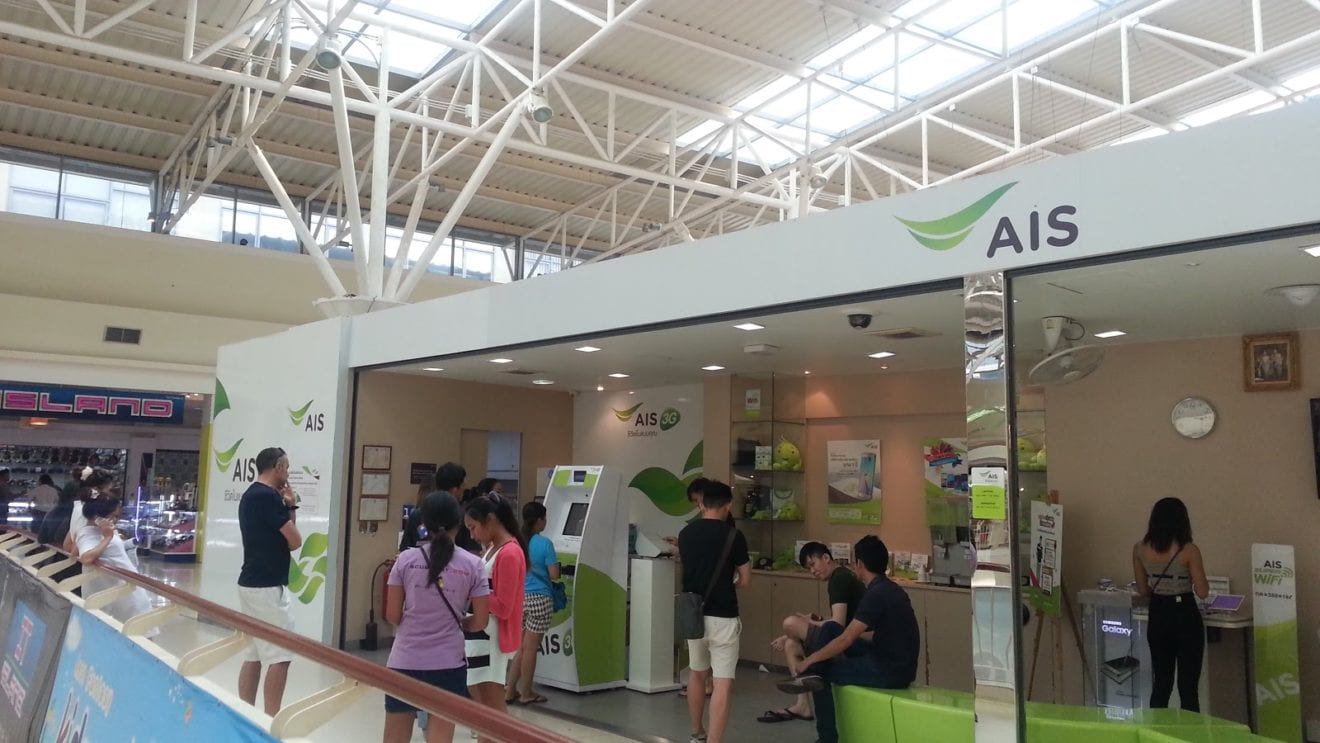
    ZTE and AIS have jointly launched Thailand’s first 5G innovation hub, named “5G A-Z Center.” Both parties have signed an MOU of a strategic partnership to develop 5G tech and enhance the digital infrastructure construction, to bring excellent 5G experiences to Thailand, and strengthen the country’s competitiveness on 5G.

    “We are here because 5G is a technology to power the country,” said Somchai Lertsutiwong, CEO of AIS. “As the network service provider with the most frequency spectra and the best network coverage in Thailand, we prioritize sustainable innovation for the country.”

    Currently, AIS has strategically partnered with ZTE on three components. Firstly, they are upgrading Thailand’s 5G network, not only in terms of speed, but also intelligence, to make the network control itself in real-time. At the same time, both parties have jointly developed solutions for business sectors and enhanced competitive capabilities under Thailand 4.0. In addition, they have delivered a vast range of 5G services to improve the quality of people’s lives in Thailand.

    “Towards the well-being of individuals and industries, the value-based digital development provides Thailand with soil of innovation,” said Xu Ziyang, CEO of ZTE Corporation. “The center is a seed of hope, and the alphabet ranging from A to Z also represents the end-to-end coverage. We will be dedicated to satisfying the needs of people and industries and creating a 360-degree digital and intelligent world.”

    At the center, ZTE has released a series of next-generation RAN products. The AAU (Active Antenna Unit) for 5G mmWave bandwidth, first jointly developed by ZTE and AIS, can support 1.2GHz and increase data throughput by 50%. The power consumption of the next-gen sub-6GHz TDD massive MIMO has decreased by 25%, reflecting the demand of Thailand to provide excellent user experiences. Moreover, the next-generation FDD 3G/4G/5G multi-mode Massive MIMO, with its performance improved by 100% compared to the previous generation, is going to be verified in the center and will be deployed in the network of AIS.

    In terms of 5G industrial applications, ZTE and AIS, with the aim of empowering various industries and promoting digital transformation through 5G, have demonstrated several industry application scenarios at the “5G A-Z Center,” including 5G AGV (Automated Guided Vehicle), 5G machine vision, 5G XR, 5G Holography and so on.

    In addition, both parties have launched the new 5G ZTE Blade A72 handset, which is expected to hit the market in October 2022, alongside other smart terminals such as 5G CPE and 5G Pocket Wifi.

    The cooperation between AIS and ZTE is a crucial step in achieving the goal of becoming a Cognitive Tech-Co by developing the 5G smart autonomous network. Moving forward, both AIS and ZTE will be committed to delivering better user experiences and bringing opportunities to the industries, thereby boosting the digital economy of Thailand.

  • UBS Brings Key4 to Pensions and Retirement

    UBS Brings Key4 to Pensions and Retirement

    Switzerland’s largest bank is expanding its digital offering.

    UBS is making its UBS key4 available to clients saving in 3a retirement accounts or retirement custody accounts, it said in a statement Thursday.

    The offer, which clients can access on their phones, is part of the bank’s range of UBS key4 products. It is available to all users and not exclusively to UBS key4 clients, the statement said.

    It’s never too early to start saving for your retirement. With our fully digital offering for private pension planning, we can give young people in particular access to a very important financial topic. In just a few minutes, they can start paving the way for their future on their smartphones, chief operating officer of UBS Switzerland Sabine Magri, said in the statement.

  • Face mask not compulsory on AirAsia flights

    Face mask not compulsory on AirAsia flights

    Face masks are now exempted on AirAsia Malaysia flights with immediate effect. This comes following the announcement by the government that face masks are no longer mandatory on flights.

    In a statement quoted by Bernama, AirAsia said the use of face masks onboard flights was optional for its guests unless they were traveling to or from destinations that required a face mask.

    However, guests who wish to wear a face mask onboard may continue to do so.

    “All our aircraft are equipped with powerful HEPA filters that remove 99.99% of dust particles and airborne contaminants, including viruses and bacteria. The cabin air is completely refreshed every three minutes to ensure the highest possible air quality throughout your flight,” it said yesterday.

    On Wednesday, the Health Ministry had announced that the wearing of face masks onboard aircraft was no longer compulsory after taking into consideration that aircraft technology had improved and that Covid-19 cases in Malaysia had been brought under better control.

  • Jollibee plots Tim Ho Wan expansion in China

    Jollibee plots Tim Ho Wan expansion in China

    Philippine fast food chain operator Jollibee Foods on Wednesday said it will inject over $60 million into its dim sum chain, Tim Ho Wan, to expand in mainland China, where strict COVID-19 lockdowns have battered the restaurant industry.

    Jollibee, which aims to join the likes of McDonald’s and Yum Brands as one of the world’s largest quick-service restaurant companies, has seen its business rebound as economies reopen. But recovery in China has hit a snag due to President Xi Jinping’s zero-COVID strategy, which relies on lockdowns and wide-scale testing to fight outbreaks.

    Yet Jollibee remains upbeat about its prospects in China, announcing fresh funding for Titan Dining, the fund that owns the Michelin-starred Tim Ho Wan chain.

    Jollibee owns 90% of Titan Dining and will raise its committed capital in the fund to 315 million Singapore dollars ($217 million) from SG$225 million in November, the company said.

    The fresh capital, Jollibee said, will mainly fund Tim Ho Wan’s store expansion and capital requirements.

    Jollibee Foods aims to open 100 Tim Ho Wan branches in mainland China in the next four years. It currently has 11 stores there, mostly in Shanghai.

    Jollibee Foods had over 6,300 branches worldwide under more than a dozen brands, as of August. The company regards China as one of its three key markets. The others are the U.S. — where it has taken over Los Angeles-based Coffee Bean & Tea Leaf and Denver-based Smashburger — and the Philippines, where the company started out as an ice cream shop before becoming an industry leader that outsells McDonald’s in the country.

    Before investing in Tim Ho Wan in 2018, the company had built other businesses in China, such as Yonghe King, a Taiwanese food-inspired restaurant famous for its freshly prepared soy milk, and Hong Zhuang Yuan, which serves congee and other hot dishes. Yonghe King and Hong Zhuang Yuan have 410 and 54 branches, respectively.

    But the pandemic has hit the restaurant industry hard and a recovery in China has been derailed by the government’s continued reliance on strict lockdowns.

    In its latest quarterly report ended June, Jollibee reported record systemwide (franchised and company-owned stores) sales of 73.1 billion Philippine pesos ($1.24 billion), up 44.8% on the year. But while most of its business units expanded during the quarter, China sales fell 28% “due to COVID-related restrictions” that forced the company to temporarily shut some stores.

    Even before the pandemic, China has not always been an easy market for Jollibee, which was founded by company Chairman Tony Tan Caktiong, who was born to emigrant parents from Fujian province.

    In 2017, the company closed over a dozen hot pot outlets after selling its stake in a beef noodle chain as part of a restructuring the previous year. In 2015, the company announced plans to open more than 1,400 Dunkin’ Donuts shops in China over 20 years under a franchise deal, but it had only opened seven outlets as of June.

  • Yoplait launches new Yop range

    Yoplait launches new Yop range

    Yoplait has expanded its Yop drinkable yoghurt brand for teens with a new chocolate variant.

    Pitched as a “permissible treat”, the NPD joins Yop’s existing strawberry and raspberry variants, and will go on sale in Asda from 23 August.

    Yoplait said the new variant contained no colouring and was “ideal for larger families and is great for portion control on the go”.

    The product’s bottles are made from high density polyethelene (PEHD), which Yoplait said was the safest and “most commonly recycled plastic”.

    “Teens love our fruit flavours as the ideal snack or lunchbox addition, so we’re confident they’ll enjoy our new, more indulgent chocolate variant,” said Joanna Goodman, head of marketing (northern Europe) at Yoplait’s current owner General Mills. The brand is in the process of being sold to French dairy co-op Sodiaal.

    “Yop sales have increased by 12.6%, boosting household penetration by 72.6%. We’re confident there is a huge opportunity in the months ahead for dairy drinks, both at-home or whilst on the move as the on-the-go market starts to recover.”

    It comes after the brand announced earlier this week it would shift the standard Yop range away from white PET plastic to clear PET from 2022.

    Yoplait had come under criticism from comedian Joe Lycett over the recyclability of white PET earlier this summer. However, the supplier said it had been working on the packaging improvement in advance of his criticism, with the switch featured this week in his new Channel 4 consumer affairs show Joe Lycett’s Got Your Back.