Tag: asia

  • Want to Learn How to Get Around the Lion City Like a Local? Here’s How

    Want to Learn How to Get Around the Lion City Like a Local? Here’s How

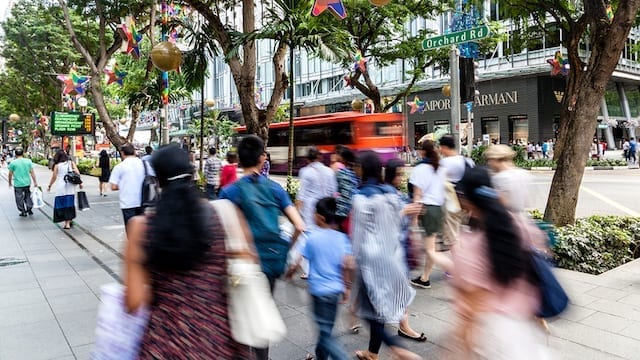
    If you’re a tourist in Singapore and you want to explore the Lion City like a local would, you’ll be glad to know that you can do just that from the moment of your arrival. This is because the city-state has a modern, well-designed, and highly-efficient transportation system that makes use of buses, trains, and cars. Using these transportation options, one can explore the Lion City’s many modern and natural attractions without breaking a sweat.

    Once you drop off your luggage at your hotel, feel free to explore the city like it’s a second home to you. Whether you’re planning to visit the city’s historical sites, try delectable meals at hawker centres or Changi Airport restaurants, or go on a shopping spree in one of the local markets, here’s how you can get around Singapore like the locals do:

    Know the Traffic Rules and Follow Them

    Part of the reason why many aspects of everyday life in Singapore run like a well-oiled machine is that most of the locals follow the country’s many rules. This goes for their traffic rules, too. Given this, it would do you well if you get to know these rules yourself, especially if you’re planning to drive during your stay. Doing so will ensure not only your safety and comfort, but also that of the people with whom you share the road.

    If you’re sticking to using public transportation or touring the city on foot, you’ll be happy to know that the city is very walkable and its roads are bicycle-friendly. Still, there are a few things you need to remember so you can do as the Singaporeans do and avoid steep fines. For example, you should make use of pedestrian crossings and footpaths as much as possible, and always stay on the sidewalk instead of walking along the road itself.

    Purchase and Top Up Your EZ-Link Card

    Are you stressed out about the idea of handling a lot of loose change and bills while commuting? Don’t worry, because it’s fairly easy to go cashless in Singapore—even for commuters.

    You can do this by purchasing an EZ-Link card, which can be used in public buses, the MRT, the LRT, and even taxis. This contactless card can be purchased from and reloaded at a lot of convenience stores across the country, and there are also machines that can dispense and top it up at bus interchanges and train stations. There are even passes that you can use as many times as you want within a given number of hours or days, which can be a practical option if you want to see as much of the country as you can during a short stay.

    Remember the Bus or Train Schedule

    The public transportation system in the country is quite reliable. Because of this punctuality, you can expect that the next bus or train will arrive at and depart from their respective stations as scheduled. This can be especially useful if you have a strict schedule that you want to follow. You can even plan your stay down to the minute, if you wanted to.

    Of course, there are still times when the bus or train will arrive earlier or later than expected. Should this happen to you, you might want to download the Land Transportation Authority’s My Transport app on your phone. This application will help you keep track of bus and train schedules and serve as a helpful tool for planning your itinerary for the day.

    Minimize Noise in Public Transportation

    It’s a sign of courtesy to your fellow commuters if you make an effort to stay quiet during bus and train rides or in public spaces like parks and train stations. So, if you like to listen to music or watch videos on your phone when commuting, it’s best to bring earphones or headphones with you so you can do so without causing a ruckus. If you must talk to a companion, speak softly and only when necessary so that you don’t disturb other passengers.

    Carry an Umbrella When Heading Out

    Because Singapore has a tropical climate, it tends to be quite humid all year. There are also times when the weather can get hot or rainy. It’s a good idea, then, to carry an umbrella around with you when you travel on foot. That said, some locals opt not to bring an umbrella anymore since a lot of places now have covered walkways. Still, it’s always better to be safe than sorry, especially as a tourist who may be unfamiliar with the area.


    Follow these tips and you’ll be travelling like a Singapore local in no time. And if you ever feel unsure about the situation you’re in or if you don’t know how to use a certain aspect of the public transportation system, feel free to ask the people around you for help. You’ll find plenty of citizens and residents who are more than willing to help you make the most of your journey in the Lion City.


  • New Shipping Methods That Are Changing the Way We Do Business

    New Shipping Methods That Are Changing the Way We Do Business

    As the world of e-commerce and online shopping continues to grow, so do the shipping options. Where once there were only a few methods to choose from, now there are many different types of shipping that cater to different needs. Here is a look at some of the new shipping methods that are changing the way we do business.

    One of the newest and most popular shipping methods is drones. Drones can deliver packages quickly and directly to customers without a traditional delivery driver. It can be beneficial for businesses that sell small items such as clothes or cosmetics and for companies that operate in rural areas where it can be challenging to find delivery drivers.

    Same-day delivery is available in major metropolitan areas across the country, and its popularity is growing. But international shipping takes time, as always, if you have to move your luggage from one country to another, e.g., the USA to India. You still need professional international movers from the USA to India.

    The traditional method of shipping is slow and expensive

    There is no doubt that conventional shipping methods are slow and costly. It has led to many businesses searching for new shipping methods that can save them time and money. The following paragraphs will discuss some of the new shipping methods that are changing the way we do business.

    One of the new shipping methods is called cross-docking. This method involves loading products onto a truck at one location and then unloading them at another location. It eliminates the need to transport the products to a central location before they are shipped. It can save a lot of time and money for businesses.

    Another new shipping method is called direct store delivery (DSD). It is where products are delivered directly to stores instead of being shipped to a central location first. It can also save time and money for businesses as it reduces handling and transportation costs.

    Faster and cheaper shipping methods for both domestic and international shipments

    The way we ship goods has changed dramatically in the last few decades. New techniques and technologies have made it faster and cheaper to ship goods than ever before. It has revolutionized how businesses operate and has enormously impacted the global economy.

    One of the most significant changes has been the introduction of containerization. It is a system where goods are shipped in standardized containers that can be easily loaded and unloaded. It has dramatically speeded up the shipping process and reduced costs.

    Another major change has been the development of express shipping services like FedEx and UPS. These companies offer fast, reliable shipping at reasonable prices. It has enabled businesses to get their products to customers quickly, regardless of distance.

    Finally, the rise of e-commerce has had a considerable impact on shipping.

    Benefits of new shipping methods: speed and efficiency

    In an ever-changing and fast-paced world, businesses are always looking for ways to increase speed and efficiency. New shipping methods have arisen that are changing the way we do business. The following are some of the benefits of these new shipping methods:

    • They allow for faster delivery times. It is because they use new technology to track shipments and optimize routes. As a result, customers can receive their orders more quickly and without any delays.
    • They are more cost effective than traditional shipping methods. It is because they use less fuel and fewer resources overall. In addition, they often offer discounts for bulk orders or items that are shipped frequently.
    • They are more environmentally friendly than older shipping methods. It is because they produce less pollution and waste.

    New shipping methods: a growing market

    As the e-commerce industry continues to grow, so do the shipping methods used to fulfill orders. What used to be a one-size-fits-all approach is now being replaced by more customized, faster, and cheaper shipping options. Here are some of the new shipping methods that are changing the way we do business:

    Dropshipping: Dropshipping is a type of e-commerce where businesses don’t keep any inventory on hand. Instead, when a customer places an order, the business contacts a supplier, who then ships the product directly to the customer. It allows businesses to sell products without worrying about inventory or fulfillment.

    Subscription boxes: Subscription boxes are becoming increasingly popular, especially among millennials. These boxes are filled with curated items that are sent to customers regularly (usually monthly).

    Conclusion:

    New shipping methods are changing the way we do business. They are faster, more efficient, and allow us to ship items to our customers more timely. This new way of doing business is revolutionizing the shipping industry and making it more competitive.


  • Cryptocurrency poses risk of money laundering

    Cryptocurrency poses risk of money laundering

    There is a big risk that cryptocurrencies will be used in Vietnam for laundering money since there is no legal framework to regulate them, a lawmaker has said.

    Vietnam is among the top countries globally in terms of cryptocurrency ownership but it does not even recognize the asset, Duong Van Phuoc from the central province of Quang Nam said at a meeting Wednesday.

    “Cryptocurrencies could be used by criminals to fund terrorism,” he said, adding that digital asset criminals are not getting caught due to the lack of regulations.

    He called for including cryptocurrencies and other digital assets in money laundering laws.

    State Bank of Vietnam governor Nguyen Thi Hong said there have been similar proposals before but the government has yet to decide which authority could be entrusted with overseeing them.

    According to digital currency payment company Triple A, around 5.96 million Vietnamese, or 6.1% of the population, own cryptocurrencies.

  • Vietnamese currency falls to new low against dollar

    Vietnamese currency falls to new low against dollar

    Vietnam has set its reference rate for the Vietnamese dong at a record low as the greenback strengthens globally amid economic uncertainty.

    The State Bank of Vietnam (SBV) on Thursday set the reference rate for the Vietnamese dong at VND23,281, the weakest since at least 2005, according to data compiled.

    At commercial banks, the Vietnamese dong is now at its lowest since March 2020 after having declined by around 3.5% in the year-to-date.

    Vietcombank, the country’s largest lender, had sold the U.S. dollar for VND23,740. Top private player Techcombank’s rates were VND23,708, while that of Sacombank were VND23,950.

    But an expert forecasts the Vietnamese dong to decline further to VND24,000 a U.S. dollar.

    “The dong is too strong at the moment for an export-oriented economy,” Trinh Nguyen, a senior economist at Natixis SA in Hong Kong, told Bloomberg.

    “That said, they care about imports and inflation so won’t allow excessive depreciation.”

    The SBV allows the Vietnamese dong to trade within a band of 3% on either side of the reference rate, which is based on eight currencies and set daily.

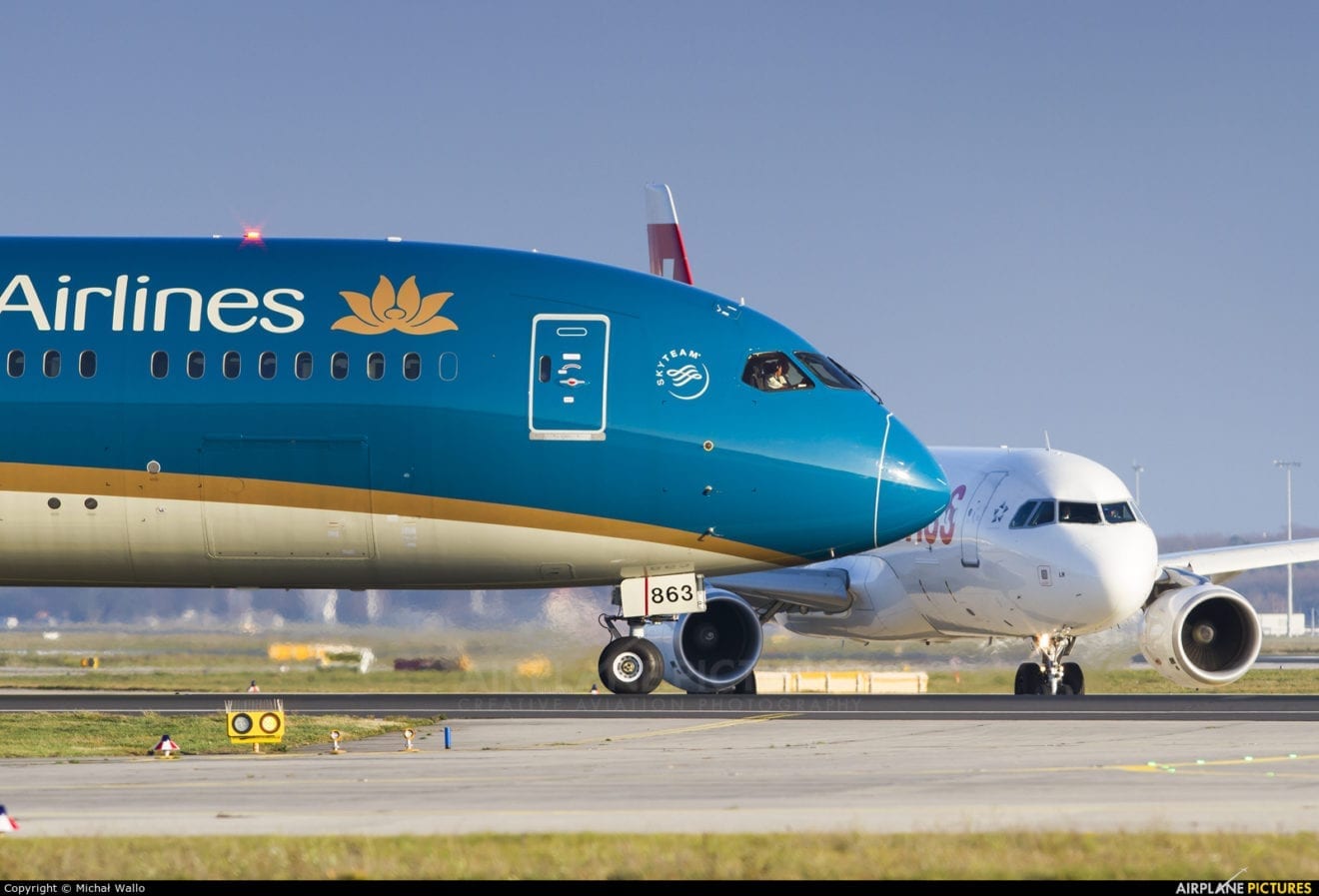
  • Main bourse warns Vietnam Airlines of delisting

    Main bourse warns Vietnam Airlines of delisting

    HVN of Vietnam Airlines would be delisted if the national carrier continues to report a loss or negative equity this year, the Ho Chi Minh Stock Exchange (HoSE) warned.

    The ticker is being restricted after Vietnam Airlines posted equity of negative VND2.16 trillion ($91.8 million) in Q1, and losses for the two most recent years.

    Under the current regulation, a company will have its ticker delisted if it reports losses for three consecutive years, or its accumulated losses exceed the charter capital, or its equity is negative.

    As of June 30, Vietnam Airlines’ equity was a negative VND4.9 trillion ($209 million), its liabilities exceeding assets by VND36.435 trillion and its overdue payables at more than VND14.85 trillion.

    The national carrier targeted revenues of VND45.2 trillion, and pre-tax losses of VND9.3 trillion for 2022.

    In a statement sent to the HoSE it said it would restructure its portfolio and issue shares to raise its capital.

    Last year, Vietnam Airlines avoided delisting after issuing 800 million bonus shares worth VND8 trillion.

  • Chinese automaker Chery plans to set up plant in Vietnam

    Chinese automaker Chery plans to set up plant in Vietnam

    China’s state-owned Chery Automobile has said it wants to sell its first made-in-Vietnam car by next year.

    “We want to build a factory in Vietnam as we don’t want to merely import and sell cars,” Chery Vietnam director Tocy Tang told VnExpress.

    The plant would allow Chery to “build vehicles that are localized for Vietnamese and optimize its potential,” while enhancing the branding of Chinese cars in Vietnam, he said.

    Several Chinese auto brands like BAIC, Hongqi and Brilliance are present in Vietnam, but they are imported by a dealer in Hai Phong.

    Founded in 1997, Chery is the ninth largest car manufacturer and top exporter in China. It also produces Jaguar and Land Rover in China under a 50:50 joint venture with the UK-based luxury carmaker.

  • Ethereum Merge is getting Close

    Ethereum Merge is getting Close

    The crypto world is holding its breath as Ethereum’s upgrade nears and no one knows what the consequences will be. Dominik Spicher from 21 Analytics said which Swiss platform is likely to benefit the most from the switch.

    Any day now starting this Saturday, Ethereum will change the way it verifies transactions on its system in a technological upgrade.

    What is remarkable about the upgrade is that it is being done on a running system, one which holds around $300 billion without counting the assets that run via its platform, co-founder of 21 Analytics Dominik Spicher said in an interview.

    Flying at 30,000 Feet

    The oft-used analogy is that such an upgrade «equates to changing a plane’s engine while it is 30,000 feet off the ground,» he added. The engine of blockchain technologies is the mechanism used to find a consensus, which allows participants to transact with each other and create smart contracts.

    Until now, Ethereum has done this by using the proof-of-work (PoW) concept, but as of next week, it will apply a method called proof-of-stake (PoS).

    A Stake Through the Heart of Work

    One key difference between the two mechanisms is that to participate in PoS one needs to hold the system’s native currency, in this case, Ether, whereas the prerequisites for PoW are external, such as electricity and hardware. PoW verifications can take place without any resources internal to the chain, which is seen as one of its main advantages.

    For Ethereum, this is about to change now that stake is required.

    By relying on users who are prepared to lock away assets, the platform also can confiscate a user’s stake if they misbehave by approving two conflicting transactions, for example. Furthermore, it makes the process more centralized.

    Essentially, those with the largest stake will end up with a certain amount of power in the system, Spicher said. Paradoxically, this sounds like a development that will make the system more centralized, although one of blockchain technology’s main purposes is to be decentralized.

    Swiss Winner

    Bitcoin Suisse, which is one of the larger holders of Ethereum coins, will be the one gaining from all of this, using its stake to earn the right to verify transactions on the ether network and reaping transaction and commission fees in the process.

    Spicher, whose co-owned company 21 Analytics provides compliance and data protection software to clients who transact with blockchain assets, is particularly interested to see how Ethereum deals with confiscating stakes from people who decide to censor certain transactions, for example to sanctioned addresses.

    Although diverging paths are accounted for within Ethereum’s model with so-called hard forks, they still need to be managed. In PoS where every step in the mining process can be tracked it is easier to do this. But when this work process falls away and is replaced by stake as in PoS traceability, it is much harder and likely to cause huge problems, Spicher said.

    Rise of the Machines

    On the blockchain, as in life, where different opinions and money are involved, fights erupt easily.

    If we can let the machines do their thing, it will probably be clean. But if people need to start discussing which chain is the correct one to follow after the change, that’s where it will get messy, he added.

    Bitcoin’s Replacement?

    There is the oft-stated idea that by switching to the new energy-friendly verification process, Ether will become more attractive than Bitcoin. Yet this assumption ignores that Bitcoin has a whole different value proposition,  Spicher explains.

    Bitcoin’s main aim is to be an alternative to national currencies. Ethereum however, was created as an open-source platform to allow anyone to create applications within the Ethereum network using its native currency.

    Their differing purposes make them attractive to investors for different reasons. Although traders, exchanges, and crypto hedge funds may benefit from Bitcoin in times of high volatility, its main value is seen as a long-term, stable and conservative store of value, Spicher said.

    Investors who buy Ethereum however, are betting on the currency fueling a myriad of applications running on its platform in the future and accruing value that way, he added.

  • No More iPhone Models Without Charger in Brazil

    No More iPhone Models Without Charger in Brazil

    The new iPhone 14 lineup is coming, but Brazilians may not be able to get it in the country. Apple cannot sell its iPhone models without a charger in Brazil anymore, particularly the existing iPhone 12 and 13 models, and was fined more than $2 million (12.28 million reais) over the issue.

    In an official notice, Brazilian authorities ordered “the immediate suspension of the distribution of iPhone brand smartphones, regardless of model or generation, that are not accompanied by a battery charger.”

    This is from the official mandates of the Ministry of Justice and Public Security and the Department of Consumer Protection and Defense.

    Apple has been under investigation in Brazil since December for “the sale of an incomplete product,” “discrimination against the consumer” and “the transfer of responsibility to third parties” by offering the iPhone 12 and newer versions without chargers for power outlets, according to the official statement.

    Starting with the iPhone 12, Apple no longer includes power adapters in every box as it moves to reduce package waste and indirectly makes more profit on accessories.

    As Apple explained during its iPhone 12 event in 2020, excluding the power adapter reduces the size of the box, causing less space consumption in the shipping and more iPhone 12 devices delivered.

    According to Brazilian authorities, Apple alleges that the decision to exclude chargers from iPhone sales comes from an “environmental commitment.” Reportedly, smaller boxes would allow Apple to reduce yearly carbon emissions by 2 million metric tons.

    However, the ministry determined that “there is no effective demonstration of environmental protection on Brazilian soil as a consequence” of Apple’s policy and accused the company of “deliberate discriminatory practices against consumers.”

    “There is no justification for an operation which, in aiming to reduce carbon emissions, leads to the introduction into the consumer market of a product whose use depends on the acquisition of another (product) which is also marketed by the company,” the official notice added.

    In response, Apple said that it would continue to work with Brazilian consumer protection agency Senacon in order to “resolve their concerns,” and will appeal the recent decision.

    In June of this year, the EU stated that it believes a standard cable — USB-C — for all devices will cut back on electronic waste, but Apple argues that a one-size-fits-all charger would slow innovation and create more pollution.

    The imposition of the USB-C as a cable standard and the latest ban on Brazilian grounds could affect the iPhone juggernaut’s sales, along with the entire global smartphone market.

  • Nutella unveils limited-edition collection inspired by Australian locations

    Nutella unveils limited-edition collection inspired by Australian locations

    Breakfast spread brand Nutella has rolled out a new limited-edition collection featuring recipes from some of Australia’s “most loved” locations.

    The new ‘Nutella Loves Aussie Recipe’ collection features ingredients and flavours from eight landscapes in Australia such as NSW’s Bondi Beach, NT’s Outbacks, Pink Lake in Western Australia and Cardle Mountain in Tasmania.

    Azzurra Puricelli, marketing manager for Nutella, said the new collection celebrates the uniqueness of the country.

    “We’ve rediscovered what home really means in the last few years. We hope Australians can enjoy collecting these jars just as much as they enjoy a delicious breakfast with Nutella in the mornings”.

    The company has also produced a custom Lithgow label honouring the Nutella factory in Lithgow, NSW, where 8.8 million kgs of hazelnut spread are made each year.

    Recipes can be accessed by scanning a QR code on the jars.

  • Aldi opens its first Melbourne Corner Store concept today

    Aldi opens its first Melbourne Corner Store concept today

    Aldi has opened its first Corner Store concept, in Melbourne’s CBD, complete with a cafe serving barista coffee.

    The company says the store is designed for inner-city customers stocking ready-to-eat meals, fresh produce, bakery items such as cinnamon buns, croissants and baguettes, and its discounted Special Buys products. The Corner Store concept was first tested on Sydney’s North Shore, a hybrid model of part convenience store, part supermarket.

    Huw Longman, director of Aldi Corner Stores, said the new shop will meet customers’ needs in the surrounding high-density, urban area.

    “Shopping habits continue to evolve, and we are seeing a large audience of people who prefer shopping more frequently with a hyper-focus on convenience.”

    He said the store meets these needs, taking convenience and creativity and combining it with quality and savings.

    To commemorate the store opening, a unique limited-time Lazzio coffee cart pop-up will offer customers coffee for 37 cents. The coffee beans are hand-roasted in Victoria by Black Bag Roasters. Proceeds from the coffee sales will be donated to Aldi’s national charity partner, Camp Quality.

  • Byredo launches Hong Kong flagship store

    Byredo launches Hong Kong flagship store

    Fragrance company Byredo is focusing on its Asian expansion, opening its first flagship store in Hong Kong.  With the goal of “transforming memories and emotions into things and experiences,” Ben Gorham founded the European luxury brand Byredo in Stockholm in 2006. The retailer now has a presence in more than 40 countries and offices in key markets including China, Korea, the US and the UK. Source: Byredo Located on Causeway Bay’s Fashion Walk, the store features a dark grey b

    Located on Causeway Bay’s Fashion Walk, the store features a dark grey brick exterior and furniture like “a lacquered mechanical table, galvanised metal cabinets, cowskin daybed, douglas fir bag shelf, and counter”. All were designed by Halleroed – a Swedish design agency – in partnership with Byredo.

    The store offers a range of perfumes, body care, home fragrances and accessories, which focus on craftsmanship and quality. The Hong Kong flagship will also provide delivery services and customisation services for bespoke products.

    Byredo first entered Hong Kong in 2015, opening retail counters in the Lane Crawford department store. The brand was acquired by Puig in May with its two founders Ben Gorham and Manzanita Capital remaining shareholders.

    Gorham continues to provide leadership while Capital remains dedicated to the long-term expansion and vision of the brand.

  • Yoshitsu opens physical store in Hong Kong

    Yoshitsu opens physical store in Hong Kong

    Yoshitsu, a retailer and wholesaler of Japanese beauty and health products, as well as sundry products and other products in Japan, today announced the grand opening of its physical retail store (the “Store”) in Hong Kong on August 30, 2022. The Store is located at No. 118, 1/F, Nina Tower 1, No. 8 Yeung Uk Road, Tsuen Wan, New Territories, Hong Kong, an iconic shopping destination. The opening hours are from 11 a.m. to 8 p.m. on Monday – Thursday, and 12 p.m. to 9 p.m. on Friday – Sunday.

    The opening of the Store is a part of the Company’s long-term expansion plan to expand its footprint in Hong Kong. The Store features an extensive product assortment, including cosmetics, skincare, fragrances, cosmetic applicators and body care products. Customers will not only have a large selection of exclusive Japanese brands, but also receive personalized beauty assistance with finding new and trending products.

    Mr. Mei Kanayama, the Principal Executive Officer of Yoshitsu Co., Ltd, commented, “We are thrilled to bring our new store closer to more of our customers in Hong Kong. Providing a remarkable customer experience is the top priority for our business, and we will try to bring the best shopping experience to every customer. To celebrate its grand opening, the new store in Hong Kong will offer 5% off from the opening day to September 15, 2022. We are planning to have two more new stores open in Hong Kong in the remainder of 2022 and are excited to bring the beauty experience we offer to more new customers. We believe that our expansion strategy is in line with our goal to increase market share and achieve long-term growth.”

  • Japanese fashion label Enfold launches in South Korea

    Japanese fashion label Enfold launches in South Korea

    South Korean luxury fashion and lifestyle brand operator, Shinsegae International, is bringing Japanese up-market fashion label Enfold to the country, opening the brand’s first independent overseas store.  Enfold’s first South Korean store, scheduled to open on September 14, will occupy a 35sqm space on the fourth level of Shinsegae Department Store in Gangnam. The interior design will feature the key motif of the cylinder shape. “By bending the cylinder into various shapes, it can be

    “By bending the cylinder into various shapes, it can be used to represent people lying down, tilting their head, and standing still,” the company said. “It expresses the world view of Enfold that changes.”

    Found by Mizuki Ueda in Spring 2012, Enfold means to embrace. The brand plays with the concept of offering comfortable and elegant style to hide the form of the body, curating a lasting wardrobe rather than following seasonal trends. The brand has more than 10 stores in its home market.

    The launch is part of Enfold’s plan to expand its influence in overseas markets, after rolling out several pop-up stores in the US, London, Hong Kong, and Paris during the past few years.

    Enfold will join Shinsegae International’s portfolio of more than 40 high-end brands, including Celine, Chloe, and Banana Republic. The South Korean retailer has a network of more than 860 stores nationwide ranging from fashion, and beauty to lifestyle brands.

    Enfold is owned by Baroque Japan, which operates more than 20 fashion brands, including Moussy, Sly, Lilidia, and Shel’tter.

  • SoftBank Plans $35 Million Bet On India’s GoMechanic

    SoftBank Plans $35 Million Bet On India’s GoMechanic

    SoftBank Group is in talks to invest $35 million in Indian car service and repair firm GoMechanic, in what would be one of the Japanese investor’s smallest bets in India by its Vision Fund, which typically signs bigger cheques, two sources told Reuters.

    SoftBank has for years been a prominent backer of Indian startups, investing close to $4 billion last year alone, according to data from Venture Intelligence. Its big-ticket investments include digital payments firm Paytm and online education firm Unacademy.

    But investment industry executives say SoftBank has started taking a more measured approach to its investments after a global tech rout. Last month, its boss Masayoshi Son said SoftBank would invest much less this year than in 2021, following a record $26.2 billion quarterly loss at its Vision Fund on falling tech valuations.

    Vision Fund’s early-stage talks with GoMechanic are being held around a valuation of $600-700 million, with Malaysian sovereign fund Khazanah and existing investor Tiger Global also planning to invest in the $100 million funding round, said the two sources familiar with the matter, who declined to be named as the talks are private.

    GoMechanic and SoftBank declined to comment, while Khazanah and Tiger Global did not respond to requests for comment. Bloomberg News has previously reported Khazanah’s interest in the funding round.

    Founded in 2016, GoMechanic has serviced and repaired more than two million cars in India through its service centers, and says it costs 40% less than automakers’ own offerings.

    SoftBank has been in discussions with GoMechanic for more than nine months and was initially uncomfortable with the Indian firm’s valuation request of $1 billion, said the first source.

    GoMechanic was valued at $300 million last year, and currently has a gross annual revenue of around $40 million, the person added.

    In May, two sources told Reuters that SoftBank’s Son had started telling executives to invest smaller sums at earlier stages and spend more time on due diligence.

    SoftBank executives began focusing in early 2022 on early-stage investments, with deals around $50 million or less, a change in strategy from before when it typically did larger late-stage deals, the sources added.

    SoftBank’s second Vision Fund of $40 billion is smaller than its first $100 billion vehicle. It announced in August it would limit the second fund to managing its current portfolio of investments.

  • Sunscreen maker Ego admits misleading consumers over SP50 claim

    Sunscreen maker Ego admits misleading consumers over SP50 claim

    Australian skincare company Ego Pharmaceuticals has admitted making unsupported claims about the SPF (sun protection factor) on two of its sunscreens – Ego Sunsense Ultra SPF 50+ and Ego Sunsense Sensitive Invisible SPF 50+.

    The company supplies products into the New Zealand market via a wholesale distributor and has pleaded guilty to two charges under Section 12A of the Fair Trading Act.

    “If you can’t back it up, don’t say it,” observed the New Zealand Commerce Commission, which prosecuted the company.

    “Section 12A of the Fair Trading Act 1986 prohibits the making of unsubstantiated representations and came into effect in June 2014.

    The law prohibits a trader from making an unsubstantiated representation about goods or services. A representation is unsubstantiated if the trader does not, when the representation is made, have reasonable grounds for making it, said the commission.

    Vanessa Horne, GM of fair trading at the Commerce Commission, said Ego had accepted that between February 2019 and June 2020, it did not have any reasonable basis to make the SPF claims on the sunscreen products.

    “We opened an investigation into Ego following Consumer NZ’s testing in 2019 and a subsequent complaint filed with the commission,” she explained.

    “In 2019 and 2020, Ego claimed that both products provided ‘very high’ protection for consumers and were ‘SPF50+’ under an Australian and New Zealand Standard for sunscreen products.”

    Horne said that while Ego had grounds for those claims when first launched, the accumulation of test results between 2017 and 2019 said otherwise.

    The two sunscreen products have not been distributed in New Zealand since December 2019, and the company issued a withdrawal notice for the products in 2020.

    The case against the company is now before the court, and the commission said it cannot comment further on the matter. Sentencing is scheduled for October 26.

    A new mandatory safety standard for sunscreen supplied in New Zealand will be implemented this month. The commission said any businesses that import, manufacture and/or supply sunscreen products into the country must meet the new standard requirements.