Tag: asia

  • Tech workers left hanging as Shopee rescinds job offers

    Tech workers left hanging as Shopee rescinds job offers

    Southeast Asia’s largest e-commerce firm Shopee has rescinded dozens of job offers in the past two weeks, sources said, a move that began shortly after parent company Sea Ltd reported widening losses and sharply slower revenue growth.

    Four people interviewed by Reuters who have participated in a WeChat group of some 60 people that was set up to discuss Shopee’s withdrawal of offers said their offers were pulled just days before they were due to begin work.

    One 27-year-old engineer who asked that only his first name Wang be used said his call came a week after arriving in Singapore, having quit a job in Shanghai with TikTok owner Bytedance.

    “I thought it was a scam call … until I realised it was a widespread rescinding of offers by Shopee,” said Wang, who had by then paid an advance to rent a house.

    Singapore-based Sea said it had recently cancelled some offers at Shopee but declined to say how many.

    “Due to adjustments to hiring plans on some tech teams, a number of roles at Shopee are no longer available. We are working closely to support those affected,” a company representative said.

    The move follows other recent job cuts at Sea. Staff at Booyah!, a gaming livestream app, which is part of Sea’s gaming unit Garena, were told they would be let go and the app would no longer be updated, separate sources have told Reuters, adding that projects at Sea’s development unit were also shut down.

    Earlier this year, media reports also said Shopee had shed headcount in Southeast Asia, Mexico and Latin America. Shopee declined to comment on those reports.

    Pessimistic Tone

    As recently as March, Sea said it would continue to invest in Shopee, which competes with Alibaba Group Holding’s Southeast Asian arm Lazada, and that growth for the unit remained at the top of its mind.

    But last month, Sea withdrew its e-commerce forecast for the year. Founder and CEO Forrest Li noted an increasingly uncertain market environment and stressed the need to prioritise profitability and efficiency. Sea reported a net loss of $931 million in the second quarter, more than double the loss it made in the same period a year earlier.

    “Their tone has never been more pessimistic,” said Ke Yan, lead analyst at Singapore-based DZT Research, who added that Sea’s strategy of using Garena’s cash flow to compensate for Shopee’s cash burn was unsustainable.

    Sea’s handling of the layoffs was “ugly and embarrassing” and likely to hurt its reputation, he said.

    Sea saw its market value soar to more than $200 billion last October as its Garena unit surged in popularity during the pandemic but its shares have tumbled since then and are now worth just $27 billion.

    Singapore’s Ministry of Manpower said relevant authorities were aware of complaints about Shopee and it was in touch with the company to find out more, but it also said in such situations the parties should work out an amicable solution in good faith.

    The four people interviewed by Reuters said that as compensation Shopee has offered a month’s salary and in cases where people have flown from abroad, it will reimburse the cost of flight tickets and temporary accommodation.

    While the potential for legal action has been discussed in the WeChat Group, those left hanging by Shopee are most concerned with finding new work.

    “The cost of taking legal action is too high. I just want to move on and find a new job,” said one of the four people interviewed by Reuters who declined to be identified.

    For his part, Wang wants to continue his job search in Singapore.

    “The cost of returning to China is too huge, it is very hard to find a new job given the economic situation there,” he said.

  • Desigual plans 60 stores in Mainland China

    Desigual plans 60 stores in Mainland China

    Spanish fashion label Desigual says it plans to open 60 stores in Mainland China, including flagships in Shanghai and Beijing.

    The launch will be via a joint venture with E-Shine, also a local partner of listed fashion company Septwolves Industrial.

    Desigual aims to reach an annual turnover of US$40 million five years from now, with half coming from online and the remainder from sales through physical stores. The company said its primary focus will be Chinese digital channels.

    “This collaboration is in line with our strategy of continuing to develop our business in the Asian market, growing China as well as Japan, which is our main market outside of Europe, as well as in other significant markets such as South Korea,” said Alberto Ojinaga, MD at Desigual.

    “Our goal is for sales made through the digital channel and those coming from geographies outside of Europe to represent 60 per cent of turnover by next year. Right now this percentage stands at 49 per cent.”

    The move is part of the fashion company’s strategy to secure more market shares in Asia, which constitutes 6.5 per cent of its international business. Desigual entered China in 2014 via Tmall launch.

    “Knowledge of consumer habits and preferences in the Chinese market is key to success,” Ojinaga added. “Our objective is to achieve even greater growth in the digital environment and to reach out to new customers with products designed for them and suited to the characteristics of the market.”

  • Celcom Partners With Allo to Boost Connectivity Solutions

    Celcom Partners With Allo to Boost Connectivity Solutions

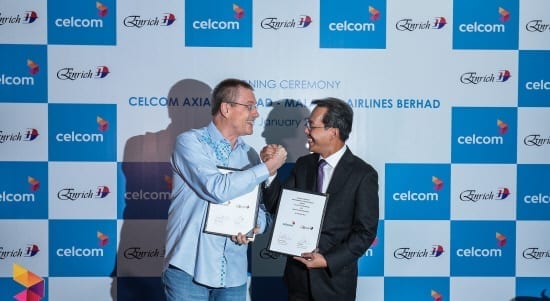
    Celcom has announced that it has signed a partnership deal with Allo aimed at improving telco-related services and connectivity solutions.

    Among the areas that they seek to focus on are fiberization, network resiliency, connectivity, information and communications technology (ICT), internet of things (IoT), 5G and smart solutions.

    In a statement, Celcom said the partnership will enable a faster fiber infrastructure rollout by Allo while facilitating the rapid deployment of high-speed broadband in targeted industrial areas, network base stations and fiberization of Celcom-selected sites.

    The collaboration between Malaysia’s major telecom provider and Allo, a wholly owned subsidiary of Tenaga Nasional Berhad (TNB), will also seek to speed up the progress of smart cities through digital connectivity by both parties.

    “The development of a good digital ecosystem requires the cooperation between various sectors, including public and private sectors, towards achieving the nation’s aspirations that have been outlined in the government’s plans for the benefit of the people. Today’s initiative should be continued because the cooperation between companies will of course bring results that have high impacts to the people and the nation,” said Dato Sri Haji Mohammad Mentek.

    TNB President and CEO Dato’ Indera Ir. Baharin Din said TNB, through Allo, is fully committed to undertaking efforts that benefit the nation’s economic recovery and supports the Government’s initiatives to make lives better and brighter for Malaysians.

    “By leveraging on over 25,000km of TNB’s fiber optic infrastructure, Allo has peninsula-wide coverage to support a rapid and cost-effective deployment of high-speed broadband connectivity services. We believe the digital economy sector is crucial to the future development of Malaysia’s economy by supporting the growth of the nation’s GDP. Our role as the catalyst for the nation’s economy is closely related to the implementation of a modern, reliable, and extensive connectivity network as underlined in the MoU between Allo and Celcom today. Through a reliable connectivity ecosystem that is offered by Allo and Celcom, it can be a driving force for comprehensive value creation across the industry, the development of smart cities, and the ability to transform the socio-economic landscape in Malaysia,” he said.

    Commenting on the collaboration, Datuk Idham Nawawi, chief executive officer of Celcom Axiata Berhad said that Celcom and Allo’s strategic partnership will leverage the strengths of both organizations towards the acceleration of digitalization across Malaysian Homes and Enterprises as well as      significantly boost network operational efficiency.

    “The opportunity to provide high quality and affordable fibre connectivity to homes across the nation is immense, and through this partnership, both parties can play a much larger role and make significant impacts towards digitising Malaysian societies. The strength of Celcom with the widest mobile network and the potential reach of Allo’s fibre via TNB’s infrastructure opens this partnership to a world of new opportunities,” Idham said.

    The collaboration is also expected to boost efforts from Allo and Celcom to drive connectivity and digitalization across industries with technology solutions and services such as ICT cybersecurity solutions, cloud, data centers and managed services, as well as IoT smart city solutions.

  • Ford India Makes Final Settlement Offer To Chennai Factory Workers

    Ford India Makes Final Settlement Offer To Chennai Factory Workers

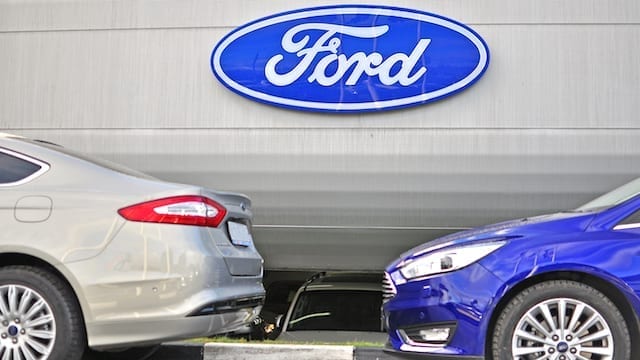
    Ford India has made the ‘final’ settlement offer to the workers of its Chennai plant, offering a deadline of September 23, 2022 to accept it. The American carmaker, who announced its plan to stop manufacturing vehicles in India last year, has continuously been in failed negotiations with the Chennai Ford Employees Union (CFEU) regarding the severance package for the factory employees. Now, Ford has presented its final severance package to the Chennai car factory Union and the company has said that it will be valid from September 5, 2022, to September 23, 2022.

    In its official statement, Ford India said, “The Company has always cared for its employees and has taken steps to help them to the extent possible. Unfortunately, the Company’s attempts to negotiate a fair severance package have not yielded results because of the Union’s unreasonable demands (of an average of 215 equivalent days of wages per completed year of service). Union also failed to recognize that no company which has decided to stop production because of significant accumulated losses and no sustainable path forward can meet such demands.”

    Alternatively, Ford has been trying to find a suitable buyer for the plant, however, as that hasn’t happened yet, the carmaker has decided to roll out the final severance settlement offer to employees. Ford India says that on average, the settlement is equivalent to 130 days of gross wages per completed year of service. The severance packages will range from a minimum amount of Rs. 33 lakh to a maximum cap of Rs. 85 lakh, which is a cumulative average severance of Rs. 41 lakh per employee.

    Ford says, “The final severance settlement offer translates to an average of about 4.6 years or 56-month salary for each employee (from a minimum of 3.5 years i.e., 43 months to a maximum of 8 years i.e., 100 months), thus assuring employees with adequate financial cushion and adequate time to decide their next action. The Company strongly encourages employees to accept and sign-up for the final severance settlement offer, valid from September 5, 2022, to September 23, 2022, for their own and their family’s future. Further, employees who take the final severance settlement offer will be paid wages until September 30, 2022.”

    Post the deadline, Ford says that if the Company were to retrench employees and pay the statutory compensation, the employees will only be entitled to severance pay of 15 days of every completed year of service.

    Earlier in August 2022, Ford India signed a Unit Transfer Agreement (UTA) with Tata Passenger Electric Mobility Limited (TPEML) for the acquisition of the former’s manufacturing plant in Sanand, Gujarat. The agreement includes entire land and buildings, the vehicle manufacturing facility as well as the machinery and equipment inside. It also includes the transfer of all eligible employees of Ford India working at the Sanand plant to Tata Motors. The Indian auto giant acquired the facility from Ford for a sum of Rs. 725.7 crore exclusive of taxes, the company said in a statement. Both companies signed a tripartite MoU on May 30, 2022.

  • Brisbane coffee brand Aromas Coffee Roasters sold

    Brisbane coffee brand Aromas Coffee Roasters sold

    Queensland-based Aromas Coffee Roasters has been acquired by local Indigenous-owned company SupplyAus Holdings for an undisclosed sum.

    Aromas Coffee Roasters boasts a 47-year history, serving more than 300 locations in the state, while SupplyAus was co-founded by Adam Williams, a Wiradjuri man, and Shane Andrews, a descendant of the Mununjali people in 2018.

    SupplyAus CEO, Adam Williams, told Business News Australia, that this was a “major step to inspire other Indigenous entrepreneurs to have a go”.

    “Buying a legacy brand like Aromas shows Indigenous kids and young people that even the biggest brands are within our reach.”

    With the acquisition, the company plans to integrate some of Aromas Coffee’s operations with its own coffee portfolio – Dhuwa Coffee, which is sold in 900 Woolworths stores.

    “That’s something we are good at with the rest of our brands, so to be able to roll that through with Aromas is something we are looking forward to.”

    Alongside, the company is currently exploring opportunities to invest in indigenous employment with the rollout of its own Aromas Cafe and also grow the brand internationally.

    SupplyAus now owns and operates a range of brands, including Bunji Workwear, SupplyAus Medical, Jingeri Office National and Aromas Coffee Roasters.

  • Menswear startup raises $2.3 mln

    Menswear startup raises $2.3 mln

    Coolmate, a Vietnamese menswear brand sold online, has raised $2.3 million from GSR Ventures and Do Ventures as an addition to its series A round.

    This brings the round’s total size to $4.3 million. Coolmate said the funding will be used to “accelerate the completion of the supply chain” for its products, upgrade its operating system, and employ more manpower.

    In May, Coolmate had raised $2 million in a round led by Access Ventures with participation from Do Ventures, CyberAgent Capital and DSG Consumer Partners.

    The funding marks GSR Ventures’ first investment in Vietnam. The U.S.-based venture firm has backed some unicorns including Didi, Ele.me, and Xiaohongshu.

    “We are impressed by how [co-founder and CEO] Nhu Pham and the Coolmate team are leveraging technology to transform the traditional retail industry and delight consumers with high-quality yet affordable products,” Asian tech-focused platform Tech in Asia quoted GSR Ventures Managing Director Allen Zhu.

    Founded in 2019, the startup operates no physical store to date. It reportedly gets 10,000 orders a day now compared to 2,000 in the first year of operation.

    It claimed revenues of $6 million last year, and expects to collect $19 million this year.

  • Gasoline prices fall marginally, diesel surges

    Gasoline prices fall marginally, diesel surges

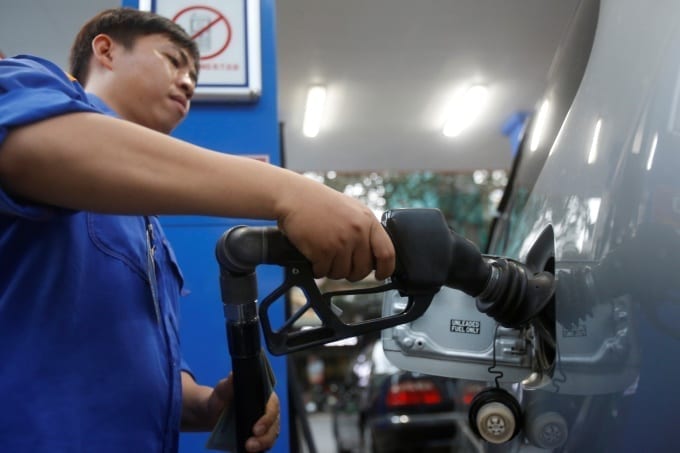
    Vietnam’s gasoline prices fell 1.56-1.74% on Monday while diesel prices surged 6%.

    A liter of RON 95 now costs VND24,230 ($1.03), down 1.74%. That of biofuel E5 RON 92 costs VND23,350, down 1.56%.

    Monday’s was the seventh consecutive downward adjustment made to gasoline prices, bringing prices down by 25.4-26.3% since this year’s peak on July 21.

    Meanwhile, diesel surged 6% to VND25,180 a liter, marking the first time it surpassed gasoline prices.

    Prices were hiked 9.7% in the two most recent adjustments but were 16.3% lower than this year’s peak.

    On the global market, gasoline has decreased by around 2% while diesel prices surged 9.3%, according to data from the Ministry of Industry and Trade and Ministry of Finance.

  • Globe Deploys 933 5G Sites in 1st Half 2022

    Globe Deploys 933 5G Sites in 1st Half 2022

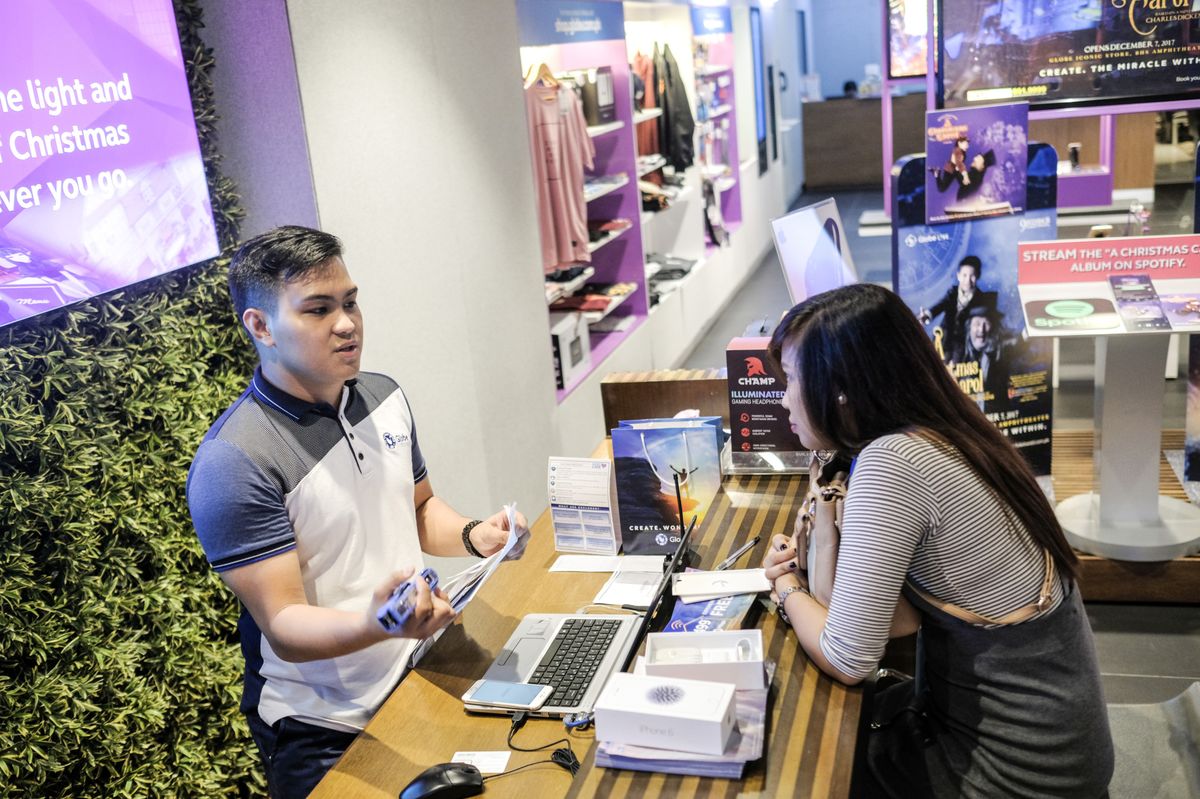
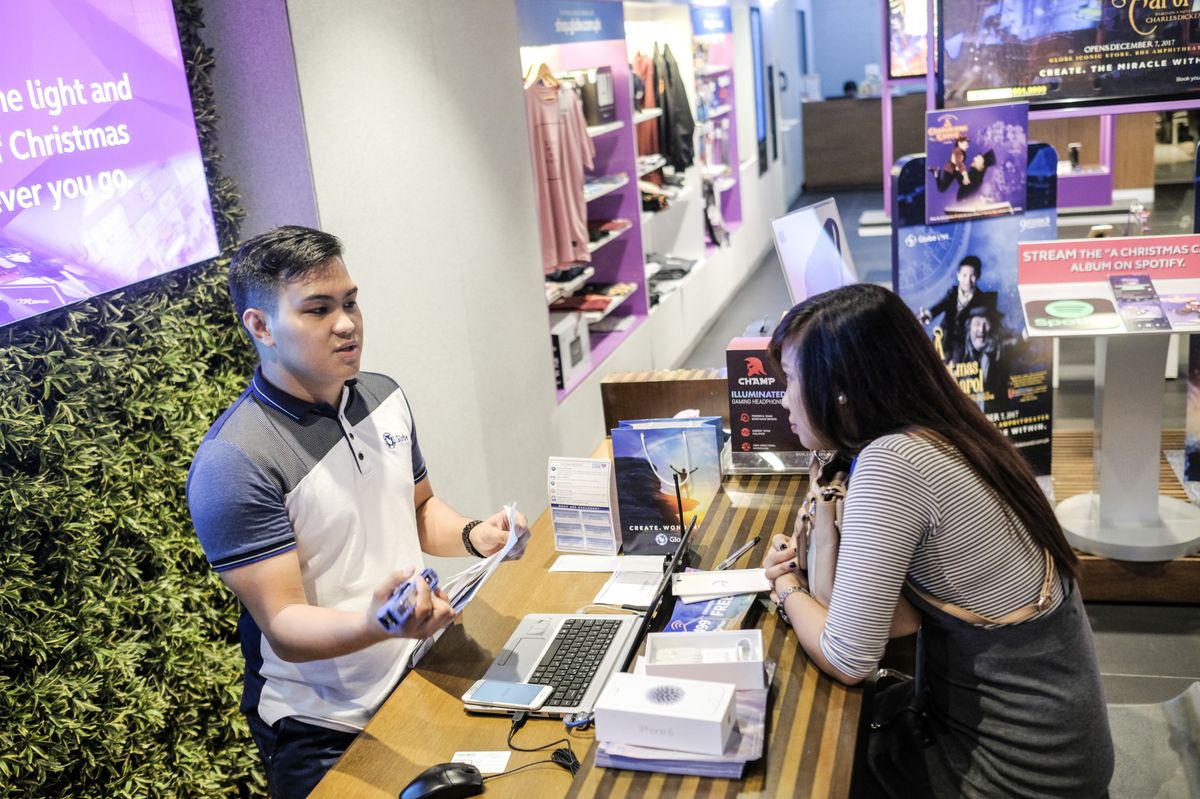
    Globe Telecom has announced that it has built 933 base stations in the first half of 2022 as part of its continued 5G rollout across the Philippines.

    Globe’s 5G network outdoor coverage has reached nearly 97% of the National Capital Region and 86% of key cities in Visayas and Mindanao.

    “Globe has been ramping up its rollout amid rising demand for 5G connectivity. The drive to build more and faster is fueled by our desire to deliver more improvements in our customer service experience that are consistent and reliable,” said Joel Agustin, SVP and head of network planning and engineering at Globe.

    As of end-June 2022, Globe has logged approximately 2.7 million devices on its 5G network.

    The telco giant is also accelerating its 5G roaming rollout to more countries in Asia, the Middle East and Europe to enable the connectivity experience for travelers and overseas Filipino workers.

    For data-related upgrades and expansion, Globe has already spent P50.5 billion out of its P89 billion capital expenditure allocation for 2022. The majority of the amount was used to build its fiber assets further, put up more cell sites, upgrade towers to 4G LTE and roll out 5G technology and in-building solutions.

  • M1 Launches Cloud Gaming Service Zolaz

    M1 Launches Cloud Gaming Service Zolaz

    M1 has announced that it is launching Zolaz, a cloud gaming subscription service that allows customers to play anywhere, anytime and on any device.

    Zolaz caters to both mid-core and casual gamers with an “all-you-can-play” on-demand gaming experience. Subscribers will gain instant and unlimited access to over 400 high-quality PC and console titles, including those by AAA publishersSimilar to Netflix and Spotify’s click-and-play models, games are streamed directly to users’ preferred devices without the need to wait for download and installation. A single account can be shared with up to four other profiles.

    Games in the catalog include the BAFTA Games Award-nominated first-person shooter, Metro Exodus; the action RPG co-op shooter from the Warhammer world, Warhammer: Chaosbane; and the popular party game, Overcooked. Individual high scores and game history can also be stored directly in the cloud, freeing up device data storage.

    “Cloud gaming has always been a possibility, but its potential has so far depended on network speeds, data tariffs and latency. M1’s True 5G network resolves this with its high speed and low latency so that graphically intensive games can now be seamlessly played on-the-go and without need for expensive hardware,” said Manjot Singh Mann, chief executive officer, M1. “M1 is on track to roll-out nationwide 5G outdoor coverage by the end of this year. Zolaz is part of our 5G ambitions to develop and launch 5G commercial use cases across consumer, enterprise and government sectors.”

  • What Banks Can Learn From Google’s Toothbrush Test

    What Banks Can Learn From Google’s Toothbrush Test

    Sometimes seemingly mundane insights can help in the digital age, especially since most Swiss banks are «knotty colossi,» as Google Maps co-creator Samuel Widmann finds.

    Can banks learn something from the US tech giant Google? A seminar at the School of Banking (FSB) in Zurich explored this question last week with  Samuel Widmann, co-inventor of Google Maps.

    Zurich-born Widmann, and Swiss Federal Institute of Technology (ETH) graduate, brought his own company Endoxon into Google in 2006, subsequently working for the company for over ten years. During this tenure, he further developed Google Maps, thereby making a significant contribution to Zurich becoming an important location for the US company.

    So much so that those working at the firm in Zurich are dubbed Zooglers. He has since left Google and is active as an angel investor, advisor to startups, and an active board member.

    Missing Guiding Light

    Widmann says he has at least eight banking apps on his phone, none of which he finds convincing. He attributes this to the fact that many banks are «knotty colossi», lacking a North Star, in reference to the brightest star in the «Little Dipper» constellation. In the past, navigators on the high seas in the northern hemisphere oriented themselves by the North Star, Widmann explained.

    This is something that is often lacking among banks’ boards, he said: Many board members don’t know where to go, they don’t have the right mindset. Yet today, banks today are actually IT companies,» the former Google executive said.

    A Costly Bet

    There is a great desire among financial institutions to set new digital standards, especially to reach the younger «Next Gen» or Generation Z clientele. However, current offerers frequently don’t go beyond simple payment services or account inquiries.

    The cancellation of the planned takeover of US digital wealth manager Wealthfront by UBS shows how complex it is to set up and expand a comprehensive digital offering.

    Shifting Winds

    While younger clientele in particular are appearing as blips on the banks’ radar, they don’t yet have the necessary means to be sufficiently attractive as digital customers. Accordingly, any commitment by an established bank to the digital world today is a costly bet on whether enough customers can be acquired over time.

    In times of zero interest rates, such ambitions could be easily financed. But with central banks now having exited loose monetary policy stances, the winds have changed and such investments may no longer be profitable, UBS’ Wealthfront example illustrates. However, the FSB seminar also showed that the demand for digital tools or even for a super app from the banks is not necessarily given.

    Many customers do not want to completely commit themselves to a single bank. Moreover, data protection and privacy pose a high hurdle, especially in Switzerland or Germany, to offering apps that are as comprehensive as they can be, and many Swiss are still unwilling to entrust their data to a financial institution abroad. When a new generation of customers emerges who are more willing to share their data, this may come to pass. But we are still a long way from that.

    Larry Page’s Toothbrush Test

    Swiss banks can certainly learn from what Google co-founder Larry Page once called the «toothbrush test.» A product should be such that it is used as many times a day as possible, as Widmann explained.

    That requires boards of directors with the necessary know-how, and prepared to resolutely promote digital developments, but keeping in mind that the local market is limited in its dimensions. All the more, this requires a vision, just as Google had one to differentiate itself, Widmann says. Indeed, the search-engine race is illustrative.

    First Mover Outpaced

    A look back at the efforts as early as 1995 to establish search engine dominance, two companies, Altavista and Yahoo, entered the market and laid down their markers. Nevertheless, after 1999 Google succeeded in becoming today’s undisputed number one and outshone its two rivals. Altavista no longer exists, and Yahoo is now a niche player.

    In this respect, there are cards still left to be dealt out in terms of banking. With a clear view of the North Star, Larry Page’s toothbrush test, and the willingness of boards of directors to launch digital innovations in a more targeted and user-friendly manner, lessons are to be learned from Google.

    And when it is all over, someone will be smiling brightly at the end of the digital app toothbrush test.

  • Aeon to bring Japan’s Komeda’s Coffee to Hong Kong

    Aeon to bring Japan’s Komeda’s Coffee to Hong Kong

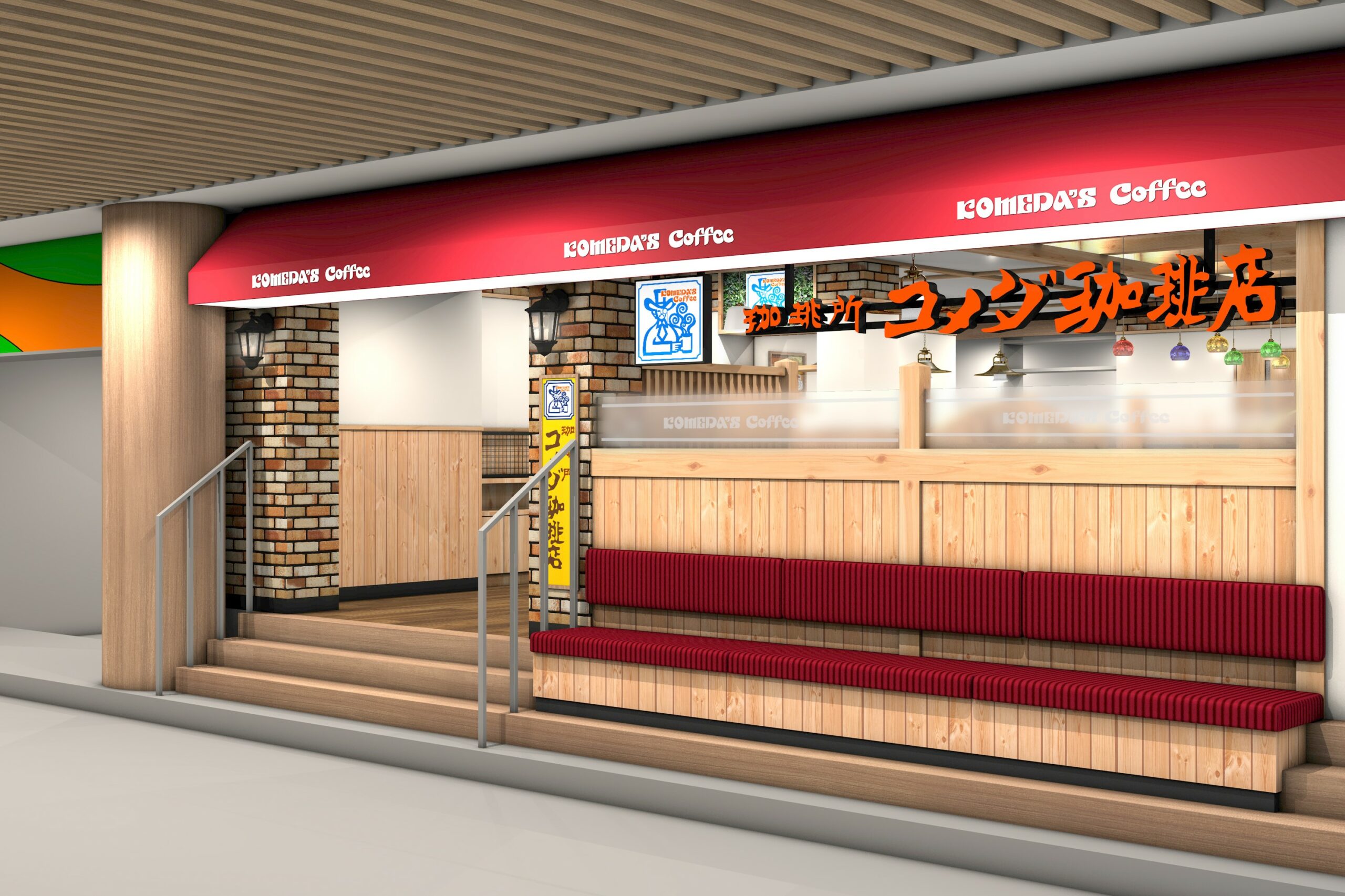
    Aeon Hong Kong is set to open the territory’s first Komeda’s Coffee store next month after securing the regional franchise rights to the Japanese cafe chain earlier this year.

    Aeon Hong Kong said the Komeda’s Coffee store will be situated inside Aeon Style Huangpu and adopt Japanese traditional architecture. Komeda’s Coffee was founded in 1968 in Nagoya, considered the home of Japan’s cafe culture. As of last May, the chain has 33 international stores across Taiwan and Shanghai.

    “This new strategic cooperation is the first time that Aeon Hong Kong has joined hands with a well-known Japanese coffee chain, which may accelerate Aeon Hong Kong in the format of restaurant chain stores,” said Isao Sugawara, MD of Aeon Hong Kong.

    Established in 1985, Aeon Hong Kong operates 10 general shopping department stores, two independent supermarkets, 43 independent Living Plaza by Aeon, 25 Daiso Japan, one Bento Express by Aeon and four independent stores in densely populated areas of Hong Kong.

    The group said will continue to further expand the network of small specialty stores and deepen the strategic cooperation with Daiso.

    The first half of the year saw a 4.2 per cent growth in the group’s Hong Kong business revenue, reaching US$300 million, despite the Covid-19 disruption. The loss from this business shrank to $9.7 million from more than $13.5 million the year before.

  • Ami Paris opens its largest flagship

    Ami Paris opens its largest flagship

    Ami Paris, the Parisian fashion label, is expanding its Asian footprint with the opening of its first brick-and-mortar store in Seould, South Korea, which it describes as its largest boutique globally.

    The store, located in the city’s Garosu-gil area, contains a retail space of 300sqm over four storeys, stocking menswear, womenswear and accessories.

    It features a spiral staircase and mirror-decorated objects, as well as lighting throughout the space. Black, beige, and white are the three main colours running throughout the store.

    “It’s a major step for us, given the importance of Korea in our business. But, it’s beyond numbers, because of Korea’s soft power,” CEO Nicolas Santi-Weil told Vogue Business.

    “We have been looking at the market since the beginning – they are trendsetters.”

    Vogue Business reports Ami Paris debuted in South Korea in 2013 with Samsung as its local partner. Since then, it has expanded its presence to include shops-in-shops in upscale malls, wholesale accounts in multi-brand stores, an e-commerce website, and now the new flagship.

    The brand has stores in Japan and China in Asia, as well as operations in the US and the UK.

    Ami Paris was founded by Alexandre Mattiussi in 2011 to provide stylish and comprehensive wardrobes for men and women, blurring the lines between casual and chic.

    Ami’s new Spring-Summer 2023 collection will be showcased during Seoul Fashion Week on October 11. This marks the first time the brand to come back to hosting international fashion shows after the long Covid-19 pandemic.

  • ZTE Launches Industry’s Smallest 5GC Product

    ZTE Launches Industry’s Smallest 5GC Product

    ZTE Corporation has unveiled the industry’s smallest 5GC product, dubbed the Mini5GC.

    ZTE’s new Mini5GC features miniaturization, lightweight, simple networking, and ultra-high integration. The company states that it can well facilitate safe production, flexible adjustment of work sites, and efficient and accurate emergency rescue in mining areas.

    This is part of its continued innovations in 5G core network products to boost the in-depth development of 5G private networks.

    For Mini5GC, the number of general network functions is customized from more than 10 to just four, and the network communication and resource occupation are optimized. Thus, a lightweight 5GC can be deployed on one 1U server.

    Moreover, the size of the server is reduced to A3 paper, and its weight is reduced to less than 5kg. With high integration, the 5GC product has 5Gbps forwarding capability and excellent performance for the same size in the industry.

    With simple deployment, the Mini5GC can adapt to any rack, and its power consumption is about 100 watts. Also, through pre-installation of software and hardware upon delivery, on-site one-click modification, and plug-and-play the required services can be quickly launched in several hours.

    To date, ZTE’s Mini5GC has carried out pilot verification in five typical fields, including mining, transportation, manufacturing and government affairs. ZTE and SHAANXI ZHIN TECHNOLOGY CO., LTD. have jointly built a mine-use 5GC based on the Mini5GC to provide in-place data distribution for underground mining, so as to improve mining service efficiency and provide a high-availability network to ensure safe production in the mining area.

    Moving forward, ZTE says it will work with more industry partners to integrate product innovation and business model innovation to help operators explore intelligent digital development and boost the prosperity of the 5G industries.

  • Indonesia Hikes Fuel Prices To Rein In Ballooning Subsidies

    Indonesia Hikes Fuel Prices To Rein In Ballooning Subsidies

    Indonesia raised subsidised fuel prices by about 30% on Saturday, as the government moves to rein in ballooning subsidies despite a risk of mass protests.

    The price of subsidized gasoline was raised to 10,000 rupiah ($67 U.S. cents) a litre from 7,650 rupiah, while that of subsidised diesel rose to 6,800 rupiah a litre from 5,150 rupiah, energy minister Arifin Tasrif said.

    “I actually wanted domestic fuel prices to remain affordable by providing subsidies, but the budget for subsidies has tripled and will continue to increase,” President Joko Widodo told a news conference.

    “Now the government has to decide in a difficult situation. This is the government’s last option,” said Jokowi, as the president is known.

    Southeast Asia’s largest economy had already jacked up its 2022 energy subsidies to 502 trillion rupiah ($34 billion), triple the original budget, pushed by rising global prices of oil and a depreciating rupiah currency.

    If prices were not raised, the budget would have ballooned to 698 trillion rupiah, said Finance Minister Sri Mulyani Indrawati.

    She estimated total energy subsidies would range between 591 trillion and 649 trillion rupiah for this year following the price hike, assuming the average crude price stays between $85 and $100 a barrel the rest of the year.

    High energy subsidies had restrained Indonesia’s inflation, at 4.69% in August, allowing the central bank to delay raising interest rates until last month, well behind regional and global peers.

    Hariyadi Sukamdani, head of the Indonesian Employers Association, said price pressure from the fuel price hike would not be too much, predicting inflation will top 6% at the end of the year.

    “If prices of goods are too expensive, people won’t buy. We can’t raise prices too much,” he said.

    Businesses are using unsubsidised fuels, but the price hike will affect logistics costs, Hariyadi said.

    Still, accelerating inflation could put pressure on Bank Indonesia (BI) to tighten monetary policy more quickly. The bank holds a two-day policy meeting ending on Sept. 22.

    Bank Mandiri economist Faisal Rachman estimated inflation could accelerate to between 6% and 7% and BI could raise the policy rate to 4.25% this year from 3.75% now.

    Faisal forecasts 5% economic growth this year despite the fuel price increase, supported by commodity exports and post-pandemic mobility, adding that the government’s cash distribution could help cushion some of the impact on consumption. The economy grew 5.44% in the April-June quarter.

    The government has allocated an additional 24.17 trillion rupiah for cash handouts to help the poor cope with the policy’s impact, Jokowi said.

    Fuel prices are politically sensitive in Indonesia, and the changes will have major implications for households and small businesses, as subsidised fuel accounts for more than 80% of state-owned oil giant Pertamina’s sales.

    The last fuel price hike was in 2014, months after Jokowi took office, aiming to free up fiscal space. That sparked protests across the archipelago.

    The opposition Labour Party has arranged a protest involving thousands of workers for Tuesday, chairman Said Iqbal, who also heads a trade union, told Reuters. He called on parliament to pressure the government to cancel the price hike.

    “This will hurt purchasing power,” he said. “Wages have not increased for three years and inflation is bound to rise sharply.”

    Small protests against any price hike, mostly led by students, had erupted in the recent days in several cities.

    After the price hike announcement, Pertamina said it was committed to ensuring adequate fuel supplies nationally. Cars were seen queuing in some stations in the capital Jakarta after the announcement.

    Pertamina, Asia’s biggest gasoline importer, had deferred some of its gasoline deliveries for September ahead of the price hike, due to an expected drop in fuel demand, traders said.

    Decades ago Indonesia was a major oil exporter, becoming a member of the Organization of Petroleum Exporting Countries in the 1960s, but its oil output declined and it turned to net oil importer in the 2000s. Indonesia is still an exporter of gas.

  • Malaysian retail sales set new record

    Malaysian retail sales set new record

    Malaysia’s retail sales saw recorded growth in the second quarter of this year, surging 62.5 percent year on year, according to Retail Group Malaysia (RGM).

    The strong growth was estimated to result from the Hari Raya festival and the ease of Covid-19 operating restrictions. Given the swift growing pace, Malaysia Retailers Association and Malaysia Retail Chain Association project sales in the third quarter will have an average growth rate of 61.7 per cent.

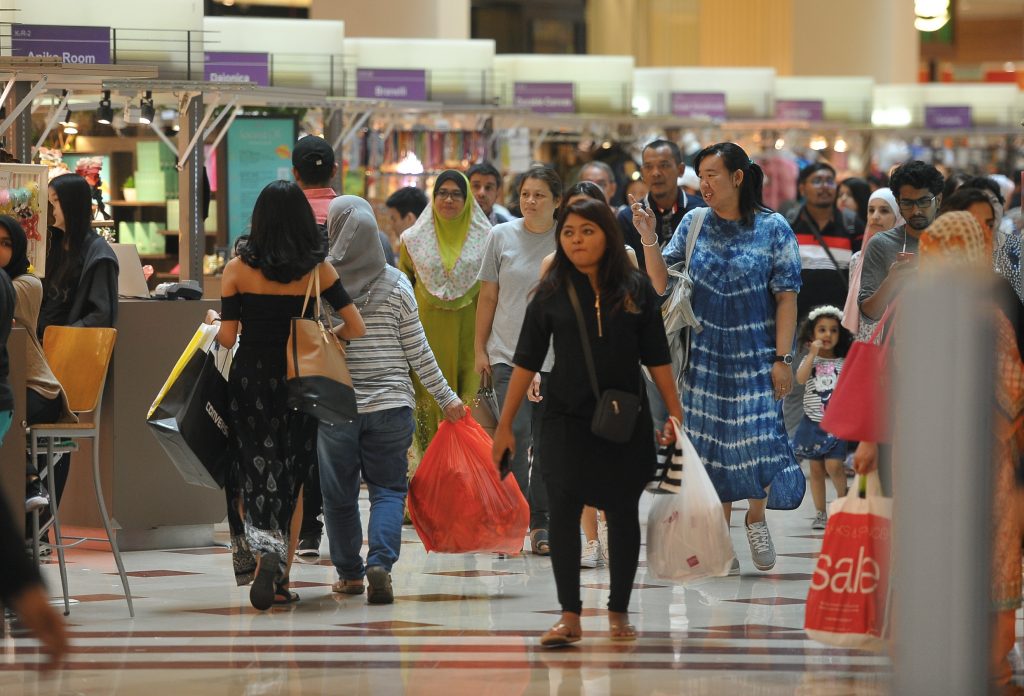
    “Hari Raya Aidilfitri was celebrated nationwide on May 3 and 4. This period had accelerated the pace of recovery of Malaysia’s retail industry,” RGM said in a statement. “Shopping centres and main commercial centers throughout Malaysia started to attract large shopping crowd three weeks before Hari Raya. The peak was one week before Hari Raya.”

    Fashion and accessories accounted for the highest growth, increasing 152 percent year on year during the quarter. Retail sales of the department stores and supermarkets jumped 59.7 percent.

    Other sub-sectors, including furniture, electronics, and healthcare, also enjoyed double-digit growth.

    RMB also added that Malaysian consumers’ purchasing power has been affected due to inflation. The manpower shortage has also influenced retailers’ sales and operation hours.