Tag: asia

  • Warren Buffett buys German retailer

    Warren Buffett buys German retailer

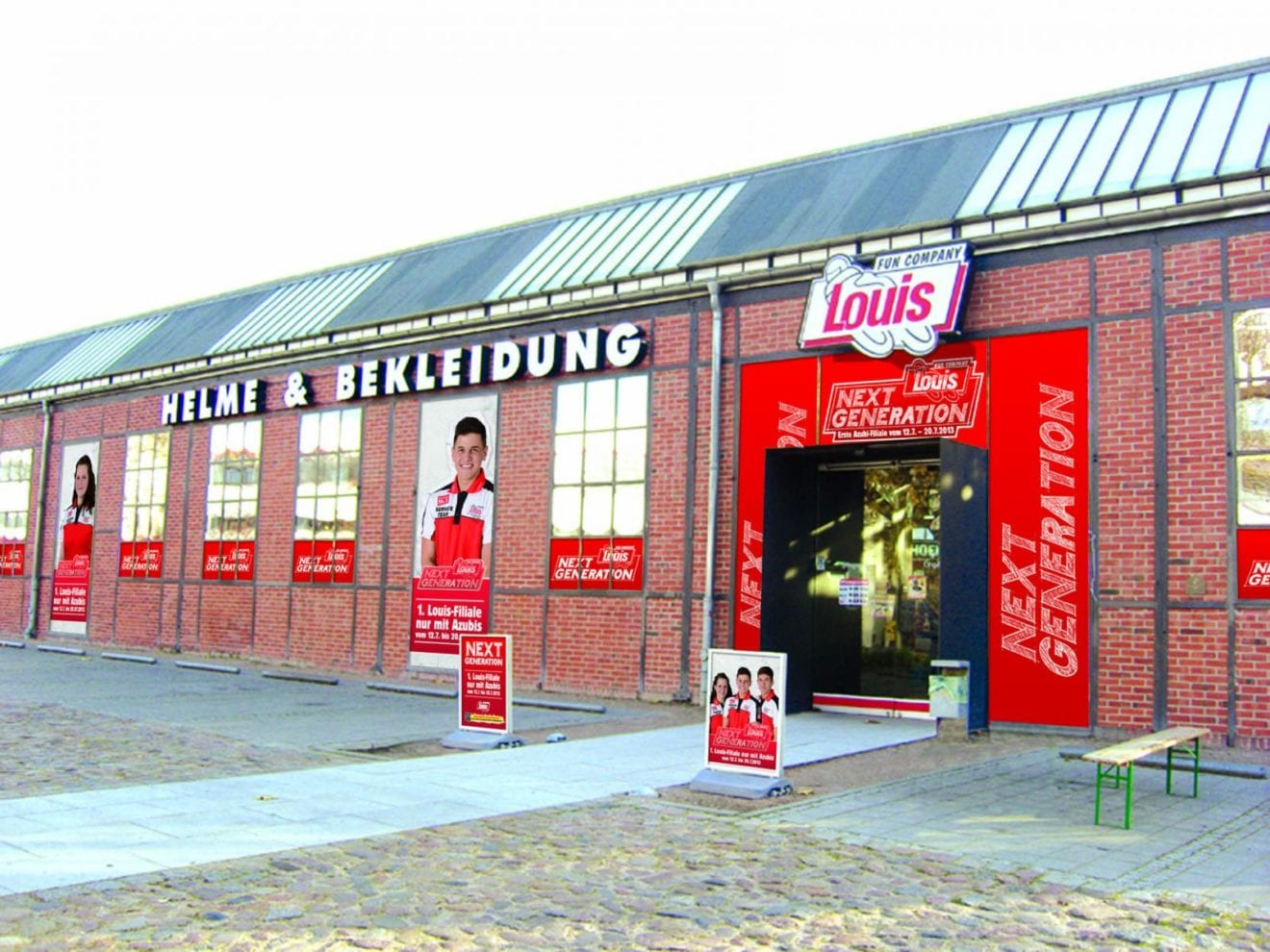
    US serial investor Warren Buffett has bought niche German motorcycle and accessories retailer Detlev Louis Motorradvertriebs.

    Buffett’s Berkshire Hathaway will pay €400 million for the Hamburg-based retailer which trades under the Louis brand. It employs 1500 staff in Germany and Austria and has annual sales of about €270 million from more than 70 stores, a catalogue business and online.

    The vendor is Ute Louis, the widow of the company’s founder Detlev Louis.

    Buffett, 84, is believed to have a passion for motorcycles – in 2009 he bought US$300 million of debt to rescue Harley-Davidson, but he is renowned for his keen investment eye and would not be acquiring the German business for sentimental value.

    To date, the billionaire’s focus has largely been on US businesses, but he is increasingly eying European opportunities.

  • KFC Thailand to boost network

    KFC Thailand to boost network

    KFC Thailand says it plans to open 55 new outlets in 2015 and refurbish another 20 as it aims to boost its share of the nation’s fast food market.

    According to a report published by the Bangkok Post newspaper, KFC will boost its capital spending by 20 per cent this year, largely with funds from the brand’s parent Yum! Restaurants International, the balance from local partner Central Group.

    By the end of the year it will have a chain of 586. Fifteen of the new branches will be configured as drive-thrus.

    According to Waewkanee Assoratgoon, KFC country GM with Yum! Thailand, further capital will be invested in a new IT system aimed at speeding up the ordering process for both home-delivery and counter transactions. The company is also developing apps which would allow customers to order from smartphones or computers.

    Waewkanee told the newspaper it expects sales to increase by 10 per cent this year, one per cent more than in 2014.

  • Inside Grand Central Jakarta

    Inside Grand Central Jakarta

    Thailand-based Central Department Store Group has opened its first department store in the Indonesian capital Jakarta.

    With 9.5 million inhabitants, Jakarta is the largest city in Southeast Asia and Central’s commitment to the city reflects the company’s belief that department stores, executed well, have a strong future in retail.

    Grand_Central_Jakarta_03_215

    “I believe in the department store industry,” explains Central’s president, Yuwadee Chirathivat. “But the stores must be exciting and innovative.”

    The 17,000sqm store marks the continuation of a successful partnership with German architects Blocher Blocher Partners (BBP) dating back 13 years. BBP has shared with Inside Retail Asia the challenges and execution of the new store’s design.

    Grand_Central_Jakarta_01_215

    Like most department stores, the ground floor is anchored by cosmetics and women‘s designer fashion departments – two premium worlds, joined by luxurious shades of gold.

    Grand_Central_Jakarta_04_215

    “In the designer department, the brand highlights are enclosed by a wire-mesh structure interwoven with elaborate floral patterns. In this way, a kind of house-in-house is created; a principle that is repeated on all storeys,” explain partners Dieter Blocher, Wolfgang Mairinger, Jürgen Gaiser, Angela Kreutz and Anja Pangerl, who worked on the project.

    In the women‘s fashion world on the first floor, an ornamental metal construction forms the setting for the Who-is-Who of the Southeast Asian designer scene.

    Grand_Central_Jakarta_05_215

    “The leitmotif of the surrounding sales floor: a modern interpretation of cassette walls, conveying timeless elegance and a contemporary sense of class. At times, in the classic look of dark turquoise, sometimes entirely in a modern mosaic style.

    Grand_Central_Jakarta_09_215


    “Here, too, slatted panels on the ceiling indicate the transition to the next department, the shoe and bag division. An eye-catcher: polygonal ceiling elements continuing seamlessly on the rear walls. Harmonising with the polygonal, high-gloss white furniture and pedestals, which flatter the premium merchandise with their sculpture-like appearance.

    Grand_Central_Jakarta_02_215

    “On the second floor, the jeans/unisex and men’s department meet each other – two young, rugged looks. Tiles, raw wood, wallpaper and dark expanded metal in the jeans division blending with fishbone parquet and wooden ceiling slats in the central men’s casual area.

    Grand_Central_Jakarta_07_215


    In the adjoining men’s business department, concrete walls alternate with metal curtains. Here, the house-in-house is designed as a gently curving diamond-shaped structure in wood, revealing at the core changing rooms, clad with clinker bricks.

    Grand_Central_Jakarta_08_215


    “Things get really colourful in the children’s department on the third floor. With yellow walls, colourful glass elements set into sloping furniture, butterfly appliqués and abstract animals. As a contrast, the home division presents itself as deliberately reserved – with an interplay of light and dark accents.”

    Grand_Central_Jakarta_06_215


  • Jollibee to open 330 stores

    Jollibee to open 330 stores

    Philippines-based fast food operator Jollibee Foods has reported a 14.3 per cent increase in income and announced a massive 330-store rollout for 2015.

    Jollibee is the country’s largest fast-food chain saw global sales increase 12.9 per cent to P90.7 billion (US$2.05 billion) from P80.2 billion ($1.81 billion) year on year to December 31.

    Its profit was P5.3 billion ($120 million), according to a lodgement with the Philippine Stock Exchange.

    Jollibee says it will open 330 stores this year – 220 of which will be in the Philippines. That’s a significant increase on last year’s 234 stores last year, of which 169 were in the Philippines and the remaining 65 abroad.

    The expansion will be funded by a 65 per cent boost in capital expenditure this year. two thirds to be spent in the Philippines, the blance in China, the Middle East and Southeast Asia.

    Jollibee operates 2301 restaurants inside the Philippines: 858 bearing the Jollibee banner, 456 Mang Inasal, 410 Chowkings, 211 Greenwich, 323 Red Ribbon, and 43 Burger Kings. It has a further 612 stores overseas, including 310 Yonghe Kings, 50 Sang Pin Wan stores and 42 Hong Zhuang Yuan stores in China; 125 Jollibees outside the Philippines, including 62 in Vietnam and 32 in the US; and a chain of Chowkings in the US and Middle East.

    It also has a 50 per cent stake in Vietnamese chains Highlands Coffee, which has 78 stores in Vietnam and the Philippines, and Pho 24 which has 53 restaurants in Vietnam, Indonesia, the Philippines, Cambodia, Macau and Korea; and in 12 Sabu, which has 19 stores in China.

    Jollibee says system-wide retail sales grew a faster 13.3 per cent in 2014, including company-owned and franchised stores.

    Jollibee’s CFO Ysmael V. Baysa said profitability would have been higher if not for increased raw material costs last year.

    “The raw material cost increases in 2014, averaging 5.4 per cent, brought pressure on our profit margins. We made important price adjustments and improved our store and manufacturing expenses during the year. We are now very close to fully covering these cost increases and look forward to the full recovery and improvement in gross profit margins in 2015 through lower cost of energy and more stable raw material prices,” he said.

    “We will also offer even better products to our consumers to help ensure our products continue to provide them great value.”

  • Google Wallet partners up to battle Apple Pay

    Google Wallet partners up to battle Apple Pay

    Google said on Monday it was teaming up with the mobile phone payment firm Softcard to ramp up its efforts to counter Apple Pay in the emerging sector.

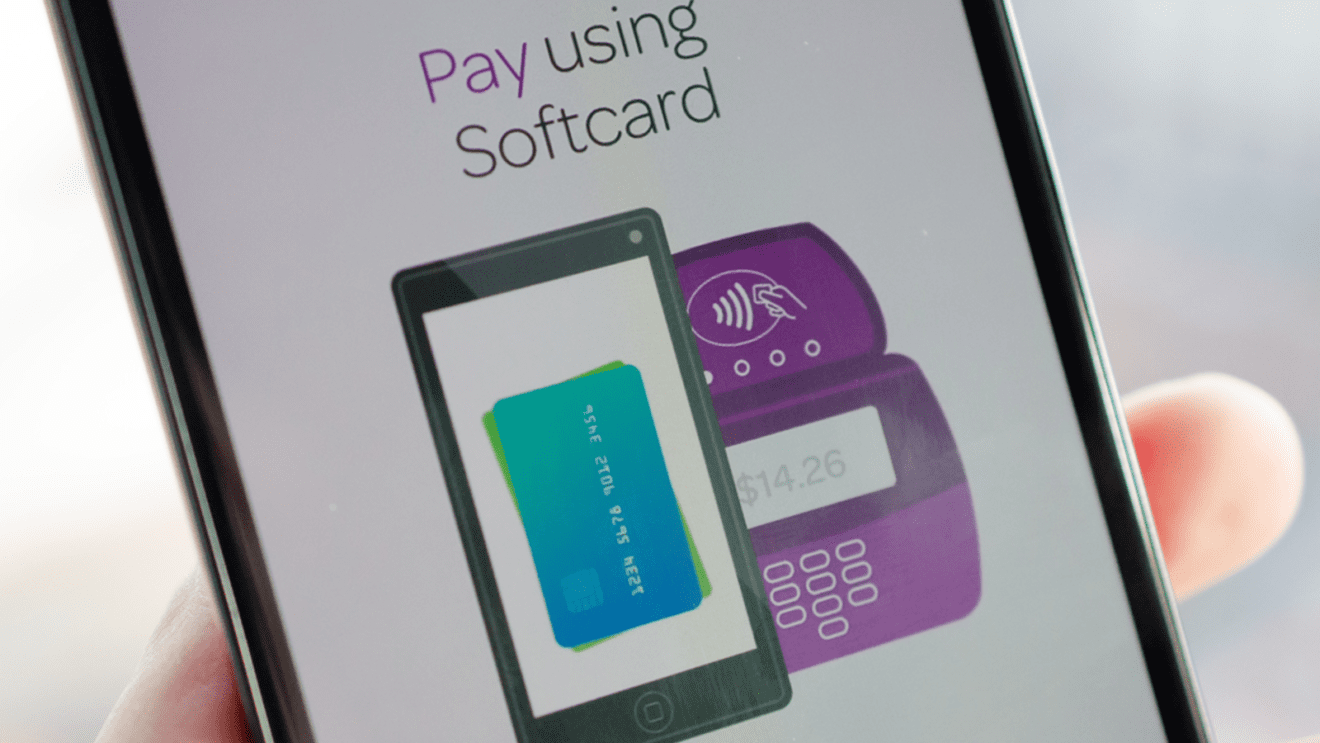
    The California tech giant announced Google Wallet would become a pre-installed “tap to pay” app on Android smartphones sold in the US market by AT&T, T-Mobile and Verizon, as part of the deal with the carriers’ mobile payments company Softcard.

    The aim is “to help more Android users get the benefits of tap and pay,” said Google Payments vice president Ariel Bardin.

    “We’re also acquiring some exciting technology and intellectual property from Softcard to make Google Wallet better.”

    The move gives Google and its large base of Android smartphones a stronger position to challenge Apple Pay, the mobile payments system introduced on the latest iPhones last year.

    A statement from Softcard — which was founded by the three carriers last year in a push for mobile payments — said the deal with Google would “bring together leading technologies to advance mobile wallets.”

    “For now, Softcard customers can continue to tap and pay with the app,” the statement said.

    “Today’s announcement is a positive step forward for the mobile payments industry and wireless consumers.”

    Bryan Yeager, analyst at the research firm eMarketer, said the deal “will help get Google Wallet in front of more potential users, but the mobile payments space in the US will continue to be competitive and fragmented for at least the next few years.”

    Yeager noted that Samsung’s announcement last week that it was buying digital wallet firm LoopPay “shows that deal activity doesn’t necessarily equate to market consolidation.”

    LoopPay technology is compatible with approximately 90 percent of retail terminals to let customers tap their phones for payment with registered credit cards, according to Samsung.

    LoopPay has been built into smartphone cases as well as into fobs, or dongles, and transmits credit card data using magnetic fields to point-of-sale terminals to effectuate transactions.

  • Givenchy opens new store in Seoul, South Korea

    Givenchy opens new store in Seoul, South Korea

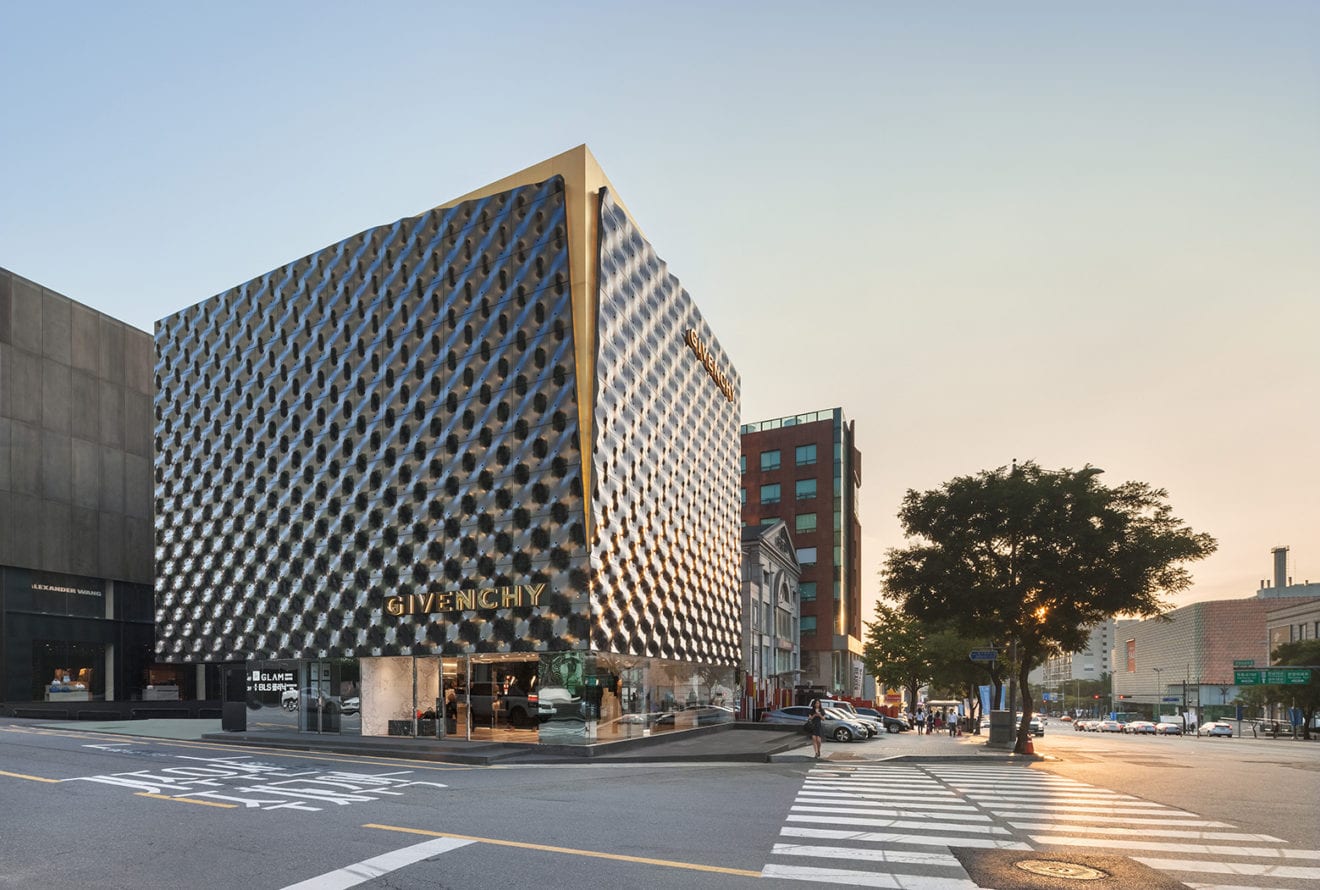
    According to the architects, Milan based Piuarch Studio, the facade of the new Givenchy flagship store references the textures and patterns used in the work of Italian artists Enrico Castellani and Lucio Fontana in the 1960s, and the optical patterns used in the brand’s latest collections. The new Givenchy store occupies a corner location in the Gangnam-Gu shopping district of Seoul.

  • Giant mall for CapitaMalls’ Suzhou Center

    Giant mall for CapitaMalls’ Suzhou Center

    A new development in Suzhou, China, will feature a world-record setting roof structure over a 340,000sqm, seven story retail complex

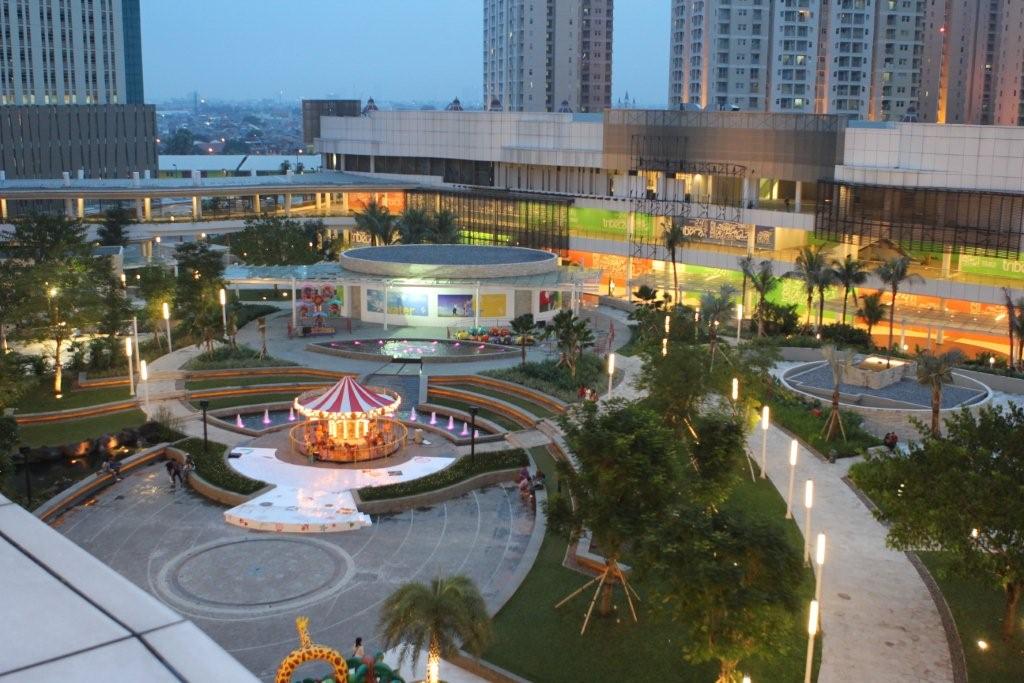
    Suzhou Center, developed by CapitaMalls Asia (CMA) and Suzhou Industrial Park Jinji Lake Urban Development was unveiled this month, with Benoy named as the architect and interior designer behind the development’s major retail component. The shopping mall will be covered by the world’s largest monocoque roof structure, spanning over 36,000sqm and making Suzhou Center the city’s most eye-catching landmark.

    Suzhou Center is a large-scale, high-end integrated development in the heart of the western CBD of Suzhou Industrial Park (SIP). Planned on a 16 ha site along the bank of Jinji Lake, the broader scheme comprises retail, commercial, residential and a hotel, as well as entertainment and cultural spaces. Considered the world’s largest, a free-form monocoque roof structure

    Benoy director Winnie Tsang said the design has “pushed many boundaries” and will no doubt be “a leading international example of architectural innovation”.

    “Benoy’s design for the roof was inspired by the mythical Chinese phoenix,” explained Winnie. “We envisaged the structure as a bird resting above an oasis with the striking curved architecture mimicking its wings. To turn this concept into a viable and deliverable structure has taken an unwavering commitment by our Team and it is incredibly rewarding to see us making history as we go.”

    The retail mall will be spread across three interconnected buildings. Alongside luxury and high-street retailers, children’s attractions, designer studios and a gourmet supermarket, there will also be an Imax Cineplex and an Olympic-size ice rink.

    Another prominent feature in Benoy’s design is ‘Water’, taking inspiration from the neighbouring Jinji Lake scenery. Landscaped bridges extend from the retail development to the lakefront to capitalise on the proximity to the natural site. Terraces overlooking the water have created additional civic spaces within the retail podium and a cascading ‘Water curtain’ spanning 50 metres pays homage to the local environment.

    With its integrated traffic network and seamless transport accessibility to Suzhou’s MRT network, the development will serve a catchment of 13 million Greater Suzhou residents and over 8 million tourists to the SIP annually. Four modern Grade A office towers, two world-class luxury serviced apartment towers and the W Suzhou hotel tower complete the mix.

    Suzhou Center is due to be completed in 2017.

  • Estee Lauder’s China flagship

    Estee Lauder’s China flagship

    Estée Lauder has revealed its largest store travel retail store yet – at Haitang Bay in Sanya, China.

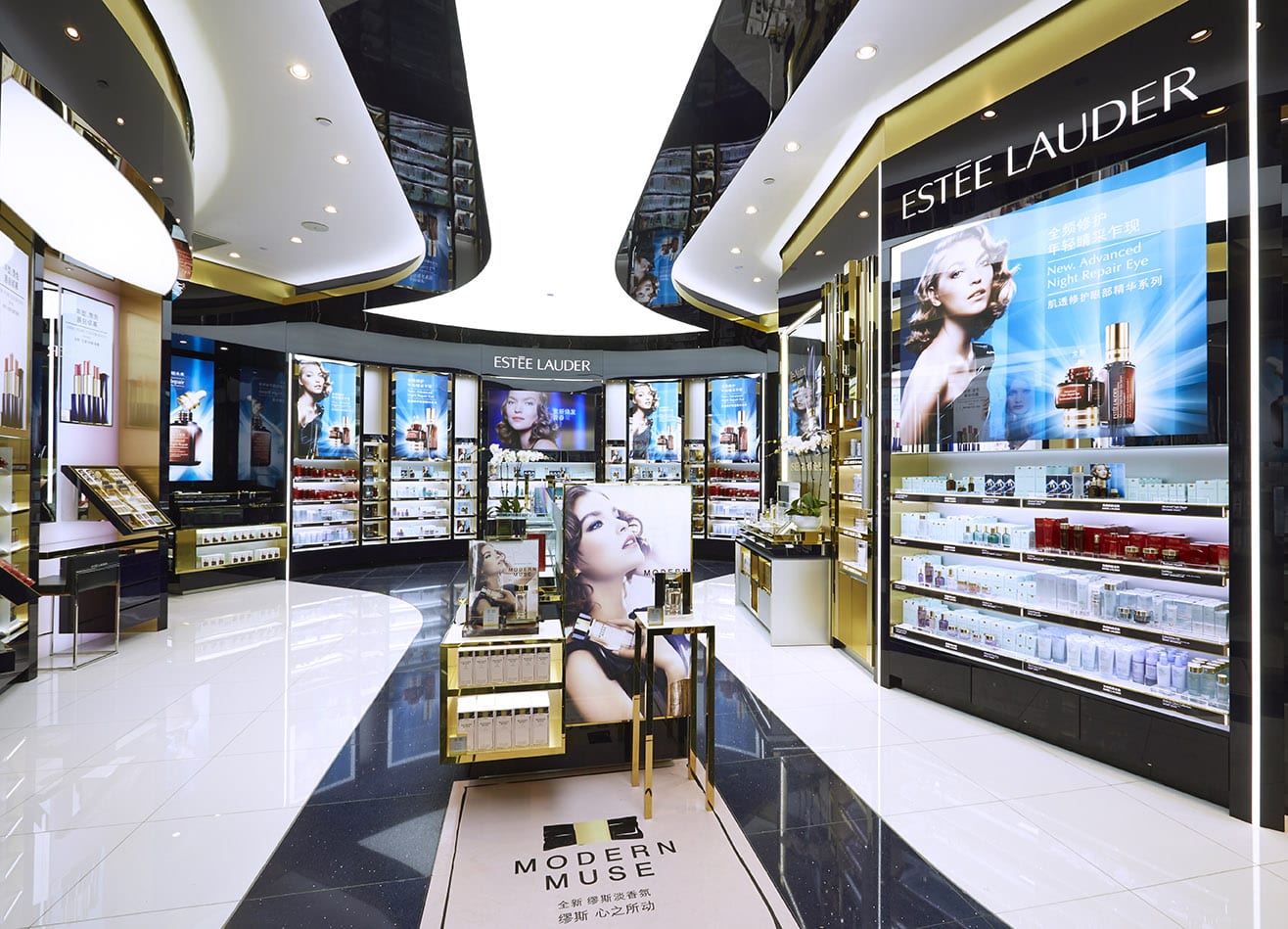
    The  store, which opened its doors late last year, introduces what the brand describes as “a fresh, dynamic and welcoming environment for shoppers to immerse in the luxury and modern glamour of the brand”.

    The new store is designed as an expression of the Estée Lauder story, which represents the brand’s distinctive architecture through cohesive and complementary design elements.

    Estee lauder Haitang Bay 2 215

    The Haitang Bay store was designed with Chinese consumers in mind: local preferences have shaped what products, categories and services take centre stage in the uniquely branded environment.

    Estée Lauder’s “Re-Nutriv lounge” provides a semi-private area where its luxury skincare experts showcase the Re-Nutriv collection; the fusion of the latest technology breakthroughs and exquisite, rare and precious ingredients.

    Estee Lauder Haitang Bay 1 215

    The setting features transforming visuals to announce newness using LED monitors and backdrops and offers a wide range of experiences to engage the consumer from complete self-navigation to expert service. Shoppers are able to explore any brand’s skincare, colour or fragrance collections on their own around the perimeter of the store or can seek advice from a beauty advisor.

    A ‘decompression zone’ offers a more intimate and personalised interaction with beauty advisors. Estée Lauder’s proprietary “Beautiful Skin Studios” are equipped for a complete consultation, while the alternate side of the area is set-up for shorter, more impromptu service.

    Best sellers and a Beauty Express zone present key brand products at different price points. Each fixture displays multi-category products to encourage cross-selling as well as more variegated exploration for the consumer.


  • Shake Shack Japan bound

    Shake Shack Japan bound

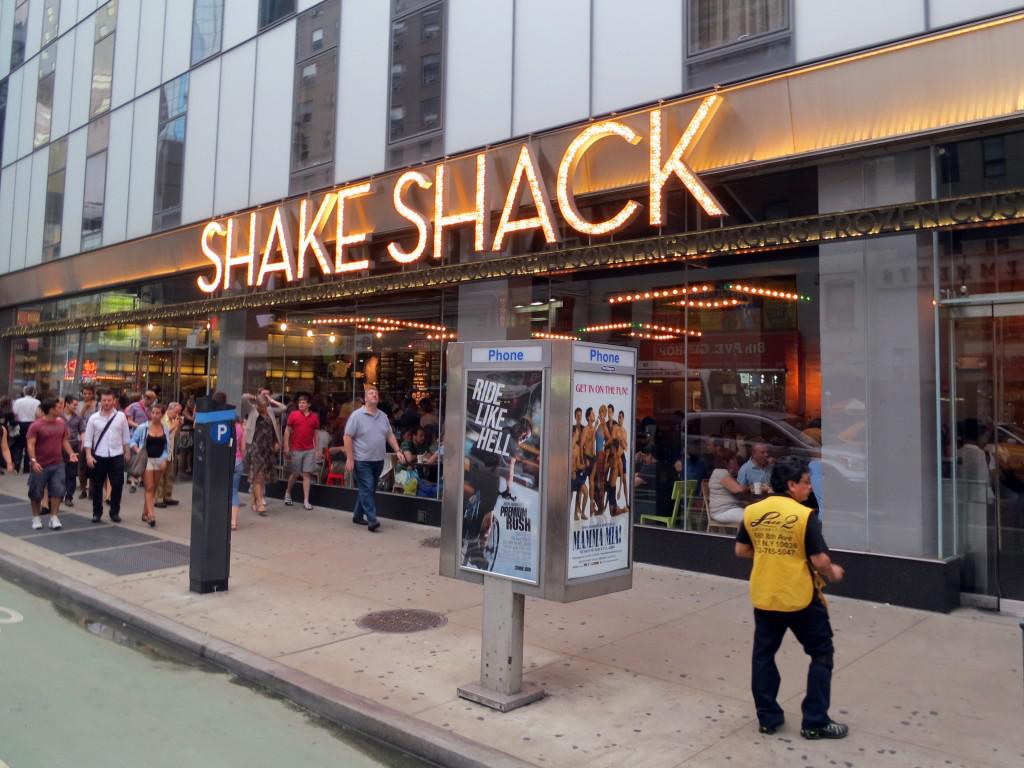
    US burger chain Shake Shack is headed for Asia.

    The company says it has signed a licensing agreement with Japanese company Sazaby League, local operator of Starbucks. The two companies plan to open 10 Shake Shacks in Japan by 2020, with the first, in Tokyo, scheduled to open in 2016.

    Shake Shack, headquartered in New York, raised US$105 million in a recent IPO and is using the funds for expansion at home and abroad.

    At the time of the IPO it ran 63 restaurants in the US, 15 of them in New York. It also has stores in London, Istanbul and Moscow and plans 10 new restaurants this year as part of a longer term plan to expand to 450 outlets.

    The chain is known for burgers, milk shakes and crinkle-cut fries.

    Its Japanese restaurants will have a menu which retains core items from the brand, but is tailored to the local palate.

  • UnionPay, Travelex launch NiHao card

    UnionPay, Travelex launch NiHao card

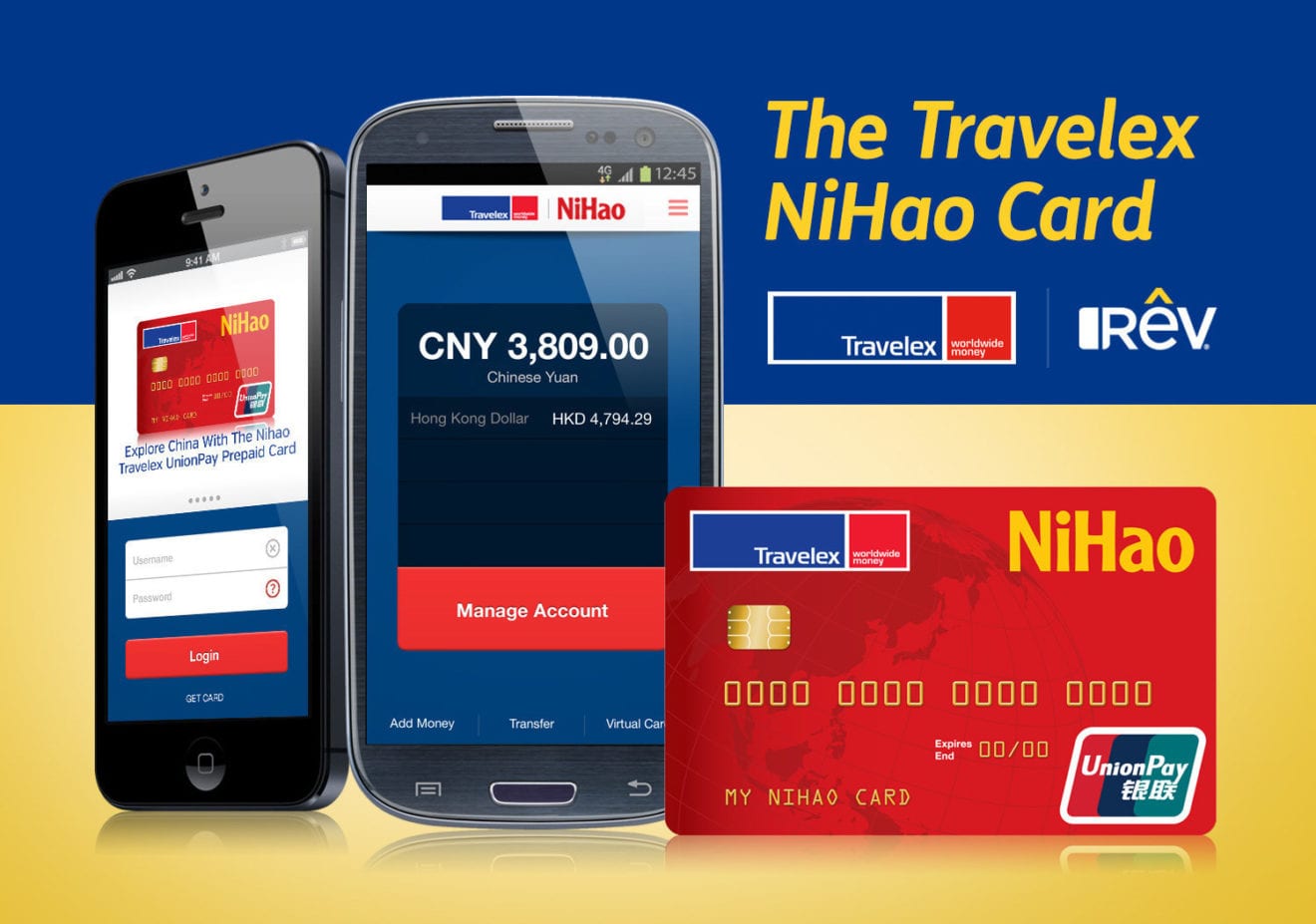
    Rev Worldwide  and foreign exchange specialist Travelex have launched a new prepaid card for Chinese tourists called Travelex NiHao Card.

    The reloadable prepaid travel card will work in association with UnionPay International.

    The Travelex NiHao Card is an instant-issue reloadable UnionPay prepaid product now available over the counter at all Travelex branch locations throughout Hong Kong, and is accepted at over 9.5 million retail merchants, and online, plus over 500,000 ATMs throughout China.

    The Nihao Card launch in Hong Kong marks the first Rev processed UnionPay card.  Rev and UnionPay International previously announced a partnership focused on innovative travel product expansion opportunities.

    “We know from our cash sales that China has always been a key destination for Hong Kong travelers so we’re thrilled to be able to launch this product in time for China’s biggest holiday of the year,” said a Travelex spokesperson.

    There are more than 1000 flights daily to over 180 destinations around the world from Hong Kong, including 45 to China, making it the ideal travel gateway city for international travelers within Asia. Hong Kong sees almost 63.4 million departures to international destinations per year, and 96.5 per cent of those departures are to China, Macau and other nearby Asian destinations.

    Additionally, Hong Kong travellers are some of the biggest spenders in the world, with an estimated US$22.8 billion spent on international travel-related expenses in 2014, making Hong Kong the fourth largest outbound travel market in Asia, according to the World Tourism Organization.

    As the technology partner and processor behind the NiHao Travel Card, Rev brings a proven payments processing platform for delivering innovative travel products around the world. Travelex distributes and markets the product directly to consumers.

    “This is an important development for us, beyond the launch of another innovative travel card, in that we are launching our first product intended for broad usage within China,” said John Mitchell, CEO of Rev Worldwide.

  • AsiaPay teams with Octopus

    AsiaPay teams with Octopus

    AsiaPay has partnered with Octopus Cards to offer Hong Kong consumers an expanded payment gateway for the Octopus Online Payment Service.

    The collaboration will offer an additional choice of payment gateway for Hong Kong’s online shoppers.

    The new platform allows customers to pay with their Octopus card when shopping with merchants connected to the AsiaPay payment gateway.  As the online shoppers check out their shopping carts, the browser will display the respective QR code and payment code. Customers only need to run the ‘Octopus’ App on their NFC mobile device to either scan the QR code or manually enter the payment code to retrieve the payment information. By simply placing the pre-registered Octopus at the back of their mobile device, users can instantly complete their payments and check their transaction records on the ‘Octopus’ App, as an added protection.

    The two companies said the partnership synergises Octopus’ high penetration, extensive and diverse networks in Hong Kong with AsiaPay’s payment gateway service.

    “This new payment gateway option is expected to further drive the development of mobile payment solutions in the local market.”

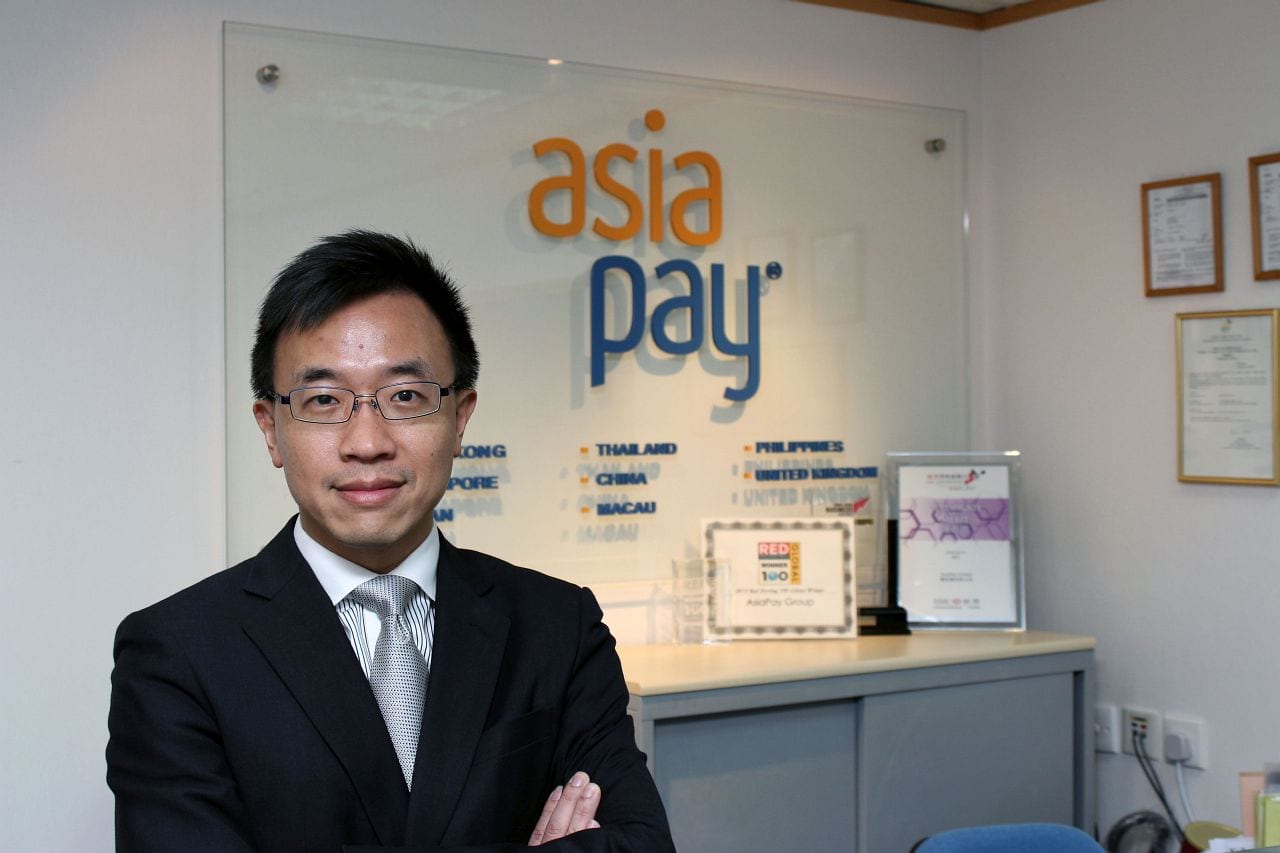
    Joseph Chan, CEO and founder of AsiaPay Group, said the new service will further address the growing demand for mobile payment options while increasing the productivity for payment processing.

    “AsiaPay is dedicated to exploring more diversified payment options leveraging advanced payment technologies, in offering merchants more flexible and easier payment methods for their business development.”

    Founded in 2000, AsiaPay, an electronic payment solution and technology vendor and payment service provider, provides advanced, secure, integrated and cost-effective electronic payment processing solutions and services to banks, corporate and eBusinesses internationally, covering international credit cards, China UnionPay, debit cards and other prepaid card payments.

    Headquartered in Hong Kong, AsiaPay offers its professional ePayment solution consultancy and local service support across its other 12 offices in Asia including: Thailand, Philippines, Singapore, Malaysia, Mainland China, Taiwan, Vietnam, India and Indonesia.

  • Lazada Philippines guns for more mobile footprint

    Lazada Philippines guns for more mobile footprint

    Online shopping mall Lazada is cooking up a revolution. On the 25th of February, a national holiday in the Philippines observed annually to commemorate the anniversary of a popular uprising, it is holding a one-day shopping event exclusive to mobile shoppers.

    Inanc Balci, CEO of Lazada Philippines, believes that the timing is right for the mobile power sale. Mobile traffic, he said, now constitutes more than 50 percent of daily traffic of Lazada.com.ph. The Lazada Mobile App downloads have also grown 18 percent month-on-month on iOS and Android since its launch in early 2014.

    This, he said, is being driven in large part by the increasing adoption of smartphones and mobile Internet in the country.

    “The smartphone penetration is expected to hit 50 percent within 2015, which means tripling the number within the year, increasing 22 percent year-over-year in the last two years,” Balci said.

    The country’s 16.7 million mobile Internet users (in a population of over 100 million) is indeed a huge market and still has huge potential for growth.

    While infrastructure remains a challenge in the country with often slow Internet connectivity, and expensive, limited bandwidth, local telecommunications companies are relentless in providing innovative mobile Internet solutions through mobile Internet bundles and freebies.

    “The mobile Internet access is increasing tremendously in the Philippines. Thanks to telco companies, they are making more investments and more people can access the Internet. The mobile phone manufacturers – the local brands – are also coming up with new products that are making it easier for Filipinos to buy smartphones,” he said.

    The availability of applications and the coming of music streaming services have also made it more appealing for digital consumers to increase their usage of their smartphones.

    “Yes, people are buying smartphones but we want people to use their smartphones as well for various applications and to enable them to live easier lives,” Balci said.

    Up for grabs in the upcoming one-day flash sale include consumer electronics devices, including Apple’s iPhone 6, Cherry Mobile’s Me Vibe, Meizu’s MX4 and a wide assortment of power banks at attractive price points.

    Not surprisingly, Balci said 60 percent of those who shop via mobile are female customers between the ages of 24-35, which is slightly higher than the desktop average but at the same time significantly higher than the regional average. Overall, Lazada customers are between the ages of 18 and 25.

    Fashion, health and beauty, electronics, as well as home and living items are currently the most search and bought items via mobile.

    The Lazada chief disclosed that Lazada mobile also tend to shop during lunch breaks (from 11 a.m. to 1 p.m.) and before they go to bed (from 9 p.m. to 10 p.m. Each mobile app and mobile browser user spends an average of 5 minutes shopping online;

    The holiday could give mobile users a breathing space from the daily grind and more time to shop.

    Mobility and convenience

    By pursuing a sales pitch anchored on mobility and convenience, Lazada is hoping more Filipinos will warm up to the idea of mobile shopping.

    Balci noted that the Philippines has also over a one-million strong workforce in the business process outsourcing industry (BPO), working in shifts in all time-zones across the world.

    “Their time shifts allow them to have more shopping hours. They are tech savvy and has high disposable incomes,” he said, adding that Lazada data shows that there is a sales increase after midnight during the graveyard shift.

    In an interview with Maximilian Bittner, CEO of Lazada Group, last year, he told Enterprise Innovation the challenges in setting up general merchandize destination websites in Southeast Asia, are huge. However, the opportunity is equally big, given the steady rise of mobile phone ownership and growing economies in the region.

    Since the launch of the e-commerce sites in five Southeast Asian countries in 2012 – Indonesia, Thailand, Malaysia, the Philippines and Vietnam – the company has been striving to address the specific needs each market.

    Balci is pursuing the same track in the Philippines with its strong focus on the customer experience.

    “We started investing in mobile early. When we came to the Philippines, we knew that despite mobile penetration being low, it is increasing very high,” Lazada

    One of the important issues on online shopping the company has addressed in the Philippines is the low penetration of credit cards.

    By offering to accept cash on delivery, it has allowed shoppers with no credit cards to shop online. Currently, majority of its customers said in a recent survey that paying for purchases upon delivery is what they like most about shopping on Lazada, followed by option to pay on installment and other flexible payment schemes. It has also thrown in other perks such as extensive warranty commitments and free returns.

    In a price sensitive market, another strategy is providing dedicated deals and discounts on the mobile platform.

    “Everyday, we curate a group of products and we offer them at the lowest prices on mobile in order to give the customer an incentive to use this new way of shopping,” Balci said.

    This is on top of the big deals that the online shopping mall regularly provides customers such as the mobile power sale this week.

    Shopper experience

    “The user experience is very important because it is easy to come up with an app, but if you don’t come up with the right app, then you end up hurting the e-commerce experience because e-commerce, m-commerce or social commerce is a big ecosystem. You need to cover everything by providing the same experience.

    Balci said Lazada works closely with smartphone brands, especially the local manufacturers, in working to enhance the mobile experience for users.

    “Keeping in mind that the purchase rate is higher on the mobile platform, it is very important for us to meet the needs of these customers,” he said.

    With its success in the online retail space, Balci said the company has no plans to venture into offline retail, and prefers to remain a pure-play e-commerce player.

    “We are very focused on online marketing, which we think is the most efficient way of marketing and we want Lazada to be perceived as a purely online shopping mall,” he said.

    Although mobile commerce started slow in the Philippines because of the limited infrastructure and low smartphone adoption, the growth is huge that Balci said the country is poised to be one of the largest e-commerce market in Southeast Asia in two to three years.
  • Apple to revamp its stores

    Apple to revamp its stores

    Apple is in the process of redesigning its stores, drawing on the design expertise of Jony Ive.

    Ive, Apple’s head designer, revealed he’s working with retail boss Angela Ahrendts on a revamp of its stores in a lengthy profile with the New Yorker magazine.

    As Apple’s senior vice-president of design, Ive has emerged as the company’s creative soul, continuing an aesthetic tradition set by co-founder Steve Jobs. Ive was responsible for the build and the finish of the iMac, the MacBook, the iPod, the iPhone, the iPad, and the forthcoming Apple Watch.

  • Online pawn debuts in Philippines

    Online pawn debuts in Philippines

    Pioneer online pawnshop PawnHero has come to the rescue of Filipinos with urgent cash needs.

    In the Philippines, only two out of 10 Filipinos have bank accounts and fewer than five per cent have credit cards. Most don’t have access to affordable credit. As such, many fall prey to loan sharks or turn to physical pawnshops, which charge high interest rates.

    Launching this week, PawnHero (https://pawnhero.ph) – Southeast Asia’s first online pawnshop – seeks to solve the problem of expensive credit for ‘base-of-the-pyramid consumers’ in emerging markets.

    “We provide an easy, fair, and convenient way of overcoming short­-term cash needs. This is a completely new way of doing business in the industry,” chairman and co-founder David Margendorff told.

    Unlike bricks-and-mortar pawnshops in the Philippines, which usually only accept jewellery, PawnHero also accepts gadgets, electronics, and luxury handbags.

    All customers need to do is take a picture of the valuable they wish to pawn and in minutes, they’ll receive an estimate for their item. They can choose to have the item picked up by PawnHero’s logistics partner 2GO or to drop it off at any of the over 900 affiliated 2GO outlets nationwide. The whole process isn’t only convenient, it also breaks the stigma around pawnshops as it eliminates the need to line up at physical outlets, which can be embarrassing and intimidating for some.

    “You need not have a bank account. We will provide you with a free PawnHero Card, a debit card you can use at any ATM nationwide, shop at any Bancnet-accredited merchant, or online store. Your money will be deposited to your account immediately after we have received and appraised your item. Packages are fully insured and shipping is on us,” explains Margendorff.

    “When it’s time to redeem your item, you may simply contact one of our customer representatives or use your PawnHero Card to pay for your loan and the company will ship back the item to you, again fully insured and free of shipping charges,” he said.

    PawnHero goes all out to give traditional pawnshops a run for their money. Because of the use of technology, it is able to offer half of the monthly interest physical pawnshops offer, according to Margendorff. Even better, he says, “there are no hidden costs and no penalties for late payments”.

    Margendorff says consumers may also sell their valuables to the platform and eventually, the platform will launch an eCommerce feature to sell unclaimed loaned items at affordable prices.

    “It’s a more convenient solution than eBay or OLX since you wouldn’t need to research the price for your item or create an ad or wait for a potential buyer. We’ll take care of everything, even shipments,” boasts Margendorff.

    PawnHero is the first such platform in Southeast Asia, but the concept itself is already proven in mature markets like the UK and the US where online pawnshops iPawn.com, Pawngo.com, andBorro.com operate.

    Emerging markets, particularly the Philippines, could be profitable for online pawnshops, if they are successful in capturing the customers of traditional outlets. Traditional pawnshops in the Philippines have grown from around 4000 in 1995 to over 17,500 today, compared to only 9000 banks, according to Margendorff. The total estimated loan volume recorded by pawnshops has grown at a compound annual growth rate of 27 per cent since 1995 to about US$1 billion in 2014. An estimated one million Filipinos visit pawnshops every day.

    But with its online-only presence, PawnHero faces challenges, too. For instance, clients who pawn are likely in need of cash on the spot and the waiting time for shipping could be a hindrance. Some clients may also be hesitant to send their valuables without receiving cash right away.

    Margendorff says they’re trying to work around these concerns.

    “I agree that PawnHero might be less interesting for those who need money on the spot. But we’ve put a lot of hours into making the value chain more efficient to provide the best customer experience possible. To give you an example, if you inquire about a loan on a weekday morning and accept our estimate before lunch, the item will be picked up the same day, even on Saturdays. It will be delivered and appraised before midnight.

    “If you think about how much time and hassle you save from travelling back and forward to multiple pawnshops to get an appraisal for your item or renew your loan, I believe we can make a big impact.

    “We went out on the street to ask our future customers how they would feel about a delayed payment. We were amazed by the result. Out of those who went to a pawnshop before, 63 per cent feel comfortable with the delayed payout, while 67 per cent feel safe with 2GO picking up their items. 2GO already has a strong brand in the Philippines. Once items are picked ­up, they are kept in one secure storage facility, and in the unlikely event that an item gets lost or stolen, PawnHero will pay for the damage – up to the initial estimate or agreed loan amount.”

    Margendorff has a strong background in the Philippine financial system. He was among the first on the ground to build financial comparison site MoneyMax in the Philippines. During this stint, his team met with banks and learned how only a small portion of the population had access to credit cards and other banking products.

    He began to wonder: what was the immediate option for Filipinos?

    “I started researching and found that 72 per cent of the population went to a pawnshop before. Pawnshops outperform the number of banks in the country. That was when the idea for PawnHero was born.”

    He got seed investment from Hatchd Digital, led by angel investors Manny Ayala and Nix Nolledo, and then worked on building the platform, growing the team, incorporating, and applying for a pawnbroker license from the central bank. Its partner 2GO also invested in the start-up.

    Margendorff says they’re trying to get more investors on board. Receiving their license in January was a key to raising more funds.

    “We spoke to VCs like IMJ, Golden Gate Ventures, Softbank, and Kickstart – just to name a few. All of them really liked the concept but without the license and a single customer, it was too early for them to invest. Now that we are just about to launch, we can continue speaking with them and others.”

  • Uniqlo Japan offers tax-free service

    Uniqlo Japan offers tax-free service

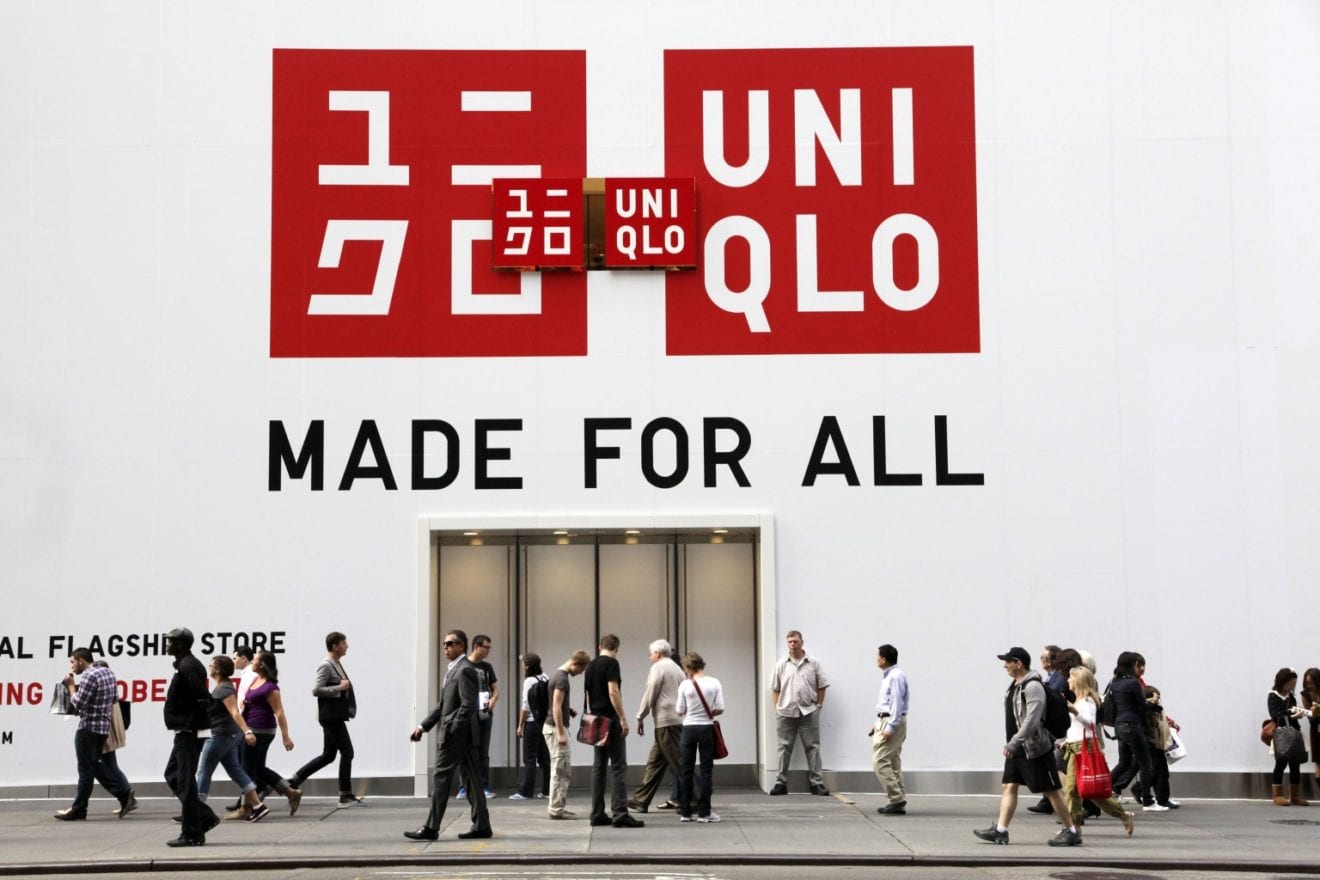
    Uniqlo Japan will offer tax free shopping for overseas visitors to Japan at 31 large stores across the country.

    The service debited last week and allows overseas shoppers to avoid Japan’s eight per cent consumption tax.

    Uniqlo previously offered tax free shopping to overseas tourists at outlets within Haneda and Chubu international airports. But following a Japanese Government revision of the consumption tax exemption system for inbound tourists last October, Uniqlo launched tax free shopping on a trial basis at the Uniqlo Ginza flagship store and Shinjuku East Exit Store in December – including dedicated tax free check out points and increased multilingual staff.

    Uniqlo describes the response as “overwhelmingly positive” encouraging it to expand the service to 31 additional stores popular with tourists. More stores will follow.

    Government data shows the number of inbound tourists into Japan reached a record high in 2014.

    To use the service customers require a non-Japanese passport (a copy or other forms of ID are unacceptable). Foreign residents of Japan are ineligible. Customers must present the purchased items and receipt to be eligible.