Tag: asia

  • Globe Backs Digitalization Plans Of New Philippine Government

    Globe Backs Digitalization Plans Of New Philippine Government

    Globe Telecom has announced that it supports the digitalization plans of the Philippines’ new administration.

    One of the leading digital solutions providers, Globe stated that it is ready to collaborate with the government to provide its industry leading product line and services to improve digitalization in public offices and agencies, as well as deliver speedier and more reliable transactions to the public.

    Globe’s CEO, Ernest Cu, said in a statement, “We welcome the new administration’s goal of increasing digitalization in government for streamlined processes. This will ultimately redound to improved public service– an aspiration that Globe deeply shares with the government as we serve a customer base of 92 million people.”

    He added, “Our network and infrastructure are ready to support the government and we look forward to working closely with the new administration to achieve this shared goal.”

    Globe has so far installed 234 additional cell sites across the country as of the first quarter of 2022, pursuant to its goals of 1,700 new sites this year. And it has put up 91 new tower companies, each on air since the beginning of this year.

    The company also upgraded more than 3,500 mobile sites, and accelerated its 5G coverage by installing 380 new 5G sites, all by the end of the first quarter of this year.

  • Singapore Forging the Next Wave of Digitalization

    Singapore Forging the Next Wave of Digitalization

    After being conducted virtually for two years, ATxSG was held in-person as Singapore’s largest technology event since the reopening of borders. Jointly organized by Infocomm Media Development Authority, Singapore (IMDA) and Informa Tech, the event brought together more than 16,000 hybrid attendees from more than 80 countries, including senior government leaders from Singapore, Malaysia, Indonesia, Estonia and Mongolia. Telecom Review Asia Pacific took the opportunity to speak with Kiren Kumar, Deputy Chief Executive (Development), IMDA, to learn about efforts to accelerate Singapore’s digital economy, focused on advancing 5G and ICT development.

    Singapore has embarked on 5G. Can you tell us about Singapore’s approach to 5G and steps to advance 5G development in Singapore? How will industries benefit from 5G adoption and how does IMDA facilitate this shift?

    The power of 5G is not just about consumers, but enterprise growth and innovations. With IoT and network slicing, the ability of 5G to support various industries by providing dedicated connectivity like a private network, and allowing users to configure massive sets of sensors, opens up huge potential for commercial use cases. In addition, the virtualization and software-driven nature of 5G means it creates opportunities for companies to build enterprise platforms.

    Therefore, to realize the potential of 5G, Singapore pushed for an aggressive rollout of 5G networks based on standalone (SA) network specifications, instead of 5G non-standalone specifications first, which was the approach in most other jurisdictions. This allows for the delivery of the full-fledged capabilities and performance of 5G such as network virtualization, intelligence at network edges, and dynamic provisioning of differentiated services for different use cases. The 5G SA networks today already cover at least half of Singapore, which is ahead of schedule, and Singapore is on track for nationwide 5G standalone deployment by 2025.

    At the same time, Singapore is also actively seeding lead industry demand. Since 2019, IMDA has been working closely with industry players to experiment with new and innovative 5G solutions in areas such as cloud gaming, advanced manufacturing, port operations and smart cities. For example, IMDA has been partnering with IBM, Samsung and M1 to develop Singapore’s first 5G Industry 4.0 trial. This involves having 5G enabled, AI “Smart Glasses” to help factory operators identify defects in realtime. IBM will deploy this 5G-enabled augmented reality solution, at their global manufacturing sites, starting in New York later in 2022.

    We recognize that to enable our 5G efforts, people and R&D are key. IMDA has been supporting Singaporeans to take on these emerging opportunities through training in 5G skills, to bring Singapore into the digital future. We have partnered with our Mobile Network Operators, the National University of Singapore and Singapore Polytechnic to set up a 5G and Telecoms Academy in 2020 to equip professionals with 5G skills. To date, more than 4,000 Singaporeans have already been trained through the academy.

    Separately, S$70 million will be invested in future communications technologies such as 6G, specifically in the areas of research, innovation, training of local talent, and international partnerships. As part of our national Future Communications and Research and Development Programme, we have signed an MoU last year with the world’s first and leading 6G research and development program funded by the Academy of Finland. A similar MoU with the Korean Institute of Communications and Information Sciences has been signed.

    Spectrum is an important resource to support 5G growth and meet increased connectivity demands in the foreseeable future. How does IMDA carry out spectrum management and policymaking to ensure that spectrum is optimized to drive Singapore’s continued growth in a digitalized era?

    In a connected world where there is a constant need for data, faster communications and higher definition media, the demand for spectrum resources continues to outstrip the available supply. To support Singapore’s digital economy and maximize the value of spectrum for economy and welfare of consumers, appropriate and efficient allocation of scarce spectrum resources and forward-looking spectrum planning processes is imperative.

    To support future technological developments, IMDA monitors the trends and developments of new wireless technologies and reviews the frequency allocations, to better plan spectrum needs and demands. Moving ahead, it is anticipated that new technology trends, such as the next generation of mobile technology, advancement in the use of unlicensed spectrum e.g., Wi-Fi 6E and increased use of satellite services will continue to transform the ICT industry.

    As Singapore is a small and open economy, IMDA formulates its spectrum allocation strategy and plans by aligning with international developments, ensuring harmonization of our national spectrum usage regionally and internationally, and adopting policy positions that maximize our domestic interests.

    Can you tell us about partnerships or collaborations to foster enterprise transformation in Singapore to positively impact the economy? What are other initiatives taken to propel SMEs and accelerate digitalization across businesses?

    COVID-19 has turbocharged digitization and many businesses now recognize that they can no longer do business in the traditional way. Businesses, including SMEs, see digitalization not just as a necessity for survival but also as an opportunity to reinvent and bring their businesses to the next level.

    It can be daunting for SMEs to digitally transform their businesses. This is why the government has put in place support schemes and initiatives to help SMEs digitally transform. To increase baseline adoption, IMDA has rolled out a suite of schemes facilitating SMEs’ adoption of digital utilities, such as e-payments and e-invoicing, at scale with additional support for basic and advanced solutions that address the needs of SMEs in the various sectors and at different maturity levels under the SMEs Go Digital Programme. To date, more than 80,000 enterprises have benefitted from the program, including a quarter of them coming on board in 2021 alone. Three in four firms now adopt at least one digital solution.

    To enable every SME to be a digital SME, IMDA has scaled up our efforts so that SMEs have the confidence to use digital technologies to transform their business models and take on new opportunities in the digital age. IMDA’s Chief Technology Officer-as-a-Service (CTO-as-a-Service) enables SMEs to conduct self-assessment of their digital needs via a one-stop platform. It also provides SMEs with quick access to digitalization resources and a shared pool of digital consultants for comprehensive digital advisory and project management services.

    For local companies that are more digitally progressive, we have launched the Digital Leaders Programme (DLP) that helps such companies, across all industries, accelerate their digital transformation plans. To do this, the DLP supports companies in building in-house digital capabilities, and integrating digital into their core business strategy so that they can develop innovative business models and capture new growth opportunities.

    For companies who want to start innovating, IMDA has a national platform for digital innovation, called the Open Innovation Platform (OIP). Enterprises with business problems can get support to define their problem statement, crowdsource for innovative solutions from tech companies, and be supported across the prototyping process. Since 2018, OIP has facilitated 300 challenges with more than $8.5M in prize monies, powered by a pool of more than 11,000 solution providers. Some companies which took part in challenges on our OIP have gone on to transform their operations and scale these solutions globally.

    There is a global ICT talent shortage amid a rapidly-digitalizing landscape. What does IMDA do to address talent shortages to cope with future needs?

    The demand for tech talent globally has risen exponentially, largely driven by the growth of the tech sector and broadbased digitalization across industries and companies. Likewise in Singapore, we already see strong demand for tech talent across the entire economy, ranging from software developers and network engineers to cybersecurity and product development specialists. This is not just within the ICT sector, but also in sectors like finance, manufacturing and professional services. To ensure that companies have ready access to globally competitive tech talent, IMDA works closely with enterprises, institutes of higher learning (IHLs) and other stakeholders to maximize our tech talent pipeline and to ensure that Singapore continues to be a vibrant digital economy.

    First, we equip graduates from IHLs with the right skills and experiences to be industry-relevant. We train them for areas of current need, as well as in emerging tech areas. For example, on top of established computing programs in our IHLs, we have worked with the Singapore Institute of Technology to create a new Bachelor of Science in Applied Computing with a specialization in FinTech. We are actively working with our IHLs and companies to ensure that Singapore continues to produce competitive deep tech talent and graduates who are well versed in using technology regardless of their specialization.

    Second, through the TechSkills Accelerator initiative (TeSA), we have supported over 7,000 companies, comprising local companies and foreign MNCs operating from Singapore, to hire, train and retain their tech team. TeSA collectively bridges companies’ talent needs with a supply of skilled and ready-to-be-skilled talent, and further develops existing employees through support on tech courses and industry-recognized certifications. Since 2016, we have trained over 160,000 Singaporeans and placed more than 12,000 Singaporeans in tech jobs.

    Third, together with Singapore’s Ministry of Manpower, we have put in place a transparent framework to give businesses better clarity and certainty to facilitate the entry of global talent with in-demand tech-skills. Singapore remains open to global talent to complement the strong Singaporean talent pool to drive new innovations and digitalization of our economy


  • Dragon Capital buys 2.1 million shares of Sacombank

    Dragon Capital buys 2.1 million shares of Sacombank

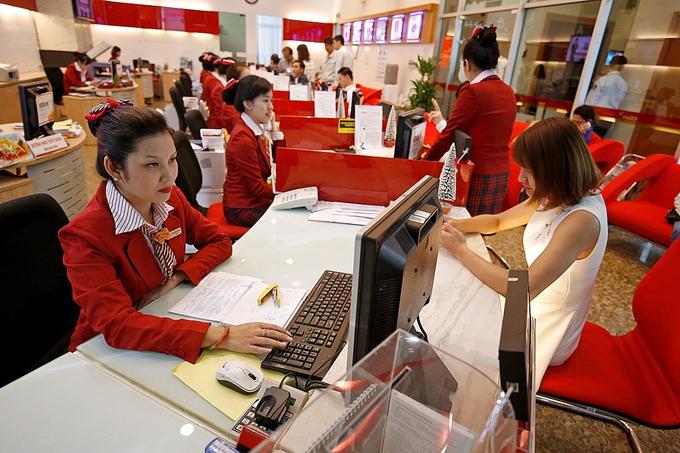
    Asset management company Dragon Capital has bought 2.1 million shares of HCMC-based Sacombank, increasing its stake in the bank to 6.09 percent.

    On June 29, two affiliated funds, CTBC Vietnam Equity Fund and Norges Bank, bought 2.3 million shares of the lender while a third, Samsung Vietnam Securities Master Investment Trust, sold 200,000 shares.

    The value of the deal is estimated at VND47.5 billion (US$2.03 million) based on the share’s closing price last Wednesday.

    Funds under Dragon Capital own 114.8 million shares or a 6.09 percent stake in the bank.

    In March, Dragon Capital had raised its stake from 4.98 percent to 5.05 percent, after its largest fund, Vietnam Enterprise Investment Limited, bought 1.25 million shares.

  • 2 new casinos proposed for foreigners

    2 new casinos proposed for foreigners

    The Ministry of Finance is backing proposals by Da Nang City and Khanh Hoa Province to license two new casinos meant exclusively for foreigners.

    The casinos would be built at entertainment and resort complex Sun World Ba Na Hills in Da Nang City and Hon Tre Island in Khanh Hoa Province, it said in the proposals it has forwarded to the government.

    The two locations have large tourism potential and are especially attractive to foreign visitors, it added.

    Da Nang has no major casino yet, while Khanh Hoa has received approval to build a casino and resort complex in KN Paradise in Cam Ranh, and construction is ongoing.

    But the ministry refused to back a proposal to build a casino by the central province of Binh Thuan, deeming its tourism potential low and pointing to its lack of port or airport.

    The ministry also recommended the extension of a trial program allowing Vietnamese to gamble at the Phu Quoc Casino until 2024.

    With gambling considered a “social evil” in Vietnam, locals have only been allowed to enter the casino since the end of 2018 in a trial program originally meant to last three years.

    But the finance ministry is now seeking to extend it since casinos were hit hard by the Covid-19 pandemic in the last two years.

    The Phu Quoc Casino saw revenue grow by 9.5 percent in 2019 and 2020 before falling by 10 percent in 2021.

    Vietnam has nine casinos, including three major ones on Phu Quoc Island in Kien Giang Province, Quang Nam Province and Ba Ria – Vung Tau Province.

    All nine lost money last year.

  • Sneaker Boutique atmos Reduces Online Cart Abandonment and Increases Revenue with Forter

    Sneaker Boutique atmos Reduces Online Cart Abandonment and Increases Revenue with Forter

    Forter, the Trust Platform for digital commerce, announced Foot Locker atmos Japan G.K., a sneaker boutique, has selected Forter to help combat fraud in its online store. Since deploying Forter, atmos has significantly reduced chargebacks and maintained an approval rate of over 98%.

    Previously, atmos used a rules-based, manual fraud prevention solution. However, fraudsters were able to exploit the system’s weaknesses. The company also deployed 3D Secure to provide an extra layer of authentication at checkout, but this introduced unnecessary friction for good customers and led to a higher cart abandonment rate.

    With Forter, atmos has addressed both challenges by fully automating its fraud prevention program and replacing 3D Secure. The company’s partnership with Forter has maximized genuine customer experience and lifetime value by making precise decisions about customer trustworthiness at critical interactions. This has reduced friction for good customers, reduced the cart abandonment rate and grown revenue.

    Forter’s platform is powered by the largest network of retailers, meaning a fraudster known to one of its customers is known to all. Forter applies machine learning to deliver decisions that are 100% automated, with average response times under 400 milliseconds. Since the platform has no dependency on manual reviewers, it scales seamlessly as merchants grow.

    Mr. Okayama, General Manager of atmos’ EC Business Department, said, “With the previous rules-based system, it was challenging to discern between legitimate and fraudulent transactions, and the need for manual reviews placed a heavy burden on operations. While the introduction of 3D Secure reduced chargebacks, the friction it caused increased cart abandonment rates. Forter’s fully automated solution solves these challenges by removing the need for manual reviews, increasing our accuracy and streamlining the buyer’s journey.”

    Yosuke Noda, Forter’s Country Manager for Japan, said, “We are very pleased to be working with a leading brand like atmos to deliver precise decisions about customer trustworthiness at critical interactions. This decisioning helps atmos improve customer experiences while driving revenue,” said Mr. Noda.

    Foot Locker atmos Japan G.K.

    The name of the store, “atmos,” is derived from the word “atmosphere,” and we want to be a store that is as natural to be there as the atmosphere itself. atmos” opened its head store in Harajuku, Tokyo in 2000. With the theme of sneakers as fashion, a sneaker wall was set up inside the store. The store is dedicated to introducing Tokyo’s sneaker culture to the world through collaborations with national brands, exclusive models, test launches of the latest products, and marketing.

  • FedEx and eBay Team Up to Boost APAC Businesses Through New E-commerce Offerings

    FedEx and eBay Team Up to Boost APAC Businesses Through New E-commerce Offerings

    FedEx Express, a subsidiary of FedEx and one of the world’s largest express transportation companies, announced a new alliance with eBay, a leading e-commerce marketplace platform for fast-growing and established brands worldwide. eBay sellers in the Asia Pacific region can now sign up for a FedEx account and gain access to the full spectrum of FedEx e-commerce delivery service options at competitive rates.

    Marketplace sales account for 67% of e-commerce globally, with the Asia Pacific e-commerce market expected to grow by about 14% annually, reaching US $352.68 trillion by 2030. This collaboration will help propel e-merchants – especially small business owners – amidst booming e-commerce in the region, driven by consumers’ changing behaviors toward shopping online accelerated by the pandemic.

    Through this collaboration, eBay sellers will be able to provide their customers with a more premium delivery experience powered by FedEx shipping solutions. Key benefits under the current strategic program include:

    • Competitive rates: eBay sellers will receive competitive discount rates on FedEx Express services.
    • Enhanced shipping capabilities: FedEx offers eBay sellers a wide range of services that are critical for cross-border e-commerce, including FedEx Electronic Trade Documents; FedEx Home Delivery, which now delivers seven days a week; a portfolio of flexible, simple returns options; and the FedEx Hold-at-Location which gives consumers a choice to have their packages delivered conveniently and safely to various grocery stores, pharmacies and FedEx Office locations.
    • Direct contact with FedEx: eBay sellers will get their own FedEx account to use any shipping solution from the vast portfolio that FedEx provides. Additionally, eBay sellers can contact FedEx directly for pickups and billing questions, as well as to order shipping forms or other delivery supplies, reroute packages and manage their My FedEx Rewards account.

    “E-commerce has become the new growth engine behind the APAC economy. Logistics services providers like FedEx, therefore, play a critical role in helping e-commerce businesses deliver seamless customer experiences from online to the physical world,” said Kawal Preet, president of Asia Pacific, Middle East and Africa (AMEA) at FedEx Express. “We’re thrilled about this collaboration with eBay that enables easier access to more markets through our international logistics services. By providing international shipping solutions at highly competitive rates, we are helping eBay sellers make the most out of our premium services and products as they continue expanding overseas.”

    “eBay has been driving retail export in the region and enabling our sellers to grow their business via our global marketplace,” said Jenny Hui, General Manager of Cross Border Trade, Hong Kong, Taiwan and Global Emerging Markets at eBay. “Shipping is a critical component of the cross border e-commerce ecosystem. Teaming up with FedEx, one of the world’s most well-respected e-commerce transportation and logistics carriers, gives our sellers access to a unique set of capabilities and rates, which ultimately enables them to provide their global customers with retail-standard buyer experience.”

    The collaboration reflects the latest effort in strengthening the FedEx leadership in the e-commerce ecosystem through strategic collaborations with leading marketplaces and technology providers. To date, FedEx has integrated with more than 17 marketplace providers, including BigCommerce, an open SaaS e-commerce platform, allowing hundreds of thousands of e-tailers across Asia Pacific direct access to FedEx services, using their FedEx account number, to manage shipments and grow their cross-border e-commerce business.

  • Cebu Pacific Resumes Sydney Flights With Its Airbus A330neo

    Cebu Pacific Resumes Sydney Flights With Its Airbus A330neo

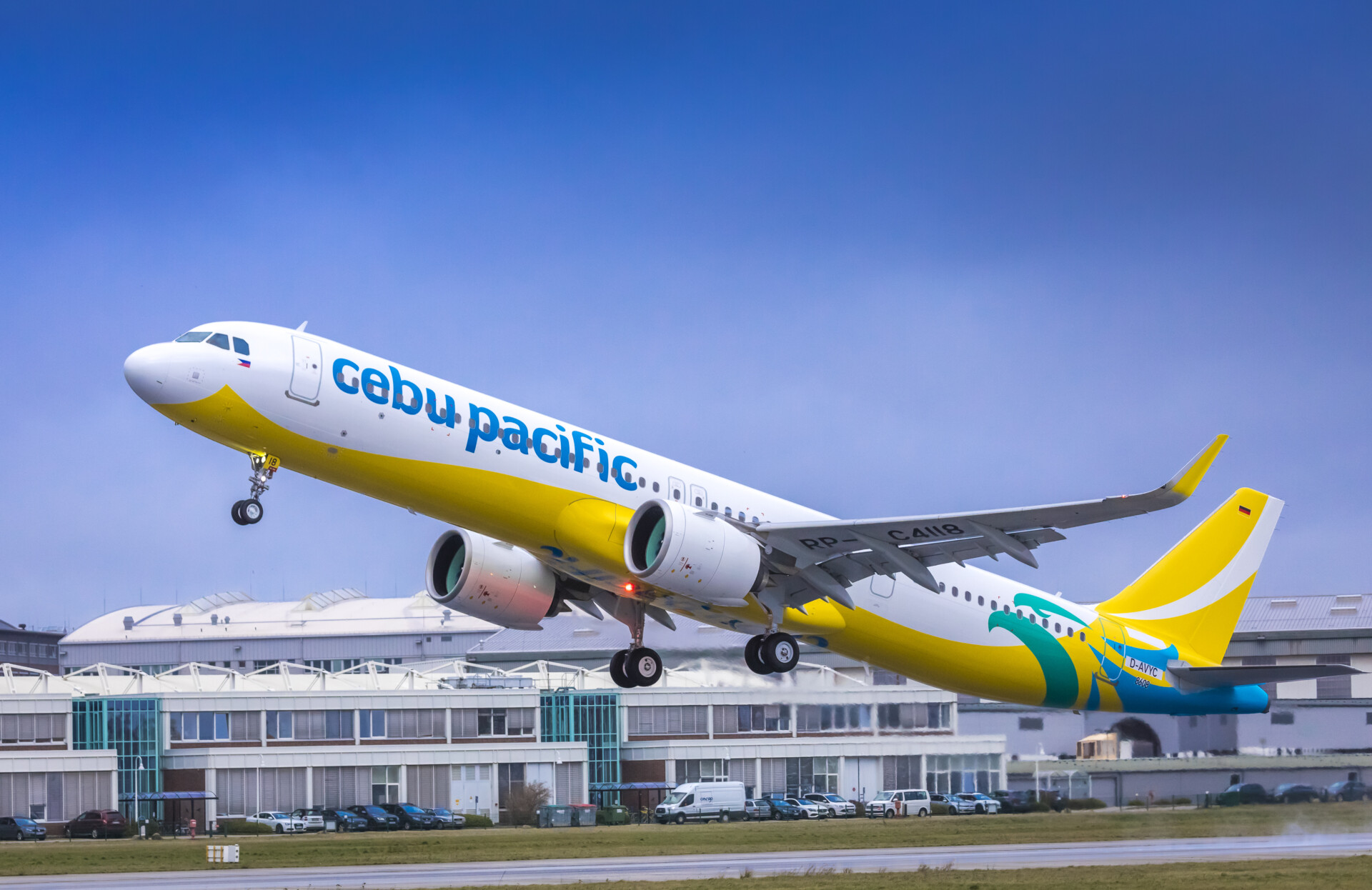
    Another international airline has returned to Sydney, with Cebu Pacific resuming its popular flights between Sydney and Manila on July 1. Cebu Pacific had carved out a niche in Australia by offering a low-cost alternative to Qantas and Philippine Airlines before the pandemic but paused its flights in March 2020. Now the airline is back with thrice-weekly return flights.

    The return of Cebu Pacific is another step forward for Sydney Airport, which lost a lot of carriers at the pandemic’s start. Most, but not all, have returned or planned to return and the airport is keen to get as many former airlines back as possible. In 2019, the most recent year of uninterrupted flying for airlines, 776 660 people flew on the Australia – Philippines country pair, with airlines offering 3,429 nonstop flights. Cebu Pacific competed with Qantas and Philippine Airlines on the country pair, with the low-cost carrier snagging 35% of the market in terms of passenger numbers.

    Landing in Sydney on a wild and wet Saturday morning, Cebu Pacific was the last of the three carriers to resume flights between Australia and the Philippines.

    “With this route resumption, we are pleased to fly once again to and from this destination after more than two years,” said Cebu Pacific Chief Commercial Officer Xander Lao. “We know that many are excited to visit Sydney’s attractions. This route also allows Filipinos to reunite with friends and family.”

    It takes around eight and a half hours to cover the 3,879 miles (6,243 kilometers) between the two cities. The flights down to Sydney are overnight services, while flights up to Manila are civilized daytime journeys. At 23:20 every Monday, Wednesday, and Friday, a Cebu Pacific Airbus A330-900 will operate flight 5J39 to Sydney (SYD), arriving at 09:50 the following day. Heading up to Manila (MNL), 5J40 will depart Sydney at 11:20 every Tuesday, Thursday, and Saturday and touch down in Manila at 17:50 on the same day.

    While Cebu Pacific generally undercuts its competitors on this route, you’ll be on the receiving end of an authentic medium-haul low-cost flying experience. Cebu Pacific fits 436 passengers on its A330-900s in a standard 3-3-3 layout across the entire plane. This is an impressive number of passengers, but there won’t be much room to move during your eight-plus hours in the air. Baggage, seat selection, and meals are all add-ons.

    Cebu Pacific’s return to Australia coincides with that country dropping the last of its COVID-related travel restrictions. The longstanding policy of checking vaccination certificates and current status before boarding an Australia-bound flight ends this week. Australia is also axing its previously compulsory but deeply flawed digital passenger declaration app in favor of returning to the low-tech but infinitely preferable hard copy arrival declaration. It marks a return to pre-pandemic arrival processes in Australia.

    Meanwhile, the Philippines is open to all fully vaccinated international tourists as they can present proof of complete COVID-19 vaccination and at least one booster shot. However, there do remain some domestic travel restrictions and guidelines imposed by the national and local governments to help control the spread of COVID-19 within the Philippines.

  • Apple receives patent for technology that helps iPhone users type in the rain

    Apple receives patent for technology that helps iPhone users type in the rain

    Apple has just been awarded a new patent from the U.S. Patent and Trademark Office called “Modifying functionality of an electronic device during a moisture exposure event” that could make it easier to use an iPhone in the rain. Sure, your phone is probably built to withstand some moisture, but that doesn’t make it easy to type on a wet display or with wet fingers.

    Apple plans to have the iPhone screen adjust to the moisture whether it is light rain, a steady drenching, or if the handset is being used underwater. False taps on the screen generated by the liquid will be detected by the technology listed in the patent and eliminated. On-screen controls could change accordingly with buttons growing larger while also moving farther apart from other buttons to improve the accuracy of pressing the right button when the screen is wet.

    At the same time, the capacitive iPhone display would automatically change to a pressure-sensitive screen similar to Apple’s no longer used Force Touch and 3D Touch technologies. To prevent rain drops or liquid from accidentally setting off touch inputs, Apple would require these finger presses to have more force than a dynamic threshold that would change depending on the kind of moisture event (light rain, heavy rain, for example) that is making the touch screen hard to accurately type on.

    An image in the patent documentation shows an iPhone camera app offering settings for “dry,” “wet,” and “underwater” modes. Depending on the mode, changes are made to the camera UI. For example, in wet mode, some features are removed from the UI while in underwater mode, some controls are replaced with extra-large buttons. They are easier to activate underwater but have restricted functionality.
    The phone’s display will show the current depth of the device in order for the user to keep it within the limits of the handset’s water resistance. Apple will have to take care with the size expansion and the location changes of camera UI buttons to make sure that users do not get confused.
    Apple receives so many patents over the course of a year and not every one results in new technology that is implemented right away. It is not clear whether Apple will be interested in implementing this patent right away.
  • WhatsApp may soon let you hide your activity status

    WhatsApp may soon let you hide your activity status

    Sometimes, you might not want your friends on social media to know when you’re online. You probably don’t want to be disturbed, or you are a very privacy-oriented person and just don’t want others to know when you are on your socials. This is why apps like Messenger and Instagram have an option to hide your activity status, and soon, WhatsApp will have a similar feature as well.

    As spotted by WABetaInfo, WhatsApp is working on a way to let you hide your online status. From the screenshot below, we can see that the new option will probably be situated in the Last Seen section in the Privacy settings menu of the app.

    Most likely, you will be able to choose between hiding your activity status from everyone or concealing it only from those selected in the “Who can see my last seen” section.

    Although the screenshot was taken from the iOS version of the WhatsApp beta, the new “Who can see when I’m online” feature will most likely come to the Android and Desktop WhatsApp versions as well. However, keep in mind that this option is still under development, and some things might be changed when it is publicly released.

    Nevertheless, for quite some time now, many WhatsApp users have wanted an option to choose who can see their activity status. So, it’s great that the people behind WhatsApp have listened and decided to finally introduce such an option to the platform.

  • Lobster exports skyrocket in first half

    Lobster exports skyrocket in first half

    Lobster exports rose 30 times year-on-year in the first six months of the year to US$130 million, according to the Vietnam Association of Seafood Exporters and Producers.

    Besides, surging global demand has caused the prices of some lobster species to double.

    Tropical rock lobster has risen to VND1.7 million ($73) a kilogram and scalloped spiny lobster to VND1.4 million.

    Exports of shrimp products also rose in the first half, with shipments of processed whiteleg shrimp going up by 17 percent and those of black tiger shrimp by 20 percent.

    They fetched $2.3 billion, up 33 percent from last year. Shrimps account for 40 percent of Vietnam’s seafood exports.

    Shrimp exports to China, where production is affected by Covid restrictions, doubled to $275 million in the first five months.

    VASEP said Vietnam’s shrimp exporters face challenges like supply shortage and inflation but are coping by expanding farming areas and focusing on more demanding markets.

  • ZTE and Pakistan’s Zong Launch Dual-Band FDD Massive MIMO

    ZTE and Pakistan’s Zong Launch Dual-Band FDD Massive MIMO

    ZTE, together with Zong, Pakistan’s digital services front-runner, has commercially launched the dual-band FDD Massive MIMO in Zong’s existing 4G network, well satisfying the expansion requirements necessary for increasing 4G users and traffic.

    With ZTE’s FDD Massive MIMO solution, the deployment area’s 4G data traffic capacity has jumped by 21% while the average user throughput has increased by 40%, resulting in a 60% reduction in high-loaded cell counts.

    Zong has been leading the data market in Pakistan with its rapid growth in 4G users and data traffic. Total 4G data traffic in the year 2021 increased nine times over that of 2018, while the proportion of high-load cells increased from 3% to 17%. Therefore, Zong’s network effective solutions to meet its expanding network requirements.

    Zong is also a pioneer of exploring new technological solutions. It is known that FDD Massive MIMO is one of the key 5G technologies. It has now been successfully applied in the 4G network, bringing about great advantage. In September 2021, Zong together with ZTE successfully commercialized the first FDD Massive MIMO site in Peshawar. The FDD Massive MIMO has been operating well on 4G for both 1.8GHz and 2.1GHz dual bands, with the highest output power of 320W in the industry. In addition,, it has enabled the industry’s unique Smart Spatial Cell Groups (SSCG) technology, which realizes intelligent cell coverage adjustment based on user distribution, and improves cell capacity and spectrum efficiency.

    “Digital everything” is becoming a new priority of the telecommunications industry. FDD Massive MIMO is a much-needed technology to support global telecommunications operators in a highly-competitive market.

    By the end of May 2022, more than 170 sites were on air. Such large-scale commercialization of FDD Massive MIMO is becoming a new way of improving capacity and spectrum efficiency in 4G networks. Moving forward, Zong and ZTE will be committed to expanding the large-scale commercialization of the FDD Massive MIMO to further improve the capacity and spectrum efficiency of 4G networks.

  • Vietnamese currency hits 2-year low against dollar

    Vietnamese currency hits 2-year low against dollar

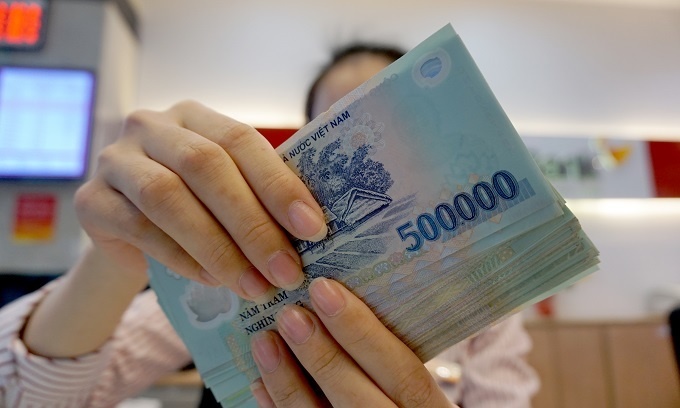
    Vietnamese banks on Monday traded the dong against the U.S. dollar at the lowest rate in two years as the greenback strengthens globally amid economic uncertainty. The Vietnamese dong declined by 0.3 percent from last weekend to VND23,510 per U.S. dollar at state-owned Vietcombank.

    It fell by 0.34 percent at BIDV and 0.26 percent at Vietinbank, also state-owned lenders. Among private lenders, the currency is 0.21 percent weaker at Sacombank, and 0.17 percent weaker at Eximbank. The changes came after the State Bank of Vietnam on Monday let the Vietnamese dong slide by 0.04 percent against the greenback to VND23,121, the lowest this year.

    It has been pumping more U.S. dollar into the market to reduce pressure on the exchange rate.

    RongViet Securities estimates that the central bank has sold over $10 billion to the market this year, or around 10 percent of Vietnam’s foreign exchange reserves, to stabilize the market.

    The U.S. Dollar Index has been hovering around a 20-year high mark since last month amid global economic uncertainty caused by the Russia-Ukraine crisis and supply chain disruptions due to China’s “zero-Covid” policy.

    Concerns of global inflation has urged investors to buy more U.S. dollars as a safe-haven currency.

  • Bamboo Airways to triple fleet size in 6 years

    Bamboo Airways to triple fleet size in 6 years

    Bamboo Airways plans to triple its fleet size to 100 by 2028, with new aircraft being delivered this quarter, despite major changes in its leadership.

    The airline is set to receive its 22nd narrowbody Airbus A321 jet and fourth widebody Boeing B7s87 this quarter, CEO and chairman Dang Tat Thang told shareholders at the recent extraordinary shareholders’ meeting of its parent company FLC.

    The airline currently has 29 jets, comprising 21 narrowbody aircraft, three Boeing B787s and five Embraer 190 regional aircraft, according to aviation data website Planespotters.

    Its competitors Vietnam Airlines operates 99 aircraft, and Vietjet 77. Thang became the new chairman of Bamboo Airways and FLC in March to replace Trinh Van Quyet who was arrested for alleged stock manipulation.

    The airline saw revenues rising 150 percent between the first and second quarter this year as travel resumed, Thang said. Bamboo Airways now operates nearly 200 flights a day on 60 domestic routes and 12 international routes, he added.

    It has recently increased pilot wages by 20 percent, he said.

    While FLC is set to experience a complete restructure this year, it will continue to expand Bamboo Airways’ operation both domestically and internationally, with the aim of making it a five-star airline of global standard, Thang said.

    “To achieve this goal, Bamboo Airways needs many new investors to increase its capital.”

  • AirAsia introduces trial flights to China

    AirAsia introduces trial flights to China

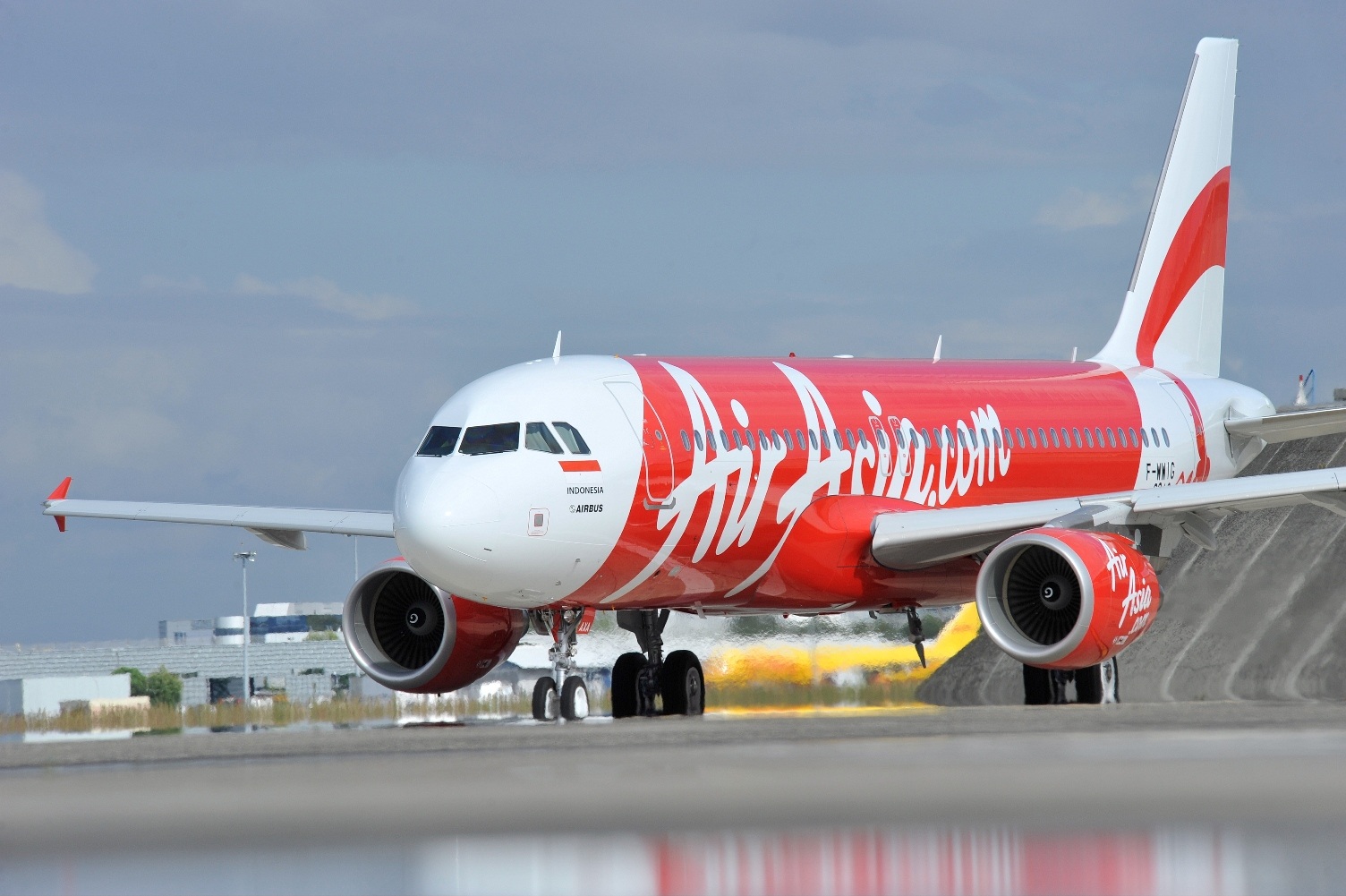
    AirAsia Thailand (flight code FD) will launch direct flights to China and Hong Kong from its Bangkok Don Mueang airport hub starting 7 August. Initially, the low-cost airline will fly a weekly service but hopes to increase flights to twice a week in September and three times weekly in October.

    Promotional fares start at around THB2,990 one-way for members for travel up to 8 December 2022 booked through the AirAsia Super App. A pilot roundtrip flight between Bangkok Don Mueang and Guangzhou is scheduled for 13 July, with tickets to Thailand available on the AirAsia Super App. The flight is being carried out to demonstrate the carrier’s readiness to serve routes to and from China as soon as China announces the country’s official reopening for outbound leisure travel.

    AirAsia Thailand chief executive officer Santisuk Klongchaiya stated: “These two initial routes provide us with an opportunity to welcome visitors to Thailand. With restrictions further relaxed in Thailand, we have been marketing heavily in China and Hong Kong to tap these tourism markets.”

    Travelers to Hong Kong are required to undergo screening procedures. Arriving travellers must be fully vaccinated. They must produce a Covid-19 test result and are required to undergo quarantine. The Don Mueang-Guangzhou flight will be subject to a policy by the China government, which has allotted a limited entry quota to Thai airlines.

    So far, China has offered no indications as to when it will reopen outbound tourism. However, industry pundits claim the reopening could be as early as the Chinese New Year holiday season in late January or February 2023. Travel to and from China is strictly controlled and mainly limited to essential business travel.

  • Apple Eyes Fuel Purchases From Dashboard As It Revs Up Car Software

    Apple Eyes Fuel Purchases From Dashboard As It Revs Up Car Software

    Apple Inc wants you to start buying gas directly from your car dashboard as early as this fall, when the newest version of its CarPlay software rolls out, accelerating the company’s push to turn your vehicle into a store for goods and services.

    A new feature quietly unveiled at Apple’s developer conference this month will allow CarPlay users to tap an app to navigate to a pump and buy gas straight from a screen in the car, skipping the usual process of inserting or tapping a credit card. Details of Apple’s demo for developers have not previously been reported.

    But Dallas-based HF Sinclair, which markets its gasoline at 1,600 stations in the United States, told Reuters that it plans to use the new CarPlay technology and will announce details in coming months.

    “We are excited by the idea that consumers could navigate to a Sinclair station and purchase fuel from their vehicle navigation screen,” said Jack Barger, the company’s senior vice president of marketing.

    Fuel apps are just the latest in a sustained push by Apple to make it possible to tap to buy from the navigation screen. It has already opened up CarPlay to apps for parking, electric vehicle charging and ordering food, and it also is adding driving task apps such as logging mileage on business trips.

    Fuel is a major expense for car owners. The U.S. Energy Information Administration estimated in April that the average U.S. household will spend about $2,945 on gasoline in 2022, or about $455 more than last year.

    Apple currently does not charge automakers, developers or users for CarPlay; the business interest is putting Apple at the forefront as cars transform into rolling computers, said Horace Dediu, an analyst with Asymco and founder of Micromobility Industries. The new feature will hit hundreds of car models already compatible with CarPlay when Apple releases software updates this fall.

    “Forget about Apple Car – Apple CarPlay is a bigger deal,” Dediu said. “It’s very likely to scale to millions and millions of cars, if not hundreds of millions.”

    To use the new CarPlay feature this fall, iPhone users will need to download a fuel company’s app to their phone and enter payment credentials to set up the app. After the app is set up, users will be able to tap on their navigation screen to activate a pump and pay.

    “It’s a massive marketplace, and consumers really want to take friction out of payments,” said Donald Frieden, chief executive officer of Houston-based P97 Networks, which makes the digital plumbing that many fuel companies will use to connect their apps to cars.

    Frieden said he has fielded calls from oil companies that are interested to make their apps work with CarPlay. BP, Shell and Chevron Corp did not respond to requests for comment about whether they plan to make their iPhone apps work with CarPlay.

    Apple’s latest move is likely to increase tensions with automakers that have their own ambitions for commerce in the car.

    For example, vehicle makers have tried – and failed – to popularize gasoline purchasing from the car before. General Motors Co rolled out a system for doing so in 2017, but shuttered it earlier this year “due to a supplier exiting the business,” GM told Reuters in a statement.

    Beyond apps for fuel and other purchases, Apple is also seeking to expand CarPlay further into the car’s driving systems by accessing speed and fuel gauge data.

    But automakers are not likely to hand over that data to Apple without making demands of their own in talks that analysts  believe are likely already under way.

    Speaking at the Reuters Automotive Europe conference in Munich on Wednesday, Mercedes Benz CEO Ola Kaellenius said the company’s goal “is to have a complete, holistic, Mercedes experience.”

    Kallenius said Mercedes would not seek to reinvent every category of app, but that “when interacting with companies that are in this digital domain … anything and everything that crosses into product liability relevance, we would be very cautious.”