Tag: asia

  • Uber Launches Robot Food Delivery In California

    Uber Launches Robot Food Delivery In California

    Uber Technologies on Monday said it launched pilot food delivery services with autonomous vehicles in two California cities, and said it was adding electric vehicle charging stations into its global driver app.

    The announcements are part of Uber’s annual product event where the ride-hail and food delivery company showcases the latest updates to its app.

    Uber announced one food delivery service using autonomous cars, and a separate pilot using sidewalk robots. Both services are available to Uber Eats users in Santa Monica and West Hollywood in California, and consumers will have the ability to opt out of the programs.

    The autonomous car pilot is in collaboration with Motional, the self-driving joint venture of Hyundai Motor Co and Aptiv PLC, and was initially announced in December. It launched on Monday, Uber and Motional said.

    Uber said the sidewalk robots are provided by Serve Robotics, a spin-off of delivery company Postmates, which Uber acquired in 2020.

    The vehicles in both services are actively monitored by human operators, Uber said, adding that “it will be some time before this technology is operated at scale.”

    Self-driving companies have repeatedly pushed out timelines to provide truly driverless trips at scale, with only a few limited fully autonomous programs available across the U.S.

    Uber on Monday also said it was launching a map of electric vehicle charging stations in its driver app in the U.S. this summer, and later worldwide, in an effort to promote drivers switching to a battery-powered vehicle.

    Uber, which aims to have only electric vehicles on its platform in the United States, Canada and Europe by 2030, said charging was one of drivers’ biggest obstacles to switching to EVs.

    The company also said it was launching an option this summer to rent party and coach buses, and passenger vans through its U.S. app in collaboration with rental service US Coachways.


  • Mercedes Readies Plants To Produce Electric Vehicles

    Mercedes Readies Plants To Produce Electric Vehicles

    Mercedes-Benz is adjusting its network of plants to  manufacture a new range of luxury electric vehicles as it prepares to switch to electric by the end of the decade.

    Mercedes aims to halve CO2 emissions per passenger car over the life cycle by the end of this decade compared to 2020.

    “We are ready for the rapid scaling of electric vehicle volumes,” said Joerg Burzer, board member for production and supply chain, adding the new setup followed talks between management and worker representatives.

    Plants in Sindelfingen, Bremen, Rastatt – all in Germany – and Kecskemet, in Hungary, will start production of new models in the top end luxury, core luxury and entry luxury segments from the middle of the decade, said Mercedes.

    Battery systems will be supplied by a production network with factories in three continents, it said.

    “The local production of battery systems is a key success factor for the Mercedes-Benz electric ramp-up and a decisive component in being able to meet the global demand for electric vehicles flexibly and efficiently,” it said in a statement.

  • Toku Steps Up Efforts to Eliminate Call Frauds in Singapore

    Toku Steps Up Efforts to Eliminate Call Frauds in Singapore

    Toku has become the first telco-service provider in Singapore, and Southeast Asia, to join the global AB Handshake Community. Asia Pacific’s cloud communications and Singapore-licenced telecom service provider, Toku is currently the leading provider of virtual numbers in Singapore, providing 60% coverage of all virtual numbers in the country.

    The Infocomm Media Development Authority (IMDA) welcomes Toku’s move to join the AB Handshake Community to proactively fight against fraudulent calls. It represents a timely intervention within the Singapore telco space. According to the Singapore Police Force, victims lost at least S$633.3 million to scams in 2021. Many of these scams relied on voice calls to dupe victims, such as banking-related phishing scams, fake friend call scams and impersonating foreign government officials.

    Findings in a new survey commissioned by Toku also revealed that out of the 1,000 respondents in Singapore, 87% have received a scam call recently, and 75% actually answered the call, with 10% of all the respondents have fallen prey and suffered monetary loss. These figures suggest that people in Singapore are still largely vulnerable to phone scams if they are not vigilant.

    “As a Singaporean company, we are committed to finding new ways of protecting the Singapore community from fraudulent calls that are affecting almost everyone. Call frauds are responsible for the loss of personal information, and the loss of billions of dollars for companies. As phone scammers are increasingly using sophisticated tactics to run their call scams, we strive to restore trust back in phone calls by eliminating fraudulent calls. As we gain momentum and work towards building a stronger, safer and fraud-free telco community, we strongly urge other telco players in Singapore to join in the ongoing efforts,” said Thomas Laboulle, Founder and CEO of Toku. “Looking beyond Singapore, we are prepared to take this initiative to the other countries in the region where we operate, starting with Malaysia and Vietnam. With the telco players in these countries on board, we would be able to ensure that 179.58 million numbers are protected from fraud calls by the end of 2024.”

    Nadejda Papernania, Founder of AB Handshake said, “We are pleased to be joining forces with Toku to expand the fraud-free global community to prevent fraudulent scam calls in the telecom industry, particularly in the Southeast Asia region. Our partnership with Toku will leverage the company’s industry expertise and in-market knowledge to encourage a growing community for other telecom players to join the community, which is an important step towards achieving a fraud-free community.”

    As the Asia Pacific region is a highly fragmented telco market, Toku is currently in discussions with other telco players and regulatory bodies to build a framework that will provide an additional layer of validation to prevent call frauds, and instil trust in the system for users and businesses to interact seamlessly without worry or concerns.

    Toku’s business in Singapore is already adhering to local telco regulations and licensing requirements. The InfoComm Media Development Authority (IMDA) of Singapore has recognised Toku as a Tier 1 Aggregator, which permits Toku to handle commercial SMS traffic. This includes anti-spoofing protocols for protected SMS.

  • PLDT, Smart Lauds Government’s New Cybercrime Lab

    PLDT, Smart Lauds Government’s New Cybercrime Lab

    Philippines’ major telecoms group, Smart and PLDT said it welcomes the country’s new Digital Forensics Platform and Laboratory launched by the Cybercrime Investigation and Coordinating Center, or ICC.

    The new facility aims to improve the government’s initiatives to fight cybercrime, especially, online sexual abuse and exploitation of children.

    Following the unveiling of this new laboratory, the group said that it has strengthened its cyber security systems as it continues its cooperation with the local government in fighting across the digital landscape.

    The new facility will help CICC to work closely with other law enforcement agencies in the country to conduct comprehensive digital and forensic investigations.

    The group’s Chief Information Security Officer, Angel Redoble, meanwhile stressed that they will continue to address these challenges in the cyberspace.

    “Children became more vulnerable to cyberattacks after the pandemic forced them to stay at home and get online to study and connect with friends, and cyber criminals have also been targeting them. We have fortified our cyber defenses and strengthened our coordination with the government to make the internet safer for kids.”

    According to PLDT and Smart, they have beefed up their efforts to support the government in its crackdown on online child abuse. By the end of May this year, it has blocked nearly 300,000 URLs linked to these criminal activities.

    The group has also collaborated with other private and public sectors in urging the country’s president to sign into to law the bill against online child sexual abuse before he steps down from office on June 30.

  • Snapchat+ officially launched a premium subscription

    Snapchat+ officially launched a premium subscription

    Snap has just announced the launch of a new premium tier for customers who want a little bit more features and faster support. The announcement comes less than a month since another social app, Telegram introduced a similar service for those who want extra features.

    Snap’s new premium tier is called Snapchat+ and is available in Snapchat for $3.99/month. Unlike Telegram that already informed customers about what they’ll get for the premium tier, Snap’s announcement is rather vague.

    According to the social company, Snapchat+ will offer “a collection of exclusive, experimental, and pre-release features.” As far as the reasoning behind the premium tier, Snap claims that the subscription will help the company provide fans willing to pay with new Snapchat features and “prioritized support.”

    For the time being, Snapchat+ will only be available in the United States, Canada, the United Kingdom, France, Germany, Australia, New Zealand, Saudi Arabia, and the United Arab Emirates. However, Snap confirmed plans to expand availability of its premium tier to more countries over time. Is this something that you’d pay for because it’s useful or do you think it’s just a cash grab?

  • UBS Strategy Chief Leaves After Short Tenure

    UBS Strategy Chief Leaves After Short Tenure

    After just one and a half years in charge, UBS’s head of strategy is leaving and changing his career course.

    UBS strategy chief Christian Zeinler is stepping down from his post at Switzerland’s largest bank to become an entrepreneur. CEO Ralph Hamers announced the move in a letter to employees.

    Chief of Staff Marsha Yuan will take over the function on July 1 on an interim basis in addition to her current role.

    Zeinler has been with UBS for about five years, and in February 2021, was entrusted by Hamers with the further development of group strategy in addition to his role as head of strategy development in the wealth management business. He also served as chief of staff to Iqbal Khan, co-head of Global Wealth Management (GWM). However, Zeinler wanted to continue his entrepreneurial journey outside the financial services industry, involving the development of a small- to medium-sized which will be primarily family-owned.

    Before joining UBS, he spent just over nine years in various roles at the strategy consulting firm McKinsey.

    By various metrics, UBS posted very good results last year and kicked off 2022 with its best start in 15 years. In addition to digitalization, the bank is currently pursuing a strategy focused on greater flexibility in the organization. During his five-year tenure at UBS, Christian has helped shape the future of our firm, Hamers wrote in the memo. UBS is not about to change horses and will be sticking to the existing strategy, Hamers said.

  • Collins Foods’ sales rebound as Europe reopens

    Collins Foods’ sales rebound as Europe reopens

    Listed fast-food chain operator Collins Foods has reported positive same-store sales growth across both its European and Australian markets despite a turbulent economic climate.

    The company’s Taco Bell and KFC franchisees in Australia achieved revenue growth of 11 per cent to $1.2 billion with KFC Australia delivering $955.5 million, up 6.1 per cent.

    KFC’s same-store sales have recovered in Europe with the Netherlands business registering an 18.8 per cent increase followed by Germany at 11.7 per cent. In the Netherlands, Collins Foods will likely open 130 net new restaurants during the next 10 years.

    Taco Bell’s revenue increased 27.5 per cent to $35.8 million with the addition of four new restaurants registering positive growth in the fourth quarter.

    Drew O’Malley, MD and CEO, said significant reinvestments in the business have helped support strong operating cash flow, strengthening the balance sheet.

    “The proven track record of consumer appeal regardless of economic conditions, combined with our relentless pursuit of operational excellence, ensures we are well-positioned to manage through the current inflationary environment,” the company said in its results announcement.

    “With our restaurants performing well and a strong pipeline of new sites, we will continue to grow our store footprint across our QSR brands.”

    The business has plans to open up to 12 more KFC stores in Australia and scale its Taco Bell business alongside.

  • Pinnacle Drinks launches tequila seltzer range

    Pinnacle Drinks launches tequila seltzer range

    Rey Loco, uses 100 per cent real Tequila to make its pre-mixed cocktails and has launched two new products to meet the growing consumer demand in Australia for the real stuff.

    The range is comprised of two products, Tequila Lime & Soda and Tequila Bloody Orange & Soda. While many Tequila premix brands use an agave spirit, Rey Loco is unique in the fact that both drinks are made with 100 per cent real tequila and contain 99 calories.

    Hard seltzers are projected to grow by 24 per cent in Australia and Tequila as a category is experiencing 34 per cent annual growth.

    The Rey Loco Tequila Lime & Soda is a refreshing sparkling, and slightly sweet with an edge of citrus Tequila taste. While the Rey Loco Tequila Bloody Orange & Soda showcases another delicious citrus combination by blending Tequila with fragrant blood orange topped with effervescent soda.

    Rey Loco is born from the love of Mucho Libre Mexican wrestling and inspired by the fun of Latina style telenovela storytelling represented in the artwork on each can.

    The perfect ready to drink beverage to have at home and enjoy with a group of friends while tucking into some delicious food, Rey Loco is an all year rounder for your fridge.

    Rey Loco can be found in most leading retailers and is $25.99 for a pack of four. Distributed by Pinnacle Drinks.

  • Luk Fook to add 500 stores this year and expand online

    Luk Fook to add 500 stores this year and expand online

    Hong Kong jeweler Luk Fook’s revenue and profit rose by around 30% to 40% for the full fiscal year that ended March 31, the company estimated.

    A low base of comparison with the previous year — which saw pandemic-related restrictions — is responsible for the increase during the period, Luk Fook said last week. In fiscal 2021, business in China was weak, and Hong Kong and Macau were on lockdown.

    The company’s expansion in mainland China, strong sales of gold products, and the easing of restrictions in Hong Kong and Macau also buoyed sales, it explained.

    The retailer saw an “encouraging recovery of retail atmosphere in the first three quarters of the year,” it noted.

    Reports from other Hong Kong-based jewelers indicated that the fourth quarter of fiscal 2022 and the start of the 2023 financial year had been challenging. Tse Sui Luen said sales had plunged sharply during the period amid the fifth wave of the pandemic, while Chow Tai Fook reported a 13% drop in the first two months of the current fiscal year.

  • UBS Offers its Compliance Knowledge via a Regtech

    UBS Offers its Compliance Knowledge via a Regtech

    UBS has put a great deal of effort into its compliance guidelines and action models. That accumulated legal knowledge is now being offered to third parties for the first time. UBS has compiled its financial market legislation and compliance knowledge in an expansive collection of documents. This know-how in the form of legal commentaries and the interpretation of laws is now being made available to other Swiss financial services providers, according to a statement on Tuesday.

    The offerings can be accessed via the Partnervine platform, a Zurich-based startup specializing in marketing legal texts and services. The financial guidelines FidSA and FinIA as well as the revised Collective Investment Schemes Act provide the framework for the action and decision paths developed by the UBS.

    The core element of the knowledge collection is a catalog of over 630 questions and answers that Swiss financial service providers can use for orientation. In addition, the collection contains decision trees, glossaries, tables, graphics, and cross-references to related topics and documents delivered in static pdf format.

    The documents are offered in English only, but forms are also available in German, French and Italian. Access can be purchased either as a complete package or as topic-specific access to separate, smaller bundles, and come as static PDF files, according to the statement.

    PartnerVine’s platform allows us to share our legal know-how on regulatory matters with other Swiss financial service providers helping them to navigate the complex regulatory environment, says Barbara Koch-Lehmann, group general counsel COO at UBS. She sees smaller financial institutions or asset managers, as a potential client group.

    It is much easier and cost-effective especially for smaller Swiss financial service providers to plug into UBS’s knowledge than develop it themselves. Because it is the first time that a large company has provided comprehensive access to their legal know-how, it is a major milestone for legal operations globally, says PartnerVine CEO Jordan Urstadt.

    Urstadt sees foreign banks operating in Switzerland as potential customers for UBS’s product, mainly because the documents are available in English. In Switzerland, the use is limited due to legal constraints.

  • HSBC Appoints Switzerland and EMEA Private Banking Head

    HSBC Appoints Switzerland and EMEA Private Banking Head

    A former executive vice-chairman of global wealth management of UBS Switzerland joins HSBC as head of Switzerland and EMEA private banking. Gabriel Castello is joining HSBC in Zurich and Geneva in July and taking on a wide range of responsibilities at the bank, the HSBC announced Tuesday.

    Subject to regulatory approval, Castello becomes the regional head of private banking for EMEA, CEO of the Swiss Private Bank, and country head for Switzerland starting in July. Switzerland is HSBC’s largest private banking operation in Europe.

    Castello brings more than 30 years of experience in private banking and wealth management and was previously at Quintet bank as a partner and member of the group executive committee. Before that, he was at UBS for 13 years in various roles, including CEO of France, head of wealth management in Latin America, and executive vice-chairman of global wealth management, UBS Switzerland. He also spent 17 years at CaixaBank in Spain and France.

    He takes over from Alex Classen who is leaving HSBC after nearly four years at the firm.

  • Tesco Mobile introduces roaming charges for EU travel

    Tesco Mobile introduces roaming charges for EU travel

    After Brexit became a reality, UK mobile operators were quick to promise that roaming charges for calls and data from within EU countries will not make a return. But, after the EU Trade Deal was finalized in 2021, it seems things changed.

    EE was first to cave and reintroduced EU roaming charges for its customers. Three, Vodafone, and Sky followed suit. Now, Tesco joins in.

    No announcement, no fanfare, Tesco changed its Terms & Conditions to include this change. Come January of 2023, any customers that have signed a new contract with the provider after June 6th 2022 (including) will need to pay for their mobile usage from within EU countries as follows — 10p per MB of data, 20p per SMS (no MMS while roaming), 55p per minute of regular voice calling.

    If you have entered a contract with Tesco before the aforementioned date, you will not be affected by the roaming charges until you renew or upgrade your service.

    Frequent travellers will be able to make use of various roaming bundles that Tesco will have on offer, making it cheaper for those that find themselves abroad more often.
    Out of all major carriers in the UK, Virgin Media and O2 have yet to introduce roaming fees for EU countries. In fact, so much so that you may be feeling tempted to check out some phone deals on Virgin or phone deals on O2. Vodafone’s Xtra plans can also include no-fee roaming for the EU and other countries abroad, so it’s great if you can find your favorite phone bundled with the right plan (Vodafone refreshes its phone deals once per month or so).
    By this point, EU roaming fees for all UK residents seem like an inevitability, with the only question being “when” the last operators will cave.


  • ZTE and IPMA partner for innovative project management in Philippines

    ZTE and IPMA partner for innovative project management in Philippines

    ZTE has signed an MOU (Memorandum of Understanding) on strategic cooperation with International Project Management Association (IPMA) Philippines in Manila. The strategic cooperation between IPMA Philippines and ZTE Philippines further recognizes ZTE’s mature corporate project management capability.

    This is ZTE’s first overseas IPMA corporate membership, and the company has become a corporate member simultaneously certificated by IPMA International and IPMA Philippines.

    IPMA is a non-profit international academic organization, with commitment to promoting professional development of international project management. IPMA, PMP and PRINCE2, are known as the three major international project management organizations. IPMA’s membership certification is widely recognized, representing the highest-level certification of project management across the globe.

    At the ceremony, IPMA Philippines and ZTE Philippines principally agreed on joint development and win-win collaboration. IPMA will invite ZTE to deeply participate in industry symposiums, industry forums and professional training meetings, as well as joint application for telecommunications-related awards and reviews of outstanding project management cases. In return, ZTE will give its priority to the interviewees who have passed the IPMA certification.

    “With the development of its business in the Philippines for more than 15 years, ZTE has extensive experience in project management and project delivery,” said Jin Zhichao, General Manager of ZTE Philippines. “ZTE is keen to explore and learn excellent experience and effective management approaches from different industries or IPMA corporate members, further improving the level of ZTE’s project management and corporate competitiveness. At the same time, we are willing to share our own experience with them.”

    “I am looking forward to the cooperation between the two parties. IPMA has been developing project management competencies for years, and regularly organized various symposiums and forums every year,” said Prof. Mariano Roque Senga, Chairman of IPMA Philippines. “I hope ZTE, as a leading enterprise in the field of telecommunication engineering, can participate in exploration and in-depth cooperation with other corporate members on project management approach.”

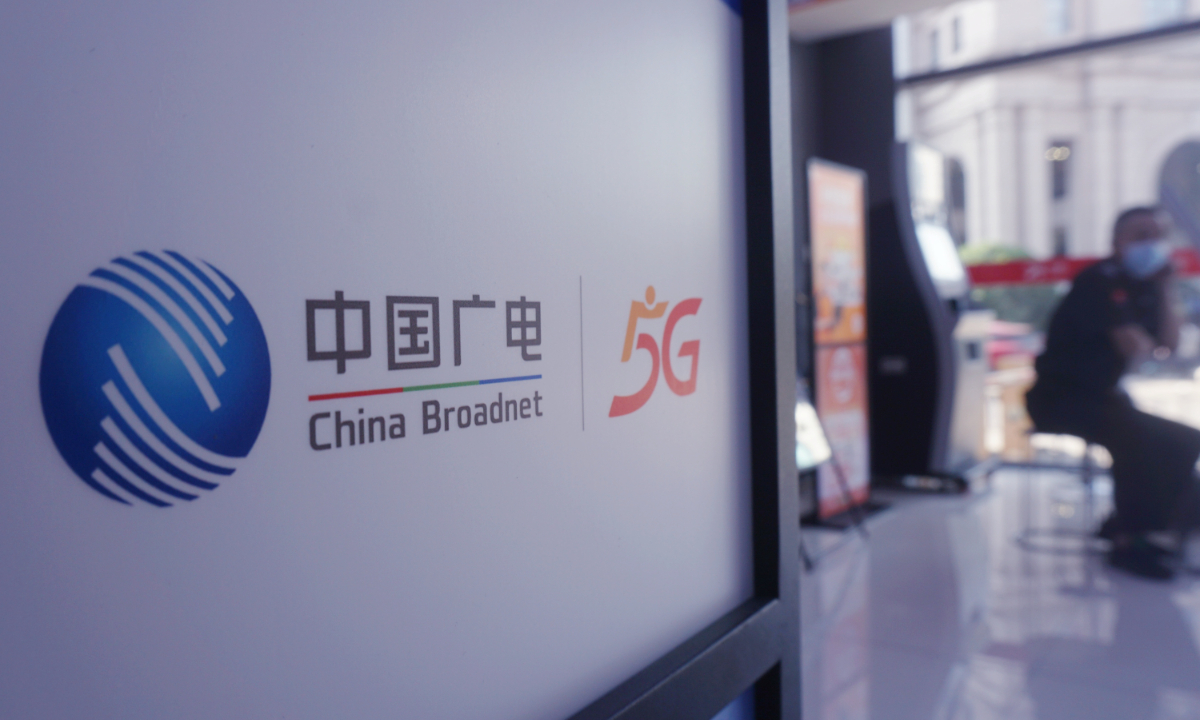
  • China Broadnet Launches 5G Services

    China Broadnet Launches 5G Services

    China Broadnet has officially launched its services, joining China Mobile, China Telecom and China Unicom to become the country’s fourth mobile operator.

    The state-owned telecom operator launched its official website to debut 5G mobile phone services on 27 June 2022. Integrating local radio and TV carriers across China, this service brings new developments to the integration of national cable TV networks and 5G.

    In 2019, China Broadnet obtained its 5G commercial license from the Ministry of Industry and Information Technology. It has been assigned the 700 MHz band to cater for wireless network developments nationwide. China Broadnet has also entered into an agreement with China Mobile to share its network.

    According to China’s Ministry of Industry and Information Technology (MIIT), the total number of mobile phone users reached 1.66 billion as of end of May. Of which, 428 million were 5G users, up 73.34 million from the previous year.

  • Covid causes more turbulence for Pacific Airlines

    Covid causes more turbulence for Pacific Airlines

    The Covid-19 pandemic stopped Pacific Airlines’ recovery and worsened its financial situation, which is “extremely serious,” its parent company, Vietnam Airlines, informed shareholders last week.

    “The shortfall in cash flow and large overdue debts pose the possibilities of insolvency and termination of operations,” the carrier said, adding that it is seeking investors to restructure Pacific.

    In 2018 and 2019, the airlines was on course to recover with profits of VND34.3 billion ($1.48 million) and VND48.6 billion against losses of VND346 billion and VND907 billion the previous two years.

    Its revenues peaked at VND8-9 trillion during the period.

    It posted profits of VND150 billion in January 2020, a monthly record, before Covid-19 hit the aviation industry.

    “If it weren’t for Covid-19, we would have made a big profit,” its chairman and Vietnam Airlines’ deputy director, Trinh Hong Quang, had said in mid-2020.

    That year the budget carrier ended up with a record loss of VND2.14 trillion as revenues plummeted to VND2.6 trillion, a fourth of the previous year’s figure.

    At the end of 2020 it had total assets of over VND6.6 trillion, but its equity had eroded and was in the red.

    In 2021, it lost nearly VND2.31 trillion. Speaking about plans to restructure its subsidiary, Vietnam Airlines said the investor selection process faced legal and other obstacles due to the fact it is a state-owned enterprise.

    If no agreement is reached, its own situation would be at risk, it warned.

    It plans to seek shareholders’ approval to amend a clause in its charter to allow sale of its equity to third parties at the upcoming annual general meeting.

    Pacific Airlines was founded over 30 years ago after authorities approved foreign investment in the aviation industry. As a budget airline, it was expected to increase Vietnam Airlines’ penetration and competitiveness.

    Vietnam Airlines owns 98 percent of the carrier, including 30 percent it got back from Australian airline Qantas in 2020.