Tag: asia

  • Industries hit hard by rising fuel prices

    Industries hit hard by rising fuel prices

    Sao Viet Bus, which operates on the northern route Hanoi – Lao Cai Province, is struggling to survive as the price of fuel, which accounts for 50 percent of costs, keeps rising.

    “If we do not operate regularly, we will lose our slots at bus stations, but the more we operate, the more we lose because of surging costs,” Do Van Bang, CEO of Sao Viet’s parent company, Minh Thanh Phat, said.

    Sao Viet has reducing the number of trips to cut costs.

    Bang said the only way to break even is to increase fares by 15-20 percent, but with competition being intense, the time is not right for it.

    But the company would not be able to absorb the losses for long, he added.

    The company is one of many to lose due to the 39 percent rise in fuel prices since the beginning of this year.

    Nguyen Manh Hung, CEO of transport firm International Logistics, said fuel accounts for 40 percent of costs, and so the increases in their prices has affected the company.

    It is not easy to negotiate price hikes with customers, he said.

    “We are trying to cut all other expenses to survive the fuel price surge.”

    Half of all fishing vessels in Vietnam have stopped going out to sea after diesel prices rose 1.7-fold since the end of last year, the Ministry of Agriculture and Rural Development said in a recent report.

    The cost of operating boats has risen by 35-48 percent, while seafood prices have only gone up marginally, it added.

    The chairman of garment company TNG, Nguyen Van Thoi, said its business has not been majorly affected by the fuel price surge as contracts have already been signed for the rest of the year.

    But it is seeing prices drop as consumer in its export markets are cutting spending due to inflation, he said.

    Huynh Thi My, general secretary of the Vietnam Plastics Association, said plastic companies are also in trouble as they cannot negotiate price hikes with foreign customers.

    Businesses are looking for new markets and suppliers with lower prices, she added.

    Businesses are petitioning for more tax cuts to lower fuel costs.

    The Ministry of Finance should reduce special consumption tax (currently at 10 percent) and value added tax (also 10 percent) on fuel so that businesses face no more burden, Bang of Minh Thanh Phat said.

  • Tesla Worker Rejects $15 Million Payout In Race Bias Lawsuit

    Tesla Worker Rejects $15 Million Payout In Race Bias Lawsuit

    A Black former elevator operator at Tesla Inc’s flagship California assembly plant on Tuesday rejected a $15 million award in his lawsuit alleging racial abuse by coworkers, opening the door for a new trial after a judge slashed a $137 million jury verdict. Lawyers for Owen Diaz, who had sued Tesla in 2017, turned down the judge’s award in a brief filing in federal court in San Francisco.

    They said in a statement that the award was unjust and would not deter future misconduct by Tesla. “In rejecting the court’s excessive reduction by asking for a new trial, Mr. Diaz is again asking a jury of his peers to evaluate what Tesla did to him and to provide just compensation for the torrent of racist slurs that was directed at him,” his lawyers said.

    Tesla did not immediately respond to a request for comment.

    U.S. District Judge William Orrick lowered the jury award, which was one of the largest of its kind in a discrimination lawsuit, to $15 million in April. He had also denied Tesla’s motion for a new trial, conditioned on Diaz’s acceptance of the lower award.

    Earlier this month the judge denied Diaz’s motion for permission to appeal that ruling and gave him two weeks to accept the lower award or agree to a new trial.

    Recently, Tesla shareholder filed a lawsuit accusing the company’s chief executive, Elon Musk, and board of directors of neglecting worker complaints and fostering a toxic workplace culture

    Tesla is facing a series of lawsuits involving alleged widespread race discrimination and sexual harassment at its Fremont, California factory, including one by a California civil rights agency.

    Last week, a Tesla shareholder filed a lawsuit accusing the company’s chief executive, Elon Musk, and board of directors of neglecting worker complaints and fostering a toxic workplace culture.

    Tesla has denied wrongdoing and says it has policies in place to prevent and address workplace misconduct.

    Diaz alleged that his colleagues and a supervisor subjected him to a hostile work environment that included slurs, caricatures and swastikas in his nine months working at the Fremont plant in 2015 and 2016.

    A jury had awarded Diaz $6.9 million of compensatory damages and $130 million of punitive damages last October, but Orrick in April said those numbers were excessive.

    Diaz’s lawyers in their statement on Tuesday said Orrick’s decision highlighted systemic bias that federal judges have against juries, which in turn violates the constitutional rights plaintiffs have to a trial by jury.

  • Nike forecasts downbeat quarterly revenue on lingering China worries

    Nike forecasts downbeat quarterly revenue on lingering China worries

    Nike forecast first-quarter revenue below estimates as it expects to discount more and wrestles with pandemic-related disruptions in China, its most profitable market.

    The company’s shares fell 3% to $107 after the bell.

    Analysts are mixed about Nike’s prospects in China this year even as strict COVID-19 lockdowns have been lifted in several of the country’s major cities, as people cut down on spending and a penchant for home-grown brands such as Li Ning and Anta remains firm.

    “We are taking a cautious approach to Greater China, given uncertainty around additional COVID disruptions,” Nike Chief Financial Officer Matthew Friend said.

    The company expects first-quarter revenue to be flat to slightly up, below estimates of a 5.1% increase, according to Refinitiv IBES data.

    “The guidance was somewhat disappointing,” Morningstar analyst David Swartz said.

    Fashion retailers in China are also stuck with piles of unsold stock as the recent re-opening has also seen a flood of goods being shipped from warehouses to store shelves.

    Nike said its gross margins would be under pressure this year due to higher freight and product costs, and as it discounts more to sell seasonal inventories that arrived late due to supply snarls.

    The company’s inventories rose 23% to $8.4 billion at the end of May as more of its products remain in transit due to supply disruptions.

    Nike also forecast fiscal 2023 revenue to increase in the low double digits percentage range on a currency-neutral basis.

    For the fourth quarter, the company reported revenue of $12.23 billion, beating estimates of $12.06 billion, helped by higher sales in Europe, Middle East and Africa.

    Nike recorded a $150 million charge related to its decision to exit Russia and transition of business models in a few South American countries.

  • Blue chip stocks hit weekly high

    Blue chip stocks hit weekly high

    Vietnam’s benchmark VN-Index rose 1.46 percent to 1,202.82 points Monday with most blue chip ending in the green. The index closed 17.34 points higher after losing 3.4 points Friday.

    Trading on the Ho Chi Minh Stock Exchange increased by nearly 21 percent to VND12.32 trillion ($529.7 million).

    The VN-30 basket, comprising the 30 largest capped stocks, surged to the highest in a week with 26 tickers gaining.

    SSI of leading brokerage SSI Securities rose 6.7 percent, extending its gaining streak to the fourth session in a row.

    NVL of real estate developer Novaland closed 6.5 percent higher, with trading value highest since last December.

    Other winners included PNJ of Phu Nhuan Jewelry, up 6.1 percent, and HPG of steelmaker Hoa Phat, up 5 percent.

    Four bucked the trend, led by VIC of Vietnam’s biggest conglomerate Vingroup JSC with a 1.1 percent drop. The ticker is now at a 27-month low, having fallen 42 percent from its peak last April.

    VNM of dairy giant Vinamilk, and MWG of electronics retailer Mobile World both lost 0.6 percent.

    VCB of the largest state-owned lender Vietcombank closed 0.1 percent lower.

    Foreign investors were net buyers to the tune of VND250.6 billion, focusing on VND of brokerage VNDirect Securities, CTG of VietinBank and GEX of Gelex Group.

    The HNX-Index at the Hanoi Stock Exchange, where mid and small caps list, was up 1.63 percent while the UPCoM-Index at the Unlisted Public Companies Market was up by 1.15 percent.

  • UBS Looks to Wall Street for Respect

    UBS Looks to Wall Street for Respect

    Kelleher, a 30-year Morgan Stanley veteran, became chairman earlier this year in what many viewed as a surprise announcement. His selection becomes obvious. He won the post over European candidates including Roche’s  Christoph Franz, former SNB head Philipp Hildebrand, and ex-Unicredit boss Jean-Pierre Mustier.

    UBS is one of the most valuable European banks with a price-to-book ratio of 1, compared to Wall Street firms JPMorgan and Morgan Stanley, each of which trade at 1.3. That puts UBS in company with Goldman Sachs and Wells Fargo. By comparison, Credit Suisse trades at 0.3 along with Societe Generale and Deutsche Bank. Barclay’s and HSBC claim ratios of 0.4 and o.6, respectively. According to the report, Kelleher and Hamers have spoken with major US investment houses such as Capital Group, T Rowe Price, Wellington, and Fidelity during their roadshow, in an attempt to persuade them to increase their holdings in UBS, which did not comment on the talks.

    Because UBS’ business is heavily focused on higher-margin wealth management and less on higher-risk investment banking, the bank’s board believes its market capitalization could be double its book value, one of the sources added.

    If we are a European bank with European investors, we will trade at one times book. The goal is two times.

  • H&M closes Shanghai flagship after Covid lockdowns

    H&M closes Shanghai flagship after Covid lockdowns

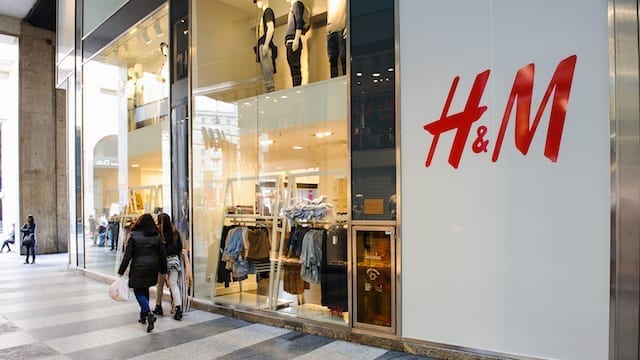
    H&M has shut its flagship Shanghai store, its latest closure in China where consumer demand has slumped amid COVID-19 lockdowns and the fast-fashion retailer has borne the brunt of a backlash against companies that refuse to use Xinjiang cotton.

    Although it was open earlier this month, the three-storey building in downtown Shanghai was on Friday boarded up with its H&M signage gone.

    The world’s second-biggest fast-fashion retailer entered China in 2007 with the opening of the Shanghai flagship store and rapidly expanded. It had more than 500 stores in mainland China early last year but its website currently only lists 376, including the flagship Shanghai store.

    The company declined to comment, citing a blackout period prior to its first-half earnings report on June 29.

    Although nearly a month has passed since Shanghai lifted a strict two-month lockdown, consumers have yet to return to malls in significant numbers.

    Chinese consumers have also beat a retreat from its products after a letter in which H&M expressed concerns about allegations of forced labour in the Xinjiang region came to light in 2021.

    Other brands that publicly disavowed Xinjiang cotton such as Inditex’s, Zara, Nike and Adidas have also suffered with Chinese netizens calling for boycotts and Chinese celebrities refusing to work with them.

    But the backlash against H&M, the first foreign retailer to express concerns, has been particularly harsh. Unlike other brands, its products remain unavailable on major Chinese e-commerce sites such as Tmall and JD.com.

    UN experts and rights groups estimate over a million people, mainly Uyghurs and other Muslim minorities, have been detained in recent years in a vast system of camps in China’s western Xinjiang region.

    Many former inmates have said they were subject to ideological training and abuse in the camps. China denies all accusations of abuse.

  • Zomato boosts Blinkit delivery stake for US$568 million

    Zomato boosts Blinkit delivery stake for US$568 million

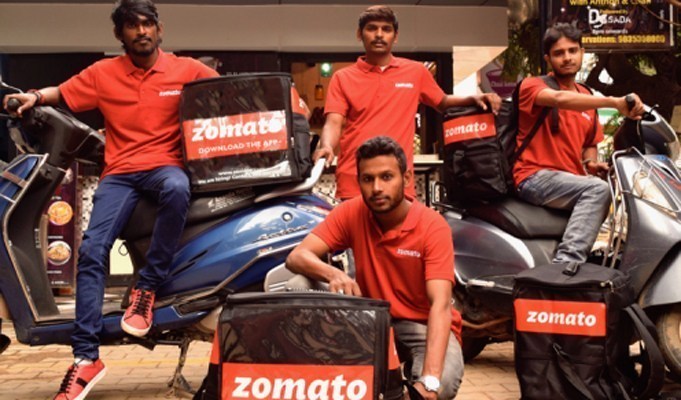
    The top brass of food delivery app Zomato are set to come together on the 17th of June to pen to paper and make the acquisition of Indian based start-up company Blinkit officially complete.

    The deal is set to be of a stock exchange type at a ratio of 1:10 where Blinkit will get a share for every 10 shares Zomato gets from Blinkit. Initially, the value of Blinkit was set at around $ 700 million USD but with this type of deal, that value set to have gone down to an extent.

    Blinkit is a company that Zomato has been eyeing for a while now as they are a business that focuses on instant deliveries. The company was founded almost a decade ago back in 2013 and its head office is situated in Gurgaon, Haryana. Blinkit is a mobile application that can be downloaded on the play store where its users can order groceries, and other items and essentials through the app from the comfort of their own home. The company even guarantees a 10 minutes delivery time.

    A 10-minute delivery time has become the new fad in the delivery business in the country with both Blinkit and Zepto basing their entire business model and marketing strategy on this feature. Zomato has also been piloting their 10-minute delivery feature called Zomato Instant but their Delhi based pilot was not a success. Naturally, delivering food within 10 minutes is much harder than groceries which is why the acquisition of Blinkit is going to be a major boost for them as it will give them crucial help in breaking the 10 minutes barrier which they have been struggling to over the past few months.

    Zomato is one of the most popular food delivery apps in India along with Swiggy and the duo have been battling to be most popular food delivery apps for years now. Swiggy however diversified their features and opened their ‘Instamart’ where they sell fruits, vegetables and groceries while Zomato stuck with just partnering up with restaurants and delivering food. But now, Zomato has also dipped their feet into the grocery delivering business with this new acquisition and it will be interesting to see how it will play out.

    It seems like this deal will be helping all parties involved as Zomato can improve their 10-minute delivery service with the help of Blinkit’s logistics while Blinkit can increase their operations with the help of Zomato.

  • Metcash to invest $70 million in new Vic DC

    Metcash to invest $70 million in new Vic DC

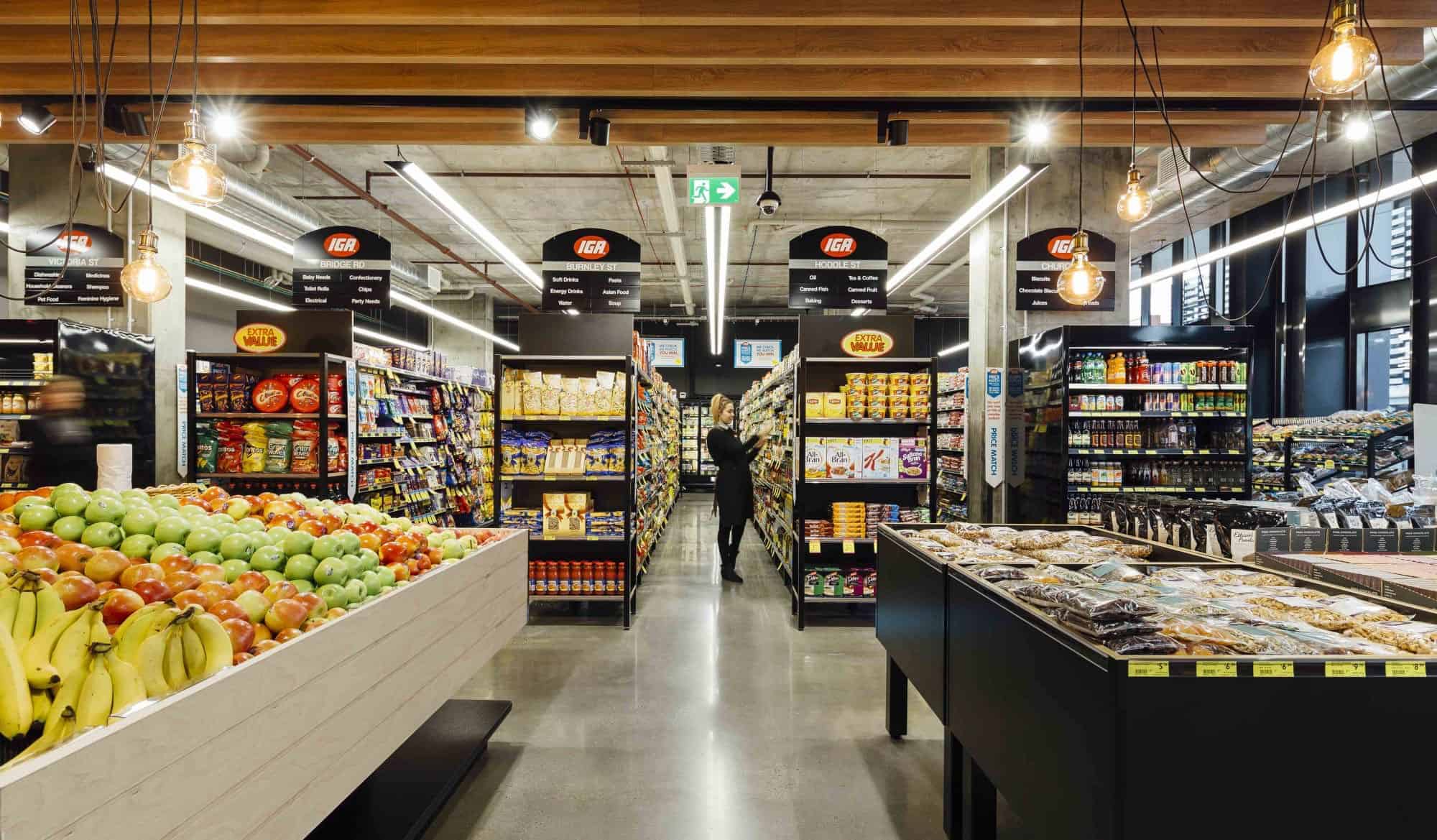
    Metcash, the Australian wholesaler and distributor for brands like IGA, Mitre 10, Foodland and more,  has today announced a new distribution centre (DC) planned for Truganina, Victoria alongside the release of its FY22 results detailing a rise in revenue and earnings.

    The approximately 115,000sqm DC will replace the company’s existing Laverton, Victoria facility and will cost Metcash around $70 million to set up, with $20 million scheduled to be incurred in FY23.

    Metcash, which signed a long-term lease with the Goodman Group (ASX: GMG) for the construction of the Truganina DC, says the facility will improve the competitiveness of its independent retailers in Victoria through delivery efficiencies and by providing them access to a wider range of products.

    The DC will house products for both MTS’ food and liquor pillars, and will be equipped with automation to suit the company’s retail network.

    “We are delighted to be able to announce this significant long term investment for our independent retailers in Victoria, which is a reflection of our continued focus on championing their success,” Metcash CEO Doug Jones said.

    “Supporting our decision to proceed was the success of our new DC at Gepps Cross in South Australia, which has been operational since December 2020, as well as strong growth in both our Food and Liquor pillars in Victoria and the recent renewal of a long term agreement to supply Foodworks stores.”

    The announcement coincides with the release of Metcash’s FY22 financial results, detailing an 18.6 per cent rise in underlying profit after tax to $299.6 million.

    In addition, earnings rose by 17.7 per cent to $472.3 million, while revenue grew by 5.9 per cent to $15.2 billion.

    On a statutory basis, MTS’ profit after tax was up by 2.7 per cent to $245.5 million which the company says was backed by strong sales and earnings in all divisions sustained by a shift in consumer behaviour.

    The large difference between underlying and statutory profit can be explained by $22 million for Project Horizon which includes refurbishing stores, expanding e-commerce and cutting costs, as well as $27.6 million in acquisition costs, primarily oriented towards the hardware division.

    Jones said he was pleased to present the FY22 results, his first as group CEO.

    “The results are outstanding, another record year, and represent continued progress on the exceptional performance in FY21,” Jones said.

    “The number of external challenges increased in the second half and our supply chain and retail operations, both our own and those of our retail partners, exhibited significant resilience and flexibility. There were more lockdowns due to the Omicron COVID variant, major supply chain challenges, flooding in South Australia, New South Wales and Queensland which resulted in supply route disruptions, and towards the end of the financial year challenges related to Russia’s invasion of Ukraine and lockdowns in China.

    “A strategic investment in inventory, the flexibility of our operations and the outstanding efforts of our people helped our retailers to keep their shelves stocked and continue serving their local communities through these challenges. A testament to our people and independent retailers is that our focus on keeping shelves stocked did not materially hinder the continued successful execution of our MFuture [growth project] initiatives.”

    Jones said the company’s retail networks in food, hardware and liquor performed well, with sales increasing approximately 3 per cent in the IGA retail network, 20.5 per cent across hardware (which includes Mitre 10, Home Hardware and Total Tools), and 8.7 per cent in the liquor network.

    “Importantly, retailers are increasingly reinvesting in their stores, further improving the quality of their network primarily through the various store upgrade programs we support,” Jones said.

    “We also further strengthened relationships with our independent retailers and were pleased to recently announce long term agreements to continue supplying Foodworks stores and Drakes Supermarkets in Queensland.”

    MTS says forward momentum going into FY23 has helped push group sales up 9 per cent in the first seven weeks of its new financial year commencing on 1 May, partly buoyed by the impact of inflation.

    “While elevated inflation has continued into 1H23, there is uncertainty over the level of inflation going forward, as well as how the impact of inflation and other cost of living increases may impact consumer behaviour in the retail networks of our pillars, and Metcash,” Metcash said.

    “We are continuing to work closely with our suppliers and retailers to help shoppers manage the impact of inflation by providing better value options through offering a wider range of products at competitive prices.”

  • Samsung rumored to begin mass production of 3nm chips next week

    Samsung rumored to begin mass production of 3nm chips next week

    Right now there are only two independent foundries that are able to manufacture cutting-edge chips. The companies are TSMC and Samsung Foundry. Independent foundries take chip designs created by other firms and build the actual chips off of that design. Both TSMC and Samsung are working on building chips using their 3nm process nodes. The smaller the process node used, the larger the number of transistors found inside a chip.
    This is important because the more transistors employed in a chip, the more powerful and energy-efficient that chip can be. Every two years or so, the process node gets smaller and more transistors fit inside an integrated circuit. This is the famous “Moore’s Law” that you’ve heard about, named after Intel and Fairchild semiconductor co-founder Gordon Moore. Remember, this is not an actual law and as smaller and smaller components are being built, this “observation” no longer can be fully counted on to double the transistor count every other year.
    Still, over time, you can see how “Moore’s Law” has forecast the incredible increase in processing capabilities over the years. Let’s take the iPhone X, which was released in November 2017 powered by the Apple A10 Bionic chipset. The latter carried 4.3 billion transistors in each chip. Now let’s move ahead to the 2021 iPhone 13 series which sports the A15 Bionic chipset. The A15 Bionic contains 15 billion transistors, up 27.1% from the 11.8 billion transistors employed by the A14 Bionic chip.
    So now Samsung and TSMC are battling for supremacy in the business of building chips for third-parties. TSMC is number one in most metrics and its customer list includes top tech firms such as Apple (its number one customer), MediaTek, Nvidia, Qualcomm, and others. But it appears, according to ExtremeTech, that Samsung will soon beat out TSMC by starting mass production of chips made using its 3nm process node next week with TSMC starting 3nm mass production later this year.
    Additionally, Samsung is going to use a new transistor structure on its 3nm chips called GAA or gate-all-around. With this structure, the flow of current is controlled by gates that contact the transistor on all four sides. TSMC will continue to use the FinFET structure which has been in place since the 22nm process node debuted. TSMC will finally scrap FinFET for GAA when it starts shipping 2nm chips in 2026.
    Samsung’s GAA design is called Multi-Bridge Channel Field Effect Transistor (MBCFET) also known as nanowires. This is one of only two different gate-all-around designs currently available with the second one known as GAAFET or nanowire.
    The report cites a major Korean news agency that says Samsung is expected to make a major announcement about its 3nm chip production shortly. It also notes that the move to gate-all-around from FinFet will reduce the area of a chip by 45% to help deliver a performance bump of 30% while reducing energy consumption by 50%. However, there is a big problem. Samsung was reportedly getting yields of only 10% to 20% at 3nm meaning that the vast majority of its 3nm chip dies cut from a wafer could not pass quality control.
    Back in February, a report indicated that Samsung’s yield on 4nm production was only 35% resulting in Samsung losing some business from chip designer Qualcomm. The latter supposedly moved some of those orders to TSMC. However, if Samsung Foundry is about to announce the start of high volume manufacturing (HVM) at the 3nm process node, one could come to the conclusion that Samsung Foundry has improved its 3nm yield.
    Speaking of 3nm, TSMC’s major customers such as AMD, Apple, Broadcom, Intel, MediaTek, Nvidia, and Qualcomm, have started to queue up for 3nm capacity. And next on the horizon, of course, is the 2nm process node that both TSMC and Samsung are working on. Another name is expected to join TSMC and Samsung on the list of  cutting-edge foundries. Intel Chief Executive Pat Gelsinger has announced that the American company will regain process leadership from Samsung and TSMC by 2025.


  • Starbucks closes third Vietnam outlet

    Starbucks closes third Vietnam outlet

    Starbucks Vietnam will close its Hanoi outlet after eight years, following the closure of two locations in Vietnam last year. The Starbucks Lan Vien outlet in Hoan Kiem District will operate until June 30, the company said in a Facebook post. Last year, the coffee chain had closed another outlet in Hoan Kiem District and one in Ho Chi Minh City’s District 1.

    Patricia Marques, CEO of Starbucks Vietnam, said earlier this year that the company was finding it challenging to expand the number of outlets in Vietnam due to difficulties in negotiating rent prices.

    The company, however, will continue to expand in Vietnam by focusing on new urban areas where there is a lack of services, she added.

    She also said that in central districts, Starbucks has observed that customers tended to order more takeaways, so it was considering opening small takeaway outlets where customers can pick up their drink right away.

    Starbucks has 78 outlets nationwide, while its competitor Highlands Coffee’s has 500 and The Coffee House has 156.

    The Covid-19 pandemic has forced several food and beverage chains to close outlets amid plunging revenue.

    The Coffee House closed over 20 outlets last year, while Soya Garden shut down its last one in HCMC. Soya Garden still has eight outlets in Hanoi.

  • Vietnamese buy Bitcoin in hope it has bottomed

    Vietnamese buy Bitcoin in hope it has bottomed

    Many investors are buying Bitcoin after the cryptocurrency’s price fell to US$20,000, its lowest level since December 2020. Thanh Binh of HCMC says he turned off notifications on his crypto trading app after buying it at $38,000 and losing over VND40 million ($1,720).

    But he has returned and bought a 10th of a token after prices dropped below $20,000.

    “The market has bottomed out and will recover by the end of this year, and so this is the right time for buying in,” he says hopefully.

    Hai Ly of the southern province of Dong Nai has invested VND70 million in Bitcoin and Ethereum, the two largest tokens by market cap. She wanted to diversify her portfolio and thinks their current prices are reasonable.

    She says Bitcoin operates in four-year cycles, and prices fall sharply at the end of each cycle before scaling new peaks.

    “The current cycle started in January 2019 and ended between May and July this year. Considering other factors, the current crypto slump is not abnormal.”

    Prices will recover and hit a new peak by mid-2023, she says.

    Many investors see an opportunity in the current fall in cryptocurrency prices though the recent sell-offs wiped billions of dollars from the market.

    Search related to Bitcoin has surged to the highest levels in a year according to data from analytical website Google Trends.

    Hope is also fueled by rumors that Binance, the largest cryptocurrency exchange, has quietly bottom fished a large amount of Bitcoin.

    Over 100,000 tokens have been added to the exchange’s cold wallet (physical device that keeps cryptocurrency completely offline), crypto-focused site Coingape has discovered from on-chain data.

    They amount to 0.5 percent of all mined Bitcoin and are worth over $2 billion at current prices. But CEO Changpeng Zhao denies it, saying the increase “means more users deposited in Binance.”

    Money is also coming into crypto-centric investment funds. They have raised over $125 million in the week ended June 6 and $506 million in the year-to-date, asset management company CoinShares reported.

    Short-term Bitcoin funds, mainly used for speculating on the cryptocurrency’s slump, received $1.3 million. Bitcoin is being traded the fastest in a year, Yahoo Finance said.

    But there are risks associated with bottom fishing Bitcoin and other cryptocurrencies, experts warn.

    Le Sy Nguyen, ASEAN regional manager of crypto exchange Bybit, says current prices are not attractive.

    The collapse of cryptocurrency Luna and its paired stablecoin Tether, and recent interest hikes in the U.S. have greatly affected market sentiments, with many investors opting out trading on extreme fear.

    “Anything can happen in this [volatile] period, which poses great risks to investors who try to benefit from bottom fishing in the short term.”

    He says investors should invest for the long term or wait until the market stabilizes. “But no one can be sure whether it has hit bottom.”

    The slump could prolong until the end of this year, he says.

    The founder of a digital assets startup, who does not want to be named, says it is impossible to give advice on whether to buy or not at the “current sensitive time.”

    “It is inappropriate to evaluate digital assets using methods used for stocks, as they do not generate income like companies The number of wallets, users and transactions are key indicators of this market.”

  • Pay TV firm AVG appoints new CEO

    Pay TV firm AVG appoints new CEO

    Vu Minh Tri, former CEO of Microsoft Vietnam, is the new CEO of pay TV firm AVG. Tri, 49, replaces Mai Duy Long, also 49, who helmed AVG for nearly two years. Tri, who became the CEO of Sony Ericsson Vietnam in 2006, has since taking top positions in the Vietnam operations of Yahoo, Qualcomm and Microsoft.

    He is now the CEO of telecom firm Asim Group and two other companies.

    State-owned MobiFone, the country’s third largest telecommunications firm, had made headlines early in 2016 when it announced it was breaking into the pay TV market with the acquisition of a 95 percent stake in AVG.

    But government inspectors concluded that the deal had violated public investment laws and caused an estimated loss of about VND7 trillion ($307 million) to the state budget.

    In 2019, several senior officials implicated in the MobiFone case were arrested and sentenced to varying jail terms.

  • Google announces five new features coming to Chrome for iPhone and iPad

    Google announces five new features coming to Chrome for iPhone and iPad

    If you have an iPhone and don’t like Safari, chances are you’re using Google’s internet browser, Google Chrome. If that’s the case for you, you’ll be delighted to hear that Google Chrome’s latest update for iOS is now bringing some very useful features, including improved security, a redesigned main screen, and more.

    Google has recently been bringing loads of updates to its Chrome browser. Now, some update love is being sent to its iOS version, and Google has announced some new features coming our way. Let’s see what these are.

    First off, we have Google’s Enhanced Safe Browsing feature. This one is a security-centered feature that proactively warns you about dangerous websites you are about to visit. Enhanced Safe Browsing has been available on Android and desktop for months now, and it’s finally made its way to iPhone users.

    The feature works by sending real-time data to Google Safe Browsing to check for malware, phishing, and other dangerous animals that lurk in the Internet’s dark corners. This way, you’ll get warned if you encounter a dangerous website.

    Speaking about security, Chrome for iOS also gets another useful feature: alerts for compromised credentials. iOS’ own password service does warn you about those, but it’s never a bad thing to get two warnings if you have a compromised password: you know, hackers can use this to access some of your accounts, so better be vigilant about it.

    To enable Enhanced Safe Browsing, update your Chrome app, and then go to Chrome > More > Settings > Enhanced Safe Browsing (you can do that from iPhone or iPad).

    Moving on, another useful features coming to Chrome for iOS is called “Chrome Actions”. This is a quality-of-life feature that lets you easily perform a certain tasks without having to dive deep into the app’s settings to find it.

    To use Chrome Actions, you simply need to type into the address bar of Chrome what you want to do. Examples include typing “Clear Browsing Data” or “Open Incognito Tab”, and even “Set Chrome as Default Browser”.

    Additionally, Chrome can also predict when you will need a Chrome Action by the words you are typing in the address bar, so you don’t need to memorize all the commands to benefit from this feature. Since 2020, the desktop version has had it, and Android users got it in April 2022, but it’s never too late to get something useful like that.

    But that’s not all. This new update lets you set Google Password Manager as your Autofill provider, if you want to do so. This comes as an alternative to Apple’s own password service, as well as third-party tools such as 1Password or Dashlane.

    The app’s main screen also has a new look now with this new update. The main screen now includes more than just your recent tabs, adding access to your Discover feed. Unlike the previous features, that’s something the Android version of Chrome is yet to get, and Google has stated it will be available in the future.
    The update also brings some minor changes as well. There are improvements of Google’s website translation feature. This will help you see websites in your preferred language (the feature uses on-device machine learning), and it is now getting an updated language identification model. Pretty much, this means the app will be able to more accurately recognize the language of a webpage and whether it needs to be translated for you.
    Other minor tweaks include the ability to manage camera and mic permissions for specific sites, and the ability to download and add iCalendar files to your Calendar.
  • Netflix is adding a cheaper plan for those who want a lower price and will watch ads

    Netflix is adding a cheaper plan for those who want a lower price and will watch ads

    During an interview at the Cannes Lion advertising festival, the CEO of Netflix Ted Sarandos gave the most direct indication that it will launch a cheaper, ad-supported subscription tier to the embattled streaming service.

    In essence, Mr. Sarandos said that the company will be “adding an ad tier; we’re not adding ads to Netflix as you know it today.” After the pandemic boost wore out, Netflix hit the skids in terms of subscriber count as people spent less time watching TV shows and movies.

    At the same time, new streaming services from juggernauts like HBO, Disney, or Apple, grew to rival Netflix, all the while it kept spending borrowed billions on content creation. Well, that crazy content spending was curtailed, a lot of shows were cancelled, and now Netflix will try and boost subscriber numbers by going downmarket.

    Currently, the Netflix plans start from the Basic one at $9.99 per month with SD (up to 480p) picture quality, followed by the Standard $15.49 a month plan that offers 1080p definition, and go up to the Premium Netflix tier at $19.99 per month which includes 4K UHD quality streaming on up to four devices.

    Besides cracking down on password sharing, Netflix will likely introduce the new ad-supported subscription tier at something close to the Apple TV+ $4.99 subscription price and will try to recuperate the difference with ad revenue. Or, as Ted Sarandos eloquently puts it:


  • Why Are Cartoon Characters So Arousing?

    Why Are Cartoon Characters So Arousing?

    Cartoons and animation have been around pretty much since the dawn of filmmaking, but there is one question that is both remarkably easy to answer and hard to understand. Why are cartoon characters so arousing? 

    There are many examples of this, from Jessica Rabbit to Lara Croft. Even animated men can offer some zing in one’s step, with Prince Eric and Aladdin coming to mind. But why are cartoons so sexy? Why is there so much demand for adult content like animated VR porn? Let’s put on our thinking caps and find out. 

    The Divide Between Sexy Female and Male Cartoons

    Before we dive any deeper, it’s important to note that sexy female cartoon characters are a dime a dozen. Basically, you can pick virtually any animated movie or TV show and find a hot girl. When it comes to men, however, the pickings are much slimmer. 

    Overall, male characters are allowed to be drawn in a wide variety of ways. They can have hooked noses, fat bodies, facial hair, and generally wacky body types. For women, though, the hourglass figure is almost always the norm. Even “realistic” women in animated features usually have exaggerations where it counts the most (i.e., Helen Parr from The Incredibles). 

    This divide occurs for several reasons: 

    First, animation is still dominated by men, and most animated productions are run by male directors and staff. While there has been a recent shift toward female-led projects (i.e., Turning Red or Frozen), men are still often in control. Since men like looking at attractive women, they’re more likely to approve of sexy female characters. 

    Another reason for this discrepancy is that cartoons often turn men on while women usually couldn’t care less. While there may be some complex psychology at play, it boils down to this: men already pay attention to a woman’s body features, while women tend to pay closer attention to a man’s attitude and personality. 

    So, while male animated characters might have strong jawlines, ripped muscles, and a tight physique, they often lack one crucial element – sexiness. What makes a man sexy to a woman is much different than the other way around. 

    Why Cartoons, Though? 

    The main question remains – why are cartoon characters so sexy? Again, there are several reasons, including: 

    • Lack of Imperfections – A cartoon character doesn’t have to worry about acne, stretch marks, flabby skin, or unwanted body hair. So, every detail is perfect and calculated for maximum sexiness. 
    • Exaggerated Features – It’s no secret that men want women with voluptuous lips and curves that won’t quit. Since it’s easy to feature these elements in a female cartoon character, men are naturally drawn in (no pun intended). 
    • Sexy Personas – Typically, a man is more attracted to a woman if her personality matches her appearance. So, if she looks like a wily seductress and acts like one too, it’s virtually impossible to resist her charm. Basically, the body captures their attention, and the personality seals the deal. 

    Cartoons in Adult Entertainment

    If you’re familiar with Rule 34, you already know that many popular female cartoon characters have starred in explicit content. Everyone from Marge Simpson to Betty Boop has been rendered in all their sexy glory. With adult entertainment, all the elements that already exist in mainstream media are driven to their natural conclusion. Even characters that aren’t trying to be sexy can be objectified and turned into certified boner makers. 

    With immersive VR content (like you can find on SexLikeReal), this engagement goes even further. Since VR is still not lifelike, having sex with animated characters can sometimes be better than watching the real thing. 

    Overall, it seems like sexy cartoon characters aren’t going anywhere, so we might as well drop our pants and enjoy the ride.