Tag: asia
-

Chip shortage is still a thing says Intel CEO Gelsinger
Just because we don’t constantly hear about it as much anymore doesn’t mean that the global chip shortage has ended; when it comes to chips, the world isn’t all of a sudden “in the chips,” according to Intel CEO Pat Gelsinger who spoke Friday on CNBC’s “TechCheck.” The executive says that important tools used in the chip manufacturing process are not readily available keeping production capacities in check.With foundries unable to expand production capacity for their fabs, Gelsinger sees the chip shortage lasting longer than originally thought. “That’s part of the reason that we believe the overall semiconductor shortage will now drift into 2024, from our earlier estimates in 2023, just because the shortages have now hit equipment and some of those factory ramps will be more challenged,” the Intel CEO said.Intel, which has promised to regain “process performance leadership” by the end of 2024, has created a road map that includes taking delivery of ASML’s next-generation extreme ultraviolet lithography (EUV) machine. The $150 million machine uses highly polished mirrors to help focus ultraviolet light allowing it to etch circuitry patterns onto a wafer.With billions of transistors deployed on chipsets these days, lithography machines need to be able to create patterns that are fractions of the width of a human hair to help foundries manufacture cutting-edge chips. Intel will be the first foundry to use the new machines that raise their numerical aperture from .33NA to .55NA. This means that the machine can collect more light to help it create the circuitry patterns on the wafers that are used to build faster and more energy-efficient integrated circuits.Returning to process leadership means that Intel has to continue spending to build new fabs in the U.S. and Europe. The executive says, “We’ve really invested in those equipment relationships, but that will be tempering the build-out of capacity for us and everybody else, but we believe we’re positioned better than the rest of the industry.”Before speaking on CNBC, Gelsinger previously said that a supply-demand balance in the chip industry would take place in 2023. Intel did report first-quarter revenue and earnings last week that topped expectations on Wall Street although its estimates for the second quarter came in below analyst’s forecasts. Over the last week, Intel’s shares declined 8.6% from $93 to $85.The top two contract foundries in the world that take chip designs created by other companies and turn them into the final components are TSMC and Samsung. The former is known for building the chips designed by Apple including its A-Series and M-Series chips. Unlike TSMC and Samsung, Intel’s foundries usually produce components that Intel itself had designed.With two new fabs being built in Arizona, Intel is taking the business model perfected by TSMC and is bringing it to the U.S. But that doesn’t mean that TSMC won’t be a competitor. The Taiwan-based company is building its own plant in Arizona that will turn out 5nm chips by 2024.Tech firms are expected to embrace the possibility of having Intel produce chips based on their designs without fear that a geopolitical event will force TSMC to shut its factories in Taiwan and create a massive bottleneck that would make the current chip shortage feel like a walk in the park.Creating a valid supply chain for chips in the U.S. and making the country self-sufficient is a goal that the U.S. has been trying to achieve. China too has a goal to become self-sufficient when it comes to building chips. After the U.S. used its export rules to block Huawei from receiving shipments of cutting-edge chipsets, this became a major goal for the country.In 2020, the U.S. Commerce Department put in place a rule that blocks foundries that use American technology to build advanced chips from shipping such chips to Huawei even if the chips were designed by the company itself. -

Government rejects airlines’ demand for further tax cuts
The Ministry of Finance has turned down airlines’ requests for further tax breaks, saying they have received enough support from the government.
In response to several airlines’ request to reduce value-added tax from 8 percent to 5 percent and fuel import tax from 7 percent to zero, the ministry said in a statement Friday that only the National Assembly can decide on VAT cuts.
The current 8 percent VAT is already a reduction from the normal 10 percent, and aviation companies are also eligible for the lower rate, it said.
It also pointed out that the aviation industry has already benefited from a lot of support in terms of taxes and fees since the pandemic began.
Environment tax on jet fuel has been reduced by half to VND1,500 per liter until the end of this year.
It is important to ensure a balance between the benefits companies and the government get, the ministry said.
Vietnamese carriers served 14.5 million passengers in the first four months of this year, up 26.3 percent year-on-year, according to the General Statistics Office.
Airlines resumed regular international services in March after a two-year hiatus due to Covid-19.
-

Physical store or online store: Which is better?
Physical store or eCommerce, which do you prefer?
This question has been at the center of the reflections of small companies for the last past few years. And they try to understand whether or not it is worth investing in a website to sell on the internet.
Let’s say that there is no one answer to those who want to know if it’s a better physical store or eCommerce. It depends on several factors. But still, we can confirm that the web can be adequate support even for small local businesses.
Also, those who decide to invest and open a quality shop can make the difference without choosing between a physical store or eCommerce.
Physical store vs. online store
The physical store is that establishment or local, in which our potential customers can purchase their products in person at the same place. This type of business has many years since internet platforms and the internet itself did not exist some time ago.
On the other hand, online stores were born nowadays, and many of the newest companies we know have opted for this type. So, let’s start with the advantages and disadvantages of these two store models.
Advantages of the physical store vs. the online store
The physical store has several advantages, which can help you decide on how to sell your products. Therefore, we will give you a summary of some of the benefits that this type of store offers.
Live product view
Your customers will be able to analyze and observe all the characteristics of the product at the moment, which can help them decide to buy in this way for the simple reason that they know how the product is one hundred percent.
Immediate product acquisition
Having the product in your hands and making use of it without waiting for its arrival is much more convenient, and for occasions when you purchase with urgency, this type of store is much more helpful.
Customer loyalty
By being face to face with your potential customer, you can convince him that your store is the best in that sector and above all get his loyalty. For sure he will go to your store before the competition the next time he has to buy a product similar to the one you sell.
You will also get them to recommend you to other potential customers and thus achieve a more significant number of visits to your establishment.
Complexity in the sale of these products
Suppose that in your store, you sell products that, at first glance, are challenging to sell because of the way they work or the type of utility they may have. In that case, the physical store is much more helpful in reaching customers, and encouraging them to purchase online may seem difficult.
Advantages of an online store compared to a physical store
As we have said before, an online store or eCommerce is that type of business with which you can make purchases in a much more comfortable way and without leaving home.
Nowadays, the Internet world is becoming wider and wider, so many companies have opted for this type of store when selling their products.
Attracting new customers
With this store model, we can get a wide range of potential customers, which we would not know that we could reach, but with the help of ads and advertising, we can get them to visit our website and decide to buy our products.
Lower costs
When we talk about costs, we refer to the money necessary to provide when creating any store. And it is that the expenses of the online stores are much lower since the most important thing is to acquire a domain and, after that, to dedicate time to the creation. In addition to the own expenses that the brand has and the payment of the shipments of your products. While in a physical store, you need to have a store, pay the electricity, the expenses of the brand itself, etc.
But if we make a balance, the expenses of the online store are much lower than the expenses of the physical store.
The same applies to customers: purchasing products or services from online stores is often cheaper and more convenient.
For example, online betting shops like sbo.net are perfect for those who want to bet online wherever they are, without the need to travel to their local betting shop. On the site, you can find trusted expert reviews of the best sports betting sites that provide the best odds, promotions, banking options, and customer service. This can all be done conveniently on a desktop or any mobile device, allowing you to place your bets anywhere, anytime.
Plus, you’ll consistently receive better odds when you bet online.
Greater convenience
Another advantage is the possibility of working from wherever we want and is that when working through the web it is not necessary to be in the same physical place always.
In addition, this type of store offers greater convenience to the store’s creator, but our customers can also get our products at any time they need.
Extended opening hours
Usually, in every physical store, there are opening and closing hours. However, in the case of online stores, this does not happen; why? For the simple fact that although we have our working day, the page is open 24 hours a day, allowing us to get more sales of products.
For example, if you watch a movie at night and want to eat popcorn, you know you can order them online on ubereats.com, even if the physical shops are closed.
Conclusion
As you know, the business world continues to grow and change, so we recommend that before making the final decision, you analyze well what type of store is the one that can work best with your business.
Also, in many cases, many companies decide to create both types of stores and join both to reach a more significant number of customers and future customers that will help your business grow.
The negative side of deciding to create both types of stores is the cost since when making both, the money you will have to spend will be twice as much as choosing one of the two.
-

India to launch open e-commerce network to take on Amazon, Walmart
The Indian government is all set to launch an Open Network for Digital Commerce to end the dominance of the US-based e-commerce companies like Amazon and Walmart in India. The ONDC platform will let buyers and sellers interact with each other and transact online. The launch of the ONDC platform comes in the wake of India’s antitrust body raid on domestic sellers of Amazon and some of Walmart’s Flipkart. The company’s were accused of violating the laws.
With the launch of ONDC, the government aims to promote an open platform for the exchange of goods and services through electronic networks. The open network platform will be launched in five cities including Delhi NCR, Bengaluru, Bhopal, Shillong and Coimbatore, an official said on Thursday. It would later be expanded to other cities.
As per Reuters report, the Modi government and its key supporters have long contended that Amazon and Flipkart only benefit a few big sellers through predatory pricing. However, the companies have always maintained that they comply with the laws set by the Indian government.
Amazon and Flipkart are yet to react to the government’s ONDC platform. The report stated that India’s ONDC plan aims to onboard 30 million sellers and 10 million merchants online. The plan is to cover at least 100 cities and towns by August. The government will focus on apps in local languages for buyers and sellers. The apps would highlight small merchants and rural consumers.
The government in a document revealed that the retailers and venture capital firms have lended support to the ONDC plan. Banks such as State Bank of India, ICICI Bank and Bank of Baroda have already committed total investments of 2.55 billion rupees.
As per an investigation conducted by Reuters last year, Amazon was accused of giving preferential treatment for a years to a specific group of sellers on its platform and used them to bypass Indian laws. Amazon had denied the allegations.
-

Expats’ salaries topped $34,000 a month in Q1
The monthly incomes of foreign experts ranged between US$8,500 and $34,000 last quarter, according to a recent report by recruitment firm Navigos Search.
The report said enterprises operating in Vietnam “pay very high salaries” to attract foreign candidates.
Navigos Search said some sectors like a garment, tourism, and hospitality have a high demand for foreign personnel due to a shortage of local expertise.
The garment industry, for instance, lacks Vietnamese talent for jobs requiring high levels of expertise like pattern development, innovation and quality control, while candidates from Sri Lanka, India, and Pakistan are interested to work in Vietnam due to competitive salaries and opportunities to work abroad.
The resumption of international flights last month has fast-tracked the recovery of the tourism and hospitality sectors, driving demand for senior managers, Navigos Search added.
The previously reported highest salaries in Vietnam were VND400-600 million ($17,520-26,275) paid to HCMC-based general managers in the healthcare sector with more than five years’ experience, according to headhunting agency Adecco Vietnam.
HCMC ranked sixth among top cities for expats to live and work last year in a survey by InterNations, with 75 percent of respondents saying their income was more than enough to cover expenses, and 77 percent satisfied with their financial situation.
-

YouTube TV is getting the long overdue account switcher feature
YouTube TV made headlines quite a few times this month thanks to the many changes the service has been going through lately. After adding several new channels to its offering, including The Weather Channel, and introducing picture-in-picture (PiP) for iOS devices, YouTube TV is now getting a long-overdue feature aimed at users who share their subscriptions with other people from their household.
One of the best streaming services in the United States, even better than traditional live TV for many, YouTube TV will finally allow subscribers who use multiple accounts on their TV to switch between them on the fly. The new feature will be rolling out to accounts in waves, YouTube TV confirmed after revealing the news.
YouTube TV subscribers can add as many new accounts as they want to make family sharing that much easier. The newly added feature will only hep YouTube users on non-Android/Google TV device since the original app already has a switcher that does the same thing.
The streaming service that offers live TV, on demand video and cloud-based DVR from more than 85 television networks, YouTube TV is available in the United States for $65. Created as an alternative to traditional live TV services, YouTube TV looks even more appealing in a world where smart TVs have become the norm.
-

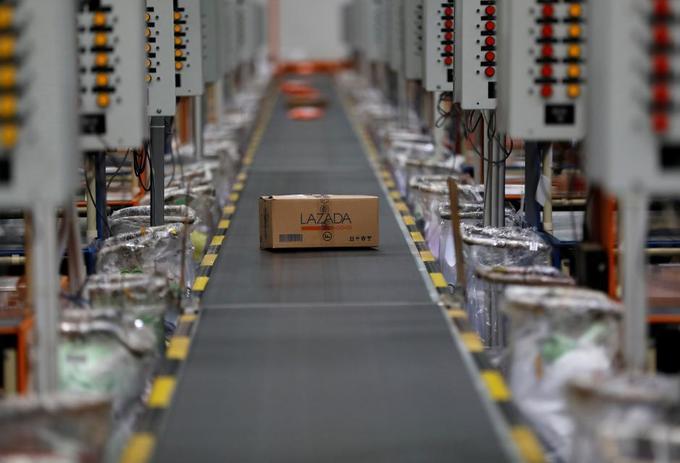
Alibaba tipped to take Lazada to Europe
Chinese tech giant Alibaba is taking Lazada to Europe as part of its strategy to drive growth in overseas countries. It was reported that the plan to expand Lazada to Europe was due to Alibaba’s slowing opportunities in China.
The company’s latest interim report published in December 2021 unveiled that its revenue from its China commerce retail business for the six months ended on 30 September 2021 was US$40.8 billion, an increase of 33% compared to US$29.7 billion for the same period of 2020. However, revenue from international commerce retail business for the same period last year was US$3.29 billion, a year-on-year increase of 43% compared to US$2.23 billion for the same period of 2020.
When it comes to wholesale business, revenue in China for the six months ended on 30 September 2021 was US$1.26 billion, an increase of 14% compared to the same period of 2020. The increment was better in its international business, as the revenue was US$1.42 billion, an increase of 36% compared to the same period of 2020. Reuters’ report said that Lazada will target European vendors, while Lazada Thailand CEO James Dong will help spearhead the initiative. The destination of the expansion is still unknown at the moment. Moreover, Alibaba’s international digital commerce Jiang Fan visited Singapore in April to discuss the plan too.
The potential expansion plan is Alibaba’s another step to tap into opportunities in Europe. Its logistic arm Cainiao opened a hub in Belgium last November which, reportedly, was the largest of its kind in Europe and a key part of the agreement between the Alibaba Group and the Belgian government concluded in 2018 to join the global Electronic World Trade Platform initiative. Alibaba’s present in Europe also includes AliExpress, targets consumers looking for goods such as fashion, accessories, computer electronics, toys and tools from Chinese manufacturers.
Last year, Alibaba reorganised its international and domestic commerce platforms into two units to better drive synergies, including international digital commerce and China digital commerce. International digital commerce brings together Alibaba’s overseas consumer-facing and wholesale businesses under the leadership of Jiang. It will include AliExpress, Alibaba.com, and Lazada. According to Alibaba, these businesses propel its globalisation strategy and the newly-created unit is in line with Alibaba’s goal of serving two billion consumers globally. In its last quarterly earnings, the company said it had reached 285 million annual active consumers overseas.
Meanwhile, Lazada competitor Shopee also decided to pull out of France, after its foray into Europe. Shopee said that following a short-term, preliminary pilot, the company has decided not to continue the Shopee service in France. It added that other markets are unaffected, and Shopee will continue to adopt an “open-minded and disciplined approach to exploring new markets”.
Last year, Shopee said that it is looking to grow its presence in Spain with the launch of a new Instagram page. At that point, the expansion into Europe is still in the early stages and that Shopee was understood still testing the waters. Shopee’s strategy to enter the Spanish market came shortly after it announced its expansion plans into Poland.
-

Shein unveils a purpose-led clothing range
SHEIN, an online retailer of fashion, beauty and lifestyle products, today announced the launch of evoluSHEIN, a purpose-driven collection available to SHEIN customers around the world beginning April 29. With inclusive sizing, responsibly sourced materials, and the collection supporting women’s empowerment projects worldwide, the new line will be an affordable option for customers seeking to make a positive impact with their product choices.
By shopping the evoluSHEIN line, customers can proudly say they are supporting the work of Vital Voices – a leading international non-profit that invests in women leaders taking on the world’s greatest challenges, including gender-based violence, the climate crisis, economic inequities, and more.
The first release of evoluSHEIN clothing will feature recycled polyester – a fiber obtained from plastic waste. To produce the fabric, materials such as used plastic bottles are carefully cleaned, shredded into pieces, melted down, and spun into polyester fiber. Compared to virgin polyester production, the recycled polyester process requires less source materials and significantly reduces the amount of water and energy needed. Reducing waste and introducing recycled materials are key pillars of SHEIN’s vision of a circular economy and a sustainable future for accessible fashion. EvoluSHEIN will serve as a testing ground for new purpose-drive innovations SHEIN will be adopting throughout its greater collection.
These evoluSHEIN recycled polyester pieces and packaging have been produced exclusively with suppliers certified to the Global Recycled Standard (GRS). This globally recognized certification supports traceability of recycled material through all stages of the supply chain, and sets strict social and environmental requirements. The GRS is managed by Textile Exchange, a global non-profit leading the apparel industry toward a more sustainable future. With more than 700 members representing leading brands, retailers, and suppliers in the industry, Textile Exchange is a force for collaboration and positive impact, and SHEIN is proud to be a member of this community.
“We are committed to building a more responsible fashion ecosystem,” said Adam Whinston, Global Head of Environmental, Social and Governance at SHEIN. “Launching evoluSHEIN is one important step in our sustainability commitments this year, which touches on each of our key focus areas – protecting the environment, supporting communities, and empowering entrepreneurs. We invite all our partners and customers to join us in the journey.”
Founded in 2012 as an e-commerce retailer with the mission of making the beauty of fashion accessible to all, SHEIN’s strategic small-batch production and digital retail model have helped the brand avoid many of the environmental impacts associated with traditional retail store footprints. Over the last ten years, SHEIN has advocated for a fashion revolution and developed tools to help suppliers with advanced technologies that support the planet. These collective efforts include turning traditional factories into agile supply chains with collaborative technology systems that drastically reduce inventory waste and help conserve natural resources in the production process.
Customers worldwide are invited to join the evoluSHEIN starting April 29. The initial evoluSHEIN product line will feature women’s tops, dresses, and bottoms, with extended sizes dropping early this summer. SHEIN plans to expand the line to more than 1,500 product SKUs by the end of September 2022, with future evoluSHEIN styles featuring additional preferred materials options, including forest-safe viscose, consciously cultivated cotton, and additional certification programs for recycled fibers.
-

How To Become A Successful Trader And Make Money In The Forex Market
Forex trading is an exciting, interesting, and accessible way to earn money online, which opens a lot of opportunities for self-realization. But despite all the advantages, there is always a possibility to lose money. To help you avoid this, we wrote this article.
Training
Before you can become a professional trader, you need special training. Free courses will allow you to master the basic terminology, as well as get a general idea of how to become a trader in the stock market. You can also familiarize yourself with trading tutorials and expert advice from top market analysts. They are constantly improving their skills and communicating on various specialized forums, so they can provide you with useful information and market insights.
The right daily routine is the key to successful trading
The trader’s morning begins, unfortunately, not with coffee. For those focused on the U.S. market, trading is tied to North American Eastern Time (EST). Trade signals begin at 9:30 a.m. and traders need to get up at least an hour earlier in order to be up and running before trading begins.
Preparation includes
- Sketching out a daily trading plan
- Checking your trading account balance to accurately assess the risks of each trade
- Checking the economic calendar for daily analytics and market predictions
- Make sure the trading platform is working without interruptions
And so — the work begins
Trading in the first hour after the official opening is very interesting for Forex traders due to the high volatility of the market. The market remains active until about noon (11:00-11:30 a.m. EST). From about that time onwards, volatility tends to decrease as lunchtime begins.
As traders presumably begin to return from lunch and meetings, markets rise again and price movement comes to life. Traders take advantage of this second wave by looking for additional trading opportunities before the final close of the markets (4:00 p.m. EST).
Fundamental and Technical Analysis
The basis of successful trading in the Forex market is fundamental and technical analysis — the first concerns the current situation assessment in the Forex market based on technical analysis, and the second – is the fundamental trends in the economy and world finance.
- Fundamental analysis takes into account political attitudes in the behavior of states, the state of their economies in comparison with the economies of other countries, monetary policy, and the global conjuncture of world financial, stock, and commodity markets.
- Technical analysis is based on the study of price index series, and supply and demand indicators for the past period and can be carried out on the basis of different methods: graphical and analytical.
It is possible to find high-quality analytical reviews on the Forex market in a variety of places. However, you should refer to analytical articles only on time-tested resources, such as daily market analytics by FBS experts.
-

5 Things You Should Know about Singapore’s Global Investor Programme
Among numerous efforts that the Singaporean government has made to drive up economic growth in the country, one of the initiatives that’s gotten the most traction is the Global Investor Programme (GIP). The GIP, an official division of Singapore’s Economic Development Board (EDB), is a programme whose goals are (1) to attract promising investors and entrepreneurs from across the globe, and (2) invite them to contribute their talents to Singapore’s world-class economy.
If it’s been a dream of yours to work in Singapore—and to earn a comfortable life there for your family—find out if you’re eligible for the GIP. Here’s everything you need to know about Singapore’s flagship residency-by-investment programme.
It Affords You the Chance to Secure Permanent Residency or Citizenship in Singapore
One of the most appealing incentives of the GIP is that it serves as a way to attain either permanent residency (PR) or citizenship status in Singapore. If you are successful in your application, you’ll be able to earn a Singapore investment visa. This will allow you to work and reside in Singapore in the long term and even secure citizenship for you and your nuclear family two years after you obtain PR status.
Not only will you be able to do business in Singapore and contribute your investment acumen towards the country’s economic growth, you will also be able to live in a city-state that is consistently lauded for its healthcare system, public infrastructure, and general quality of life. If it’s within reach, this is one of the best avenues to start a prosperous life in Singapore.
It’s Open to Established Business Owners, Next-Generation Business Owners, Family Office Principals, and Founders of Fast-Growing Businesses
At a glance, there are four types of investors who are welcome to apply to Singapore’s GIP:
- An established business owner with rich entrepreneurial experience spanning at least 3 years, and whose annual business turnover is at least SGD 200 million
- A member of a high-value family business whose immediate family possesses at least 30% of shares, and whose annual turnover for the said business is at least SGD 500 million
- A founder and one of the largest shareholders of a fast-growing company that’s worth at least SGD 500 million
- A family office principal with at least 5 years’ worth of experience in entrepreneurship, management, or investment activities and net investable assets of at least SGD 200 million
Does your investor’s profile match any of these? If it does, look up the additional eligibility requirements from EDB and see if you meet them.
You Must Be Involved in Certain Industries to Be Qualified for the Programme
The GIP is a highly selective programme, and one criteria that an applicant must meet is that their business and investment interests must be represented in the GIP’s list of accepted industries. Some examples that reflect Singapore’s biggest economic drivers are the sectors of consumer business, automotive business, logistics and supply chain management, financial services, healthcare and medical technology, electronics, energy, and information communication. Other exciting areas of investment that are eligible under the GIP are aerospace engineering, marine and offshore engineering, nanotechnology, the arts, and sports businesses.
A full list of eligible industries is available on the EDB’s official website. If you intend to apply for the programme, be sure that your sector is represented.
You Can Invest in a New Business Entity, a GIP Fund, or a Family Office with SGD 200 Million in AUM
There are three options for investing your money into the GIP, and they comprise the following:
- Investing SGD 2.5 million in a brand-new business entity. If you choose this route, you will need to submit a detailed business or investment plan to the EDB complete with financial projections, anticipated expenditures, and employment schemes.
- Investing in an existing GIP fund that’s based and incorporated in Singapore. The EDB will assess you based on the viability and thoroughness of your investment plans.
- Investing in a new or existing family office with at least SGD 200 million in assets under management, or AUM. Offshore assets count, but at least SGD 50 million must be transferred to and held in Singapore.
You Must Be Ready to Make Your Investment within 6 Months of Your Application Approval
Lastly, if you’ve been approved for entry into Singapore through the GIP, you are required to complete your investment within six months of your application approval. This should be made through your personal bank account, under your sole name, with a Singapore-registered bank that’s based in the country.
You will also need to take stock of all true copies of your investment documents, like bank statements, credit and debit advisories, a bank reference letter certifying the validity of the transaction, and other additional documents required by the EDB. Be prepared to complete this paper trail so that you are not amiss in your standing with the agency.
Final Words
The requirements may be tedious and the field may be quite competitive, but you’ll have an exceptional opportunity to live and invest in Singapore if your GIP application is successful. Contact an authorised representative from the EDB and see how you can get started on the application process!
-

Renault To Produce New Alpine Model At Dieppe Site
French carmaker Renault will produce the new electric model of its Alpine brand at its Dieppe site in northern France, Chairman Jean-Dominique Senard said on Friday.
“There was uncertainty over the future of that plant a few years ago and now thanks to the work of Renault’s teams…we will be able to really secure the future of that plant,” Senard said.
Renault, Nissan, and Mitsubishi Motors on Thursday said they planned to deepen cooperation in electric vehicle (EV) production as their two-decade-old alliance positions itself to compete as auto markets switch to EVs.
Senard also told France Inter radio that Renault hoped to hire a further 2,500 staff for its French factories.
-

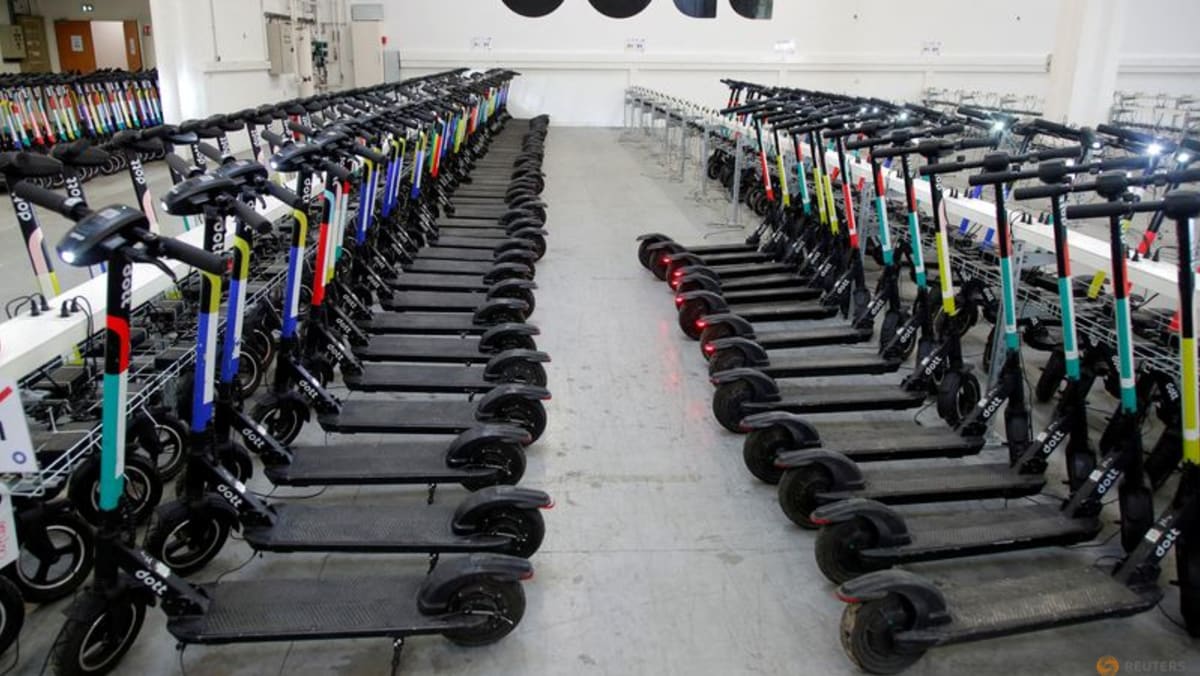
Dott To Roll Out E-Scooter Expansion With Extra $70 Million Funding
Electric scooter rental firm Dott said on Tuesday it had raised an extra $70 million which it will use to roll out new e-bikes, expand into new cities and countries and offer more services. Amsterdam-based Dott had announced $85 million in the Series B funding last year and the extra amount brings the total the start-up has raised so far to around $210 million. “We’re all on this crusade against personal cars. We want to make it super simple for anyone who wants to ditch their own car to have other transportation modes,” Dott Chief Executive Henri Moissinac said.
The two largest global e-scooter rental operators are Bird Global Inc, which was listed in November, and Lime, which aims to go public this year. The business is expected to see further consolidation as larger players scale up to navigate tougher regulations from cities trying to adapt to e-scooters. Ride numbers rebounded in 2021 after the COVID-19 pandemic virtually shut down operators for lengthy periods in 2020.
And the scooter rental business is expected to undergo further consolidation as larger operators seek greater scale to handle tougher regulations from cities
Dott, which has a fleet of 40,000 e-scooters and 10,000 e-bikes, is operating in 36 cities across nine European countries
Dott said its extra funding was led by new investors abrdn and existing investor Sofina. Its existing investors including Prosus Ventures, the venture capital arm of Prosus NV also participated in the latest round. I declined to comment on the company’s current valuation.
Dott, which has a fleet of 40,000 e-scooters and 10,000 e-bikes operating in 36 cities across nine European countries, recently partnered with FREE NOW, a European platform that offers ride-hailing and taxi services.
Moissinac said Dott is seeking more partners “to offer as many options as possible for shared mobility to consumers”, adding that it will expand in France and Scandinavia, the Netherlands with e-bikes only and possibly Israel.
-

Ferrari And Qualcomm Team Up For Tech Projects For Road, Racing Cars
Ferrari said on Tuesday it would partner with Qualcomm Technologies to use the San-Diego based group’s premium product, the Snapdragon chipsets, to accelerate the sports carmaker digital transformation. The deal will involve both its road cars and its Formula One racing team and the first common projects, including the so-called digital cockpit, have been already identified, the Italian group said in a statement.
Ferrari’s new CEO Benedetto Vigna – a technology industry veteran – said in November Ferrari would seek technology partnerships as it moves ahead with transition toward cleaner mobility and in order to pivot technologies that require high investments.
The Snapdragon logo will make its debut on Ferrari’s F1-75 racing model, which will debut on Feb 17
“Innovation requires market leaders working together. Thanks to this agreement … we expand our knowledge in digital technologies and web 3.0, areas with great potential for automotive and motorsport,” Vigna said in the statement.
The Snapdragon logo will make its debut on the F1-75 racing model, the Ferrari single-seater which will be unveiled at the company’s headquarters in Maranello on Feb. 17.
-

Thailand Approves Incentives To Promote EV Shift
Thailand’s cabinet on Tuesday approved a package of incentives including tax cuts and subsidies to promote a shift to electric vehicles (EVs) in Southeast Asia’s major auto production base, a government spokesperson said. The package for 2022-2025 is in line with a zero emission vehicle policy plus a goal to ensure 30% of Thailand’s total auto production are EVs by 2030, Thanakorn Wangboonkongchana told a news conference.
In the first two years, the measures will focus on encouraging widespread domestic use of EVs by providing tax breaks and subsidies for imported models and those made locally, he said. In the last years of the package, the support will mainly be on promoting domestically produced EVs, while cancelling some benefits for imported models, Thanakorn said.
“This is to encourage operators to accelerate the production of electric vehicles in the country to meet increasing demand,” he said. Thailand last year produced 1.7 million regular vehicles, for firms that include Toyota, Honda and Mitsubishi.
Thanakorn did not give further details on the incentives, which he said would need to be worked out with the energy ministry. According to earlier media reports, the package will help reduce the price of each EV by between 70,000 baht ($2,165) and 150,000 baht ($4,638).
-

Google now lets you remove your address and phone from Search results
Google Search can be a curse as much as it is a blessing. You can use it to find more information on various topics, such as Elon Musk’s $44 billion Twitter acquisition, or leaks about the upcoming iPhone 14, but at the same time, someone can use the same search service to find out where you live, your phone number, and other sensitive data about you. This is why Google allows users to request the removal of their personal data that appears in Search.
In a blog post, Google announced that, from now on, in addition to bank account and credit card numbers, users will be able to request the removal of other types of information, such as phone numbers, email addresses, or physical addresses, from its search results. But Google doesn’t stop there. To protect you from identity theft, the company also enables you to remove information, such as confidential log-in credentials, if they appear in Search.
However, don’t expect Google to erase all the data straight away. When you send a removal request, the company will first assess all the content on the web page that displays your credentials to ensure that it is not limiting the availability of other broadly useful information, such as news articles.
Google will also check if the content you want to delete isn’t part of the public record on government or official sites. If it is, it won’t make the removal.
It should be noted that removing content from Google’s search results doesn’t mean that it is gone from the Internet. As the company pointed out, if you want something completely gone, you should speak with the hosting site directly.