Tag: asia

  • Facebook monthly users rise, as Meta’s growth stagnates

    Facebook monthly users rise, as Meta’s growth stagnates

    On April 27th, Meta released its first quarterly financial report for 2022. With it, the company manages to defy the gloomy expectations of consumers and investors alike. The key takeaway – more users, more revenue, less growth.

    One figure particularly stands out – 2.94 billion – the number of users that log into Facebook on a monthly basis. This is just one of the many indicators that Meta, despite ever stronger competition and the global challenges it is facing, is very much still holding on. The report also announced growth in other key areas like total revenue and ad prices.

    After a certain period of stagnation and loss of users, Facebook seems to be once again gaining some, albeit limited, traction. The number of daily users also showcases a 4% net increase on a yearly basis. This also comes in the aftermath of the suspension of the social media platform in Russia.

    Naturally, these revelations triggered a rise in Meta’s share prices, which rose by more than 15% following the announcement. This is no doubt a breath of fresh air for the company, especially after the rather disappointing financial report by Alphabet, the parent company of Google, for the same fiscal quarter. It should also be noted that Meta’s share prices had been steadily depreciating for some months now.

    Now would be a good time for a small disclaimer. The financial growth of Meta is indeed above analysts’ projections, but it is in fact slowing down. The roots of this stagnation run deeper than the war in Ukraine. Apple’s push for protecting the data of its users and increasingly more stringent data regulations (especially in the EU) are truly pushing the company’s business model to its limits.

    Reality Labs, the project that represents Meta’s grandest ambition – establishing the metaverse – still operates on a loss and contributed just 2.5% of the company’s revenue. All this calls into question whether Meta will have the means to sustain its own future, let alone pave the way for the one it aims to build for everyone else.


  • HCMC high-end office rents jump in Q1

    HCMC high-end office rents jump in Q1

    Grade A office rents in HCMC rose by 5.1 percent quarter-on-quarter to US$44.9 per square meter per month last quarter. The average rent was 5.3 percent up from a year earlier, according to real estate consultancy CBRE Vietnam.

    Grade B rents averaged $25.9, up 1.7 percent and 3.1 percent. Similar surveys by other consultancies Colliers and Savills showed grade A rents increasing by 1-3.8 percent.

    Net absorption during the quarter was 16,500 square meters compared to 15,000 in the last quarter of 2021, according to Savills.

    Two sectors that achieved growth during the pandemic, information technology and logistics, accounted for nearly 60 percent of all transactions and are likely to lead demand in the next two years.

    Office relocation accounted for 55 percent of transactions.

    Demand for office space would keep rising, especially in sectors that would see growth such as e-commerce, real estate, electronics, IT, and communications, deputy director of Colliers Vietnam, Nhung Vu, said.

    Savills added that HCMC would need around 140,000 square meters of office space for new workers this year, based on an estimate that each needs eight square meters.

  • The Coffee House operator posts $10 mln loss

    The Coffee House operator posts $10 mln loss

    Seedcom, the operator of The Coffee House beverage chain and June fashion outlets, posted a loss of nearly VND240 billion ($10.45 million) last year due to Covid-19 impacts. The loss increased by nearly 24 percent from 2020.

    Its debt-to-equity ratio rose by 26 to 69.5. It had nearly VND1.48 trillion in debt by the end of the year.

    Last year, it raised VND50 billion in bonds with a coupon rate of 12 percent per annum.

    The negative figures came as most of Seedcom’s business, including The Coffee House, Juno and another fashion brand Hnoss, had to shut down or operated with limited capacity for months due to social distancing.

    The Coffee House last year launched a kiosk model to focus on selling takeaways in crowded areas like supermarkets or main roads.

    But so far only two such kiosks have been opened in Ho Chi Minh City, despite CEO Le Ba Nam Anh’s plans to open a large number of such facilities.

    Seedcom, established in 2014, also owns delivery companies AhaMove, Giao Hang Nhanh and retail chain Kingfoodmart.

    Last year it branched into finance by partnering with Thai bank Kvision to provide payment and loan services to small and medium companies, focusing on cashless finance.

    It also sold farming unit Cau Dat Farm, which grows and processes coffee, to Nova Consumer under NovaGroup to focus more on retail.

  • Google Joins Swiss Open Banking Initiative

    Google Joins Swiss Open Banking Initiative

    Switzerland’s Openwealth initiative gains momentum as one of the world’s largest cloud providers becomes a member.

    Google Cloud becomes the latest addition to the Openwealth Association, joining as an API service provider, the organization announced on Thursday.

    The application programming interface (API) allows third-party providers to dock with IT platforms, in this case, banks and wealth managers. As a leading cloud provider, Google Cloud will allow Openwealth to disseminate the API standard globally.

    Apigee, Google’s API management platform, is one of the most widely used open API publishing software solutions in the world, used by many OpenWealth members, it said.

    The Swiss industry initiative aims to standardize the interfaces of a wide range of institutions and simplify data exchange between custodian banks and portfolio management system providers and custodian banks themselves.

    Google joins UBS, Credit Suisse, Julius Baer, ZKB, and SIX, among others, in the industry initiative.

  • Lawson to sell Muji grocery products in 14,000 stores

    Lawson to sell Muji grocery products in 14,000 stores

    Lawson will begin offering Muji brand products at its 14,000 stores across Japan, as the Japanese convenience store chain aims to boost customer traffic with the popular ‘no-brand brand’ lifestyle goods.

    Lawson plans to replace 3,500 items with those of Muji, or about 5% of the merchandise on offer at the convenience store chain.

    The move comes as Lawson finds its customers becoming more budget-conscious as inflation heats up around the world. The company believes stocking its shelves with Muji brand can encourage shoppers to spend more.

    The Muji brand is run by Japanese retailer Ryohin Keikaku. The two companies have been working together since June 2020, with Muji items available at 110 Lawson stores in the Tokyo area.

    Starting in May, Lawson will roll out Muji goods across eastern Japan, aiming to cover its 5,000 stores there in about six months.

    Muji items will be in all its stores in Japan by the end of 2023 and will include 170 daily items, such as stationery, cosmetics and socks. In addition, about 30 Muji food products will be sold, including instant curry sauce and sweets.

    Lawson is considering offering even more Muji products and looking at joint development of private label items.

    Muji items are known for their simple design and high quality. The brand’s instant curry sauce has become a hit across all age groups. During a trial run, Lawson found that sales of particular products jumped by around 20% after they were replaced with similar Muji products. Overall store sales also rose by 2% to 5%, according to Lawson.

  • Blackmores believes China’s diagou market is past its peak

    Blackmores believes China’s diagou market is past its peak

    The boss of Blackmores says the vitamins and supplements giant is not really relying on Chinese “daigou” shoppers anymore as it gains more market share in Indonesia and Thailand, while the huge opportunity of densely-populated India will be a slow burn.

    After delivering the company’s latest results on Thursday, chief executive Alastair Symington also said customers should not expect a price war with Blackmores’ competitors as too many discounted promotions led to “a lack of differentiation between brands”.

    It also means lower margins for the business, which wants to maintain its premium positioning in the market, highlighting its superiority with things like the ethical sourcing of fish oil.

    The company booked a 9.6 percent rise in underlying net profit for the first half, with earnings margin growth in Australia and New Zealand of almost 18 per cent credited to “strategic pricing and operational improvements”.

    Mr Symington said the results were ahead of expectations in all markets despite volatile and uncertain trading conditions due to the pandemic.

    Blackmores’ overseas business is leading the charge, with revenue up about 50 percent.

    Mr Symington said 110 percent growth in the massive market of Indonesia was particularly pleasing, driven by consumers snapping up vitamin D and zinc on the back of clinical evidence these improve immune health – a key consideration amid lockdowns.

    Growth in Thailand of 40 percent was also a highlight, he said, but Australian consumers were still behaving very cautiously and there had been a “stuttery start” to sales this calendar year, with ANZ revenue dipping 1.2 percent.

    But Blackmores has its eyes on a very big prize – India – where it launched in September in partnership with Amazon India.

    The company recently entered a distribution partnership with Udaan, India’s largest business-to-business e-commerce platform, expanding the reach of its products to independent pharmacies in at least 10 metro cities across the continent, which is home to well over one billion people.

    “There’s a lot of promise in that India business,” Mr Symington said.

    Mr Symington says growth areas include ‘healthy ageing’ products targeting concerns such as joints, digestive health and anxiety in pets, and sleep and beauty.

    On China, he said the daigou market – whereby visitors send goods back home – would not return to the loft heights seen in 2016 and 2017, when dedicated stores offering resellers in-demand products and delivery services popped up around Australia.

    Blackmores recorded an 8.5 per cent lift in revenue to China in the first half, “driven by continuous improvements in e-commerce fundamentals … partially offset by a 7 per cent decline in the corporate daigou channel”.

    “We’re not really relying on that (diagou market) moving forward,” Mr Symingto

  • Honor sees gains as China smartphone sales fall

    Honor sees gains as China smartphone sales fall

    Former Huawei unit Honor posted the fastest growth in China’s smartphone market in the first quarter, even as overall handset sales fell 14% year-on-year to levels close to those seen in the pandemic-ravaged first quarter of 2020.

    Android handset brands Vivo and Oppo, both under the privately owned BBK Electronics, claimed the largest share of first quarter sales, with 19.7% and 18% of the market respectively, research firm Counterpoint Research said.

    Apple, which was China’s top-selling vendor in the previous quarter for the first time in six years thanks to the release of the iPhone 13, was the third-largest seller in Q1, claiming 17.9% of the market.

    Honor made the biggest gains in Q1, taking the fourth biggest slice of sales with 16.9%, with sales up 15.5% on the previous quarter. Huawei Technologies sold its Honor unit in December 2020 to a consortium of agents and dealers as U.S. sanctions crippled the parent’s smartphone sales.

    Huawei, once China’s best selling brand, held 6.2% of the market in the first quarter.

    Chinese retail sales lagged in the key coastal economic regions of Guangdong and Jiangsu in the first quarter, with areas hit by COVID-19 outbreaks also showing particular weakness, regional data showed.

  • Netflix to boost its mobile games offering to 50 titles by the end of 2022

    Netflix to boost its mobile games offering to 50 titles by the end of 2022

    Netflix has been slowly building its games offering in an attempt to keep subscribers engaged with the service beyond movies and TV shows. Currently, the streaming service completely focuses on mobile, so don’t expect any PC or console games to come to Netflix anytime soon.

    That being said, Netflix offers 18 mobile games to its subscribers, which can be downloaded directly from within the app. To show its commitment to this part of its service, Netflix recently bought a few game developers, including makers of Oxenfree, Night School Studio, Boss Fight Entertainment, and Next Games, the studio behind Stranger Things: Puzzle Tales.

    Last month, Netflix announced a partnership with Exploding Kittens for a mobile game and an animated series. Netflix is looking for “content opportunities around video games from every direction.”

    The report also states that Netflix plans to expand its mobile games offering up to 50 titles by the end of the year. Netflix is one of the few streaming services that decided to invest a lot of resources into video games adaptations. The Witcher, Cuphead, Castlevania, League of Legends, and more recently Exploding Kittens, are among the most popular TV shows offered by Netflix, which are based on video games.

    It looks like Netflix was quite content by how these TV shows were received by subscribers, so it’s now trying to “build out a games business that can create synergy between what people watch and what they’re playing.” That seems like a great idea, but only if you’re into gaming.

  • New firmware update for the Apple AirTag is released

    New firmware update for the Apple AirTag is released

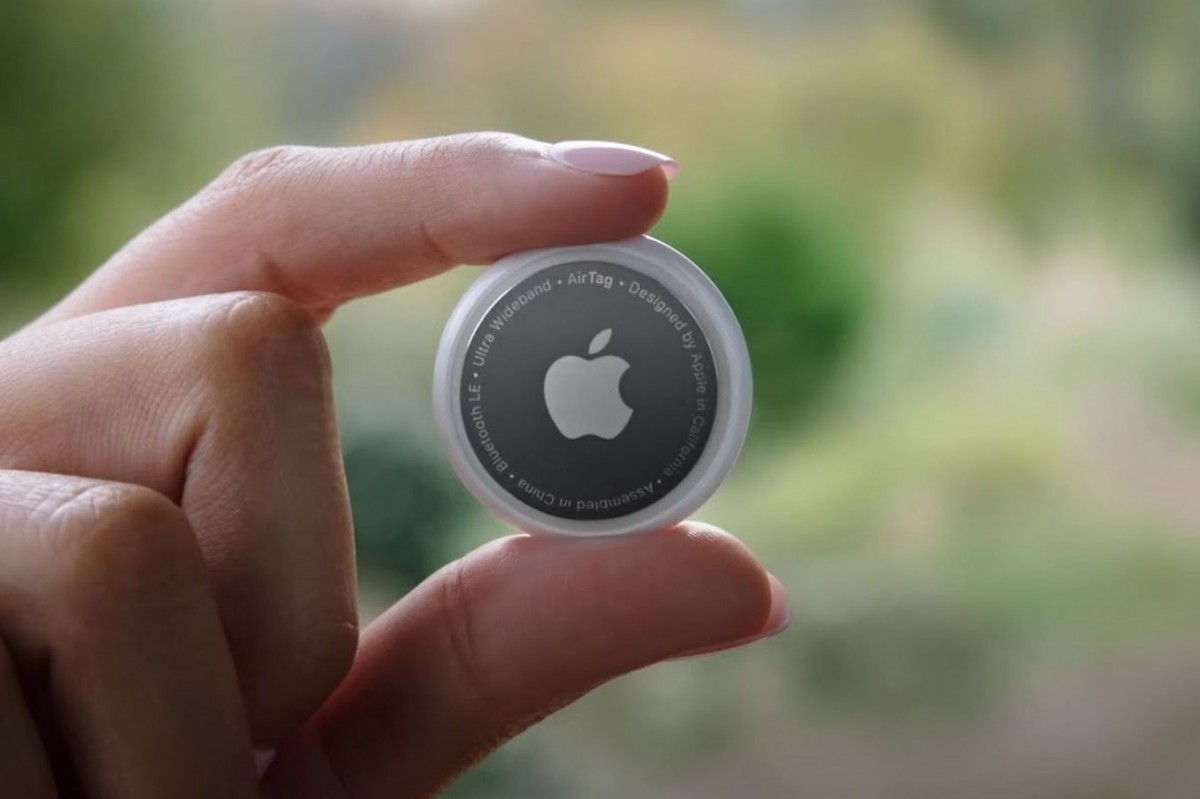
    Apple has started releasing its newest AirTag firmware update. Version 1.0.391, with the feature build number 1A301 succeeds the previous iteration that the company launched seven months ago.

    Concrete details on the recent firmware update are, for the time being, rather scarce. With iOS updates, one can easily identify the main tweaks by going over the official release notes. However, for firmware updates, Apple has never made the same effort to guarantee visibility.

    Nevertheless, with time, users will be able to find out for themselves what the new firmware update brings to the table. Last year, Apple released an Android app for the AirTag and made some adjustments to the anti-stalking features of the device. It is possible that this new update could also build upon the latter.

    In general, firmware updates do not always introduce new features. Most commonly, they tackle bugs and enhance performance. That being said, a novel feature is never completely out of the question. If one does come up, you can be sure that we at PhoneArena will have you covered.

    Users can, as of now, only check whether they are running the newest firmware version. Unfortunately, firmware updates happen automatically without the user being explicitly informed. Because there is no way to manually initiate an update, those that have not received the newest one will simply have to exercise some patience.

    In order to see which firmware version is being run on your AirTags, simply select your AirTag from the items section, tap on its name and compare. If the version is 1.0.391, you are good to go. If not, simply make sure to leave your AirTag close to your iPhone and hope for more than mere optimisation.

  • Leaked document warns that Facebook has no clue how it handles your data

    Leaked document warns that Facebook has no clue how it handles your data

    For years, the community’s main gripe with Facebook has been that it collects a lot of personal data, which it later sells to advertisers. And now, a leaked internal document obtained by Motherboard warns that the social media platform has no idea where all of its acquired user data is going or what it is being used for.

    The report was written last year by Facebook’s privacy engineers on the Ad and Business Product team, and its goal was to inform about the gaps in the way the platform processes personal information and to encourage a change in an attempt to protect the company from problems with privacy regulators in Europe, the US, India, and other countries.

    According to the engineers, the company will be unable to fully comply with regulator-imposed privacy laws that come from everywhere as a “tsunami” of new laws that impose restrictions. They stated, “We do not have an adequate level of control and explainability over how our systems use data, and thus we can’t confidently make controlled policy changes or external commitments such as ‘we will not use X data for Y purpose.’ And yet, this is exactly what regulators expect us to do, increasing our risk of mistakes and misrepresentation.”

    The reason for Facebook’s data privacy problem is that its systems mix first-party user data, third-party user data, and sensitive data together. To be even more understandable, the engineers used the metaphor of pouring a bottle of ink into a lake and then trying to return it to the bottle.

    The ink is a mix of all kinds of user data, and once “poured,” there are no ways to organize it to “only flow to the allowed places in the lake?”

    As the engineers pointed out, there is a “short-term” solution in the form of a new, unreleased service called “Basic Ads,” which, if implemented, will allow Facebook to comply with international regulations. The document reads, “When launched, Facebook users will be able to ‘opt-out’ from having almost all of their 3P and 1P data used by Ads systems – page likes, posts, friends list, etc.”

    The sad part is that the report also states that Basic Ads must be “launch-ready in Europe by January 2022.” January has come and gone, but this service hasn’t been released yet.

    Although Facebook declined to comment on this “short-term” solution, a representative of the company shared that Basic Ads is “an internal codename, and that the product will show that Facebook can build advertising that is relevant to users while preserving their privacy.

    In a statement to Motherboard, a Facebook spokesperson stated that the company is complying with privacy regulations. Also, it can’t be determined that the report shows non-compliance because it doesn’t describe the platform’s extensive processes and controls used to comply with privacy standards.

    The spokesperson also stated that regulations across the world introduce different requirements for the company to fulfill and that the document simply shows what measures the company is working on to be able to implement them.

  • Google introduces ads in YouTube Shorts

    Google introduces ads in YouTube Shorts

    We live in a time when, thanks to TikTok, the short-video form factor is crazy popular and has extreme potential for monetization. Naturally, every social media platform wants a piece of that pie. We have Instagram and Facebook with their version — Reels — and we have YouTube with its Shorts.

    As Bloomberg first reported, YouTube wants to increase its earnings from Shorts and has begun experimenting with ads on its short videos. Currently, the ads you will see in Shorts are mainly the app-install ones, but there may be other promotions sprinkled in as well.

    It looks like the experiment is going well for the platform. Philipp Schindler, Google’s chief business officer, told investors, “While it’s still early days, we’re encouraged by initial advertiser feedback and results.”

    But why now, Google? After all, the tech giant introduced YouTube Shorts in 2020 and needed two years to add advertisements to its short videos. A possible reason could be that, for the first quarter of 2022, YouTube’s ad revenue growth was 14%, which is lower than what was expected by the analysts. It received $6.87 billion in revenue, compared with an expected $7.4 billion.

    Also, the tech giant has noticed a decrease in direct response ads, like app-install campaigns. And since Shorts now receives 30 billion daily views, Google is leveraging that to increase YouTube’s ad revenue and simultaneously the direct responses of its ads.

    The tech giant has noticed a decrease in direct response ads, like app-install campaigns. That’s why it decided to leverage the 30 billion daily views that the Shorts platform gets to boost specifically those types of advertisements.

  • Spotify announces gains in both paid subscribers and free users in 2022

    Spotify announces gains in both paid subscribers and free users in 2022

    Despite the difficult circumstances, Spotify has managed to expand its user base in 2022. Paid subscribers rose by 2 million, while monthly active users – by 18 million.

    On Wednesday, Spotify released its financial results for the first quarter of 2022. While many streaming services are facing financial hardship, Spotify has defied the gloomy predictions and announced a nearly 24% increase in gross revenue on a yearly basis.

    The company reported growth across all key metrics, with increases in both monthly active users and paid subscribers. Based on the statistics, Spotify Premium subscribers now add up to 182 million, 2 million more than the figure for the same period in 2021. It should be noted that this increase was sustained despite the withdrawal of the streaming platform from the Russian market, which directly lead to the estimated loss of 1.5 million subscribers.

    The growth exceeded the company’s initial expectations and is largely attributed to outperformance in other key markets (notably Europe and Latin America). All in all, premium revenue rose by 23%, on a year-to-year basis.

    For the number of active monthly listeners, a little bit of guesswork was undertaken. Because of a system outrage a couple of months ago, many non-premium users were forcibly logged out from the platform. As a result, some simply ended up creating new accounts instead of logging back to their old ones. Nevertheless, even when accounting for this accident, Spotify is confident that the number of active monthly listeners has still risen, albeit not to the levels previously anticipated.

    Spotify also announced its forecasts for the next financial quarter and the end of the year. By 2023, the streaming platform is projected to have up to 187 million paid subscribers and a grand total of 428 million active monthly users.

    These figures are impressive and showcase Spotify’s continuous dominance of the music streaming market. Spotify’s biggest direct competitor, Apple Music, does not routinely report the size of its user base. The last time it did, it had an estimated 60 million subscribers – a sizeable number no doubt, but quite a bit off of what Spotify has.


  • Northvolt, Volvo Cars Pick Gothenburg For New Battery Plant

    Northvolt, Volvo Cars Pick Gothenburg For New Battery Plant

    Automaker Volvo Cars and battery manufacturer Northvolt will build their joint battery plant in Gothenburg, western Sweden, the two companies said on Friday. The new 50GWh plant will create up to 3,000 jobs and make battery cells specifically developed for use in pure electric Volvo and Polestar cars, the Sweden-based companies said. Operations will begin in 2025. The two companies said last year they would form a joint venture to develop batteries, including setting up a gigafactory for production and research and development centre, a total investment of about $3.3 billion.

    Northvolt and Volvo said former Tesla executive Adrian Clarke had been appointed to lead the production company.

    “He comes with a long experience from Tesla as well as around how to build these type of factories,” Northvolt CEO Peter Carlsson, who also previously worked for Tesla, told Reuters.

    Volvo Cars head of engineering and operations, Javier Varela, said access to fossil-free energy, skills, and infrastructure had been factors for choosing Gothenburg, Volvo’s hometown.

    Competition for talent is fierce, with most battery engineers based in Asia. Tesla and Asian companies such as LG and Samsung SDI are also setting up factories in Europe.

    Northvolt’s gigafactory in the Swedish town of Skelleftea assembled its first battery cell at the end of December, making it the first European company to design and manufacture a battery in Europe.

    Carlsson said it was running as planned, although he said global supply-chain problems, semiconductor shortages, and the COVID-19 had made it more of a challenge. “It has not been the easiest of times,” he said.

    Volvo Cars, majority-owned by China’s Geely Holding, aims to sell 50 per cent pure electric cars by the middle of this decade and fully electric cars only by 2030.

    Northvolt, whose biggest shareholder is Volkswagen, has so far received more than $30 billion worth of contracts from customers such as BMW, Fluence, Scania, Volkswagen, Volvo Cars, and Polestar.

  • Volkswagen’s Skoda Auto Reports 12.6% Drop In 2021 Global Deliveries To 878,200 Cars

    Volkswagen’s Skoda Auto Reports 12.6% Drop In 2021 Global Deliveries To 878,200 Cars

    Volkswagen’s Skoda Auto said on Tuesday its global deliveries dropped 12.6% year-on-year in 2021 to 878,200 cars as the industry suffered from a semiconductor shortage and the impact of the COVID-19 pandemic.

    Among its regional markets, the Czech carm

  • BMW To Create Up To 6,000 New Jobs Next Year

    BMW To Create Up To 6,000 New Jobs Next Year

    Germany’s BMW plans to create up to 6,000 new jobs next year to prepare for growing demand for its electric vehicles, the carmaker’s chief executive told daily Muenchner Merkur.

    BMW is on a very good path through the transformation and has its plants prepared for e-mobility, Oliver Zipse was quoted as saying in an interview published on Wednesday. “That is why we will increase our workforce by up to five percent next year.”