Tag: asia

  • Twitter’s latest update is all about Direct Messages

    Twitter’s latest update is all about Direct Messages

    Twitter is making all sorts of changes to its app almost on a weekly basis. Some of them are less important, while others are really useful even though they don’t get under the spotlight too often. After delivering the so-called “Good Bots” labels for all bot developers earlier this week, Twitter announced a much more important feature is making its way to users: the ability to pin Direct Messages.

    It’s a nifty feature that will allow Twitter users to put their conversations via Direct Messages up and center. Not only that, but Twitter lets users pin up to six conversations to stay on top of the Direct Message inbox.

    To pin a DM conversation simply swipe to the side and tap the pin to move the conversation to a new section called “Pinned conversations” that’s visible at the top of the DM inbox.

    According to Twitter, the new feature will be rolled out in waves to Android and iOS users, as well as on the web. If you don’t see it right away, be patient since it’s probably going to take a few days for everyone to have access to the ability to pin their DM conversations.

  • Kering bullish on Chinese domestic luxury consumption

    Kering bullish on Chinese domestic luxury consumption

    French luxury goods Kering sounded a positive note on its forecasts for its performance this year in China, even if the country’s consumers are not expected to resume traveling abroad for at least a year.

    Group managing director Jean-Francois Palus told analysts on Thursday the company had deepened its presence in mainland China during the pandemic, notably through e-commerce on Alibaba’s Tmall platform as well as its own websites in the country.

    He also cited internal tourist flows to the duty-free shopping hub of Hainan as well as other parts of the country as fuelling luxury sales growth.

    The executive said he was optimistic about the health of Chinese consumption, noting a lot of new consumers beginning to buy luxury products, with “a good propensity to buy and to buy more.”

  • You can now use Snapchat to find live events and meet people with similar tastes

    You can now use Snapchat to find live events and meet people with similar tastes

    Snapchat announced that, in collaboration with Ticketmaster, it is introducing a way for its users to discover live events happening near them and easily purchase tickets for them. The Snapchat app now has a new Snap Map Layer and a mini app-within-an-app called Ticketmatcher Mini.

    Through Ticketmaster’s Snap Map Layer, you can see events varying from comedy to sports, and when you find something that you are interested in, you can choose it and invite someone to that event or buy a ticket for it through a ‘seamless checkout process.’

    As for the Ticketmatcher Mini, well, it looks more like a mini dating app within the social app. Based on your personal preferences, Ticketmatcher Mini will promote live events around you and, in the process, will also help you find other people with similar tastes to yours.

    If you want to take advantage of the new partnership between Snapchat and Ticketmaster, go to the Rocket Icon in Chat on the Snapchat app. Once you tap it, the app will display a small survey, and based on your answers in the survey, the app will decide what live events to recommend.

    Now, when Snapchat knows your preferences, it will show you recommended events, and in order to browse them, you will need to swipe left and right. When you see an event that you think you would be interested in, you can check out whether any of your Snapchat friends are also interested in that event. This way, you can see if you have similar interests with any of your friends on the platform.

    If you have friends who are also interested in the same event as you, you can start a discussion with them using the Snapchat Camera. Through the Snapchat app, you can also send an invitation to an event to your friends or organize a guest list for that event.

  • Consumer Bank Cembra Books Record Profits

    Consumer Bank Cembra Books Record Profits

    Swiss consumer lending specialist Cembra Money Bank posted record profits last year. The credit card business in particular grew.

    Cembra’s net income increased 6 percent to 161.5 million Swiss francs in 2021, even though revenues decreased 2 percent to 487.0 million Swiss francs, the bank said Wednesday in announcing its annual results.

    CEO Holger Laubenthal said the robust development in all business areas and our excellent loss ratio enable us to report a record profit in a challenging environment. Moreover, Cembra also won new partners in the credit card and Buy Now Pay Later areas, he added.

    Interest income declined 5 percent due to a lower receivables base in the personal loans business, while at the same time interest expenses decreased by 3 percent to 26 million Swiss francs.

    Total net loans and advances to customers at the end of 2021 amounted to 6.2 billion Swiss francs, a decrease of 1 percent compared with the previous year. In personal loans, receivables decreased by 5 percent to 2.5 billion Swiss francs, while vehicle financing decreased 1 percent to 2.8 billion Swiss francs.

    The impact of the Covid 19 pandemic in Switzerland and the cautious underwriting policy in new business, were cited as factors.

    Receivables in the credit card business increased by 6 percent to 1.0 billion Swiss francs, boosted by an increase in card issuance of 4 percent year-on-year to 1.07 million.

    The Board of Directors will propose a 3 percent dividend per share increase to 3.85 Swiss francs at its next General Meeting on April 21.

    The main shareholders are UBS Fund Management which owns at least 5 percent, followed by Blackrock, Credit Suisse Funds and Swisscanto which each own at least 3 percent of Cembra, according to its website.

  • Vietnamese customers continue to love Korean cars

    Vietnamese customers continue to love Korean cars

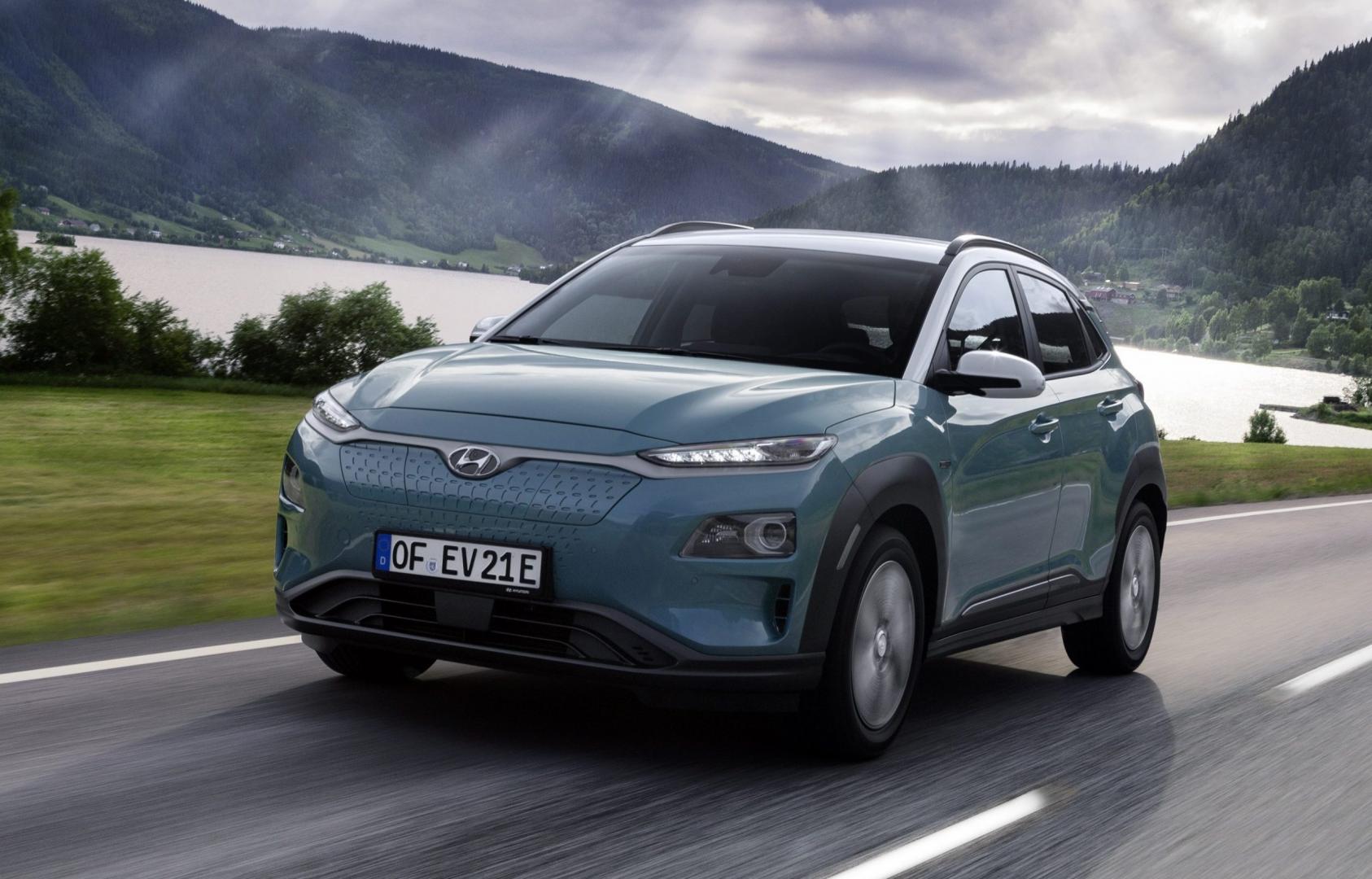
    The market share of Korean auto brands Hyundai and its subsidiary Kia increased from 18 percent in 2017 to over 30 percent last year.

    Hyundai continued to lead the market with sales of 70,518 units, though down 13.3 percent from the previous year.

    Japan’s Toyota followed with 67,339 units, down 4.7 percent, and Kia was third with 45,532 units, up 16.2 percent.

    For a third consecutive year the two Korean brands were among the top three, and they had a combined 30.2 percent share, almost the same as in 2020.

    With sales of 116,110 units, Vietnam was far and away the most important market for Korean automakers in Southeast Asia.

    To put numbers in perspective, their sales in Vietnam was four times higher than the combined sales in five other markets in the region: Thailand, Indonesia, Malaysia, the Philippines, and Singapore.

    Competitive pricing compared to Japanese brands and a wide of options have helped Korean become popular in Vietnam.

    Hyundai and Kia cars are assembled by Thaco and TC Motors respectively in the northern province of Ninh Binh and central province of Quang Nam.

  • Gas stations limit sales as supply shortage persists

    Gas stations limit sales as supply shortage persists

    Gas stations across the country are again complaining about supply shortages and losses due to surging prices, which are forcing them to limit sales. In the southern province of An Giang, some limited sales to VND30,000 ($1.32) per customer on Tuesday, forcing buyers to go to another station to fill the rest of their gas tank. Nine stations have closed down and it is confirmed they have run out of stocks, the province Market Surveillance Department said.

    In other southern localities like Binh Duong Province and Ho Chi Minh City too, some gas stations reported shortages.

    “Oil imports have fallen by 40-50 percent since before the price increase,” Do Thanh Han, CEO of Quoc Thang Ltd, which has eight gas stations in Binh Duong, said. He was referring to the 3.9-percent gasoline retail price hike the government affected last Friday. The CEO of a gasoline distribution company in HCMC said supply has fallen by 30 percent below normal.

    In Hanoi, Nguyen Van Tiu, CEO of Tu Luc Gas and Oil Co., said it has been very difficult to source supply in the last two days. With wholesalers increasing prices, his company’s commission has fallen from VND200 per liter to zero, he said. The increase last Friday was the fourth since December after a period of calm.

    The popular RON 95 gasoline is now at an eight-year high of VND25,320 per liter, having risen by 11 percent this year. The retail price surge has caused many gas stations to sell at a loss as they say wholesale price exceeds retail price and force them to have zero commission or less.

    Tran Thai Binh, owner of eight stations in the southern province of Dong Thap, said that the company has been losing nearly VND2 million a day for over a month due to falling commission.

    Some stations have closed down to avoid a bankruptcy.

    “We cannot hold on anymore”, said Hoang, owner of a gas station in the Central Highlands in his request to the Ministry of Industry and Trade for permission to stop selling for a week.

    Hoang has not been able to source inventory since last Friday.

    “If we continue to operate, we will go bankrupt”.

    Tran Duy Dong, head of the trade ministry’s domestic market agency, said that supply is low because the country’s biggest refinery Nghi Son is only operating at 55 percent of capacity.

    It is set to reach 80 percent by the end this month and 100 percent next month.

    Some consignments are arriving and the shortage will be eased in the next one or two weeks, he added.

    The reason stations report losses is because global rates increased during Vietnam’s Lunar New Year holiday Tet, which means authorities only raised prices up accordingly after, and by then stations have already been selling at a loss, Dong said.

  • Samsung invests another $920 mln in northern plant

    Samsung invests another $920 mln in northern plant

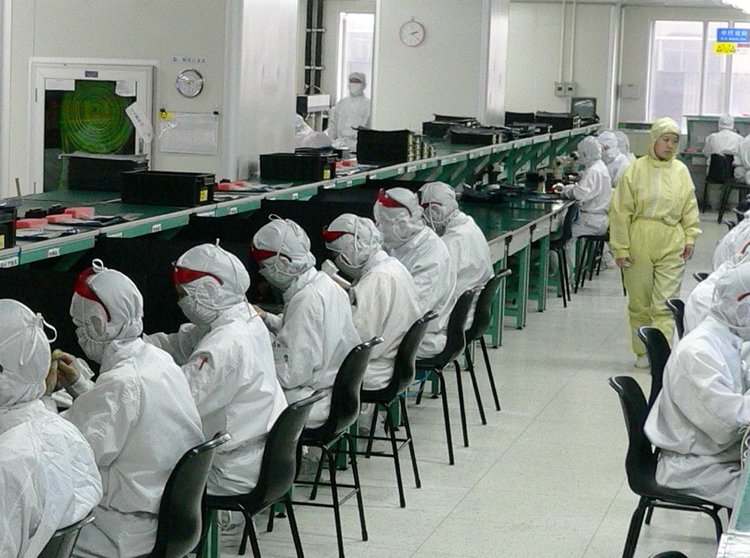
    Samsung has received permission to invest an additional $920 million in its electronic components plant in the northern province of Thai Nguyen.

    The license, awarded to the South Korean’s electronics giant’s Samsung Electro-Mechanics unit, will increase its total registered investment in the province by 68 percent to $2.27 billion.

    Samsung, Vietnam’s biggest foreign direct investor, first invested $1.3 billion in the electro-mechanics unit in 2013. The unit produces main boards and other electronics components.

    As of last year, Samsung had invested $18 billion in Vietnam. It has six plants in the country and is building a new research and development center in Hanoi.

  • Twitter’s feature for blocking accounts that send harmful or abusive tweets is coming to more people

    Twitter’s feature for blocking accounts that send harmful or abusive tweets is coming to more people

    Twitter is expanding the beta testing of its Safety Mode feature to more of its users. In a tweet, Twitter announced that it is extending Safety Mode, a feature that enables Twitter users to temporarily block accounts that send harmful or abusive tweets, to ‘several new English-speaking markets.’ The goal is, of course, for Twitter to gain more feedback and insights about its Safety Mode feature.

    But which are these ‘several new English-speaking markets?’ Well, Tatiana Britt, a spokesperson from Twitter said that Twitter will make Safety Mode available to around 50% of its users in the United States, United Kingdom, Canada, Australia, Ireland, and New Zealand. Previously, there were only around 750 beta users in the Safety Mode beta testing program.

    Also, with the beta testing expansion for Safety Mode, Twitter is introducing ‘proactive Safety Mode prompts’ to the beta testers. With this feature, Twitter’s system will ‘proactively identify’ possible ‘harmful or uninvited replies’ and will prompt the user to enable Safety Mode.

    As for the reason behind Twitter’s proactive approach, Britt said, “Since the initial rollout of the Safety Mode beta in September, we’ve learned that some people want help identifying unwelcome interactions. This update further reduces the burden on people dealing with unwelcome interactions.”

    In September 2021, Twitter announced the beginning of Safety Mode’s beta testing program. The goal of Safety Mode is to reduce disruptive interactions on the platform. Users can activate Safety Mode to block accounts that use potentially harmful language or send repetitive and unwanted replies or mentions for seven days.

  • Snapchat will introduce ads to Snap Stars Stories

    Snapchat will introduce ads to Snap Stars Stories

    Snapchat announced that it has begun testing mid-roll ads that would appear in the Stories of Snap Stars, who are select creators with a large following, such as public figures or celebrities. According to Snapchat, this new feature will enable Snapchat creators to make more money because, for the first time, Snapchat will share the profits from the ads with its creators.

    In its announcement, Snapchat said, “Stories lower the barrier to content creation and engagement, and we believe placing ads within a Snap Star’s public Story will allow an easier path to financial success.”

    At the moment, beta testing of Snapchat’s mid-roll ads feature is only available to select Snap Stars located in the US. However, Snap Stars who have been left out of the beta testing participants won’t have to wait. Snapchat said it will introduce mid-roll ads to all Snap Stars Stories later this year.

    Currently, there are available ads on Snapchat, but Snapchat doesn’t share the profits from the advertisements with anyone. If you’re a Snapchat user, you’ve probably noticed adverts appearing in between or after your friends’ Stories and in Snapchat’s Discover section.

    Although Snapchat expects the upcoming mid-roll ads feature for Stories to generate profits, the fact is that people don’t spend that much time anymore watching Stories on Snapchat. Even so, the CEO of Snapchat, Evan Spiegel, said in a report to investors that users are spending less time watching Stories and more time watching short videos on Spotlight, Snapchat’s equivalent of TikTok.

    It remains to be seen if Snapchat’s mid-roll advertisements option for famous people’s Stories would actually enable an easier road to financial success for Snapchat and its popular creators, or if it will be unable to compete with the current popularity of short TikTok-like videos.

  • Treasury Wine shares surge as post-China focus begins to pay off

    Treasury Wine shares surge as post-China focus begins to pay off

    Treasury Wine Estates said on Wednesday its operating earnings outside mainland China jumped 28per cent, underpinned by growth in its luxury and premium brands, sending shares of the world’s largest standalone winemaker nearly 12per cent higher.

    Treasury has had to re-direct supply to the United States, Europe and domestically after a diplomatic row between Canberra and Beijing effectively closed the lucrative Chinese market to Australian wine.

    The company said it recorded strong growth in its Americas and premium brands businesses, both of which reported a 19per cent rise in their earnings before interest, tax, SGARA and material items (EBITS).

    “Penfolds growth was particularly strong in Asian markets outside of Mainland China … increasing distribution in Asia, domestic markets, Europe and the United States was a key execution highlight,” the company said in a statement.

    Reported EBITS, excluding Australian COO wine sold in mainland China, rose to A$262.4 million ($187.7 million), narrowly missing market expectations of A$265 million while its total net profit slid 7.5per cent to A$109.1 million.

    The company said trading conditions for the remainder of fiscal 2022 were expected to remain broadly in line with the first half across its key markets and channels.

    “Despite FY22 potentially shaping up to be slightly softer than expectations, we see Treasury doing a commendable job building demand for its products in new markets,” Citi analysts said in a note.

    Treasury shares jumped as much as 11.8per cent to A$11.78 in early trading, while the broader market rose 0.4per cent.

    The company said it plans to increase prices across select portfolio brands to partly mitigate the impact of elevated supply chain costs and logistics.

    The Melbourne-based firm retained its interim dividend of 15 Australian cents per share.

  • EU deals on the Digital Services Act might get finalized by the end of June

    EU deals on the Digital Services Act might get finalized by the end of June

    As many of you may probably know, big tech companies have been going through a lot of scrutinies in the past couple of years, especially from EU antitrust regulations and US lawmakers. Now, The European Union’s Digital Services Act could be concluded by the end of June, and it will force tech giants such as Apple, Meta, Google to manage their behavior and how they react to content on their platforms.

    The Digital Services Act was introduced by the European Commission back in December 2020, and it has been discussed by European lawmakers as a way to make tech giants police the content published on their platforms more strictly. If the tech companies fail to comply with the law, they could be fined by the EU as much as 6% of their global turnover.

    Mor specifically, the Digital Services Act is focused on illegal and harmful content published on giant platforms, and it will require platform holders to take such posts and content down in a prompt manner. This includes a large area of online platforms such as online marketplaces, social networks, content-sharing platforms, digital stores like the App Store and Google Play, and many other online services.

    However, in order for the proposed legislation to become law, it has to reach a deal with EU member countries, which is usually a long process. But it could probably go quicker than that this time. EU lawmaker Christel Schaldemose is the one who is steering negotiations on that topic and stated that a deal could be made by the end of June.

    Schaldemose also stated that in terms of the negotiations, lawmakers are keen to increase how much the owners of big online platforms have to accomplish in blocking harmful content. This includes banning the so-called dark patterns, and to regulate companies based on where they are registered.

    For those of you who don’t know, dark patterns are tricks that websites and apps use to make you do something you didn’t mean to, like buying or signing up for something. In regards to such dark patterns, Schaldemose also stated that “We go into the business models of platforms. The Council is not so willing to go that far,” which pretty much means there is some difference of opinions on the topic. “The Council wants the ban only for online marketplaces. Parliament wants a ban on all platforms.”, she added.

    On top of that, lawmakers are also keen to ban targeted advertisements for minors. What’s more, targeted ads based on sensitive data such as sexual orientation or political beliefs might also get banned by the Act.

    That’s not the only legislation that the European Parliament has been working on. Parallel with the Digital Services Act, the EU introduced the Digital Markets Act, aiming to increase competition and limit anti-competitive practices by the big tech companies.

    Measures included in the Digital Markets Act include forcing Apple and Google to allow users to uninstall pre-installed apps on their devices, as well as forcing them to eliminate self-preferencing in search results. On top of that, these companies should provide more transparency over advertising metrics.

    Back in late 2021, progress on both of these legislations, the DSA and the DMA slowed down. So far, the Digital Markets Act is behind the Digital Services Act in terms of negotiations.

    The US has also been working on some proposals for legislation. Recently, a proposed bill that could make Apple allow sideloading on iPhones and iPads proceeded to be debated by the full Senate.

  • Uniqlo plans five more stores in Singapore

    Uniqlo plans five more stores in Singapore

    Apparel retailer Uniqlo says it will open another five stores in Singapore, taking its network there to 31 stores.

    The first neighbourhood store will open at Ang Mo Kio and Clementi in the first quarter of this year. Uniqlo says the 1297sqm store will be a testbed for inclusive in-store features such as a wheelchair-friendly fitting room, community partnership projects, and sustainability initiatives.

    The locations of the other four new stores have yet to be confirmed.

    Yuki Yamada, CEO at Uniqlo Singapore and Malaysia, said: “To complement our existing network of mall-based outlets, the new store at Ang Mo Kia 51 will bring LifeWear essentials closer home to the heartlanders to enjoy shopping convenience.

    “As a global retailer, we are in a unique position to use our business to benefit the community around us by offering greater inclusivity and contributing meaningfully to a more sustainable society,” she added.

    The brand works with special education schools and social service organisations to provide an assisted shopping experience to customers with special needs in their preferred time slots which must be booked in advance.

    The company has also launched Uniqlo Repair Studio in store, the first permanent offering in Asia to extend the life of Uniqlo’s clothing. Trained staff at the site will repair and alter damaged clothing.

  • Louis Vuitton set to raise prices this week as costs climb

    Louis Vuitton set to raise prices this week as costs climb

    Louis Vuitton, LVMH’s top fashion brand, will raise prices globally on Wednesday as a result of increased manufacturing and transportation costs, a spokesperson for the French luxury goods company in China told Reuters.

    Louis Vuitton, the world’s biggest luxury brand, will become one of the first big labels in the industry to hike prices widely this year to protect its margins as costs soar.

    The price increases will affect Louis Vuitton stores worldwide and cover leather goods, fashion accessories and perfumes, the spokesperson said on Tuesday. She did not give further details on the scale of the rises, beyond saying that they would vary depending on the product.

    “The price adjustment takes into account changes in production costs, raw materials, transportation as well as inflation,” the label said in a statement given to Reuters.

    Some bloggers on Chinese social media said the price of some models of handbags such as Capucines and Neverfull, now priced at 46,500 yuan (US$7,323) and 12,000 yuan ($1,890) respectively, would rise by 20 per cent or more in China, without citing sources.

    PurseBop, a website tracking the luxury market, cited speculation that the increase would be between around 4% on the lower end and 15-18% on average on the higher end.

    Presenting record 2021 sales and profits for the fashion and leather goods division, which is led by Vuitton and Dior, LVMH’s billionaire boss Bernard Arnault said in January the group had enough wiggle room to increase prices in an inflationary environment but would have to be “reasonable.”

    Throughout the coronavirus pandemic, luxury goods companies have been taking advantage of surging demand for high-end fashion and accessories to push their brands even more upmarket.

    Chanel increased prices on some of its handbags three times last year, with the popular Classic Flap bag, currently selling at $8,200, now costing $3,000 or nearly 60 per cent more than before the pandemic in 2019.

  • New report shows how Meta was forced to change its ad tech on iOS because of Apple’s ATT

    New report shows how Meta was forced to change its ad tech on iOS because of Apple’s ATT

    As you may have heard, recently Meta (Facebook’s parent company) reported a substantial decrease in its revenue, and more specifically, a big 26% drop in revenue, a total of $250 billion, and a large part of this decrease is due to Apple’s App Tracking Transparency (ATT) feature, which changed the way ads work within iOS apps.

    Now, a new report from Recode dives deeper into how Meta has tried to find a workaround for iOS advertisement.

    Meta, upon the report of the decreased revenue, singled out Apple’s App Tracking Transparency as one of the things that affected it the most. App Tracking Transparency was announced back in June of 2020, and was released with iOS 14.5, and gave iPhone users the ability to opt-out of app tracking their internet behavior in order to deliver personalized ads.

    App tracking, however, is important to advertisers as they use your information to deliver ads relevant to your interests, and understandably, the more relevant the ad is to you, the easier it is for advertisers to make you buy the products.

    Apple’s ATT then made the information less relevant for users, and advertisers on Meta suffered from it. Nevertheless, Meta and many of its advertisers reportedly expect to see an increase in revenue this year, but it has become harder for them to advertise to iOS users.

    According to the report, Meta has decided to make up for the issue. It has created an “aggregated event measurement” workaround, which provides advertisers with access to metrics for a much larger audience while being denied individual users’ information. Pretty much, the info advertisers get is less personal, so the ads are less relevant to a specific iPhone or iPad user.

    On the other hand, the report underlines that Facebook also pushed selling products on its own apps, like digital storefronts on Instagram and Facebook, which is a plan laid out last spring just as Apple’s privacy changes went into effect. Facebook could generate revenue from those sales as well. However, despite that, the report indicates that Meta’s ads for iOS users will never be at the same level of efficiency as they were before ATT.

    We are left wondering what these changes might lead to in the future, but all we can do so far is wait and see.

    A couple of weeks ago, we reported on the exact toll Apple’s App Tracking Transparency feature cost social media giant Meta. Back when it published its initial revenue report, Meta’s stock dropped by $73.95 to finish that day at $249.05. And now, at the time of writing, Meta’s stock has gone even lower at $217.70.

    And it seems that Facebook’s issues will be continuing through this year. As we reported earlier, the company’s forecast for 2022 doesn’t seem to get much better, and it stated that there are headwinds from increased competition from other apps and social media platforms for people’s time and attention. Additionally, there has been a shift in engagement without its own apps towards video platforms such as Instagram Reels, but they monetize at lower rates than Feed and Stories. Basically, it is struggling to find ways to grow its business during these changing times.

    Unfortunately for Meta, it is looking at a possible cost of $10 billion just because of Apple’s App Tracking Transparency and users spending their time on Reels and finding other things to do than just sit for ages on Facebook.

  • Texas sues Meta for using its facial recognition technology without Texans’ consent

    Texas sues Meta for using its facial recognition technology without Texans’ consent

    Meta once again needs to defend itself in a lawsuit. The state of Texas, represented by Attorney General Paxton, sues Meta for using its facial recognition technology, which is now shut down, to collect and use for profit the biometric data of Texans without their consent.

    According to Paxton, Meta gathered Texans’ biometric data without their consent ‘not hundreds, thousands, or millions of times—but billions of times,’ and all of these times, Meta violated Texas’ Capture or Use of Biometric Identifier Act and the Deceptive Trade Practices Act.

    In a statement, Paxton said, “Facebook will no longer take advantage of people and their children with the intent to turn a profit at the expense of one’s safety and well-being. This is yet another example of Big Tech’s deceitful business practices and it must stop. I will continue to fight for Texans’ privacy and security.”

    Also, in a statement, a spokesperson for Meta said, “These claims are without merit and we will defend ourselves vigorously.” Furthermore, Meta said that before the shut-down of the facial recognition technology, all users received a notice about the technology and had the choice to give their consent or not when using the facial recognition feature.

    In the past, Meta used its facial recognition technology to scan uploaded photos and tag users automatically. In November 2021, Meta ended the use of its facial recognition technology due to concerns about how it could be used in the future.