Tag: asia

  • On Instagram, you can now send and receive private Story likes without piling up unnecessary DMs

    On Instagram, you can now send and receive private Story likes without piling up unnecessary DMs

    Adam Mosseri, the head of Instagram, announced on Twitter that Instagram is introducing a new feature called “Private Story Likes,” which allows Instagram users to like a Story without the platform sending a direct message to the Story’s author.

    Before the Private Story Likes feature, to respond to a Story you could only send a direct message or an emoji reaction to the creator of the Story and when you reacted to someone’s Story, they always received a response in their DM inbox.

    Users who have the Private Story Likes feature may now notice a new heart icon located between the Send Message field and the paper airplane sharing button when watching someone’s Story.

    Also, the likes you receive or give on stories will be private and won’t have public counts, which means that only you will be able to see who liked your Story. If you want to see who liked your Story, you need to go to the viewer sheet of that particular Story, and there you will see a heart icon next to every viewer who liked your Story.

    According to Adam Mosseri, Instagram’s idea for the Private Story Likes feature is for ‘people to express more support to each other’ and also to ‘clean up DMs a little bit.’ Adam Mosseri explained that Instagram’s goal is to make DMs more focused on conversations between you and your friends.

  • Starbucks faces backlash in China over police incident at store

    Starbucks faces backlash in China over police incident at store

    Starbucks is battling its second bout of public fury in China in less than three months, after an incident described by the US coffee giant as a “misunderstanding” at one of its stores sparked criticism from online users and state media.

    The company came under scrutiny on Monday after a user on Weibo said that a number of police officers had been eating outside a Starbucks store in the southwestern city of Chongqing before they were told by staff to move away.

    The user’s description of the incident quickly went viral on the Twitter-like platform, prompting the ruling Communist party’s mouthpiece People’s Daily newspaper to issue a commentary, in which it called Starbucks “arrogant”.

    Chinese consumers and media have become more aggressive about protecting customer rights and monitoring the behavior of big brands, especially from overseas.

    In December, Starbucks apologised and carried out inspections and staff training across all its roughly 5,400 stores in China after a state-backed newspaper said two of its outlets used expired ingredients.

    Starbucks apologized on its Weibo account late on Monday for “inappropriate communications,” saying the whole thing was a misunderstanding.

    But it said staff had never chased away policemen or tried to file complaints against them.

    It continued to face criticism online on Tuesday, with a few small companies announcing on Douyin, the Chinese equivalent of TikTok, that they would “boycott” Starbucks by forbidding employees from arranging meetings in or buying drinks from the shops of the coffee chain.

    However, Hu Xijin, a prolific commentator in China who is the former editor-in-chief of the Global Times newspaper, urged his Weibo users to see the Starbucks Chongqing incident as an accident and not more, adding that Starbucks’s status as a foreign brand should not subject it to more criticism.

    “China is a country that is open to the world,” he said. “To label a mistake as arrogance is not conducive to the bigger environment of opening-up.”

  • French cloud firm InterCloud raises 100 million euros in a funding round

    French cloud firm InterCloud raises 100 million euros in a funding round

    France’s InterCloud said on Tuesday it had raised a further 100 million euros ($114.43 million) to support its international expansion in its latest fundraising round.

    InterCloud, which helps companies access multiple cloud resources through a single platform, said the investment would allow it to expand its international sales team, starting in Europe, with around 50 people to be added this year alone.

    Launched in 2010, InterCloud has teamed up with major cloud computing providers such as Microsoft, Amazon’s AWS and Alphabet Inc’s, Google Cloud.

    The company said it also planned to use the funds for research and development, partnerships and acquisitions.

    InterCloud’s existing investors Ventech and Open CNP took part in the latest capital increase led by investment firm Aleph Capital, the company said.

    It had already raised 38 million euros in previous funding rounds that included investments from Orange Digital Ventures – now Orange Ventures – and Bpifrance among others.

  • Dyson opens Demo store in Singapore

    Dyson opens Demo store in Singapore

    Southeast Asia’s largest Dyson Demo store has landed in Singapore’s VivoCity, creating what the brand describes as an immersive experience retail space.

    The launch of the Dyson Demo store is part of the brand’s global drive to “further grow its direct-to-consumer retail ambitions”. The new store will join Dyson’s three smaller stores in the city – Dyson Demo Zones in Westgate, Nex and Tampines Mall, together with a Demo Store in Capitol Singapore.

    Located on the first floor of the shopping mall and spanning 172sqm, the store features several demonstration zones and interactive displays to create an in-store experience. Customers will be able to access Dyson’s full portfolio of household appliances and try the products before purchasing.

    Meanwhile, Dyson’s Beauty Labs are designed for in-house hair care, equipped with three styling stations. Customers can have their hair styled and meet the brand’s experts to get advice based on their hair type and styling preferences.

    At the Personalisation Bar, customers can enjoy complimentary case embossing for their Dyson Supersonic hairdryer, Dyson Airwrap styler, and Dyson Corrale straightener with a selection of colors for the foil initials and gift-wrapping services.

  • Japan brewer Kirin to exit Myanmar

    Japan brewer Kirin to exit Myanmar

    Japanese drinks giant Kirin said Monday (Feb 14) it will withdraw from Myanmar, after a failed bid to disentangle its operations from a joint venture with a junta-owned company after last year’s coup.

    The brewery is the latest foreign company to pull out of Myanmar with international pressure building against the junta since it ousted civilian leader Aung San Suu Kyi and waged a widespread crackdown on dissent.

    Kirin said its decision comes after months of wrangling following the coup last February, which prompted the company to express concerns about human rights and eventually seek to end its joint venture Myanmar Brewery Limited.

    Kirin has decided “to withdraw from the business in Myanmar in order to urgently terminate its joint venture partnership” with military-linked MEHPCL, the company said in a statement.

    Myanmar Brewery, whose beverages include its flagship and ubiquitous Myanmar Beer brand, boasted a market share of nearly 80 per cent, according to figures published by Kirin in 2018.

    Kirin’s attempts to terminate the partnership with MEHPCL were unsuccessful, and the Japanese drinks maker said in November that it would contest a bid to dissolve their joint brewery over fears liquidation proceedings would not be fair.

    On Monday, Kirin said it had taken “every measure to find a way forward that would allow it to continue to contribute to Myanmar’s economy and society”.

    That included filing for arbitration in Singapore in a bid to end the joint venture and proceed without the military-linked partner.

    “In the end, Kirin Holdings determined that it would be difficult to quickly terminate the joint venture in the manner it desires,” the company added in a statement.

    “Therefore, Kirin Holdings has now commenced and is proceeding with discussions with MEHPCL in order to withdraw from the business in Myanmar, giving top priority to the termination of the joint venture as soon as possible.” A junta spokesperson did not immediately respond to a request for comment.

    With the economy tanking and pressure mounting from rights groups, companies from France’s TotalEnergies to British American Tobacco and Norway’s Telenor have upped sticks or announced they will leave.

    After the coup and arrest of Myanmar’s democratic leaders, Kirin said it was “deeply concerned” by the military’s actions.

    The brewery had been under pressure even before the coup over its ties to Myanmar’s military, and launched an investigation after pressure from rights groups into whether money from its joint venture had funded rights abuses.

    In a statement, Justice For Myanmar spokesperson Yadanar Maung welcomed Kirin’s decision to withdraw from the country, praising the firm for “listening to the voice of Myanmar people and Myanmar, Japanese and global civil society”.

    “Kirin should never have entered into business with a brutal and corrupt military conglomerate,” she added, accusing the brewery of having “financed atrocity crimes and enriched top generals.”

    The activist group urged other Japanese firms doing business with the military to cut ties, and called on Kirin to avoid payments to MEHPCL or the military during the withdrawal process.

    Investors piled into Myanmar after the military relaxed its iron grip in 2011, paving the way for democratic reforms and economic liberalisation in the country of more than 50 million people.

    They poured money into telecommunications, infrastructure, manufacturing and construction projects, but the coup upended the democratic interlude and damaged the economy.

    The pandemic and supply chain disruptions have also hit the country, with Kirin saying in its earnings report released Monday that Myanmar’s beer market has shrunk by about 20 per cent.

    It said Myanmar Brewery’s sales volumes had decreased by around 30 per cent compared to the same period last year.

  • Havaianas parent’s sales surge as international strategy pays off

    Havaianas parent’s sales surge as international strategy pays off

    Alpargatas, the parent of Havaianas, is reaping the benefits of a three-year-old international expansion strategy, despite the impact of Covid on cross-border travel.

    In the year to December, Alpargatas recorded sales of  US$739 million, a 25.7-per-cent improvement in 2020. Outside its home market of Brazil, net revenue climbed 41.5 percent US$227 million.

    “The numbers are the result of a long-term strategy. Three years ago, we established that Alpargatas’ long-term value creation thesis would be based on leveraging the strength of desired and hyper-connected brands such as Havaianas,” said CEO Beto Funari.

    “In this short period, we have proved this thesis as we accelerate the brand’s growth and restructure the business portfolio.”

    The company sold a record 260 million pairs of flip-flops, up 13 percent year on year. Of those, 31 million pairs were sold outside Brazil, an improvement of 38.8 percent versus 2020.

    Funari also said the company’s growing portfolio of non-flip flop products – sandals, flats, sneakers, accessories, and apparel – increased by more than 200 percent during the period.

    In December, Alpargatas secured a deal to acquire a 49.9 percent stake in Californian sustainable footwear brand Rothy’s. Now it is planning a share issue to help fund the acquisition, expected to raise around $400 million.

  • Designer shares his concept of a foldable “iPhone Air” sporting powerful M1 chip

    Designer shares his concept of a foldable “iPhone Air” sporting powerful M1 chip

    Samsung is the early leader in the foldable market with its Galaxy Z Fold and Galaxy Z Flip handsets. While Apple has yet to officially throw its hat in the ring, TF International’s highly accurate analyst, Ming-Chi Kuo, says that a foldable iPhone is expected to be released no sooner than 2023 and that it will be of the Flip variety which means it will be a clamshell design similar to the Samsung Galaxy Z Flip.

    The latest iPhone Flip concept design comes from designer Antonia De Rosa who calls the device the iPhone Air. De Rosa sees a powerful device powered by the 5nm Apple M1 chip carrying 16 billion transistors. That is one billion more than the amount found on the A15 Bionic chip that is found under the hood of the iPhone 13 series.

    The M1 chip powers the latest iPad Pro series and was developed by Apple to replace the Intel processors that drive some Mac computers.

    The iPhone Air mockup uses chrome hinges and similar to the renders that we’ve seen for the iPhone 14, the rear camera array is flush with the back panel. While Apple has been reportedly testing out different designs of a foldable iPhone, it also is keeping its eyes on the consumer reaction to the foldable being sold by rival Samsung.

    If you examine the iPhone Air in the video, you’ll notice that the phone is portless. This is a design that former Apple design chief Jony Ive had been striving for but could not achieve before his departure from Cupertino.

    And instead of the notch, if we can direct your attention to the display, you’ll see that the iconic and still controversial notch is replaced with a pill-shaped cutout at the top center of the screen. The iPhone 14 Pro and iPhone 14 Pro Max will reportedly do away with the notch and replace it with both a hole-punch cutout and a lozenge “pill shaped” opening.

  • iPhone doubles Vietnam market share

    iPhone doubles Vietnam market share

    iPhone’s market share in Vietnam increased from 4 percent in 2020 to 9 percent last year, making it the fifth-largest smartphone seller.

    The growth of 119 percent was the highest for any brand, Counterpoint Research said in a report.

    Apple was behind Samsung (34 percent), OPPO (19 percent), Xiaomi (13 percent), and vivo (11 percent).

    Strong growth in Apple products was seen in the last quarter of the year, with sales doubling year-on-year, the report said.

    This was when the company launched iPhone 13.

    Last year, taking advantage of the rising demand, several stores were set up to exclusively sell Apple products like FPT’s F.Studio, TopZone and Lazada Apple Flagship Stores.

    Counterpoint analyst Ivan Lam said: “Apple has always had a place in Vietnamese consumers’ hearts. Last year it expanded its distribution campaign in Vietnam.”

    The overall smartphone market grew by 7 percent last year, the report said.

  • Northern province blocks fruit trucks headed for China border

    Northern province blocks fruit trucks headed for China border

    Lang Son has decided to stop receiving fruit trucks headed for the China border for ten days starting February 16 as over 1,000 trucks are still stuck in the province.

    The provincial Department of Industry and Trade said that as of Friday morning, the total number of trucks waiting at the three border gates of Huu Nghi, Tan Thanh and Chi Ma was 1,640, of which 1,390 were carrying fresh fruit, accounting for nearly 85 percent.

    Due to China’s strict Covid-19 measures, customs clearance efficiency has been very low, with just 70-90 trucks able to cross the borders a day.

    Meanwhile, around 160 to 180 trucks reach the border gate every day, most of them carrying fresh fruits like dragonfruit, watermelon, jackfruit and mango. This will further worsen congestion at the border and damage businesses as well as farmers, officials said.

    The congestion at the northern border gates started in December 2021 after China strengthened its anti-Covid prevention measures. By mid-January 2022, afraid that their fruits would rot, many business owners had returned to the domestic market and sold them at very cheap prices.

    The government, ministries, branches and localities have had held many meetings on the issue but an effective solution to the problem has remained elusive.

    According to the General Department of Vietnam Customs, Vietnam earned $1.75 billion from exporting fruits and vegetables to China in the first 11 months of 2021, up 3.6 percent year-on-year despite Covid-19 impacts.

    China remained Vietnam’s top fruits and vegetables export market with a market share of 54 percent in the 11-month period

  • Petrolimex welcomes new director general

    Petrolimex welcomes new director general

    Deputy Director General of Vietnam National Petroleum Group (Petrolimex) Dao Nam Hai will become its director general (DG), starting Mar. 1.

    He replaces Pham Duc Thang who retired in November 2021. Holding two master degrees in law and business administration, Hai, 48, Hai was its deputy DG for four years, and 9-year DG of Petrolimex’s insurance subsidiary, Petrolimex Joint Stock Insurance Company (PJICO).

    Petrolimex has a charter capital of nearly VND13 trillion ($573 billion). In 2021, the group posted net revenue of over VND169 trillion, up 37 percent compared to 2020.

    Its 2021 post-tax profit was VND3.1 trillion, 2.5 times higher year-on-year.

    The state-owned Petrolimex has a nearly 40 percent share in Vietnam’s petroleum market, has 43 subsidiaries, with 5,000 gasoline stations nationwide.

  • Satellite innovations to raise digital inclusion in Asia Pacific

    Satellite innovations to raise digital inclusion in Asia Pacific

    In the digital era, data consumption is poised to grow sharply. Yet, transmitting massive amounts of data is costly especially in locations lacking reliable terrestrial communications infrastructure. Telecom Review Asia speaks with Harsh Verma, Vice President Asia, Global Sales, SES to understand how innovations in satellite connectivity can reliably meet the demands of tomorrow’s networks.

    What are the key technology innovations that are enabling SES to provide differentiated multi-orbit services at a cloud scale?

    Globally, the number of connected devices and demand for bandwidth-intensive applications will continue to soar. Emerging markets in Asia-Pacific and Latin America are likely to witness the strongest growth for satellite capacity demand. Yet, in a heterogeneous region like the Asia-Pacific, where reliable broadband connectivity is often limited to urban centres, much of the population is still unconnected. This adversely restricts digitalisation efforts, now a national ambition for many countries, to leverage technological innovation and reap the economic benefits of a digital economy.

    With digital inclusion high on the agenda for many countries,satellite technology is key to providing connectivity to underserved areas where terrestrial infrastructure is challenging to build and maintain. As a global satellite operator, SES is leveraging its multi-orbit fleet of satellites to provide cost-effective and reliable solutions to extend terrestrial networks.

    We understand different applications require different types of satellite-based solutions. Each of our customers has their own unique requirements which means we need to be able to provide a wide range of services. Our geostationary satellites provide global coverage, allowing us to serve customers anywhere on Earth, while our medium Earth orbit constellation caters for bandwidth-intensive applications with its low latency and high throughput services focused on a particular location or region of high demand.

    As more content is being migrated to the cloud, SES has changed its managed network services portfolio to deliver private, dedicated connectivity from SES’s GEO and MEO gateways to leading cloud service providers. With our SES Cloud Direct service, we enable enterprises and governments worldwide to reach any global end-point, connect to any cloud provider, and scale services as more cloud and edge services are adopted. With the launch of our next-generation MEO constellation, O3b mPOWER, dedicated, secure and reliable cloud services over satellite will be delivered with higher performance than ever. It will be SES’s most flexible and powerful satellite ecosystem to date, stretching the reach and capabilities of telcos and MNOs to narrow the digital gap and meet critical industry needs.

    Around the world, underserved communities are falling behind while global demand for connectivity soars. Communication is a fundamental social process, and recognised as a basic human right under Article 19 of the UN’s Universal Declaration of Human Rights. The way we communicate is increasingly reliant on the internet, and O3b mPOWER will enable the communities that lack any meaningful connectivity solution to leapfrog into the cloud-enabled online world. This in turn enables their success.

    As cloud adoption continues to gain traction in the foreseeable future, how does SES expand leadership in cloud-optimised connectivity?

    SES partners with the world’s leading cloud service providers to provide one-hop, lowest latency connectivity to the cloud to power future-proof connectivity. For instance, our partnership with Microsoft facilitates seamless cloud connectivity to support access to Azure suite of cloud services and applications. We are the first Microsoft Azure ExpressRoute services partner offering Azure customers opportunities to leverage satellite-enabled managed services to connect rural, remote, or underserved areas. With the launch of O3b mPOWER, Azure will be capable of supporting greater resiliency and higher-performing, lower-latency satellite connectivity solutions to customers globally.

    In addition, SES is part of the Amazon Web Services (AWS) Direct Connect Delivery Partner program to deliver seamless global connection between any location and AWS, backed by robust service level agreements covering availability, throughput, and latency.

    These initiatives are aligned with the ecosystem’s shared vision to extend intelligent cloud network solutions to elevate industries and societies in the digital economy.

    e have also partnered with a wide range of terminal providers to ensure that O3b mPOWER is compatible with a plethora of end users in various industries. As we move towards a software-enabled satellite ecosystem, we are trying to become more flexible with the hardware that works with the system so that more customers can seamlessly integrate satellites into their network.

    How does O3b mPOWER differ from the upcoming LEO constellations and why did SES choose MEO?

    Owing to the satellites’ proximity to Earth, upcoming LEO satellite constellations promise negligible latency ideal for real-time applications. However, as these satellites operate near Earth, they cover less region of the earth and require thousands of satellites to provide seamless global coverage. Not only is this costly to install, each satellite, being smaller in size compared to MEO satellites, delivers a lower total throughout. We have also seen that LEO constellations are approximately 3/4th of the time over uninhabitated areas or low demand regions, making the business case very challenging.

    Comparatively, MEO satellites that are launched at higher altitudes provide an optimal balance between realising low latency, ultra-high throughout global coverage with just over a dozen satellites. Further flexibility on O3b mPOWER enables us to steer the beams over the hotspots or high demand regions to provide large concentrated satellite capacity focussed over a particular region.

    Harnessing the benefits of MEO satellite constellations, SES’s O3b MEO constellation offers fibre-like low latency and multiple gigabits of throughput by being closer to the earth. Through the unique O3b MEO constellation, we have been successful at delivering connectivity to urban areas in landlocked Africa and central Asia.

    Founded on the success of O3b MEO, O3b mPOWER is designed to support next-generation network services. This breakthrough provides unprecedented performance and scale, complemented by high throughput GEO satellites, enabling us to extend new, bandwidth-intensive network services and applications.

    A flexible satellite system to date, the O3b mPOWER promises greater total capacity and satellite roundtrip latency at less than 150ms – requirements that support growing demand for bandwidth. As 5G continues to build momentum, O3b mPOWER’s backhaul solutions allow MNOs to dynamically scale up network needs as desired. More importantly, O3b mPOWER is capable of covering 95% of the world’s population to power seamless connectivity in the rural, remote and suburban and create new socioeconomic values in the 5G era.

  • Jio Platforms Ltd and SES partner to deliver high-performance satellite-based broadband across India

    Jio Platforms Ltd and SES partner to deliver high-performance satellite-based broadband across India

    Jio Platforms Limited, India’s leading digital service provider, and SES, a leading global satellite-based content connectivity solutions provider, announced the formation of a joint venture – Jio Space Technology Limited – to deliver the next generation scalable and affordable broadband services in India leveraging satellite technology. JPL and SES will own 51% and 49% equity stake in the joint venture respectively. The joint venture will use multi-orbit space networks that is a combination of geostationary (GEO) and medium earth orbit (MEO) satellite constellations capable of delivering multi-gigabit links and capacity to enterprises, mobile backhaul and retail customers across the length and breadth of India and neighbouring regions.

    The joint venture will be the vehicle for providing SES’s satellite data and connectivity services in India, except for certain international aeronautical and maritime customers who may be served by SES. It will have availability of up to 100 Gbps capacity from SES and will leverage Jio’s premiere position and sales reach in India to unlock this market opportunity. As part of investment plan, the joint venture will develop extensive gateway infrastructure in India to provide services within the country. Jio, as an anchor customer of the joint venture, has entered into a multi-year capacity purchase agreement, based on certain milestones along with gateways and equipment purchase with total contract value of circa US $100 million.

    The joint venture will leverage SES-12, SES’s high-throughput GEO satellite serving India, and O3b mPOWER, SES’s next-generation MEO constellation, to extend and complement Jio’s terrestrial network, increasing access to digital services and applications. Jio will offer managed services and gateway infrastructure operations services to the joint venture.

    As Covid-19 has demonstrated, access to broadband is imperative for full participation in the new digital economy. This joint venture will be a catalyst for connecting the unconnected areas within India and the region to the full range of digital services, offering access to remote health, government services, and distance learning opportunities.

    Akash Ambani, director of Jio, said, “While we continue to expand our fibre-based connectivity and FTTH business and invest in 5G, this new joint venture with SES will further accelerate the growth of multigigabit broadband. With additional coverage and capacity offered by satellite communications services, Jio will be able to connect the remotest towns and villages, enterprises, government establishments, and consumers to the new digital India. We are excited about this new journey combining our massive reach and customer base with SES’s innovative leadership and expertise in the satellite industry.”

    Steve Collar, CEO of SES said, “This joint venture with JPL is a great example of how SES can complement even the most extensive terrestrial networks to deliver high-quality connectivity, and positively affect the lives of hundreds of millions of people. We look forward to this joint venture whereby we can play a role in promoting digital inclusion in India.”

    The joint venture also aligns with the hon’ble prime minister’s ‘Gati Shakti: National master plan for multi-modal connectivity’ initiative to provide integrated and seamless connectivity by implementing diverse infrastructure. It will also accelerate the achievement of the Connect India goals in the 2018 National Digital Communications Policy and the Digital India programme by expanding broadband connectivity to Indian citizens across Indian geography.

  • Singtel Dash partners Zip for buy now, pay later options

    Singtel Dash partners Zip for buy now, pay later options

    Singtel and Zip, a leading global buy now, pay later (BNPL) player, announced an exclusive partnership to launch Zip’s pay later service in Singapore on the Dash app. This new service provides an alternate payment option for Dash customers, giving them the flexibility to choose between paying for their purchases immediately with Dash or paying later with Zip.Larry Diamond

    Dash customers can use Zip’s pay later service for in-store or online purchases from merchants such as Klook, Omnidesk, OSIM and Singtel. Zip’s current payment scheme offers four interest-free installments across six weeks. Over the next six months, Zip will be rolling out more payment schemes and bringing onboard more than 2,000 merchants through partner agreements with AsiaPay, Razer Merchant Services and HitPay.

    Gilbert Chuah, head of financial and lifestyle services at consumer Singapore, Singtel said, “Many of our customers want greater choice and control over managing their finances and our partnership with Zip provides just that with an alternative payment method that is transparent and flexible. This collaboration adds to Dash’s rapidly growing financial services business and we are working on expanding our suite of financial products and services to meet our customers’ diverse needs.”

    According to FIS’ 2021 Global Payment Report, BNPL is projected to be the fastest-growing payment method for Singapore, with transaction volume expected to increase from US$210 million in 2020 to US$1.3 billion by 2024. A study commissioned by Zip also showed that 56% of e-commerce users in Singapore have used or will consider using a BNPL service.

    Larry Diamond, CEO and co-founder of Zip said, “We are thrilled to be launching in Singapore through an exclusive partnership with Singtel Dash, one of the country’s most widely-used mobile apps for everyday financial and lifestyle needs. This partnership is consistent with Zip’s strategy to build a truly global BNPL business that supports regional and global partners operating in multiple markets. Our move into Singapore is an opportunity for us to tap into the country’s growing BNPL market and expand our presence in the Southeast Asian region following our strategic investment in BNPL provider TendoPay in the Philippines.”

  • Switzerland and Singapore to Teamup on Fintech

    Switzerland and Singapore to Teamup on Fintech

    Switzerland and Singapore, the often called Switzerland of Asia, are looking towards financial sector digitalization. A conference slated for June in Zurich seeks to do just that.

    The Point Zero Forum» intends to bring public sector leaders together with top private sector counterparts in businesses and finance, from June 21 to 23 in Zurich, Switzerland’s State Secretariat for International Financial Matters (SIF) announced on Monday.

    The event will feature a high-caliber lineup, including Swiss Federal Councillor Ueli Maurer and Singapore’s Deputy Prime Minister Heng Swee Keat, who will open the event. The President of the Swiss National Bank (SNB), Thomas Jordan , and UBS Group CEO Ralph Hamers, will also be in attendance, according to the program from the website.

    The directors of the respective financial supervisory authorities, Ravi Menon from the Monetary Authority of Singapore (MAS) and Urban Angehrn from the Swiss Financial Market Supervisory Authority (Finma) will also join the conference.

    Deputy Prime Minister Heng Swee Keat, who also serves as Coordinating Minister for Economic Policy,  sums up the need for such an endeavor.

    Digital technology has enormous potential to change the world for the better, especially through finance. To unleash the potential, we need to seek new ways of working together, address key global challenges in partnership, and seize the new opportunities.

  • AirAsia X signs cargo deal with Teleport in bid to boost freight

    AirAsia X signs cargo deal with Teleport in bid to boost freight

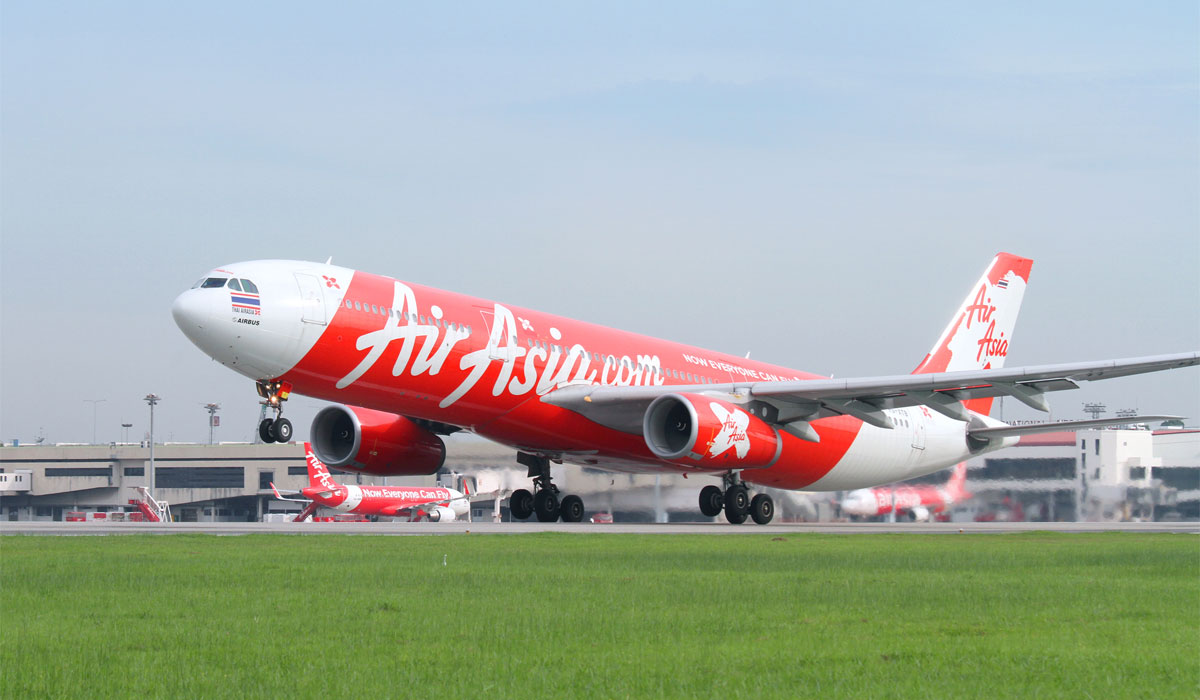
    The announcement came just days after Capital A revealed plans to reorganize the airline division and diversify in an online press conference. During the conference, Capital A’s chief executive Tony Fernandes said that for the foreseeable short-term future, the focus of AirAsia Aviation Group will be on short-term travel within the Southeast Asian region.

    The Teleport deal comes as AirAsia X tries to boost its cargo revenue to make up for the lack of revenue on the passenger side as a result of the COVID-19 pandemic.

    On January 26, 2022, AirAsia X announced that it had partnered with French transport, logistics, and supply chain GEODIS to increase cargo capacity in Asia Pacific.

    AirAsia X CEO Benyamin Ismail said that the company is in talks with other “major global clients that have air cargo requirements”.

    “We are also in discussions with several other major global clients that have air cargo requirements, particularly to where we have established bases and flying rights. It’s just two months post our restructuring and the appetite for expansion of our cargo operations is significant. This dovetails neatly into one of the core pillars of our combination carrier strategy. For the foreseeable future, cargo revenue will underpin our route strategy and passenger revenue for the first time, will be ancillary,” Ismail said in a statement.

    COO Captain Suresh Kumar Bangah said that the airline will only fly when it’s profitable and that AirAsia X hopes to bring back more aircraft over the course of the year.

    “We will only fly if it’s profitable to fly. With our restructured low-cost base, we can fly profitably where other airlines may not be able to and this is a significant advantage to us.  We intend to add a further one plane a month to full service from now and we hope to have our full fleet operational by the end of the third quarter. As more aircraft are brought back into service, we are able to recall back pilots and crew who have been through a tough period during this pandemic,” Bangah said.