Tag: asia

  • Apple To Expand CarKey With Hyundai Partnership

    Apple To Expand CarKey With Hyundai Partnership

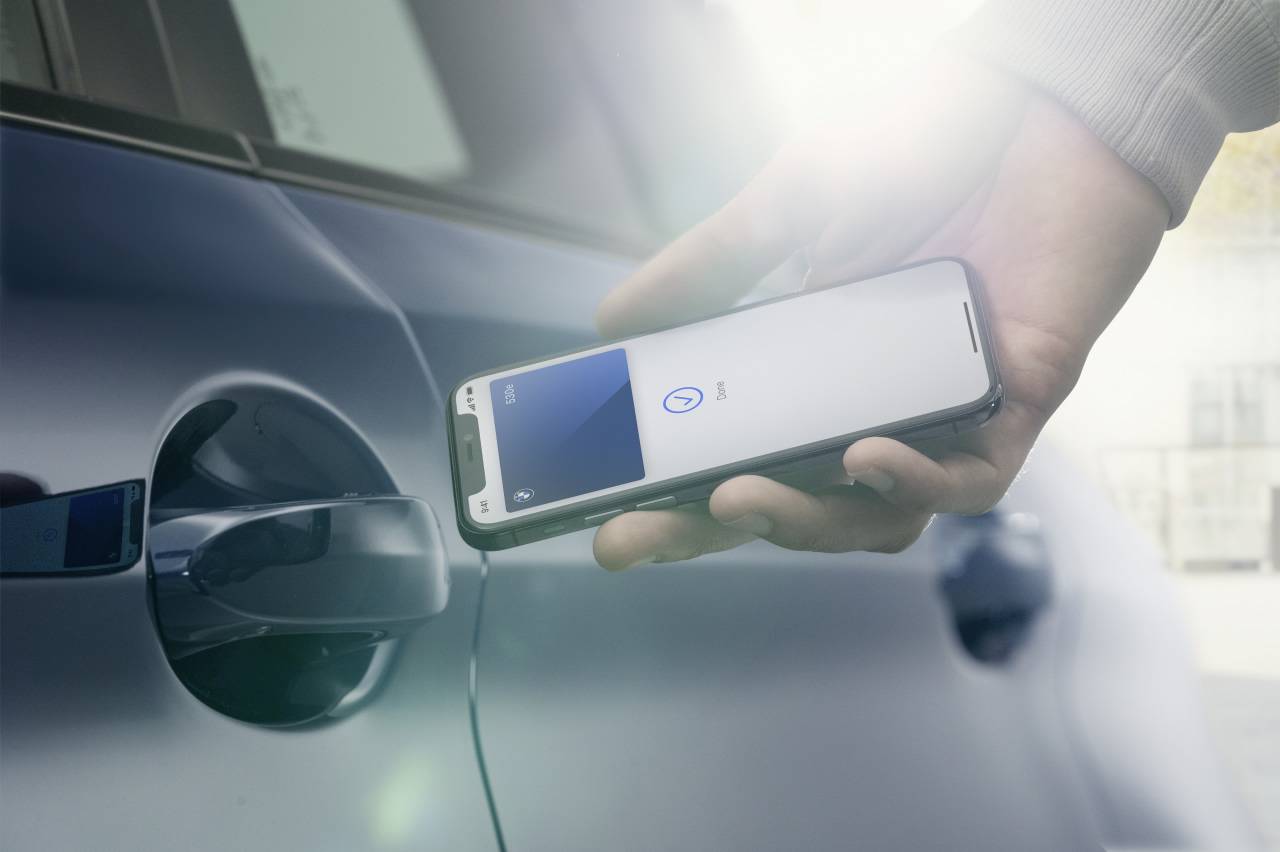
    Apple is preparing to expand its CarKey feature which was first announced at WWDC 2020. The feature, two years into its unveil, has been relegated to select BMW models in limited countries but now according to famed Apple watcher Mark Gurman, the feature could be coming to Hyundai vehicles and cars from its premium luxury brand Genesis. The feature is expected to roll out by summer 2022, and likely will be announced at Apple’s 2022 WWDC conference which could happen in June.

    This is interesting as Apple and Hyundai have become strange bedfellows after Hyundai revealed that it was in talks with the Cupertino-based gadget maker for the manufacturing of the Apple Car project which has been in limbo for a long time. Apple is said to have pulled back from any engagement after Hyundai made unsolicited disclosures.

    But this expansion of CarKey is crucial as Google has made more headway with Android Auto and a similar feature that was announced last year at Google I/O. On top of this Google has also managed to onboard several key manufacturers for Android Automotive – like Volvo and Ford – which is its operating system for the car infotainment system. Google of course is also the pioneer of self-driving technology as Waymo spawned out of its skunkworks Google X unit and has since been the flag bearer of autonomous cars.

    Google, Apple’s prime rival in the modern computing rival has had the leg up on the in-car experience and Apple has to make moves to catch up. Luckily, Apple has been building towards an expanded CarKey rollout as codebase leaks in iOS 15 have also suggested the same, though this could happen with iOS 16 which is around the corner.

  • Telenor Group exits Wave Money

    Telenor Group exits Wave Money

    Telenor Group and Yoma Strategic have entered into an agreement to sell Telenor Group’s 51% share of Digital Money Myanmar Limited (“Wave Money”) for USD 53 million to Yoma MFS Holdings Pte. Ltd, a subsidiary of Yoma Strategic.

    This subsidiary is to be funded by a consortium of investors led by Yoma Strategic which remains subject to completion and final funding. When the transaction is concluded, Yoma Strategic will become the largest and controlling shareholder of Wave Money, ensuring that the company continue operations and further extend its leading role in Myanmar’s fintech sector.

    Wave Money is a leading provider of money transfer and digital payment solutions in Myanmar. The company was launched in November 2016 as a joint venture between Yoma Bank and Telenor Group, after the fintech pioneer was awarded a license to become the first non-bank institution to work under Myanmar’s new Mobile Financial Services Regulation.

    In 2020, Wave Money processed a total of US$ 8.7 billion in remittance and payments, which represented around 12% of Myanmar’s GDP. The company runs a network of more than 45,000 active agents or “Wave Shops” in urban and rural areas across 295 out of the 330 townships nationwide. The business has seen a significant recovery in volumes since June 2021 with the trend expected to continue.

    “This acquisition reinforces Yoma Strategic’s desire to build a strong financial and technology ecosystem in the country over the long term. The digitization in the economy, in particular in financial services, has been remarkable for Myanmar. We are pleased that Wave Money has positively transformed the way of life of people in Myanmar, bringing financial inclusion to the mass,” says Melvyn Pun, CEO, Yoma Strategic.

    “Telenor is proud to have been part of Wave Money’s journey to empower the people of Myanmar with country-wide access to financial services. We have worked in partnership with Yoma Strategic to ensure that anyone from anywhere can digitally send and receive money, make contactless and secure payments in-stores or online using the market-leading mobile Wallet App of Wave Money. We are confident that Yoma have the commitment and vision to take Wave Money forward to the next level of driving financial inclusion”, says Lars Erik Tellmann, head of financial services in Telenor Group.

    The agreement between Yoma Strategic and Telenor Group completes the divestment process announced in June 2020. The transaction is subject to various conditions to be completed, among them regulatory approval from the Myanmar Central Bank.

  • Value-added tax to be cut to 8 pct from February

    Value-added tax to be cut to 8 pct from February

    A draft government decree reduces value-added tax on many products and services from the current 10 percent to 8 percent from Feb. 1.

    The decree on tax reduction to foster economic recovery approved by the National Assembly will also make expenses on pandemic prevention deductible.

    The VAT cut will lead to a loss of some VND49.4 trillion (over $2.1 billion) in revenues, according to the Ministry of Finance.

    The deductible expenses will lead to a loss of VND2 trillion.

    The lower VAT rate will not apply to telecommunications, information technology, financial activities, banking, securities, insurance, real estate, metal, and prefabricated metal products, mining (excluding coal), coke, refined petroleum, chemicals, and chemical products, and goods and services subject to excise tax.

  • Unilever says GSK consumer arm ‘strong strategic fit’ for business

    Unilever says GSK consumer arm ‘strong strategic fit’ for business

    Dove soap maker Unilever signaled on Monday it would pursue a deal for GlaxoSmithKline’s consumer health business, calling it a “strong strategic fit” after its 50-billion-pound approach ($68.4 billion) was rejected.

    The update comes after GSK confirmed over the weekend that it had rejected the Unilever offer for its consumer healthcare business, which is home to brands such as Sensodyne toothpaste and Emergen-C vitamin supplement.

    “The acquisition would create scale and a growth platform for the combined portfolio in the U.S., China and India, with further opportunities in other emerging markets,” Unilever said, pointing to synergies in the oral care and vitamin supplements business.

    Unilever held talks with banks about additional financing for a potential sweetened offer for GSK’s consumer products division, Bloomberg News reported on Sunday, citing people familiar with the matter.

    Unilever, which is set to announce an initiative later this month to strengthen its business, said on Monday it was committed to “strict financial discipline” for any acquisitions.

  • Asia Commercial Bank has new CEO

    Asia Commercial Bank has new CEO

    Deputy CEO of Asia Commercial Bank (ACB) Tu Tien Phat became its CEO Friday, replacing Do Minh Toan who led the bank for more than nine years.

    Before his appointment as CEO for the 2022-2025 term, Phat was ACB’s Deputy CEO cum head of retail banking since 2015.

    Phat, born in 1974, has an MBA degree and more than 25 years of experience in banking and finance.

    Asia Commercial Joint Stock Bank said reported flat profits of VND2.6 trillion ($114.09 million) for Q3, 2021, as operating expenses and provision for bad debts rose sharply.

    The bank’s total assets rose by 8 percent to VND479.3 trillion.

  • In one country, the Apple Tax appears to be crushed for certain apps

    In one country, the Apple Tax appears to be crushed for certain apps

    Sundar Pichai and  Mark Zuckerberg, the CEOs of Google and Facebook respectively, allegedly signed off a secret and illegal ad deal according to BuzzFeed. As a result, Facebook was given “information, speed, and other advantages” during auctions for ad space run by Google. Yesterday, unredacted court documents revealed the involvement of the two CEOs in the deal.

    The documents are from a complaint originated by Texas and other states in December 2020 that accused Google of committing “false, deceptive, or misleading acts” while running its buy-and-sell auction system for digital ads. The complaint states that Google teamed up with Facebook in 2018 that Google called “Jedi Blue,” a name that riffs on the Star Wars movie franchise.

    Facebook unnerved Google by promoting a method called “header bidding” that was a threat to Google. With “header bidding,” publishers offer inventory to multiple ad exchanges before calling their ad servers. By hiking demand for limited inventory, publishers make more money.

    According to the complaint that was released on Friday, “Google understood the severity of the threat to its position if Facebook were to enter the market and support header bidding. To diffuse this threat, Google made overtures to Facebook.” The deal was made at the highest level of both companies and the complaint notes that “Google CEO Sundar Pichai also personally signed off on the terms of the deal.”

    The complaint also revealed that Facebook CEO Zuckerberg wanted to meet with the company’s COO Sheryl Sandberg before making a decision. While employees’ names were redacted in the court documents, their titles weren’t.

    Both Google and Facebook are under pressure for using anti-competitive methods. Google says that the lawsuit isn’t accurate, and company spokesperson Peter Schottenfels said, “We sign hundreds of agreements every year that don’t require CEO approval, and this was no different. And contrary to AG Paxton’s claims, the fact of this agreement was never a secret — it was well-publicized. It simply enables FAN [Facebook Audience Network] and the advertisers it represents to participate in Open Bidding, just like over 25 other partners do.”

    Facebook’s corporate parent Meta agreed with Google that the deal between the two tech giants did not call for Facebook to receive any particular advantages that other companies were not being given. “Meta’s non-exclusive bidding agreement with Google and the similar agreements we have with other bidding platforms, have helped to increase competition for ad placements,” said Meta spokesperson Stephen Peters. “These business relationships enable Meta to deliver more value to advertisers while fairly compensating publishers, resulting in better outcomes for all.”

    As you might have expected, Google is planning to ask a judge to toss the case. Both Google and Facebook have been under fire from lawmakers for antitrust issues. Last summer, bills were introduced in Congress with lawmakers worried that firms like Google, Facebook, Amazon, and Apple were using their dominance in businesses like online shopping, search, and entertainment in order to crush their competition.

    Additionally, Congress is concerned that these firms are making acquisitions that never should have received approval from antitrust regulatory agencies. As a result, there has been a call in Washington D.C. to force tech giants to break up into smaller companies.

    Last year, the filing fees imposed on transactions valued at over $1 billion rose while the same fees for transactions valued at less than $500,000 would decrease. The idea is to give tech giants the incentive to purchase smaller firms instead of larger ones. In addition, the higher fees are expected to generate $135 million for antitrust enforcement agencies in its first year.
  • Google, Facebook CEOs sign off on illegal ad deal

    Google, Facebook CEOs sign off on illegal ad deal

    Sundar Pichai and  Mark Zuckerberg, the CEOs of Google and Facebook respectively, allegedly signed off a secret and illegal ad deal according to BuzzFeed. As a result, Facebook was given “information, speed, and other advantages” during auctions for ad space run by Google. Yesterday, unredacted court documents revealed the involvement of the two CEOs in the deal.

    The documents are from a complaint originated by Texas and other states in December 2020 that accused Google of committing “false, deceptive, or misleading acts” while running its buy-and-sell auction system for digital ads. The complaint states that Google teamed up with Facebook in 2018 that Google called “Jedi Blue,” a name that riffs on the Star Wars movie franchise.

    Facebook unnerved Google by promoting a method called “header bidding” that was a threat to Google. With “header bidding,” publishers offer inventory to multiple ad exchanges before calling their ad servers. By hiking demand for limited inventory, publishers make more money.

    According to the complaint that was released on Friday, “Google understood the severity of the threat to its position if Facebook were to enter the market and support header bidding. To diffuse this threat, Google made overtures to Facebook.” The deal was made at the highest level of both companies and the complaint notes that “Google CEO Sundar Pichai also personally signed off on the terms of the deal.”

    The complaint also revealed that Facebook CEO Zuckerberg wanted to meet with the company’s COO Sheryl Sandberg before making a decision. While employees’ names were redacted in the court documents, their titles weren’t.

    Both Google and Facebook are under pressure for using anti-competitive methods. Google says that the lawsuit isn’t accurate, and company spokesperson Peter Schottenfels said, “We sign hundreds of agreements every year that don’t require CEO approval, and this was no different. And contrary to AG Paxton’s claims, the fact of this agreement was never a secret — it was well-publicized. It simply enables FAN [Facebook Audience Network] and the advertisers it represents to participate in Open Bidding, just like over 25 other partners do.”

    Facebook’s corporate parent Meta agreed with Google that the deal between the two tech giants did not call for Facebook to receive any particular advantages that other companies were not being given. “Meta’s non-exclusive bidding agreement with Google and the similar agreements we have with other bidding platforms, have helped to increase competition for ad placements,” said Meta spokesperson Stephen Peters. “These business relationships enable Meta to deliver more value to advertisers while fairly compensating publishers, resulting in better outcomes for all.”

    As you might have expected, Google is planning to ask a judge to toss the case. Both Google and Facebook have been under fire from lawmakers for antitrust issues. Last summer, bills were introduced in Congress with lawmakers worried that firms like Google, Facebook, Amazon, and Apple were using their dominance in businesses like online shopping, search, and entertainment in order to crush their competition.

    Additionally, Congress is concerned that these firms are making acquisitions that never should have received approval from antitrust regulatory agencies. As a result, there has been a call in Washington D.C. to force tech giants to break up into smaller companies.

    Last year, the filing fees imposed on transactions valued at over $1 billion rose while the same fees for transactions valued at less than $500,000 would decrease. The idea is to give tech giants the incentive to purchase smaller firms instead of larger ones. In addition, the higher fees are expected to generate $135 million for antitrust enforcement agencies in its first year.

  • Vietnam leads region in power production

    Vietnam leads region in power production

    After adding 3,420 megawatts of power capacity last year, Vietnam now leads Southeast Asia with 76,620 MW.

    It represented a 9.8 percent increase in capacity, CEO of national utility Vietnam Electricity (EVN), Tran Dinh Nhan, said at a forum Friday.

    He however expressed concern that 27 percent of it is from renewable sources and this high ratio is causing difficulties in managing distribution.

    There were times last year when 60 percent of power generation were from renewable energy, but due to plunging demand because social distancing curbs to contain Covid-19, this led to an oversupply of power, he said.

    But EVN has forecast that in June, when temperatures peak, the north could see power shortages while the central and the southern regions might have oversupply.

    It expects power consumption to rise by 7.6 percent this year to 242.4 billion kilowatt-hours.

  • Renault Relatively Confident For 2022 Despite Some Chip Supply Worries

    Renault Relatively Confident For 2022 Despite Some Chip Supply Worries

    Renault is “relatively confident” about its business year but still sees some problems over chips supplies which it expects to be felt mostly in the first half of 2022, the French carmaker’s Chief Executive Officer said on Thursday.

    “We are relatively confident for 2022 but we know that it’s a volatile and uncertain world,” CEO Luca de Meo told journalists at a company event, adding that the carmaker’s restructuring efforts were running ahead of their schedule.

    Shares in Renault edged up after the publication of the comments midday on Wednesday and traded 3.9 % higher at 1231 GMT, topping France’s bluechip CAC40 index which was down 0.55%.

    Renault’s finance chief at the same event said that the carmaker was hoping to pay back as soon as possible the remainder of a 3 billion euros ($3.44 billion) loan backed by the French state, Renault’s biggest shareholder.

    0Comments

    The company also said it would step up the ambitions to shift its core Renault brand towards e-mobility, targeting to produce a “100 % electric” fleet by 2030, from 90% previously announced.

  • HKT’s digital venture arm partners Google Cloud to up customer experience

    HKT’s digital venture arm partners Google Cloud to up customer experience

    HKT’s loyalty program and digital ventures arm – The Club, announces its strategic collaboration with Google Cloud to develop an innovative hyper-personalization platform, named Copernicus, to integrate into The Club’s digital ecosystem across its business pillars. Combining its strong network and database with Google Cloud’s expertise and state-of-the-art technology, The Club aims to provide customers with a uniquely tailored online digital experience.

    Through closely collaborating with many business partners, The Club has long provided its members with truly unprecedented experiences and a variety of premium services, ranging from lifestyle, shopping, travel, insurance, and much more. This time, The Club looks to Copernicus to achieve a more focused and personalized customer experience, leveraging Google Cloud’s expertise in data security and governance, data analytics and data visualization capabilities to deliver products and services geared specifically to each customer’s specific needs.

    The Club’s Data Science team will develop machine learning and AI algorithms to identify customer needs-based products and services by analysing members’ behaviors and preferences, allowing The Club to take further steps towards enhancing consumer experiences with more personalized offerings.

    Specifically, Google Cloud’s advanced data analytics technology empowers The Club to build Copernicus which enables The Club to understand each individual member’s purchasing behavior and interests more precisely and quickly on one unified platform. This in turn allows The Club to deploy more targeted and personalized marketing strategies for reaching individual members across all touchpoints of the customer journey. The Club members will benefit from tailored recommendations that match their interests and needs through their preferred channels.

    Mr. Alan Tsui, CEO of HKT’s loyalty, digital and analytics, said, “We are excited to announce this ground-breaking collaboration with Google Cloud in Copernicus. This enables us to provide the best services and products at the right time for individual members. In recent times, we have adopted data science technology to tailor exclusive rewards to selected members, piquing their already heightened interests. We firmly believe our unique in-house data capabilities, partnered with Google Cloud’s advanced technology, will lay a strong foundation for our digital transformation journey.”

    Copernicus’ machine learning ability is more than just an analysis of The Club’s extensive database. Copernicus will allow The Club to constantly optimize its performance by forecasting customers’ behaviors with prescriptive information, thereby increasing the customer base by identifying and converting the right target audience segments. The Club hopes to connect more partners and customers to The Club ecosystem. With support from this collaboration which combines HKT’s comprehensive networks with Google Cloud’s secure infrastructure and global network, Copernicus will open a whole new world of opportunities for new and existing partners from across different industries and promises enhanced services and unique experiences tailored to each individual member.

  • M1 partners with AWS to improve customer experiences

    M1 partners with AWS to improve customer experiences

    M1 Limited (M1), one of Singapore’s leading Mobile Network Operators (MNO), announced its collaboration with Amazon Web Services (AWS), to launch Maxine, a VoiceBot for M1’s hotlines.

    Maxine is built on Amazon Connect, AWS’s omnichannel cloud-based contact center service that helps improve contact center agent productivity and end-user customer experiences. Powered by AWS Artificial Intelligence (AI) technologies such as automatic speech recognition and natural language understanding, Maxine is able to engage in more lifelike conversations with customers. Combined with M1’s Session Initiation Protocol (SIP) trunk services for high quality digital voice communication, Maxine will help improve end-user customer experiences by engaging them in open-ended conversations instead of menu-driven interfaces.

    Since Maxine’s rollout in the last quarter of 2021, M1 is seeing an improved performance to the existing call system with the VoiceBot performing sophisticated functions such as authentication of callers with a One-Time Pin (OTP), or sharing the customer’s position in the call queue and estimated waiting time. In comparison with December 2020, M1’s Net Promoter Score (NPS) for December 2021 has seen a marked 40% increase, largely attributed to Maxine’s ability to capture callers’ intentions which then improves call agent productivity by freeing them up to focus on more complex cases.

    The deployment of Maxine is part of M1’s continuous transformation journey to be a digital platform. As a cloud native solution, M1 is able to regularly develop and deploy new and incremental features and capabilities that enhance Maxine’s services.

    The easy to use and quick to deploy solution enables M1 to scale up and down in a short period of time. It also provides call center agents the flexibility they need to work remotely, without compromising the customer experience.

    M1 has its 1627 (Bespoke), 1622 (Business) and 1800-843-8288 (Prepaid) hotlines operating on the Amazon Connect platform. This will be progressively rolled out to other hotlines. M1 is also supporting other members of the Keppel Group that are making the transition to adopt Maxine, starting with Keppel Electric.

  • Asos hit by supply chain disruption, volatile Christmas demand

    Asos hit by supply chain disruption, volatile Christmas demand

    British online fashion retailer ASOS reiterated its already downgraded outlook on Thursday after supply chain constraints and volatile demand limited sales growth in its four months to Dec. 31 trading period.

    It posted total sales growth of 5%, following a 22% rise in the year to end August, and said gross margin decreased by 400 basis points to 43.0% driven by a need to discount goods and higher freight costs.

    For the full year it reiterated its outlook of revenue growth in the range of 10%-15% and adjusted profit before tax of 110 million pounds to 140 million pounds. That hit its shares when it was published in October, and would represent a more than 40% drop on the year before.

    “ASOS has delivered a robust start to the year, in line with the guidance we set out at full-year results, despite challenging market conditions,” Chief Operating Officer Mat Dunn said.

    ASOS, once a darling of the stockmarket, was hit by a difficult end to 2021, when it cut its annual profit forecast and parted ways with its CEO following supply chain pressures and a return by shoppers to pre-pandemic ways.

    While shoppers often return partywear clothing and fashion, incurring a cost for the company, they retained the athleisure wear bought during the pandemic to use at home, giving the company a boost to its finances during lockdowns.

    Its shares are down 56% this year, prior to Thursday’s update, mirroring similar falls seen at rival Boohoo which has also been hit by high product return rates, disruption to international deliveries and inbound freight costs.

    ASOS added that it intended to move to the LSE’s main stock market, expected by the end of February.

  • Samsung is first in the world to invent MRAM in-memory computing

    Samsung is first in the world to invent MRAM in-memory computing

    Samsung has long been at the forefront of tech innovation, both when it comes to mobile technology and other electronics. The Korean giant just re-affirmed that fact this week, when they became the first company in the world to demonstrate a working in-memory computing process on MRAM.

    In devices like smartphones and computers, most of the computing processes are performed by the processing chip, which exists just for this purpose and is highly efficient at it—despite additionally being one of the most power-hungry components.

    A device’s memory (or RAM) on the other hand, bears the traditional purpose of temporarily storing bits of information for the processor to access immediately, anytime it asks for it.

    This memory allows for much faster data transfer with the processor than a storage drive, but also comes in much smaller quantities—such as 4GB, 6GB, or 8GB or 16GB depending on your traditional computing device.

    For years now, however, there has been plenty of experimentation with the quest to come up with an efficient and practical in-memory computing solution.

    While many other solutions have already been found using alternative types of RAM (such as PRAM or RRAM), as SamMobile notes, MRAM in-memory computing had not yet been prototyped in working form. At least until now, when Samsung has finally managed to create the first prototype.

    Most of the computing devices we interact with from day to day—namely smartphones and computers—run with DRAM, or Dynamic Random Access Memory, as their main memory.

    This type of memory is dynamic and volatile, meaning it only stores information as long as the device is powered on with a current flowing through, and it needs to be constantly refreshed or overwritten in order to retain that data.

    MRAM, on the other hand—Magnetoresistive Random Access Memory—is a type of non-volatile memory, meaning it can retain bits of data even without an electric current flowing through. It stores memory on magnetic charges, rather than electric charges like standard RAM.

    MRAM’s main advantage is its extremely low power usage, although it has faced difficulties in practical integration in modern everyday technology, such as keeping write error rates adequately low. It is also more hostile to in-memory computing than DRAM because of its low resistance.

    Samsung’s in-house MRAM, built for the first computer to ever use it as its main memory

    The main appeal of in-memory computing as a rule, is that it allows for substantial savings of both time and power. A system that performs at least part of its computing inside the memory, will end up saving all of those milliseconds which it would otherwise take for that data to be requested by the processor, travel to the processor, and be processed there.

    Memory also takes significantly less power than a processing chip—which is responsible for a whole slew of tasks at any given time—which is why a device using in-memory computing will also save on energy.

    Samsung believes that once further developed, MRAM technology will truly shine in processing tasks for artificial intelligence. When tested in AI applications, Samsung demonstrated that its in-memory computing process produced a 93% success rate in picking out specific faces in images, and 98% accuracy in its ability to recognize handwritten numbers.

    One of the main authors of Samsung’s research paper, Dr. Seungchul Jung, made the following statement:

    “In-memory computing draws similarity to the brain in the sense that in the brain, computing also occurs within the network of biological memories, or synapses, the points where neurons touch one another. In fact, while the computing performed by our MRAM network for now has a different purpose from the computing performed by the brain, such solid-state memory network may in the future be used as a platform to mimic the brain by modeling the brain’s synapse connectivity.”

    Samsung hopes that this new invention will be revolutionary in increasing the power efficiency in AI chips more than was ever considered possible before.

  • Tesla To Reveal CyberTruck Production Roadmap On Jan 26

    Tesla To Reveal CyberTruck Production Roadmap On Jan 26

    If 2021 was the year of Tesla scaling its product portfolio across the world, 2022, certainly is the year of the CyberTruck which the world’s most valuable automaker revealed just before the pandemic. During its Q4 2021, earnings call, Elon Musk, its techno king, revealed that there will be a separate briefing for the roadmap of the CyberTruck which the company has said will be delivered to customers starting later this year.

    “Tesla will post its financial results for the fourth quarter and full-year ended December 31, 2021, after market close on Wednesday, January 26, 2022. At that time, Tesla will issue a brief advisory containing a link to the Q4 and full-year 2021 update, which will be available on Tesla’s Investor Relations website. Tesla management will hold a live question and answer webcast that day at 4:30 p.m. Central Time (5:30 p.m. Eastern Time) to discuss the Company’s financial and business results and outlook,” said Tesla in a release.

    Elon Musk has said that he will be attending the product roadmap briefing in the call on January 26. Recently, Tesla had removed the specs of the Cybertruck from its website and now will give an update on the new trims and specs that have evolved over the 2 odd years since its original unveiling. Tesla had also tweaked the design of the car from the original.

    Tesla is also expected to give an update on the Semi electric truck. The semi-truck has already entered low volume production in the Nevada gigafactory.

  • Auto sales down 3 pct in 2021

    Auto sales in Vietnam last year dropped 3 percent from 2020 to 383,444 units as the fourth Covid-19 wave forced dealers to shut down.

    The sales figure is a combination of data from the Vietnam Automobile Manufacturers Association (VAMA), TC Motor, and VinFast.

    VAMA, which includes Truong Hai Auto Corporation (Thaco), Toyota, and Honda, saw 277,203 units sold, down 2 percent from the previous year.

    TC Motor, which distributes Hyundai cars, saw sales declining 13.3 percent to 70,518 units.

    VinFast posted a growth of 21.2 percent to 35,723 units.

    In the third quarter last year, most auto units in the south were shut down as the Delta variant spread.

    But a 50 percent reduction in the registration fee, which came into effect in December and will last until the end of May this year, pushed up sales.

    VAMA members sold 43,526 units in December alone, the highest last year. December was the fourth month in a row that auto sales rose.

    Most media representatives of auto brands in Vietnam expect a recovery in sales this year as the Covid-19 pandemic seems to be under control.