Tag: asia

  • Ericsson, Telstra, and Qualcomm Technologies achieve highest uplink peak rate

    Ericsson, Telstra, and Qualcomm Technologies achieve highest uplink peak rate

    Ericsson, Telstra, and Qualcomm Technologies have achieved the highest uplink peak rate ever recorded on a commercial network during a live demo in Queensland, Australia. Together, they reached an uplink data speed of close to 1Gbps, paving the way for more seamless experiences in use cases such as live video streaming and social media content sharing.

    Using Ericsson’s New Radio-Dual Connectivity (NR-DC) and carrier aggregation software features together with a smartphone form-factor test device powered by Snapdragon® X65 5G Modem-RF System on Telstra’s network, this new uplink speed record marks another significant milestone for the ecosystem collaboration between the three companies.

    The high uplink peak rate was reached by combining the data rates from both mid-band and high band (millimeter wave) to fully utilize Telstra’s spectrum for improved user experience. The demo used Ericsson’s NR-DC software feature with uplink four-component carrier aggregation (UL 4CC CA), in which four contiguous carriers of 100MHz are combined, resulting in higher data speeds.

    Delivering uplink peak rates of close to 1Gbps will enable Telstra to more than double the current uplink throughput in its 5G network. This is particularly important for supporting applications and services that involve uploading vast amounts of data.

    Sibel Tombaz, head of product line 5G RAN, Ericsson, says: “We continue to pursue new and innovative ways of enhancing the end-user impact of 5G. An uplink speed of close to 1Gbps using NR-DC and four-component carrier aggregation is the latest in a series of 5G milestones we have achieved in collaboration with Telstra and Qualcomm Technologies. This means users can enjoy vastly improved experiences from applications where quicker upload time makes a difference.”

    Nikos Katinakis, group executive networks & IT, Telstra, says: “We have a history of world firsts with Ericsson and Qualcomm Technologies. In 2016 we broke the 1Gbps barrier on 4G; in January this year, we set a new download record on 5G, and now we have set a new record in the uplink on a commercial 5G network. It is a testament to the continuous efforts of our team to innovate, and I take pride in how, together, we continue to push the boundaries of what this technology can deliver.”

    Sunil Patil, vice president, 5G product management, Qualcomm Technologies says: “Qualcomm Technologies is pleased to collaborate with Ericsson and Telstra on this 5G dual connectivity and carrier aggregation milestone. By achieving the highest uplink peak rate ever recorded on a commercial network in Queensland, Australia, we’re underscoring our commitment to enabling differentiated 5G experiences across a variety of use cases beyond mobile. Together, we are realizing the full potential of 5G through new breakthroughs that will drive transformative benefits for consumers and enterprises alike.”

    Ericsson, Telstra and Qualcomm Technologies achieved the first on a commercial network in Queensland, Australia with a theoretical maximum uplink speed of 986 Mbps, integrating four-component 100MHz carriers of millimeter-wave, combining with the 100MHz of 3.6GHz spectrum. NR-DC was implemented with n78 and n258.

    The testing was conducted at Telstra’s 5G Innovation Centre (5GIC) using Telstra’s commercial network resulting in a throughput of roughly 1Gbps, more than doubling the current uplink speed on the market. The smartphone form-factor test device powered by Snapdragon X65 was used with Ericsson Radio System’s Baseband 6648 and AIR 6488 for mid-band, which has been widely deployed in Telstra’s network, and Baseband 6648 with the AIR 5322 for high-band.

    Ericsson’s NR-DC software combines 5G frequency ranges below 7.125 GHz (mid-band, Time Division Duplex, TDD) and above 24.25 GHz (high-band TDD) and is now available for commercial deployment. The UL 4CC carrier aggregation software is slated to go commercial globally in the second quarter of 2022.
  • Viettel to get new chairman

    Viettel to get new chairman

    Colonel Tao Duc Thang is set to take over as chairman and CEO of military-owned telecom giant Viettel from Le Dang Dung, who retires on December 31.

    Thang, 48, who has been the deputy CEO since 2015, has an M.A. in electronics and communications and worked for Hanoi Phone Company and Hanoi Post before joining Viettel in 2005.

    He has held several key positions since, including as CEO and chairman of Viettel Global, which manages the company’s overseas businesses.

    Viettel, the country’s largest telecom company with operations in nine countries in Southeast Asia and Africa, reported pre-tax profits of VND19.9 trillion ($867.2 million) for the first half of 2021, a year-on-year increase of 3.1 percent.

  • Microsoft Joins Google, Amazon, Others In Canceling In-Person Presence At CES

    Microsoft Joins Google, Amazon, Others In Canceling In-Person Presence At CES

    Microsoft Corp said on Friday it will not participate in person at the Consumer Electronics Show (CES) 2022 in Las Vegas, joining a list of companies opting not to have a physical presence at next month’s event on concerns over the rapid spread of the Omicron COVID-19 variant.

    The U.S. software giant added that it will continue to participate at CES remotely, according to an emailed statement. The Verge was the first to report on Friday that Microsoft will not participate physically AT CES.

    Several other companies including U.S. automaker General Motors Co, Alphabet Inc.’s Google, and its self-driving auto-technology company Waymo, Facebook parent Meta Platforms Inc, Twitter Inc, Lenovo Group, AT&T Inc, and Amazon.com Inc dropped in-person attendance plans earlier this week.

    CES officials on Thursday said the event will still be held in person Jan. 5-8 with “strong safety measures in place,” which include vaccination requirements, masking and availability of COVID-19 tests.

  • Which Cryptocurrencies Are Best for Gambling Online in Singapore?

    Which Cryptocurrencies Are Best for Gambling Online in Singapore?

    Online casinos have swept through the world like a storm, and Singapore has been no exception. The state has seen a huge influx of online casino sites in recent years, and many of them come with brand-new and exciting features. Even though officially online gambling is banned in Singapore, offshore casinos offer their services to players from the state.

    The best Singapore online betting sites offer plenty of bonuses and promotions, thousands of games, and safe and secure payment methods. While many players ignore the importance of fast payment options, they’re vital for a proper online gambling experience. In recent times, more and more casinos have been jumping on the crypto hype train. And rightfully so. Cryptocurrencies are fast and very easy to use, and considering the number of people that own cryptos in Singapore, it’s no wonder why they’re so popular in casinos.

    Why Are Cryptocurrencies So Popular?

    Unless you’ve been living under a rock, you’ve surely heard about Bitcoin and Ethereum. The two biggest names on the cryptocurrency market, both have soared to incredible heights in 2021. By many accounts, Bitcoin is just as worth, if not more than gold.  This is a big win for cryptocurrencies after the 2017 bubble burst that all but made them obsolete. With financial instability and inflation rampaging traditional markets, people are looking for promising assets to invest in.

    The price of cryptocurrencies is much more volatile than gold or crude oil. That’s a big problem for governments and financial organizations, yet it doesn’t faze investors around the world. Everyone’s willing to invest in Bitcoin instead of trading stocks or investing in bonds or gold. Even people who have never invested money in anything before are pouring money into cryptos now. Bitcoin has infiltrated nearly any aspect of our lives, including gaming online.

    Online casinos have been looking for reliable payment methods with fast transactions for a while. E-wallets were and still are a great option, but they can’t compete with the speed Bitcoin offers. Deposits made with cryptos in online casinos are instant, and so are withdrawals for the most part. Fees are almost non-existent. The blockchain is a piece of technology that’s perfect suitable for the online gambling market, offering fast and safe transactions.

    Cryptocurrencies are not just another payment method in online casinos. They aim to completely revolutionize the market, and so they will in the future. If you’re looking for the best cryptos to play in online casinos, check our list below.

    Bitcoin

    The world’s leading cryptocurrency by market volume and popularity, Bitcoin is the most commonly used crypto. It’s available across all crypto casinos and can easily be bought on legit exchanges such as Binance. Its price is 10 times higher than the second cryptos on the list, Ethereum. Bitcoin is the world’s first cryptocurrency that started the trend. It offers fast deposits and withdrawals and a price over $50,000, which no other crypto will reach anytime soon.

    Of course, the main problem is that it’s highly volatile, but that’s the trade off for the price. Still, it remains a highly popular payment option in online casinos, and that won’t stop anytime soon.

    Ethereum

    Ethereum was first thought of as a Bitcoin killer, but it never really became that. That wasn’t its purpose at all. By ‘fixing’ some of the original Bitcoin mistakes and adding features such as smart contracts, it’s in a league of its own. Currently the second-most valuable cryptocurrency in the world, it’s a very popular crypto to use at the best online casinos in Singapore.

    It’s fast, can be used with ease, and most importantly, many altcoins are built on an ETH network.  The gas (transaction) fees are a bit higher than expected, but if you own a lot of Ether, that shouldn’t be a problem.

    Litecoin

    Another coin that exceeded all expectations, Litecoin is a very popular crypto in Singapore casino sites. Most sites will accept Bitcoin, Ethereum, and Litecoin deposits all in tow, so you’re welcome to use the one you want. The great news is that just like the others, Litecoin is a fantastic option for online casinos.

    It allows instantaneous deposits and withdrawals for much lower fees when compared to Ethereum. If you invested in it years ago, you’re probably reaping the benefits of Litecoin’s record price now.

    Ripple

    Ripple is a cryptocurrency, but also a stablecoin. Stablecoin’s have a 1:1 price ratio with USD, so it’s always worth $1 (with small variations). This is the best crypto to use in Singapore online casinos if you want to use cryptos, but are afraid of the volatility. You can buy XRP for dollar a coin, and connect your wallet to the casino for fast deposits and withdrawals.

    All on the blockchain, of course, so you won’t have to worry about the security.


  • The Retail News Team wishes you a Merry Christmas and Happy Holidays!

    The Retail News Team wishes you a Merry Christmas and Happy Holidays!

    The Retail News Asia team wishes you peace, joy and successes throughout the coming year. Thank you for your continued support and involvement. We look forward to hearing from you in the years to come.

  • Vietnam to launch commercial 5G service in 2022

    Vietnam to launch commercial 5G service in 2022

    Vietnam is set to commercially launch 5G mobile services next year as it seeks to increase the number of internet users by reducing the number of 2G smartphones to under 5 percent.

    The Ministry of Information and Communications reported at a meeting Wednesday that the service will be operated with made-in-Vietnam devices. The country aims to have 25 percent of the population using 5G by 2025, it said.

    The government had earlier announced its intention launch 5G commercially last year but the service is still on trial. Some radio frequencies have been dedicated and 5G services are being tested in 16 localities since last year.

    4G services currently cover 99.8 percent of the country.

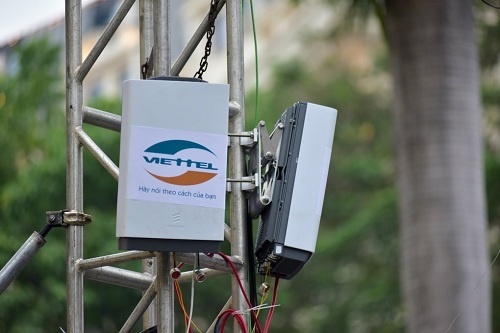
    State-owned telecom giant Viettel said it has completed research and development work of 5G services. It also said it has successfully run a complete network of 5G services this month.

    The communications ministry has said wants more people to switch to 4G and 5G technology by the end of next year.

    It plans to have 5 percent or less of the population using 2G phones by the end of next year and to shut down 2G services by 2023.

    “This means that by 2023, 100 percent of Vietnamese will be ready to use internet,” the ministry said.

    As of last year, Vietnam had 24 million 2G subscribers.

  • Delivery Hero to sell Foodpanda Foodpanda Japan

    Delivery Hero to sell Foodpanda Foodpanda Japan

    German food delivery group Delivery Hero said on Wednesday it would scale down its Foodpanda operations in Germany and sell the subsidiary’s Japan unit, citing increased competition and labor shortages.

    Delivery Hero said Foodpanda would exit Cologne, Duesseldorf, Frankfurt, Hamburg, Munich, and Stuttgart, though it had only introduced the brand in Cologne, Duesseldorf, and Stuttgart a month earlier as part of a broader expansion program in Germany.

    “Facing a very different reality now than we did entering these markets, it is with a heavy heart that we need to pursue other growth opportunities with larger potential,” Chief Executive Niklas Oestberg said in a statement.

    The meal delivery market, with players including Uber Eats, Just Eat Takeaway, and Deliveroo, is expected to consolidate as the pandemic-related boom starts to wear off and companies look to adjust operations.

    At the same time, the European Commission announced draft rules in early December to give employee benefits to riders and drivers for online delivery firms, a move some companies argue will lead to job losses.

    Delivery Hero, whose operations span more than 50 countries, only started in June with the soft launch of its Foodpanda brand in Berlin and then rolled it out to other cities in August.

    That return home brought an abrupt end to a truce struck in late 2018, when Oestberg sold Delivery Hero’s German operations to Takeaway.com – its Dutch competitor is now known as Just Eat Takeaway (JET) – for $1.1 billion.

    The group also said on Wednesday it would exit the market in Japan, which it entered in September 2020, in the first quarter of 2022 to focus on growth in other markets and niches, especially in the area of quick commerce.

  • Some Apple employees will be picketing on Christmas Eve

    Some Apple employees will be picketing on Christmas Eve

    A tweet sent by an organized group of Apple employees has announced a walkout for Christmas Eve. The tweet, sent under an account called Apple Together, reads, “Calling all Apple workers and patrons! Tomorrow, December 24th, 2021, Apple workers are staging a walkout/callout to demand better working conditions.

    The group’s members work in retail, corporate, and AppleCare and are banding together in an attempt to bring change to Apple. Another message inside the tweet asks Apple employees and others not to cross the picket line and says, ” We are Apple. We deserve a respectful workplace. We deserve paid sick time. We deserve protection on the frontlines. We deserve proper mental healthcare.”

    At the bottom of the message, the group adds, “Demand that Apple upholds its image with your wallet. Don’t stop in stores. Don’t stop online.” On the AppleTogether website, the organization says, “Apple prides itself on its commitment to diversity, equity, and an environment where everyone can do their best work. But Apple has fallen short of this goal for so many of our current and former teammates, so we made space to share those stories with #AppleToo.”

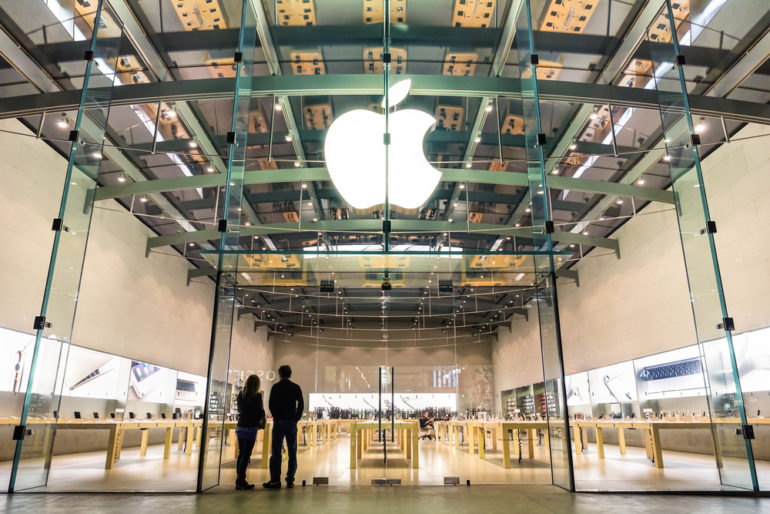
    Considering that Apple has closed eight stores in the U.S. and Canada since the latest COVID surge, and you might find yourself facing a picket line at some of the locations that are open, you might want to delay that visit you’ve been planning. Sure, you can always shop online but not if you want to back the striking employees.

  • TikTok ranks as the most visited website for 2021

    TikTok ranks as the most visited website for 2021

    TikTok was the most visited website this year, according to the 2021 Cloudflare domain ranking, part of its Cloudflare Radar service. After August 10, TikTok became the leading website for most of the days of 2021, especially in October and November.

    Here is the ranking of the 10 domains, which we have visited most in 2021:

    1. TikTok.com
    2. Google.com
    3. Facebook.com
    4. Microsoft.com
    5. Apple.com
    6. Amazon.com
    7. Netflix.com
    8. YouTube.com
    9. Twitter.com
    10. WhatsApp.com

    In the 2020 Cloudflare ranking, the winner was Google, which comes as no surprise when the data includes not only traffic to Google.com, but also the most popular Google services like Maps, Translate, and News. Last year, Facebook, Amazon, and Netflix were also ahead of TikTok, which was at 7th place back then.

    But in 2021, TikTok’s generated traffic skyrocketed. In September, TikTok said that more than 1 billion people visit the site every month. This year, TikTok’s app also became the world’s most downloadable app. It surpassed even the Facebook app, which was the one that held that title.

    Cloudflare, a security network that enables secure access to websites, released its Cloudflare Radar service in September 2020 to show the public how we use the internet. Cloudflare Radar monitors internet usage and traffic. Cloudflare Radar also displays new internet trends and provides information on cyberattacks that Cloudflare has detected. For more information about Cloudflare Radar, visit Cloudflare’s site.

  • Apple begins iPhone 13 production in India plant

    Apple begins iPhone 13 production in India plant

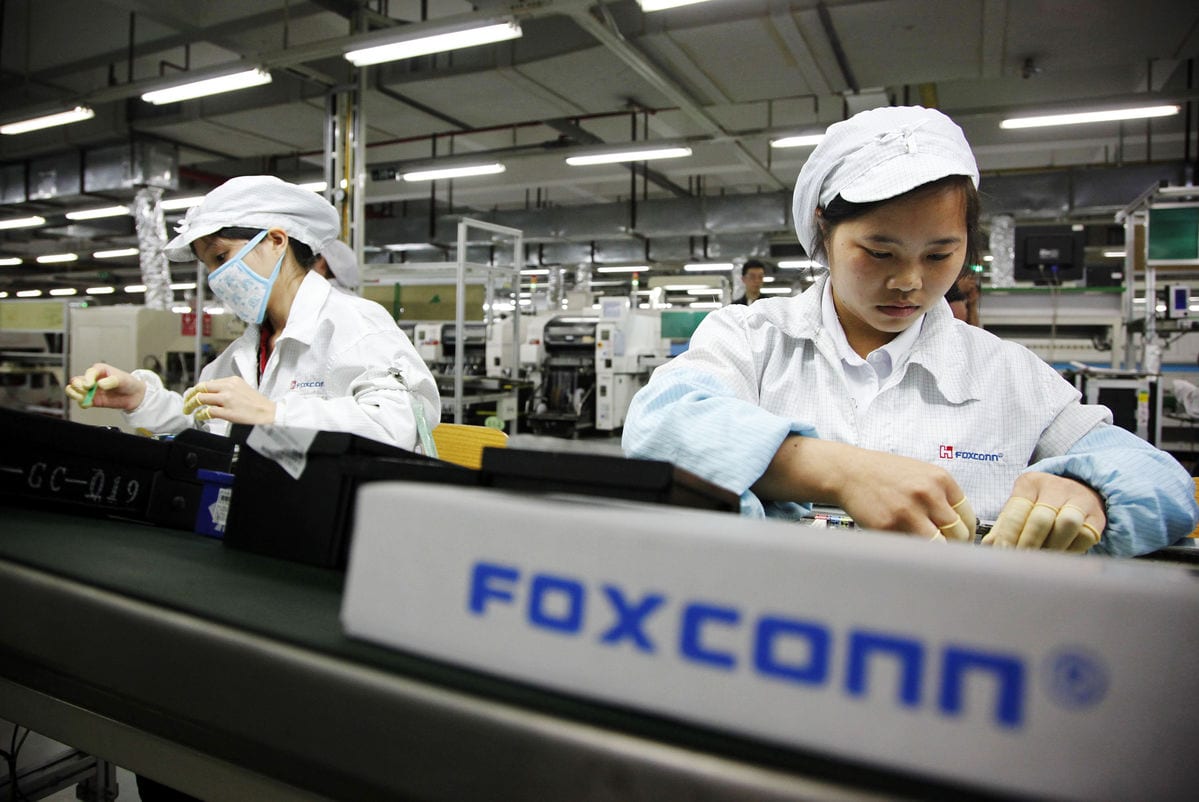
    Apple is testing out a new expansion in its iPhone 13 production near Chennai, India, in a trial contract with a Foxconn plant located in the area.

    Apple first contracted the Foxconn plant to produce the iPhone 12 5G, but recently a long-winded bout of food poisoning and ongoing protests brought about a full shutdown of the plant (ordered by Foxconn itself), negatively impacting iPhone 12 5G production in the country.

    However, neither the series of unfortunate events nor the temporary closure seems to have fazed Apple in the least, the company has already begun a test trial of iPhone 13 production in the same Foxconn plant.

    If all goes to plan, Apple plans to not only use this new plant to provide a domestic supply of the latest iPhone flagship series but will also begin exporting units internationally by February of next year.

    Even Apple has been affected by the ongoing global chip supply shortage around the world, causing some frustratingly long lead times on iPhone 13 series orders across the board—but that clearly isn’t stopping the company from continuing to expand its manufacturing facilities around the world.

    If the stint with the Foxconn plant in Chennai works out, Apple reports that it should significantly improve the global supply of the iPhone 13, as about 20-30% of iPhone production in India in general (and not just in the Chennai plant) ends up being exported internationally.

    Although iPhone sales in India have been favoring the slightly older iPhone 12 and iPhone 11 models, the iPhone 13 demand has also already proved greater than the current supply has been able to cover within the country.

    With the new domestic Foxconn plant contracted by Apple, Market tracker IDC India’s research director Navkendar Singh has reported that this should finally help cover local demand in India more efficiently, besides improving the global supply:

    “A lot of local production scaling up will depend on component availability,” he said. “The local production of iPhone 13 in India may ease a bit the low supplies in the country.”

  • Nike eyes recovery as Vietnam factories reopen

    Nike eyes recovery as Vietnam factories reopen

    Sportswear maker Nike is confident the resumption in production in Vietnam will boost the company’s future recovery.

    “Compared to ninety days ago, we are increasingly confident supply will normalize heading into fiscal 2023” as all factories in Vietnam were operational and production was at about 80 percent of what it was before the closures, finance chief Matthew Friend said.

    Social distancing in Vietnam, where more than half of Nike’s footwear and about a third of its apparel manufacturing occurs, in the July-September period caused the company to cancel production of roughly 130 million units.

    But as the government eased its social distancing regulations early October, its factories have reopened.

    The company forecasts growth to be in the lower single digits for the next quarter because of the continuing impact of lost production from pandemic-related disruptions in Vietnam where an average 18,000 new cases were recorded in the last seven days.

    Friend said Nike will continue to watch the Omicron variant to see what impacts it may bring to production.

    Demand for Nike’s goods continues to outpace supply. The previous quarter, Nike reported a 10-week delay in production because of a lockdown in Vietnam and said it expected flat revenue growth for the November quarter.

    Nike posted a revenue of $11.4 billion in the quarter ending Nov. 30, up 1 percent from the same period a year earlier. Analysts expected revenue of $11.2 billion.

  • Maersk agrees US$3.6 billion deal to buy LF Logistics

    Maersk agrees US$3.6 billion deal to buy LF Logistics

    Container shipping giant Maersk on Wednesday agreed to buy Hong Kong-based LF Logistics for $3.6 billion in an all-cash deal, as it seeks to expand beyond its core ocean freight business.

    The deal is one of the group’s largest takeovers to date and follows a series of acquisitions including e-commerce firms, a freight forwarder specialising in air freight and its smaller rival Hamburg Sud.

    “The acquisition will further strengthen Maersk’s capabilities as an integrated container logistics company, offering global end-to-end supply chain solutions to its customers,” the company said in a statement.

    Maersk will buy LF Logistics from controlling shareholder Li & Fung, a Hong Kong-based supply chain manager, and from Singapore state investor Temasek which bought 22 percent of the company in 2019. The deal is expected to close in 2022.

    With a network of 223 warehouses and around 10,000 employees in 14 Asian countries, LF Logistics provides land-based logistic services such as warehousing and trucking to over 250 global customers.

    The company had revenue of $1.3 billion last year. Maersk said it expects to more than double the revenue and operating profit at the company by 2026.

    Record high container freight rates stemming from the impact of the pandemic have boosted big shipping companies and prompted deal-making by Maersk and its rivals, including CMA CGM and Mediterranean Shipping Company (MSC).

    With chaotic conditions in the global supply chain, big companies have been willing to pay a premium for more reliable and integrated freight solutions.

    The price implies that the valuation of LF Logistics has more than doubled since the Temasek deal valued the company at nearly $1.4 billion two years ago.

    French billionaire Vincent Bollore received a 5.7 billion-euro ($6.43 billion) offer from MSC for his African logistics assets, his company Bollore SE said on Monday.

    This month, French rival CMA CGM accelerated its push into warehouses and end-to-end logistics by agreeing a $3 billion deal to buy assets from US technology group Ingram Micro. In November, it bought a container terminal in Los Angeles for around $2 billion.

    Since breaking up its conglomerate in 2016, including selling its oil and gas business, Maersk has transformed into an integrated logistics company.

    Although container shipping accounted for 73 percent of its revenue last year, Maersk aims to offer customers such as Walmart and Nike shipment of goods from factory to store, even offering last-mile delivery to end-customers.

  • Singtel and Ericsson achieve Southeast Asia fastest download speeds on 5G SA NR-DC

    Singtel and Ericsson achieve Southeast Asia fastest download speeds on 5G SA NR-DC

    Singtel and Ericsson have made a technology breakthrough in 5G standalone (SA) New Radio-Dual Connectivity (NR-DC), becoming the first in Southeast Asia to reach download speeds of 5.4Gbps by aggregating Singtel’s spectrum holdings across mid-band spectrum 3.5GHz and 28GHz mmWave. This milestone was achieved in a demo with Ericsson’s 5G radio access network products and solutions and dual-mode 5G Core network solutions, as well as a test device from Qualcomm Technologies powered by its Snapdragon X65 5G Modem-RF System.

    5G SA NR-DC technology, which combines mid-band and mmWave frequencies, further enhances Singtel’s 5G SA speed and capacity to enable high-performance and latency-sensitive applications, and stimulate innovative new use cases across business, industry and consumer ecosystems. Applications can range from cloud gaming, immersive media, AR, VR, XR to autonomous vehicles or robotic control. This new development will push the boundaries of 5G technology, combining different frequency bands across the networks, to fully utilise Singtel’s 5G assets for an enhanced user experience.

    Mark Chong, Singtel’s group chief technology officer, said, “This 5G breakthrough demonstrates our commitment to continually innovate and maximise the potential of what this developing technology can deliver. The increased speeds will help pave the way for many new applications as we look to drive transformative benefits for consumers and businesses.”

    As one of the first 5G SA networks deployed globally, the future implementation of 5G SA dual connectivity in Singapore will help accelerate the adoption of 5G for both consumers and enterprises, create new business opportunities, strengthen the local 5G ecosystem, as well as drive the future-readiness of Singtel’s network. This achievement closely follows the latest win at the Asia Communications Award, where Singtel and Ericsson were jointly recognised for 5G deployment in Singapore.

    Martin Wiktorin, head of Ericsson Singapore, Brunei and Philippines, said, “At Ericsson, we have already deployed over 100 live 5G networks worldwide, building a strategy around multi-layer networks from low, mid-band to high-band 5G. In Singapore, we are constantly driving technology innovations together with Singtel. As 5G frontrunners, we strive to expand the potential of limitless connectivity, and further enhance digital transformation to benefit industries, consumers and societies.”

    his new 5G technology breakthrough builds on the strong collaboration between Ericsson and Singtel over the past 30 years as technology front runners in Singapore. Past milestones include achieving Singapore’s fastest 5G speeds of 3.2Gbps at Singtel’s unmanned pop-up retail store UNBOXED as well as Singtel’s GENIE, the world’s first portable 5G-in-a-box platform powered by Ericsson to enable enterprises to experience 5G’s capabilities and trial use cases in their own premises.

  • Goodyear Introduces ElectricDrive GT EV First Tyres For Tesla Model Y

    Goodyear Introduces ElectricDrive GT EV First Tyres For Tesla Model Y

    Goodyear has introduced a new set of tires called the ElectricDrive GT which is the first replacement tires for the North American market, designed specifically for EVs particularly for the Model Y. The ElectricDrive GT is a high-performance, all-season tire which has been designed to last long and provide ride quality that one expects with EVs.

    Goodyear is one of the oldest tire companies in the world founded in 1898 just 12 years after the first automobile was invented.  So it does know a lot about tires and it is appropriate that it is one of the first to come up with replacement tires for EVs which are heavier, faster, and have instant torque. This is a huge difference from cars based on the internal combustion engine.

    According to Goodyear, this is the first replacement tire of its kind of EVs in the North American market by a US-based manufacturer.

    “Products that anticipate the mobility needs of consumers are central to Goodyear’s focus on innovation excellence. Electric vehicles present a very specific set of requirements for load, torque, noise, range, rolling resistance, and overall performance. We’re proud to deliver leading technologies to serve the evolving EV landscape,” said David Reese, Vice President, product development, Goodyear Americas.

    The tires leverage Goodyear’s sound-comfort technology which actively rides as a bull in sound batterie to reduce road noise for passengers. The tyre also gets an asymmetric tread pattern and has a specialized tread compound that provides enhanced traction despite the terrain and the driving conditions.

    It also gets a 64,374 km tread life and has a limited warranty with a W speed rating of 270 kmph which is basically not achieved by any car outside of the Bugatti Chiron or the McLaren F1. Goodyear states that the ElectricDrive GT will come only in the 255/45R19 104W XL, but it will expand the product line in 2022.

  • Reliance Jio gains wireless subscribers contrary to rival operators

    Reliance Jio gains wireless subscribers contrary to rival operators

    According to data issued by the Telecom Regulatory Authority of India (TRAI), total wireless subscribers reached 1,166.30 million at the end of October 2021, with the urban areas accounting for 637.44 million and rural areas totaling 528.86 million.

    As on 31 October, 2021, private access service providers held 89.99% market share of wireless subscribers, with the two PSU access service providers, namely BSNL and MTNL possessing a 10.01% market share.

    Reliance Jio had the largest market share at 36.58%, followed by Airtel at 30.35% and Vodafone at 23.07%.

    Reliance Jio reportedly added 1.7 million subscribers in October, bringing its subscriber base to 426.59 million. Airtel, however, has a subscriber base of 353.97 million after shedding some 0.48 million in the same month. Vodafone’s subscriber base also dropped, totalling 269.02 million after losing 0.96 million subscribers.

    Data published by TRAI previously revealed that Reliance Jio has the highest average data download speed of 24.1 MB/s among 4G service providers in India.