Tag: asia

  • ZTE chosen by China Telecom in core router centralized procurement

    ZTE chosen by China Telecom in core router centralized procurement

    ZTE has been selected by China Telecom in the operator’s core router centralized procurement 2021, with the core router ZXR10 T8000 gaining a market share of 30% in the CR-A1 (single device) section, and winning the CR-A2 (cluster) section with the highest score in the overall ranking.

    The purchased equipment will help China Telecom build its super core nodes for the operator’s 163 backbone network.

    China Telecom, with the aim of building new information infrastructure based on cloud-network synergy, adheres to the ideology of “network as a basis, cloud as the core, and cloud-network integration”. China Telecom is carrying out the overall network architecture optimization of the MAN and the 163 backbone network, to improve the network capability and capacity, increase network utilization, and build efficient new cloud networks.

    ZTE provides ZXR10 T8000-18 core router, a large-capacity, high-performance platform, which is safe, reliable, and easy to maintain and expand to transport integrated services and support the full-service operation of China Telecom.

    As a high-end flagship router of ZTE, the ZXR10 T8000 core router has been operating stably for ten years and has been deployed in 26 provinces, including autonomous regions and municipalities, in China. In China Telecom’s first batch of core routers and switch centralized procurement in 2019, ZTE obtained the largest shares in both the single device and cluster sections.

    In the operator’s core router centralized procurement in 2020, ZTE won the second-largest shares in sections CR-A1 and CR-A2 to build the international egress nodes of the 163 and CN2 backbone networks. In November 2020, ZTE deployed the equipment in the Shanghai Information Park, Node I of ChinaNet, serving as the international ingress/egress communication hub of ChinaNet. In May 2021, the ZXR10 T8000 obtained a share of 30%, ranking ZTE second-place in the P equipment section in China Telecom’s CN2-DCI network expansion centralized procurement 2020.

  • Ferrari Plans New Leadership Structure, Three Top Manages To Leave

    Ferrari Plans New Leadership Structure, Three Top Manages To Leave

    Luxury sports car maker Ferrari announced plans on Monday to shake up its leadership structure, in one of new boss Benedetto Vigna’s first major moves, and said three top managers will leave the company. Those who have decided to leave include Chief Technology Officer Michael Leiters, the carmaker said. The planned reorganization, to be unveiled in detail on Jan. 10, was consistent with Ferrari’s “strategic goals of exclusivity, excellence and sustainability”, it said.

    Vigna, an industry veteran, took the CEO role at the beginning of September with a task to drive Ferrari into the new era of electrification.

    The new management structure will “further foster innovation, optimize processes and increase collaboration both internally and with partners”, the carmaker said.

    Leiters, a German national who joined Ferrari in 2014, has helped develop Ferrari’s recent most successful models, including the 2019’s SF90 Stradale and this year’s 296 GTB, the house’s first two hybrid electric cars.

    Other top managers leaving the company are Chief Manufacturing Officer Vincenzo Regazzoni and Chief Brand Diversification Officer Nicola Boari, who oversaw Ferrari’s push into luxury, with the unveiling in June of its first in-house fashion collection.

    Key figures in the new organizational framework have been already identified through internal promotions and new hires, and will join the company starting from next month, Ferrari said.

  • Yarra Valley Smaller Wineries Association launches online marketplace

    Yarra Valley Smaller Wineries Association launches online marketplace

    The Yarra Valley Smaller Wineries Association has introduced an online marketplace where Aussie consumers can access more than 100 handcrafted drops from its portfolio of 21 members.

    A first for a wine association in the country, the new marketplace helps boutique wineries, which have been struggling during extended lockdowns, to promote themselves through e-commerce and reach lesser-known areas in the region.

    “When people think of the Yarra Valley, they may instinctively want to visit or purchase wines from the Coldstream, or ‘Golden Mile’,” said Daniel Tokar, president of Yarra Valley Small Wineries Association.

    “However, what some people don’t realize is that there are several sub-regions in the Valley that contain smaller producers who make some of the best wines in Australia.”

    The new marketplace offers a selection of sparkling, white, rose, and red wines from Yarra Valley Smaller Winery members, together with international varietals including Colombard, Graciano, Barbera, Sangiovese, and Fiano.

    “Our Association banded together originally to promote why our premium products stand up to larger, commercial operations, highlighting the unique creations being produced by boutique wineries in the Valley,” Tokar added.

    “With this new platform, we hope to further encourage wine-drinkers across the country to expand their horizons and try something new outside of their comfort zone.”

  • Vietravel sells majority stake in airline

    Vietravel sells majority stake in airline

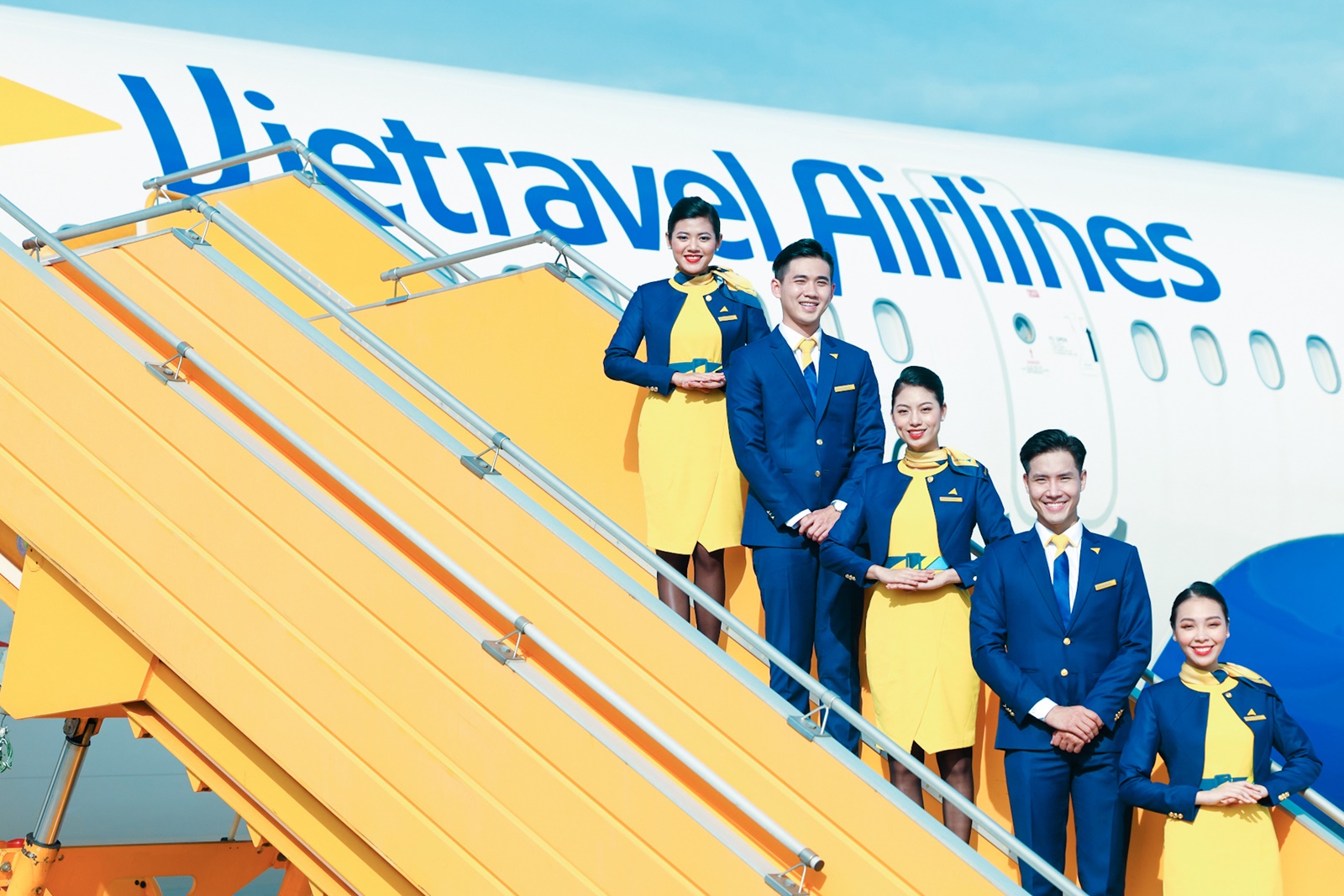
    Tourism company Vietravel has sold a 55.58 percent stake in Vietravel Airlines to an unspecified investor as it seeks more funding amid Covid financial pressures.

    “Vietravel is no longer the parent company of Vietravel Airlines,” it stated recently.

    In a filing last month, Vietravel revealed it held a 99.5 percent stake in the carrier.

    Chairman of the leading tourism firm Nguyen Quoc Ky said in early May that selling a stake in Vietravel Airlines was part of a plan to restructure Vietravel into a holding company.

    He called for investors to fund the airline.

    As the airline only began to operate this year, it is still recording losses, which could affect Vietravel’s business figures, which are also low due to Covid-19, the company stated.

    Vietravel posted a loss of VND293.3 billion ($12.78 million) in the first half this year, tripling year-on-year.

    Its stock is limited to trading on Fridays due to its delay in publishing results.

  • LaLaport to make Southeast Asian debut in Malaysia

    LaLaport to make Southeast Asian debut in Malaysia

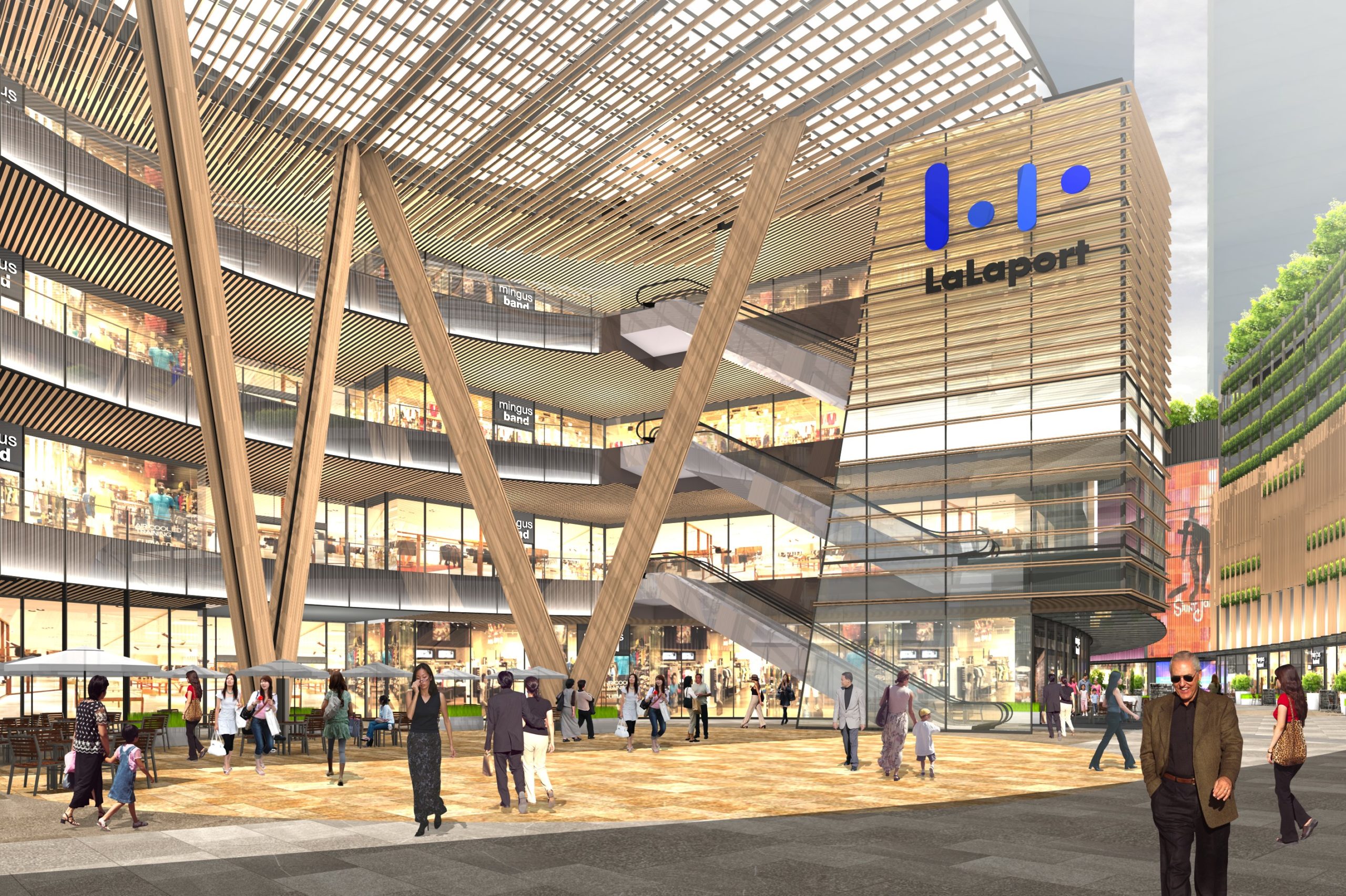
    Japanese lifestyle shopping mall, Lalaport, is set to open its first Southeast Asian location in Malaysia next month at Bukit Bintang City Centre (BBCC).

    The Mitsui Fudosan-owned shopping mall is set to open its doors to the public on January 20, featuring a tenant mix of about 400 stores from global and Japanese brands, including those making their first appearance in Malaysia such as Nitori and Nojima.

    LaLaport BBCC marks the chain’s second international location after Mitsui Shopping Park LaLaport Shanghai Jinqiao, and will also be one of Lalaport’s largest commercial facilities in the world with more than 82,600sqm of floor space.

    Inspired by ‘modern simplicity’ and ‘Japanese flavor’ design concepts, LaLaport BBCC brings to life a “stylish appearance befitting city center locations complemented by a warm interior design conducive for shoppers to spend the entire day in comfort”.

    The complex features five floors above ground and five floors below including four floors of basement parking. LaLaport BBCC also presents a 1700sqm rooftop garden equipped with a roofed step stage and surrounded by greenery and trees.

    A large F&B floor houses supermarkets, ‘Depachika Marche’ for take-away foods, and a cafeteria. Meanwhile, the ‘Gourmet Street’ offers a fresh al fresco dining experience for shoppers while the large ‘Garden Dining’ food court on Level 4 boasts a 1400-seating capacity. There is also an event space dubbed ‘Wow Plaza’ located at the center of Gourmet Street.

  • China’s Alibaba pledges carbon neutrality by 2030

    China’s Alibaba pledges carbon neutrality by 2030

    Alibaba Group will aim to achieve carbon neutrality in its own operations and slash emissions across its supply chains and transportation networks by the end of the decade, the Chinese e-commerce giant pledged on Friday.

    Alibaba promised to achieve carbon neutrality by 2030 in its own direct emissions – known as “scope 1” – as well as its indirect “scope 2” emissions – derived from the consumption of electricity or heating.

    It also said it would reduce carbon intensity – the amount of carbon per unit of revenue – from the “scope 3” emissions – produced across its wider value chain in areas such as transportation, purchased goods and services, and waste – by 50% by 2030.

    The company also pledged to cut overall CO2 across all its businesses by 1.5 gigatonnes by 2035.

    To achieve its goals, Alibaba plans to deploy new energy-saving, high-efficiency technologies, make further use of renewables and also explore “carbon removal initiatives” that could extract climate-warming greenhouse gas from the atmosphere.

    Daniel Zhang, the company’s chief executive, said the company also sought to “mobilize actions and behavioral changes among consumers, merchants and partners in China and around the world”.

    President Xi Jinping announced last year that China would aim to become carbon neutral by around 2060, putting the country’s giant corporations under pressure to draw up their own roadmaps to reach “net-zero”.

    But China’s giant tech firms remain hugely dependent on the country’s coal-dominated energy system, with only a small number so far committed to switching to renewable sources of electricity.

    In a report published earlier this year, environment group Greenpeace ranked Tencent Holdings as the best-performing Chinese cloud service provider in terms of procuring renewable energy and cutting emissions. Huawei Technologies came second, Baidu Inc third and Alibaba fourth.

  • Seaweed bites launched by Pacific Harvest

    Seaweed bites launched by Pacific Harvest

    Pacific Harvest is adding a new product – Raw Nori Seaweed Snack Packs – to its seaweed products range.

    The company says the seaweed is sourced naturally, contains nutrients that are good for health, and has no additives or preservatives. Pacific Harvest said its team works only with ethical and sustainable seaweed harvesters to ensure quality as well as not harm the environment. Its packaging is all recyclable.

    Hayley Fraser-Mackenzie, MD at Pacific Harvest, said seaweed is known for its extensive nutritional and mineral value, but many consumers are not sure how to include it in their daily routines.

    “This easy, on-the-go format is a raw, healthy snack that both parents and kids will be happy to see in a lunchbox. We don’t need to eat seaweeds laden with fats, that have been processed in ways that destroy their nutrient value.”

    The Raw Nori Seaweed Snack Packs and other Pacific Harvest products are sold via the company’s website and in health food stores nationwide with an RRP of $4.30 for a box of eight 2gram packs.

  • PepsiCo Australia achieves its renewable energy target

    PepsiCo Australia achieves its renewable energy target

    PepsiCo Australia has effectively converted to 100 percent renewable electricity across all of its operations. Focusing on reducing global emissions, this initiative helps PepsiCo limit the amount of CO2 added into the environment – around 26,000 tones per year – and goes some way in helping the business hit its target to achieve net-zero emissions globally by 2040.

    PepsiCo manufactures Smiths chips, Doritos, Red Rock Deli, Twisties, and Grain Waves in Australia, including at Regency Park in SA, Tingalpa in Queensland, and Forrestfield in WA which are now powered by a mixture of solar and wind energy sources. The achievement does not include the manufacturing of beverages that are undertaken by the brand’s local partner Asahi Beverages.

    As one of the global business’ first 15 markets globally to switch to 100 percent renewable electricity, PepsiCo Australia is now seeking sustainable solutions such as converting organic waste into bio-methane, converting its fleet to EV or hydrogen, and decarbonizing its snack manufacturing processes.

    The company has teamed up with Engie and the Northam Solar Farm – developed by Indigenous Business Australia (IBA) and Bookitja – to get Power Purchase Agreements (PPAs) that support a range of wind and solar farms across Australia.

    “Climate change is one of the most pressing concerns facing our global food system and we’re committed to working across our value chain to reduce emissions,” said Danny Celoni, CEO of PepsiCo Australia and New Zealand.

    “The move to renewable electricity is positive for our business and for the local economy. We are pleased to support sustainable initiatives that create local jobs and proud to partner with IBA and Bookitja through the Northam Solar Farm, which aims to provide a sustainable economic base for future generations of Whadjuk people”.

    PepsiCo is also a member of Re100, a global renewable energy initiative led by The Climate Group and CDP to make a commitment to renewable energy as a large business.

    “Companies that join Re100 pledge to go 100 percent renewable with their electricity use by a set date,” added Jon Dee, Re100 Australia coordinator

    “Here in Australia, PepsiCo is one of 110 major companies that have joined Re100. By successfully completing their transition to 100 percent renewable electricity, PepsiCo has demonstrated a high level of commitment to sustainability and it’s set a positive example for other companies to follow.”

  • Google and Disney kiss and make up, YouTube TV members still getting a discount

    Google and Disney kiss and make up, YouTube TV members still getting a discount

    A few days after Google announced that its YouTube TV service lost all Disney-owned channels, the search giant is back with another statement that confirms it has reached an agreement with Disney to return its content to YouTube TV.

    Obviously, that means that the YouTube TV price will return to $65 for all subscribers. Google also announced that it has started to restore access to Disney networks like ESPN and FX, including their live and on-demand content, as well as recordings that were previously stored in the Library.

    Additionally, YouTube TV will start broadcasting the local ABC stations over the course of the day, so if you don’t see them available in your channel list, be patient.

    Now, the big surprise is that Google will still honor a one-time $15 credit for all YouTube TV subscribers affected by the issue. Even those who have not yet received the $15 discount will receive the one-time credit on their next bill.

    The announcement was published on YouTube’s blog today, December 19, so throughout the remainder of the day, access to Disney’s channels should be restored.
  • Thailand partners with Huawei to launch ASEAN’s first 5G smart hospital

    Thailand partners with Huawei to launch ASEAN’s first 5G smart hospital

    Thailand Office of The National Broadcasting and Telecommunications Commission (NBTC), Siriraj Hospital, and Huawei Technologies (Thailand) Co., Ltd. jointly launched the “Siriraj World Class 5G Smart Hospital.”

    Thailand General Prayut Chan-o-cha, Prime Minister and Minister of Defence, presided over the inauguration ceremony alongside Chaiwut Thanakamanusorn, Minister of Digital Economy and Society, Prof. Dr. Prasit Watanapa, MD, Dean of Faculty of Medicine Siriraj Hospital Mahidol University, Colonel Natee Sukonrat, Ph.D, Vice-Chairman of the National Broadcasting and Telecommunications Commission, Han Zhiqiang, Ambassador of the Embassy of the People’s Republic of China in Thailand, Abel Deng, Chief Executive Officer of Huawei Thailand, as well as Assoc. Prof. Visit Vamvanij, MD, Director of Siriraj Hospital, Assoc. Prof. Cherdchai Nopmaneejumruslers, Vice Director of Siriraj Hospital.

    This project marks the first and largest 5G smart hospital project in Thailand and the ASEAN region. It aims to bring more efficient and convenient experience to patients by introducing technologies such as 5G, cloud, and artificial intelligence, and promote Siriraj Hospital to become a model for smart hospitals in Thailand and the world. At the same time, Siriraj Hospital and Huawei will establish a Joint Innovation Lab to incubate innovative 5G applications. Currently, the two parties have started piloting 5G portable medical boxes, 5G unmanned vehicle, 5G medical carts, and 5G smart hospital beds. It is expected that 30 5G medical applications will be incubated and promoted nationwide in 2022.

    General Prayut Chan-o-cha, Prime Minister, addressed the national policy on 5G technology and digital economy, stating, “The Thai government understands the importance of technology, successfully drafting a plan for Digital Thailand, and today is an important first step in the utilization of digital technologies and 5G in the medical field. This will help reduce processes for medical personnel, decrease overall risk, and will improve the effectiveness and efficacy of healthcare for patients. We will use Siriraj 5G Smart Hospital as a pilot project with the aim of expanding to other hospitals in the future. We admire Siriraj Hospital and Mahidol University, and would like to thank Huawei, NBTC, private organizations, and all other partners involved in this project. We hope the project will act as a blueprint for all smart hospitals in Thailand going forward.”

    Prof. Dr. Prasit Watanapa, MD, Dean of Faculty of Medicine, Siriraj Hospital Mahidol University, shared the background and development of implementing Siriraj’s Smart Hospital Project with 5G and artificial intelligence (AI) to build a model for smart hospitals in collaboration with its partners – introducing 5G, cloud, AI, and digital disruption technologies for application in prevention, treatment, and rehabilitation to enhance the quality and productivity of medical services, bring about good experiences while using its services, provide people in remote areas with better opportunities to access advanced tertiary health care services, as well as minimize the disparity and serve as a model for new generations of medical services to the global public health industry. In addition, an innovation lab and other innovative platforms were also established to cultivate innovation projects in the future.

    Colonel Natee Sukonrat, Ph.D., Vice-Chairman of the National Broadcasting and Telecommunications Commission, addressed the NBTC’s support of the project by saying that “The NBTC, as the regulatory body of broadcasting and telecommunications businesses, has a key mission for licensing frequencies to accommodate high speed wireless communications in the 5G era, to promote the national telecommunications infrastructure development, and introduce the extension and utilization of technologies to various sectors. This is in line with the government’s policy after the National 5G Committee resolved to approve the pioneer Smart Hospital project as a prototype project for 5G application and foresaw the potential of Siriraj Hospital – equipped with specialists and fully-integrated medical equipment – as being instrumental in development into a smart hospital to produce apparent results.”

    Since the beginning of the pandemic, Siriraj Hospital and Huawei have established long-term cooperation in 5G technology development and application. In June 2020, Siriraj Hospital cooperated with Huawei Thailand to launch 5G self-driving vehicles for contactless delivery of medical supplies. In December 2020, Huawei signed a five-year Memorandum of Understanding with Siriraj Hospital to accelerate the intelligent operation of Siriraj Hospital using digital technologies such as 5G, including patient monitoring, diagnosis, and data collection, and provide technical training for doctors in the hospital. In 2020, Siriraj won the award from CommunicAsia Awards in the category of “Most Innovative 5G Trial in Asia Pacific Region.”

    Mr. Abel Deng, Chief Executive Officer of Huawei Technologies (Thailand) Co., Ltd., highlighted that “Huawei has collaborated with Siriraj Hospital to transform it into a world class 5G Smart Hospital, and introduced the Innovation Lab at Srisavarindira Building as part of its 5G infrastructure project for Siriraj Hospital last year. This signifies a model for upgrading Thailand’s public health industry in the future and contributes to Siriraj’s transition to becoming a smart hospital, in line with Huawei’s mission to Grow in Thailand, Contribute to Thailand.”

    This cross-sector collaboration will enhance and upgrade the services of Siriraj Hospital to progress it to become a smart medical center using digital technologies based on 5G, AI, big data infrastructure, and cloud edge processing for the purpose of patient tracking, disease diagnosis by AI on cloud, data storage and analysis, and allocation of resources.

  • China Mobile International commences on Fo Tan Data Center

    China Mobile International commences on Fo Tan Data Center

    China Mobile International Limited (CMI) announced that construction of the China Mobile Guangdong-Hong Kong-Macao Greater Bay Area Hong Kong Fo Tan Data Center (Fo Tan Data Center) is now underway. Being built by CMI in Fo Tan, Hong Kong, with the Mainland as the hinterland, the new facility is expected to be operational in 2025. It will be an important part of a core data center cluster for the GBA, serving as an international communications hub to facilitate global connectivity.

    Fo Tan Data Center will directly link to China Mobile’s other five self-built core data centers in the GBA and connect to the world via five international submarine cables and five core cross-border terrestrial cable systems. The new infrastructure will further enhance China Mobile’s value in self-owned data center network, cross-border connectivity resources, and local 5G and fibre optic network.

    China’s 14th Five-Year Plan emphasizes the need to develop Hong Kong into an international innovation and technology hub, accelerate the building of an integrated national system of large data centers, with the GBA and other national hubs and nodes as preferred locations for new data center clusters. With the new Fo Tan Data Center, CMI is supporting Hong Kong’s development and empowering the intelligent digital upgrade of the GBA and provide a strong foundation for digitalization across the region.

    “Data centers are an important communication infrastructure for the development of digital economy and smart cities. In order to promote Hong Kong to become an outstanding data center hub in the Asia-Pacific region, the HKSAR government has also actively introduced preferential measures for data center development in recent years. China Mobile International has invested in this 1 million square foot site in Fo Tan. The large area of the industrial site signifies the active investment and great confidence of the communications industry, especially from China Mobile, in the development of its Hong Kong’s data center business,” said Carrie Lam, The Chief Executive of the Hong Kong Special Administrative Region (HKSAR).

    Yang Jie, chairman of China Mobile, sent his congratulations to mark the ground-breaking ceremony, saying that the company sees the construction of the Fo Tan Data Center in Hong Kong as an opportunity to fully promote new infrastructure, integrate more new elements, and stimulate new momentum to help enhance Hong Kong’s status as an international information hub and support the vigorous development of the digital economy in the Guangdong-Hong Kong-Macao Greater Bay Area.

    “China Mobile places great emphasis to the development and future roadmap of Hong Kong. We are committed to enhancing Hong Kong’s status as an international information hub and promoting the integration of 5G into Hong Kong’s diverse industries. The groundbreaking ceremony of the Fo Tan Data Center has opened a new chapter in China Mobile’s history in Hong Kong. In the future, it will further strengthen Hong Kong’s ‘new infrastructure’ advantages, add more digital intelligence to Hong Kong’s economic development, and make a greater contribution to Hong Kong’s integration into the overall development of our country.” said Dr. Li Feng, chairman of China Mobile International and China Mobile Hong Kong.

    Since its establishment in Hong Kong in 2010, CMI has ramped up its deployment of network resources to drive the digitalization of the city’s infrastructure. Following the opening of the China Mobile Global Network Center in Tseung Kwan O, Hong Kong in 2014, Fo Tan Data Center will be the second self-owned data center built by CMI in Hong Kong. The new facility will provide local and international users with seamless access to “massive” integrated services, spanning 5G communications, cloud, AI and edge computing, and other advanced technologies, enhancing Hong Kong’s position as a global hub of innovation and technology.

    CMI continues to accelerate the development of a global Intelligent Network, leveraging its extensive submarine and terrestrial cable systems, Points-of-Presence (PoPs), and internet data centers. CMI currently has four self-owned data centers: the Global Network Center in Hong Kong, Singapore Data Center, London Data Center, and Frankfurt Data Center. It has over 70 terrestrial and submarine cable resources worldwide, with a total international transmission bandwidth of over 100T and 180+ PoPs. Combining these resources, CMI provides global access with ample bandwidth, flexible connectivity and comprehensive one-stop services, accelerating the development of networking infrastructure worldwide.

  • SLA Digital partners with Unitel on direct carrier billing in Mongolia

    SLA Digital partners with Unitel on direct carrier billing in Mongolia

    SLA Digital has announced a new partnership with Unitel Group, a Mongolian telecommunications company, with Unitel naming SLA Digital as their managed service provider for carrier billing.

    As part of the relationship, SLA Digital will also be able to offer digital content providers access to Unitel’s other payment options including IPTV payments, Toki E-Wallet and payments made via U-Point, their points-based loyalty program.

    Kevin Drayne, CEO at SLA Digital commented: “We are delighted to be working with Unitel to enable seamless and secure payment experiences for their customers through carrier billing. We see this relationship as a real opportunity to bring more to Unitel and their customers, by offering a vast range of digital content and entertainment with new convenient ways to pay.”

    The partnership means Unitel will be able to effortlessly introduce new digital content to customers from SLA Digital’s expanding client portfolio. Likewise, digital content providers can connect to Unitel’s mobile subscribers, and expand into this region, through a simple integration process.

    Kevin continued: “Our direct connection with Unitel Mongolia will allow our existing and new digital content partners to easily connect to the mobile operator and make the most of all the payment options available. We hope that more content and more ways to pay will lead to greater choice and satisfaction for Unitel customers.”

  • Alibaba looks abroad as China growth slips

    Alibaba looks abroad as China growth slips

    China’s Alibaba has told its investors that overseas e-commerce would be a key focus as it looks for new sources of growth after a difficult year at home.

    Earlier this month, Alibaba Group Holding restructured its e-commerce business into separate China and international divisions, with the latter to be led by Jiang Fan, head of Alibaba’s flagship Taobao and Tmall marketplaces.

    Alibaba Deputy CFO Toby Xu, making his first major public remarks since being named this month to take over as CFO, said that international e-commerce “will become one of the key growth drivers”, adding that 57 percent of revenue for Cainiao, Alibaba’s logistics unit, comes from overseas.

    Earlier in the two-day investor event which ended Friday, Alibaba said it had set a target of $100 billion in gross merchandise value (GMV) for Lazada, its e-commerce service for Southeast Asia.

    Lazada generated $21 billion in GMV from September 2020 to the same month in 2021, the presentation showed.

    Outgoing CFO Maggie Wu said that In the future, the company will break down the category into four sub-categories – China commerce, which includes its major domestic-facing e-commerce platforms; international commerce, which will include Lazada, AliExpress, and other overseas-facing sites; local-based services, which will include its food-delivery service Ele.me and its mapping service; and Cainiao, its logistics division.

    There was also a nod to social welfare, with four of seven investment categories outlined by Xu related to initiatives such as rural revitalization and China’s aging population.

    CEO Daniel Zhang, meanwhile, pledged to slash emissions from Alibaba’s supply chains and transportation networks by 50 percent by the end of the decade.

    Missing from the presentation was any mention of Ant Group, the financial services firm that is 33-per-cent owned by Alibaba.

    Last year, Beijing intervened at the last minute to abort a planned $37 billion listing of Ant. Alibaba co-founder Jack Ma subsequently slipped from the public spotlight and Chinese authorities began a year-long regulatory clampdown.

    In November, Alibaba slashed its annual revenue forecast for its current fiscal year, from an initial growth target of 29.5 percent to between 20 and 23 percent.

    The company has been facing stiff competition from rivals including Pinduoduo, which has won over consumers in rural China, and ByteDance-owned Douyin, which has grown in China’s booming live-streamed e-commerce sector.

  • Chuk Chuk speeds up expansion plans with Central Retail

    Chuk Chuk speeds up expansion plans with Central Retail

    Kido Group-owned gelato and tea chain, Chuk Chuk, has joined hands with Central Retail to roll out between 300 and 400 stores in Go! malls and Tops Market supermarkets in Vietnam, as well as eyeing international expansion.

    Chuk Chuk said it will open 10 stores across Central Retail’s shopping malls ahead of February. Under the partnership, the chain plans to expand its presence into Thailand and other Southeast Asian countries in the coming years.

    The brand currently operates 10 brick-and-mortar stores across Ho Chi Minh City, with 40 stores scheduled to launch this month. Kido Group is to increase its store number to 1000 in the country by 2025 while expanding into international markets, including Thailand, China, and South Korea.

    The partnership with Central Retail follows Chuk Chuk’s recent agreement with Son Kim Retail, under which its products will be sold across all GS25 locations in the country by the end of next year.

    Founded last June, amid the Delta lockdown, Chuk Chuk marks Kido Group’s foray into the retail industry, directly competing with major local F&B players such as Starbucks, Trung Nguyen Legend and Phuc Long. The brand name was inspired by Thailand’s famous vehicle Tuk Tuk.

  • B2B shopping app taps Vietnam’s e-commerce potential

    B2B shopping app taps Vietnam’s e-commerce potential

    The ranking of businesses in Vietnam’s map of e-commerce changed in the second quarter of 2021, with the volume of Google searches for essential online stores skyrocketing, according to an iPrice Group study.

    The study showed online groceries were the only category to maintain steady and consistent growth since the beginning of the pandemic. Google searches related to online grocery stores in the second quarter of this year increased by 223 percent against the first quarter. The number of searches increased 11 times in July compared to May, and 3.6 times compared to June when the social distancing order under Directive 16 was implemented in some provinces and cities.

    People pay more attention to fresh food, beverages, pre-packaged items, fruits, and veggies as the searches of these items surge by 99 percent, 51 percent, 30 percent, and 11 percent, respectively, compared to the previous quarter. Thus, social distancing could be one of the factors driving the surge in demand for online supermarkets. With the growing necessity of purchasing essentials online, retailers are more likely to adapt to the digital platform.

    Buy2Sell, a B2B platform for imported goods, launched a new application in December to compete in the e-commerce race in Vietnam. Buy2Sell’s application focuses on high-end products, especially imported organic food, genuine cosmetics, and other lifestyle items.

    From 2022, Buy2Sell will expand to allow domestic sellers on its platform instead of only international vendors as previously. It would still enable any buyer matching a seller’s MOQ (order minimum) to purchase goods at wholesale prices.

    Buy2Sell has established a flexible delivery policy between sellers and buyers on its platform and application, where sellers can deliver the goods themselves to buyers instead of waiting for a long period of time. This helps buyers receive the goods quicker.

    All goods displayed on Buy2Sell will be authenticated from their origin. The quality of origin guarantees no imitations, fake goods, low-quality goods to be distributed through this platform. Buy2Sell established a consumer protection policy on selling prices and warranties, under the commitment for all sellers.

    Through its elaborate distribution system (both wholesale and retail) since 2015, and with a completely different market segment from other e-commerce players, Buy2Sell will become a known name. In the coming years, the company intends to strongly contribute to the development of Vietnamese technologies and bring changes to the consumer landscape.