Tag: asia

  • M1 grows enterprise digital services and regional expansion with acquisition

    M1 grows enterprise digital services and regional expansion with acquisition

    M1 announced that it has signed an agreement to acquire up to 70% stake in Glocomp Systems (M) Sdn Bhd (Glocomp), as well as its affiliated companies, Global Computing Solutions Sdn Bhd (GCS) and GCIS Sdn Bhd (GCIS). All three companies are Malaysia-based digital solutions providers. The remaining 30% stake will continue to be held by its founders.

    M1, through its wholly-owned subsidiary based in Malaysia, AsiaPac Technology (M) Sdn Bhd, will pay a total purchase consideration of up to SGD$36 million. As part of this transaction, GCS and GCIS will be restructured as wholly-owned subsidiaries of Glocomp and managed by a unified management team. The founders of Glocomp, including – Joseph Giam, Managing Director; Alex Liew, Executive Director; Chan Tze Ming, Executive Director; and Chan Yue Mun, Executive Director will continue to play active roles as senior management of Glocomp.

    Glocomp has been operating for more than 24 years in the industry and is one of the region’s pioneer Information and Communications Technology (ICT) solution providers, with a comprehensive portfolio of solutions. Glocomp’s strong competencies in the areas of computing and information management, IP communications, security and privacy, automation and analytics, chart the path to strategically position the company to meet the growing demand in digital services. The company’s excellent track record, broad coverage across multiple industry verticals and close collaboration with key technology and channel partners, provide Glocomp with the robust foundation needed to be competitive in the enterprise digital solution market.

    The investment into Glocomp marks M1’s continued expansion of its cloud and managed services business, following the acquisition of AsiaPac Technology Pte Ltd (AsiaPac) in 2018. This transaction is the initial strategic expansion into other regional markets starting with Malaysia. The Glocomp acquisition is a natural extension of M1’s cloud services business and provides strong synergies with AsiaPac’s hybrid multi-cloud competencies and established partnerships. Glocomp also adds new capabilities and talent resources to M1 with certified competencies in cybersecurity, enterprise systems and multi-cloud infrastructure.

    M1, a subsidiary of Keppel Corporation, is a key pillar of Keppel Group’s connectivity business. By building upon its enterprise capabilities, M1 aims to strengthen innovation to enhance Keppel’s suite of connectivity offerings for sustainable urbanization. Additionally, this investment into Glocomp will not only provide recurring revenue contribution to the Group, but also generates overseas revenue for M1.

    “The addition of Glocomp to our portfolio marks another milestone for M1 as we continue to strengthen our enterprise digital service capabilities while accelerating growth in the region. We are thrilled to have Glocomp, a pioneer in the ICT industry with over two decades of experience, to be part of our growing team. Importantly, Glocomp’s expertise in the ICT sphere helps M1 to advance Keppel Vision 2030 and continuously create value for enterprises through innovative technology and digital solutions,” said Mr. Manjot Singh Mann, Chief Executive Officer, M1.

    “Glocomp has established itself as one of the premier enterprise solutions providers in Malaysia and remains committed to developing in-country ICT talent capital while fostering regional investment in the country. We are excited to be part of M1, leveraging its competencies in connectivity and cloud infrastructure and look forward to driving strong synergies with M1 as well as enhancing our overall suite of offerings. This opportunity will equip Glocomp with the necessary support to expedite growth in the region, and strengthen our position in the ICT sector with major global technology partnerships,” commented Mr. Joseph Giam, Managing Director, Glocomp.


  • Ford Aims To Be World’s Second Largest Electric Vehicle Maker Within Two Years

    Ford Aims To Be World’s Second Largest Electric Vehicle Maker Within Two Years

    Ford Motor expects to be the world’s second-largest electric vehicle manufacturer within two years, with an annual production capacity of nearly 600,000, a top company executive said Friday.

    The automaker’s optimism stems from the increasing demand for its next new EV, the Ford F-150 Lightning pickup, with retail reservations approaching 200,000, Lisa Drake, chief operating officer of Ford North America, said.

    Reuters reported on Wednesday that Ford likely would be vying with Stellantis for third place in the EV race by 2025, behind Tesla and the Volkswagen Group, based on production forecast data provided by AutoForecast Solutions.

    Speaking at an investor conference, Drake said Ford is working to vertically integrate more EV components, including power electronics and e-drives, at existing facilities that build parts for combustion vehicles – a modern take on founder Henry Ford’s pioneering work in building many of his own components.

    “We haven’t used ‘vertical integration in this industry in a long time,” Drake said, but “you’re going to hear it a lot more” as Ford and other automakers transition from combustion to electric vehicles.

    She said Ford working with five global battery suppliers to manufacture and help develop battery cells for its future EVs, aiming to build 240 gigawatt-hours of production capacity globally by 2030. Those suppliers include SK On, LG Energy Solution, CATL, BYD, and Panasonic.

    Ford expects to reduce EV battery cell cost to $80 per kilowatt-hour at the pack level “well before the end of the decade,” Drake said.

    The automaker is looking at different cell chemistries, including cobalt-free lithium iron phosphate, and cell-to-pack structural batteries to help reduce costs.

    Ford and BMW are working with Colorado-based startup Solid Power on developing solid-state batteries, which Drake said should be commercialized “well before the end of the decade.”

  • Intel to meet this month with TSMC to avoid a fight with Apple

    Intel to meet this month with TSMC to avoid a fight with Apple

    It appears as though TSMC is back on track and is aiming to start mass production of chips using the 3nm process node starting in the second half of 2022. As a result, there is still a good chance that the Apple A16 Bionic chipset will be built with the 3nm process although earlier talk centered on the use of the 4nm process for the component. The difference is the number of transistors inside each chip which drives performance and energy efficiency.

    Intel plans on paying a visit to TSMC soon, and not just to personally give them holiday greetings. Intel is one of the foundry’s largest customers (along with Apple, AMD, NVIDIA, MediaTek, and Qualcomm) and they want assurance that TSMC will have enough capacity to make 3nm chips in the quantity that Intel needs.

    Intel is not a fabless company like Apple is, for example. That means that while Apple designs its own chips, it does not own equipment and fabrication facilities to manufacture them. While Intel does own its own foundry, it cannot produce cutting-edge chips as TSMC can. In January there was a report that TSMC was prepared to offer Intel capacity at 4nm while testing at 5nm.

    High-level Intel executives plan to travel to Taiwan in the middle of this month to meet with TSMC. On the agenda is the amount of 3nm capacity that Intel needs. While the American chip giant might have to outsource some of its production through TSMC, it also has indicated a desire to upgrade its own production capabilities.

    The meeting is being held so that Intel can “avoid fighting with Apple.” Reportedly, Apple has already worked out a deal with TSMC for all of the latter’s initial 3nm production capacity. This means that Intel most likely would not have access to TSMC’s 3nm capacity until 2023 at the earliest.

    Assuming that there is some urgency on Intel’s part (their executives aren’t flying to Taiwan for a vacation), it will be interesting to see whether Intel’s meeting with TSMC is productive. TSMC is the world’s largest independent foundry and last year it generated revenue of $45.51 billion which produced net profits of $17.60 billion. The company is valued at $565 billion.

    Now that Apple has created its own high-powered chips for the Mac that replace Intel processors, the company relies on TSMC even more. The Apple M1 chip contains 16 billion transistors which are one billion more than the number found in the A15 Bionic. The latter is used on the iPhone 13 series.

    Earlier this year, Apple introduced the M1 Pro, a 5nm chip that features 33.7 billion transistors, and the 5nm M1 Max with 57 billion transistors. Both are manufactured by TSMC.

    Apple is also rumored to be replacing Qualcomm’s 5G modem chip with one it will design itself.

    The new 5G modem chip will be built by TSMC using its 4nm process node, and it should debut in the 2023 iPhone 15 series. While Apple undoubtedly feels as though it now has no worries about obtaining enough chips in the future, it might have not considered how all roads lead to TSMC. And late yesterday we passed along a report from Fox News that noted how some experts fear that China might look to take back Taiwan to create a unified China.

    In such a scenario, the Chinese Communist Party (CCP) could create some serious global chaos by taking control of TSMC. China itself has realized that it needs to boost the chip production on the mainland. While the U.S. has also come to this conclusion about itself, it is trying to increase American production by having TSMC build a foundry in Arizona that could eventually grow to be a huge fabrication facility.

  • Vietravel Airlines to resume domestic flights

    Vietravel Airlines to resume domestic flights

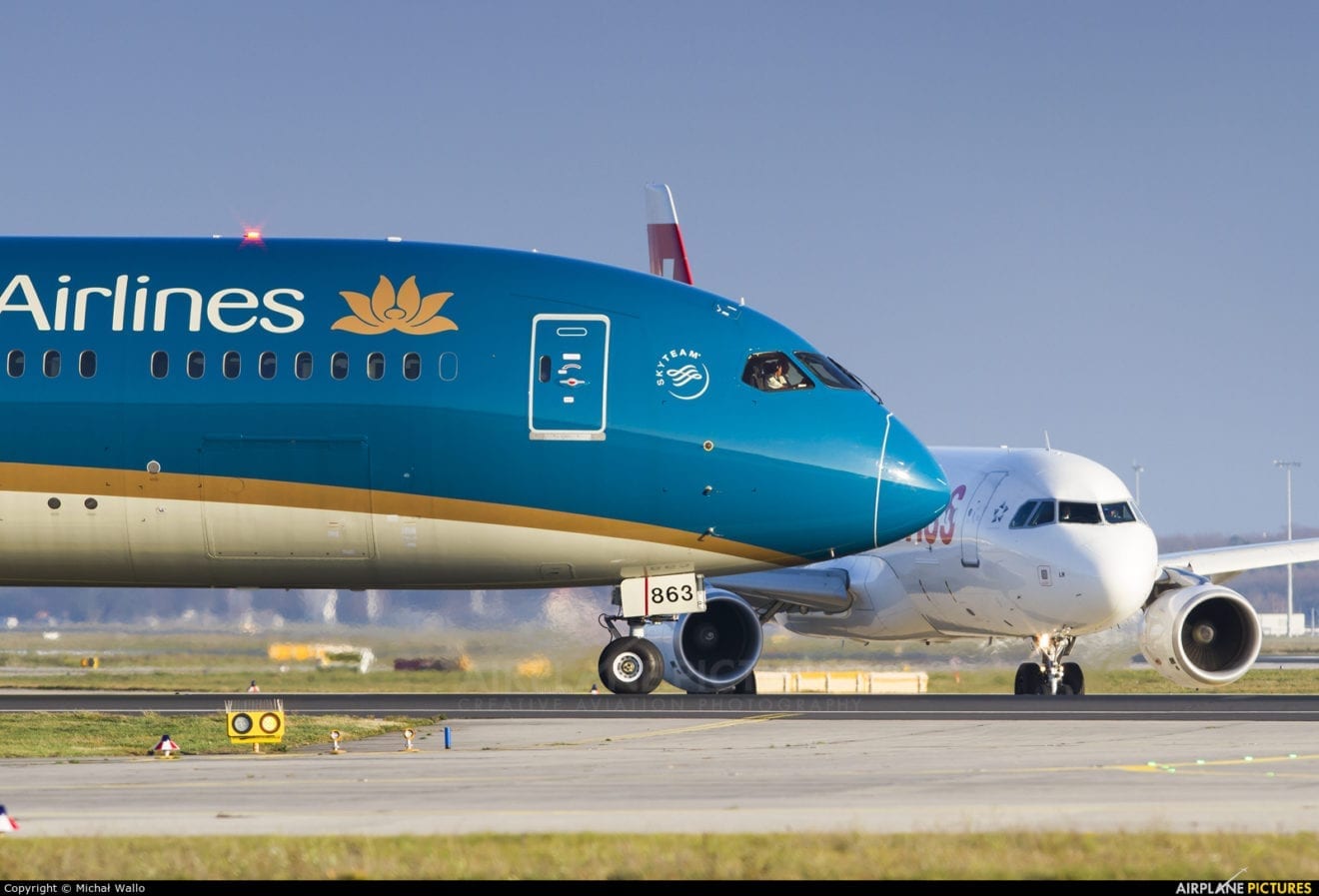
    Vietravel Airlines will reopen domestic flight ticket sales next Monday to tap year-end travel demands, after remaining grounded for about three months owing to pandemic restrictions.

    The carrier, which belongs to leading tourism company Vietravel, announced it will reopen ticket sales from 9 a.m. Monday, with the first flight taking off next Thursday.

    The flights will depart to and from Hanoi, Ho Chi Minh City, and beach tourist hotspots such as Da Nang, Nha Trang, Phu Quoc and Quy Nhon.

    The company said it will gradually increase its flight frequency from now to the end of the month to meet higher travel demand during the year-end peak season, including the upcoming Tet (Lunar New Year) holiday two months from now.

    Vietravel Airlines was launched at the end of Dec. 2020 and was one of the airlines that allowed to operate amid the turbulence created by the pandemic.

    After about half a year of operation, the carrier had to reduce its frequency and also closed operations since late August due to Covid-19 resurgence. It resumed business on Oct. 18.

    According to the new restructuring plan, Vietravel plans to operate as a holding company instead of engaging in operating activity itself.

    The company has invested additional capital in the carrier this year, raising its total investment from VND700 billion (over $30 million) to VND1.3 trillion (over $56 million) for the 2021-2025 period.

    The Civil Aviation Authority of Vietnam has said that domestic carriers will increase flight frequency in the coming time.

    Budget carrier Vietjet Air has increased its frequency to six flights a day on each of the Hanoi-HCMC, Hanoi-Da Nang, and Da Nang-HCMC routes.

    Another budget carrier, Bamboo Airways, will increase its frequency to 4-5 daily flights on the Hanoi-HCMC route from mid-December.

    National flag carrier Vietnam Airlines will operate about 140 flights per day on nearly 40 domestic routes. On the Hanoi – HCMC route, Vietnam Airlines operates five flights per day and its affiliate Pacific Airlines flies two flights per day. From Dec. 15, each airline will increase frequency on this route with one more flight per day.

  • Steel exports surge 130 pct as global demand shoots up

    Steel exports surge 130 pct as global demand shoots up

    Steel exports rose by nearly 130 percent in the first 11 months of this year to US$10.8 billion, according to the Vietnam Steel Association.

    Hoa Phat exported 914,000 tons of finished construction steel products, a year-on-year rise of 90 percent. It plans to export over one million tons, double the volume it shipped last year.

    The association expected exports to be robust this month due to rising global demand and a temporary shortage in China.

    Vietcombank Securities Company explained that China is gradually reducing its steel exports.

    The association said Vietnam has a production capacity of around 24 million tons a year, and output this year is expected to reach 21.2 million tons, enough to fully meet domestic and export needs.

  • Vietcombank Remittance Company bags two int’l awards

    Vietcombank Remittance Company bags two int’l awards

    Vietcombank Remittance Company was awarded the “Excellence Money Transfer Company” and “Best Home Payment Service Provider” titles by U.K.-based Global Banking and Finance Review magazine.

    Global Brands Magazine (GBM) is a prestigious U.K. online publication and forum for top brands of the global business community. The winners are selected based on commitments and efforts in the pursuit of outstanding values including: innovation, quality, increasing brand awareness, technology application, risk management, customer service, that promote the dynamic business environment of the remittance industry in Vietnam.

    To meet the above criteria, Vietcombank Remittance Company (VCBR) has remarkably improved its operational procedures, diversified its products, and enhanced its customer experience.

    Dao Minh Tuan, deputy CEO of Vietcombank, chairman of the VCBR Board of Directors, said the two awards obtained from GBM magazine are a significant affirmation and recognition of VCBR’s efforts and achievements in providing the best market service.

    “To record such great achievements, thanks to the steadfast effort of the entire VCBR team, in providing the best service experience, building solid trust with customers and partners. However, VCBR will encourage further innovation in its business operation to work toward the goal of becoming the number one remittance company in Vietnam,” he added.

    VCBR was established in 2017 with the task of facilitating remittances from abroad to Vietnam, supporting the ecosystem of Vietcombank’s products and services.

    Vietcombank has set its vision and strategic objectives toward 2025: Maintaining its position as the No. 1 retail bank in Vietnam and becoming one of the 100 largest banks in Asia; one of the 300 largest banking and financial groups in the world and finally one of the 1,000 largest listed companies in the world.

    The Covid-19 pandemic has had a dire impact on the global economy in the last two years. A huge number of companies have been forced into bankruptcy, and the unemployment rate has reached a record. The pandemic also had a serious impact on money transfer and remittance activities.

    In Vietnam, remittance companies constantly had to narrow the scope and scale of their operations. Under the circumstances, VCBR has proactively adapted to the chaos along with encouraging innovation, ensuring safe business performance, profitability and high efficiency.

    According to Nguyen Hoang Minh, Deputy Director of State Bank of Vietnam Ho Chi Minh Branch, the flow of remittance to Ho Chi Minh city By the end of November is about $6.2 billion, which has already surpassed the volume of 2020 at $6.1 billion. VCBR has achieved striking growth in terms of volumes with a forecast of an over 60 percent increase compared to 2020, ranking among the top 2 remittance companies in Vietnam.

  • UBS Asset Management Names Sustainability Head

    UBS Asset Management Names Sustainability Head

    Swiss bank UBS is hiring a sustainable expert for its asset management arm. The experienced banker used to manage the investments of an Australian state.

    UBS asset management is appointing Lucy Thomas as head of sustainable investing, the bank said in an emailed statement.

    Thomas will lead sustainability and impact strategy and report to Barry Gill, head of investments for UBS asset management.

    In her previous role, Thomas was head of investment stewardship at TCorp, the financial markets’ partner of the New South Wales government in Australia. Thomas will move from Sydney to Zurich for the position.

    Thomas brings extensive experience working with clients and leading the integration of sustainability factors into the investment process globally, Gill said in the statement.

  • Pandora has no plans to join platforms like Amazon or Farfetch

    Pandora has no plans to join platforms like Amazon or Farfetch

    Jewelry maker Pandora would prefer to invest in physical stores or its own online sales platform rather than join large e-commerce marketplaces like Amazon or Farfetch, its chief executive said on Wednesday.

    “If you’re a small and unknown brand, marketplaces offer a great opportunity, because they provide you with an audience. I already have an audience,” CEO Alexander Lacik said during an interview.

    Pandora, the world’s largest jewelry maker by production capacity, has found a niche between cheaper accessories sold by the likes of H&M and more expensive jewelry like that of Tiffany & Co .

    “Eight out of ten women globally are aware of our brand, so I don’t need to make you aware of me. What I need to do is to show you what I’ve got, and I can to this much better if I have a direct relationship with my customer,” he said.

    The $12.3 billion company, headquartered in Copenhagen, has increased investment in e-commerce during the pandemic. It is present on China’s T-mall platform but not on large global platforms like Amazon or Farfetch.

    “Marketplaces always have to make a compromise for all the clients they are serving. I don’t have to compromise,” he said.

    Pandora’s more than 2,600 physical stores remain the core of its business and accounted for 62% of global sales between July and September.

    “Nearly two-thirds of my customers are men buying jewelry for their girlfriends, wives, grandmothers, or children. And we know that men buying jewelry need help,” he said.

  • Vivaldi is world’s first mobile browser to introduce two rows of tabs

    Vivaldi is world’s first mobile browser to introduce two rows of tabs

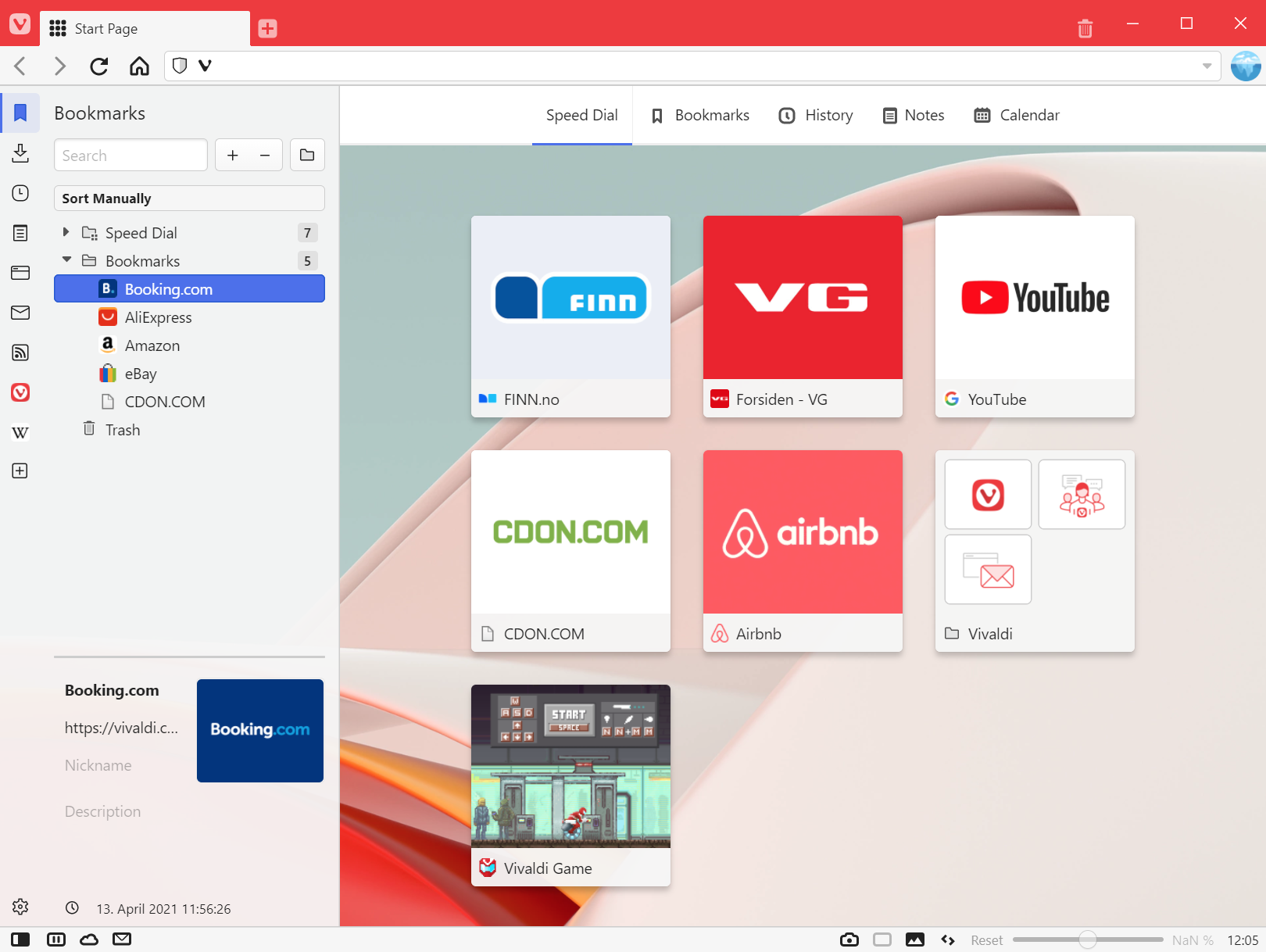
    Vivaldi is trying to appease as many Android users as possible, so the most recent update for the mobile browser brings a world premiere. Vivaldi 5.0 is the world’s first mobile browser to offer a “two-level tab stacks” solution. Additionally, Vivaldi’s Android browser brings built-in Panels on tablets and Chromebooks, another first.

    Back to the “two-level tabs stacks” solution, this has been launched on Vivaldi’s desktop browser earlier this year and allows users to manage multiple web pages smoothly and easily. Starting today, the same feature but designed for mobile devices, is available for Android users.

    To enable the new feature, simply long-press the New Tab button and select “New Tab Stack.” That should allow you to start using the new stack/group created, with the current tab and one new additional tab. There’s another way to make a group of tabs from the Tab Switcher: drag one tab on top of another to create a new stack.

    But this isn’t the only new feature included in the latest Vivaldi update. An improved tab interface and new ways to tweak the Tab Bar have been added too. The built-in Notes tool has been enhanced too so that Android users can quickly handle big chunks of text from a webpage to an existing note with an “Append to Note” option when highlighting text.

    Vivaldi 5.0 is also a big step up for tablet users, as developers have been working to optimize the browser for bigger screens. Apart from a new design, the new version of Vivaldi features a side Panel to make it easier for users to optimize their screen space better on tablets.

  • Singapore’s Sustenance meal-replacement shakes entering Australia

    Singapore’s Sustenance meal-replacement shakes entering Australia

    Gautam Param and Leon Chen started meal replacement company Sustenance to solve this key issue that most of us are facing – “I wanted a simple way to eat healthy without putting my diet at the center of my life. I didn’t like other options in the market, they had lots of artificial junk and were too far away from nature to be considered an actual meal.”

    Noting this gap in the market, the duo wanted to offer people minimally processed products that use real food ingredients from premium suppliers. Their products contain plenty of protein and fiber and minimal bad stuff like saturated fat and artificial junk.

    “The idea behind Sustenance is simple — we want to make it simple and painless for people to eat healthily. We want to empower people to lead healthy, disease-free lives without having to put diets at the center of their lives,” said Gautam.

    Gautam added that Sustenance is suitable for time-starved people like busy workers who prefer quick, yet healthy meals. There are also some who turn to Sustenance to incorporate it as part of their diet to lose weight.

    The winning factor of Sustenance over a conventional meal is its convenience. If you are short on time, can’t find affordable options or healthy food around you, then Sustenance’s meal shakes make a good alternative to unhealthy food.

    “Science has established that consistently eating healthy is a behavioral problem, not a knowledge problem. People know what eating healthy means, but they struggle with doing it consistently in the long run because of the hassle.”

    “Nobody wants to spend their lunch break queuing (up for food), spend a bomb eating grain bowls every day, or spend an hour cooking and cleaning up during weekdays. If we can reduce the friction to eating healthier, many people would eat healthier more consistently.”

    This is the unique proposition of meal replacements – they serve as a “backup option” that is readily available anytime, anywhere.

    Most of their customers started out as non-believers who never tried any meal replacements before. However, after buying and trying their products, they instantly became converts.

    “These people who were initially on the fence end up being regular customers and making many repeat purchases. They would then recommend it to their family and friends — this is our main source of growth.”

    Its pool of customers has grown to several thousand over the past 12 months, and its products are rated 4.9 out of 5.0 stars across hundreds of reviews on Google and Facebook. Many of these reviews talk about the unexpected deliciousness of the shakes despite their green appearance, and how filling they are.

    The company has grown by more than six times in 2020 and started selling in Hong Kong and Australia in March 2021. They plan on entering two more markets by the end of 2021.

  • Bimba Y Lola opening in China

    Bimba Y Lola opening in China

    Spanish contemporary fashion label Bimba Y Lola is launching in China with a joint venture with ImagineX, Lane Crawford Joyce Group’s distribution and brand management arm.

    With a corporate office to be set up in Shanghai, the brand aims to establish a retail presence on Alibaba’s Tmall and Tencent’s WeChat, and physical pop-ups by 2022, to ramp up brand awareness and customer following.

    It will be followed by store rollouts, with plans to open 30 points of sale across 15 major cities in China, including Shanghai, Beijing, Shenzhen, Chengdu, and Chongqing in the next five years.

    Founded in 2005, Bimba Y Lola targets fashion-forward Millennials and Generation Z with ready-to-wear, jewelry, and accessories. It operates more than 290 stores across 20 countries, including the U.K., France, Singapore, and South Korea.

    According to researchers at SEMrush, Bimba Y Lola’s website traffic saw some of the biggest surge pre-pandemic, outperforming traditional retail fashion leaders such as macys.com and online giant Amazon.

    Last month, Madonna’s daughter Lourdes Leon made her fashion campaign debut with the brand’s fall 2021 campaign, a jaunt through a digital landscape.

    Uxia Dominguez, founder and president of Bimba Y Lola, believes that in China, a market of strategic importance yet one that is unique and complex to navigate, ImagineX has the right channels to unlock the potential of the brand.

    Alice Wong, president of ImagineX, thinks that the brand will resonate well with “Chinese consumers, especially the Gen Zs and Millennials.”

    “They have an increasing appetite for international accessible-luxury and affordable brands with cutting edge design, which truly stands out from the crowd,” she added.

    ImagineX manages 25 brands, including Salvatore Ferragamo, Canada Goose, Ba&sh and Club Monaco, with 448 points of sale across 48 cities in the Greater China region.

  • Nissan Unveils Lunar Rover Prototype

    Nissan Unveils Lunar Rover Prototype

    Nissan unveiled a lunar rover prototype jointly developed with the Japan Aerospace Exploration Agency (JAXA). The JAXA Space Exploration Innovation Hub Center is conducting research on lunar rovers for space exploration. Nissan has been working with JAXA on driving the controllability of the rovers since January 2020.

    A lunar rover must be able to traverse the Moon’s powdery, rocky and undulating terrain and be energy efficient. Furthermore, energy sources for operating vehicles in space are limited. Nissan’s research applies the motor control technology it has developed through its production of mass-market electric vehicles such as the LEAF as well as the e-4ORCE all-wheel control technology featured on the all-new Ariya electric crossover. In particular, it is e-4ORCE that is boosting the lunar rover’s performance over tricky terrain.

    Nissan has focused on the development of stable driving performance that enables customers to drive their cars with greater confidence. Nissan’s e-4ORCE technology precisely controls all four wheels independently, providing the driver with confidence in various conditions.

    In its joint research with JAXA, Nissan is evolving e-4ORCE technology to improve its performance in sandy terrain and other harsh conditions. When cars are driven in sand their wheels frequently spin and dig in, impeding progress. A high level of driving skill is required to avoid getting stuck. To meet this need, Nissan has developed driving-force controls that minimize the amount of wheel spin in accordance with surface conditions.

    Through the joint research, Nissan aims to contribute to the technological evolution of automotive technology and space exploration technology by sharing know-how gained from test-vehicle development and combining it with JAXA’s knowledge of rover research

  • Apple releases iOS 15.2 beta 4 for developers and the public

    Apple releases iOS 15.2 beta 4 for developers and the public

    Apple has started sending out iOS 15.2 beta 4 (build: 19C5050b) to both developers and public beta testers who are subscribed to Apple’s beta program. Also dropping today for developers and public beta testers are iPadOS 15.2 beta 4 (build: 19C5050b), watchOS 8.3 beta (build: 19S5050c) and tvOS 15.2 beta.

    As we get closer to the final build of iOS 15.2, you might recall that it refreshes the Notification Summary feature, which allows you to avoid being interrupted by notifications from your apps filling up your display. Instead, all of your non-urgent notifications are bundled together in a summary that is sent to you at a scheduled time. Direct Messages (DMs) and Time Sensitive messages are always sent immediately, so keep that in mind.

    With iOS 15.2 installed, the Notifications Summary no longer appears as a list, but is seen as separate blocks on your Lock Screen.

    The latest iOS and iPadOS builds will introduce the App Privacy Report which will show users which data is being accessed by Apple and third-party apps via privacy permissions granted by them. These permissions may allow apps to access their iPhone’s location, camera, contacts, camera, microphone, and photos.

    The iPhone 13 Pro models have a feature called Macro Mode which automatically turns the ultra-wide camera into a Macro camera for taking extreme close-ups whenever the device is placed within 10 cm (3.94 inches) of an object. Macro photography will help you shoot photos of insects, flowers, and other subjects that are no closer than 2 cm (.79 inches) away. Apple is adding a toggle in iOS 15.2 that will allow users to disable Macro Mode.

    And iOS 15.2 will also make iPhone users feel safer by allowing users to scan their surroundings for AirTags and other devices used with the Find My app that can track them without their knowledge. The feature is found in a new section of the Find My app that will appear when iOS 15.2 is installed on an iPhone and is called “Items That Can Track me.” Any nearby items that do not belong to you but do contain Apple’s tracking technology will surface under this section.

    Additionally, any AirTags that are away from its owner for 24 hours and longer will make a warning sound. This helps alert iPhone users that they are potentially being tracked by an AirTag that doesn’t belong to them.

    And if you come across an AirTag tracked item that does not belong to you, the renamed “Help Return Lost Items” will give you information about how to contact the owner of the item so that it can be returned. The previous name of the feature was “Identify Found Item.” This is perfect for all of you good samaritans who don’t feel that the universe is okay unless every misplaced item has been returned to its rightful owner.

    If you want to get in early on iOS updates, you can join the iOS Beta Software Program by tapping on this link. Keep in mind that Beta versions of iOS are unstable (like that little old lady with the 55 cats that lives next door) and certain features and apps might not work when you have a Beta build installed. Additionally, battery life could be diminished until the final version of the build is released.

    These things might not bother you, but it is something you need to concern yourself with if you plan on joining the iOS Beta Software Program. Once you install a beta version of iOS on your iPhone, you can leave easily if the phone is running an official version of the software. To do that, go to Settings > General > Profile & Device Management. Select the iOS Beta Software Profile, then tap on Delete. Confirm your decision and that is it.

    Now it is a little tougher to leave if your phone is currently running a beta version of iOS. If that is the case, we recommend waiting for the next official version of iOS to arrive, and then you should follow the directions above. Otherwise, you will have to restore to an older backup version of the operating system using your PC or Mac. And that means losing all the data added since your last backup.

    By the way, if you already are a member of the iOS Beta Software Program, you can install iOS 15.2 beta 4 by going to Settings > General > Software Update.

  • AuMake and Miniso to launch dual-branded stores in Sydney

    AuMake and Miniso to launch dual-branded stores in Sydney

    The specialist retailer in Australia and New Zealand, Aumake Limited shared on Thursday that it has entered into a distribution agreement with a Japanese-inspired lifestyle product retailer MINISO Master Franchisee Pty Ltd (MINIS0).

    As per the agreement, MINISO will provide operational support and products to three of Aumake’s physical stores initially, strategically picked for their high foot traffic locations and traction with Asian customers.

    The key terms of the distribution agreement include:

    • Initial physical stores are located in Chinatown, World Square CBD and Burwood in Sydney, NSW.
    • Physical stores to be dual-branded as Aumake and MINISO.
    • MINISO will pay Aumake a percentage of sales (GST incl.) in exchange for using Aumake’s premises to sell the products.

    Aumake’s deal with MINISO creates a significant revenue opportunity and subsequent reduction in overhead costs due to increased physical foot traffic, especially when the restrictions on international borders are likely to be eased for Asian tourists and international students in the coming weeks.

    In addition, the cooperation between the two companies will also provide Aumake with an opportunity to introduce and expand new skincare and cosmetic brands.

    Meanwhile, the stock AUK was spotted trading 10% higher at AU$0.016 per share at 2:00 PM AEDT.

  • Indian car rental company zooms into Vietnam

    Indian car rental company zooms into Vietnam

    Leading Indian car rental platform will begin operations in Vietnam next week.

    Users can start booking cars, including SUVs and hatchbacks, on its website and smartphone app starting Monday, a media representative said.

    “We hope to reach 2,000 vehicles on the platform by March next year.”

    The company has appointed Kiet Pham as its vice president and country director.

    Kiet used to hold senior management positions at Indonesian ride-hailing platform Gojek and Indian hotel booking company OyO.

    The rollout is part of Zoomcar’s plan to enter the Southeast Asian market, where it plans to invest more than $100 million in the next two to three years.

    Zoomcar launched its car rental service in India in 2013 and has become a leading company there in the industry.

    It has 10,000 cars for rent in Asia, the Middle East and North Africa. Its headquarters in India has 300 employees.

    The company recently raised US$92 million from several investors led by U.S.-based SternAegis Ventures.