Tag: asia

  • Prepare to wait If You Want an Apple mixed reality headset

    Prepare to wait If You Want an Apple mixed reality headset

    Just the other day we told you that reliable TF International analyst Ming-Chi-Kuo told clients to expect Apple’s mixed reality headset to be introduced next year “with the same computing power level as the Mac.” Kuo believes that the device will first see the light of day during the fourth quarter of 2022 and will sport a pair of processors. But even if the device becomes official, you might not be able to buy it immediately.

    When Apple introduces a brand new product, it usually makes eager consumers wait before they can purchase the device. Gurman gives three examples of this. The OG iPhone was unveiled on January 9th, 2007, and released 171 days later on June 29th, 2007.

    The OG iPad was introduced on January 27th, 2010, and released 66 days later on April 3rd, 2010. The longest wait belongs to the OG Apple Watch at 227 days as the timepiece became official on September 9th, 2014, and was released on April 24th, 2015.

    Gurman notes that Steve Jobs has said that he didn’t want the FCC to leak the iPhone during regulatory approval, so he unveiled the smartphone early. But the truth, according to the Bloomberg writer, was that the hardware and software were not ready to be released to the public. Additionally, the iPhone needed to be tested on cell networks.

    The iPad delay was needed to make more e-books ready for the device, and give developers the time needed to optimize their apps for the larger iPad display. Also, Apple needed the time to polish off the tablet’s operating system.

    Apple has some major new devices coming including the mixed reality (AR/VR) headset, the AR glasses, and the self-driving car. Gurman expects the delay between the introduction of the mixed reality headset and the release of the product to challenge the 227 days that Apple Watch buyers had to wait. That’s because the mixed reality headset has a complex design including interchangeable lenses.

    While the mixed reality headset is going to be an interesting product, the AR glasses should be a bigger deal. That’s because Ming-Chi Kuo says that Apple will be looking to kill off its most important product in 10 years and replace it with AR. This looked to be Google’s plan when it released that now-infamous video in April 2012. But Google Glass never replaced the smartphone and anyone wearing the device ended up being called a “glasshole.”

    Google Glass wearers got tossed from theaters (for fear that they were secretly recording the movie being played) and bars (for possibly taking photos of patrons without their permission). If Apple truly sees the iPhone being replaced by AR glasses in a decade, it must be optimistic about wearers not getting the same reaction.

    And Apple might want to get the product out for the public to see before it is handed around to its manufacturing partners and its own employees any of whom might spill the beans about the device. Apple will also need the time to persuade developers to create games for the device. Gurman writes that he can see Apple introducing the product at WWDC 2022 next June with a release date later next year or even into 2023.

    Getting a self-driving car on the streets might be more of an ambitious task for Apple. you can imagine the media sensation any test drive of an Apple Car might produce. After all, testing the car in the U.S. will take years. Using Tesla as an example, Gurman pointed out that the company showed off the Model S in 2009 before it started shipping in 2012. The Model T first saw the light of day in 2016 and was released in mid-2017. And the Model Y was announced in March 2019 and was offered to buyers almost exactly one year later.

    The point is that even if Apple introduces the Apple Car in 2025 as it wants to do, it could still be years before you see the vehicle motoring down the road sans driver.
  • Novartis receives certificate of merit from Vietnam’s Ministry of Health

    Novartis receives certificate of merit from Vietnam’s Ministry of Health

    Novartis has marked its 25 years of development with a certificate of merit from Vietnam’s Ministry of Health for its social commitment during the Covid-19 pandemic.

    “This achievement affirms Novartis’s leading position in the global pharmaceutical market and its long-term commitment to community health support,” a Novartis representative stated.

    Over the past 25 years, Novartis has achieved medical breakthroughs in cancer care, heart disease and the fight against inflammatory conditions. The company uses innovative science and technology to address some of society’s most challenging healthcare issues. It discovers and develops breakthrough treatments and finds new ways to deliver them to as many people as possible.

    Partner of Vietnam’s healthcare

    Novartis began its journey in Vietnam in the 1950s through the presence of Sandoz, Ciba-Geigy, and other partners. Over the past two decades in the country, Novartis Vietnam has cooperated with the Ministry of Health (MoH) and domestic and international organizations to launch several programs to enhance public health awareness, promote training, and strengthen primary healthcare in many cities and provinces.

    In 2008, the representative office of Novartis Pharma Services AG was established in Vietnam to promote and support the supply of medicines, and delivery of drugs to patients, as well as clinical trials of Novartis Group.

    Over the past 13 years, Novartis Vietnam has been focusing on four areas including science-based innovation and clinical trials; scientific and academic cooperation; quality and local manufacturing, along patient access to high-quality, innovative healthcare.

    The company has collaborated with the MoH to develop a strong healthcare system that covers the lowest income segments of the population and to provide the Vietnamese people with high-quality medicines, thus contributing to the MoH’s objective to shape a strong and sustainable healthcare system and achieve universal healthcare coverage.

    A lot of significant programs have been carried out over the past years. In 2014, Novartis and the MoH signed a Memorandum of Understanding (MoU) to enhance the Vietnamese people’s access to essential, affordable generic and innovative medicines, and strengthen the country’s science, medical, and technology capabilities

    It is followed by another MoU inked in December 2019 on raising primary healthcare in Vietnam through activities at commune and district levels from 2019 to 2021, making it a testament to public-private collaboration in this area, aiming to achieve the Universal Healthcare Coverage and United Nations Sustainable Development Goals by 2030.

    2020 marked a special milestone in Novartis Vietnam’s development journey when it inaugurated its new legal entity in the country and became one of the first multinational companies to successfully transform from a representative office to a foreign-invested enterprise importer. Also that year, the company was honored as a pioneer in digital transformation for its efforts and outstanding contributions to the Digital Transformation of the Healthcare Sector at National Digital Transformation Congress.

    Moreover, Novartis Vietnam teamed up with Docquity to offer an exclusive digital network for medical staff. The company has also been named among the top 100 Vietnam Best Places to Work in the country thanks to its appropriate human resource policies and quick response to the Covid-19 pandemic.

    In 2021, the company keeps the momentum of good performance with its recognition as a Global Top Employer for 2021, thus contributing to encouraging Novartis to continue attracting talents and strengthening its offering as a destination for employers in the future.

    Contributions to the Covid-19 fight

    Novartis received the certificate of merit from the MoH for its social commitment during the Covid-19 pandemic and its contributions to the country’s Covid fight, and training of HCPs, among others.

    Novartis supports the initiative of six medical universities in Vietnam to train HCPs to serve Covid-19 prevention and control. At least 1,800 final-year medical students got training from April to July 2020. This effort was in response to the call of the government and the MoH, mobilizing more than 90,000 HCPs for the pandemic fight.

    Moreover, the company has so far donated over $400,000 to the pandemic battle in Vietnam. The company also joined hands with other members of EuroCham Pharma Group to donate an equivalent total of $100,000 to the Vietnam Fatherland Front national campaign on the prevention and treatment of Covid-19, and donate via the HCMC Red Cross Society medical supplies to frontline hospitals, and Covid-19 treatment centers.

    During the pandemic, Novartis has taken effective measures to ensure the continuation of the supply of medicines, as well as promote technology application to maintain regular medical training for HCPs, thus ensuring healthcare access.

    Amitabh Dube, country president, Novartis Vietnam, said: “Vietnam and countries worldwide are still facing pressing health issues that need more innovations to address them. Novartis commits to be a reliable partner in this effort, and will continue the discovery and development of new treatments to help more people.”

    Long-term investment commitments

    Novartis’s strategy is to build a leading, focused pharmaceutical company powered by advanced therapy platforms and data science. Looking at the next 25 years and beyond, the company will continue reimagining medicine to improve and extend people’s lives.

    To implement the strategy, Novartis has five priorities to shape its future and help it continue to create value for the company, its shareholders and society: unleash the power of its people; deliver transformative innovation; embrace operational excellence; go big on data and digital; and build trust with society.

    In Vietnam, the company will continue to collaborate with Vietnamese societies, associations, and health facilities in programs to improve healthcare services for Vietnamese, showing its strong commitment to accompanying the local health sector in future sustainable development.

  • Vietnam’s e-commerce traffic higher than Thailand, Malaysia

    Vietnam’s e-commerce traffic higher than Thailand, Malaysia

    E-commerce web traffic from Vietnam is double that of Thailand and triple that of Malaysia in Q3, showing high demand for online shopping amid the pandemic, a report has found.

    Digital consumption has become a new habit as the number of online vendors increases, with Vietnam becoming “a star” on the Southeast Asian e-commerce market, according to the Q3 market report by iPrice Group.

    Vietnam is set to exceed Thailand by 2025 to become the second-biggest internet economy in Southeast Asia with a scale of $57 billion, behind Indonesia at $146 billion, according to the e-Conomy Southeast Asia 2021 report by Google, Temasek, and Bain & Co.

    However, foreign companies are still dominating Vietnam’s e-commerce market in terms of web traffic.

    Singapore’s Shopee accounted for 57 percent of traffic in the third quarter, followed by another Singaporean company Lazada at 16 percent.

    Vietnamese startup Tiki ranked third with 13 percent of traffic.

    The report also pointed out Vietnamese consumers interact on the social media pages of e-commerce platforms more frequently than Thai but less than Malaysians, showing the importance of Facebook in promoting brands in Vietnam.

  • Vietnam Airlines reports $154 mln Q3 loss

    Vietnam Airlines reports $154 mln Q3 loss

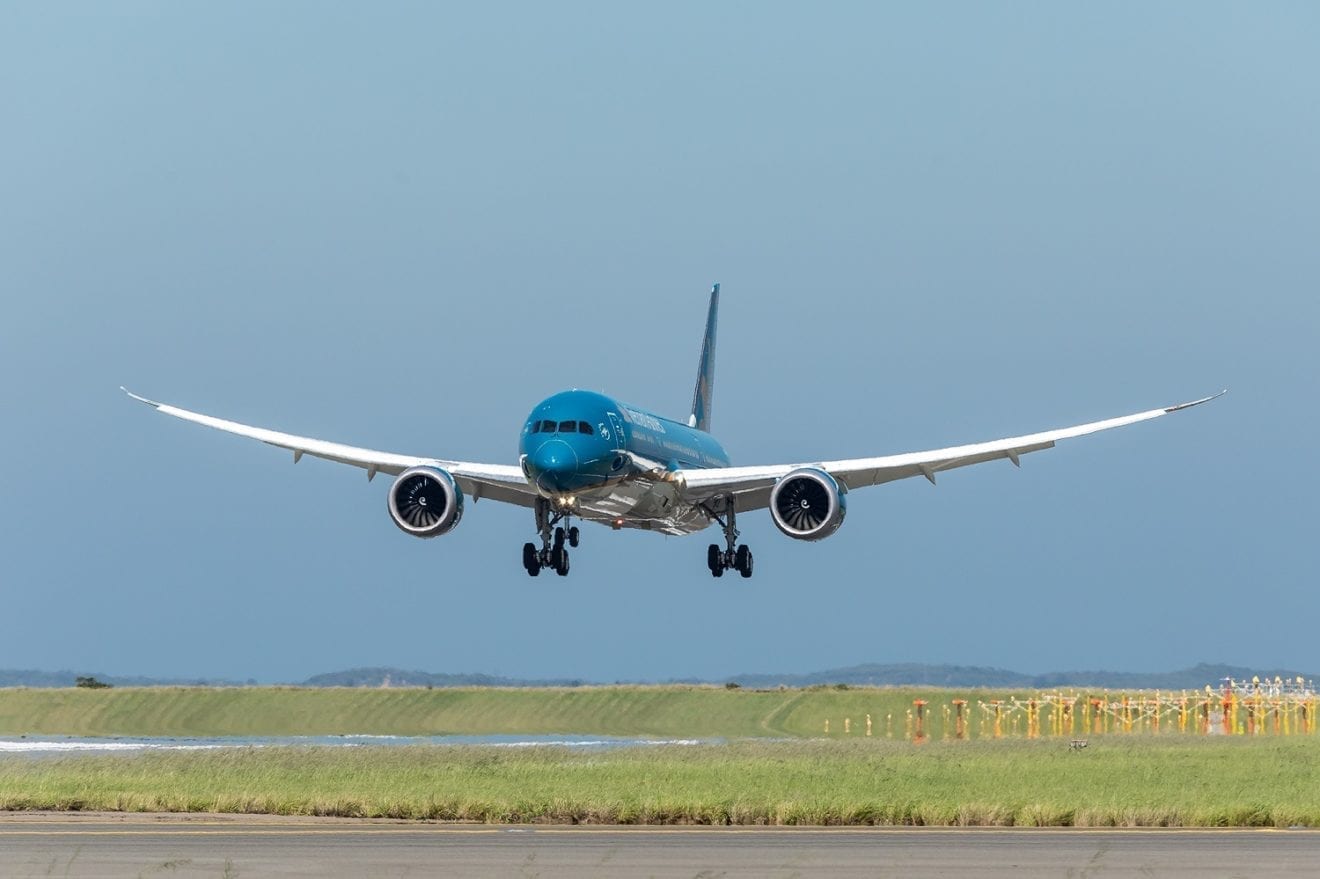
    National flag carrier Vietnam Airlines recorded a net loss of over VND3.5 trillion ($154.3 million) in the third quarter, a sharp decrease compared to the first two quarters.

    According to a summary of consolidated financial statements for the third quarter, Vietnam Airlines earned net revenues of VND4.7 trillion, down 37.6 percent year-on-year.

    The sale of goods dropped 20 percent year on year to VND7.7 trillion.

    The airline reported a total gross loss in the sale of products and services of about VND3 trillion.

    While its financial revenue more than quadrupled over the same period to more than VND560 billion, administrative expenses and costs related to the cost of products increased to more than VND347.5 billion and VND282.2 billion, respectively, resulting in the reported net loss.

    The Q3 loss was less than the losses of VND4.9 trillion and VND4.4 trillion recorded in the first and second quarter, respectively.

    Its loss in the first 9 months of the year has crossed VND12.1 trillion.

    The carrier explained that the sharp drop in consolidated profits in the third quarter was not only due to the decrease in profits of the parent company, but also because the profits of subsidiaries providing aviation services, like Vietnam Airlines Engineering Company (VAECO) and Noi Bai Airport Services Company (NASCO), also decreased sharply.

    Vietnam Airlines said that it has proactively implemented drastic solutions in business operations to minimize the impacts of the Covid-19 pandemic, resulting in a significant drop in Q3 losses compared to the first two quarters.

    As of September 25, the carrier increased its charter capital to VND8 trillion.

    The carrier said business activities have gradually stabilized and it is preparing conditions for the recovery and development phase after domestic flights are allowed to operate normally.

    As of September, Vietnam Airlines’s total assets were valued at more than VND67 trillion, up more than VND4.5 trillion over the beginning of the year.

    The company has posted overdue debts of VND65.5 trillion compared to the beginning of the year, and more than VND1.4 trillion of equity, a decrease of nearly VND4.6 trillion over the same period. Of this, short-term debt is about VND42.2 trillion, up more than VND9.7 trillion.

  • Car registration fee cut by half again

    Car registration fee cut by half again

    A government decree has cut registration fees for locally made cars by 50 percent for six months starting December 1.

    This is the second time in the last two years such a cut is being made to mitigate the difficulties faced by the auto industry due to the Covid-19 pandemic.

    In the first six months of last year, 17,600 cars were bought on average each month. In the second half, when the 50 percent cut took effect, sales doubled.

    The registration fees are calculated based on car prices in each locality.

    The rates are 12 percent in Hanoi and Hai Phong, and 10 percent in HCMC.

    Last year, car sales had fallen by 8 percent to 296,634 units as the Covid-19 pandemic badly affected the economy, hitting people’s incomes and discretionary spending.

  • Daimler To Produce First In-House Electric Motor At Berlin Plant

    Daimler To Produce First In-House Electric Motor At Berlin Plant

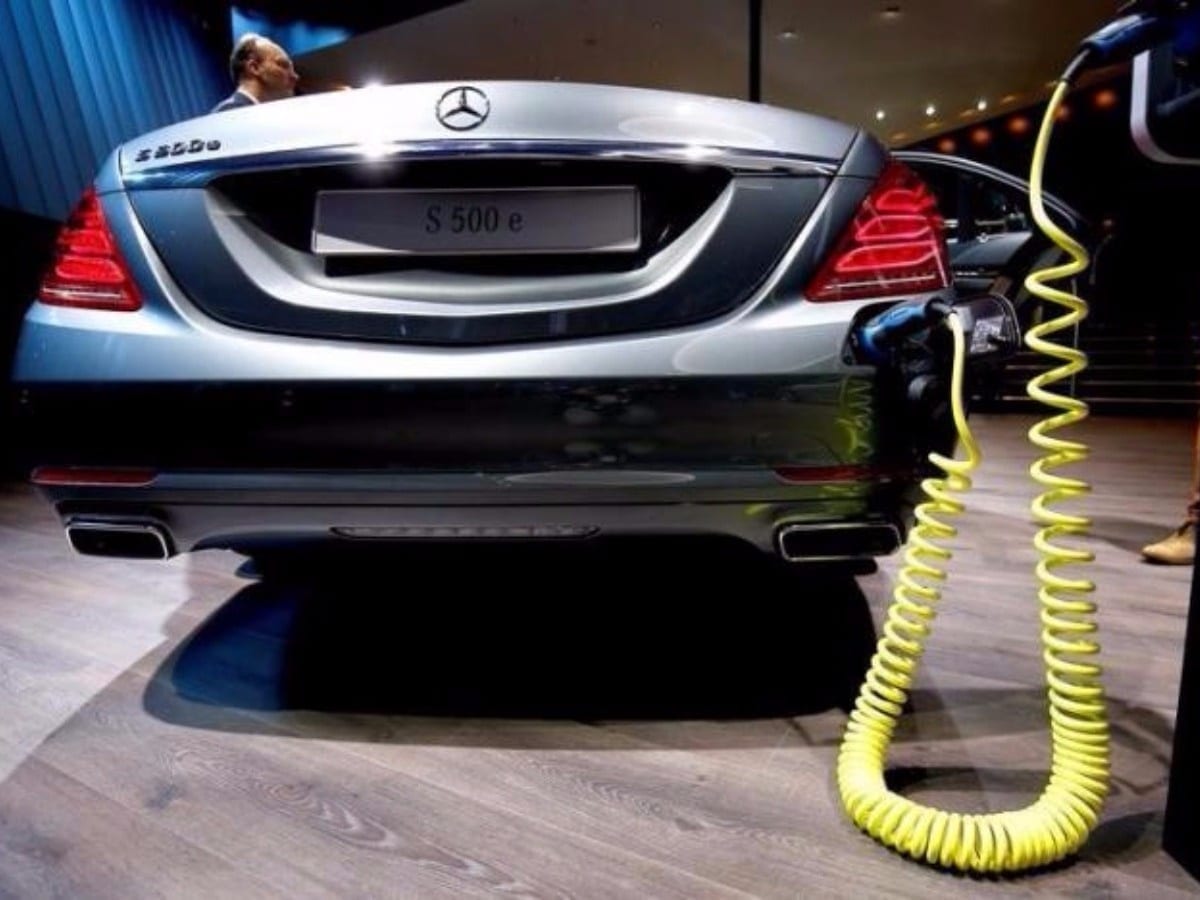
    Daimler will produce the first in-house electric motor at its oldest plant in Berlin, the carmaker said on Thursday, providing relief to workers worried that the diesel motor production site was on the brink of deep job cuts.

    Workers who feared for their positions after Daimler said in September 2020 its Berlin site would end production of the 6-cylinder diesel motor within a year would also be offered retraining in software and coding, the German company said.

    Around 450 of the plant’s 2,300-odd workers have applied to attend a pilot 160-hour training course in software development, works council chairman Michael Rahmel said on a press call, with around fifteen selected for the first round of training.

    Investment in the 120-year-old Berlin-Marienfelde plant, previously pinned at a two-digit million euro amount, will rise to a low three-digit million euro amount in the next six years, Daimler said.

    The motor, known as an axial-flux motor and designed by the British startup YASA which Daimler acquired earlier this year, weighs a fraction of its diesel equivalent and can boost the range of an EV by up to 7%, YASA’s founder Tim Woolmer told Reuters in July.

    Woolmer said at the time that Daimler had briefed YASA to bring costs down in future iterations of its motor so the carmaker could use them across its entire EV range.

    The e-motor is simpler to produce than its diesel equivalent, meaning the plant will eventually require less workers – but the exact number of future job losses was not yet clear, head of production Joerg Burzer said on a press call. A start date for the production of the motor was not provided.

    The factory’s employees are guaranteed their positions until the beginning of 2030 under an existing union agreement.

    The digital training campus, which Daimler partnered with Siemens in March to develop and which will go live in 2022, would also create new jobs, Burzer said.

    “If we make an effort here in coming years, there could even be more jobs than before,” head of IG Metall Berlin Jan Otto said.

    Production of the 6-cylinder diesel motor and some components would continue at the factory in the short-term but was being wound down, Burzer and union representatives said.

    The factory’s employees are guaranteed their positions until the beginning of 2030 under an existing union agreement.

    “A year ago, we didn’t know what would happen at the plant. Today we’re embarking on what will hopefully be a successful transformation with our heads held high,” Michael Rahmel, works council chairman at Berlin-Marienfelde, said in a statement

  • Nissan Plans 50% Electric Vehicle Sales By 2030

    Nissan Plans 50% Electric Vehicle Sales By 2030

    Automaker Nissan wants half its global sales to be electric or hybrid vehicles by 2030 and plans to plough billions of dollars into the effort, it announced Monday. The move follows in the footsteps of other major global automakers, which have increasingly signaled a move towards electric and hybrid vehicles as concern about climate change grows.

    Unveiling its new long-term plan, Nissan said it will launch 23 new models, including 15 new electric vehicles, in a bid to reach the 2030 goal.

    Last year, only around 10 percent of Nissan’s global sales were EVs or hybrids, and the firm said the new target would help it achieve carbon neutrality across the lifecycle of its products by 2050.

    Nissan has been battered by a series of problems in recent years, ranging from weak demand even before the pandemic, to the fallout from the arrest and subsequent escape of former boss Carlos Ghosn.

    Last year, only around 10 percent of Nissan’s global sales were EVs or hybrids

    After falling behind rivals during the pandemic, it has begun clawing back performance, tripling its full-year net profit forecast earlier this month despite the impact of a global chip shortage.

    In a statement, Nissan CEO Makoto Uchida said the long-term plan announced Monday would “transform Nissan to become a sustainable company.”

    It’s a move seen across the auto industry with Sweden’s Volvo pledging to switch all sales away from traditional fuel cars by 2030, and Japan’s Honda setting the same target by 2040.

    Top-selling Toyota says by 2030 all the vehicles it sells in Europe will be electric or hybrid models, with a goal of 70 percent in North America and 100 percent in China by 2035.

    Nissan said 20 of its new electric models would hit the market in the next five years, setting a target for electric cars to make up 75 percent of sales in Europe by fiscal 2026.

    The Japanese automaker said it will invest two trillion yen ($17.5 billion) over the next five years to speed up electrification, aiming to launch electric vehicles with its proprietary batteries by 2028.

    Electric and hybrid vehicles are being increasingly adopted in the face of concern about climate change, with Britain moving to ban new sales of diesel and petrol cars in the UK from 2030.

    US President Joe Biden earlier this year announced a target for half of all ears sold domestically by 2030 to be zero-emission.

    At present, around 10 percent of European car sales are EVs, but the US figure is just two percent.

  • Japan Consortium Plots Digital Yen

    Japan Consortium Plots Digital Yen

    Participants include MUFG Bank, Sumitomo Mitsui Banking, Mizuho Bank, Japan Post Bank, Nippon Telegraph & Telephone Corp., East Japan Railway, and Mitsubishi, as well as local governments. The Bank of Japan, Financial Services Agency of Japan, and three ministries are observing its activities.

    Digital Currency Forum – a consortium of 74 Japanese firms – is planning to issue a digital yen that will work similarly to bank deposits by the end of 2022, according to a white paper published on Wednesday.

    Tentatively called DCJPY, the digital yen will be issued by banks as their liability, and the consortium will also be releasing a beta version of the digital currency marketplace for non-fungible tokens (NFTs) by 2022, DeCurret, the consortium’s secretariat, said.

    Members of the consortium will participate in experiments to gauge such a currency’s use in industries ranging from energy to retail, from as early as January, according to the progress report. The consortium’s subcommittee on Settlement in Industrial Distribution, led by Mitsubishi, will be testing the automatic execution of contracts using digital currency in the settlement of maritime transportation for transactions.

  • New graduates want monthly salary around 500$

    New graduates want monthly salary around 500$

    Almost half of the fresh university graduates expect a monthly salary of VND10-15 million ($435-650), but most employers are only willing to pay VND6-10 million, a survey has found.

    The survey by headhunting agency Adecco Vietnam said over 43 percent want a salary of more than VND10 million, and 31 percent want VND6-10 million, but only 27.5 percent of employers are willing to pay above VND10 million.

    Up to 88.5 percent of new employees regard to salary and remuneration as the top priority closely followed by training and development opportunities (87.7 percent) and then by promotion prospects (73.8 percent).

    Work-life balance and cultural fit are also highly valued (67.2 percent and 55.7 percent).

    Many employers said their main concerns when recruiting new graduates are lack of soft skills, unrealistic expectations and instability.

    Y Pham, chief growth officer at flexible pay startup Nano Technologies, said she has met many new graduates who start their first full-time job with too high expectations due to the lack of clarity about their career path.

    More than 56 percent of employers appreciate the new vision and initiative of fresh graduates, 54 percent appreciate their enthusiasm and 40 percent say new graduates help build a diverse workplace.

    Due to Covid-19, nearly 39 percent of enterprises have reduced recruitment demand, with nearly 19 percent cutting it by more than 50 percent.

    Over 59 percent of new graduates believe there are fewer job opportunities and 37 percent are worried about labor market instability.

    Adecco predicted that 62 percent of fresh graduates would seek new jobs in the next six months when recruitment demand would rise considerably.

  • Vietnamese plunge headlong into meme coin market

    Vietnamese plunge headlong into meme coin market

    Vietnamese are rushing to invest in so-called ‘meme coins’, hoping to make a killing but ignoring the huge risks of buying a volatile asset talked up by social media.

    In the second quarter The Nghia in the northern province of Vinh Phuc invested $20 to buy nearly 100 Dogecoins, a cryptocurrency that has overwhelmed the Internet this year.

    “I bought the coins because everyone was buying it.”

    As his investment doubled after billionaire Elon Musk spoke about the coin on Twitter, Nghia bought more of it and several other similar meme coins such as Shiba Inu and Rici Elon, hoping to make a giant profit from a small investment.

    “If only one of these coins increases 10-fold, the profit will exceed the investment in the rest of them,” he said.

    On Facebook groups, Nghia and thousands of other Vietnamese discuss meme coins daily as they hope to make a killing through the risk of loss is commensurately high.

    Meme coins are cryptocurrencies that originated from an Internet meme or have some other humorous characteristic.

    Dogecoin, released in 2013 after being created as a joke by software engineers, is the original meme coin that sparked the creation of many others.

    The most popular meme coin in terms of market cap, $28 billion, is the 10th biggest cryptocurrency.

    Some 260 meme coins are currently traded, according to cryptocurrency data platform CoinMarketCap.

    But only a fifth have a daily trading value of over $100,000. To put that in perspective, the cryptocurrency market daily trading value is worth $131 billion.

    One major feature of meme coins is their high volatility. Dogecoin, for instance, gained 1,160 percent in April-May before giving up 69 percent to fall to the current $0.2141.

    Quang Tung of Hanoi said that his wallet is like a “zoo” with many ‘animal’ coins though he does not understand all of them.

    “It is like playing the lottery. I can lose all or profit multiple times.”

    Hoang Minh of HCMC had not intended to invest in meme coins but the fear of missing out urged him to buy a small amount.

    “These coins attract people because they are popular memes on social media.”

    Squid Game coin, which was created amid the popularity of the Netflix series with the same name, surged 1,373 percent to $523 in three hours on Nov. 1 before plummeting to $0.003399 an hour later, sending many investors into a tizzy.

    Nghia and Tung have not made major profits yet since they hold a large number of coins of low value, but hope they would be mentioned by a celebrity in future.

    “Before investing in any cryptocurrency, it’s important to understand what you’re investing in and the associated risks, not just the hype around it,” said Douglas Boneparth, certified financial planner and president of Bone Fide Wealth.

  • DLA Piper Hires New Partner in Hong Kong

    DLA Piper Hires New Partner in Hong Kong

    Over the past couple of years, DLA Piper has welcomed several new partners to its Asia Corporate practice. Now the firm announces another hire.

    Global law firm DLA Piper continues to strengthen Asia capital markets offering with new partner hire in Hong Kong, the firm announced Monday. George Wu was appointed as a capital markets partner in its corporate practice. He joins the firm from Herbert Smith Freehills in Hong Kong.

    He advises on corporate and securities transactions including IPOs, debt offerings, private equity, M&A, and compliance matters. He represents issuers of securities as well as investors, underwriters and placement agents for both public and private offerings.

    Wu has particular experience advising on initial public offerings, follow-on offerings in Hong Kong and U.S. capital markets, as well as debt offering transactions including investment-grade and high-yield bonds, convertible and exchangeable bonds, and medium-term note programs. He also brings in-depth industry knowledge to the table, having advised clients on dozens of corporate transactions in various sectors, including healthcare and life sciences, technology, and consumer goods, among others.

    A native Mandarin speaker, Wu is also fluent in Cantonese and English having lived and worked in Shanghai, New York, and Hong Kong.

    George Wu’s arrival closely follows that of capital markets partner Arthur Tso who joined the Hong Kong office in March 2021. Over the past couple of years, DLA Piper has welcomed several new partners to its Asia Corporate practice including Philip Lee and David Kuo in Singapore, and Samata Masagee in Bangkok.

  • Four reasons global retail brands like ZALORA look to affiliates and partnerships for growth

    Four reasons global retail brands like ZALORA look to affiliates and partnerships for growth

    Both consumers and retailers have had enough of ads. Digital advertising is becoming a less cost-effective mode of customer acquisition as already inflated costs per acquisition (CPA) continue to rise and performance sinks. Events such as recent privacy shifts at Apple, for example, caused the average cost of conversion for ecommerce marketers to surge 200 percent for tracked users and 155 percent for non-tracked users during a six-month period

    Because ads have become so intrusive and Asian consumers have so many alternative channels to turn to for information or to make buying decisions, retailers must look elsewhere to engage and acquire new customers. 

    To see where companies are finding success, you need only look at fast-growing brands like the leading sports retailer, Decathlon Singapore. The brand saw its affiliates and partnerships drive 50 percent of new customer acquisition in eight months, with a quarter-over-quarter (QoQ) revenue growth rate of 156 percent.

     In fact, many retailers in the region have successfully reoriented their growth strategies toward affiliate marketing and partnerships. In April, online fashion destination ZALORA partnered with H&M in a brand-to-brand (B2B) partnership that will bring ZALORA apparel to H&M’s 400 million consumers across channels in Southeast Asia.

    ZALORA has also established an open and inclusive influencer partnership model that has attracted more than 2,000 content creators to its program. The brand doesn’t require its partners to have a minimum number of followers or posts per month to join, and this year it adopted a new commission-based model that invites even more crowd participation. Recommendations that lead to sales earn the influencer up to 15 percent commission in cashback or up to 10 percent in cash. ZALORA’s new influencer program is powered by the partnership management platform, impact.com.

    Similarly, the fashion brand Love, Bonito saw 20 percent of total new orders coming from affiliate partnerships just a year after launching its program. The company works to drive growth with its diverse partners, ranging from content creators and influencers to fellow brands. 

    With full partnership life cycle technology now available for scalability, a broad array of partnership types to explore, and so many successful models to emulate, affiliate marketing and partnerships are a path every retailer in Asia can pursue right now to achieve sustainable, cost-effective customer acquisition. Here’s why.

    Four reasons to consider affiliate marketing and partnerships

    • Low risk, great rewards: As a pay-for-performance channel, affiliate marketing and partnerships keep risk to a minimum and have a track record of great returns. A 2019 Forrester report revealed that brands with mature affiliate and partnerships programs have seen overall partnerships revenue grow to 28 percent of total company revenue. They also experience revenue growth that is two times faster than that of their low-maturity competitors.
    • Customizable terms: In the early days of affiliate marketing, retailers paid fixed commission rates to every affiliate or publisher that brought customers to their websites. That one-size-fits-all approach left no room to reward high-performing partners, incentivize specific results, or promote select products. Retailers today, however, can customize commission structures in a wide variety of ways to meet their business goals and attract the right kinds of partners. In fact, with the advanced partnerships management technology now available, crafting customized terms and contracts is easy.
    • Granular measurement: The performance and success of an affiliate marketing and partnerships program can also be aligned with a retailer’s business goals. With the right technology, retailers can see full-funnel attribution across both paid channels and their affiliate program to track key performance metrics such as average order value (AOV) and new customer rate. This attribution also helps retailers optimize the value of each partner at every step of the customer journey. 
    • Customer-focused: In contrast to digital advertising, affiliate partnerships are firmly rooted in consumer trust and authenticity. Consumers are free to seek out the voices and resources they trust for referrals and advice on buying, which makes credibility a lynchpin of the affiliate partnerships ecosystem. Brands and affiliates alike have a stake in delivering value to audiences and maintaining trusted status, which means everyone is aligned toward common goals and priorities. 

    Opportunities are growing in the partnership economy

    Getting started in affiliate marketing and performance-based partnerships has never been easier for retailers. From influencers to podcasters and from content and media publishers to brand-to-brand relationships, today there’s a partnership type to fit every business plan. In fact, the most diverse programs are often the strongest. 

    For tips on getting started in affiliate marketing, check out this Ultimate guide to affiliate marketing or reach out to impact.com’s dedicated Southeast Asia team at [email protected].

    By Antoine Gross, General Manager, Southeast Asia, impact.com  Antoine Gross is General Manager for Southeast Asia at impact.com.


  • Cryptocurrency Mana, Surged to an All-Time High amid Excitement over Facebook Rebranding

    Cryptocurrency Mana, Surged to an All-Time High amid Excitement over Facebook Rebranding

    With Facebook announcing a name change to Meta to demonstrate its new focus on the metaverse, something exciting happened in the cryptocurrency sphere. The price of MANA, a cryptocurrency dealing in virtual land, rose to an all-time high.

    On Saturday, CoinMarketCap data reported that the price was at $4.16, a 400% rise. That was after posting a paltry $1.47 per token only a few days earlier.

    MANA falls under the Decentraland platform that emerged in 2017, around the same time Margex was established. To know more about Margex, it is where users can transact properties on this metaverse platform using nonfungible tokens. Like ether, MANA revolves around Ethereum.

    The Dentraland platform offers users the opportunity to acquire land and upgrade it in their preferred environment – for instance, theme parks and casinos.

    Companies that operate in this space are interested in the developments at Facebook. Other metaverse-centered crypto currencies like AXS and SAND showed investor interest. However, MANA was the strongest performer, especially immediately after Facebook’s CEO made the announcement.

    Facebook CEO announced the name change to META on October 28 and demonstrated the giant company’s determination to steer away from its social media identity. The CEO Mark Zuckerberg said this in his address, “Today we are seen as a social media company, but in our DNA we are a company that builds technology to connect people, and the metaverse is the next frontier just like social networking was when we got started.”

    Facebook changes to Meta

    It is not surprising that Facebook made this bold move. The industry and the society at large are leaning towards the futuristic online world where they can enjoy new experiences. They desire to be at the meeting point of the virtual and real worlds.

    Augmented reality, immersive technologies, and virtual reality have been gaining popularity in recent years. These technologies were bound to grow through investments from giants like Facebook. It is inevitable because they are part of the digital reality. Experts opine that soon, even gazes, motions, and gestures will be part of the experiences.

    The question on everyone’s mind is whether this token will remain on fire for long.  Currently, MANA appears to be in a consolidation period. Consolidation is usually welcome because it not only offers the token the chance to wind down on the relative strength index (RSI) but also prepares for upcoming rallies.

    At the time of writing this piece, MANA, like SAND, seemed to be moving sideways. Oppositely, AXS has consolidated its position for the last month and is recovering after Facebook’s announcement, albeit without many strides. MANA and the likes may be consolidating and cooling off, but you still need to consider them for your portfolio.

    Margex, a cryptocurrency derivatives trading platform that was formed only a year ago is one such option. Within a short period, the platform has proven itself as reliable for professional trading. Its simplicity means that even new traders are at home here.

    One of the key features of this platform is 100x leverage that means that one can earn high profits, as long as he or she knows how to maneuver the market.


    The market has been awash with negative reviews related to price manipulations and unwarranted liquidations. None of these price controls are at Margex. Your profits are your profits.

    With the virtual reality market poised to be worth $1 trillion within five years, blockchain-based platforms are expected to benefit the most. The internet as all know it today is bound to manifest differently thanks to the metaverse as 3-D environments develop. It is at the backdrop of this fact that the metaverse token prices are most likely to strengthen in the future and offer many opportunities to traders.


  • Vietnam shipping company begins service to Malaysia, India

    Vietnam shipping company begins service to Malaysia, India

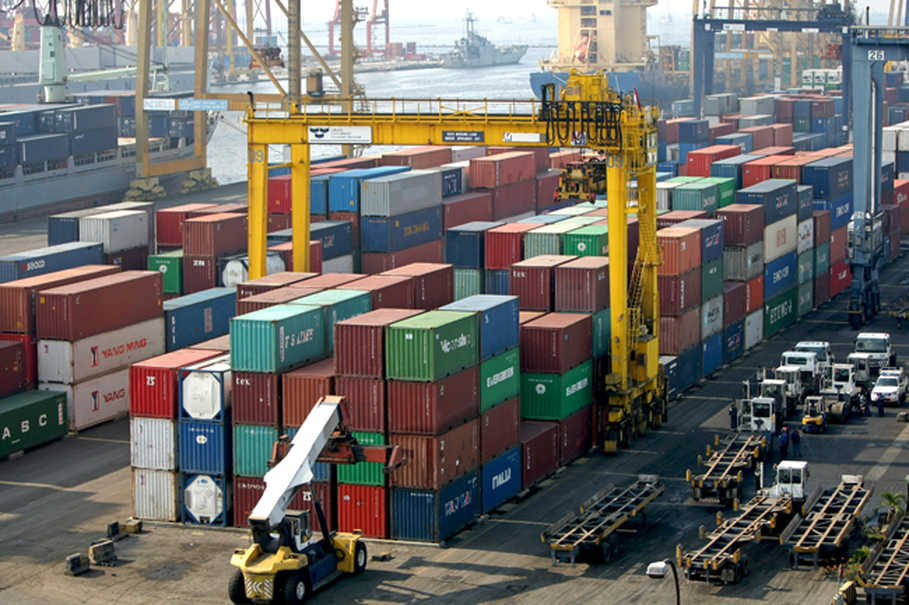
    The Vietnam Maritime Corporation has launched a container shipping route to Malaysia and India.

    The route from Vietnam’s Hai Phong Port to Malaysia’s Port Klang, India’s Calcutta, Port Klang, and SP-ITC International Container Terminal in HCMC takes 10 days less than foreign shippers’ itineraries, VIMC said.

    It is the first time Vietnamese container ships are sailing through the Malacca Strait to the Indian Ocean to transport cargo to Malaysia and India, both large import and export markets for goods and raw materials for Vietnamese enterprises.

    VIMC said it plans to expand its large-tonnage container ship fleet and operations in the region as well as globally.

    Amid the Covid-19 outbreak, Vietnam’s importers and exporters have been hit by the high freight rates demanded by foreign shipping lines and finding it hard to book their services.

    Freight rates to Europe and North America have surged by four to eight times to around $20,000 for a 40-foot container.

    Many Vietnamese shipping companies saw profits surge in the third quarter as a result of the rising freight rates.

    VIMC reported revenues of VND4.127 trillion ($179.4 million), up 71 percent year-on-year, and profits of VND760 billion, compared to a loss of nearly VND30 billion in the same quarter last year.

    According to the Vietnam Maritime Administration, the country’s ports handled over 535 million tons of cargo in the first nine months of this year, a year-on-year rise of 3 percent.

  • Malaysia PM launches Huawei’s Customer Solution Innovation Center

    Malaysia PM launches Huawei’s Customer Solution Innovation Center

    The newly refurbished and upgraded Huawei Customer Solution Innovation Center (CSIC) has been officially launched by prime minister, Dato’ Sri Ismail Sabri Bin Yaakob, as part of celebrations to commemorate Huawei’s 20th anniversary in Malaysia.

    The state-of-the-art technology and solutions displayed in Huawei Technologies (Malaysia) Sdn Bhd’s (Huawei Malaysia) CSIC also aim to assist the nation in becoming the ASEAN Digital Hub.

    Huawei’s CSIC was designed as an Information and Communications Technology (ICT) Hub and Centre of Excellence to drive the industry’s open ecosystem and accelerate digital economy transformation in Malaysia.

    The CSIC, located in Integra Tower at the heart of Kuala Lumpur, aggregates the company’s over 120 reference applications and services globally.

    Huawei’s customers and partners are able to leverage this innovative platform to design and test technology solutions, verify new business models, and nurture innovative applications and services to both the public and private sectors.

    Present during the ceremony was the chief executive officer of Huawei Malaysia, Michael Yuan.

    Delivering the keynote address during the launch, Dato’ Sri Ismail Sabri said the CSIC is a testament to Huawei Malaysia’s commitment to the nation’s digital transformation.

    “Thank you Huawei for accelerating digital transformation and strengthening the development of Malaysia’s innovative platforms since 20 years ago. For that, I would like to wish Huawei a happy 20th anniversary! We will always appreciate and value your contribution towards the nation’s digital talent development.”

    “I was informed that most of Huawei Malaysia’s employees are local. Talents are a crucial part in accelerating digital transformation for the nation,” he said.

    The prime minister added that he believes Malaysia has the capacity and capability to achieve 100% digital inclusivity, especially among the vulnerable communities.

    “I am proud to say, in embracing the concept of Keluarga Malaysia, Huawei has taken an important role in helping the government address this matter. I hope more corporations will come forward to follow in your footsteps,” he said.

    Yuan said that through the CSIC, Huawei Malaysia would continue to bring global experiences to serve the needs of the ICT industry in Malaysia and to assist local stakeholders in succeeding in their businesses.

    “This center will act as a catalyst to accelerate Malaysia’s digital transformation and to capitalize on the potential of advanced technologies and assist in driving investments in the digital economy for the nation at the same time,” added Yuan.

    He further pointed out, “It is our belief that a better-connected Malaysia will have a prosperous future. We are currently in a period where ubiquitous connectivity is no longer a luxury, but a vital requirement for a country to achieve fully developed status. Therefore, we look forward to growing together with Malaysia, to playing an integral part in the nation’s technology-based economy and to building a better future for all Malaysians.”

    Among the business-to-business solutions available and showcased at the CSIC included Huawei’s 5G solutions around the world, including those for smart cities and autonomous vehicles as well as Huawei’s Smart Education system, including hybrid learning, which increases participation and engagement between students and teachers, and allows for some students attending class in-person while others join virtually.

    Cloud computing was another highlight – where Huawei is working with Telekom Malaysia Bhd (TM) on their Alpha Edge, the only Malaysian-owned cloud and AI infrastructure and services to enterprises and government institutions that ensures data sovereignty.

    Also showcased were agro-tech systems with AI technology that could save time, monitor quality, as well as predict yield and output. This included the production of premium caviar in Malaysia using this technology.

    The CSIC also displayed network infrastructure devices that utilize the latest technological advances in 5G and telecommunications as well as Huawei’s RuralStar, which overcomes the technical challenges of connecting remote areas, bringing connectivity to hard-to-reach communities.

    Huawei also presented the Huawei RuralStar solution to Dato’ Sri Ismail Sabri as part of its corporate social responsibility initiative to bridge the digital divide in the prime minister’s constituency of Bera.

    This initiative is part of Huawei’s global vision of bringing digital to every person, home and organization for a fully connected, intelligent world.