Tag: asia

  • McDonald’s Malaysia plans to open 200 more outlets

    McDonald’s Malaysia plans to open 200 more outlets

    McDonald’s Malaysia is set to roll out 200 stores across the country, increasing its nationwide network to 500 by the end of 2026.

    MD and local operating partner, Azmir Jaafar, told local reporters that the fast-food chain is hiring 10,000 workers as part of its expansion plan. New locations will be opened away from the 310 existing ones.

    McDonald Malaysia has also committed to serving halal food across all its restaurants. The chain established an internal halal committee in 2013 to monitor full compliance with the standards and guidelines imposed by the Department of Islamic Development Malaysia (JAKIM).

    “This committee works closely with relevant officials at JAKIM to obtain advice and guidelines for the preparation of halal, quality and clean food,” Jaafar said. “The committee is also responsible for employee training to provide a clear understanding of the concept of halal.”

    Since its launch in Malaysia in 1983, McDonald has employed 15,000 employees and served more than 13.5 million customers monthly.

  • Australian Regulator Warns of Lacking Crypto Protection

    Australian Regulator Warns of Lacking Crypto Protection

    The Australian Securities and Investments Commission cautioned investors about cryptocurrency risks, noting that they are «on their own» for the time being as efforts are underway to develop regulations.

    Consumers should approach investing in crypto with great caution, said ASIC chair Joe Longo at the recent Australian Financial Review Conference.

    At present many crypto-assets are probably not ‘financial products for the most part, for now at least, investors are on their own.

    Not unlike markets elsewhere, demand for crypto-assets and related services is on the rise in the country with big four lender Commonwealth Bank of Australia recently becoming the first in the sector to roll out a retail offering that will cover 10 cryptocurrencies by 2022.

    Crypto is on our doorstep, here and now, and being driven by extraordinary consumer and investor demand. The implications for consumers are potentially huge, Longo added.

    ASIC does not strive to eliminate risk. But, nor should we ignore it.

  • Citi Hires for New Digital Assets Unit

    Citi Hires for New Digital Assets Unit

    Talent hired to work on Citi’s crypto division will be based in Singapore, in addition to London, New York, and Tel Aviv.

    Citi has appointed Puneet Singhvi to the bank’s ICG Business Development team on 1 December as the ICG head of digital assets, reporting to Emily Turner, head of business development, with a matrix reporting line to Stuart Riley, global head of ICG, according to an internal memo seen.

    Singhvi joins the team from global markets, where he was most recently the head of the blockchain and digital assets. He has also led teams across sales, business development, and product in global markets and securities services and treasury and trade solutions (TTS).

    Shobhit Maini and Vasant Viswanathan will be co-heads of Blockchain and Digital Assets for Global Markets, reporting to Biswarup Chatterjee with a matrix report to Singhvi. The TTS Head of Digital Assets and the Securities Services Digital Asset lead will also matrix report to Singhvi, the memo said.

    The bank will also add approximately 100 roles across its Institutional Clients Group (ICG) and associated functions to bolster its expertise in blockchain, including digital assets and digital currencies.

    Citi said the locations in which it is hiring for the digital assets team is strategic for its ICG business and technology, and represent talent hubs for blockchain and digital asset expertise.

    We are focused on assessing the needs of our clients in the digital asset space; prior to offering any products and services, we are studying these markets, as well as the evolving regulatory landscape and associated risks in order to meet our own regulatory frameworks and supervisory expectations.

  • Personal deposits down across banking sector

    Personal deposits down across banking sector

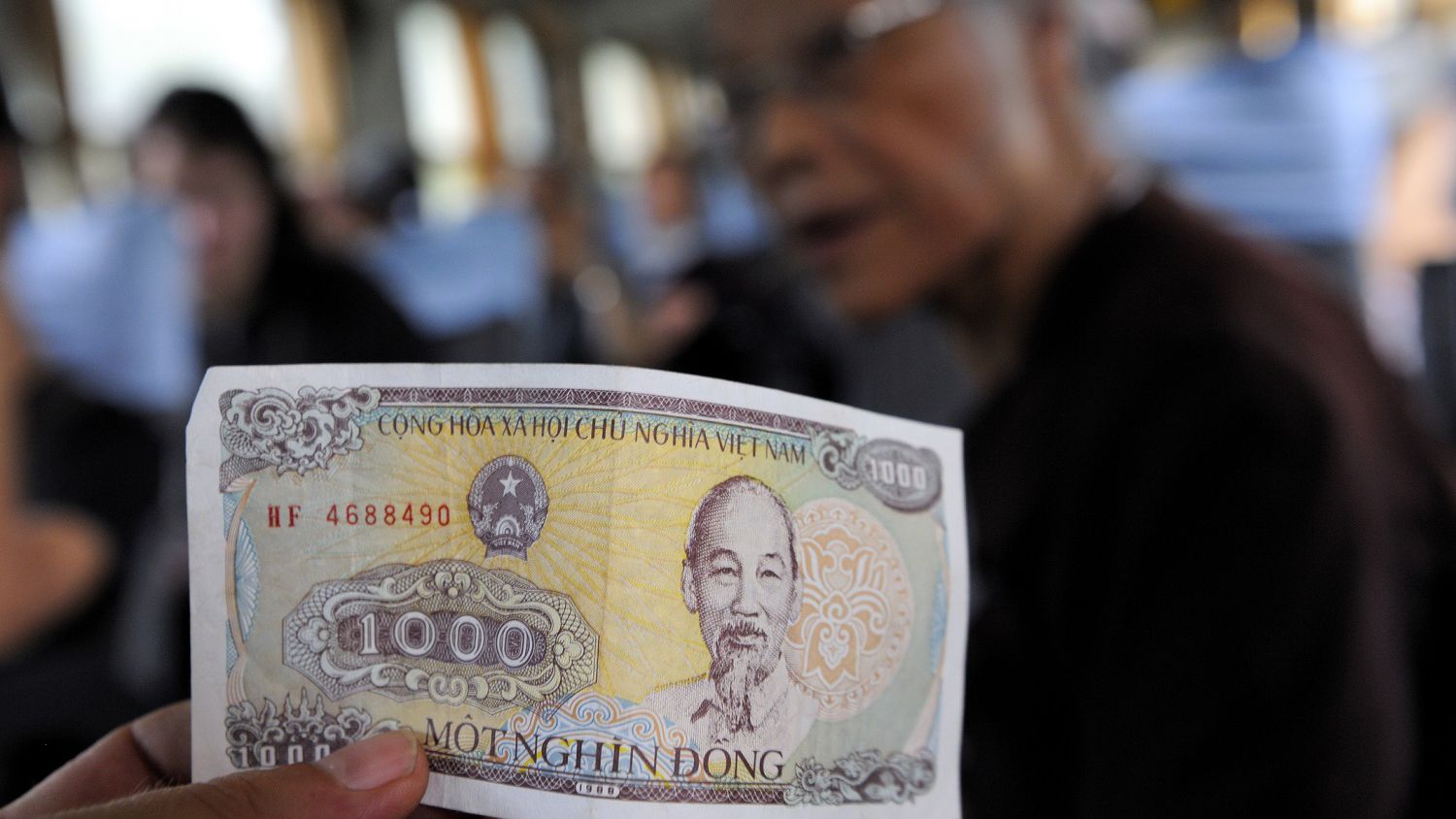
    Personal bank deposits were nearly VND5,292 trillion (some $230 billion) by late September, down roughly VND1.5 trillion against late August, according to the central bank.

    Since July, monthly bank deposits fell against previous months, the State Bank of Vietnam stated, noting deposits in August decreased by some VND1 trillion against July.

    From early January to late September, personal deposits hit VND150 trillion, a year-on-year decline of some 50 percent.

    Lower savings interest rates and more attractive stock market and cryptocurrency channels were blamed for falling deposits.

    Total trading value on Vietnam’s HSX, HNX and UPCoM stock markets reached a record high of VND56.337 trillion on Nov. 19, up from the previous record of VND52.145 trillion on Nov. 3.

    According to a survey conducted among over 70,000 people by VnExpress on July 22, real estate was the most popular investment channel (32 percent), ranking above gold and savings (7-10 percent).

  • StanChart Hires Amazon Technologist

    StanChart Hires Amazon Technologist

    He relocates to Singapore from Sydney, where he spent four years as a senior manager, solution architecture, at Amazon Web Services (AWS).

    Standard Chartered has appointed technologist Brendan Royal as its global chief architect, according to a report on «eFinancialCareers.»

    Royal has over 20 years of experience in financial services across retail, wealth and corporate banking, specializing in large transformation programs with a deep focus on tech and building enduring teams, his LinkedIn profile says. Before joining Amazon in 2019, he was head of banking architecture at Nordea, divisional director for BFS Architecture at Macquarie, and worked for CBA between 1999 and 2013, latterly as head of retail and business banking architecture.

    The move follows the bank’s five-year strategic global agreement with AWS to drive its digital transformation and deliver new personalized banking services in the bank’s 60 markets worldwide, signed in November 2020.

    As banks partner up with cloud platforms like AWS, they are increasingly also hiring from these same providers, the report said, noting that StanChart hired Google’s Singapore-based cloud engineering lead, Carl Bachman Kharazmi, as managing director and global head of cloud engineering and platforms earlier this year.

  • China’s Anti-Monopoly Crackdown Hits Banking Sector

    China’s Anti-Monopoly Crackdown Hits Banking Sector

    Chinese regulators extend their antitrust crackdown to the banking sector with a fine against shareholders of a virtual lender.

    The shareholders of Chinese virtual lender AliBank – China Citic Bank (70 percent) and a Baidu unit called Fujian Baidu Bo Rui Netcom (30 percent) – have been fined 500,000 yuan ($78,280) over a violation of the country’s anti-monopoly law, according to a statement from the State Administration for Market Regulation (SAMR).

    SAMR issued a fine over the failure to report the AiBank joint venture ahead of its formation in 2015.

    The penalty was part of a broader batch of more than 40 cases with fines issued to other tech firms outside of the banking sector such as JD.com, Tencent, Baidu, ByteDance, and Alibaba.

    AiBank is an artificial intelligence-focused lender that leverages related capabilities from search engine giant Baidu.

    It is one of five licensed digital banks in China and the only one with a state-backed shareholder in Citic.

    According to research by McKinsey released in January, Chinese digital banks own roughly 5 percent of the country’s 5 trillion yuan unsecured consumer loan market and over 7 percent of the SME loan market.

  • Telenor and CP Group to explore Thailand telecom merger

    Telenor and CP Group to explore Thailand telecom merger

    C.P. Group and Telenor Group are exploring the creation of a new telecom-tech company comprising of True and dtac. The new company will be a merger of equals, and bring the best of the two local companies, with the support of its key sponsoring shareholders.

    The new company will be a leading telecommunications service provider with capabilities to accelerate Thailand’s progressive digital technology agenda in terms of network performance, innovation, investment strength and employer brand.

    Mr. Suphachai Chearavanont, chief executive officer of C.P. Group and chairman of the board of True Corporation said, “The telecom and technology sectors are key to enabling Thailand to move up the development curve and to create broad-based prosperity.  As a telecom-tech company, we can help unleash the enormous potential of Thai businesses and digital entrepreneurs as well as attract more of the best and the brightest from around the world to do business in our country.”

    “Today is a step forward in that direction. We hope to empower a whole new generation to fulfill their potential to become digital entrepreneurs leveraging an advanced telecom infrastructure. The emergence in Thailand of IoT, AI, Cloud, and new generations of mobile network technologies will have a huge effect on the way we do everything,” he said.

    Mr. Sigve Brekke, president and chief executive officer of Telenor Group, said, “We have experienced an accelerated digitalization of Asian societies, and as we move forward, both consumers and businesses expect more advanced services and high-quality connectivity. We believe that the new company can take advantage of this digital shift to support Thailand’s digital leadership role, by taking global technology advancements into attractive services and high-quality products.”

    Mr. Jørgen A. Rostrup, executive vice president of Telenor Group and head of Telenor Asia said, “The proposed transaction will advance our strategy to strengthen our presence in Asia, create value, and support long-term market development in the region.  We have a long-standing commitment to both Thailand and the Asian region, and this collaboration will strengthen it further. Our access to new technologies as well as the best human capital will be a vital contribution to the new company.”

    Mr. Rostrup added that the new company has the intention to raise venture capital funding together with partners of USD 100-200 million to invest in promising digital startups focusing on new products and services for the benefit of all Thai consumers.

    If the transaction proceeds, it will consist of a voluntary tender offer (VTO) subject to satisfaction of conditions for all outstanding shares of dtac and True, followed by the amalgamation of dtac and True creating a new company. The VTO price for dtac will be THB 47.76, which represents a 25 percent premium to the one-month VWAP for dtac shares, and the VTO price for True will be THB 5.09, which represents a 25 percent premium to the one-month VWAP for True shares. The agreed exchange ratio is 10.221 True shares per dtac share. The outcome of the VTO will determine the final equalized ownership percentage between C.P. Group and Telenor Group.

    All shareholders of dtac and True will have the choice of participating in the tender offer or continue as shareholders in the combined company, which will be listed on the stock exchange of Thailand. The combined company faces a challenging operational environment over the next years and C.P. Group and Telenor Group recognize that not all shareholders may want to participate in this journey, which is why a cash alternative at an attractive premium is offered. The involved parties aim to reach the necessary agreements by Q1 2022.

    The current operations of True and dtac will continue to run their businesses independently until the transaction is completed. The transaction will be subject to approvals by relevant boards and shareholders and customary regulatory approvals, and the parties acknowledge that there is no certainty as to the completion of the transaction.

  • South Korean retailer CJ Olive Young to raise US$1 billion in local IPO

    South Korean retailer CJ Olive Young to raise US$1 billion in local IPO

    South Korean health and beauty chain CJ Olive Young is looking to raise around US$1 billion in an initial public offering, as the company seeks to tap a booming market for new listings.

    The listing, which two sources aware of the matter say is set to take place early next year, comes as Korean IPOs have raised $21.4 billion so far this year, almost seven times the amount raised a year earlier, according to Refinitiv data.

    CJ Olive Young has appointed Mirae Asset Securities and Morgan Stanley as the main underwriters on the transaction while KB Securities and Credit Suisse will act as co-underwriters, a spokesperson told Reuters.

    A $1 billion fundraising, slated for early next year, would be double the amount the company was expected to raise, according to some bankers.

    Mirae Asset Securities, Credit Suisse and Morgan Stanley declined to comment to Reuters. KB Securities did not immediately respond to a request for comment.

    CJ Olive Young has about 1200 stores across South Korea, and delivers its products through a global distribution platform to 150 countries, according to its website.

    It reported an operating profit of $84.4 million last year, the company’s filing showed. The largest shareholder is CJ Corp with a 55.24-per-cent stake as of December.

    So far this year, 92 companies have listed in Korea compared with 59 last year, driven by robust retail demand, Refinitiv data shows.

    E-commerce firm Coupang Inc raised $4.5 billion when it was listed in New York in March, while video-game developer Krafton Inc raised $3.7 billion in its July listing in Seoul.

  • JustKitchen expands into the Philippines

    JustKitchen expands into the Philippines

    Ghost kitchens operator, JustKitchen, has expanded its presence into the Philippines through a joint venture with TDG Ventures (TVI).

    Named ‘JV Co’, the joint venture will be the exclusive operator of the JustKitchen brand and distributor of its products in the country. The launch is part of JustKitchen’s global expansion plan, which will see kitchens opening in markets including Japan, Singapore, Malaysia and Vietnam next year.

    “Forming this joint venture with TVI to enter the Philippines market is a significant milestone for JustKitchen as it marks the third country in which our company will be operating in just a short period,” said Jason Chen, co-founder and CEO.

    “With our home base in Taiwan, established operations in Hong Kong, and the addition of this large population to our customer base, we continue to execute on our international growth plan to bring JustKitchen’s unique operating model, portfolio of food brands, and technology stack to new markets,” he said.

    Under the partnership, JustKitchen will maintain a 51 percent ownership interest in JV Co with the remainder owned by TVI. The joint venture will develop the infrastructure necessary to replicate the operating model from Taiwan and shall lease out kitchens to sub-franchisees. Ghost kitchen operation is expected to begin in the first quarter of next year.

  • Vietnam Airlines launches e-commerce platform

    Vietnam Airlines launches e-commerce platform

    Vietnam Airlines has launched a new e-commerce platform VNAMALL, focused on selling imported products from countries to which it operates.

    As many as 300 products are available starting Monday on the platform, mainly pastries, fruit and wine.

    The airline also sells food typically available on its flights.

    It also introduced Vietnam Airlines Gift Card that comes with perks like more check-in baggage and priority check-in.

    VNAMALL is the latest initiative of the loss-making national flag carrier, which has been struggling to overcome Covid-19 impacts.

    The airline, in which the state holds a 86 percent stake, recorded an accumulated loss of VND17.77 trillion ($780.48 million) as of June 30.

  • V2Food launches Taste-a-tarian campaign with 1000 free burgers

    V2Food launches Taste-a-tarian campaign with 1000 free burgers

    Hero has released its first major work for plant-based meat company V2Food since winning the creative and strategy back in April this year, which is also the brand’s first campaign.

    The ‘Taste-a-tarian’ campaign presents V2Food as the option that satisfies every dietary requirement, as well as launches V2Food’s new brand platform ‘We agree to V2’.

    The just over a minute spot shows a family sitting down for dinner, with each member having a specific diet that needs to be catered for. At the end of the spot, it is revealed that V2Food will satisfy everyone as everyone is a “Taste-a-tarian”.

    There is also a 30-second cut of the video.

    V2Food’s chief growth officer Andrew May said: “As Australians, we cherish meal-times and social occasions and it’s our goal at v2 to deliver great tasting food that satisfies every palate. Our ‘Taste-a-tarian’ campaign shows that v2’s range of plant-based protein products deliver that same meaty taste and makes meals easy, no matter your dietary preference. We can’t think of a better campaign launch to kick off our partnership with HERO, who delivered a fully integrated campaign across strategy, creative, media planning and media implementation.”

    Hero’s managing director, digital Adam Beaupeurt added: “We’re thrilled to launch our first major campaign with V2food. By recognizing that there is a need for a version 2 of the food system, v2food plays a pivotal role in changing the way we all think about meat consumption and food sustainably. This is another brilliant example of media and creative integration delivered by Hero’s Borderless Creativity process – paramount to ensuring the brand entertains and connects with the 50% of Aussies who are looking at reducing their meat intake.”

    The campaign premiered during Ten’s Celebrity Masterchef finale last night.

    The campaign, as well as TV, is on out-of-home, retail proximity, BVOD, social, digital, and electric car charging station Jost.

  • Update for Google Messages rolls out now turning iMessage reactions into emoji

    Update for Google Messages rolls out now turning iMessage reactions into emoji

    It’s the modern, digital version of the Hatfields and McCoys. We are talking about the blue text bubble vs. the green text bubble. When an Apple iPhone user is sending iMessages to another iPhone user, the text is inside a blue “balloon.” But if even just one Android user joins a group chat, the bubbles turn green and outrage follows. Yes, iMessages and Google Messages are not compatible.

    Just a few days ago we told you that Google was planning on sending out an update to Google Messages that will allow reactions from iPhone users using iMessages to appear as an emoji on Android Messages. Currently, a reaction sent by an iPhone user appears as words on Google Messages such as “Liked an image” or “Emphasized “We’re on our way”.

    According to 9to5Google, the update has slowly been rolling out. Screenshots provided by Twitter user jvolkman (@jvolkman) show that reactions sent from an iPhone user resulted in the appearance of the same emoji showing up in Google Messages as though the reaction was sent from an Android user messaging from the RCS platform. Tapping on the reaction on an Android phone shows that it was “Translated from iPhone.”

    Not all reactions from iMessages can be perfectly matched to an RCS emoji. For example, the “love” reaction on iMessage becomes the heart-eyes emoji on RCS and the laugh reaction sent from iMessages becomes the laughing face emoji.

    RCS or Rich Communication Service is Google’s attempt to provide the iMessages experience for Android users. Instead of using a cellular network, RCS runs through the data network which means that it can be used on Wi-Fi  even if there is no internet connection. Because RCS uses a data connection, messages can contain as many as 8,000 characters as opposed to the 160 character cap on SMS.

    With RCS, users can send longer video files and GIFs. They also get read receipts and can see when someone is in the process of typing a message to the. RCS to RCS messages also use blue text bubbles similar to iMessages and end-to-end encryption has been added. Right now, only one-to-one RCS messages can be encrypted which means that group RCS messages are not covered.

    Another new feature reportedly being worked on for Google’s Messages app is a birthday reminder that will alert you if the person you are having a conversation with is celebrating his or her birthday on this very day.
    It is important for Android users to know that the messaging and texting apps offered by carriers do not have RCS features. To have RCS on your Android phone, you must go to the Google Play Store and install the beta version of the Messages app from there.

    With the update beginning to roll out now, you might want to give a call to one of your iPhone-wielding friends and ask them to react to a message that you send them. If you see an emoji attached to that message, the update has reached your Android phone (assuming that you are using the Google Messages app in the first place). If not, you can reinstall the Google Messages app from the Play Store and check with your friend again to see whether the emoji appear when your buddy sends a reaction to a message that you’ve sent.

    Is the start of some sort of cooperation between Apple and Google that could lead to a universal iOS and Android messaging platform? Probably not. Apple relies on iMessage as a differentiator and there are some iPhone users who selected iOS over Android-primarily on the strength of its messaging system.

  • Car imports surge

    Car imports surge

    The number of imported cars in Vietnam rose 61 percent to 129,733 units in the first 10 months this year.

    Passenger vehicles saw a rise of 50 percent to 90,029 units, according to Vietnam Customs.

    In October, the three major import markets were Thailand with 8,320 units, followed by Indonesia, 3,925, and China, 1,733.

    Over 11,700 cars with nine seats or less were imported to Vietnam last month, doubling from September.

    A media representative of a Japanese auto brand said the rise came as customs activities resumed after months of social distancing.

    Companies were also importing more vehicles to prepare for the end-of-year shopping season.

    Vietnam also imported $4.07 billion worth of car parts and equipment in the first 10 months, up 33.5 percent year-on-year.

    Sales of imported, completely-built units rose 24 percent year-on-year to 97,028 in the first 10 months, according to Vietnam Automobile Manufacturers Association (VAMA).

  • 3 Mistakes You Can’t Make in Sports Betting

    3 Mistakes You Can’t Make in Sports Betting

    We have commented in our content about the importance of emotional control. While it sounds like a gambler’s cliché, this is an almost indisputable truth. Without the pillars of sports betting (bank management, discipline, and emotional control), it is practically impossible to succeed in 22Bet online betting.

    It is therefore essential to know how to deal with losses. It sounds bizarre, but the thought that you have to know how to lose to win is exceptionally true. And, in this context, the effects of the loss on the bettor are of great relevance.

    What are the effects of the injury?

    Making money from betting is not difficult in the short term, especially in a streak where everything works out. It’s not uncommon for beginners to start by leveraging their bankroll. The problem is to maintain this positivity for the long term. Sports betting has a variance, and no matter how safe your work method is, a wrong run time can come.

    And this is where a lot of people end up getting lost. After a streak of losses, many beginning gamblers resort to incorrect actions to recoup losses. The stake increase is the main resource and that, after all, only increases the chance of putting the bank even further into the hole.

    Another common mistake is investing in games without good opportunities, just because of the influence of the previous result. This is another one of the damage effects that can compromise your performance.

    3 Mistakes Related to Losses You Need to Stop Committing

    Therefore, within the psychological impacts, the damage is one of the great villains responsible for beginners’ losses. Of course, here we are not just talking about the loss of money itself, but what it can do to your psychological negative.

    Thinking about how to help you improve in this regard, today, we will mention three psychological errors related to the effects of the injury. If you commit any of them, don’t despair. The idea is precisely to identify these behaviors so that they do not compromise your results in the long term.

    Mistake #1 • Risking more than you can lose (high stake)

    First, you must have very assertive control over your stake. This is not just for setting the percentage but also for ensuring that this is a value you can afford to lose. A widespread mistake of beginning gamblers is to work with a relatively high stake, where the psychological impact of an eventual loss ends up being too great.

    Here, it is also worth including that loss situation where people double the stake to recover the loss. No one guarantees that the new bet will win, and if something goes wrong, the problem only gets worse. And, many times, the worst thing is just how your head will know that you used a value above what was correct.

    Therefore, know how to manage your stake according to your reality and values ​​that do not pressure your emotions. Tranquility is paramount to making suitable investments.

    Mistake #2 • Lack of confidence in input or strategy

    When we’re at a loss, it’s even natural for the head to start looking forward to the next game in an attempt to balance the balance. What usually happens at this time? Inputs are based purely on the emotional, without any confidence that the situation had value.

    Here, we have two problems about the effects of the injury. The first, of course, is that an unsecured entry has a high chance of going wrong. It usually comes from an impulse and a psychological desire to recover from a loss. And, going wrong again right affects your emotions (which is our second problem in this situation).

    In that sense, if you’re having a bad day, it’s worth taking a break and doing something else, at least until you feel that your emotions are back to normal and that you can make a correct decision about the new bet.

    Mistake #3 • Not knowing how to handle losses

    Finally, the third mistake reflects everything we’ve discussed so far: not knowing how to deal with losses. In sports betting, you will always be dealing with swings. It is, after all, a variable income market. You can’t always win, no matter how good you are.

    And, something ubiquitous among beginners is to despair in a negative streak. The gambler begins to question whether he is on the right path, whether what he is doing is correct, and even whether he can earn money from betting. Good strategies end up getting lost at this point.

    In this way, some of the above errors can also happen. Be careful not to get carried away by a bad run and always focus on the long term.

    How to avoid the effects of injury?

    There is no better way to deal with the effects of harm than by going through them. The human mind is very complex and practically impossible to master completely. What happens is that, with the passage of time and experiencing situations, you get used to it and don’t despair at every loss.


     

  • Post Covid-19 Emerging Trends In India Retail Sector

    Post Covid-19 Emerging Trends In India Retail Sector

    With the pandemic fiercely constricting the traditional brick and mortar retail stores across the country, retailers now seek a new hybrid/omnichannel commerce. The “new normal” forced the entire sector to think out of the box and come up with innovative shopping strategies. In a way, Covid-19 brought about both opportunities along with threats.

    Digital transformation for the retail segment is no longer an optional measure; rather, it is a bare necessity to sustain among the e-commerce giants. Along with the operational transformation, these players also need to rethink their strategies to fine-tune their customer journeys on the online platforms.

    Large businesses were no strangers to changes in operations. They also underwent enhancing existing levels of digitized business models followed by the added Automation component in the daily process flows.

    Seeking The Digital Innovations In Retail

    As the economy passes precariously through the health turmoil, there is a growing realization that the hybrid structure is the future for the retail industry. This is aided by the complementary nature of both offline and online channels of business. Even small business owners are now adamant about establishing an online market presence via websites/apps.

    There is also the widespread adoption of digital payment mechanisms among local retailers to enable a smoother transactional experience for customers. Indian customers have accepted mobile wallets, QR code scanning and related e-payment possibilities with open arms. They can also leverage the same payment options to play in online casinos like Asiabet – where they can find the most trusted poker sites in India.

    Users can play poker with real money and grab a chance to win a bouquet of goodies, including freeroll tournaments, sign-up bonuses, and VIP rewards. From the famous Texas Hold’em, 3-Card poker to the local variants like Teen Patti, Asiabet has them all. With plenty of player traffic at all times coupled with all security and regulatory checks in place, they can play the best online poker in India on mobile.

    Digitization among the local retail players has also improved accessibility levels by raising consumer awareness on leveraging the possibilities of technology adoption. As a result, the average Indian consumer now desires a more personalized and curated experience from retail brands. They expect to be delighted at every stage of the sales process.

    Companies are now leveraging marketing and sales campaigns extensively via Social Media platforms like Facebook and Instagram. The weekly offers, introductory bonuses, to discount coupon codes are now a common sight provided as ads by local retailers. With analytics reports provided by these platforms along with third-party tools, companies now rely on data-driven insights to measure the efficacy of their digital marketing campaigns.

    The online shopping market has undergone an even steeper climb in the past year, fuelled by the pandemic and global lockdown situation. This has immensely contributed to the growth of India’s retail segment that makes up around 10% of the country’s GDP and 8% of employment. Digitization has thus necessitated the need for upskilling the existing workforce to improve productivity in the post-Covid era.

    In the Customer Experience segment as well, retailers are initiating innovative, technology-driven campaigns. Employees also need to be reskilled in new ways of engaging prospective customers so as to execute these campaigns. Candidates with proficiency in Artificial Intelligence/ Machine Learning (AI/ML) technologies are in hot demand due to this reason. Check out the guide to machine learning in retail to understand the ever-increasing prominence of AI/ML in the retail domain.

    Big Data management technologies are employed to collect data being captured in batches and in real-time. Using data visualization and business intelligence suites, the data scientists generate insights. Based on the insights obtained from the data analysis tools and methodologies, the IT departments of retail players can fine-tune their campaigns to create maximum impact among the target customer base. At the same time, on-field sales personnel are provided training in agile methodology to offer customized shopping experiences to end customers.

    Direct To Customer (D2C) business model is gaining significance as retail players realize the increasing need to connect with customers directly. This aspect is fuelled by the stiff competition among retails during the pandemic. Raising customer awareness of the brand and attracting their attention and e-commerce strategy is necessary to succeed in these testing times.

    Another emerging trend in recent times is the prevalence of self-service outlets to facilitate social distancing. The concept is termed BOPIS (Buy Online Purchase In-Store). Another similar method is the BOSS (Buy Online and Shipped To Store). Shop owners use Retail Beacons to collect customer data for demand forecasting and buying behavior. This will also help them in seasonal planning on inventories and procurement of goods from product vendors.

    Final Thoughts

    Customers are now getting used to consistently making purchases online instead of visiting the traditional brick-and-mortar alternative. The convenience of getting a wide variety of products under a single website or application is gaining wide appeal among the Indian customer segment.

    From an employee perspective, retails prefer those with niche skills in cutting-edge technologies like AI/ML as the retail market as a whole is now fuelled by data-driven decision-making more than ever before. Embracing the digital transformation strategy along with setting up a hybrid online and physical store is the game-changer in the foreseeable future. This will minimize the need for real estate and boost customer reach via social media, especially in Tier-2 and Tier-3 cities, where huge untapped revenue potential exists!