Tag: asia

  • Japanese beer brand Yebisu launches in Australia

    Japanese beer brand Yebisu launches in Australia

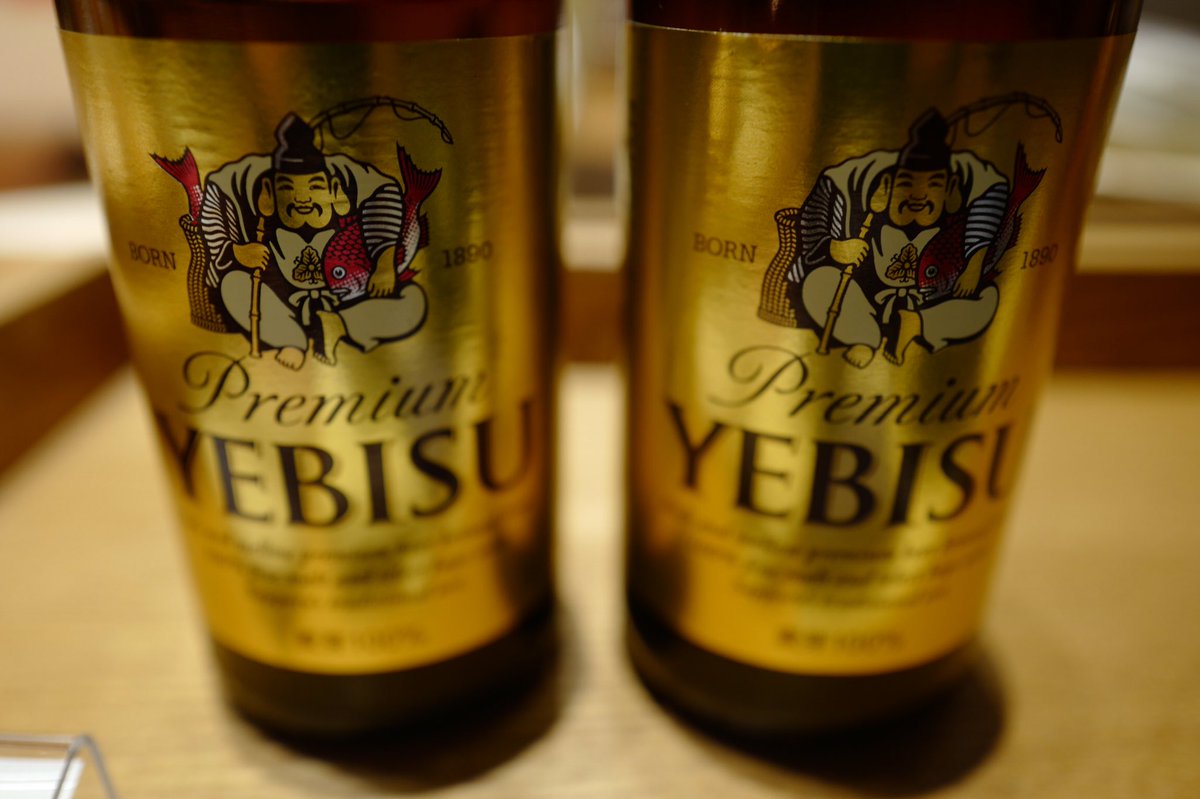
    Premium Japanese beer label Yebisu Premium Beer has been launched in Australia, through Coopers Brewery.

    Coopers will be the exclusive distributor of Yebisu under its partnership with Sapporo. The beer is now available in packs of four 350ml cans from First Choice Liquor stores and selected Liquorland and Vintage Cellars outlets nationally. It will join the shelves of independent retailers and on-premise locations from early next month.

    Founded in Tokyo in 1890, Yebisu (which is pronounced ‘Ebis’ in English), has drawn the praise of beer drinkers both domestically and internationally, with awards including the gold prize at the Paris Expo in 1900. It is brewed exclusively in Japan.

    Yebisu brand manager with Coopers Brewery, Chris Levey, said Japanese beer is proving popular with Australian consumers.

    Sapporo Premium Beer achieved double-digit volume growth in the year to August.

    “Yebisu is a symbol of Japan’s unwavering commitment to quality and craft, meeting the intersection of Australian drinkers’ desire for exploration and discovery and their attraction to true originals and authenticity,” he said.

    “We expect the introduction of Yebisu will drive further interest in the Japanese beer segment, appealing to a broad range of discerning beer drinkers seeking discovery, quality and authenticity, and a richer, more rewarding flavor experience.”


  • French wine lovers wash away climate and Covid-19 worries with new Beaujolais

    French wine lovers wash away climate and Covid-19 worries with new Beaujolais

    French wine lovers washed away the misery of months of coronavirus social distancing and a wet summer that weighed on wine output, welcoming the new Beaujolais in bars across the country.

    Every autumn on the third Thursday of November, winegrowers from the Beaujolais region market the first bottles of the year’s harvest in the annual “Le Beaujolais Nouveau est arrivé” campaign that started in the 1960s.

    “If there is one day we can call a day of renaissance, after all the crises we have lived through, it is today,” said Le Mesturet owner Alain Fontaine as he served free glasses of Beaujolais on the sidewalk in front of his Paris restaurant.

    Parisians loved the free wine, even if Beaujolais – a light red wine that is just a few weeks or months old – struggles to overcome an image of being cheap plonk.

    “It’s a nice little wine. It’s not the biggest grand cru, obviously, but it is pleasant and not very expensive,” said Felix, an employee at the French national library.

    Wine growers were less upbeat as France is set to produce its lowest wine output since records began, after vineyards were hit by spring frost, hail and disease.

    The farm ministry has forecast total production a quarter below the average of the past five years with the Burgundy-Beaujolais region’s output among the worst hit, seen down by nearly half.

    “The year has been quite hard weather-wise and the grapes have required more manual work than usual, only for us to end up losing around 30% of the harvest. That’s too much work for such meagre results,” said Beaujolais Nouveau winemaker Julien Revillon in Villie-Morgon, north of Lyon.

    Revillon said that even though output has been disappointing, people are more than ever attached to the Beaujolais tradition, seeing it as an opportunity to get together with friends and colleagues after months of isolation.

    “In difficult periods, people hang onto traditions. Even during a war, we want to celebrate Christmas, even during a pandemic, we want to celebrate the Beaujolais Nouveau,” he said.

    Ninety-year-old Parisian Marie-Francoise, who initially found the new Beaujolais too tart, changed her mind after a second tasting.

    “It’s a good wine, a very good wine. There is no better Beaujolais!” she said.

  • Unilever sells 34 tea brands

    Unilever sells 34 tea brands

    Unilever has sold its global tea business – including T2 – to private equity company CVC Capital Partners, for €4.5 billion ($A7 billion)

    The business, called Ekaterra, owns 34 brands including Lipton, PG tips, Pukka, T2 and Tazo and turned over €2 billion ($A3.1 billion) last year. The company has 11 production factories on four continents and tea estates in three countries.

    “The evolution of our portfolio into higher-growth spaces is an important part of our growth strategy for Unilever,” said CEO Alan Jope of the reason for the divestment. “Our decision to sell Ekaterra demonstrates further progress in delivering against our plans.

    “We are proud of the place that our tea business has in our company’s history. We look forward to seeing Ekaterra, with its strong brands and global footprint, prosper under CVC’s ownership.”

    The sale is scheduled to be settled during the second half of next year and is subject to receipt of regulatory approvals. The deal excludes Unilever’s tea business in India, Nepal, and Indonesia, as well as its joint venture with Pepsi Lipton covering ready-to-drink teas, and any associated distribution business.

    Pev Hooper, a managing partner at CVC Capital Partners described Ekaterra as “a great business, built on strong foundations of leading brands and a purpose-driven approach to its products, people and communities”.

    “Ekaterra is well-positioned in an attractive market to accelerate its future growth, and to lead the category’s sustainable development. We look forward to working with the team to realise Ekaterra’s full potential,” said Hooper.

    Inside FMCG understands rival private-equity firms Advent and Carlyle unsuccessfully bid for the business.

  • Miniso continues to post strong growth as Covid’s impact eases

    Miniso continues to post strong growth as Covid’s impact eases

    Chinese discount goods retailer Miniso has reported strong first-quarter sales and profit growth for the three months to September 30 as its store network continues to expand internationally.

    Sales surged 28.1 percent to US$411.9 million and adjusted net profit to $28.6 million, 80.3 percent higher year on year and 27 percent quarter on quarter.

    As of the end of September, Miniso operated 4871 stores, with a net addition of 122 stores during the quarter.

    “In spite of the headwinds from the resurgences of the pandemic, rainstorm disaster and weak consumption data in the domestic market in this quarter, we executed our strategies well and our domestic operations recorded an encouraging performance, while our overseas operations moved further along the path of recovery,” said founder, chairman and CEO Guofu Ye.

    Part of the growth rate has been attributed to the company’s development of new retail channels, including Top Toy stores, of which 39 opened during the quarter.

    While the bulk of the store network is in China (3035), the number of overseas stores grew to 1836.

  • Bamboo Airways set to list its stocks

    Bamboo Airways set to list its stocks

    Bamboo Airways plans to list on the Unlisted Public Company Market next quarter while preparing for an IPO in the U.S.

    Prices of the ticker BAV will be at least VND60,000 ($2.65), CEO Nguyen Khac Hai said in a statement Friday.

    UPCoM serves as a market to encourage companies to go public. Vietnam’s two main bourses are the Ho Chi Minh Stock Exchange and the Hanoi Stock Exchange.

    The company targets to raise $200 million by issuing shares on the New York Stock Exchange, giving the startup airline a market cap of $4 billion.

    The airline plans to begin regular services to the U.S. city of San Francisco from HCMC by the end of this year, with five return flights a week initially and later daily.

    It has been operating charter flights to the U.S. since the end of September.

    The airline also announced plans to fly to the U.K. this year with six flights a week from Hanoi and HCMC to London.

  • Offshore wind power capacity to reach 36 GW by 2045

    Offshore wind power capacity to reach 36 GW by 2045

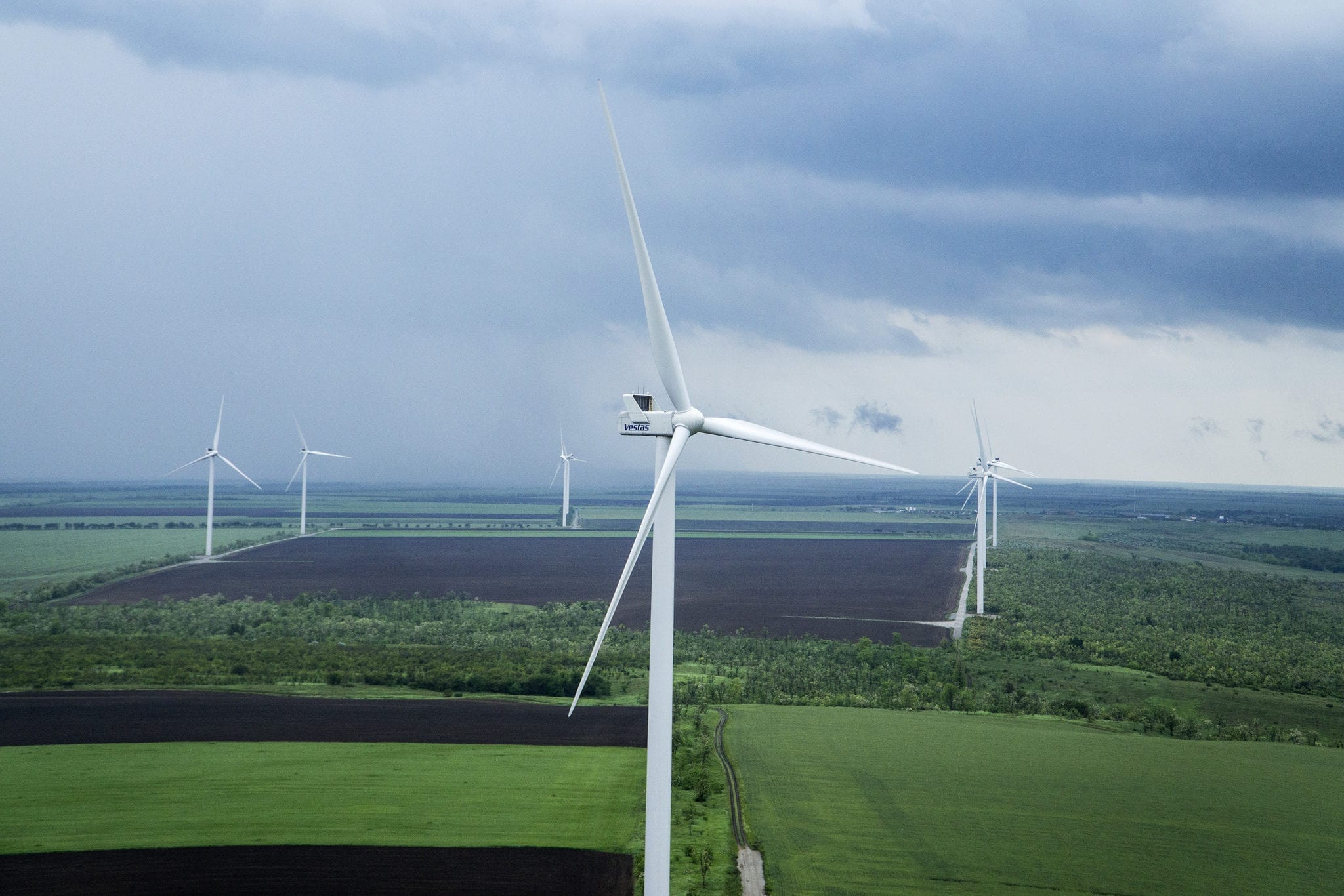
    Vietnam’s offshore wind power capacity will increase 36 GW by 2045, according to the latest draft of the Power Development Master Plan VIII.

    It will increase to 4 GW by 2030, 10 GW by 2035, 23 GW by 2040. Offshore wind power will account for some 2.6 percent of the total electricity generation capacity in 2030 and 10.8 percent in 2045. Offshore wind power farms will be located mainly in the north and the south of the country.

    In the previous draft of the plan, the Ministry of Industry and Trade had set a target of lifting offshore wind power capacity to 2-3 GW, or 1.5-2 percent of the total, by 2030.

    At a meeting held to discuss the latest draft Friday, Mathias Hollander, senior manager of the Global Wind Energy Council (GWEC), said Vietnam can have an offshore wind power capacity of 5-10 GW by 2030. The country’s offshore wind power generation has an efficiency of over 50 percent, similar to that of hydroelectricity, he noted.

    According to GWEC calculations, Vietnam will have to invest $10-12 billion for the first 4-5 GW of offshore power wind capacity, but the wind is an infinite source, so the country will not have to keep feeding wind power farms as it does with coal or gas-fired plants.

    Meanwhile, the unit cost for 1,000 kWh of electricity generated by an offshore wind power farm is around $83, down from $255 in 2010. It is expected to further drop to $58 by 2025.

    With a coastline of 3,260 km, low sea levels, and high wind speeds (7-10 meters per second at a height of 100 meters), Vietnam is an emerging offshore wind power magnet in Southeast Asia, experts say.

  • Waymo, UPS Expand Autonomous Freight Truck Tie-Up Ahead Of Holidays

    Waymo, UPS Expand Autonomous Freight Truck Tie-Up Ahead Of Holidays

    Alphabet Inc’s Waymo said on Wednesday it is expanding its partnership with United Parcel Service Inc to move freight using autonomous trucks between two of the parcel delivery company’s Texas facilities during the holiday season.

    Waymo Via, the company’s delivery operation, began its partnership with UPS in early 2020 when it shuttled packages for the company between the Metro Phoenix area and its Tempe hub in Arizona using an autonomous minivan.

    The company said trial runs would start in the coming weeks, where big rigs equipped with its fifth-generation Waymo Driver technology will deliver for UPS’ North American Air Freight unit between facilities in Dallas-Fort Worth and Houston, Texas.

    Driver shortages have hit U.S. trucking and delivery companies, most notably FedEx Corp, as they race to hire workers for the crucial holiday season when package volumes can easily double. Waymo and UPS said the trials would help assess the impact of autonomous driving technology on safety and efficiency.

  • Vietravel invests $25.8 mln in its carrier

    Vietravel invests $25.8 mln in its carrier

    Tourism company Vietravel has decided to invest an additional VND593.5 billion ($25.8 million) in Vietravel Airlines this year.

    The additional capital lifts its total investment in the new carrier to nearly VND1.3 trillion.

    Based at the Phu Bai International Airport in the central province of Thua Thien Hue, Vietravel Airlines was licensed in April 2020 with a charter capital of VND700 billion.

    Early this year, it began operating flights on several domestic routes with three aircraft and is not expected to break even for at least a few years.

    The company’s operations have been hit by the Covid-19 pandemic over the past two years. It resumed business on Oct. 18.

    It has reported losses of VND90 billion in 2020, twice the profits it earned in 2019, but is targeting pre-tax profits of VND10 billion this year.

  • Vietnam lowers power capacity in latest national plan update

    Vietnam lowers power capacity in latest national plan update

    Vietnam eyes to reduce its planned power capacity by 2030 by over 13 percent to 155,700 megawatts in the latest revision of the national power plan.

    This equates to a drop of nearly VND800 trillion ($34.48 billion) in investment, Deputy Minister of Industry and Trade Dang Hoang An told a meeting Friday, referring to Power Development Plan VIII for the 2021-2030 period with vision to 2045.

    The ministry also lowered the planned capacity for 2045 by 9.7 percent to 333,590 megawatts.

    In the update, the ministry has excluded solar power capacity from the country’s energy backup capability to ensure power security.

    This is because solar power is unstable, and “a cloud passing by could reduce capacity by 40 percent,” An said.

    Without solar power, backup capacity is 43 percent the total, which can ensure system safety.

    Some investors and experts also contributed ideas for power development over the next decade.

    Mathias Hollander, senior manager at Copenhagen Offshore Partners, said Vietnam could develop 5-10 gigawatts of offshore wind power by 2030, creating $60 billion in added value to the economy.

    Strong offshore winds could increase power by 50 percent to the level of hydropower, he added.

  • TomTom Shares Rise 9% After European Union Decision

    TomTom Shares Rise 9% After European Union Decision

    Shares in Dutch navigation and mapping company TomTom closed 9.3% higher on Wednesday, after the European Union published rules specifying that cars must incorporate a technology that the company supplies, starting in 2022.

    TomTom works with carmakers to provide the technology that helps drivers comply with speed limits, called “intelligent speed assistance.”

    The publication in the Official Journal of the European Union specified that new car models must use the technology starting in July 2022, and all cars sold must have it by 2024.

    Chief Executive Harold Goddijn was scheduled to meet with investors at a conference during the day, though it was not clear whether he discussed potential financial benefits to the company.

    A spokesperson for TomTom could not immediately comment. Sebastian Marland, an equity research analyst at AFS Group, said he believed the news was the trigger for the stock’s surge.

    “This creates a momentary opportunity for TomTom as it provides the tech required to ‘add-on’ to the cars,” he said.

    However, “from 2024 onwards, all cars in the EU must have it installed, making TomTom’s tech redundant in the long term.”

  • Royal Enfield’s Parent Company Eicher Motors Debuts On Dow Jones Sustainability Index

    Royal Enfield’s Parent Company Eicher Motors Debuts On Dow Jones Sustainability Index

    Eicher Motors Limited (EML), the parent company of Indian motorcycle brand Royal Enfield, has made its debut on the Dow Jones Sustainability Indices (DSJI) – Emerging Markets category. Eicher Motors is one among only ten global automotive companies to feature on the list for 2021, and is one among three Indian automobile companies on the list. With more than 100 percent year-on-year improvement in its score, Eicher Motors Limited is ranked at an overall 8th position in the list of sustainability leaders in emerging markets.

    The DJSI rankings highlight EML’s increased focus on developing and shaping a robust Environmental, Social, and Governance (ESG) vision, with measured commitments, targets, and direction for the future. These include improving and adopting effective and environment-friendly manufacturing processes, working towards attaining carbon neutrality, eliminating the usage of single-use plastics, focus on road safety, community development and vocational training programs, among other initiatives.

    Speaking about this achievement, Siddhartha Lal, Managing Director of Eicher Motors Ltd, said, “As we chart EML’s next stage of growth with an immense focus on our strategic business plans and goals, an effective and impactful Environmental, Social and Governance (ESG) vision is a key aspect to define this growth for us. Over the last few years, we have made significant strides across all parameters to deliver positive results in line with a renewed ESG vision. Our inclusion in the DJSI index is a testament to the success of our initiatives and direction. We are committed to making concerted efforts to further realize this vision and deliver a positive impact across the entire product value chain.”

    Royal Enfield’s highest-selling model is the Classic 350, which has sold over 40 lakh units during the past decade. The 2021 Royal Enfield Classic 350 is better in every aspect. It has better engine refinement, better dynamics, and comes with more features and color options.
    Created jointly by S&P Dow Jones Indices and SAM (Suitable Asset Management), the DJSI combines the experience of an established index provider with the expertise of a specialist in Sustainable Investing to select the most sustainable companies from across 61 industries. The indices serve as benchmarks for investors who integrate sustainability considerations into their portfolios and provide an effective engagement platform for investors who wish to encourage companies to improve their corporate sustainability practices.

    Eicher Motors Limited registered an overall score of 61 points and featured in the 76th percentile in FY21 as compared to a score of 29 points and a percentile position of 50 in FY20. The company has marked a significant uptick as compared to its previous performance in the DJSI across all parameters including Governance & Economic Dimension and Environment Dimension amongst others. A total of 360 Indian companies were invited to participate in DJSI in 2021, out of which EML made it to an exclusive list of 15 Indian companies which became a member of the DJSI Emerging Markets Index across all sectors.

  • Waze blames a glitch for sending drivers into dead end roads

    Waze blames a glitch for sending drivers into dead end roads

    Back in late October, we told you that Google-owned mapping and navigation app Waze was giving drivers the wrong directions and sending them right into the heart of traffic jams. Waze CEO admitted that “We have a problem with the algorithm. The more people we serve, the more it’s affected. The coronavirus has put us in a situation where we have to reinvent our algorithm.”

    Those problems that Waze was having were affecting their Israeli users. Now, according to road.cc, Waze is having problems directing users in the U.K. through the Royal Parks of London. A tweet sent from the charity to Waze said that it “would like to talk to someone about several of the reasons you [sic] we’d prefer you not directing drivers down closed roads in a park, what’s the best way to reach you please?”

    The tweet included a screenshot from Waze that showed the app directing drivers through Richmond Park. Waze at first said that it would look into the matter, and eventually, it acknowledged that it routed drivers through closed roads. While the company said that it wasn’t sure why it happened, it added that it wasn’t seeing any issues with routes at that moment and wondered whether the earlier problem was nothing more than a temporary glitch.

    Social Media users did what social media users do best; they criticized both Waze and The Royal Parks for not doing everything that they could to end the problem. The Department of Parks & Recreation told The Royal Parks: “We welcome your engagement with routing providers, although we think you should tell the providers not to route through the park at all.”

    Richmond Park, the subject of the initial tweet, is known for hosting cyclists leading Merton Cycling Campaign to complain to The Royal Parks, “You’re enabling this. You own the problem. Just close the gates to through traffic as responsible stewardship of a national nature reserve during a climate emergency requires.” Another tweet from a “Marty Velo” also blamed The Royal Parks and said, “why have you guys not tried to get in touch with them since the app was released years ago? It’s a bit late now, isn’t it? The parks are overrun with dangerous rat-running drivers.”

    And yet another tweet, this one disseminated by Madeleine Baines, showed directions inside the same park from Google Maps and the latter also navigated users to closed routes.

    Waze started life as a crowdsourced navigation app that depended on the Waze community to inform users about accidents, traffic jams, police speed traps, and more. After Google bought Waze in 2013, many questioned why Google would make the deal considering that Google Maps was (and still is) the most popular mapping and navigation app. But over the years Google took some of the most innovative features from Waze and added them to Google Maps.

    For example, back in August Google Maps started showing the cost of tolls on bridges and roads that are crossed as part of the user’s journey. This came from Waze as did incident reporting. This was one of the first features that Google added to its Maps app and it came just months after the acquisition of Waze was announced by the gang at Mountain View.

    Six years later, Google announced that Google Maps users could report slowdowns on their journey from “A” to “B” along with crashes and speed traps. Waze still has some popular features such as setting up the app to give you turn-by-turn directions in your own voice.

  • El Salvador Plans to Build World’s First Bitcoin City

    El Salvador Plans to Build World’s First Bitcoin City

    El Salvador continues to position itself as a crypto hub leader with its latest plans to build a Bitcoin City with bonds backed by the same digital currency.

    El Salvador President Nayib Bukele announced plans to build the world’s first Bitcoin City on Saturday as part of a week-long event to promote the South American nation as the hub of choice for cryptocurrency.

    Invest here and make all the money you want, Bukele said. If you want bitcoin to spread over the world, we should build some Alexandrias.

    El Salvador became the world’s first country to adopt bitcoin as legal tender in September.

    According to the tech-savvy 40-year old, the city would be built in the eastern region of La Union and be powered by geothermal energy from a volcano.

    Also, no taxes will be levied except for value-added tax of which half will be used to fund related bonds issued with the other half used to pay for services like garbage collection.

    El Salvador plans to issue the bitcoin-backed bonds in 2022, Bukele added.

  • UBS Fund Managers to Exit Amid China Property Crisis

    UBS Fund Managers to Exit Amid China Property Crisis

    Another two portfolio managers are leaving the bank after a fund was hit by China’s high-yield bond market slump triggered by China Evergrande’s debt woes.

    Singapore-based Jiayi Yew and Brian Lou in China will leave the bank in January, citing a company spokesperson.

    The pair reported to Ross Dilkes, who is also leaving the company after more than 16 years. Dilkes was the lead manager of the $3 billion Asian High Yield fund, which was established around nine years ago.

    UBS has 26 staff in its emerging market and Asia-Pacific fixed-income team and it is looking to replace the departing managers with four new hires, the spokesperson said.

    Currently, UBS is amongst the top five holders of Evergrande bonds at $274 million as of September 30, according to public data, which includes holdings invested client money like the Asian High Yield fund.

    The fund also has sizeable positions in other troubled developers like Sunac China and Kaisa Group.

    Year-to-date, Dilke’s fund has lost around 18 percent with approximately half of its holdings in real estate.

  • UBS Names Successor to Chairman Axel Weber

    UBS Names Successor to Chairman Axel Weber

    The Swiss bank’s board is nominating a veteran of Morgan Stanley as chairman. UBS will also elevate a Swiss stalwart as his deputy.

    Zurich-based UBS is nominating Colm Kelleher as its next chairman, it said in a statement on Saturday. The 64-year-old Irishman, who spent most of his career at Morgan Stanley in the U.S., is to replace Axel Weber, who will step down in April when he hits term limits.

    UBS will also propose Lukas Gaehwiler as vice-chairman, it said. The 56-year-old is a former corporate banker who ran the bank in Switzerland until 2017, and now chairs the same domestic unit.

    Kelleher in 2019 left Morgan Stanley, where he had overseen both institutional securities business as well as wealth management. He is battle-tested, having been finance chief and co-head of strategy at the U.S. bank during the 2008/09 financial crisis.

    Gaehwiler is to ensure a Swiss balance in its board, a person familiar with the matter said. The search to replace Weber involved both the outgoing chairman himself as well as CEO Ralph Hamers, UBS said in March.

    Kelleher’s nomination comes one year after that of António Horta-Osório at UBS’ crosstown rival Credit Suisse – and on the same day that Germany’s Deutsche Bank nominated Alex Wynaendts, a former insurance CEO who now sits on Citi’s board, as its new chairman.

    UBS considered candidates such as Roche’s overseer Christoph Franz, Swiss ex-central banker Philipp Hildebrand, and ex-Unicredit boss Jean-Pierre Mustier.