Tag: asia

  • L’Occitane takes majority stake in beauty brand Sol de Janeiro

    L’Occitane takes majority stake in beauty brand Sol de Janeiro

    The L’Occitane group has acquired an 83 percent stake in Brazilian-inspired body care brand Sol de Janeiro as part of a strategy to expand its premium beauty offer.

    Upon the deal’s closure, Sol de Janeiro will become a majority-owned subsidiary of L’Occitane group. The value of the deal has not yet been disclosed.

    L’Occitane said Sol de Janeiro is a strategic fit in terms of brand recognition and identity, product quality, management capability, as well as growth, profitability, and cash generation prospects.

    “With a compelling brand story and an experienced and entrepreneurial management team, Sol de Janeiro reflects our values and premium beauty image,’ said Andre Hoffmann, vice chairman & CEO of L’Occitane.

    “Sol de Janeiro’s digital presence and established body care business are complementary to the group’s balanced geographical strategy to build a portfolio of strong brands in all major geographical regions,” the company said in a statement.

    Sol de Janeiro is expected to strengthen L’Occitane’s international presence to expand into new markets.

    Founded in 2015 in the US, Sol de Janeiro has become one of the fastest-growing premium skincare brands in North America and is known for its body care, fragrance, and hair care products designed for multi-generational consumers.

  • Vietnam, US trade to hit unprecedented $100 billion

    Vietnam, US trade to hit unprecedented $100 billion

    Vietnam–U.S. trade could reach $100 billion for the first time this year, up 221 times against the figure in 1995 when the two countries first established diplomatic relations.

    In the first eight months, the figure hit $73 billion. Last year, it was $90.8 billion, Hoang Quang Phong, deputy chairman of the Vietnam Chamber of Commerce and Industry (VCCI), told a forum Tuesday.

    In the last five years, Vietnam’s exports to the U.S. increased on average by 230 percent each year, while the figure from U.S. to Vietnam was 175 percent.

    Vietnam is the 10th biggest trade partner of the U.S., while the U.S. is Vietnam’s biggest trade partner.

    Although the Covid-19 pandemic has disrupted supply chains, many U.S. businesses have been investing in projects in Vietnam in the sectors of manufacturing and processing, clean energy, aviation, healthcare, and pharmaceuticals.

    On the other hand, Vietnam’s exports to the U.S. are in the areas of furniture, footwear and garments.

    Ngo Sy Hoai, deputy chairman of the Association of Vietnam Timber and Forest Products, said Vietnam is the biggest exporter of wood products to the U.S.

    Vietnam is also the second biggest importer of U.S. wood material behind China, he added.

    Although the wood sector has targeted a value of $10 billion exports to the U.S., actual figures are likely to reach $8 billion this year due to Covid-19 impacts, he said.

    Hoai added that Vietnamese companies need to pay more attention to U.S. regulations on legal logging to prove their materials were not illegally cut.

    Former Vietnam Ambassador to the U.S. Pham Quang Vinh said although the U.S. cannot come back to the Comprehensive and Progressive Agreement for Trans-Pacific Partnership (CPTPP), it has made economic initiatives in digital trade, infrastructure and energy, which will offer new partnership potential between both countries.

    Vietnam and the U.S. could consider another bilateral free trade agreement based on existing commitments.

  • Qualcomm’s Apple M1-rivalling silicon arriving in 2023

    Qualcomm’s Apple M1-rivalling silicon arriving in 2023

    Qualcomm revealed plans to bring to the market an Apple M1-beating chip by 2023 during its 2021 investor conference.

    The processor will be based on technology from Nuvia, a chip startup that was founded by ex-Apple engineers who had worked on Apple A and M series chips and was bought by Qualcomm earlier this year. We can hope to see Nuvia’s tech in smartphone chips too at some point in the future.

    For now, the focus is on the next generation of Arm-based processors which Qualcomm claims will set a new performance benchmark for Windows PCs. The chip will offer industry-leading sustained performance and battery life, or so Qualcomm hopes. It will feature Arm-based CPU cores, Adreno graphics, 5G modem, Hexagon DSPs, and Spectra imaging core.

    If you look at what Apple has done with the M-series, on the upper hand it even has the performance of an [Nvidia] RTX 3080 at discrete graphics.” – Qualcomm CEO Cristiano Amon.

    Qualcomm will also work on improving its Adreno GPUs to offer a desktop-like gaming experience on PCs. The chip giant is aiming to have samples out for customers in around nine months, with the official launch planned for 2023.

    Whether the chip will be able to live up to the claims or see the same fate as the Qualcomm Snapdragon 8cx and Microsoft Surface SQ2 PC chips that failed to make a mark remains to be seen.

    Apple meanwhile has already launched even more powerful versions of the M1 chip, the M1 Pro and M1 Max, and is now reportedly working on the third-generation of Mac chips that will likely offer significantly better CPU performance than the latest chips. The M series chip power a slate of new Apple products, including some of the best tablets that money can buy.

  • Production Starts On The First Road-Going Full-Electric Volta Zero Vehicles

    Production Starts On The First Road-Going Full-Electric Volta Zero Vehicles

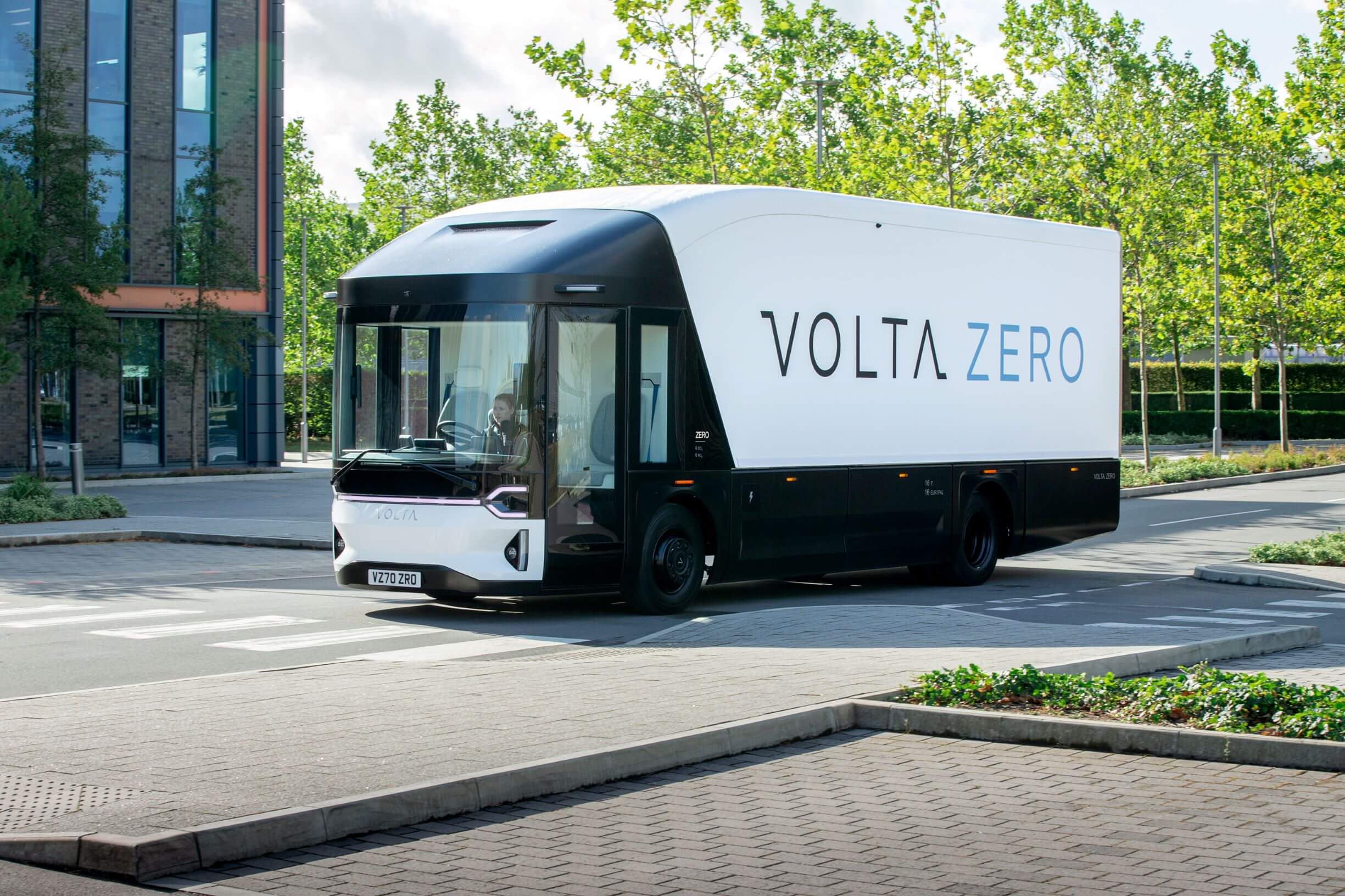
    Volta Trucks has begun production of the first road-going ‘Design Verification’ (DV) prototype Volta Zero vehicle at a bespoke facility in Coventry, UK. The DV prototypes are the first full-electric Volta Zero vehicles to be built in the recently unveiled production-ready design. A total of 25 vehicles will be manufactured and once completed in January, the fleet will embark on a rigorous testing regime. This will involve Volta Trucks engineers replicating a wide range of customer usage and delivery cycles, as well as taking the Volta Zero to the extremes of cold weather environments in the Arctic, hot weathers in equatorial conditions, and crash testing, all to validate the safety, durability, and reliability of the vehicle.

    The results of the comprehensive DV testing program will be fed into the final prototype stage – ‘Production Verification’ (PV). The PV prototype vehicles will be built at the company’s new manufacturing plant in Steyr, Austria, in mid-2022. Many of these production-specification prototypes will be lent to selected customers for extended periods to be tested in their real-world logistics conditions, undertaking millions of delivery kilometers, alongside Volta Trucks’ own engineers.

    Ian Collins, Chief Product Officer of Volta Trucks, said; “In August, the first Volta Zero rolling chassis started testing, and we’ve already extracted huge amounts of data from that vehicle. We have integrated that feedback into the Design Verification prototypes that start production today. We now move into a rapid test – learn – iterate – develop phase. This is going to be far more condensed and intensive than a normal vehicle testing program, given our ambitious timeline to start series production in a year’s time, which is driven by customers’ needs for zero-emission trucks.

    This will take us to some of the hottest, coldest, and most extreme conditions in the world, all to ensure that the product specification vehicles that roll off the production line by the end of 2022 deliver the highest possible quality standards and exceed our customers’ expectations.”

  • Volvos Concept Recharge Uses Sustainable Materials

    Volvos Concept Recharge Uses Sustainable Materials

    With the Concept Recharge, Volvo Cars demonstrate the steps it will take in all areas of pure electric car development to reduce its cars’ and its overall carbon footprint. The company plans to sell only fully electric cars by 2030 and aims to be a climate-neutral and circular business by 2040. By using sustainable materials inside the car, equipping it with tyres from recycled and renewable material, improving aerodynamics, and through other measures, Volvo Cars can take huge steps to reduce its carbon impact through the car itself.

    When combining those steps with the use of clean energy throughout a decarbonized supply chain, manufacturing process, and use phase of the car, Volvo Cars believes it can reduce a car’s lifecycle CO2 impact by 80 percent versus a 2018 Volvo XC60, without losing the inherent premium qualities that Volvo cars have become known for.

    This would mean that the Concept Recharge would have an overall lifecycle CO2 impact below 10 tonnes when charged with 100 percent renewable energy.

    Volvo Cars is in the forefront when it comes to working with sustainable and natural materials in its cars, and the Concept Recharge is another proof point of its commitment to push forward with this ambition.

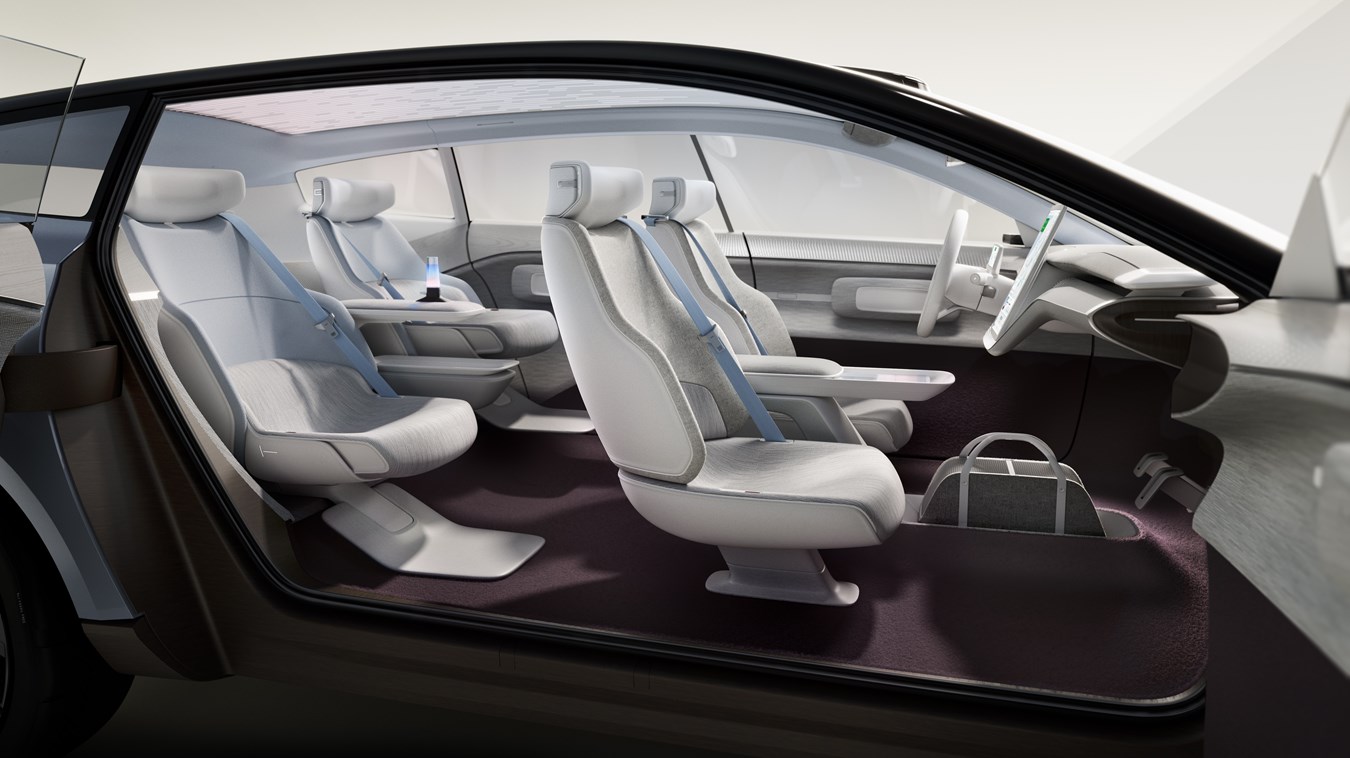
    The interior design is rich in sustainable materials, both natural and recycled materials – think of responsibly sourced Swedish wool, environmentally responsible textiles and lightweight composites created from natural sources.

    Sourced Swedish wool is transformed into fully natural breathable cloth, free from additives. This warm and soft material is used in the seat backrest and instrument panel top. Meanwhile, the floor and lower doors are covered by a rich carpet of 100 percent wool. The seat cushions and touch surfaces on the door are made from an environmentally responsible material that contains Tencel fibers from cellulose. This fabric has great durable strength and is soft to the skin. By using Tencel fibers, which have been produced through high water- and energy-efficient processes, Volvo designers can reduce the use of plastics in interior parts.

    The seatbacks and headrests, as well as part of the steering wheel, use a new material created by Volvo Cars called Nordico. It is a soft material made from bio-based and recycled ingredients that come from sustainable forests in Sweden and Finland, providing a CO2 footprint that is 74 percent lower than leather.

    Elsewhere in the interior, including in the lower storage areas, back of the headrest, and the footrest, the Concept Recharge uses a flax composite, developed by Volvo Cars in collaboration with suppliers. It uses fibers from the linseed plant, which are mixed with composites to provide a strong and lightweight, yet attractive and natural, aesthetic.

    On the exterior, the front and rear bumpers as well as the sill moldings also consist of flax composite. Using a flax composite both inside and out in this way results in a significant reduction of plastics used.

    With the internal combustion engine making way for the pure electric powertrain, tires play an even more important role. Not only are they crucial for safety, but they also contribute largely to the vehicle’s battery range. This means tires for electric cars always have to be on top of technology development.

    Hence the Concept Recharge features special tires made by Pirelli, which are completely free from mineral oil and are made from 94 percent fossil-free materials, including recycled and renewable materials such as natural rubber, bio-silica, rayon, and bio-resin. This reflects the circular approach shared by Volvo Cars and Pirelli, with a focus on reducing resource consumption and environmental impact.

    Beyond its sustainable materials, electric powertrain, and special tires, Concept Recharge also improves the environmental credibility of SUVs through efficiency and aerodynamics.

    With the Concept Recharge, Volvo Cars envision the future of aerodynamics. It incorporates innovative aerodynamic features such as exterior design details that smooth the airflow, a new wheel design, a lower roof, and a more upright rear end.

    As such, it takes the classic SUV shape and improves airflow to increase range, while offering the incredible space opportunities that come naturally with an electric car and its lower floor.


  • Gold price gains in eighth session

    Gold price gains in eighth session

    Vietnam’s gold prices climbed up for the eighth straight session Wednesday even as global rates steadied because of rising dollars.

    Saigon Jewelry Company (SJC) sold its gold at VND62.15 million ($2,727.65) per tael in the morning, up 0.57 percent from Tuesday afternoon. A tael equals 37.5 grams or 1.2 ounces.

    This means gold prices are 0.24 percent away from the previous historic peak last year.

    Since early November, gold has gained 6.6 percent.

    Vietnam’s gold is now VND11.25 million more expensive than global rates.

    Globally, spot gold rose 0.2 percent to $1,854.39 per ounce Wednesday, a marginal gain as a jump in U.S. retail sales kept the dollar close to a 16-month high.

    U.S. retail sales jumped in October, topping expectations, in an indication that high inflation was not yet dampening spending, even as worries about the rising cost of living sent consumer sentiment tumbling to a 10-year low in early November.

  • US direct flight fare around $1,000

    US direct flight fare around $1,000

    A one-way ticket from Vietnam to the U.S. will cost around $1,000 and be available on the Vietnam Airlines website in a few days, the carrier has said.

    There would be a reduced number of passengers to lower the aircraft’s weight to ensure no fuel stops are needed, CEO Le Hong Ha told reporters Tuesday.

    On the Boeing 787 and Airbus 350 planes Vietnam Airlines uses, this means a maximum of 210-220 passengers instead of the full complement of 300, he said.

    The 2.2 million Vietnamese-Americans in the U.S. would be the main targets in the future, he said.

    The Vietnam-U.S. direct route would not be profitable for five to 10 years, but it is better to fly to sustain cash flows, he said.

    Passengers allowed to enter Vietnam from the U.S. now amid Covid-19 are experts, businesspeople and high-skilled workers.

    The first regular direct flight to the U.S. will leave HCMC in the evening of November 28, achieving a dream conceived nearly two decades ago.

    It will arrive in San Francisco 13 hours and 50 minutes later.

  • LGT Opens Private Banking Office in Japan

    LGT Opens Private Banking Office in Japan

    Liechtenstein-headquartered LGT opened a new wealth management office in Tokyo as part of its efforts to capture opportunities in Japan’s private banking market.

    Following regulatory approvals, LGT has opened a new office in the Okura Prestige Tower located in Tokyo’s business district, according to a statement.

    The unit will aim to provide bespoke wealth management solutions to clients in Japan with a local team made up of over 35 experienced professionals.

    Earlier this year, 25-year industry veteran Yoshitaka Nagakura was named market head for Japan and will now be appointed as chairman and chief executive for LGT’s Japan private banking unit, reporting directly to APAC private banking CEO Dr. Henri Leimer.

    He joined from Credit Suisse where around two dozen other private bankers were reportedly also in the process of shifting over to LGT in Japan.

    We are delighted to be expanding our Asia Pacific footprint with the opening of our Tokyo office, said LGT chairman H.S.H. Prince Max von und zu Liechtenstein in the statement. We have a deep commitment to responsible investing and we see tremendous opportunities to share LGT’s experience in long-term, sustainable investments and wealth management with Japanese clients.

  • UBS Officially Opens Singapore Office

    UBS Officially Opens Singapore Office

    Swiss banking giant UBS has opened its largest Asia Pacific office in Singapore, alongside the announcement of two new tech-related initiatives.

    UBS officially opened its Singapore office at 9 Penang Road yesterday in a ceremony that featured chairman Axel Weber, global chief executive Ralph Hamers, APAC CEO Edmund Koh and more.

    Fully running on renewable energy, the 400,000 square feet of the prime property will be the Swiss bank’s largest office in the Asia Pacific region.

    Accompanying the office launch was the introduction of two new tech initiatives: TechConnect SEA and UBS Circle One.

    TechConnect SEA is an ecosystem that aims to connect and grow Southeast Asia’s next generation of unicorns.

    The bank is also piloting its UBS Circle One app which will connect investors to ideas on a global ecosystem.

    Also in attendance at the event was Singapore’s Minister of Finance Lawrence Wong who lauded UBS’ efforts in the city-state especially with regards to talent development.

    UBS has come a long way, starting out with a handful of professionals in 1970 and growing to employ over 3,000 staff in the Wealth Management, Investment Banking and Asset Management businesses today, Wong said on a social media post.

    It has remained committed to building up Singapore’s local talent pool, while deepening the capabilities and expertise of the industry in meaningful areas such as innovation, philanthropy, and sustainable investing.

  • Singapore-Based Crypto Platform Inks Blockbuster Sports Deal

    Singapore-Based Crypto Platform Inks Blockbuster Sports Deal

    Crypto.com has bought the naming rights to the arena that is home to NBA team Los Angeles Lakers, in what is said to be one of the largest naming deals in sports history.

    The Staples Center in Los Angeles, home to the Lakers basketball team as well as the L.A. Kings hockey team and women’s basketball team Los Angeles Sparks, will be renamed the Crypto.com Arena, following a $700 million deal announced on Wednesday.

    The partnership, which takes effect on December 25, will last for 20 years, and ends the arena’s 22-year partnership with the office supplies retailer.

    The deal underscores the rapidly growing influence and widespread adoption of Crypto.com’s cryptocurrency platform and NFT marketplace worldwide, Crypto.com said.

    Crypto.com was founded by e-commerce exec Kris Marszalek as Monaco in 2016, before its rebranding as Crypto.com in 2018. The platform boasts more than 10 million customers today. The crypto exchange’s logo already adorns the jerseys of the National Basketball Association (NBA) Philadelphia 76ers team.

    Earlier this year, rival crypto exchange FTX became the first crypto business to secure naming rights to a major sports venue when it paid $135 million for the naming rights to the home of NBA team Miami Heat in a 19-year deal. Crypto.com then secured a sponsorship deal with hockey team Montreal Canadiens to have its logo brandished on the ice at its home arena, the Bell Centre.

    The platform’s native token, CRO, currently the 16th largest cryptocurrency by market cap, jumped 35 percent in the 24 hours after the announcement to reach $0.545.

  • DBS Exec to Lead Carbon Credits Exchange

    DBS Exec to Lead Carbon Credits Exchange

    He was most recently DBS’ group chief sustainability officer, responsible for developing the bank’s sustainability framework and driving sustainability initiatives.

    Climate Impact X (CIX) has announced the appointment of Mikkel Larsen as chief executive officer, effective immediately, according to an announcement on Wednesday.

    Larsen has been interim CEO of the platform, a joint venture between DBS Bank, Singapore Exchange (SGX), Standard Chartered, and Temasek, since May 2021.

    Before his nine years at DBS, Larsen spent over seven years at UBS, leaving as CFO of Asia-Pacific, and previously held roles at Citibank in London, and KPMG.

    In his new role, Larsen will oversee all day-to-day operations for CIX, including collaborating with its ecosystem of technology partners to build up its Project Marketplace and Exchange platforms as well as curating a pipeline of high-quality carbon credit projects to feature on its platforms. He will also drive the company’s culture, values, and behavior while building up a high-performing team passionate about catalyzing scalable sustainable solutions.

    The carbon market is going through a transition. We have a unique opportunity to establish a trusted market that can both help preserve the crucially important existing carbon sinks whilst developing new ones, Larsen said.

    CIX said it completed a pilot auction in October of a curated portfolio of high-quality carbon credits, where it successfully cleared 170,000 tonnes of carbon credits from eight recognized NCS projects spanning across Africa, Asia, and Latin America.

  • Auto sales hit six-month high

    Auto sales hit six-month high

    Vietnam auto sales reached 29,797 units last month, the highest since April, indicating demand recovery after prolonged social distancing.

    This is the second monthly sales rise in a row after a chain of five dropping months from April to August when the fourth Covid-19 wave hit, according to a report by Vietnam Automobile Manufacturers Association (VAMA).

    In the first 10 months, total sales hit 218,734 units, up nearly 3 percent year-on-year.

    Truong Hai Auto (Thaco) continued to lead sales with 75,604 units in the period, up 6.3 percent year-on-year.

    Toyota followed with 45,131 units, down 9.6 percent.

    Mitsubishi, Ford, and Honda rounded out the top five.

    In October, the best-selling model was the sedan Hyundai Accent with 3,346 units, followed by the pickup truck Ford Ranger.

    Last year, sales had fallen by 8 percent to 296,634 units as the Covid-19 pandemic badly affected the economy, hitting people’s incomes and discretionary spending.

  • Vietnam Airlines direct flight to US takes off next week

    Vietnam Airlines direct flight to US takes off next week

    National flag carrier Vietnam Airlines will operate its first regular direct flight to the U.S. on November 28, achieving a dream conceived nearly two decades ago.

    The flight will depart from HCMC in the evening and arrive at San Francisco 13 hours and 50 minutes later, CEO Le Hong Ha said at a press briefing Tuesday.

    The return flight will leave San Francisco on the evening of November 29 (U.S. time) and arrive in HCMC on December 1, 16 hours and 40 minutes later.

    The wide-body aircraft Boeing 787-9 Dreamliner will be used for direct flights.

    Initially, there will be two flights a week and this can be increased to seven when the pandemic situation is under control, Ha said.

    Vietnam Airlines thus becomes the first Vietnamese carrier to operate a regular flight route to the U.S.

    In 2003, the airline had been directed by the Ministry of Transport to begin direct services to the U.S. by 2005. However, concerns over profitability had kept the carrier from implementing the plan until now.

    The national flag carrier is also studying the possibility of other direct routes to the U.S., including flights between Hanoi and HCMC to Los Angeles or Houston.

    The U.S. has one of the most stringent aviation standards in the world. There are around 20 airlines operating routes between Vietnam and the U.S.

    “We needed to prepare hundreds of kilograms worth of paperwork to meet the U.S. requirements,” Ha said.

  • 5G: Enabling more than just connectivity

    5G: Enabling more than just connectivity

    5G, in many ways, is still in its infancy. The good news is that it is growing and evolving quickly. Much has been said (and written) about the theoretical benefits of 5G: High speeds, low latency and massive connection density. But, not many organizations understand what 5G actually means for their industrial environments. Many organizations—while intrigued by the possibilities of incorporating 5G into their operational and customer-facing processes—often lack the resources to experiment and invest in a long-drawn cycle of “unproven” innovation.

    Hence, it is important for organizations to work with suitable partners. They have the foresight and resources to further flesh out various 5G proof of concepts and understand how these concepts mesh with the organization’s broader digital transformation agenda.

    IDC has identified a few 5G use cases that will have maximum impact across verticals:

    Process automation and robotics
    5G addresses the challenges of today’s static manufacturing lines, increasing machines’ mobility. This reduces the time required to service the machines and allows them to be reconfigured on the fly. In addition to supporting such automation and robotics use cases on public networks through network slicing, the 5G network’s ultra-low latency will allow robotic controls to be processed at the edge, creating further opportunities to improve machine coordination and reduce costs.

    Cloud gaming
    5G and multi-access edge computing is going to further accelerate the adoption of mobile cloud-streamed gaming (CSG) services. When users are mobile and on a cellular network, their experiences often vary to a much greater extent today. This relative network unreliability puts mobile CSG services at a significant disadvantage versus wired/Wi-Fi services. The gaming market is set to explode as network operators bring more 5G mid-band spectrum online in the next few years.

    Autonomous vehicles
    The pathway to increased guided and vehicle autonomy will be largely built on the promise of 5G delivering Society of Automotive Engineers (SAE) Level 4 full self-driving vehicles, as well as accelerating SAE Levels 1 and 2 vehicle growth over the next five years. 5G-based cellular vehicle to everything (C-V2X) will significantly enhance all types of vehicular communication. 5G’s ultra-low latency and network slicing characteristics, together with edge cloud, will enable innovative applications, resulting in safer and more cost-effective transportation.

    Video analytics and surveillance
    Wireless has been somewhat problematic for applications such as video surveillance due to network capacity, reliability and security issues. IDC believes that 5G will propel wireless video surveillance to become a dominant force over the next five years. An increasing number of applications such as wireless perimeter control, aerial drones and home security systems will increase demand for wireless technology that can support high-resolution video securely. 5G along with edge compute will ensure secure and timely ingestion and processing of video feeds to help organizations make data-driven decisions in real-time.

    Immersive experiences
    5G provides organizations with exactly what is needed of networks to transform B2B2C consumer experiences by satisfying the appetite for immersive entertainment, gaming and broadcast experiences. In addition to mobile augmented reality/virtual reality (AR/VR) being used by field and repair technicians who operate far from a central office, there is a considerable opportunity for entertainment venues and sports arenas to provide a 360-degree VR experience at large-scale events such as sports meets and music concerts. Current network generations lack the throughput and capacity required to deliver high-definition content, but 5G, along with edge deployments, allows for ultra-low latency and processing times that are required to deliver a real-time and enhanced immersive experience.

    Industry 4.0 is acknowledged as a transformative series of initiatives around how we make and distribute goods. 5G is poised to have a significant impact across verticals such as manufacturing, healthcare, logistics, media and smart cities. IDC believes that a large number of organisations will boost spending on 5G in 2021-22. Asia Pacific (excluding Japan) regional Internet of Things use case spend across manufacturing, resources and infrastructure is forecast to hit US$295 billion in 2025. With such investments in play, organisations should look out for a service provider—with a platform-based approach to 5G, a broad partner ecosystem and a proven track record of helping organisations on their digital transformation journeys—to evaluate potential 5G use cases and get started early to gain a significant edge over their competitors.

  • Instagram to bring mods to Lives, ‘likes’ for Stories

    Instagram to bring mods to Lives, ‘likes’ for Stories

    Instagram is going to be adding some welcome new features to the platform in the coming future, according to recent findings from Italian self-proclaimed reverse-engineer and mobile developer Alessandro Paluzzi.

    Paluzzi has always enjoyed tearing down beta APK releases of Instagram, Snapchat, as well as other apps to get an early glimpse of future updates, and this time is no exception. His most recent foray into Instagram’s code has revealed that Instagram is about to implement a “like” option for Instagram Stories, among other things.

    Until now, Instagram has only given users the ability to react in a number of ways to people’s Insta Stories, which is different from a regular thumbs up or alike. By swiping up from the bottom of a Story screen, for example, you could “quick react,” or choose from a predetermined group of emojis to react with.

    You could also react to the Story by sending a GIF or a written message. However, what is probably the most basic function of all—being able to “smash that like button”—has surprisingly taken this long to appear. For the record, once the Stories have been up for 24 hours, any likes or reactions sent disappear along with them.

    Aside from the ability to “like” Stories, Paluzzi has also unearthed an upcoming ability for Instagram “Live” broadcast hosts to add moderators to their streams, to monitor the feed and keep the chat in check.

    Reportedly, hosts will only be able to have one moderator per Live video. This person will have to be chosen from the “Who’s Watching” list, and will receive full permission to moderate comments (naturally), as well as turn questions on/off and manage requests to go live.