Tag: asia

  • Korean lawmaker says Apple and Google need to do more to comply with new law

    Korean lawmaker says Apple and Google need to do more to comply with new law

    Apple and Google are both failing to fully comply with South Korean legislation that prevents app store operators from forcing developers to use their own payment platforms. As you already know, Apple and Google, with the App Store and Play Store respectively, forced developers to route all in-app payments through their own systems to collect as much as a 30% slice of in-app payments.

    When legislation in South Korea passed, it became the first country to pass a law in an attempt to block the tech giants from imposing this “tax” on developers. An official at the Korea Communications Commission (KCC) said that tomorrow (Wednesday), South Korea will reveal what changes tech firms will need to follow in order to comply with the legislation.

    Korean lawmaker Jo Seoung-lae is the person who directed an amendment to the Telecommunication Business Act in August in an attempt to prevent Apple and Google from taking a cut of in-app payments. While the law went into effect in September, the Korea Communications Commission (KCC) still has to announce what tech firms have to do to be considered in compliance with the law.

    Google said that it would allow third-party payment processing systems to run Play Store charges in South Korea. But the Alphabet subsidiary also said that it would reduce the cut that it takes by four percentage points when such a platform is used instead. Apple told the South Korean government that it was already complying with the law and that no changes had to be made.

    Jo, the South Korean lawmaker who helped get the legislation passed, said, “Frankly, we are not satisfied… Apple’s claim that it’s already complying is nonsensical. Excessive fees take away developers’ chances for innovation … parliament is to be closely informed as the government drafts detailed regulations to make sure there is accountability.”

    Epic Games CEO Tim Sweeney, who dared to take on Apple and Google by including a link to Epic’s own payment system inside the app for its popular Fortnite game, is a vocal critic of both tech firms. Fortnite ended up getting kicked out of both the App Store and the Google Play Store. The executive said, “This is the first legislation worldwide with the chance to transform the market from a duopoly with Apple and Google.

    But Sweeney won’t be pleased just being able to promote third-party payment platforms in the App Store and Google Play Store. He wants Apple and Google blocked from charging any fees to developers promoting third-party payment platforms. This is what Google is doing in South Korea and “ruins the point of competition,” the CEO says.

    The KCC is preparing the details of an ordinance that will be reported to a parliamentary committee tomorrow according to KCC Vice-Chairman Kim Hyun. At this stage though, it is not clear what penalties tech firms like Apple and Google will face if they do not follow the law. An early draft called for a penalty of up to “2% of revenue” for app store operators who fail to abide by the law.

    But that penalty is certainly not clear. Is it based on global revenue, in-country revenue, or app store revenue? The wording here can be the difference between a stiff but affordable fine, and a hefty payment that actually takes a bite out of a company’s financials. Still, no matter what the fine is based on, Apple and Google are big enough that any fine won’t feel like anything more than a mosquito bite.

    That is the point of Meghan DiMuzio, executive director of advisory group Coalition for App Fairness who says, “We’ve seen in other jurisdictions that these monetary penalties actually don’t deter companies like Apple and Google because to them, it’s a drop in the bucket.”

  • Apollo Tyres To Increase Prices By Up To 5 Per Cent Citing Rising Cost

    Apollo Tyres To Increase Prices By Up To 5 Per Cent Citing Rising Cost

    Apollo Tyres will increase prices by 3 to 5 percent in the domestic market in the third quarter of this fiscal to offset the rising cost, according to top company officials. The company may further increase prices in the fourth quarter if the commodity rates continue to remain high. Speaking with the media during Q2 FY22 Result Conference Call, Apollo Tyres Vice Chairman and Managing Director Neeraj Kanwar said the company had taken an average increase of around 9 percent in tyre prices up until September.

    He further said, “We are again taking price increases in this quarter varying between 3% to 5% in various segments in the months of October and November.”

    When asked what would be the level of recovery on account of cost inflation in the country post price hikes, Apollo Tyres CFO Gaurav Kumar said, “Raw material costs continue to be a moving target. Even in Q3 from Q2, we expect a small cost-push coming on account of raw material. I would say broadly, we are running about two price increases behind vis-vis what is desirable.”

    In the second quarter ended September 30, Apollo Tyres registered a 59 percent decline in standalone net profit at ₹ 89.65 crore against Rs 216.24 crore in the same period last fiscal, impacted by high raw materials cost. The revenue from operations was higher at ₹ 3,649.71 crore as against ₹ 2,911.57 crore in the year-ago quarter. The cost of raw materials consumed in the second quarter went up to ₹ 2,471.63 crore against ₹ 1,527.06 crore in the same period a year ago.

    Kumar further added that normalcy in India is gradually returning post an unprecedented pandemic situation. The company is currently witnessing a steady improvement in demand momentum. He said, “The truck tires OEM demand, which was lagging, is showing promising signs of improvement. Though, the passenger car OEM demand continues to suffer due to shortage of semiconductors.”

    He also added said the demand momentum going forward for the second half of the fiscal (H2) seems to be better and further price hikes have been announced for November to counter the raw material cost-push.

  • Vietnam gold prices reach another year’s peak

    Vietnam gold prices reach another year’s peak

    Vietnam’s gold prices hit another high this year of over VND61 million ($2,677.51) per tael as global prices soared to a five-month high.

    Saigon Jewelry Company (SJC) sold its gold for VND61.1 million per tael Tuesday morning, up 0.49 percent from Monday. A tael equals 37.5 grams or 1.2 ounces.

    DOJI sold its gold at VND60.9 million, up 0.33 percent.

    This means there is now a VND9.8 million gap between Vietnamese, and the global gold rate.

    Gold prices are now at $1,862.81 per ounce after rallying to a five-month peak in the previous session, as concerns over broadening inflationary risks kept bullion’s safe-haven appeal intact in the face of a stronger U.S. dollar and elevated bond yields.

    Some analysts anticipate further increases, while others remain conservative about the $1,870 resistance.

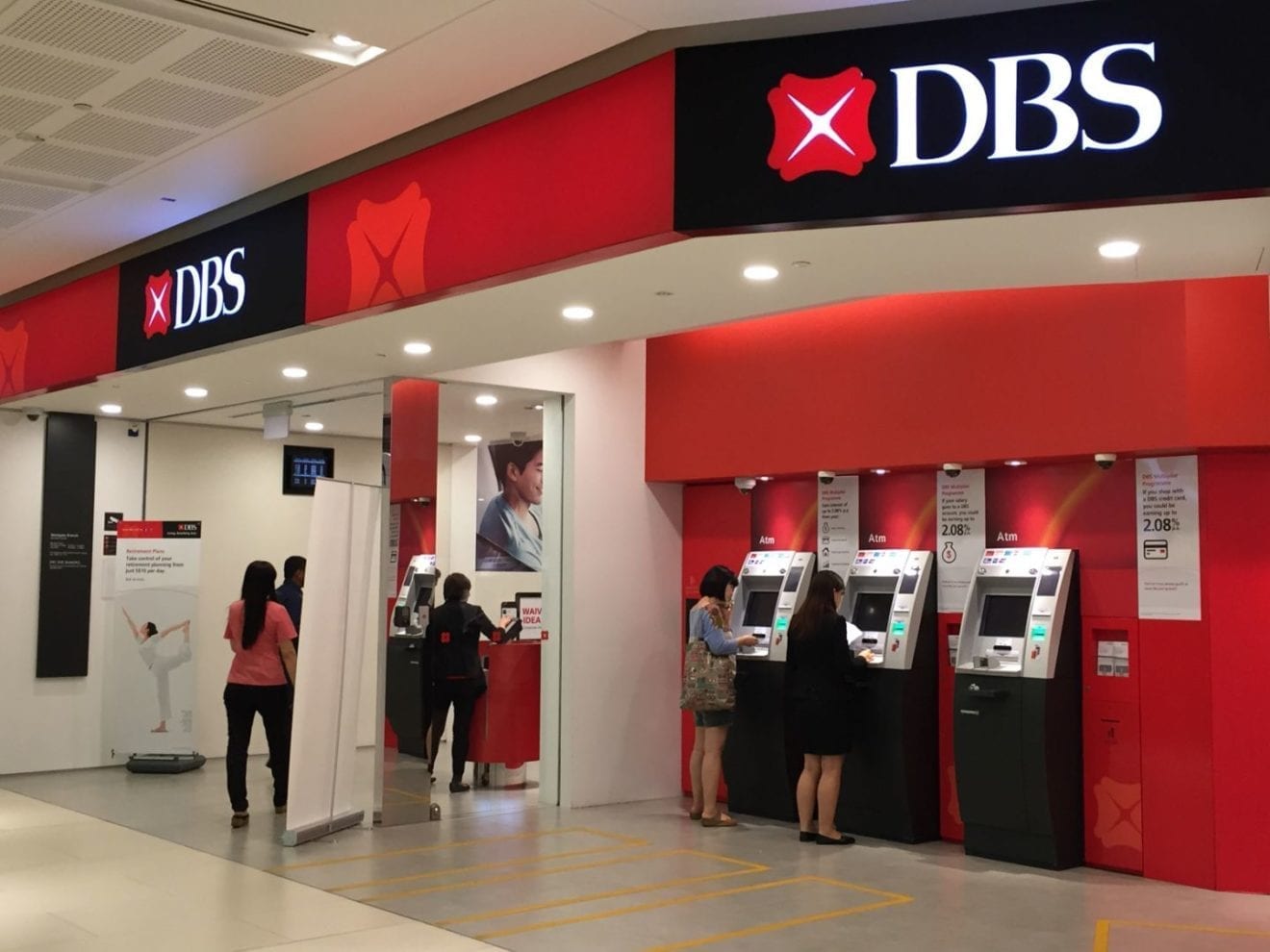
  • DBS Exec to Lead Carbon Credits Exchange

    DBS Exec to Lead Carbon Credits Exchange

    He was most recently DBS’ group chief sustainability officer, responsible for developing the bank’s sustainability framework and driving sustainability initiatives.

    Climate Impact X (CIX) has announced the appointment of Mikkel Larsen as chief executive officer, effective immediately, according to an announcement on Wednesday.

    Larsen has been interim CEO of the platform, a joint venture between DBS Bank, Singapore Exchange (SGX), Standard Chartered, and Temasek, since May 2021.

    Before his nine years at DBS, Larsen spent over seven years at UBS, leaving as CFO of Asia-Pacific, and previously held roles at Citibank in London, and KPMG.

    In his new role, Larsen will oversee all day-to-day operations for CIX, including collaborating with its ecosystem of technology partners to build up its Project Marketplace and Exchange platforms as well as curating a pipeline of high-quality carbon credit projects to feature on its platforms. He will also drive the company’s culture, values, and behavior while building up a high-performing team passionate about catalyzing scalable sustainable solutions.

    The carbon market is going through a transition. We have a unique opportunity to establish a trusted market that can both help preserve the crucially important existing carbon sinks whilst developing new ones, Larsen said in the announcement.

    CIX said it completed a pilot auction in October of a curated portfolio of high-quality carbon credits, where it successfully cleared 170,000 tonnes of carbon credits from eight recognized NCS projects spanning across Africa, Asia, and Latin America.

  • Major garment producer says did not lose Nike orders due to Covid restrictions

    Major garment producer says did not lose Nike orders due to Covid restrictions

    Viettien Garment Corporation has not lost any of its Nike orders to other countries since the American company could not find suitable alternatives, its chairman said.

    “Until October, when we reopened, Nike has not moved any of its orders from Viettien to another country because it could not find an appropriate manufacturer in terms of delivery time and quality.”

    Giang, also chairman of the Vietnam Textile & Apparel Association, said during the restrictions in the third quarter, 13-14 percent of garment orders were moved from Vietnam to other countries.

    But there are signs that orders are coming back for next year, he said.

    “This is why we have set an export target of $43.5 billion.”

    Last year, exports had fallen by 9 percent to $35 billion.

    Giang said that foreign companies only move orders to other countries when the deadline is too close, and they continue to have confidence in Vietnam.

    Vietnam’s garment exports in the first 10 months of this year fell by 5 percent year-on-year to $24.74 billion.

  • Opening date released for the world’s largest Ikea in Manila

    Opening date released for the world’s largest Ikea in Manila

    The world’s largest Ikea store, Ikea Pasay City in Manila, is set to open its doors to the public this month after being delayed due to the Covid-19 pandemic.

    Ikea Pasay City also marks the chain’s first location in the Philippines. The 67,760sqm store, scheduled to open on November 25, is located next to the Mall of Asia and spans five stories.

    While two floors are dedicated to retail activities, the remaining floors are for stocks and e-commerce operations.

    The new Ikea store will house more than 8,000 home furnishing and appliance products, together with a restaurant, where customers can find the brand’s famous Swedish meatballs. Ikea Philippines’ online store launched earlier this month for delivery orders after a soft launch in September.

    The launch of Ikea Pasay City was announced in 2018 and due to open last year. However, the construction of the store was interrupted last year due to the Covid-19 pandemic.

  • Holiday train tickets in low demand

    Holiday train tickets in low demand

    Train ticket demand for the upcoming Lunar New Year Holiday is plunging due to fear of Covid-19 contagion as thousands of new cases nationwide are confirmed each day.

    Saigon Railway Station in HCMC opened its ticket sales for Tet 2022, the biggest annual holiday which falls in early February, but its nine counters were seen with few inquirers.

    Viet Truong, 37, showed up at 7 a.m., anticipating a large number of customers as what happened in previous years.

    “I got the tickets in only 20 minutes, while in previous years I had to wait the whole morning.”

    Tet tickets are being sold for five routes: four North-South routes and one HCMC-Da Nang route, while in previous years there were 20 routes.

    After two hours of opening sales, over 1,500 tickets were sold, which is the lowest in recent years.

    Hundreds of seats were still available as of lunchtime, even though tickets are being sold at a 10-15 percent discount in the first 10 days.

    Vietnam recorded over 8,200 new Covid-19 cases on average in each of the last seven days, with over 1,200 in HCMC alone.

  • Muji launches fresh food concept store with JD

    Muji launches fresh food concept store with JD

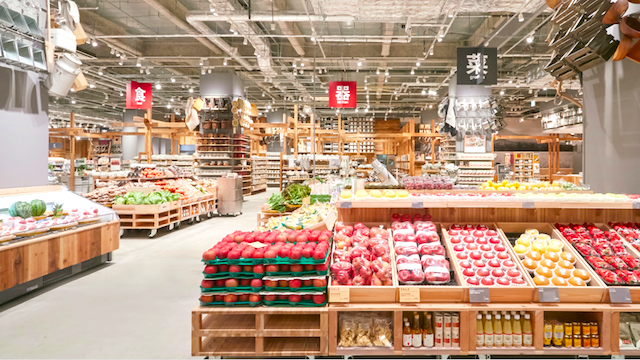
    Japanese retail giant, Muji, has forayed into the fresh food industry with the launch of a food complex in collaboration with JD’s Seven Fresh in Shanghai.

    Operated by both companies, the complex is located inside Ruihongtiandi shopping mall and spans 400sqm, housing a Muji store and fresh food supermarket, Seven Fresh, which is also the chain’s first presence in the city.

    Unlike Muji’s usual stores, the 1208sqm Muji store in the complex offers an expanded selection of food products, including ramen, oatmeal, frozen food, ice cream and pizza. Its fashion brands, Muji Labo and Muji Walker, are also available in the store.

    The Seven Fresh store features an omnichannel concept with both online and offline services, and customers can have their online orders delivered in as soon as 30 minutes.

    The store-in-store concept is not the first collaboration of the two companies: last year, Muji launched a new format MUJIcom, at JD headquarters in Beijing, providing employees selected products such as daily necessities and food, including lunch boxes featuring simple meals.

  • Grab’s Ride-Hailing Services Disrupted In Southeast Asian Countries

    Grab’s Ride-Hailing Services Disrupted In Southeast Asian Countries

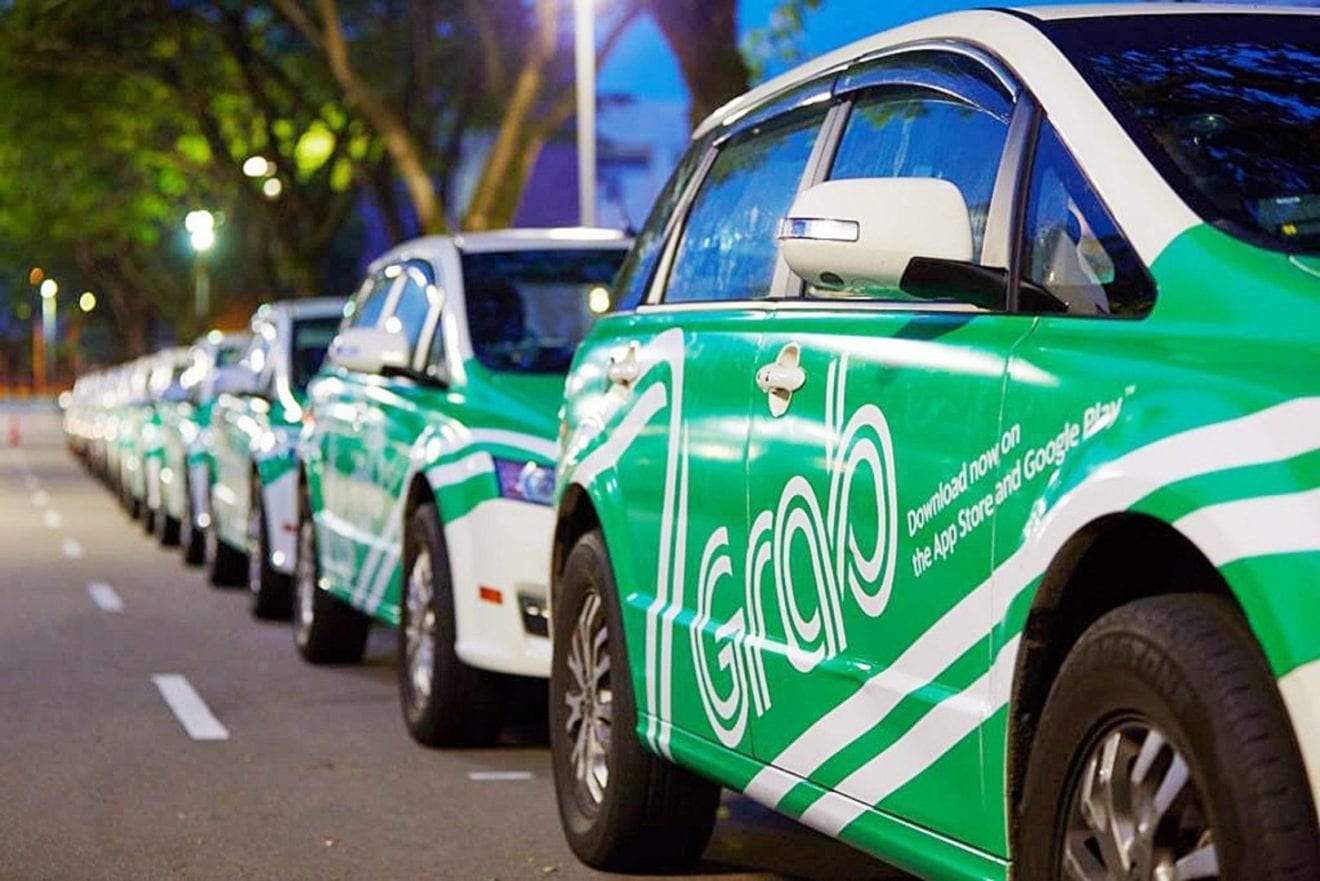
    Southeast Asia’s Grab on Tuesday said it was experiencing disruption to its services, with customers and drivers in Singapore, Indonesia, and Malaysia complaining that they were having trouble using the app’s ride-hailing functions.

    “Some of our services are not accessible at the moment,” Grab posted on its Facebook page.

    “We are looking into this and we will update when the app is back up and running.”

    Grab operates Southeast Asia’s most popular “super app”, which provides ride-hailing, food, and grocery delivery, and payments in over 400 locations in eight countries.

    “We are experiencing some technical difficulties with the app and our engineers are working to recover the issue,” Grab said.

  • Viasat buys Inmarsat for $7.3 million to create a global communications innovator

    Viasat buys Inmarsat for $7.3 million to create a global communications innovator

    Viasat has entered into a definitive agreement under which Viasat will acquire Inmarsat in a transaction valued at $7.3 billion, comprised of $850.0 million in cash, approximately 46.36 million shares of Viasat common stock valued at $3.1 billion based on the closing price on Friday November 5, 2021, and the assumption of $3.4 billion of net debt.

    The combination will create a leading global communications innovator with enhanced scale and scope to affordably, securely and reliably connect the world. The complementary assets and resources of the new organization will enable the availability of advanced new services in mobile and fixed segments, driving greater customer choice in broadband communications and narrowband services, including IoT.

    The combined company intends to integrate the spectrum, satellite and terrestrial assets of both companies into a global high-capacity hybrid space and terrestrial network, capable of delivering superior services in fast-growing commercial and government sectors. This advanced architecture will create a framework incorporating the most favorable characteristics of multi-band, multi-orbit satellites and terrestrial air-to-ground systems that can deliver higher speeds, more bandwidth, greater density of bandwidth at high demand locations like airport and shipping hubs and lower latency at lower cost than either company could provide alone.

    Both companies have proven track records of product and service innovation. Viasat has advanced North American residential and aviation connectivity and defense communications with technology and business models embraced by customers. Viasat is also recognized for driving change through its pioneering ultra-high-capacity satellite technology, which has delivered superior value at attractive, affordable economics.

    Inmarsat has an exceptional presence in the growing global mobility segment and is at the forefront of network design with its recently announced multi-dimensional mesh network. It is preparing to expand its global network later this year with its most powerful and advanced software-defined commercial communications satellites ever, offering both Ka- and L-band capabilities. Inmarsat has a global presence, a robust distribution channel spanning the rapidly growing mobility, government, IoT and enterprise sectors and currently provides safety and connectivity services to more than one million mobility and defense platforms.

    “This is a transformative combination that advances our common ambitions to connect the world. The unique fusion of teams, technologies and resources provides the ingredients and scale needed for profitable growth through the creation and delivery of innovative broadband and IoT services in new and existing fast-growing segments and geographies,” said Viasat’s Executive Chairman Mark Dankberg. “Inmarsat’s dual-band global mobile network, unique L-band resources, skills and capabilities in the U.K. and excellent technical and operational talent worldwide, are powerful complements to Viasat’s business. Together, we can advance broadband communications and create new hybrid space and terrestrial networks that drive greater performance, coverage, speed, reliability and value for customers. We look forward to welcoming the Inmarsat team into the Viasat family.”

    “Joining with Viasat is the right combination for Inmarsat at the right time,” said Rajeev Suri, CEO of Inmarsat. “Viasat is a terrific innovator and Inmarsat brings some powerful additions: global reach, a broad distribution channel, robust business momentum and a presence in highly attractive global mobility segments. Together, the two companies will create a new global player with the scale and scope to help shape the future of a dynamic and growing industry. The combination will create a strong future for Inmarsat and be well-positioned to offer greater choice for customers around the world, enhanced scope for partners and new opportunities for employees. The industrial logic is compelling and ensures that the U.K. has a strong and sustainable presence in the critical space sector for the long term.”

    Viasat plans to build on Inmarsat’s presence in the U.K. and is committed to preserving and growing the investment of the combined company in U.K. space communications, as well as supporting the recently published National Space Strategy. The combined company will cooperatively engage with the U.K. government with a view to operating in the U.K. consistent with the commitments previously made by Inmarsat/Connect BidCo, and expects continued constructive engagement across the U.K.’s thriving innovation ecosystem. It further intends to work closely with the U.K. government to bring additional space capabilities and other advanced technologies to the country as well as long-term, highly skilled engineering and related jobs for U.K.-based employees. Viasat plans to preserve and grow Inmarsat’s London headquarters, as well as its footprint in Australia and Canada and across Europe, the Middle East, Africa and Asia Pacific.

  • Gold prices hit 15-month high

    Gold prices hit 15-month high

    Vietnamese gold prices are now at a 15-month high and, as always, well above global rates.

    The Saigon Jewelry Company (SJC) sold bullion at VND60.75 million ($2,682.23) per tael Saturday morning, up 0.75 percent from Friday. A tael equals 37.5 grams or 1.2 ounces.

    This made them around VND10 million or 19.7 percent higher than global prices.

    A spokesperson for SJC said that the gap is widening because Vietnamese prices are becoming less dependent on global rates and relying increasingly on domestic supply and demand.

    Global rates have risen by 5.26 percent to $1,864.74 per ounce since Nov. 4, bolstered by deepening fears of inflation and reassurances from major central banks that interest rates would remain low for the time being.

    Traders are taking profits after an incredible run, Phillip Streible, chief market strategist at Blue Line Futures in Chicago, told Reuters.

    Societe Generale analysts forecast gold prices to average $1,950 an ounce in the first quarter of 2022, given the “renewed commitment from the Federal Reserve to support the economy while letting inflation printing higher”.

    Gold consumption in the third quarter fell by half year-on-year to 3.3 tons as jewelry stores closed due to Covid-19 restrictions, according to a report by the World Gold Council.

  • VietinBank pioneers online foreign exchange services

    VietinBank pioneers online foreign exchange services

    VietinBank has launched FX Online 24/7, allowing customers to perform transactions at any time, anywhere on platforms VietinBank eFAST and VietinBank Ipay.

    VietinBank focuses on innovating its system to improve FX services. Just by taking some simple steps on a smartphone or a laptop with an internet connection, without having to go to the bank, customers can perform FX transactions online with VietinBank for different currencies.

    Corporate customers can buy and transfer foreign currency online within business hours.

    Corporate customers or individual customers can sell foreign currency online from foreign currency accounts and receive Vietnamese dong into their accounts anytime, including weekends and holidays.

    With a multi-level authorized matrix, VietinBank eFAST can meet the diversified demand of customers for authorization. The system provides security methods meeting the State Bank of Vietnam’s requirements including OTP verification and keypass token verification.

    VietinBank is offering a promotional campaign for corporate customers using the service “Customers sell foreign currency online 24/7” through VietinBank eFAST platform. Customers are offered 20 preferential points with USD/VND transactions; 50 preferential points with EUR/VND and 0.5 preferential point with JPY/VND. There are also special offers for other currency pairs.

  • E-commerce sites report jump in 11/11 sales

    E-commerce sites report jump in 11/11 sales

    E-commerce platforms reported a surge in sales on Singles’ Day on Nov. 11, an annual shopping event, with the most popular items being masks and healthcare products. Tiki said revenues were up nine times from last year, and the number of buyers was double that on normal days.

    Face masks, products for babies and mothers, and fast-moving consumer goods were the top sellers, it said.

    It also sold some 10,000 mobile phones, including 500 iPhones, 2,000 electric motorbikes and bicycles, and 6,000 cans and bottles of beer.

    Shopee sold 1.8 million decorative items, including some 100,000 decals and stickers, 1.6 million healthcare products, one million earphones, and 150,000 mobile phone covers.

    Lazada said revenues doubled and the number of customers was up by half. Healthcare and beauty products were its best-sellers, and electronics sales almost doubled, with laptop and desktop sales nearly tripling.

    Sendo said revenues were 40 percent higher than during other promotions such as Sept. 9 and Oct. 10, with fashion, household, and beauty items seeing sales double.

    According to a report called ‘e-Conomy SEA 2021’ released this week by Google, Temasek and Bain & Co., Vietnam’s e-commerce market will increase to $13 billion this year, up 53 percent from last year, and triple by 2025.

  • Cold storage rent soars as supply dwindles

    Cold storage rent soars as supply dwindles

    Rent for cold storage in the south stands at $87 per ton in Q4, up 1.67 times against Q1 last year due to limited availability.

    Vietnam’s e-commerce boom amid the Covid-19 outbreak has fueled demand for cold storage facilities, according to the latest report on the cold supply chain released by real estate consultancy Savills Vietnam.

    According to the cold storage warehouse report by real estate services provider JLL, more consumers have opted for online shopping during Covid-19, leading to bigger demand for cold storage warehouses mainly located in the south and managed by medium- and small-sized suppliers. Foreign investors currently hold a share of some 60 percent in the local cold storage market.

    Trang Bui, JLL senior director in charge of the Vietnamese market, predicted demand for cold storage warehouses would increase sharply in the next five years, opening opportunities for investors.

    The country currently has a meager 48 cold storage warehouses with some 600,000 shelves, and over 700 refrigerated trucks.

    The local cold storage warehouse market is projected to annually grow 12 percent to reach $295 million in 2025, stated Savills Vietnam.

  • Apple and Meta/Facebook war is coming

    Apple and Meta/Facebook war is coming

    There is no denying that Apple and Google are rivals. Think of all the battles they have fought on the field over the dead wallets and credit cards of consumers. There is the iOS vs. Android battle which has been turned by consumers posting on tech forums into the Uncivil War. There are competing apps such as the up-and-coming Apple Maps vs. the currently reigning champion, Google Maps.
    And now that Google has taken the Pixel to a new level for hardware, the Pixel 6 series is a true iPhone challenger. But as Bloomberg’s Mark Gurman reminds us in the latest edition of his weekly Power On newsletter, Apple has a newer rivalry that might lead to another tech war. This rival is Meta Platforms Inc., the company you probably still think of as Facebook.
    It’s not that Facebook and Apple haven’t had verbal battles before and we all remember when Apple CEO Tim Cook told the media that he would never make his customer the product like Facebook does (this came in the aftermath of the Cambridge Analytica scandal that saw 87 million Facebook subscribers have their personal data sold without their permission). Facebook CEO Mark Zuckerberg criticized Apple’s App Tracking Transparency feature for damaging small businesses.
    But now it appears as though the Facebook-Apple skirmish will be more than just a war of words. Back in October, we passed along a photo of a smartwatch that Meta is supposedly going to release next year. With looks borrowed from Apple, the upcoming wearable will also include a camera for video chats. As Gurman points out, if Meta can successfully integrate video chat with its timepiece, Apple will have no choice but to add a similar feature for the Apple Watch using its FaceTime platform.
    Both Apple and Facebook are rumored to release mixed-reality headsets next year. Mixed reality includes both virtual realities (VR) and augmented reality (AR). Facebook, which already makes the Oculus brand of VR headsets, calls its mixed reality device by the codename of Project Cambria. Apple’s mixed-reality product is expected to be a premium device sold at a premium price (in the area of $2,000 Gurman forecasts) vs. the Meta device which will probably be more affordable than Apple’s headset.
    Virtual reality immerses the headset wearer and makes him feel as though he is in a different location and even a different time period. Augmented reality places an overlay over a real-time image. Both companies could feature content for their mixed reality headsets that would allow users to exercise at different venues using VR. As Gurman suggests, Apple could make its Fitness+ exercise app available for its mixed reality headset.
    One area where Apple may or may not decide to get in Meta’s face is with home products. Meta has its smart display and video chat products that it calls Portal and even offers a battery-powered mobile unit called Portal Go. These devices use Facebook Messenger and WhatsApp for video chat and Alexa as its voice-activated digital assistant.
    Apple has its HomePod smart speakers. The full-sized model was released at a ridiculously high price of $349 before Apple slashed the price. A year ago it launched the HomePod mini, which at $99 has seen more demand than the OG model ever did. Gurman says that Apple is about to get more involved in such devices and points out two such products that Apple is rumored to be working on.
    One of the two devices is a smart screen that might end up competing with the Portal lineup, and the Amazon Echo Show. The other product reportedly combines a speaker and a TV set-top box with a camera.
    While the Apple-Google battles have been genteel for the most part, the Apple-Meta battles should be closer to a rough and tumble street fight.