Tag: asia

  • Cherries imported from New Zealand, Australia rise 35% to $80 per kilo ahead of Tet

    Cherries imported from New Zealand, Australia rise 35% to $80 per kilo ahead of Tet

    As the Lunar New Year (Tet) approaches, cherry prices have surged, with imported varieties from New Zealand and Australia reaching nearly VND2 million (US$79.7) per kilogram, 35% higher than the same period last year.

    Despite the sharp increase, demand remains high, especially for premium varieties from New Zealand and Australia.

    At a fruit shop on Le Van Sy Street in Ho Chi Minh City’s District 3, New Zealand cherries sized 32-34 mm are priced at nearly VND2 million per kilogram, while smaller-sized cherries cost between VND900,000 and VND1 million per kilogram.

    Similarly, Australian cherries, priced in the same range, have sold out since Jan. 25, just days before the holiday.

    Chilean cherries, a more affordable option at VND200,000-250,000 per kilogram, are also being ordered in bulk. The owner of a shop on Quang Trung Street in Go Vap District reported that premium cherry varieties sold out several days ago, with prices up 20-35% compared to last year, depending on size and type.

    “Cherries are a popular Tet gift, especially the premium lines. Many customers pre-ordered weeks in advance to ensure they have stock during Tet,” the shop owner said. The nine-day New Year break begins Saturday.

    On online platforms, many shops have announced sold-out stocks, with some customers waiting 2-3 extra days for their orders due to delayed import shipments.

    Hanh, a fruit trader specializing in Australian imports, shared that Jan. 26 was the last day she accepted orders for air-shipped cherries. However, demand has been so high that traders like her have had to source from more remote markets to find fresh, high-quality goods.

    “The key to cherries is freshness. I’ve sourced the newest stock for my customers, but prices are higher,” Hanh said, noting that a 2-kg box of cherries sized 30-32 mm costs around VND1.5-1.6 million.

    Hundreds of tons of Chilean cherries have been imported by supermarkets to meet Tet shopping demand, with consumption reaching up to 80%. Supermarkets in HCMC continue to restock as the holiday, which lasts nine days until Feb. 2, draws near.

    The market currently offers cherries imported from Canada, Chile, Australia, and New Zealand in a range of sizes. Organic cherries, a limited and sought-after variety, are also available this year.

    Cherry prices have risen this year due to reduced supply and increased demand. Australian cherries sold out quickly as production in the country decreased, with many farmers scaling back planting areas.

    U.S. cherries, which typically compete with Australian and New Zealand varieties, have been out of season since late last year, further driving up prices.

  • Rice exports grow by over 23%

    Rice exports grow by over 23%

    Vietnam’s rice exports from Jan. 1-15 reached 268,700 tons worth nearly US$165.7 million, up 38.7% in volume and 23.28% in value year-on-year, according to the Vietnam Food Association.

    However, export prices for 5% broken rice fell to $413 per ton, with 25% broken rice at $387 per ton.

    Despite the positive start, the VFA predicts a challenging year for rice exports, citing global competition and India’s return to the export market. The projected annual export volume for 2025 is 7.5 million tons, down from the record 9.04 million tons in 2024.

    In the domestic market, farmers in the Mekong Delta are facing slower demand and lower prices for rice. Key varieties like IR 50404 and OM 5451 are trading at VND5,500–5,700 (US$0.22-0.23) and VND5,800–6,000 per kilogram, respectively. The decline is attributed to ample global supply, particularly from competitors such as India and Thailand.

    Retail rice prices in An Giang are at VND15,000-22,000 per kg, depending on the variety. Meanwhile, by-products like rice bran and broken rice fetch between VND5,600–7,300 per kg.

    As of January 20, Mekong Delta provinces have sown over 1.46 million hectares of the winter-spring crop, with 85,000 hectares already harvested.

    However, erratic weather, including alternating rain and sunshine, has heightened risks of diseases such as leaf blight and pests like gall midges, particularly in provinces such as Dong Thap and Kien Giang.

    The agriculture sector advises farmers to closely monitor their fields and take preventive measures to minimize potential losses early in the season.

  • Instagram rolls out more actionable insights for its Creators

    Instagram rolls out more actionable insights for its Creators

    Instagram is making some changes to its Insights feature to help creators better understand how their content is performing. The goal is to give creators more actionable insights and personalized recommendations so they can learn more about overall trends across their audience and their content’s performance.

    One of the new metrics is called “View Rate.” This metric tells creators what percentage of their followers and non-followers continue to watch after the first 3 seconds. The first few seconds of a reel are the most important, so this metric can help creators see if their reels are grabbing their audience’s attention right away.

    Another new metric is called “Views Over Time.” This metric shows creators how many views their post has received so far compared to the average views their posts typicaly get over the same time period. Creators will also be able to break down their views between followers and non-followers.

    In addition to these new metrics, Instagram is also providing more actionable, personalized tips to help creators understand if their content is performing better or worse than usual. These tips are meant to help creators more easily see which content is resonating with their audience.

    These changes are part of Instagram’s ongoing effort to help creators grow their audience and reach. By providing creators with more data and insights, Instagram hopes to make it easier for them to create content that resonates with their audience and achieve their goals.

    I think these metrics are very valuable to Instagram creators, and it’s frankly surprising they hadn’t been made available until now. As a creator myself, I’m always looking for ways to improve my content and reach a wider audience. These new features and personalized tips in Insights will definitely be helpful in this regard. I’m also excited to see how these changes will help other creators grow their audience and reach. With TikTok right now on shaky ground, it’s important for creators to diversify and be able to find ways to monetize in more than one platform, and I’m glad Instagram is providing the tools to assist with that goal.

  • Spotify might start paying artists increased royalties after agreement with Universal Music Group

    Spotify might start paying artists increased royalties after agreement with Universal Music Group

    Universal Music Group and Spotify announced multi-year agreements for recorded music and music publishing. Under the new agreements, UMG and Spotify claim artists, songwriters and consumers will benefit from “new and evolving offers, new paid subscription tiers, bundling of music and non-music content, and a richer audio and visual content catalog.”

    Another interesting piece of information mentioned in the announcement is that the new publishing agreement establishes a direct licensing between Spotify and Universal Music Publishing Group across the music streaming service’s current product portfolio in the United States and several other countries.

    This implies that Spotify might finally start paying artists increase royalties, at least in the US and those unnamed countries. Another phares that suggest that is that “the new agreements also renew the companies’ commitment to artist-centric principles, ensuring that artists continue to be properly rewarded for the share of audience engagement that they drive.”The new, multi-year agreements between Spotify and Universal Music Group will certainly benefit both equally, especially that the companies have agree to collaborate on the deployment of Streaming 2.0, UMG’s “vision for the next stage in the evolution of music subscription.”

    According to Sir Lucian Grainge, Chairman & CEO, Universal Music Group, “this agreement furthers and broadens the collaboration with Spotify for both our labels and music publisher, advancing artist-centric principles to drive greater monetization for artists and songwriters, as well as enhancing product offerings for consumers.”

    The monetization UMG’s CEO is talking about will probably involve the launch of new paid subscription tiers and/or a price increase of the existing ones. Those increased royalties won’t come from Spotify, but rather from loyal fans who will have to pay more for some extra benefits.

  • With iOS 18, you can remotely take control of your mom’s iPhone to help her solve an issue

    With iOS 18, you can remotely take control of your mom’s iPhone to help her solve an issue

    This might have happened to you. If not, it’s bound to. You’re enjoying an evening at home when you get a call from your mom. Her iPhone has received an update but she doesn’t know what to do. You know exactly how to send her to the software update but vocalizing the directions to your mom might not be a good idea. After all, her iPhone is the first smartphone she’s ever owned after years of being the poster mom for Consumer Cellular. You can’t drive over to see her since she’s on the other end of the country, but thanks to iOS 18, there is something you can do.

    As long as both you and your mom are using an iPhone running iOS 18 or later, or an iPad powered by iPadOS 18 or later, you can remotely control your mother’s iPhone screen and show her exactly how to fix her issue. Requesting remote control of her screen is done via the FaceTime app on a video or audio call. You also must be listed in your mom’s Contacts if you’re going to take over her screen.

    Here’s how you are going to make this happen. Call your mom on FaceTime. When she answers, tap on the Share button. In the Share Sheet that will pop up, tap on Ask to Share. Then, ask your mom to tap on the Share button on her screen. That will allow you to see a blurred image of your call because you are then viewing things through her FaceTime app. Ask her to go to her home screen.

    Once she opens her home screen, you can start sending her drawings that can serve as directions since they will show up on her device. You want to send her to the new software update so you can draw an arrow to the Settings icon. Or, you can tap to animate a circle that will highlight on her iPhone display the area you tapped. Drawings and animations will blow away like dust in a windstorm so that the display doesn’t get too cluttered.

    Once mom understands what you are showing her, you can drop control of her device by tapping the Control button on your screen. She can stop you from having control any time by tapping the Stop button on her screen. At that point, you can still draw on her device. To end the sharing of the screen, ask mom to tap the Share button on her iPhone or iPad.

    Obviously, you can offer remote help to anyone with the same Apple device as you whether it is an iPhone or iPad. It doesn’t have to be your mother who can benefit from your knowledge although we’d bet that for many of you, mom will be the first person you help using iOS 18’s FaceTime Remote Control.

  • Microsoft-owned LinkedIn might have quietly used your DMs to train AI

    Microsoft-owned LinkedIn might have quietly used your DMs to train AI

    In today’s AI-driven world, data has become an incredibly valuable asset for developers and companies alike. The usage patterns and interactions of thousands – or even millions – of users often contribute to training AI models. Now, LinkedIn, the world’s largest professional networking platform, finds itself in hot water. A new lawsuit accuses the company of allegedly sharing user DMs to train AI systems.

    LinkedIn, owned by Microsoft – who has a close partnership with OpenAI (yep, the brains behind ChatGPT), is now facing a lawsuit. LinkedIn Premium users are accusing the platform of sharing their private messages with third parties to train AI models – and they never gave their consent for that.

    The lawsuit claims that back in August, LinkedIn “quietly” rolled out a new privacy setting that automatically signed users up for a program allowing third parties to use their personal data for AI training. It also accuses the Microsoft-owned company of covering its tracks a month later by updating its privacy policy to state that user data could be shared for AI training purposes.

    To top it off, the filing says LinkedIn edited its FAQ section, mentioning that users could opt out of sharing data for AI training. However, it also made it clear that opting out wouldn’t undo any training that had already been done using their data.

    The complaint further argues that LinkedIn’s move to “cover its tracks” shows it knew it was breaking its promise to only use personal data to improve its platform, all while trying to dodge public backlash and legal trouble. Of course, LinkedIn denies these allegations.

    The lawsuit, filed in federal court in San Jose, California, represents LinkedIn Premium users who exchanged InMail messages and had their private data shared with third parties for AI training before September 18. It demands damages for breach of contract and violations of California’s unfair competition law, along with $1,000 per user under the federal Stored Communications Act.

    This isn’t the first time a company’s been accused of crossing the line when it comes to user privacy for AI training. Just last year, Elon Musk’s X was called out for allegedly using data from EU users to train its AI chatbot, Grok, without permission. That said, legal battles like these tend to drag on for years – if they ever get resolved at all.

  • WhatsApp is working on multi-account support for iOS

    WhatsApp is working on multi-account support for iOS

    WhatsApp recently added new camera effects, self stickers, and quick reactions to its app, but there are a lot more improvements its engineers plan to introduce in the coming months.

    One of the improvements involves the ability to switch WhatsApp accounts on the same device. The folks over at WaBetaInfo have just learned that a new iOS update that brings WhatsApp to version 25.2.10.70 includes the ability to add and manage multiple accounts within the app.

    The same feature was spotted for the first time back in August 2023, but WhatsApp was only testing multi-account support on Android at that time. Now it looks like WhatsApp plans to bring this feature to iOS users too at some point in the future.

    It remains to be seen how multi-account support will be implemented on iOS, but currently users can choose between setting up the device as a primary account or scanning a QR code to link a new account as secondary. This will allow iOS users to switch between WhatsApp accounts on the fly without having to use multiple devices.

    Adding multi-account support isn’t as easy as it may sound, as the app will have to keep all conversations organized on a single device while keeping the accounts separated. Notifications, chats, backups, and settings will remain unique for each account, unless the user wants them to operate similarly.

    Unfortunately, it’s hard to tell when exactly WhatsApp plans to roll out multi-account support on iOS but seeing that the company is already working on this feature means that we won’t have to wait too long.

  • Changi Airport reports handling 67.7 million passengers in 2024

    Changi Airport reports handling 67.7 million passengers in 2024

    Singapore Changi Airport handled 67.7 million passenger movements in 2024, registering a 14.8% year-on-year increase. This was 99.1% of the passenger movements recorded in 2019, prior to the Covid-19 pandemic. Aircraft movements, totalled 366,000 in 2024, up 11.5% compared to 2023. A total of 1.99 million tonnes airfreight throughput was recorded in the year, surpassing 2023’s level by 14.6%.

    For the fourth quarter (Q4) of 2024, Changi Airport handled 17.8 million passenger movements. This was a 10.7% increase compared to the same period in 2023, and marked a full traffic recovery compared to Q4 of 2019. Aircraft movements, which include landings and take-offs, totalled 95,300, up 9.3% year-on-year. For the quarter, 521,000 tonnes in airfreight throughput was recorded, an increase of 15.0%.

    December 2024, with 6.4 million passenger movements, was the busiest month in the year, the first time monthly traffic has exceeded six million since December 2019. The busiest day of the year was 21 December 2024 – the Saturday before Christmas – when 226,000 passengers passed through Changi’s terminals.

    While all regions witnessed growth, North Asia was the fastest growing in 2024, registering an increase of 40% compared to 2023. Changi Airport’s top five passenger markets for the year were China, Indonesia, Malaysia, Australia and Thailand.

    China was Changi’s largest source market of the year, with passenger traffic almost doubling 2023’s level and surpassing the pre-Covid level by 6%. Hong Kong and Japan also recorded significant growth of more than 20% year-on-year.

    Kuala Lumpur, Bangkok, Jakarta, Denpasar (Bali) and Hong Kong were Changi Airport’s busiest routes during the year. Shanghai entered Changi’s top 10 cities list for the first time since 2011, registering a 94% growth compared to the previous year.

    On the cargo front, growth was seen across all cargo flows – exports, imports and transshipments, contributed by major improvements in cargo flows between Singapore and China, as well as the United States. Growth was also driven by the recovery of Singapore’s electronics exports and re-exports, strong global demand for cross-border e-commerce shipments and the modal shift from ocean to air freight arising from disruptions in maritime transport. For the year, Changi’s top five air cargo markets were China, Australia, the United States, Hong Kong and India.

    Mr Yam Kum Weng, Chief Executive Officer of Changi Airport Group, said, “We witnessed a year of strong growth in passenger and cargo traffic as well as connectivity in 2024. Changi added a bumper crop of 11 new city links, strengthening the air hub’s network and opening up a world of new destinations to support business ties and for travellers to explore. We are deeply grateful for the close partnership with our airline partners and are pleased to welcome the new airlines to Changi. Their collaboration has been instrumental in driving this growth.

    “Looking ahead, we are optimistic of another year of growth in passenger traffic.Operating a major air hub in Asia-Pacific, Changi Airport Group will continue to invest in our airport’s infrastructure, systems and processes to augment our handling capacity, so as to be well-placed to support the rising demand for air travel in the coming years.”

    Enhancing connectivity
    In 2024, Changi Airport welcomed eight new passenger airlines – Aero Dili, AirAsia Cambodia, Air Canada, Air Japan, Loong Air, Peach Aviation, Tianjin Airlines and West Air. As Changi expanded its connectivity to the world, it added 11 new passenger city links to its network, connecting Singapore to Broome, Brussels, Guiyang, Kertajati, Lhasa, Linyi, Malacca, Phu Quoc, Quanzhou, Vancouver, and Wenzhou.

    During the year, Changi also established flights to London Gatwick Airport and Subang Airport, providing more options for travels to London and Kuala Lumpur. More exciting new routes are already on the horizon, and travellers can look forward to new destinations including Labuan Bajo from March, and Vienna from June this year.

    Changi Airport also welcomed two new freighter airlines in 2024 – Shandong Airlines, which also resumed passenger services during the year, and Air Incheon. Two new freighter city links were added, connecting Singapore to Haikou and Nagoya.

    As of January 2025, 100 airlines operate over 7,400 weekly scheduled flights at Changi Airport, connecting Singapore to 163 cities in 49 countries and territories worldwide.

  • The Secret to Outstanding Customer Service: Empowering and Energising Store Associates

    The Secret to Outstanding Customer Service: Empowering and Energising Store Associates

    In the world of retail and service, the phrase “the customer is always right” has long been a guiding principle. Originally popularised by Swiss hotelier César Ritz, who is famous for the Ritz in Paris and the Carlton in London, this idea marked a significant shift in customer service. Back in the late 1800s, when consumer protection was minimal and “buyer beware” was the norm, Ritz’s emphasis on putting the customer first was revolutionary.

    Today, while the core of customer service remains crucial, it has evolved beyond simply satisfying customer demands. In our modern era of blended physical and digital commerce, exceptional service is about more than just fulfilling requests—it’s about understanding each customer’s unique needs and providing a seamless and personalised experience at every touchpoint.

    Despite the importance of a frictionless retail experience, one critical element is often overlooked: the store associates. Happy and engaged store associates are integral to providing a superior customer experience. As shoppers return to physical stores in increasing numbers, the role of store associates becomes even more crucial. They are often the difference between a memorable and forgettable brand experience. Therefore, equipping them with the right tools, software, and data is essential in today’s competitive retail landscape.

    Here are four key areas where retailers can enhance customer experience through happier, more engaged store associates and unified retail systems:

    1. Optimising Checkout Processes

    The checkout process remains a pivotal touchpoint for retailers. Understanding and adapting to the diverse preferences of customers in terms of payment and checkout options is crucial. By offering ultra-fast transactions with optimised checkout flows, including rapid scanning and locally cached item and price data, retailers can ensure that customers complete their purchases quickly and efficiently. This not only improves the customer experience but also makes the store associate’s job easier and more efficient.

    1. Modernising Point-of-Sale Systems

    There’s nothing more frustrating for a store associate than struggling with a cumbersome point-of-sale (POS) application. A modern, refined user interface with intuitive navigation and clear information is essential. POS systems should feature familiar cart and checkout options that allow associates to focus on assisting customers rather than grappling with technology. An effective POS system enhances efficiency and contributes to a smoother customer interaction.

    1. Ensuring System Reliability with Offline Support

    In today’s fast-paced retail environment, downtime is unacceptable. Store associates need reliable systems that support native offline functionality. This ensures that even if the store network experiences an outage or system instability, associates can continue to serve customers without interruption. A robust, offline-capable system is crucial for maintaining service quality and avoiding disruptions.

    1. Leveraging Customer Engagement Tools

    Knowledge is power when it comes to customer interactions. Utilising advanced customer engagement tools to access insights into a customer’s cross-channel purchase history and preferences enables store associates to offer personalised service. By understanding individual customer needs, associates can tailor their interactions, making each customer feel valued and unique. This not only enhances the customer experience but also makes the associate’s role more fulfilling and efficient.

    Empower Your Team, Elevate Your Experience

    The key to unlocking outstanding customer experience lies in investing in store associates and equipping them with the right tools and systems. Happy, engaged associates are more likely to deliver exceptional service, contributing to a positive and memorable customer experience. As the retail landscape continues to evolve, focusing on these critical areas will help retailers create a competitive advantage and foster lasting customer loyalty.

    For more information: https://www.manh.com/en-sg

    Written by Richard Wright, Managing Director, SEA, at Manhattan Associates


  • Sa Sa International’s sales fall in fiscal third quarter

    Sa Sa International’s sales fall in fiscal third quarter

    Sa Sa International’s sales declined in the fiscal third quarter amid a significantly weaker performance in Mainland China, Hong Kong, and Macau.

    The group’s sales declined 10.7 percent year over year to HK$1.06 billion (US$136.2 million) as Mainland China sales plunged 35.8 percent to HK$120 million while Hong Kong and Macau slid 8.1 percent to HK$817 million.

    Southeast Asia sales rose 12.4 percent to HK$115.4 million, while other regions decreased 11.8 percent to HK$2.7 million.

    In Mainland China, the company has already closed 13 offline stores due to a continuous sluggish environment. The group ended the period with 175 stores.

    The company intends to boost promotion on popular social media platforms and channels, tapping influencers to promote brand awareness and establish credibility among target buyers.

  • Muji to open its largest store yet in Nara Prefecture

    Muji to open its largest store yet in Nara Prefecture

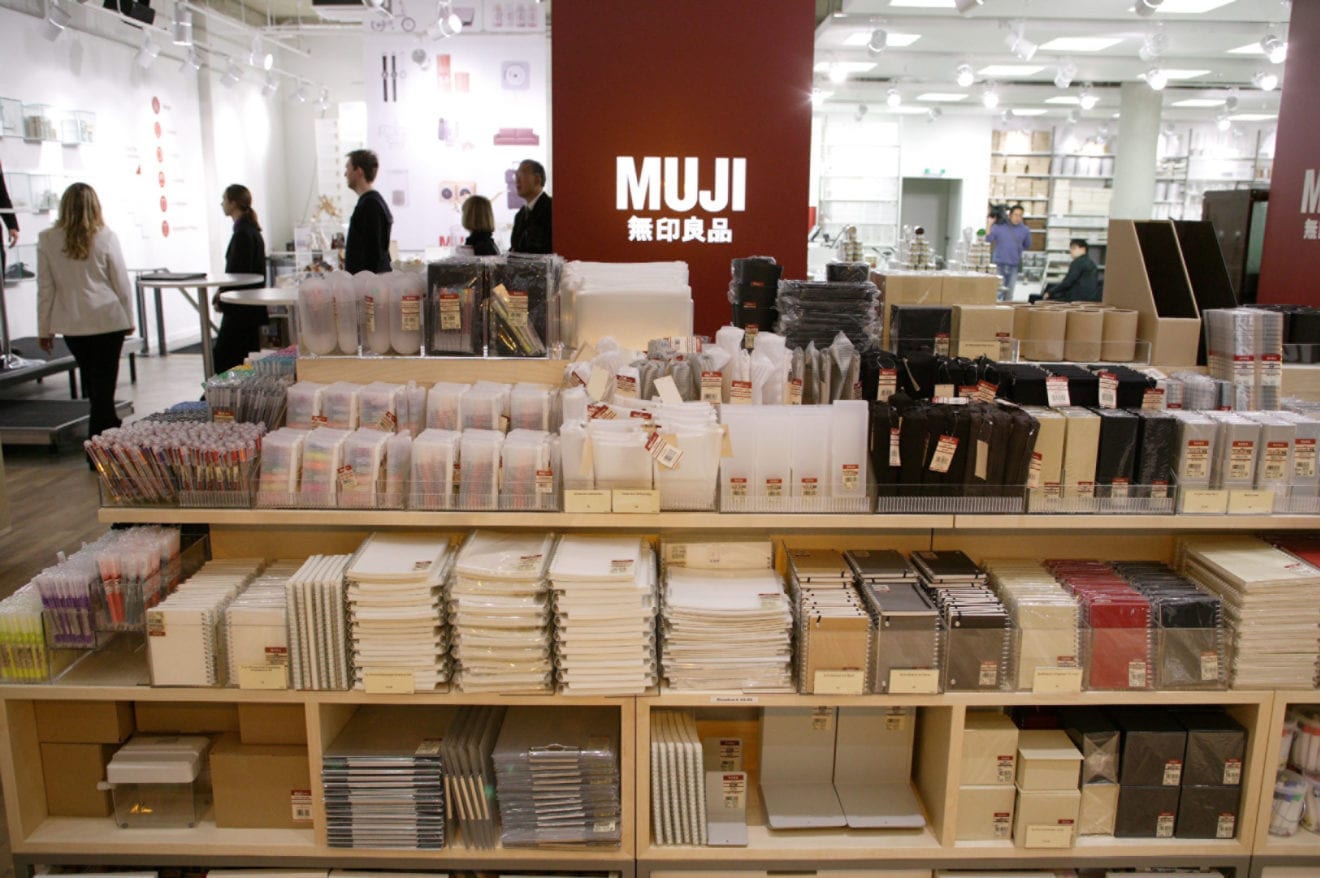
    Muji will open its largest store in Kashihara City, located in Japan’s Nara Prefecture, on March 1.

    The Japanese variety retailer is set to unveil the expanded Muji Aeon Mall Kashihara, the sales floor area of which will be about 10 times larger than the previous store that closed last November.

    The venue will offer a wide range of food, clothing, and home products. It will also have a workshop to repair, maintain, and sell second-hand furniture from Japan and overseas, making it a new resource circulation base.

    Another highlight is the Books and Cafe, featuring over 100,000 books from Kashihara Bookstore and rice bowls, coffee, tea, and ice cream from Cafe&Meal Muji.

    Earlier, Ryohin Keikaku executive vice-president and director Satoshi Shimizu delivered a new management policy plan for Muji, underscoring the lifestyle brand’s ambition to pursue its “second founding” via global expansion.

  • Korean sandwich brand Eggdrop lands in the Philippines

    Korean sandwich brand Eggdrop lands in the Philippines

    Korean sandwich brand Eggdrop has opened its first store in the Philippines, located in the SM Mall of Asia.

    The brand is known for making egg sandwiches using brioche buns, organic eggs, and other fresh ingredients. Some of its signature offerings are Garlic Bacon Cheese, Avo Holic, and Mr Egg.

    Eggdrop said to maintain its standards; the company uses a local supply chain to guarantee freshness while supporting Filipino farmers.

    Stuart Wong, head of Eggdrop Philippines, said he was inspired by seeing Eggdrop in the Korean drama Hospital Playlist.

    “It made me want to share this experience with Filipinos,” he added.

    “The joy of taking that first bite of an Eggdrop sandwich is unforgettable.”

    The company plans to open a second store in Bonifacio Global City (BGC) early this year to advance its expansion across Asia.

  • Thailand resumes durian exports to China after temporary ban due to carcinogen detection

    Thailand resumes durian exports to China after temporary ban due to carcinogen detection

    Thailand has resumed exporting durians to China following a temporary ban due to the latter’s stricter requirement regarding Basic Yellow 2, a carcinogen.

    Itthi Sirilathayakorn, deputy minister of Thailand’s Ministry of Agriculture and Cooperatives, said exports were resumed on Monday, with 96 tons of durian worth 7.8 million baht (US$228,900) to be shipped to China on Monday and Tuesday via border channels in Nakhon Phanom and Chiang Rai.

    The shipments underwent stringent screening and certification to comply with China’s tougher import standards, The Bangkok Post quoted Itthi as saying.

    Basic Yellow 2, also known as Auramine O, is a coloring chemical typically used in fabrics, paper, leather, and house paint. It is classified as possibly carcinogenic to humans.

    Traces of the chemical were detected in some Thai durian shipments in late 2024, prompting China to enforce tougher import requirements earlier this month, including the newly added testing for the chemical.

    At the time, customs checkpoints across China were instructed to reject durian shipments lacking the lab test results certifying that the fruit was free of the chemical.

    Itthi said the ministry has since enhanced screening measures. As of Jan. 17, On January 17, six laboratories in Thailand were authorized by China customs to conduct Basic Yellow 2 testing, according to the Department of Agriculture. Four more labs are expected to be approved next week, increasing testing capacity to 1,300 samples per day.

    Some 100 durian containers from Thailand were reportedly sent back due to the increased scrutiny.

    These fruits were being sold at local markets for just 110-120 baht per kilogram, down from their initial prices of 230-240 baht, due to being overripe.

    The abrupt shift in import standards similarly left many Vietnamese businesses unable to adapt quickly, leading to delays or returns of durian shipments at the border.

    Some companies in Vietnam also had to redirect the durians to the local market, selling them at massive discounts instead of waiting for customs clearance.

    China imported 1.53 million tons of durian worth US$6.83 billion in the first 11 months of 2024, up 9.4% in volume and 3.9% in value from a year ago, according to customs data reported by Vietnam Agriculture News.

    Thailand accounted for 52% of the shipments, down from 65% a year earlier, while Vietnam’s share grew from 35% to 47% during the same period.

  • Mt Yengo Wines gains momentum with international expansion

    Mt Yengo Wines gains momentum with international expansion

    Mt Yengo Wines – Australia’s first indigenous-owned wine brand – has reported a tenfold increase in growth over the past three months, attributed to expanded retail partnerships and entry into the international market.

    The company’s expansion includes adding three new wines into Vintage Cellars and First Choice Liquor stores, part of the Coles Liquor network. These retail partnerships have introduced Mt Yengo to 93 Vintage Cellars locations and 102 First Choice Liquor stores nationwide.

    In addition to domestic retail, Mt Yengo said it has been active in the US for four years and is set to enter the Chinese market this year. The company plans to expand further globally, including Europe.

    Mt Yengo has also entered a supply agreement with Carnival Cruises, including P&O and Princess Cruises. The wines are now served on cruise ships alongside existing placements in venues such as Rockpool Sydney and Midden by Mark Olive at the Sydney Opera House.

    Wayne Quilliam, a Palawa man, artist, and co-owner, expressed his enthusiasm as the company sees its hard work pay off as it reaches more consumers.

    “Our people are proud to see an Indigenous-owned brand thriving,” Quilliam said. “We aim to celebrate our culture while offering a premium product that resonates globally.”

  • Kellogg’s launches master brand campaign for ‘healthier’ cereals

    Kellogg’s launches master brand campaign for ‘healthier’ cereals

    Kellogg’s is launching its first master brand campaign featuring its popular sub-brands, including Nutri-Grain, Coco Pops, and others.

    The ‘For Real’ campaign, in collaboration with marketing agency Bastion and comedian Celeste Barber, objects to unrealistic eating trends and misinformation promoted on social media.

    According to Kellogg’s, its new healthy cereals represent a simpler, more realistic method to get real nutrition for breakfast.

    The commercial highlights Kellogg’s latest ‘healthier’ varieties, including Nutri-Grain High Protein Crunch and multigrain Coco Pops Chocos, emphasising the brand’s commitment to providing healthier breakfast options.

    “There are so many mixed messages, myths, and mistruths about breakfast out there that people don’t know what to believe. It leaves them questioning the nutritional value of cereal,” said Bastion national chief strategy officer, Angela Morris.

    Last year, confectionary company Darrell Lea partnered with cereal and snack brand Kellogg’s to create the Darrell Lea Crunchy Nut Corn Flakes Chocolate Block, which is made from 100 per cent sustainably sourced cocoa.