Tag: asia

  • Czech’s top automaker Skoda to complete Vietnam factory this quarter

    Czech’s top automaker Skoda to complete Vietnam factory this quarter

    Czech’s biggest automaker Skoda is set to complete its $500 million factory in northern Vietnam, its first in Southeast Asia, by the end of March.

    The company plans to launch two locally assembled models this year after the completion of the plant, which it develops with Thanh Cong – a local distributor of Hyundai cars, according to the Vietnam Government Portal.

    The plant, located in the northern province of Quang Ninh, has a capacity of 120,000 vehicles a year.

    Its chairman Klaus Zellmer told Prime Minister Pham Minh Chinh Sunday that the Vietnam factory is an important milestone in the company’s expansion strategy in Southeast Asia.

    The PM requested the company to accelerate its research and development of electric vehicles in the country and increase its localization rates as part of a technology transfer effort.

    He said that the Vietnamese government would offer incentives to investors who meet requirements related to technology transfer, increasing scientific and technological content, and helping Vietnamese businesses participate deeper the supply chain.

    Skoda chairman Klaus Zellmer affirmed the company’s commitment to long-term investment in Vietnam.

    He promised to pump up the current localization rate of 40%.

    He considers Vietnam a strategic gateway to access the rest of the Southeast Asian market. The country has potential to become a production and export hub for Skoda vehicles to other countries.

    He expressed hope that the Vietnamese government would continue to support and provide favorable policies for businesses.

    Skoda said earlier that it saw the region’s potential when it started exporting completely-built units to Vietnam in 2023.

    “We realized Skoda has a future in Vietnam and Asia,” chief marketing officer Vu Manh Cuong said previously in an interview.

    He added: “It takes time to show [cars] to the customer, for people to try the product, feel it out.”

  • Guess Jeans to launch in India

    Guess Jeans to launch in India

    Guess sub-brand Guess Jeans will launch in India through a long-term franchise agreement with Tata Group’s multi-category e-commerce platform, Tata CLIQ.

    As part of this collaboration, Tata CLIQ will become Guess Jeans’ exclusive retailer in India, growing its retail footprint through brick-and-mortar stores and digital storefronts.

    According to the brand, the collaboration between Guess Jeans and Tata CLIQ will be critical in extending distribution channels and supporting Guess Jeans’ ambition to expand its store network nationwide.

    “As the next step in our global growth initiative for Guess Jeans, we expect a rapidly expanding and prosperous partnership with Tata CLIQ, which is part of the Tata Group in India,” said Nicolai Marciano, chief new business development officer, Guess Inc.

    “Our brand’s legacy, heritage, and innovative outlook on denim, paired with the local knowledge and expertise of Tata Group, ensure a strong and enduring partnership.”

    Guess Jeans is a West Coast lifestyle brand founded by Nicolai Marciano. The brand offers a full line of core basics, concentrating on denim, that captures Guess’s spirit.

    Last year, Tata announced it would postpone the plans to open m

  • Record number of ramen shops shutter in Japan amid rising costs

    Record number of ramen shops shutter in Japan amid rising costs

    A record number of ramen shop operators in Japan went bankrupt in 2024 as many hesitated to hike prices above 1,000 yen (US$6.4) despite surging costs.

    Some 72 of them shuttered with over 10 million yen (US$64,400) in liabilities last year, a 30% increase from 2023, Kyodo News reported, citing research firm Teikoku Databank.

    Around 34% of the 350 ramen businesses surveyed by the firm reported operating at a loss during the 2023 fiscal year, which ran from April 1, 2023, to March 31, 2024.

    Ramen, a beloved Japanese noodle soup, is regarded as a low-cost meal especially popular among individuals with lower income, students and young people, whether enjoyed as a quick lunch or a late-night treat.

    But the cost of making these affordable bowls of noodles has been going up, with ramen shop owners reporting that the prices of nearly every ingredient, including meat, seaweed, green onions, and even soy sauce, have increased.

    Energy costs have also been a challenge, as ramen shops need to simmer the broth for extended hours to develop its rich flavors, often requiring them to keep power running at all times.

    With over 90% of Japan’s energy supply imported, global disruptions, such as those caused by the ongoing conflict between Russia and Ukraine, have had a large impact on energy costs.

    “Not only the gas costs for cooking but electricity costs. Keeping the air conditioner on is essential, since it’s so hot in the summer. So we are using a lot of energy,” Tetsuya Kaneko, the 44-year-old owner of the Mendokoro Isshou ramen restaurant in Tokyo, told The Washington Post.

    “I think everyone in the industry is struggling,” he said, noting that the rise in prices in the last few years has been “unbelievable.”

    Despite rising costs, Teikoku Databank reported that the average price of a bowl of ramen remains below 700 yen.

    A number of ramen eateries have been raising their prices, but the average customer spending at these establishments remains lower than at other restaurants.

    The average spending per customer at ramen shops was estimated at 880 yen in 2023, as against 1,360 yen for family restaurants and 1,190 yen for conveyor belt sushi restaurants, according to Fuji Keizai, another research firm.

    However, businesses are hesitant to raise prices closer to or above 1,000 yen, a move that they believe could damage ramen’s reputation as an affordable option and potentially drive customers away.

    Some restaurants that hiked prices reported that their customers did not respond positively.

    Takatoyo Sato, 52, manager of Menkoi Dokoro Kiraku noodle shop in Tokyo’s Shimbashi business district, said customer numbers dropped after the price of shoyu ramen went up from 780 yen in 2021 to 950 yen last May. “People don’t say it, but they think it’s just ramen — that view is going to change,” he said.

    Some shop owners decided to raise prices above 1,000 yen and maintained high quality to attract returning customers, while others have relocated to suburban areas, where profitability has increased over urban locations with expensive rents.

    As for ramen enthusiasts, some have adapted to the 1,000-yen price tag.

    Yuya Henmi, a 28-year-old IT worker from Tokyo, said he would accept higher prices for tasty ramen and would even spend up to 2,000 yen for an exceptional one. “But for a normal ramen without toppings, I think 1,500 yen is the max,” he added.

    Teikoku Databank has predicted that ramen shop closures in Japan could persist this year, with smaller businesses more hesitant to adjust their menu prices than larger chains.

    Sato hopes costs do not rise any further this year as customers are not ready to accept higher prices yet.

    Meanwhile, Mendokoro Isshou’s Kaneko wants to hold on to ramen’s traditional appeal. “Ramen has always been a staple for people with lower income or students and young people so I don’t necessarily want ramen to become something out of reach for them.”


  • Luk Fook’s retail revenue falls in third quarter

    Luk Fook’s retail revenue falls in third quarter

    Luk Fook posted lower retail revenue in the fiscal third quarter as high gold prices continued to weaken consumer sentiment.

    The group’s retail revenue fell 9 percent as Hong Kong and Macau plunged 20 percent and Mainland China soared 27 percent.

    Overall same-store sales plummeted 22 percent, with Hong Kong and Macau decreasing 24 percent and Mainland China falling 11 percent.

    In terms of products, same-store sales of gold fell 26 percent while fixed-price jewelry slid 7 percent.

    During the three months ended March 31, the group saw a net decrease of 65 shops.

    Moving forward, the company plans to actively promote non-diamond fixed price jewellery products as demand for diamond products remains weak.

    The company also anticipates sales of gold products to resume to normal levels after consumers adapt to high gold prices.

    Luk Fook targets to allocate more resources for expansion and add about 15 shops in the overseas markets in the current financial year.

    The company forecasts business performance to improve in the second half.

  • Paris Baguette appoints Belinda Remaczyk as UK franchise director

    Paris Baguette appoints Belinda Remaczyk as UK franchise director

    South Korean bakery cafe Paris Baguette has named Belinda Remaczyk as franchise director for its UK arm.

    Remaczyk joined the company a month after the cafe opened its first UK store in Canary Wharf, London. She will lead franchise strategy in the country, where it currently operates three stores.

    Prior to joining Paris Baguette, Remaczyk was the head of the European franchise recruiting for Wendy’s.

    Nico Gaillot, MD of Paris Baguette UK, said Remaczyk will be pivotal in driving the brand’s growth and success.

    “Her dedication to fostering strong relationships and her passion for strategic growth make her the perfect fit for this role. We are excited to see the positive impact she will bring as we expand our footprint in the UK,” said Gaillot.

  • U Mobile, CIMB Sign MoU to Support 5G Network Rollout

    U Mobile, CIMB Sign MoU to Support 5G Network Rollout

    U Mobile CEO, Wong Heang Tuck, highlighted the company’s enthusiasm for this strategic partnership with CIMB for the 5G rollout, emphasizing CIMB’s shared commitment to innovation and digital growth. He noted that the financial support would enable a fast, cost-effective deployment, benefiting businesses, consumers, and the public sector.

    Chu Kok Wei, CEO of Group Wholesale Banking, CIMB Group, said, “In line with our shared goal of nation building, CIMB is pleased to support U Mobile in its efforts to connect Malaysians and spur digital innovation through the power of 5G. CIMB is also ready to offer a holistic range of bespoke products and services apart from financing, extending to diverse areas including investment banking and treasury that will spark further innovation and accelerate growth both for U Mobile and Malaysia.”

    Both Tuck and Wei signed the MoU at U Mobile’s Corporate Offices in Berjaya Times Square. The ceremony was attended by U Mobile CFO, Sandy Tsang, and Denise Wong, Head of Corporate Coverage Malaysia at CIMB Group.

    This MoU builds on a longstanding financial relationship between the two companies, including CIMB’s participation in a MYR 1.2 billion facility for U Mobile in 2021, which was increased to MYR 1.4 billion in 2023.

  • Jio Platforms, Polygon Labs Partner to Drive Web3, Blockchain Solutions

    Jio Platforms, Polygon Labs Partner to Drive Web3, Blockchain Solutions

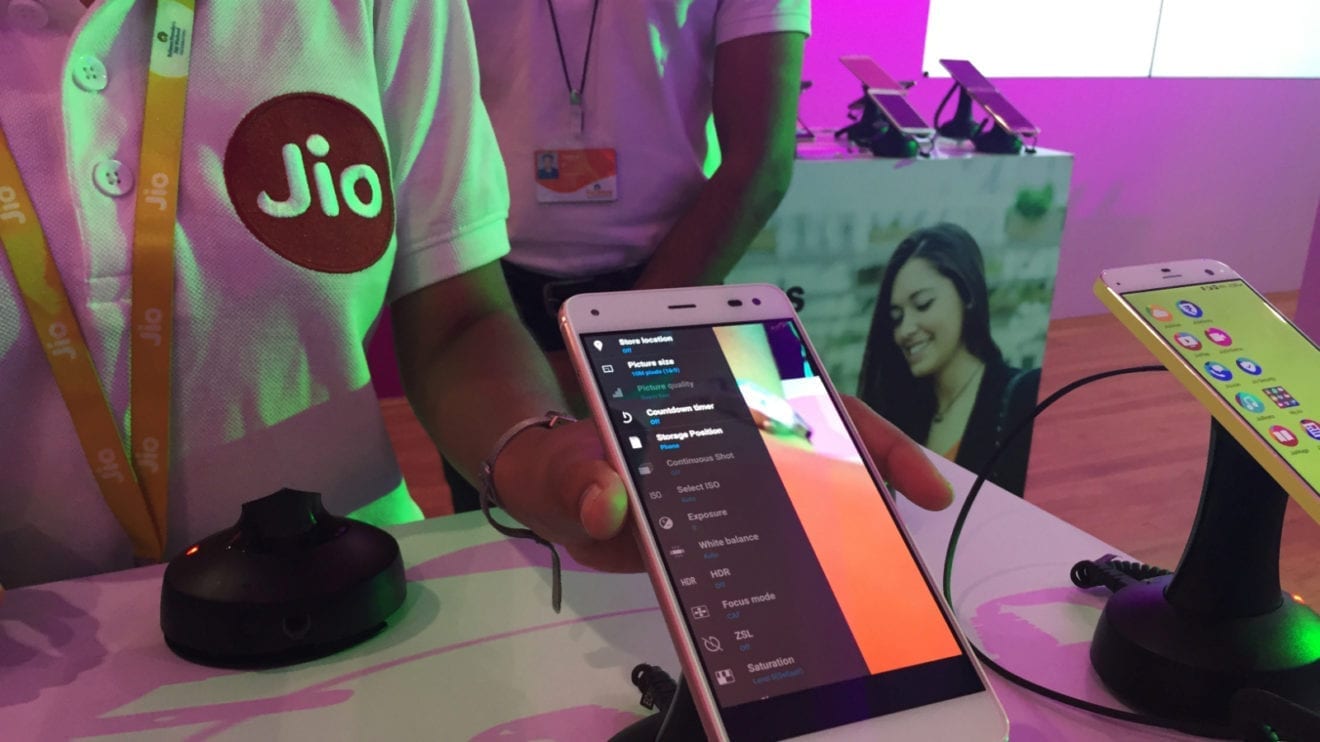
    Through this collaboration, Jio aims to integrate Polygon’s blockchain solutions into its existing applications and services, expanding Web3 capabilities to its extensive customer base of over 450 million users.

    “Reliance leverages the infrastructure that Polygon has in order for them to go out and enable their users to use the stack. They can go out and build an application running on Polygon as a backend, allowing users to leverage the technology,” explained Aishwary Gupta, Global Head of Payments, Polygon Labs.

    Gupta refrained from disclosing specifics about the Web3 products being developed in collaboration, citing confidentiality. He did, however, emphasize the broader potential of blockchain technology in India, extending beyond its conventional use in cryptocurrency and virtual digital asset (VDA) trading.

    Gupta highlighted that, in India, new applications for the technology are emerging, particularly at the intersection of AI and cryptocurrency, where they are being used to create advanced agentic frameworks, build communities on blockchain platforms, and improve payment systems. Although, he noted that current financial infrastructure is not yet equipped to handle the requirements of Web3.

    He further emphasized the potential of developing a marketplace where users can trade vouchers as non-fungible tokens. The company has previously collaborated with brands like Flipkart on similar initiatives, according to a company representative.

    “We have done everything which was Web3 while working with 60 brands. Users do not know that they’re interacting with Polygon since it is in the backend,” he said.

    Web3 represents the next evolution of the internet, leveraging blockchain technology to enable use cases such as cryptocurrencies, NFTs, and decentralized finance. Its decentralized structure provides users with greater control over their digital interactions and assets.

  • New Instagram feature to entice TikTok users also compromises privacy

    New Instagram feature to entice TikTok users also compromises privacy

    It is highly likely that within a few hours TikTok will cease operations in the U.S. In an effort to capitalize on this golden opportunity Instagram is adding a new feature to the app to entice TikTok users to switch platforms. However this new feature also compromises your privacy and may be something that you wish to turn off.

    Adam Mosseri — head of Instagram — announced in a video that the app will be rolling out a new feed where you will see reels that your friends have liked or commented on. The idea is that you can quickly start a conversation with your friends about content they’ve watched. While the concept definitely encourages more interaction over Instagram it also means that your history is being shared openly.

    I quite like that I can watch whatever I want on Instagram — mainly cat videos — and not announce it to the world. This new feature is one that I will turn off immediately once it arrives in my country. Meta is only releasing the update in certain regions for now and will expand coverage once the company has studied how it is received by users.

    The whole TikTok debacle has sent multiple platforms racing to replace it. Instagram is already quite similar to TikTok and is trying everything it can to win over people looking for a new short-form video sharing app. However this hasn’t gone exactly to plan as TikTok users are migrating to another Chinese app instead: RedNote.

    While Instagram would have welcomed the influx of new users with open arms, RedNote is not as thrilled. The company is already considering isolating foreign IP addresses from Chinese ones so “American influence” can be minimized. This transition from TikTok to RedNote is also profiting an unsuspecting third app

    Instagram has taken some very welcome steps in recent years to protect user privacy on the platform, especially for minors. This is why I’m hopeful that the new dedicated feed will be optional as well. The app had a similar feature years ago that it discontinued and I wouldn’t be surprised if this new addition eventually meets the same fate.

    Instagram can still play its cards right and snag some former TikTok users as RedNote hands out bans for “inappropriate” content.

  • The time for a new Apple Card issuer might finally be near

    The time for a new Apple Card issuer might finally be near

    It’s 2025 and the Apple Card saga is still unfolding. Last year, reports surfaced that talks between Apple and JPMorgan Chase had picked up, possibly signaling a move away from the current issuer, Goldman Sachs. A new player is joining the mix, while Goldman Sachs seems eager to bow out, particularly after the Apple Card missteps led to over $89 million in fines for both Apple and Goldman last year.

    A new report reveals that Apple is discussing with Barclays to take over from Goldman Sachs as its credit card partner, according to two sources familiar with the matter. This comes as the Wall Street giant pulls back from its consumer finance plans. Additionally, according to one of the sources, Synchrony Financial, a credit card issuer, is reportedly in talks with Apple about the potential partnership.

    Multiple financial firms are competing to replace Goldman Sachs, which partnered with Apple to launch the credit card back in 2019, according to the sources. While the appeal of working with Apple, one of the most recognizable names globally, is strong, some lenders have reportedly seen the initial terms of the deal as risky and not profitable. Talks between Apple and Barclays have been underway for months, but it could still take a while before an agreement is finalized.

    As mentioned earlier, JPMorgan Chase has also been in discussions with Apple about the partnership since last year. Although Goldman Sachs’ deal with Apple runs until 2030, Goldman CEO David Solomon recently suggested the collaboration could wrap up earlier. So, it’s no surprise that talks with other potential partners are in full swing.

    A switch in the Apple Card’s issuer could bring a host of new features and perks for cardholders, along with the possibility of a different or more consistent interest rate for Apple Card Savings accounts. Recently, Apple and Goldman Sachs reduced the savings rate again. Ultimately, as a consumer, I’m hoping that whoever Apple partners with next will result in a stronger and more competitive product for us.

  • Ferrero launches Nutella bakery range in Australia

    Ferrero launches Nutella bakery range in Australia

    Ferrero has debuted its frozen bakery range, the Nutella Croissant and Nutella Muffin, which are now available to food service partners across Australia.

    The Nutella Croissant is a flaky, buttery pastry filled with Nutella chocolate hazelnut spread for breakfast or a sweet snack. The Nutella Muffin uses sourdough and yoghurt to create a soft texture and is filled with Nutella.

    The Nutella Bakery Range is frozen to maintain freshness, with the Nutella Muffin ready to consume after only two hours at room temperature and the Nutella croissant frozen right after rising and ready to bake straight from the freezer.

    “We are incredibly excited to introduce the Nutella Croissant and Nutella Muffin to the Australian market,” said Azzurra Puricelli, head of new business at Ferrero.

    “These products not only showcase the versatility of Nutella but also meet the growing demand for convenient, high-quality bakery items. We believe our new range will delight consumers and give our food service partners a delicious new way to serve Nutella.”

    The Nutella Croissant and Nutella Muffin are now available through Campbells Wholesale and PFD Foods.

    Ferrero Rocher launched two products for Christmas through retail chains with back limited-edition chocolates.

  • Qatar Airways Cargo and Unilode announce a major digitalisation partnership

    Qatar Airways Cargo and Unilode announce a major digitalisation partnership

    Qatar Airways Cargo, the leading air cargo carrier and Unilode Aviation Solutions, the market leader in outsourced Unit Load Device (ULD) management, repair and digital services, announce their partnership for the digitalisation of the airline’s fleet of over 42,000 ULDs.

    The partnership represents the largest ULD digitalisation programme undertaken by an airline. Qatar Airways Cargo will leverage Unilode’s advanced ULD digitalisation capabilities to gain data-driven insights and real-time visibility into ULD locations, sensory data, and asset utilisation rates. Through Unilode’s digital technologies Qatar Airways Cargo will continue to strengthen its position to be at the forefront when it comes to streamlining operations, optimising resources, increasing revenue opportunities, and boosting performance.

    The partnership with Qatar Airways Cargo will make sure Unilode’s tag and reader network is further extended to cover the carriage of ULDs on the airline’s global passenger and cargo network. The tag and reader network will be supported by E-ULD, Unilode’s in-house developed mobile app and web portal that enables real time visibility & tracking of ULDs, and Unilode’s Enterprise Data Warehouse and customer portal, which provide the airline with enhanced data analytics to improve ULD utilisation and further reduce costs.

    Qatar Airways Cargo’s Chief Officer Cargo, Mark Drusch said, “We are excited to join forces with Unilode to embark on this ground breaking transformative digital journey. Our shared vision for ULD digitalisation and innovation will undoubtedly set new benchmarks in the air cargo industry for operational excellence, enabling us to elevate our customer experience and further optimise our resources. By implementing Unilode’s innovative digital solutions, we are able to allocate ULDs more effectively across our vast network of destinations and this in turn will increase asset utilisation, reduce costs, and contribute to a more sustainable and environmentally-friendly operation.”

    Unilode, Chief Executive Officer, Ross Marino, said, “Our collaboration with Qatar Airways Cargo represents a major digital milestone in the industry. This reinforces our commitment to our digital journey and providing our customers with technology-based solutions for their own fleet, or as part of our full service ULD management solutions.

    With this partnership we are confident that it will reshape ULD digitalisation across the industry and contribute to a more connected, efficient, and sustainable aviation ecosystem. With Qatar Airways Cargo as our partner, we look forward to working together on developing and enhancing our digital solutions further.”

  • Seafrigo opens in Vietnam and appoints Fabian Hautiere to head up the country

    Seafrigo opens in Vietnam and appoints Fabian Hautiere to head up the country

    Seafrigo, the cold chain logistics expert, specialising in food logistics has opened its first office in Vietnam. At the same time, it has appointed Fabian Hautiere to head up operations in the country as Managing Director.

    A new office in Vietnam aligns with the Seafrigo Group’s long-term growth strategy to develop its own operations in key locations around the globe.  The new office is located in Ho Chi Minh City, the economic capital of the country with easy access to the main ports and airports and also home to the leading exporters of seafood and fruit.

    Vietnam will be both an air and ocean operation and will cater to exports and imports. It is one of the most dynamic and fastest growing economies in South East Asia with an average GDP growth rate of +6% for the last 15 years (excluding the 2 years of COVID where the growth rate was +2.7%). The country also has Free Trade Agreements in place with trading partners including the EU and Asia-Pacific countries.

    Fabian Hautiere joins Seafrigo from Kuehne Nagel where he was National Key Account Manager specialising in consumer goods. He also has extensive experience on the operational side of the business where he worked as a Senior Supply Chain Manager for a leading fine food import company in Vietnam where he has lived for the last 12 years.

    Says Fabian Hautiere: “This is an exciting time to be setting up the Seafrigo business in Vietnam in its own right. There are many specialist products such as pangasius, shrimps, dragon fruit and mangoes etc, to name just a few, where we will be using our team’s cold chain logistics expertise to bring these goods to markets around the world both by air and ocean.  With my long-standing experience in Vietnam, I already knew Seafrigo well. I used and approved their services as an importer in the past, so I am well versed in the company’s passion for excellence and its commitment to the highly specialised chilled and fine foods business, joining them was a natural choice”.

  • Warning Signals from the Crypto Valley

    Warning Signals from the Crypto Valley

    As a Crypto-Nation, Switzerland has made headlines for many years. However, the tide may be turning now.

    On January 20, 2025, Donald Trump will move into the White House for the second term. By then, the Crypto Valley will be closely monitoring the US President’s policies. Trump’s plans could cause a major upheaval in Switzerland.

    In addition to introducing massive tariffs and tightening immigration policies, Trump has also announced his intention to overhaul the previously restrictive policy on Bitcoin and other cryptocurrencies, aiming to implement crypto-friendly regulations.

    Among other things, Trump wants to attract mining companies: Bitcoin made in the USA. This will involve massively expanding the energy-producing economy to ensure that enough cheap energy is available at all times.

    At the same time, Trump aims to promote stablecoins and bitcoins and establish a strategic national Bitcoin reserve.

    Trump’s promises have sparked a surge in cryptocurrency prices in recent months. In December, Bitcoin’s price briefly surpassed the magical threshold of $100,000.

    If the US President delivers on his promises, it would be a true game-changer. This would not go unnoticed in Crypto Valley», says a senior manager at a crypto company based in Zug. However, he does not want to be named publicly, as the matter is too sensitive.

    Cryptocurrencies and Switzerland have long been a success story. As early as 2013, Switzerland set up attractive conditions for the industry, ahead of many other nations. With over 1,000 blockchain companies, Switzerland became an international hub, with the canton of Zug at the forefront. The region came to be known as Crypto Valley.

    But the honeymoon is over. A sense of unease is spreading within the industry. Bitcoin pioneer Niklas Nikolajsen, a Danish national who moved to Switzerland in 2011 and now lives in Zug, recently told the Neue Zürcher Zeitung (NZZ) that Switzerland is no longer an attractive location for crypto businesses.

    Once, even a Federal Councilor visited the offices of crypto companies. In this politically favorable environment, the Financial Market Supervisory Authority (FINMA) even granted two crypto companies a banking license. That would be unthinkable today. When the political pressure faded, FINMA lost its nerve», Nikolajsen said.

    One point of contention is the treatment of stablecoins, which are crypto-assets pegged to a currency like the dollar, euro, or Swiss franc. FINMA now requires that all parties involved in stablecoin transactions be identified and has set concrete requirements for stablecoin issuers and the banks that provide backup guarantees. This has caused an outcry within crypto companies.

    Along with the developments in the US, this unease could quickly become toxic. If conditions for the crypto industry are relaxed under Trump while tightening in Switzerland, many companies are likely to leave the country. «No one is planning to move yet, but if Switzerland doesn’t take action soon, the decision will be made quickly», several crypto managers told finews.ch.

    One such move could be for the Swiss National Bank to be mandated to invest in Bitcoin, as proposed by a popular initiative. «If Switzerland only offers what everyone else does, we’re out of the picture. The Swiss market simply doesn’t offer enough», said one manager, putting it bluntly.

  • WhatsApp’s upcoming AI feature could be your new Google Lens

    WhatsApp’s upcoming AI feature could be your new Google Lens

    While Meta, the parent company of Facebook, Instagram, and WhatsApp, has been rolling back some of its policies lately, the push for AI seems to be going full steam ahead. The company is focused on making it even easier to access Meta AI, its AI-powered assistant, on Android phones.

    With the release of the latest WhatsApp beta for Android 2.25.1.27 update on the Google Play Store, it’s been discovered that WhatsApp is working on adding a widget for easy access to Meta AI

    It looks like, with an upcoming update, one of the most widely used messaging apps will let you access Meta AI right from your Home Screen. This new widget will be totally optional and will appear alongside other widgets WhatsApp offers.

    Just keep in mind that this feature will only be available to accounts that already have access to AI-powered chats. Since Meta AI is still limited to certain regions and users, not everyone will get this widget right off the bat. For example, it’s unavailable in the EU due to local laws and regulations.
    For those who do have access, though, the widget will make it super easy to start a conversation with Meta AI without needing to open WhatsApp or dig through its menus. It’ll be right there on your Home Screen, ready to go.
    With the widget, you’ll be able to ask questions, get help, or chat with Meta AI however you like. It’ll also include a quick shortcut to snap a photo and send it directly to Meta AI. Once that’s done, you’ll be able to ask the AI to edit the image, explain what’s in it, or answer any questions you might have about the photo.

    I think it’s kind of like how Google Lens works, offering more details about what’s in the image. However, WhatsApp’s feature is still in the works and will be rolled out in a future update.

    In other WhatsApp updates, the app could soon introduce a simpler, more streamlined way to create groups and communities. On top of that, it’s also working on a new “Chat with us” feature, which will make getting human support faster through its web app.
  • Porsche Breaks Records in Switzerland

    Porsche Breaks Records in Switzerland

    Porsche set a new benchmark in Switzerland in 2024 with 5,042 new registrations, representing a 10.5 percent increase compared to the previous year. The brand also saw significant growth in electrified vehicles.

    Against the backdrop of an overall market decline in 2024, Porsche closed the year with a record performance in Switzerland and Liechtenstein, registering 5,042 vehicles—a 10.5 percent rise compared to 2023.

    Electrified vehicles (battery electric and plug-in hybrids) accounted for 31.2 percent of all Porsche registrations, also outpacing the market average of 28 percent. This translates to 1,574 vehicles—a 55.2 percent increase from the previous year.

    The all-electric Porsche Macan, introduced in 2024, set new standards for electric SUVs and contributed to a 36 percent growth in Porsche’s BEV segment.

    The Porsche Macan remained the best-selling model in Switzerland with 1,854 registrations, a 15.6 percent year-on-year increase. From September to December, 457 of these registrations were for the all-electric Macan.

    The iconic Porsche 911 saw 1,275 registrations in 2024, maintaining its status as a favorite among enthusiasts. Innovations such as the road-approved 911 GTS with its lightweight T-Hybrid system and the exclusive 911 GT3 RS Tribute to Jo Siffert enhanced the model’s appeal.

    Porsche continues to grow in a dynamic Swiss market,» said Holger Gerrmann, CEO of Porsche Schweiz AG. «With the youngest and most diverse product portfolio in our history, we are ideally positioned for the future, offering unmatched driving performance across various propulsion systems.