Tag: asia

  • Growing demand for durian ignites culinary boom in China

    Growing demand for durian ignites culinary boom in China

    Durian-themed restaurants, ranging from buffets and hotpots to drinks and desserts, have been mushrooming in Chinese cities as the durian craze extends beyond just fresh fruit.

    The catering industry in China is jumping on the durian bandwagon, offering “everything + durian” promotions to cash in on the fruit’s growing popularity among young consumers.

    A restaurant in Shenzhen, China’s Guangdong Province, has gone viral with a buffet offering over 200 durian-inspired dishes, from porridge to pancakes and cakes, for 199 yuan (US$27.26) per person

    Su Yuru, a white-collar worker in Shenzhen, said durians are sweet and filling, making it difficult to eat 199 yuan’s worth. “But my friends and I are eager to try.”

    “I often buy a durian to share with my family on weekends, usually priced at about 150 yuan, and durian is also a regular at local companies’ afternoon teas and annual parties for their employees.”

    Topics related to durian-themed food, like “durian barbecue” and “durian buffet,” have racked up over 1.24 billion views on Douyin, as TikTok is known in China.

    Despite the middle class tightening their belts, their craving for durian has increased, extending beyond fresh fruit to include durian-infused food and beverages.

    Sales of durian-flavored cakes by Guangxi Xuan Ma Food, a producer of packaged snacks and baked goods, surged from 800,000 yuan in 2019, when they were launched, to over 10 million yuan in 2023.

    The fruit has even become a trendy addition to milk tea, a popular beverage in China.

    “Milk tea with durian pulp is our hottest-selling product,” Jariya Unthong, the Thai owner of a street stall selling Thai milk tea in Nanning, the capital of the Guangxi region.

    Hotpots and chicken soups featuring durian introduced by upscale restaurants in the region have also gained widespread popularity.

    To satisfy its growing appetite for the fruit, China, the world’s largest durian consumer, has been ramping up imports, mostly from a host of Southeast Asian suppliers.

    The market purchased 1.38 million tons of durians for $6.2 billion in the first nine months of 2024, up 11% in volume and a 5.6% rise in value from a year ago, which cited Chinese customs data.

    Of these, Thailand accounted for nearly 755,000 tons, or 54.7%, of the fruit worth $3.73 billion while Vietnam shipped 618,000 tons worth $2.45 billion.

    While Thailand pulled ahead, its figures marked year-on-year declines of 14.1% in volume and 13.3% in value, while Vietnam’s rose 72.2% in volume and 57.3% in value.

    To boost its competitiveness, Thailand’s Digital Economy Promotion Agency launched project One Tambon, One Digital in November that aims to enhance durian farmers’ productivity, strengthen consumer trust in Thai durians, and promote high-value products on a global scale, particularly amid competition from China and nearby nations.

    China also imports fresh durians from Malaysia and the Philippines, though in relatively small volumes. The Philippines supplied 6,260 tons in the first three quarters, while Malaysia shipped 215 tons valued at $3.65 million between June, when it received approval for fresh durian exports, and September.

    But even as current suppliers make efforts to boost durian shipments, the Chinese market still has plenty of room for growth as, according to a report by Beijing-based consultancy Guanyan Tianxia, less than one in 100 Chinese people has tasted durian.

    The untapped potential is drawing new players into the market, including Indonesia, which has been traditionally exporting the fruit as paste to China.

    The country is ramping up efforts to ship fresh durians to China, its coordinating minister for food affairs, Zulkifli Hasan, said last month.

    Laos, whose durian industry has only been gaining traction recently, is also vying for a share of the Chinese durian market, Nikkei Asia reported in late October.

    Bounchanh Kombounyasith, director general of the country’s Department of Agriculture, said market access documents were being prepared and Lao durians will soon be exported to China.

  • PLDT, Smart Lead National Drive to Protect Telecom Infrastructure

    PLDT, Smart Lead National Drive to Protect Telecom Infrastructure

    In partnership with public and private stakeholders, including local government units and communities, the companies aim to ensure reliable connectivity and uninterrupted service across the nation.

    “Protecting our infrastructure is not just about safeguarding our business operations; it is about ensuring that our customers and communities can rely on uninterrupted connectivity and technology that are essential for our country’s development within a safe and secure cyber environment,” said Atty. Roy Ibay, Vice President and Head of Regulatory at Smart and convenor of PROTECTA Pilipinas, a public-private partnership dedicated to safeguarding technology and telecommunications infrastructure nationwide.

    PLDT, Smart, and the Cybercrime Investigation and Coordinating Center (CICC) spearheaded the launch of a coalition focused on telecommunications infrastructure protection. The launch brought together key stakeholders, including the Philippine Chamber of Telecommunication Operators; advocacy group, CITIZENWATCH Philippines; think-tank, Infrawatch PH; the PNP Anti-Cybercrime Group; the Federation of International Cable TV Association of the Philippines (FICTAP); and the Manila Electric Co. (Meralco).

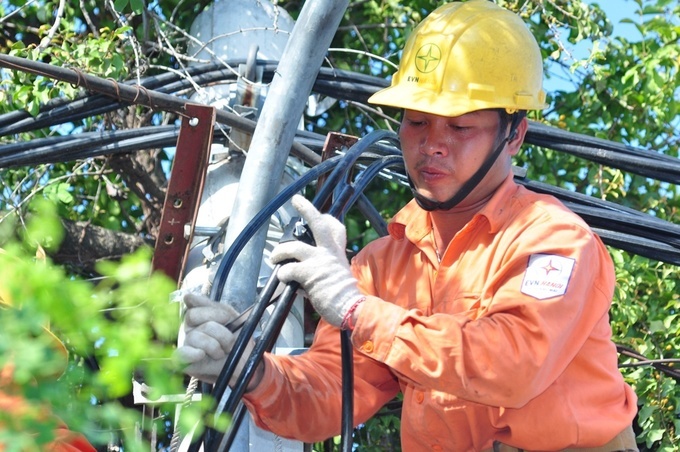
    In collaboration with the Metropolitan Manila Development Authority (MMDA), PLDT has taken proactive measures to protect fiber optic cables from accidental damage during roadworks, particularly during excavation and digging activities.

    Beyond partnerships with government agencies and industry players, PLDT Group has been encouraging its customers and communities to report illegal activities such as cable theft, breakage, and related incidents to local authorities.

    These initiatives reflect PLDT and Smart’s commitment to enhancing telecommunications infrastructure protection, improving customer experience nationwide, and supporting the United Nations (UN) Sustainable Development Goal (SDG) 9, which focuses on industry, innovation, and infrastructure.

    These efforts also align with the government’s push for digital transformation, which aims to bridge the digital divide and ensure internet access for more Filipinos across the nation.

  • Indonesia says 2024 was hottest year on record

    Indonesia says 2024 was hottest year on record

    Indonesia experienced its hottest year on record in 2024, the country’s weather agency said Friday, matching several other nations which have reported similar rises in temperature.

    Indonesia still relies enormously on fossil fuel energy — which scientists say is a leading cause of global warming — and is listed as one of the top greenhouse gas emitters in the world.

    The average air temperature in 2024 was 27.5 degrees Celsius (81.5 Fahrenheit), some 0.8 degrees Celsius warmer than between 1991 and 2020, the country’s meteorology, climatology and geophysics agency (BMKG) posted on its website Friday.

    It said the data was obtained from 113 monitoring posts across the country.

    Indonesia had its hottest April in more than four decades last year as extreme heat swept parts of Asia.

    The United Nations said Monday that 2024 was set to be the hottest year ever recorded worldwide.

    Both China and India have already said the year was their hottest in decades.

  • Smart Communications Launches First 5G Max City

    Smart Communications Launches First 5G Max City

    The company plans to roll out additional Smart 5G Max Cities in 2025, aiming to bring faster and more reliable 5G connectivity to more Filipinos across the country.

    Debbie Hu, Head of Wireless Network at Smart, stated that the achievement forms part of Smart’s broader commitment to building robust, future-ready infrastructure. She mentioned that, starting with BGC as a blueprint, the company aims to expand the Smart 5G Max experience—which is already benefiting residents, workers, and businesses in BGC—to more cities and areas across the Philippines. This expansion is intended to boost productivity and enhance the digital lifestyle of Filipinos.

    During a recent event, 5G users (at its peak) outnumbered 4G users for the first time, highlighting the power of Smart 5G Max. According to Hu, this is the first time 5G user count has exceeded that of 4G at their events during peak traffic times. Independent speed tests conducted during the event also revealed that Smart’s 5G network outperformed competitors, demonstrating download speeds that were at least three times faster and upload speeds that were twice as fast.

    “Our speed advantage empowers users with instantaneous access to content, seamless streaming, and uninterrupted online gaming, cementing Smart 5G as the superior choice for customers,” said Kristine Go, Senior Vice President for Wireless Consumer Business at Smart. “After hosting the country’s first-ever Smart 5G Max-powered concert in the Philippines in BGC, which highlighted the possibilities of ultra-fast, ultra-low latency, and reliable 5G networks, we are now eyeing to extend Smart’s superior 5G experience outside of Metro Manila to benefit more content creators, streamers, and gamers, unlocking endless 5G-powered opportunities in every corner of the nation.”

    Smart continues to lead the charge in advancing 5G adoption in the Philippines with its latest milestone. In addition to expanding and upgrading its mobile network, which currently covers 97% of the population, Smart boasts the largest integrated network in the Philippines.

    Through its innovative mobile products and services, Smart also supports PLDT Group’s efforts in bridging the digital divide, enhancing connectivity, and contributing to the United Nations (UN) Sustainable Development Goals (SDGs); especially SDG 9, which focuses on industry, innovation, and infrastructure.

  • Pizza 4P’s launches in Indonesia

    Pizza 4P’s launches in Indonesia

    After entering Japan last year, Vietnam-based chain Pizza 4P’s has opened its first location in Indonesia, accelerating the brand’s international expansion.

    The store, located in Jakarta’s Mori Tower, features nature-friendly materials including handwoven water hyacinth wallpaper, indigo-dyed handwoven cotton cushions and terrazzo flooring embedded with seashells.

    According to Masuko Yosuke, Pizza 4Ps’ founder and CEO, the company also collaborates with a local Jakarta bakery to impart its culture of making sourdough dough.

    “Our Jakarta store is built around the theme of “Biodiversity”, honouring the rich natural diversity of Indonesia,” said Yosuke.

    “From the interior design to the menu, every aspect reflects this theme, aiming to create a space where you can feel the interconnectedness of all living things—a sense of Oneness.”

    Pizza 4P’s, headquartered in Ho Chi Minh City, was founded in 2011 by Japanese couple Yosuke and Sanae Masuko as a single restaurant selling wood-fired gourmet pizzas.

    The chain quickly established a cult following among expats and locals, and by the time Mekong Capital invested in 2018, it had expanded to eight locations.

  • Japan Airlines’ vision for the future of pharmaceutical logistics

    Japan Airlines’ vision for the future of pharmaceutical logistics

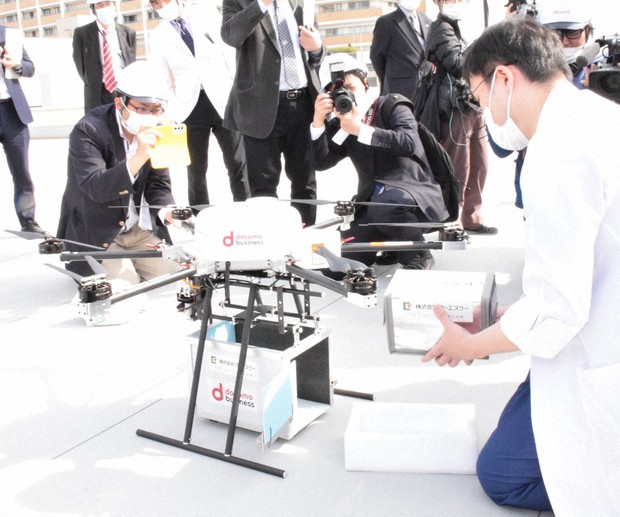
    Japan Airlines (JAL) is taking a significant leap forward in the logistics and healthcare sectors by incorporating drone technology into its broader business strategy. This initiative is part of JAL’s Digital Transformation (DX) strategy, which focuses on integrating advanced technology with the airline’s expertise in safe operations. By collaborating with other companies and aligning with government policies, JAL aims to revolutionise air mobility through drones and electric Vertical Take-Off and Landing (eVTOL) vehicles.

    At the core of this transformation is the Air Mobility Operation Platform (AMOP), a social infrastructure designed to manage the safe operation of next-generation air mobility services. AMOP offers more than just operational management systems providing consulting, communication support, insurance, aircraft provision, and pilot training services. While the platform’s applications are vast, JAL sees particular potential in using drones to deliver lightweight, high-value, and time-sensitive medical supplies.

    “Combining our expertise in safe operations with advanced technology, we are collaborating with other companies to promote the next-generation air mobility business,” explains Eriko Yano, Manager, Drone Business Group, Air Mobility Business Creation Department, Innovation Division, at Japan Airlines. The airline envisions a future where drones and eVTOLs are a common feature of healthcare logistics, transforming how medical supplies are delivered.

    Pioneering drone-based pharmaceutical delivery
    One of JAL’s most promising ventures is its drone-based pharmaceutical delivery system, which aims to streamline the transportation of essential medications. In a demonstration in Tokyo, JAL partnered with consortium companies to deliver low-frequency, high-value pharmaceutical products from warehouses to hospitals. This initiative aims to reduce wastage caused by expired pharmaceuticals, while also addressing the unique logistical challenges faced by hospitals in densely populated areas like Tokyo.

    JAL has also expanded its efforts to more remote locations. On Amami Oshima Island, in collaboration with the Setouchi Town Office, JAL established “Amami Island Drone Co., Ltd.” to deliver pharmaceuticals to residents of remote islands. These efforts demonstrate how drone technology can bridge logistical gaps, ensuring that vital medical supplies reach even the most isolated communities.

    Enhancing healthcare logistics with drone ports
    A key takeaway from JAL’s recent demonstration in Koto-ku, Tokyo, was the potential of drone ports in hospital settings. These ports could allow hospitals to receive pharmaceutical deliveries at their convenience, reducing reliance on traditional logistics systems. As the airline continues to explore the capabilities of drone technology, it also recognises the importance of addressing the shortage of manpower in the pharmaceutical industry.

    In terms of operational efficiency, JAL is focusing on safety and reliability. The airline sees drone ports as an essential component in achieving this, allowing for automated takeoff and landing procedures that minimise human involvement while ensuring temperature control and delivery management. Hospital personnel involved in the demonstration expressed enthusiasm for the potential of drone ports, particularly in emergencies when road closures or disasters isolate healthcare facilities.

    Overcoming challenges and advancing technology
    JAL has faced challenges in its pursuit of drone-based logistics, particularly regarding Level 4 flights—drones flying beyond visual line of sight (BVLOS) in populated areas. Currently, only one drone model, the PF2-CAT3 by ACSL, is certified for these flights. To overcome this limitation, JAL works with partners to diversify drone options and expand operations into urban areas. “We need drones with advanced control capabilities and high-precision landing, especially for operations in limited spaces like urban areas,” Eriko noted.

    In addition to enhancing drone technology, JAL is also developing a flight management system that allows a single operator to control multiple drones. This would significantly reduce operational costs and improve efficiency, paving the way for widespread drone adoption.

    Building strategic partnerships
    Collaboration is key to JAL’s success in the drone industry. The airline has partnered with several organisations, including KDDI Corporation, East Japan Railway Company, and local hospitals, to bring its vision to life. Each partner plays a unique role: KDDI provides essential LTE communication, East Japan Railway Company offers implementation support, and local hospitals serve as demonstration sites, providing valuable feedback on the practicality of drone deliveries.

    These partnerships are vital not only for the technical success of the project but also for gaining public acceptance of drones in everyday life. JAL has been proactively educating the public and healthcare professionals about the benefits and safety of drone technology through workshops and demonstrations. The airline is also working on initiatives to help hospital staff acquire the necessary skills to handle drone operations.

    Navigating regulations and ensuring safety
    Navigating Japan’s regulatory landscape for drone operations has been a complex process for JAL. The airline is working closely with Prodrone Co., Ltd. to meet the stringent requirements for Type 1 Certification, which allows for Level 4 flights in densely populated areas. In addition, JAL has introduced training programs based on Crew Resource Management (CRM), a concept used in aviation to improve safety and coordination among pilots.

    JAL is also taking steps to ensure the sustainability of drone operations. One of its long-term goals is to reduce manpower and increase aircraft utilisation by allowing a single pilot to control multiple drones. Supported by the New Energy and Industrial Technology Development Organization (NEDO), JAL is conducting technological verification to achieve this.

    The future of drone-based healthcare logistics
    JAL’s drone initiatives can potentially transform healthcare logistics in Tokyo and beyond. Drones could be crucial in maintaining healthcare systems in depopulated areas, ensuring patients receive necessary medications and blood supplies even in remote regions. During emergencies, drones could provide uninterrupted delivery services, ensuring the continuous flow of critical supplies.

    “We believe that drones can contribute significantly to maintaining medical systems in areas where healthcare infrastructure is difficult to maintain,” Eriko states. The airline also sees potential for expanding drone deliveries to sectors beyond pharmaceuticals, such as food supplies and newspapers, as demonstrated by its operations on Amami Oshima Island.

    Ultimately, JAL’s vision is to create a sustainable, efficient, and reliable drone logistics service that benefits healthcare providers and patients. By reducing medication waste, improving delivery times, and enhancing operational safety, drones have the potential to revolutionise the healthcare industry—not just in Tokyo, but across the globe.

  • Stocks rise in first session of the year

    Stocks rise in first session of the year

    Vietnam’s benchmark VN-Index rose 0.23% to 1,269.71 points Thursday in the first session of 2025 while Asian shares began the year slightly lower.

    The index closed 2.93 points higher after dropping 5.24 points in the previous session.

    Trading on the Ho Chi Minh Stock Exchange decreased by 7% to VND10.752 trillion (US$422.4 million).

    The VN-30 basket, comprising the 30 largest capped stocks, saw 12 tickers gained.

    PLX of fuel distributor Petrolimex went up 1.7%, BID of state-owned lender BIDV rose 1.7%, and BVH of insurance company Bao Viet Holdings closed 1.6% higher.

    Eleven blue chips fell. HDB of lender HDBank slid 1.6%, TCB of private lender Techcombank went down 1.2%, and ACB of Asia Commercial Bank saw a 0.8% drop.

    Foreign investors were net seller to the tune of VND98 billion, mainly selling FPT of IT giant FPT Corporation and VCB of state-owned lender Vietcombank.

    The HNX-Index for stocks on the Hanoi Stock Exchange, home to mid and small caps, rose 0.11%, while the UPCoM-Index for the Unlisted Public Companies Market went down 0.04%.

    Globally, Asian stocks began the year on a dour note on Thursday as they struggled for traction after a jittery close to 2024, while the U.S. dollar held steady and investor sentiment stayed cautious ahead of Donald Trump’s return to the White House, Reuters reported.

    While global shares closed out 2024 with a strong yearly gain of nearly 16%, they had clocked a monthly loss of more than 2% in December.

    The same was the case for MSCI’s broadest index of Asia-Pacific shares outside Japan, which slid 1.2% in December though registered a gain of more than 7% for 2024.

    The index was last down 0.58% in the Asian session on Thursday, with volume thinned given a trading holiday in Japan.

    Chinese stocks were battered, with the CSI300 blue-chip index last down 2.65% while the Shanghai Composite Index lost 2.36%. Hong Kong’s Hang Seng Index slid 2.15%.

  • Vietnam nuclear power program needs 2,400 workers for revival, shortage feared

    Vietnam nuclear power program needs 2,400 workers for revival, shortage feared

    Vietnam needs around 2,400 engineers, scientists and other personnel to revive its defunct nuclear program with two plants in Ninh Thuan Province, but officials flag a likely shortage.

    A typical nuclear power plant with two reactors requires 600-1,200 personnel, according to the International Atomic Energy Agency, Ly Quoc Hung, director of the Department of Science and Technology, said at a forum Thursday.

    Another 350 people with expertise in nuclear development and regulations are needed, he added.

    The National Assembly approved last November revival of the nuclear program eight years after it was scrapped.

    Nuclear power is expected to help Vietnam diversify its energy sources, ensure energy security and meet its net zero target by 2050.

    But it lacks personnel in terms of both numbers and capability, particularly scientists, according to a report by the Department of Science and Technology.

    The number of professors in nuclear science and technology is limited, and the facilities and equipment available for teaching and research are outdated, it said.

    When the Ninh Thuan nuclear power project was being considered in 2010, the government planned to produce 2,400 engineers and 350 master’s and doctoral graduates in nuclear power and send 13% of them overseas for training.

    While 55 Vietnam Electricity engineers were sent to Russia and Japan for training, most quit the state-owned company or have shifted to other areas after the program was binned in 2016.

    Human resources are critical to the success of the program, Minister of Industry and Trade Nguyen Hong Dien said.

    He emphasized the importance of proactive planning to churn out scientific, technological and technical personnel.

    “This is not just about the program but about building a nuclear power ecosystem and technology for the future.”

    He has directed relevant agencies to make plans for meeting personnel requirements and creating specialized training programs by the first quarter of 2025.

    “The Ministry of Industry and Trade and the Ministry of Education and Training will establish standardized training programs for nuclear power personnel.”

  • WhatsApp working on a new “Chat with us” feature for faster human support through its web app

    WhatsApp working on a new “Chat with us” feature for faster human support through its web app

    WhatsApp is making it easier for users to get help with a new “Chat with Us” feature that’s being developed for the web app. This feature is designed to streamline the process of getting support by letting users quickly connect with the WhatsApp support team.

    In the past, getting help through WhatsApp often involved navigating through a long list of frequently asked questions (FAQs). This could be time-consuming and might not always provide the specific answer users were looking for. With the new “Chat with Us” feature, users will be able to bypass the FAQs and directly contact the support team.

    When users click on the “Chat with Us” option in the Help section, they’ll be notified that they’ll soon receive a message from the support team in a WhatsApp chat. The support team might initially respond with an AI-generated message or an automated response. However, users can request to chat with a human representative if needed.

    For those not in the know, WhatsApp’s web version can be used on devices that don’t support its Android or iOS apps. This means you can use WhatsApp on your tablet, Chromebook, or desktop computer. However, the web app works by connecting to your WhatsApp account on your phone using a QR code, so it’s basically like an extension of your phone’s WhatsApp app.

    I think this direct access to human support could be a game-changer for users who need quick solutions to their problems. It’ll be interesting to see how this feature is implemented and how effectively it addresses user queries. While AI and automated responses can be helpful for common issues, having the option to connect with a human representative provides a level of reassurance and personalized assistance that’s often needed for more complex problems.

    It’s also good to see WhatsApp paying so much attention to its web app lately by adding new features. One of the most interesting ones is a reverse image search feature that’s currently in development. This will let users search for images they’ve received in chats, which could be super useful for finding the source of an image or tracking down information about it.

    With all these new features, WhatsApp is making its web app more and more useful. It’s becoming a real alternative to the mobile app, especially for people who spend a lot of time working on their computers. I’m excited to see what other features WhatsApp adds to its web app in the future.

  • Apple TV+ is free for everyone to view on these two days

    Apple TV+ is free for everyone to view on these two days

    While we didn’t expect Apple to make this announcement until next weekend, the tech giant announced today that Apple TV+ will be free for everyone to stream on Saturday, January 4th, and Sunday, January 5th. On X (formerly Twitter), Apple wrote, “This weekend, see for yourself. Stream for free Jan 4-5.” On the tweet Apple embedded clips from shows such as Presumed Innocent starring Jake Gyllenhaal as a prosecutor who becomes a suspect in a murder.

    Other Apple TV+ content included in the tweet include Wolfs starring George Clooney and Brad Pitt. The action-comedy film about a pair of “fixers” had a limited theatrical run last September and now can be viewed on Apple TV+. The long awaited second season of Severance is also teased. Starring Adam Scott, Britt Lower, and Patricia Arquette, the psychological thriller is about a procedure that allows employees of a mystery company to separate their work and personal lives.

    You might want to take advantage of the two free days of streaming to watch some of the platform’s more well-known titles include Ted Lasso (starring Jason Sudeikis), The Morning Show (with Jennifer Aniston and Reese Witherspoon), and Shrinking (starring Jason Segal, Harrison Ford, and Wendie Malick. This is a comedy about a recently widowed therapist who tells clients exactly what he thinks in a bid to help them.

    Just this past Saturday, we told you that Apple had been dropping hints about the upcoming two days of free Apple TV+ by releasing promos with the “See for yourself” tagline. This is the first time that Apple is opening up the Apple TV+ app for a full weekend of free streaming. At the same time, Apple is promoting the seven-day free trial it is offering new Apple TV+ subscribers as well as the longer trials given as a reward to those purchasing certain new Apple devices.

    A one month subscription to Apple TV+ costs $9.99 after the aforementioned one week free trial. The subscription can be shared with as many as five family members. Apple is hoping that the two free days of Apple TV+ gets non-subscribers hooked on some of the platform’s content leading them to subscribe to the service.

  • Vietcombank Remittance named best remittance company in Vietnam

    Vietcombank Remittance named best remittance company in Vietnam

    Vietcombank Remittance was honored as “Remittance Company of the Year – Vietnam” for the third consecutive time by Asian Banking & Finance on Dec. 24.

    This achievement affirms the quality of services and the growth of Vietcombank Remittance, recognizing the company’s efforts and demonstrating its position in both the domestic and international remittance markets.

    Vietcombank Remittance is the only remittance company in Vietnam to organize the Client Conference for three consecutive years successfully. This year’s event featured participation from strategic partners in Taiwan, South Korea, the United States, and several other countries, highlighting the company’s role in fostering international cooperation and collaboration.

    The company consistently supports government agencies in developing policies to enhance remittance resources. Vietcombank Remittance actively participates in programs organized by the Overseas Vietnamese Committee of Ho Chi Minh City to promote collaboration among stakeholders and increase the efficiency of remittance flows. The company has also significantly contributed to Ho Chi Minh City People’s Committee’s project on “Optimizing the Effectiveness of Remittance Resources.”

    Vietcombank Remittance is committed to collaborating with the Ho Chi Minh City People’s Committee to implement specific initiatives such as supporting the improvement of policy mechanisms and facilitating convenient conditions for overseas Vietnamese to send money home. It collaborates closely with regulatory agencies to create clear legal frameworks and facilitate the use of technology in remittance operations.

    The company is leading initial efforts to establish the Vietnam Remittance Association to elevate the industry’s position on the international stage. This association is expected to serve as a bridge between the government, businesses, and the overseas Vietnamese community, ensuring policies are geared toward sustainable development.

  • Thailand’s Telecom Revenue to Hit USD 11.2 Billion by 2029

    Thailand’s Telecom Revenue to Hit USD 11.2 Billion by 2029

    According to GlobalData, a prominent data and analytics company, mobile voice service revenues are expected to decrease due to a decline in mobile voice service ARPU, with operators offering unlimited free voice minutes in bundled plans.

    On the other hand, mobile data service revenues are forecasted to increase by 5.2% annually, fueled by the growing adoption of smartphones, mobile internet subscriptions, and the utilization of mobile data services. This is expected to grow in tandem with 5G services.

    GlobalData Telecom Analyst, Kantipudi Pradeepthi, noted that, while 4G services dominated mobile subscriptions in 2024, 5G subscriptions are expected to surpass 4G subscriptions by 2026. This shift is being driven by the increasing demand for 5G services and operators’ efforts in expanding their 5G networks.

    For example, True plans to upgrade 10,000 sites and achieve 95% 5G coverage by the end of 2025. In the fixed communication services sector, fixed voice services are declining due to a drop in circuit-switched subscriptions.

    However, fixed broadband service revenue is projected to grow by 2% annually from 2024 to 2029, supported by the increasing adoption of Fiber-to-the-Home/Business (FTTH/B) broadband subscriptions.

    Pradeepthi explained that the growing demand for high-speed broadband, the expansion of FTTH networks in urban areas, government initiatives to expand fiber network coverage, and the phasing out of DSL services serve as factors driving the growth of fiber broadband subscriptions.

    The revenue from pay-TV services in Thailand is expected to grow by 6.6% annually, driven by the growth in IPTV subscriptions and a steady increase in DTH and cable TV subscribers.

    In conclusion, Pradeepthi acknowledged that True is expected to lead the mobile service segment in 2024, while AIS will lead in the fixed broadband market, particularly in the FTTH segment.

  • Japanese restaurant chain Pepper Lunch to launch in Mongolia

    Japanese restaurant chain Pepper Lunch to launch in Mongolia

    Japanese restaurant chain Pepper Lunch plans to open its first store in Mongolia next year, as part of its global expansion strategy.

    The brand has signed a franchise deal with local distributor Bluemon Group, making Mongolia its 17th country.

    “We signed a master franchise agreement with our Mongolian franchise partner yesterday,” Yuto Tago, global CEO of Pepper Lunch wrote on his LinkedIn account.

    “I cannot wait to see the first restaurant opening next year!”

    Pepper Lunch is a DIY casual eating concept with more than 400 locations around Japan, Asia, and Australia. Founded by a trained chef, Kunio Ichinose, the restaurant focuses on premium steaks, pasta, and cheese curry rice.

    Pepper Food Service sold the Pepper Lunch franchise to J-Star Investment Fund for US$79 million in 2020.

  • Jim Thompson’s new lifestyle store heralds the brand’s global ambition

    Jim Thompson’s new lifestyle store heralds the brand’s global ambition

    Jim Thompson, a global lifestyle brand from Thailand, has opened a stunning lifestyle store in Bangkok. For the first time, the store showcases the brand’s stylish blend of on-trend fashion for men and women, homewares, and contemporary Thai cuisine in a single mall location.

    The 550sqm duplex in the newly opened One Bangkok shopping centre, near the Thai capital’s embassy and expat hub of Silom-Sathorn, is home to the new store that telegraphs the fast-rising company’s global aspirations as a lifestyle brand, entering a new era of refinery and haute couture – without the price tag.

    Founded by James H.W. Thompson in 1951 as The Thai Silk Company, Jim Thompson was a visionary and the driving force behind the current-day emergence of Thailand’s silk industry. For decades, his apparel was popular with tourists. Elephant motifs – the quintessential Thai icon – featured prominently on shirts, ties and other apparel.

    While the brand has been trying to expand beyond that somewhat tourist-driven design element, elephants still have their place in the range, whether as tiny motifs in a silk tie or subtly embroidered into polo shirts or t-shirts.

    “Some tourists still like the elephants because it is distinctly Thai. So we still keep the elephant, but we have made it more sophisticated, like this,” Panjarat Limpinon, chief commercial officer at Jim Thompson, told Inside Retail.

    Jim Thompson is now entering a new era, epitomised by its new brand positioning slogan, ‘Beyond Silk,’ that symbolises an evolution beyond its world-renowned Thai silk heritage to embrace a more comprehensive lifestyle approach that covers all business units – fashion, home furnishings, and hospitality – and its embrace of linen and cotton fabrics, and silk blends.

    “This new store aligns with Jim Thompson’s mission to offer our customers an immersive shopping experience that combines a wide range of products, dining options, and cultural experiences,” said Frank Cancelloni, Group CEO at Jim Thompson.

    “This opening marks another milestone in our transformation journey to become Asia’s first global lifestyle brand.”

    Limpinon told Inside Retail during an exclusive tour that the One Bangkok lifestyle store is the first location in a shopping mall to combine food, fashion and homewares. The three were also linked in the upgraded Jim Thompson Heritage Quarter, where the Jim Thompson House is located, which officially opened last year. The Quarter features a retail store, cafe, bar, restaurant, and event space alongside Thompson’s home on the banks of the Khlong Saen Saep (canal).

    “We are offering the immersive Jim Thompson experience of retail and dining culture.”

    At the Jim Thompson Lifestyle Store at One Bangkok, that experience starts downstairs with a towering entranceway and dazzling displays of men’s and womenswear, including scarves.

    The designs of Jim Thompson’s famous silk scarves are so intricate and striking that customers often buy them to be framed and mounted on walls as art. The One Bangkok store features framed scarves to inspire visitors.

    Upstairs, accessed by a stylish glass lift or stairs, the homewares include cushions, throws, dining tableware, and a limited-edition range of outdoor chairs created in partnership with Thai furniture brand Kitt.Ta.Khon.

    Next to that is a mini-exhibition with a vintage silk loom at its heart, highlighting the brand’s rich heritage. Interactive tablet screens show the process of producing silk at Jim Thompson’s farm several hours outside the capital and share the story – and the mystery – of Jim Thompson, the man.

    “You can see the story from the beginning of our brand history to today,” explains Jirames Suriwongsewarakul, senior manager of retail operations for Jim Thompson.

    “While the Heritage Quarter site focuses on the story of the man, the One Bangkok display focuses more on how Jim Thompson built a company around using Thai silk to make fine garments and furnishings.”

    There is also a display showing some high-profile projects worldwide in which architects and designers have specified Jim Thompson fabrics and furnishings for upmarket hotels, resorts, restaurants, and luxury retail spaces.

    A colour wall created from multiple spools of coloured silk arranged like a rainbow serves as a backdrop for selfies and Instagram photos.

    Food is a growing focus for Jim Thompson, which considers hospitality a key brand element.

    “When we decided to become a global lifestyle brand, we wanted to combine everything: food, art, culture and the retail experience, all in the same place,” explains Limpinon. “That started in the Jim Thompson Heritage House, and now we will roll out this idea to other locations.”

    In preparation for the evolution, Jim Thompson closed down restaurants it operated in Singapore and Japan around the Covid era as it worked to reform the brand in Thailand and create a new offer that could then be rolled out in selected Thai locations before being exported to other markets in the future.

    Jim’s Terrace, the One Bangkok restaurant and bar, serves crafted beverages and delicious Thai foods to be enjoyed with panoramic views over One Bangkok’s green landscape and The Wireless House One Bangkok – Thailand’s first telegraph station built in 1914, revived with a modern contemporary exhibition.

    In design terms, Jim Thompson has been careful to retain what it considers its iconic style. The colours, elements such as the cushion covers, the wooden floors (upstairs) and the framed hero portrait of the brand’s late founder all lend a familiarity to any customer who has experienced the company’s multi-storey Bangkok flagship store or the newer showcase within the heritage compound.

    In time, products will be created exclusively for the store, along with collaborations with other One Bangkok tenants and partners that are already in planning.

  • Inditex posts solid nine-month revenue growth

    Inditex posts solid nine-month revenue growth

    Apparel giant Inditex says its net revenue grew by 7.1 per cent, reaching US$29.04 billion (€27.4 billion) for its first nine months.

    The company says the results reflect strong growth for its physical stores and online channels.

    Inditex’s gross profit increased by 7.2 per cent, totalling $17.33 billion (€16.3 billion), while its EBITDA jumped by 9.3 per cent, reaching $6.09 billion (€5.7 billion).

    The company continued its expansion, with 45 new store openings across multiple markets. By the end of the period, Inditex operated 5659 stores globally.

    Looking ahead, Inditex said it’s focused on its long-term growth, with an investment of $951 million (€900 million) annually in logistics for this year and the next. This investment aims to improve the company’s logistics capacity and enhance its integrated business model.

    Zara, Inditex’s flagship brand, continues to lead the portfolio, along with other brands such as Bershka, Massimo Dutti, Oysho, Pull&Bear, Stradivarius, Uterqüe, and Lefties.