Tag: asia

  • Hanoi aims to create 169,000 new jobs in 2025

    Hanoi aims to create 169,000 new jobs in 2025

    Hanoi plans to create 169,000 new jobs, reduce urban unemployment rate to below 3%, and increase the proportion of trained workers to 75% in 2025, its People’s Committee said.

    The city will implement policies and solutions to support the comprehensive recovery and development of the labor market, with a focused and targeted approach.

    Vu Thu Ha, the committe’s vice chair, said to achieve the targets, the city will focus on ensuring social welfare, developing the labor market, and strengthening the workforce.

    At the same time, efforts will be made to promote economic growth, improve the quality of human resources, and raise the efficiency of job-creation loan programs funded by the city budget through the Vietnam Bank for Social Policies’s Hanoi branch, the official added.

    A total of 255 job fairs are planned throughout the year, aiming to create 50,600 job opportunities, including 4,600 positions overseas.

    The People’s Committee has asked the Department of Labour, Invalids, and Social Affairs to take measures to boost the labor market, create jobs, and continue sending workers abroad.

    In 2024, the city generated about 225,000 new jobs, surpassing the set target by 36.3%. The number of participants in mandatory social insurance exceeded 2.1 million, an increase of 4.5% compared to 2023. Meanwhile, 107,000 people joined voluntary social insurance, a rise of 21.2% year-on-year.

  • Spotify searches return explicit videos after moderation systems fail to spot them

    Spotify searches return explicit videos after moderation systems fail to spot them

    Spotify has a moderation problem on its hands at the moment. Searching for popular artists on the music streaming platform instead sometimes returns explicit videos and audio posted by unmoderated accounts. The situation recently came to light when users started reporting the problem on social media and The Verge reached out to Spotify for comment.

    This isn’t the first time something like this has happened to Spotify. However, previous instances usually consisted of explicit audio clips. Accounts posting those clips have apparently grown more brazen in recent months and have started posting videos instead. The ‘Video’ tab in particular has multiple examples of explicit content being uploaded to the platform.

    A Spotify representative has said that the examples recently brought to light have been removed. How these videos made it past the content moderation systems in the first place is a mystery. I’d have thought these systems would be a lot more effective now with AI powering them but apparently that might not be the case.

    Spotify is hardly the only platform suffering from behavior like this: YouTube has had a similar problem for a very long time. Videos on YouTube marketed towards children have been found to contain some awful content not suitable for those ages in the slightest. Dozens of accounts pop up in a short amount of time and post hundreds of these videos to flood YouTube feeds.

    The Spotify and YouTube issue is also a symptom of a larger matter in my opinion: a lack of care. Yes, both platforms do have systems in place to detect content like this before it’s uploaded but over the years I’ve seen companies care more about ridiculous copyright laws.

    YouTube in particular has a big problem when it comes to this. Advertising containing explicit content runs free on the site while someone humming a song for five seconds is enough to get their video a copyright strike. Their priorities just aren’t where they should be.

    The examples posted by users online may have been taken down but I’d wager that many more are soon to follow. I don’t know what these accounts get from doing this — aside from views perhaps — but they’re unlikely to stop anytime soon.

  • Vietnam’s coconut industry eyes billion-dollar markets

    Vietnam’s coconut industry eyes billion-dollar markets

    Coconut has emerged as a key economic driver for the Mekong Delta and south-central coastal regions as it gains entry into billion-dollar markets such as the U.S. and China.

    According to the Ministry of Agriculture and Rural Development, Vietnam currently boasts over 200,000 hectares of coconut cultivation. Coconut is now one of the six key crops included in the national program for industrial crop development by 2030. From generating US$180 million in export revenue in 2010, coconut exports reached $900 million in 2023, and the sector is expected to surpass the billion-dollar mark in 2024. With this trajectory, the ministry aims to enhance the scale and quality of the coconut industry for further global expansion.

    On the global map of coconut production and exports, Vietnam ranks sixth among the top ten coconut-producing countries, with an annual output of nearly 2 million tons. The country’s coconut quality and yield place it among the global leaders, with coconut meat making up 35% and coconut water 27%, both surpassing the global average by 5%. Dr. Tran Thi My Hanh, from the Southern Horticultural Research Institute (SOFRI), highlighted these exceptional figures.

    In terms of coconut cultivation, the Mekong Delta province of Ben Tre is the largest producer, with over 80,000 hectares dedicated to the crop. Huynh Quang Duc, Deputy Director of the Ben Tre Department of Agriculture and Rural Development, noted that the province is the coconut capital of the nation, accounting for 42% of Vietnam’s total coconut area. Coconut farming is a vital source of income for over 200,000 rural households in the province. In recent years, many farmers have switched from less profitable rice farming to coconut cultivation, boosting incomes and providing a sustainable livelihood. Ben Tre’s coconut products are expected to generate $500 million in export revenue in 2024, contributing over 50% of the nation’s total coconut export value.

    The Chinese market is seen as a significant opportunity for Vietnamese coconuts. China, with its large population, has a high demand for coconut-based products, including fresh coconuts, coconut water, coconut oil, and processed coconut products. With its proximity to Vietnam, the country enjoys a competitive advantage in shipping costs compared to Southeast Asian and African competitors. Additionally, free trade agreements between ASEAN and China have facilitated easier access to this lucrative market. Vietnam’s large coconut production capacity, particularly from Ben Tre and the Mekong Delta, ensures a stable supply for China.

    It is estimated that China consumes around 4 billion coconuts annually, with approximately 2.6 billion being fresh. Despite the high demand, China’s domestic production is insufficient, presenting an opportunity for Vietnam’s coconut exports to fill this gap.

    Maximizing the value of coconut

    While the Vietnamese coconut sector has several advantages, experts in the coconut processing industry warn that strict management of production and exports is crucial to sustaining growth. Nguyen Phong Phu, technical director of Vina T&T Group, emphasized that the approval of Vietnam’s fresh coconut exports to China has opened up significant economic opportunities. However, to maintain this success, both government authorities and producers must work together to manage production standards and combat fraudulent practices. The government must implement digital systems for managing export regions and enforce strict penalties against fraudulent activities to protect the reputation of Vietnamese coconut products.

    Coconuts offer high economic value not only through the export of fresh fruits to markets like the US, Australia, and China, but also through by-products such as coir, activated carbon, and coconut-based handicrafts. Nguyen Thi Kim Thanh, chairwoman of the Vietnam Coconut Association, pointed out that of the 200,000 hectares of coconut plantations across the country, 120,000 are dedicated to the processing industry. To increase coconut value, Vietnam must invest in quality coconut varieties while also focusing on maintaining a strong processing industry.

    Currently, Vietnam is emerging as a supplier of raw coconut materials to global processing markets. However, infrastructure improvements are needed in rural coconut-growing areas to reduce intermediaries and shorten the supply chain. This would allow farmers to access the market more directly, enhancing their income and creating incentives to continue growing coconuts.

  • Gasoline prices slip from 3-month high

    Gasoline prices slip from 3-month high

    Gasoline and diesel prices both fell Thursday afternoon, hovering around the same level since mid-October, after reaching a three-month peak last week.

    The popular fuel RON95 dropped 2.19% to VND20,540 (US$0.81) per liter.

    Diesel declined by 0.53% to VND18,630.

    Regulators said that fuel prices in the last seven days were affected by the European Union’s adoption of a sanction package against Russia, geopolitical tensions in the Middle East, and the ongoing military conflict between Russia and the Ukraine.

    RON95 dropped 3-3.1% in the period while oils fell 0.8-1.9%. RON95 is now priced at $83.7 per barrel and diesel at $88.8.

  • Keppel, Sovico Plan Vietnam-Singapore Subsea Cable Project

    Keppel, Sovico Plan Vietnam-Singapore Subsea Cable Project

    Currently, there are four operational submarine cable systems linking Vietnam to the rest of the world: AAE-1, AAG, TGN-IA, and APG. The SEA-ME-WE 3 cable system previously connected with Vietnam, however, it was retired in early December.

    Three new cables are under construction to connect Vietnam: ADC, ALC, and SJC2. Moreover, Viettel and Singtel have signed a Memorandum of Understanding (MOU) to construct the Vietnam-Singapore Cable System (VTS).

    Vietnam has experienced frequent internet disruptions due to faults in its underwater cables. For instance, both the APG and AAE-1 cables are currently not functioning and awaiting repairs. In June, three out of five undersea cables connecting Vietnam to the world (APG, AAE-1, and TGN-IA) encountered issues, causing internet speed reductions across the country. The repair of the AAE-1 cable is still pending. In January 2023, four out of five undersea cables (AAG, IA, APG, and AAE-1) were not operational, leading to slow internet speeds across Vietnam.

    In January 2024, the Prime Minister of Vietnam issued Decision 36/QD-TTg (Decision 36), approving Vietnam’s Digital Infrastructure Master Plan 2030. According to this plan, Vietnam aims to add two-to-four international internet cables by 2025 and another four-to-six international undersea fiber optic cables by 2030.

    Furthermore, by 2030, Vietnam plans to increase the total number of submarine cables to 15, each with a total capacity of at least 334 Tbps. Sovico Group will focus on providing high-quality products and services in various sectors to meet customer needs and integrate with the global economy. In September, Sovico Group signed an MoU with U.S.-based tech company, Supermicro, to develop a hyperscale data center in Vietnam.

    According to SCMP, Keppel and Sovico Group are considering laying a cable that will directly connect Vietnam with Singapore, predicted to cost an estimated USD 150 million.

    The new projects led by Keppel and Sovico Group will be separate from previous investments announced by Vietnamese companies in four new undersea cables. These include the ADC and SJC2 cables, built by Japan’s NEC; ALC, built by China’s HMN Tech; and the Vietnam-Singapore submarine cable system announced by Vietnam’s Viettel and Singapore’s Singtel.

    Given its proximity to China, Vietnam faces challenges in aligning with the U.S. on strategies and policies related to digital infrastructure and undersea cables.

  • E-commerce market soars to $25B

    E-commerce market soars to $25B

    Vietnam’s e-commerce market surpassed US$25 billion this year after growing by 20% from 2023 and exceeding earlier estimates.

    Online remains a key distribution channel, especially for agricultural products during harvest season, and businesses have achieved a breakthrough by leveraging e-commerce, according to a report by the Ministry of Industry and Trade.

    It valuation of the e-commerce market places Vietnam in the third place in Southeast Asia behind Indonesia ($65 billion) and Thailand ($26 billion), and also exceeded an earlier estimate of $22 billion by Google and its partners.

    E-commerce accounted for 60% of Vietnam’s digital economy this year, and is a key growth pillar along with online tourism.

    Other sectors that contributed to the digital economy were ride-hailing and food delivery and online media.

    The top e-commerce platforms are Shopee, TikTok Shop, Lazada, Tiki, and Sendo, with new ones such as Temu and Shein trying to move in on the market this year.

    The ministry said e-commerce models are becoming increasingly complex and diverse, and admitted a legal framework to regulate them is lacking.

    For instance, it pointed out, live-stream sales are currently governed by general e-commerce regulations, which treats them as a combination of advertising and sales activities.

    But there are no specific rules for live-stream sellers, account identification or the supervision of information during live sessions, it said.

    The proliferation of counterfeit and substandard goods remains a big challenge, particularly as online violations grow more sophisticated, it said.

    Managing cross-border activities poses difficulties due to inadequate regulations, enabling platforms like Temu and Shein to enter Vietnam without completing legal procedures, it said.

    This lack of oversight allows goods from other countries to enter Vietnam, affecting domestic producers, it said.

    It called for the passage of an E-Commerce Law to enhance government oversight, especially of cross-border platforms.

    Vietnam has nearly 725,000 vendors on e-commerce platforms, with these vendors’ total transactions exceeding VND75 trillion (US$2.95 billion), according to data from 439 platforms submitted to tax authorities.

    Taxes on e-commerce activities increased by 20% in 2024 to VND116 trillion.

  • Durian exports surge by 44% to $3.1B

    Durian exports surge by 44% to $3.1B

    Durian exports in the first 11 months of this year fetched US$3.1 billion, 44% up from a year earlier, customs data shows.

    China was the biggest market, accounting for $2.8 billion, or 90% of all exports, a 43% year-on-year increase.

    Thailand followed with $177 million, up 82%, while Hong Kong and Japan stepped up purchases by 16% and 85%. Shipments to Cambodia rose by 139 times to $3 million.

    Dang Phuc Nguyen, general secretary of the Vietnam Fruit and Vegetable Association, said 2024 has been a bumper year for exports, especially of durian.

    The association estimated fruit and vegetable exports would hit $7.1 billion for the year, up 27% from 2023, with durian accounting for half the value.

    Durian exports are expected to rise next year as Vietnam begins to ship durian pulp and puree to China.

    These products will bring more value than fresh durian, helping farmers make use of fruits that meet quality standards but are misshapen.

    Vietnam has around 154,000 hectares under durian and produces 1.2 million tons of the fruit annually.

    Exports of other fruits such as banana, jackfruit, mango, and coconut have also seen year-on-year increases of 20-400% in the first 11 months.

  • Two new ride-hailing platforms set to launch in Singapore in 2025

    Two new ride-hailing platforms set to launch in Singapore in 2025

    Two ride-hailing platforms, namely Geolah and Trans-cab Services, will begin operations in Singapore next year.

    They have received one-year provisional licenses that allow them to provide ride-hailing services, the city-state’s Land Transport Authority said on Monday.

    The new brands will join the five other ride-hailing platforms currently on the market, namely Grab, Ryde, TADA, Gojek and CDG Zig.

    Trans-cab Services, established in 2003 in Singapore, is the city-state’s third-largest taxi operator with a fleet of 2,079 taxis as of October, trailing Comfort (6,388) and CityCab (2,136).

    A Trans-cab spokesperson informed The Business Times that the company is preparing to launch its ride-hailing platform, which is “nearing completion,” without announcing a specific launch date.

    Geolah, founded in 2020, is a Singapore-based mobility platform powered by artificial intelligence. Its smartphone application of the same name will offer ride-hailing services in addition to its current limousine bookings and parcel delivery services.

    Its smartphone app, also named Geolah, will expand to include ride-hailing services alongside its existing limousine booking and parcel delivery options.

    The company stated that it operated in a “beta phase” for two weeks last February and now has 900 registered drivers.

  • Grab, Gojek to hike fees in Singapore by up to 37 cents

    Grab, Gojek to hike fees in Singapore by up to 37 cents

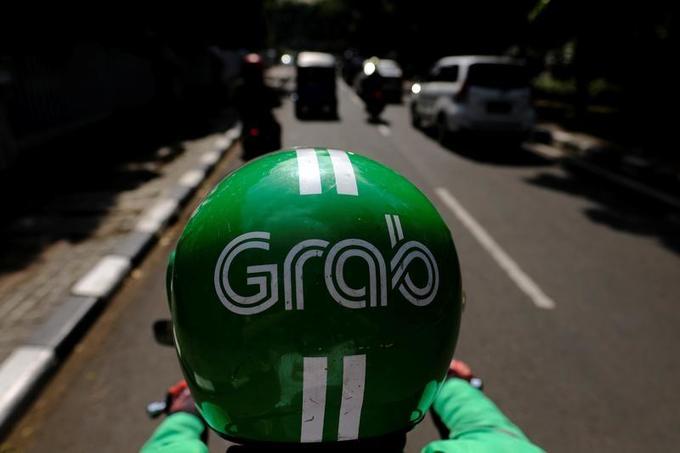
    Ride-hailing operators Grab, Gojek, TADA and CDG Zig in Singapore will hike their platform fees by up to 50 Singapore cents (37 U.S. cents) starting Jan. 1, 2025.

    Grab, the largest ride-hailing firm, will raise its platform fee from 70 cents to 90 cents per trip. For its food, groceries and parcel delivery services, fees will go up from 40 cents to 60 cents.

    It said the new “platform & partner fee” will support Central Provident Fund contributions, work injury compensation coverage and other welfare initiatives for its platform workers, as well as platform maintenance and service improvements.

    Similarly, Gojek will raise its platform fee from 30 cents to 50 cents per trip, saying these changes are to “protect drivers and their earnings in support of the Bill” on top of improving and maintaining its services.

    ComfortDelGro, the largest taxi operator in Singapore, will follow suit and raise its platform fee from the current rate of 70 cents to S$1-1.2, based on factors such as distance and travel time.

    As for TADA, fees per ride will go up by 50 cents, excluding goods and services tax. It noted that besides maintaining current features and developing new ones to provide a better ride-hailing experience, this adjustment is also essential to support the implementation of the government’s Platform Workers Bill.

  • No entertainment shows, only movies for Netflix in Vietnam

    No entertainment shows, only movies for Netflix in Vietnam

    Starting Monday Netflix will remove all entertainment and reality shows from its platform in Vietnam and only distribute film-related content to comply with local laws.

    The U.S.-based streaming service would only show films that have been classified, the Authority of Broadcasting and Electronic Information said in a recent release.

    In Vietnam, film and entertainment shows fall under different categories and are subject to different regulations.

    Distributors of entertainment shows need to set up a company in Vietnam, but film distributors do not.

    Netflix has to remove content entertainment and reality shows such as “Love on the Spectrum,” “Longest Third Date” and “Down For Love.”

    After the decree on entertainment shows came into effect in 2023, some platforms withdrew from Vietnam, including U.S.-based Amazon’s Prime Video service which shut down in October after a seven-year presence.

    China’s Iqiyi was flagged the same month for distributing entertainment shows since it has registered only to provide film-related content.

    The broadcasting authority said last year that the enforcement of such regulations aims to ensure fair competition between domestic and international television businesses.

    Earlier foreign platforms benefited from regulatory gaps, with some avoiding taxes or distributing prohibited content, it said.

    “New regulations, issued to ensure fairness, have caused some companies to cease operations in Vietnam,” Le Quang Tu Do, the authority’s director, said at the time.

    “Adjusting business models to comply with local laws is a routine part of doing business.”

  • WhatsApp to end support for older Android phones and iPhones in 2025

    WhatsApp to end support for older Android phones and iPhones in 2025

    Starting January 1, 2025, WhatsApp will no longer be supported on older Android phones running Android KitKat or earlier. This change means that if you’re still using an older device as your primary phone, you’ll need to upgrade to a newer model to continue using WhatsApp.

    Meta, the company behind WhatsApp, is discontinuing support for these older devices because they lack the hardware capabilities to support the app’s evolving features and functionalities. As WhatsApp continues to add new features, such as AI functionalities, it needs more powerful hardware to ensure a smooth user experience.

    Some of the popular phone models that will be affected by this change include the below:

    • Samsung Galaxy S3
    • Samsung Galaxy Note 2
    • Samsung Galaxy S4 Mini
    • Motorola Moto G (1st Gen)
    • Motorola Razr HD
    • Moto E 2014
    • HTC One X
    • HTC One X+
    • HTCDesire 500
    • HTCDesire 601
    • LG Optimus G
    • LG Nexus 4
    • LG G2 Mini
    • LG L90
    • Sony Xperia Z
    • Sony Xperia SP
    • Sony Xperia T
    • Sony Xperia V

    If you’re currently using one of these older devices, it’s important to back up your WhatsApp data to a newer device before the deadline. Otherwise, you’ll lose all your media and chat history from WhatsApp.

    This isn’t the first time Meta has announced plans to end support for older devices. A few months ago, the company announced that it would stop supporting iPhones running on iOS older than version 15.1.

    For iPhone users, however, the deadline to upgrade to a newer device is May 2025. This gives iPhone users a bit more time to prepare for the change compared to Android users. However, it’s still important to be aware of the deadline and to start planning for an upgrade if you’re still using an older iPhone.

    The decision to end support for older devices is likely to affect a significant number of users, particularly in developing countries where older phones are still common. However, as these tech companies continue innovating and diving deeper into AI, I’m afraid it will become a necessity to update even more often than in the past — at least if having the most recent version of an app is a priority. It’s a reminder that technology is now moving very quickly, and we will need to make some choices in order to avoid losing access to our favorite apps and services.

  • Google now allows Microsoft Teams messages to be migrated to Google Chat

    Google now allows Microsoft Teams messages to be migrated to Google Chat

    Google announced this week that it’s expanding the ability to migrate messages to Microsoft Teams. Starting today, Google Workspace admins can migrate conversations from channels in Microsoft Teams to spaces in Google Chat.

    In order to migrate data from Microsoft Teams to Google Chat, admins must use the dedicated console. Here are the steps an admin must follow to migrate their organization’s data from Microsoft Teams to Google Chat:

    • First, connect to your Microsoft account.
    • Then, upload a CSV of the teams from where you want to migrate the messages. You can specify the source to destination identity mapping by uploading a CSV of the email ID’s from source to target.
    • Next, you’ll enter the starting date for messages to be migrated from Teams. Then you can begin your data migration.
    • Finally, you’ll complete the migration by making migrated spaces, messages and related conversation data available to Google Workspace users.

    It’s imporant to mention that admins can only migrate data to accounts of existing users with a user license and the Google Chat service turned on.

    Equally important is the fact that the Chat migration tool will not delete or modify existing Google Chat spaces or messages. On top of that, admis can also run a delta migration, which will migrate any messages added to Teams channels since the primary migration (messages already migrated will be skipped).

    As soon as the migration process is complete, admins can export a report that contains detailed information regarding content that skipped, failed or had warnings during the migration.

  • Gasoline prices reach 3-month peak

    Gasoline prices reach 3-month peak

    Gasoline prices in Vietnam climbed to a three-month Thursday afternoon.

    The popular fuel RON95 went up 1.99% from a week ago to VND21,000 (US$) per liter.

    Diesel jumped 2.63% to VND18,730.

    Fuel prices in the last seven days were affected by the European Union’s adoption of the 15th package of sanctions against Russia, a member of OPEC+. Prices were also influenced by geopolitical tensions in the Middle East and ongoing conflict between Russia and Ukraine.

    RON95 went up 2.5-2.6% in the period while oils went up 2.6-3.1%. RON95 is now at $86.2 per barrel and diesel $89.6.

  • Indonesia rolls out $52B stimulus package for 2025

    Indonesia rolls out $52B stimulus package for 2025

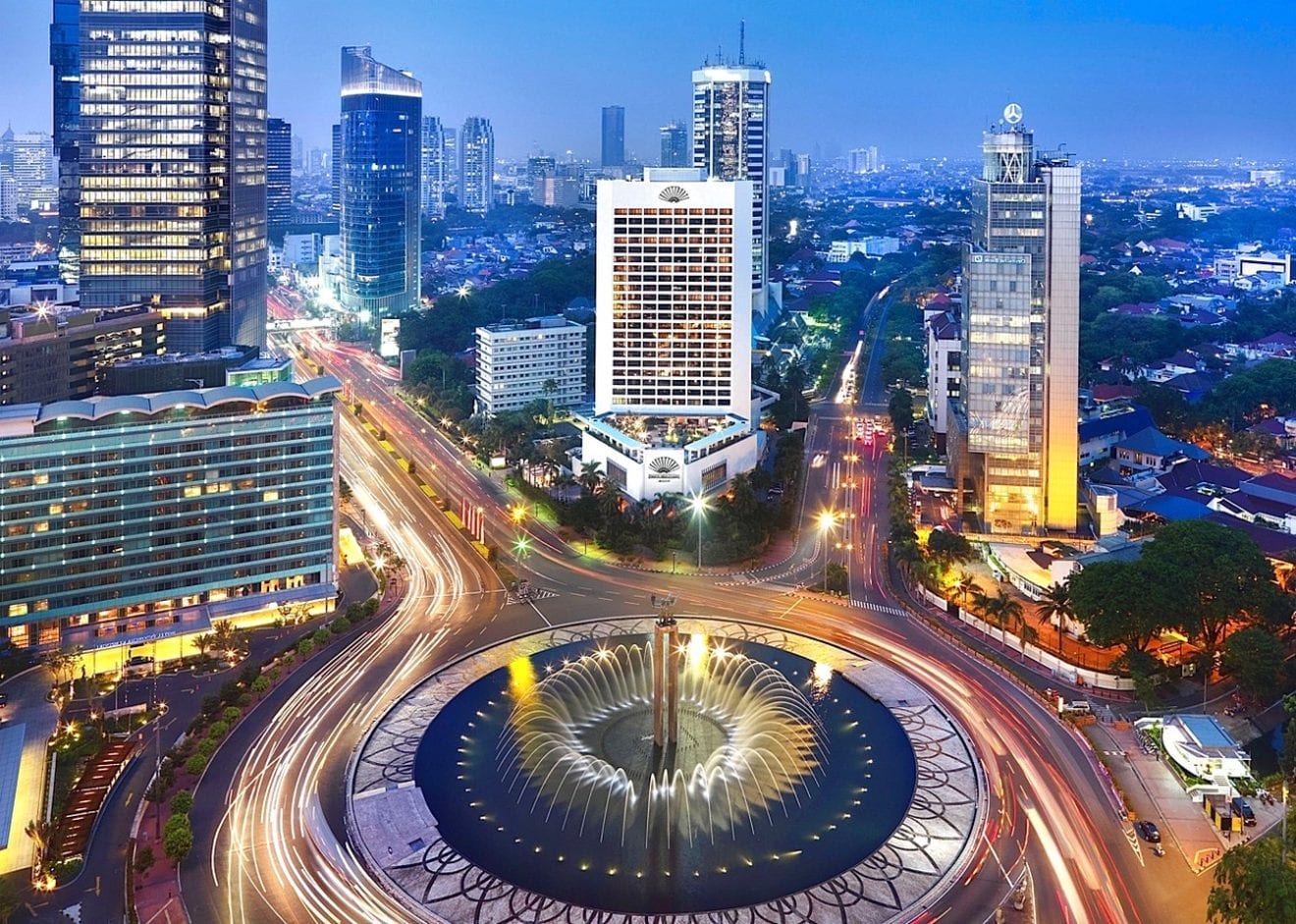
    Indonesia has unveiled economic stimulus packages totaling IDR827 trillion (US$51.65 billion) for 2025, designed to mitigate economic shocks and address the weakening purchasing power of low- and middle-income groups.

    The stimulus also aims to cushion the impact of an upcoming increase in the value-added tax (VAT) rate from 11% to 12%, set to take effect on January 1, 2025.

    Minister of Finance Sri Mulyani Indrawati said the stimulus measures are carefully designed to provide balanced support, particularly for lower-income segments of society, to ensure their financial stability despite the VAT increase.

    A significant portion of the stimulus, amounting to IDR265.6 trillion, will go toward VAT incentives that benefit a range of sectors. These include micro-, small-, and medium-sized enterprises (MSMEs), essential food staples, education, healthcare, transport, energy, low-cost housing, and financial services. Basic necessities like rice, meat, fish, eggs, vegetables, and milk will remain exempt from the VAT.

    The government and the House of Representatives have decided not to impose VAT on essential commodities needed by the public, she said, adding some IDR394 trillion has been allocated for energy subsidies and compensation, which will cover the costs of subsidised fuel, electricity, and LPG.

    To further support the economy, the government is allocating IDR129 trillion to social aid programmes, including food aid, subsidies for health insurance premiums, and easier access to unemployment benefits for laid-off workers.

    In the automotive sector, the government will offer tax incentives for electric and hybrid vehicles. Electric vehicles and hybrid cars will receive substantial tax breaks, including a 3% reduction in luxury taxes for hybrid vehicles.

    For labor-intensive industries, the government will provide tax exemptions, financing support, and 50% subsidies for workplace accident insurance to encourage job creation and economic growth in this sector.

    In the housing sector, the government would extend VAT exemptions for house purchases. The sector not only meets the public’s basic needs but also has a significant multiplier effect, creating jobs and stimulating economic growth, the minister said.

  • NEC Completes Asia Direct Cable, Boosting Regional Connectivity

    NEC Completes Asia Direct Cable, Boosting Regional Connectivity

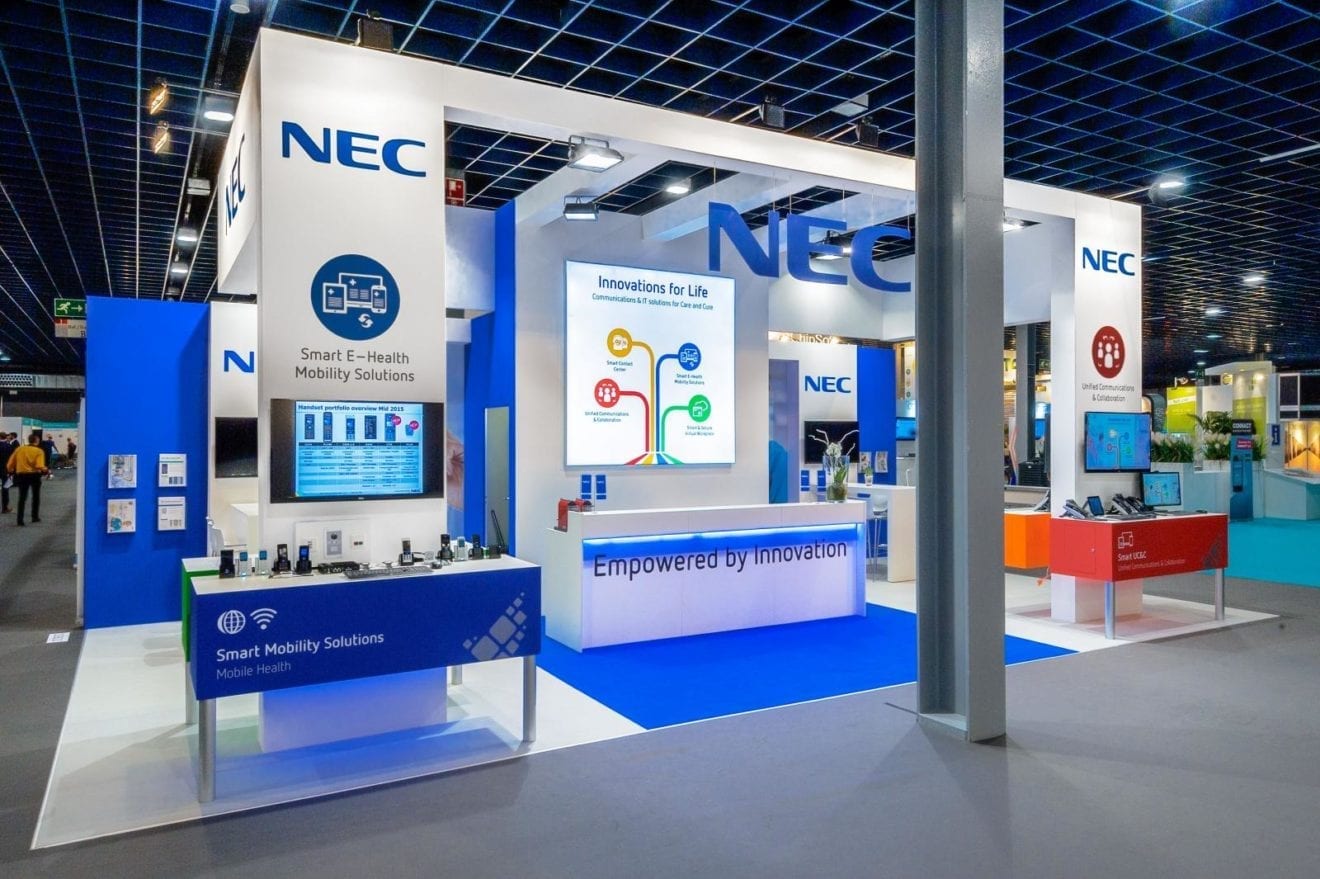
    The ADC submarine cable is owned by the ADC Consortium and consists of multiple pairs of high-capacity optical fibers. It is designed to handle over 160 Tbps of traffic, allowing for the efficient transmission of data across East and Southeast Asia.

    This new cable is a significant achievement as it’s the most recent Intra-Asia cable connecting China (Hong Kong SAR), Japan, and Singapore in the last eight years. It provides essential infrastructure to meet the growing demand for data transmission in the region and creates new opportunities for communication and society’s future.

    This milestone marks a crucial step in supporting the increasing communication needs of Asia and the world. It represents the culmination of collaborative efforts and partnerships with stakeholders from various countries, including NEC.

    Koji Ishii, MC Chairperson of the ADC Consortium noted that this cable system will greatly benefit the development of the AI industry in Asia.

    Billy Li, MC Co-Chairperson of the ADC Consortium, highlighted that the cable offers the necessary capacity and diversity for Asia’s major information hubs, allowing telecom carriers and service providers to enhance their networks and service planning to achieve sustainable growth.

    Tomonori Uematsu, Senior Vice President at NEC Corporation added that the partnership with the consortium will overcome the challenges that have previously inhibited this project from coming to fruition.

    NEC has a long history of supplying submarine cable systems and has built over 400,000 km of cable, making it a reliable partner in the field. NEC’s subsidiary, OCC Corporation, manufactures optical submarine cables capable of withstanding extreme water pressures at ocean depths exceeding 8,000 meters.