Tag: asia

  • Uniqlo owner Fast Retailing forecasts profit recovery as pandemic abates

    Uniqlo owner Fast Retailing forecasts profit recovery as pandemic abates

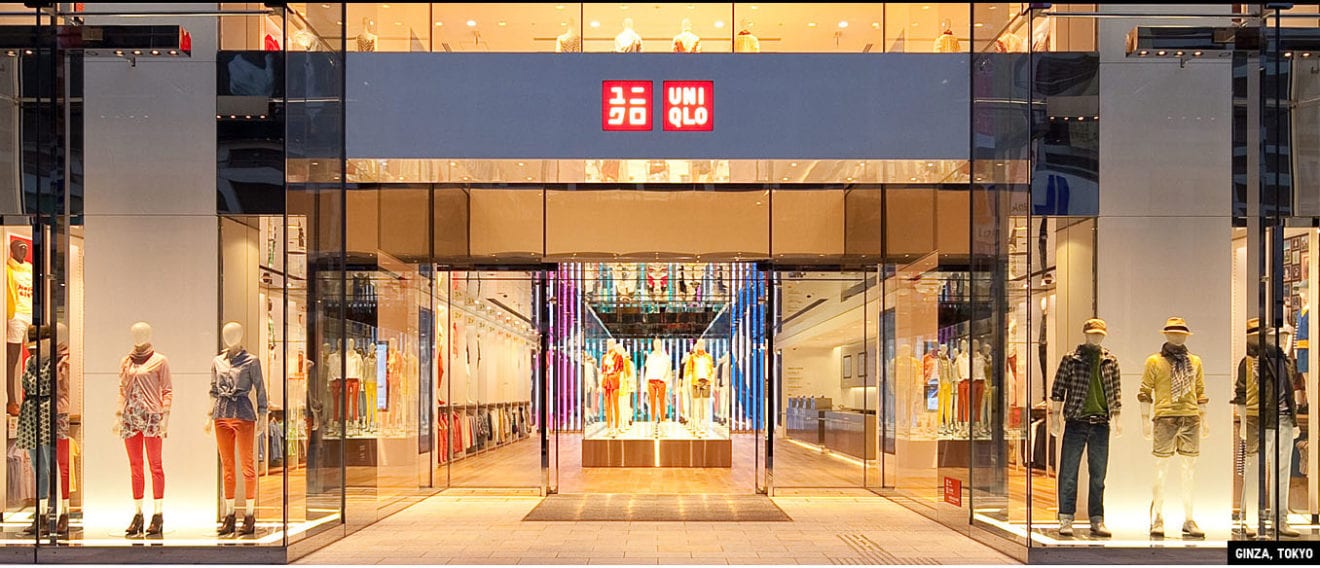
    Japan’s Fast Retailing expects continued recovery in sales and profits in the year to August 2022 as the pandemic abates, the owner of clothing brand Uniqlo said on Thursday.

    The company said it expects operating profit to climb 8.4% to 270 billion yen ($2.4 billion) in fiscal 2021-22.

    For the year ended in August, it reported 249 billion yen in operating profit, topping the 245.7 billion forecast in a Refinitiv poll of 13 analysts.

    “Vaccinations are being carried out all over the world to control the spread of the disease, and the economy is growing in earnest,” chief executive Tadashi Yanai told reporters.

    Fast Retailing expects the pandemic will still drag on results in the first half of the fiscal year but will then recover in the second half as shopping habits return to normal.

    The company said it expects some negative effects from production or logistic delays, problems that have plagued major clothiers and their global supply lines in recent months.

    In September, Fast Retailing said The company said in late September that its clothing releases will be delayed due to COVID-19 lockdowns at partner factories in Vietnam some clothing releases would be delayed due to pandemic-related lockdowns at partner factories in Vietnam.

    That followed crises in Myanmar and China that upset supply lines and created reputational challenges.

    Fast Retailing halted operations at some partner facilities in Myanmar as a military coup led to social unrest and lockdowns. In China, the company and other foreign brands faced a customer backlash over criticisms of alleged human rights abuses in Xinjiang province.

    Fast Retailing operates about 800 Uniqlo stores on the Chinese mainland, about the same number as in Japan.

    Yanai said the company carried out regular inspections of production sites and had built up a team to improve monitoring of how it gets raw materials for its clothes.

    “In the future, we will ensure a higher level of traceability of the materials we procure, including the farmers who produce the raw goods,” Yanai said.

  • Wind power developers race to complete projects for incentive price

    Wind power developers race to complete projects for incentive price

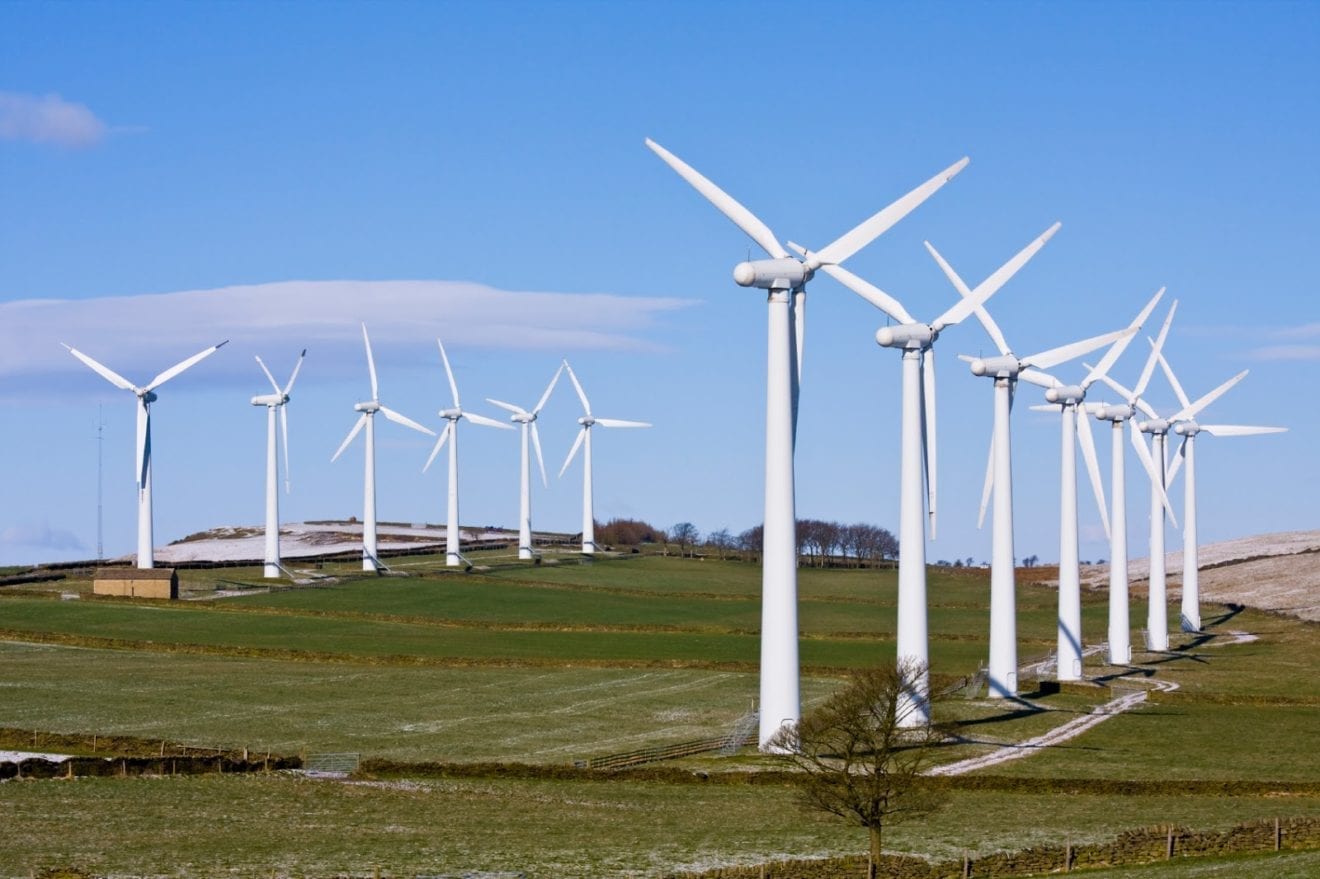
    Investors in wind power projects are racing to complete construction this month to enjoy an incentive feed-in tariff, but face procedural hurdles and those caused by Covid-19.

    This month the developer of a plant in Quang Tri Province is rushing to complete construction and begin test runs, but is being slowed down by the various administrative procedures they have to go through.

    The chairman of the investing company, who asked not be identified, said the plant needs to operate at least 70 percent of capacity, which means when the wind is weak this cannot be done.

    “We made much effort but the test depends on the weather.”

    To encourage renewable energy, Vietnam will give wind power projects that begin operation before Nov. 1 a feed-in tariff of 9.8 U.S. cents per kilowatt-hour to offshore projects and 8.5 U.S. cents for onshore ones. The tariff lasts 20 years.

    But of the 106 wind power farms that have registered to provide 5,655.5 megawatts of power, there were only six that have received an operational permit by the end of last month.

    Developers complain about the large number of permits they need to acquire to start the project, for example, the fire safety permit, and there are many unexpected challenges that lie ahead in getting these permits.

    “We won’t be relaxed until the final permit is given, as from now until it is difficult to anticipate what will come up,” the chairman in Quang Tri said.

    He proposed that the Department of Planning and Investment in the province increase the work hours of its employees, even at night, to support developers in acquiring permits. Several challenges contributed to a construction delay.

    Some developers said that the fourth Covid-19 wave slowed their projects by two months, as experts were unable to enter the country, while the transportation of equipment faced blockages as authorities tightened social distancing.

    Hoang Ngoc Quy, CEO of a developer HBRE, has been letting workers take three shifts to work 24 hours a day in the last three days.

    He proposed that the government provides incentive policies, especially in loans, to support wind power farms.

    The best support to extend the deadline until December next year for onshore projects and December 2025 for offshore projects.

    Vu Chi Mai, head of component for renewable energy and energy efficiency at the German Agency for International Cooperation (GIZ), said that Covid-19 caused unexpected impacts on the projects, and therefore the deadline should be pushed back three to six months.

    Ha Dang Son, deputy director of the Vietnam Low Emission Energy Program, said that the extended deadline should be given to certain projects depending how severe the Covid-19 impact was, not to all projects, as some have not even started.

  • WhatsApp rolls out end-to-end encryption for backup services

    WhatsApp rolls out end-to-end encryption for backup services

    Although WhatsApp already offers end-to-end encryption for messages sent, received, and stored on a device, many users are taking advantage of the backup functionality to save the history of their chats in case they lose their phones.

    Up until today, these backups did not feature end-to-end encryption like the messages stored on the phone but going forward that will no longer be the case. WhatsApp announced that it’s now rolling out an extra, optional layer of security meant to protect backups stored on two specific services with end-to-end encryption: Google Drive and iCloud.

    Those who’d like to start using the new feature and secure their end-to-end encrypted backup with either a password or a 64-digit encryption key can do so now. Obviously, neither WhatsApp nor the backup service provider will be able to read backups or access the key required to unlock it.

    End-to-end encryption for backup stored on Google Drive and iCloud will be rolled out gradually to those using the latest version of WhatsApp. Once you update your app, head to Settings / Chats / Chat Backup / End-to-end Encrypted Backup, tap Continue and follow the prompts to create a password or key.

    Keep in mind that you won’t be able to restore your backup if you lose your WhatsApp chats and forget your password or key. WhatsApp won’t reset your password or restore the backup for you, so keep them safe.

  • Apple Music headed to PlayStation 5

    Apple Music headed to PlayStation 5

    In an unsurprising turn of events, Apple Music is about to make its debut on PlayStation 5, Sony’s hard to come by the gaming console. This would be the second major Apple service provided by Sony via its PlayStation console after the Japanese giant offered PS5 owners six months of free access to Apple TV+.

    Although the arrival of the app hasn’t been officialized yet, some Reddit users claim they have received the option to download Apple Music on their PlayStation 5 consoles, but the app wasn’t available.

    Eurogamer reports they have tried to download the app from a UK account, but they didn’t find the app. However, they did get the prompt to download Apple Music from a newly created US account.

    While PS5 users may not yet be able to download Apple Music on their consoles, the recent reports suggest that Sony is going to make the app available very soon. We’re not sure if this is such a big thing for Apple to announce its October 18 event which focuses on Macs, but at least we know the Apple Music app will sooner or later come to the PS5.

  • Hyundai Motor Aims To Develop Chips

    Hyundai Motor Aims To Develop Chips

    Hyundai Motor’s global chief operating officer said on Wednesday the South Korean automaker wants to develop its own chips to reduce reliance on chipmakers. A global shortage of semiconductors, triggered partly by surging demand for laptops and other electronic products during the pandemic, has shuttered some auto production lines globally this year. Hyundai temporarily suspended some factories, but the company’s global COO Jose Munoz told reporters the worst has passed for the industry chip shortage, adding Hyundai had the “toughest months” in August and September.

    “The (chip) industry is reacting very, very fast,” Munoz said, adding Intel is investing a lot of money to expand capacity. “But also in our case, we want to be able to develop our own chips within the group, so we are a little bit less dependent in a potential situation like this,” he said. “This takes a lot of investment and time, but this is something we’re working on.”

    He said the company’s parts affiliate Hyundai Mobis would play a key role in the in-house development plan. He also said Hyundai Motor aims to deliver vehicles at the level of its original business plan in the fourth quarter, and offset some of its production losses next year.

    Along with Toyota and Tesla, Hyundai is among a handful of automakers that increased global sales despite the chip shortage. Hyundai decided not to cut orders during the pandemic, after seeing the Asian markets recover more strongly than expected, Munoz said. Munoz, president of Hyundai Motor North America, said the company is on track to produce electric cars in the United States in 2022, and is looking into both enhancing its existing factory in Alabama and increasing its production capacity.

    He said the U.S. government needs to extend a proposed $4,500 tax credit incentive to U.S. electric vehicles made at non-union factories as well as union ones. “American workers are the same,” he said. “We would like this to be equal for all.” U.S. factories of Tesla and foreign automakers such as Hyundai and Toyota Motor are not unionized.

  • Honda To Launch New EV Brand In China Next Year

    Honda To Launch New EV Brand In China Next Year

    Japan’s Honda Motor will launch a new electric vehicle brand in China next year, it said on Wednesday, and will only launch battery-electric, hydrogen fuel-cell or petrol-electric hybrid vehicles therefrom 2030. Known for its fuel-efficient internal combustion engines, Honda sold over 1.6 million vehicles in China last year. The new brand will be called “e:N Series” and it plans to roll out 10 models with partners GAC and Dongfeng Motor over the next five years, Honda said.

    Its two joint ventures, GAC-Honda and Dongfeng-Honda, plan to build new EV-only assembly plants that are expected to begin production in 2024. The planned new models will use a new vehicle operating system and are being developed based on an auto product platform designed for electric vehicles.

    Honda will set up an e:N Series section in all its existing retail stores. Over time, Honda also plans to set up dedicated e:N Series retail stores but did not provide detail on that plan. Honda has roughly 1,200 Honda brand stores currently.

    China’s sales for electric, plug-in hybrid and hydrogen fuel-cell vehicles are expected to reach three million this year, the China Association of Automobile Manufacturers said on Tuesday.

    Honda will continue to sell existing gasoline-powered models even after 2030, it said.

  • Microsoft to shut down LinkedIn in China

    Microsoft to shut down LinkedIn in China

    LinkedIn said on Thursday that it was shutting down its professional networking service in China later this year, citing “a significantly more challenging operating environment and greater compliance requirements,” in a move that completes the fracture between American social networks and China.

    LinkedIn, which is owned by Microsoft, said it would offer a new app for the Chinese market focused solely on job postings. It will not have social networking features such as sharing posts and commenting, which have been critical to LinkedIn’s success in the United States and elsewhere.

    LinkedIn’s action ends what had been one of the most far-reaching experiments by a foreign social network in China, where the internet is closely controlled by the government. Twitter and Facebook have been blocked in the country for years, and Google left more than a decade ago. China’s internet, which operates behind a system of filters known as the Great Firewall, is heavily censored and has gone in its own direction.

    When LinkedIn expanded in China in 2014 with a localized service, it offered a tentative model for other major foreign internet companies looking to tap the country’s huge, lucrative, and highly censored market. The company teamed with a well-connected venture capital firm, which it said would help it with government relations.

    But LinkedIn also agreed to censor the posts made by its millions of Chinese users in accordance with Chinese laws, something that other American companies were often reluctant or unable to do. Even in 2014, LinkedIn acknowledged the challenge, saying, “LinkedIn strongly supports freedom of expression and fundamentally disagrees with government censorship. At the same time, we also believe that LinkedIn’s absence in China would deny Chinese professionals a means to connect with others.”

    Seven years on, it has become apparent the experiment did not work. No major internet platform has followed in LinkedIn’s footsteps. Its business in China struggled as it ran up against major local competitors and a population skeptical about publicly listing valuable contacts.

    “It has gotten pretty ugly around the world where authoritarian governments are forcing the private sector, particularly U.S. tech companies, into these dilemmas,” said Eileen Donahoe, executive director of the Global Digital Policy Incubator at Stanford University and former U.S. ambassador to the United Nations Human Rights Council.

    She said LinkedIn was unusual in keeping a bare-bones product in China, rather than withdrawing entirely. “It is not so simple as ‘they are the bad guys, get out of there,’” she said. “There is a cost.”

    The operating environment in China has also become more difficult. Since President Xi Jinping took the reins of the Communist Party in 2012, he has repeatedly cracked down on what can be said online. Presiding over the rising power of the Cyberspace Administration of China, the country’s internet regulator, Mr. Xi turned China’s internet from a place where some sensitive topics were censored to one where critics face arrests for a constantly shifting set of infractions, like jokes at Mr. Xi’s expense.

    In March, the regulator rebuked LinkedIn for failing to control political content, three people briefed on the matter said at the time. Officials required LinkedIn to perform a self-evaluation and offer a report. The service was also forced to suspend new sign-ups of users inside China for 30 days.

    The site also suffered as the U.S. relationship with China soured, with anger about LinkedIn’s complicity in China’s information controls rising in Washington. In recent months, after LinkedIn stopped displaying the profiles of several activists and journalists in China, American lawmakers criticized the company.

    In one letter last month, Senator Rick Scott, Republican of Florida, wrote to Satya Nadella, Microsoft’s chief executive, demanding to know why it had censored the accounts of three journalists. Mr. Scott called the censorship “gross appeasement and an act of submission to Communist China.”

    Beyond the fights over censorship, other challenges loomed. A new Chinese data security law requires firms like LinkedIn to store more data on local users within China and provide access to the authorities, which may have raised even more ire.

    The shutdown cleaves apart one of the last social media bridges that linked China’s cloistered internet to the rest of the world, even if in a censored fashion. That may matter little to Chinese officials, who have cleverly used foreign social media blocked in China. In recent years, the government has been linked to a series of disinformation campaigns run on sites like Twitter and Facebook. Government and state media also advertise heavily on the sites.

    LinkedIn also has served a separate purpose, as a recruitment ground for spies. Chinese intelligence services are among the most active at using it for that purpose, according to American officials.

    China is one of LinkedIn’s largest markets, with 54 million users, behind only the United States and India. It does not disclose how much revenue each country generates.

    Since Microsoft bought LinkedIn for $26.2 billion in 2016, revenue from the business has tripled. Mr. Nadella told investors in July that LinkedIn’s revenue had surpassed $10 billion in annual sales, up 27 percent from the previous year.

    LinkedIn declined to comment beyond its announcement.

    While Microsoft has tried to build a market in China for more than a decade, it has had only modest success. Last year, Brad Smith, Microsoft’s president, said the country accounted for less than 2 percent of its revenue.

    Microsoft Windows and Office are common in China, but many people use pirated copies. The company has tried to overcome the issue, by hosting its software online and by tapping a major Chinese military contractor to help it offer an operating system better trusted by China’s government.

    It has been a difficult year for private technology firms in China. Mr. Xi has overseen a series of investigations, bans and new rules that have laid low many of the country’s best known local internet companies, including Alibaba and Didi.

    “The scale and scope of the crackdown in Beijing has been so jaw-dropping that not just domestic companies within China but even U.S. companies have now had to pull back,” said Dan Ives, an analyst at Wedbush Securities. “The last thing Microsoft wanted was to get into a political football situation in China.”

    In a sign of the sensitivity around the news, Thursday’s announcement was not made by Mr. Nadella or LinkedIn’s chief executive, Ryan Roslansky, but by Mohak Shroff, the social network’s head of engineering.

    Yet while the LinkedIn closure gets Microsoft out of one fraught business, it raises questions about the prospects of its search engine, Bing. The lone major American search engine still operating in China, Bing also censors results. In 2019, it was briefly blocked in the country, even as it continued to push users there to state media accounts on disputed topics like the Dalai Lama.

    It remains unclear precisely what will happen to the millions of Chinese user accounts on LinkedIn. In the past, when foreign internet companies have stopped offering locally censored services, their sites have been quickly blocked by the government.
  • Waze brings the college football experience to drivers on Android and iOS devices

    Waze brings the college football experience to drivers on Android and iOS devices

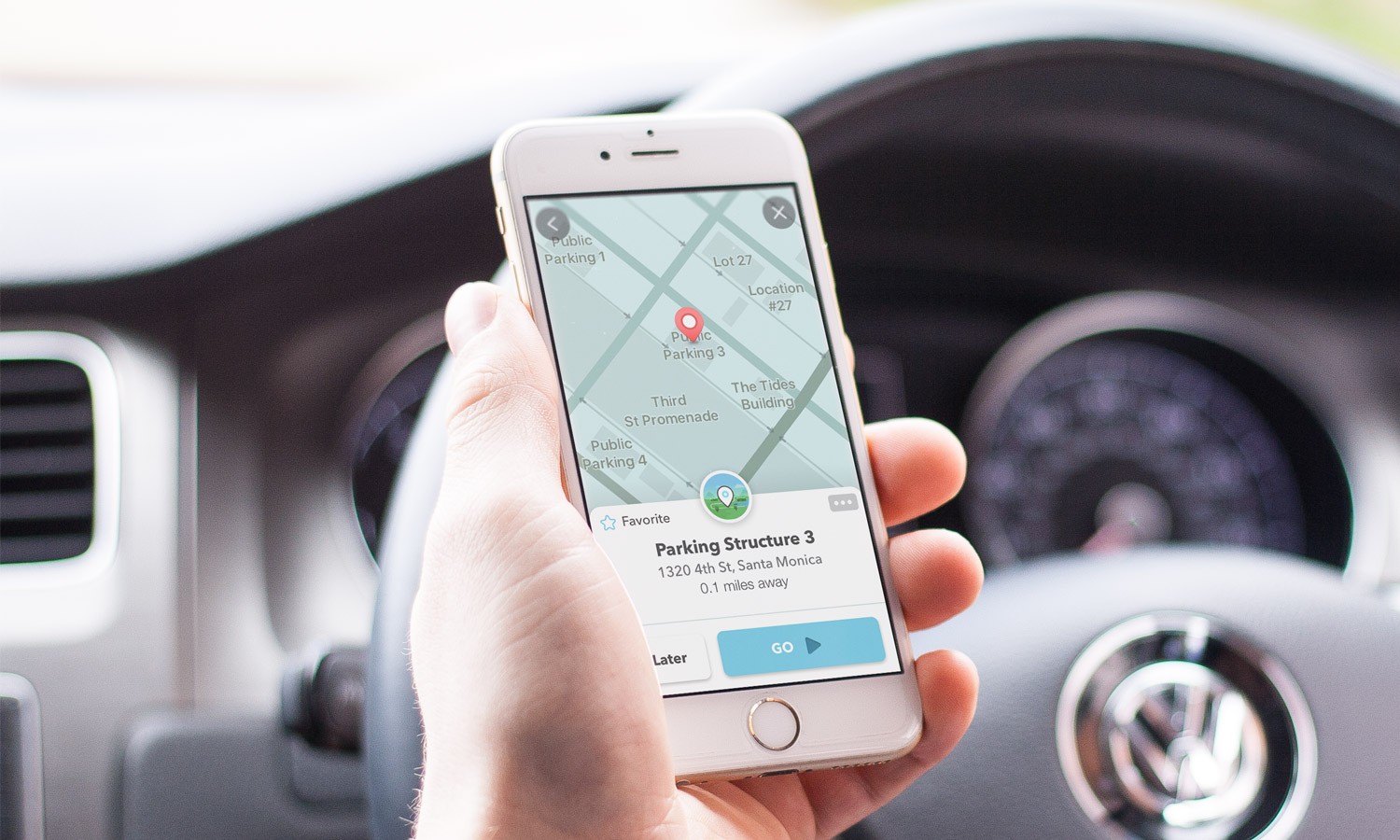
    Waze has been putting out a lot of new themes for its users all over the world, but the new experience released this week is aimed at US users only. Thanks to a partnership with Goodyear, Waze is bringing its users the College Football experience beyond the stadium to the roads.

    Although it will only be available for a limited time, Waze announced that its users will be able to download it starting this week and through January 31, 2022, so plenty of time to do that. If you’re living in the United States, you can now select the Goodyear Blimp icon to guide you to your destination.

    Additionally, drivers can receive navigation instruction from famous college football analyst Kirk Herbstreit as the voice for their trips on Waze. Furthermore, all 129 D1 college football stadiums will be marked on the Waze map to make it easier for fans to travel to their favorite stadium.

    On a side note, Goodyear will be hosting sweepstakes now through November 13. Fans who submit their predictions on the teams who will make it to the championships will have a chance to win tickets to the 2021 Goodyear Cotton Bowl Classic and the 2022 CFP National Championship.

  • Deutsche Bank Hires Ex-Bank of Singapore MD

    Deutsche Bank Hires Ex-Bank of Singapore MD

    A former managing director from Bank of Singapore has joined Deutsche Bank’s wealth unit in Singapore.

    Deutsche Bank Wealth Management hired Faye Lee as a managing director, according to a statement, tasked with covering ultra-high net worth clients in Southeast Asia.

    Based in Singapore, she joins a team led by Southeast Asia head Shang-Wei Chow and reports to group head of Southeast Asia Terence Leong.

    Lee has over 17 years of wealth management experience, most recently with Bank of Singapore where she was a managing director. Previously, she also worked for ING Asia Private Bank, prior to OCBC’s acquisition in 2009, Citi and HSBC.

  • Fruit exports to South Korea surge

    Fruit exports to South Korea surge

    Vietnam exported $107.25 million worth of fruit and vegetables to South Korea in the first eight months of this year, up 3.47 percent year-on-year.

    The export value of vegetables and fruit to this market reached $11.1 million in August, up 13.66 percent over the same period last year, according to the General Department of Vietnam Customs.

    Six kinds of Vietnamese fruit have been exported to the Asian market including: coconuts, pineapples, white and red dragon fruit, mangoes and bananas.

  • StanChart Enters BNPL Space With Atome Investment

    StanChart Enters BNPL Space With Atome Investment

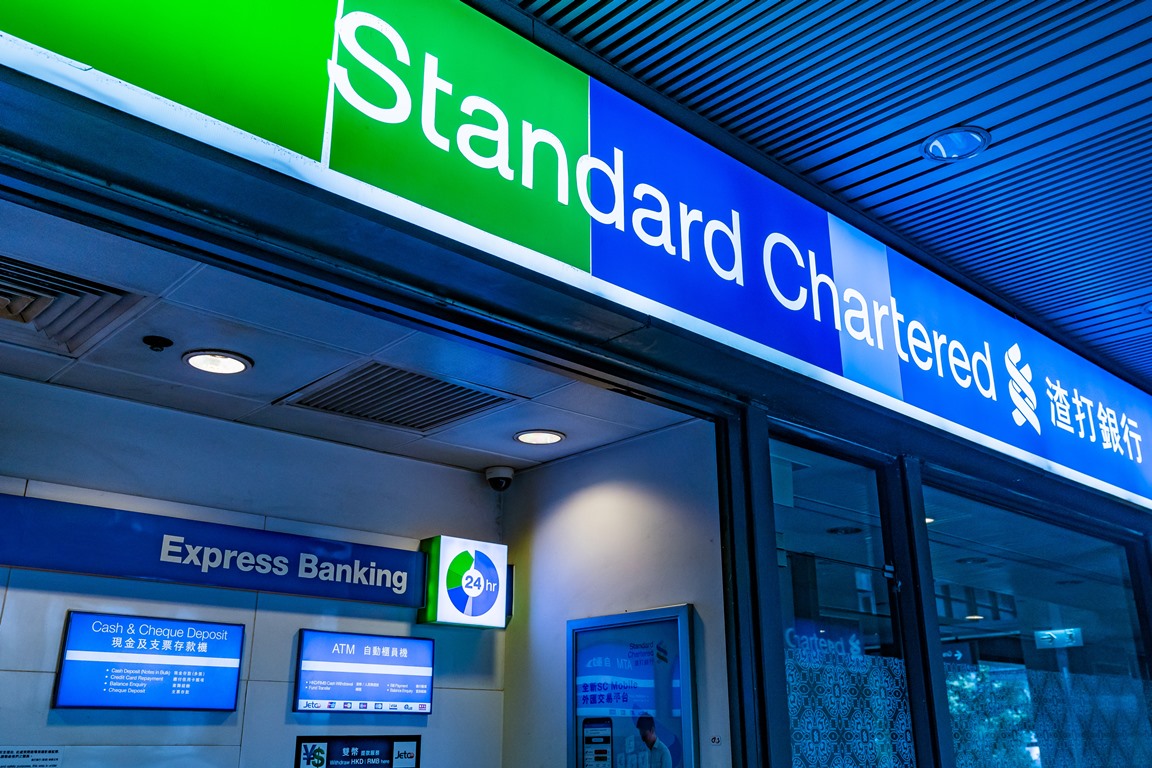
    The bank has entered a 10-year multi-product strategic partnership with Buy Now Pay Later (BNPL) brand Atome to deliver a wide range of financial services to consumers and merchants across key markets in Asia.

    The partnership, which aims to deliver mobile-first financial services for consumers across Asia, includes a planned $500 million financing to support Atome Financial to expand its regional ecosystem of merchants and customers.

    The partnership will initially include BNPL services, targeting to roll out in Indonesia, Malaysia, Singapore and Vietnam in the next few months, and later expand to include digital lending products, according to an announcement on Wednesday.

  • Scotch & Soda plans new stores in capital cities

    Scotch & Soda plans new stores in capital cities

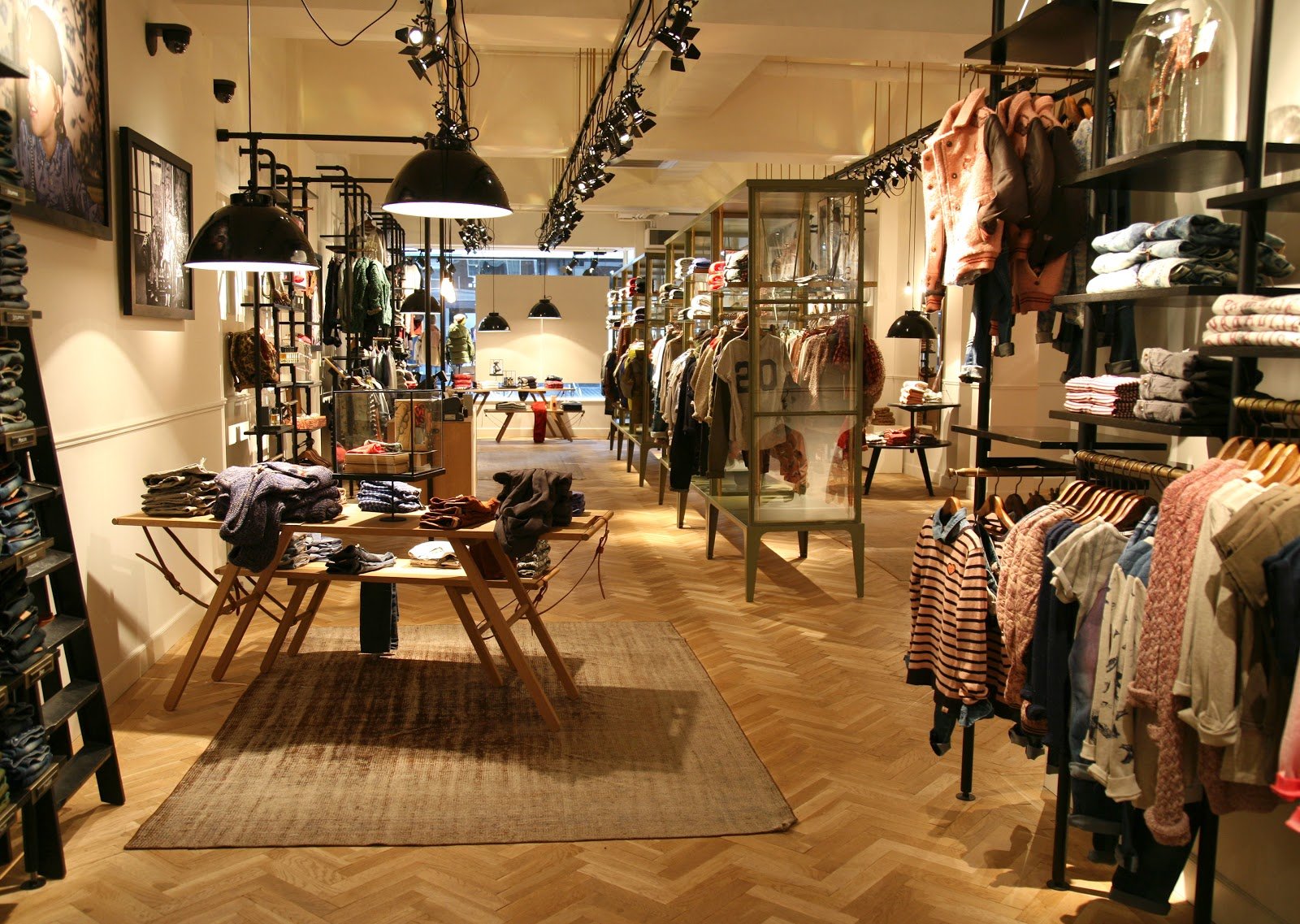
    Originally a wholesale brand, Amsterdam-based Scotch & Soda is pursuing a broad-based physical expansion that spans across Europe, Asia-Pacific, North America and the Middle East. Scotch & Soda, in March this year, debuted a new brand identity and logo, which will be present in its new locations.

    Ahead of the upcoming holiday season, Scotch & Soda is also expanding its lifestyle categories, including by introducing three new styles of bags and pursuing a deeper presence in fragrance with home, travel sizes and gift sets. Notably, the brand is prioritizing its own channels for the new bags, with those styles available exclusively online, as well as at franchise and directly operated stores, for the first season.

    The company is also opening its first digital store on Tmall in China, which comes after it launched in the country in July. Scotch & Soda has plans to open stores in “key Chinese cities” in the near future, and CEO Frederick Lukoff sees the country as one of the critical markets for the brand.

    “We are very proud to announce that Scotch & Soda is accelerating its growth strategy. It is indeed a very exciting time for our company despite the challenges caused by the COVID-19 pandemic in the retail industry,” Lukoff said. “We are pursuing the expansion of our retail network at a global level, strengthening our footprint in markets where we are already present, as well as entering key markets such as China, that we see as full of potential to reach new customers and introduce them to our brand.”

    When Scotch & Soda was acquired by private equity firm Sun Capital Partners in 2011, it was far more of a wholesale brand. The company had approximately 30 company-owned and franchised retail stores, in comparison to 7,000 partnership accounts. Scotch & Soda still boasts some 7,000 wholesale doors, but it now has 235 freestanding stores globally.

    By expanding its own fleet of stores, Scotch & Soda is taking a similar strategy to many other wholesale brands looking to make higher margins by selling more DTC. Well-known retailers like Nike and Adidas are pivoting a higher percentage of sales to the model, while cutting back on wholesale partners, to drive future growth.

  • McDonald’s showcases its China headquarters flagship

    McDonald’s showcases its China headquarters flagship

    31 years ago, McDonald’s opened its first store in China on the 8th of October. 31 years later, the fast-food industry giant announced the opening of a new China headquarters building in Shanghai’s West Bund. It will be home to the company’s over 600 HQ-based employees.

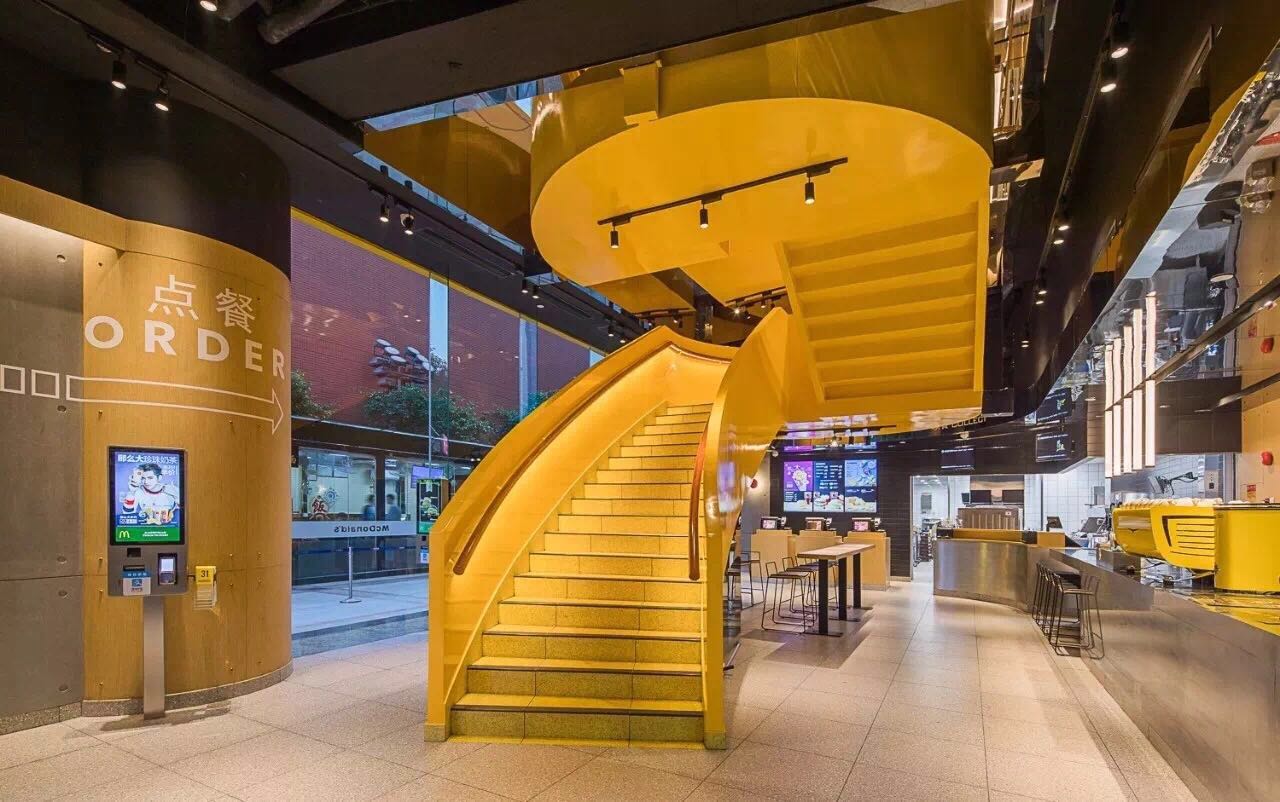
    Zhang Jiayin, McDonald’s China CEO, compares the move of the headquarters to a new journey. The cube-shaped building contains more futuristic elements of McDonald’s: an intensive-style innovation lab, the seventh Hamburger University, and the largest McDonald’s flagship store, which represent the company’s commitment to the Chinese market.

    “The Chinese market will be one of the most important markets in the world, and we will witness more here,” said Zhang Jiayin.

    The flagship store, which opened the same day as the new building was officially launched, is also the company’s first cube-style flagship restaurant in East China and McDonald’s China’s first LEED platinum-certified flagship restaurant. Another highlight is its various cross-over attempts with the CITIC Press Group, including the children’s bookstore and mini-theater.

    The third floor of the building contains McDonald’s in-house training institution, the Hamburger University, which will launch its first class next Monday.

    “The reason why we chose Shanghai is that it is a highland of talents, where you can find the best talents in the country and even the world,” noted Zhang. This year, McDonald’s China has planned over 130 university recruiting events across the country, to support the rapid development of its business. At present in McDonald’s China, employees born from 1995 account for more than 60%, and employees born from 2000 are close to 43%.

    Apart from talented people, the company chose Shanghai for its headquarters as it is a giant test field for cutting-edge concepts, be it light meals or plant-based meat. “It is a base camp radiating the entire market in China. We will continue to develop, continue to expand in scale with brand differentiation, and serve more consumers,” added Zhang.

  • Billionaire Alibaba founder Jack Ma reappears in Hong Kong

    Billionaire Alibaba founder Jack Ma reappears in Hong Kong

    Alibaba Group founder Jack Ma, largely out of public view since a regulatory clampdown started on his business empire late last year, is currently in Hong Kong and has met business associates in recent days.

    The Chinese billionaire has been keeping a low profile since delivering a speech in October last year in Shanghai criticizing China’s financial regulators. That triggered a chain of events that resulted in the shelving of his Ant Group’s mega IPO.

    While Ma made a limited number of public appearances in mainland China after that, as speculation swirled about his whereabouts, one of the sources said the visit marked his first trip to the Asian financial hub since last October.

    Alibaba did not immediately respond to requests for comment outside of its regular business hours. Comments from Ma typically come via the company.

    Ma, once China’s most famous and outspoken entrepreneur, met at least “a few” business associates over meals last week, said the people.

    Ma, who is mostly based in the eastern Chinese city of Hangzhou, where his business empire is headquartered, owns at least one luxury house in the former British colony that also houses some of his companies’ offshore business operations.

    The former English teacher disappeared from public view for three months before surfacing in January, speaking to a group of teachers by video. That eased concern about his unusual absence from the limelight and sent Alibaba shares surging.

    In May, Ma made a rare visit to Alibaba’s Hangzhou campus during the firm’s annual “Ali Day” staff and family event, company sources have said.

    On Sept. 1, photographs of Ma visiting several agricultural greenhouses in the eastern Zhejiang province, home to both Alibaba and its fintech affiliate Ant, went viral on Chinese social media.

    The next day, Alibaba said it would invest 100 billion yuan ($15.5 billion) by 2025 in support of “common prosperity”, becoming the latest corporate giant to pledge support for the wealth-sharing initiative driven by President Xi Jinping.

    Alibaba and its tech rivals have been the target of a wide-ranging regulatory crackdown on issues ranging from monopolistic behavior to consumer rights. The e-commerce behemoth was fined a record $2.75 billion in April over monopoly violations.

    Earlier this year, regulators also imposed a sweeping restructuring on Ant, whose botched $37 billion initial public offering in Hong Kong and on Shanghai’s Nasdaq-style STAR Market would have been the world’s largest.

  • Pam Pam Buns brings authentic Thai food to Australian supermarkets

    Pam Pam Buns brings authentic Thai food to Australian supermarkets

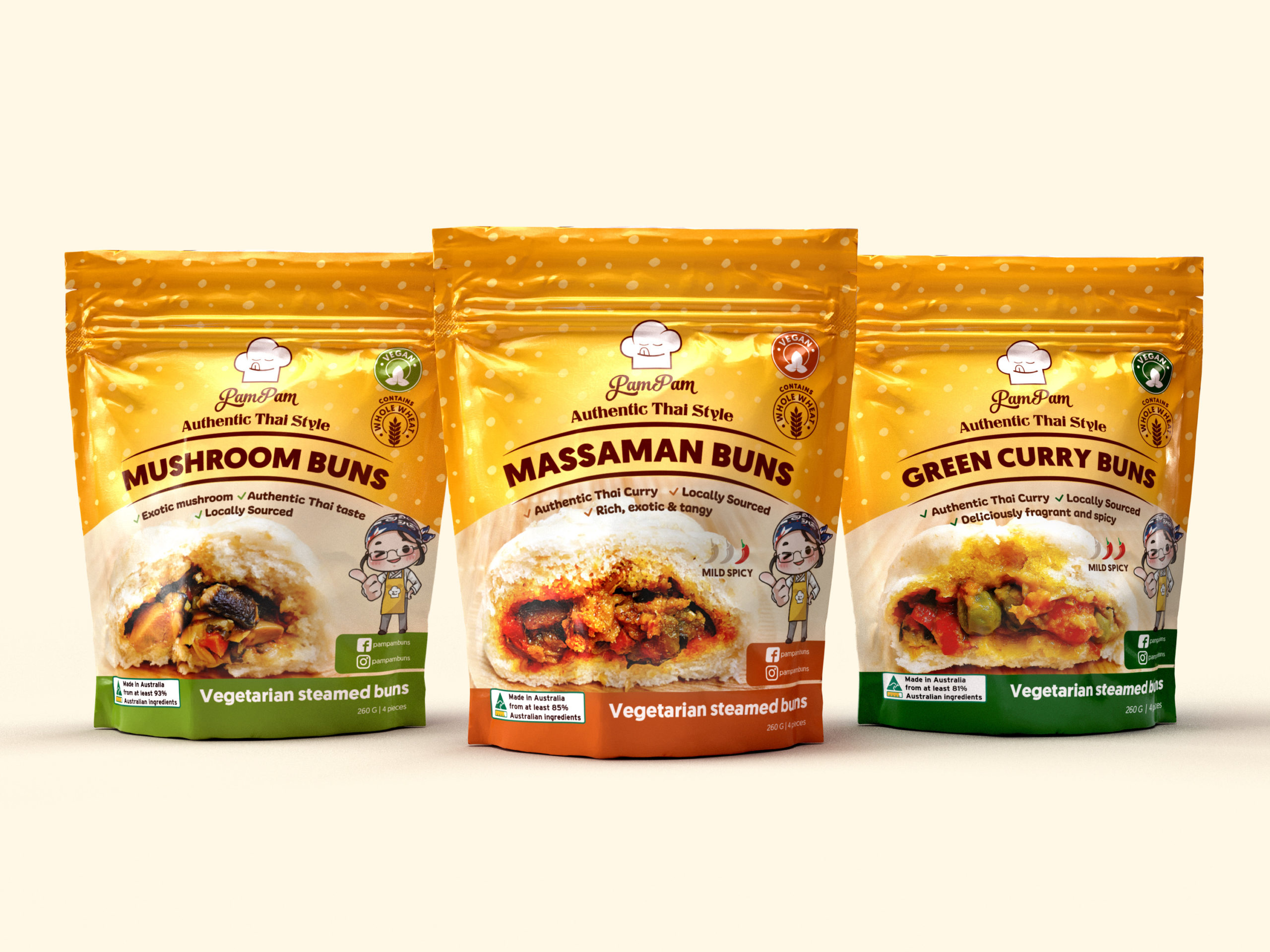
    An Australian manufacturer of authentic Thai plant-based products, Pam Pam Buns, is releasing a new range of frozen ready meals in October. The meals (RRP $8) are Thai Pork Basil with Rice, Thai Mushroom Noodle, Pork Spring Roll, Pork and Mushroom Dumpling.

    “The new range is our first step to becoming a Thai food company that produces a variety of plant-based meals that are just as delicious as meat-based dishes,” founder Pimarada (Pamela) Watcharadechmontri says.

    Ms Watcharadechmontri, a Thailand-born entrepreneur, founded Pam Pam Buns in 2015.

    She harnessed her love of vegetarian food and Thai heritage by selling her steamed buns to family, friends and local market stalls. Following a wave of positive ‘nice buns’ feedback, she made the bold decision to set up her own factory in Riverstone in North West Sydney.

    Since its launch, Pam Pam Buns has seen exponential growth for its range of delicious Thai buns. After landing its first in-store placement in 2019, Pam Pam Buns has steadily hit the shelves across a selection of major retailers and recently expanded interstate to Victoria, Queensland, Western Australia, South Australia, and Tasmania.

    The brand is currently available online and in more than 170 stores, including select Woolworths Metro, Coles Local, Harris Farm Markets, QE Food Stores, IGA, and FoodWorks across Australia.

    “We partly owe our success to our loyal community of fans, who we treat like our friends and family,” Ms Watcharadechmontri says.

    “They buy, taste and feedback on every single one of our products and we listen. Their excitement for our new product range is what feeds our ambition to continue our business growth.”

    The new product expansion will join the recently released plant-based Thai Massaman, Panang and Green curry pouches and Pam Pam’s bun range in the freezer section.