Tag: asia

  • UBS Asset Management Appoints Australasia Country Head

    UBS Asset Management Appoints Australasia Country Head

    UBS Asset Management has named a new country head for Australia and New Zealand.

    Alison Telfer has been named to the role, according to a report by the Australian Financial Review.

    She has 20 years of asset management experience, most recently with Blackrock where she was its chief operating officer, general counsel, and head of public policy for Australasia.

    Telfer’s strategic mindset coupled with her extensive Asia Pacific asset management experience will be valuable in helping her position UBS Asset Management for the future, said UBS Australasia joint-country head Nick Hughes.

  • Name change for AirAsia Group

    Name change for AirAsia Group

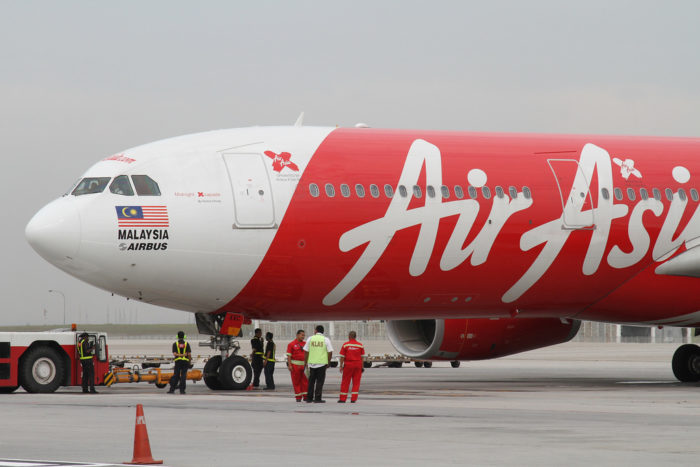
    As AirAsia’s holding company for the airline group has been officially renamed AirAsia Aviation Limited, a move that illustrates the ongoing transformation into a digital travel and lifestyle services group,

    Bo Lingam, who was formerly president (airlines) for the AirAsia Group, takes over as Group CEO of AirAsia Aviation Limited, overseeing the four airlines (AirAsia Malaysia, AirAsia Philippines, AirAsia Thailand, and AirAsia Indonesia).

    AirAsia Group Berhad (AAGB) is the investment holding company for the eight digital portfolio companies that leverage data and technology. AAGB’s portfolio includes AirAsia Aviation, the AirAsia Super App, cargo and logistics venture Teleport, BigPay financial services, the edutech arm AirAsia Academy, engineering company Asia Digital Engineering, ground services division GTR and the restaurant chain and food group called Santan.

    Group CEO of AirAsia Aviation Limited Bo Lingam said: “We have spent the past 18 months reviewing every aspect of the operation to ensure that our airlines will return stronger than ever before. In Malaysia, we already see huge pent-up demand for air travel since the government’s recent announcement of the resumption of interstate travel on 11 October. We are operating over 60 daily flights to 16 key leisure destinations, and more frequencies and routes will continue to be added in response to significant consumer demand.

    “Progress is also underway in our other airlines in Thailand, Indonesia, and the Philippines as services are resuming in line with accelerated vaccination rates and the easing of travel restrictions in our key markets.”

  • Carousell snaps up sneaker marketplace Ox Street

    Carousell snaps up sneaker marketplace Ox Street

    Online marketplace Carousell has acquired Ox Street, a Singapore-based marketplace for authenticated sneakers and streetwear, the company announced on Monday. It did not disclose the deal value.

    Founded in 2019, Ox Street is focused on making the second-hand sneaker purchase experience more seamless for Southeast Asian youth by inspecting and authenticating the sneakers before they reach buyers.

    Post-acquisition, Ox Street will continue to operate as its own brand, retaining its name, platform, and team.

    “We initially started a conversation with Carousell on partnering up to provide authentication as a service for sneakers, but as discussions progressed, we found so much common ground in how we see the future, that we decided it would be much more powerful for Ox Street to fully join the Carousell group,” said Gijs Verheijke, founder and chief executive of Ox Street.

    “Our focus markets align nearly one to one, and in these markets, Carousell was actually the first, and remains the largest marketplace for sneakers and streetwear.”

    Data portal VentureCap Insights shows that Verheijke owns 90 percent of the company, with the remainder held by an entity, Aito Ventures. The company recorded US$18,975 in revenue in 2019, with a US$206,931 loss.

    Carousell chief executive Quek Siu Rui said that he sees “immense opportunity” in Ox Street’s authentication capabilities. He is optimistic about the “brand love they have created among their dedicated community of sneakerheads and fashion enthusiasts, especially among Gen Z”.

    The deal comes weeks after Carousell raised US$100 million in a round led by South Korean private equity firm STIC, valuing the company at US$1.1 billion. It is said to be considering a public listing in the US through a merger with a special-purpose acquisition company. Previous regulatory filings indicate that Carousell aims to provide its investors with an exit by 2024, at a valuation of at least US$1.13 billion.

  • Baileys launches Apple Pie liqueur in Australia

    Baileys launches Apple Pie liqueur in Australia

    Baileys Apple Pie Liqueur has finally dropped in Australia and it’s here for a good time, not a long time.

    We first heard about this incredible flavor over a year ago – but it was only available in the US. We’re delighted that it’s now hitting Aussie shores!

    From mid-October, you will be able to get your hands on a bottle of this limited-edition treat just in time for the festive months.

    Combining the best parts of the traditional apple pie that we know and love, this new drink offers the familiar velvety qualities of Baileys Original Irish cream and vanilla ice cream, plus a kick of Christmassy warmth with the hint of cinnamon and spices.

    Deliciously versatile, this liqueur can be paired with vanilla ice cream, mixed into your favorite apple-inspired baked goods or simply poured over ice for a festive fix. The possibilities are endless!

  • Google adds “continuous scrolling” feature to its iOS and Android Search apps

    Google adds “continuous scrolling” feature to its iOS and Android Search apps

    Toward the end of last week, Google released a blog post about the latest changes it was making to the Google Search app. Results will be more “seamless and intuitive” thanks to continuous scrolling, a new feature that has just been added to the app. Now, when you have reached the bottom of the search results on your phone’s display, the next group of results will automatically load.

    As Google points out, even if you often find the result that you’re looking for in one of the first few responses that appear on the display, most people who want to search for more responses will browse up to four pages of results. Thanks to the update, this will be done automatically allowing users to view more pages before having to tap the button that reads “See more.”

    For example, Google uses the timely question, “What can I do with pumpkins?,” as an example of a query that a user might want to see several pages of results for. Google says that “you may want to consider more results and inspiration before deciding how to move forward. Scrolling through a wider range of results may show you tons of options you hadn’t considered, like no-carve pumpkin decor ideas for Halloween, pumpkin seed recipes that make your pumpkin worth carving and more ideas for how to make the most out of your gourd.”

    The continuous scrolling feature started rolling out last Thursday for most English searches on mobile. On our iPhone running iOS 15, the feature worked like a charm continuing to automatically load the next page full of results. Eventually, as we previously noted, we did run into the “See more” option.

  • Internal memo reveals Instagram’s concern about losing its teenage users

    Internal memo reveals Instagram’s concern about losing its teenage users

    A year ago, Instagram was so concerned about losing teen users that it decided to spend a huge percentage of its marketing budget to reach teenagers. This report was published in The New York Times and was based on anonymous sources and internal documents. One company memo said, “If we lose the teen foothold in the U.S. we lose the pipeline.”

    Facebook, which bought Instagram for a reported $1 billion back in 2012, garnered some negative media coverage earlier this month when a former product engineer named Frances Haugen leaked documents to The Wall Street Journal. The documents revealed that Facebook’s own researchers discovered that Instagram is “harmful for a sizable percentage” of its young users, specifically teenage girls who can get depressed, anxious, and develop body-image issues from using the app.

    Haugen also testified before Congress and said that the products offered by Facebook “harm children, stoke division and weaken our democracy.” Besides Instagram and Facebook, the latter also owns messaging apps WhatsApp and Facebook Messenger. Instagram has competition in the teen market from Snapchat.

    Facebook says that the media and the public are taking Facebook’s internal research out of context. It says that the report actually showed that teens benefited from using Instagram. The company said that its researchers were told by teenagers that they use the app “when they are struggling with the kinds of hard moments and issues teenagers have always faced.”

    Starting in 2018, most of the spending earmarked for Instagram’s annual worldwide marketing budget was focused on messaging directed at teens. The budget for this year is $390 million. A Facebook spokesman said, “. “While it’s not true that we focus our entire marketing budget towards teens, we’ve said many times that teens are one of our most important communities because they spot and set early trends. It shouldn’t come as a surprise that they are a part of our marketing strategy.”

    The Times was told by marketers that focusing on a specific age group to the extent done by Facebook is not usual. And the newspaper’s report noted that Facebook also focused some of its advertising on parents and young adults.

    In March, it was discovered that Facebook was developing a version of Instagram for those children under 13 who are not allowed on the Instagram site. Instagram Kids wouldn’t be designed like the adult version of the app as it would be free of ads and parents would have control. The 1998 Children’s Online Privacy Protection Act restricts companies from collecting or storing personal data on anyone under 13.

    Last month, half a year after the initial report about Instagram Kids leaked, Instagram announced that it was halting work on the site. Despite pausing the development of the kid-friendly version of Instagram, Facebook still believes that it “is the right thing to do.” Additionally, the company said that it will continue to work on opt-in parental supervision for teens. It also wants the app to flash a “Take a Break” warning to remind users that it is time to move on to something else.

    Instagram Kids would also have allowed parents to limit the amount of time their kids used the app, oversee who they were following on the app, and who was following them.

    An unnamed source told it that Facebook managers explained to workers that it is doing all that it can to prevent underage users to sign up for an Instagram account, but these kids find a way to open such an account anyway. The Instagram Kids platform would have been aimed at children 10 to 12 years of age, would have required parental permission to join, and the app would include only “age-appropriate content and features.”

  • Ducati Resumes Factory Tours At Borgo Panigale

    Ducati Resumes Factory Tours At Borgo Panigale

    Guided tours inside the Ducati Factory have resumed from October 2021, after having been discontinued due to the coronavirus pandemic. The Ducati Museum re-opened with pandemic safety regulations in place in May 2021, but the factory had not been open for tours, until now. Visitors during the factory tour will have the opportunity to walk through the production lines, observing what goes inside the factory where Ducati motorcycles are created. The tours are guided and can be booked on Mondays and Fridays of each week.

    Three separate morning tour slots are open, as well as three-afternoon slots. Online booking is on the dedicated platform for both factory tours and Museum visits. In order to ensure the safety and health protection of visitors and workers, access to the facility will be possible by reservation only during the hours indicated with a limited number of entries. The presentation of a valid EU Digital COVID Certificate is mandatory, with the exception of children under 12 years and people unfit for a vaccination with a medical certificate, Ducati announced in a press statement.

    The ticket for the Ducati Museum tour is 17 Euros (around ₹ 1,840), while a combined Museum and Factory tour ticket is for 32 Euros (approximately ₹ 2,785), and will be a day-long tour. For high school students, Ducati is also opening its interactive Physics in Motion laboratory (Fisica in Moto) ba

  • Vietnam remains magnet for EU investment despite Covid

    Vietnam remains magnet for EU investment despite Covid

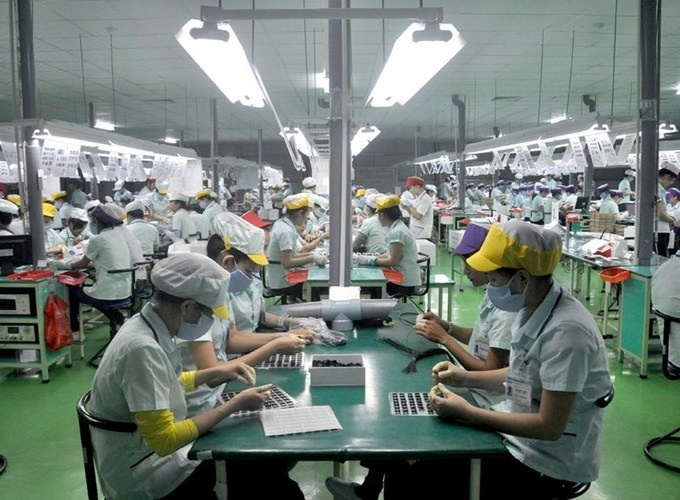
    EU investments in Vietnam rose by $483 million year-on-year in the first nine months of this year to $22 billion despite the Covid-19 pandemic.

    In a recent report to the National Assembly, the Government said trade with European countries too increased sharply since the EU- Vietnam Free Trade Agreement (EVFTA) took effect in August last year.

    Investment by 26 out of 27 EU member countries increased in the year-to-date, and includes major names such as Shell Group (the Netherlands), Total Elf Fina (France – Belgium), Daimler Chrysler (Germany), Siemens, and Alcatel Comvik (Sweden).

    The Netherlands is the largest investor with nearly $10.4 billion in 382 projects. It is followed by France with $3.62 billion and Germany with $2.25 billion.

    European investment is forecast to keep increasing in the medium and long terms, mainly in high-tech industries.

    To attract EU investment, many provinces and cities are acquiring lands around industrial zones, building infrastructure and creating a skilled workforce in agriculture, manufacturing and logistics and simplifying administrative procedures.

    Trade between the EU and Vietnam has also prospered in the year since EVFTA took effect despite the hurdles caused by Covid.

    This year, it has risen by nearly 12 percent year-on-year to $54.6 billion, with Vietnam’s exports being worth $38.5 billion.

    Vietnam’s main exports have been phones and components, computers, other electronic products and components, shoes, textiles, garments, machinery, equipment and appliances, tools and spare parts, and iron and steel products.

    Vietnam is still struggling to comply with the stringent sustainability and other technical standards of the EU market. Besides, protectionism and use of trade remedies and non-tariff barriers is increasing in the bloc.

  • Microsoft is reportedly working on a chip for its Surface devices

    Microsoft is reportedly working on a chip for its Surface devices

    Microsoft could be working on its own chips for future Surface devices, a LinkedIn job listing suggests. It reveals that the company is looking for a Director of SoC Architecture.

    Although the LinkedIn post by no means proves that Microsoft is working on a custom chip, it’s appearance roughly coincides with a rumor about Microsoft and AMD’s collaboration on an Arm processor for laptops. Apparently, it will lead to better graphics performance than Qualcomm silicon manufactured on older architecture. Per that report, the chip will use last year’s Cortex-X1 core and mRDNA 2 GPU, and it will feature an Exynos modem for 5G connectivity.

    Here is what the job listing says:

    Are you passionate about building cool devices and technologies? The Surface team is lighting up Microsoft experiences with the next generation of devices. A fundamental part of our strategy is bringing productivity and mobility together through devices that enable new experiences – helping people and organizations unlock their creativity, passion, and potential.

    Bloomberg said back in December 2020 that Microsoft was working on in-house chip designs for server computers that run its cloud service and was also exploring a chip for powering some of its Surface computers. At that time, the chip design unit was allegedly reporting to the head of the Azure cloud business, and not Surface boss Panos Panay.

    Microsoft has seemingly also poached processor engineers from Intel, AMD, Nvidia, and Qualcomm.

    The Surface Pro X that was announced in October 2019 is fueled by a custom chip known as the Microsoft SQ1 that the company jointly developed with Qualcomm.

    An in-house chip will help Microsoft reduce its reliance on third-party vendors and it will also give it greater control over performance and costs.

    This is something some of its industry peers are already doing. Apple is highly likely to announce its second-generation Arm-based chip tomorrow for the new Macs and possibly next year’s iPad Pros. Google has also made an in-house chip for its 2021 flagship smartphones.

  • Czech Car Sector To Make 250,000 Fewer Vehicles This Year Due To Chip Shortage

    Czech Car Sector To Make 250,000 Fewer Vehicles This Year Due To Chip Shortage

    Czech car makers will produce a quarter a million fewer cars than expected this year due to the global shortage of chips and the automotive sector will lose 200 billion crowns ($9.14 billion) in sales, the Auto Industry Association (AutoSAP) said on Sunday. AutoSAP said domestic passenger car production dropped by 53.1% in September year-on-year, to 56,157 cars. It said the chip shortage impact would exceed that of pandemic shutdowns last year, and called on the government to activate an aid program created amid the coronavirus pandemic last year to compensate firms for wages of idled workers.

    AutoSAP said production rose 2.9% year-on-year cumulatively in the January-September period to 831,653 cars. “Already since August, production has been significantly affected by output curbs and the September statistic confirms the negative trend,” AutoSAP said.

    The country’s biggest producer, Volkswagen’s Skoda Auto, has said it would significantly limit or shut production at its Czech plants from next week, possibly until the end of the year. The car sector is the backbone of the highly industrialized Czech economy, employing 180,000 workers, and makes up a quarter of industrial output.

    SAP said 120 billion crowns in revenue would be lost at carmakers and a further 80 billion at parts suppliers. The 200 billion crowns in revenue equal to about 3.3% of the country’s expected nominal gross domestic product this year.

    The other car makers with assembly plants in the Czech Republic are Hyundai — which has been the least affected by the chip shortage — and Toyota.

  • Noodle Shop Tamjai SamGor Mixian to launch in Japan

    Noodle Shop Tamjai SamGor Mixian to launch in Japan

    Hong Kong noodle chain Tamjai SamGor Mixian is to expand its international reach with its Japanese debut early next year.

    Marking the brand’s second overseas entry after Singapore, the Japan launch follows its IPO in Hong Kong last week, the proceeds of which will be used to fund its global expansion plan, including its launch in Japan and Australia. The noodle chain aims to double its store network to 330 by 2024, with 25 new Japanese stores and 15 restaurants in Australia.

    “With the support of its major shareholders, Tridor Holdings, Tam Jai International has laid a solid foundation for further overseas expansion,” said Darren Lau, CEO of Tam Jai International. “We will continue to deliver the taste of Tamjai and our unique food culture not only in Japan but all over the world.”

    Beside its signature dishes, the Japan restaurants will also feature toppings dedicated to Japanese customers.

    “We hope that many people in Japan will know the charm of Tamjai SamGor Mixian and develop it as a store that can be used on a daily basis,” said Takaya Awata, President and CEO of Toridoll Holdings Corporation, parent company of Tam Jai International.

  • Shiseido sees ‘turning point’ ahead in tourism sales

    Shiseido sees ‘turning point’ ahead in tourism sales

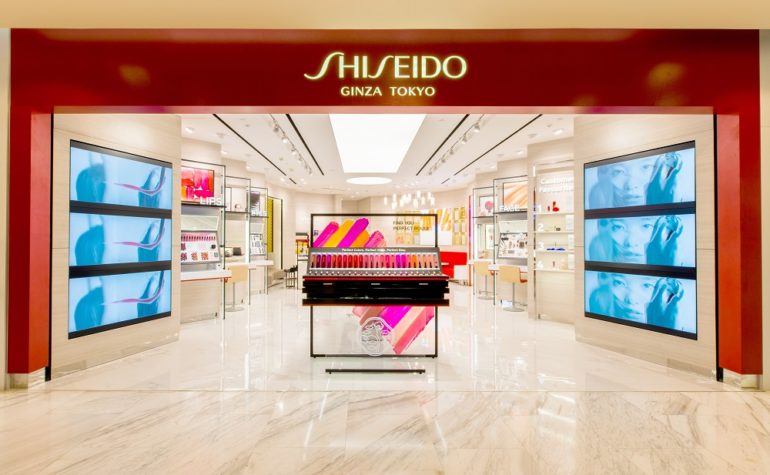
    The chief executive of Japanese cosmetics giant Shiseido Co believes inbound tourism will return next year as the pandemic abates, beginning a gradual recovery in sales of high-end goods to travelers.

    A halt in tourism amid the COVID-19 pandemic has cut off sales to Chinese visitors, a critical segment in years past. China may start to ease travel curbs after hosting the Winter Games in Beijing, and a reciprocal opening in Japan would start a “welcome back” of tourist shoppers, Chief Executive Masahiko Uotani said.

    “Next summer will be a turning point,” he said in an interview.

    Like other companies in the luxury sector, Shiseido has been hit hard by COVID-19 related lockdowns that shuttered department stores and airport shops. Operating profit plunged 87% to 15 billion yen ($131.7 million) in the year through December 2020. The company is expecting a partial recovery to 27 billion yen this year.

    Shiseido is aiming to reach 15% operating margin by 2023 and become the global leader in skincare by 2030. To get there, the company is divesting of some lower-priced brands.

    In February, it announced the sale of skincare and shampoo brands to private equity firm CVC Capital Partners for 160 billion yen. Shiseido said in August it would sell three make-up brands for $700 billion to U.S.-based investor Advent International.

    “When we made the plan last year, no one thought that the corona situation in Japan would last this long,” Uotani said. “If economic activity in Japan reaches the level of Europe and the U.S., I think the cosmetics industry will recover all at once.”

    “What I’m hoping for is the spring of next year,” he added.

    On mainland China, there are signs of economic slowdown and concerns of tighter regulation, but the market remains an attractive overseas market.

  • Commercial EV Startup ELMS Signs Battery Supply Deal With CATL

    Commercial EV Startup ELMS Signs Battery Supply Deal With CATL

    U.S. commercial electric vehicle maker Electric Last Mile Solutions Inc (ELMS) on Thursday said it has signed a battery supply deal with China’s Contemporary Amperex Technology Co Ltd (CATL). The financial terms of the deal, which runs through 2025, were not disclosed. CATL’s batteries power the Class 1 small delivery vehicle that ELMS began building last month at its plant in Mishawaka, Indiana.

    The companies are also exploring a setup where CATL would have a U.S. plant that would make battery cells and ship them to the ELMS plant in Indiana for assembly into battery packs, an ELMS spokesman said. “We reached an important milestone to secure battery capacity in an extremely challenging supply environment,” ELMS’ deputy chief financial officer, Rob Song, said in a statement.

    Battery makers are boosting production to meet soaring worldwide demand as carmakers accelerate the shift to electric vehicles to comply with tougher emission rules aimed at tackling climate change. CATL, which supplies numerous global automakers including Tesla Inc, Volkswagen AG and General Motors Co, has not announced where it would open a U.S. plant, but last year purchased a facility in Glasgow, Kentucky. Kentucky state officials in September 2020 offered incentives to CATL for a potential battery pack plant there.

    Ningde, China-based CATL, which already has U.S. sales offices, has previously declined to comment on plans for the American market. President Joe Biden has made it a priority to support the rollout of electric vehicles to make the United States competitive with China.

    Under the deal with ELMS, CATL will provide lithium-iron-phosphate (LFP) batteries using simpler cell-to-pack technology. The LFP chemistry is less expensive and safer than cobalt- or nickel-based cathodes in other batteries.

    In August, Troy, Michigan-based ELMS, which went public in June through a reverse merger with a special-purpose acquisition company (SPAC), said despite impacts from COVID-19 and industry-wide supply chain problems it was on track to build 1,000 vans this year.

    Following the small van, which has a starting price of $34,000 before federal tax credits, ELMS plans to build a larger Class 3 truck in the second half of 2022.

  • Treasury Wines warns performance is still lagging in key markets

    Treasury Wines warns performance is still lagging in key markets

    Major winemaker Treasury Wine Estates has warned investors its performance in markets heavily impacted by the pandemic is running behind expectations as lockdowns and soaring case numbers continue to hinder sales.

    Treasury, which makes wine brands such as Penfolds and 19 Crimes, held its annual general meeting on Friday. In a speech, chief executive Tim Ford told shareholders while overall performance through the first quarter of fiscal 2022 was solid, parts of the business were not performing as well as hoped.

    Mr. Ford pointed to the company’s key luxury channels in America, Australia, and Asia where the COVID-19 pandemic is still causing delays in the recovery of wine consumption in bars, pubs, and restaurants.

    He said this issue was particularly prevalent in the US, where re-openings were continuing at a “gradual pace”, slower than the company had anticipated.

    “In Australia extended lockdowns in Sydney and Melbourne have resulted in the closure of the on-premise channel, delaying our execution plans outside of the large retailers, particularly for Penfolds,” he said.

    “While the momentum in these channels is slightly behind, we remain confident that as vaccination programs gain momentum and restrictions ease across these key premium and luxury wine sales channels that we are well-placed to execute our plans to deliver growth.”

    In lieu of these channels being open, online and e-commerce sales have somewhat filled the gap, he said, but noted that growth rates were down last year.

    Shares fell 5.4 percent to $11.63 on the back of the warning. Shareholders had previously been impressed by Treasury’s resilience through both the pandemic and shock Chinese tariffs on its wine. Analysts at UBS recently put a ‘buy’ rating on the stock, saying it was well-placed to benefit from COVID reopenings.

    Treasury has also seen, like many other retailers, significant disruption to its supply chain and logistics systems due to the pandemic. Mr. Ford said shipping delays and container availability issues were becoming “more pronounced” and that he expected the challenges would be ongoing.

    However, the company’s underlying performance in its key regions was solid for the first quarter, with sales in Asia, excluding China, growing 18 percent for the three months to the end of August. Sales at the company’s US divisions grew 3 percent for the three months to September 19 against a broader industry decline of 5 percent.

    “Globally, our underlying business is performing in line with expectations, however, the pandemic-related factors will continue to have a bearing on our performance in the short term,” Mr. Ford said.

    Sales of its premium Penfolds range have also remained consistent, with Mr. Ford saying the company had successfully reallocated all the sales it lost after China, Treasury’s largest market, unexpectedly slapped tariffs of up to 200 percent on Australian wine.

    In his address to shareholders, chairman Paul Rayner said the company remained committed to the Chinese market in the long term despite its “effective closure” in 2019, and appeared to call on the Australian government to do more to repair its frayed relationship with the country.

    “Trust is critical to building relationships and brands and is therefore essential to our long-term success,” he said. “I think this will be particularly important in the post-COVID world, as governments consider how they stimulate domestic economic recovery and the role of international trade relationships in driving economic growth.

  • French energy company invests in Vietnam rooftop solar developer

    French energy company invests in Vietnam rooftop solar developer

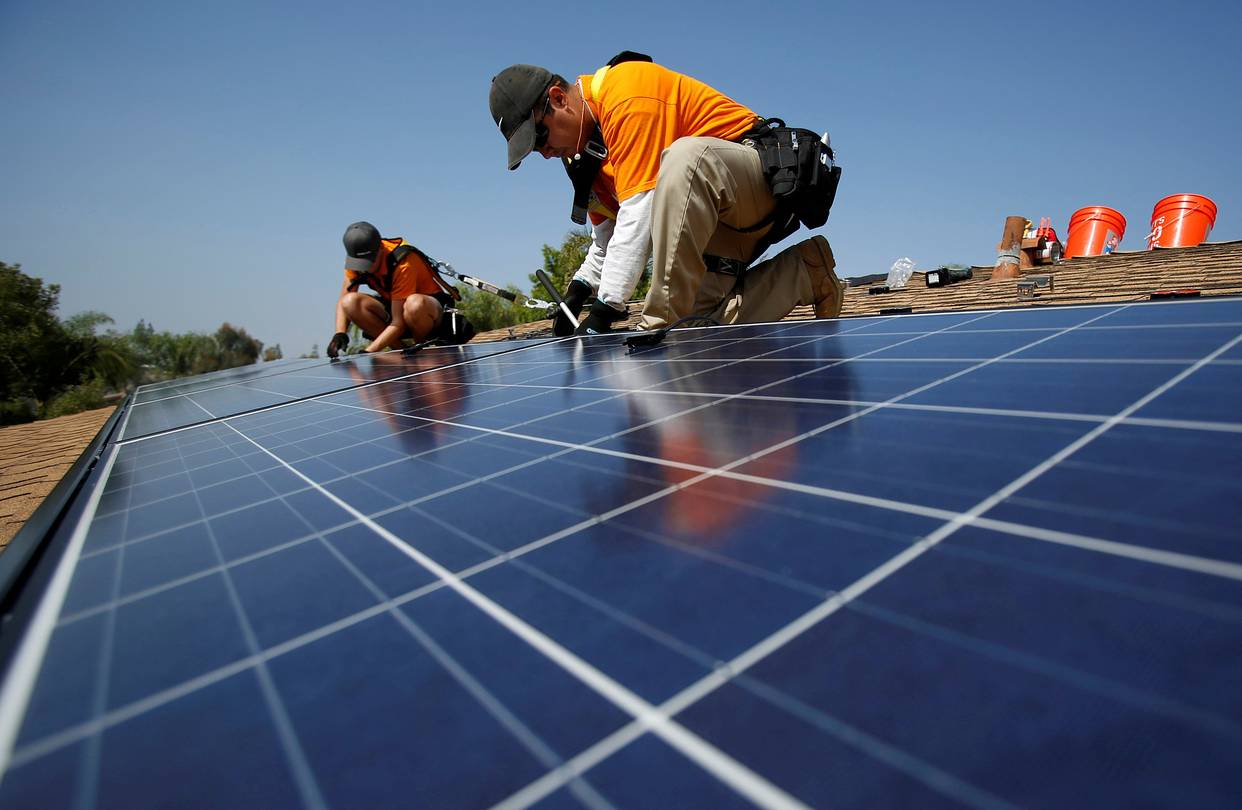
    French company EDF Renewables has made an undisclosed investment into a rooftop solar power developer subsidiary of VinaCapital, seeking to profit from the booming industry in Vietnam.

    With the investment SkyX Energy, the holding company of SkyX Solar that has 30 megawatt-peak of solar projects under operation, plans to invest more than $100 million into further develop 200 megawatt-peak of rooftop solar and distribute energy solar projects for customers over the next few years, VinaCapital stated.

    “The potential for renewables in Vietnam is enormous, and we are keen to expand our footprint in the country by drawing on our global know-how in rooftop solar solutions,” said Yalim Ozilhan, Southeast Asia director of EDF Renewables.

    In recent years, Vietnams’ rooftop solar energy sector has grown from virtually nothing into Southeast Asia’s leading solar market, with cumulative rooftop solar capacity totaling 9.3 gigawatts by the end of last year, VinaCapital said.

    EDF Renewables is an international leader in renewable energies, with a gross installed capacity of 13.8 gigawatts worldwide.

    SkyX Solar invests, designs, builds and operates solar systems for its commercial and industrial customers in Vietnam.

    Founded in 2003, VinaCapital is a leading investment management firm headquartered in HCMC, with a diversified portfolio of over $3.7 billion in assets under management.