Tag: asia

  • Facebook blames Monday’s outage on “an error of our own making

    Facebook blames Monday’s outage on “an error of our own making

    Yesterday’s six-hour outage affecting Facebook, Facebook Messenger, Instagram, and Whats App had a severe impact on more than just users of those apps. The outage might have cost Facebook over $100 million in lost advertising revenue as the company happens to own all of the aforementioned apps.

    The company points the finger of blame at itself and says that the outage started when Facebook engineers were working on “routine maintenance.” In a blog post written by the firm’s VP of infrastructure, Santosh Janardhan, the executive says that the company is trying to learn from the outage so that it doesn’t get repeated.

    Janardham adds, “This outage was triggered by the system that manages our global backbone network capacity. The backbone is the network Facebook has built to connect all our computing facilities together, which consists of tens of thousands of miles of fiber-optic cables crossing the globe and linking all our data centers.” Data centers, like Facebook users, come in different sizes and shapes.

    Some data centers are big buildings that house huge numbers of computers that store data and do the heavy lifting to keep the network running. Others are smaller facilities where device owners’ requests for data are sent and then moved using Facebook’s backbone network to larger data centers. That is where the data that your app needs is discovered and sent to your phone.

    Hours after the outage started, Facebook’s shares declined to reduce the worth of co-founder and CEO Mark Zuckerberg by $6 billion. Over the last month, Facebook shares declined by 12.88%  dropping Zuckerberg’s personal worth down from nearly $140 billion to $120.9 billion. However, we don’t expect to see Facebook run a bake sale for its beleaguered chief executive.

    Routers are used to determine where all of the incoming and outgoing data should be sent. And occasionally Facebook engineers need to take the backbone offline for maintenance. And yesterday, a command was issued that was supposed to check the available capacity of Facebook’s backbone. Instead, it accidentally took down all of the connections in the backbone network which disconnected Facebook’s data centers around the world.

    Facebook has a system in place that is designed to audit commands to make sure that an accidental outage like the one that went down yesterday doesn’t take place. But the audit tool had its own bug that prevented it from stopping the command from shutting down the system.

    A second problem affected Facebook’s DNS servers. As stated in today’s blog post, “The end result was that our DNS servers became unreachable even though they were still operational. This made it impossible for the rest of the internet to find our servers.” Facebook notes that everything happened so fast that its engineers had two big problems: because its networks were down, the data centers could not be accessed by normal means and the loss of DNS broke the tools that Facebook would normally use to investigate and fix outages.

    Once Facebook was able to restore its backbone network connectivity, everything came back up. But Facebook had another problem to consider. If it turned all of its services back on at once, the amount of traffic running through the system could cause the system to crash again. But thanks to the “storm drills” that Facebook has been practicing, it was well prepared to handle the incident.

    The social media company says that it will learn from the outage so that it never happens again. “Every failure like this is an opportunity to learn and get better, and there’s plenty for us to learn from this one. After every issue, small and large, we do an extensive review process to understand how we can make our systems more resilient. That process is already underway.”
  • Battery Giants Face Skills Gap That Could Jam Electric Highway

    Battery Giants Face Skills Gap That Could Jam Electric Highway

    The South Korean battery giants powering many of the world’s electric vehicles face a skills shortage that could drag on the global race towards zero-emissions transport. The country’s three major players, which command a third of the global electric vehicle (EV) battery market, told Reuters they were all grappling with a shortage of research and engineering specialists as demand for the technology balloons. LG Energy Solution (LGES), SK On, and Samsung SDI Co Ltd all rank in the top-six global battery makers, and supply the likes of Tesla Inc, Volkswagen and Ford Motor Co among others.

    Yet they are facing growing demands from big automakers and can’t find enough technicians with the training needed to keep advancing cutting-edge tech such as solid-state batteries. “Although we are seeing such a growth in the industry, it appears that we are facing a shortage of talent,” an official at LGES said. “It is crucial to recruit external talents as well as nurturing our own talent.” This was echoed by its two big domestic rivals, with SK On describing the sector’s expansion as “exponential”.

    Indeed the global battery sector has doubled in size over the past five years and South Korea is short of almost 3,000 graduate degree-level positions in areas such as research and design, according to the most recent data from the Korea Battery Industry Association, from late 2020. LGES, SK On and Samsung SDI currently have a total of about 19,000 employees.

    The Korean crunch reflects a growing talent shortage across a wider global battery market that, according to IHS Markit forecasters, will triple in size to almost $90 billion by 2025. The EU’s European Battery Alliance planning group, for example, says “re-/up-skilling” is needed in the bloc because its battery industry needs 800,000 new workers by 2025.

    If the global skills gap is not plugged, some industry experts say it could slow the pace of advances in batteries, which are being counted on to clean up road transport, one of the biggest sources of greenhouse gas emissions. “Talent demand in the battery industry outweighs supply, and battery makers are anxious to ensure that they have got this small group of people who can work on this technology, and won’t be left behind in the fast-growing market,” said Samsung Securities analyst Cho Hyun-ryul.

    ‘COMPETITIVE PACKAGES’

    In a sign of the skills pressure, LGES – South Korea’s No.1 battery maker by volume – plans to launch a new “battery-smart factory department” at the prestigious Korea University next spring with guaranteed jobs for graduates.

    More immediately, executives have been flying to the United States to lead recruiting events at schools there. The LGES CEO and his managers went to Los Angeles last month while the SK Innovation CEO and staff hosted an event in San Francisco on Saturday.

    These companies are not only competing with other established Asian players, including market leader CATL from China and Japan’s Panasonic, but fast-growing U.S. and European rivals like Sweden’s Northvolt bridging the technology gap.

    The talent shortage in South Korea is being compounded by some existing employees moving to foreign competitors that had offered better pay, according to two industry sources with knowledge of the matter. They declined to be named due to the sensitivity of the matter.

    Northvolt, which counts Volkswagen as a client, has previously said that some of its employees were recruited from top battery makers, including LGES and Panasonic.

    “We do have few people working for Northvolt that are from South Korea, which is obviously a very impressive country when it comes to battery manufacturing and development with several well-respected companies active in this space,” a spokesperson for the company told Reuters last week.

    “We try to offer competitive packages to our employees – everyone working here is a shareholder in the company for instance,” he added, though did not specify pay details.

    Battery specialists in South Korea newly graduated with doctorate degrees can earn as much as 100 million won ($85,000) a year, and those without that level of qualification average about 80 million won after gaining a few years of experience, according to two sources at major South Korean battery firms.

    South Korea’s average annual salary was 37.4 million won in 2019, according to tax agency data.

    ‘WIN FOR AMERICAN AUTOS’

    The Korean sector has also been mired in internal conflict, with LGES and SK Innovation, which wholly owns SK On, locked in a two-year dispute over technology, trade secrets and staff poaching until April this year when they settled their differences.

    In a signs of the global importance of the two conglomerates, U.S. President Joe Biden – who has made boosting EVs a top priority – described the settlement as “a win for American workers and the American auto industry.”

    “We need a strong, diversified and resilient U.S.-based electric vehicle battery supply chain,” he added.

    Even in the face of the growing skills gap, the worldwide demand for their products has supercharged the battery makers’ expansion plans.

    LGES expects its production capacity to reach 155 gigawatt-hours (GWh) of batteries by the end of this year and plans to raise that to 430 GWh in 2025 that could power about 7.2 million EVs.

    SK Innovation aims to boost its annual production capacity more than five-fold to 220 GWh by 2025 and last week announced the plan to invest 10.2 trillion won with Ford to build three battery plants in the United States.

    Richard Kim, principal analyst at IHS Markit, said the skills gap was likely to be a problem for years to come.

    “The labour shortage in the battery industry has already been a global issue, and the reality is that there has been an imbalance of supply and demand of manpower as many companies start to expand their capacity,” he added.

  • Garment exports hit hard by labor shortage

    Garment exports hit hard by labor shortage

    Garment and textile firms face labor shortages and broken supply chains, and find it hard to fulfill their export orders, the Vietnam Textile & Apparel Association has said.

    The fourth and most intense wave of Covid-19, which caused many textile companies to close down or operate at partial capacity between July and September, remains a severe problem in many cities and provinces, especially in the south, and so migrant workers are making an exodus to their hometowns.

    Some one million workers in the sector, or one third the total number employed, have quit their jobs or are staying away from work with or without pay, VITAS estimated.

    Meanwhile, supply chains continue to be broken as a number of foreign clients shift their orders to other countries.

    Many companies in the south have adopted the stay-at-work and commute-to-work models, but managed to get only 10-30 percent of their employees, meaning they have found it hard to maintain production and ensure timely delivery of goods, VITAS said.

    Garment and textile exports fell 9 percent month-on-month in September to $3 billion. The figure for the year-to-date was $29 billion.

    VITAS has three different export scenarios depending on how the Covid situation pans out: it expects shipments of $33.5-34 billion this year if the pandemic continues until early December, $36-36.5 billion if until November and $37.5-38 billion if it is controlled by October.

    “It is very difficult for the sector to realize the export target of $39 billion set for this year,” Vitas vice chairman Truong Van Cam said.

  • HSBC Adds Digital Investment Tools to Woo Millennials

    HSBC Adds Digital Investment Tools to Woo Millennials

    The bank is enhancing its digital investment capabilities with a series of new solutions, including $0 commission stock trading, wealth coach and a revamped fund investment platform.

    HSBC has launched three digital solutions, including Trade25, Wealth Coach and the enhanced FlexInvest platform to better cater to millennials, a segment that accounted for nearly 50 percent of the bank’s new customers in Hong Kong in the first half of this year.

    Our new solutions focus on addressing what matters most to our young customers, ensuring that they have the necessary tools to embark on their wealth journey and thrive financially in the long run, Brian Hui, HSBC head of customer propositions, international and marketing, wealth and personal banking, Hong Kong, said.

    Designed for traders aged 18 to 25, Trade25 provides $0 commission and $0 platform fees for trading Hong Kong, U.S. and China A shares, and includes a financial education hub for customers to learn and boost their stock trading knowledge.

    The Wealth Coach gives young customers personalized advice on investments and personal finance via mobile chat or Zoom, and the FlexInvest unit trust investment platform is being upgraded to allow customers to easily identify their preferred funds for building their investment portfolio.

    According to the bank, millennials are one of the key pillars of HSBC’s Asian Wealth strategy. In Hong Kong, the number of new to bank millennial customers for the first six months in 2021 jumped by over 30 percent, compared to the same period last year.

    It attributed this growth to its «HSBC One» proposition and its Wealth A0 investment education and empowerment campaign, launched in the second quarter of the year.

  • Imports dominate popular categories on e-commerce platforms

    Imports dominate popular categories on e-commerce platforms

    Only 17 percent of the most popular goods on e-commerce platforms since last year have been Vietnamese, a market research firm said.

    Malaysian market research firm iPrice Group said in a report that 83 percent of the 1,200 most sought-after items were imported.

    The rates for Vietnamese products ranged between 25 percent for Sendo and 13 percent for Shopee Vietnam.

    The overall rate dropped to 14 percent in the first half of this year.

    Sendo and Tiki are Vietnamese-owned businesses.

    “Vietnamese enterprises have not paid due attention to e-commerce yet,” Sendo chairman Nguyen Dac Viet Dung said.

    “After two years of working with the Ministry of Industry and Trade to bring Vietnamese goods to e-commerce platforms, we have attracted many traditional retailers”.

    Vietnamese goods dominated the groceries category, with demand surging because of Covid-19 lockdowns.

    Agricultural specialties are becoming increasingly on the two local platforms.

    Vietnam’s e-commerce market has seen an average annual growth rate of 25-30 percent in the last five years, according to Vietnam E-commerce Association (VECOM).

    Should the growth rate be maintained, Vietnam would rank third in e-commerce market size in Southeast Asia by 2025, behind Indonesia and Thailand.

  • YouTube adds ‘continue watching’ feature to mobile

    YouTube adds ‘continue watching’ feature to mobile

    YouTube is once again testing out a new feature, and this one isn’t only for Premium users, but seems to be slowly making its way across the platform to all. In a bid to further enhance video watching continuity across devices, the YouTube platform is introducing a new “continue watching” feature for Android and iOS mobile devices.

    A feature like this already exists on the web version of YouTube (shown below), which allows users to continue watching a video from where they last left off, even after getting off the computer and using YouTube on mobile in between.

    YouTube is already the second most popular “social media” app—ranking second only to Facebook across the globe, and beating out WhatsApp in active user count. YouTube is the place where you can get lost in videos of every genre imaginable, from science and educational videos to video game streams, conspiracy theories, keeping up with your favorite vloggers, and the list goes on.

    And because of its widespread popularity, it’s only natural that the video app provides no less than a streamlined watching experience across all platforms it is used on.

    Once the new “continue watching” feature rolls out to your own handset, this will mean that even if you were watching a YouTube video on your laptop and your battery dies, or you have to go somewhere, you are able to whip out your phone at any time, open the YouTube app, and you will see the mini-player at the bottom, allowing you to open up the last YouTube video you never finished. It will start playing at most a couple of seconds back from where it dropped off, on whichever device played it previously.

    Naturally, in order for your mobile YouTube app to be able to sync your watched videos between various devices, you need to make sure you are logged into the same Google account on your computer, tablet, and phones.

    The “continue watching” feature for YouTube on mobile is no longer in beta phase, either, so although we don’t know exactly how YouTube is going about rolling it out, you can likely expect it to hit your phone anytime in the coming weeks.

  • Pineider opens first standalone Asian store

    Pineider opens first standalone Asian store

    Italian heritage brand Pineider has made its Singapore debut as part of the brand’s plan to expand into Asia, with more markets to come.

    Singapore’s first Pineider store occupies a 35sqm space inside the lobby of the Marina Bay Sands complex, offering a selection of writing instruments, stationery, designer leather goods and customisable ‘passion boxes’ – leather display and storage cases for collectors.

    To mark the opening of its first Asia store, Pineider also features a limited edition fine paper designed exclusively for the Marina Bay Sands store, featuring some of the distinctive landmarks of Singapore.

    Besides Singapore, the Italian brand is also eyeing to expand its presence in other Asian markets such as South Korea, India and Vietnam.

    “The opening of the Singapore mono-brand boutique confirms the visibility and success Pineider achieved globally, its ability to be appreciated and the confidence the brand holds for Singapore’s luxury retail market,” the company said in a statement.

    Founded in 1774 in Florence, Pineider provides stationery, writing instruments, and leather goods to royal families, politicians, writers, and poets. Its products have been used by Napoleon, Lord Byron, Elisabeth Taylor, Pavarotti, Giorgio Armani, Madonna, Barack Obama, and Angela Merkel, among others.

  • Netflix brings new Play Something feature to Android users

    Netflix brings new Play Something feature to Android users

    Play Something is a new feature that Netflix begun testing back in April in select markets on Android devices. Today, the company announced that it will make Play Something available to all Netflix users on Android.

    The new feature is Netflix’s take on the “shuffle” function that many music streaming services offer. Although it’s been available on desktop for quite some time, Play Something has only been added to Android this week.

    Unfortunately, iOS users won’t benefit from the new shuffle feature, but Netflix announced that it will start testing Play Something on iOS in the coming months. This means that it’s unlikely that iPhone/iPad users will be getting a similar feature this year.

    In the same piece of news, Netflix released another feature called Fast Laughs. It’s a TikTok-like feature but for movies and TV shows. Fast Laughs was launched on iOS early this year and it’s now making its way to Android devices in select markets, including Australia, Canada, Ireland, India, Malaysia, Philippines, United States, and the UK.

    Last but not least, the long-awaited Downloads for You tool will be coming to iOS next month, Netflix announced today. Currently, the option to automatically download movies and TV shows to watch offline based on viewing history is only available on Android devices.

  • Apple fans have their minds blown by Intel in new video

    Apple fans have their minds blown by Intel in new video

    When Apple decided to use its own “Apple Silicon” on Macs replacing Intel processors, Intel was not happy. Today, Intel got back at Apple by posting a series of videos showing how Apple fans can be tricked into thinking that innovations created by Intel were discovered by Apple. In the first video called Breaking the Spell, a moderator named Kevin meets with Apple fans (“I’m an Apple girl in an Apple World,” says one) for some one-on-one discussions.

    Kevin has these Apple fans watch a video that they believe is about to show off a new Apple product. The video shows a chip called CPU Pro and on the screen, the video says, “Systems you can customize,” “Laptops you can upgrade,” and “Now you’re in control.” The Apple fans watching the video shake their heads up and down. This is what they have all been wanting.

    The moderator captures the attention of the Apple fans by asking them whether they would be interested in a device that plays over 57,000 different games effortlessly. He then shows an animation of a laptop with two 4K touchscreens. And if the laptop could fold into a tablet, that would be even better, the Apple fans said. “I would like to have my iPad and my laptop combined,” said one.

    Kevin goes out of the room and brings back a two-in-one laptop/tablet. “That kind of eliminates the need of an iPad,” one Apple fan says. The moderator then asks, “What if I told you that everything we’ve been talking about today is available now?” But Kevin then reveals, “But this was not Apple. That is a PC powered by Intel.”

    When the group hears that it was Intel, not Apple, that was behind the device that had just seen, they are stunned. Some laughed, others said, “Really” in disbelief. Several were ready to whip out their credit cards right away. The tag line: “When you break Apple’s spell the choice becomes clear.”

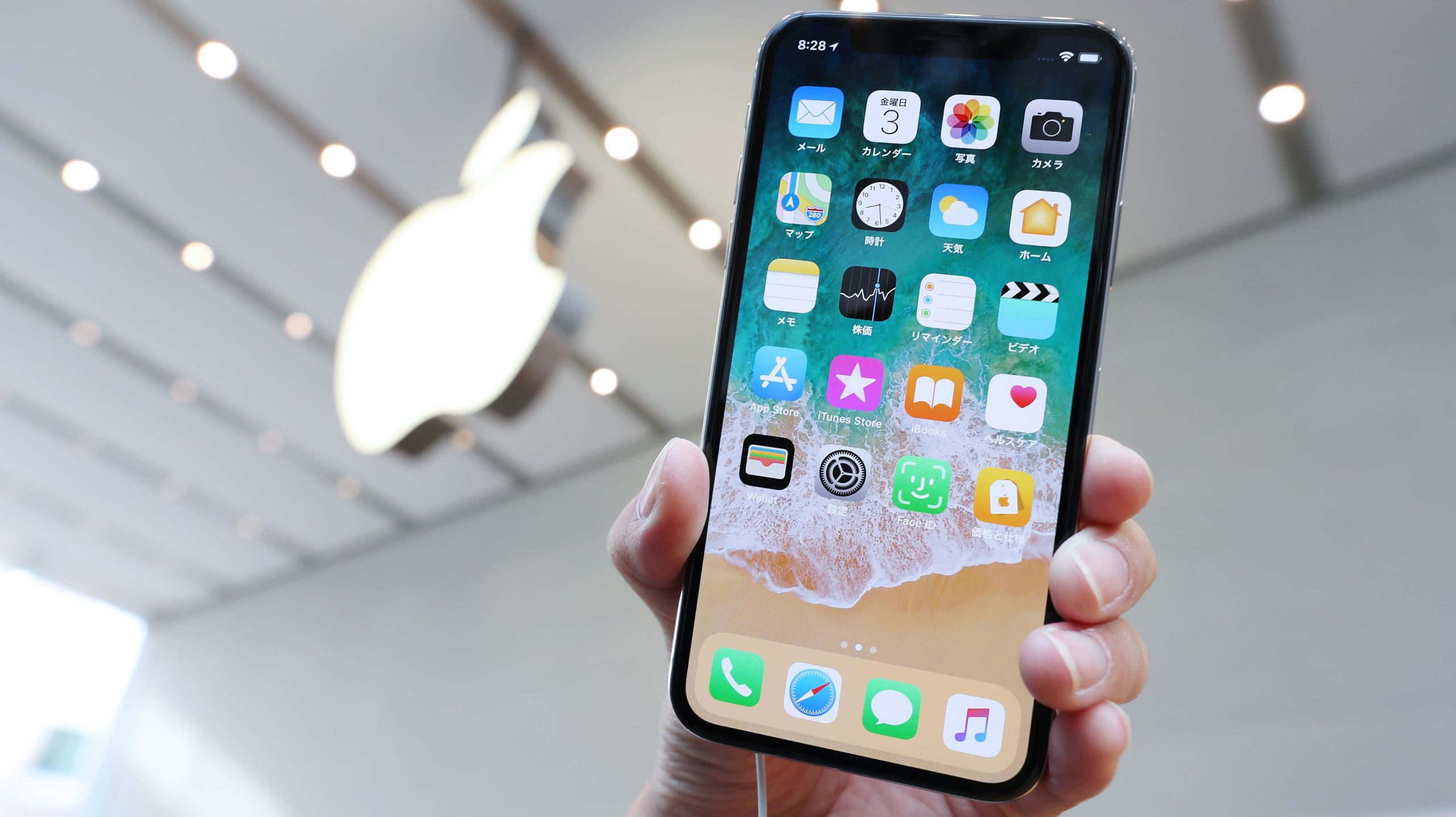
    Intel released the video on Monday and titled it a social experiment. You might recall that Apple was about to use a new 5G modem chip developed by Intel until it reached a settlement wiping out litigation between Apple and Qualcomm. As a result, Apple is able to stuff Qualcomm’s 5G modem chip inside both the iPhone 12 and iPhone 13 series. Eventually, though, Apple plans on designing its own 5G modem chips.

    In July 2019, Apple purchased most of Intel’s smartphone modem chip business for a cool billion dollars. And this past summer, roughly two years after it bought Intel’s smartphone modem chip operations, prescient TF International analyst Ming-Chi Kuo said that by as early as 2023, Apple might be ready to use its own 5G modem chip for the handsets that would make up the iPhone 15 line.

    Losing this business would be a terrible blow to the pocketbook for Qualcomm since the latter cannot make up for the loss of this business by designing Apple’s AP chips. Apple does that itself while having the chipset built by TSMC. Kuo said that Qualcomm might be forced to enter new markets in order to compensate for losing Apple’s 5G modem chip business for the iPhone.

    Even if Apple does start including a 5G modem chip that it designed itself with the iPhone 15, some older models that could still be in production would continue to use Qualcomm’s 5G modem chips. If for some reason you are unaware, Apple started offering 5G connectivity on the iPhone with the 2020 iPhone 12 series.

    This year, Apple started replacing Intel processors on Macs with the M1. This is a powerful chip designed by Apple and is built by TSMC using the 5nm process node. It contains a whopping 16 billion transistors.

  • Facebook, Instagram, WhatsApp, Messenger are all up again

    Facebook, Instagram, WhatsApp, Messenger are all up again

    If you’re having a problem using Instagram, WhatsApp, Messenger, and Facebook this morning, it’s not you. It’s them. subscribers to the two social media sites and the two messenger apps have been having problems refreshing their screens this morning as a worldwide outage is affecting those apps. These sites are also not working on desktop devices as well.

    If you’re wondering why those four sites are having problems at the same time, it might have slipped your mind that Facebook owns Instagram, Messenger, and WhatsApp. DownDetector shows that the outages started this morning at 11:45 am ET. The number of complaints about the loss of Facebook connectivity surged to 124,000 on DownDetector from 22 in just 30 minutes.

    Facebook was forced to turn to Twitter to issue a statement that says “We’re aware that some people are having trouble accessing our apps and products. We’re working to get things back to normal as quickly as possible, and we apologize for any inconvenience.”

    Facebook issuing a tweet to make an important statement about a major worldwide outage is like the CEO of Pepsi enjoying a Coke at lunch. Or imagine if Tim Cook was caught with the Samsung Galaxy S22 Ultra in his hands.

    Third-party experts believe that the problem is related to a change made to networking instructions that are used globally to access Facebook’s systems. It could take some time for everything to return to normal for Facebook and its apps. That’s because the outage has been described by DownDetector as “widespread and global in scale.

    An internal memo sent to all Facebook employees says that the company’s global security team “was notified of a system outage affecting all Facebook internal systems and tools.”

    Those familiar with what is going on inside the company say that the outage has also impacted Facebook’s internal systems as well as with voice calls and work apps used for calendar appointments. The office staff is reportedly communicating with each other via Zoom.

    In a company memo, Facebook’s global security operations center said that the outage was “a HIGH risk to the people, MODERATE risk to Assets and a HIGH risk to the reputation of Facebook.” There have been messages posted on social media that have tied today’s global outage with some of the scrutiny and bad publicity Facebook has recently received. On CBS-TV’s 60 Minutes newsmagazine, a Facebook whistle-blower named Frances Haugen, who worked on the company’s civic misinformation team, said Facebook would always choose “profit over safety.”

    Among those who enjoy passing along conspiracy theories, the timing of the outage seems suspicious having occurred the morning after Haugen’s interview on national television. Those who believe that the outage was created on purpose by Facebook say that the company didn’t want subscribers posting negative comments about.

    Instagram was acquired by Facebook in 2012 for $1 billion in a deal that many consider the most lucrative in tech history. Today, Instagram is valued at over $100 billion. A little more than two years later, Facebook closed on its acquisition of WhatsApp, a deal that was valued at over $21 billion by the time it closed.

    The outage has currently been going on for over five hours which is unusually long for such a service disruption. Tom Daly, a networking expert who co-founded internet company Dyn, explained this by noting that “They have a massive infrastructure with a massive amount of complexity and they have to resolve all of that complexity to recover.”

  • Southeast Asia’s online food delivery to soar through 2025

    Southeast Asia’s online food delivery to soar through 2025

    Southeast Asia’s online food-delivery market is expected to treble in the next five years, reaching US$28 billion in transactions, according to a report released by Grab and Euromonitor International.

    The growth is expected to be seen in emerging markets such as Myanmar, Vietnam, and the Philippines. The regional online food delivery gross merchandise value (GMV) is estimated to grow from US$9 billion last year to US$28 billion in 2025.

    “The pandemic has accelerated the shift in consumer behavior towards buying food and groceries online,” said Russell Cohen, group MD for Operations at Grab. “However, online grocery delivery penetration is extremely low in the region, at just over 1 percent here compared to 8 percent in China and 9 percent in the US.

    “With infrastructure and connectivity improvements, we believe that the next wave of growth will come from smaller cities,” Cohen added.

    By 2025, the region’s overall prepared meal sales is projected to reach US$170.5 billion, with online food delivery penetration increasing to 16.4 percent. This will be driven in part by a rising middle class and increasing smartphone adoption in Tier 2 cities.

    Meanwhile, spending on online food delivery is expected to increase two times faster than foodservice spending in the next five years, with a compound annual growth rate of 24.4 percent.

  • ZTE deepens partnership with China Telecom Global in Hong Kong

    ZTE deepens partnership with China Telecom Global in Hong Kong

    ZTE Corporation has signed a strategic cooperation agreement with China Telecom Global Limited in Hong Kong.

    According to the agreement, both parties will further deepen their strategic cooperation in cloud network services, ICT, data centers and global operation in the DICT field.

    “China Telecom and ZTE have a long-standing partnership. In the overseas markets, ZTE has become one of our major equipment suppliers since we started the project from scratch in Philippines in the second half of 2019,” said Mr. Donald Tan, CEO of CTG. “ZTE delivered the project with speed and quality, reaching a new milestone for our cooperation.”

    “As to the key strategic planning in the next few years, I believe that both CTG and ZTE will continue to strengthen the strategic cooperation and build a comprehensive, in-depth and long-term partnership to create synergies for future growth,” Mr. Tan added.

    “China Telecom has always been one of ZTE’s most important partners. Through CTG’s project in Philippines, our cooperation has started to expand in the overseas markets, which is greatly valued by ZTE,” affirmed Mr. Xiao Ming, SVP of ZTE Corporation.

    “Currently, ZTE has achieved the high-level delivery of the project in Philippines, and we believe in the future, both parties will deepen our cooperation and share more excellent experience with each other to take our cooperation to the next level.”

    Moving forward, ZTE and China Telecom Global will stay committed to the cooperation on cloud network services, ICT, data centres, digital transformation, compliance and risk control. The two parties are set to make full use of their comprehensive resource advantages and jointly expand overseas markets for a win-win future.

  • Alibaba apps start offering WeChat Pay option after government order

    Alibaba apps start offering WeChat Pay option after government order

    China’s Alibaba Group Holding Ltd has begun offering payment services from Tencent Holdings Ltd’s WeChat on a number of its apps, after the government ordered major tech firms to stop blocking each other’s services and links.

    Local tech blog 36Kr reported on Tuesday that users of Alibaba’s food delivery app Ele.me, luxury goods app Kaola and e-book app Shuqi can now purchase goods via WeChat Pay, one of China’s most popular online payment options.

    Alibaba’s used-goods marketplace app Xianyu and supermarket app Freshippo have also applied for WeChat Pay integration, the tech blog said.

    Alibaba confirmed the contents of the report to Reuters. Previously, the main way users could make payments on those apps was via Alipay, from Alibaba’s financial affiliate Ant Group.

    Earlier this month, the Ministry of Industry and Information Technology said it had asked internet companies to end a long-standing practice of blocking each other’s links and services on their sites. Such practices prevented app users from seamlessly jumping to services between rival companies.

    Days later, Tencent’s WeChat messaging app started allowing users to access links to rival platforms. Previously, it had not allowed users to click on links sent via chat to, for instance, product listings from Alibaba’s Taobao marketplace.

    The changes come as authorities continue to tighten regulation in the internet sector.

    In April, antitrust regulators fined Alibaba a record $2.75 billion for anti-competitive behavior.

  • Morgan Stanley’s China CEO Retires

    Morgan Stanley’s China CEO Retires

    Morgan Stanley’s chief executive of China will reportedly retire after nearly two decades with the American lender.

    Wei Sun Christianson will retire from her role as China CEO and APAC co-CEO – roles she held since 2006 and 2011, respectively – according to a memo from the bank.

    Christianson will remain as an advisory director at the bank while fellow APAC co-CEO Gokul Laroia will take over as the sole CEO for the region.

    Christianson first joined Morgan Stanley in 1998 and, thereafter, took on senior roles at Credit Suisse and Citi before rejoining in 2006 as China CEO. Under her leadership, Morgan Stanley expanded its footprint in China across domestic securities and bonds underwriting, commercial banking, asset management, trust services, and yuan-denominated private equity investing.

  • Vietnam eyes $13.7 billion port upgrade to boost trade

    Vietnam eyes $13.7 billion port upgrade to boost trade

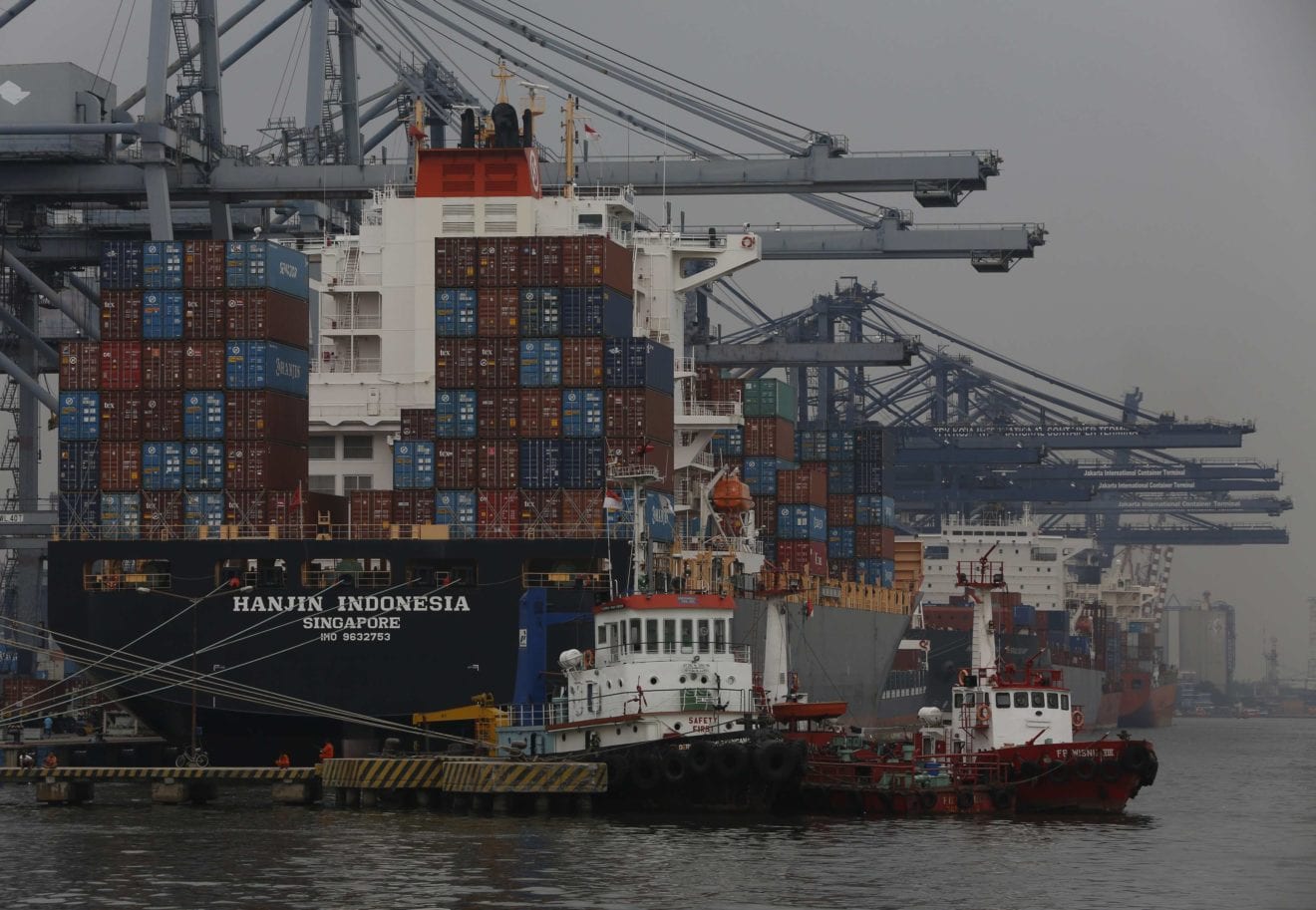
    Vietnam needs VND313 trillion ($13.77 billion) by 2030 to upgrade and optimize its port system to reduce dependency on road transportation and boost trade.

    There will be two special graded terminals: Nam Do Son in the northern city of Hai Phong and Cai Mep in the southern province of Ba Ria-Vung Tau, according to a government plan for the 2021-2030 period with a vision until 2050.

    These terminals will act as international hubs for Vietnamese goods to be transported directly to Europe and the U.S. (the two biggest export markets) so businesses no longer need to send their goods to intermediate hubs in other countries.

    The remaining 34 ports will be divided into three categories: tier 1, 2 and 3, depending on their capacity and location.

    Special graded and tier 1 ports will be connected with smaller ports by newly prioritized railways and roads.

    The smallest ports located deep inland will be removed.

    Deputy Minister of Transport Nguyen Xuan Sang said the new plan will focus on developing a shipping route between localities instead of relying on roads.

    For example, Chinese imports could be shipped to Quang Ninh ports in the north and then to other localities along the coast, instead of being transported via road as in the current case.

    “Our country has a long coastline, why do we need to use roads while we can use sea routes?” he said, adding that on average shipping costs are lower than road delivery.

    The use of ports would also lower logistics costs and reduce pressure on roads, which would increase transport safety.

    The majority, around 95 percent, of funding for this plan will come from private companies and other legal sources, according to the transport ministry.