Tag: asia

  • Fintech Startup Aspire Sets Sights on Southeast Asia’s Digital Economy

    Fintech Startup Aspire Sets Sights on Southeast Asia’s Digital Economy

    The Singapore-based neobank has raised a $158 million led by renown VCs and fintech founders.

    Aspire is looking to double down on existing markets, while building the foundations to serve growing business clients across the whole South East Asia region, the firm said in an announcement on Monday.

    The oversubscribed funding round consisted of $58 million in equity and $100 million in debt. It was led by an undisclosed global growth equity firm, together with DST Global Partners, CE Innovation Fund, B Capital Partners and global hedge fund Fasanara Capital. Existing investors including Hummingbird Ventures, Mass Mutual Ventures, Picus Capital, and AFG, as well as a number of individual investors also participated.

    The company also operates in in Indonesia and Vietnam and is laying the groundwork for expansion into other Southeast Asian markets.

    Founded in 2018, Aspire provides an all-in-one finance operating system, which incorporates accounting, payroll, invoice management, FX, credit solutions, and banking. It serves more than 10,000 business accounts, which transact a total of around $2 billion annually, doubling in five months from May.

  • Malaysia’s AirAsia X reports record quarterly loss of $5.9bln

    Malaysia’s AirAsia X reports record quarterly loss of $5.9bln

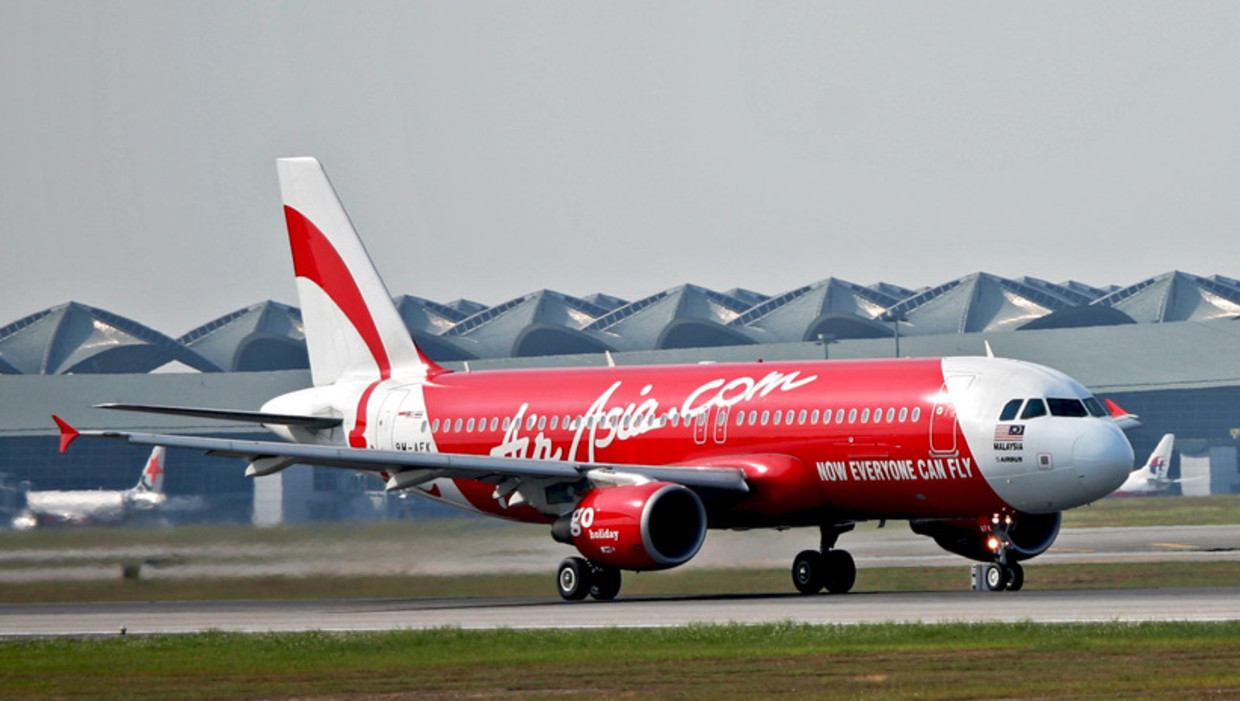
    AirAsia X—the long-haul affiliate of Malaysian tycoon Tony Fernandes’ AirAsia Group—reported its biggest-ever quarterly loss as travel restrictions aimed at curbing the further spread of Covid-19 grounded the budget carrier’s planes.

    The airline posted a net loss of 24.6 billion ringgit ($5.9 billion) in the three months ended June 30 following the suspension of flights since the height of the pandemic in April last year, the company said in a statement to Bursa Malaysia on Monday. That’s the ninth consecutive quarterly loss reported by the airline and compares with the 305 million ringgit net loss posted a year ago.

    The losses were exacerbated by an accounting provision of 23.8 billion ringgit to creditors, with the airline already in default. “The contractual liabilities for which the provision is made will be waived upon the successful completion of the proposed debt restructuring exercise,” AirAsia X said.

    AirAsia X has been negotiating with creditors to restructure its debts amid mounting losses brought on by the pandemic. It has also been discussing returning some of its aircraft to lessors as part of a fleet downsizing exercise aimed at focusing operations on mature routes and terminating flights to unprofitable destinations.

    Airlines and other travel-related industries are among the hardest hit by the pandemic as countries around the world closed their borders to contain the virus. AirAsia Group has been pivoting into digital businesses as Covid-19 travel restrictions drag passenger and cargo traffic lower.

  • Microsoft promises an improved and super modern-looking Skype

    Microsoft promises an improved and super modern-looking Skype

    For the first time in a very long time, Microsoft is talking about its future plans involving Skype rather than offering users a glimpse at what’s to come in the next update. Instead of promising new features, Microsoft is now trying to convince users that the future is bright for Skype, assuming they will still be there when the complete overhaul of the app is finished.

    The highlight of the upcoming changes is the complete redesign of the call stage, the most important part of Skype. First off, users can now find themselves on the main view during a call. Also, the way video feeds are rendered has been adjusted to look more natural. More importantly, all participants are now visible on the calling stage, even if they aren’t sharing video.

    If you, like many others, think Skype is slow and unreliable, you’ll be happy to know that Microsoft improved performance in key scenarios by 30% on desktop, and over 2,000% on Android.

    Visually, expect a lot of changes to come in the next months, including new themes featuring vibrant colors, upgraded chat headers, fluent icons, and gradients for profiles and non-customized chats.

    There’s a bunch of other new features and improvements announced by Microsoft, yet there’s no timeline for their arrival yet. Still, it’s nice to know that Skype is changing for the better, so here is hoping everything revealed by Microsoft this week will be released sooner rather than later.

  • UBS Creates ESG Role in Investment Bank

    UBS Creates ESG Role in Investment Bank

    The Swiss bank appoints one of its investment bankers to a key sustainability role.

    Zurich-based UBS is naming Laurent Bouvier to front a new team of investment bankers focused on environmental, social, and governance responsibility, according to a memo seen by finews.com. Bouvier, a managing director, is currently co-head of the global industries group, with Charles Otton.

    Bouvier’s promotion is part of a wider push by UBS and other investment banks to increasingly consider so-called ESG criteria in traditional sectors like industry. Wall Street rivals like Goldman Sachs and Deutsche Bank have already set up similar teams, which first reported Bouvier’s appointment.

    A dealmaking veteran, Bouvier will be joined by Armin Peter and Samantha Sutcliffe, who have devoted themselves to sustainable banking and finance efforts at UBS since 2019. Peter is the global head of debt syndicate and the head of sustainable banking in the European, Middle East, and Africa regions. Sutcliffe is the head of green and sustainable finance.

    Bouvier previously spent more than 16 years at Credit Suisse, also as an MD, before joining UBS in 2015. He will be replaced in his current job by Philippe Chryssicopoulos, who will co-lead the industrials group with Otton.

  • More Warning Signs at Another Chinese Developer

    More Warning Signs at Another Chinese Developer

    Tianjin-headquartered Sunac is the latest major property developer to reportedly face troubles, with a letter to Chinese authorities asking for policy assistance.

    Sunac China Holdings Ltd. asked authorities in Shaoxing – a city in the eastern coastal province of Zheijiang – to offer policy assistance due to operational difficulties, according to a report citing a letter from a subsidiary.

    The letter did not elaborate on the type of assistance requested but said that it had never experienced such a radical change in the external environment, underlining a 60 percent year-on-year drop in home sales in Sunaac’s Shaoxing office.

    The market is almost frozen, the letter said. The radical change in policy and environment has seriously disrupted our business and made it very difficult to maintain normal operations.

    Year-to-date, Sunac’s Hong Kong-listed share price has more than halved to HK$13.44, as of publishing.

    On Friday, Sunac’s dollar bonds slumped after the letter circulated in the market with its 5.95 percent bond due 2024 dropping 4.6 cents on the dollar to 85 cents – a record-low closing level.

  • Chinese solar panel producer invests $500 mln in Vietnam

    Chinese solar panel producer invests $500 mln in Vietnam

    Chinese solar panel maker JinkoSolar Holding Co. has announced a $500 million investment into Vietnam to build a manufacturing facility in the northern province of Quang Ninh.

    The new facility is set to be operational in the first quarter of next year and has an annual capacity of 7 gigawatts, the company stated Monday.

    It will produce panel components including ingots and wafers.

    “The decision to build a facility in Vietnam is one component of our strategy to ensure the long-term stability of our global supply chain,” said Nigel Cockroft, general manager of JinkoSolar U.S. Inc.

    The company has nine manufacturing facilities globally and 22 overseas subsidiaries.

  • Airlines want minimum fares, no one else does

    Airlines want minimum fares, no one else does

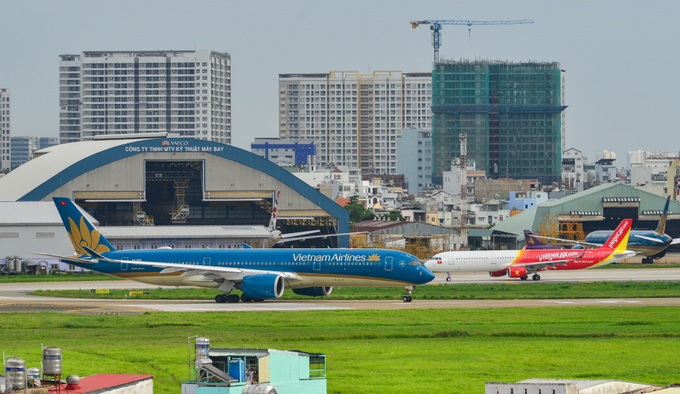
    While economists fear having lower limits for airfares will distort competition, some airlines worry safety is at stake. If fares do not make up even the fuel costs of a flight, aviation safety would be affected, Dang Ngoc Hoa, chairman of Vietnam Airlines, said at a meeting held on Monday to get feedback from economists on proposed minimum fares.

    The Civil Aviation Administration of Vietnam (CAAV) has proposed minimum fares of VND320,000-VND750,000 ($14.06 – $32.95) for domestic flights between November 1 and October 31 next year to help airlines overcome the difficulties caused by the Covid-19 pandemic.

    Too low prices would weaken all airlines, Hoa said. Many countries like China and India have floor prices for air tickets, he pointed out.

    He said amid the pandemic fares are very low at just 40 percent of those in 2018-19, and 250 airplanes are parked in airports, some of which are running out of parking space.

    But despite the low fares, airlines have to keep operating to maintain parking space, minimum cash flows and planes, he said.

    During the first Covid outbreak in March 2020, there were three flights a day in total, while during the fourth wave starting in April 2021, especially July-August, “there were no flights”, he said.

    All carriers have been hit and most airlines are facing losses, he said.

    Vietnam Airlines made a loss of VND7 trillion ($301.7 million) in the first half of the year, while private airlines reported losses of a trillion dong, he added.

    But despite his impassioned argument, economists at the meeting said minimum fares are not acceptable.

    Can Van Luc, chief economist of BIDV, said floor prices could cause confusion and be unfair to both state-owned and private enterprises, and even violate the Law on Prices and the Law on Enterprises.

    Nguyen Sy Dung, former deputy head of the Office of the National Assembly, said: “it is unfair to impose a floor price on air tickets”.

    If minimum fares are applied, a three-star airline must sell at the same price as a five-star airline, and no customer would spend money to travel in the former, he pointed out.

    “We might kill an airline through price policy. It’s unacceptable”.

    In a recent communication to the Ministry of Transport, three airlines agreed to apply floor prices airfares while two others disagreed.

    The Department of Transport admitted that since costs and services are not comparable, it would be difficult to determine common minimum fares applicable to all airlines.

    In the first seven months of this year Vietnamese carriers carried 13.7 million passengers, down 57.7 percent from the same period in 2019.

  • WhatsApp to get iPad, multi-phone support

    WhatsApp to get iPad, multi-phone support

    WhatsApp has been the number one messaging in the world for a while—which is no small thing—but it isn’t without its own set of drawbacks.

    For one, it can only be activated on one phone at a time, despite the beta version allowing a limited pool of testers to download it to 3 other devices (not including phones or tablets). Another nuisance is that it has never been supported on iPads or other tablets—making this one less way you can communicate on your brand new iPad mini 6, unfortunately.

    However, both of these things may be about to change, if a new rumor by WaBetaInfo is to be believed. The media outlet reports, based on exclusive screenshots provided by WhatsApp, that the company is actively working on integrating iPad support for the messaging app, as well as a second phone.

    So far, users have only had the ability to link up to 4 devices to their WhatsApp account, but only a single phone. The new screenshot provided by WaBetaInfo shows the syncing screen of WhatsApp messages being downloaded to a second device, which is clearly a phone by its rectangular shape.

    Anyone who is already a lucky beta user of the multi-device support feature that’s being developed right now may have seen this screen before on WhatsApp for desktop or WhatsApp Web, but never before on a second phone.

    As is visible in the screenshot, just like any other WhatsApp chat history backup or transfer, the whole syncing process of the messages is protected with end-to-end encryption.

    If you are one of the millions of people who both own a tablet and regularly use WhatsApp, the lack of this important feature has probably annoyed you at some point as well.

    But another screenshot by WaBetaInfo doubtlessly points to the fact that WhatsApp is hard at work creating a compatible version of the app for iPadOS and, by the looks of it, making progress.

    Although it’s an iPad in the screenshot, WaBetaInfo has tweeted that the Android tablet version is also definitely in the works.

    Competing messaging app Telegram already supports the addition of as many phones, and tablets, as you own—which has been one of the reasons some WhatsApp users have turned towards that platform instead, despite it ranking lower on the popularity tier.

    It’s definitely about time that WhatsApp got to work on including multi-phone and tablet support and, as it does currently sit at the top of the hill when it comes to messaging apps, it can hardly afford to lag behind in such important features for its users.

  • The Competitive Landscape is Changing: What Amazon’s Physical Stores Will Mean for Asian Retailers

    The Competitive Landscape is Changing: What Amazon’s Physical Stores Will Mean for Asian Retailers

    The decline of brick-and-mortar retail has long been discussed in the industry, to the extent that some alarmists started to talk about its inevitable death. However, recent reports of Amazon’s plans to create a network of physical retail outlets demonstrates that in-store shopping is far from ending up on life-support. In fact, brick-and-mortar retail still remains strong among consumers, and for retailers it continues to be a critical way to connect with customers and drive sales.

    The ‘great disrupter’, Amazon, has revolutionised the way people shop online over the last twenty years to become one of the largest retail groups in the world. So, what does Amazon creating a physical store presence mean for retailers?

    Until now, established brick-and-mortar retailers’ primary defence against the eCommerce giant has been their local store presence. The ability to be close to shoppers and offer a physical shopping experience that allows consumers to interact in-person with retailers in real-time has for many stood out as a better customer experience. However, once the ‘moat’ (or point of differentiation of having physical stores) starts to be breached, defending the ‘castle’ against Amazon becomes much more challenging.

    Amazon is very good at what it does and bringing a digital-first approach to brick-and-mortar retailing will introduce new, creative and technology-centric options for the consumer. In addition to the purchase of Whole Foods and its partnership with Kohls, this latest move into the physical retail space by Amazon clearly validates that physical stores are a vital element of the omnichannel shopping experience.

    Amazon’s push to develop physical stores means that all retailers need to go ‘all in’ on omnichannel. To survive the next phase in Amazon’s evolution retailers should prepare their systems and processes for a new marketplace that will be dominated by those brands that are able to deliver seamless, personalised shopping experiences simultaneously across physical and digital channels.

    But what does this mean for Asian retailers today? How can they create omnichannel experiences that engage with and maintain customer loyalty in the face of new competition from Amazon?

    Modernise the customer journey

    The rise of online shopping, click and collect and the world of social media has transformed the buying experience. Customers have access to information, expertise, and validation at every step of their online journey, but today they want an in-store and offline experience that complements and meets the same standards of excellence they have already experienced online. Whether it’s an in-store associate tracking down stock in another store and organising delivery to the customer’s home, allowing a customer to return online purchases without complication in-store, or ringing the call centre to change an existing order mid-delivery – today’s consumers expect service excellence at every stage of the purchase cycle, including in-store and on the phone.

    The problem is, many retailers still perceive the customer journey to be one that is linear, when that’s not the case. Customers often flit between in-store and online, with social feedback, phone interaction and email for communication. Consumers do not always buy where they browse, instead looking in-store and then buying online or vice versa, and then if they change their mind they expect to be able to arrange a return via email, chat, phone or in-store. Retailers must be aware of this and provide solutions to meet customer expectations.

    Store associates today need applications that give complete command and control of the customer buying experience, as well as all store inventory and fulfilment functions. From mobile checkout to guided fulfilment and inventory location notification, when provided with the right technology store associates are made more efficient and are better able to serve customers and meet their needs.

    Seamlessly manage customer orders

    Never has omnichannel execution played such a significant role in determining a retailer’s brand image. Consumers now expect retailers to provide seamless, ‘buy and deliver or pick-up anywhere’ experiences. To compete with Amazon across all aspects of retail, brands need to consistently meet the delivery promises they make to customers and ensure that the turnaround between order and delivery is shorter than ever.

    To assist, new business-to-consumer distribution models are coming to market, with a core focus on the importance of ‘living’ the omnichannel customer experience, rather than just talking about it. One such model is Order Management Systems (OMS), which integrate all sales and distribution channels into one place, bringing absolute transparency and making it easier for retailers to manage customer orders. An OMS helps retailers to see what inventory they have where, what’s been allocated, what is in transit, what’s been sold, what is available, what needs to be replenished and what’s being returned.

    Manage business disruption, customer expectations with an OMS

    Innovation is occurring in the retail sector at an unprecedented pace and increased competition from Amazon will only speed the adoption of new systems to meet customer demand.

    Without this push towards efficiency-boosting technology, retailers risk being left behind the competition. With innovations like advanced OMS, retailers have been able to navigate disruptions caused by COVID-19 by reviewing the rules of stock allocation, temporarily giving priority to in-store stock over warehouse stock, thus, freeing up any trapped inventory confined within closed stores. This is a great advantage for the many retailers whose physical stores have been closed for long periods during lockdowns.

    Optimising order sourcing allows retailers to use the stock available in their entire network, wherever it is located. A smart OMS allows retailers to use the ‘pool’ of physical stores in large urban areas to offer same day, or next day delivery by couriers, whilst also favouring the warehouse stock for less immediate orders. This increased delivery efficiency will help build a stronger connection and more favourable brand perception amongst consumers.

    In addition to using store level inventory to ship orders to a customer’s home, it can also be deployed for click-and-collect orders. With new fulfilment options enabled by the store, consumers can click, collect, and return goods at their own convenience, which works to achieve satisfaction in the short-term, as well as long-term loyalty.

    If you can’t offer seamless shopping experiences, someone else will

    The importance of brick-and-mortar retail to the overall equation of profitable sales is (again) attracting renewed attention following the move by Amazon to create its own store network. In fact, it makes sense for Amazon to create a store presence, given that stores themselves create the conditions for a sale. The experience that consumers can be given in-store is often more immersive, tactile, and engaging. These more emotional connections can lead to immediate sales and an increase in long-term loyalty.

    However, the increased competition that will come from Amazon establishing their own in-store presence means that Asian retailers need to focus on meeting customer demands through technological innovation. Customers expect seamless, personalised shopping experiences across all physical and digital buying channels today and you can bet that if you can’t offer that, Amazon definitely will.

    By Richard Wright, Managing Director, SEA, at Manhattan Associates

    For more information on how your retail outlet can create seamless shopping experiences across multiple channels, please visit: https://www.manh.com/en-in/active/omni



  • UOB Targets Doubling of Digital Retail Customers by 2026

    UOB Targets Doubling of Digital Retail Customers by 2026

    The bank said it would invest up to $500 million in digital innovation initiatives to reach its goal of serving more than 7 million customers in Asean.

    With digital banking now the preferred choice among UOB customers, the bank is «doubling down» on its data-driven model to create hyper-personalized digital experiences for its customers.

    The bank will be combining TMRW, its digital bank that launched in 2019 and is available in Thailand and Indonesia, with its mobile app «Mighty» on to one platform: UOB TMRW, the bank said in an announcement on Wednesday.

    By harnessing the best of TMRW and UOB Mighty in one platform, we can tap economies of scale to accelerate innovation especially in the area of hyper-personalised digital banking experiences and speed to market, Wee Ee Cheong, UOB deputy chairman and CEO, said.

    Upon the successful completion of its beta pilot currently underway among UOB employees, the platform will be launched for all UOB customers in Singapore later this year, the announcement said.

    UOB TMRW will be progressively rolled out across its key Asean markets, with the next markets expected to launch in the next 18 months.

    In this next phase, we are making it our goal to explore how technology can enable us to make the digital banking of tomorrow smarter and even more intuitive for our customers, Kevin Lam, head of TMRW and group digital banking, said.

  • China Intensfies Crypto Ban

    China Intensfies Crypto Ban

    China is ramping up its cryptocurrency prohibition efforts again with a directive issued by ten institutions last Friday covering a range of activities including offshore transactions and hiring.

    All crypto transactions in China are banned, according to authorities in a statement that highlighted examples such as Tether, Bitcoin and Ether.

    Banned crypto-related activities extend to services provided by offshore exchanges to domestic residents.

    The statement was issued by the People’s Bank of China alongside nine other institutions that included the supreme court, the police and the internet and securities watchdogs.

    The nation’s top economic planning agency asking local officials to investigate abnormal power usage, call in loans and eliminate preferential tax treatment to accelerate the shutdown of mining operations.

    In addition, crypto platforms will also be forbidden to hire locally for roles like marketing, tech and payment, limiting their ability to serve Chinese customers.

    The latest efforts are part of an ongoing crackdown that traces back to September 2017 when authorities first banned initial coin offerings in China.

  • Binance Halts Crypto Trading for Singapore Users

    Binance Halts Crypto Trading for Singapore Users

    Binance announced a new round of curbs for its Singapore business, restricting crypto trading for users in the city-state.

    Users in Singapore will no longer be able to deposit fiat money, trade or purchase crypto via Binance.com from October 26, according to a statement.

    Advisers were also told to cease all related trades, withdraw fiat assets and redeem tokens by the deadline.

    We will be restricting Singapore users in respect of the regulated payments services in line with our commitment to compliance, said Binance. Our aim is to create a sustainable ecosystem around blockchain technology and digital assets, and we hope that such efforts will help the industry grow in the local market in the long-run.

    While the Monetary Authority of Singapore has issued warnings about potential breaches of the Payment Services Act at Binance.com, which is operated by Binance, it is currently reviewing a license application from Binance.sg, which is operated by Binance Asia Services (BAS).

    Binance.sg is viewed by some users as the lighter version of Binance.com with a smaller offering and significantly less liquidity.

  • Brussels Urges Volkswagen To Compensate All EU Dieselgate

    Brussels Urges Volkswagen To Compensate All EU Dieselgate

    Brussels on Tuesday called on Volkswagen to pay out all European consumers – and not just German ones – affected by the “Dieselgate” scandal in which the automaker tampered with vehicle emissions to cheat pollution tests.

    EU Justice Commissioner Didier Reynders said in a statement that VW “is not willing to work with consumer organisations to find appropriate solutions for consumers,” noting that it so far is only making payouts to German and US purchasers of its affected vehicles.

    “All consumers need to be compensated,” Reynders said.

  • Instagram is pausing work on Instagram Kids following recent backlash

    Instagram is pausing work on Instagram Kids following recent backlash

    Following recent reporting from The Wall Street Journal that suggested Facebook had ignored internal research about the negative impact Instagram was having on teenage girls, development of Instagram Kids is being halted.

    Nevertheless, Instagram still believes that launching a version of its platform that targets younger users “is the right thing to do” and will now switch to working with parents, experts, and policymakers to demonstrate the need for Instagram Kids.

    The Facebook-owned platform also plans to continue building opt-in parental supervision tools for teenagers. Recent ideas include a “Take a Break” warning and encouraging users to view other topics.

    Instagram head Adam Mosseri clarified that its so-called Instagram Kids platform was never meant for young children. It instead targeted kids aged 10-12 because they often have phones but lie about their age in order to gain access to social media.

    The final version would have required parental permission to join and would be filled with “age-appropriate content and features.” Mosseri says ads weren’t going to be included either.

    The version of Instagram Kids that was in the works would have allowed parents to supervise the time their children spend on the app, as well as oversee who they follow, who can follow them, and messages.

    It’ll remain to be seen whether Instagram can convince the public that a version of Instagram for kids is needed. But what’s clear is that the social media platform isn’t giving up on its efforts just yet.

  • New Chinese regulations force some Apple suppliers to halt or cut production

    New Chinese regulations force some Apple suppliers to halt or cut production

    Some of Apple’s iPhone contract manufacturers in China have had to shut down for a few days because of new regulations related to the use of energy in the country. This doesn’t sound like good news for Apple especially when it has backorders of iPhone 13 units to fill. The good news is that not all of Apple’s suppliers are affected and those that are have cut back on their jobs for other companies instead of Apple.

    Still, factories churning out parts like speakers and motherboards will have to shut down for a few days. Because of a shortage of coal, tougher standards related to emissions, and strong demand from manufacturers, coal prices have surged hitting records and forcing users to ration energy. Analysts studying China’s economy say that the reduction in production due to the power shortage is resulting in a drag on the country’s economic growth.

    The energy shortage has affected factories in China’s key industrial regions and besides Apple, Tesla suppliers have also had to stop their assembly lines. 15 companies in the country have had production interrupted by the new regulations, and over 30 such firms listed on the Taiwan Stock Exchange have had to stop production to comply with new limits on the use of power.

    Nomura Securities says, “The power-supply shock in the world’s second-biggest economy and the biggest manufacturer will ripple through and impact global markets.” China says that it aims to start bringing down carbon emissions following a peak in 2030, dropping down to net-zero by 2060.

    The company that makes motherboards for the iPhone, Unimicron Technology Group, closed three of its subsidiaries starting at noon on September 26 to midnight on September 30. A spokesperson for Unimicron attributed the shutdown to the firm’s effort to “comply with the local government’s electricity limiting policy.” The spokesperson added that production lost by the shutdown will be made up with products sourced from its other facilities.

    Concraft Holding makes speakers for the iPhone and during the five-day period during which it will be shut down to conserve energy, it will use inventory to meet demand. As for Foxconn, Apple’s largest assembler of iPhone handsets, sources unnamed by Reuters said that the impact on the manufacturer has been limited to the production of non-
    Apple products like notebook computers. In addition, Foxconn moved some scheduled production to October and made the necessary adjustments with its staff.

    Outside of those changes, Foxconn states that it hasn’t seen any impact at any other production centers throughout China. The Chinese government wants to see to see the growth in electricity use come in lower than GDP. But in the first half of this year, electricity use rose 16.2% compared to GDP growth of 12.7% during the same time period.
    Eson Precision Industry Co, a Foxconn affiliate, has suspended production from Sunday to Friday and the world’s top foundry, TSMC, says that there will be no impact from the power shortage on the company’s business. Another Taiwan-based chipmaker, United Microelectronics, who counts Qualcomm among its customers, also said that it has experienced no impact from the new power regulations in China. UMC said that its “Hejian fab in Suzhou is currently running at full capacity utilization of 80,000 plus wafers per month.”

    Larry Hu, chief China economist at Macquarie Group, says, “This is largely a self-inflicted supply shock. It’s clear by now that Beijing is willing to sacrifice higher growth this year in exchange for structural reforms in some areas.”