Tag: asia

  • Airlines want minimum fares, no one else does

    Airlines want minimum fares, no one else does

    While economists fear having lower limits for airfares will distort competition, some airlines worry safety is at stake.

    If fares do not makeup even the fuel costs of a flight, aviation safety would be affected, Dang Ngoc Hoa, chairman of Vietnam Airlines, said at a meeting held on Monday to get feedback from economists on proposed minimum fares.

    The Civil Aviation Administration of Vietnam (CAAV) has proposed minimum fares of VND320,000-VND750,000 ($14.06 – $32.95) for domestic flights between November 1 and October 31 next year to help airlines overcome the difficulties caused by the Covid-19 pandemic.

    Too low prices would weaken all airlines, Hoa said. Many countries like China and India have floor prices for air tickets, he pointed out.

    He said amid the pandemic fares are very low at just 40 percent of those in 2018-19, and 250 airplanes are parked in airports, some of which are running out of parking space.

    But despite the low fares, airlines have to keep operating to maintain parking space, minimum cash flows and planes, he said.

    During the first Covid outbreak in March 2020, there were three flights a day in total, while during the fourth wave starting in April 2021, especially July-August, “there were no flights”, he said.

    All carriers have been hit and most airlines are facing losses, he said.

    Vietnam Airlines made a loss of VND7 trillion ($301.7 million) in the first half of the year, while private airlines reported losses of a trillion dong, he added. But despite his impassioned argument, economists at the meeting said minimum fares are not acceptable.

    Can Van Luc, chief economist of BIDV, said floor prices could cause confusion and be unfair to both state-owned and private enterprises, and even violate the Law on Prices and the Law on Enterprises.

    Nguyen Sy Dung, former deputy head of the Office of the National Assembly, said: “it is unfair to impose a floor price on air tickets”. If minimum fares are applied, a three-star airline must sell at the same price as a five-star airline, and no customer would spend money to travel in the former, he pointed out.

    “We might kill an airline through price policy. It’s unacceptable”.

    In a recent communication to the Ministry of Transport, three airlines agreed to apply floor prices airfares while two others disagreed.

    The Department of Transport admitted that since costs and services are not comparable, it would be difficult to determine common minimum fares applicable to all airlines.

  • Hotels become quarantine facilities to survive Covid

    Hotels become quarantine facilities to survive Covid

    Some 10 percent of hotels in big cities are used exclusively for quarantining Covid-19 patients and those who were in close contact with patients, according to Savills.

    They include 25 in HCMC with more than 3,000 rooms, mostly in Districts 1 and Tan Binh, 20 with 1,600 rooms in Hanoi and 34 with 3,000 rooms in Da Nang.

    The fourth wave of the Covid pandemic led to the lowest occupancy rates in a decade and a drop in room rents.

    Average occupancy rates at 3-5-star hotels in Hanoi regularly topped 74 percent in the decade before the pandemic.

    In 2020, it fell to 30 percent, and the average room rent to $81 from $113.

    In the first half of this year, they declined further to 25 percent and $72.

    In HCMC, the rate this year has been only 18 percent due to stringent social distancing regulations, and the rent fell to $69.

    The switch as medical isolation areas has thrown all of them a lifeline.

  • Alibaba joins Ninja Van’s US$578 million funding round

    Alibaba joins Ninja Van’s US$578 million funding round

    Logistics provider Ninja Van added Alibaba as a new investor as it raised $578 million in a late stage funding round, the Singapore-based firm said on Sunday.

    Existing investors to participate in the round included Europe’s GeoPost/DPDgroup, B Capital Group and Monk’s Hill Ventures.

    The funds will be allocated towards infrastructure and technology systems that “will support a sustainable long-term cost structure,” Ninja Van, launched in 2014, said in a statement.

  • Starbucks giving 2 million reusable cups away across Asia Pacific

    Starbucks giving 2 million reusable cups away across Asia Pacific

    Starbucks is giving away 2 million reusable cups across the Asia Pacific on Tuesday as part of its global commitment to reduce the waste footprint by 50 percent by 2030.

    The initiative, starting Tuesday, coincides with the coffee chain’s 50th anniversary. Starbucks’ new campaign aims to encourage its customers to use reusable cups when buying beverages and shift away from single-use plastics.

    The Starbucks limited-edition 50th anniversary cups will be first rolled out across selected Asia Pacific markets before expanding across the region in the coming months. The coffee chain said on September 28 alone, it expects to reach more than 2 million customers across the Asia Pacific region.

    “As we mark our anniversary milestone, this reusable cup is our gift to customers and our invitation to join Starbucks on our journey to becoming a resource-positive-company,” said Sara Trilling, president at Starbucks Asia Pacific.

    “This step is only one part of many more to come. Together with our customers, we’re constantly innovating new ways to scale more sustainable solutions across the region.”

    The offer will be available at participating stores, as well as select Mobile Order & Pay and delivery channels, across Cambodia, Hong Kong, Indonesia, Korea, Malaysia, Singapore and Taiwan, with an India offer on October 2.

    Customers are encouraged to bring back their cups when they next visit Starbucks to enjoy benefits and redeem additional offers.

  • Messina moves into Hong Kong selling Gelato

    Messina moves into Hong Kong selling Gelato

    Hong Kong restaurant group Black Sheep is taking Australian gelato brand Messina to the ‘dessert-obsessed’ Hong Kong community.

    Messina’s first Hong Kong store will be located on historic Pottinger Street. The launch also marks Black Sheep Restaurant’s first collaboration in more than five years.

    “We are passionate about gelato and consider ourselves connoisseurs, but knowing good gelato and being able to make it on a large scale are two different things,” said Syed Asim Hussain, co-founder of Black Sheep Restaurant.

    “When we think someone else can do it better than we can, that is when we look for a partner.

    “We were blown away by not only Messina’s gelato but also by their work ethos, which is very much in line with our own. The amount of pride and detail that they achieve at every level is really inspirational.”

    Founded in 2002, Messina is known for its assortment of freshly-churned gelatos available in an array of signature flavours and rotating specials. Currently, Messina operates 22 stores across NSW, VIC and ACT.

  • Vietnam’s carmaker VinFast eyes more countries for its European strategy

    Vietnam’s carmaker VinFast eyes more countries for its European strategy

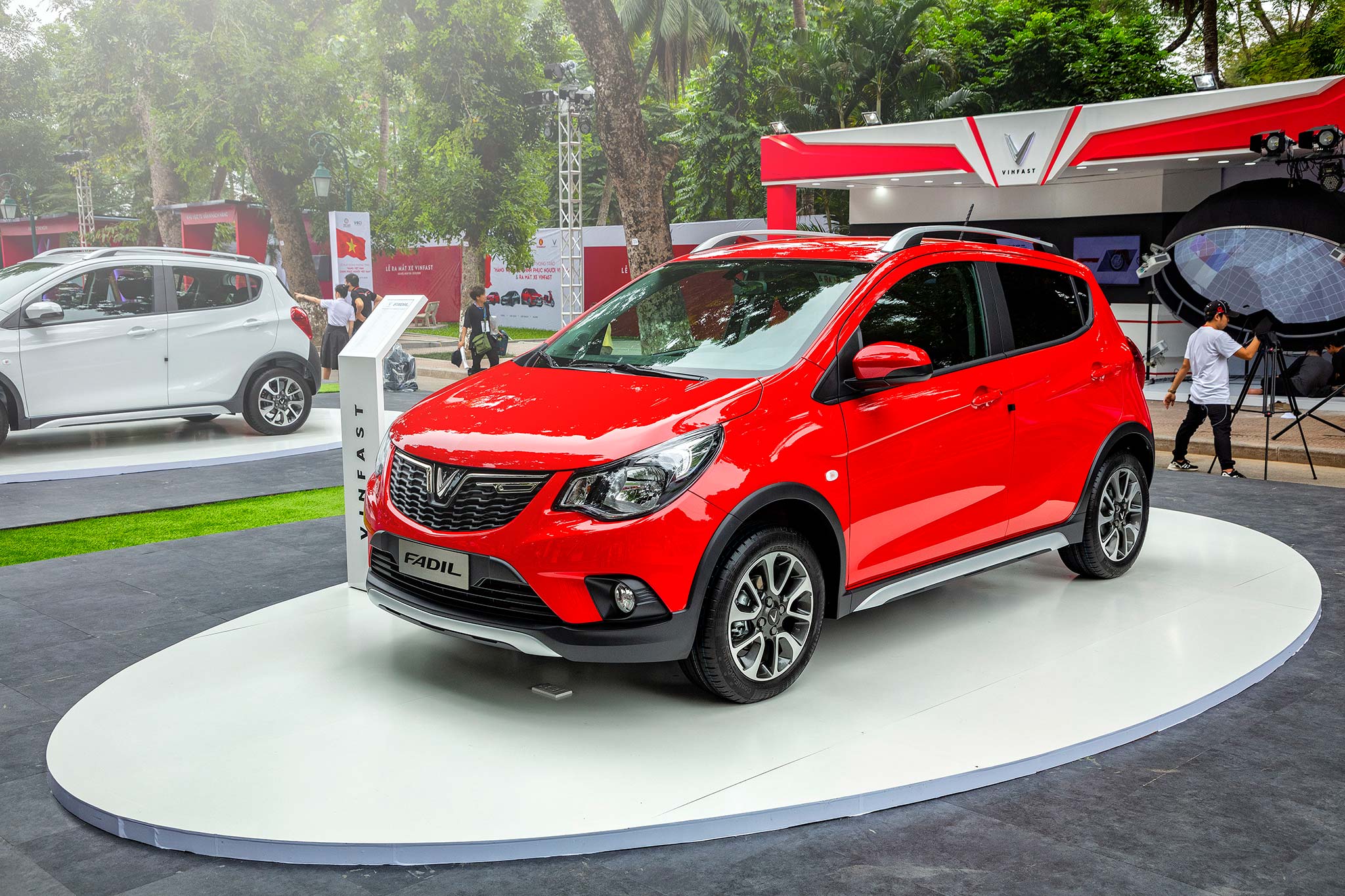
    Vietnamese carmaker VinFast could add other markets in 2023 to expand its European strategy beyond a planned debut in Germany, France and the Netherlands next year.

    The company, a unit of Vingroup Jsc, Vietnam’s largest conglomerate which some have called “Vietnam’s answer to Tesla,” will debut in Europe next year with two battery-electric SUVs models, the midsized VF e35 and the seven-seater VF e36, both designed by Italy’s Pininfarina.

    The two models launch in Vietnam, North America and Europe around mid-2022, after an unveiling planned later this year.

    VinFast became Vietnam’s first fully-fledged domestic car manufacturer when its first gasoline-powered models built under its own badge hit the streets in 2019.

    VinFast’s B2B Sales Vice President Emiel Hendriksen said on Thursday it was also looking at Italy, Scandinavia, Switzerland and Austria for a second step in its European strategy.

    “We’re considering those countries for 2023,” he said during a presentation at Pininfarina headquarters in Turin.

    VinFast will initially rely on a direct distribution model in Germany, France and the Netherlands, based on property showrooms, but could later consider an agency model for sales in other countries, Hendriksen said.

    The company sold about 30,000 vehicles domestically last year and had set a target of selling 15,000 electric vehicles in 2022, although its representatives did not provide detailed forecasts for the European market on Thursday.

    Earlier this year sources said parent Vingroup JSC was considering an U.S. initial public offering (IPO) of its car unit that could value VinFast at about $60 billion, though an initial second-quarter deadline for the deal mentioned by one of the sources was delayed.

    VinFast Europe CEO Bich Tran said any IPO decision was up to the company’s headquarters in Vietnam.

    “Our European plans are independent from any IPO. We’re carrying on with our plans, everything in Europe is moving as planned,” she said.

  • Huawei CFO Freed After U.S. Deal

    Huawei CFO Freed After U.S. Deal

    Huawei’s chief financial officer Meng Wanzhou has been released by Canadian courts and flew home to China last week after reaching an agreement with U.S. prosecutors to end their bank fraud case against her.

    Last Friday, Meng, who is also the elder daughter of Huawei founder Ren Zhengfei, and the U.S. Justice Department reached a deferred prosecution agreement.

    Meng has taken responsibility for her principal role in perpetrating a scheme to defraud a global financial institution,» according to a report citing Brooklyn-based acting U.S. attorney Nicole Boeckmann.

    The current agreement only pertains to Meng and the U.S. Justice Department said it is preparing for trial against Huawei.

    For the financial sector, one issue that remains unresolved is the legitimacy of Meng’s claim that HSBC had knowledge of Huawei’s relationship with Skycom – a Hong Kong-registered entity and alleged business partner that violated U.S. trade sanctions – and, in fact, knowingly placed the firm within Washington’s radar before misleading Canadian authorities on the matter.

    China has been accused of engaging in hostage diplomacy as a response to Meng’s 2018 arrest with the over 1,000-day jailing of two Canadians – businessman Michael Spavor and ex-diplomat Michael Kovrig.

    Beijing has repeatedly denied that the detainment of Spavor and Kovrig was retaliation for Meng’s arrest.

    Within hours of the news of Meng’s deal with the U.S., the two were released from Chinese jails and on their way back home to Canada.

  • Volvo Cars To Go Leather-Free In All Pure Electric

    Volvo Cars To Go Leather-Free In All Pure Electric

    Volvo Cars is taking an ethical stand for animal welfare in its fully electric cars. Starting with the new C40 Recharge, all-new fully electric Volvo models will be completely leather-free. In the coming years, Volvo Cars will launch a completely new family of pure electric cars. By 2030 it aims to offer only fully electric cars – all of them leather-free.

    As part of its ambitions to go completely leather-free, Volvo Cars is working actively to find high-quality and sustainable sources for many materials currently used in the wider car industry. By 2025, the company is aiming for 25 percent of the material in new Volvo cars to consist of recycled and bio-based content, as it looks to become a fully circular business by 2040. As part of its climate action plans, it also aims for all its immediate suppliers, including material suppliers, to use 100 percent renewable energy by 2025.

    Volvo Cars has created a new interior material – Nordico. It will consist of textiles made from recycled material such as PET bottles, bio-attributed material from sustainable forests in Sweden and Finland, and corks recycled from the wine industry.

    The company’s move towards leather-free interiors is also driven by a concern about the negative environmental impacts of cattle farming, including deforestation. Livestock is estimated to be responsible for around 14% of global greenhouse gas emissions from human activity, with the majority coming from cattle farming.

    Instead of leather interior options, Volvo Cars will offer its customers alternatives such as high-quality sustainable materials made from bio-based and recycled sources.

    For example, Nordico, a new interior material created by Volvo Cars, will consist of textiles made from recycled material such as PET bottles, bio-attributed material from sustainable forests in Sweden and Finland, and corks recycled from the wine industry – setting a new standard for premium interior design. This material will make its debut in the next generation of Volvo models.

    Instead of leather interior options, Volvo Cars will offer its customers alternatives such as high-quality sustainable materials made from bio-based and recycled sources.

    Volvo Cars will also continue to offer wool blend options from suppliers that are certified to source responsibly, as the company looks to ensure full traceability and animal welfare in its wool supply chain. Volvo Cars is also looking to reduce the use of residual products from livestock production commonly used within or in the production of plastics, rubber, lubricants and adhesives, either as part of the material or as a process chemical in the material’s production or treatment.

    The company takes this step because it believes that while going leather-free is a step in the right direction, doing so alone does not make a car interior vegan.

    By aiming to actively replace these materials as much as possible, Volvo Cars takes a strong and ethical position to do what it can to help stop animal harm, by contributing to a reduced demand for these materials containing animal products.

  • Yum China and Lavazza plan 1000 cafes across China

    Yum China and Lavazza plan 1000 cafes across China

    Italian coffee chain Lavazza is set to increase its store network in China to 1000 by 2025 through scaling up its existing joint venture with fast-food operator Yum China.

    The joint venture –in which Yum will be Lavazza’s exclusive distributor in Mainland China, will also receive an initial US$200 million funding from both companies for its future growth.

    The expansion plan will see more Lavazza store openings in higher-tier cities with different store formats. As of last month, Lavazza China operated 22 stores across Shanghai, Hangzhou, Beijing, and Guangzhou. It aims to double the store number by the end of this year.

    “The potential for coffee in China is vast; there is a lot of unexplored white space,” said  Antonio Baravalle, CEO of Lavazza Group. “As the largest restaurant operator in China, Yum China is the best partner to further grow the Lavazza brand in this market given its deep understanding of local consumers and market dynamics.”

    The joint venture will also ​​market, sell, and distribute Lavazza’s retail products in Mainland China, including coffee beans, ground coffee, and coffee capsules.

    Lavazza entered China last year with Yum China, with stakes of 35 percent and 65 percent respectively. Lavazza’s first China store, its first international presence, was launched in Shanghai in April last year. The company said sales to its members accounted for about 50 percent of the sales for the first half of this year.

    “The recent progress of Lavazza cafes in China has been encouraging and reaffirms our belief that our partnership is well-positioned to capture the significant coffee opportunity in China with accelerated store network development,” said Joey Wat, CEO of Yum China.

  • Esprit names new COO

    Esprit names new COO

    Hong Kong-listed apparel brand Esprit has appointed an experienced lawyer as its new COO to help continue to drive the brand’s renaissance.

    After four years of rolling losses exceeding US$1 billion, Esprit issued a shock profit warning last month projecting its first half year in the black since 2017. It lost US$503 million in the year to June 2000.

    This week William Pak assumed the role of executive director and COO. Biographable details provided by the company via a stock-exchange filing describe Pak, 42, as an attorney licensed by the New York state bar and the spouse of Christin Chiu, Esprit’s chairwoman and an executive director.

    “Mr Pak is a seasoned executive with extensive operating and management experience. He has over a decade of a successful career in leading companies in the financial services and fund management industry,” said the filing. “His industry expertise also includes technology, alternative energy, mining and real estate. He is experienced in identifying and revitalising underperforming areas and driving favourable results while ensuring sustainable growth.”

    Prior to his career in finance, Pak was a lawyer in the investment funds practise at White & Case’s New York and Hong Kong offices.

    He will be paid US$231,000 annually (HKD1.8 million) and report to CEO Mark Daley who was appointed in January.

    Chiu was appointed to Esprit’s board after Hong Kong company North Point Talent Ltd, became the company’s single largest shareholder mid last year. North Point is the investment vehicle of Karen Lo, a descendent of the Vitasoy founding family.

  • Rocket Internet-backed Flash Coffee plans Asia-wide rollout

    Rocket Internet-backed Flash Coffee plans Asia-wide rollout

    The tech-enabled coffee chain, Flash Coffee, is accelerating its Asian expansion plan, making its Hong Kong debut this month and committing to opening its first stores in Japan and South Korea later this year.

    Launched last year, Flash Coffee already operates more than 100 locations across Indonesia, Thailand, Singapore, Taiwan and Hong Kong. The chain aims to increase its network to more than 300 stores, expanding its footprint into Malaysia, Vietnam and the Philippines next year.

    The Hong Kong launch follows Flash Coffee’s Series A funding round led by tech investment firm White Star Capital last April where it successfully secured US$20 million from a range of investors, including Rocket Internet, whose subsidiaries include Global Fashion Group and HelloFresh.

    Located at Golden Centre in Sheung Wan, the chain’s first Hong Kong store is – like its others – designed to “fit the needs of the ‘new normal’ and cater to a bustling lifestyle”. Customers can order through a mobile app and pay before picking the order at the store or have it delivered. Meanwhile, Flash Coffee connects its customers and baristas through individualized consumer and barista mobile apps, matching the order with a nearby pick-up outlet.

    The chain also offers a digital coffee loyalty program on the app, offering gamified challenges and personalized rewards.

    “Hong Kong is already recognized as a city that is willing to embrace technology,” said Jonathan Tsao, MD at Flash Coffee. “Over the past few decades the city has also built up a reputation for its love of premium coffee – but so far, this has only been available at premium prices.

    “Flash Coffee intends to shake things up, by offering a new coffee culture built around technology, affordability, and digitally-driven customer-focused solutions.”

    The launch of Hong Kong’s first Flash Coffee store will be followed by a series of new store openings in Causeway Bay, Mong Kok and Wan Chai by the end of next month. The coffee chain aims to reach 50 stores in the territory by mid-next year.

  • Pulled Oat joins Australian plant-based foods menu

    Pulled Oat joins Australian plant-based foods menu

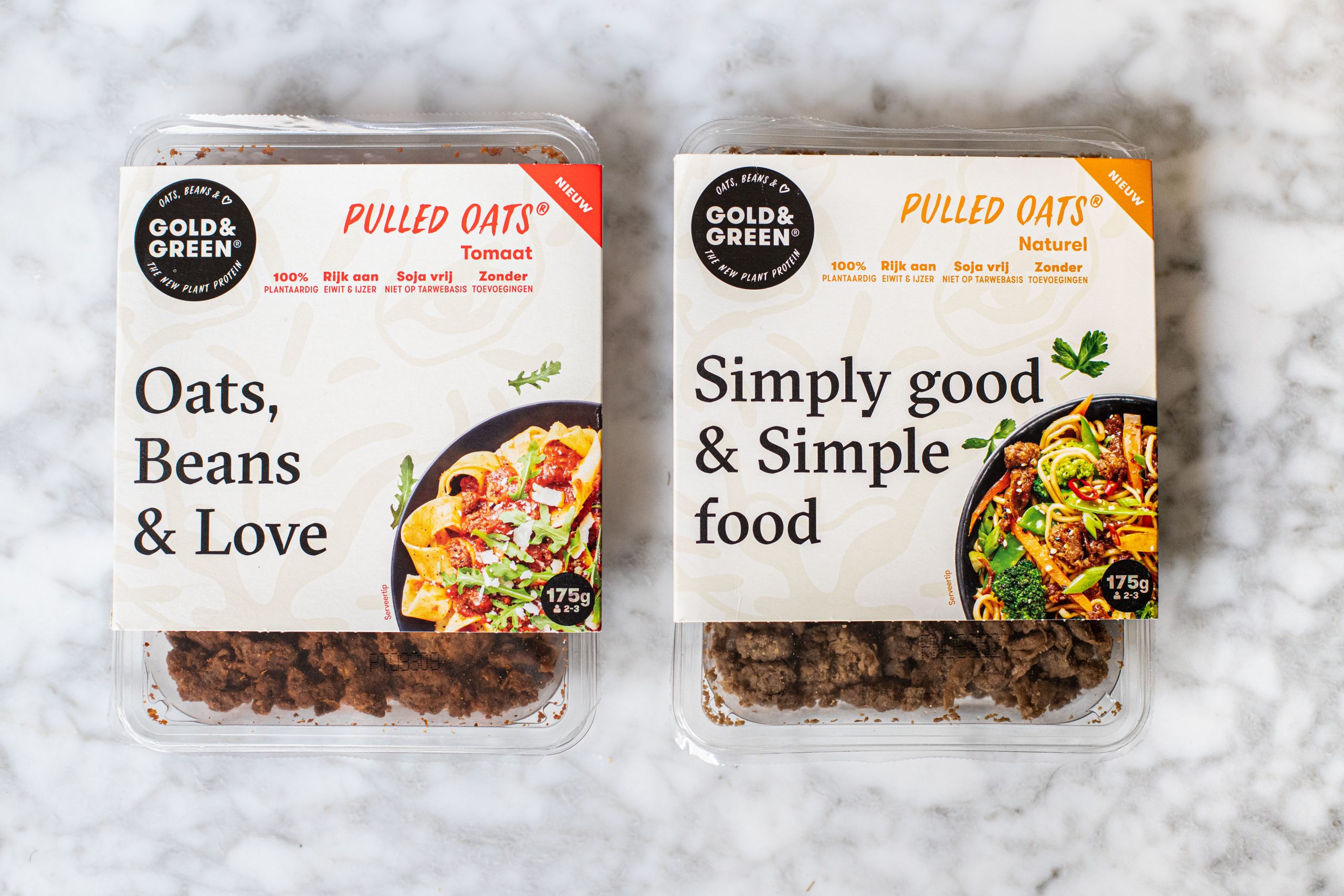
    Finnish plant-based food company Gold & Green joins the ranks of businesses offering alt-meat in Australia with the launch of Pulled Oats, an oat-based plant protein.

    As consumers become more aware of their food sources, the market for plant-based protein is rapidly increasing. In the past year alone, Australia’s plant-based meat sector retail sales increased by 46 percent.

    “Many are looking for non-soy-based alternatives, with high protein content and preferably without any weird ingredients they cannot pronounce,” said Annette Kauppinen, CMO, Gold & Green

    “Pulled Oats is a great answer to this as it contains only simple and familiar ingredients and offers great nutritional value and a good source of protein including a balanced amino acid composition.”

    Launching in Woolworths this month, the new plant-based protein is made from six simple ingredients: Nordic oats, faba (broad) bean, pea protein, water, oil, and spices. According to the company, the product is high in protein, can absorb flavor well and is versatile enough to be used as a meat alternative in favourite dishes without compromising taste.

    Founder and CIO of Gold & Green, Maija Itkonen, says she saw an opportunity to be part of the solution in the global environmental crisis after seeing the “untapped potential” of Nordic oats, one of the world’s most ecological crops. Afterwards, she teamed up with an oat scientist to develop a process that combines faba bean and yellow pea protein to create a highly nutritious plant-based protein with a simple ingredient list.

    Maija explains, “From the very beginning, our passion has been to change eating habits for healthier people and planet – with delicious new plant-based food.” she said

    “We wanted to create a protein that does not mimic anything but is a true plant-based alternative that stands on its own. It can be used like chicken, pork or beef, and we do have even some fish recipes, which are amazing.”

    Gold & Green Pulled Oats are available at Woolworths in two flavours, Nude and Tomato, for RRP $8.50 per 240g pack.

  • Masan to leverage retail, telecom synergy by acquiring Mobicast

    Masan to leverage retail, telecom synergy by acquiring Mobicast

    The Sherpa, a subsidiary of Masan, has announced a 70 percent acquisition of Mobicast shares with a total cash consideration of VND295.5 billion ($13 million).

    Investment in Mobicast is the next step taken by Masan to integrate its third piece, digital services, into its ecosystem, after the successful inclusion of grocery and financial services.

    This was carefully mapped out by Masan in 2019 when the group revealed its plan to build a one-stop-shop that satisfies consumers’ essential, financial, educational, social, entertainment, and healthcare needs. For Masan, this is a unified off to online platform, “Point of Life”.

    The entry into the telecommunication and essential service sectors on a digital platform will enable Masan to gain access to approximately 80 percent of the consumer wallet share.

    Operating under the brand Reddi, Mobicast is a Vietnamese start-up, full-serviced Mobile Virtual Network Operator (MVNO). MVNOs are wireless communication service providers that do not have their own frequency spectrum allocation or wireless network infrastructure.

    MVNOs partner with traditional Mobile Network Operators (MNO) to use their wireless network infrastructure to provide telecom and data services to consumers. MVNOs use an asset-light business model by leveraging existing transmission and network infrastructure. MVNOs are a common business model in the telecom space globally. For example, MVNOs command a nearly 20 percent market share of the total United Kingdom mobile market.

    When incorporated into “Point of Life”, Reddi stands to benefit from exclusive access to Masan’s consumer base and physical and online touch points nationwide. This will significantly lower Reddi’s consumer acquisition cost, enabling it to reinvest savings to develop unique digital consumer solutions, given that 44 percent of subscribers predominately use voice and SMS in Vietnam, and customer service experience platforms.

    Masan Group CEO, Danny Le, said: “Reddi is the first step to digitalize our “Point of Life” platform and synchronize our products and services into a unified offering. While we are in the early innings, we have all the strategic components to develop the most cost effective consumer acquisition model, thereby lowering the costs of our services and products for the benefit of our consumers – this is the definition of Point of Life.”

    Previously, in June 2021, Masan launched its first CVLife store that integrates financial services offered by Techcombank and Phuc Long Kiosk into WinMart+ supermarkets (formerly known as VinMart+). As shared by Masan, the current number of over 2,300 WinMart+ stores would be expanded to more than 3,001, with around 700 new stores to be launched, by the end of 2021. The Phuc Long Kiosk model will be integrated into 1,000 WinMart+ stores, thus boosting revenue and profit margins and bringing in more modern customers.According to Masan, Reddi’s target market is modern consumers who are digital savvy. This group of customers is willing to change and try out new products and services to refresh their consumer experience.

    Masan has a wide distribution network as its first advantage, with nearly 2,400 WinMart/WinMart+ supermarkets and stores nationwide to serve more than 300 million customers annually. Added to this is Masan’s strong consumer relationship with 300,000 general trade (GT) retailers. Masan’s distribution network “weaves” across the country, offering convenient and fast access to its services.

    Masan also has a loyalty customer base of nine million WinMart/WinMart+ members, including a large number of young, urban and digital-savvy customers from Phuc Long, five million affluent consumers from Techcombank and millions of customers from other Masan partners.

    These two strategic factors allow Reddi to maximize its cost and time savings in building a distribution network, while optimizing its consumer acquisition and retention cost.

    According to MIC’s Department of Telecommunications, Vietnam had nearly 133 million mobile subscribers as of the end of 2020, while its population is more than 97 million. Of these 133 million subscribers, 56 percent have 3G, 4G and 5G coverage.

    According to the We Are Social 2021 report, the most used mobile apps include: chat apps (94.7 percent), entertainment and video apps (83.4 percent), music apps (58 percent), game apps (57.2 percent), shopping apps (68.5 percent), banking and financial services apps (40.1 percent).

    Entry of a retail company into the telecommunication sector has become a huge success in India, as in the case of Reliance Jio, the largest mobile network operator in the world’s second-largest mobile market. Reliance Industries is India’s largest retailer with nearly 11,000 points of sale, 23 distribution centers and a database with more than 110 million loyal customers.

    In 2016, Reliance stepped into the digital services and electronics telecommunication sectors by launching the Jio network operator. To date, Jio has raced past competitors to become India’s largest mobile operator thanks to its reasonable pricing, good signal quality and appealing, differentiating service plans. Jio currently has about 400 million paying subscribers for services in their ecosystem


  • Uncle Ben’s reinvented under new Ben’s Original branding

    Uncle Ben’s reinvented under new Ben’s Original branding

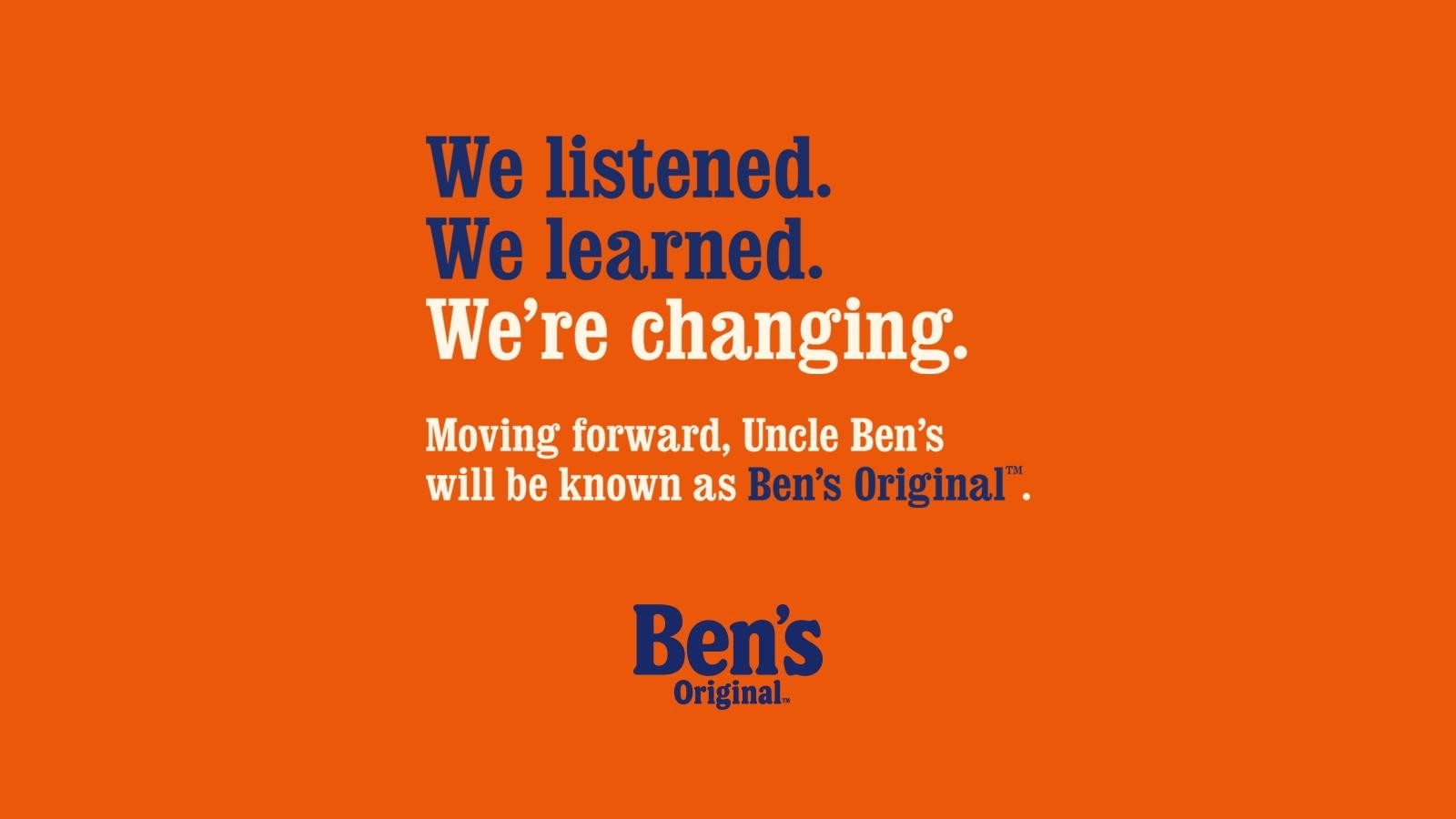
    Mars Food Australia has revealed the new brand identity for Ben’s Original ready-to-heat rice products, following the retirement of the Uncle Ben’s brand.

    The new packaging features the same orange background and navy-blue font. The rice products are available in 28 flavors, are ready in 90 seconds, and taste the same as the old product range.

    Bill Heague, GM at Mars Food Australia, said the change marks not only a new packaging but also a memorable moment for Ben’s Original: the company has shared its new purpose, committing to investing a portion of its profits over the next five years to contribute to Australia’s disadvantaged communities.

    “This is not just a name and packaging change. We believe everyone deserves to feel welcome, heard, and have access to nutritious food,” said Heague. “That’s why we have committed to funding initiatives that help improve social inclusion and create meals, experiences, and opportunities that offer everyone a seat at the table. We are currently in discussions with a number of community groups in Australia and we look forward to announcing a new partnership early next year.”

  • Coles named as most sustainable food retailer in Australia

    Coles named as most sustainable food retailer in Australia

    The supermarket has come in second in the world for its sustainability efforts.

    Coles was ranked based on its governance, environment, nutrition, and social inclusion practices, beating out of 350 of the world’s ‘most influential food retailers. Furthermore, Coles has ranked tenth in the world in the food and average manufacturing and processors category.

    The WBA found that Coles “ranked first among its retail peers in social inclusion, while landing among the top five in nutrition, and top ten across the governance and strategy, and environment measurement areas.”

    The Chief Sustainability, Property and Export Officer of Coles, Thinus Keeve, shared how the retailer aims to continue its progress to become the country’s most sustainable supermarket. “Coles’ Together to Zero and Better Together ambitions, as outlined in our Sustainability Strategy, underpin the steps we are taking to drive generational sustainability,” he said.

    “Under Together to Zero, Coles has set bold emissions and energy targets, including to be powered by 100 percent renewable energy by the end of FY25, and to deliver net-zero greenhouse gas emissions by 2050 – and we are well on the way to achieving them. We recognize the role we have to play but know that we cannot do this alone, and that we need to work together with our many stakeholders to drive positive change. We know that we are Better Together when we work together with our team members, farmers, suppliers, customers, and the communities we serve.”

    Keeve also explained that despite this impressive feat, the retailer has more work to do. “While sustainability issues are dynamic and evolving, and there is still much to do, we are committed to maintaining momentum on our sustainability journey,” he said.