Tag: asia

  • Google and Apple Maps rival explains why their ETA estimates are always off

    Google and Apple Maps rival explains why their ETA estimates are always off

    Ever wonder why your estimated time of arrival (ETA) at a destination that you used Google Maps or Apple Maps to navigate to never matches up with the initial ETA estimate? For example, let’s say that you are traveling from Ludlow, Vermont to Moreau, New York. After tapping the destination into Google Maps, it shows that the drive will take 1 hour and 40 minutes allowing you to get to your destination by 2:45 pm.

    But by the time your journey ends, it is 2:55 pm and you’re ten minutes late. What happened? Google Maps and Apple Maps rival TomTom recently said in a blog post that “We rely on estimated times of arrival (ETAs) now more than ever. Whether we’re waiting on a package, food delivery or taxi ride, an accurate ETA is essential. The problem with ETAs is that they are hard to calculate accurately – and this can lead to both dissatisfied customers and disgruntled drivers.”

    First, why should it matter if your ETA is off by a few minutes? TomTom points out that deliveries could arrive too early or too late which frustrates consumers. A package that arrives too early when no one is home to receive it has a bulls-eye on it that says “steal me.” And a late food delivery could result in food being too cold by the time it gets to your house. And a rideshare that arrives at the airport late might force you to run through the airport as O.J. Simpson used to in television commercials for Hertz back in the day.

    Drivers trying to pick up minutes on their ETA tend to drive faster with no regard to the usual rules of the road. In 2019 Tom Tom spoke with ride-hailing companies (such as Lyft and Uber) and food delivery companies and was told that having an accurate ETA was one of the biggest problems they face in their businesses. That’s because there are so many unpredictable variables that go into figuring out when you will arrive at point “B” after leaving from point “A.”

    Such variables include the weather, driver behavior, and traffic. Part of the problem is that each company has a different reason to provide an accurate ETA. Delivery firms need reliable ETAs while ride-hailing and other firms dealing with commuters want to get their customers from one place to another as fast as possible.

    Inaccurate ETAs can occur because some drivers are aggressive and will speed through yellow lights, drive well above the speed limit, and take other chances. Some drivers are conservative and will stop at a yellow light and drive well below the speed limit. Some companies use algorithms to match deliveries with certain drivers. TomTom says that “These algorithms are the ‘secret sauce’ behind route and ETA planning and perform extremely complex calculations that companies own and may vary from business to business.”

    To improve ETA accuracy TomTom suggests the use of historical data that show how fast traffic flows through certain roads at specific times of the day. Mix that with Real-Time traffic (TomTom has a system that updates real-time traffic every 30 seconds). It is also important to figure information about the road into ETA calculations. The mapping firm points out that “The more accurate the maps, the better for drivers and customers. Road details like curvature, gradient, speed limits, traffic lights, specific traffic rules and lane information are all important to consider.”

    It might sound surprising, but TomTom says that the best route might be one that is longer but is more likely to deliver a more accurate ETA than another route with more traffic lights or accidents. TomTom adds that obtaining an accurate ETA is “both an art and a science.”
  • India’s September Diesel Sales Remain Below Pre-COVID Levels

    India’s September Diesel Sales Remain Below Pre-COVID Levels

    India’s diesel consumption slowed in the first half of September from the previous month, staying below pre-COVID levels as a pick-up in monsoon rains hit mobility and demand for fuel from the agriculture sector, preliminary sales data showed.

    Diesel sales by the country’s state fuel retailers came in at 2.1 million tonnes during Sept. 1-15, a decline of about 1.5% from last year and down 6.8% from the same period in 2019, the data showed.

    State retailers Indian Oil Corp, Hindustan Petroleum Corp and Bharat Petroleum Corp Ltd own about 90% of the country’s retail fuel outlets.

    Sales of diesel, which account for about two-fifths of India’s overall refined fuel consumption, are directly linked to industrial activity in Asia’s third-largest economy.

    India’s monsoon rains revived this month after a patchy spell in August. Local diesel sales during September 1-15 was down by about 0.9% from the same period in August, the data showed.

    Improved electricity supplies also contributed to a decline in demand for diesel.

    In contrast, petrol sales stayed above the pre-COVID levels at 1.02 million tonnes as people continued to prefer using personal vehicles over public transport and shared mobility for safety reasons.

    India has not yet fully opened its public transport sector, which mostly use diesel.

  • Honda Targets Annual Sales Of 70,000 Prologue Electric Vehicles In U.S. From 2024

    Honda Targets Annual Sales Of 70,000 Prologue Electric Vehicles In U.S. From 2024

    Honda Motor Co’s U.S. unit said on Monday it is targeting initial annual sales of 70,000 for its planned electric Prologue sport utility vehicle when it goes to market in 2024. Honda plans to add additional electric vehicle models as it aims to have sold a total of 500,000 electric vehicles in the United States by 2030, and to achieve 100% zero-emission vehicles sales in North America by 2040. It comes as President Joe Biden signed an executive order last month setting a target to make half of all new passenger vehicles sold in 2030 zero-emissions vehicles.

    The Honda Prologue is being co-developed with General Motors Co and is based on the Detroit automaker’s Ultium platform, a modular platform and battery system. Honda and GM are also co-developing an electric Acura-brand SUV. GM will assemble the Prologue and the Acura SUV — both of which will go on sale in 2024 — but Honda has not disclosed which plant will build the vehicles or the name or volume targets for the Acura.

    Following the GM-built models, Honda will introduce a series of electrified vehicles through 2030 based on the Honda-developed e-Architecture, a new EV platform led by Honda, and will assemble electric vehicles at Honda plants in North America.

    Dave Gardner, executive vice president of national operations at American Honda Motor Co, said in a statement Honda will initially focus Prologue sales on California and other states like Texas and Florida. He said Honda plans to add hybrid-electric systems to more U.S. models. “Our strategy is focused on introducing a higher percentage of hybrids in core models in the near term, making a committed effort to achieve higher volume leading to the introduction of our Honda Prologue,” Gardner said.

  • Stellantis To Push Into Challenging Indian Market With Citroen

    Stellantis To Push Into Challenging Indian Market With Citroen

    Carmaker Stellantis plans to launch a new model in India and Latin America next year under its Citroen brand, the group said on Thursday, as it aims to push out of its European turf and branch further into emerging markets where it has less exposure.

    The plan marks Citroen’s return to India, a market it left in the 1930s, and comes at a time when some other foreign carmakers are leaving the country after struggling to make a profit.

    Stellantis, which was formed earlier this year by the merger between Fiat Chrysler and Peugeot-maker PSA, has brands like Jeep and Ram in the United States, but is still aiming to reduce its reliance on Europe.

    The company said it plans to produce a new version of the Citroen C3, positioned as a city car in Europe, in India and Latin America for launch in the second half of 2022.

    Citroen said it would be the first of three models which it will produce and aim at India and Latin America over the next three years.

    Stellantis has said it expects India to become the world’s third-biggest car market after China and the United States by 2030 with total new cars in the country reaching 4-5 million cars a year.

    Still, the country has proved challenging for many foreign carmakers, which compete with local manufacturers such as Maruti Suzuki there as well as South Korea’s Hyundai. Ford last week said it was stopping production in India.

    Stellantis aims to grow sales outside Europe to 30% of its revenue by the middle of this decade, compared to 15% now.

  • Seafood companies fear lack of raw materials as Covid hits farm output

    Seafood companies fear lack of raw materials as Covid hits farm output

    The decline this year in shrimp and fish farming in the Mekong Delta threatens to cause a serious shortage of raw materials for processors in the coming months.

    “We have increased shrimp prices, but many farmers are still worried that Covid outbreaks will affect prices later, and so have reduced their production,” Le Van Quang, general director of Minh Phu Aquaculture Group Joint Stock Company, said.

    Speaking at a conference held online on Friday to discuss how to restore processing and exports of agricultural and aquatic produce, he forecast a big shortage in the next three months, and said businesses would be unable to meet foreign orders.

    In Tien Giang and An Giang provinces, farmers have been unable to sell their fish, shrimp and crab harvests for months due to Covid-19 restrictions.

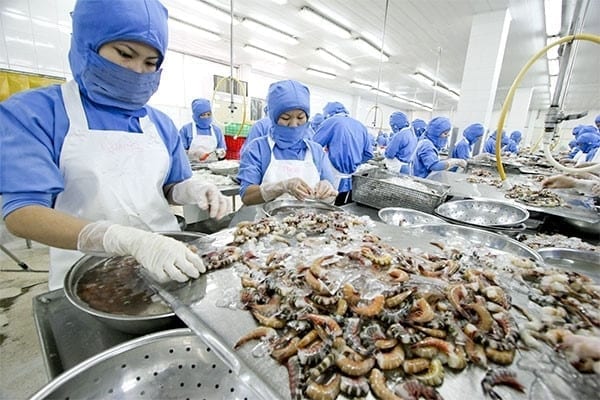
    Many processing plants have been running at 30-40 percent of capacity as stay-at-work requirements cause a labor shortage.

    Nguyen Hoai Nam, deputy general secretary of the Vietnam Association of Seafood Exporters and Producers (VASEP), said the government should come up with policies to encourage shrimp farmers right now so that they could harvest in November to enable exports.

    He also wanted it to prioritize Covid-19 vaccination for seafood companies’ workers so that normal production could resume.

    The southern provinces and Ho Chi Minh City could be divided into three in terms of likely resilience if certain epidemic prevention measures are adopted after September 15, he said.

    The first, where the infection rate is lowest, includes Ca Mau, Bac Lieu, Hau Giang, Soc Trang, Ben Tre, and Vinh Long provinces. Businesses in this shrimp processing hub are expected to return to 60 percent of capacity by October and 80 percent by year-end.

    The second, where the epidemic is gradually being controlled, includes An Giang, Kien Giang, Tra Vinh, and Dong Thap provinces and Can Tho city, and here the rates would be 50 percent and 70 percent.

    The area with the highest risk of infection, including Long An, Binh Duong and Tien Giang and Ho Chi Minh City, would recover to 40 percent and 60 percent.

    Vietnam’s seafood exports were worth $5.5 billion in the eight months of 2021, a year-on-year increase of 6 percent, according to the Vietnam Association of Seafood Exporters & Processors (VASEP).

  • DBS Announces More Tech Job Openings

    DBS Announces More Tech Job Openings

    DBS continues to add tech talent with plans to hire around 150 related positions via a virtual hackathon.

    DBS will hire for around 150 technology positions through a virtual hackathon, Hack2Hire, an annual program in its fourth edition, according to a statement.

    The positions will be for 14 developer and engineering roles across artificial intelligence (AI), machine learning and blockchain technologies.

    Successful candidates from the hackathon will be invited for a final interview during the event.

    The latest expansion follows 140 job openings previously announced in May during the bank’s female-focused virtual career fair.

    With Covid-19 greatly accelerating the pace of digital adoption, it is now more important than ever to ensure that our digital offerings continue to stay ahead of our customers’ needs, said DBS’ group head of big data/AI and consumer banking technology Soh Siew Choo.

  • Full flight load to Langkawi signals strong rebound for domestic air travel

    Full flight load to Langkawi signals strong rebound for domestic air travel

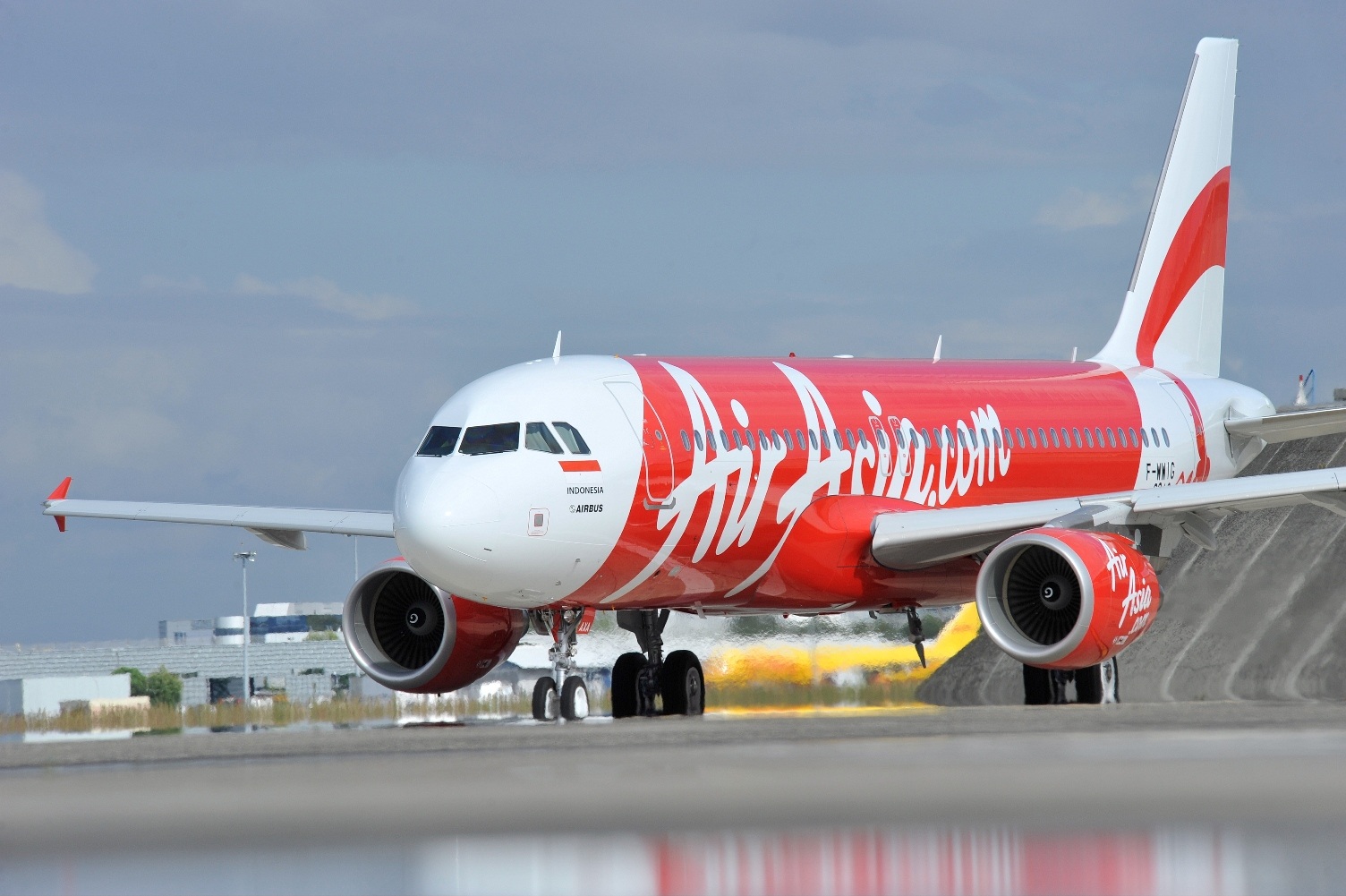
    AirAsia’s inaugural service from Kuala Lumpur to Langkawi on Thursday (Sept 16) morning under the travel bubble recorded a 100% flight load, the carrier says, signifying a strong rebound for domestic air travel.

    The low-cost carrier said the maiden flight, the first of nine scheduled daily flights from Kuala Lumpur, left KLIA2 at 9.50am utilising an Airbus A321neo.

    “Aside from Kuala Lumpur (63 flights weekly), AirAsia also has flights to Langkawi departing from Penang (14 times weekly), Johor Baru (seven times weekly), Ipoh (three times weekly) and Kota Baru (three times weekly), making a total of 90 weekly flights,” it said in a statement.

    AirAsia Malaysia chief executive officer Riad Asmat said over 200,000 seats to Langkawi were sold in less than a week.

    “To facilitate this movement, we have prepared extensively and implemented robust and comprehensive health and safety protocols to ensure all of our guests can travel safely, with our 100% vaccinated crew and frontliners.

    “After months of preparation, we are thrilled to get the country flying again and are ready to scale up our operations to meet overwhelming demand.

    “We hope more travel bubbles will be established across the country soon in line with the accelerated vaccination roll-out, and eventually across the region when it is safe to do so,” he added.

  • Bacardi launches ready-to-drink Mojito cocktail

    Bacardi launches ready-to-drink Mojito cocktail

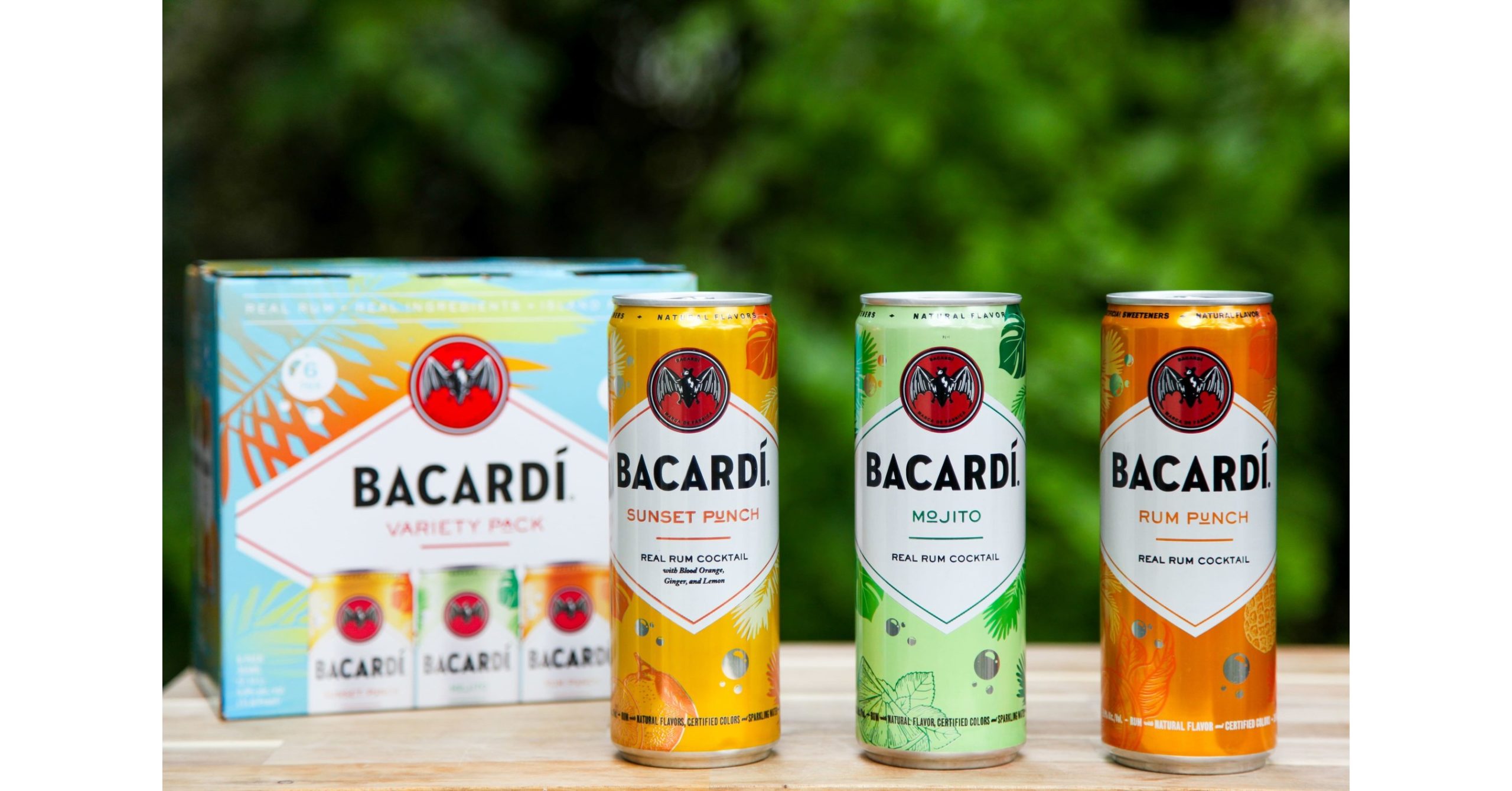
    Bacardi has launched a new RTD, Bacardi Mojito, which comes in a 250ml can with an ABV of 4.8 percent and 114 calories per serve.

    The RTD is made using Bacardi Carta Blanca Superior White Rum along with all-natural flavors and real ingredients and the calories are kept down thanks to the use of natural cane sugar.

    Bacardi-Martini Australia Brand Ambassador, Loy Catada, said he was excited to see Bacardi Mojito launch into the Australian market. “With the original Bacardu Mojito having a rich history and rise in popularity since the 1930s, we’re proud to continue to meet our customers’ desires and launch the ready-to-drink Bacardi Mojito in time for Summer here in Australia.”

    “Bacardi has been synonymous with classic Caribbean cocktails since 1862, and our latest launch gives consumers the ease of a high-quality cocktail made with the natural flavors and real ingredients of mint, lime, and the world’s most awarded rum in a convenient format.”

    With the spirit-based RTD market surging 132 percent in the last year and Mojito continuously ranking highly as one of Australia’s favorite cocktails in Google search queries, the stage is set for a big Bacardi Mojito summer.

    Bacardi is available now for independent retailers and the major chains at $24.99 RRP per pack of four.

  • Lightyear Raises $110 Million To Bring Its Solar Electric Car To Market

    Lightyear Raises $110 Million To Bring Its Solar Electric Car To Market

    Lightyear which is a startup that has been developing electric cars based on solar power has announced a $110 million in a round of funding that will enable it Bira its vehicle to the markets The company came to prominence when it was spun out of Solar Team Eindhoven which was basically a group of engineering students from the Technical university of Eindhoven who were competing in the world solar challenge with their  Stella and Stella Lux energy positive solar cars. These cars were producing more energy than they consumed.

    The Solar Team Eindhoven even recently unveiled a solar RV also, but Lightyear has graduated to becoming a full fledged automotive player than a college project. The project which was announced back in 2019 promised an electric sedan with integrated solar cells and that enabled it to give a whopping range of 725 kilometres based on the WLTP cycle.

    The team at Lightyear has made bold claims of an 724 kilometre range

    “We reached the $110 million funding milestone with the help of one of the largest international insurers in the Netherlands, Cooperation DELA. This investment aligns with their long-term focus on sustainability. Together, we can work on our shared mission of bringing clean mobility to everyone, everywhere,” said the company.

    “It is great to see the acknowledgment from investors, which is a testament to the confidence that they have in Lightyear. Thanks to the trust and funding received from our investors, we can further grow as a company and bring our Lightyear One exclusive model on the market in 2022,” said Lex Hoefsloot, the CEO and cofounder of the company.

    It still plans to deliver the first units to the market in 2022 but it must be noted that this car will not come cheap as it will cost upwards of $100,000 at around $170,000 for a starting price.

  • PepsiCo to reduce plastic use, launch plant-based snacks in green push

    PepsiCo to reduce plastic use, launch plant-based snacks in green push

    PepsiCo, a leading food and beverage giant, has announced plans to cut back on the use of virgin plastic and expand its SodaStream carbonated-water business to more markets in response to increasing calls to combat climate change.

    According to the company, as part of a new initiative called “pep+”, the food and beverage giant aims to reduce virgin plastic use per serving by half across all brands by 2030 and use 50% recycled content in all its plastic packaging.

    PepsiCo’s ambitious plastics plan also includes scaling its SodaStream business globally, Laguarta told Reuters in an interview. SodaStream, acquired by PepsiCo in 2018, makes machines and refillable cylinders that let users make their own soda or carbonated water drinks at home.

    The brand, currently in 40 countries, will bring new flavours into 23 more markets and introduce its new SodaStream Professional platform aimed at businesses in 10 additional markets by 2022.

  • Coca-Cola says new ‘No Sugar’ has the same flavour as Classic Coke

    Coca-Cola says new ‘No Sugar’ has the same flavour as Classic Coke

    In much the same way plant-based meat companies are tweaking their offerings to make them taste more like the real thing, beverage giant Coca-Cola is doing the same thing with its no-sugar cola.

    Coca-Cola has a vested interest in creating a no-sugar variety that mirrors its sugar-laden offering as a way to keep people associated with the brand. Consumers are drinking less soda as part of a broader effort to cut their sugar intake, and increasingly no sugar offerings are a more popular option.

    If consumers decide they want to drink less soda with sugar, and a no-sugar offering has the same flavor as the original, they are more likely to turn to their preferred brand. Sales of Coca-Cola Zero Sugar have been a bright spot for Coke, and the company no doubt is hoping the new flavor profile will attract more customers to the product. The new version is already on shelves across Europe and Latin America, and will roll out globally during 2021.

    “In order to continue to drive growth of our diets and lights category, we must keep challenging ourselves to innovate and differentiate just as other iconic brands have done,” Natalia Suarez, senior brand manager for Coca-Cola’s North America operating unit, said in a statement. “The consumer landscape is always changing, which means we must evolve to stay ahead.”

    No-calorie Coca-Cola Zero Sugar is sweetened with aspartame and acesulfame K. Finding a sweetener that can replace sugar’s texture and taste has been difficult for companies. Some companies have used aspartame, but many consumers stopped drinking diet soda because of concerns over the health impact of the artificial ingredient.

    Coca-Cola seems to have found the right ingredient mix for its no-sugar products. According to Euromonitor International data cited by The Wall Street Journal, Diet Coke had 35% of sales in the $22 billion global diet category in 2019 and Coke Zero Sugar had 22%.

    Coca-Cola also is making a big change in the packaging it uses for Coca-Cola Zero Sugar. The new can has the same design as its its popular Coke soda, but uses different colors and the words “zero sugar” to indicate the absence of the sweetener. The new, simpler packaging is smart in that it keeps the brand, which is trying to emulate regular Coke, with the same design scheme as the original — but gives it just a bit of its own identify to stand out on store shelves.

  • Ferrero introduces recyclable box for Ferrero Rocher range

    Ferrero introduces recyclable box for Ferrero Rocher range

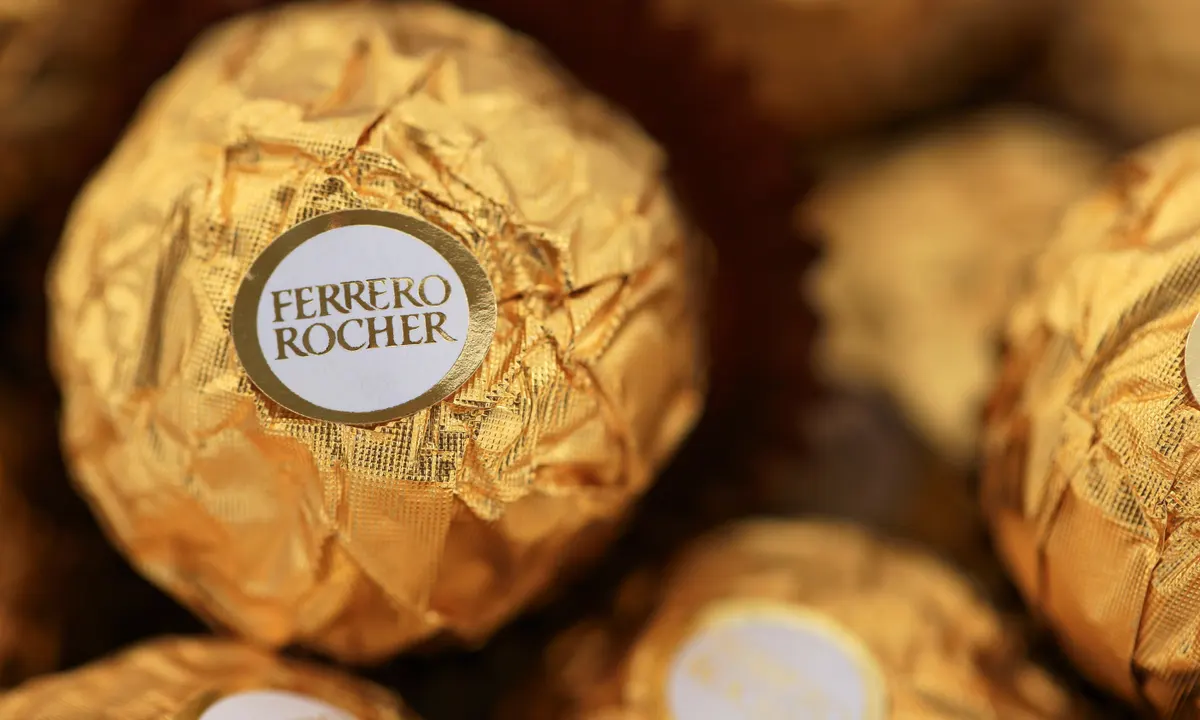
    Italian brand Ferrero has moved another step towards sustainability with the launch of its new eco-designed box for the Ferrero Rocher range.

    After trialing 29 different plastics and working with leading materials expert Milliken, the new packaging is sourced from polypropylene (PP), which is easy to recycle and can help reduce the use of plastic as well as its impact on the climate.

    Packaging for a box of 16 pieces will have 40-per-cent less plastic content, while the 30-piece box contains 38 percent less. Both are said to have at least 30 percent lower carbon footprint, reaching 70 percent less when recycled, compared to the previous box.

    “The Ferrero Rocher eco-designed box is a clear example of our dedication to enhancing packaging circularity,” said Fabio Mora, global packaging director of The Ferrero Group. “We worked in close partnership with Milliken which brought its innovative and critical thinking to help reduce the environmental impact through the use of a new polypropylene material for the Ferrero Rocher box.”

    According to the company, Ferrero Rocher can save approximately 2000 tonnes of plastics in the first year from the introduction this month. Once the innovation extends across the whole range of Ferrero Rocher, the full impact of the extension can reduce up to approximately 10,000 tons less plastic used.

    The new eco-designed box is part of Ferrero’s commitment to making 100 percent of its packaging reusable, recyclable or compostable by 2025.

  • Puma celebrates women’s diversity with Mayu Girls campaign

    Puma celebrates women’s diversity with Mayu Girls campaign

    Look around you. Each and every woman you see has a story to tell — an inspiring one, a tickling anecdote or one that is hard to chew. These stories of everyday women represent their values and fighting spirit, as well as their goals and adventures that they carry with them all the time.

    PUMA Southeast Asia’s “We Are #MayuGirls” campaign celebrates the authenticity and diversity of everyday women. She embodies the Mayu Girl attitude of being confident, inspiring and passionate. She is a role model to her peers and those around her. She breaks free from societal limitations and pursues her passion and goals with grit.

    This is what she is and what she does. The Mayu Girl defines her own norms.Although the Mayu Girl is the go-to aspiration for most, she can’t always be expected to be the flawless, hard-pressed superhero. She is independent and strong, but stumbles and is vulnerable a times. But the Mayu Girl never gives in and always looks for the brighter side of things. She picks herself up, dusts herself off, and continues onward to get what she wants.

    “We Are #MayuGirls” doesn’t just celebrate the crowning glories of these individual women but changes the narrative through collective inspiration. Across all domains, PUMA strongly believes that women have the collective power to move the needle and to propel those around them forward through their own unique achievements. And that is the essence of the campaign — to be the zeitgeist of empowerment through real stories of diverse individuals with the common thread of a confident, inspiring and passionate Mayu Girl,” shares Eleanor Wang, PUMA Southeast Asia’s Head of Marketing.

    “We want women to know that no matter the background or profession, anyone can be Mayu Girl too, with the right attitude,” she adds.

    So, look around you. Look to your mother, wife, sister, daughter, colleague, and best friend. The spirit of the Mayu Girl is everywhere and can be found right beside you at your dinner table. Or, you can check out these trailblazing Mayu Girls below if you’re in need of some immediate inspiration!

    The Mayu Girl is the embodiment of a fighting spirit who struggles but forces her way forward to get what she wants. And that is quite literally why Nur Amisha Azrilrizal makes the perfect Mayu Girl specimen. She joins PUMA’s call as a professional Muay Thai fighter and to her, the Mayu Girl spirit is all about staying true to your passion and reaching for your goal with a never-give-up attitude.

    “Muay Thai has never just been a sport for me, nor has it ever been about medals. Since young, Muay Thai has been my pillar of strength and a torch to guide me through my darker days when bullying from peers was something I faced,” recalls Nur Amisha of her journey. “Staying true to who I am and persevering has allowed me to thrive despite the environment. Now I am standing tall and proud to be a part of PUMA’s “We Are #MayuGirls” campaign to inspire those who are facing similar challenges.”

    While Nur Amisha is an exemplary example, the Mayu Girl isn’t limited to one style of role model. The spirit of a Mayu Girl can be shown more subtly, but definitely does not burn any less intensely.

    Dentist and content creator, Dr. Kayla Teh addresses the importance of pursuing your goals with passion.

    Here is another excellent example of the quintessential Mayu Girl. Dr Kayla Teh, a Malaysian dentist, shares that the spirit of the Mayu Girl is not about pursuing the most illustrious career, but having the right attitude towards the everyday task.

    “As a content creator who’s also a full-time dentist, I often get asked on how do I do it all. Truth is, it’s not easy. But I am a firm believer in hard work and a positive attitude. Challenges to me are not hardships, but opportunities for growth. That’s the Mayu Girl spirit that truly resonates with me — that no matter what challenges we face, embrace it with the right attitude. Don’t be afraid to pursue our goals with passion and inspire those around us,” she shares.

  • JD launches five-storey JD Mall in China’s Xi’an

    JD launches five-storey JD Mall in China’s Xi’an

    JD.com launched the “JD MALL” brand, the upgraded version of its E-Space omnichannel retail experience store on September 14, via an online press conference. The new shopping destination will first debut in Xi’an, China, on September 30.

    With an area of 42,000 square meters across five floors, JD MALL in Xi’an offers an immersive omnichannel shopping experience to consumers through 200,000 items from over 150 domestic and international brands.

    Consumers are able to place orders through the official WeChat Mini Program by scanning QR codes on each of the items, and JD will handle the last-mile delivery to their doorsteps through the company’s strong logistics infrastructure.

    In addition to traditional categories such as electronics, home appliances, and digital accessories offered in E-Space, JD MALL also provides a wide range of items in home , furniture, kid, smart healthcare products and auto accessories.

    At the same time, JD MALL offers one-stop home design services and home appliance package purchases, enabling customers to enjoy a seamless shopping experience from designing, product selection to installation and aftersales. A selection of products also supports 2-hour delivery and 24-hour installation services.

    JD MALL combines fashion and technology elements from design to experience. Customers can enjoy tech devices and experiences including holographic projection, VR equipment, an intelligent robot, a virtual live stream room and a transparent computer room.

    As JD’s integrated consumption shopping center, one of JD MALL’s differentiation is the immersive experience. The Mall will have 11 themed experience zones and 29 product interaction zones, such as a beauty salon, audio experience aea, drone testing, massage, etc, making it a multi-scenario and fun space for customers.

    JD is continuing to provide different kinds of physical stores amid the growing trend in which customers pursue a high-quality and multi-store ecosystem, including JD E-Space, JD home appliance flagship stores, JD computer and digital stores and JD retail experience shops. This is also part of JD’s plan to promote its omnichannel operation and accelerate the industrial structure upgrading.

    In the first half of this year, transaction volume of JD’s E-Space in Chongqing increased 105% YOY, while the transaction volume of the opening day of the same type of store in Hefei, Anhui province reached RMB 166 million yuan, and the traffic for both online and offline was over 1.2 million.

  • Carousell Group raises US$100 million for SEA rollout

    Carousell Group raises US$100 million for SEA rollout

    Carousell Group, the leading classifieds group in Greater Southeast Asia, today announced that it has secured an investment of US$100 million to accelerate its leadership in the region, and to reimagine the classifieds experience with a focus on convenience and trust, to make secondhand the first choice.

    This round of funding, led by STIC Investments, a leading Korean private equity that invests across Asia, marks a significant milestone that will bring Carousell’s valuation to US$1.1 billion. The investment will power the group’s ambitions to redefine commerce for secondhand goods and automobiles in an increasingly digitally savvy, affluent and sustainability-conscious region.

    “The pandemic has shown us that our mission to inspire the world to start selling and buying secondhand is more relevant than ever. People in the community are using our platforms to make more possible for each other—through shared passions, making ends meet, affording what they need, or simply because it is more sustainable. We believe that the accelerated adoption of digital experiences is an opportunity for us to double down on our recommerce efforts with a focus on convenience and trust, to unlock step-change growth in our community,” said Quek Siu Rui, Co-founder and CEO of Carousell. “STIC’s investment is a validation of our mission and strategic direction. We’ll deepen our investments in recommerce across more categories and markets, and will continue to seek opportunistic acquisitions in scaling up.”

    “We have been monitoring Carousell as one of the leading platforms in Greater Southeast Asia, and are excited to partner up with a significant stake in its growth story,” said Jason Cho, Managing Director of STIC Investments.  “Carousell continues to achieve tremendous user growth as they transform the recommerce market, adding new features that are focused on creating trusted marketplaces and enhancing overall user experience.  We are highly confident that Carousell will be at the center of the secondhand economy in this region at a time when an increasing number of socio-economic and environmentally conscious consumers are shifting towards a circular economy”. As part of the funding round, Mr. Cho will join the Carousell Board of Directors.

    Since its founding in 2012, the Group serves a community of tens of millions of users across eight markets in Greater Southeast Asia under the brands Carousell, Mudah.my, Cho Tot and OneKyat. Carousell’s pioneering mobile-first approach reignited the classifieds space, making selling and buying easier and proving to be an essential one-stop shop across all categories.

    “We have grown way beyond categories like fashion, electronics and general goods,” said Siu Rui, “As the region becomes more affluent, people want to enjoy the finer things in life. We are looking at authentication capabilities for higher-value products, including luxury goods and cars. Our goal is to make transacting in a secondhand marketplace as convenient and trusted as any e-commerce platform so that secondhand can truly be the first choice.”

    This year alone, Carousell has piloted a Certified Mobiles programme in Singapore, offering a 12-month warranty for used mobile phones to offer users a like-new experience at secondhand prices, and launched integrated shipping with PosLaju (the Malaysia national postal service) to provide contactless transaction options for sellers and buyers during the Movement Control Order. Carousell Auto Group, which was formed earlier this year to leverage its regional leadership position in car classifieds, has in a short period rolled out a Certified Autos programme in Malaysia that achieved the largest inventory of certified cars in the country, with other key markets to follow

    “We are grateful and privileged to have investors, teammates and users who believe in our mission and our journey in building a meaningful and enduring company,” Siu Rui added.