Tag: asia

  • Lion New Zealand’s Speight’s launches first alcohol-free lager

    Lion New Zealand’s Speight’s launches first alcohol-free lager

    New Zealand’s alcohol beverage giant Lion has introduced the first alcohol-free beer range under the Speight’s brand called Speight’s Summit Zero lager.

    Speight’s new beer range is also Lion’s second alcohol-free beer. The launch of the range resulted from the surging popularity of alcohol-free drinks in the country.

    “There is huge untapped consumer demand and growth to be seen,” said Rachel Ellerm, marketing director at Lion New Zealand.

    According to MAT Scan Nielsen 2021, New Zealand’s lighter beer category, which includes low and no alcohol beer, is growing at 24 percent. Meanwhile, zero alcohol beer is estimated to hit NZ$25 billion in sales globally by 2024.

    “People love the taste of Speight’s so a zero-alcohol option was the logical next step,” Ellerm said. “We expect it to be a huge hit with Speight’s fans and consumers looking for a lighter option alike.”

  • Boost to clean energy investment could drive 10 million new green jobs

    Boost to clean energy investment could drive 10 million new green jobs

    If funded, about 13,000 renewable energy projects proposed in nearly 50 countries could slash emissions and create work, researchers find.

    From offshore wind farms in Britain to floating solar power plants in Vietnam, about 13,000 renewable energy projects in nearly 50 countries are waiting for finance – and could create up to 10 million green jobs, consultancy EY-Parthenon said on Wednesday.

    In a report, EY said the projects offered $2 trillion in investment opportunities that would generate jobs locally and in supply chains, and would help slash climate-heating emissions and secure a green recovery from the pandemic.

    Serge Colle, EY’s global energy advisor, said the research showed there was “huge potential to accelerate private-sector renewables investment” with the right government policies and regulation around the world.

    If the projects identified were implemented in the next three years, they would more than double the rate of global renewables deployment, while delivering 22 percent of emissions reductions promised this decade by the 47 countries covered in the research, which include G20 nations, the report said.

    That would amount to 9 percent of the emissions cuts needed by 2030 to keep planetary warming to the most ambitious global target of 1.5 degrees Celsius above pre-industrial times, added the report commissioned by the European Climate Foundation (ECF).

    The biggest potential benefits for workers are in China and the United States, where the projects could create about 2 million and 1.8 million jobs respectively.

    India, Australia, Brazil, Britain and Canada also could generate hundreds of thousands of jobs each from boosting offshore and onshore wind, solar and hydropower capacity.

    The jobs range from lower-skilled work in construction, installation and manufacturing to professional jobs in things like engineering and project management.

    In Britain, greater investment in green energy could support sustained job creation and economic growth especially in the former coal-mining region of northern England and oil-and-gas producer Scotland, where large wind farms are being developed, the research said.

    The UK pipeline of projects seeking finance includes 540 mainly solar and wind power proposals, with the potential for close to 439,000 new jobs, the report said. It noted total jobs could rise to about 625,000 when power storage, transmission and distribution are added.

    That would mitigate 90 percent of job losses from the Covid-19 pandemic, the ECF said.

    Tim Lord, a net-zero expert with the UK-based Tony Blair Institute for Global Change, cautioned that in many places globally workforces do not yet have the skills to redeploy into clean technologies and their supply chains.

    “This transition is not as simple as you take an offshore oil and gas worker and retrain them to operate a wind turbine, and everyone is happy. Clearly there will be some disconnect,” said Lord, who was not involved in the EY report.

    Coordination between governments and companies will be essential to develop the local infrastructure and skills needed to expand generation and use of renewable energy, which would in turn help attract necessary investment, he said.

    The challenge will be even greater in developing countries where large swathes of the population lack access to electric power and strong markets have yet to be fostered, he told the Thomson Reuters Foundation.

    November’s COP26 climate summit in Scotland will be key to providing the incentives for emerging economies to shift away from fossil fuels and into cleaner power – but that will happen only if richer nations show a clear commitment to decarbonizing, Lord said.

    “If you have a situation where lower-income countries feel like bigger countries are pulling their weight … then I think you can start to see that kind of positive cycle being created around investment and people taking this seriously,” he added.


  • Citi Singapore Appoints Senior Execs

    Citi Singapore Appoints Senior Execs

    The bank has appointed five locals to senior positions across Asia Pacific in various business groups, according to an announcement.

    Chan San-San, who joined Citi in 2003, was appointed private banking high net worth head for Asia Pacific, effective July. She will continue to be based in Singapore and will join the Global Private Bank leadership team as well as the Citi Global Wealth Asia management team.

    Singapore-based Kelvin Goh was appointed Asia Pacific head of financial institutions group for investment banking, effective immediately. Goh, who joined the bank in 2018, brings 17 years of experience in the field and was most recently Citi’s Asia Pacific head of insurance, investment banking.

    Gary Chan, who joined Citi in 1997 and was most recently Singapore head of the integrated corporate bank, has been appointed Taiwan head of the integrated corporate bank, effective October 1. He will be taking over from Vivian Tan, who will be retiring from Citi after 21 years of service.

    Taking over from Chan is Gilbert Ng, who will be responsible for clients belonging to the corporates, financial institutions and public sector groups, and will have oversight of the global subsidiaries group, effective immediately. Ng joined the bank in 2006 and was most recently head of global subsidiaries group, Singapore.

    Toh Jian Xun was appointed as co-head of TMT, Asia Corporate Bank, effective immediately. He will continue to serve in his current role as head of TMT for China corporate bank, based in Shenzhen. He joined Citi in 2010.

    The moves signal our commitment to develop local talent, provide opportunities for personal and professional growth across our global network, and offer our people a long-term career in the bank,» Amol Gupte, ASEAN head and Citi country officer for Singapore, said.

    The appointments come on the heels of two other senior moves in Singapore: Serene Gay as the head of credit cards and personal loans for Citibank Singapore and Faye Ong as the head of family office advisory for Asia at its private bank.

  • Google Maps’ Insights feature is rolling out in more countries

    Google Maps’ Insights feature is rolling out in more countries

    Google continues to work hard on improving Google Maps. The app does so much more than just help take you quickly and safely from point “A” to point “B” as it gives you the names of places to visit, where you should go to eat, events that you should attend while in town, and more. And now a newly redesigned feature named Google Maps’ Insights provides users with data about their travels that they might find helpful.

    Insights can show you the places that you’ve been traveling to and whether you got there by walking, biking, or by driving. You’ll see your travel history along with interesting information that reveals the busiest day of each month, the name of the attractions you’ve been visiting, the hotels where you’ve been staying, and the stores where you have been spending money.

    This might sound typically Google with all of your information being gobbled up, even if it is supposed to be for your benefit. But you can keep the information of your travels to yourself by using Google Maps while in incognito mode. You can also keep your privacy while using Google Maps by not logging in before you start to use the app.

    Keep in mind that if you do decide to use incognito mode on Google Maps. you will be unable to save your search or browsing history or send notifications. You also won’t be able to update Location History or shared location or personalize Google Maps.

    Insights is part of the Google Maps Timeline feature which can be found by tapping on your profile icon on the upper right corner of the Google Maps screen. The redesigned Insights is now rolling out to more regions around the world and Germany’s SmartDroid posted an image of the feature appearing in Germany containing all the statistics and data that Insights provide. The feature is also now rolling out in the U.K.

  • Oppo may enter the gaming smartphone market

    Oppo may enter the gaming smartphone market

    Asian handset manufacturers like to be in the front lines when it comes to new technology, so it’s no wonder that many of them have already jumped on the mobile gaming bandwagon. What’s surprising is that there are still brands that haven’t yet entered the gaming smartphone market, even though it’s still considered a niche category.

    In any case, we’ve just learned that at least one of the companies that hasn’t yet launched a gaming smartphone is about to join the fray, Oppo. The Chinese company is working on a gaming smartphone that strongly resembles the Asus ROG Phone 5.

    The phone was spotted on the European Union Intellectual Property Office (EUIPO), but apart from some renders, there’s really no information about the unannounced gaming smartphone.

    On the bright side, the pictures reveal quite a few things about the phone, such as the quad-camera setup, the bezel-less display, and the 3.5mm audio jack at the bottom. Although these images prove that the phone exists (even if just as a project), it’s not 100% certain that Oppo will go ahead with the launch. Time will tell whether or not Oppo will pick up the pace and join other brands that have already launched at least one gaming smartphone, such as Asus, Lenovo, Razer and Xiaomi.

  • Mercedes-Benzs Global Sales Up By 25.1% In First Half Of 2021

    Mercedes-Benzs Global Sales Up By 25.1% In First Half Of 2021

    Mercedes-Benz delivered 1,182,724 passenger cars to customers worldwide in the first half of 2021. The company recorded a growth of 25.1 percent compared to the same period last year. In China, Mercedes-Benz set two new records: The highest deliveries in the second quarter (219,059 units, +5.8%) and in the first half of a year (441,579 units, +27.6%). The company achieved double-digit sales growth in Q2 in Germany (+26.3%) and the USA (+38.6%).

    Deliveries of plug-in hybrids and all-electric cars more than quadrupled in just six months, reaching 121,500 units (+305.0%). In total, the xEVs made up 10.3 percent of total Mercedes-Benz sales in the first half of 2021. Around 39,000 all-electric vehicles were delivered from January to June (+291.4%), including more than 19,000 units (+469.4%) of the EQA, EQC and EQV models

    Sales of Mercedes-Benz cars in the Asia-Pacific region rose from January to June by 26.1 percent. In the Europe region, the recovery of many markets and an improved COVID-19 situation led to a sales growth of 53.7 percent in the second quarter. Mercedes-Benz sold in Germany a total of 107,269 cars from January to June, achieving a sales level slightly above last year (+1.0%).

  • How to Balance Your Studies and Personal Life as a High School Student

    How to Balance Your Studies and Personal Life as a High School Student

    As a student, one of the biggest challenges you’ll face—or probably are already facing—is balancing your studies and your personal life. Nowadays, many students face an enormous amount of pressure to do well in school, and to reach those expectations, some of them choose to prioritize their academics at the expense of their health, relationships, and general well-being. However, doing this can be detrimental to their welfare, and it may even cause a decline in their academic performance.

    Taking care of your physical and emotional health is crucial to doing well in school, which is why it’s important to maintain that balance between your personal life and studies.It’s especially important if you’re attending a high school in Singapore for international students, as the culture can be different and the standards can be more rigorous. On that note, here are a few ideas and insights on how you can strike that perfect balance between doing well academically and still having a fulfilling personal life.

    Learn How To Manage Your Time

    When it comes down to it, achieving balance between academics and your life outside of it all comes down to how well you manage your time. The idea is to not spend too much of it on one thing or the other.

    That might seem difficult to do at first, but like all skills, time management can also be learned. There are a lot of tools out there that you can use to stay on track, too. Start by making a weekly to-do list and putting it somewhere you can always see, such as a desk calendar, a whiteboard in your room, or your phone or computer. Having a visual reminder of the things you need to get done can help you focus your efforts. Ranking your tasks in order of importance or difficulty can also help you get them out of the way faster. If you are the type of person who gets easily distracted, time management techniques such as setting a Pomodoro timer while studying or doing your homework can improve your effectiveness.

    Lead A Healthy Lifestyle

    As a young person, you probably feel that you have a lot of energy and are confident that you can skip meals and pull all-nighters without feeling the negative effects much. However, making a habit of neglecting your physical health can and will take its toll on you eventually. When you skip meals, your body doesn’t receive the nutrition it needs to function properly, leading to lower energy levels and reduced cognitive abilities. You may experience a drop in blood glucose levels, causing your brain to slow down and making it harder for you to focus or create. The same happens when you don’t give yourself enough time to rest. You’ll feel fatigued, and it will be harder for you to think and concentrate. You’ll also feel more impatient and irritable.

    Know that while your studies are important, it’s more important to take care of yourself. How you feel physically will inform the way you perform, so make an effort to fulfill your needs as they present themselves. When you eat, choose foods that are healthy and wholesome instead of ones that are packed with sugar, salt, and empty calories. Incorporate more fruits and vegetables into your diet and drink plenty of water. Try aiming for seven or eight hours of sleep every night, and make an effort to go to bed early. When you feel great, you tend to do great at school, too.

    Watch Out For Signs of Stress

    Everyone experiences stress differently, and it can be a good or a bad thing depending on how you respond to and deal with it. For some people, stress is a motivator that helps them concentrate and get things done. For others, stress can be crippling instead, making it harder to finish one’s tasks. Either way, too much stress will always be bad for you.

    You may be experiencing stress overload if you feel frequently irritable or moody, or if you feel as though there’s never enough time in the day. Anxiety and panic attacks are also a common symptom of excessive stress. Sometimes, it may also manifest physically through stomach pains or migraines.

    The importance of taking breaks simply cannot be overstated. Breaks can help reset your mind and keep your stress levels manageable. You can also relieve stress through healthy and positive pursuits such as working out, doing some meditation and breathing exercises, and talking to friends or loved ones. Find ways to make yourself laugh, and don’t be afraid to ask for help when you need it.

    Be an Achiever, Not a Perfectionist

    Most people think that being a perfectionist is a good thing. However, it more than likely is holding you back instead of propelling you forward. Perfectionism makes you measure your self-worth on your achievements and the outcomes of the things you do. It also makes you afraid of failure and pushes you to be overly critical of yourself.

    Instead of setting your standards too high, go for ones that are achievable. Instead of brooding on the mistakes you’ve made, look at them as opportunities to learn and improve from. Finally, always be kind to yourself, no matter what. Be easy on yourself, and you’ll find that any kind of task becomes easier to do as well.

    Finding that perfect balance between performing well at school and still enjoying your life as a young person will be difficult, but with a few adjustments, you should be able to excel at both. If you still find yourself struggling, your school should be able to provide you with the necessary resources, guidance, and assistance to help lighten your load.

  • TamJai SamGor concept to open in Lan Kwai Fong

    TamJai SamGor concept to open in Lan Kwai Fong

    Hong Kong noodle chain TamJai SamGor Mixian is expanding its presence in its home market with a flagship concept launch in the nightlife hub of Lan Kwai Fong this week.

    The TamJai SamGor store will also unveil the brand’s new international image, featuring its signature red and black colors together with Hong Kong-style neon light signs.

    “The design demonstrates TamJai SamGor’s ambition of infusing overseas elements into a Hong Kong brand, showcasing the idea of a mix of cultures and growing business in international markets,” the company said in a statement.

    The store facade features a large rectangular window with a neon light frame and a  three-dimensional sign saying ‘TamJai SamGor’ in Chinese characters on one side and ‘TJSG’ on the other side.

    Alcohol and pairing snacks, not available in other outlets, will be rolled out at the restaurant. TamJai SamGor in Lan Kwai Fong is scheduled to open this Friday (July 9).

    Since opening its first store in Hong Kong in 2008, TamJai SamGor Mixian has grown its network to more than 70 restaurants across the city. The noodle chain made its overseas debut in Singapore last year.

  • China’s Didi says app takedown may hurt revenue

    China’s Didi says app takedown may hurt revenue

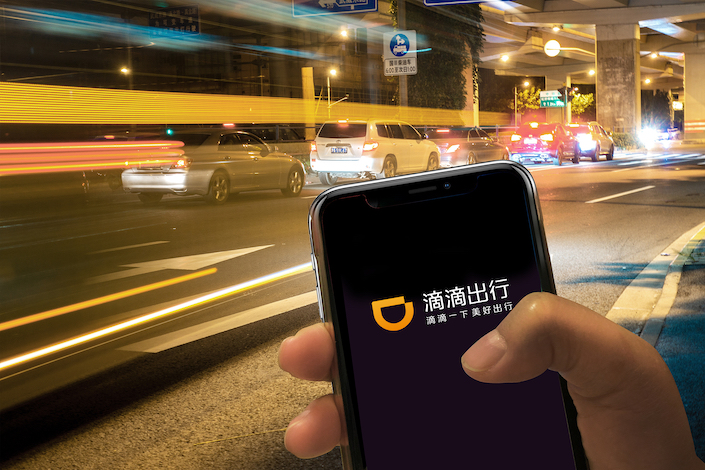
    China’s biggest ride-hailing firm Didi Global said on Sunday that the removal of its “DiDi Chuxing” app from smartphone app stores in China is expected to have an adverse impact on its revenue.

    Earlier on Sunday, China’s cyberspace regulator ordered app stores to stop offering Didi’s app after finding that the company had illegally collected users’ personal data.

    “The company expects that the app takedown may have an adverse impact on its revenue in China,” the company said in a statement.

    Meanwhile, on Monday the cyberspace watchdog said it is investigating online recruiter Zhipin.com, and truck-hailing apps Huochebang and Yunmanman, ramping up its crackdown on the mainland’s tech companies amid tightened regulations on data security.

    The removal of Didi’s app, which does not affect existing users, comes days after Didi made its trading debut on the New York Stock Exchange in an initial public offering that raised US$4.4 billion.

    In a June filing, Didi reported revenue of about 42.2 billion yuan ($6.5 billion) for the three months ended March 31. Of that, 39.2 billion yuan came from its China mobility division while about 800 million yuan came from its international business.

    Didi has a dominant position in the online ride-hailing business in China and operates in 4,000 locations across 16 countries.

    Didi said it will strive to rectify any problems, and will protect users’ privacy and data security.

    Since late last year, Chinese internet regulators have cracked down more sharply on the country’s tech giants for violations of rules.

    The Global Times, a tabloid published by the ruling Communist Party’s official People’s Daily newspaper, said in a Chinese-language commentary on Monday that Didi’s apparent “big data analysis” capability could pose risks to the security of individuals’ personal information.

    “No internet giant can be allowed to become a super database of Chinese people’s personal information that contains more details than the country, and these companies cannot be allowed to use the data however they want,” Global Times said.

    Didi gathers vast amounts of real-time mobility data everyday. It uses some of the data for autonomous driving technologies and traffic analysis.

    In its IPO prospectus, Didi said “we follow strict procedures in collecting, transmitting, storing and using user data pursuant to our data security and privacy policies.”

    A senior Didi executive said on Saturday that the company stores all China user and roads data at servers in the country and it is “absolutely not possible” that it passed data to the United States.

  • Hugo Boss showcasts its first Japanese flagship store

    Hugo Boss showcasts its first Japanese flagship store

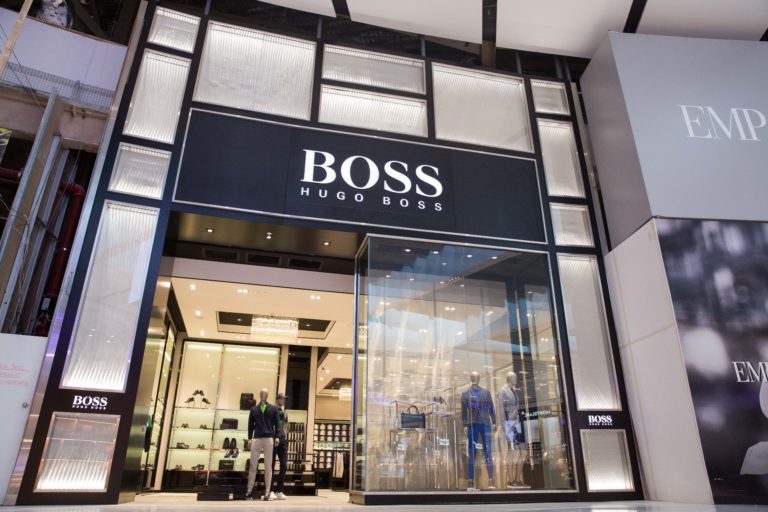
    German luxury fashion house Hugo Boss has launched its first Boss flagship store on Tokyo’s famous shopping street the Ginza.

    Spanning two stories, the Hugo Boss Japan flagship occupies 480sqm of the Tokyu Plaza Ginza shopping centre. The store features a giant glass facade where a digital wall is installed to showcase campaign videos and content.

    Meanwhile, the store interior design follows a white, black, and beige colour palette, using materials such as marble, wood and chrome. While the first floor houses men’s and women’s apparel, accessories, and fragrances, the second floor features a personalization space called ‘Made to Measure’, where customers can enjoy tailoring services.

    Marking the launch, the Hugo Boss Japan flagship store also houses a limited-edition capsule collection and a corner offering limited items with HB-Moji graphics, including hoodies, T-shirts, shorts, and caps.

  • H&M back to profit again, China sales hit by boycott

    H&M back to profit again, China sales hit by boycott

    Fashion retailer H&M’s global sales growth slowed in the second half of June and the Swedish company took a sales hit in China after its concerns over alleged human rights abuses in Xinjiang led to a social media-inspired boycott by shoppers.`
    The world’s second-largest fashion retailer aon Thursday reported a stronger-than-expected profit for its March-May quarter, after a loss in the same quarter last year.

    In China, sales were down 23% in local currencies when H&M was wiped off Tmall and domestic phone makers app stores in March after the retailer expressed concerns about the alleged Xinjiang human rights abuses.

    “With regards to China the situation remains complex. Beyond that we refer to what we have said before,” Chief Executive Helena Helmersson said, as H&M quantified for the first time the impact of the China boycott, which started on social media.

    H&M in late March said in a statement it was dedicated to regaining the trust of customers and partners China and that its commitment to the country remained strong.

    Helmersson said H&M was closely following the situation in Bangladesh – another main supplier – after a spike in coronavirus cases prompted the country to enforce a strict lockdown, although garment factories remain open.

    Group sales for June 1-28 were up a quarter year-on-year but 4% lower than in pre-pandemic 2019 as growth slowed from mid-June, highlighting a patchy recovery from the pandemic.

    Helmersson, speaking to analysts and reporters, attributed the easing in the second half of June to a combination of factors, including tough year-ago and 2019 comparisons, cold weather last week in some European markets, and how coronavirus restrictions were being eased.

    “We see signals of a strong recovery also in June, and that customers appreciate our collections,” she said.

    Analysts said the figures implied sales were down 9% on 2019 in the latter two weeks of June, and noted that rival Primark has also said trading was currently very volatile from week to week.

    “Recent weeks of trading highlight a mixed demand rebuild,” said Jefferies analyst James Grzinic.

    Quarterly pretax profit was 3.59 billion crowns ($419 million) against a year-earlier loss of 6.48 billion.

    “As more and more people are vaccinated and restrictions are eased, the world is gradually opening up and customers can once again visit our stores,” Helmersson said. “Online sales have continued to develop very well even as the stores have opened.”

    H&M said 95 of its 5,000 stores globally remained temporarily closed, against 1,300 at the start of March.

    Chief Financial Officer Adam Karlsson said the company was not unaffected by rising freight rates due to a global shipping backlog but it expected to mitigate them.

    H&M said prospects of paying a dividend for 2020 in the autumn were now very good after it failed to propose one at its annual general meeting in May.

  • Facebook, Google, Twitter considering quiting Hong Kong

    Facebook, Google, Twitter considering quiting Hong Kong

    US tech giants Facebook, Google, and Twitter have privately warned the Hong Kong government that they could stop offering their services in the city if authorities proceed with planned changes to data protection laws, the Wall Street Journal reported on Monday, citing a letter.

    The laws could make the tech companies liable for the malicious sharing of individuals’ information online, the newspaper added.

    A letter sent by an industry group that includes the internet firms said companies are concerned that the planned rules to address “doxing” could put their staff at risk of criminal investigations or prosecutions related to what the firms’ users post online, Journal reported.

    Doxing is an act of revealing people’s personal information such as real name, home address or workplace online without the user’s permission.

    Facebook, Google, and Twitter did not immediately respond to Reuters’ requests for comment.

    Hong Kong’s Constitutional and Mainland Affairs Bureau in May proposed amendments to the city’s data-protection laws that it said were needed to combat doxing, a practice that was prevalent during 2019 protests in the city, the newspaper said.

    According to the newspaper, the letter dated June 25 was sent by the Singapore-based Asia Internet Coalition.

    “The only way to avoid these sanctions for technology companies would be to refrain from investing and offering the services in Hong Kong,” the Journal reported, quoting the letter.

  • Demand for luxury goods increased despite higher retail prices

    Demand for luxury goods increased despite higher retail prices

    Demand for luxury goods is continuing to grow in South Korea, despite price hikes and the Covid-19 pandemic.

    Chanel, a high-end fashion house, has already raised prices in the market twice this year.

    The French luxury brand raised the price of the Classic Flap Bag Medium from 8.64 million won (US$7,600) to 9.71 million won, and the price of the Classic Flap Bag Large from 9.42 million won to 10.49 million won on Thursday. Prices of other products, including Boy Chanel, also rose by a similar rate.

    Despite the increases, customers are flocking to Chanel boutiques at department stores throughout the country, lining up ahead of opening hours.

    While some customers complain about a constant rise in prices, the popularity of luxury goods continues to grow.

    Between May 1 and June 29, sales of luxury goods at Lotte Department Store jumped by 37 percent compared to last year. Sales of luxury goods at Hyundai and Shinsegae Department Stores rose by 54.1 percent and 38.8 percent, respectively.

    “Prices increases for already expensive products give off the impression of rarity and something that only a few can afford, which eventually boosts demand,” said Lee Eun-hee, a consumer studies professor at Inha University.

    “Customers are willing to spend more to buy them.

    “Ownership of luxury goods is seen as a competition among many to demonstrate the ability of an individual, a means to justify discrimination among people,” Lee warned.

  • Investors warned about AI multilevel marketing schemes

    Investors warned about AI multilevel marketing schemes

    Multilevel marketing schemes (MLMs) calling for investment in artificial intelligence (AI) robots said to be capable of making money on their own are illegal, authorities have warned.

    The Vietnam Competition & Consumer Authority under the Ministry of Industry and Trade has put some AI robot related MLM websites and applications on a warning list, including snowai (snowaiapp.com, snowai.cc, snowai.net) and the inb.network (ai.marketing, and aimarketing).

    The websites claim that AI robots will conduct affiliate marketing on the Internet to advertise brands or carry out transactions on virtual and digital currency trading floors.

    Depending on investment packages involving AI robot rentals, investors can enjoy different kinds of commissions when orders are placed for branded products or transactions in virtual currencies are made. The income includes commission from investments made by subsequent investors in the multilevel marketing scheme.

    If investors pour money into such schemes, they face the risk of losing money because they have to hand in real money but their earnings are in virtual or digital money that are not officially recognized.

    The competition authority warned people not to invest in or develop AI robot related multilevel marketing schemes so as to avoid financial and legal losses.

    Doing business using the multilevel marketing mode without a license can fetch sentences of up to 5 years in prison under Vietnamese laws, the authority said.

  • ZA Adds Digital Asset Capabilities

    ZA Adds Digital Asset Capabilities

    ZA International has established a partnership with BC Technology Group which operates the city’s only licensed digital asset platform. ZA International and BC Technology Group have entered into a mutual collaboration agreement, according to a statement. ZA will use BC Technology Group as its exclusive digital asset trading partner via its Hong Kong-licensed digital asset platform OSL.

    On the other hand, BC Technology will leverage ZA’s tech capabilities in areas such as facial recognition and machine learning to enhance user experience on its trading platform.

    Both ZA and OSL remain in growth mode with the former reportedly considering the acquisition of Hong Kong’s largest non-bank lender late last year and the latter recently making a series of global hires.

    The digital asset industry presents a thriving future, and fintech companies are well-positioned to promote the universal application of digital assets in Hong Kong through capitalizing on their technological advantages, said ZA International president Wayne Xu.