Tag: asia

  • Mad Paws to buy dog-treats subscription business Waggly Club

    Mad Paws to buy dog-treats subscription business Waggly Club

    Pet sitting and dog walking service Mad Paws is set to acquire dog-treats subscription retailer Waggly Club.

    Under the agreement, Mad Paws will buy 100 percent of the shares in Gasset Group, which owns Waggly Club, for $2 million in cash payable on completion and $1 million in Mad Paws fully paid ordinary shares. The acquisition is expected to be completed today.

    “We are always interested in strategic acquisitions that accelerate our growth and which fit into the Mad Paws strategy,” said Justus Hammer, CEO of Mad Paws. “The Waggly group perfectly complements Mad Paws not just from a product and strategy perspective but we share the same passion for helping pets to live their lives to the fullest.”

    Founded by Kate Herbert in 2016, Waggly Club provides monthly subscription boxes of Australian-made healthy dog treats and toys. Waggly Club revenue has surged from $800,000 to $1.5 million from FY 2020 to FY 2021.

    “As we look to our next horizon, my aim is to scale Waggly and reach more and more dogs and their fur parents each month,” said Kate Herbert, CEO and founder of Waggly Club.

    “Our products are complementary not only to the Mad Paws Dinner Bowl and Insurance offerings but also for distribution and promotion via the Mad Paws marketplace network.”

  • Apple will not force you to update to iOS 15 if you’re happy running iOS 14

    Apple will not force you to update to iOS 15 if you’re happy running iOS 14

    With the 2021 edition of WWDC (Worldwide Developers Conference) finally underway earlier today, all the media attention is naturally directed at the next versions of Apple’s many popular operating systems, set to be released in their stable form at some point in the fall.

    But in an unusual move, the Cupertino-based tech giant is keeping iOS 14 in the limelight after unveiling and fully detailing its sequel by… essentially taking a page out of Google’s book.

    Apple plans to make the iOS 15 update optional for every single owner of all current and previous-gen iPhones eligible to make the software leap starting in September. Obviously, no one was ever forced at gunpoint to install iOS 14 or any older OS builds as soon as they were made generally available.

    But until this year, if you wanted to keep your handset’s security up-to-date, you had to first embrace whatever major iOS version was latest. In other words, you could refuse to jump on the iOS 14 bandwagon, for instance, until you felt comfortable leaving iOS 13 behind, but from a security standpoint, it was pretty dangerous to hold off for too long.

    That will no longer be the case when iOS 15 rolls out to the masses, as said masses will be offered a real choice between “the latest features and most complete set of security updates” on one hand and slightly older features nonetheless combined with “important security updates” on the other.

    While that may feel like a no-brainer for many users, others will undoubtedly relish the opportunity to wait and see just how stable and smooth iOS 15 proves at launch before committing to an update. You can also hang onto your beloved iOS 14 if you fear your ancient iPhone 6s, 6s Plus, first-gen SE, or iPhone 7 will have trouble making the most of Apple’s “latest features.”

    Separately delivering major OS promotions and “important” security patches for the exact same devices, of course, is what Google and its mobile hardware-making partners have been doing since, well, forever. In the short run, Apple’s very uncharacteristic move is bound to impact the adoption rate of iOS 15, but after a while, we don’t expect many people to stick with the older version.

    Besides, something tells us the company is fully aware that this could lead to a mini-fragmentation problem of sorts, which probably means you will eventually need to get iOS 15 to continue receiving security updates.

  • Bosch Opens German Chip Plant

    Bosch Opens German Chip Plant

    Robert Bosch opened a 1 billion euro ($1.2 billion) chip plant in Germany on Monday, a record investment by the leading automotive supplier as it stakes a claim to equipping the latest electric and self-driving cars. The plant, located in a semiconductor hub near Dresden, opens as the automotive industry battles a global chip shortage, and will increase Bosch’s ability to serve carmakers directly, relying less on third-party manufacturers.

    “Every chip that we make here in Dresden is one chip less that is lacking. That helps,” management board member Harald Kroeger told Reuters in an interview.

    Addressing an online opening ceremony, Chancellor Angela Merkel said semiconductor shortages were hampering Germany’s economic recovery, and that it was important to strengthen resilience against external supply disruptions.

    “We aren’t in pole position – we have to catch up,” Merkel said. “We must be ambitious. Our competitors around the world aren’t sleeping.”

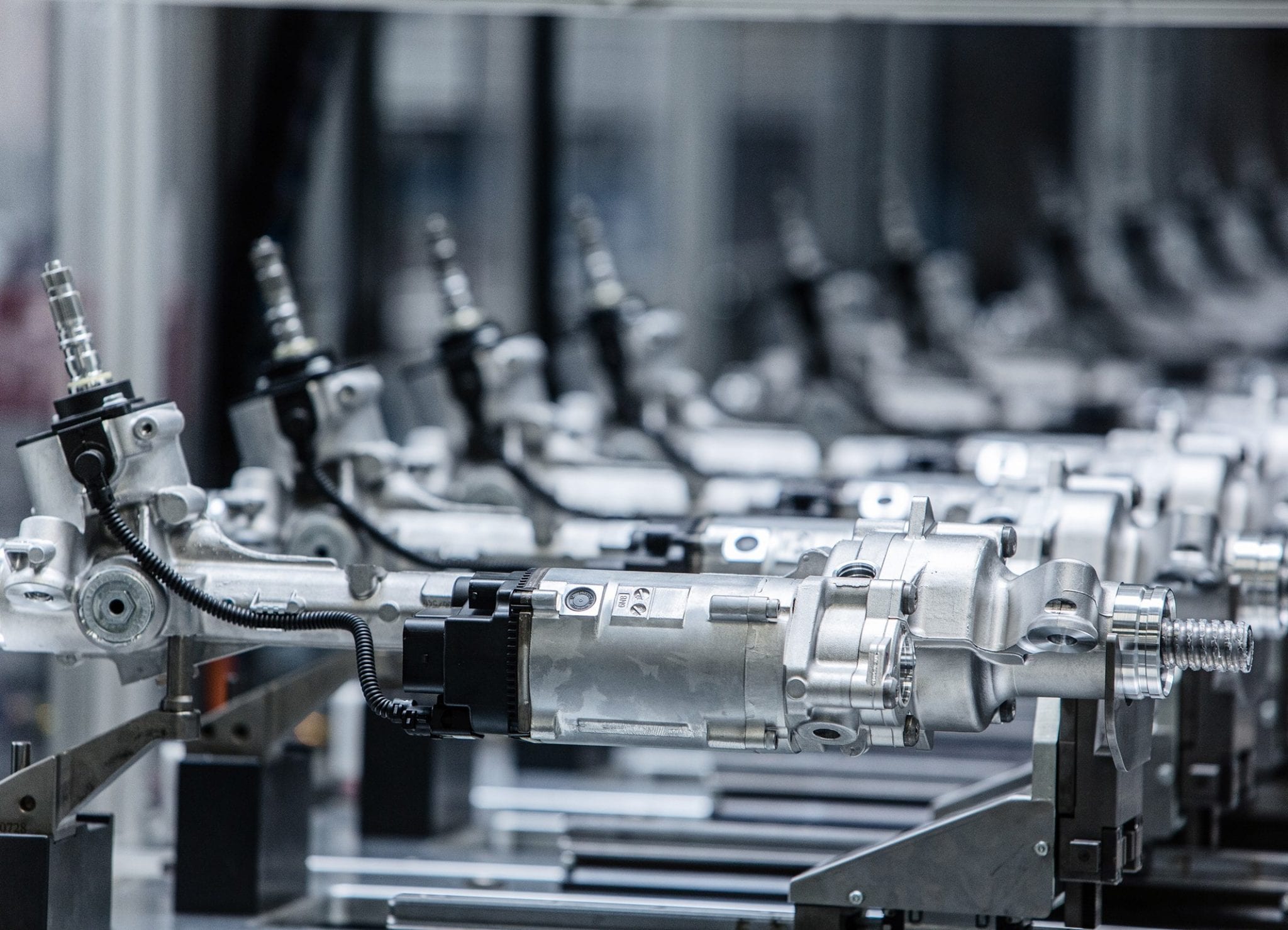
    The Bosch plant will make specialist power-management chips and Application Specific Integrated Circuits (ASICs) that are designed to carry out a single task, such as triggering a car’s automatic braking system.

    It will not however address shortages of products like microcontrollers which have forced automakers to halt production and are expected by industry leaders and analysts to extend into next year.

    “The fab (chip fabrication plant) may help to insulate Bosch and its key customers somewhat,” said Asif Anwar at Strategy Analytics. “But it is unlikely to serve as a gap filler to the current shortages being experienced in the automotive market.”

    The Bosch plant, which received 200 million euros ($243 million) in state aid under a European Union investment scheme, will start making chips for power tools in July, with output of automotive chips to follow from September.

    “The state-of-the-art technology in Bosch’s new semiconductor factory in Dresden shows what outstanding results can be achieved when industry and government join forces,” said European Commission Vice-President Margrethe Vestager.

    Kroeger said Bosch supported a broader strategic push by Brussels to revive Europe’s semiconductor industry. A recently unveiled plan targets doubling the region’s share of global chip production to 20% by 2030.

  • Vingroup sets up drug company

    Vingroup sets up drug company

    Vietnam’s largest private company, Vingroup, has established pharmaceutical company Vinbiocare with a charter capital of VND200 billion ($8.6 million).

    Its focus will be on medicine, vaccines.

    Vingroup owns 69 percent of Vinbiocare Biotechnology JSC, its formal name, which is headquartered in Hanoi, while Phan Quoc Viet, CEO of tech firm Viet A Technology Corporation, owns 30 percent. The remaining 1 percent is held by an individual investor, Phan Thu Huong.

    Mai Phuong Noi, deputy CEO of Vingroup, is its chairwoman.

    Vingroup entered the pharmaceutical industry in 2018 by establishing Vinfa JSC and setting up a plant in Gia Binh District in the northern Bac Ninh Province.

  • DBS Kicks Off Business at Chinese Securities JV

    DBS Kicks Off Business at Chinese Securities JV

    DBS’ securities joint venture in China will officially commence business operations after receiving its license from the mainland regulator.

    Securities joint venture DBS Securities (China) will kick off operations, according to a statement, effective immediately after receiving its securities business license from the China Securities and Regulatory Commission.

    The joint venture will operate brokerage, securities investment consulting, securities underwriting and sponsorships, as well as proprietary trading.

    DBS joins other global banks to capitalize on China’s market-opening especially with regards to the securities business where the likes of J.P. Morgan and Goldman Sachs are seeking to obtain full ownership of their joint ventures.

    Today, DBS Securities is honored to become the first Sino-Singapore securities joint venture, said DBS group chief executive Piyush Gupta. We hope to continue to facilitate China’s economic growth and look forward to contributing to its ‘Dual Circulation’ strategy.

    DBS Securities currently has a registered capital of 1.5 billion yuan ($230 million) and is majority-owned by DBS (51 percent). Other shareholders include Donghao Lansheng Investment Management (24.67 percent), Shanghai Huangpu Investment Holding (13.33 percent), Shanghai Huiyang Asset Management (6.5 percent) and Shanghai Huangpu Guidance Fund Equity Investment (4.5 percent).

  • Singapore Fintech Gets Digital Bank License in Philippines

    Singapore Fintech Gets Digital Bank License in Philippines

    Unobank will be entirely regulated under the Digital Banking License framework in the Philippines.

    DigibankAsia, a Singapore-headquartered fintech, has become the first fintech to receive a license to operate a digital bank in the Philippines, it announced in a statement on Tuesday.

    Uno, which is operated by Singapore-based DigibankAsia, has been working with digital services and consulting firm Xebia, fintech software provider Backbase, cloud banking provider Mambu and Amazon Web Services, for its rollout in the Philippines, which has among the lowest banking penetration in Southeast Asia.

    The Bangko Sentral ng Pilipinas’ vision and foresight to digitize the local banking industry is future-forward and apt, because ultimately it will help align the Philippines as a modern banking center for the region, Manish Bhai, Unobank CEO, said in the announcement.

    According to Uno, it aims to bridge the financial inclusion gap to help pave the way for all Filipinos to have access to basic financial services, and hopes to extend its services to the rest of Southeast Asia and South Asia.

    Around 70 percent of the population of the Philippines is considered unbanked, while the country has very high mobile penetration, with 60 percent owning a smartphone and 67 percent of the population using the internet.

    The country’s banking regulator previously issued two digital banking licenses, which are conversions from previous bank licenses.

  • Standard Chartered Private Bank Loses Managing Director

    Standard Chartered Private Bank Loses Managing Director

    Standard Chartered has lost a managing director and senior private banker in Hong Kong.

    Phoebe Chow has left Standard Chartered Private Bank, sources said after more than four years with the British lender.

    When contacted, a spokesperson for the bank declined to comment on the exit.

    Chow joined Standard Chartered Private Bank in 2017 to oversee various client markets including the Philippines and Taiwan. Previously, she was a Singapore-based team leader at Credit Suisse where she worked for more than eight years.

    Standard Chartered’s private banking arm has effectively fallen under a new structure this year after it merged with retail banking and wealth management into a single consumer, private and business banking (CPBB) unit.

    Standard Chartered Private Bank was under the watch of CPBB chief executive Judy Hsu after its former head Dider von Daeniken left last year until the recent replacement hire of ex-UBS banker Raymond Ang two months ago.

  • Test allows YouTube viewers to watch in full-screen mode while also viewing comments

    Test allows YouTube viewers to watch in full-screen mode while also viewing comments

    Google has been testing a revision to the comments section for the Android version of YouTube. With the test, Google will allow YouTube users to view and scroll comments on Android even when in full-screen mode. Previously, in full-screen mode users would not be able to read comments because of the lack of room. With the update, the video is minimized allowing users to view the content while the comments appear on a sliding panel.

    After viewing all of the comments that a user might care to read, swiping down on the screen from the top of the banner will hide these comments and once they are swiped away, the screen returns to its usual size. Now we should point out that you can also read comments and view a YouTube video at the same time if you’re watching the video in portrait mode.

    If Google is pleased with the response from the testing and decides to roll this out to all Android-powered YouTube users, we might get a good idea what Android users think about certain content on the app. Instead of having to choose between watching full-screen YouTube content and getting to read comments from those fellow YouTube users, you’ll be able to do both. It’s called multitasking!

    Again, the testing by Google appears to be limited in scope, but we won’t object if you decide to see whether you and your phone are part of the test.

  • New Google Maps feature directs drivers away from accident-prone routes

    New Google Maps feature directs drivers away from accident-prone routes

    Earlier this year we told you that instead of giving you the fastest route between two points by default, Google Maps will suggest a route that is more environmentally friendly and uses less energy. Now, looking to prevent accidents, the Google Maps app will route users away from roads where drivers are known for braking hard which can lead to accidents. Google will then give other drivers an alternative route to prevent accidents from happening.

    If a driver on the road slams on his brakes, a car behind him might not be able to stop in time causing a chain reaction of crashes. Keeping users away from those roads were slamming on the brakes is typical, Google hopes to see fewer accidents, fewer injuries, and safer driving. According to Auto-Evolution, over 100 million hard-braking events can be eliminated a year if Google Maps directs drivers to take safer routes.

    Google says, “For example, if there’s a sudden increase in hard-braking events along a route during a certain time of day when people are likely to be driving toward the glare of the sun, our system could detect those events and offer alternate routes.” The new feature will be available on both the Android and iOS versions of Google Maps.

    To determine which roads are dangerous because of drivers who are braking hard, Google turns to sensors that are placed inside drivers’ mobile devices. Accelerometers and gyroscopes can spot areas of the road where there is sudden deceleration pointing to hard braking. But even Google has to admit that just relying on sensors can lead to a false alarm.

    Slamming a phone into a cup holder can create a false alarm and Google Maps might read that sudden stop as a car whose driver just slammed on the brakes. To improve the accuracy of the feature, Google turns to AI and analyzes Google Maps to see whether the driver slammed on the brakes along the route that was taken. Google can also analyze the actions taken by other vehicles taking the same road at the same time in order to determine the reason why a driver slammed on the brakes.

  • Ride-hailing platform Emddi raises $2 mln

    Ride-hailing platform Emddi raises $2 mln

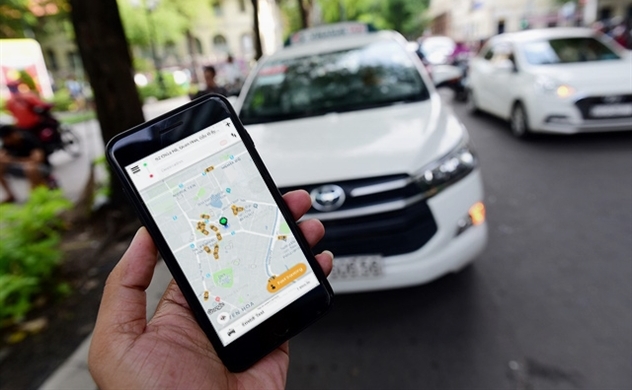
    Vietnamese ride-hailing platform Emddi has raised $2 million at online fundraising event Virtual Investment Day hosted by venture capitalist ThinkZone Ventures.

    The fund will be used to invest in human resources and expand its market share, Emddi spokesperson said.

    The company had completed last year its Series A funding round, led by ThinkZone Venture. The amount of investment raised was undisclosed.

    It also reached a cooperation agreement with ride-hailing firm Be Group and Vietnam Taxi Alliance in April as part of efforts to increase its market share.

    Emddi is a ride-hailing application developed in 2016 by scientists of Vietnam National University’s Centre for Information Technology. It provides a ride-hailing platform for transporting companies, allowing them to set their own prices and types of services. The platform receives ride requests from both ride-hailing orders on the application and phone calls to the transporting firms’ switchboard.

    It allows customers to access the services of various transporting firms with one application.

    Emddi currently operates in over 40 cities and provinces in Vietnam and Laos with 30,000 drivers. It provides car-hailing services and two additional services in Hanoi – ride-hailing service to airports and round-trip transport between Hanoi and other provinces.

    The application allows cashless payment through e-wallets like VNPay, MoMo, Viettel Pay and Mobile Banking.

    It plans to expand to motorbike-hailing service once its car-hailing has developed its market position, said its representative Le Van Nam. It is currently focusing on car-hailing since it does not have enough resources, he added.

    Emddi expects Vietnam’s ride-hailing industry to grow by 16 percent to $4 billion in the next five years.

  • Vietjet raises $43.6 mln from bonds

    Vietjet raises $43.6 mln from bonds

    Budget airline Vietjet has raised VND1 trillion ($43.61 million) from a domestic company to expand operations amid the Covid-19 pandemic.

    The bonds are without collateral with a maturity of five years starting from May 24.

    Revenues in the first quarter fell 56 percent year-on-year to VND4.05 trillion. In the same period, the company reaped post-tax profit of VND123.32 billion.

    The profit came from its other investment to make up for the loss in its main business that is taking hits from social distancing.

    It managed to lower operating costs by half and sales and administration costs by 39 percent.

  • Bamboo Airways to launch US transit flights

    Bamboo Airways to launch US transit flights

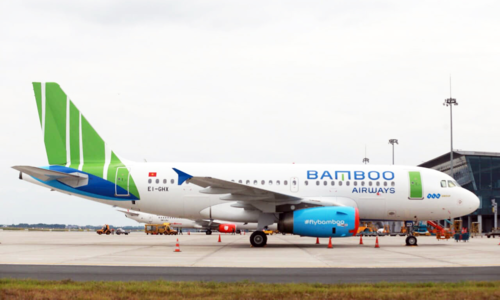
    Private budget carrier Bamboo Airways plans to open flight routes to the U.S. with transit in Taiwan or Japan starting Q3.

    The airline has proposed to the U.S. Department of Transportation that is allowed to operate regular connecting flights – four to seven a week – carrying passengers and goods between Hanoi and HCMC to Los Angeles and San Francisco. The flights will have one transit point at Taiwan’s Taipei, or Japan’s Osaka or Nagoya.

    The flights would use the Boeing 787-9 Dreamliner aircraft.

    The proposal marks a change in plans because the carrier had been hitherto mentioning plans to launch direct flights between Vietnam and the U.S. It had acquired last month slots to operate regular direct flights from HCMC to San Francisco and Los Angeles starting September 1.

    The carrier is rushing to complete the final steps in the process of building its personnel apparatus, including pilot and flight crew training, for the direct flights, it had said.

    Bamboo Airways chairman Trinh Van Quyet had said the airline is considering an initial public offering of shares in the U.S. this year to raise $200 million.

    The IPO offering a 5-7 percent stake in the company is also expected to launch in Q3.

    It plans to expand its fleet from 30 aircraft to 40 this year and launch flights to other new destinations like Australia, Germany, Japan, and the U.K. if the Covid-19 pandemic is brought under control.

    It currently flies 60 domestic routes.

    Last year, it carried over seven million passengers to account for a 20 percent market share, and hopes to increase it to 30 percent this year.

    The carrier’s pre-tax profit last year rose by 30 percent year-on-year to VND390 billion ($17 million). Its total assets value at the end of 2020 was nearly VND13.4 trillion.

  • Vietnam stock market posts world’s highest gains

    Vietnam stock market posts world’s highest gains

    Vietnam’s benchmark VN-Index has surged 34.51 percent in the first half of this year, marking the highest increase in the world.

    Abu Dhabi was second with its stock market rising 33.06 percent, followed by Austria with 32.65 percent, according to China-based stock database StockQ.

    With an increase in five consecutive sessions in the past week, VN-Index reached 1,374.05 points last Friday, up 4.06 percent from a week earlier. Vietnam ranked third among the most active markets in the past week after Argentina and Hungary, according to the Chinese stock database.

    Abundant cash flow, constantly increasing number of new investors, and immediate measures to reduce congestion has propelled the stock market.

    The number of new investors entering the stock market in May scaled a new monthly record, with over 113,000 new trading accounts opened.

    The VN-Index’s continuous growth has broken most forecasts made by domestic securities companies.

    Citing geopolitical risks and complicated developments of the Covid-19 pandemic, the Viet Dragon Securities Company (VDSC) had forecast that the VN-Index could reach a high of 1,272 points, equivalent to a year-on-year increase of about 15 percent.

    Other securities firms like Ho Chi Minh Securities Corporation (HSC), Vietcombank Securities (VCBS) and Viet Capital Securities (VCSC) made similar forecasts of the index reaching 1,250-1,280 points.

    The index has surged rapidly, pushing the price-earnings (P/E) ratio to 18.8. While this figure is still much lower than other Southeast Asian countries, including the Philippines, Indonesia and Thailand, it shows Vietnam’s stock market is coming of age.

    In a newly released strategy report, VNDirect Securities said: “The market is no longer undervalued but also not too high, meaning that businesses need more time to improve their results and pull the valuation ground to a more attractive level.”

  • Beyond Meat and Coles launch plant-based meatballs

    Beyond Meat and Coles launch plant-based meatballs

    Beyond Meat has partnered with Coles to bring its plant-based meatballs into Australia.

    Beyond Meatballs will be sold across more than 300 Coles outlets with an RRP of $15. The launch comes at a time when the country is experiencing a rising demand for plant-based products.

    “We’ve seen demand for plant-based meat continue to grow as consumers look for new ways to incorporate plant-based meat options into their diets,” said Ihab Leheta, VP international business development at Beyond Meat.

    “The launch of Beyond Meatballs in Australia marks a new milestone towards our goal in making great-tasting, nutritious and sustainable plant-based meat more accessible to everyone,” said Leheta.

    Beyond Meatballs will join the brand’s existing plant-based products sold in Australia, Beyond Burger and Beyond Mince. Beyond Meat first launched its products in the country in 2018 in partnership with Coles.

  • Bank Jago Partners Mambu and Google Cloud for Digital Bank

    Bank Jago Partners Mambu and Google Cloud for Digital Bank

    The strategic partnership allows the bank to operate in the cloud in Indonesia, where banking data must remain in-country, according to an announcement this week.

    The digital bank will use Mambu’s SaaS banking platform and Google Cloud to offer new services to meet the needs and demands of Indonesian customers.

    Bank Jago launched its smartphone app in April 2021 in Indonesia, home to the fourth-largest unbanked population globally.

    Its service offerings include everyday transactions and payments, and the bank has plans to branch out into SME lending.

    Bank Jago believes that technology is not only providing new experiences to its customers, but it also enables the bank to operate efficiently, and to constantly create innovative breakthroughs, Kharim Siregar, Bank Jago president director, said in the announcement

    Formerly known as Bank Arto, Bank Jago is backed by the likes of super app Gojek, which recently increased its stake in the lender, as well as Singapore state investor GIC.