Tag: asia

  • Vinhomes revenues double, but profits sharply down

    Vinhomes revenues double, but profits sharply down

    Property giant Vinhomes reported a 99 percent year-on-year rise in first-quarter revenues to VND12.9 trillion ($564.6 million).

    But pre-tax profits were down 30 percent to VND7 trillion due to rising selling expenses.

    At the end of last year, the company had claimed to have 16,800 hectares of lands for residential and commercial projects.

    It recently received approval from the government to develop the Dai An urban area in the northern province of Hung Yen, which will spread over 294 hectares, cost VND32.6 trillion and be completed in 2027.

    It plans to complete and hand over three other urban areas this year, one in Hung Yen and two in Hanoi.

  • Startups see investment rise by 34 pct

    Startups see investment rise by 34 pct

    Investment in startups jumped by 34 percent year-on-year in the first quarter to $100 million, with foreign investors being dominant. But the number of deals continued to fall, almost halving from 2019 to 16, according to a report by South Korean venture fund Nextrans. Foreign investors outperformed their local counterparts with nine deals, it said.

    Seed funding and series A investment, the first two stages, remained dominant, accounting for 70 percent of the deals. Fintech once again led with four of the 16 deals, followed by logistics, hospitality and real estate.

    Vietnam is expected to grow at the fastest rate in Southeast Asia in terms of digital financial services revenues in the next five years, reaching $3.8 billion by 2025, the report said. Other sectors such as e-commerce and medtech are also expected to boom in the coming years, it added.

    The most notable deals in the first quarter included an investment of $2.6-million from a group of investors led by Singapore venture capital firm Jungle Ventures in electric motorbike brand Dat Bike, and a $1 million by investment fund AppWorks in healthcare service booking platform Docosan.

    A venture capital fund alliance comprising 17 investment companies are committed to investing $800 million in Vietnamese startups in 2021-25.

    The government has also been making efforts to support startups, with former Prime Minister Nguyen Xuan Phuc approving the National Digital Transformation Program in June last year.

    Startup events have been organized to help new companies promote their ideas and connect with potential investors, attracting thousands of participants.

  • OCB shares ‘undervalued,’ says bank chairman

    OCB shares ‘undervalued,’ says bank chairman

    Shares of OCB are undervalued by 25 percent, its chairman Trinh Van Tuan said at the private lender’s annual general meeting Wednesday.

    He said his assertion was backed by many stock brokerages that have suggested a price of VND30,000 ($1.31) for the OCB ticker, currently trading on the Ho Chi Minh Stock Exchange (HoSE) at VND24,000.

    A private bank usually has a price to earnings (P/E) ratio of 11, while that of OCB is less than 7, he said. The P/E ratio reflects how much investors are willing to pay today for future growth expectations.

    OCB listed on the HoSE on January 28 when the market plunged, pulling it down by 20 percent in the first session. The ticker has since recovered by 27 percent.

    The bank plans to pay dividends by shares with each shareholder allowed to buy 20-25 more shares for every 100 shares owned.

    It also wants to issue 70 million shares via private placements and five million shares to its employees. Several foreign investors have expressed interest in the bank since last year, Tuan said.

    The bank’s charter capital is set to rise by 32 percent this year to VND14.45 trillion ($627 million).

    Last year, the bank’s pre-tax profit surged 37 percent year on year to VND4.42 trillion. It targets a 25 percent credit growth this year, pending approval from the central bank.

  • VietinBank Securities expects surge in profits

    VietinBank Securities expects surge in profits

    VietinBank Securities targets pre-tax profits of VND180 billion ($7.8 million) this year, up 20 percent from 2020, as the stock market continues to rise.

    The company secured a $30-million loan from a consortium of four Taiwanese banks in March and another $60 million from Korea’s Woori Bank and Taiwan’s Fubon Bank and Cathay United Bank a month later.

    It is its highest profit target since 2017, with CEO Tran Phuc Vinh explaining that the low deposit interest rates which are diverting funds into the stock market, and the increasing number of new investors are the factors for the optimism.

    The loans provide it with funds for margin financing and investing in corporate bonds and certificates of deposit, Vinh said.

    It reported a 20 percent rise in revenues to VND610 billion last year and an 8 percent increase in pre-tax profits to VND151 billion.

    Vietnam’s benchmark VN-Index has risen 10.5 percent from the end of last year to 1,219.75 points Tuesday. Brokerage FPT Securities forecast that VN-Index could hit 1,351-1,400 points this year.

    The stock market saw nearly 258,000 new trading accounts opened in the first quarter, accounting for 65 percent of the figure recorded in 2020 as a whole, according to the Vietnam Securities Depository (VSD).

    This took the total number of accounts to nearly 3.02 million as of last month, equivalent to 2.8 percent of Vietnam’s population.

  • Airport ground services firm targets $4.1 mln profit

    Airport ground services firm targets $4.1 mln profit

    Its revenue target is VND795 billion, a 7 percent rise. The targets were announced at the company’s annual general meeting on Tuesday.

    It is set to benefit from the start of the new Vietravel Airlines by leading tour company Vietravel last January and the gradual resumption of international flights from July.

    “Many countries including Vietnam are considering issuing vaccine passports to resume international flights, which will enable the aviation industry to recover,” the company’s chairman Dang Tuan Tu, said.

    Last year the company reported revenues of VND746 billion, a 53 percent decline, and profits of VND88 billion, down 74.5 percent as international flights were grounded and tourism came to a standstill.

    The average number of flights it served per day last year was 70 percent down from the normal 350.

  • Consumer Confidence in Gold Returns

    Consumer Confidence in Gold Returns

    While gold investment demand fell in the first quarter, this was mitigated by the strength of retail purchases of bars and coins, as well as gold jewelry.

    Gold-backed exchange-traded funds saw 177.9 tons of outflows in the first quarter of 2021 – a 23-percent drop year-on-year – amid rising Treasury yields, according to the World Gold Council’s Gold Demand Trends Q1 2021 report, published on Thursday.

    At the same time, these outflows were mitigated by a 339.5-ton increase in retail gold purchases (36 percent y-o-y), influenced by price-driven «bargain-hunting» and widespread concern over growing inflationary pressures, the report said. Overall overall global gold demand from January to March was on par with the preceding quarter at 815.7 tons.

    We are beginning to see the green shoots of recovery, so there’s a natural pullback,» the World Gold Council’s Andrew Naylor said about the slowing pace of institutional investment in gold. However, he noted the ETF market is still buoyant, and that Asian ETFs have actually seen net inflows because of the stronger retail market participation in the region.

    The Singapore-based head of central banks and public policy noted that there is still a strategic case for investing in gold. «There is still a lot of uncertainty, and there is a likelihood of an inflationary environment with the extension of government balance sheets,» Naylor said.

    As for retail consumers, a more positive economic environment, coupled with a lower gold price, is prompting renewed interest, Naylor said. Bar and coin demand had its best quarter since 2016, growing 36 percent year on year, while jewelry demand enjoyed a post-Covid rebound of 52 percent.

    Naylor said that despite the growing interest in cryptocurrencies and digital assets among investors, he does not see them as competing as they play different roles in portfolios.

    Cryptocurrencies do have a role in the asset allocation mix at the moment, but they’re not gold. They’re a risky asset, and you would probably want to balance that with a risk mitigator such as gold, Naylor said.

    Naylor reiterated the case for investing in gold, whether in a high or low-interest rate environment: its role as a risk diversifier, unique demand profile, and how it helps risk-adjusted returns of a portfolio.

  • What Can Retailers Learn from the Online Casino Industry?

    What Can Retailers Learn from the Online Casino Industry?

    Since the start of the 2010s, in-person retail has been steadily eclipsed by online shopping. The comparison graph paints a damning picture for in-person retailers and shows just how quickly the internet overlapped them. Moving online isn’t specific to the retail industry, however. Other industries, such as the casino one, have also managed to thrive online. What can the online casino industry show retail about its inevitable move online?

    Niche Nature of the Internet

    One of the main benefits of shopping online was that more niche retailers could thrive. Those offering something that appeals to large groups who are spread out across the country found their target audience. If they existed in one city, they may not gain the footfall necessary to remain viable. Spreading out online opens the potential customer base and allows niche retailers to survive.

    The online casino industry itself reflects the niche nature of internet retailers. Most sites offer a selection of slot games. Some of these are appealing and popular, such as those based on franchises. Others are more esoteric, so would appeal to a smaller group of people. But as the games are inexpensive to create and can be marketed to a wide range of people, it is worthwhile to offer something niche. Niche customers are often willing to spend more and be more loyal than those who can find what they want anywhere they go.

    Source: Pexels

    Convenience of the Internet

    The internet also makes shopping far more convenient. No matter how retailers square it, it’s easier to order something online while sitting on the bus or waiting for dinner to cook than it is to visit a multitude of stores.

    The online casino industry has similarly embraced convenience for its customers. Being able to engage on mobile devices as one would on a desktop device means that there are a wider range of customers to use the online casino sites. In an age where everyone is time-poor, anything that purports to save users’ time is considered a plus.

    The Bargains of the Internet

    The internet has a wider range of retailers and therefore they are more competitive with one another. The customer ends up benefitting as their custom is fought over. This usually looks like a slew of bargains, special offers, and retailers attempting to price each other out. The reason the internet allows this better than physical retailers is simply because it’s easier to compare prices when you can just flick to another tab. Plodding to another store to see if you could save marginal amounts just isn’t done.

    The online casino industry uses a similar tactic to appeal to increasingly savvy customers. As we can see with the welcome bonus offered by Royal Panda, for instance, customers are enticed to use the site. With a bonus of no deposit cash and free spins on certain slot games, those who are wanting to play anyway would be swayed by the generosity. The site will then develop goodwill with the customer which can be leveraged into a strong relationship.

    The Future of Retail

    Retail doesn’t have to just throw its hands in the air and give in to the overwhelming surge of the internet. Some things cannot be purchased online, and people do still enjoy physical experiences. In the UK, discount retailer Primark doesn’t offer online sales, so its stores are always busy. It has no closer rivals so can do so. Wedding clothes and things that provide a tactile experience, such as shoes, are also better bought in person. So, retail should consider excelling where the internet can’t, so all aspects of the industry are fulfilled.

    The internet makes shopping easier and online casino continues to thrive. The latter can give the former influence in how it has transformed a physical industry into one that does best online. Retailers should look to a hybrid approach of the two to succeed in the future

  • Japan’s retail sales rise at fastest pace in five months

    Japan’s retail sales rise at fastest pace in five months

    Japanese retail sales rose 5.2 percent year-on-year in March, representing the fastest pace of growth in five months as consumer demand returned after suffering a huge hit due to the coronavirus pandemic last year, according to a report.

    The world’s third-largest economy’s retail sales gains beat the median market forecast of 4.7 percent growth with the fastest rise since a 6.4 percent jump in October and the first positive growth seen in four months. Compared with the previous month, retail sales rose 1.2 percent on a seasonally adjusted basis.

    Fashion items were one of the categories driving growth in March and department stores saw particularly strong gains, posting a 19.3 percent jump in sales.

    This said, Japan’s slow vaccine rollout and a resurgence of Covid-19 cases, leading to new state of emergency declarations last week, are expected to weigh on consumption in the near term.

  • Gucci, Facebook file joint lawsuit against alleged counterfeiter

    Gucci, Facebook file joint lawsuit against alleged counterfeiter

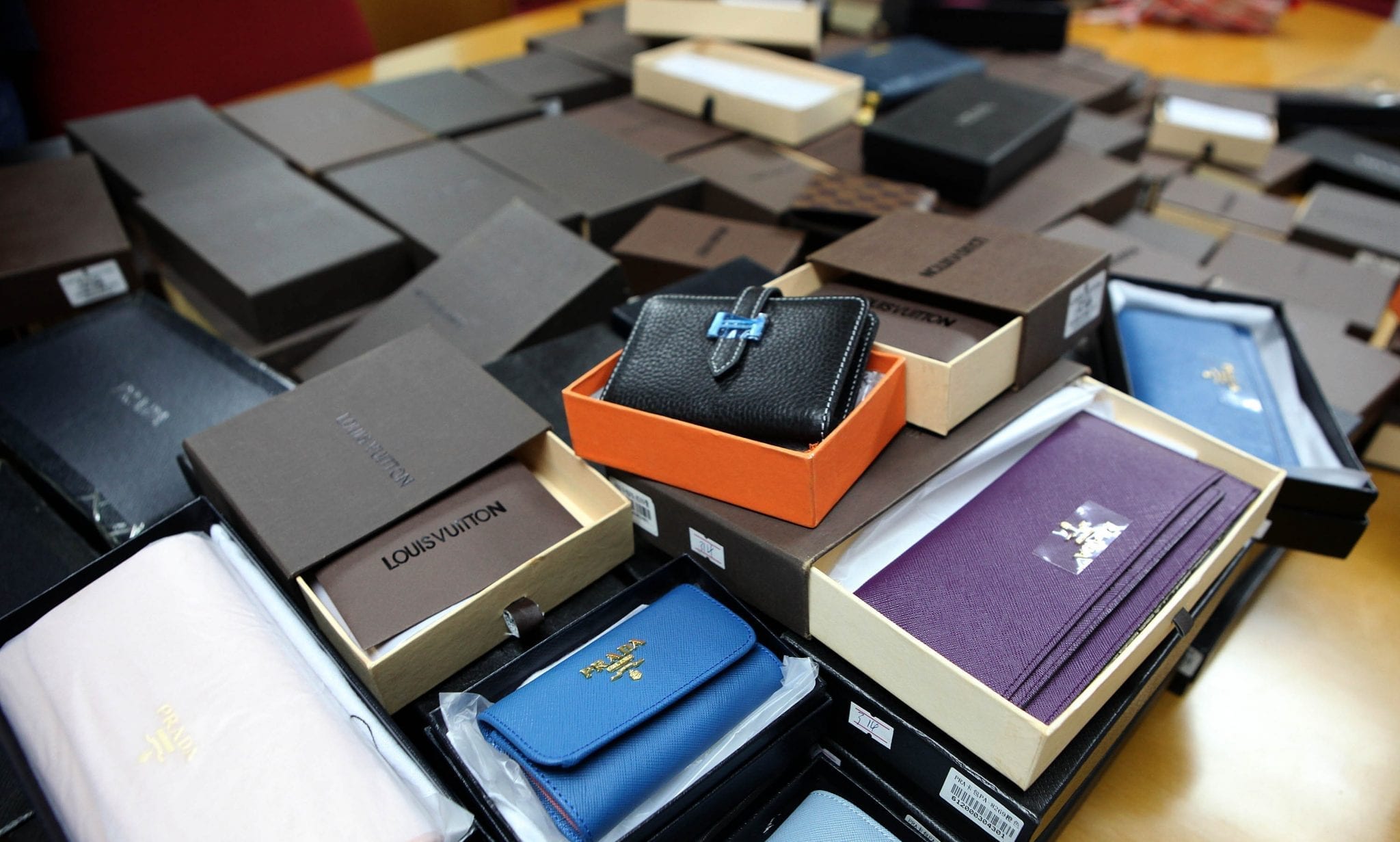
    Gucci and Facebook have filed a joint lawsuit in California against an individual who allegedly used the U.S. group’s social media platforms to sell fake Gucci products, the two companies said on Tuesday.

    The initiative, a first of its kind for both Gucci and Facebook, is the latest example of an Internet giant joining forces with a luxury label to fight the proliferation of counterfeit goods being sold via social media.

    Amazon has filed similar lawsuits over the past year with Valentino and Ferragamo.

    In a statement, Gucci – the profit engine of French group Kering – and Facebook alleged the unidentified defendant used multiple Facebook and Instagram accounts to promote her international online counterfeit business.

    Online sales of luxury handbags, shoes, and garments have boomed over the past year as the coronavirus pandemic forced retailers to temporarily close their stores.

    Groups like Facebook are keen to make a bigger push into the luxury market and “social commerce”, but to do so they need to show that their platforms are not a conduit for counterfeiting and are safe for brands, some of which are reluctant to sell their products through third-party players.

    “More than one million pieces of content were removed from Facebook and Instagram in the first half of 2020, based on thousands of reports of counterfeit content from brand owners, including Gucci,” the statement said.

    It added that in 2020 alone the actions of Gucci’s in-house intellectual property team had resulted in four million online counterfeit product listings being taken down, the seizure of 4.1 million counterfeit products, and 45,000 websites, including social media accounts, being disabled.

  • Yum China sales, profit soar on fewer store closures

    Yum China sales, profit soar on fewer store closures

    Without the negative impact of the COVID-19 pandemic to hold it back at this year’s beginning, Yum China Holdings reported improved results for the first quarter of 2021. The Shanghai-based fast-casual company — a spinoff from Yum! Brands that hold franchises for Pizza Hut, Taco Bell, and KFC, along with a number of regional brands — beat analyst expectations at both the top and bottom lines.

    According to reports aggregating the consensus estimates of multiple Wall Street analysts, Yum China registered a 6.2% positive surprise, $150 million above the predicted $2.41 billion in sales. The actual revenue of $2.56 billion surged 46.3% year over year, without the pandemic causing dining shut down as was the case in early 2020. Adjusted earnings per share, or EPS, came in at $0.54, surpassing the forecast of $0.44 EPS for a 22.7% positive surprise.

    With growth “driven by lower commodity prices and productivity gains” along with far fewer restaurant closures and generally improved conditions, Yum China said in its press release that same-store sales rose 10% overall year over year. Pizza Hut saw the biggest same-store sales increase (38%), while a 5% rise occurred at KFC.

    CEO Joey Wat says Yum China is taking measures designed to “accelerate our growth in the years ahead,” which include strengthening its supply chain, integrating more automation and digital into its processes, and acquiring a 5% stake in its most important chicken supplier. Digital orders at Pizza Hut and KFC accounted for 84% of sales during Q1, while delivery orders added up to 29% of the total. The switch to digital and the growing use of ordering kiosks mirrors Yum! Brands’ recent opening of its first American digital-only Taco Bell in Times Square.

    Investing legends and Motley Fool Co-founders David and Tom Gardner just revealed what they believe are the 10 best stocks for investors to buy right now… and Yum China Holdings, Inc. wasn’t one of them.

    The online investing service they’ve run for nearly two decades, Motley Fool Stock Advisor, has beaten the stock market by over 4X.* And right now, they think there are 10 stocks that are better buys.

  • Luxury Brand Genesis Gears Up To Make Its Foray Into The European Market

    Luxury Brand Genesis Gears Up To Make Its Foray Into The European Market

    Last year in September, Hyundai Group’s premium car brand- Genesis hired Dominique Boesch as its first Managing Director for the European market and now the company is all set to make its foray into the market. Genesis took to Twitter through its European handle to share the news and the tweet read, “The Genesis journey continues. All roads lead to Europe. Get ready to join us on this thrilling new adventure.”

    Dominique Boesch had joined Genesis from Audi AG where he held the role of Sales Director in France before serving as Managing Director in Korea, Japan, and China, respectively, over his twenty-year tenure. After more than 10 years in Asia, Boesch returned to headquarters as head of European sales, and, most recently, he was leading the brand’s future Global Retail Strategy.

    In Europe, Genesis will go against the likes of Mercedes-Benz, BMW, Audi, and Jaguar Land Rover among others. Genesis hasn’t revealed any plans about its product line-up or models it will launch initially to start its operations with. It also showcased the electrified G80 at Auto Shanghai 2021 and it will be the brand’s first EV. It will go on sale alongside the conventional G80, GV70 crossover, and the GV80 SUV in the global markets, and the same is expected even in Europe.

  • Volkswagen Begins Construction Of New Electric Plant In China

    Volkswagen Begins Construction Of New Electric Plant In China

    Volkswagen Group China has begun construction of an all-new MEB plant at Volkswagen Anhui recently. As the third of the Group’s pure-electric vehicle manufacturing facilities in China, following completion of the Anting (SAIC VW) and Foshan (FAW-VW) plants, the Volkswagen Anhui plant will be powered by green energy from day one. Due for completion mid-2022, the plant is set for the start of production in the second half of 2023.

    By 2025, Volkswagen Group China plans to deliver up to 1.5 million new energy vehicles (NEVs) per year. Dr. Stephan Wollenstein, CEO of Volkswagen Group China, said, “As China is the world’s largest single market for NEV vehicles, we need to strengthen our local competence, and Volkswagen Anhui is a significant part of it. With the plant to be powered by green energy from day one, we are demonstrating our commitment to reducing carbon emissions beyond our fleet.”

    The new body shop will cover roughly 141,000 square meters and makes up part of the total project area, together covering around 500,000m2. The new plant will incorporate a number of energy-saving strategies as part of comprehensive efforts to reduce overall carbon emissions, including the adoption of low energy consumption production equipment. A supplier park for batteries and components is also planned for construction in the area.

    Volkswagen Anhui will have a staff of around 500 on board by 2025, with a focus on R&D and engineering innovations. Combining R&D, quality assurance, pre-sales manufacturing, and testing under one roof, Volkswagen Anhui will provide the Group with a faster time-to-market for new e-mobility products.

  • Ford Plans To Set Up A New Battery plant Near Detroit In 2022

    Ford Plans To Set Up A New Battery plant Near Detroit In 2022

    Ford is planning to open a battery development center near Detroit by the end of 2022 according to a report published by IANS. The American carmaker says that it wants to control the key technology for electric vehicles and the 2,00,000 sq.ft. will be equipped to design, test, and even for small manufacturing of battery cells and packs. The lab will also be used to develop electronic controls and other items and Ford is planning to move its operations in-house.

    Going ahead, the company wants to manufacture its battery packs on a large scale in a bid to make sure that enough batteries are manufactured to accelerate the transition from conventional combustion engines to electric vehicles. “We now see that the market is going to develop very quickly, and we will have sufficient scale to justify having greater levels of integration. We will no longer take an approach of hedging our bets and planning around the uncertainty of how fast that will play out,” Hua Thai-Tang, Chief Product and Operations Officer- Ford told IANS.

    The move comes at a time when the global auto industry is racing to control supplies including precious metals needed to make batteries and individual cells that form big battery packs to run as many as 300 new electric models coming out in the next two years. Ford’s new CEO – Jim Farley plans to take a turn from Ford’s previous path of buying technology and batteries from supply companies. That said, the company is still open to join hands with suppliers, universities and start-ups for the technology.

    Ford has already discussed the transition to battery power with the Biden administration. The company is already in a trade secret fight with its battery suppliers like SK Innovation, and LG Energy Solution. The U.S. International Trade Commission decided in February that SK stole 22 trade secrets from LG Energy and so it should be barred from importing, making or selling batteries in the United States for 10 years. So the decision gave SK four years to make batteries for Ford. SK is in contract with Ford to make batteries for an electric version of Ford’s F-150 pickup, the nation’s top-selling vehicle. The dispute was settled earlier this month when SK Innovation agreed to pay $1.8 billion along with an undisclosed royalty.

  • Mercedes-Benz EQS Listed On India Website Ahead Of Launch

    Mercedes-Benz EQS Listed On India Website Ahead Of Launch

    The all-new Mercedes-Benz EQS made its global debut earlier this month. Interestingly, the electric sedan now has been listed on the official website with the ‘Coming Soon’ title, which suggests that it could be launched in the Indian market this year. The model page listing has also revealed several key details and specifications of the electric vehicle ahead of its launch. It will be the second all-electric model from Stuttgart-based luxury carmaker, after the EQC electric SUV that was launched last year.

    As per the listing on the official website, the luxury electric sedan will be available in two trims – EQS 450+ and EQS 580 4MATIC. The EQS 450+ is the base variant that features a single electric motor on the rear axle for a total of 328 bhp and 568 Nm of peak torque. The EQS 580 4MATIC is an all-wheel-drive (AWD) range-topping trim and gets an electric motor on both front and rear axles. Total output in combination here is 516 bhp and a whopping 855 Nm of peak torque, good for a 4.1 seconds sprint to 100 kmph from a standstill.

    The S-Class of electric sedans is based on the EQS Vision concept which was showcased by the carmaker in 2019. It will be placed at the top in Mercedes-Benz’s EQ line-up, which currently includes EQC, EQA, and the EQB globally.

    Aesthetically, the electric sedan comes with all characteristics of the S-Class sporting LED headlamps with integrated LED DRLs, connected by an LED strip, and LED taillights, again connected by an LED strip. On the inside, it showcases the new 56-inch MBUX Hyperscreen which is essentially a massive glass dashboard incorporating three individual information displays – an instrument cluster, a center infotainment system, and an auxiliary passenger-side touchscreen.

    The Mercedes-Benz EQS comes with a 107.8 kWh Lithium-Ion battery, promising a 770 km WLTP cycle certified drive range on a full charge. However, the carmaker has not provided detailed variant-wise range options. The car comes with a standard onboard charger of 11 kW with an optional 22 kW charger. The EQS can be charged from 10 to 80 percent in 35 minutes using a 110 kW DC fast charging, while a 240-volt household wall charger will take 11 hours for the same range.

  • Spotify announces paid subscription platform

    Spotify announces paid subscription platform

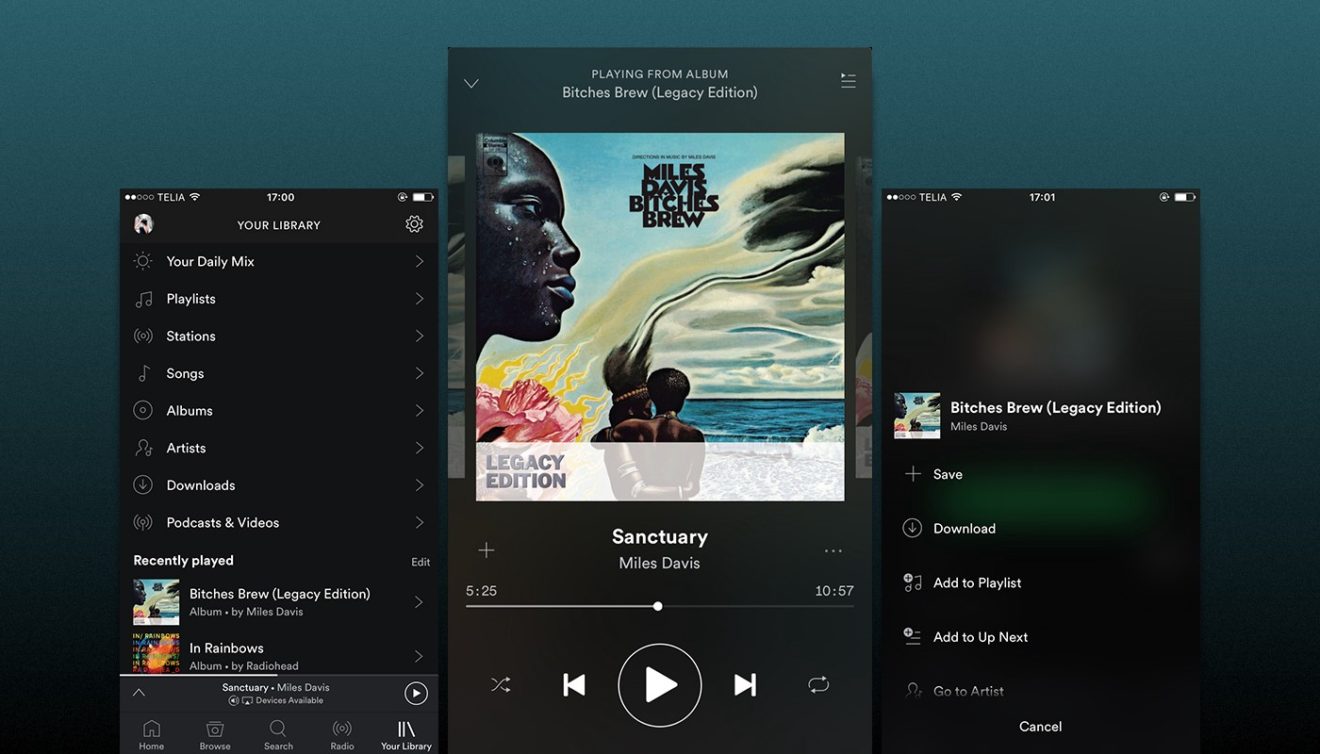
    Last week we reported on Spotify’s intentions to release an alternative to Apple’s paid podcast subscriptions. Now, the platform is real and soon you’ll be able to pay extra for extra podcast content.

    Apple got on this wagon first, but the offer from Cupertino is far from practical for podcasters. Tim Cook and company will take a 30% commission for the first year, and 15% for the second, in addition to the $20 annual fee for membership. While this is fine for big organizations, small creators may struggle to make money from the scheme.

    Spotify’s offer flips Apple’s business model on its head. It won’t take a cut from creators – at least for the first two years. This excludes transaction fees. After the first two years of the partnership, Spotify gives a word to take only five percent of the revenue.

    The program will be accessible and available through Anchor (app & website). Anchor is the podcast production platform that was acquired by Spotify about two years ago. It allows you to take your podcast from an idea to a finished product, all with just a smartphone.

    Now it will also allow creators to share exclusive content for subscribers. This can in the form of a brand new episode or early access. If you aren’t hosting your podcast on Anchor, don’t worry – Spotify promises to open up the platform for those who host their podcasts elsewhere. More details will be available soon.

    So, what about listeners? The way you’ll be able to recognize paid content is by the lock icon next to the episode (if you aren’t subscribed). This content will still be discoverable, similar to any other podcast episode, and it’ll appear on the feed. From what we understand, the only way to start your subscription is to click on a link found on the show notes on Spotify or head directly to the podcast page on Anchor and sign up.All of this will let you support your favorite podcasters, making sure the money goes directly to them. Then, Spotify promises to “maximize (creators) subscription audience and grow it from their existing listener base”.

    Spotify is going to support independent podcasters to get started with the subscription platform. NPR is on board with some ad-free content for paid subscribers. How I Built This with Guy Raz, Short Wave, It’s Been a Minute with Sam Sanders, Code Switch, and Planet Money will be available as soon as May 4.

    On the other hand, Apple’s version is expected to debut in May too. The tech giant hasn’t announced any exclusive shows or content just yet, but seems to have an advantage when it comes to global availability, as its platform will be available in 170 countries. Spotify’s offer will be available only in the US for now. Plans for global expansion are already on the table, but they’ll take a few months.

    For listeners, you should bear in mind that Spotify recently increased some of the Premium prices for a few regions of the world. Spotify family is increasing from $14.99 to $15.99 per month in the US. The rest of the Premium offers remain untouched as of today.

    However, UK-based users aren’t so fortunate. Spotify Student goes from £4.99 to £5.99 per month, Duo subscription from £12.99 to £13.99 a month, and Spotify Family plan (six accounts) goes from £14.99 to £16.99 a month.

    Ireland and a bunch of countries in Europe are also part of the price increase. Student Premium goes up by €4.99 to €5.99, and Due goes up from €11.99 to €12.99. The Family plan in Europe goes up from €14.99 to €17.99 per month. Countries in Asia and South America will also be affected.

    The changes come into effect on April 30. All existing Spotify subscribers in the US, Europe, and UK users of Spotify will have a one-month grace period before prices are automatically increased, meaning if you are already subscribed, the new prices will affect you from June, not May.