Tag: asia

  • Walmart’s Flipkart expands grocery sales to more Indian cities

    Walmart’s Flipkart expands grocery sales to more Indian cities

    Walmart-owned Flipkart will sell groceries online in more Indian cities, as it seeks to compete better with Amazon and Reliance in an e-commerce market that has grown rapidly during the COVID-19 pandemic.

    Flipkart has already expanded online grocery sales to more than 50 Indian cities and intends to reach over 70 locations in the next six months, the company said in a statement on Tuesday.

    The Bengaluru-based firm said its grocery service had grown “exponentially” in the past year when many Indians began buying essential supplies online due to the health crisis.

    “Grocery continues to be one of the fastest-growing categories,” said Manish Kumar, senior vice president at Flipkart, adding that the company had seen increased demand for the service from smaller cities in 2020.

    Reliance Industries-owned JioMart last year became the latest big entrant to India’s e-grocery market, a sector that also includes Amazon.com Inc, BigBasket and several smaller players. Indian conglomerate Tata is reported to be buying a majority stake in Alibaba-backed BigBasket.

    Reliance, backed by India’s richest man, Mukesh Ambani, raised over $20 billion last year from global investors including Facebook and Alphabet’s Google for its digital arm, which is expected to support JioMart.

    India’s broader retail industry is also witnessing a high-stakes legal battle between Reliance and Jeff Bezos-led Amazon on the Future Group’s $3.4 billion sale of its retail assets to Reliance, which Future’s partner Amazon is contesting.

    Flipkart’s recent expansion has taken its grocery services to big cities including Kolkata, Pune and Ahmedabad, it said.

    “Grocery is the next big frontier for online shopping and is a key focus area for Flipkart to bring new customers online,” the company added.

  • Ex-Nokia and Apple camera expert joins Microsoft’s Surface Team

    Ex-Nokia and Apple camera expert joins Microsoft’s Surface Team

    Ex-Apple employee Ari Partinen announced on Twitter that he has joined the Microsoft Surface Imaging team. A well-known name in the mobile camera industry, he’s worked for Nokia from 2017 to 2014 as an Image Quality engineer and later as the Lumia Photography Lead. After that he was hired by Apple for their camera team as a Senior Imaging Engineer from 2014 to 2015 and a Senior Manager of camera validation and testing from 2015 to 2018.

    Ari Partinen has worked on some incredible camera performers in the past. His work on the Nokia 808 PureView and its Windows Phone successor, the Lumia 1020, is his most notable accomplishment. Both devices were innovators in the camera department with their 41MP cameras breaking the limits of how good a phone camera could be.

    Since leaving Apple, he has been working as a Senior Manager at AAC Technologies, an electrical and electronic manufacturing company, until now.

    The Surface lineup has not been the greatest in the camera department. The Surface Duo had a disappointing 11MP camera on the front and none on the back. The device also had some other major flaws in the software, performance and battery departments. The Surface Duo’s starting price of $1,199 and the lack of 5G support didn’t help the company’s new mobile endeavor either.

    With the dual-screen device’s successor already in development, Ari Partinen could bring big improvements in camera performance in the Surface Duo 2. It is not yet clear if he is going to work only on the Duo or also on other Surface devices, like the successors to the well-known Surface Pro 7, Surface Laptop 3 and Surface Book 3 devices.

    The Nokia devices that Ari Partinen has worked on had innovative cameras, more megapixels and greater zoom performance. These achievements meant a jump in picture quality, especially in pixel quality, zooming and low-light performance. Many of the concepts these cameras experimented with are commonplace in high-end phones today.

    The Surface Duo 2 is expected to improve on its predecessor’s shortcomings, like the poor camera, software and battery performance. The lack of 5G is also expected to be addressed in the next generation of the device. It is not yet known when the device is going to be announced.

  • WhatsApp now lets you import third-party sticker packs

    WhatsApp now lets you import third-party sticker packs

    For those of you who will agree with WhatsApp’s updated privacy policy so that you can still be able to use the app, here is one new feature that’s coming to you in the next few days. For a very long time, WhatsApp only allowed customers to use the sticker packs available through its app.

    However, that’s about to change very soon, as WhatsApp is now rolling out a new feature that will allow users of its app to import third-party sticker packs. WaBetaInfo discovered that WhatsApp is testing such a feature many months ago, and now they’re reporting that the company is finally rolling it out to users in select countries.

    For the time being, the option to import third-party sticker packs is only available in Brazil, India, and Indonesia, but you have to update WhatsApp to version 2.21.5.6 Android beta and 2.21.40 iOS. It’s probably going to be made available in other countries in the coming days, so be patient if you’re not living in one of these countries.

  • FJ Benjamin and Lazada Singapore Sign MOU for Strategic Partnership to Boost Online-Offline Sales

    FJ Benjamin and Lazada Singapore Sign MOU for Strategic Partnership to Boost Online-Offline Sales

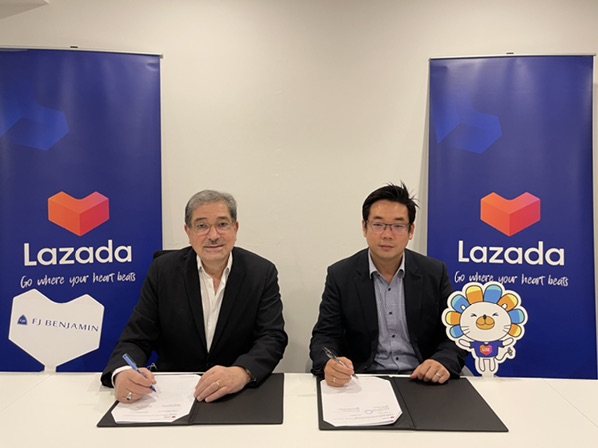
    FJ Benjamin Holdings (FJB) and leading eCommerce platform, Lazada Singapore, today signed a Memorandum of Understanding (MOU) to forge a strategic partnership that aims to deliver the ultimate retail experience to customers across all channels and devices.

    The proposed partnership will tap Lazada’s technical and online capabilities, and eCommerce platform management expertise, and leverage FJB’s experience in fashion brand management and physical store operation, to boost the eCommerce performance of FJB’s stable of brands in Singapore, Malaysia and Indonesia, as well as to expand and incubate new FJB brands to eventually integrate brick-and-mortar and virtual stores.

    FJB will also discuss with brand principals opportunities for eCommerce in markets Lazada has a presence but where FJB does not, such as Vietnam, Thailand and the Philippines. Powered by Alibaba’s advanced eCommerce tools and systems, Lazada will develop new tailor-made solutions to deliver a truly omnichannel customer experience in managing the full online ecosystem of FJB brands across the markets.

    Group CEO Nash Benjamin said: “FJ Benjamin has been strategising and planning our omnichannel business model for some time now and this partnership with Lazada is intended to get us to where we want to be much faster and in a more cost-efficient manner. This will combine our respective capabilities to strengthen customer experience across brick and mortar and virtual channels.”

    Besides operating principal branded sites, it is also intended to host certain brands on LazMall as well as other regional sites, subject to principal approvals.

    “We are thrilled to be part of this new chapter with FJ Benjamin and value their trust in us,” said James Chang, CEO of Lazada Singapore. “Lifestyle, fashion and beauty are important pillars in our eCommerce plans and shoppers can now look forward to seeing more well-known brands and labels on our platform, for an integrated shopping experience. In the last year, Lazada has supported many businesses that adopted a multichannel approach to set up stores online and we know that our expertise in the eCommerce space will benefit and contribute to the success of a renowned brand like FJ Benjamin, and look forward to seeing positive results with them.”

    While some of the brands managed by FJB, including La Senza, Pretty Ballerinas and Petunia Pickle Bottom, are currently available on Lazada’s premiere shopping platform, LazMall, this is the first time both parties –  one, a traditional brick-and-mortar operator, and the other, the region’s leading eCommerce player – have come together to envision and execute a truly omnichannel model under which customers can control the buying process and enjoy a seamless shopping experience across multiple channels – brick-and-mortar, desktop, and mobile.

    Since the pandemic lockdowns last year forced FJB stores in Southeast Asia to shutter, the Group had secured principals’ approvals to pivot to eCommerce. It has ramped up its online presence from one brand, the cult British fashion label Superdry, to almost all its brands including Guess, La Senza, Casio, Rebecca Minkoff, Pretty Ballerinas, Airfree and Dr Barbara Sturm.

    The MOU states that  “the parties agree both physical stores and online stores are part of the retail ecosystem. With Lazada’s technical and online abilities and FJB’s experience in fashion and lifestyle brand management and physical store operations, this brings together a strong strategic partnership which leverages each other’s expertise to deliver an ultimate consumer experience.”

    Under the terms of the MOU, both FJB and Lazada will, within 90 days, work on a detailed action plan and a definitive agreement to move the partnership forward.

    Mr Benjamin said FJB will continue to take charge of all aspects of product assortment, brand management, pricing, promotions as well as key parts of logistics such as inventory and supply chain. The parties will jointly undertake online marketing and campaign strategies while Lazada will operate the online stores.


  • Apple is discovered fighting Arizona antitrust bill

    Apple is discovered fighting Arizona antitrust bill

    Recently, Apple thanked its lucky stars when North Dakota voted down a proposed bill that would have forced the company to allow 3rd-party payment processes for apps in the App Store. The bill’s objective is to let companies bypass Apple’s 15%-30% commission fee (like Epic Games did back in August, unsanctioned) on all applications and transactions on the platform. Apple has always stringently filtered the apps allowed in its store, on top of the commission which developers are calling “highway robbery.” The approval of this bill would give small businesses a much greater chance of survival, especially during the pandemic. However, the victory in North Dakota was only one small battle, and Apple’s fight is far from over.

    Not long after that, Minnesota introduced a similar bill, which Apple is currently lobbying against as well. And now, Apple has extended its efforts to Arizona—which hadn’t even introduced the proposed legislation officially yet before Apple came at them, torches and pitchforks waving. Apple and Google know well that if these bills are passed, they will lose billions of dollars which their duopoly has guaranteed them up until this point. According to them, these bills are “unconstitutional,” and Regina Cobb (the Arizona State Representative who introduced the bill) claims she is facing a nonstop onslaught from Apple and Google’s plethora of hired lobbyists over the past two weeks, as well as free-market groups and the Arizona Chamber of Commerce.

    Apple might be putting everything into fighting these small battles now, bill by proposed bill, state by state, but the deciding battle comes in May when the case between Epic Games and Apple goes to trial. If Minnesota and Arizona end up passing the bill, there’s a chance this (and consequent reactions) may affect the court’s decision, but it is not certain for now. Although much of the world is rooting for a future with a freer market, the North Dakota Senate voted off their proposed bill at a one-sided 36-11 ratio—so nothing is certain, and Apple certainly won’t stop fighting tooth and nail to keep its multi-billion-dollar app revenue from declining.

  • VinFast eyes global market, to open car plant in US

    VinFast eyes global market, to open car plant in US

    VinFast plans to set up an automobile plant in the U.S. as part of its strategy to start selling there in 2022, Bloomberg reported on Tuesday.

    The company, a subsidiary of conglomerate Vingroup, did not provide details about when it will be set up or where.

    Bloomberg quoted its CEO Thai Thanh Hai as saying: “VinFast’s vision is to become a global smart electric car company and the U.S. is one of the first international markets that we will focus on.

    “We will initially develop high-end models for the U.S.”

    The company also plans to open 35 showrooms and service centers this year in California state where it has received a license to test autonomous vehicles on public streets.

    Malaysian newspaper The Star quoted Hai as saying VinFast believes it can win over American and other overseas customers leery of buying an automobile from a Vietnamese company they know little or nothing about by offering top-quality vehicles with high safety standards and advanced technology.

    The company has R&D centers in Australia, Germany and the U.S.

    VinFast, founded by Vietnam’s first billionaire Pham Nhat Vuong, began selling cars with BMW-licensed engines in 2019.

    Last year it sold 31,500 units, all in Vietnam, where 296,634 cars were sold in all.

  • Samsung could release three Exynos chips this year

    Samsung could release three Exynos chips this year

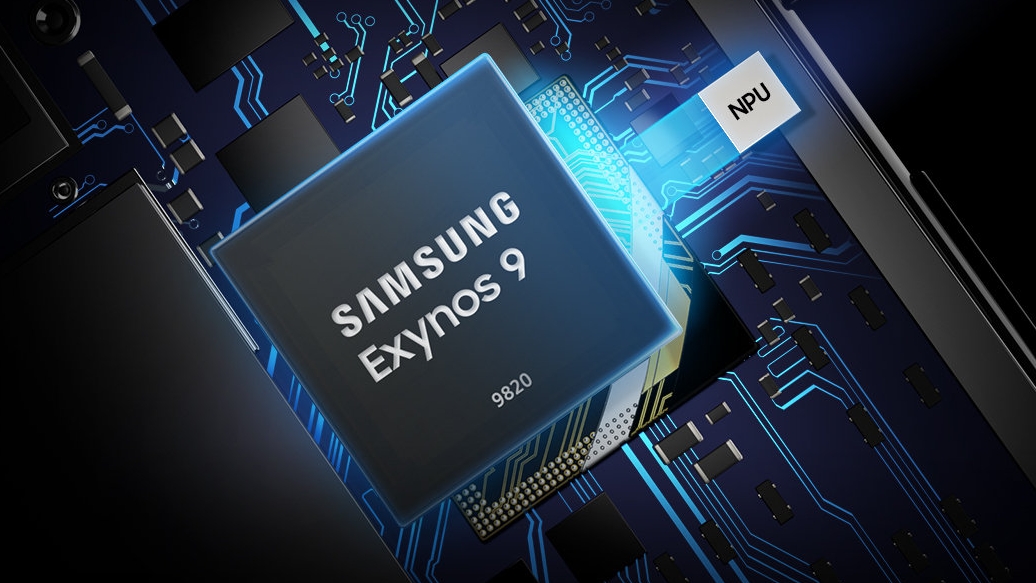
    Samsung will unveil three Exynos chips this year, claims leaker Ice Universe. The 2021 lineup presumably includes a flagship SoC (Exynos 22xx), a mid-tier chip (Exynos 12xx), and an entry-level silicone (Exynos 8xx).

    The Exynos 22xx will likely succeed the Exynos 2100 that powers the European version of the Galaxy S21 series. It supposedly has the model number 9925 and it may feature an AMD GPU.

    The Exynos 12xx will apparently replace the Exynos 1080, and it will probably also swap out the Mali GPU for AMD’s graphics.

    The Exynos 8xx is new on the radar, and we wonder if it has anything to do with a chip recently spotted by Galaxy Club.

    The chip bears the model number S5E5515, which is not very telling, thanks to Samsung’s inconsistent naming convention.

    It does not seem to be a high-end SoC as the model number is not in line with recent flagship chips: Galaxy 10’s Exynos 9820 had the number S5E9820, Galaxy S20’s Exynos 990 had S5E9830, and Galaxy S21’s Exynos 2100 has S5E9840.

    S5E5515 is not consistent with recent mid-tier Exynos chips either. The Exynos 1080 is S5E9815, the Exynos 980 is S5E9630, and Exynos 850 is S5E3830.

    The publication has made a wild guess and believes that the S5E5515 is a lower-mid-tier chip that will sit between the Exynos 850 and Exynos 1080. It is also expected to have an integrated 5G modem.

    The SoC could also turn out to be a non-smartphone chip. Samsung is already believed to be working on a new processor for wearables like AR glasses.

  • Huawei AppGallery is rising fast, attracting millions of developers

    Huawei AppGallery is rising fast, attracting millions of developers

    Huawei’s AppGallery seems to have done quite well for itself this past year despite everything, according to recently released numbers. In a press release this week, Huawei revealed that the platform boasts 2.3 million registered developers today—nearly 80% more than last year. Globally, 530 million users are using the platform on a monthly basis, spread over 42 countries compared to 25 in 2019.

    Huawei’s fast-growing mobile ecosystem has been particularly attractive to Chinese developers, who have released over 10,000 apps to the world, many of which are known titles such as Clash of Kings, Game of Thrones, and Asphalt 9.

    In fact, gaming has been at the forefront of Huawei’s expansion initiatives, with the AppGallery boasting five times more games than last year. App downloads in total reached 384.4 billion in 2020, nearly doubling the previous year’s numbers.

    “We continue to see strong growth across markets in Europe, Latin America, Asia Pacific, Middle East, and Africa.” -Mr. Zhang Zhe

    Having established itself solidly in the top three app marketplaces in the world, Huawei has developed its own HMS Core mobile service framework to provide basic infrastructure services such as HUAWEI ID and in-app purchases, allowing for smooth app integration across different devices. Now, Huawei has announced that it offers 120,000 apps integrated with HMS Core on the AppGallery: a 118% increase from last year. One of Huawei’s main objectives is to maximize the relevant apps it offers in every area of news, entertainment, social media, and productivity.

    They have also spoken out about their 1+8+N strategy—а vision for developing a full-fledged mobile ecosystem consisting of the smartphone (1), Huawei-developed peripherals (8) and third-party IoT devices that are connected using Huawei HiLink and Huawei Share technologies. Huawei is essentially striving to be able to offer an all-in-one package to equal what Samsung and Apple can provide, and its exponential growth this past year has at least proved it can stand on its own two feet.

  • KPMG Names Head of Financial Services in Singapore

    KPMG Names Head of Financial Services in Singapore

    He brings deep domain expertise in emerging areas such as cryptocurrency and platform-based business models, and has been a driving force behind the firm’s global efforts to spur innovation, transformation and scale in financial services.

    KPMG in Singapore has named Anton Ruddenklau as head of financial services, with immediate effect, it announced in a statement on Wednesday.

    Ruddenklau joined KPMG in the U.K. as a partner in 2014 and helmed the firm’s digital and innovation for financial services division from 2017. In 2018, he was named the global co-leader of fintech for KPMG International.

    KPMG said financial services is one of the firm’s priority sectors in Singapore, citing the «new realities of the post-crisis world» that are bringing into focus digital and customer-centric solutions, as well as sustainability and cost reduction strategies.

    Given the rising demand for transformation projects in the Asian marketplace, his understanding of growth strategies and financial technology innovations will enable us to deliver more effective results for our clients,Ong Pang Thye, KPMG Singapore managing partner, said.

  • StanChart Revamps Hong Kong Branches

    StanChart Revamps Hong Kong Branches

    Standard Chartered continues making transformations to its physical presence in Hong Kong, including plans to revamp its branches in the city.

    Standard Chartered will revamp its Hong Kong branches with plans to create paperless services with more digitalization, according to its chief executive for the market Mary Huen during a post-results briefing. More private rooms will also be built for in-person meetings between clients and their wealth managers.

    Branch visits fell 25 percent during the pandemic, Huen said, with more demand for financial services through digital channels.

    The bank will look to add, relocate or close some branches with the aim of maintaining 70 in the city.

    Elsewhere in the city, where the bank employs around 6,000 workers, Standard Chartered is already making changes to its physical presence.

    It is shedding multiple floors from its Hong Kong main office and renting out space from another office located in an industrial district in the eastern part of the city.

    In November last year, the bank said it would roll out flexible working options for around half of its 85,000 staff worldwide by early 2021. Standard Chartered employees in Hong Kong reportedly started using co-working spaces last month operated by IWG as part of a 12-month trial for access to 3,500 offices globally.

  • Huawei launches 5GtoB solution to facilitate industry digitalisation

    Huawei launches 5GtoB solution to facilitate industry digitalisation

    The 5G industry has been developing faster than expected, with operators already seeing commercial returns from the first wave of 5G rollouts. The 5G user base and the number of 5G devices in commercial use have exploded since 2019. By the end of 2020, 380 5G devices had hit the market, 8 times more than there were the year before. The mobile 5G user base had also reached 220 million and wireless home broadband connections reached 1.05 million, a 17 and 21 times YoY increase, respectively. Ding claims these numbers will triple in 2021.

    The prices of 5G phones are also dropping rapidly. There are already multiple units on the market priced at under US$150 and about 30 mid-range and low-end phones priced below US$300. According to Ding, the 5G mobile phone ecosystem will become as mature as 4G over the next one to two years as network rollouts continue and the user base keeps growing.

    In the markets that deployed 5G first, operators have already begun reaping commercial returns. In China and South Korea, operator revenue continued to increase as their 5G user base grew faster than in other countries. Finnish operator DNA and Saudi operator Zain also achieved impressive financial results in the early phases of their commercial 5G deployment.

    At the event, Huawei also officially released its 5GtoB solution which is aimed at creating new value for every player across the industry value chain. Ding stated that building on its experience in connectivity, computing, and industry digitalization, Huawei has worked with operators and other industry partners to develop a one-stop solution that covers sales, operations, and services – the 5GtoB solution. This solution will simplify transactions for enterprise users, help operators monetize their network capabilities, and allow partners to innovate more efficiently, creating new value for every player involved.

    The Huawei 5GtoB Solution includes four parts: 5GtoB Network, 5GtoB NaaS, 5GtoB App Engine, and 5GtoB Marketplace. With 5GtoB Network serving as the infrastructure of the 5G solution, Huawei will continue building its capabilities in providing scenario-based 5GtoB services, including network planning, construction, maintenance, and optimization.

    With 5GtoB NaaS, network capabilities can be orchestrated into offerings before they are released, making it easier for enterprise users and application developers to use 5G networks and enabling enterprise users to manage 5G campus networks themselves.

    The 5GtoB App Engine is an application innovation center, where application developers and system integrators can access operators’ 5G network capabilities. It makes 5GtoB application development more efficient and application integration easier. It also serves as a bridge between 5G network capabilities and 5GtoB applications, enabling agile service development and launch.

    The 5GtoB Marketplace is an all-in-one digital supermarket on the cloud, where enterprise users can purchase the industrial 5G solutions they need.

    Ding said that Huawei has worked with operators, partners, and enterprise users to apply the 5GtoB solution first in the steel industry. With their capabilities and experience embedded into this platform, industrial 5G solutions like automated billet rotation, AR-assisted remote assembly, and steel surface quality inspection, can be standardized and rapidly replicated.

    At the end of his speech, Ding emphasized that industry digitalization will be a huge market, but that digital infrastructure developments vary greatly across industries and application scenarios also vary. In addition, related digital standards are not in place yet. As such, he called on all industry players to work together to establish comprehensive 5GtoB standards and ecosystem to drive further industry digitalization. He closed his speech by reiterating Huawei’s commitment to investing in the ecosystem and standards and supporting industry digitalization.

  • AirAsia Group details $40m assistance to Philippines AirAsia

    AirAsia Group details $40m assistance to Philippines AirAsia

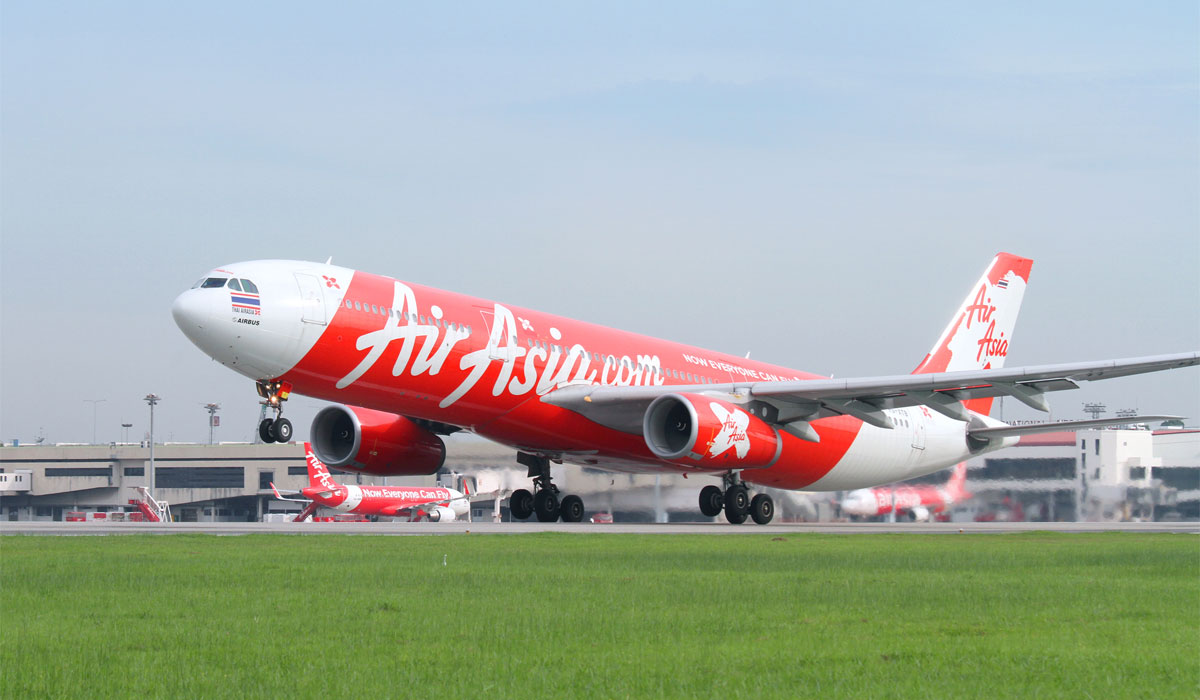
    AirAsia Group has disclosed that it extended approximately $40 million in advances and corporate guarantees to Philippines AirAsia in November-December.

    The low-cost airline group on 19 November provided a $19.1 million corporate guarantee to Filipino bank BDO Unibank. This was in relation to the restructuring of a three-year, $35 million loan to Philippines AirAsia, the group says in a 26 February disclosure to Bursa Malaysia.

    On 29 December, AirAsia Group through AirAsia Berhad provided AirAsia with a corporate guarantee and cash advances amounting to Ps991 million ($20.4 million), with Citibank Philippines as the beneficiary. In support of that move, AirAsia Group pledged one of AirAsia Berhad’s spare engines for an uncommitted short-term revolving credit facility applied for by Philippines AirAsia.

    AirAsia Group’s latest annual report for 2019 indicates that AirAsia Berhad is the legal name for the Malaysia-based LCC AirAsia, and AirAsia Inc refers to the AirAsia Philippines airline. The same report states that AirAsia Group’s effective equity interest in the Filipino carrier stood at 40%.

    The group says in its latest disclosure that the financial assistance was provided “in the ordinary course of business and to facilitate the running of the operations and financial affairs” of AirAsia Philippines.

    It adds that these do not have any material effect on its earnings per share, net assets per share and gearing of the company and its subsidiaries.

  • Retykle closes funding round to enable growth

    Retykle closes funding round to enable growth

    Hong Kong-based children’s clothing resale platform Retykle has closed a new round of seed funding to support its expansion plans.

    According to the company, funds raised will enable Retykle to invest within its home market of Hong Kong, as well as expanding its reach into Singapore and Australia. The investment will be used on technology development, including hiring engineers to build out personalization, a peer-to-peer marketplace and mechanisms.

    “We’ve focused on the customer experience to cultivate a love for and habit around using the platform to buy and sell which leads to a sticky customer with frequent purchases and sustained customer lifetime value,” said Sarah Garner, founder of Retykle.

    The high-profile angel investors include co-founder of Lazada Tim Rath and investor John Wood, who Room To Read and Powered By Purpose.

    “The businesses best set up for long-term success are those that pursue purpose in addition to profit,” said Wood. “Retykle’s model is great for the planet and for family finances.”

    The funding comes at a time when the Covid-19 pandemic has reportedly made it harder to source investment for startups, especially for women.

    “Recent news from TechCrunch shows that funding for women is reverting back to 2017-era levels,” said Nicole Denholder of Next Chapter Raise.

  • Arket opens doors in Korea

    Arket opens doors in Korea

    H&M’s ‘Nordic lifestyle brand’ Arket has opened its first brick-and-mortar store in Seoul, South Korea.

    Located at Yeouido’s department store The Hyundai Seoul, the Arket South Korea store spans 8000sqft and features the brand’s collections of New Nordic design for men, women and children. The flagship store also houses an Arket cafe, offering vegetarian dishes, drinks, pastries and snacks.

    “Opening the new store in Seoul is an incredibly exciting step for us, as it is our first physical location outside of Europe,” said Pernilla Wohlfahrt, MD at Arket.

    The launch in South Korea is part of its strategy to expand its presence in Asia. Last month, the retailer announced that it will open its first brick-and-mortar store in China, at Beijing.

    Launched in 2017, the brand now operates more than 20 stores across major European cities, including Copenhagen, Amsterdam, London and Berlin.

  • Japan’s J.Front starting with fashion subscription service

    Japan’s J.Front starting with fashion subscription service

    Japanese department-store operator J.Front is to introduce a fashion subscription rental service.

    According to Nikkei Asia, J.Font’s new service will offer a monthly rental option with fee starting from US$103, featuring high-end women’s apparel from local and international brands. The subscription service is expected to attract 30,000 customers and generate more than US$56 million within five years.

    Managed by Daimaru Matsuzakaya Department Stores, the service will initially feature about 50 labels, ranging from Japan’s Epoca, Adopre to Marni of Italy and France’s See By Chloe. The monthly subscription service will allow customers to rent up to three high-end fashion items and have them delivered to their doors.

    By launching the rental service, J.Front Retailing aims to recover its customer base since the Covid-19 pandemic has caused significant lost sales for the retailer.

    Subscription services have become a growing sector in Japan’s retail industry as customers are now more conscious about product waste. According to Yano Research Institute, the domestic market for subscription services is expected to exceed more than US$11 billion by the year ending March 2025.