Tag: asia

  • Steel giant to manufacture containers for first time in Vietnam

    Steel giant to manufacture containers for first time in Vietnam

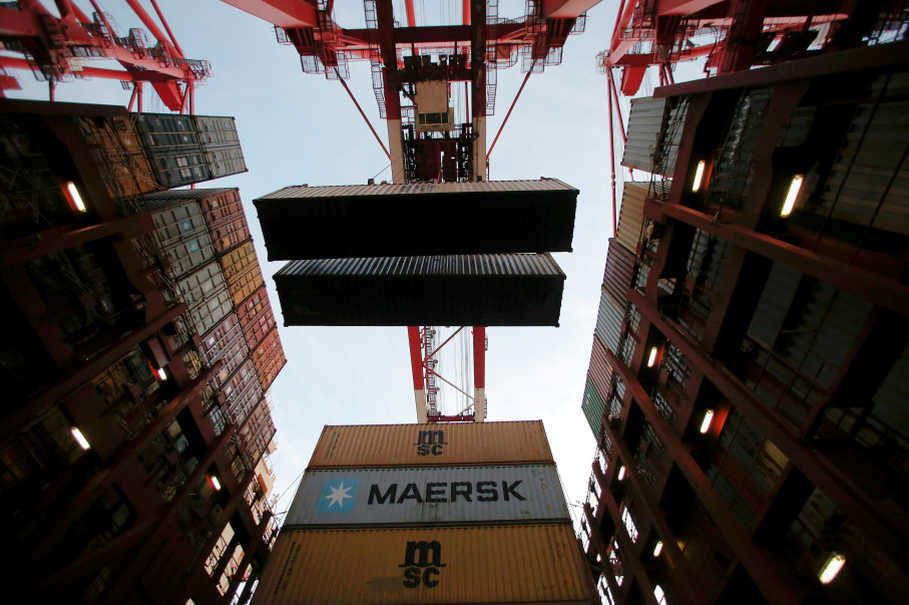
    Steelmaker Hoa Phat plans to manufacture 500,000 twenty-foot equivalent unit containers a year to mitigate a shortage since containers are stuck at ports after Covid-19 hit trade.

    It plans to build its first container manufacturing factory in Binh Duong or Dong Nai province and near Cat Lai Port in HCMC and Cai Mep – Thi Vai International Port in Ba Ria – Vung Tau Province.

    The southern region has an especially high demand for containers. Market research by Hoa Phat in fact found that three out of every four containers are used there.

    Nguyen Manh Tuan, vice chairman of the Hoa Phat Group, said the containers would be made of weather-resistant hot-rolled coil steel with enhanced corrosion resistance produced at its Hoa Phat Dung Quat 2 steel plant to be launched in early 2022.

    The logistics sector is suffering from a severe container shortage since many remain in various ports around the world, unable to offload their goods, while demand for containers to export to Europe and the U.S. is high.

    At the end of 2020, the Vietnam Maritime Administration had to order container shipping lines to publicly declare their freight rates and surcharges, saying it had received numerous complaints about inflated prices due to a shortage of containers and warning it would not tolerate gouging.

    Most shipping lines have hiked freight by 2-10 times in the last three months.

    In Vietnam, there is no container production.

    Tuan explained that the price of weather-resistant hot-rolled coil steel used for making containers is high, and would cause losses for companies if they have to import it.

    “Hoa Phat can produce this type of steel,” he said.

  • DBS Names Malaysia Country Head

    DBS Names Malaysia Country Head

    DBS reshuffles several senior managers and appoints a new country head for Malaysia, effective June 1 this year.

    The Singaporean lender named Abdul Raof Latiff as the new Malaysia country head, according to a statement, succeeding Jeffrey Ling who will retire from the role.

    Ling, who joined the bank in 1995, will stay as a senior advisor to help continue engagement with DBS’s key clients in Malaysia.

    Latiff joined DBS in 2017 and was most recently its group head of digital for institutional banking and group head of global transaction services product management. Latiff has over 25 years of banking experience and he previously held senior positions in the region with the likes of Citigroup, J.P. Morgan and HSBC.

    Latiff’s existing roles will be taken over by 15-year DBS veteran Lim Soon Chong, currently group head of investment products and advisory for consumer banking and wealth management.

    The new appointments reflect our commitment to groom talent from within, and enable us to continue to provide more development opportunities to our senior team across the region, said DBS group head of institutional banking Tan Su Shan.

    As a result of our deliberate effort to build our timber from within, a large proportion of our senior leaders have also been developed internally, including over 80 percent of our managing directors.

  • Sun Life Vietnam reveals strategy to increase insurance market share

    Sun Life Vietnam reveals strategy to increase insurance market share

    In December 2020, Sun Life Vietnam signed a partnership agreement with ACB to expand its budding bancassurance system.

    The new, 15-year partnership with ACB came into effect on the first day of 2021. ACB will distribute Sun Life Vietnam’s products at their 371 branches in 48 provinces, offering innovative and comprehensive financial solutions to millions of potential clients.

    The deal with ACB came after Sun Life’s first exclusive distribution deal with Tien Phong Commercial Joint Stock Bank (TPBank) just a year prior. The two partnerships prove what great stock Sun Life Vietnam puts into the emerging distribution channel and industry-leading collaborations.

    Larry Madge, CEO of Sun Life Vietnam, said: “We believe our cooperation with ACB and TPB will help us significantly expand Sun Life Vietnam’s client reach and enhance our position in the market.”

    Sun Life Vietnam products are now widely available to millions of TPBank and ACB customers, complementing the insurer’s extensive agency network.

    The two bank partners will also collaborate with Sun Life Vietnam on digitally enhancing their offering, client experience and training to ensure the best consultancy services.

    “The new partnership with ACB will be a powerful boost to our distribution capabilities and will enable us to scale up operations even faster. At the same time, we are accelerating the expansion of our agency network by opening new offices across the country and will also continue developing our existing partnership with TP Bank,” said Madge.

    Since the beginning of 2020, Sun Life Vietnam has been steadily increasing its charter capital while boosting investment in technology, branding, products, and services to meet changing client needs and adapt to new trends and a new working environment.

    For example, as Covid-19 was a complete game-changer for the entire industry, Sun Life Vietnam had to roll out several new solutions to adapt to the new landscape.

    The insurer developed Sun Fast, a solution where their advisors and clients could conduct virtual meetings and the entire consultation and purchasing process digitally. They can fill out and sign applications virtually, without face-to-face interaction, so they are not left without protection even during social distancing.

    In December, Sun Life Vietnam also introduced a new QR payment method to improve convenience.

    According to Vietnam Report, there will be more large-scale collaborations between banks and insurance businesses, with an increasing proportion of insurance revenue generated through bancassurance. Deals between FWD and Vietcombank or Sun Life Vietnam, ACB and TPBank all point in this direction.

    The insurance market is still looking at excellent growth potential due to the low number of insurance policyholders in the country, while the middle-class ranks proliferate.

    Remarkably, bancassurance has been growing even more substantial and now contributes nearly 30 percent of total life insurance sales. The annual average growth rate in 2016-2019 was 30 percent, and while the segment was hit hard by Covid-19, it still grew by 19 percent throughout 2020.

    Madge commented: “The Vietnamese economy has been growing steadily by 6-7 percent in recent years, and with the great job the Vietnamese government has done to manage Covid-19 while maintaining the economy, we have high hopes this rapid growth will continue.”

    “Currently, the Vietnamese insurance market is underpenetrated and only accounts for 1.4 percent of the GDP. Simultaneously, the global average is 3.4 percent.”

    Bancassurance deals offer benefits to all three sides – the insurance company, bank, and clients. It provides an efficient distribution channel to the insurance company, increasing its market reach, revenue, and potential client base.

    Meanwhile, it brings significant investment to the bank partner and improves relations with clients via a comprehensive set of products and services. The client can also enjoy improved protection from daily risks through insurance products while accessing flexible services from both the bank and insurer.
  • Groupe Renault And Faurecia Collaborate On Hydrogen Storage Systems

    Groupe Renault And Faurecia Collaborate On Hydrogen Storage Systems

    Faurecia and Groupe Renault today announced their decision to collaborate on hydrogen storage systems for hydrogen light commercial vehicles. Starting at the end of 2021, Faurecia will supply hydrogen storage systems for a first fleet of light commercial vehicles. These systems will be developed and produced at its global centre of expertise in Bavans, France. As volumes, increase production will be extended to a new plant dedicated to hydrogen storage systems that Faurecia is building in Allenjoie, France.

    Faurecia will supply hydrogen storage systems for a first fleet of light commercial vehicles.

    Mathias Miedreich, Executive Vice President of Faurecia Clean Mobility said, “Fuel cell electric vehicle technology is set to become significant in the powertrain mix by 2030, and as such Faurecia is dedicating important resources to accelerate its deployment.”

    This collaboration on hydrogen storage systems is embedded in Renault’s strategy to offer market-ready H2 solutions for light commercial vehicles and target over 30% share of this market in Europe.

  • Vietnam beats global average in sustainable lifestyles

    Vietnam beats global average in sustainable lifestyles

    Vietnam is ahead of the global average in adopting healthy and sustainable lifestyles, a survey has found.

    Forty seven percent of respondents in Vietnam said they had supported a socially responsible company last year, against a global average of 33 percent, the survey by research company GlobeScan and digital payment firm Visa said.

    Eighty two percent said they had sought out information related to healthier lifestyles last year, well above the global average of 56 percent.

    The survey, which polled 27,000 people in 27 countries and territories, also found that people in Vietnam are taking proactive steps towards healthier and more sustainable lifestyles.

    Ninety percent said they had made changes to their lifestyles last year to be more environment-friendly, and 87 percent made changes to be healthier.

    Vietnamese also display a high interest in environment-friendly lifestyle choices, with 81 percent saying they had sought out information about them last year against a global average of 47 percent.

    “It is encouraging to see that consumers in Vietnam are already taking concrete steps to lead healthy and sustainable lifestyles,” Dang Tuyet Dung, Visa country manager for Vietnam and Laos, said.

    Asked what companies could do to help them live healthily and sustainably, Vietnamese listed a desire for new products that are better for both people and the environment as a top priority.

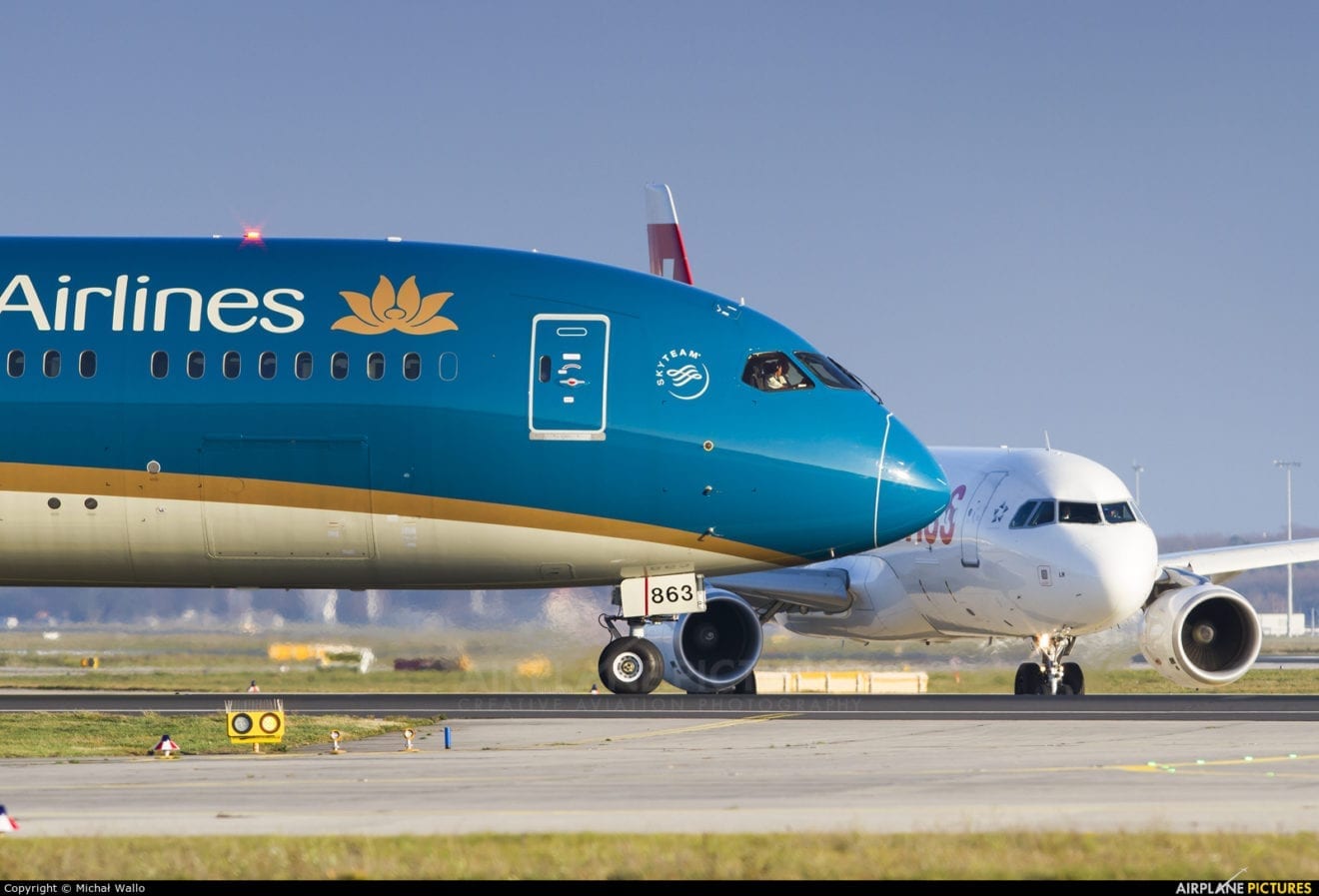
  • Vietnam Airlines to invest $430 mln to offer ground services at Long Thanh airport

    Vietnam Airlines to invest $430 mln to offer ground services at Long Thanh airport

    Vietnam Airlines plans to invest VND9.9 trillion ($430 million) in the under-construction Long Thanh International Airport to become a provider of ground services and in-flight meals.

    It plans to provide aircraft maintenance services, supply jet fuel and meals, serve passengers in lounges, and set up duty-free shops, the carrier said in a proposal to authorities.

    These are services the state-owned carrier already provides at major airports in the country.

    It will bring in 30 percent of the amount from its own resources and borrow the rest.

    Its subsidiaries can either set up facilities at the airport or joint ventures with the Airports Corporation of Vietnam (ACV), which oversees the construction and would operate the airport, the proposal said.

    It hopes to get a dedicated area at the airport to build hangars for aircraft maintenance and in the terminal to prioritize its customers.

    Construction of the first of three phases of Long Thanh International Airport in the southern province of Dong Nai, 40 kilometers east of Ho Chi Minh City, began in January.

    The $4.6-billion first phase of the airport is set to be completed by 2025 when it will be able to handle 25 million passengers and 1.2 million tons of cargo a year.

    The final phase will be completed by 2040, when the airport will have four runways and four passenger terminals. It will have a capacity of 100 million passengers and five million tons of cargo.

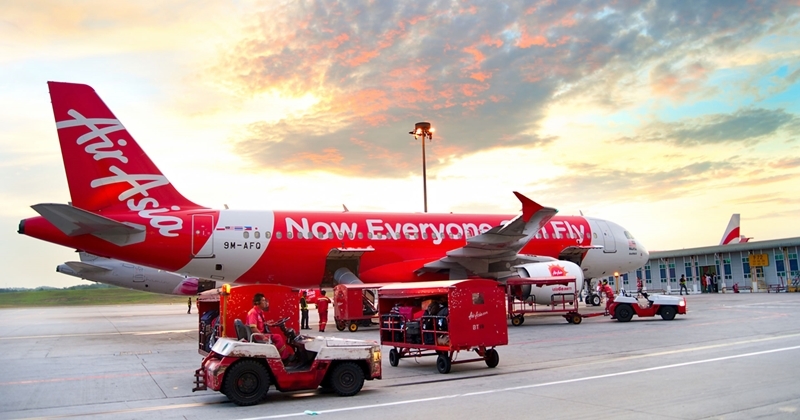
  • AirAsia Japan closure has cost group $80 million so far

    AirAsia Japan closure has cost group $80 million so far

    AirAsia Japan’s closure has cost the Malaysia-based AirAsia Group nearly $80 million over three quarters.

    AirAsia Group owns 48.9% of the joint venture carrier, which ceased operations in October and filed for bankruptcy in the following month.

    AAJ commenced bankruptcy proceedings by a court order issued on 24 February, AirAsia Group said in a same-day Bursa Malaysia disclosure.

    As a result of the proceedings, the low-cost airline group recognized a loss of over $74 million in the second half of 2020, “due to financial assistance [to AAJ] in the form of intercompany transactions and loans being written off as these amounts were deemed to be irrecoverable”.

    AirAsia Group also incurred nearly $5.2 million in expenses related to aircraft de-registration, in the fourth quarter of 2020 and the current quarter, to move three aircraft from Japan to Malaysia.

    The group states: “Further announcement(s) will be made in due course on the particulars of claim and financial impact to AirAsia Group, if any, under the bankruptcy proceedings.”

    AirAsia Group last stated in a 25 August disclosure that it provided AAJ with financial assistance totaling $6.27 million during the second quarter of 2020.

    In 2019, the group gave AAJ a $12 million loan in November that year, as well as loans of Y1 billion ($9.4 million) and Y2 billion in January and March, respectively.

    Further back, AAJ received a Y500 million loan from the group in the third quarter of 2017.

  • HSBC Expands China Private Banking Footprint

    HSBC Expands China Private Banking Footprint

    HSBC continues to voice its ambitions to pivot to Asia with plans to extend its onshore private banking services to ten mainland cities in the coming five years.

    Days after securing $3.5 billion in investments for its wealth unit over the next five years, HSBC reiterated its ambitions in Asia, home to nearly half of the bank’s $1.6 trillion of wealth balance and 65 percent of group revenue.

    Regional head of wealth and personal banking Greg Hingston set out plans for the mainland market during this five-year period including the extension of private banking to ten cities onshore and the doubling of its client base for Jade – a segment targeting clients with a $1-5 million in investable assets (the private bank targets clients with $5 million or more), according to a statement.

    Hinston said the bank also aims to double its Jade client base in Singapore and become a lead foreign bank for non-resident Indians.

    The bank also reiterated its hiring goals with plans to add more than 5,000 client-facing wealth-related roles in the next five years. These roles include relationship managers, investment counselors and specialists to support clients in Hong Kong, Singapore, and mainland China.

    The bank also underlined its intention to improve its distribution in the three markets; digital and platform capabilities in the broader region; and product development, especially for high and ultra-high net worth clients.

    We have a bold but achievable ambition, to be Asia’s leading wealth management provider by 2025, said Nuno Matos, HSBC’s chief executive for wealth and personal banking.

  • StanChart CEO Signals He Will Stay on the Job

    StanChart CEO Signals He Will Stay on the Job

    Despite rumors of Bill Winter’s potential exit, the 59-year old chief executive said he would stay with Standard Chartered following a 2020 that saw profits miss analyst targets and plummet 57 percent.

    Although rumors of an exit emerged earlier this year with investment and commercial banking chief Simon Cooper reportedly named as a potential successor, Bill Winters publicly reassured of his stay with the British lender.

    Don’t let the grey hair fool you,» said Winters, during a media call for the bank’s 2020 financial results. «I came here to do a job – the job is not yet done.

    Winters was named group chief for Standard Chartered in 2015 and will celebrate his sixth full year with the bank in June this year.“

    That job is a mandate to return to growth after pre-tax profits in 2020 plunged 57 percent to $1.61 billion, missing analyst estimates of $1.85 billion while returning just 3 percent on tangible equity (ROTE), well below its longer-term target of 10 percent.

    While the bank noted that low-interest rates will likely cause 2021 to yield similar income levels as last year it was confident that it would reverse momentum quickly with plans to achieve 5-7 percent income growth from 2022 onwards. The is done with the aim of achieving 7 percent ROTE by 2023 to meet its longer-term target of more than 10 percent ROTE.

    The bank highlighted its refreshed strategic priorities which focus on four areas: leveraging its network, maintaining its affluent business, scaling up its mass retail business and capitalizing on opportunities in sustainability. a

  • Grab in Hiring Spree to Support Financial Services

    Grab in Hiring Spree to Support Financial Services

    The super app is looking to create around 350 new jobs in Singapore this year to support its growth plans.

    The new hires will support Grab’s plans to help micro SMEs digitalize, deliver digital financial services across Southeast Asia, and develop the Grab-Singtel digibank, according to an announcement on its website.

    The hiring drive was announced at a signing of a memorandum of intent with the Infocomm Media Development Authority and Digital Industry Singapore to support the development of Singapore’s tech ecosystem, through the development of its tech talent and R&D capabilities here.

    The vacancies are from fields including artificial intelligence, cybersecurity, data science, software engineering, product management and design. There will also be employment opportunities in areas such as finance, operations, legal, public affairs and business development, Grab said.

    We are building products that positively impact millions across Southeast Asia, and we want to continue deepening our R&D capabilities and push the boundaries of innovation, right here at our strategic base, Tan Hooi-Ling, Grab co-founder, said in the statement.

    Grab previously said it would be pushing into retail wealth by focusing on accessible, convenient, and transparent investment products and solutions while broadening its wealth management offerings that feed into its goal of strengthening its open fintech ecosystem.

    The company has grown its suite of financial products in the past year, rolling out e-money, lending and insurance distribution on its platform, and moved into wealth management with the acquisition of Singapore-based robo-advisor Bento, which was relaunched as GrabInvest.

    It also led a $100 million Series B fundraising round for LinkAja, an e-wallet in Indonesia, where the ride hailer has been vying with competitor Gojek for the top spot in digital payments.

  • Travel App Sets Sights on Financial Services

    Travel App Sets Sights on Financial Services

    Indonesian online travel unicorn Traveloka is targeting Thailand and Vietnam for launching financial services ahead of a possible IPO.

    Undaunted by Covid-19 related disruptions, Southeast Asia’s biggest online travel startup is eyeing moves into the financial services space as the company diversifies its offerings in a region ripe for disruption in the space.

    The plan is to invest in fintech in a big way to allow more consumers to travel in the region,» Caesar Indra, Traveloka president said in an interview published Thursday.

    The travel app, which previously branched out into lifestyle services such as food delivery, launched offerings in insurance and wealth management, and is currently developing buy-now-pay-later services in Vietnam and Thailand, where it recently launched a joint venture for fintech development with one of the country’s biggest banks.

    The company, which counts 40 million monthly users, has seen a strong rebound in business, driven by domestic travel, Indra said.

    Its business has surpassed pre-Covid levels in Vietnam, is nearly back to normal levels in Thailand, and is at half of pre-Covid levels in Indonesia, he said.

    Traveloka is reportedly in discussions with special-purpose acquisition companies, or SPACs, for a U.S. listing.

    Reuters quoted a source saying that Bridgetown Holdings, backed by Asian tycoon Richard Li, Provident Acquisition and Cova Acquisition are also contenders for the startup, which has a potential valuation of up to $5 billion.

    Founded in 2012, Traveloka has raised more than $750 million to date from investors including Expedia, Singapore’s sovereign wealth fund GIC, East Ventures, as well as JD.com.

  • StarHub and Software AG partner for new 5G IoT platform service

    StarHub and Software AG partner for new 5G IoT platform service

    As Internet of Things (IoT) plays an increasingly important role in driving digital economies and business success, Singapore’s StarHub and Germany-based Software AG have teamed up to offer an end-to-end 5G-ready IoT service to help organizations in Singapore accelerate IoT implementations on a massive scale.

    Through this partnership, StarHub is proud to offer 5G IoT platform service, a new one-stop solution that provides IoT connectivity including StarHub’s 5G, device management, professional services to integrate existing or new systems, and managed services to run the entire IoT environment for any organization.

    As a comprehensive platform, the 5G IoT platform service intelligently connects, manages, and monitors millions of IoT devices deployed for different applications, creates customizable analytics, and provides APIs to integrate with existing and new systems. This will help organizations to accelerate their IoT implementations. It is offered to companies as a service on a subscription model, allowing full flexibility, instant scalability, and financial prudence.

    Charlie Chan, Chief of Enterprise Business Group at StarHub, said: “Amid digital disruption and rapid changes in the economy, StarHub’s call remains the same – Our customers are transforming to remain globally competitive, and we want to be our customers’ enabling partner of choice when it comes to both core connectivity and innovative managed solutions. We are pleased to collaborate with Software AG to provide an advanced, 5G-ready IoT solution that helps our customers across multiple industries including property, retail, and transport, speed up or scale IoT implementations to boost productivity and innovation as well as realize cost-saving.”

    Bernd Gross, CTO of Software AG added: “Data is so fundamentally important for businesses to succeed in the future that they must master how to collect and analyze it if they are to be competitive. 5G brings more speed, lower latency, and support for a massive amount of endpoints, which means that data can flow between the edge and the core of any organization. Once you know what’s happening in every part of your business, you can understand how to make it better – and that is the opportunity we will bring to customers alongside StarHub.”

    StarHub’s 5G IoT platform service allows organizations to aggregate all of its existing IoT applications and connected devices for a real-time, clear overview on a single aggregator platform, without a need for platform migration. New IoT applications and connected devices can also be integrated easily with this aggregator platform. With that, enterprise customers can acquire and analyze massive volumes of data from its existing independent IoT systems to gain new, accurate, in-depth understanding of how well their assets operate, in a consolidated manner.

    In the case of a public transport operator, StarHub’s 5G IoT platform service can provide real-time vehicle tracking, automated inspection of the vehicle condition and predict potential issues of the vehicles to take precautionary measures, improve fleet operational efficiency and reduce downtime. With additional data such as weather, traffic conditions, the operations director can view and analyze these insights from the same dashboard and act accordingly to optimize the fleet.

    For a facility management company, it can use StarHub’s 5G IoT platform service to develop smart building maintenance strategies to serve building owners better, differentiate their services from competition or improves operational efficiencies. This is because the service can bring together separate IoT systems that manage different areas of the facility – electricity consumption, rubbish bin usage, washroom cleanliness, footfall, and more, presenting a complete picture of all IoT data. With the right information and context about what is going on in the building, the facility manager can pinpoint issues and trace faults quickly or carry out preventive maintenance responsibly.

  • Thai Airways announces staff cuts in desperate bid to avoid bankruptcy

    Thai Airways announces staff cuts in desperate bid to avoid bankruptcy

    Thai Airways says it has cut around 240 executive positions as part of its bankruptcy restructuring process.

    The airline said: “The number of executive positions has been reduced from 740 to about 500”, also confirming that the number of supervisory levels would go from eight to five to increase efficiency.

    Thai Airways, like most of its rivals around the world, has slashed capacity as travel restrictions and falling demand make many commercial routes unviable during the coronavirus pandemic.

    The airline will submit its restructuring plan to the Central Bankruptcy Court on 2 March and the plan is expected to be voted on by creditors in May.

    If a majority of creditors vote against it then the airline will go ahead with bankruptcy procedures.

    Acting president Chansin Treenuchagron said: “A successful restructuring will require cooperation from all parties, including creditors and employees.”

    Thai Airways employs around 21,000 people and is Thailand’s national carrier, an important part of its vital tourism industry.

  • Giordano opens largest retail store in Indonesia’s

    Giordano opens largest retail store in Indonesia’s

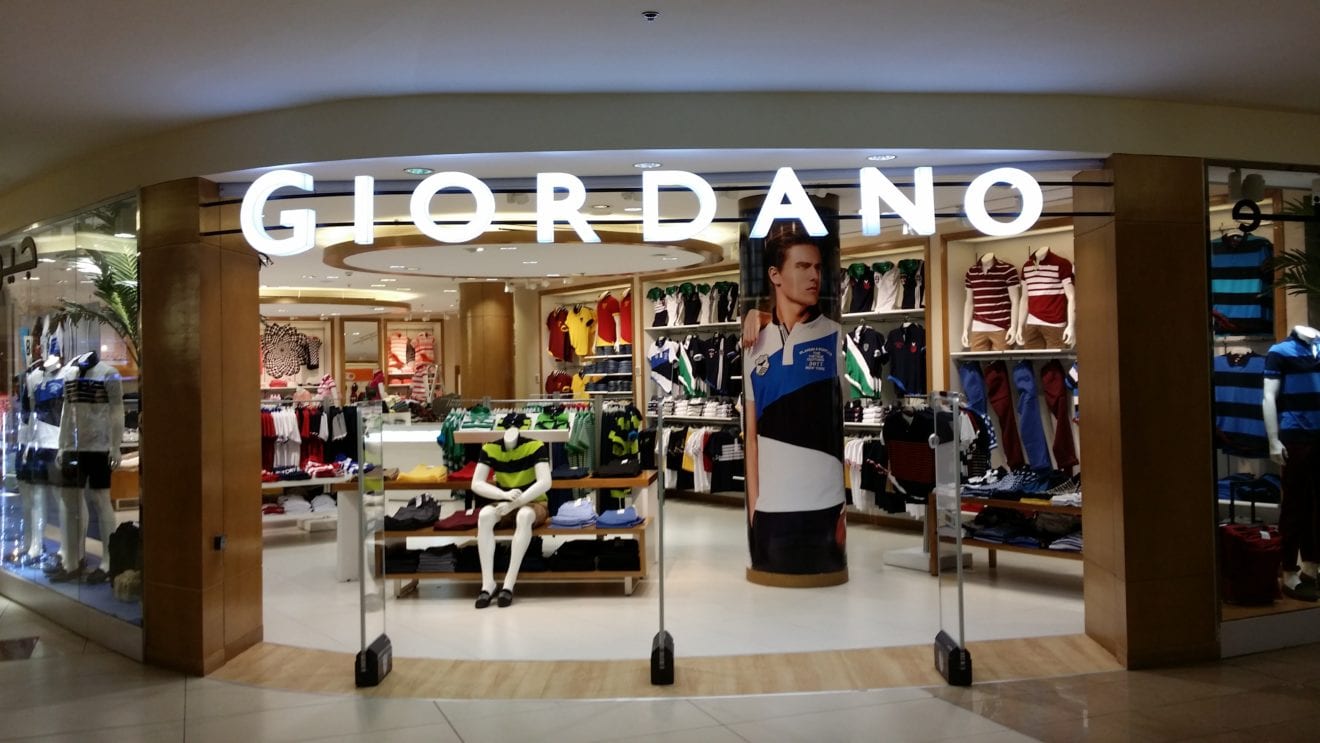
    Apparel retailer Giordano has unveiled a large-scale store in the newly opened Bumi Raya City Mall in Pontianak, Indonesia.

    Located on the mall’s first floor, the Giordano store spans 2300sqft and offers a complete range of men’s, women’s and children products.

    “This is our second store in Pontianak, which is one of the most culturally diverse cities in Indonesia and the entrance to Singkawang, the renowned ‘city of a thousand temples,” said Patrick Yeo, president director of Giordano Indonesia.

    Opened last month, Bumi Raya City Mall is home to more than 190 brands, including a host of international retailers and flagship stores. Bumi Raya City Mall is also the first family lifestyle mall to open in Pontianak.

    Founded in 1981, Giordano operates more than 2100 stores and counters in Greater China, South Korea, Southeast Asia, Australia, India and the Middle East.

  • Toyota recalls Hilux trucks for brake problem

    Toyota recalls Hilux trucks for brake problem

    Toyota will recall 1,935 imported Hilux trucks due to a safety issue related to their brake system.

    The batch was produced in Thailand between June and December 2018 and imported by Toyota Vietnam.

    The company said the problem has occurred due to a degrading of the resin piston within the brake booster due to improper molding.

    “If this were to occur, repeated operation of the brake pedal may cause the piston to break, potentially causing loss of braking assist and therefore increasing the vehicle stopping distance,” it said in a statement.

    Toyota will coordinate with its dealers to recall, inspect and replace the brake booster free of charge. The replacement will take between half an hour and four and a half hours.

    According to Toyota Vietnam, the recall will begin on March 5 and last three years.

    In the case of Hilux not imported by the company, it will obtain approval from its parent in Japan before carrying out the replacement.