Tag: asia

  • UBS Enlists More Firepower for Parisian Appeal

    UBS Enlists More Firepower for Parisian Appeal

    Swiss bank UBS secured a coterie of Europe’s political and legal elite for its side, as it heads into the appeal of a high-stakes criminal verdict in France.

    On March 8, UBS’ legal team under chief lawyer Markus Diethelm and Allen & Overy’s Denis Chemla head back to criminal court in Paris, in an attempt to overturn a 2019 guilty verdict attached to a 4.5 billion ($5 billion) fine against the wealth manager.

    Much like UBS’ 2008 settlement in the U.S. for $780 million, the French case represents a watershed for Switzerland’s wider banking industry. Others including crosstown rival Credit Suisse are closely watching UBS’ case, which is expected to set precedent for other Swiss wealth managers.

    UBS is enlisting European political nobility including ex-European Commission head Jean-Claude Juncker and former German finance minister Wolfgang Schaeuble and Peer Steinbrueck on its side.

    It is hard to overstate the importance of the French trial for UBS: besides the huge financial impact, the case caused shareholders to deny the Swiss bank’s top management and board a key backing two years ago. UBS is pulling out all the stops as a result.

    The influential politicians join an armada of advisers to UBS, including ex-German politician Theo Waigel. The addition of Steinbrueck is especially ironic: the German politician in 2012 threatened to send a financial cavalry to Switzerland to root out tax dodgers and cheats – a tone that was perceived as tactless by Swiss diplomats.

    The reason the politicians are so key to UBS’ appeal is that the bank plans to make a European Union guideline from 2003 a key part of its argument to the court, which hears the entire case anew. The directive safeguarded cross-border interest payments and required Swiss banks to notify EU member states if their citizens were earning interest in wealth held in Switzerland.

    It was superseded four years ago when Switzerland began adopting automatic data-swapping agreements with the bloc. A big part of UBS’ new defense plan is that a large portion of French wealth held at UBS wasn’t undeclared – the bank had also been passing on withholding tax to France, though French officials wouldn’t have known who the money stemmed from.

    Waigel, an ally of former German chancellor Helmut Kohl, was instrumental in drafting the EU directive in the late 1990s. Together with his former negotiating partners, the ex-politico is reportedly being deployed to reconstruct the decades-old plan in order to support UBS’ defense. The trial was set for last June but postponed to 2021 due to the pandemic.

    This agreement allows Swiss banks to manage foreign assets while maintaining banking secrecy,» Swiss lawyer and academicPeter Nobel, who is also advising UBS, told the Swiss outlet. If the French justice system retroactively criminalizes this as money laundering, it is violating an agreement of international law.
  • HSBC Set for Pivot to Asia

    HSBC Set for Pivot to Asia

    HSBC is primed to publicly introduce its strategic shift in the upcoming 2020 earnings presentation which could include the announced relocation of top executives.

    Internally known as the pivot to Asia, HSBC will begin marketing the strategy to the public this week, according to a report citing unnamed sources.

    This follows an internal presentation where chief executive Noel Quinn said that investments at the British lender will be focused on Asia alongside the U.K. and the Middle East with an eye on becoming a market leader in wealth management.

    In addition, the strategic shift could result in the relocation of top HSBC executives and those earmarked include Nuno Matos, chief executive of wealth and personal banking; Greg Guyett, co-head of global banking and markets; and Barry O’Byrne, chief executive of global commercial banking.

    Fellow investment banking co-head Georges Elhedery was also named in a previous report as a potential relocation.

    Within Asia, the bank is already rapidly making investments to deepen its inroads in different sub-regions.

    It is most notably betting big on Greater Bay Area opportunities and it most recently began constructing a 26,000 square meter Guangzhou-based training center which is expected complete by 2024.

    The bank is also seeking opportunities across South Asia with the ASEAN region named as a strategic focus for future growth. Earlier this month, HSBC established an onshore private banking presence in Thailand led by 25-year veteran Saranya Arunsilp.

  • Citi Mulls Sale of Consumer Units in Asia

    Citi Mulls Sale of Consumer Units in Asia

    Citigroup is exploring the possibility of downsizing its consumer business worldwide with an eye on selling some of its businesses in the Asia Pacific region.

    Consumer banking units in South Korea, Thailand, the Philippines and Australia were named for potential divesture, according to a report citing unnamed sources. The Mexico consumer unit is also being reviewed, though a sale is less likely.

    No decisions have been made and there is still a possibility that no divestitures will be made.

    While Citi may potentially exit some markets in Asia, it could signal sharpened focus in other ones.

    In Singapore, the bank recently rolled out its largest wealth advisory hub with a 30,000 square feet space that can house over 300 relationship managers and product specialists. Citi aims to double its wealth management market share and boost clients by double-digit percentages in the coming years.

    In rival hub Hong Kong, net new money inflows soared 44 percent in 2020 with the wealth management (9 percent), institutional (10 percent) and treasury (5 percent) business all seeing positive revenue growth.

    Globally, the bank saw profits plunge 41 percent to $4.6 billion with a 10 percent drop in revenues to $16.5 billion. Outgoing chief executive Michael Corbat subsequently saw his compensation slashed by 21 percent to $19 million.

    As our incoming CEO Jane Fraser said in January, we are undertaking a dispassionate and thorough review of our strategy, including our mix of businesses and how they fit together,» according to a spokesperson for the bank.

    As you would expect, many different options are being considered and we will take the right amount of time before making any decisions.»

  • Study from home sends demand for computers, webcams skyrocketing

    Study from home sends demand for computers, webcams skyrocketing

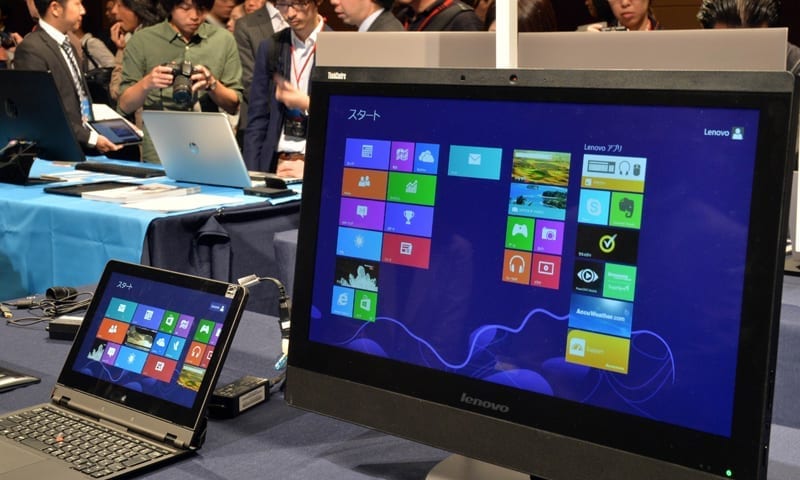
    With students told to study online amid the new Covid-19 outbreak, demand for laptops and webcams is booming, with some electronics stores reporting a six-fold rise in sales.

    FPT Shop, a nationwide electronic retail chain, said laptop sales from February 16-18 were five times higher than normal.

    February 16 marked the end of the Lunar New Year holidays when many cities and provinces, including Hanoi and Ho Chi Minh City, announced that students would study from home until the end of the month as they sought to prevent the spread of the novel coronavirus.

    Nguyen The Kha, director of telecoms-mobile products, FPT Shop said: “The sudden surge in demand for laptops came after schools announced classes would be online. We had anticipated higher demand but were still surprised by the increase.”

    Laptops priced at VND10-12 million ($434-520 million) were the most popular followed by brands like Dell, HP, Acer, and Asus that cost VND16-20 million.

    There was also demanded for high-end products costing VND20-30 million like Apple’s MacBook Pro and Microsoft’s Surface 7 Pro.

    With online classes depending on videos, sellers also reported a spike in demand for webcams.

    One shop on Thai Ha Street in Hanoi’s Dong Da District, where many electronics stores are clustered, reported unusually high sales of around 100 webcams a day between February 17-19.

    Some stores ran out of stock just like in March last year when the coronavirus outbreak first began.

    ShopDunk, a chain that sells Apple products, said iPad sales are typically modest, but in recent days it has accounted for 20 percent of total sales, second only to the iPhone 12 Pro Max.

  • Here’s what WhatsApp subscribers face if they don’t opt-in to the new Privacy Policy by May 15th

    Here’s what WhatsApp subscribers face if they don’t opt-in to the new Privacy Policy by May 15th

    WhatsApp is not planning on making any changes to its new Privacy Policy and users must opt-in to the update by May 15th. In an email from WhatsApp to one of its merchant partners , WhatsApp will “slowly ask” users to agree to its new terms. Those who do not comply with the new terms will lose full functionality of WhatsApp starting on May 15th. Those subscribers not agreeing to the new policy by that date will face a punishment. In its newly posted FAQ page, WhatsApp says, “To give you enough time to review changes at your own pace and convenience, we’ve extended the effective date to May 15th. If you haven’t accepted by then, WhatsApp will not delete your account.
    However, you won’t have full functionality of WhatsApp until you accept. For a short time, you’ll be able to receive calls and notifications, but won’t be able to read or send messages from the app. By “a short time,” WhatsApp means “for a few weeks.”
    After May 15th, you can still accept the updates although WhatsApps rules regarding inactive users will apply. Those rules say that after 120 days of inactivity, accounts are usually deleted. And if you do decide to delete your WhatsApp account, there is a price to pay. The WhatsApp Help Center says, “If you’d like to delete your account on Android, iPhone, or KaiOS, we hope you reconsider. It is something we cannot reverse as it erases your message history, removes you from all of your WhatsApp groups, and deletes your WhatsApp backups.”
    So what is this whole thing about? WhatsApp has been forced to update its privacy policy after deciding that it will allow users to directly message businesses on its platform. The problem is that there is a grave misunderstanding with some subscribers believing that by agreeing to the new Privacy Policy update, WhatsApp users will be sharing their personal data with Facebook. But this is not true and private messages will remain encrypted from end-to-end. This won’t be the case for messages sent to businesses over WhatsApp. Data used in business messages can be used for ad targeting with some data kept on Facebook’s servers.
    WhatsApp once described end-to-end encryption in this way: “Strong encryption acts like an unbreakable digital lock that keeps the information you send over WhatsApp secure, helping protect you from hackers and criminals. Messages are only kept on your phone, and no one in between can read your messages or listen to your calls, not even us. Your private conversations stay between you.”
    The misplaced belief that Facebook was getting to see encrypted messages between WhatsApp users led a number of subscribers to make the decision to leave WhatsApp for rival messaging apps like Signal and Telegram. But had users understood that their personal messages remain encrypted, the rush for the exits would not have happened. Talking about the confusion and the mistaken beliefs about Facebook, a WhatsApp spokesman said, “We’ve heard from so many people how much confusion there is around our recent update.
    There’s been a lot of misinformation causing concern and we want to help everyone understand our principles and the facts.” So in the weeks leading up to the May 15th deadline, WhatsApp is going to post an in-app banner that will allow users to re-read about the new privacy update so that they will accept the changes allowing them to continue using the app. An image of that banner accompanies this article.
    The new privacy policy will allow WhatsApp and Facebook to share payment and transaction data to target ads better. For the last five years, WhatsApp has shared user phone numbers and device information with Facebook.  The latter bought WhatsApp for a final price north of $19 billion in February 2014. WhatsApp has over 2 billion users in over 180 countries.
  • Looking to replace lost smartphone sales, Huawei turns to pig farming

    Looking to replace lost smartphone sales, Huawei turns to pig farming

    Huawei should have been the top smartphone manufacturer in the world last year. The company had a plan in place to take over the top spot by 2021 and despite losing access to its U.S. suppliers (including Google) in 2019, by early 2020 the company had topped Samsung and Apple to become the largest smartphone manufacturer in the world. But then the other shoe dropped. Exactly one year to the day that the U.S. Commerce Department put Huawei on the entity list forcing the Chinese firm to stop doing business with Google, the U.S. made an export rule change. All of a sudden, foundries using American sourced tech were no longer allowed to ship to Huawei without a license.

    Obtaining the most cutting-edge chipsets for its phones and 5G base stations became impossible. In an ironic twist, even chips designed by Huawei were off-limits to it and the firm’s smartphone sales plunged 42% during the fourth quarter when the ban started. The U.S. considered Huawei, ZTE, and some other Chinese firms to be national security threats due to its alleged ties with the Communist Chinese government.

    In November, Huawei sold its Honor sub brand so that the latter would not be banned from obtaining chips and U.S. components because of its association with Huawei. The $15 billion that Huawei received in the sale was certainly needed and now the company could end up the seventh-largest smartphone manufacturer this year. Huawei’s smartphone production could drop by 60% this year although the company could not confirm the figure. A Huawei spokesman said, “The issue here is not like there’s any problems with our quality or experiences of the Huawei products. It’s not a level playing field for Huawei as Huawei is caught in between the geopolitical tensions.”

    The company has been looking for other sources of income which has led it to the pig farming industry. That’s right, Huawei, the company behind one of the most technologically advanced smartphone lines in the world, is in the business of farming pigs. This is a major industry in China where 50% of the world’s live hogs are located. Huawei is actually bringing tech to the industry with facial recognition used to identify individual pigs. Farms are using other technology to monitor pigs’ diet, weight and exercise. A Huawei spokesman, discussing the tech firm’s entry into pig farming, said, “The pig farming is yet another example of how we try to revitalize some traditional industries with ICT (Information and Communications Technology) technologies to create more value for the industries in the 5G era.”

    Besides pig farming, Huawei wants to branch out into the mining industry. Company founder and CEO Ren Zhengfei introduced a mining lab earlier this month. Using Huawei technology, Ren wants to turn miners into white collar workers allowing them to wear suits and ties to work. With the company’s technology, the mining industry will see “fewer workers, greater safety, and higher efficiency.” The executive added that Huawei will continue expanding its television, tablet, and computer lines.

    This is important because Ren doesn’t see the U.S. removing his company from the entity list. Even so, he states that “We can still survive even without relying on phone sales.” And even though the company is looking at new sources to bring in revenue, it hasn’t given up on the phone business. Huawei is still expected to release its two flagship models this year, the P50 and the Mate 50 lines. The company is expected to use its home-grown HarmonyOS for both models.

    While Huawei might be losing market share in smartphones, it still remains the top provider of networking equipment in the world. Still, Huawei needs to be careful with how it proceeds. After all, there is a long-time saying on Wall Street: “Bears make money, bulls make money and pigs get slaughtered.”

  • Infinet Wireless expands footprint with new regional office in Delhi

    Infinet Wireless expands footprint with new regional office in Delhi

    Infinet Wireless, the global leader in fixed wireless broadband connectivity, has opened a new regional office in India in line with the company’s growth strategy of accessing emerging markets. This new presence will be managed by Hari Shanker Pandey, a Regional Director. Mr. Pandey has considerable experience in the telecom and high-tech industry has been in charge of business development and sales growth in various companies. He will steer the strategic growth directions of Infinet Wireless by applying his knowledge and skills to work on expanding Infinet Wireless’ presence in India and nearby countries.

    Infinet Wireless’ office in this region was opened at the beginning of 2021. At the moment, the company is actively preparing the ground for testing deployment of its equipment and dealing with local partners and integrators. Infinet Wireless’ goals in the market are to reach out to local telecom segment, including connection provision to corporate and municipal clients, as well as middle-scale and large-scale operators; organizing radio links with mobile objects in the mining industry and deployment of technological lines for customers of different types.

    Infinet Wireless is planning the launch of its innovative solutions to a completely new market for the company, starting with its Quanta 5 / Quanta 6 product family aimed at organizing PtP radio links. In addition, Infinet Wireless can offer base stations and subscriber terminals of InfiMAN Evolution product family. These provide excellent throughput for PtMP radio links, and are compatible with Infinet Wireless products of previous generation, enabling operators to both deploy new infrastructures and expand coverage of existing networks in the 4.9–6.5 GHz range.

    One of the most outstanding features of Infinet Wireless devices is that it can work in the harshest weather conditions, as are typical for India, which is famous for its extremely high humidity and heavy rains, while in the highlands, low temperatures and strong winds can be a feature as well.

    Infinet Wireless products are also well-known for having one of the world’s longest mean times between failures, which is almost 10 years. It can be said that Infinet Wireless solutions represent carrier-grade products, whose quality is assured by Service Level Agreement (SLA).

    ‘India is a very prominent market for Russia, and we’re proud of the fact that Infinet Wireless, being a company of Russian origin, has an opportunity to enter this market and open a regional office there. Taking into account the close and cordial relationship between Russia and India, we count on a warm welcome for our solutions. India is a huge market with a developing infrastructure, and we’re sure that our products will be integrated perfectly into this strategically important sector for country’s economy ‘, said Roman Smirnov, Commercial Director at Infinet Wireless.

    Currently the company’s representatives are actively negotiating a certification of Infinet Wireless solutions and building the first testing zones.

    Established in 1993, Infinet Wireless is the global developer and manufacturer of reliable Broadband Wireless Access solutions used to create carrier-grade wireless backbones and access networks for service providers. The products are also a natural choice for global communication providers, corporations and municipalities who require uncompromised connectivity.

  • Chinese shopping app Xingsheng Youxuan raises US$2 billion in funding

    Chinese shopping app Xingsheng Youxuan raises US$2 billion in funding

    Chinese community grocery shopping app Xingsheng Youxuan has raised about US$2 billion in a new funding round that values the company at US$6 billion prior to the fresh capital injection, three people with knowledge of the matter said.

    Private equity firms FountainVest Partners, Primavera Capital Group and KKR & Co are among investors in this round, two sources said. Internet and gaming giant Tencent Holdings, which is an early backer of Xingsheng Youxuan, also invested in this round, one of them said.

    The fundraising signed just before the Lunar New Year, was led by Sequoia Capital China and has also attracted property developer China Evergrande Group and Singapore’s sovereign wealth fund Temasek, said a separate person with direct knowledge.

    Xingsheng Youxuan’s spokesman Li Hao declined to comment when contacted by Reuters. Representatives for Sequoia China, FountainVest, Tencent and Temasek declined to comment.

  • OCBC Acquires Malaysian Asset Manager

    OCBC Acquires Malaysian Asset Manager

    Following the acquisition, Horizon Asset Management is now a wholly-owned subsidiary of OCBC Bank through Kim Limited.

    OCBC Bank subsidiary Kim Limited has bought the remaining 51 percent of shares in the Malaysian asset manager for RM2.55 million ($630 million) from Sharosu Assets, according to a bourse filing on Thursday.

    The consideration, which was determined based on the mutually agreed price of RM1 per share, will be paid in cash, the announcement said. The audited net tangible asset value represented by the proposed acquisition as at Dec 31, 2019, was about RM420,000.

    The bank said the acquisition is not expected to have any material impact on the net tangible assets or earnings per share of OCBC Group for the financial year ending 31 December 2021.

  • Miniso plans to roll out new sub brands and concepts

    Miniso plans to roll out new sub brands and concepts

    Miniso has unveiled a new “X strategy” business plan to diversify its business and launch multiple brands this year. The Chinese discount variety store said it will focus on the toy market this year with “Art Toy” as a new strategic product category. The retailer entered the toy sector last year with its new sub-brand “TopToy”, with nine new stores.

    The brand will also ramp up its expansion plan in China and overseas with focus on digitalization. As China is in recovery post-Covid-19, Miniso said it will expand its footprint domestically, mostly in Tier 3 cities and even rural areas. As part of its digitalization strategy, Miniso will launch unmanned stores in China, with products also soon available on all online channels including its self-owned online stores, WeChat mini-programs, and flagship stores on major e-commerce platforms.

    Miniso’s international expansion plan will see the opening of stores in high-populated countries, including India, Indonesia, the US, Mexico and Spain. “Covid-19 is a catalyst that has accelerated our digital transformation and embrace of online channels,” said Robin Liu, chief marketing officer of Miniso. “We will keep broadening our online sales channels.”

  • Most APAC Institutionals Undergo ESG Conversion

    Most APAC Institutionals Undergo ESG Conversion

    Sustainable investing continues to establish roots within the industry especially in Asia where over half of the region’s institutional investors will have largely implemented related factors in their processes by the end of the year.

    Almost 60 percent of APAC investors expect to have incorporated environmental, social and governance (ESG) factors completely or «to a large extent» within their own investment analysis and decision-making processes by 2021-end, according to a recent survey by MSCI.

    The combination of climate-related events, such as devastating wildfires, floods and droughts, and a global pandemic have accelerated the paradigm shift on ESG and climate change, MSCI president and chief operating officer Baer Pettit, highlighting outperformance by sustainable investing during the pandemic. Once an issue for ‘green funds’ and side-pockets, ESG and climate are now firmly established as high priority issues.

    The survey involved 200 institutions, including 70 from the APAC region, with approximately $18 trillion of assets under management.

    Although Asia is a relative laggard in sustainable investing compared to more mature markets, it is rapidly accelerating efforts.

    According to the survey, 79 percent of APAC investors increased ESG investment significantly or modularity in repossess to the coronavirus, compared to the 77 percent average worldwide. This figure rises to 90 percent for the largest institutional investors (more than $200 billion of assets).

    General growth aside, the region is also particularly focused on risks related to climate change.

    50 percent of APAC ex-Australia, New Zealand and Japan investors consider climate change metrics for decision-making compared to the global average of 42 percent.

    The reality is, climate change links to a rapidly shifting social context that in turn drives changes to investor demands, all within a very dynamic regulatory environment, Pettit added. These trends are amplified by technology innovation, adding significant cost and time pressure. Quite simply, investing has never been a more complex ecosystem.

  • Vietnam cryptocurrency use second highest in the world

    Vietnam cryptocurrency use second highest in the world

    Vietnam has the second-highest rate of in terms of cryptocurrency use among 74 surveyed economies, driven by remittance payments, a new report says.

    The report on survey results released by Statista, a global provider of market and consumer data, says 21 percent of respondents in Vietnam said that they used or owned cryptocurrency in 2020, second after Nigeria (32 percent).

    The Philippines ranked third at 20 percent, followed by Turkey and Peru, both at 16 percent, said the survey which covered 1,000-4,000 respondents per country.

    The rest of the top 10 comprised Switzerland, China, the U.S., Germany and Japan.

    For Vietnam and the Philippines, remittance payments play a role in the widespread use of cryptocurrency,” the report said.

    The high cost of sending money across borders in conventional ways has caused many to turn to local cryptocurrency exchanges, catering to overseas workers and their families, it added.

    However, cryptocurrency has not been recognized as a legitimate means of payment in Vietnam. The State Bank of Vietnam has warned that owning, trading and using cryptocurrency was risky and not protected by laws.

    Earlier reports have noted that while the Vietnamese diaspora typically sent remittances to Vietnam to support their families, there has been a shift in recent years. Now, a significant portion of remittances is used as investments for doing business in the country.

    Around 580,000 Vietnamese citizens work overseas now, up from 500,000 in 2010, according to the Department of Overseas Labor under the Ministry of Labor, Invalids, and Social Affairs.

  • SGX Eyes More M&A for Growth

    SGX Eyes More M&A for Growth

    Singapore Exchange will look to scale up its operations by maintaining focus on mergers and acquisitions.

    SGX chief executive Loh Boon Chye said the city-state’s bourse will remain focused on mergers and acquisitions as a means of growth.

    It fully acquired foreign exchange trading platform BidFX after obtaining the remaining 80 percent stake in June last year. Earlier in 2020, it acquired a majority stake in index provider Scientific Beta.

    We are not stopping our M&A focus,» Loh said in a report. We have said we will bulk up and given that we are now a multi-asset exchange, one of the ways is to also scale up further. We will look at acquisitions.

    According to Loh, SGX is set to achieve the 2025 target of having 50 percent of its revenue generated by its fixed income, currencies and commodities segment, alongside data, connectivity and indices, earlier than expected.

    SGX continues to expand its product offering with plans to roll out infrastructure for carbon credit trading with select partners and the potential introduction this year of blank-check vehicles or SPACs (special purpose acquisition company), according to a separate report.

  • Vietnam moves up in e-commerce readiness

    Vietnam moves up in e-commerce readiness

    Vietnam has jumped three places to 63rd in the latest global e-commerce readiness ranking, faring better than several regional peers, a UN report says.

    With a score of 61.6 points on a scale of 100, Vietnam did much better than Indonesia (83rd), the Philippines (96th), Laos (101st), Cambodia (117th) and Myanmar (130th), according to the B2C (business-to-consumer) E-commerce Index report released this week by the United Nations Conference on Trade and Development.

    The ranking measured 152 economies around the world on their readiness to engage in online commerce based on four indicators with a high correlation to online shopping: internet server access; postal service reliability; share of the population who use the internet; and share of the population aged above 15 who have an account with a financial institution or mobile-money-service provider.

    According to the report, nearly 70 percent of Vietnamese people use the internet and 31 percent of individuals aged 15 and above have bank accounts or mobile bank accounts.

    In terms of internet server access and postal reliability, Vietnam scored 64 and 83 percent respectively.

    The report also showed online shoppers in Vietnam account for 36 percent of internet users and 18.7 percent of the 96-million population.

    Switzerland was on top of the index, followed by the Netherlands and Denmark.

    “The Covid-19 pandemic has made it more urgent to ensure countries trailing behind are able to catch up and strengthen their e-trade readiness,” said Shamika Sirimanne, director of UNCTAD’s technology and logistics division, adding that the index underscores the need for governments to do more to ensure more people can avail of e-commerce opportunities.

    “Otherwise, their businesses and people will miss out on the opportunities offered by the digital economy, and they will be less prepared to deal with various challenges,” she said.

    According to an e-commerce development plan approved by the Vietnamese government last year, the sector’s revenues should reach $35 billion by 2025 and account for 10 percent of the total. The government also targets 55 percent of the population shopping online by 2025.

    Vietnam’s e-commerce market expanded by 18 percent last year to $11.8 billion, the only country in Southeast Asia to record double-digit growth in the sector amid the Covid-19 pandemic.

  • Indonesia slaps anti-dumping duties on cold steel sheets imported from Vietnam

    Indonesia slaps anti-dumping duties on cold steel sheets imported from Vietnam

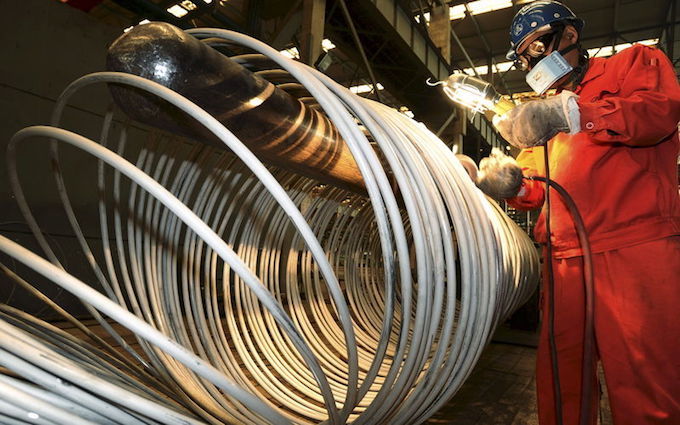
    The Indonesian Anti-dumping Committee has concluded that Vietnam is dumping cold steel sheets following a 16-month-long investigation.

    Indonesia will apply anti-dumping duties of 3.01-49.2 percent on imports from Vietnam. But some major exporters are set to get away with low duties, according to the Trade Remedies Authority of Vietnam.

    Hoa Sen Group will pay 5.34 percent and Ton Dong A Corporation will pay 3.01 percent.

    The Trade Remedies Authority of Vietnam said it has been informed by the committee that Vietnamese and Chinese cold steel sheets are being imported into Indonesia at a price lower than in those countries, hurting domestic companies.

    In August 2019, the Indonesian committee announced it was opening the anti-dumping investigation. In July last year, it made a preliminary conclusion that the item under investigation was indeed being dumped.

    Immediately TRAV sent a letter objecting to some unreasonable aspects of the preliminary conclusion. KADI decided to extend the investigation for six months.

    Its final conclusion was announced on February 17.