Tag: asia

  • Google Maps makes paying for parking a snap in over 400 U.S. cities

    Google Maps makes paying for parking a snap in over 400 U.S. cities

    Has any app become as useful as Google Maps has become over the years? Every time you turn around, Google has added a new feature. And now, Google Maps users will be able to pay for parking and train tickets directly from the app. If an event runs longer than expected, you can add time to your meter without having to run out of the venue in the cold, driving rain, or miss the game-winning play or the show-stopping number just to feed the meter. You can also avoid touching parking meters, some of which could be lousy with coronavirus.

    Here’s how it works. As you approach your destination (which you’re tracking on Google Maps), the app will show a button that reads “Pay for Parking.” Enter the meter number, the amount of time you want to park there, and tap on pay. Pay for parking starts today with the Google Map app on Android phones in over 400 cities including Boston, Cincinnati, Houston, Los Angeles, New York, Washington D.C, and more. The feature will be coming to iOS soon and is driven by the Passport and ParkMobile apps.

    If you’re looking for transit directions on Google Maps, you’ll see a button giving you the option to pay for public transportation using the credit or debit cards connected to a Google Pay account. Google is adding the ability to pay transit fares from Google Maps for 80 transit agencies around the world. As Google says, “Now you’ll be able to plan your trip, buy your fare, and start riding without needing to toggle between multiple apps. You can understand how to pay in advance and even get your fare ready to go before you arrive at the station – which is helpful when you’re not sure what payment options a transit agency supports.

    When you get transit directions, you’ll see the option to pay with your phone with the credit or debit cards already linked to your Google Pay account. And in places like the San Francisco Bay Area, you’ll also be able to buy a digital Clipper card directly from Google Maps. Once you’ve purchased your fare, all you need to do is tap your phone on the reader or show your digital ticket to breeze on board.” Google Maps’ expansion to 80 transit agencies for ticket payments will rollout on Android in a few weeks.

  • YouTube TV confirms 4K streaming support and offline viewing option

    YouTube TV confirms 4K streaming support and offline viewing option

    Word that YouTube TV might allow users to download shows for offline view surfaced a few days ago. Today, the company announced several premium features that will be available for all users of the streaming service.

    First and foremost, YouTube TV will introduce a new add-on package with 4K streaming, offline viewing, and unlimited concurrent streams at home. This means that a YouTube TV base plan that supports six user accounts and up to three simultaneous streams will be able to take advantage of the 4K streaming option without restrictions.

    Unfortunately, this will come as “an optional add-on for members” for which they will have to pay. The amount hasn’t been revealed yet, but we suspect it will be announced once the new features will be ready for prime time.

    What’s really strange is the fact that YouTube TV has decided to put the option to download shows for offline viewing under a paywall too. Other streaming services typically offer these features for free, but for some reason, YouTube TV feels that those 3 million paid subscribers that it now has will be willing to pay extra for something that should be free.

  • Vietnam ranked among world’s top 10 emerging logistics markets

    Vietnam ranked among world’s top 10 emerging logistics markets

    Vietnam has jumped three spots to eighth in this year’s global index of emerging logistics markets after emerging as a popular manufacturing hub.

    The country had an overall score of 5.67 out of 10 in the 2021 Emerging Markets Logistics Index released by leading logistics company Agility.

    The firm ranked 50 economies based on three factors that make them attractive to logistics providers, freight forwarders, shipping lines, air cargo carriers, and distributors: domestic logistics opportunities, international logistics opportunities and business fundamentals.

    Vietnam performed well in international opportunities, ranking fourth globally. It was 18th in domestic logistics opportunities and 21st in business fundamentals, which include regulatory environment, credit and debt dynamics, contract enforcement, anti-corruption safeguards, price stability, and market access.

    “Vietnam has made strides as a manufacturing destination as a small number of companies has looked to ease dependence on Chinese production as a result of U.S.-China trade friction, rising costs and the Covid-19 crisis,” the report said.

    Vietnam’s climb by three places to eighth demonstrates it effectively contained the spread of the virus, positioned itself deftly to absorb manufacturers seeking to leave China and possesses an enviable investment pipeline across a number of sectors, including fashion and electronics, which could see its rise continue in 2022, the report said.

    China remained the world’s leading emerging logistics market followed by India. Indonesia (3rd) and Malaysia (5th) were Southeast Asian countries that did better than Vietnam in the ranking.

    According to the Vietnam Logistics Business Association’s latest survey, there are around 30,000 logistics companies in the country, 4,000 of them foreign-owned.

    The industry has been growing at 12-14 percent annually and is now worth $40-42 billion.

  • Credit Suisse APAC Profits Slip in 2020

    Credit Suisse APAC Profits Slip in 2020

    Pre-tax income at Credit Suisse’s Asia Pacific unit slipped in 2020 mainly due to higher credit loss provisions.

    Pre-tax income for Credit Suisse’s regional business fell 10 percent year-on-year to 828 million Swiss francs ($921 million), according to a statement, driven primarily by higher credit loss provisions which were offset by higher net revenue.

    Regional revenue grew 17 percent to 4.2 billion Swiss francs, accounting for 20 percent of the bank’s overall revenue with higher contributions from the Greater China region and strong collaboration with the global investment banking business. The region posted 8.6 billion Swiss francs of net new assets in 2020 which included a net outflow of 1.1 billion Swiss francs in the fourth quarter.

    Assets under management for the region stayed flat at 221.3 billion Swiss francs compared to 2019’s 220 billion Swiss francs.

    Globally, pre-tax income was down 27 percent to 3.5 billion Swiss francs due to increased provision for credit losses, major litigation provisions and an impairment to the valuation of a non-controlling interest in York Capital Management.

  • HSBC Singapore CEO to Depart for New Role

    HSBC Singapore CEO to Depart for New Role

    He will be taking on a new role at the Saudi British Bank (SABB) – 31-percent owned by HSBC – from April 4.

    HSBC Singapore will be naming a new chief executive to succeed Tony Cripps, who will be managing director-designate and board member of SABB, the bank said in an internal memo signed by deputy chairman and chief executive Peter Wong.

    Cripps was appointed HSBC Singapore CEO in 2017. He was previously chief executive of HSBC Australia, chief executive of HSBC in the Philippines, and held leadership positions in HSBC’s Global Banking and Markets business in London and Hong Kong.

    Wong said that under Cripps’ leadership, HSBC made key people hires, strategic technology upgrades and proposition enhancement, which resulted in strong underlying revenue growth for the franchise and its wider Asean business.

    He added that HSBC will build on the «clear and focused strategy» Cripps developed, as the bank aims to increase its capability and presence across the region.

  • Everything is put in place for Cebu Pacific operator’s crucial stock offer to rescue airline

    Everything is put in place for Cebu Pacific operator’s crucial stock offer to rescue airline

    It’s all systems go for the upcoming P12.5-billion stock rights offer of Cebu Air Inc. next month.

    In a disclosure to the local bourse on Wednesday, the operator of loss-making budget carrier Cebu Pacific released the final terms for the fundraising activity meant to keep the airline afloat while lingering coronavirus fears prevent a full take-off to recovery.

    The mega stock rights offer is part of a larger recovery plan worth $500 million that the airline announced last October, which also included a private investor placement of an equal amount. It was unclear whether the balance had been raised already.

    Under the offer, existing common shareholders may buy convertible preferred shares at a conversion price of P38 apiece. Preferred shareholders are entitled to receive fixed dividends with a yield of 6% per year, but they will not have voting rights that common stockholders enjoy.

    Shares will be sold from March 3 to 9, while a tentative listing date was set on March 29. Cebu Air will sell a total of 328.9 million convertible preferred shares to investors for this crucial fundraising activity.

    A chunk of the proceeds worth P4.8 billion will serve as repayment to advances by JG Summit Philippines Ltd., its parent firm. A smaller P3.9 billion would go to aircraft operating lease payments due this year, while P3.3 billion would settle old debts.

    The balance of P384 million would be spent on “general corporate purposes,” primarily for passenger refunds in case cash generated from lackluster operations are insufficient for settlement.

    Unlike regional counterparts that handed bailouts to their cash-strapped carriers like Malaysia and Thailand, the Philippines has been reluctant in spending taxpayers’ money to rescue local airlines on the brink of financial collapse.

    Although Cebu Air is yet to release its full-year financial results, the airline has expected losses to amount to “almost P25 billion” in 2020 that, if realized, will be a reversal of the P9.12 billion in profits in 2019.

    Apart from raising new funds, Cebu Air was also forced to downsize its workforce by 75% last year due to tepid flight operations.

  • McLaren Reveals The Artura Hybrid Supercar

    McLaren Reveals The Artura Hybrid Supercar

    After months of teasing the car, McLaren has finally revealed the Artura Hybrid supercar. It is McLaren’s first series-production High-Performance Hybrid supercar and is underpinned by the company’s philosophy of super-lightweight engineering. All-new from the ground up, the Artura presented McLaren engineers and designers with new opportunities to innovate, chief among these being how to preserve McLaren’s super-lightweight engineering philosophy when adding hybrid powertrain elements including an E-motor and battery pack.

    The Artura marks the debut of the new McLaren Carbon Lightweight Architecture (MCLA) – through the uniquely compact HPH powertrain system to the weight of cabling used in the electrical systems (where a 10 percent reduction was achieved), resulted in the Artura having the lightest dry weight of 1,395kg. The total weight of hybrid components is just 130kg (which includes an 88kg battery pack and 15.4kg E-motor), resulting in a DIN kerb weight of 1,498kg which is on par with comparable supercars that do not have hybrid powertrains, giving the Artura a super-lightweight advantage.

    At the heart of the Artura’s powertrain is McLaren’s all-new, 2,993cc twin-turbocharged V6 petrol engine. With a power output of 577 bhp – nearly 197 bhp per liter – and 585Nm of torque, the dry-sump aluminum engine is compact and lightweight; at just 160kg it weighs 50kg less than a McLaren V8 and is significantly shorter, enhancing packaging efficiency.

    The 120-degree v-angle of the engine, which allows the turbochargers to be positioned within the ‘hot vee’, delivers further advantages in packaging as well as contributing to a lower center of gravity. The 120-degree layout increases engine performance by reducing the pressure losses through the exhaust system and allows for a stiffer crankshaft that enables a rev limit of 8,500rpm, maximizing performance and driver engagement.

    Inside with the cockpit centered around the driver, the driving mode selection – which retains separate Powertrain and Handling controls – has been moved to the instrument binnacle

    Working in harmony with the new V6 is the Artura’s compact axial flux E-motor, located within the transmission bell housing. Smaller and more power-dense than a conventional radial flux E-motor, it is capable of generating 94bhp and 225Nm and boasts a power density per kilo 33 percent greater than the system used in the McLaren P1.

    The Artura can go from 0-100 kmph in just 3 seconds, 0-200 kph tales 8.3 seconds while the 300 km mark is achieved in 21.5 seconds. Top speed is limited to 330kmph. The dual propulsion systems are integrated via an engine disconnect clutch, driving an all-new, twin-clutch transmission, which has been developed specifically for the Artura.

    The E-motor is powered by a battery pack comprising five lithium-ion modules, offering a usable energy capacity of 7.4kWh and a pure EV range of 30km. The battery is refrigerant cooled using cooling rails, and the assembly – including a power distribution unit that transfers battery power from the rear of the vehicle to the ancillaries in the front – is mounted on a structural carbon fiber floor.

    The Artura is designed with full Plug-in Hybrid (PHEV) capability and can be charged to an 80% charge level in just 2.5 hours with a standard EVSE cable. The batteries can also harvest power from the combustion engine during driving, tailored to the driving mode selected.

    The Artura gets advanced driver-assistance systems (ADAS) including Intelligent Adaptive Cruise Control, Lane-Departure Warning, Auto High-Beam Assist and Road-Sign Recognition as well as Over-The-Air (OTA) software updates.

    On the design front, the Artura gets a low-nose, cab-forward, high-tail stance and the drama underlined by the signature McLaren dihedral doors – which open closer to the body and house mirrors that fold in more tightly – and further enhanced by the short wheelbase and low stance.

    Inside with the cockpit centred around the driver, the driving mode selection – which retains separate Powertrain and Handling controls – has been moved to the instrument binnacle, which is in turn mounted to the steering column and adjusts with the steering wheel to further enhance driving ergonomics. Consequently, the steering wheel is kept clear of unnecessary switches, however, the driver is still able to adjust driving modes without taking their hands away from the wheel.

  • Apple receives a patent for a major new Apple Pencil feature

    Apple receives a patent for a major new Apple Pencil feature

    Apple has received a patent that could change the way the Apple Pencil is used. Titled “Multipurpose stylus with exchangeable modules,” the patent covers the tips (or nibs) used on the Apple Pencil. There are various reasons why an Apple Pencil user might want to change the nib on the (with all due respect to the late Steve Jobs) stylus. One, the current nib on the digital pencil could be wearing down and a replacement needed. But another reason to change the Apple Pencil tips would be to change the functionality of the accessory.

    Or as Apple explains it in the patent, “The stylus can provide interchangeability of various removable components, such as removable functional end modules that cover a connector for charging and communicating with the stylus. The various removable components each provide distinct features, thereby allowing the user to select various capabilities by employing each of the various functional end modules.”

    Some of the changes that Apple discusses in the patent includes “a color, a shape, a thickness, a size, a brightness, or an opacity.” The nib (called the “end connector” in the patent) would be removable from the main body and would have a number of sensors. A tactile sensor would detect when the nib touches a surface. Other sensors listed in the patent include a “contact sensor, a capacitive sensor, a touch sensor, a camera, a piezoelectric sensor, a pressure sensor, or a photodiode.” Other possible features found in the accessory could be a an orientation detector, a gyroscope, an accelerometer, a biometric reader, a display, a switch, a button, a speaker, a compass, a microphone, a camera, or a voice coil.

    Currently, Apple offers two different generations of the Apple Pencil which are compatible with certain iPad models. Offering interchangeable tips might not only be a revenue-generator for Apple, it obviously could be an easy way for users to expand the functionality of the accessory. The million-dollar question (which might actually be a millions dollar question as far as Apple is concerned) is whether Apple will finally add Pencil support to the iPhone. Consider that Samsung’s multi-functional S Pen now works with the 6.8-inch screen on the Galaxy S21 Ultra 5G. However, unlock the Galaxy Note line throughout the years, the accessory has to be purchased separately and there is no place to house the S Pen on the phone.

    While there have been rumors for years about the Apple Pencil coming to the iPhone, this has not taken place yet. Is Apple trying to honor the memory of its late co-founder and CEO Steve Jobs? The executive famously put down the use of a stylus when he introduced the iPhone in January 2007. At that time, before the touchscreen was widely used, many smartphones came with a stylus to help the user navigate through the UI. It needs to be pointed out that these styluses were not as multi-functional as the digital pens are today. Most were merely made of plastic with a sharp tip.

    There are some manufacturers who build phones today that come with a stylus. One popular mid-range model is the LG Stylo which early this year is expected to launch a 5G version of the phone which will be the seventh-generation of the model. Last year, Motorola released the mid-range Moto G Stylus.

    Just because Apple has received a patent for this technology, it doesn’t mean that it definitely will be used. Still, it seems like offering exchangeable tips for the Apple Pencil could be a win-win for users and for Apple. The patent number is 10,921,907 and the technology was originally filed for protection by Apple back in April, 2017.

  • Electronics exports boom driven by FDI

    Electronics exports boom driven by FDI

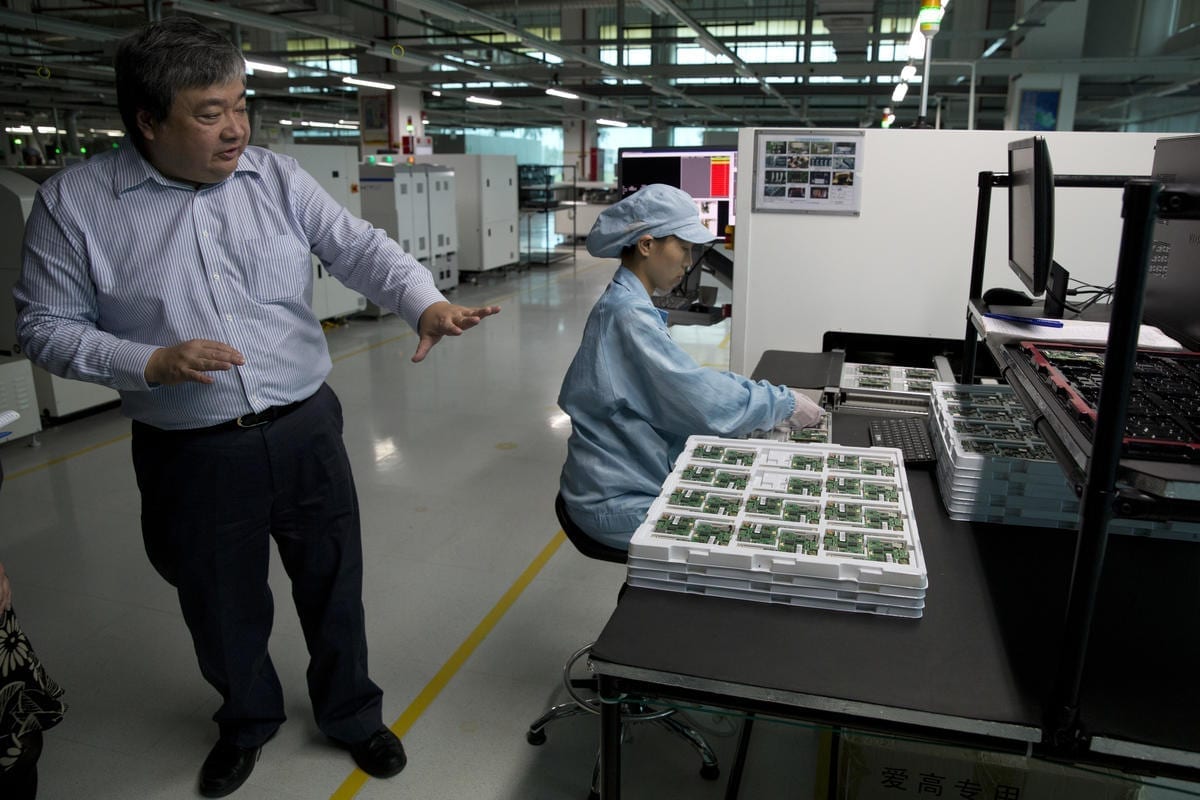
    Vietnam’s electronics exports have been booming due to consistent foreign investment in the sector, HSBC said in a recent report.

    The country’s exports rose by 50.5 percent year-on-year in January, with the primary driver of growth being Samsung’s recently released Galaxy S21 smartphone.

    Electronics exports last year were a record $96 billion, or a third of the country’s total exports.

    It attributed the rapid rise to Samsung’s investments since 2008. The South Korean company now has six plants in Vietnam.

    The country has also emerged as a growing supplier of chips with over 11 percent of the global market share in 2019 after growing at 300 percent that year.

    Its increasing production of computers has also supported chip production.

    U.S. company Intel set up a $1-billion chip assembly and testing facility in 2006, and in January 2021 reportedly injected another $475 million to manufacture 5G products and core processors.

    U.S. tech giant Apple has been producing Airpods since May 2020, and is likely to start producing iPads as early as mid-2021.

    Foxconn, a key supplier for Apple, received a license in January to build a $270-million plant in the northern province of Bac Giang. The Taiwanese contract manufacturer has so far invested $1.5 billion in Vietnam.

    Vietnam’s competitive policies will continue to attract quality FDI, which is crucial in helping the country move up the value chain.

    The country has to improve labor productivity through better education and vocational training. The other priority is improving infrastructure, said the report.

  • Bank Permata CEO to Head Indonesia’s New Wealth Fund

    Bank Permata CEO to Head Indonesia’s New Wealth Fund

    The fund, which currently has around $15 billion in assets, is targeting to grow to $100 billion.

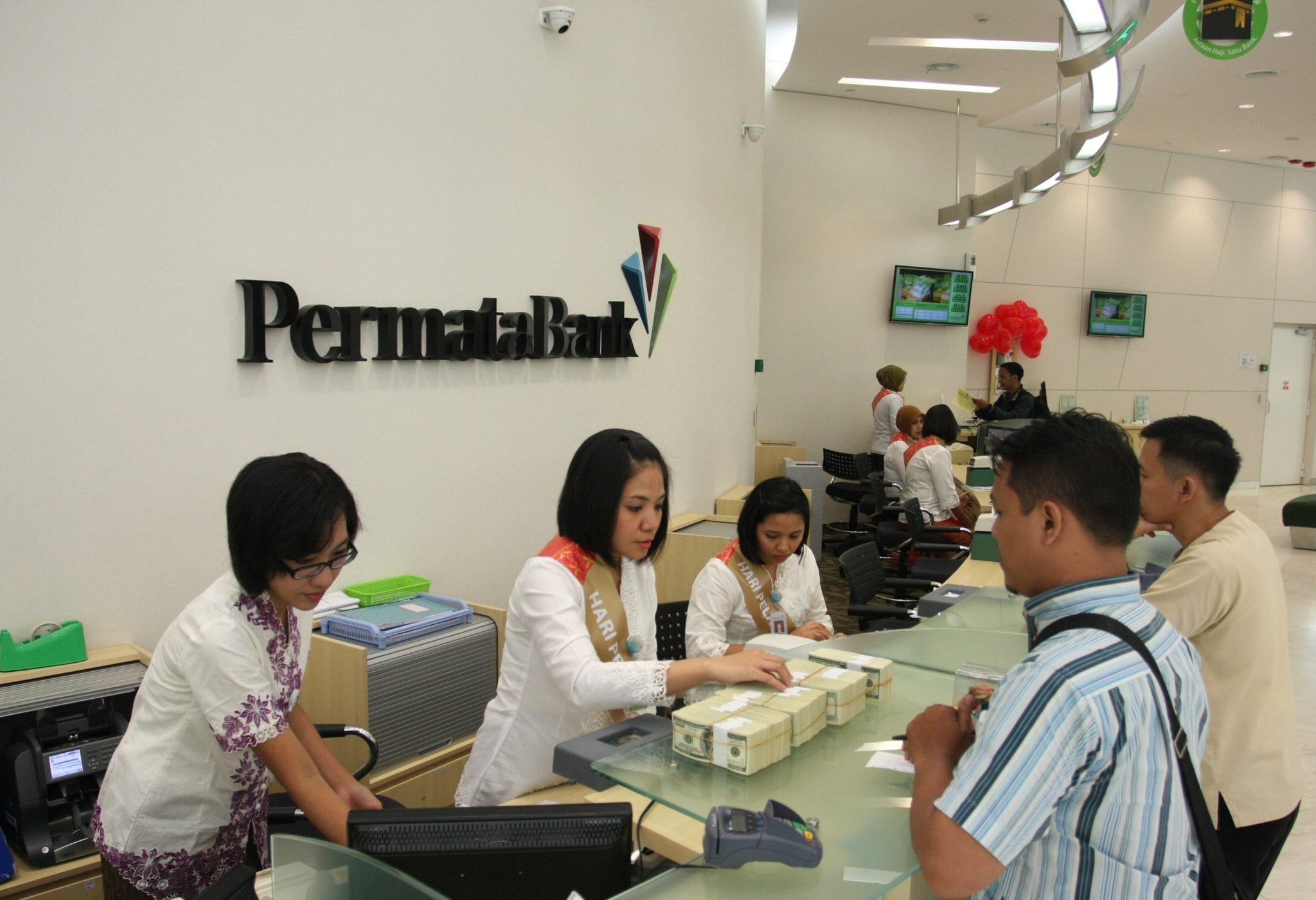
    Ridha Wirakusumah, who has been CEO Indonesia’s Bank Permata since 2017, will become the chief executive officer of the country’s new strategic development sovereign wealth fund, the Indonesia Investment Authority said in an announcement on Tuesday.

    Wirakusamah has held a number of leadership positions in his career, including president and CEO of AIG Consumer Finance Group Asia, Asia Pacific president and CEO at AIG, president CEO for AIG Finance (Hong Kong), head of corporate finance at Banker Trust Indonesia, APAC CEO at General Electric and head of banking at GE Money Asia.

    We want INA to reduce the gap in domestic funding needs and development financing, and provide development financing, especially for national infrastructure,» Indonesia President Joko Widodo said in a briefing on Tuesday.

    The Indonesia Investment Authority’s slate of executives includes Arief Budiman, a former director of oil and gas giant Pertamina, who will serve as deputy CEO. Also joining the fund is Stefanus Ade Hadiwidjaja, previously with private equity firm Creador Capital Group, who will be director of investment.

    Marita Alisjahbana of Citibank Indonesia will be director of risk, while Eddy Porwanto, formerly the chief financial officer of flag carrier Garuda Indonesia, joins as director of finance, the announcement said.

  • Singapore Fintech Partners MoneyGram

    Singapore Fintech Partners MoneyGram

    The integration and implementation of Lightnet’s technology with MoneyGram’s money transfer services will provide customers with a wide selection of payout services across Southeast Asia.

    The Singapore-headquartered fintech company will provide its Bridgenet solution to enable money transfer operators to connect with MoneyGram’s money transfer service, broadening the range of payout services, the company said in an announcement.

    The success of this collaboration reflects Lightnet’s commitment towards improving the efficiency, convenience, affordability and accessibility of cross-border remittances. Lightnet is working tirelessly to make these kinds of services available to everyone, Tridbodi Arunanondchai, group CEO and vice chairman of Lightnet, said.

    Lightnet was co-founded in 2018 by Chatchaval Jiaravanon – a family member of the Charoen Pokphand group in Thailand – and Arunanondchai, a tech entrepreneur and former investment banker.

    The startup raised $31.2 million in 2020, in a Series A funding round led by UOB Venture Management. It also partnered Swiss crypto bank Seba to offer remittance services for migrant workers in Asia, and partnered Velo Labs and Visa to serve the micro, small and medium enterprise (MSME) lending market.

  • Luxury Hong Kong Apartment Breaks Sale Record

    Luxury Hong Kong Apartment Breaks Sale Record

    Located in Hong Kong’s exclusive Mid-Levels neighborhood, the apartment is Asia’s priciest, according to «Bloomberg.»

    A 3,378 square foot penthouse at the 21 Borrett Road development was sold on Monday for HKD $459,408,000 ($59,258,165) to an unnamed buyer, according to transaction details published by the developer.

    The apartment on the 23rd floor also comes with its own swimming pool and three parking lots, according to its prospectus. The first phase of sales at the development, which was delayed from 2019, includes 15 units measuring between 2,075 and 3,378 square feet.

    Developer CK Asset Holdings, which is run by tycoon Victor Li, delayed sales of the project amid social unrest in the special administrative region, and the luxury property market has been reeling from the fourth wave of Covid-19 infections and economic downturn, according to Hong Kong daily The Standard.

    The sale of the apartment, which broke the record made by another luxury development in Mount Nicholson in 2017, could be a sign that the local property market is looking up.

  • How micro-fulfilment is re-shaping the Southeast Asia grocery supply chain in 2021

    How micro-fulfilment is re-shaping the Southeast Asia grocery supply chain in 2021

    The pandemic has accelerated the proliferation of eCommerce by up to six years, and the grocery sector has been one of the most impacted, albeit positively, due to vast surges in online sales. However, there are associated challenges when it comes to eCommerce fulfilment and delivery, particularly in parts of Southeast Asia where there is a high reliance on imports, but land availability and limitations on international travel are disconnecting the flow of the eCommerce supply chain.

    Online grocery delivery and rapid ‘store-to-door’ delivery exploded in Southeast Asia during the pandemic, with businesses such as foodpanda in Singapore offering delivery of over 40,000 products across groceries, drinks, health, pharmaceuticals and electronics in under 25 mins through a mobile app. Singapore’s largest online supermarket, RedMart, also offers fast and flexible delivery with a ‘sunrise’ 7am next day delivery option catering to professionals who want their groceries delivered before work, as well as an eco-friendly option that allows RedMart to deliver to more homes in an area within certain windows of time.

    As online sales and ‘store-to-door’ delivery popularity is set to continue to rise well beyond the end of the pandemic – research from GoogleTemasek Holdings Pte and Bain & Co. shows eCommerce is set to grow from $62 billion in 2020 to $172 billion by 2025 in Southeast Asia – many grocers and retailers are struggling to keep up with the competitiveness and turn a profit from online deliveries. To combat this, one innovation gaining pace for a proactive and resilient supply chain is micro-fulfilment centres.

    Micro-fulfilment is the new 2021 supply chain

    COVID-19 did not just fast-track eCommerce uptake, it also accelerated advances in technology, pushed corporate boards to revaluate their traditional business models and forced them to rethink relationships between retailers, disruptive start-ups, and automation innovations. This set the scene for a potentially radical shake up of fulfilment strategies across Southeast Asia and the world into 2021 and beyond.

    At its core, micro-fulfilment aims to speed up the delivery of goods to consumers by bringing the product closer to the consumer. As the name suggests, micro-fulfilment sites are far smaller than the traditional retail model of sprawling, labour-intensive distribution centres located in just a few remote locations. By adding more automated operations to smaller urban sites and even the backs of physical stores, retailers have the goal of slashing delivery times for online orders, allowing products to reach customers in a matter of hours, rather than days.

    Micro-fulfilment also comes with a number of additional benefits. Cheaper than larger, fully robotics-equipped warehouses, the approach of a fully automated micro-fulfilment improves COVID-19 safety, reducing the costs of floorspace and expediting the picking process. It also enables late ordering cut-offs, which reduces the carbon footprint of delivery networks by being closer to the consumer and providing additional collection points away from busy store locations, which in a region like Southeast Asia, can become incredibly advantageous.

    The fundamentals of micro-fulfilment

    Beyond the challenges of adapting to a more entrepreneurial mindset, the practical aspects of making micro-fulfilment centres work efficiently rests on three core pillars. Firstly, making sure that you have an effective omnichannel offering that connects eCommerce orders to the appropriate micro-fulfilment centres is essential. Secondly, ensuring you have complete visibility of inventory is an equally important factor for maintaining accurate insights into stock availability, so you will never end up out of pocket. Finally, making sure you have an in-warehouse system in place to meet the exact delivery demands of the end customer will see you through to a well-managed and proactive micro-fulfilment strategy.

    Other beneficial aspects of micro-fulfilment centres for retailers in Southeast Asia are the options available when it comes to setting them up. You can set up micro-fulfilment centres to primarily service customers in the local area of one store, or you can also set up a ‘spoke-hub’ distribution model where one centre is able to serve many different stores. Another approach could even be to set up a ‘dark store’ as a micro-fulfilment centre.

    Smart fulfilment to streamline 2021 supply chain operations

    While there is no doubt that the pandemic accelerated a more flexible and innovative approach to supply chain operations for many businesses in 2020, 2021 will push even more business in Southeast Asia to redefine their fulfilment strategy to future-proof operations. As many grocers and retailers remain reluctant to use their current store base for eCommerce fulfilment – because it can interrupt customers and cause issues around social distancing – concepts such as automation and micro-fulfilment will likely be the winners this year and beyond.

    While there are still many challenges ahead, we should have a positive outlook. 2020 showed the willingness of retailers and senior leadership decision makers in Southeast Asia to go above and beyond normal conventions, and as this approach carries into 2021, this should herald an exciting year during which fresh innovations, such as micro-fulfilment, build momentum.

    Receive up-to-date product, customer and partner news directly from Manhattan Associates on Twitter and Facebook.

    About Manhattan Associates

    Manhattan Associates is a technology leader in supply chain and omnichannel commerce. We unite information across the enterprise, converging front-end sales with back-end supply chain execution. Our software, platform technology and unmatched experience help drive both top-line growth and bottom-line profitability for our customers.

    Manhattan Associates designs, builds and delivers leading edge cloud and on-premises solutions so that across the store, through your network or from your fulfilment centre, you are ready to reap the rewards of the omnichannel marketplace. For more information, please visit www.manh.com/en-au

    By, Richard Wright, Managing Director, SEA, Manhattan Associates

     

  • SoftBank-backed Coupang reveals revenue surge ahead of US IPO

    SoftBank-backed Coupang reveals revenue surge ahead of US IPO

    South Korean e-commerce giant Coupang, backed by Japan’s SoftBank Group Corp, on Friday filed to go public on the New York Stock Exchange, hoping to cash in on strong demand for high-growth tech stocks as it reported a near-doubling of annual revenue and narrowing losses.

    Coupang is aiming for a valuation of around $50 billion in its U.S. initial public offering (IPO), according to a person familiar with the matter.

    This would make it the largest IPO in New York by a company based outside the United States since Alibaba Group Holding in 2014, Dealogic data showed.

    Founded in 2010 by Harvard graduate Bom Kim, Coupang made a splash in Korea with its ‘Rocket Delivery’ service, which promised delivery within 24 hours, shaking family-owned retail conglomerates such as Shinsegae and Lotte.

    Coupang was valued at $9 billion in its last private fundraising round in 2018, according to data provider PitchBook.

    In a regulatory filing, Coupang said total revenue jumped 91% in 2020 to $11.97 billion, while net losses narrowed to $474.9 million from $698.8 million.

    The company, viewed as a rival in South Korea to e-commerce giant Amazon.com Inc, received $1 billion in funding from SoftBank in 2015 and $2 billion from its Vision Fund in 2018.

    Coupang’s other investors include BlackRock Inc, the world’s largest asset manager, venture capital firm Sequoia Capital and billionaire investor Bill Ackman.

    The U.S. IPO market is at its strongest in more than two decades, and investors are flocking to buy shares in technology companies that have benefited during the COVID-19 pandemic.

    Coupang plans to list under the symbol “CPNG”. It has yet to provide a target asking price for its shares.

    Goldman Sachs, Allen & Co, JP Morgan, BofA Securities and Citigroup are among the underwriters.

  • L’Oreal predicts ‘Roaring 20s’ retail resurgence post Covid

    L’Oreal predicts ‘Roaring 20s’ retail resurgence post Covid

    Beauty giant L’Oréal, besides posting financial results that beat expectations, is offering high-level optimism, promising a resurgence in sales and a new “Roaring ’20s.”

    “Like a flower after winter, beauty is ready to blossom after COVID goes away,” says Nicolas Hieronimus, the Paris-based conglomerate’s incoming chief executive officer, in a webcast for investors.

    Adding that the company is already seeing fiesta-like gains in China, “we are confident that, like in the roaring ’20s, there will be a big beauty party. Beauty is and always will be essential.”

    Those upbeat remarks are likely to cheer up many in the industry. Between working from home, wearing masks and keeping six feet away from anyone, consumers felt little reason to buy makeup or spritz on fragrances, depressing sales.

    The NPD Group, a market research company that tracks beauty sales, reports that prestige cosmetics tanked 19% for the full year, falling to $16.1 billion. Makeup dropped the most, down 34%.

    L’Oreal’s Hieronimus made his remarks as the company presented solid quarterly results. Even as industrywide sales tumbled, L’Oréal bucked the trend. Comparable sales rose 4.1% in its fourth quarter, and the company says it is winning significant market share gains in many categories.

    The company’s ecommerce revenues soared 62%, with gains in all geographic regions. It now accounts for a record 26.6% of the total sales for the year. “The huge surge is helping to democratize beauty,” he says. “And consumers of beauty remain strong. We saw rapid recovery everywhere when stores reopened.”

    Hieronimus also says he expects the company to continue to benefit from skincare’s growing importance, which now accounts for 40% of sales.

    In terms of marketing, he says digital spending now accounts for 60% of its budget.

    Describing beauty as “both a need and an aspiration,” Hieronimus says he believes the company will continue to outperform competitors because of its focus on data, AI, research and innovation. “We are ahead of the curve in digitalization.”

    And he says consumers will continue to reward companies with a strong brand purpose, a commitment to social values and “acting for the greater good. We create the beauty that moves the world.”