Tag: asia

  • Starbucks opens its largest coffee store in Thailand

    Starbucks opens its largest coffee store in Thailand

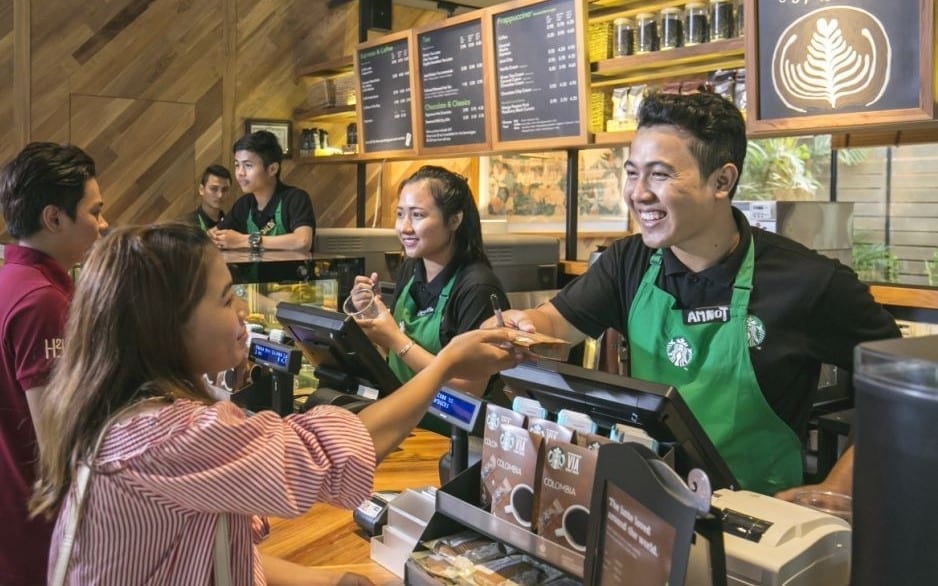
    Starbucks today celebrates 20 years of delivering the Starbucks Experience to customers throughout Thailand with the recently opened Central World store– its largest store in Bangkok. Located on the first floor of CentralWorld, the store features a Starbucks Reserve Bar and, for the first time in Asia, Starbucks® DRAFT beverages infused with nitrogen.

    Starbucks CentralWorld is Thailand’s largest Reserve Bar store composed of Starbucks traditional coffee bar as well as the Starbucks Reserve Bar, which invites customers to deepen their coffee knowledge. Featuring the Black Eagle espresso machine for unique, espresso-forward beverages and various brewing methods such as the Siphon, Chemex, and Pour Over, customers can taste Starbucks Reserve, small-lot coffees for a premium coffee experience specially-crafted by Starbucks Coffee Master partners (employees) whose passion and knowledge of coffee is highlighted by their black aprons.

    Starbucks DRAFT makes its Asia debut in the store on a four-tap system delivering Starbucks Cold Brew and nitrogen-infused Starbucks Cold Brew, tea and milk. This latest beverage innovation draws in customers with its velvety texture cascades from the taps causing a sensory experience to both taste and see. The Starbucks DRAFT counter, found on the first floor of the store, highlights select nitro beverages including Nitro Cold Brew, Nitro Peach Tea, Nitro Green Tea Latte, Nitro Caramel Macchiato and Nitro Flat White.

    “From the success of Starbucks Nitro Cold Brew coffee, we continue to search for beverage innovation to elevate the customer experience. Today, we are pleased to launch Starbucks® DRAFT, an innovative cold beverage offering a rich, creamy texture for each beverage.” says Nednapa Srisamai, managing director of Starbucks Coffee (Thailand) Ltd. “This is a new cold beverage experience not to be missed.”

    This beverage innovation is the first-of-its-kind in Starbucks across Asia further elevating the cold beverage experience. Starbucks® DRAFTis also available today at one location in the U.S.

    As customers enter the space for the first time, their eyes will be drawn to the high, gold ceiling inspired by the natural terraces where coffee is grown, paying homage to the landscapes of coffee-growing terrain. The ceiling begins the coffee journey for customers by inviting them to come in from the outside and move towards the central Starbucks Reserve bar where the aroma of coffee can be enjoyed all around.

    The 760 metre store has more than 230 seats and two large rooms is designed to host community events or small gatherings surrounded by locally-relevant art installations throughout the store. Local artists Rukkit Kuanhawate created a feature piece highlighting the various coffee growing regions through regional wildlife including, the Sumatran Tiger, Kenyan Elephant and Guatemalan Quetzal bird. Similarly, Irin (Ann) Ariyatanap and her team handpainted murals using drawings of coffee botanicals and Thai floral motifs alongside imagery of the Starbucks Reserve coffee silos found exclusively at the Reserve Roasteries.

    Continuing on the coffee journey, customers are delighted upon entering the store with wooden coffee scoops engraved with messages and colorful motifs describing the various parts of the coffee tree. Similarly, the walls of both meeting rooms serve as tribute to the bean-to-cup story through natural hemp woven art, hand painted ceramics and a floor-to-ceiling wood carving.
  • UBS Loses Investment Banking Co-Head

    UBS Loses Investment Banking Co-Head

    Swiss bank UBS said the co-head of its investment bank since 2018 is departing, leaving a trading veteran as the sole head of the unit.

    Zurich-based UBS’ Piero Novelli is leaving at the end of next month, UBS said in a statement on Monday, to retire from the banking industry to pursue new opportunities. The 55-year-old was co-head of UBS’ investment bank since 2018, with Rob Karofsky.

    Novelli, a 55-year-old veteran Italian dealmaker and close associate of designated Unicredit boss Andrea Orcel, is leaving in favor of a boardroom career and to teach finance and business, UBS said. This puts UBS’ investment bank into the hands of Karofsky, a veteran trader who has been with UBS since 2014.

    The duo had taken over as co-presidents of UBS’ investment bank when Orcel left three years ago. Novelli’s is the first top management exit for Ralph Hamers, who took over as CEO of UBS three months ago.

  • Amazon’s Vietnamese partner reports surge in profit

    Amazon’s Vietnamese partner reports surge in profit

    Textile company Gilimex said its net profits almost doubled in 2020 thanks to a number of high-value contracts with international retailers.

    It reported record revenues of VND3.45 trillion ($150 million), up 36 percent from 2019, and net profits of VND308 billion for the year.

    Gilimex’s main products are handbags and backpacks.

    It tied up with Amazon, the world’s largest online retailer, in 2016 and seen average revenues grow at 20 percent a year since then.

    Its other large foreign partner is Swedish furniture retail giant IKEA with whom it has eight long-term contracts worth $16.2 million.

    The firm also develops new products for Dutch baby products maker Bugaboo and Puma, the German multinational that manufactures athletic and casual footwear, apparel and accessories.

  • E-Red Packets Gain Traction

    E-Red Packets Gain Traction

    With physical gatherings limited, red packet gifting via digital channels on the first two days of the Lunar New Year grew considerably from the year before.

    Efforts to digitalize the longstanding custom of giving hong bao (red packets) during the Lunar New Year have been given a boost by the pandemic and limited social gatherings in Singapore, according to local banks, which reported a rise in e-hongbao adoption.

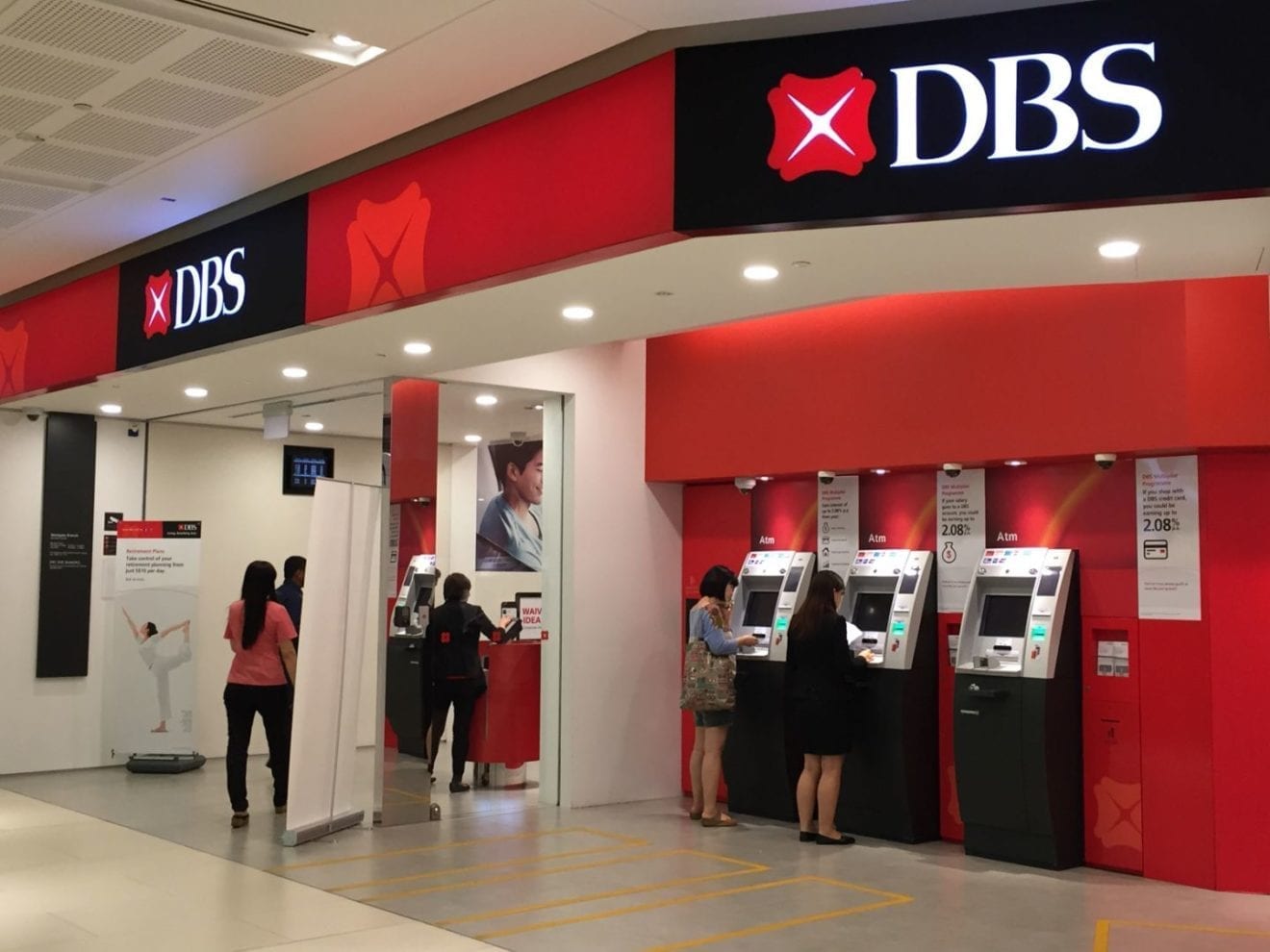
    DBS reported more than 9,000 DBS eGift transactions on Friday and Saturday – a 108 percent increase from last year – and 215 percent more at S$595,000, with some S$2 million loaded on 32,000 of the bank’s QR gift cards compared to S$660,000 on 18,000 QR gift cards in 2020. Transactions on OCBC Bank’s Pay Anyone app rose more than 140 percent compared to last year, while the volume of PayNow transactions made by UOB customers tripled on the first two days of the Lunar New Year from 2020, the banks said.

    Limitations with regard to physical interactions and gatherings, and new cashless habits adopted in the past year among consumers contributed were behind the rise in digital giving, a spokesman for Standard Chartered, which saw PayNow transactions rise 400 percent, told the paper.

    While community transmission of the Covid-19 virus in Singapore is largely contained, households in Singapore are limited to a maximum of eight visitors per day, which has put a dampener on celebrations.

    Despite the rise in digital alternatives, old habits die hard, as evidenced by the efforts of banks that have continued to produce red packets with elaborate designs.

  • Singapore Banks Throw Weight Behind Green Vehicles

    Singapore Banks Throw Weight Behind Green Vehicles

    Ahead of Tesla’s launch in Singapore, DBS is has announced financing for new and used electric and hybrid cars, while a partnership with OCBC will boost the availability of electric vehicle charging points.

    As part of DBS’ efforts to incentivize the adoption of green practices and carbon footprint reduction, the bank is rolling out Singapore’s first green car loan, which is priced at 1.68 percent per annum, it announced on Monday.

    The bank said there is much room for growth, citing Norway’s 54 percent electric car market share, compared to Singapore, where there are 43,000 electric and hybrid cars – only 6.8% of the car population.

    It also said that lending to the electric vehicle instead of the combustion engine vehicle sector has lower environmental and social costs of approximately 40 percent and 16 percent respectively.

    To accelerate the greening of Singapore’s land transport sector, OCBC Bank announced a strategic partnership with Charge+, an operator and provider of electric vehicle (EV) charging solutions that plans to install 10,000 EV charging points islandwide by 2030.

    Under the memorandum of understanding signed by the two parties, OCBC Bank will encourage its property developer and property owner customers to install charging points at their premises, implement digital payment solutions for the charging service, and look into the financing for the infrastructure, an announcement on Monday said.

    Just having the infrastructure is not good enough. There must be public adoption to enable a clean energy transportation system too. OCBC can therefore play the role as a meaningful financial services enabler in the electric vehicle ecosystem, Elaine Lam, OCBC head of global corporate banking, said in the announcement.

    Last week, electric carmaker Tesla began taking orders for its Model 3 Standard Range and the Model 3 Performance in Singapore, which are priced from S$116,334 ($88,000), excluding COE.

    The cars have a Vehicular Emissions Scheme (VES) banding, which entitles potential buyers to a S$25,000 rebate. Under the Electric Vehicle Early Adoption rebate scheme announced in 2020, customers who buy a new electric car also qualify for a 45 percent rebate on its Additional Registration Fee, capped at S$20,000.

    The Singapore government in 2020 said it aims to phase out fossil fuel vehicles by 2040.

  • UBS Investment Bank Enjoys Trading in Driving Seat

    UBS Investment Bank Enjoys Trading in Driving Seat

    The exit of Piero Novelli from UBS leaves its investment bank without its weightiest sponsor of deals for the super-rich. The trading business was and remains elementary within the big bank.

    When the 55-year-old Italian dealmaker leaves at the end of next month, he leaves an investment bank that boomed against the backdrop of the pandemic: the unit pre-tax more than tripled last year, thanks to buzzing trading.

    It managed to reduce its cost-income ratio to below 71 percent – unheard of efficiency – and hit a return on equity of nearly 20 percent. The UBS unit also loaded up on risk, adding another $13.2 billion in risk-weighted assets, but dramatically improved the return on them from 8.2 percent to ten percent.

    UBS’ investment bank is in fine fettle because of global markets, the purview of co-head Rob Karofsky. The trading arm – which encompasses equities, debt, foreign exchange, and interest rate products – has posted nearly three times the revenue of the advisory arm overseen by Novelli every year since the duo took over in 2018.

    The relation underscores that the balance of power lies with Karofsky, who joined UBS as head of equities globally in 2014 from Alliance Bernstein, where he held the same role. The 53-year-old American picked up the nickname Killer Karofsky at Morgan Stanley, where he worked until 2005 before heading for Deutsche Bank.

    The market turmoil sparked by Covid-19 gave UBS’ investment bank a timely lift last year: in 2019, the unit foundered in the wake of Andrea Orcel’s absence – reportedly in large part because the notoriously intense Italian banker «had his hands around 10,000 throats», as one UBS banker put it to the Financial Times.

    Novelli was also the bridgehead of an effort begun in 2019 to build a bridge between other super-wealthy private banking clients and the funding needs of private firms. Private capital markets» was rolled out last year with global as well as regional teams under Ros L’Esperance and Javier Oficialdegui, UBS’ global banking co-heads.

    Alan Felder runs a U.S.-based team, Isabelle Toledano-Koutsouris is responsible for Europe, while Nicolo Magni manages Asia-Pacific. The unit doesn’t disclose any metrics, or even examples of deals as Credit Suisse does for an international sales and trading push under Yves-Alain Sommerhalder.

    A UBS spokesman said only the bank was pleased with the private capital market progress. Credit Suisse also bulked out its efforts, under banker Christian Meissner and long-time executive Bab

  • aVinco Level Up Your Online Baccarat Games Skills With This Easy Guide In 2021

    aVinco Level Up Your Online Baccarat Games Skills With This Easy Guide In 2021

    Perhaps you still do not know this wonderful card game, very similar to blackjack, which is especially famous in Latin America. We can enjoy it in the European continent, where it is a success. Online baccarat is a game between a player and the dealer, and users must bet on who will win the card game if the player, the dealer or the result will be a draw.

    In online baccarat table games, the best card is 9 and then 8. A hand of two nines is known as ‘natural’, as are two eights. The winner will be the one that is closest to the value 9, adding the total of their cards, and if we have guessed the winner or the tie in case of a link, we will win our bet that is paid at 1: 1. Below we leave you a more detailed explanation of the rules and the value of the cards.

    How does online baccarat work?

    Each online baccarat room sets a minimum bet amount, which, in each game, we will have to respect by playing the Player Win, Bank Win or Draw.

    Each card’s value is its face value; that is, the 2 is worth 2, the 4 is worth 4 and so on all except the figures that are worth all 10 and the Ace that counts 0.

    Basic rules

    Both the player and the Bank have rules and conditions to follow during the game.

    The player is obliged to stand if his cards total 5, 6, 8 or 9.

    However, the Bank:

    • It is forbidden to draw a third card if the player does not do so.
    • If your cards total 8, you cannot draw any more cards.
    • If his cards’ total value is 4, he can draw a third if the third that the player has previously drawn is a 2, 3, 4, 5, 6 or 7.
    • If his cards’ total value is 5, he can draw a third if the player’s is 4, 5, 6 or 7.
    • If his cards’ total value is 6, he can draw a third if the player’s is a 6 or a 7.
    • If the total value of her cards is 7, she is forced to stand.

    Bets and strategies in online baccarat

    As we have said, victories in online baccarat are paid 1: 1; that is, if we bet € 20 on a game and win, we will receive another 20 euros of benefit.

    Bet on Player

    The first option is to bet on the player, and we will come out with profits if the player’s cards are finally closer to the number 9 than those of the Bank. The advantage of the online casino in question over us bettors, in the case of betting on the player, is 1.36%.

    Remember that the player is only a participant in the game and does not refer to us, the bettors. The player will play his cards following the rules named above.

    Bet on the Bank

    The second option is to bet that the Banker wins the Baccarat game. With this bet, the casino has an advantage of 1.06%, and this is the reason why many users say that it is more likely to win by betting on the Banker. The probability is indeed higher, and that is why for each prize, if we have bet on the Bank, the casino will take a 5% commission.

    Bet on Tie

    And finally, we can also bet on the tie, something much less likely, which is why it pays better, precisely 8 or 9 to 1, depending on the house. The casino advantage on this bet amounts to 14.4%.

    Tips and strategies

    To play and win baccarat, you do not need to be a full-time strategist, as there are few game options with only two outcomes.

    1. You have three betting possibilities: the player, the house and the tie. Betting last is not the best, as the house edge will rise. Thus, your chances of winning the other two bets will be higher.
    2. According to your intuition, you can play baccarat online, taking into account the rounds’ latest results and betting evenly only on the player or the dealer. Or alternate between one bet and another.
    3. Always bet on the dealer until you lose. Only then should you change your bet to the player’s.
    4. Bet on a trend, for example, 4 times in a row on the dealer round and then switch to the other hand if you have won.

    Why play baccarat online?

    Online baccarat is a new, dynamic, and exciting game. That is why it is going viral among casino players across Europe.

    Play from home

    Turn on your laptop, tablet or smartphone, open the default browser or download your favorite casino application and start enjoying wherever you are!

    Receive online baccarat bonuses

    And of course, enjoy and take advantage of the bonuses for online baccarat, reduce your risk and increase your chances.

    In fact, you can get started right now by clicking on the link of the casino you’ve already had a look at and creating your gaming account, then make a deposit and play with the Welcome Bonus at the best online casinos.

    Variants of online baccarat

    Due to the success that online baccarat has had among casino players, different variants and new games derived from this exciting board game have emerged.

    Live Dragon Tiger

    Perhaps the Live Dragon Tiger is the best known, an authentic Game Show very fast and set in incredible conditions. It is a new release from Evolution Gaming, and you will find it in all live casinos.

    It is an Online Baccarat in which we have to bet on whether the Dragon or the Tiger wins to win the game.

    Speed ​​Baccarat

    Speed ​​Baccarat is a fascinating modality to win real money fast. The waiting time is reduced and a lightning game is created.

    Baccarat Squeeze

    Baccarat Squeeze is a new live table game with a small change that adds even more excitement to the game. During each play, the game presenter and dealer will gradually lift the cards from the Bank, little by little, to intuit the final value.

    Is online baccarat legal

    Online casinos like 888 casino are fully regulated by the government of all the territories of the globe and especially managed by an official team. Therefore, users only play legal casinos on the Internet. Those without a license simply do not reach the public, which is great for players.

    Are online baccarat games regulated?

    Consequently, online baccarat games are regulated. Since they are offered on legal and licensed casino platforms, we can enjoy baccarat without limits.

    Can you play baccarat online for free?

    It is possible to play baccarat online for free as long as it is Virtual Baccarat. However, baccarat with a live dealer is usually difficult to play for free since they live table games and are played directly with real money baccarat games.


  • AirAsia Food to spread its wings to Johor and Penang next month

    AirAsia Food to spread its wings to Johor and Penang next month

    Almost a year since its introduction in the Klang Valley area, AirAsia food is now set to spread its wings to other major cities in the country starting with Johor and Penang next month.

    AirAsia Bhd chief executive officer Riad Asmat said the business was recording very positive growth, especially during the return of Conditional Movement Control Order between October to December 2020, and the trajectory remained promising into 2021.

    He said under its expansion plan, the company had started an entrepreneurial program to recruit more talents to grow AirAsia food together in the upcoming potential markets, as well as securing more merchants under its umbrella”

    People are ready and looking for more (food delivery services) options right now and our offerings at AirAsia food, be it from the customer and merchant’s perspective, can accommodate their needs within the market,” he told Bernama in an interview recently.

    Riad named Ipoh, Kota Kinabalu, Kuching, Miri, and Kota Bharu as the next potential markets.

    As for the international market, he said the company aimed to mark its presence in Singapore next month, and other markets such as Indonesia, the Philippines, and Thailand soon.

    Launched during the Movement Control Order (MCO) in May 2020, AirAsia food is a seamless, fuss-free, and affordable food delivery platform for merchants as it runs on a flat-rate model that is equivalent to only a 10 percent commission rate.

    He said at present, it has the lowest commission rate in the market as other platforms’ commission fees range between 15 percent and 30 percent, and AirAsia food is the only platform that offers a flat rate.

    Merchants can also easily control their menu and prices and receive extended delivery coverage of up to 60 kilometers compared to a 15-kilometer coverage by other food ordering platforms.

    Riad said although there are service providers that have been in the market much longer, AirAsia food believes that the market is big enough for one more alternative with the advantages it can bring to the table.

    He said AirAsia food provides merchants with a competitive offering, which directly and indirectly can help them reap a greater return in terms of profitability and low cost, which in turn benefits their customers.

    As one of the businesses under the airasia.com Asean super app, AirAsia food is supported by airasia.com’s ecosystem of over 60 million users who are able to earn and pay with their BIG Points, he said.

    “The advantages of merchants joining us will be on the basis of the strong structure, including from the technology and client perspectives. A merchant now will get a potential exposure of up to 60 million clients within our ecosystem,” he said.

    On prospects, Riad said sales picked up during the lockdowns but the business would remain relevant in the future after vaccines are made available, as technology helps people to meet their needs in a very convenient way.

    “If you give the right products that people want and keep enhancing the business with innovation, surely you can sustain the business for a long period.

    “Our growth at AirAsia food does not only help local food businesses, but also has a spillover effect in creating more job opportunities,” he said.

    To-date, AirAsia food employs more than 1,500 teleporters (riders) offering services to 1,200 restaurants around the Klang Valley

  • ApplePay will now allow users to make purchases using Bitcoin

    ApplePay will now allow users to make purchases using Bitcoin

    Bitcoin is still the most famous cryptocurrency. And at Friday’s close, each Bitcoin was valued at close to $48,000, more than double the valuation of the digital currency about a year ago. Not only can you buy more with your Bitcoins, but you can also find it easier to spend thanks to the Apple Pay mobile payment service. The BitPay wallet app’s Prepaid Mastercard can be added to the Apple Wallet and Apple Pay can help Bitcoin owners spend the cryptocurrency online, through apps or in a store.

    The BitPay wallet app not only works with Bitcoin, but will also work with Ether, Bitcoin Cash and as well as the dollar-pegged stable coins USD Coin, Gemini Dollar, Paxos Standard and Binance USD. The stable coins are based on a 1:1 ratio with the U.S. Dollar. For every Gemini Dollar in circulation, there is a corresponding U.S. Dollar held by the State Street Bank and Trust Company.

    There are plans in the work to add support for the BitPay Wallet by the end of next month with other mobile payment services Google Pay and Samsung Pay. This will allow Android users to more easily spend Bitcoins and other cryptocurrencies including the aforementioned names that are pegged to the U.S. Dollar.

    To add your BitPaycard to Apple Wallet, you need to have the latest version of the BitPay app. The latter, which can help you securely store, spend, and manage Bitcoin, can be installed from the App Store and the Google Play Store. BitPay CEO Stephen Pair (both of him) said, “We have thousands of BitPay Wallet app customers using the BitPay Card. Adding Apple Pay and soon Google and Samsung Pay makes it easy and convenient to use the BitPay Card in more places.”

    Apple should do even more when it comes to digital currencies; should Apple add a cryptocurrency exchange it could generate over $40 billion. RBC analyst Mitch Steves believes that this would allow Apple’s shares to rise 25%. RBC noted that “Square takes in $1.6 billion a quarter through bitcoin-trading revenue from its roughly 30 million active users. Apple has an install base of about 1.5 billion people, signaling that it could make up to $40 billion a year from a Wallet-based crypto exchange.” The report adds that “if Apple went down this path, the USA would likely acquire the most crypto assets from a global perspective. If the USA owns the most crypto assets (be it Bitcoin or other assets), it would not make logical sense in our view to ban it. In addition, with Apple’s secure and world-class software, the USA would be able to have confidence in user information and balances if needed in the future.”

    Apple’s big move comes right after Tesla CEO Elon Musk showed interest in cryptocurrency Dogecoin. Tesla says that it soon will accept Bitcoins as payment toward the purchase of a Tesla vehicle. RBC’s Steves notes that the combination of Apple’s interest in Bitcoin and Apple’s popularity in the tech world can help the U.S. become the technological leader in cryptocurrencies for as long as the next 20 years.

    Thanks to the Blockchain technology, the method used to keep track of Bitcoin transactions, using the cryptocurrency is secure. Data on transactions is kept inside blocks and when a block is full, it is chained to the previous one. If someone wants to steal Bitcoin and hacks into the Blockchain to alter the information in one the blocks, it can’t be done without all members of the Blockchain spotting the changes. There are smartphones that can store and verify cryptocurrency transactions such as the HTC Exodus 1s.

  • Facebook to launch smartwatch with focus on fitness, messaging in 2022

    Facebook to launch smartwatch with focus on fitness, messaging in 2022

    Last month, Facebook called Apple a ‘significant’ future competitor. Those comments were understood to be a reference to their respective AR/VR efforts, but a new report adds another layer to the matter.

    The Information reports that Facebook is building a smartwatch as part of its ongoing hardware efforts, which already include Oculus VR headsets and the Portal smart display.

    It will use an open-source version of Google’s Android software and include its own cellular connection, meaning owners won’t need to rely on a smartphone for internet access.

    Feature-wise, the Facebook watch is set to focus on messaging through Messenger and other Facebook platforms. The social giant is also planning several fitness & health features including the ability to track workouts and connect to services from Peloton and others.

    Facebook’s watch, which will have to compete with top smartwatches from Apple and Fitbit, is scheduled to launch in 2022 with a successor planned for as soon as 2023. We don’t know how much it’ll cost yet, but the company will reportedly price it near the cost of production.

    This ultimately suggests that Facebook is more interested in collecting valuable user data that can be leveraged with future services than generating profit through hardware sales.

    Whether the Facebook smartwatch will succeed remains to be seen. Facebook has a poor track record when it comes to user privacy, so handing over health data to the company might be off-putting for consumers.

  • Huawei founder and CEO says Apple makes the best 5G phones

    Huawei founder and CEO says Apple makes the best 5G phones

    Huawei is not the company it was a couple of years ago when it was on its way to becoming the world’s largest smartphone manufacturer. Restrictions placed on the firm by the U.S. forced Huawei to sell its Honor sub-brand in order to get Honor out from under the thumb of the U.S. The manufacturer that could have been number one this year is more likely to be number seven by the end of the year.

    Huawei is aware that in one major regard, it is much closer to being like Apple than it is to be like other Android manufacturers in its class such as Samsung and arguably Google. Like Apple, Huawei has more control over both the hardware and software used on its phones. The head of Huawei’s U.K. consumer business told Forbes last year that “we are one of only two companies globally that can have this hardware and software solution for our own ecosystem… Only Huawei and Apple can do this—it’s our long-term strategy.”

    A couple of years ago, Huawei founder and CEO Ren Zhengfei admitted that he uses an iPhone and even buys them for his family. Ren said in 2019, “iPhone has a good ecosystem and when my family are abroad, I still buy them iPhones, so one can’t narrowly think the love for Huawei should mean loving Huawei phones.” That same year, the executive said,”Apple is the world’s leading company… Apple is my teacher; it is advancing in front of us.” When Ren’s daughter, Huawei CFO Meng Wanzhou, was arrested in 2018 under a U.S. warrant for fraud and conspiracy to commit fraud, she had in her possession a MacBook, an iPad, and an iPhone.

    Zhengfei says that the 5G iPhone 12 series features the best 5G enabled handsets currently available. He calls them “the world’s best” 5G phones and has talked up the quality of the technology found in the 2020 iPhone lineup. He has also used Apple’s 5G iPhone models as a way to promote the quality of Huawei’s 5G networking equipment; Huawei remains the world’s largest supplier of networking equipment. “We support the progress made by Apple’s iPhone 12,” Ren said, pointing out that the device “has been able to achieve download speeds of 1.82 Gbps, making it the best in the world… We helped build the best 5G networks in many cities around the world: Berlin, Munich, Madrid, Zurich, Geneva, Amsterdam, Vienna, Barcelona, Seoul, Bangkok, Hong Kong, Riyadh… Our networks in Europe top global network performance tests.” As the company started just last week, “Huawei has undertaken hundreds of 5G networks worldwide. According to the results of 5G network experience test in global major cities conducted by many third-party organizations around the world, in cities such as Seoul, Amsterdam, Madrid, Zurich, Hong Kong, and Riyadh, Huawei’s contracted operators ranked number one in 5G network experience.”

    Ren also complimented Apple’s dominance of the high-end premium phone sector and said that Huawei’s networking equipment is good for iPhone users. Ren commented that “Many high-end device users in Europe use iPhones, and the way those phones operate on our networks in Europe actually is a sign we are also doing well. The fact high-end users can use the iPhone 12 to its fullest effect on our 5G networks in Europe is a testament to the quality of our networks. This is helping balance opinions towards Huawei in Europe.” Zhengfei pointed out last year that “there are only two big players with ecosystems,” he said, “Apple and Google. It will not be a problem to have a third one. In any industry, three top players is reasonable.” Huawei has since added its own ecosystem and we could see the company’s own HarmonyOS debut on a smartphone with the upcoming P50 line.

  • AirAsia’s private placement will prove its capabilities to raise funds

    AirAsia’s private placement will prove its capabilities to raise funds

    Airasia Group Bhd’s private placement exercise will prove the airline’s capabilities to raise funds among the investors if it is done within the stipulated timeline, MIDF Amanah Investment Bank Bhd Research (MIDF Research) said.

    The research house added that this will bring a sigh of relief to the cash-strapped company.

    “If the private placement is completed within the stipulated timeline, it will prove that there are still lingering confidence remaining in the group among the investors, allowing it to raise funds despite its current predicament.

    “However, we would like to stress that this exercise only serves as a stopgap measure to partially address the group’s financial concerns,” it said in a recent report.

    MIDF Research cited AirAsia’s management had previously indicated a conservative estimate that the group needs between a capital RM2 billion and RM2.5 billion to tide them over comfortably until the end of the financial year 2021 (FY21).

    AirAsia is expected to raise RM250 million through the first tranche of its private placement involving 369.85 million shares priced at 67.5 sen each. This represents a discount of 9.82% to the group’s five-day volume-weighted average price.

    MIDF Research said the full placement exercise is expected to raise gross proceeds of up to RM451.51 million, considering that it was stated in its previous announcement — a large portion of the raised amount or circa 62% is earmarked for working capital expenses and fuel hedging settlement.

    “Furthermore, about 17% of the fund will be allocated to grow the group’s digital pillar via AirAsia Digital’s subsidiaries, which is in line with the group’s strategic pivot to become a digital lifestyle company,” it noted.

    The research house believes AirAsia may need to go through another few rounds of fundraising exercises, exposing its current shareholders to more potential dilution in the future.

    It added that the worrying level of Covid-19 infections in Malaysia and other the group’s key markets are alarming and dampening the recovery trajectory this year.

    “Furthermore, with other air operator certificates (AOCs) under the group in similar distress, it is probable that AirAsia will step in to inject liquidity to maintain the respective AOCs capital adequacy.

    “To note, Philippines AirAsia Inc (PAA) and PT Indonesia AirAsia (IAA) are currently in various stages of bank loan applications,” it said.

    The research house has maintained its earnings forecasts on AirAsia for now — as all the potential adverse impacts to the extent have been well priced in — and reiterated its ‘Sell’ call on the group by maintaining the target price (TP) of 37 sen per share.

    It added that the TP has taken into account the potential enlarged share base to 4.01 billion shares from the private placement exercise, which is an additional 20% of new shares from its current share base of 3.34 billion.

    “Although recovery for the aviation sector and air travel is expected to gradually take place in 2021, it remains an uphill battle for AirAsia given it is struggling financially to remain afloat in the current pandemic-laden operating environment.

    “Key risks to our call include faster than expected travel demand recovery, worsening pandemic, stricter Movement Control Order imposed on air travels, and further round of equity fundraising,” it said.

    Public Investment Bank Bhd (PublicInvest Research) has maintained its ‘Underperform’ call on AirAsia, with an unchanged TP of 39 sen.

    It added that overall, key operating statistics for its FY20 were below expectations, with passengers carried and available seat kilometers only accounting for 83% and 75% respectively.

    “AirAsia’s 4QFY20 results and passenger yield data are expected to be released in two weeks’ time, which we believe will continue to be under pressure due to lower passenger traffic and loss in revenue,” it noted in a recent report.

    AirAsia has announced its 4QFY20 operating statistics recently, with its passenger volume for the consolidated AOC operations (Malaysia, Indonesia and Philippines) declining 30% quarter-on-quarter (QoQ).

    The group said this was mainly dragged by the reimplementation of interstate travel restrictions in Malaysia, where seat capacity was reduced by 55% QoQ.

    Nevertheless, its IAA and PAA units showed a QoQ rebound in both passenger traffic and seat capacity as domestic travel restrictions eased, while its passenger load for the consolidated AOCs.

  • Amorepacific inks Memorandum of Understanding with Shopee to boost growth of K-beauty

    Amorepacific inks Memorandum of Understanding with Shopee to boost growth of K-beauty

     Shopee, the leading e-commerce platform in Southeast Asia and Taiwan, and Amorepacific, Korea’s leading beauty company, have signed a Memorandum of Understanding (MOU) to strengthen regional partnership and accelerate the growth of K-beauty in the booming online beauty category in Southeast Asia. This year, Amorepacific will not only be focusing on growing its online presence in Southeast Asia, but have also included Taiwan as a new market within the partnership to boost its reach and share in the wider region. 

    Since launching on Shopee Mall in 2018, Amorepacific has recorded more than 13x of growth in Gross Merchandise Value (GMV), and doubled its e-commerce business regionally, in 2020. The leading Asian beauty brand aims to take its success further on Shopee with data-driven strategies, joint marketing efforts and more co-branded collaborations. Amorepacific also aims to expand the coverage of its current portfolio of brands on Shopee to more markets, in order to meet untapped demand and provide more assortment to consumers. These brands include Sulwhasoo, Laneige, Mamonde, Ryo, Mise en scene, innisfree and Etude. 

    Michael Youngsoo Kim, Head of Amorepacific APAC Regional Headquarters, said, “As our key e-commerce partner in the region, we are glad that we have seen strong and successful results with Shopee, and want to take it further by collaborating on new and innovative initiatives. 

    With Shopee’s deep understanding of the local market landscape in the region, engaged users, and data expertise, we believe that Amorepacific and Shopee together, will be able to better serve the needs of consumers by bringing more of our world-class products to them. We also look forward to the first regional campaign of Sulwhasoo on Shopee Premium, which will help to expand our brand presence with the growing online luxury beauty shoppers.” 

    Chris Feng, Chief Executive Officer at Shopee, said, “As one of the invited brand partners of Shopee’s newly launched Regional Champion Brands Programme1, we are confident of helping Amorepacific capture more growth and opportunities regionally with priority access and support on all regional initiatives and resources. This partnership will also enable us to tap on their vast portfolio and industry expertise to strengthen Shopee’s beauty and personal care offering, giving our shoppers more choices, as well as upgrading the online shopping experience. We look forward to working with Amorepacific to achieve even greater success than before, as they scale their presence and investment on e-commerce this year forward.” 

    Exclusive regional campaign for Sulwhasoo to drive premium category growth 

    With the growth in demand of premium beauty brands exceeding mass beauty brands on Shopee, Amorepacific will be launching the first regional campaign for Sulwhasoo on Shopee Premium this April, to drive online sales and premium category growth on e-commerce. This follows the exemplary performance of Sulwhasoo’s launch in Indonesia, Vietnam and Thailand on Shopee last year. 

    Sulwhasoo can curate brand content and tap on the differentiated user experience on Shopee Premium to enhance its brand storytelling, and deepen engagement with the growing number of premium and luxury consumer segments2. The beauty brand will also explore launching a brand membership programme on Shopee to reward loyal shoppers. 

    Engage users with personalised and unique content 

    Amorepacific also aims to leverage Shopee’s market leadership and deep data insights into consumer shopping trends and behaviour, to help pre-launch new exclusive products that serve existing brand lovers and acquire new users. In addition, Amorepacific will also explore introducing its brand ambassadors such as popular Korean celebrities and artistes, into its Shopee campaigns, strengthening its brand affinity and awareness with consumers across the region. 

    Korean beauty and skincare continues to attract a huge following in Asia and beyond. In Shopee’s annual mega campaigns from 9.9 to 12.12, Amorepacific brands such as Laneige and innisfree consistently ranked in the top five of the beauty category. This is driven by consumers’ preference toward skincare products made with unique, natural ingredient formulas4 and personalised beauty solutions, as well as the global rise of Korean pop culture, particularly throughout Southeast Asia. 

  • With Oil Past Peak, Shell Vows To Eliminate Carbon By 2050

    With Oil Past Peak, Shell Vows To Eliminate Carbon By 2050

    Energy giant Royal Dutch Shell vowed to eliminate net carbon emissions by 2050, raising its ambition from previous targets, as oil output was set to decline from its 2019 peak. The Anglo-Dutch company is in the midst of its largest overhaul yet as it prepares to expand its renewables and low-carbon business in the face of growing investor pressure on the oil and gas sector to battle climate change. Shell last year laid out a plan to reach net-zero by 2050, in line with the Paris climate agreement and European Union ambitions, but it said the goal depended on its customers.

    In a strategy update on Thursday, Shell outlined plans focused on rapid growth of its low-carbon businesses, including biofuels and hydrogen, although spending will stay tilted towards oil and gas in the near future.

    “We will use our established strengths to build on our competitive portfolio as we make the transition,” CEO Ben van Beurden said in a statement. Investors welcomed the upgraded targets.

    “Shell’s net-zero target is industry-leading and comprehensive as it covers all their carbon emissions,” Adam Matthews, Director of Ethics & Engagement for the Church of England Pensions Board, who led investor engagement with Shell, said in a statement.

    Shareholders will be able to vote on Shell’s transition plan at this year’s general meeting, an industry first, Matthews added.

    Shell shares were down 1.1% at 0840 GMT. Its strategy is to continue to rely on its retail business, the world’s largest, aiming to increase the number of sites to 55,000 by 2025 from today’s 46,000 and increase the number of electric vehicle charging points to 500,000 from 60,000 now.

    Shell did not outline any plans to grow its solar and wind power generation capacity, marking a difference from rivals, such as BP and Total, which both aim to boost their ownership of physical wind and solar farms.

    In the near term, Shell will invest at least $5 billion a year in what it calls its growth pillar, dividing the investment roughly equally between its trading and retail business and renewables units. It previously aimed to spend up to $3 billion on renewables and marketing combined.

    Its upstream business, or oil and gas production, will attract a larger share of its budget at $8 billion. It will also spend $4 billion on its liquefied natural gas (LNG) business and up to $5 billion on chemicals and refining.

    Total spending is expected to remain within a range of $19 to $22 billion per year.

    Shell, which said its greenhouse gas emissions peaked in 2018, accelerated its plans to reduce carbon emissions. It aims to reduce its net intensity by between 6% and 8% from 2016 levels by 2023. The target rises to 20% by 2030, 45% by 2035 and 100% by the middle of the century. The company previously said it would reduce its net carbon footprint emission intensity metric by at least 3% by 2022, 30% by 2035 and 65% by 2050 from a 2016 baseline.

    Intensity levels represent emissions per unit of energy produced, technically allowing higher production. Most European energy majors have set some kind of net-zero carbon target by 2050.

    Shell’s ambition differs from BP’s in that it covers the emissions from the end-use of products other companies have produced but which Shell sells to customers.

    Shell’s total carbon emissions, which include its own production as well as sales of products to customers, peaked in 2018 at 1.7 gigatonnes. Shell is the world’s largest oil and gas trader. Oil production is expected to gradually be reduced by 1% to 2% each year from a 2019 peak of around 1.8 million barrels per day, including divestments of oilfields and the natural decline of fields. But it will rely on revenue from its oil and gas division to pay for shareholder returns and the transition. BP aims to reduce its oil output by 40% by 2030.

  • Uber Reduces Losses On Food Delivery Expansion, Modest Uptick In Ride Bookings

    Uber Reduces Losses On Food Delivery Expansion, Modest Uptick In Ride Bookings

    Uber Technologies Inc on Wednesday posted a narrower loss as its ride-hail and delivery businesses rebounded slightly from pandemic lows, and the company said it was well on track to reach its goal of achieving an adjusted profit by year-end.

    Uber said customers in cities’ outer boroughs and suburbs had returned to its rides platform during the quarter.

    Nearly complete recoveries in markets including Brazil and Australia point to leisure travel to restaurants and cultural events bouncing back quickly once the pandemic ends, with business travel returning more slowly, as many employees continue to work from home.

    Shares fell 3% in after-hours trading after gaining around 6% during the day. Shares had risen after smaller ride-hail rival Lyft Inc said on Tuesday it might become profitable during the third quarter, three months ahead of a previous goal, thanks to a rebound and cost cuts.

    Uber reported a loss on an adjusted basis before interest, taxes, depreciation and amortization of $454 million, significantly less than analysts’ average expectations for a $514 million loss, according to Refinitiv data.

    Uber cut costs throughout 2020, including reducing staff by nearly 30% from the beginning of the year. A focus on its core rides and food delivery business and divestments of ancillary units will allow Uber to emerge from the pandemic a slimmer company.

    Adjusted EBITDA, which excludes the cost of the company’s extensive stock-based compensation and other potentially significant items, is the profitability metric Uber uses.

    Uber reported $3.17 billion in total revenue in the months from October through December.

    Fourth-quarter mobility revenue, largely comprised of rides, declined by 52% from last year, but at $1.47 billion was up 8% on a quarterly basis despite new lockdown measures in the United States, Europe and the Middle East.

    The company said it could not predict the quarter in which ride-hail volumes might return to pre-pandemic levels. Airport travel, which made up 15% of gross bookings before the pandemic, will take longer to return than leisure and business trips, Uber said.

    It expected first-quarter adjusted EBITDA to be flat or down compared with the fourth quarter.

    Orders at Uber’s food delivery platform, Uber Eats, further grew during the fourth quarter, as many countries and U.S. states issued new lockdown orders, closing restaurants and prompting many people to order in.

    Delivery revenue more than tripled from last year and at around $1.36 billion, grew 19% compared with the third quarter.

    Uber has expanded its footprint in the competitive space and acquired smaller food-delivery rival Postmates for $2.65 billion and alcoholic beverage delivery service Drizly for $1.1 billion.

    Both deals were largely stock-based, with the Drizly deal expected to close later this year.

    Uber also said it had further lowered costs in the fourth quarter, with total costs and expenses dropping 14% in that period.

    Following a directive by Chief Executive Dara Khosrowshahi to focus on the company’s core businesses, Uber has sold two cash-burning units.

    The company in December sold its self-driving Advanced Technologies Group (ATG) in a $4 billion equity deal at a steep drop in valuation. Khosrowshahi at the time said the deal would accelerate Uber’s profitability goal.

    The same month, Uber also handed over the keys to its air taxi business Elevate, without disclosing the terms of the deal.