Tag: asia

  • DBS Posts Fourth Quarter Profit Drop

    DBS Posts Fourth Quarter Profit Drop

    DBS posted lower profits in the fourth quarter of 2020 due to higher allowances set aside for potential bad loans.

    Net profit fell 33 percent year-on-year to S$1.01 billion due to a lower net interest margin and high total allowances set aside, according to a statement from DBS.

    The bank’s earnings were in line with the average estimate of S$1.02 billion, according to Refinitiv’s compilation of four analyst forecasts.

    For the full year of 2020, DBS posted a net profit of S$4.72 billion, 26 percent below the record performance of 2019 as total allowances more than quadrupled to S$3.07 billion due to risks from the pandemic. Total income was stable at S$14.6 billion.

    According to the bank’s CEO Piyush Gupta, its pipeline for loans and fee income is healthy and it has also been actively positioning itself for growth.

    We have been proactive through the crisis and enter the year with new growth platforms, Gupta said.

    Lakshmi Vilas Bank in India and the securities joint venture in China will enhance our presence in both key markets. Initiatives such as the Digital Exchange, supply chain digitalization, and efforts to broaden wealth management to the mass market will reinforce our leadership in digital finance. These platforms will strengthen our ability to continue supporting customers and delivering shareholder returns.

  • Renault Kiger Subcompact SUV India Launch Details Out

    Renault Kiger Subcompact SUV India Launch Details Out

    It was just yesterday that we told you about Renault India commencing the production of the Kiger at its Chennai facility and now the company is all set to launch the car in the country. Renault announced that it will launch its first subcompact SUV – the Kiger- in India on February 15. Renault has already despatched the cars to its 500 dealerships across the country so that consumers can take a look at the car. The company has said that deliveries of the car will begin from March.

    India is the first market to get the Kiger and will also be the base for the production of the car. Renault India is looking to export the car as well from India just like the Kwid and Triber. The Kiger is based on the CMF-A+ platform that has been co-developed by Renault and Nissan. The new Renault Kiger builds on the concept version that was showcased last year and nearly 80 percent of the design theme has made it to production as the automaker promised.

    The subcompact SUV sports a more dynamic design language right from the split LED headlamps to the bold grille with the LED DRLs covering the front face. The model continues to sport pronounced wheel arches that accommodate 16-inch steel and diamond-cut alloy wheels, depending on the variant. The arches at the rear are particularly flared and also incorporate the C-shaped LED taillights with the signature pattern.

    Under the bonnet, the new Renault Kiger will use the same engines like the Nissan Magnite. Renault has confirmed 1.0-litre turbocharged petrol with 98 bhp and 160 Nm of peak torque. There will also be the 1.0-litre three-cylinder, naturally aspirated petrol available with 71 bhp and 96 Nm of peak torque. The engines will be paired with a 5-speed gearbox, while the automatic options will include an AMT as well as a CVT.

  • Vietnam slaps anti-dumping duty on Thai sugar

    Vietnam slaps anti-dumping duty on Thai sugar

    Vietnam has applied an anti-dumping and anti-subsidy duty of 33.88 percent on raw sugar from Thailand to protect domestic producers.

    The Ministry of Industry and Trade said that although its preliminary investigation found Thai sugar exporters have a dumping margin of 48.88 percent, it decided to collect 15 percentage points less after taking into account the socio-economic impacts of the duty and the benefits of farmers, manufacturers, and consumers.

    The ministry began its investigation in September last year upon requests by Vietnamese sugar producers who claimed they were being hurt by the low-priced Thai product.

    Its data showed that Vietnam’s sugar imports from Thailand rose 330 percent from 2019 to 1.3 million tonnes last year.

    This resulted in 3,300 people losing their jobs as many factories had to close and more than 93,200 farmers were affected.

    The final decision on the duties will be determined in the second quarter this year.

  • Amazon brings Dark and Light modes to Alexa app on iOS devices

    Amazon brings Dark and Light modes to Alexa app on iOS devices

    An important update is now rolling out to Alexa app users on iOS devices. The update adds support for both Light and Dark modes, allowing users to switch between them on the fly, as well as Dynamic Type support.

    The update is meant to further improve Alexa’s accessibility features. Thanks to the newly added Dynamic Type support, iOS users will no longer have to choose the size of the text within the Alexa app. Instead, the app will now automatically choose the text-size set at a system level.

    As far as the new Dark/Light modes go, the new feature lets Alexa app users switch between them or let the app handle usage of the modes automatically. By default, the Alexa app will switch appearance at sunrise and sunset, but users can permanently set the app to either Light or Dark Mode from the iOS’s Settings menu.

    Previously, the Alexa app did have a dark mode, but it didn’t display a completely black background whereas the new one added in the update does a better job at mimicking the black color. The updated Alexa app has already been uploaded to the App Store, so feel free to download it to benefit from the recent changes.

  • Waze adds Audible integration on Android and iOS devices

    Waze adds Audible integration on Android and iOS devices

    Last year, Waze added Amazon Music integration and Google Assistant support to its navigation app. Starting this week, yet another major streaming service makes its way to Waze’s Audio Player, Audible.

    Today, Waze announced that Audible has joined its Audio Player Program, thus allowing drivers to listen to their favorite audiobooks, podcasts, as well as more than 600,000 Audible Originals. Audible members can start listening on Waze by opening the app and tapping the music note icon to select Audible as their audio player.

    Naturally, Audible members will also receive next turn directions from Waze inside the Audible app, a nifty feature to have while driving. According to Waze, the new Audible integration will begin rolling out from today, so Android and iOS users should check for a new update to get the new features on their phones.

    Currently, Waze offers integration with multiple streaming services, including Spotify, YouTube Music, iHeartRadio, and Amazon Music. You’ll just have to select whichever audio player you prefer if you’re subscribed to more than one strea

  • Live Streaming Will Reshape the Retail Sector

    Live Streaming Will Reshape the Retail Sector

    2020 was hard on the retail sector. Although it rallied in the final quarter of 2020, H&M saw its full-year profits slip by 23%. Of course, it’s not been all bad news. Some traders, at certain times, saw sales surge. With the Lunar New Year dawning, retail sales in Vietnam were up more than 6% year-on-year. Between the sale of goods and consumer services, retail raked in 479.9 trillion VND ($20.7 billion).

    The story from Vietnam is an example of what’s to come. Many expect people to start spending again, soon. However, in lieu of that, retail needs options. What’s more, they need to ways to move with the times. The benefits of ecommerce have been apparent for the best part of a decade. Between 2014 and 2020, Statista data shows that global ecommerce revenue went from $1.3 trillion to $4.2 trillion. Leading the charge is Amazon. Its own accounts showed annual income of more than $280 billion in 2019. With its fortunes riding high, Amazon is giving other companies the ability to succeed in the digital arena.

    Retailers Can and Should Move into the Digital Arena

    The Amazon Southeast Asia Online Seller Summit 2021 will highlight a variety of initiatives designed to help retailers. As well as offering the chance to sell through its network, Amazon is giving Singaporean businesses financial support, access to courses, and more than 225 free tools. The aim is to get more companies to go online and use the power of ecommerce to address current and future consumer needs. Wrapped up in this push to make ecommerce more accessible and, in turn, powerful, is live streams. 2020 saw the market for live online shopping take on a new significance. And, in a break from the norm, this retail revolution started with independent operators such as Popshop Live and not major tech companies.

    While these platforms are still relatively niche, they come from an established stable of products. Almost everyone knows about streaming platforms like Twitch and YouTube Live. However, streams run much deeper. Online Casinos like Betway have leveraged live action gaming from dedicated studios, these games use RFID technology, dealers, and HD webcams. When combined as one, they allow customers to play live casino games via their computer or mobile. Along similar lines is a concept known as “connected play.” Using the Steam Remote Play add-on, people can take part in co-op games and link their streams. This creates shared experiences within a game and, in turn, for viewers. Outside of gaming, the desire for live streams is now present on social media. From TikTok to Instagram, people are streaming at every opportunity.

    Live Shopping Streams Will Flow

    With a new trend taking hold, the big boys have entered the market. The Amazon Live Online Shopping Channel makes live streaming accessible to all retailers. It’s the same with Facebook Shops. The social media platform is currently recruiting partners to trial its shopping streams. In April 2020, Shopify also dipped its toes in the water. By integrating videos into its platform, Shopify is paving the way for live shopping streams. What these innovations show is that things are gathering pace. When the big boys do something, others follow. As such, it’s a case of when not if live shopping streams will become popular. That leads to the obvious question: what’s next? Where can live streaming technology take retail and where can retail take live streams?

    One potential area of innovation is artificial intelligence (AI). Companies are finding ways to add animated elements to live streams. The next step from there is to create digital hosts. If these hosts are powered by advanced AI, they could take control of a live stream and interact with viewers. The bot would, essentially, become a shopping channel host that never sleeps. And, the more advanced the AI gets, the better it will become at selling. Therefore, it’s possible that live streams will actually become animated streams. In other words, the broadcasts and the products will be real, but the host will be computer-generated. However, before this happens, streaming technology needs to establish itself in the industry. Once that happens, the opportunities are almost endless.


  • S.F. Holding and Kerry Logistics Network Announce Strategic Investment

    S.F. Holding and Kerry Logistics Network Announce Strategic Investment

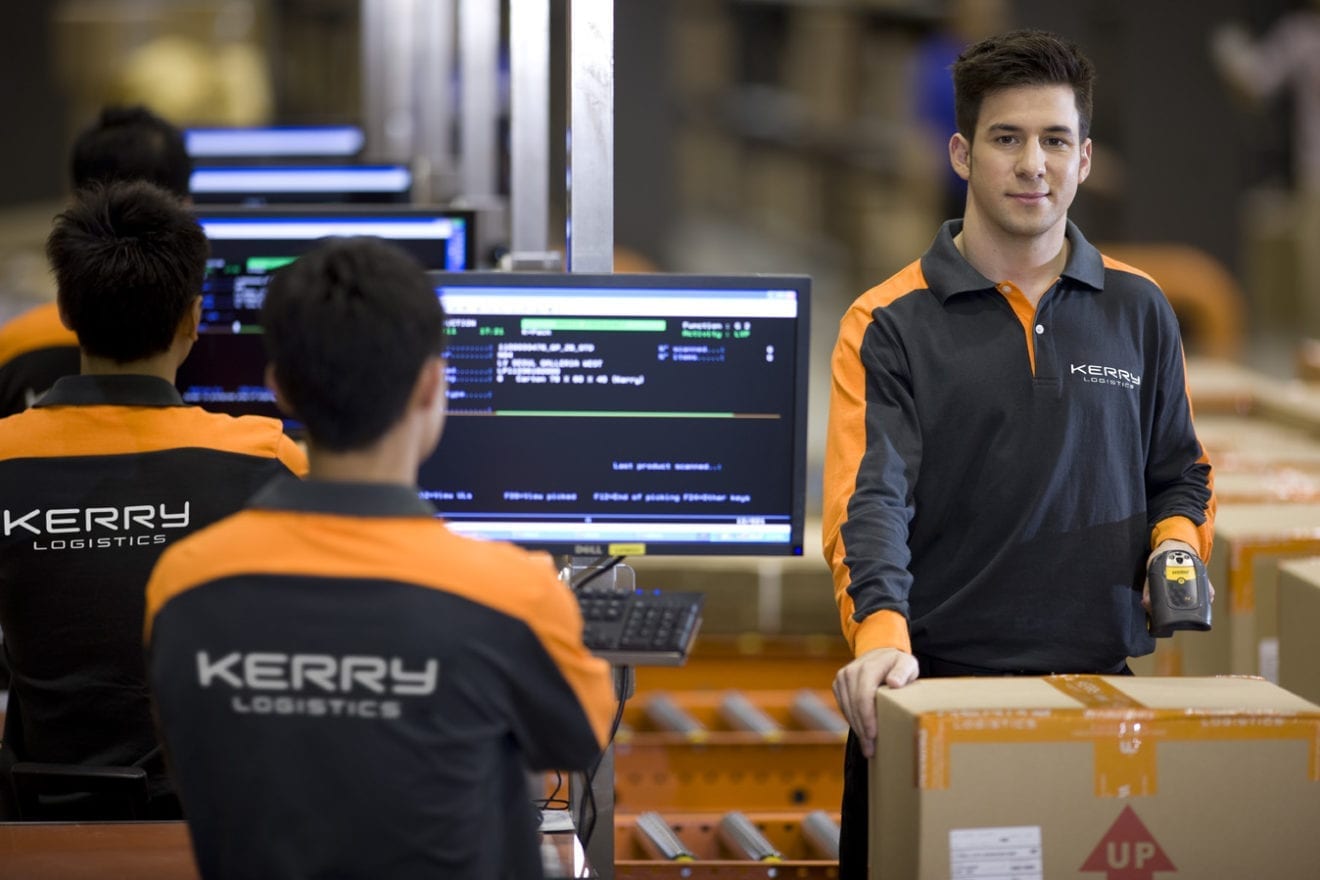
    S.F. Holding and Kerry Logistics Network Limited (‘Kerry Logistics Network’ or ‘the Company’; Stock Code 0636.HK) are pleased to announce the proposed strategic investment and cooperation between the two companies.

    Subject to satisfaction of certain pre-conditions, the Offeror, being an indirect wholly-owned subsidiary of S.F. Holding, will make a Partial Offer to obtain 931,209,117 ordinary shares of Kerry Logistics Network, representing approximately a 51.5% stake (on a fully-diluted basis) of the Company at a cash offer price of HK$18.80 per share (the ‘Partial Offer’). In conjunction with the Partial Offer, Kerry Logistics Network’s warehouse assets in Hong Kong will be disposed of to a wholly-owned subsidiary of Kerry Holdings Limited to unlock its shareholder value, and for the Company to operate under an asset-lighter model comparable to international industry peers.

    Subject to the completion of the warehouse sale, substantially all of the proceeds from the warehouse sale will be distributed to all those shareholders of the Company who are shareholders of record on the record date as a special dividend of HK$7.28 per share. The total amount of offer price plus special dividend to be received by a shareholder of the Company for every share that the shareholder tenders and is accepted under the Partial Offer would be HK$26.08, comprising the offer price of HK$18.80 per share and the special dividend of HK$7.28 per share.

    To facilitate the transaction, the Company’s business in Taiwan, including the interest in Kerry TJ Logistics Company Limited, which is listed on the Taiwan Stock Exchange (‘Kerry TJ Logistics’; Stock Code 2608.TW), will also be sold to a wholly-owned subsidiary of Kerry Holdings Limited in compliance with the laws and regulations in Taiwan. The proceeds from the Taiwan business sale will be retained by the Company for its ongoing growth and developments.

    The Partial Offer is subject to fulfillment of certain pre-conditions including, amongst others, the disposal of the Hong Kong warehouse assets, and the disposal of the Taiwan business becoming unconditional under their respective sale agreements, and upon independent shareholders’ approvals being obtained at a Special General Meeting and the relevant regulatory approvals in various jurisdictions in connection with the Partial Offer being obtained.

    The cooperation will bring together the core competencies of S.F. Holding and Kerry Logistics Network across multiple verticals to create a leading Asia-based global logistics platform to meet ever-changing demands.

    Under the strategic cooperation, Kerry Logistics Network will be positioned as S.F. Holding’s platform for international business. S.F. Holding and the Company will also collaborate with each other in Greater China to better align their respective businesses. By tapping into different customer segments, S.F. Holding and Kerry Logistics Network will coexist as separate entities in Mainland China, Hong Kong and Macau. The Company will continue to grow its logistics businesses, both in terms of scale and coverage. The partnership is expected to create significant synergies to boost both companies’ growth and leadership in the logistics sector with clear business focuses and complementary strengths to bring value to investors.

    Subsequent to the completion of the proposed transaction, Kerry Logistics Network’s listed status on the Hong Kong Stock Exchange will remain unchanged. The Kerry Group of companies will still hold a significant interest in the Company, which will continue to operate under the “Kerry” names with a clear brand identity and be managed by its current core leadership team across all markets.

  • Apparel retailers cut orders while Asian factories fight to survive

    Apparel retailers cut orders while Asian factories fight to survive

    Clothes retailers in Europe and America sit on excess inventory and cut back on spring orders. Sourcing agents face late payments. Garment factories in Bangladesh are on the rack.

    The global apparel industry, reeling from a punishing 2020, is seeing its hopes of recovery punctured by a new wave of COVID-19 lockdowns and patchy national vaccine rollouts.

    Some major retailers are still nursing last year’s clothes, which would have been sold off in clearance sales in normal times. British chain Primark, for example, said it was housing around 150 million pounds ($205 million) worth of 2020 spring/summer stock and 200 million pounds from autumn/winter.

    In an indication of the scale of the backlog, consultancy McKinsey says the value of unsold clothing worldwide, in stores and warehouses, ranges from 140-160 billion euros ($168-192 billion) – more than double normal levels.

    Britain’s Marks & Spencer and Germany’s Hugo Boss  said they had placed smaller orders than usual for this year’s spring collection.

    Retailers are keeping volumes small and lead times tight, according to Ron Frasch, former president at Saks Fifth Avenue who is now operating partner at private equity firm Castanea Partners, which works with a number of apparel brands.

    “Most of the brands now are pretty tight on shipping and the factors are very tight. I think everyone was very conservative with their purchasing,” he said. “I know many have been slow-paying. That is for sure.”

    Indeed, Hong Kong-based sourcing agent Li & Fung, which manages more than 10,000 factories in 50 countries for retailers including global players, said that some retailers had requested later payment terms, but declined to provide specifics.

    The pain is consequently flowing to  major garment manufacturing centres like Bangladesh, whose economies rely on textile exports. Factories are struggling to stay open.

    Fifty factories surveyed by the Bangladesh Garment Manufacturers and Exporters  Association said they had received 30% fewer orders than usual this season, as pre-Christmas lockdowns in much of Europe followed by another clampdown in January hit their businesses hard.

    “Orders usually arrive three months in advance. But there are no orders for March,” said Dhaka-based factory owner Shahidullah Azim, whose clients include North American and European retailers.

    “We are operating at 25% of capacity. I have some orders to run the factory till February. After that, I don’t know what future holds for us. It’s difficult to say how we will survive.”

    Miran Ali, who represents the Star Network, an alliance of manufacturers in six Asian countries, and himself owns four factories in Bangladesh, faces similar problems.

    “At this point in time, I should have been entirely full until March at least, and looking at a healthy quantity for autumn/winter coming in already. Across the board, that is coming slow,” he told Reuters from the capital Dhaka.

    “Brands are buying less from fewer people.”

    Asif Ashraf, another factory owner in Dhaka who makes clothes for global retailers, said it was tough to adjust. “We’ve produced the fabric and we’re ready to stitch the garments, but then they say the order is on hold.”

    With store closures threatening to carry into summer, some retailers are attempting to sell off as much of their excess stock as possible before placing new orders, textile recycling firm Parker Lane Group told Reuters.

    CEO Raffy Kassardjian said his business went from processing an average of 1.5 million items of excess apparel per month to over 4 million in January, its busiest month ever.

    Last year was dire for the clothing industry, which saw sales slide by about 17% versus 2019, according to Euromonitor. And the future is uncertain.

    Estimates for 2021 range from pessimistic forecasts of a 15% sales drop from McKinsey, to an 11% recovery from Euromonitor.

    So are there bright spots? Well, a lockdown pyjama boom is offering some minor relief.

    “If you want to know what the Great British public is doing – it’s wearing pyjamas again,” Marks & Spencer CEO Steve Rowe said last month, while Hugo Boss alluded to the same phenomenon, saying it had “streamlined our range of classic business clothing and expanded the range of casual wear”.

    But that’s cold comfort for some factory owners.

    “Demand for pyjamas is at a life-time high,” Ali in Dhaka acknowledged. “But not everyone can make pyjamas!”

  • Retail chains rush for expansion

    Retail chains rush for expansion

    The race for domestic retail market share was heating up as local and foreign firms looked to expand their networks, experts said.

    At a recent meeting in HCM City, Trương Công Thắng, general director of VinCommerce Company, told partners that the retailer wanted to open nearly 10,000 stores and more than 300 Vinmart supermarkets in the next five years.

    In addition, the company also plans to attract 100 strategic partners with an ambition to lead the Vietnamese retail market. The company’s financial report showed that in the first nine months of the year, revenue reached VNĐ23.6 trillion, posting a 56.5 percent year-on-year increase.

    Meanwhile, Saigon Co.op is looking at expanding its network to at least 2,000 stores and annual average revenue growth of 8-10 percent in the next five years.

    It has already opened 849 stores in 43 provinces and cities that attract 350,000 customers a day, up 26 percent compared to five years ago.

    Another leading retailer in HCM City, Satra, said that they targeted to have five Satramart supermarkets and four malls by 2025, and depending on the market situation, 150-250 Satra branded stores.

    Local retail giants are looking to expand their market share in the face of fierce competition from big foreign investors such as Aeon, Lotte, Big C and Mega Market.

    The latest example is in October 2020, Japan’s largest retailer cosmetics chain Matsumoto Kiyoshi opened its first store in HCM City.

    In July 2020, leading Japanese retailer Muji also opened a store in HCM City. Japanese fashion retailer Uniqlo, launched its first store last year.

    Japanese retailer Aeon is also surveying a third shopping mall in HCM City in 2021, and plans to have 25 shopping malls in Việt Nam by 2025 with a capital source of US$2 billion for the investment.

    Hirai Shinji, chief representative of JETRO HCM City (Japan External Trade Organisation) was quoted as saying by Thời báo Kinh Doanh that after the COVID-19 pandemic and the market was gradually recovering, it was a favorable time for Japanese retail groups to open in Việt Nam.

    This would lead to fiercer competition, the experts said.

    It was also important to note the efforts of domestic retailers to expand their systems into neighboring areas of big cities, as urbanization and incomes in these areas had been increasing.

    Experts said that although retail sales were concentrated in major cities and key economic regions, with the high speed of urbanization, these areas would become the driving force for growth instead of existing big cities.

    As a result, many domestic retailers had been gradually expanding to areas surrounding the big cities. The evidence is quite clear from data showing that suburban stores brought in more revenue with higher growth than inner cities.

    According to retail expert Nguyễn Văn Thịnh, the number of supermarkets in 2020 had been decreased by 20 percent compared to 2019 – from 336 to 330. This decrease mainly came from Vinmart.

    Meanwhile, the number of convenience stores has marked a growth of 60 percent – from 2,495 in 2019 to 5,228 stores in 2020. This came from Vinmart+ and Bách Hoá Xanh.

    Small stores recorded a slight increase in 2020, while shopping centers posted a growth rate of about 11 percent from 96 centers in 2019 to 107 in 2020.

    Thịnh said that although there were many changes in 2020, Việt Nam was still one of the most attractive retail markets in the world, and competition in the market was becoming more and more intense.

    For some brands, it was an increase in the number of stores, others had to face restructuring, he said.

  • Clubhouse app blocked in China, added to ‘Great Firewall’, say users

    Clubhouse app blocked in China, added to ‘Great Firewall’, say users

    Access to U.S. audio app Clubhouse was blocked in China on Monday, users and an anti-censorship watchdog said, ending a brief window that allowed thousands of mainland users to join in discussions often censored in China.

    Launched in early 2020, Clubhouse’s global user numbers soared earlier this month after Tesla CEO Elon Musk and Robinhood CEO Vlad Tenev held a surprise discussion on the platform.

    Masses of new users joined from mainland China, taking part in discussions on topics that included sensitive issues such as Xinjiang detention camps, Taiwan independence and Hong Kong’s National Security Law.

    However, users of China’s Twitter-like social media app Weibo began posting that they were having issues accessing the Clubhouse app on Monday evening. Some showed screenshots of a message the app displayed when they tried to open it which said a secure connection to the server could not be made.

    Anti-censorship activist website GreatFire.org said on Twitter late on Monday that the app had been blocked for users in China at around 7 p.m. Beijing time (1100 GMT) that day.

    Many Western social media apps including Twitter, Facebook and YouTube are banned in China, where the local internet is tightly regulated and often censored of content that could undermine the country’s ruling Communist Party.

    Clubhouse did not respond to requests for comment. The Cyberspace Administration of China, the country’s top internet regulator, did not immediately respond to a faxed request for comment.

    “Clubhouse has been walled,” said one Weibo user on Monday, referring to the system China uses to regulate its internet.

    “This is just too fast,” said another.

    Many Weibo posts discussing the blocking of the app were deleted from the platform by Tuesday morning.

    The Clubhouse app is only available on iOS devices and is unavailable in the local Apple app store in China, but mainland Chinese users had been able to access the app by modifying the location of their app store.

    As first reports of the internet disruptions began on Monday, nearly 3,000 users opened a room in Clubhouse to discuss whether it had been blocked by Chinese censors, with some expressing concerns that authorities could be monitoring discussions.

    Some users urged others not to panic.

    “Let bullets fly for a while. Let’s monitor for a few days first, don’t panic yet,” one user said.

  • SGX Joint Venture to Launch Asian Bond Trading Platform

    SGX Joint Venture to Launch Asian Bond Trading Platform

    The XinTru joint venture with corporate bond trading platform provider Trumid and private equity firm Hillhouse Capital, will launch a new electronic bond trading platform later this year.

    This partnership combines Trumid’s cutting-edge technology and fixed income expertise, SGX’s deep experience in Asian financial market infrastructure and electronic trading, and Hillhouse’s expertise and network in Asia and the financial services sector», SGX said in a statement on Monday.

    The Trumid XT platform will connect liquidity from SGX’s Bond Pro and Trumid’s Market Center in the U.S. to provide a network for Asian fixed-income trading. This will enhance international access to Asian bond markets and facilitate Asian investor participation in U.S. and global emerging market credit, SGX said.

    XinTru’s independent management team includes chief revenue officer Ben Falloon who brings 20 years of Asia fixed income experience and relationships, and chief operating officer Mark Leahy, who has significant experience building and operating capital markets businesses in the region.

    SGX led a $53 million growth equity financing round in the New York-based startup in 2018, and subsequently joined Hillhouse Capital in another round of investment in 2019 when the firm took a minority stake in Trumid.

    Our early investment in Trumid paved the way for this deeper collaboration to advance the overall bond market infrastructure in Asia,” said SGX chief Loh Boon Chye.

    Trumid experienced exceptional growth in 2020, with trade volumes growing 374 percent year-on-year.

  • OnTheList launches Asian arm of Phenix to save food from landfill

    OnTheList launches Asian arm of Phenix to save food from landfill

    Chefs and caterers at hotels in Asia-Pacific will work on ways to cut food waste, including tweaking buffets and promoting the use of doggy bags, in a scheme led by environmental group WWF.

    The Asian arm of the Hotel Kitchen program, funded by The Rockefeller Foundation, is due to be launched on Friday at a Singapore meeting of international and regional hotel chains.

    “This is about accelerating change and getting people to think differently about food,” said Pete Pearson, Washington-based director for food waste at WWF.

    About a third of food produced around the world is never eaten because it is spoiled after harvest and in transportation or thrown away by shops and consumers.

    That amounts to economic losses of about $940 billion per year, according to the U.N. Food and Agriculture Organization.

    Yet 815 million people around the world go to bed hungry every night, U.N. figures show.

    Throwing out food wastes the water, energy and fuel required to grow, store and distribute it, campaigners say, while discarded food ends up in landfill where it rots, releasing climate-changing gases such as methane.

    Joao Campari, food practice leader with WWF International, said the conservation group – best known for its work with wildlife – began focusing on food because its production is responsible for more than 70 percent of the world’s lost biodiversity.

    “The planet cannot supply enough resources at the rate we are consuming today,” he said.

    Hotel Kitchen, which was piloted in the United States last year with international hoteliers including Hilton, Hyatt and Marriott International, is part of WWF’s push to halve per capita food waste by 2030, in line with global development goals.

    Those hotel groups are expected to participate in the Asia-Pacific expansion of the initiative, Pearson said.

    Friday’s meeting, backed by the UK-based Waste and Resources Action Programme and the Pacific Asia Travel Association, will chew over with regional hospitality workers how food waste can be identified, managed and minimized.

    In the United States, hotel chefs worked to ensure menus for buffets and large events could be adjusted quickly, and some of the excess food reused.

    Instead of loading a buffet with cheeses and meats, for example, most of it could be kept fresh behind the counter until customers ask for it, said Pearson.

    The U.S. scheme has also trained staff, developed recipes using leftover ingredients, separated food waste from regular rubbish, monitored it, and raised awareness among customers.

    Donating unused food and helping customers take home uneaten meals will also be discussed on Friday, said Pearson.

    “Squandering food is squandering everything that goes into food – including habitat and wildlife,” he said. “We’re just running out of time.”

    The WWF program is due to be rolled out in Europe within the next three months.

    Hotels save an average $7 for every $1 spent on curbing food waste, according to a new report by the Champions 12.3 coalition, which analyzed 42 hotels in 15 countries.

    Within the first year of implementing a food waste-reduction program, more than 70 percent of hotels in the study recouped their investment, it added.

  • Chinese Regulators Call In Tesla Over Customer Complaints

    Chinese Regulators Call In Tesla Over Customer Complaints

    Chinese government officials have met representatives from U.S. electric carmaker Tesla Inc over reports from consumers about battery fires, unexpected acceleration, and failures in over-the-air software updates, a regulator said on Monday. China’s State Administration for Market Regulation said in a social media post its officials, along with those from the Ministry of Industry and Information Technology, Ministry of Emergency Management, Cyberspace Administration and Ministry of Transportation had met Tesla “recently”, without giving a date.

    The officials urged Tesla to operate according to China’s laws and protect customer rights, the regulator said. In response, Tesla said it would thoroughly investigate the problems reported by consumers and step up inspections.

    “We will strictly abide by Chinese laws and regulations and always respect consumer rights,” a company representative said in a text message, adding that Tesla accepted the guidance of the Chinese government departments.

    China is pushing the industry to make more electric vehicles as it tries to reduce air pollution.

    Tesla is building Model 3 electric sedans and Model Y sport-utility vehicles at its Shanghai factory. It sold 15,484 China-made vehicles in January.

    The industry ministry in May urged Tesla to ensure consistency in its China-made vehicles after some Chinese customers complained about less advanced computer chips in their cars.

    China, the world’s biggest auto market, is pushing the industry to make more electric vehicles as it tries to reduce air pollution.

    Sales of electric, plug-in hybrid and hydrogen-powered vehicles in China are forecast to rise to 20% of all new car sales by 2025 from just 5% now, the State Council said last year.

  • Apple tests a new location for ads in the App Store

    Apple tests a new location for ads in the App Store

    Besides allowing mask-wearing Apple iPhone users with an Apple Watch to unlock their handset without using a Passcode or Face ID, the iOS 14.5 beta has something else new. In an attempt to make some more money from the App Store (beyond Apple’s 30% cut of in-app revenue), Apple is placing ads on the App Store’s Search tab. The advertised app is listed as a suggested one for iPhone users to install.

    Keep in mind that since this is showing up only on the iOS 14.5 beta, there is a chance that it won’t be kept for the final version of the build. In that case, things would revert to how they used to work now with ads appearing only when advertisers bid on certain keywords. If Apple does keep the new feature, the ads appear before any type of keyword to search for is typed in by the user. It could be that Apple is using the beta period to collect important stats on how often users engage with the ads in this particular slot in order to decide whether to keep the ads in that location.

    The money generated by the ads will be included as part of Apple’s Services unit, its largest division by revenue. This group includes AppleCare+, iCloud, the App Store, Apple Music, Fitness+, Apple Arcade, Apple TV+, Apple News+, Apple One, Apple Pay, and more. Last year, the Services unit grossed $53.77 billion allowing Apple to meet and beat a goal to achieve $50 billion in revenue for the division by the fiscal year 2020.

    Apple Store search ads started in 2016. And Apple has started including ads for its Services features in the Settings app. This has upset many iPhone users who point out that they are paying over $1,000 for their phones in many cases and shouldn’t be subject to receiving ads designed to make Apple more money. But Apple likes to promote how it keeps iOS users’ data private. Soon, Apple’s App Tracking Transparency feature will demand that iOS user opt-in if they want to be tracked for advertising purposes. The average mobile app has six trackers that send user data to other apps. While most iPhone users are expected not to opt-in to be tracked, there are some who like the convenience of having ads for what they are shopping for found online.

    Facebook and Snapchat are believed to be the two apps most affected by Apple’s App Tracking Transparency (ATT) feature. Months ago, Facebook said that Apple’s moves could lead to a 50% drop in ad revenue for the year which would be an annual hit of more than $40 billion. A more recent analysis calls for quarterly declines of 2.11% to 13.59% for the second quarter of this year, when Apple’s ATT is expected to debut to all iOS 14 users. Worldwide, in the best-case scenario, this analysis sees 30% of Facebook users on iOS opting-in to be tracked, and only 10% in the worst-case scenario.

  • Mastercard partners with SAP Concur to deliver automated expense and invoice management for businesses in APAC

    Mastercard partners with SAP Concur to deliver automated expense and invoice management for businesses in APAC

    Mastercard has partnered with SAP Concur to deliver a faster and more efficient expense and invoice management process to banks, companies and government agencies in Asia Pacific for transactions with corporate cards.

    As businesses and governments seek to increase visibility across payments, optimize credit lines and leverage data to strengthen supplier relationships, the partnership offers best-in-class transaction solutions along with closer alignment between commercial card providers and their clients.

    “This powerful pairing offers the best of both worlds by combining SAP Concur’s expense management expertise with Mastercard’s global payments network, extensive partnerships, industry-leading security and comprehensive solutions and services,” said Mostafa Sabet, Vice President, Product Management, Asia Pacific, Mastercard.

    “In today’s competitive environment and rapidly evolving digital economy, Mastercard’s integration with SAP Concur solutions will deliver the tools and insights that businesses and governments need to control costs and manage expenses tightly, transparently and efficiently.”

    Using commercial cards in conjunction with SAP Concur solutions for corporate travel booking, expense management and invoice processing will help to speed up reconciliation and payments while strengthening cost controls and improving compliance.

    For Mastercard’s issuing customers, the partnership improves the processing of corporate payments and supports the extension of SAP Concur solutions to business and government clients of all sizes.